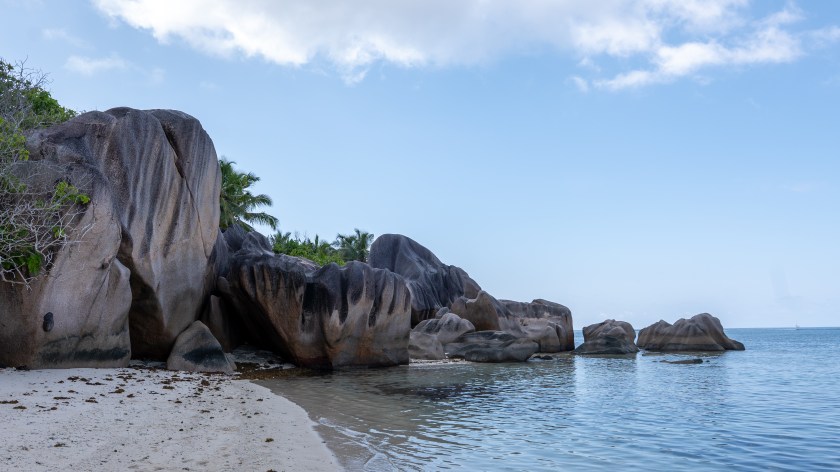
A photographic review of our recent NTT tour of The Seychelles and Madagascar.
In late February and early March we were on the other side of the world, exploring the island nations of Seychelles and Madagascar. To get there, we took two very long flights, stopping over in Abu Dhabi along the way.
INTERRUPTION FOR BAD DAD JOKE: How do you tell the difference between people who fly through Dubai and those who fly through Abu Dhabi? Those who fly through Dubai don’t like The Flintstones. Those who fly through Abu Dhabi Do.
I’m sorry.
Of course by the time we were ready to come home flying through Abu Dhabi was not an option thanks to someone’s “excursion” into Iran. I’ll reserve comments for another time.
After our arrival we put our feet up by the pool as our bodies adjusted to the big time change. (Seychelles and Madagascar are, as I said, on the other side of the world from the US . . . a nine-hour time difference from the east coast.)
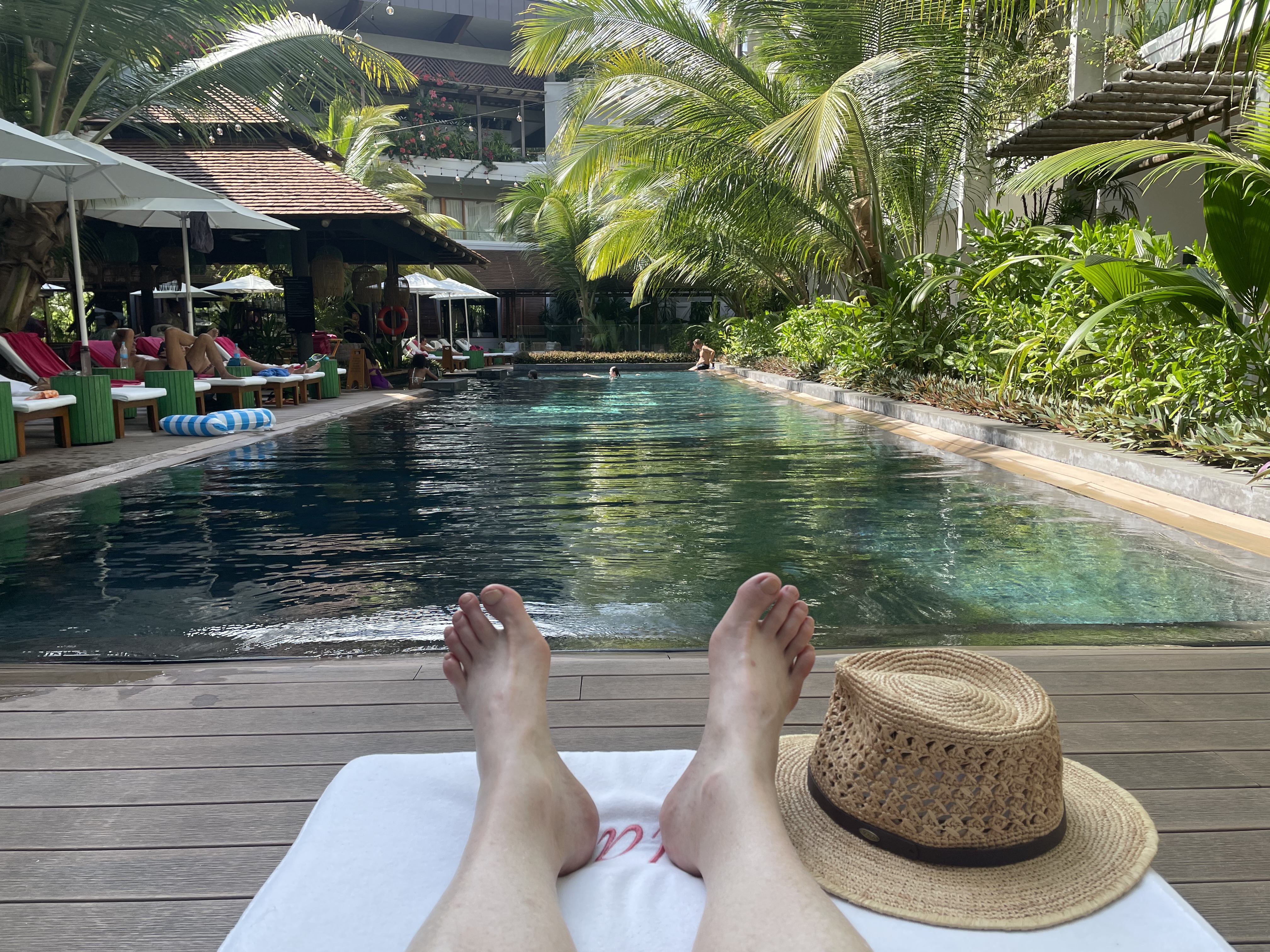
But we soon felt refreshed and joined up with our fellow National Trust Tour travelers. Over the course of two weeks we explored ten islands in the Seychelles and Madagascar archipelagos, beginning with the famous granite islands at the northern tip of the Seychelles, working our way down to the country’s Outer Islands, and ending up at the northern tip of Madagascar, the world’s fourth largest island (behind Greenland, New Guinea, and Borneo).
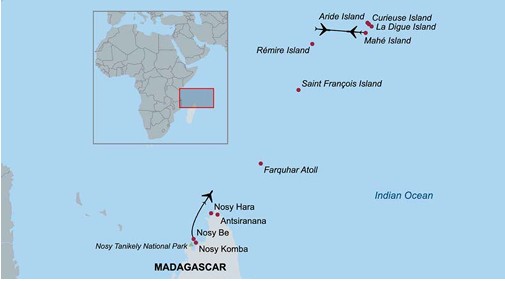
Both countries took up their current locations in the Indian Ocean as part of the well-known continental drift but are still considered culturally and physically part of Africa. The culture in Seychelles is an eclectic mix of French, British, Indian and African influences, with Chinese elements included. There was no indigenous population before colonization brought African slaves to the island. Madagascar, although with an indigenous population and a stronger French heritage, nonetheless has a similar set of cultural influences. Both have been independent nations since the 1960s. Seychelles is the richest nation per capita in Africa, while Madagascar is often cited in the top five of the poorest. Those contrasts were quickly evident as we toured both nations.
I gave a visual teaser of our trip in yesterday’s post (see The dandelion principle), and today I’ll provide a more extensive travelogue. As I mentioned this was an expedition, full of wet landings off of zodiacs, muddy trails, snorkeling around coral reefs, and mountain views accessible only via rock and and root-strewn trails.
LA DIGUE ISLAND
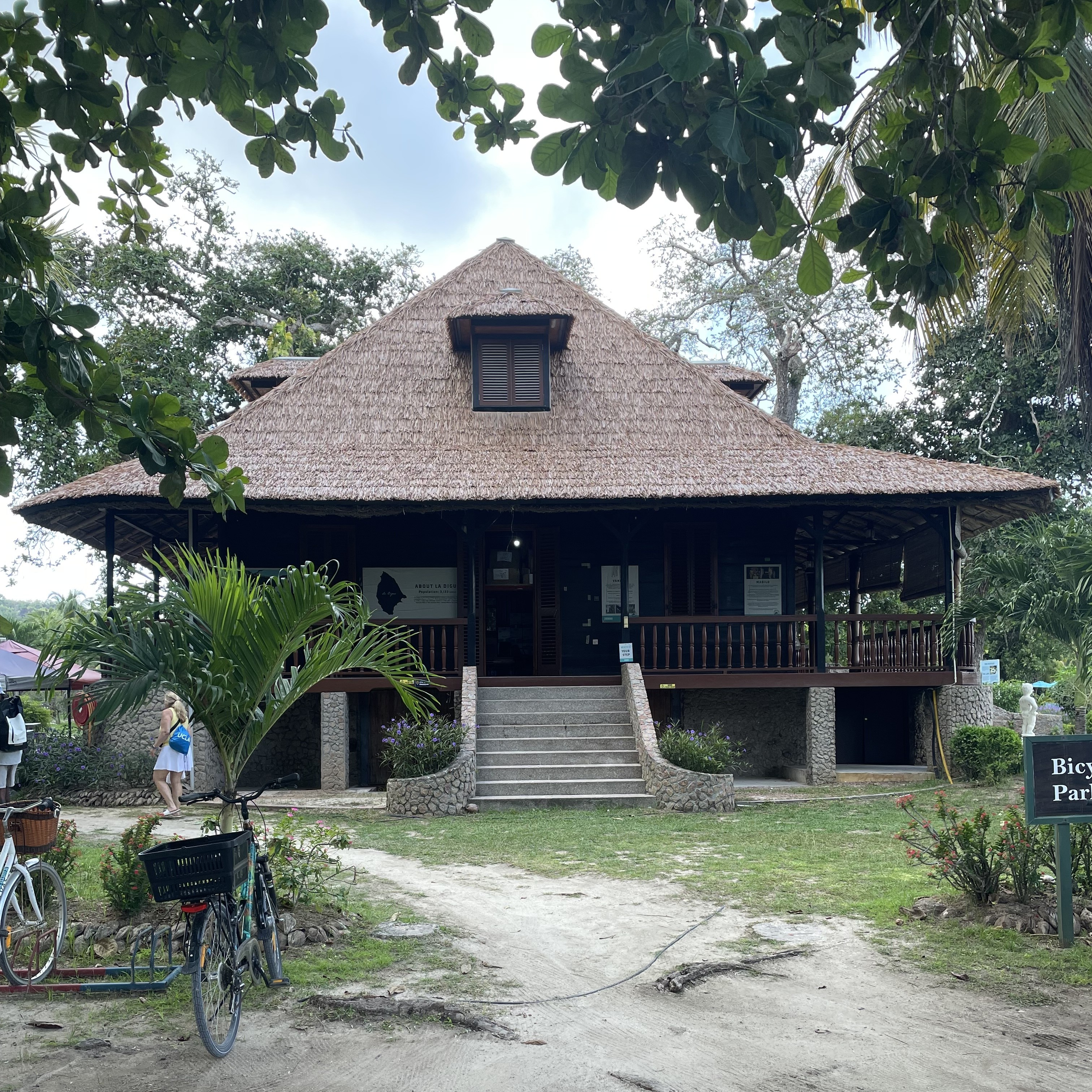
Our cruise on the small Ponant ship Le Bellot first took us to La Digue, the third largest island in the Seychelles and the one we visited with the most extensive and diverse tourism infrastructure. Interestingly, one of the first places we visited was not a natural site but was instead L’Union Estate Park, a former coconut and vanilla plantation that provided real insight into La Digue’s colonial history. It was a good reminder of the mix of cultures we saw throughout the trip.
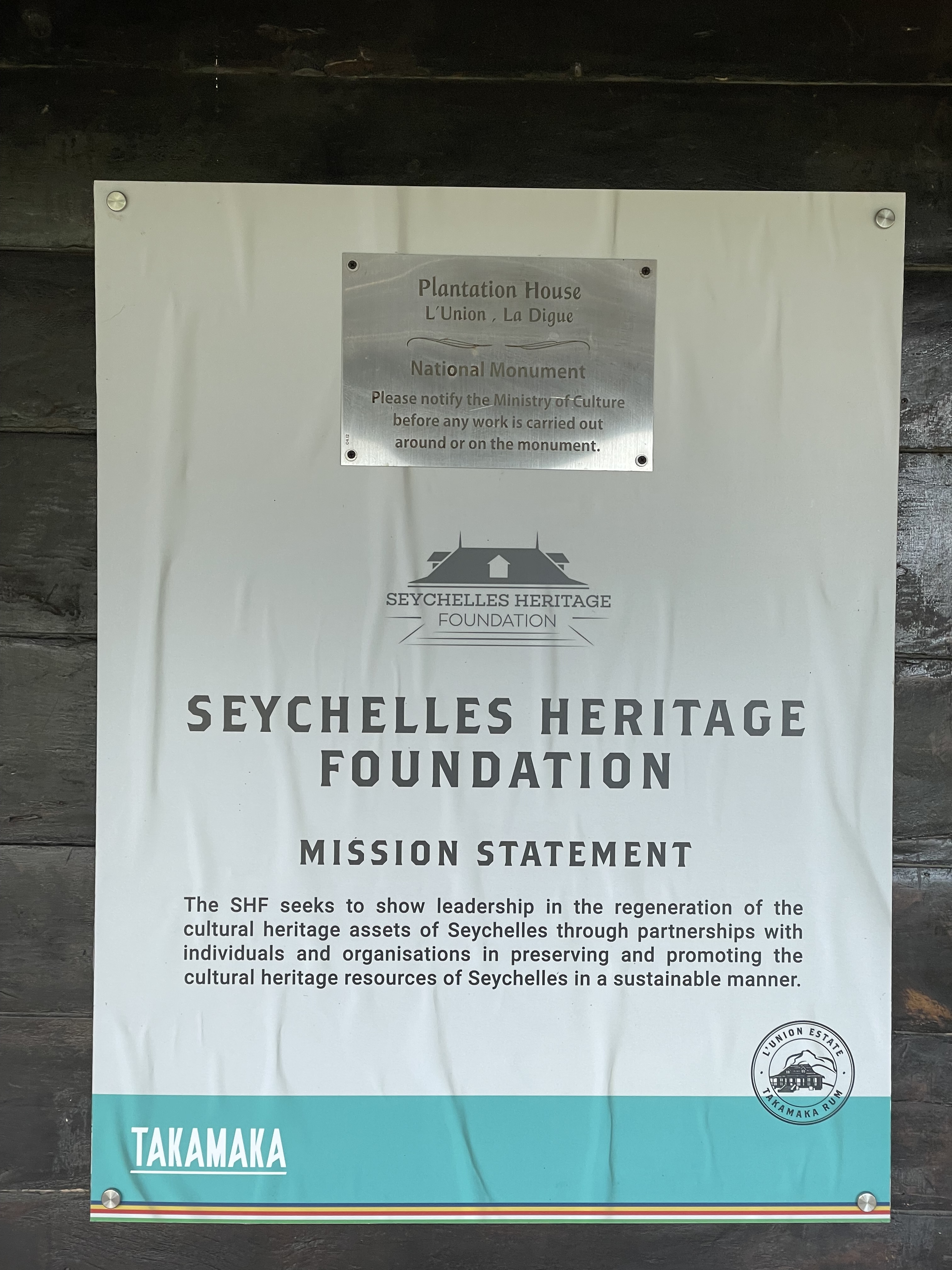
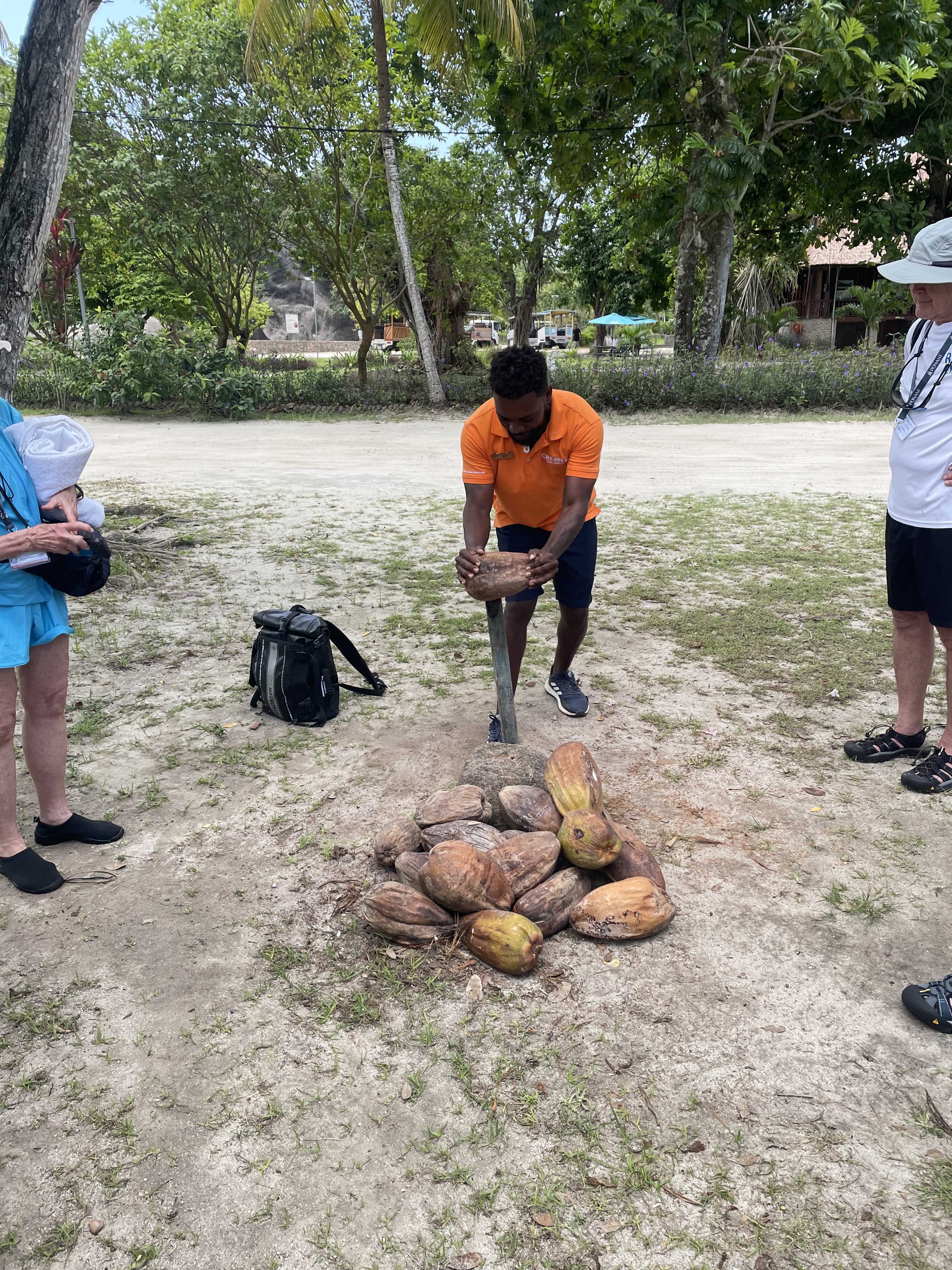
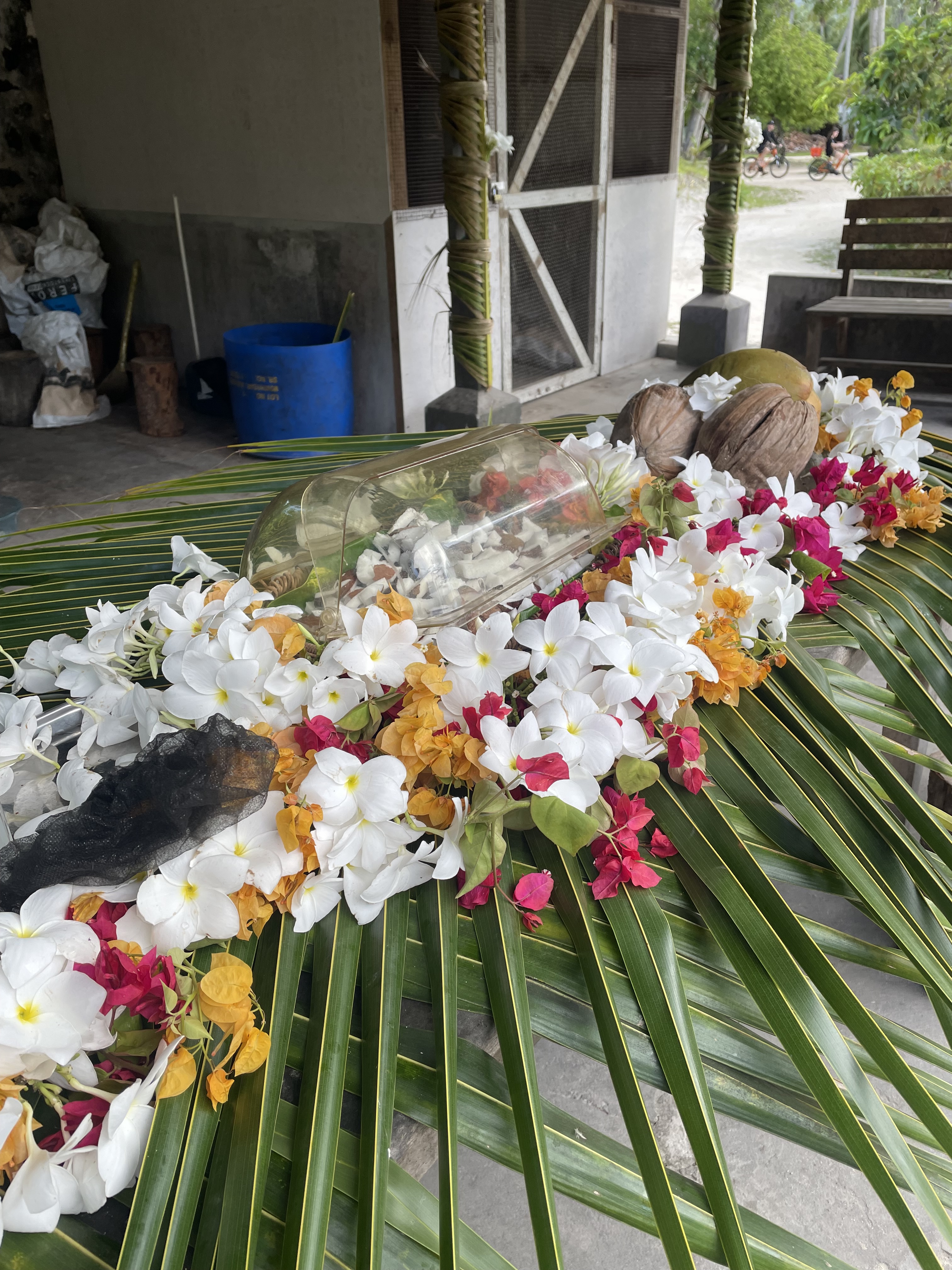
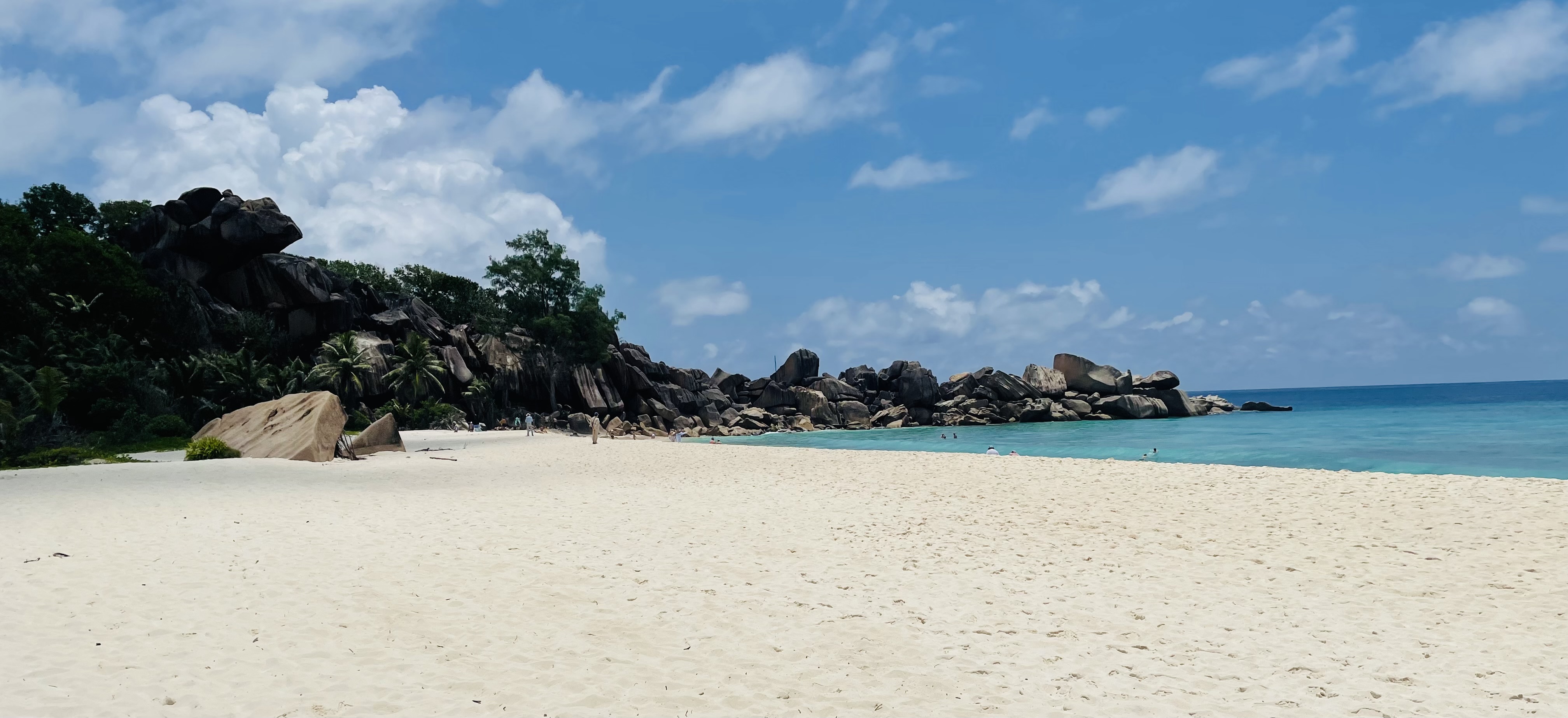
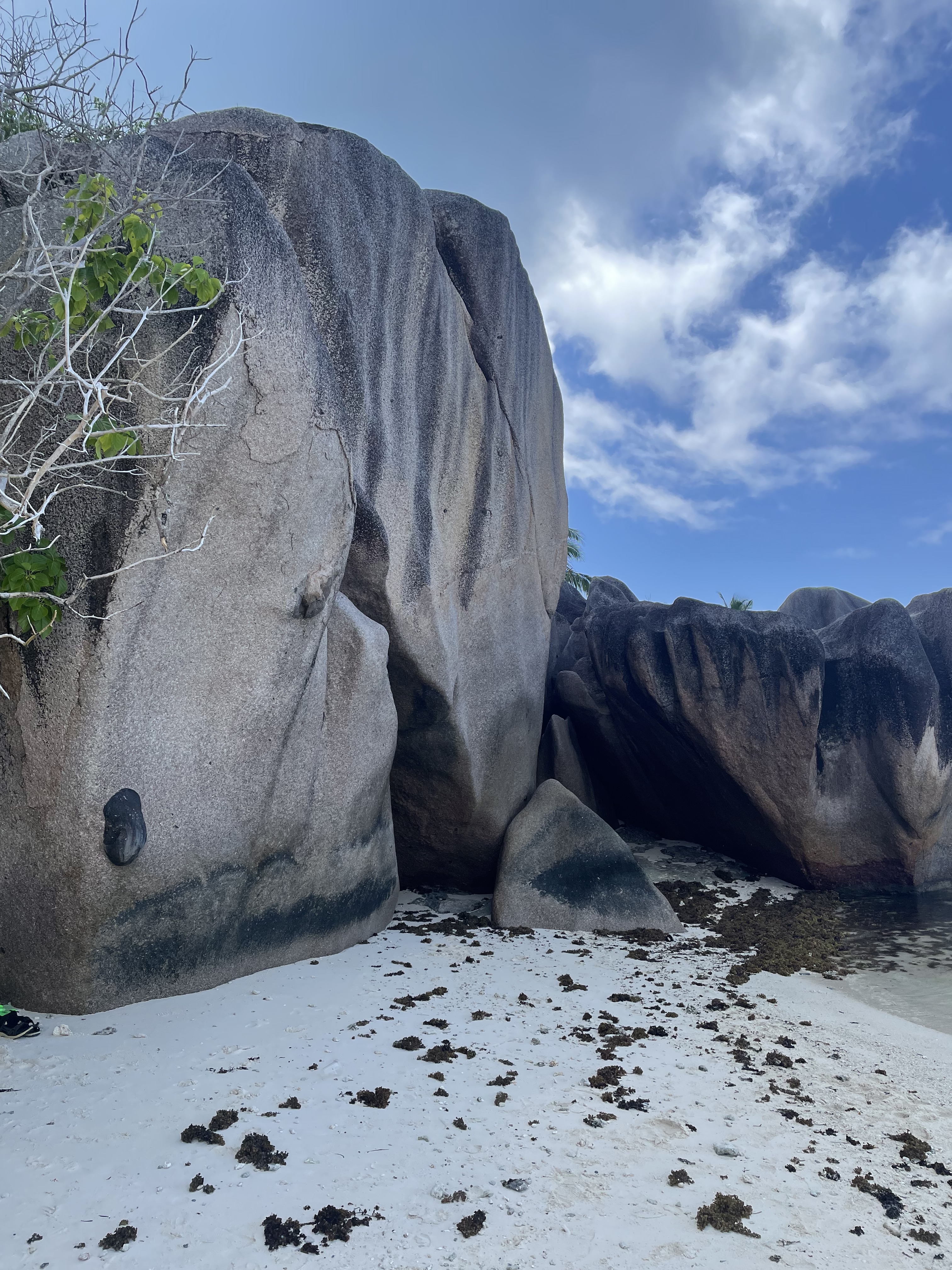
From the estate it was a short drive to the Anse Source d’Argent beaches, picture perfect tropical scenes with soft sand and granite boulders.
ARIDE AND CURIEUSE ISLANDS
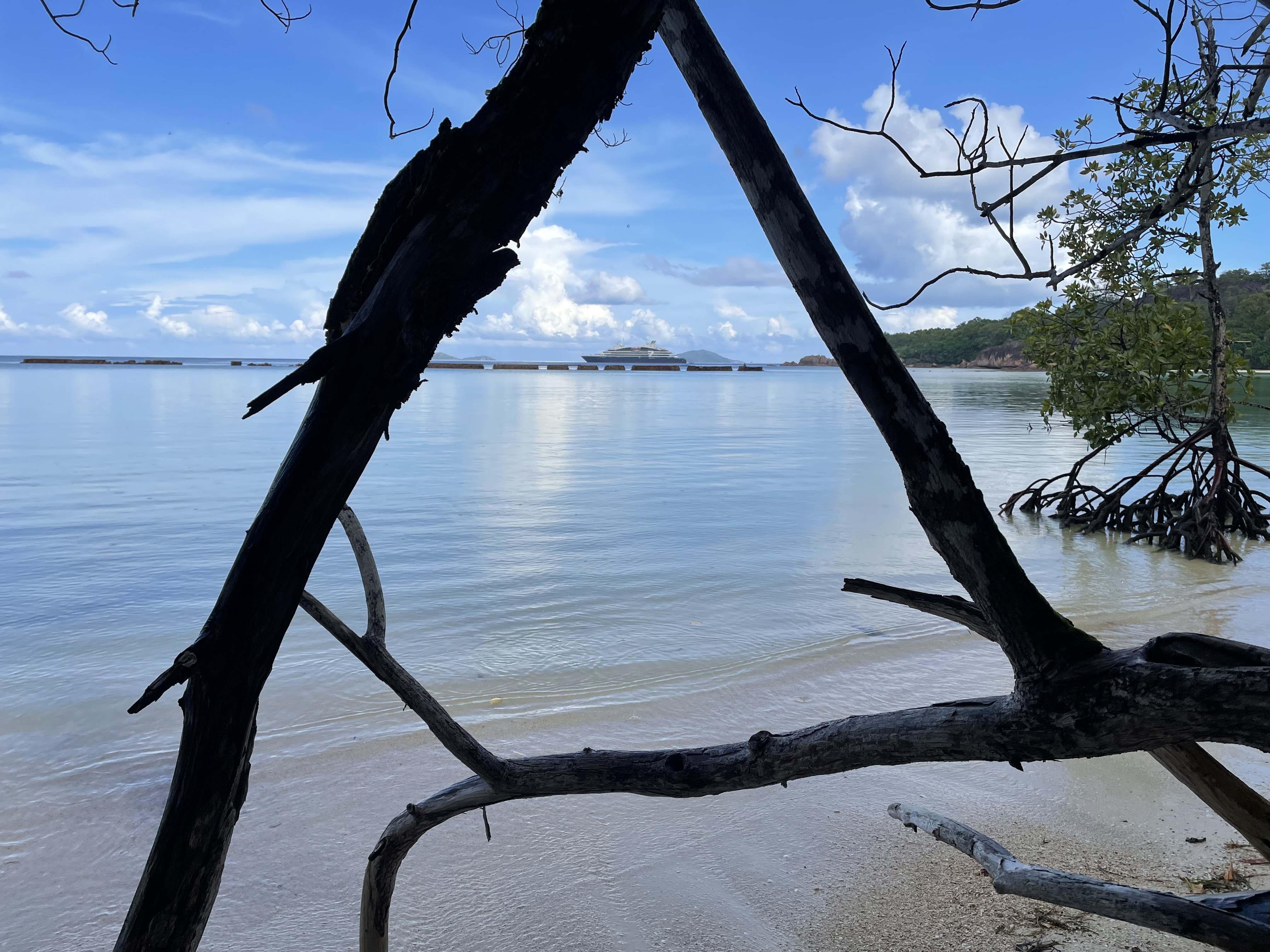
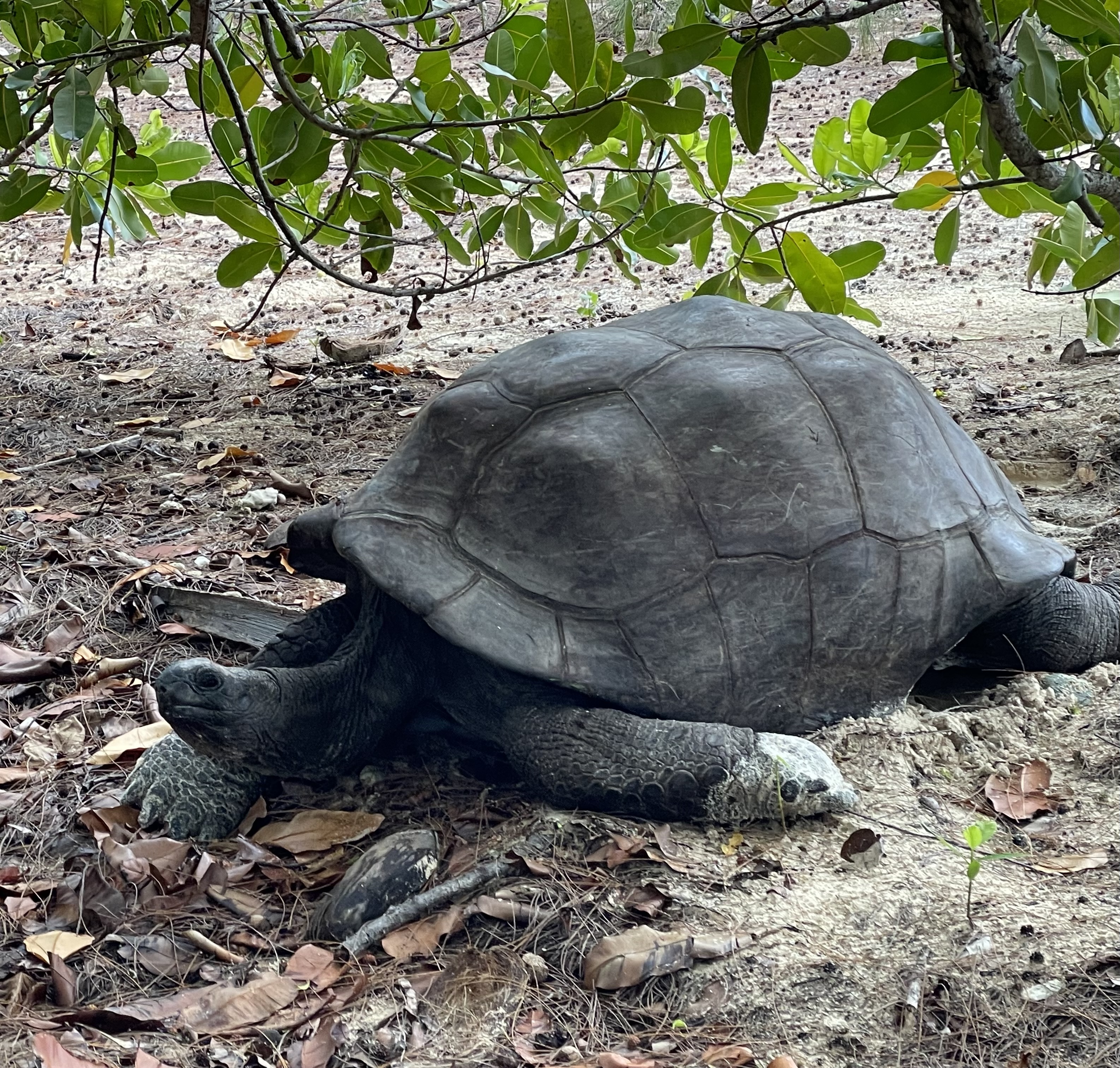
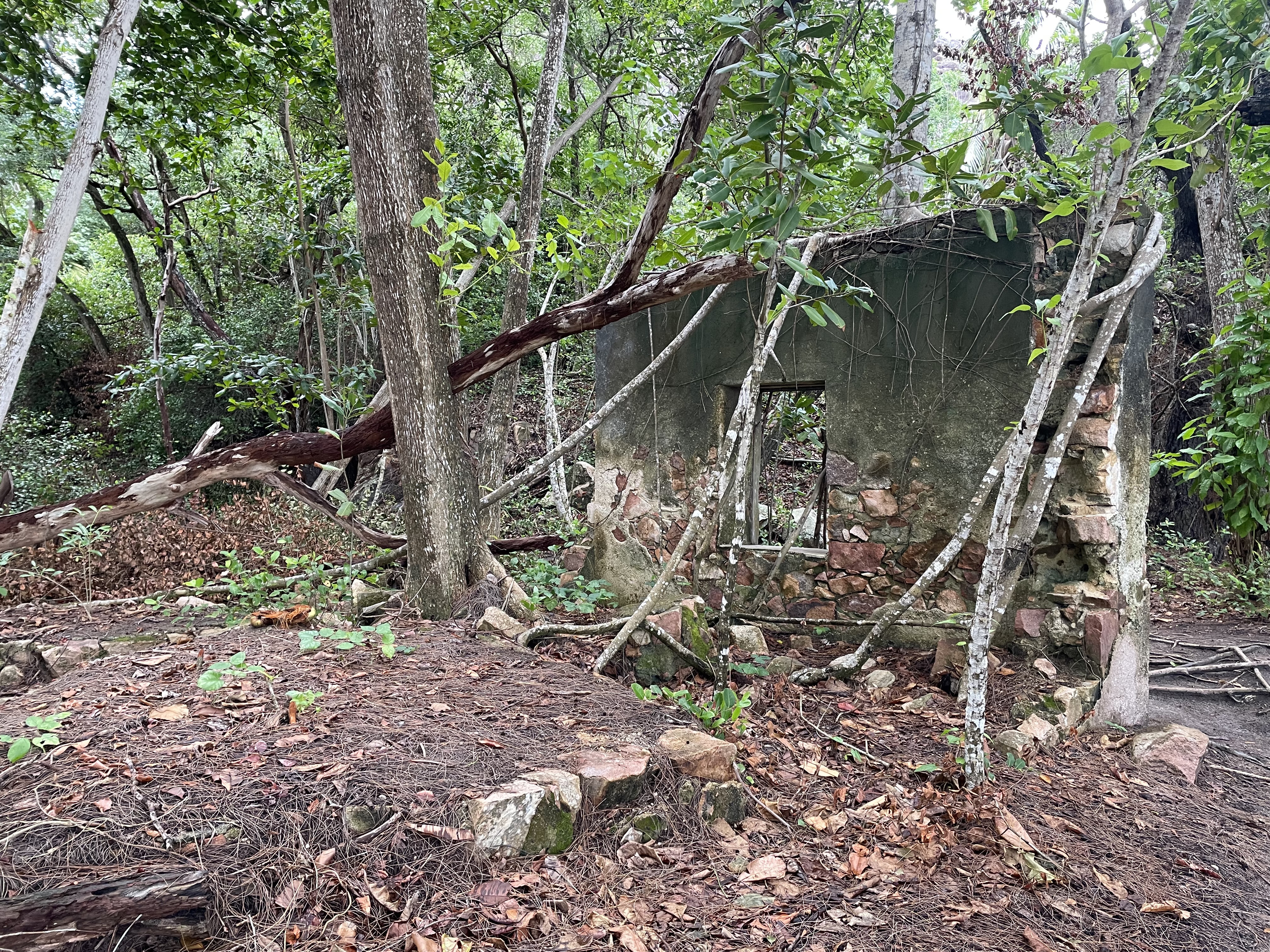
Early in the trip we anchored off Aride and Curieuse islands. Aride is a “seabird citadel,” home to some 112 species of birds including 30 species of rare birds. Curieuse was especially fascinating, as it is home to hundreds of giant tortoises which live to be 200 years old among the lush mangrove forest. A mile-long hike, which began near the ruins of a historic leper colony, took us through this ever changing and verdant landscape. Those who wished to snorkel could also explore the underwater species in this national marine park. We ended our tour of the “granite islands” the following day with a stop in Remire Island.
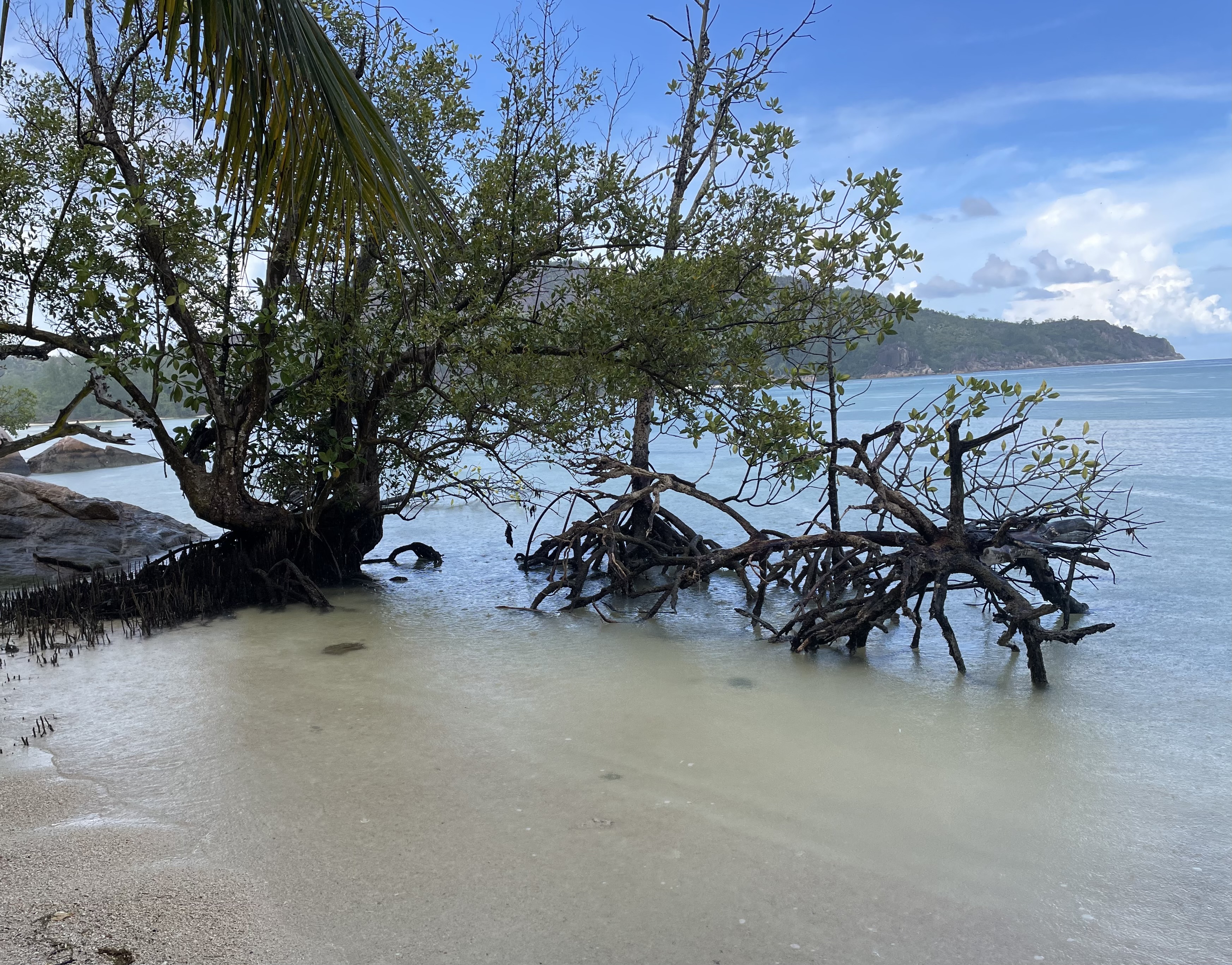
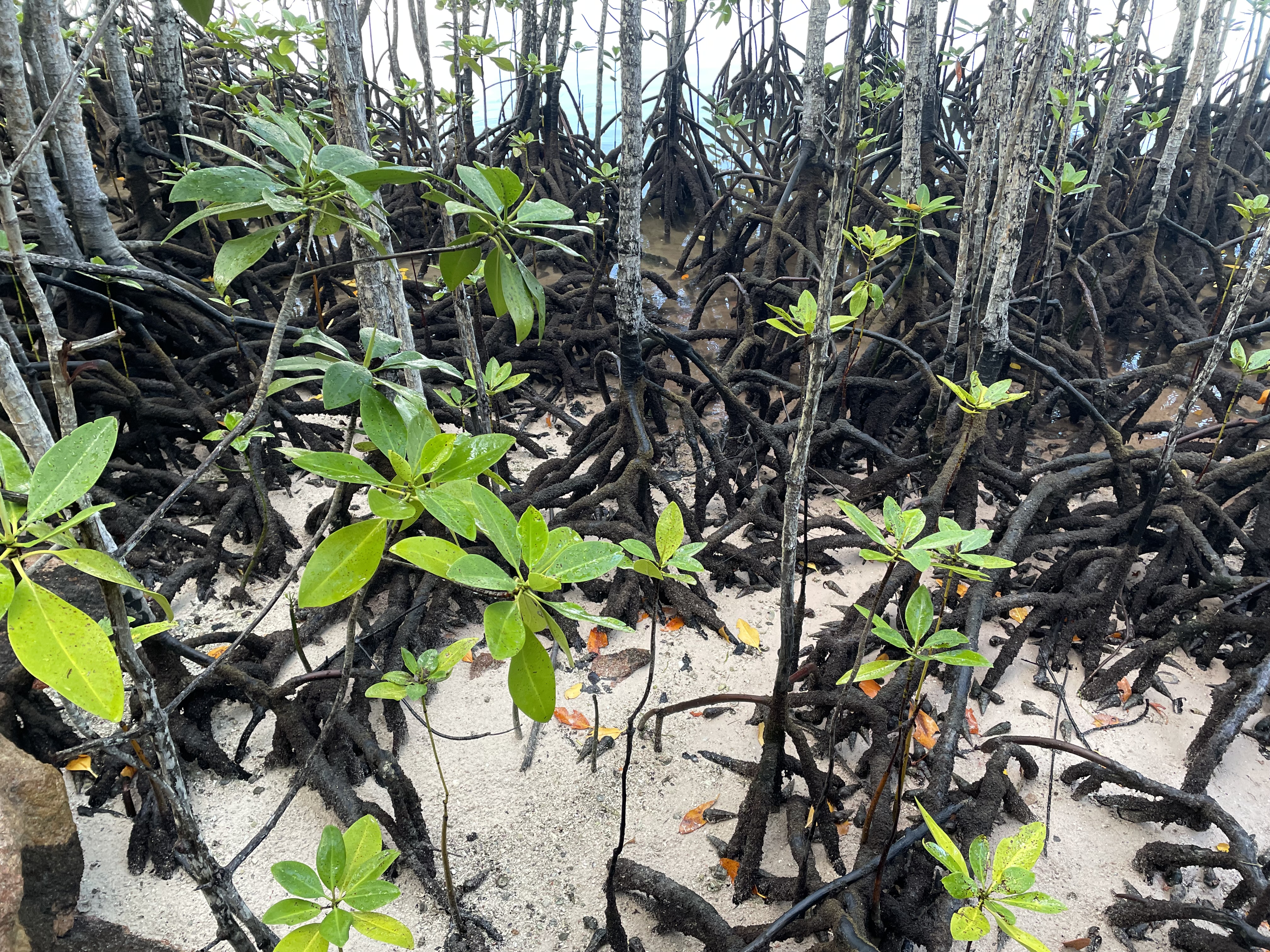
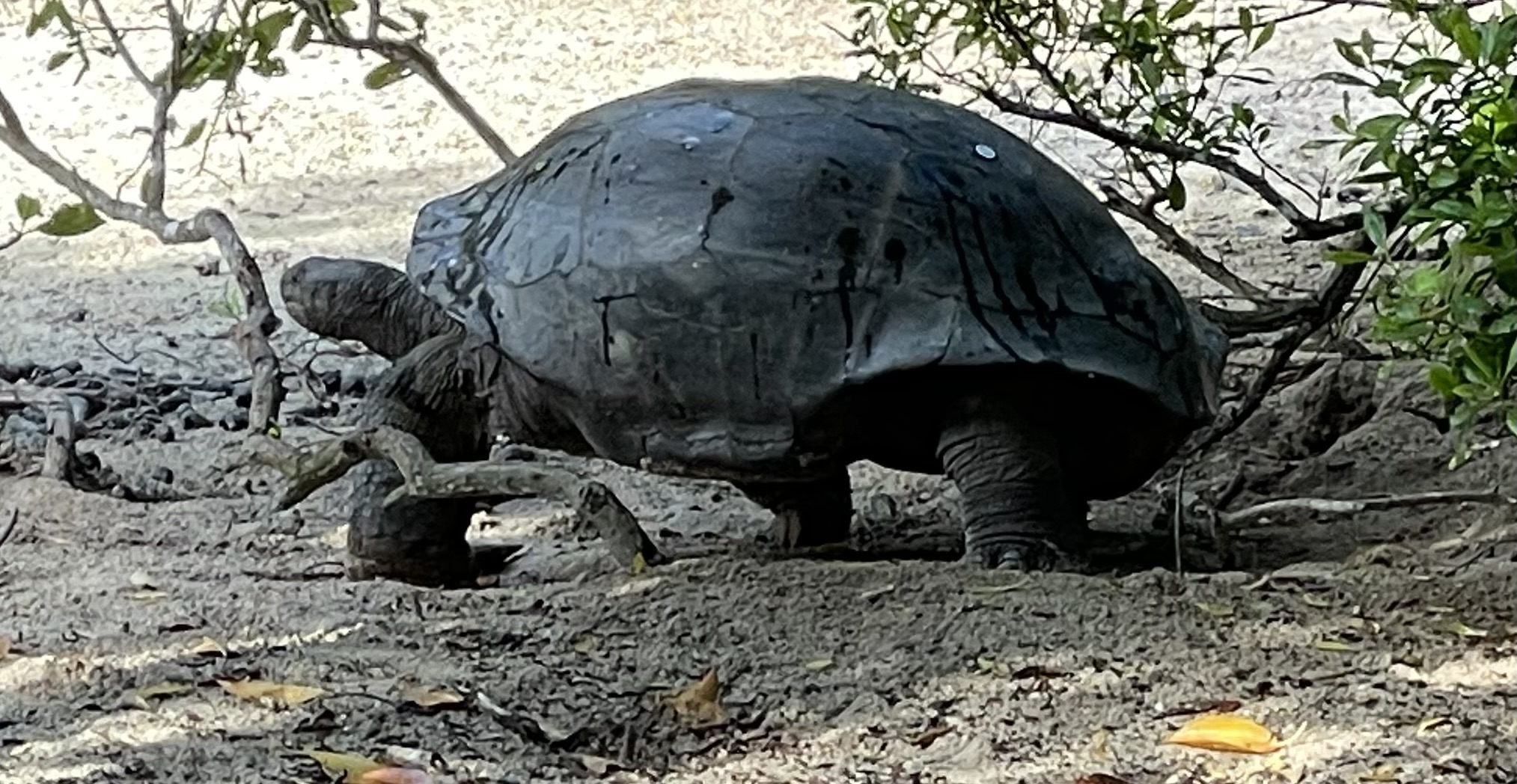
The granitic islands of Seychelles are the world’s only mid-oceanic granitic islands, forming the cultural and economic heart of the nation. These 41 ancient, steep-sided islands (about 750 million years old) are part of the Inner Islands, including Mahé, Praslin, and La Digue, and each features iconic, weathered granite boulders.
ST. FRANÇOIS ISLAND AND FARQUHAR ATOLL
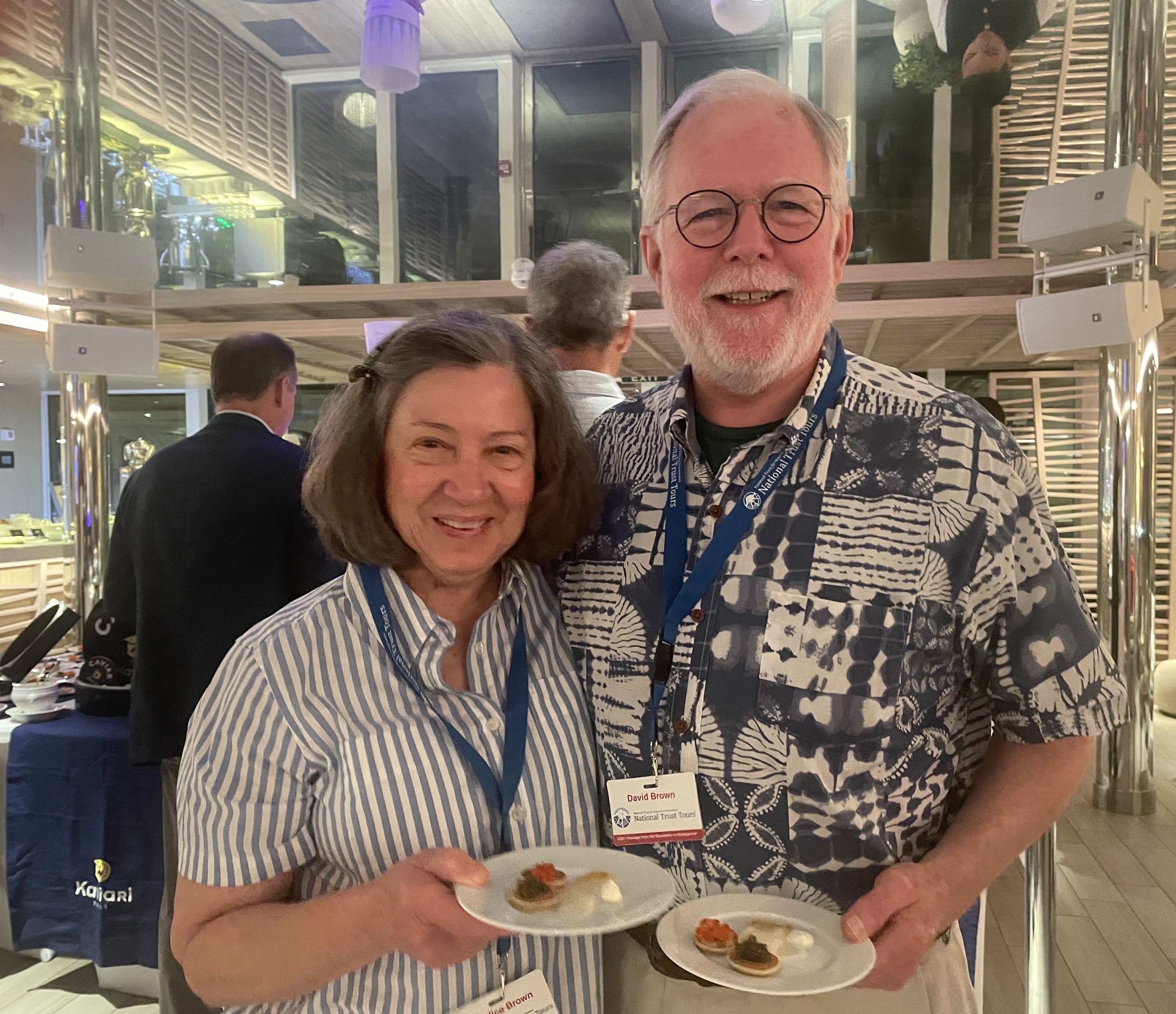
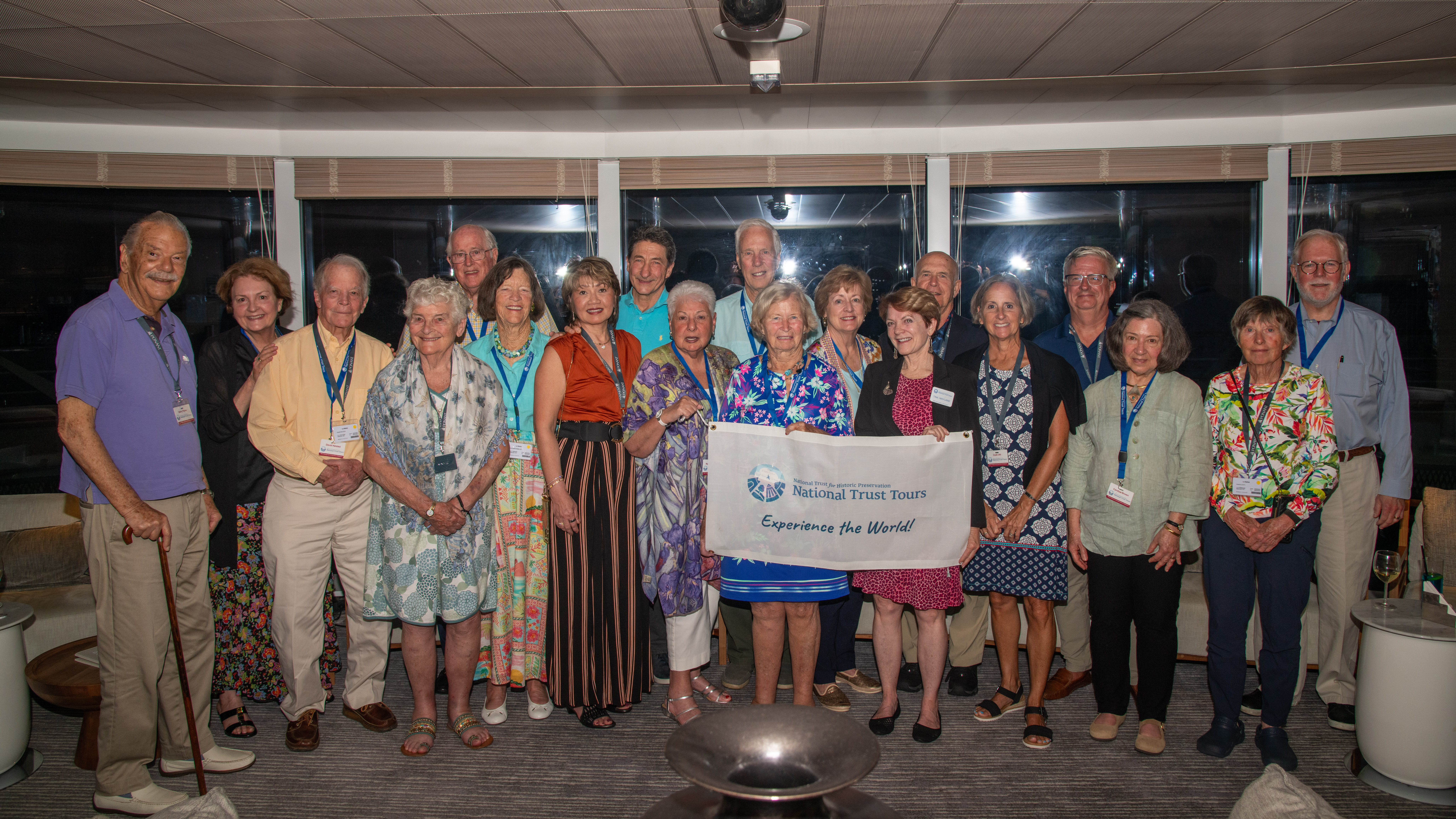
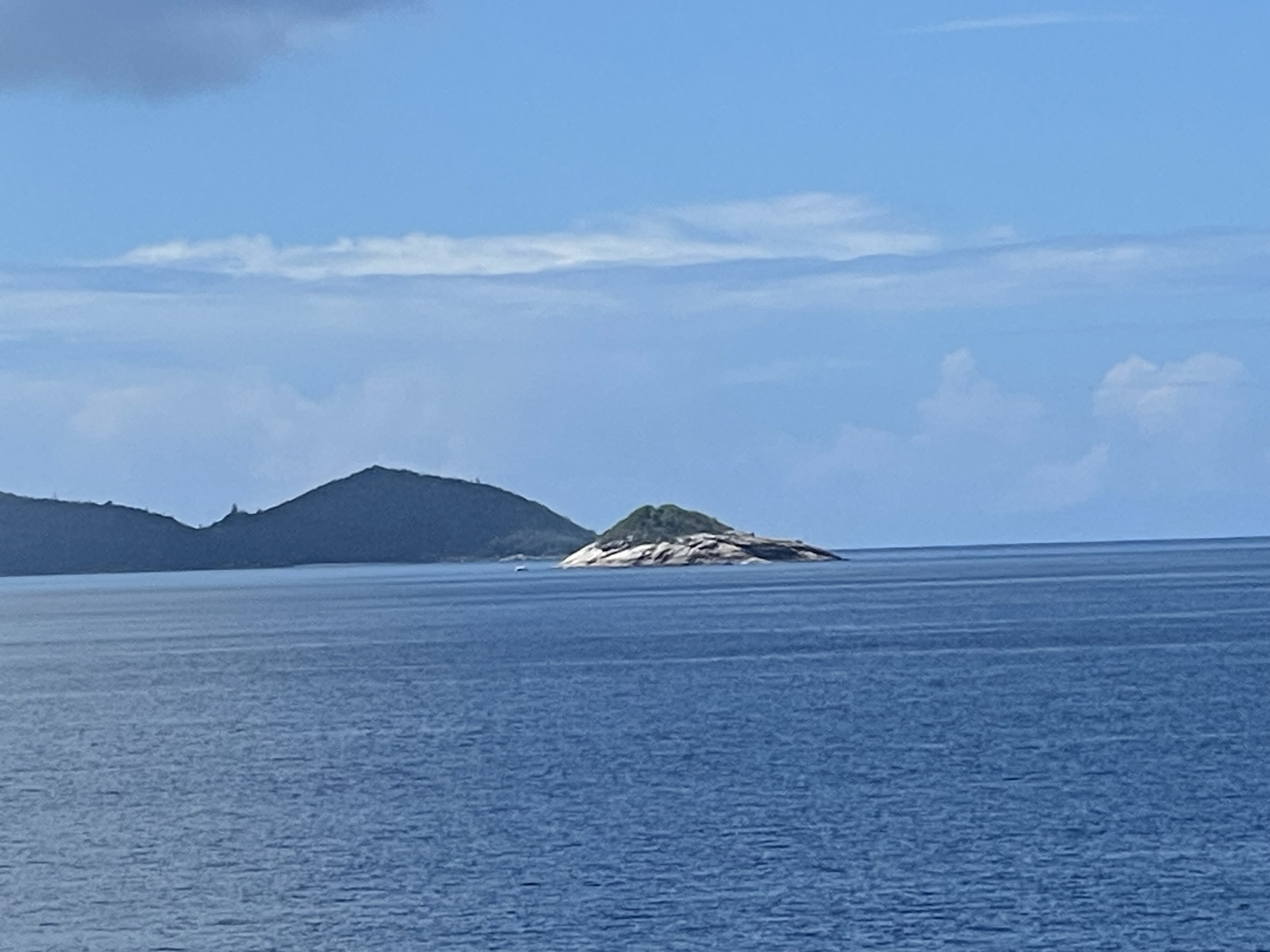
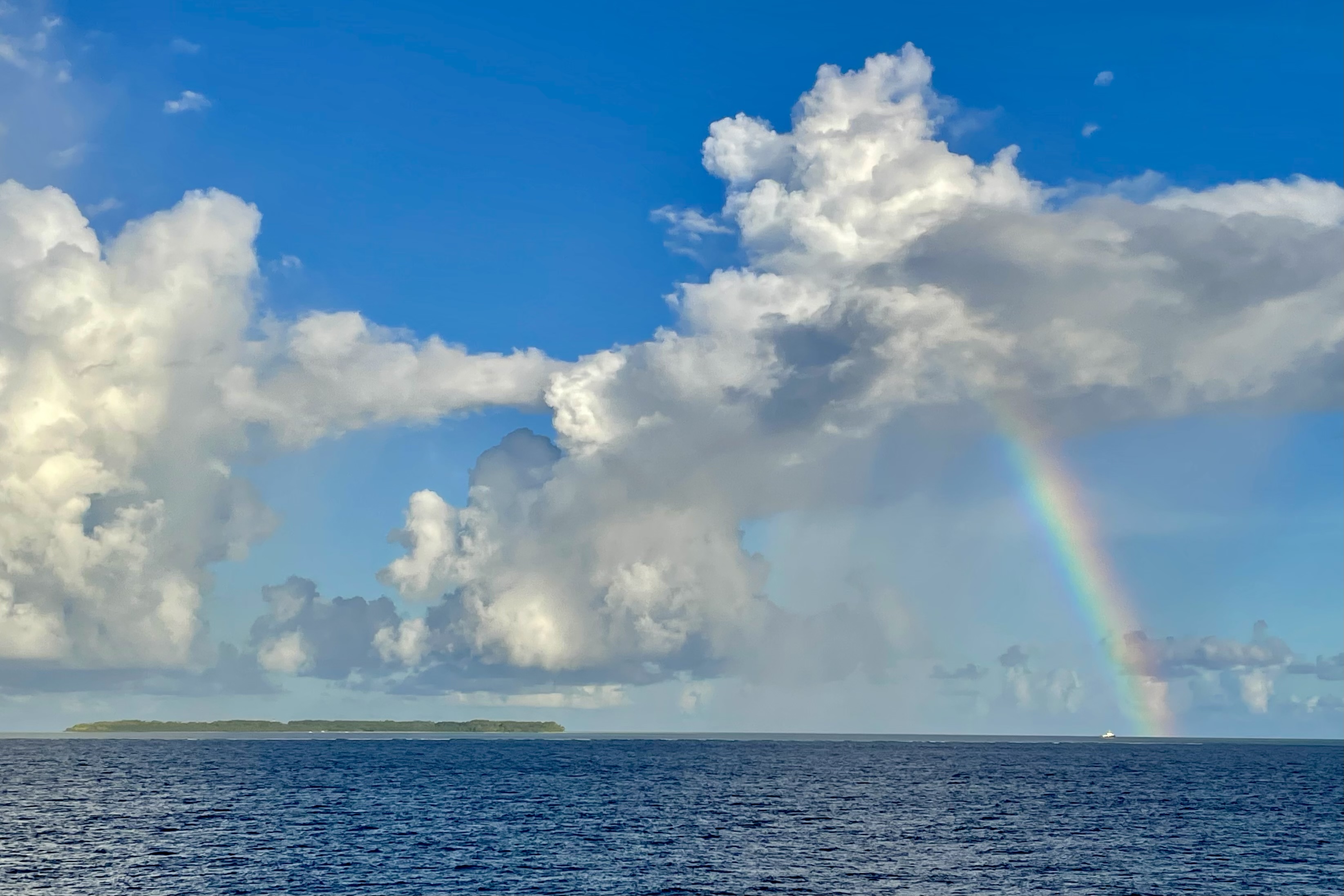
As we entered March we made our first stop in the remote Outer Islands of the Seychelles. Both of these rarely visited islands have diverse marine life without human intervention. Since this is in the tropics, it rains every day, but the rainbows over the Indian Ocean are nice tradeoffs.
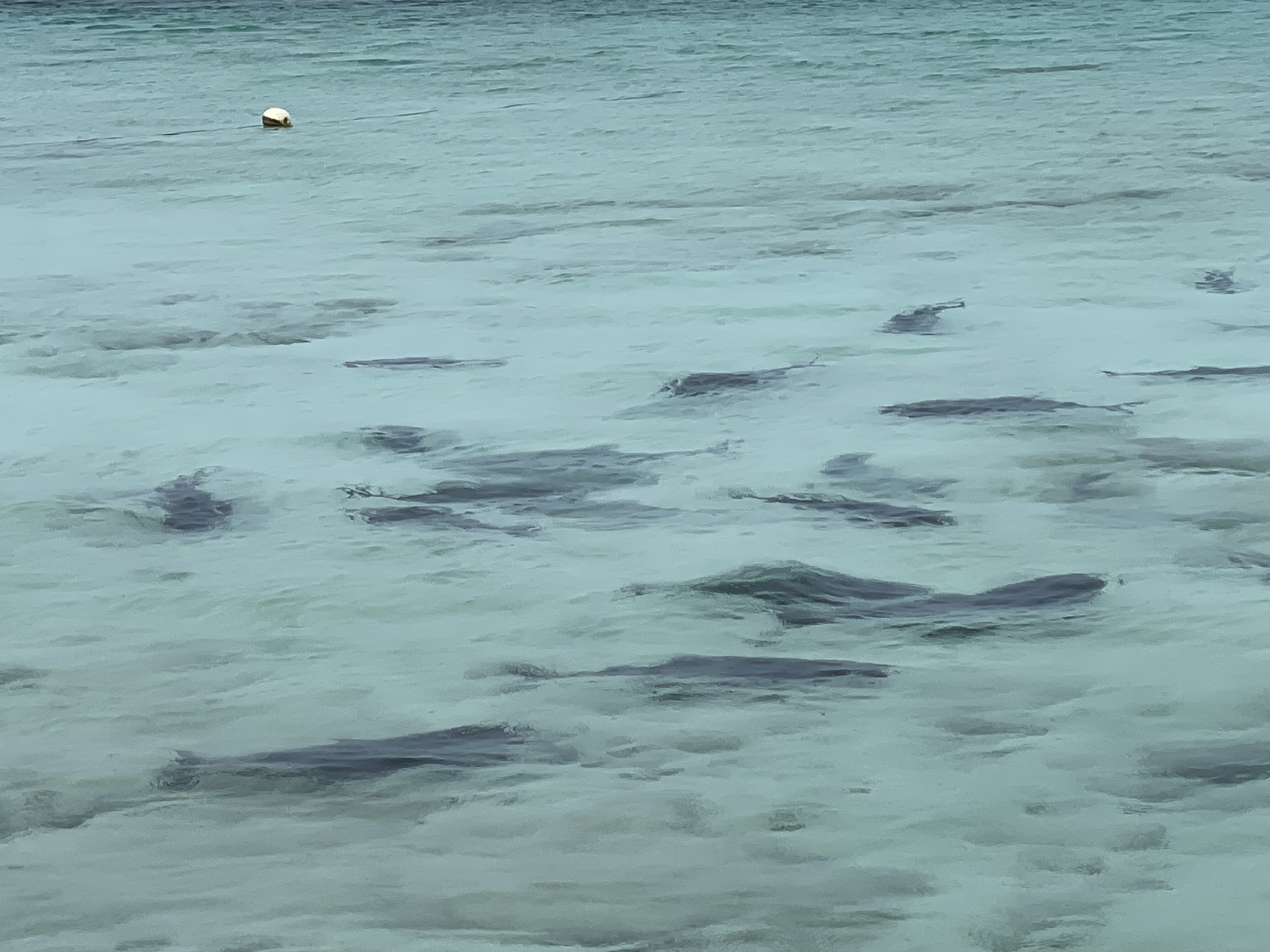
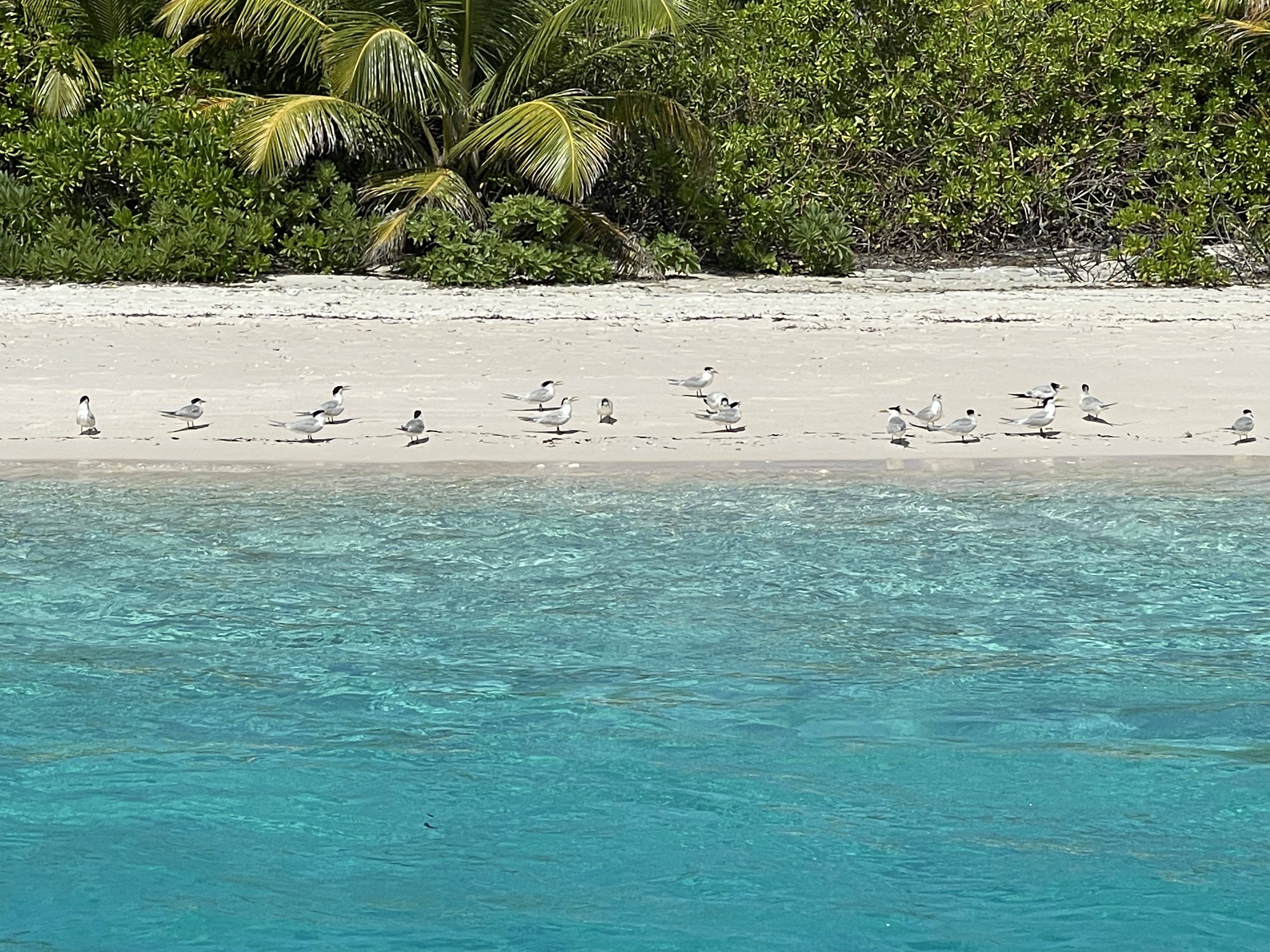
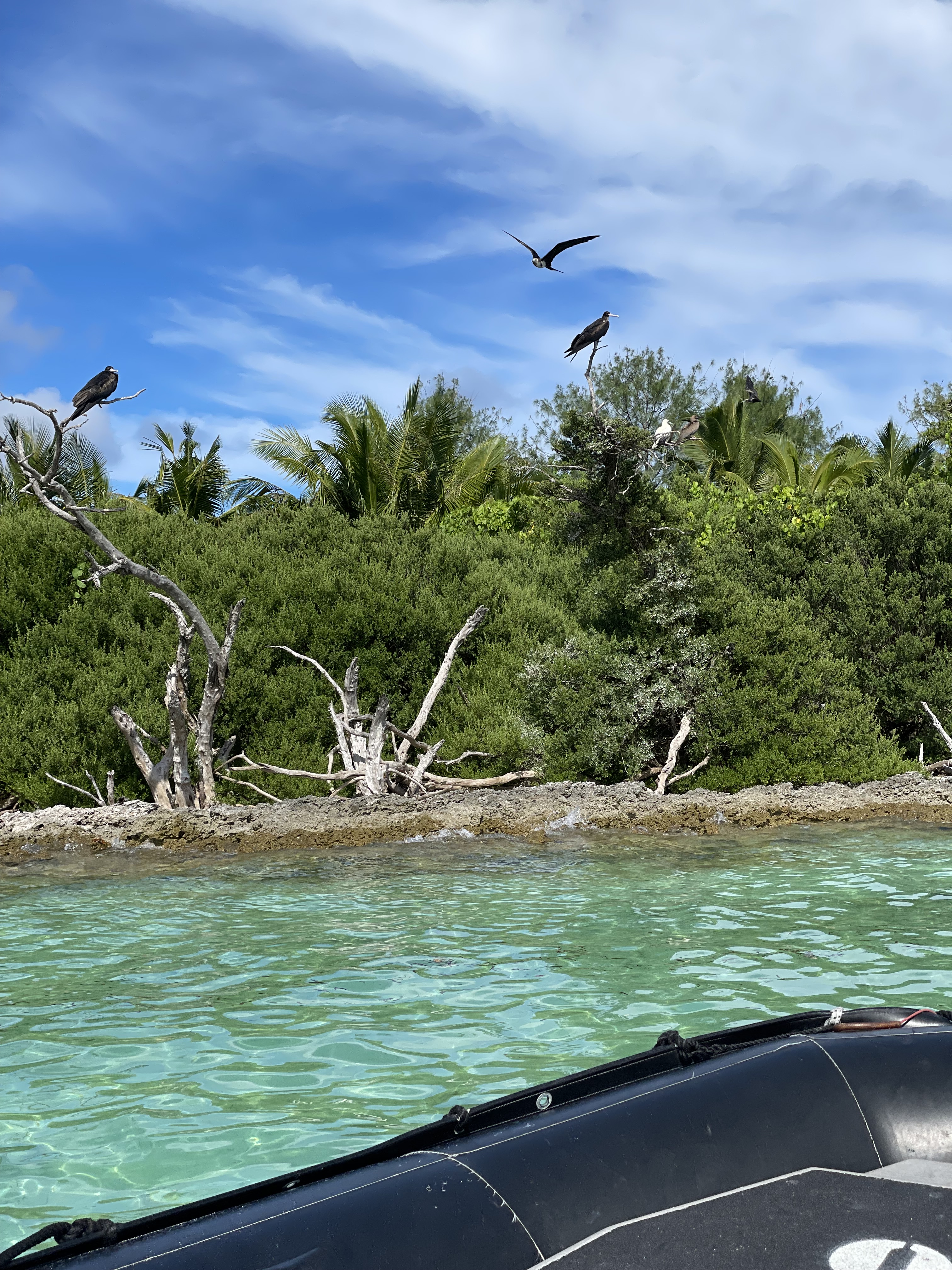
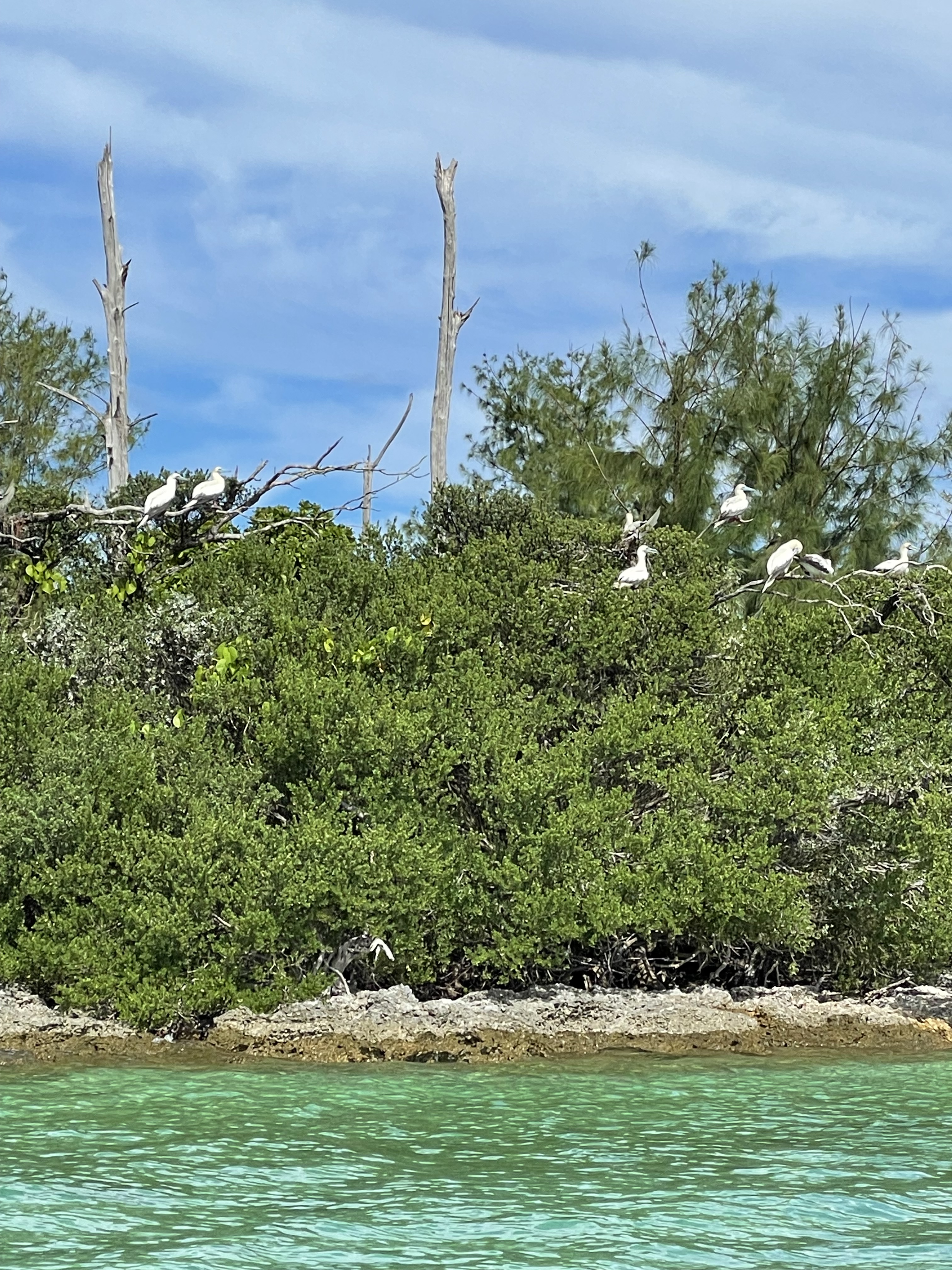
Farquhar Atoll was especially fascinating. In the Seychelles, half a million terns nest on islands such as this. “Fledglings must eventually take to the wing, but danger lurks beneath the waves, where giant trevally fish leap clear out of the water to snatch the birds.” We saw the fish swimming just off shore, but the birds were staying clear of the area while we visited.
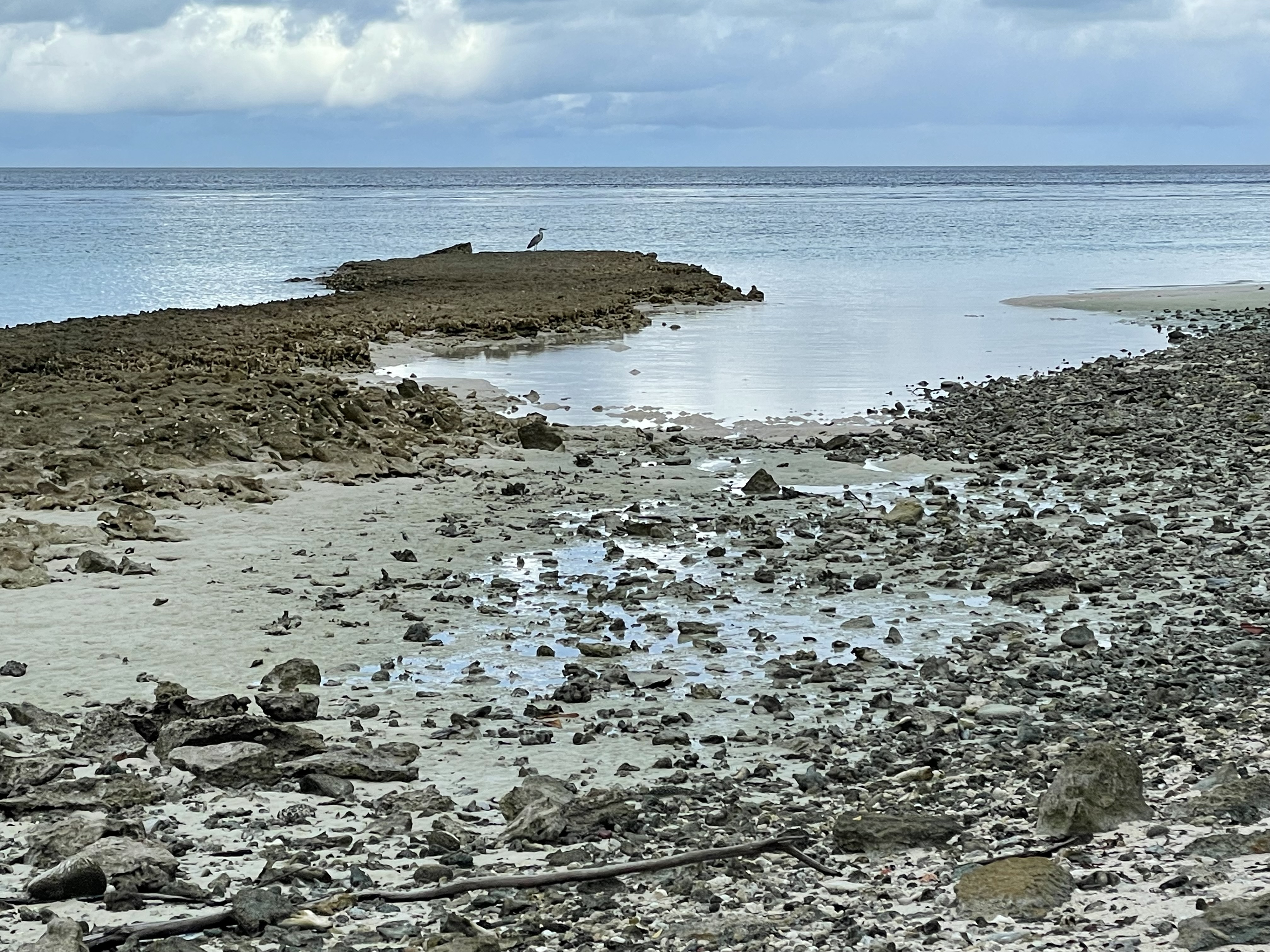
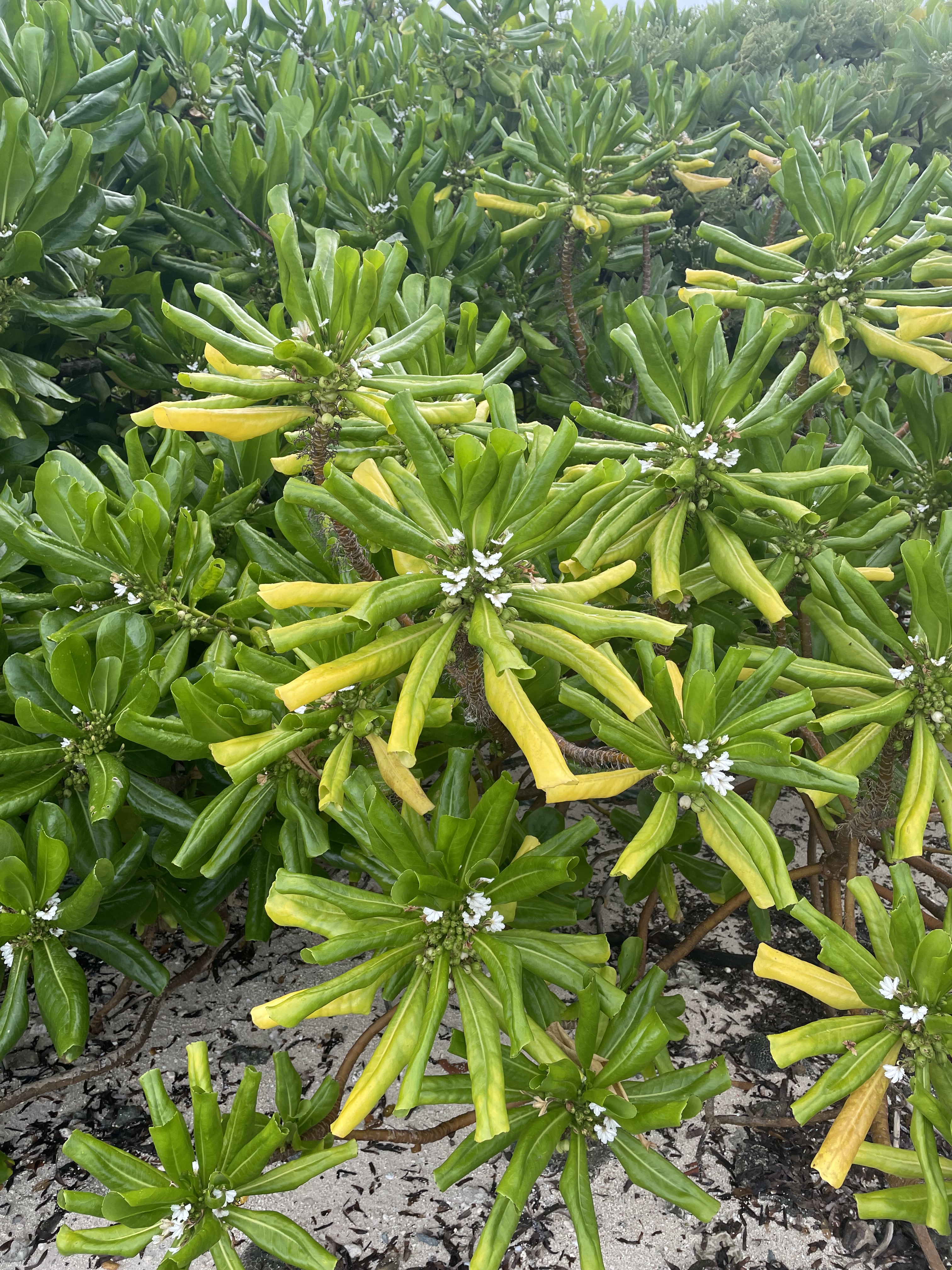
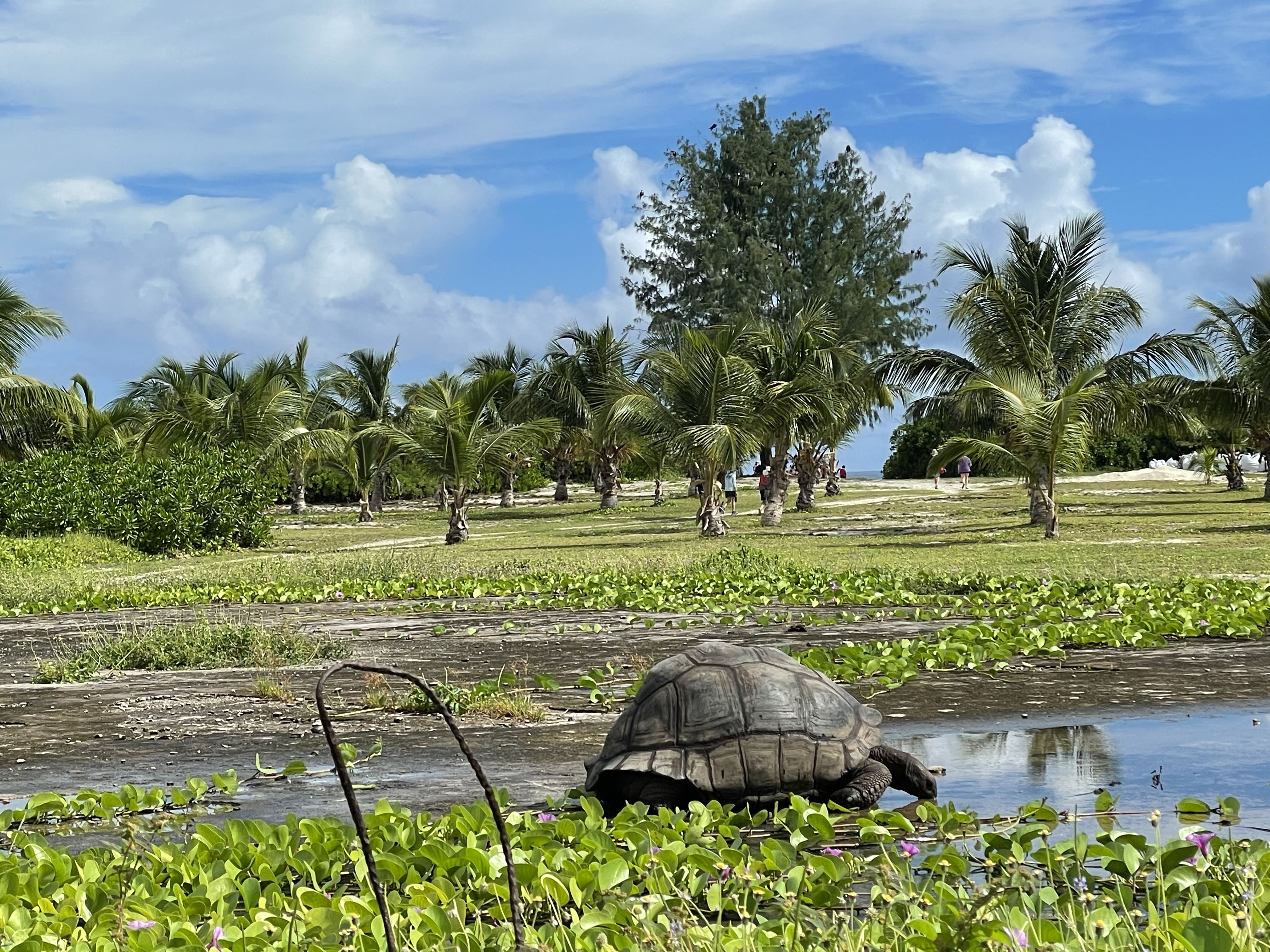
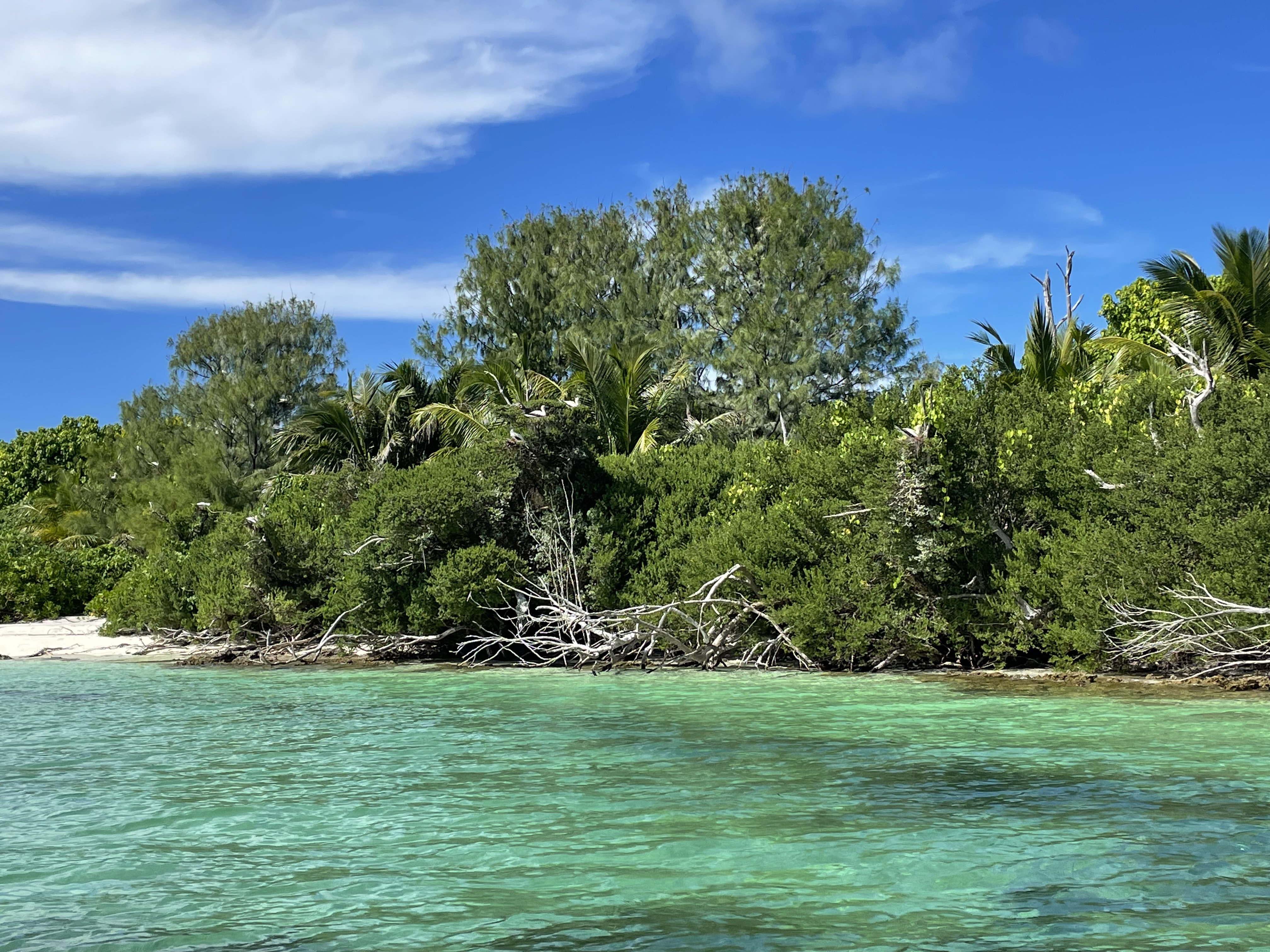
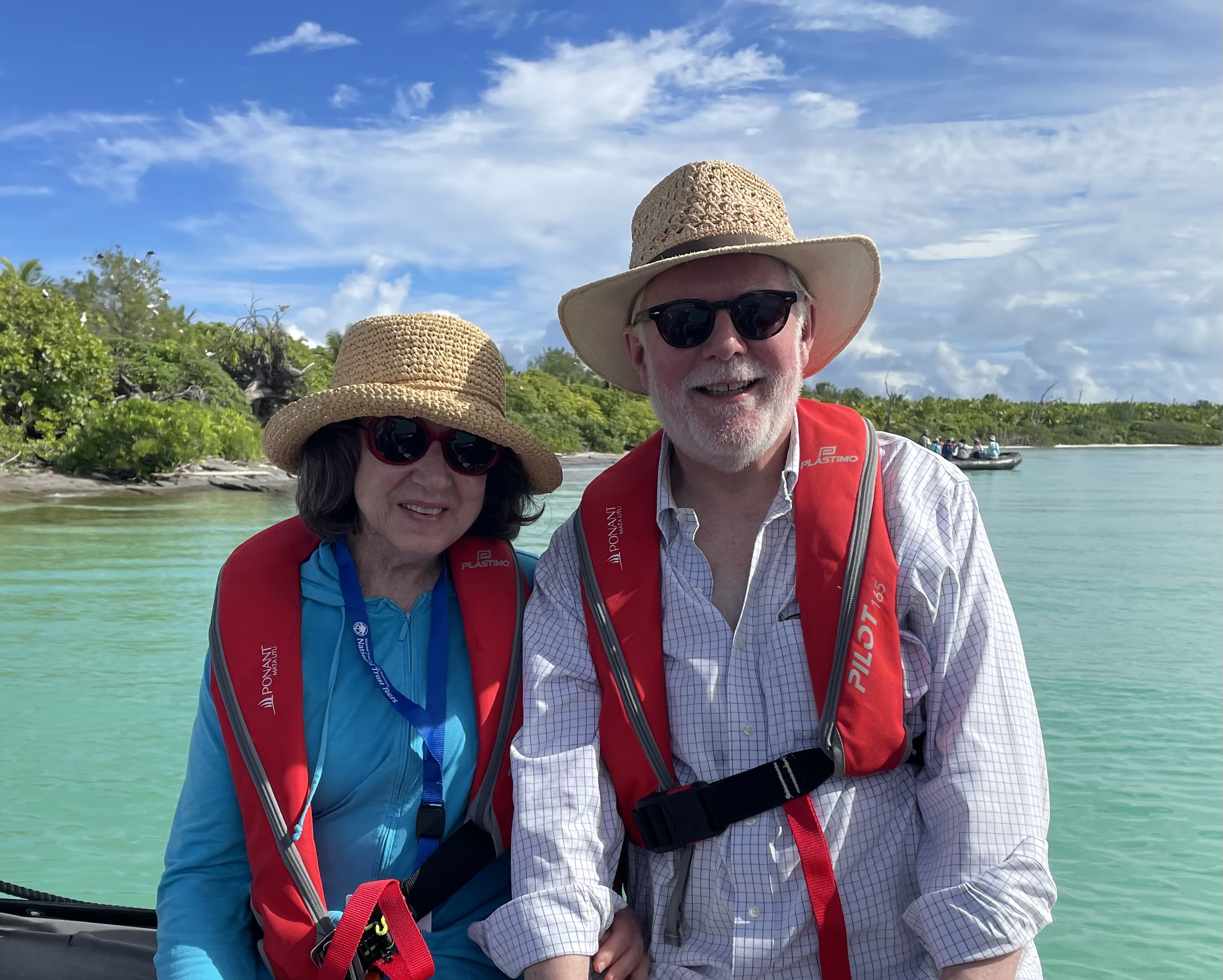
Our day at the Farquhar Atoll featured an afternoon zodiac tour of the lagoon, which was teeming with birds along the shoreline and in the trees.
MADAGASCAR AND THE MONTAGNE D’AMBRE NATIONAL PARK
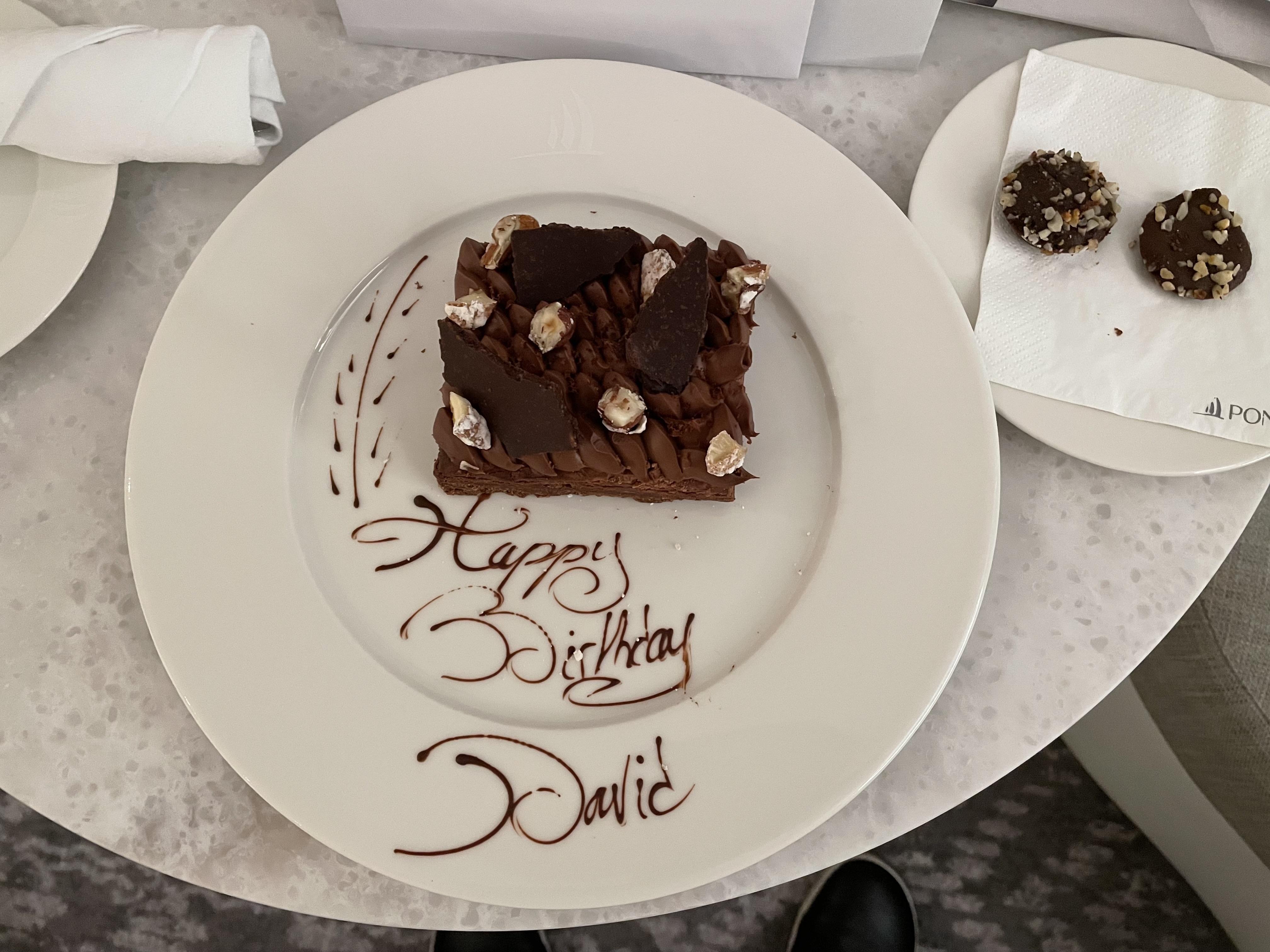
We sailed into Madagascar on my birthday, where the captain, the head of the naturalist team, our dinner table guests, and the good folks at Gohagan Travel all wished me happy travels in this upcoming trip around the sun.
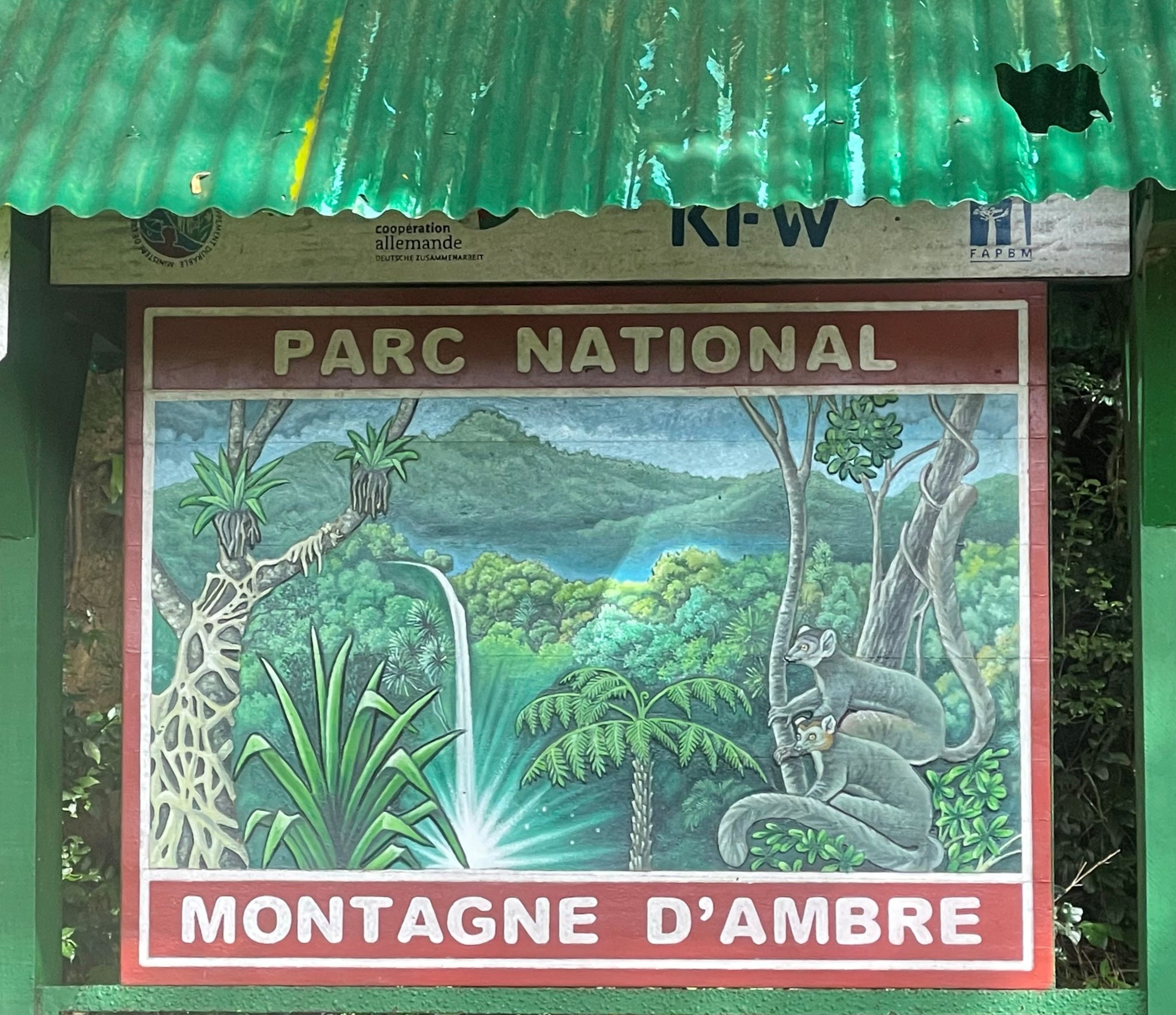
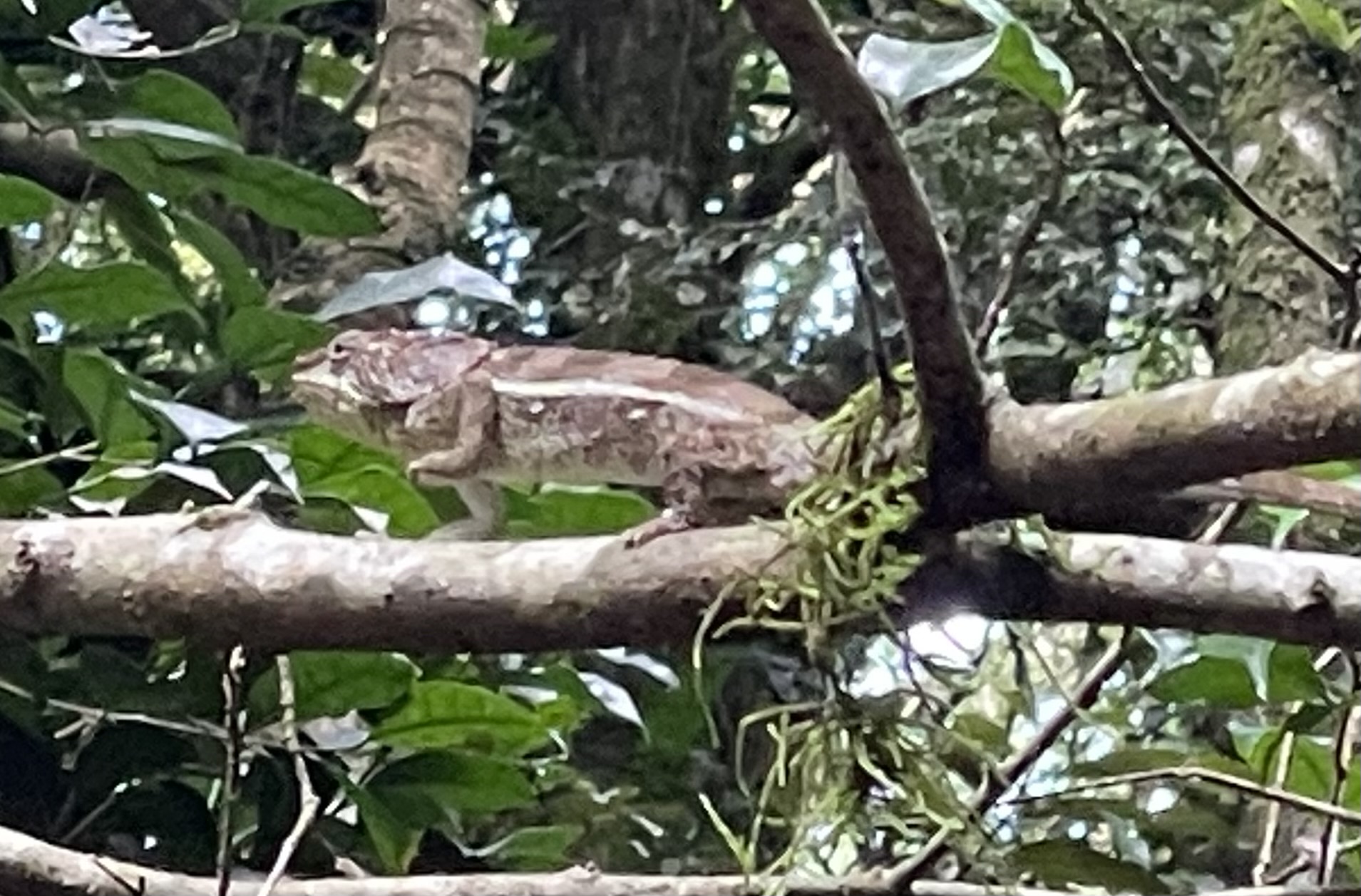
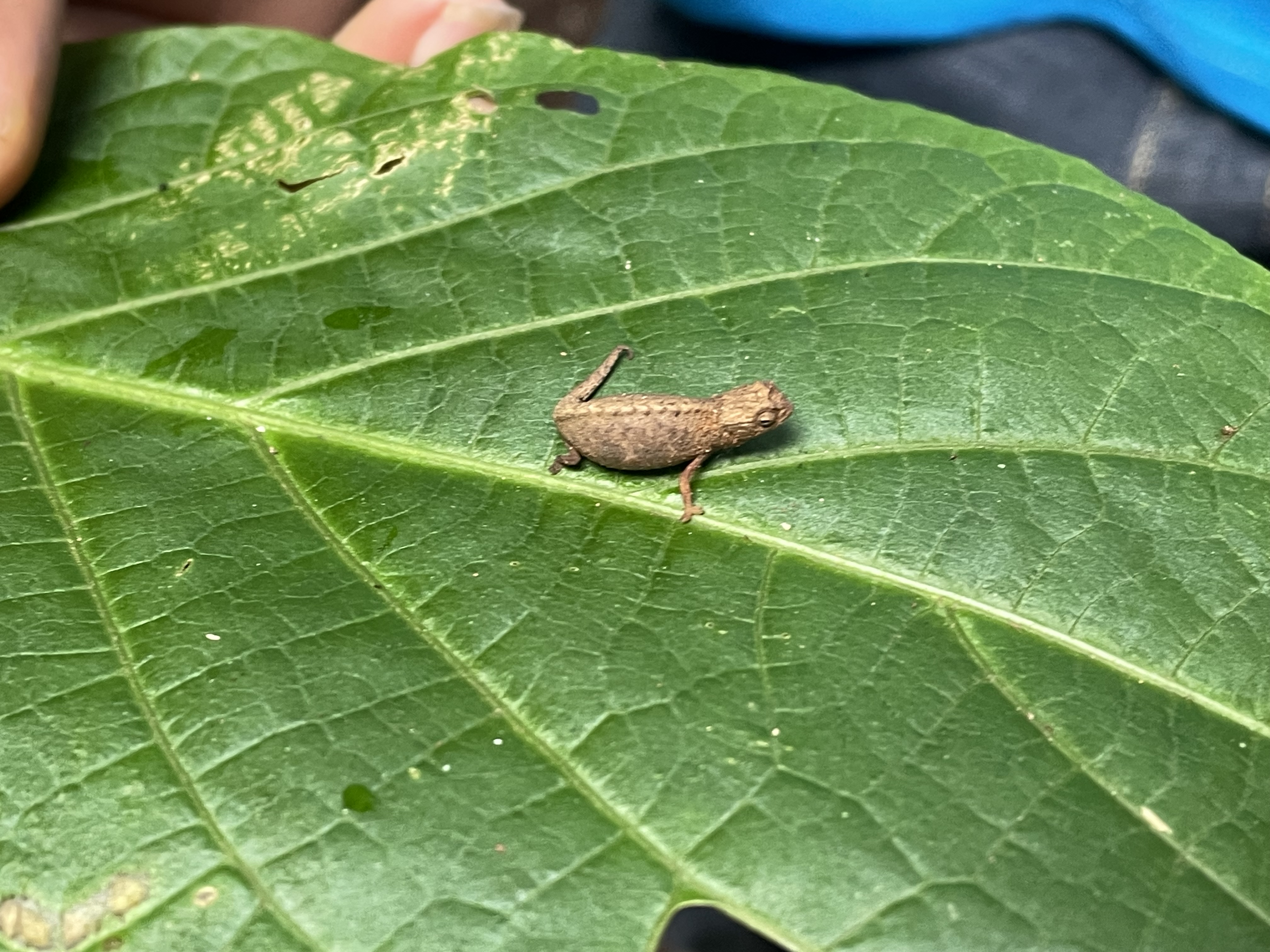
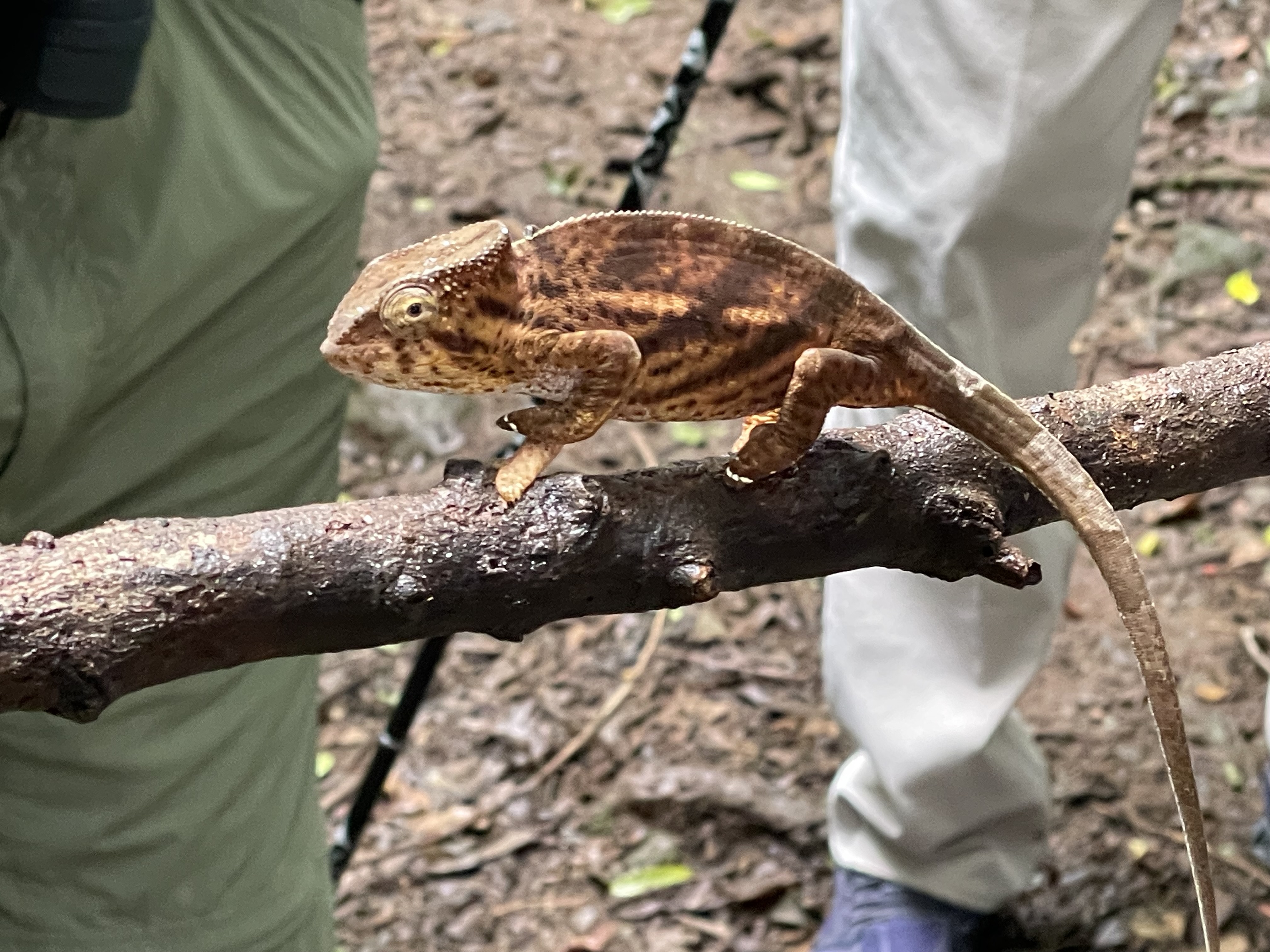
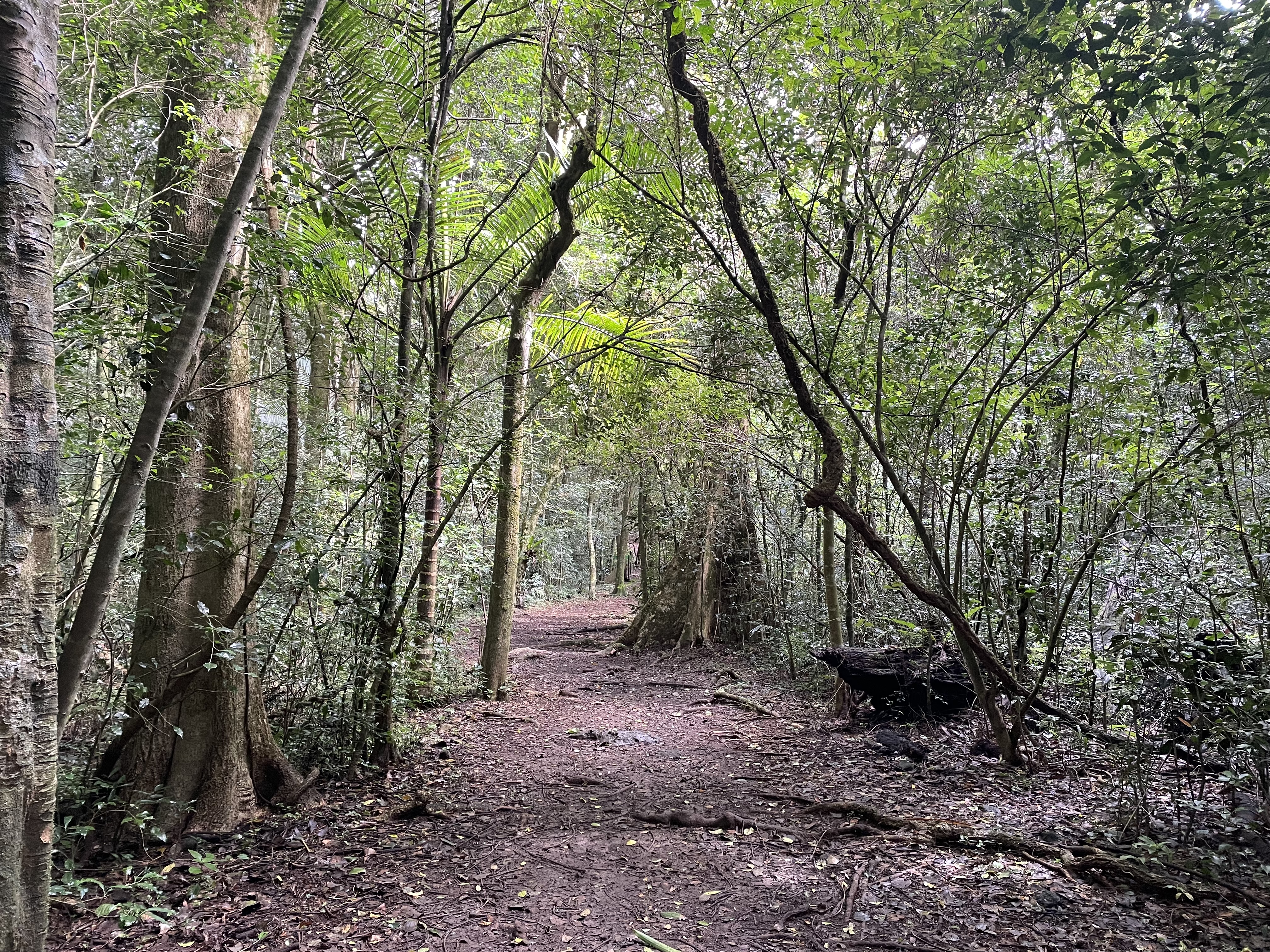
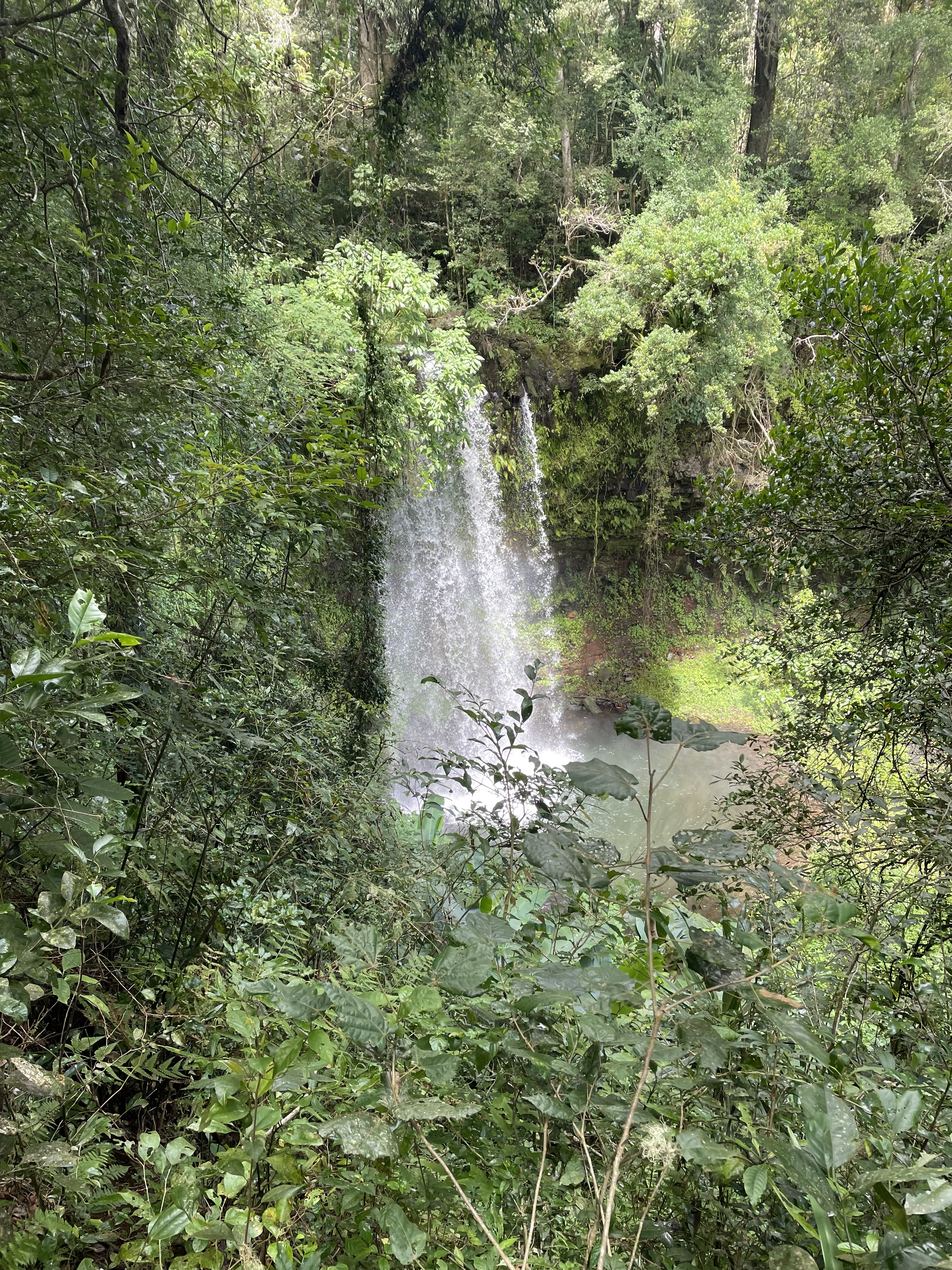
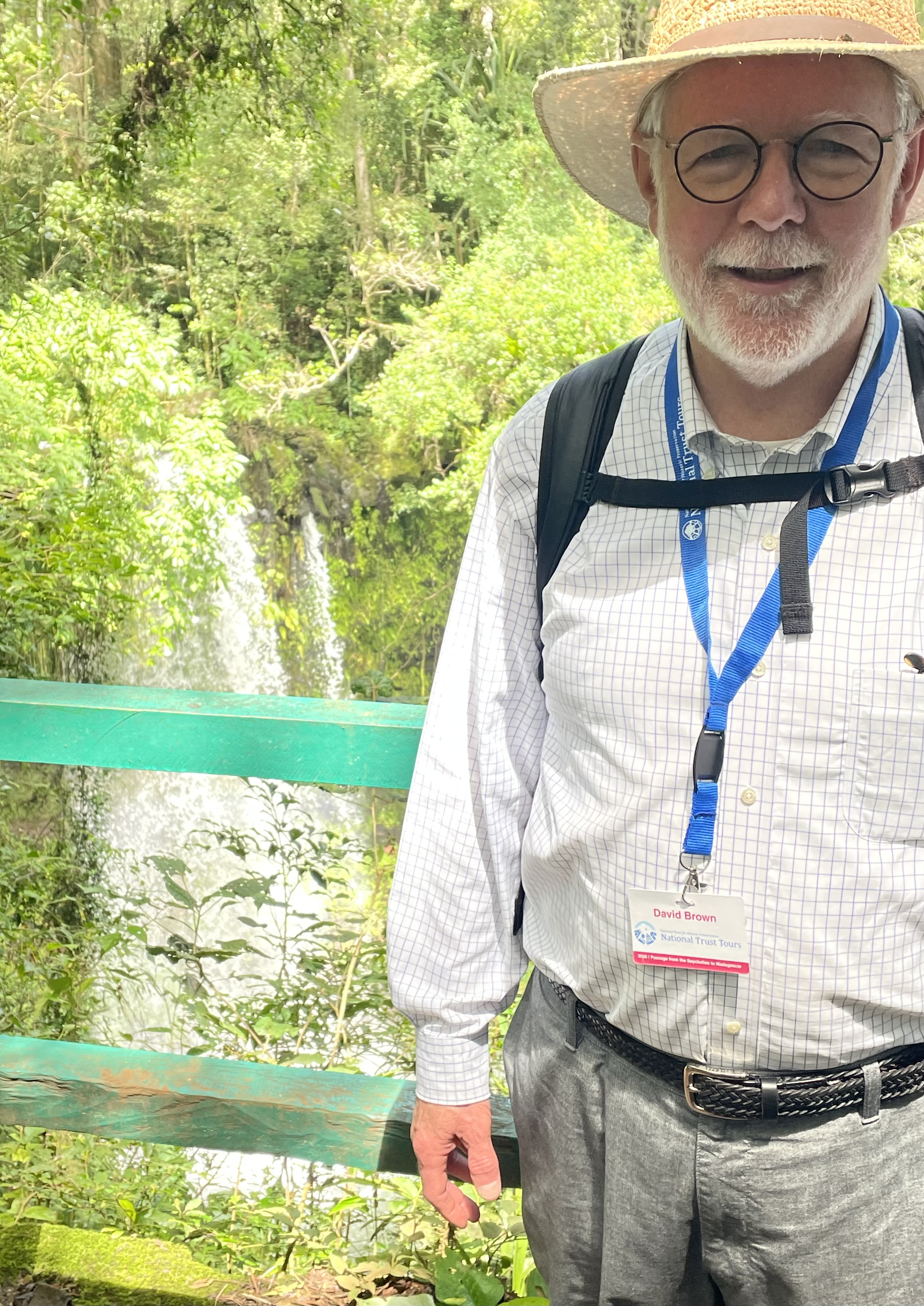
Of special interest here was the walk through Montagne d’Ambre National Park, the nation’s first and home to a number of endemic species, including very tiny chameleon. The park lies in the far north of the island on a volcanic massif and is a little cooler and fresher than the surrounding area.
NOSY KOMBA: LEMUR ISLAND!
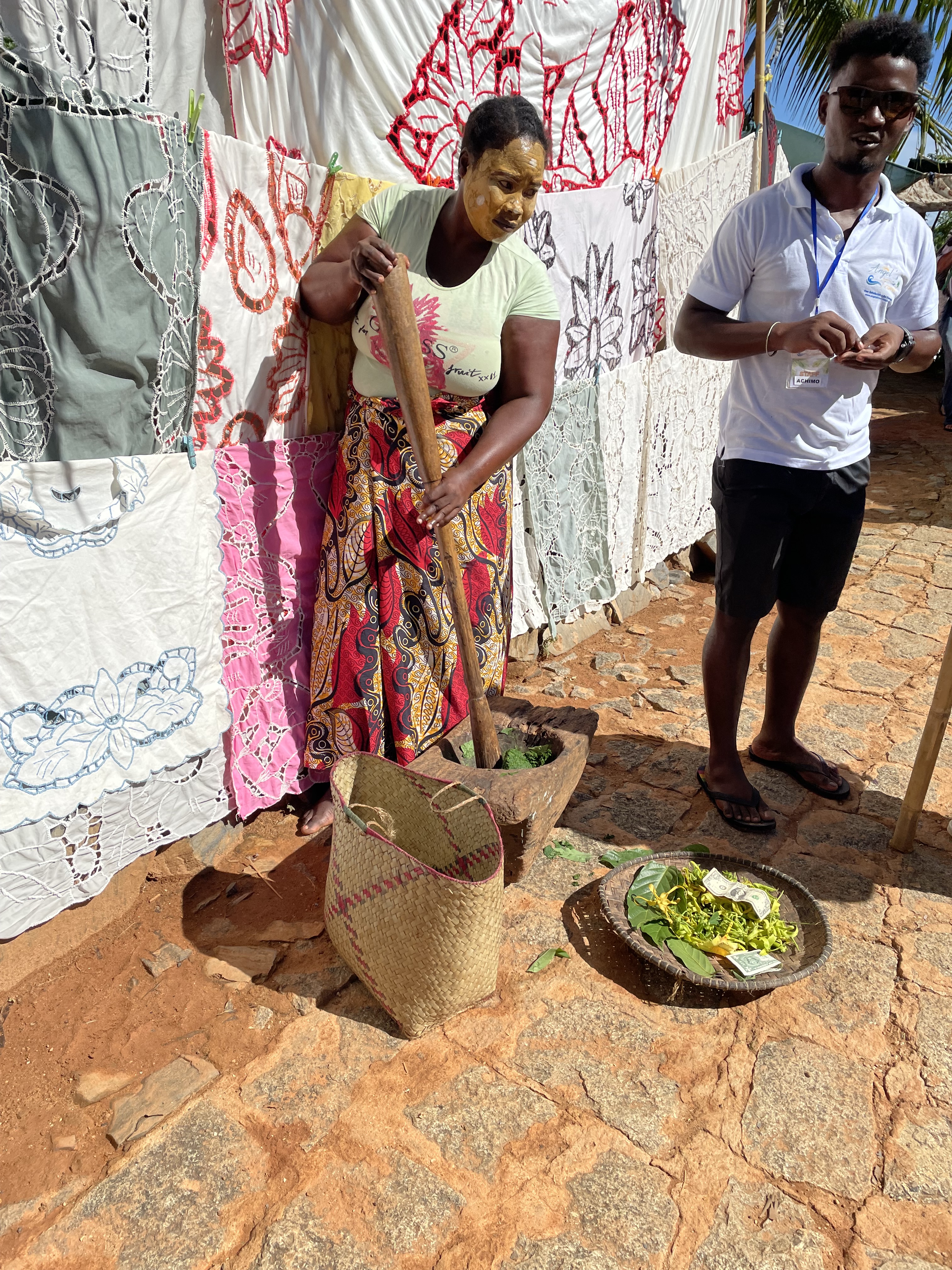
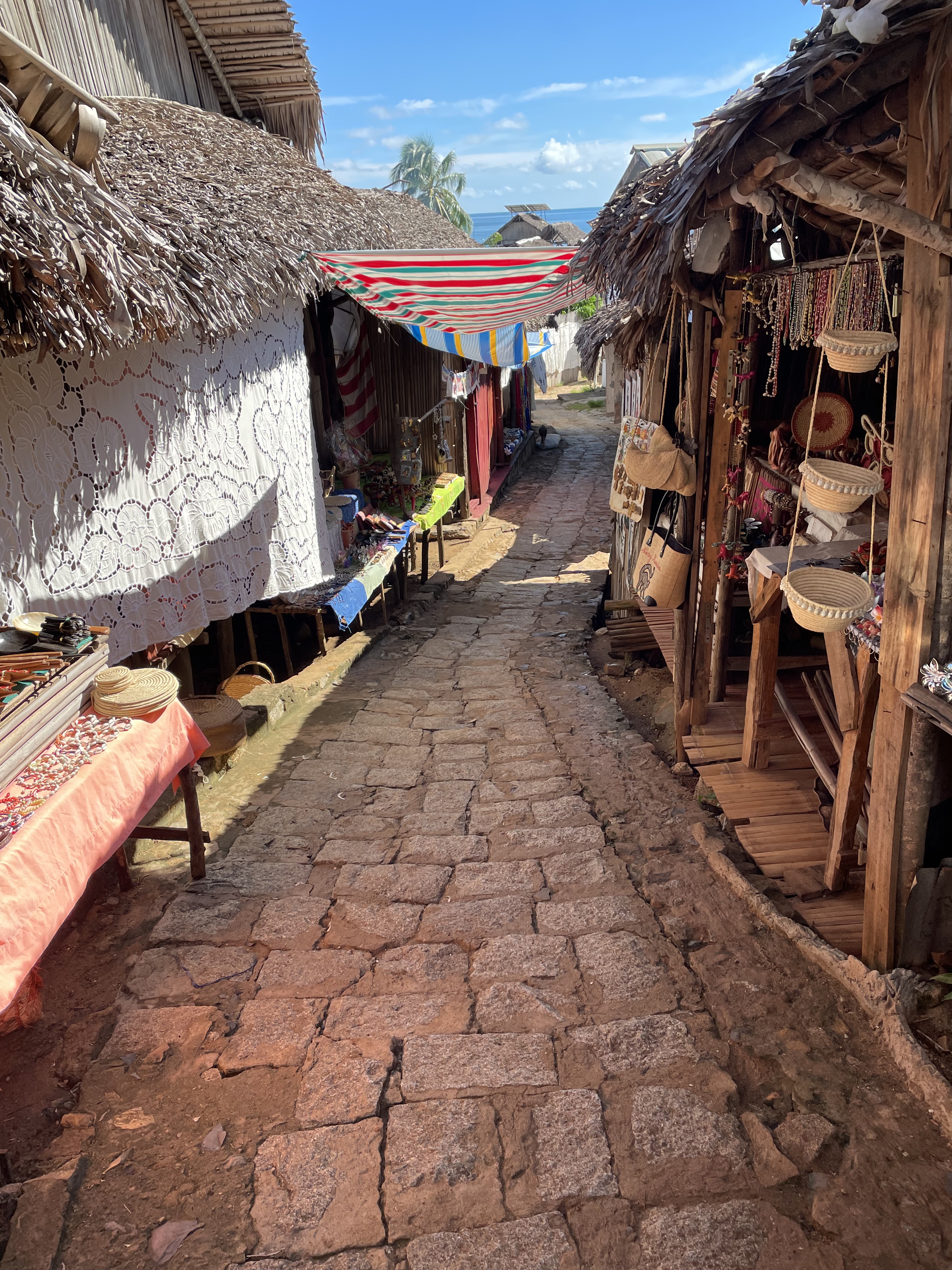
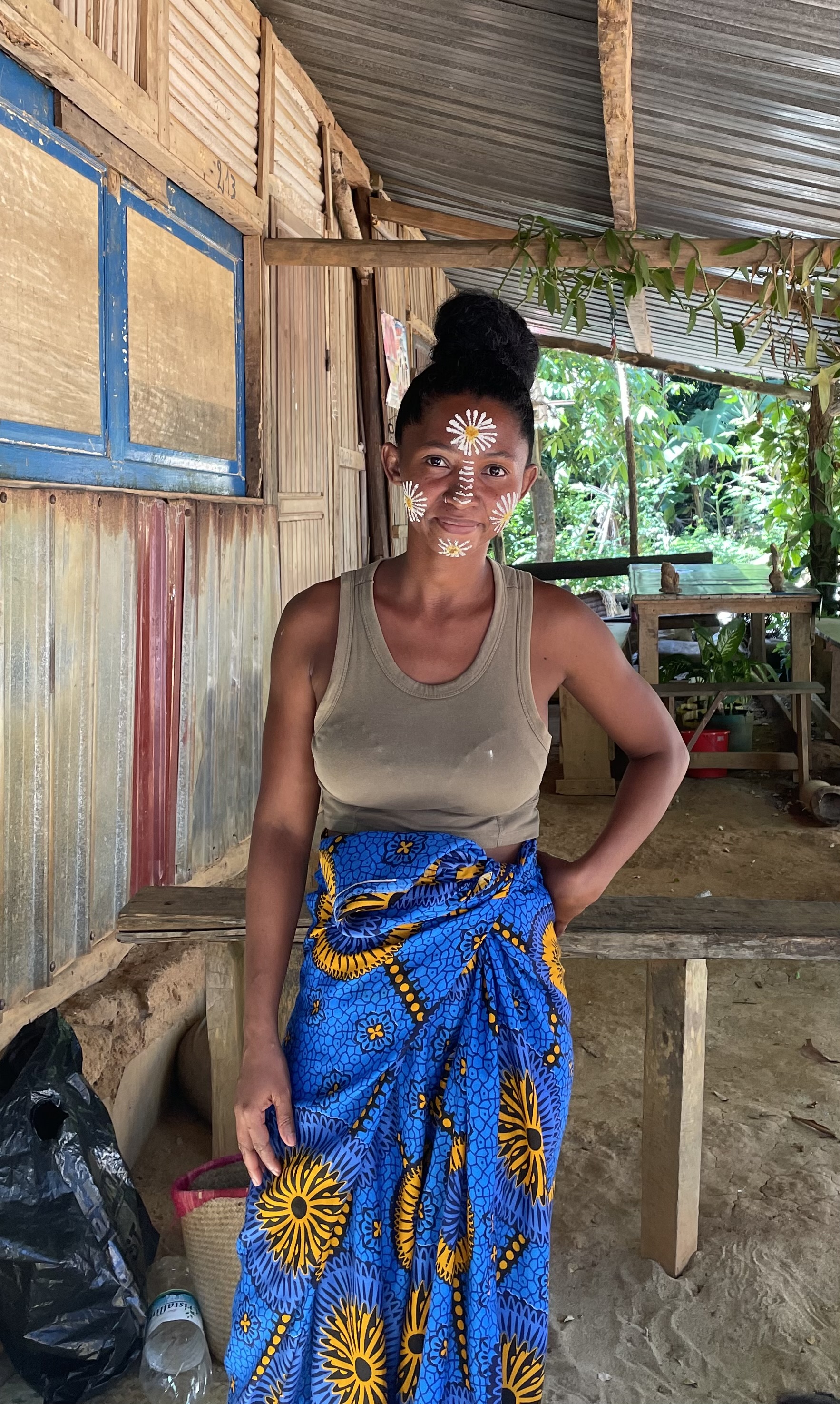
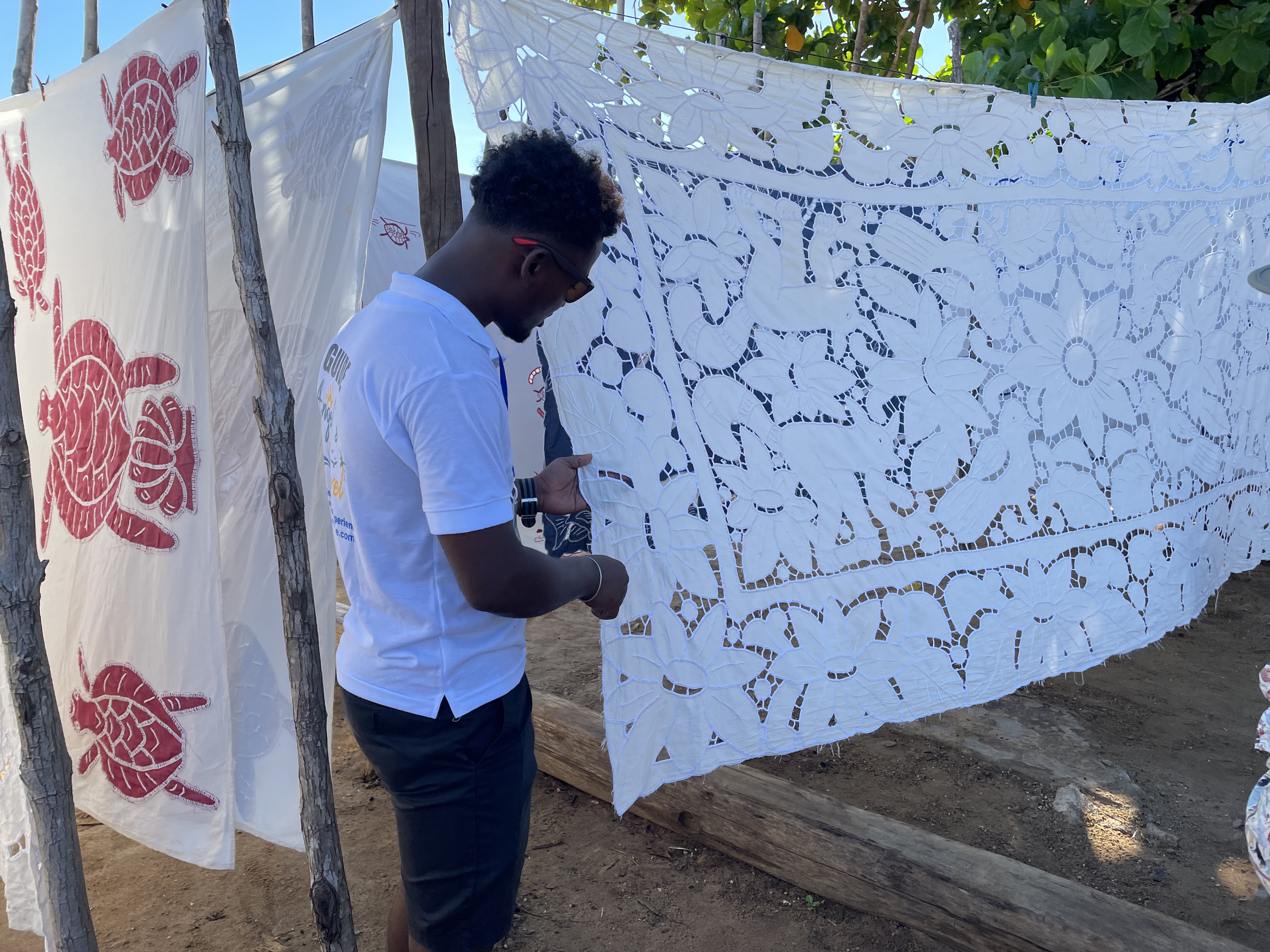
On March 7th we anchored off Nosy Komba, known throughout the world as Lemur Island. One first strolls through the village which is lively and full of entrepreneurs, craftspeople, and life on this Saturday.
We then entered into the lemur preserve, where we saw plenty of these endearing animals which are endemic to Madagascar, having evolved there separately to apes and monkeys, their closest relatives.
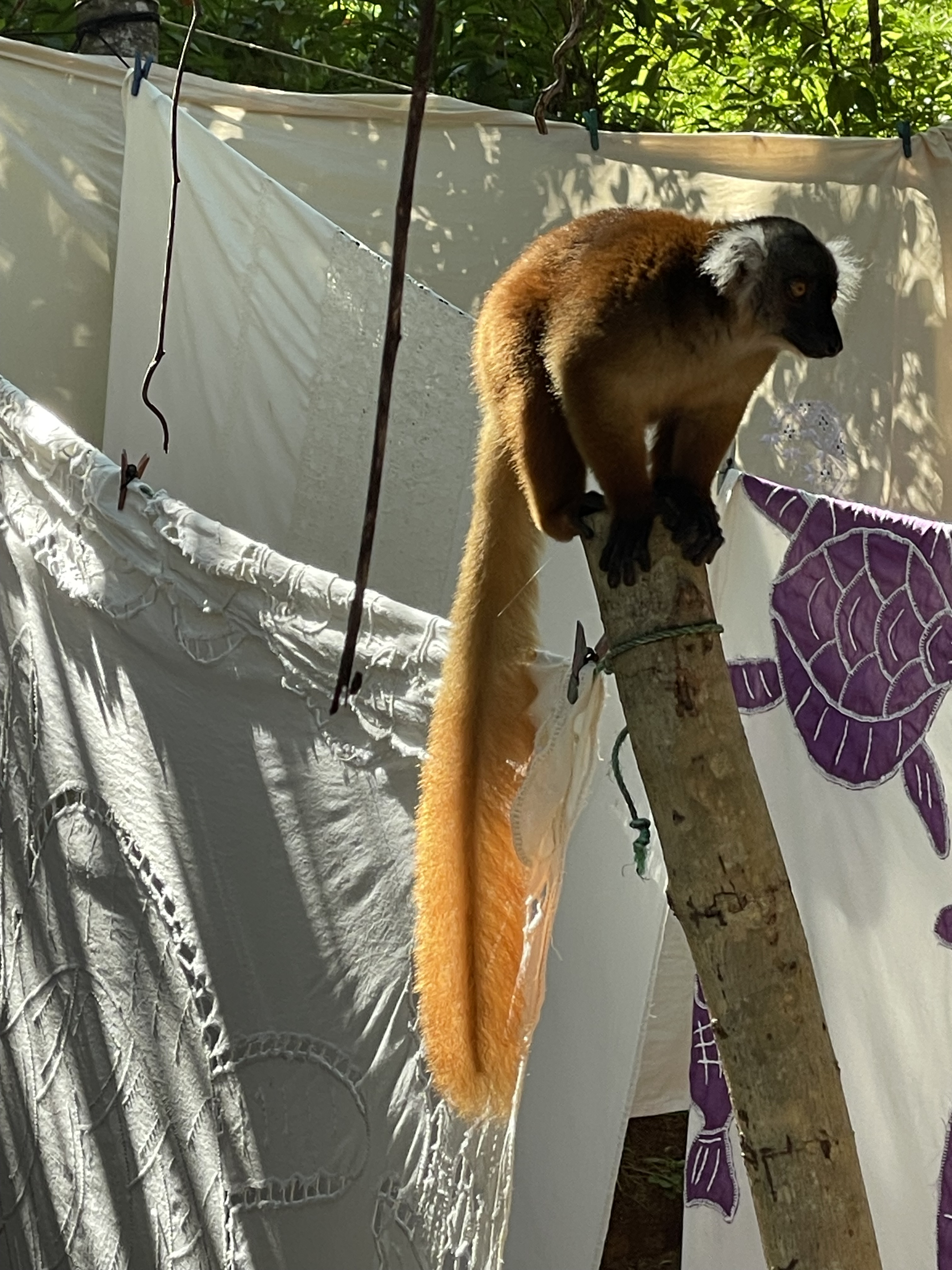
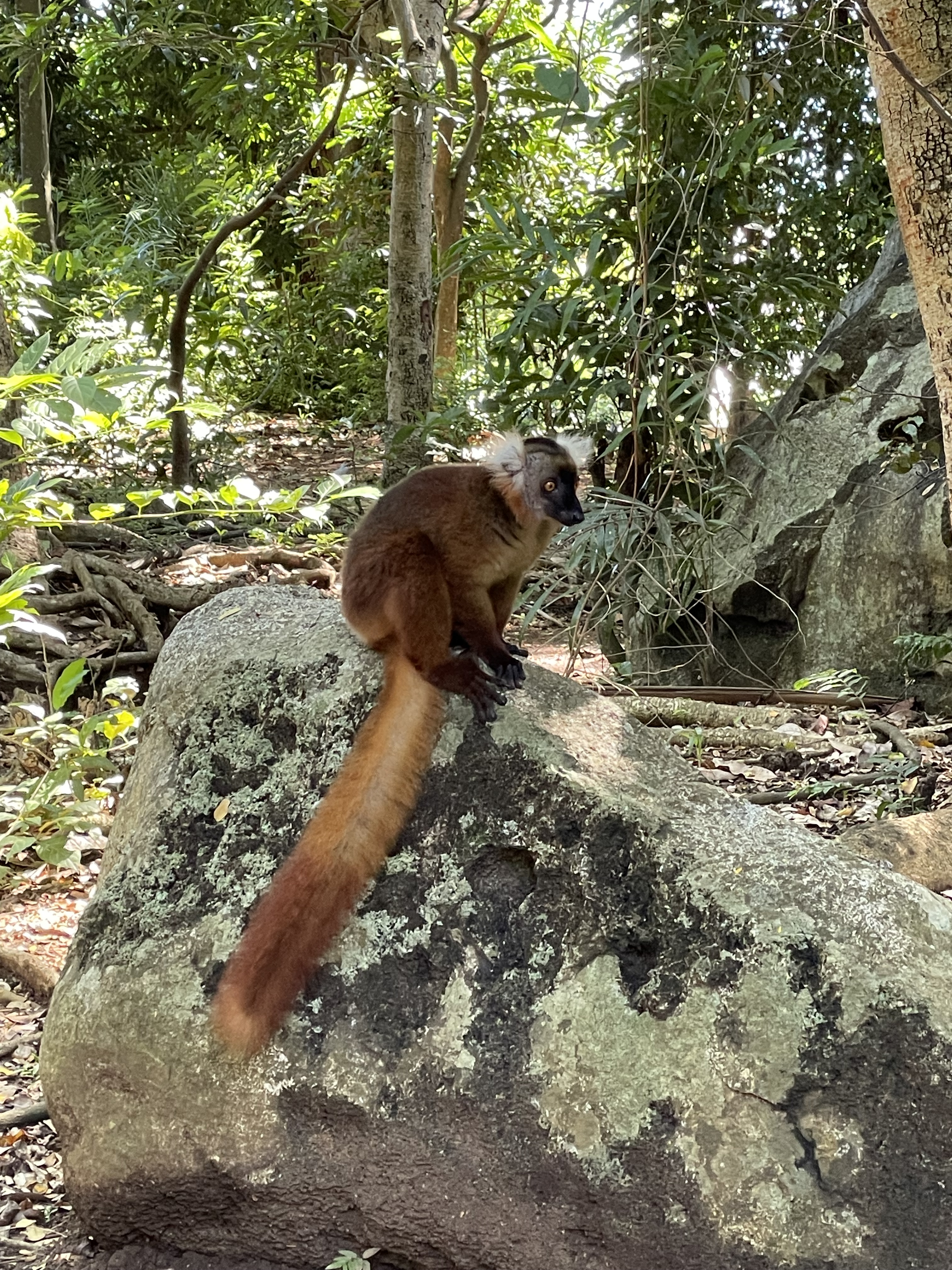
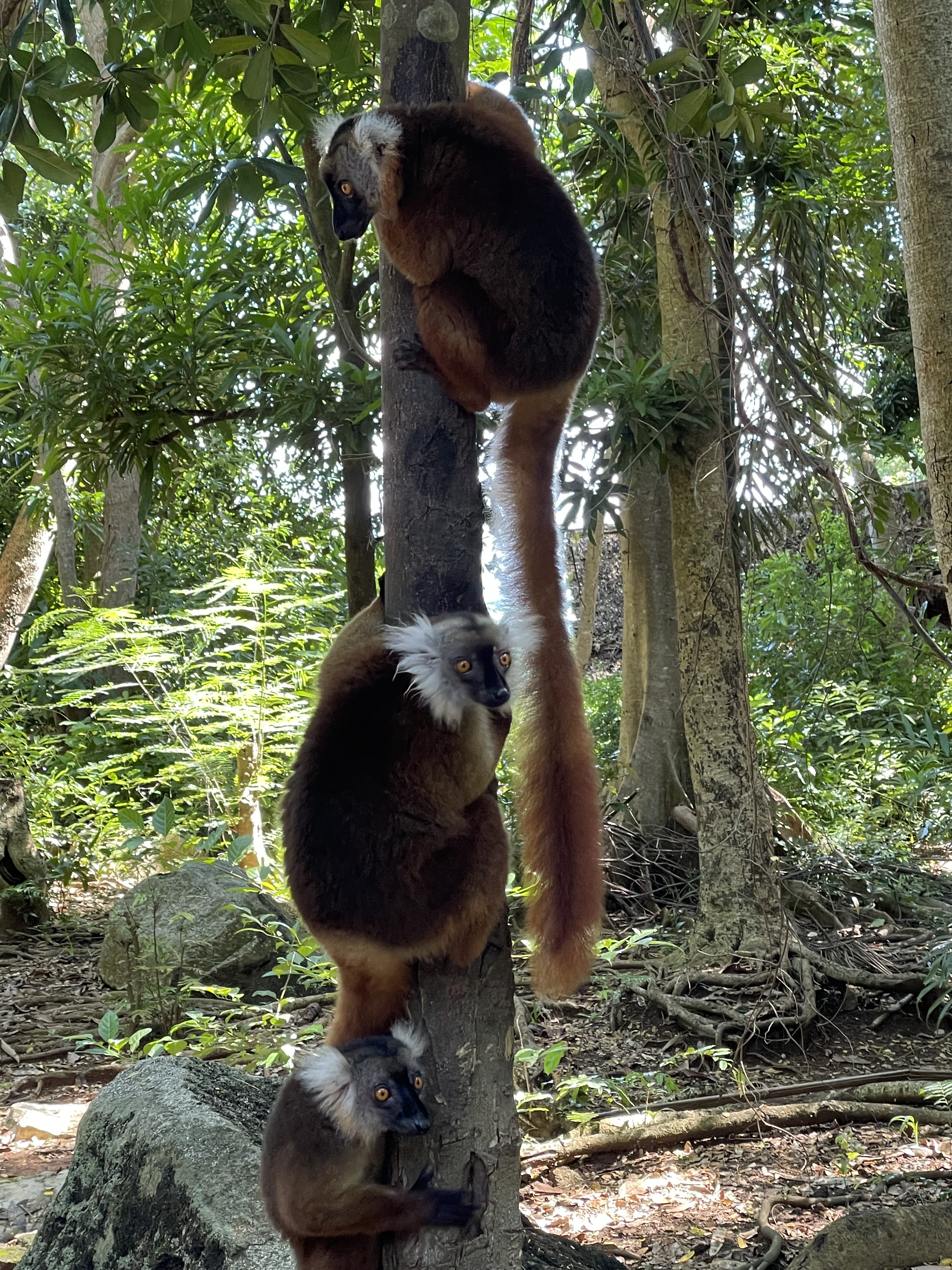
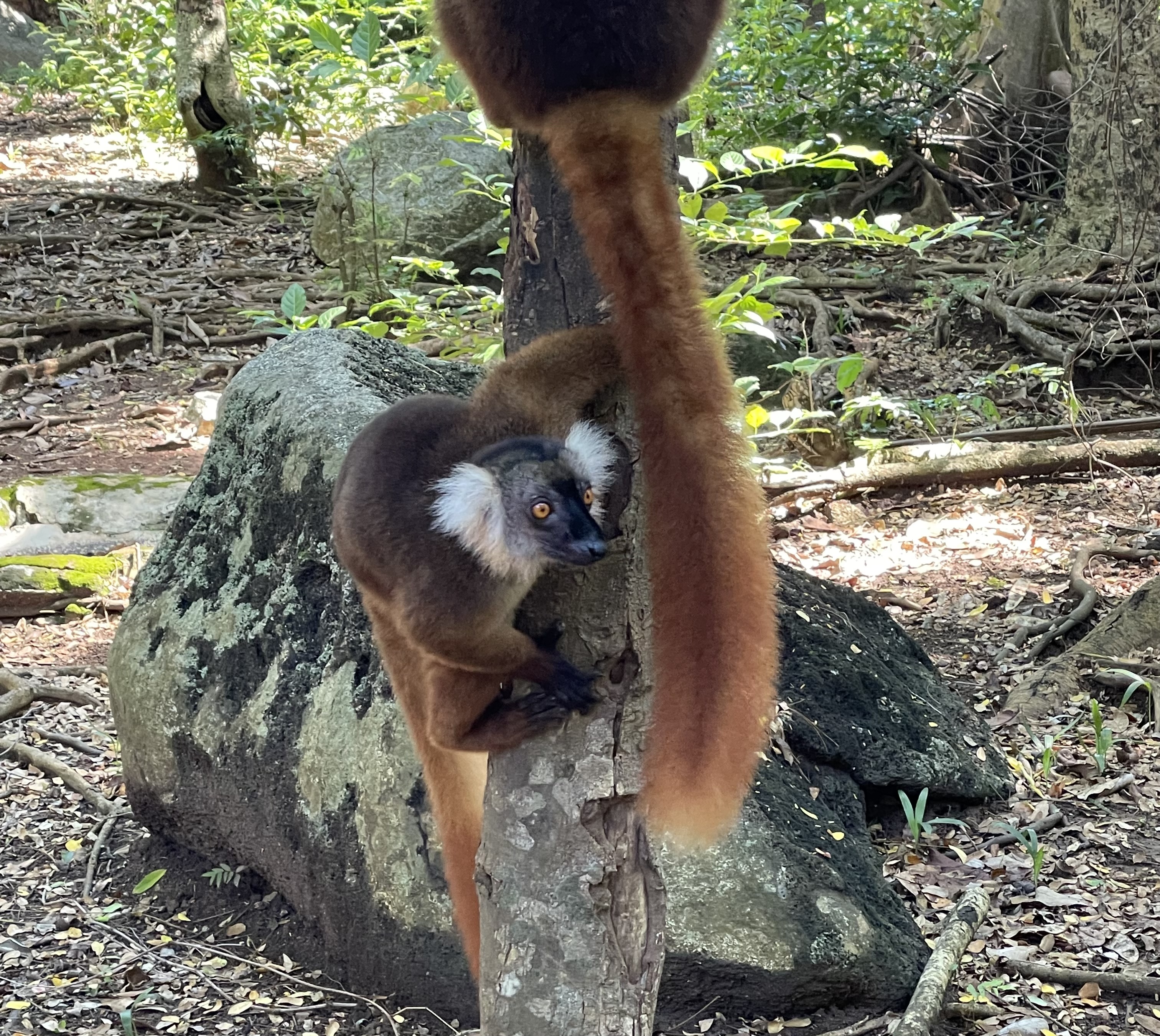
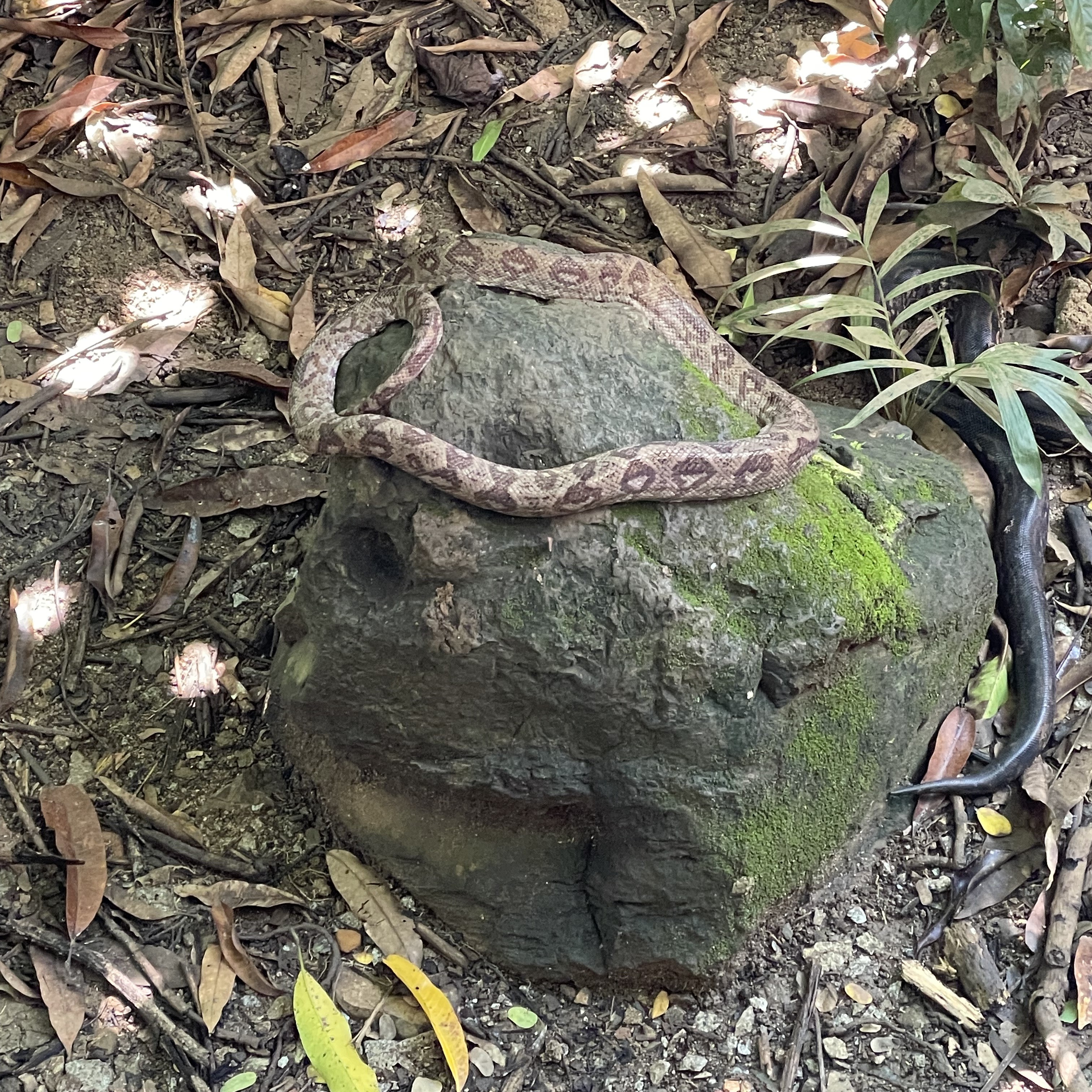
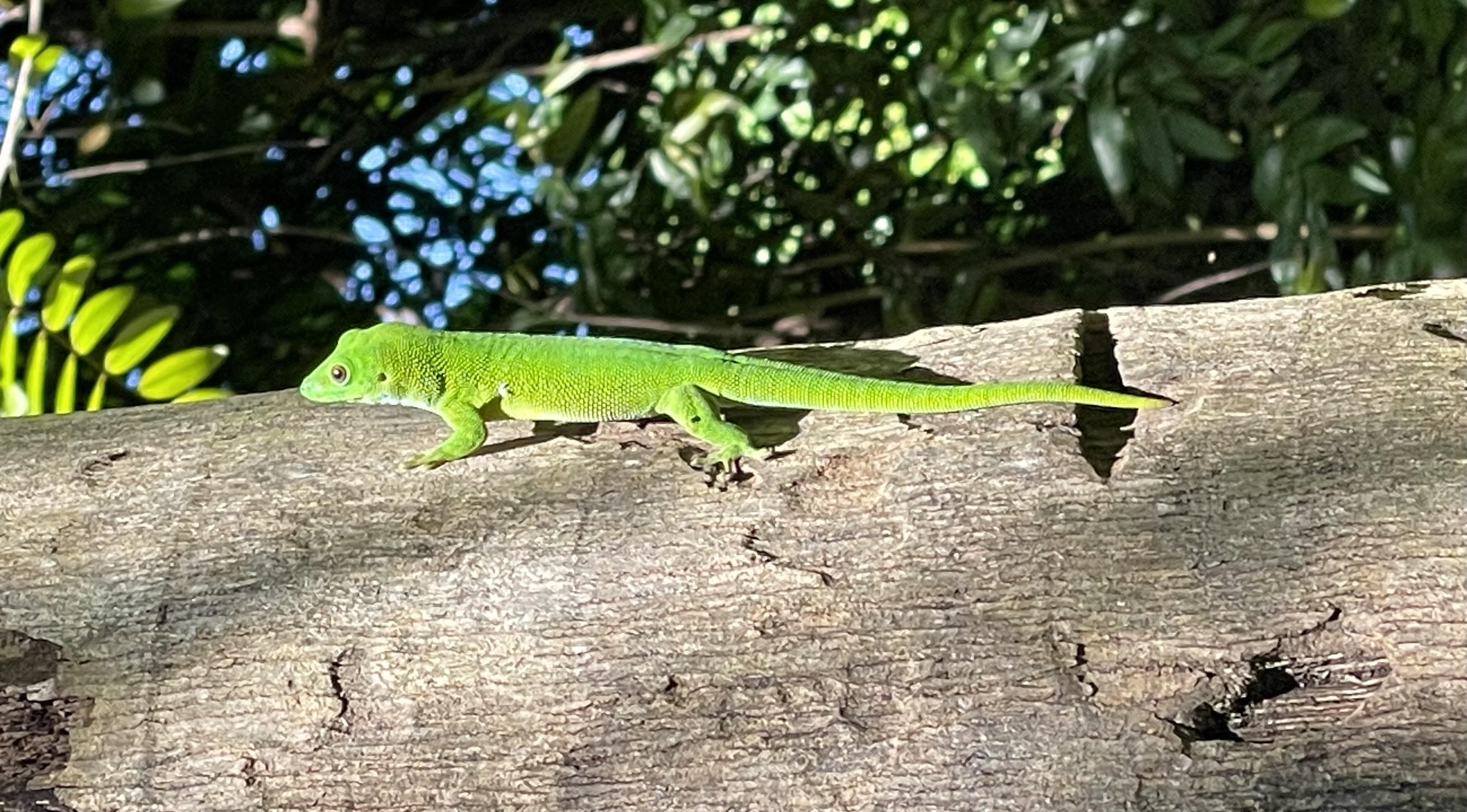
There are no poisonous snakes on Madagascar, but boa constrictors are natural predators that lemurs must avoid if they want to keep leaping from tree to tree. We saw a few boas sunning themselves on this warm day, just waiting for their chance for a meal. Oh, and those of us who watch too much sports on television may be excused for thinking geckos live only in Geico insurance commercials, but they were certainly present in Nosy Komba.
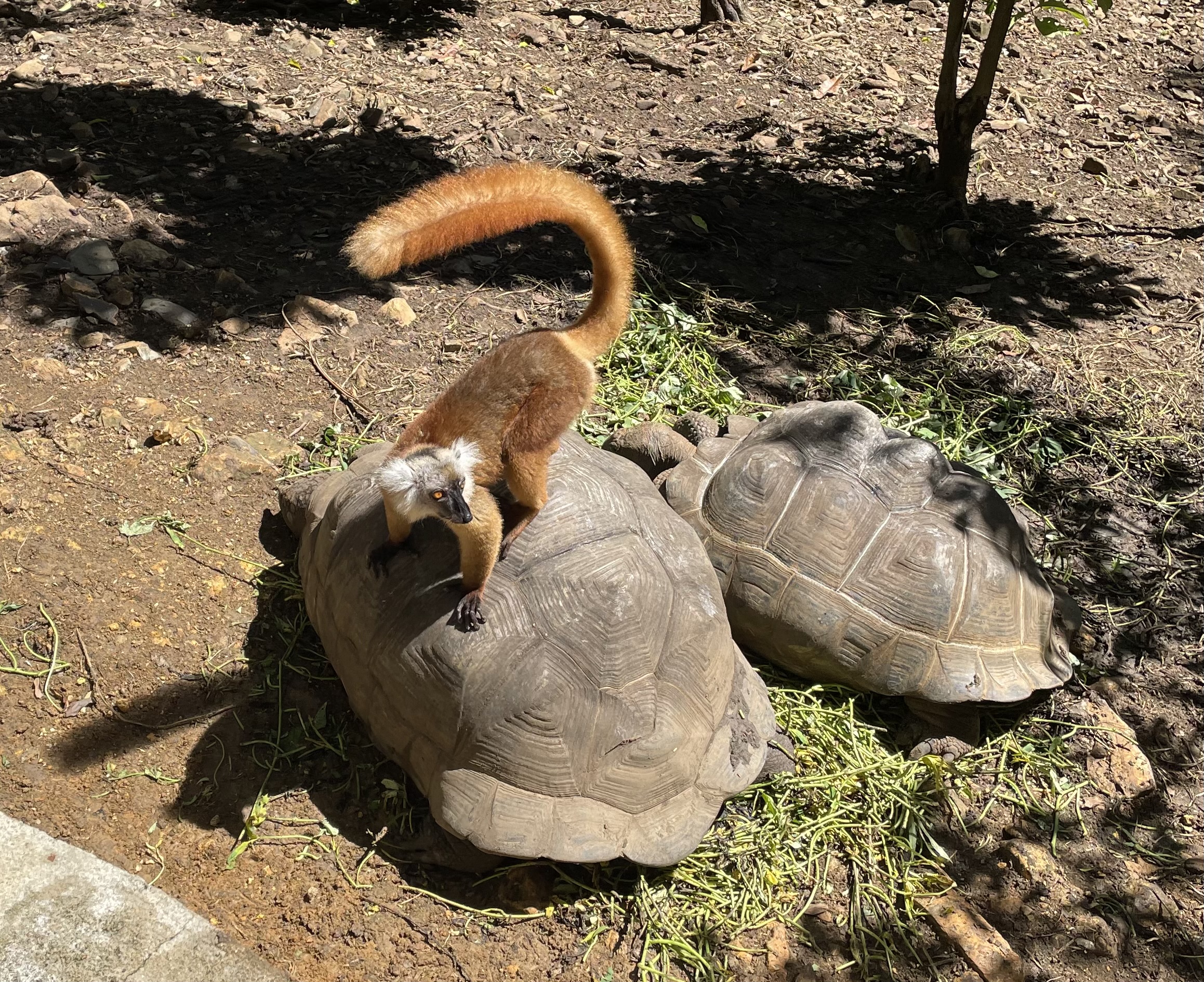
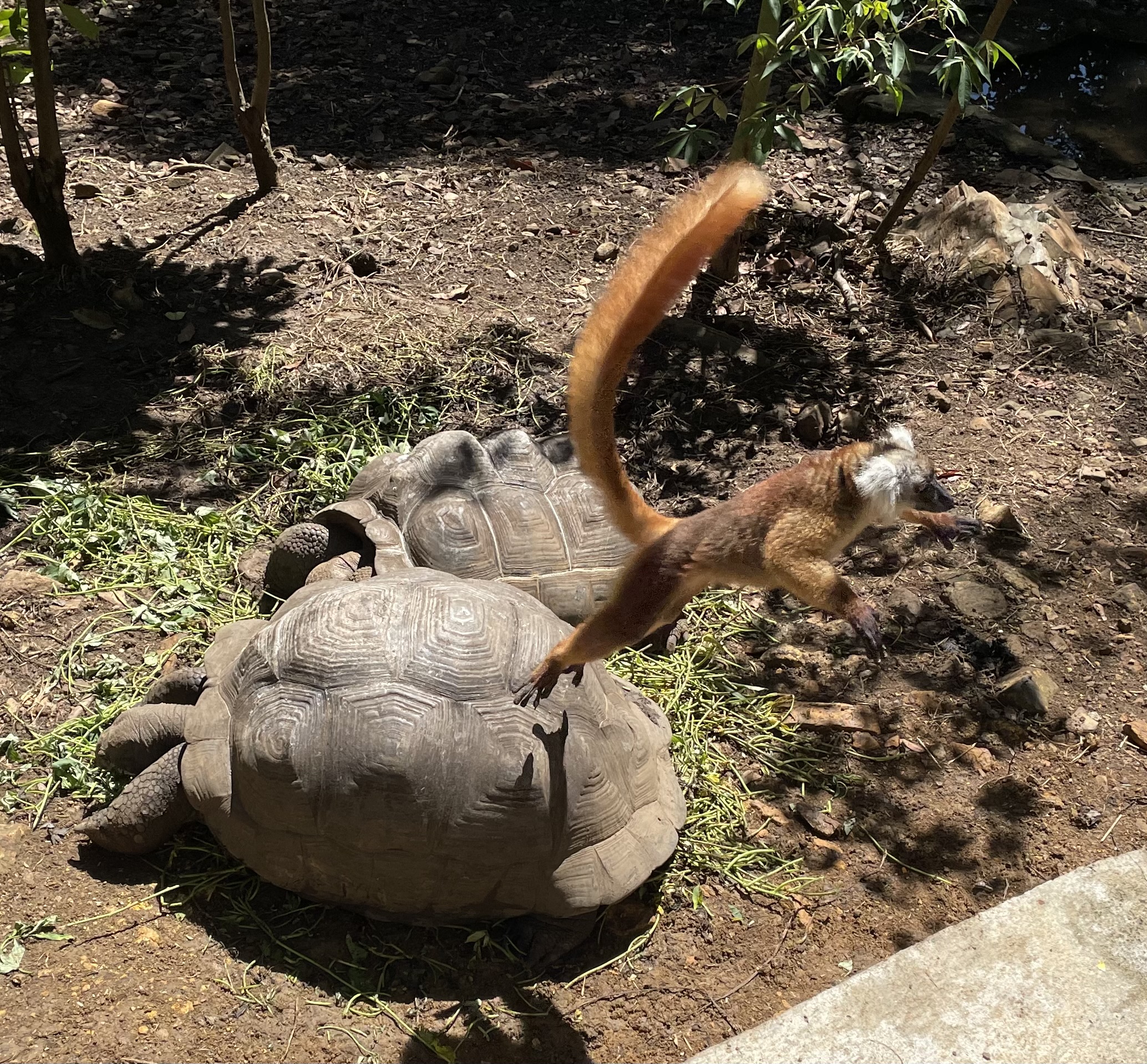
The preserve also included giant tortoises, and it was great to see the lemurs having fun leaping from back to back on these unmoved ancient animals.
In the afternoon, Candice went snorkeling among the coral reefs of Nosy Tanikeley. She returned exclaiming about the beauty of the fish in this protected marine reserve.
VALO MARS
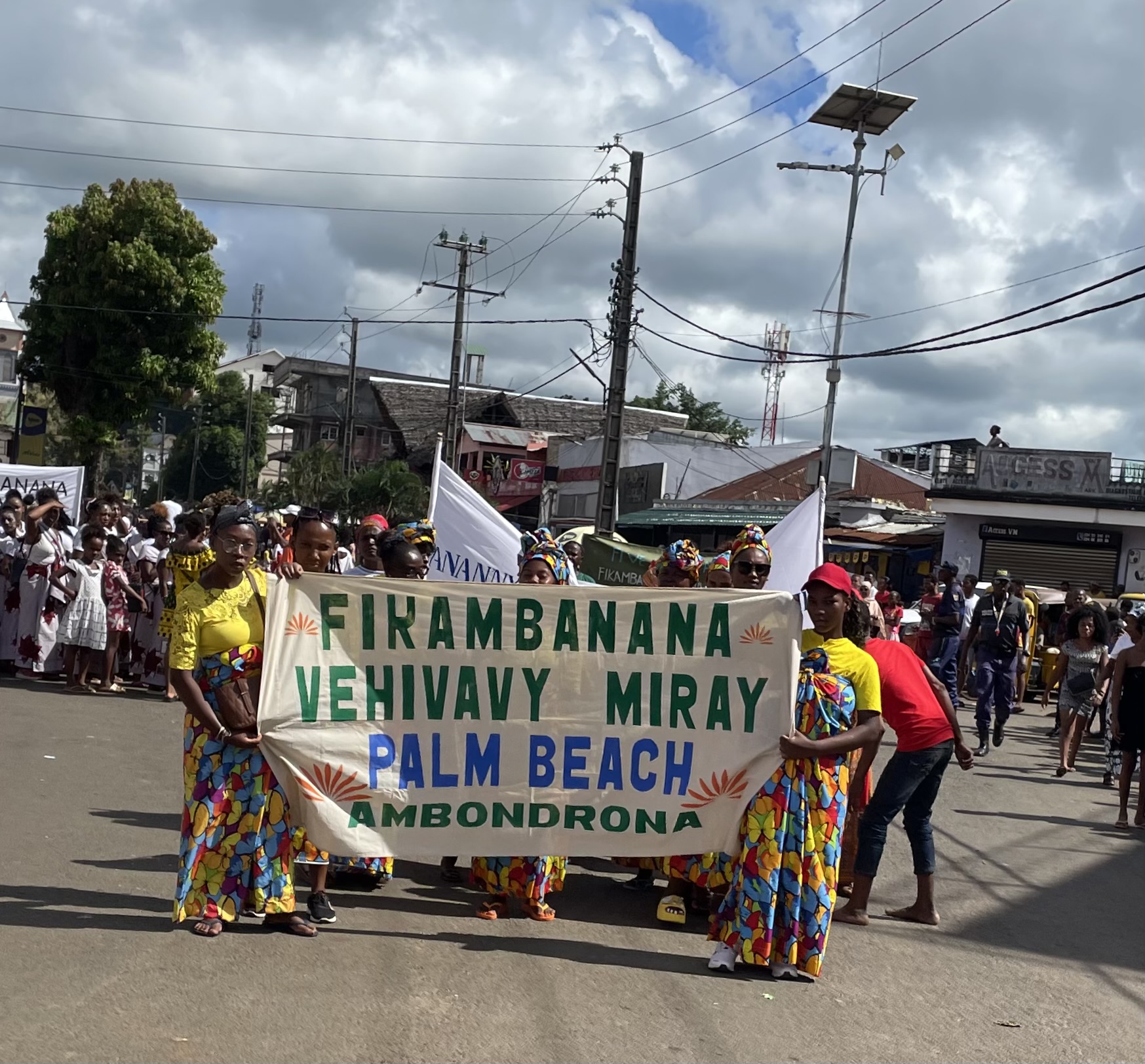
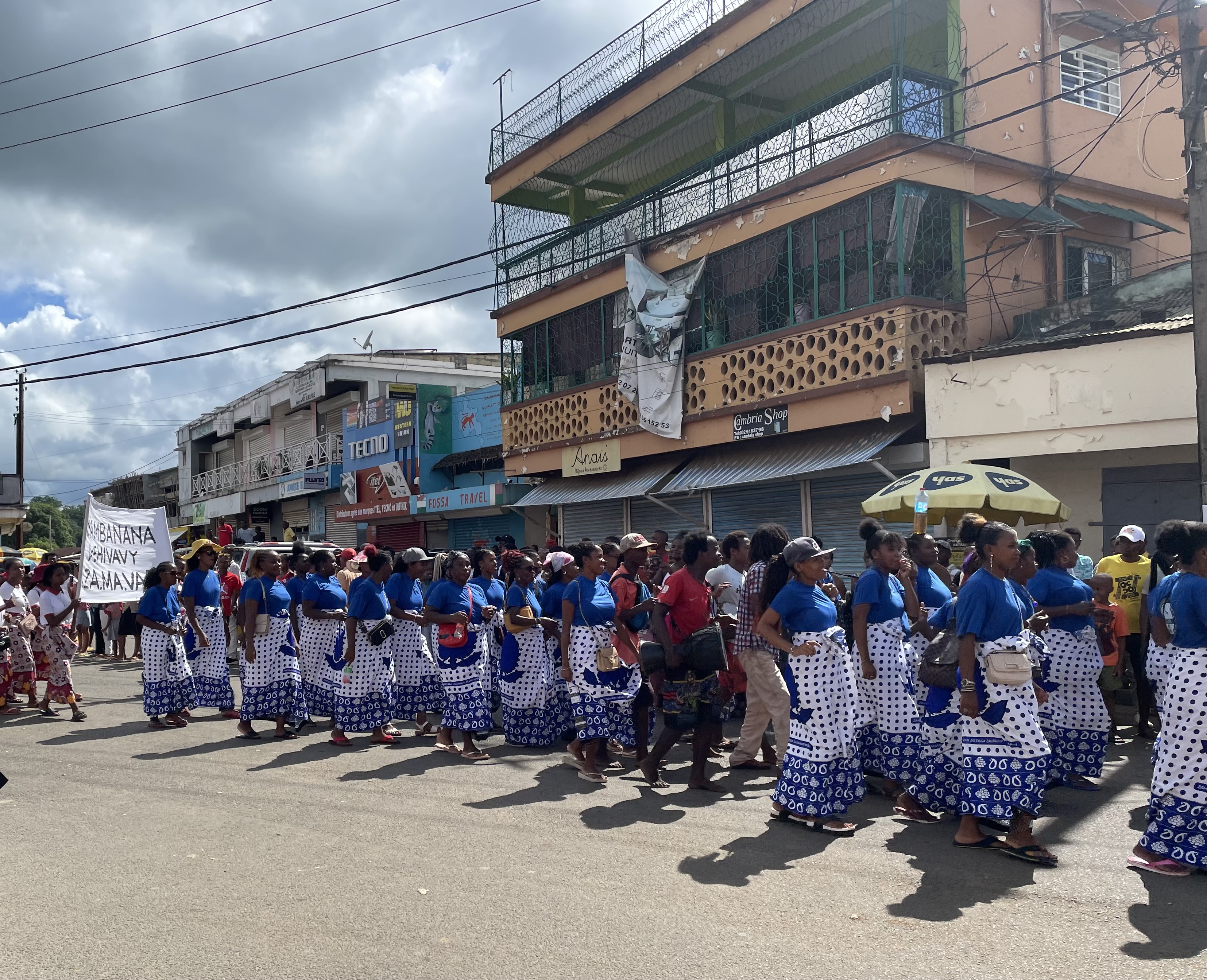
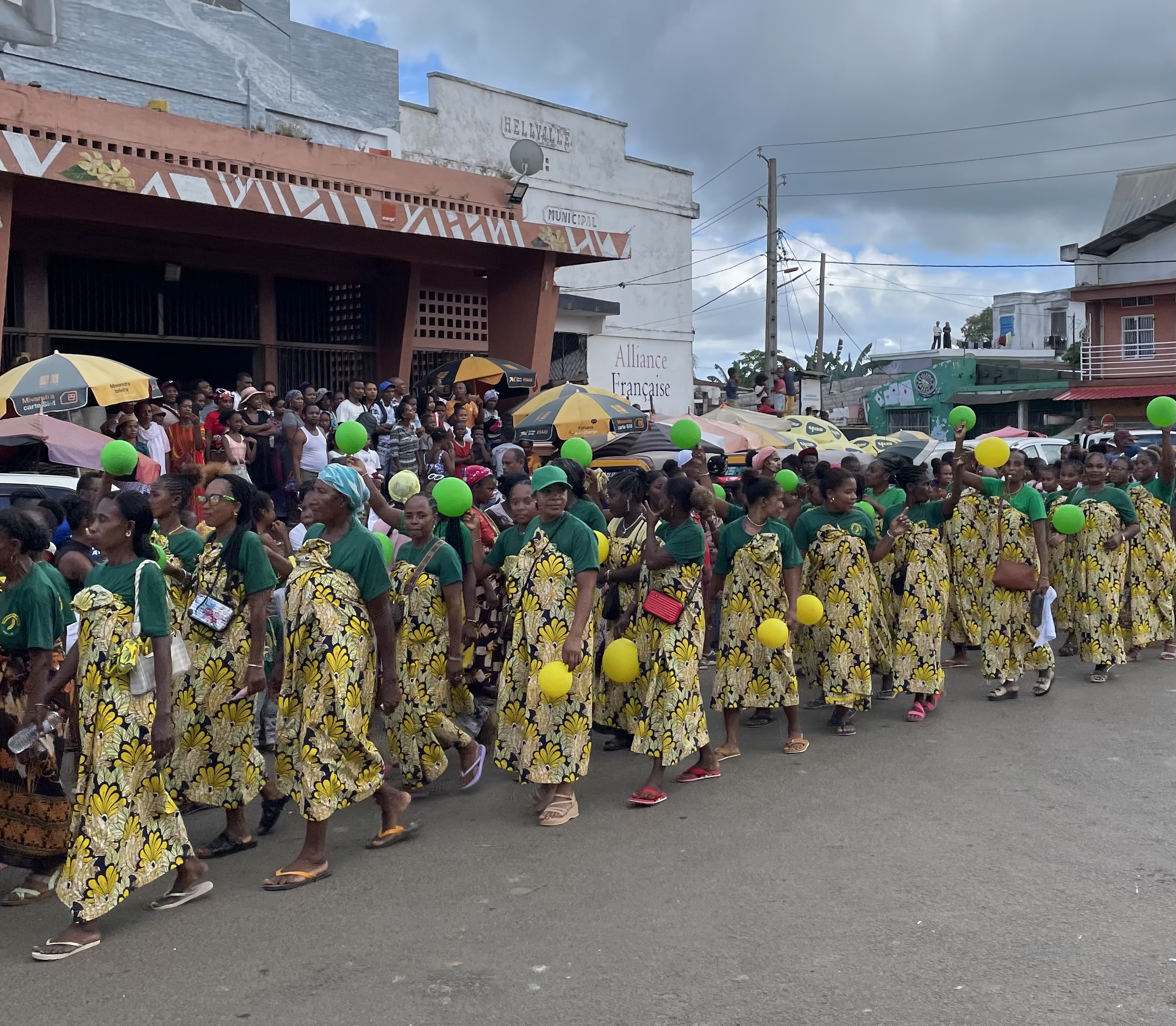
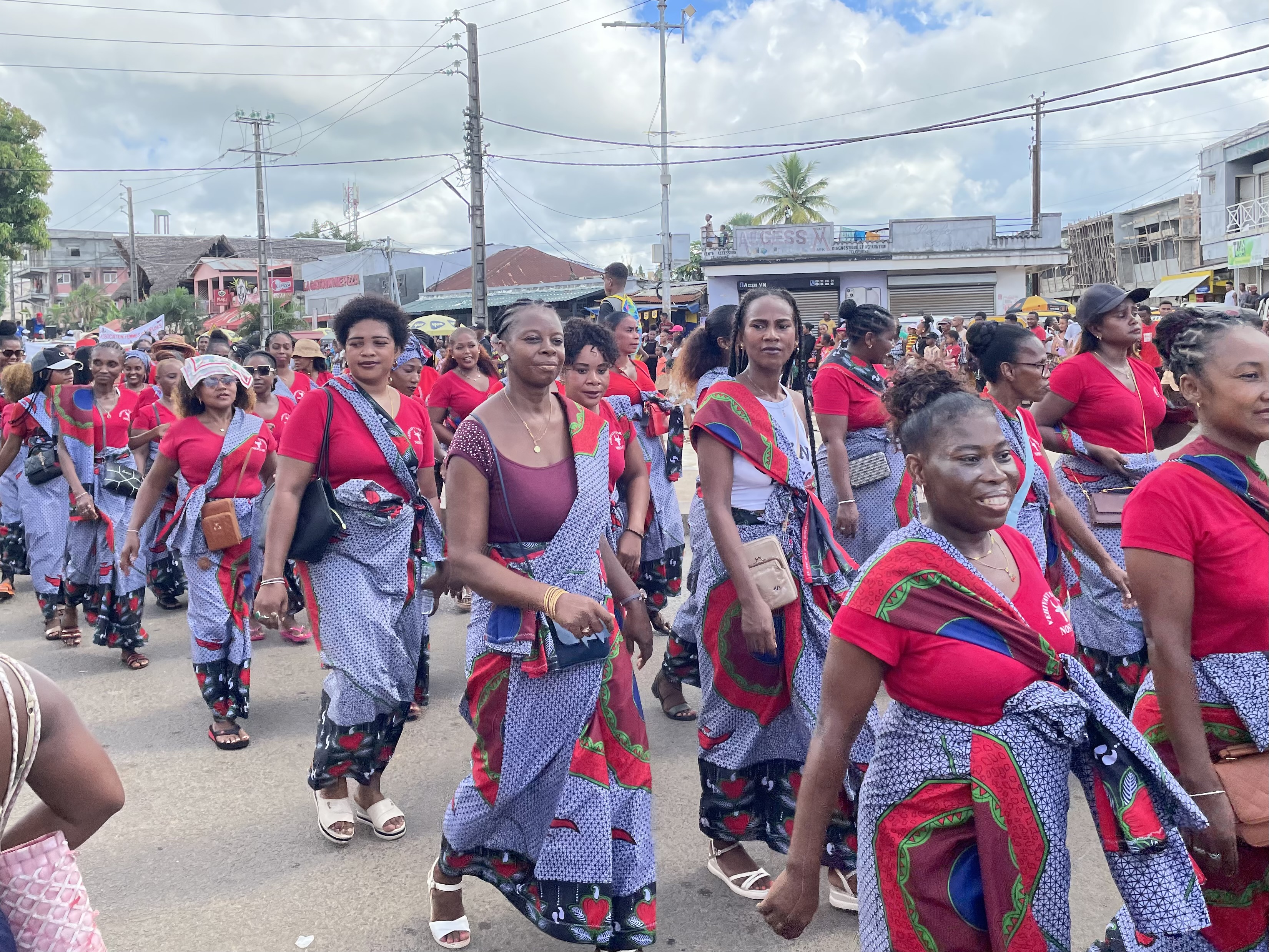
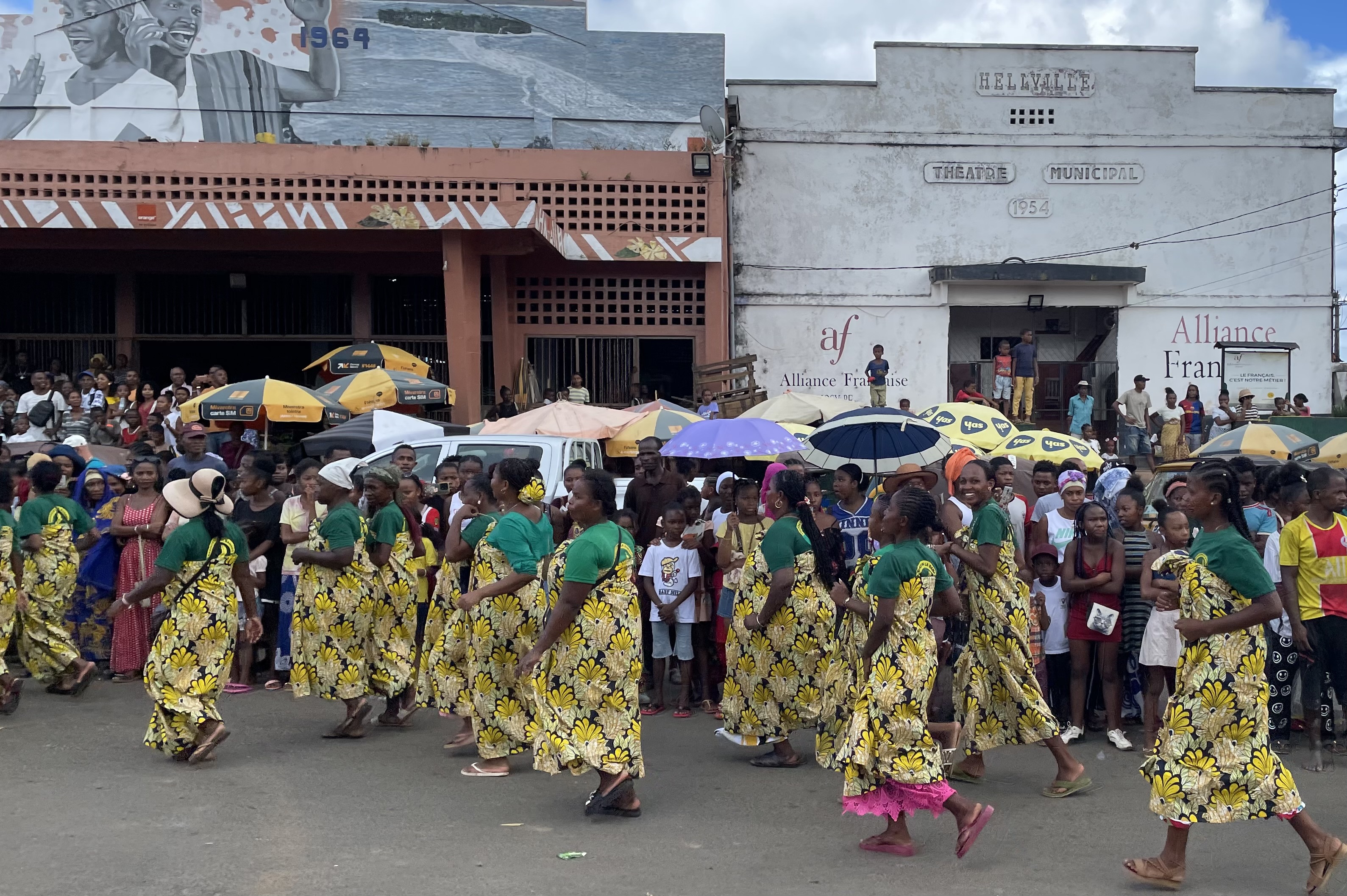
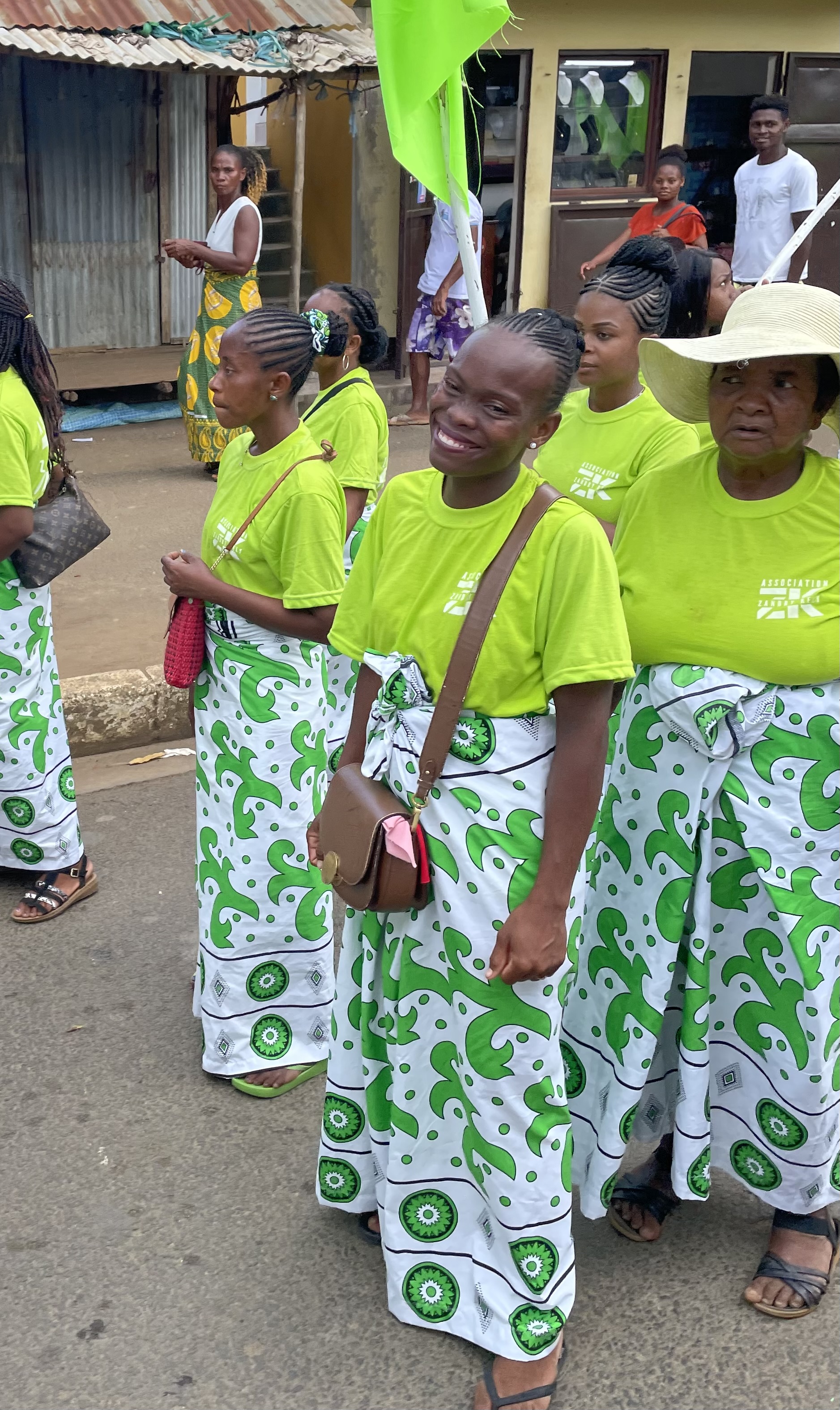
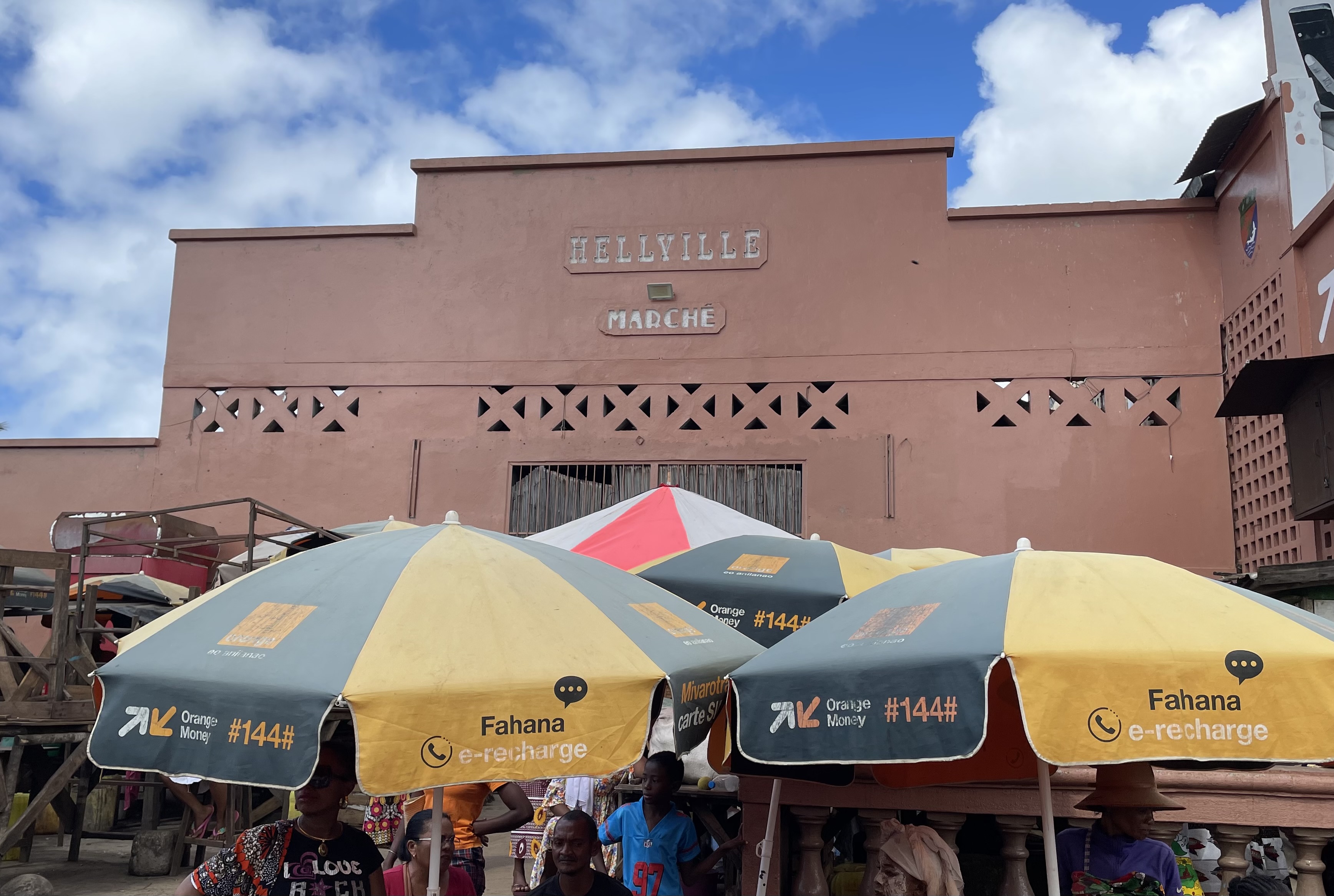
We arrived in the city of Hellville (Andoany) on March 8, our final full day of the tour amidst a huge celebration of International Women’s Day, referred to as “Valo Mars” in Madagascar. Women’s groups came to Hellville from Nosy Be and throughout the region to march in the local parade. Focused on honoring women’s strength, heritage, and contribution to society, it is a significant day for recognizing local women’s roles in development, culture, and craftsmanship, and while we saw the parade in full force, Volo Mars also features other special events, speeches, and community gatherings. It was an amazing sight that stretched throughout the main section of the city.
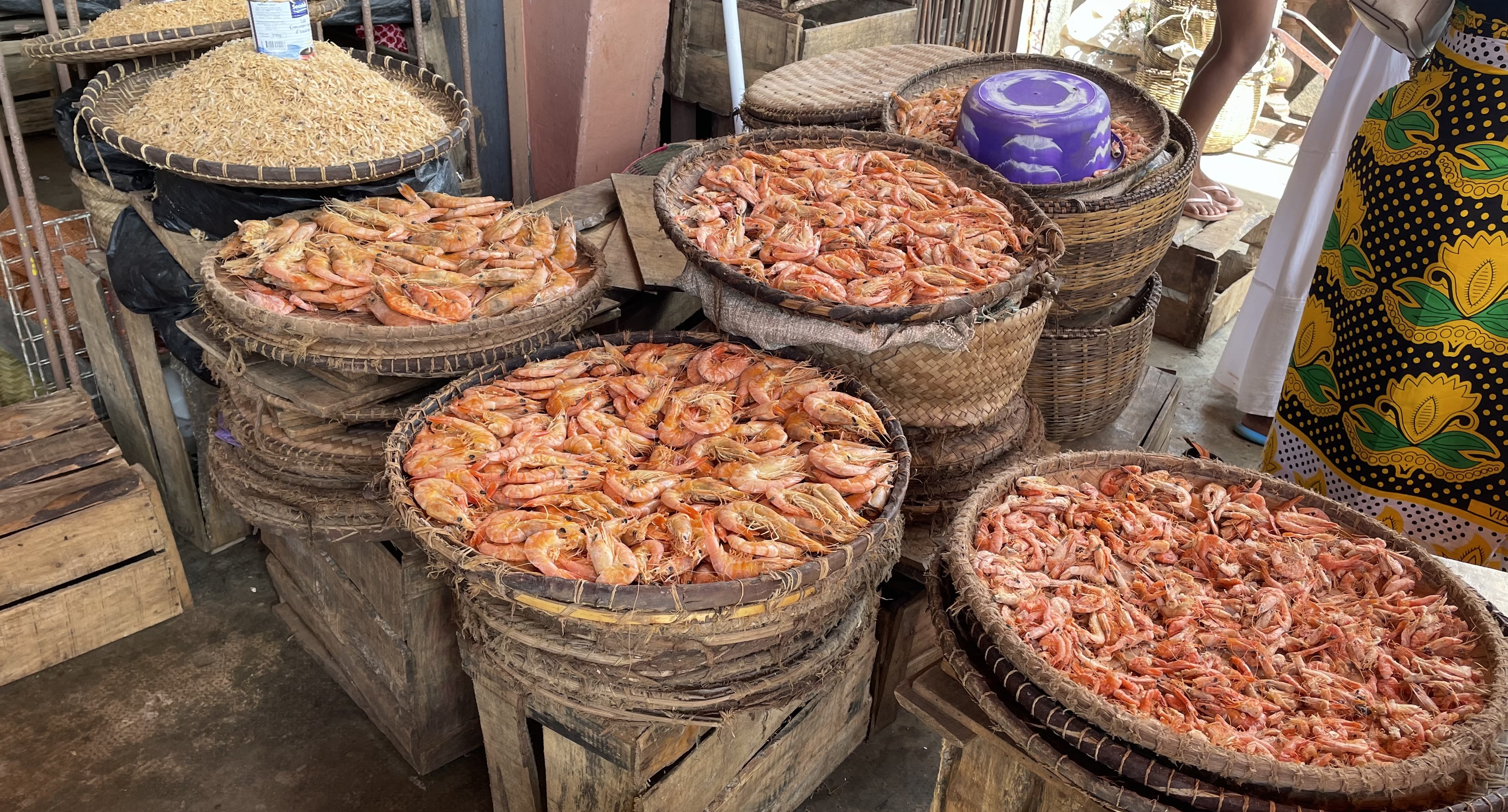
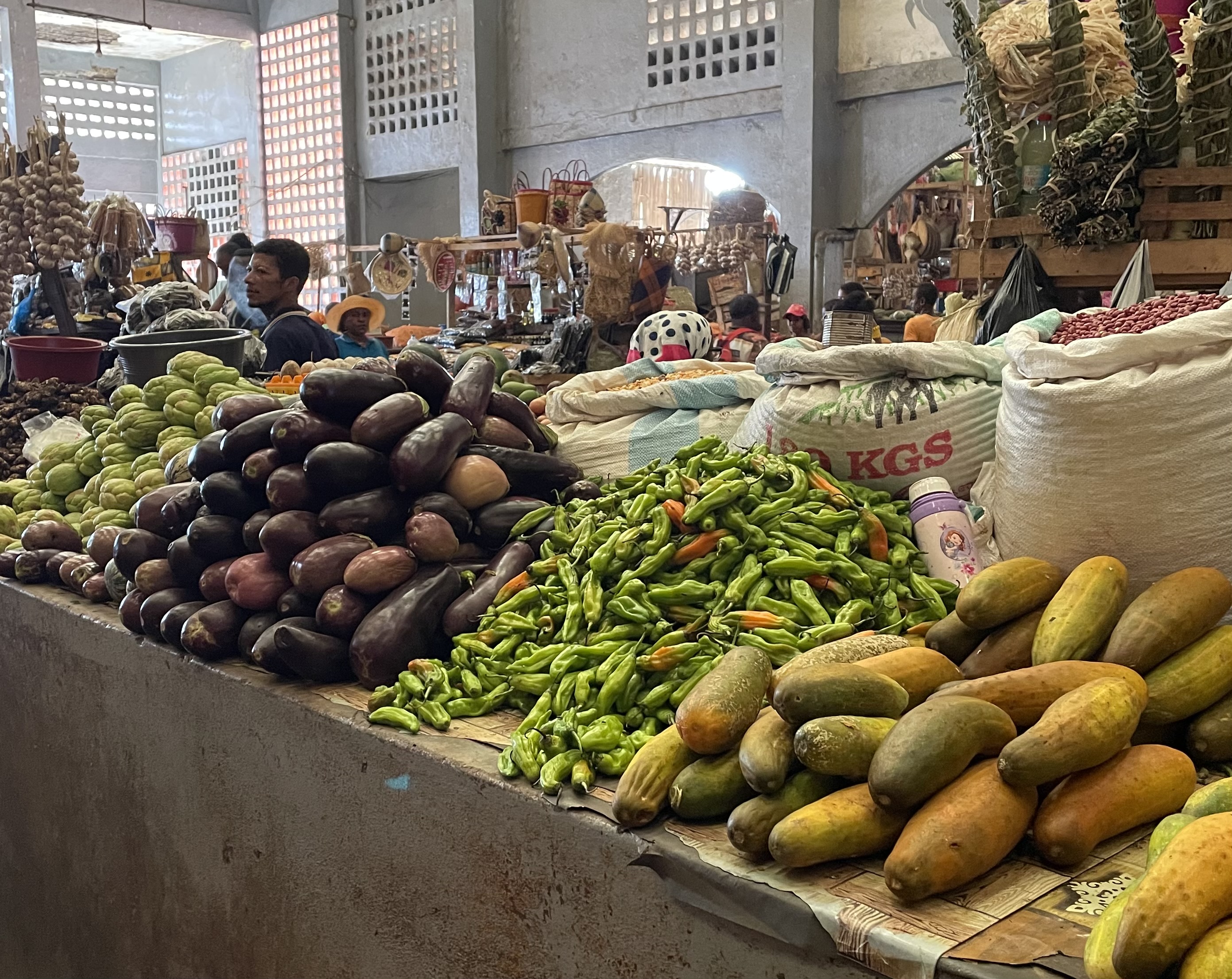
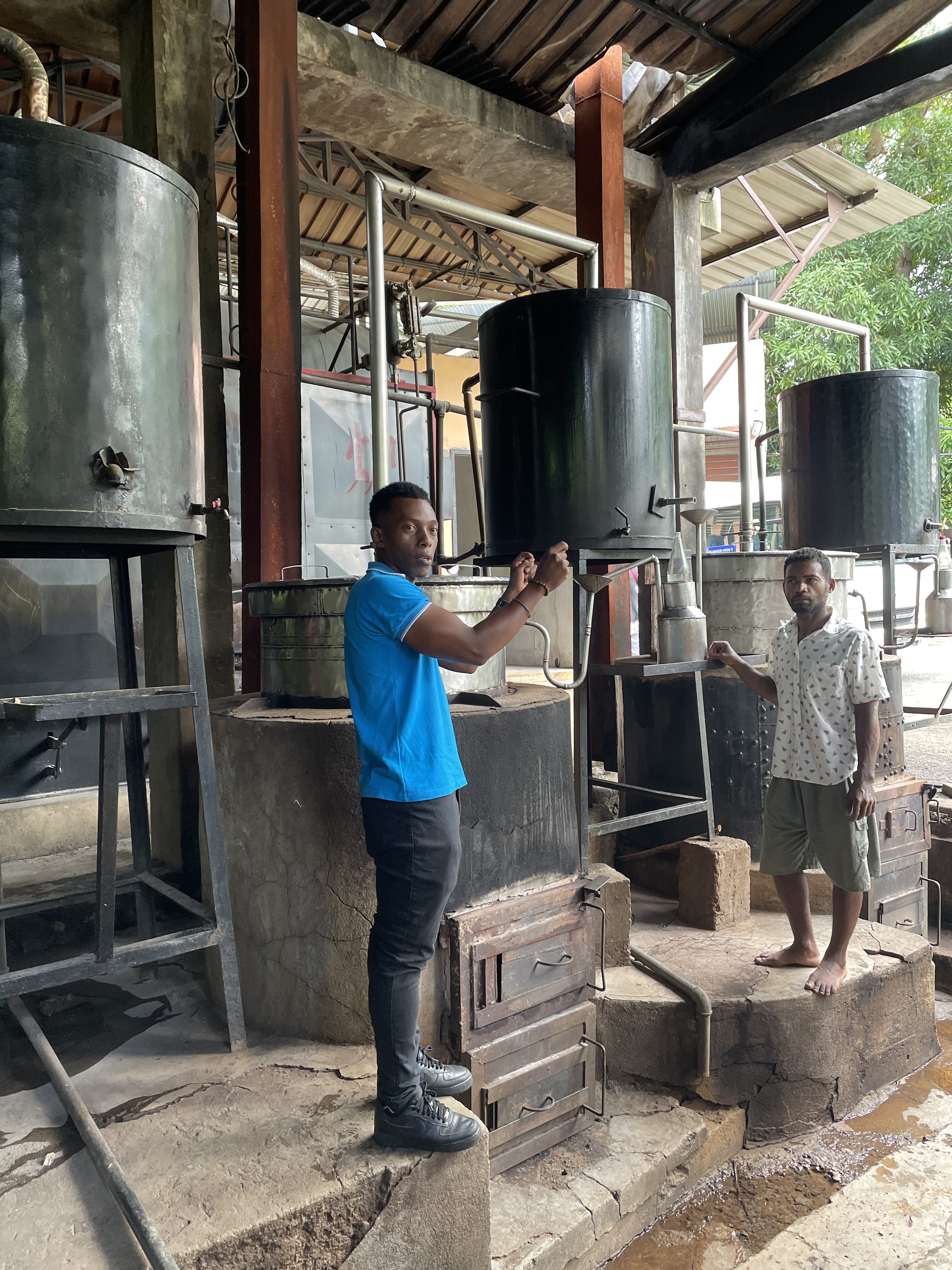
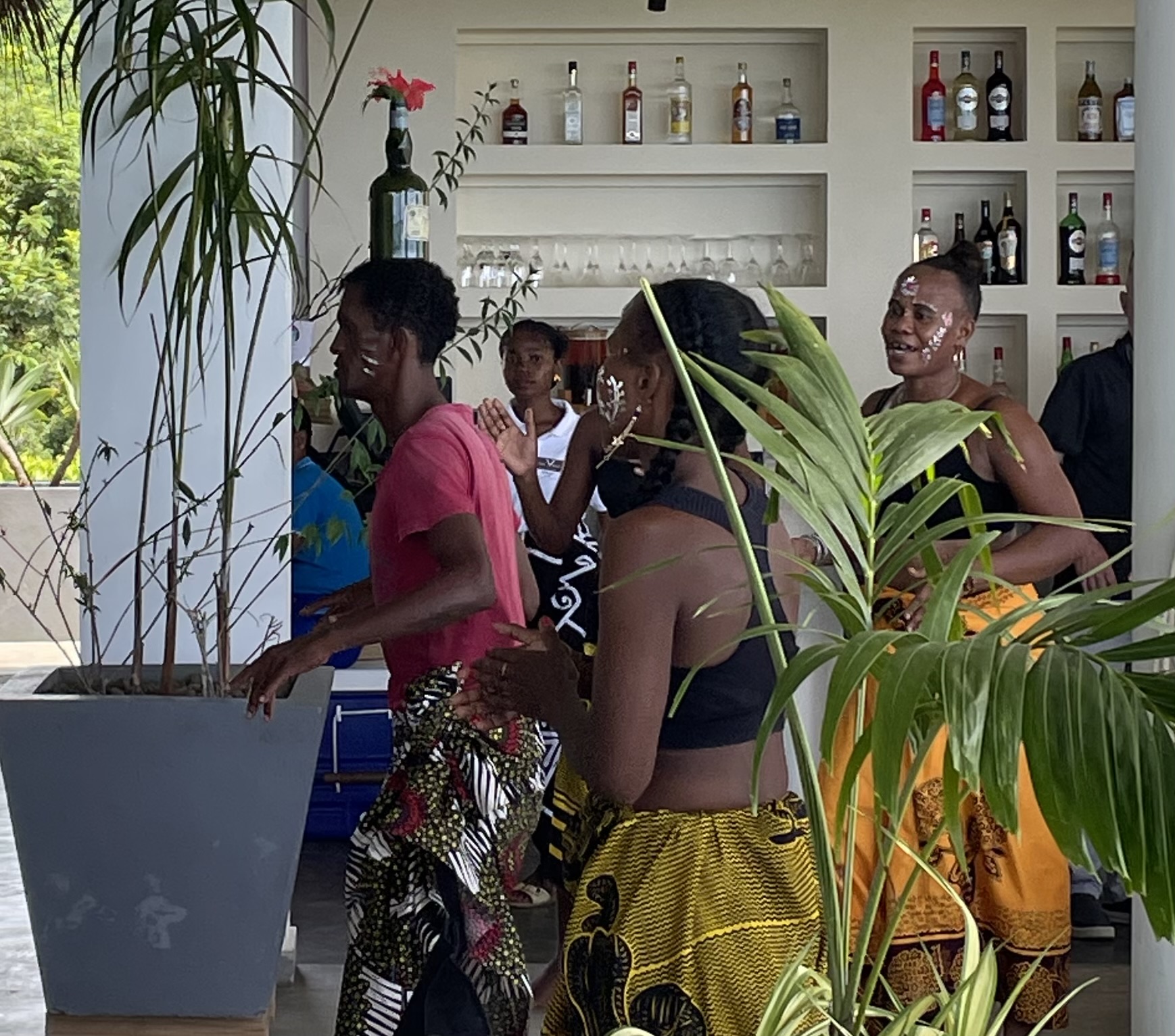
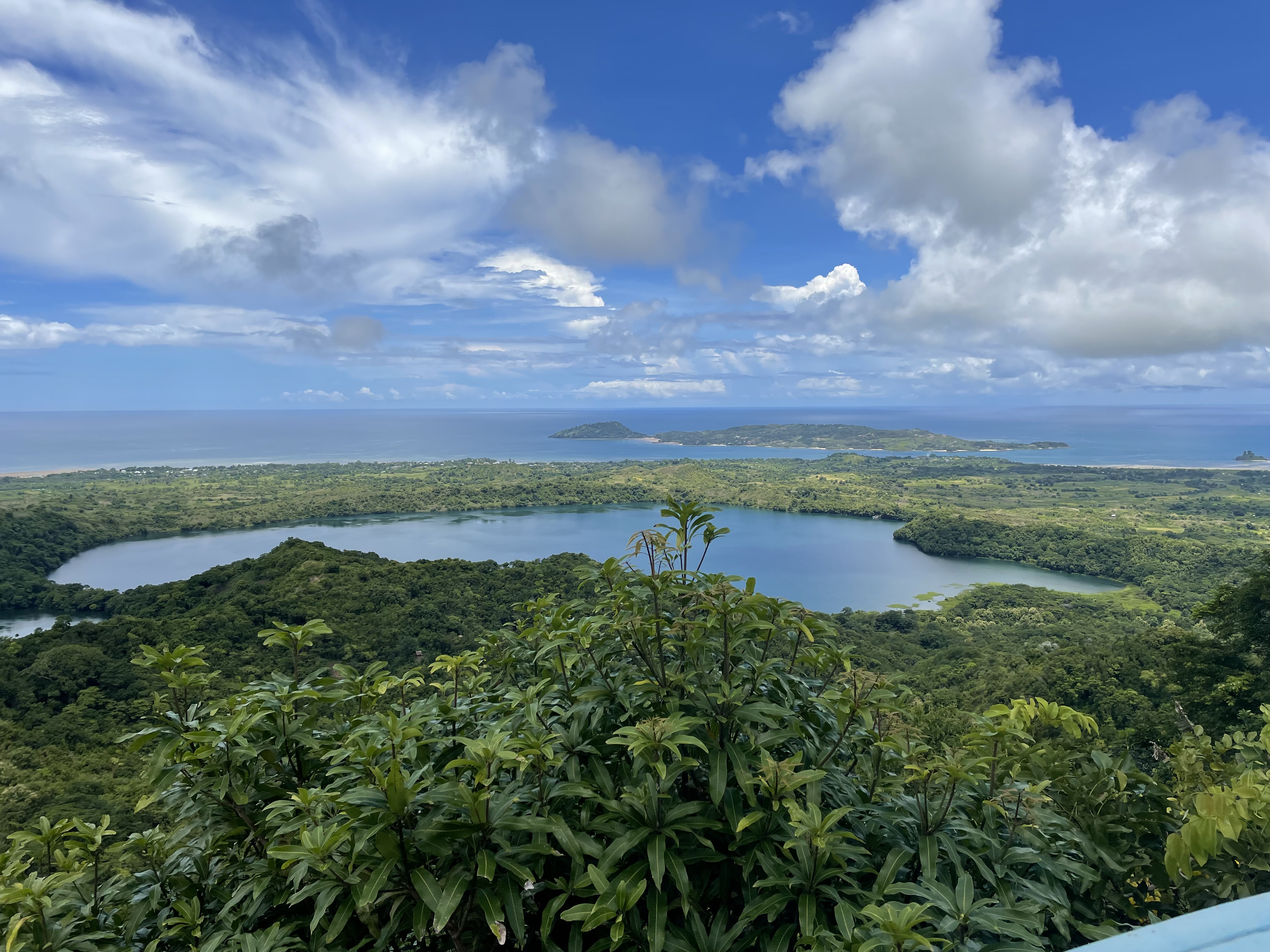
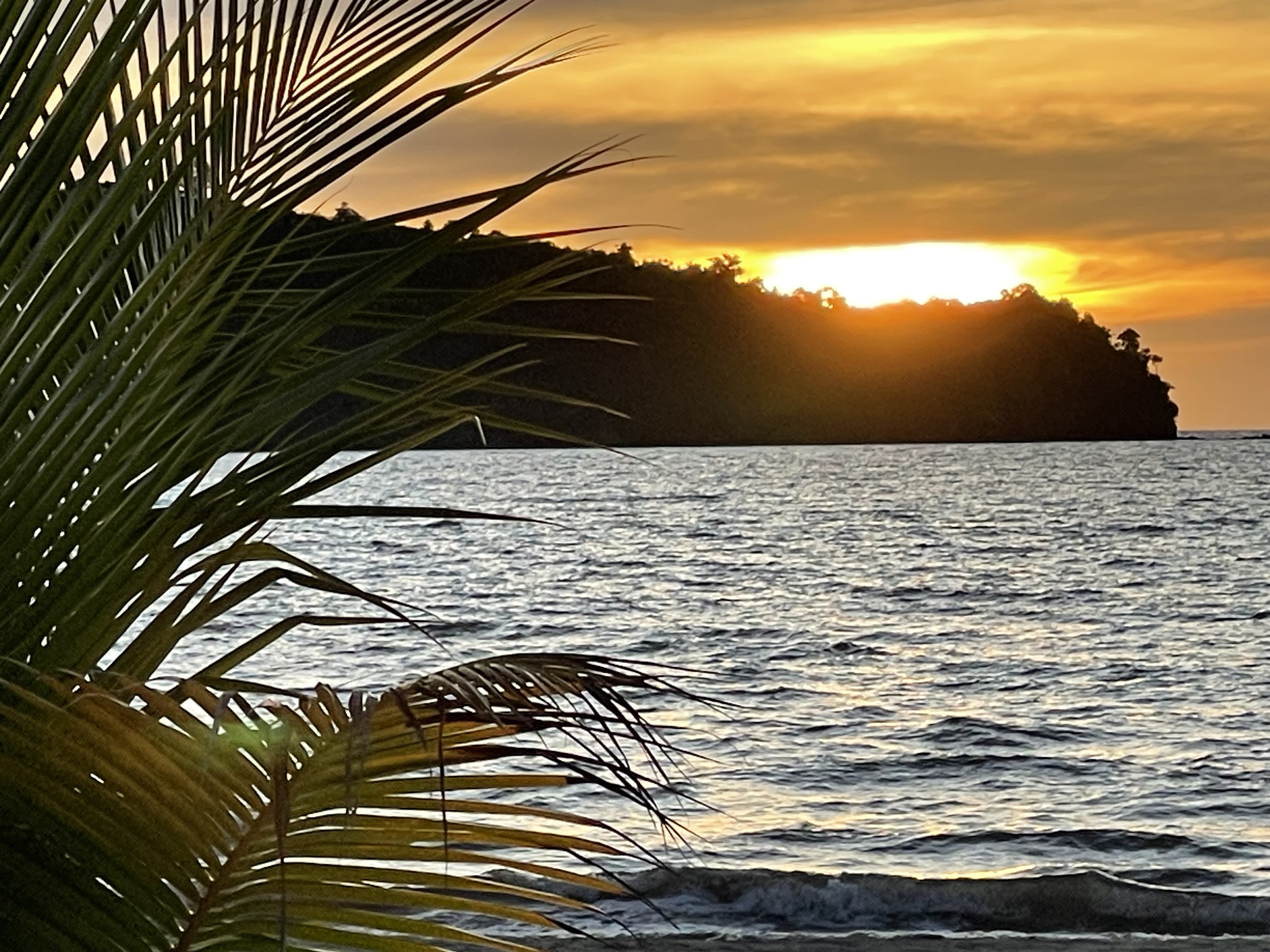
We ended this tour with a visit to Nosy Be’s fragrant Ylang-Ylang distillery, a music and dance celebration, and one last spectacular sunset over the Indian Ocean.
I was reminded when looking at another site that travel is a privilege. Candice and I know and recognize that fact on every one of these NTT trips. Here’s how travel photographer Sarah from the U.K. describes it:
“Those of us with the means and inclination to do so are rewarded with amazing opportunities to learn about different cultures, different landscapes, different environments. And in seeing those differences I think we discover something very important, which is that however different our lifestyles, at heart people have more in common than you might think. We learn to value diversity, to respect other viewpoints and to rejoice in our similarities.”
I couldn’t have said it better. Come travel with NTT in the future. We’d love to meet you!
More to come . . .
DJB
Photo at the top of post of smooth granite boulders on Seychelles’ La Digue Island as seen during our recent visit (credit: Studio Ponant). Photo of NTT travelers by Studio Ponant. All other photos by DJB (or, when we’re the subject, by fellow travelers).
 MORE TO COME...
Pingback: Observations from . . . March 2026 | MORE TO COME...
Pingback: The job of God is already taken | MORE TO COME...