A new edition of an award-winning history, published for the 250th anniversary of the Declaration of Independence, illuminates the overlooked dimensions of American history and the stories that shape nations.
So much of how we understand and interpret the American Revolution comes from the point of view of the victors. But as the recent Ken Burns documentary made clear, there were at least two sides to the conflict. It is important in understanding overlooked dimensions of American history that we hear these perspectives. Thankfully a sympathetic yet balanced portrayal of one of the Revolution’s defeated voices is being re-released on the 250th anniversary of the signing of the Declaration of Independence.
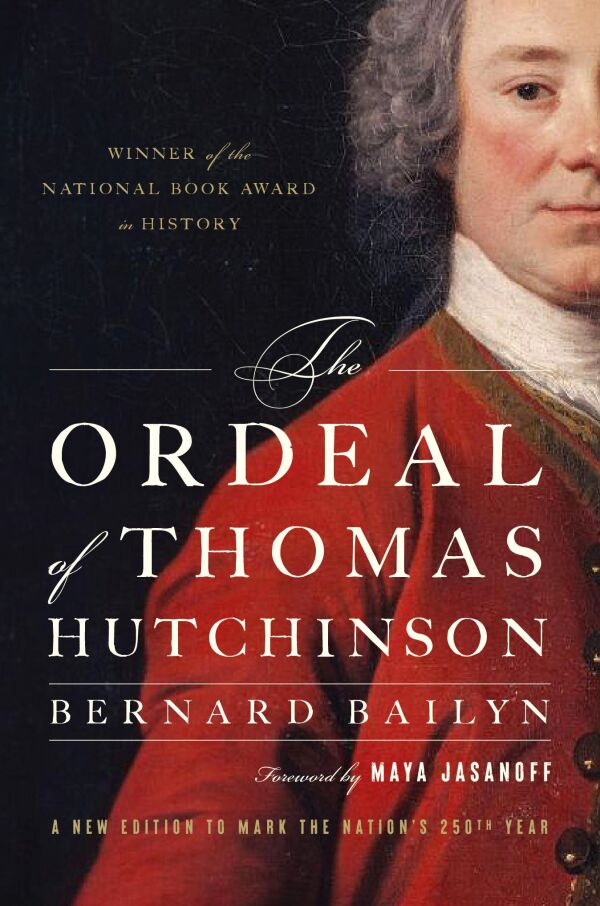
The Ordeal of Thomas Hutchinson (1974; new 250th anniversary edition published in 2026) by Bernard Bailyn is the National Book Award–winning history of the native-born royal governor of Massachusetts Bay from 1771–1774 and his fellow American loyalists who found themselves on the losing side of the Revolutionary War. In the preface, Bailyn writes that he was taking on this subject at the end of a long period of partisanship. His work was to help us see the “tragedy” of the Revolution. Not the sadness, or the error or wrongness of it. But to better understand “the limits within which men struggled.” All men, Bailyn wrote, “the famous and the obscure, the best and the worst, the winners and the losers.” We have to understand those stories—especially of those “who suffered violence and vilification, who were driven out of the land and forced to resettle elsewhere in middle life, and died grieving for the homes they had lost”—if we are to make sense of the Revolution. Thomas Hutchinson was the best-known embodiment of those Americans who still clung to England and who died in exile longing for their native home, a home that was transformed and unrecognizable to them as a result of revolution.
Bailyn paints a portrait of Hutchinson as rational, circumspect, and cool. Restraint and calculation had been a part of his way of life since childhood.
“Virtuous but not stylish, intelligent but didactic, heavy-spirited and self-absorbed, he judged people, and often found them wanting. He had no great admiration for mankind in general.”
As such, Hutchinson was prone to suspend determination upon the “real state of mind” of others until he knew them a long time and could personally weigh the evidence of their conduct. “Deeply bred—locked tight—in the culture of an intensely Protestant, mercantile province of the British world and heir to its establishment,” Hutchinson “sought no conquests in a larger world but steady gains in the one he knew.”
Through some 400 pages of well-documented and sometimes antiquated but generally compelling prose, Bailyn shows us how Hutchinson’s reputation in Boston and New England grew from that of an “unimpeachable if conservative leader of the Anglo-American establishment to that of a sinister manipulator of secret forces.” Two of his greatest foes throughout this transformation were John Adams and James Otis, Jr., who would ultimately shape public opinion about Hutchinson most powerfully. Adams especially was outraged when this “layman” was elevated to the position of chief judgeship, and for years he saw dangerous and secret forces at work.
As the publisher’s note to the new edition makes clear, Bailyn not only makes the loyalist position comprehensible but he also “rehabilitates a deft statesman who was far from the demagogue imagined in Patriot propaganda.” Hutchinson, as Bailyn documents throughout, shared many Patriot grievances and as royal governor he faithfully represented colonial public opinion to both Crown and Parliament.
In my book group discussion of this work, the question was immediately raised of “which side we would have been on” in the Revolution. We also asked “who plays the roles of John and Samuel Adams in today’s world.” The fact that these questions came to our mind shows the power of Bailyn’s work to broaden our perspective and push the reader to think in new—and perhaps uncomfortable—ways.
Histories written fifty years ago rarely survive current scrutiny. This remarkable portrait of one of the Revolution’s defeated voices is a welcome exception. In part, that success comes because Bailyn—who remains influential to this day—wanted us to respect the “pastness” of history. As his obituary in the New York Times described his focus:
“Within the profession, Professor Bailyn was a frequent critic of overspecialization, abstraction and politicized ‘presentism’—that is, interpreting past events in terms of modern thinking and values. For him, it was essential to respect the strangeness and pastness of the past, and to see it, as much as possible, on its own terms.
‘The establishment, in some significant degree, of a realistic understanding of the past, free of myths, wish fulfillments and partisan delusions, is essential for social sanity,’ he said in a 1995 lecture.”
I love that term “the strangeness and pastness of the past.” This masterpiece—which succeeds in being largely free “of myths, wish fulfillments, and partisan delusion” also marked “a turning point in historiography, illuminating the overlooked dimensions of American history and the stories that shape nations.”
More to come . . .
DJB
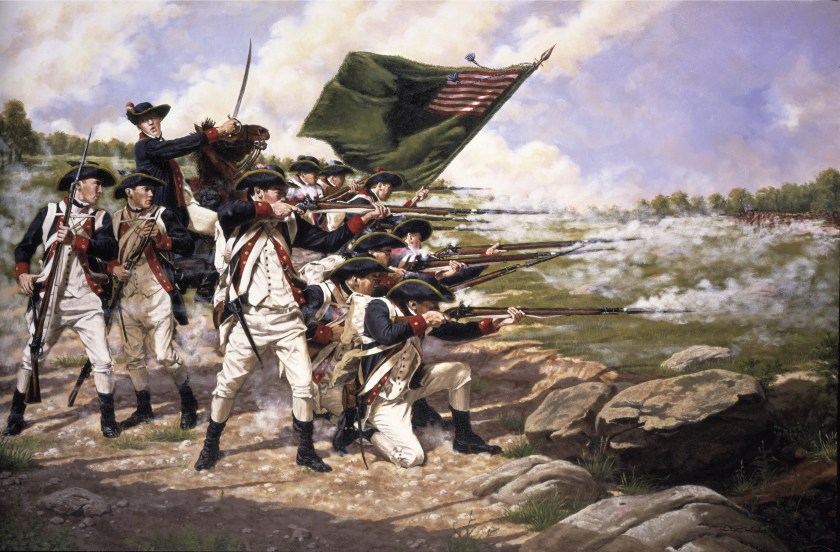
Image of the Battle of Long Island from Wikimedia.
 MORE TO COME...