Latest Posts

Choosing gratitude in difficult times

These are difficult, even soul crushing times for many of our fellow travelers. Dreams are dashed on the rocks of hatred, greed, and revenge. Belief in our country and in our fellow citizens has been put to the test.

It has always been thus. There have always been difficult times. If we are honest, privilege has shielded many of us from the worst the world has to offer. But that’s not true for so many others, past and present.

However . . . there is also much to celebrate in the world. As Angus Hervey has written on his Fix the News Substack, “realistic optimism isn’t naïve. It’s armor. It helps us face a challenging, sometimes frightening future with resilience.”

“Two things can be true at the same time. The same decade that’s given us a pandemic, populism and record temperatures has also produced the greatest ever expansion of global electricity access, record low murder rates in the United States, and the legalisation of same-sex marriage on every continent save one. We are winning the war on cancer, more than half the world’s children now get a high school education, and while climate disasters dominate headlines, renewable energy has grown so fast that global emissions may already have peaked.”

I do not want to make light of the troubles in the world. But I believe there is a better way to respond to today’s challenges than giving in to despair.


RESPONSIBILITY: OUR ABILITY TO CHOOSE A RESPONSE

It is easy to be grateful when everything is going well. It is in the more challenging times, however, when it is so very important to be open to gratefulness and to remember to be thankful. The Dutch priest and theologian Henri J.M. Nouwen had the following to say about gratitude even when we face pain, rejection and isolation:

Gratitude as a discipline involves a conscious choice. I can choose to be grateful even when my emotions and feelings are still steeped in hurt and resentment. It is amazing how many occasions present themselves in which I can choose gratitude instead of a complaint. I can choose to be grateful when I am criticized, even when my heart responds in bitterness. I can choose to speak about goodness and beauty even when my inner eye still looks for someone to accuse or something to call ugly. I can choose to listen to the voices that forgive and to look at the faces that smile, even while I still hear words of revenge and see grimaces of hatred.”

From The Return of the Prodigal Son: A Story of Homecoming

This paragraph packs a lot of possibilities for despair into a few short sentences. We can let our emotions rule our lives. We can respond to criticisms with bitterness. We can look for others to scapegoat. We can seek out the voices of revenge and hatred.

Or we can consciously choose gratitude.


CHOOSING GRATITUDE ISN’T ALWAYS EASY

Gratefulness—a recognition that no one lives, creates or acts in a void—contributes to our personal well-being. And out of gratefulness comes thanksgiving. The kindnesses that often accompany those expressions have deepened my appreciation for the power of the simple words “thank you.” For many of us their potency took on even greater significance during the isolation of the pandemic.

Choosing to be grateful isn’t always easy. In times when all hope seems lost, it helps me to have a few signposts to help guide my way.


MAKING GRATITUDE AND THANKFULNESS A DAILY PRACTICE

If you feel the need to hone your skills at feeling grateful—and then saying thank you in response—here are some tips I’ve used which may be helpful as you search for the ways to recognize the goodness that is around us.

First, be intentional.

Richard Rohr suggests an attitude of gratitude is necessary to be thankful in difficult times, a deliberate choice of love over fear, a desire to be positive instead of negative. If we are not “radically grateful” every day, resentment can take over. Fighting the power to see the worst in the world takes constant effort.

Be fully aware.

Gratitude comes when we are fully aware, writes David Steindl-Rast. We see something that connects us to things beyond ourselves and to a sense of belonging. That, in turn, leads us to think in terms of giver, gift, and receiver.

Gratefulness turns into thankfulness … Gratefulness is full awareness; thankfulness is thoughtfulness.

Study the language of great writers and mentors.

Acknowledgements are one form of saying thanks. Grace Bialecki is a fan of the acknowledgements authors often include in their works, suggesting we can learn language that gifted writers use to thank others to the benefit of our own gratitude practice. “The language authors use to thank their friends and family is inspiration for both thank-you cards and daily life.”

It wasn’t until I was in my forties that I came to focus on both the language and deep impact of saying thanks. Our CEO wrote with a sincerity and depth that conveyed appreciation for the work of others. I studied their thank you notes to pick up the rhythm of the sentences, favorite words, and the values that served as a foundation for their work.


JUST DO IT

My grandmother believed in saying “please” and “thank you.” She taught my father to write thank you notes and he followed her advice until he died at age 90. My parents taught their children the same lessons. I’ve always written thank you notes and try to be intentional in verbally giving thanks as often as possible. Anyone can take up the practice.

No matter where you are in life, you can start your personal “radically grateful” practice today. First, spend time to think about the goodness in your world.

Next, take small steps. Stop and say thank you today to the person sweeping the trash from the sidewalks. Tip your server a bit above what’s expected and tell them how much you appreciated the service. Write an email to someone you’ve lost touch with over the years. Not only tip the busker on the street corner, but stop and listen to their music and then thank them for bringing their art into the world.

Finally, write a thank you note to someone who has helped make your world, and ours, better.

You’ll both feel better for it.

More to come…

DJB


*NOTE: During a period of travel I’m returning to a few old chestnuts on MORE TO COME. Today’s post primarily relies on an essay from 2023.


This is the third post in a trilogy for August. You can find the first and second posts by clicking the links.


Image: Free-Photos from Pixabay

When the narrative tries to swamp the history

Two things can be true at the same time. The state of our union is not good. But each of us can also control our response in ways that strengthen not only ourselves but also those around us. Perhaps, in the responding, we can each do our individual part to repair the breach.

As Lewis Lapham wrote in Age of Folly, “we have less reason to fear what might happen tomorrow than to beware what happened yesterday.” A nation denied knowledge of its past “cannot make sense of its present or imagine its future.”

And yet here we are, in the midst of a full-out war on history.


Slavery was evil. Period.

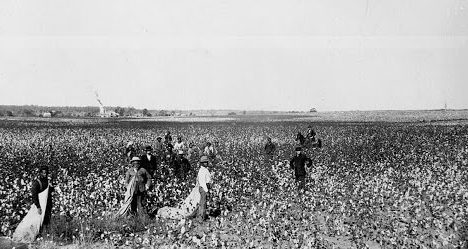
Cotton Fields

Decades of misinformation campaigns and never-ending attacks on public education have eroded our sense of civic pride and our knowledge of history.

The most recent right-wing nonsense about “slavery not being that bad” is only the most recent example. If you believe any part of what the disinformation machine is telling you, one thing you might consider is reading historian Edward Baptist’s The Half Has Never Been Told:  Slavery and the Making of American Capitalism. Slavery was not the pre-modern institution on the verge of extinction with paternalistic slave-owners as claimed by so many southern apologists past and present. Instead, in the eight decades prior to the Civil War, slavery expanded into a continental cotton empire that “drove the evolution and modernization of the United States.” Baptist writes that “the 3.2 million people enslaved in the United States had a market value of $1.3 billion in 1850—one-fifth of the nation’s wealth and almost equal to the entire gross national product.”  

Baptist describes both a system that is very efficient at sorting out slaves to get those who are most productive and the brutality that made that efficiency possible. Not one to mince words, Baptist names the violence that led to increased productivity “the whipping machine.” Baptist reminds us of the link between the term “fancy girl”—which began to appear in descriptions of young women who fetched high prices because of their physical attractiveness—and the fact that “Slavery’s frontier was a white man’s sexual playground.” His clear writing and extensive documentation takes the reader into the horrors of the slave system in the United States.

Pulitzer prize winning historian Eric Foner said that many Americans see slavery “as essentially a footnote, an exception to a dominant narrative of the expansion of liberty on this continent.” Foner asserts, however, that the underlying argument of Baptist’s book is persuasive. “Slavery was essential to American development and, indeed, to the violent construction of the capitalist world in which we live.”

Economist Jeffrey Sachs has written that, “We are a technology-rich, advertising-fed, knowledge-poor society.” America has lost knowledge of its past, fears for its future, and has a sizable minority that embraces the comfort of the authoritarian’s lie.

Why might that be?


Billionaires will happily kill democracy

Those who study the past are not surprised that the ultra-rich—like those who run Fox News, the Washington Post, Facebook, and Twitter—are enemies of democracy. Historians have been telling us this for years, as in stories about the American billionaires’ support for Nazi Germany. They told us again as recently as last week in a summary of the efforts of the rich to undermine a government “of, by, and for the people” going back to antebellum times.

Franklin Delano Roosevelt was the most vocal of the presidents over the last century on this topic. In a 1938 message to Congress on curbing monopolies he wrote:

“The liberty of a democracy is not safe if the people tolerate the growth of private power to a point where it becomes stronger than their democratic state itself. That, in its essence, is fascism—ownership of government by an individual, by a group, or by any other controlling private power.”

And in a message a little over a century earlier, Abraham Lincoln had something similar to say about the most dangerous threat to democracy coming from within:

“All the armies of Europe, Asia, and Africa combined, with all the treasure of the earth (our own excepted) in their military chest, with a Bonaparte for a commander, could not by force take a drink from the Ohio or make a track on the Blue Ridge in a trial of a thousand years.

At what point then is the approach of danger to be expected? I answer: If it ever reach us it must spring up amongst us; it cannot come from abroad. If destruction be our lot we must ourselves be its author and finisher. As a nation of freemen we must live through all time or die by suicide.”


There is money to be made in lying

Billionaires know they can make money under authoritarian governments so they support disinformation efforts across the media and political spectrums. The Dominion Voting Systems defamation suit against Fox News Network has shown that the network consistently and willingly lied about the outcome of the 2020 election. But those paying attention have known this for a long time. Fox is “a disinformation machine designed to destroy trust in democratic institutions, including the idea that America’s electoral system is free and fair,” writes historian of authoritarianism Ruth Ben-Ghiat.

Fox admitted they lied, and then paid Dominion more than three-quarters of a billion dollars in order to keep on lying. Smartmatic’s ongoing suit against Fox News recently uncovered new text messages shedding light on the network’s decision to air and promote election conspiracies they knew were false. Newsmax, another right-wing “news” network, has paid out settlements to Dominion and Smartmatic over similar election lies in service of Donald Trump.

These were settlements, not judgments. Think about this for a moment. These two “news” organizations agreed to pay out over $900 million in order to keep on lying to the American people . . . the very practice that led to the original defamation suits. Lying is clearly very lucrative. And an unhealthy percentage of the American people are still willing to take what these “news” organizations say as gospel even when they have been told by the organizations themselves that what they are hearing are lies.


History has long been a flash point for authoritarians

Whitney Plantation

Historian and former GOP operative Mike Lofgren has written a thoughtful piece for Salon entitled Right-wing fake history is making a big comeback—but it never went away. The sub-heading hints at the lengths the billionaire-funded right will go to in order to shape the world more to their liking:

“We’re a Christian nation! The Civil War wasn’t about slavery! Fighting Hitler was a mistake! The lies run deep.”

And our political hacks have helped in this masquerade. Take David Brooks. Please. Brooks drives me crazy, in part because a number of people I admire think he’s moderate and wonderful. But I find him very cynical, and Lofgren does a great job of explaining why in a piece entitled David Brooks faces the truth of US history—and runs away.

“Brooks distorts not only his own past, and that of the conservative movement, but the American past as well, since much of his piece is a Parson Weems-style potted history of our country, apparently written to vindicate his optimism that everything will come out right in the end. I have already written about right-wingers’ longstanding taste for distorting the record of the past to conform to their ideology. That kind of historical mythology is now the law in many Republican states.”

Just remember, the war on history has nothing to do with history in the same way that the “occupation” of Washington, DC has nothing to do with crime. Both are really about power and dominance.


We have no one to blame but ourselves

Why are we in this mess? Lofgren laid this out succinctly following the 2024 election.

“Even as the media intermittently deign to perceive that the GOP as an institution might be authoritarian, or that money might rig the system, or that billionaires just might not be our friends, there is one actor that is invariably held harmless. In fact, it is regarded as virtuous, possessing a homespun wisdom that infinitely surpasses the sophistry of academia and so-called experts.

It is the American people, the fawned-over pet of every gassy idealist from Walt Whitman to Carl Sandburg to Thornton Wilder to the hack editorial writers of the present age. The ‘good sense of the people’ is responsible for each bit of favorable fortune, and absolved of every disaster.” (emphasis added)

As Lapham wrote in 1990, “the promise of democracy no longer inspires or exalts the citizenry lucky enough to have been born under its star.”  It isn’t so much that liberty stands at bay but, rather, that it has fallen into disuse. 

“Sometime in the last 40 years,” writes Lofgren,” between Ronald Reagan’s proclamation that greed is good, the rise of hate radio and garbage social media, the vicarious victimhood of 9/11 and the kill-fest of Iraq, the dominoes falling from Wall Street all the way to some empty and forlorn McMansion slum in 2008 and finally Trump shrieking in our ears nonstop, at least half the American people lost whatever shred of rationality they possessed. These people now think Joe Rogan or Alex Jones are philosophers on par with Henry David Thoreau or William James, except that they’ve never heard of the latter two.”


What can we do

I’m not sure what the right way forward is for you. I’m still figuring it out for myself. Throwing a sandwich, which can turn you into a face of the resistance, may or may not be the way you want to respond to the moment.

The Sandwich Guy, who is now honored with Banksy-style posters. I found this one around Dupont Circle.

This is the second post in what has become an August trilogy focused on recognition of the challenges we face and how we might respond. The first is Work on things you can do something about. This current post is a reminder of what we are up against. The third and final one is Choosing gratitude in difficult times.

Here are a few thoughts as we consider our response to the attacks on history and our democracy.

  • Save us from weak resignation. My friend and mentor Frank Wade recently reminded me of this line from the hymn God of Grace and God of Glory, written by Harry Emerson Fosdick during the Great Depression. At a time when many people felt overwhelmed and hopeless, Fosdick was seeking to combat the passive, defeatist attitude of giving up and withdrawing from the struggle against injustice. If you think these times are harder than others have faced, learn some history.
  • We should use every means possible to express appreciation for those working at museums, historic sites, schools, and archives trying to ensure that our history—and the story of what really happens—remains.
  • Focus on your area of expertise or interest. I tend to think about today’s world in terms of history. Perhaps you think about it in terms of the law. Or theology. Or human rights. Or the environment. Whichever is the way you think, focus on telling your friends and neighbors about today’s challenges from that perspective, and find groups to work with that advocate in that area of interest.
  • Understand (and follow as you can) what citizens of other countries have done to fight authoritarians. Protect Democracy staffers interviewed dozens of leaders, experts, practitioners, and scholars from around the world. Their eight rules of antiauthoritarianism that democracy defenders can apply to keep the United States from declining into a more authoritarian form of government give them hope.
  • Different people will respond differently . . . and that’s okay. Accept it.
  • Take a sabbatical when you need it. As Thomas Merton wrote, “The frenzy of the activist neutralizes his [or her] work… It destroys the fruitfulness of his [or her]…work, because it kills the root of inner wisdom which makes work fruitful.” 
  • Love your neighbor. No exceptions.

And remember, as the great Molly Ivins put it, freedom fighters don’t always win, but they are always right.

More to come . . .

DJB

Fort Sumter under attack to begin the Civil War from Courier and Ives.

Music as a healing force

The importance of memory, identity, and continuity in defining who we are has been on my mind in recent weeks. Memory helps tell our stories, producing hope in the same way amnesia produces despair. Identity is critical to an understanding that our lives are not insignificant—that what we do will have an impact on the future. And continuity is important in giving us a chance to feel a connection to the broad community of human experience that exists across time.

Memory, identity, and continuity provide a sense of orientation as well as inspiration, telling us that we are both descendants and ancestors.

Music has all three components for me. Musical memories bring comfort. Music is a key part of my identity as a person, and it has been for as long as I can remember. And I love it when I hear our son Andrew sing a piece of music that premiered in 1813, connecting past, present, and future.


Music as medicine

Music is also one of humanity’s oldest medicines, dating back to the Upper Paleolithic era, around 20,000-years ago. There are certainly times when music brought me back from feelings of despair or even illness. These reflections all came together for me over the past week as I read a scholarly yet celebratory new work on music’s profound benefits for those both young and old while listening to some of the best young singers in the world.

I Heard There Was a Secret Chord: Music as Medicine (2024) by Daniel J. Levitin explores the curative powers of music. A neuroscientist and award-winning musician, Levitin makes a fun and accessible case for the therapeutic force of music, describing ways in which it can be a beneficial part of recovery for patients. After an opening chapter on the neuroanatomy of music where he shows that music has the ability to calm our brains, hearts, and nerves, Levitin moves into a fascinating chapter on musical memory. And here’s the song he used to open this discussion.


Music and memory

On Saturday, February 13, 1960, Ella Fitzgerald—then at the height of her career as one of the best jazz singers in the world—stepped on a stage in Berlin in front of 12,000 people. After several opening numbers the band begins to play Mack the Knife . . . a song made popular five years earlier by Louis Armstrong. The crowd knew it well and broke into applause when Ella first sang, Oh the shark has . . . pearly teeth, dear . . .”

But then, as Levitin writes, something extraordinary happened.  Ella forgot the words.

After the third chorus . . . without losing a beat or her composure . . . she continues to sing perfectly in time: “Ah, what’s the next chorus, to this song now? This is the one now, I don’t know . . .”

Ella continues to improvise lyrics, occasionally inserting a remembered word of two from the song. The next time through she riffs about the song’s history, referencing Bobby Darin’s and Louis Armstrong’s versions, before she sings . . . again completely in time . . . that she’s “making a wreck of ‘Mack the Knife.’”

Having now made up words to two choruses on the spot while never losing the rhyme scheme, she begins to scat . . . a perfect homage to Louis Armstrong, her sometime collaborator.

The audience goes wild.

It is an amazing work in the history of live performance, and Ella’s stunning ad hoc performance earned her a Grammy award. It is also an excellent example of the benefits and challenges of memory.

Without memory there can be no flow. But memory is not an all-or-nothing entity. It flows in bits and pieces; it stops and starts and sputters and spurts.

Memory and forgetting are forever entwined. Ella Fitzgerald “retained an exquisite memory for the compositional structure, rhyme schemes, melody, underlying harmony, accent structure and phrasing.” But she couldn’t remember the words.

After this strong beginning Levitin brings together the results of numerous studies on music and the brain. In doing so he demonstrates time and time again “how music can contribute to the treatment of a host of ailments, from neurodegenerative diseases such as Parkinson’s and Alzheimer’s, to cognitive injury, depression, and pain.” As he notes,

“. . .the multifeatured and multifaceted aspect of music, and the different ways it can be accessed, are what allows it to be so powerful with Alzheimer’s depression, PTSD. When nothing else gets through, a little snippet can shoehorn its way into consciousness, mood, and memory itself.”


The continuity of music

I’ll jump over identity for the moment to talk about my recent experience with the continuity of music.

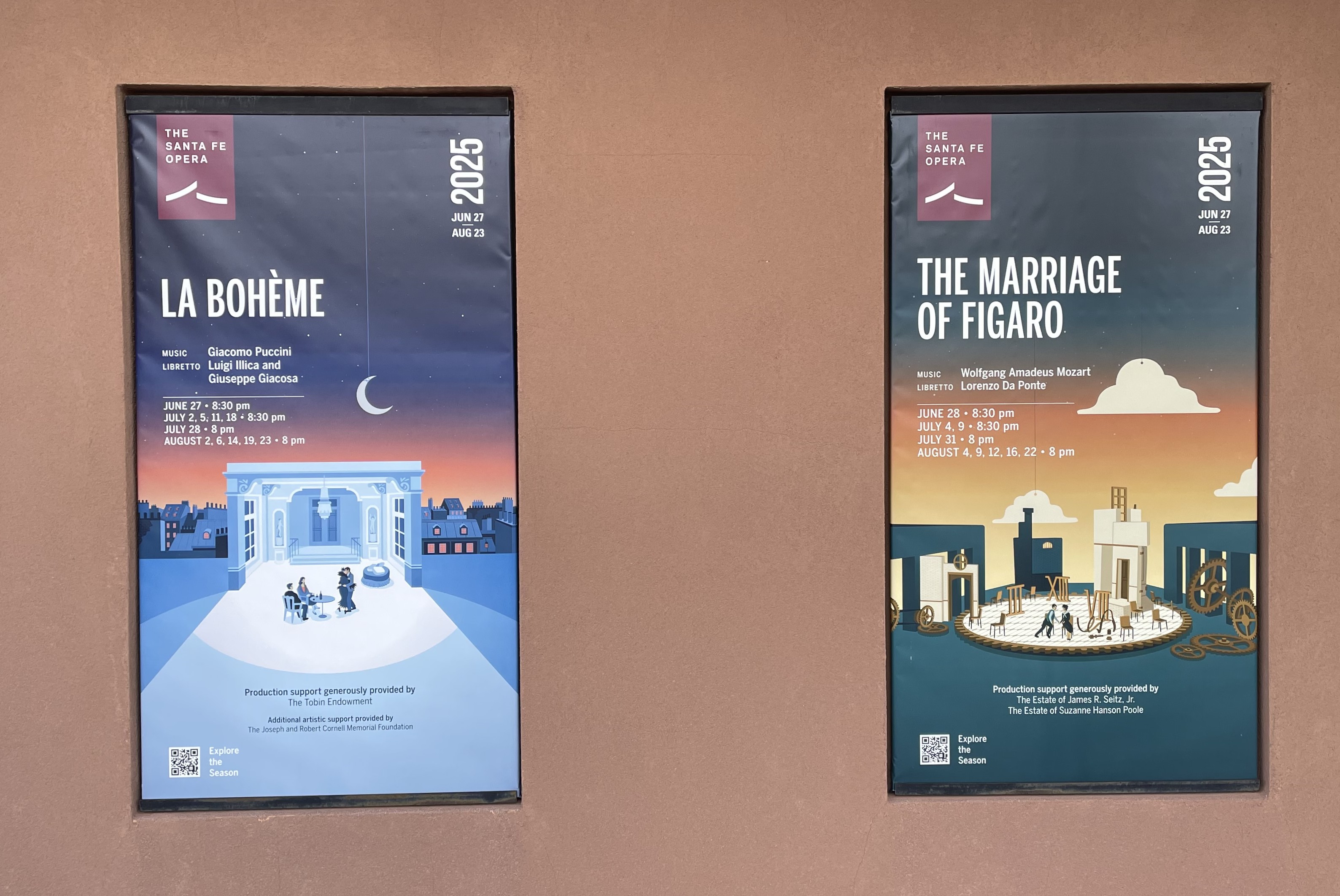
Andrew has had an extraordinary summer as an Apprentice Singer with the world renown Santa Fe Opera. We were in Santa Fe last week to hear two operas: La bohème, Puccini’s timeless tale of love, longing and sacrifice set in “the vibrant playground of 1920s Paris” (where Andrew was a member of the chorus); and Mozart’s always delightful tale of love, loyalty and lies—The Marriage of Figaro—with Andrew in the role of Don Curzio.

We stayed on to take in Sunday evening’s Apprentice Concert featuring the Santa Fe Opera Orchestra. Andrew—in the role of Lindoro—joined six of his fellow singers to close out the first half with a riotous performance of the Act 1 Finale of Rossini’s L’Italiana in Algeri. While the Apprentice concert version is not available online, here’s a snippet from the opera to give you a sense of the confusion and chaos that ensues. As one online commentator phrased it, “Rossini sure did know how to wrap up his first acts!”

My heart was full of gratitude as these young singers—early in their professional careers—were bringing music that premiered in 1813 to life once again, continuing that connection to the broad community of human and musical experience that exists across time.

Andrew (third from right) and his fellow singers backstage after a rousing performance in Santa Fe of the Act 1 Finale of L’Italiana in Algeri.

Musical identity

Although technically I have sung in one opera—a one-night performance in the 1960s as a young treble in the role of Amahl in Gian Carlo Menotti’s Amahl and the Night Visitorsand I was a member of the Baroque and Renaissance vocal ensemble Canticum Novum while we lived in Staunton, I am a folkie at heart. That’s my musical identity. When I need musical healing, or just to reconnect with a key part of who I am, I’ll turn to folk music.

So just to throw in something completely different, here’s my folkie side . . . as exhibited by Jesse Welles . . . in the the delightful The Star Spangled Banner is Hard to Sing. In poking the bear and making fun of convention, this is a great example for me of what folk music does best.


Why music heals

“For decades,” Levitin writes, “it was believed that music therapy was effective simply because it was pleasurable, or distracting, taking our minds off our pain, both bodily and psychic. We now understand that music is one of the few things that is present across all these different modes of attention (even sleep—many people hear music in their dreams). Music can help to serve as a unifying source, a glue that connects our different moods of awareness with our internal narrative, our sense of self, where we’ve been, and perhaps more important, where we want to go.”

In other words, it is a glue that connects memory, identity, and continuity.

More to come . . .

DJB

Photo by Yucel Moran on Unsplash

A case of cons, doubles, and intrigue

Two years ago, as I was deep into my “year of reading dangerously,” I came across Maigret and the Lazy Burglar and a full shelf of Maigret novels in the expansive mystery section of the wonderful Brookline Booksmith in Boston. Acting on the recommendation of one of their book sellers, I was introduced to this “stoic and practical Parisian policeman.” I promised at the time to definitely return to dive into more of the series, and now I’ve kept that promise, returning to the beginning.

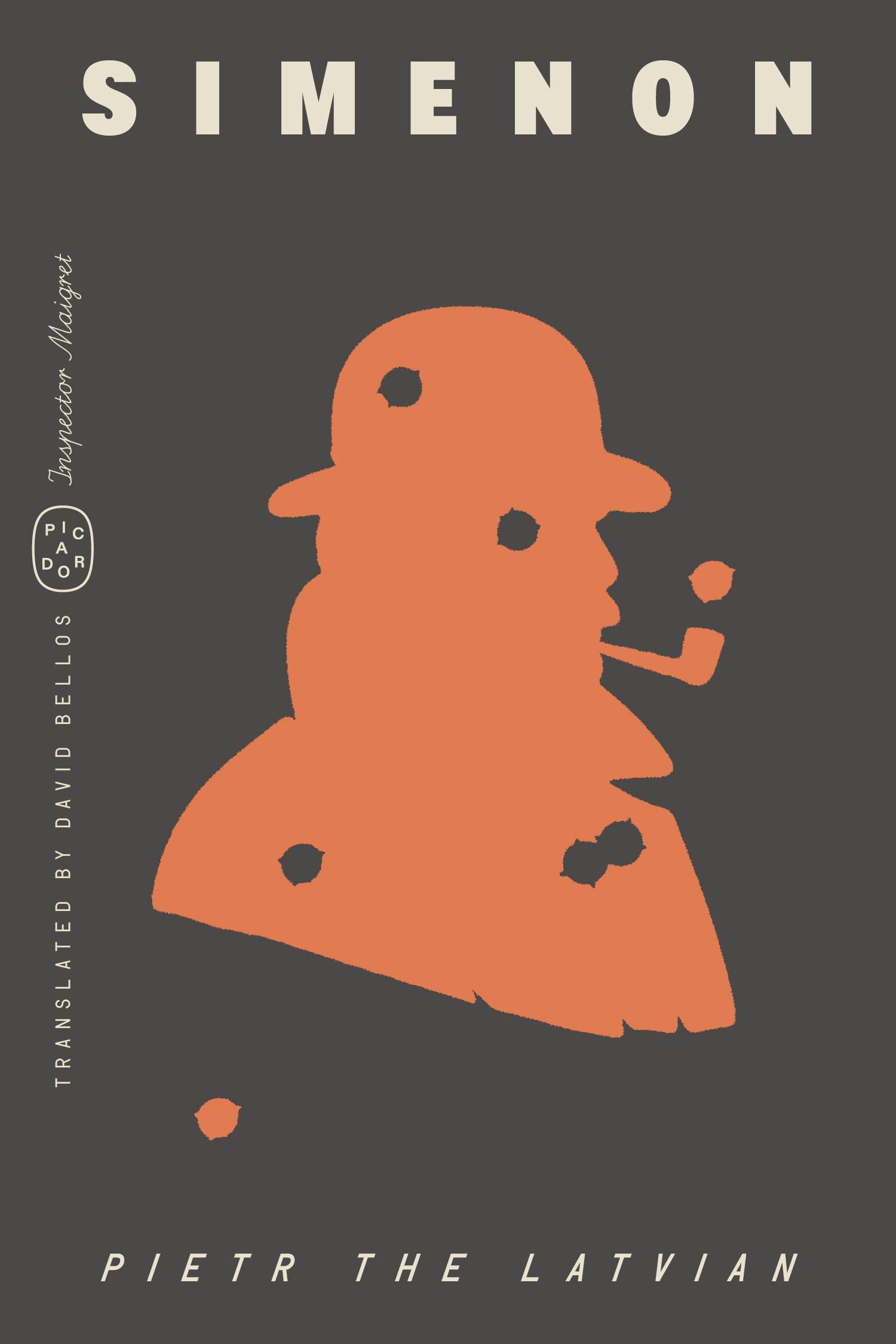
Pietr the Latvian (1930) by Georges Simenon is the first installment in the legendary Inspector Maigret series. As the book begins Detective Chief Inspector Maigret receives notice from Interpol that Pietr the Latvian, an infamous con man, is on his way to Paris. Maigret rushes to intercept him at the train station but is confounded to find two men there who fit the description of the wanted man. One is alive, the other dead. So begins a masterful book that requires the Detective Chief Inspector to work through cons, doubles, intrigue, and hidden crimes. It is a thrilling tale where Maigret not only has to solve the murder but he must also search for the true identity of the victim.

Pietr may be a businessman. Or perhaps he is a bootlegger. Despite the title, it isn’t clear that he is Latvian. He may be from America or Russia. In this novel Simenon introduces the reader to Maigret’s “keen understanding of human nature, his gift for observation, and his famous instincts”—all of which are critical as he tracks down the true suspect.

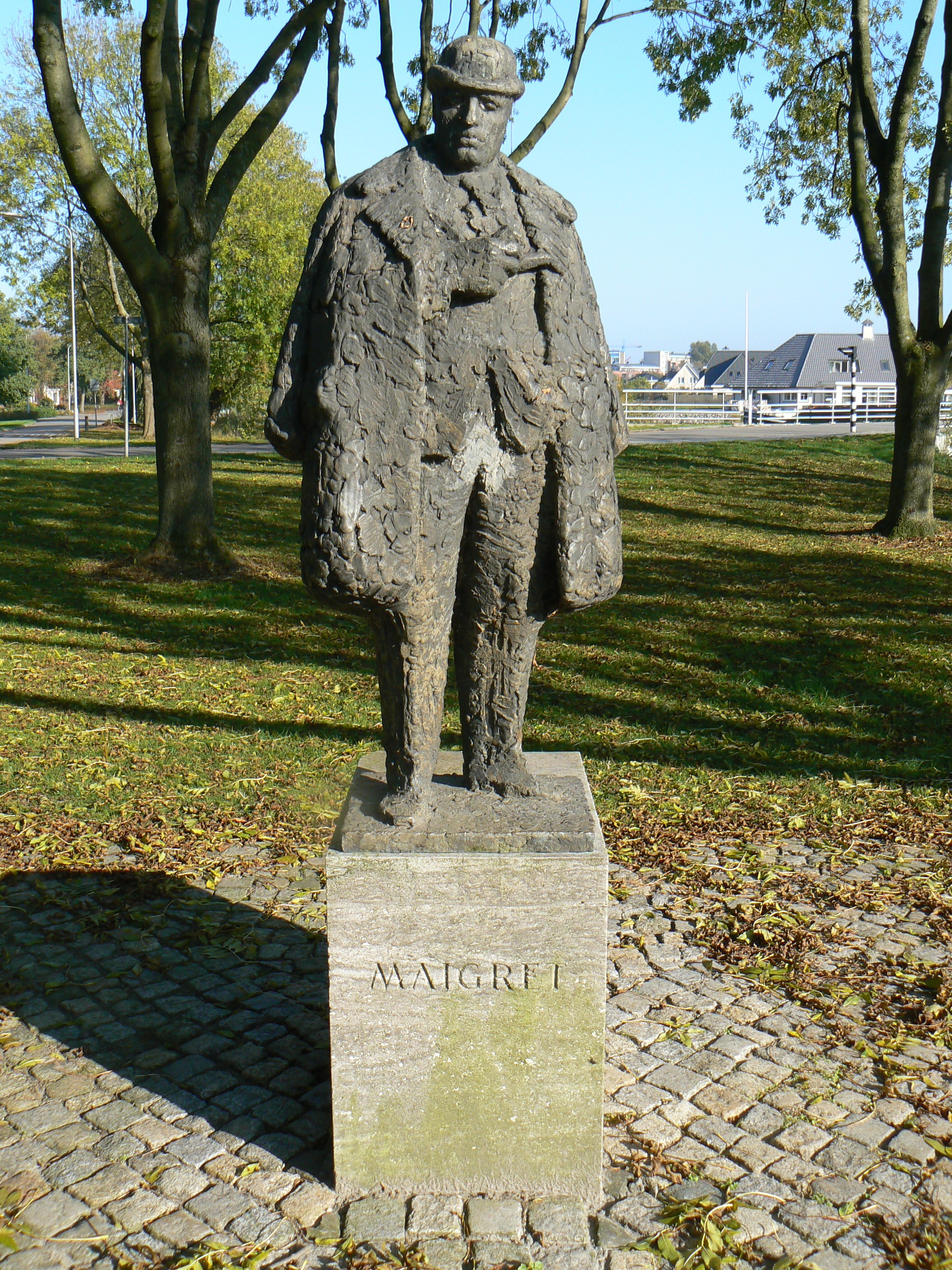
Maigret statue by Pieter d’Hont in Delfzijl, Netherlands. The unveiling was made by Simenon himself on September 3, 1966, at the place where he had written the first Maigret novel, and was attended by Maigret actors from various countries (credit: Wikimedia)

Wikipedia reports that the character of Jules Maigret was invented by Simenon while drinking in a cafe and imagining a Parisian policeman: “a large powerfully built gentleman…a pipe, a bowler hat, a thick overcoat.” Some have suggested that Marcel Guillaume, an actual French detective, was the inspiration for the fictional character. Simenon apparently claimed not to remember the inspiration or that Maigret was influenced by his father.

The series began in 1930 and came about during the Golden Age of English Crime Fiction. One commentator notes an important difference between the two, which is certainly the case in Pietr the Latvian. Instead of taking place in private homes and spaces, we are introduced here to the evil in Maigret’s Paris.

“[T]he key differentiator is the series’ setting; whilst many Golden Age works explored the private and personal nature of crime, and were often centred around private homes and intimate, family settings, Simenon instead chose to explore the wider issues France faced at that time, and as such his novels are often set in Paris or other cities, with a focus on community and shared suffering.”

Simenon told an interviewer for the Paris Review that “Writing is considered a profession, and I don’t think it is a profession. I think that everyone who does not need to be a writer, who thinks he can do something else, ought to do something else. Writing is not a profession but a vocation of unhappiness. I don’t think an artist can ever be happy.”

Simenon may not have been truly happy in his life’s work, but these wonderful mysteries—beginning with the very strong Pietr the Latvian— have satisfied millions of readers for almost 100 years.

More to come . . .

DJB

Photo illustration of the silhouette of Maigret from the cover of Simenon’s book A Man’s Head.

Rob Manfred Doesn’t Love Baseball (a repost)

I don’t normally “repost” items on MORE TO COME, but sometimes there’s a piece that just screams to be shared (even with my small corner of the world).

Joe Posnanski (regular readers know how much I love his essays) has just posted Rob Manfred Doesn’t Love Baseball on his Joe Blogs site.

It begins with the following:

“Lots of people think Rob Manfred hates baseball—I’ve never quite bought that. I’ve spoken with him about it and come away fairly convinced, no, he doesn’t HATE the game.

What I do believe is this: Rob Manfred doesn’t LOVE baseball.

I feel entirely sure that no one who loves baseball would be able to casually talk about killing off the American and National League—during a Little League game, no less.”

For those who don’t know, Manfred is the commissioner of Major League Baseball, although Joe suspects that he would “happily become the NFL commissioner tomorrow because there’s more money to be made. Or run Goldman Sachs. Or become CEO of an AI company.”

It isn’t that Joe doesn’t understand the job of commissioner:

“Yes, I realize that it’s not Rob Manfred’s job to love baseball—his job is to make the owners richer and feeling good about their greed—but still: ‘I think our postseason format would be even more appealing for entities like ESPN…’ is such a soulless sentence, the vowels should be replaced with skull and bones.”

However, you at least want someone in charge who both understands and loves the game. “Baseball is not like other American sports. It just isn’t,” Joe writes.

“Baseball matters because of its history, because of our childhood memories, because of the storytelling. More than 500 of you have already signed up to be part of our Scoresheet Celebration. Think about that: in what other sport is it fun to sit in the stands and keep score? None. That’s the answer.

And that makes sense: We have no other team sport where we believe the best ever played 100 years ago. No other team sport where we all stand together during a random moment that has nothing to do with the game and sing a dopey and ancient song together. No other team sport where there is always time for a comeback.

Baseball is its own thing. That’s what Rob Manfred never gets … and never appreciates.”

Change in baseball “is not only good, it’s essential. The right kind of change keeps the game vibrant and alive and, paradoxically, connected to its past,” Joe adds later.

“It’s that last part—the connection to the past—that Rob Manfred never seems to get.”

The entire piece is worth reading, so I’ll stop now and send you there once again, in the hopes that you’ll click through.

More to come . . .

DJB

Image from Pixabay
Unexpected perspectives

The following is a short excerpt of a longer review that I prepared for use in an upcoming issue of the Journal of Architectural Education. You can find examples of Schiff’s panoramic photographs on his website.

The recently published Civic Architecture Across America: Extraordinary Views (2025) by Thomas R. Schiff provides unexpected perspectives on buildings and environments that are often familiar to the point of being overlooked.

Produced to accompany a national tour in celebration of the 250th anniversary of the signing of the Declaration of Independence, this work forces a reassessment of what we think we know about America’s statehouses, city halls, county courthouses, monuments and more. Schiff’s use of a Hulcherama 360° panoramic camera provides a view that is at once in front, beside and behind the viewer.

There is an artistic exploration in Schiff’s work not always seen in traditional architectural photography of these same subjects. As Alex Nyerges of the Virginia Museum of Fine Arts writes, Schiff is “one of the few, if not the best, to ever take an incredibly unforgiving type of technically challenging camera, designed for other than aesthetic purposes, and turn its lens into a vehicle for capturing the essence of beauty in architecture.” Thomas Schiff and his collaborators have produced a striking and often stunning collection that speaks to the importance, beauty, and—some might add—fragility of the buildings that both serve and represent our American experiment in democracy.

More to come . . .

DJB

Work on things you can do something about

A few days ago Candice and I were discussing challenges we face and the impact of stress on our lives. For a couple of retired folks we find ourselves with a lot on our plate at the moment. We soon realized, however, that we were focusing on things we couldn’t control. *


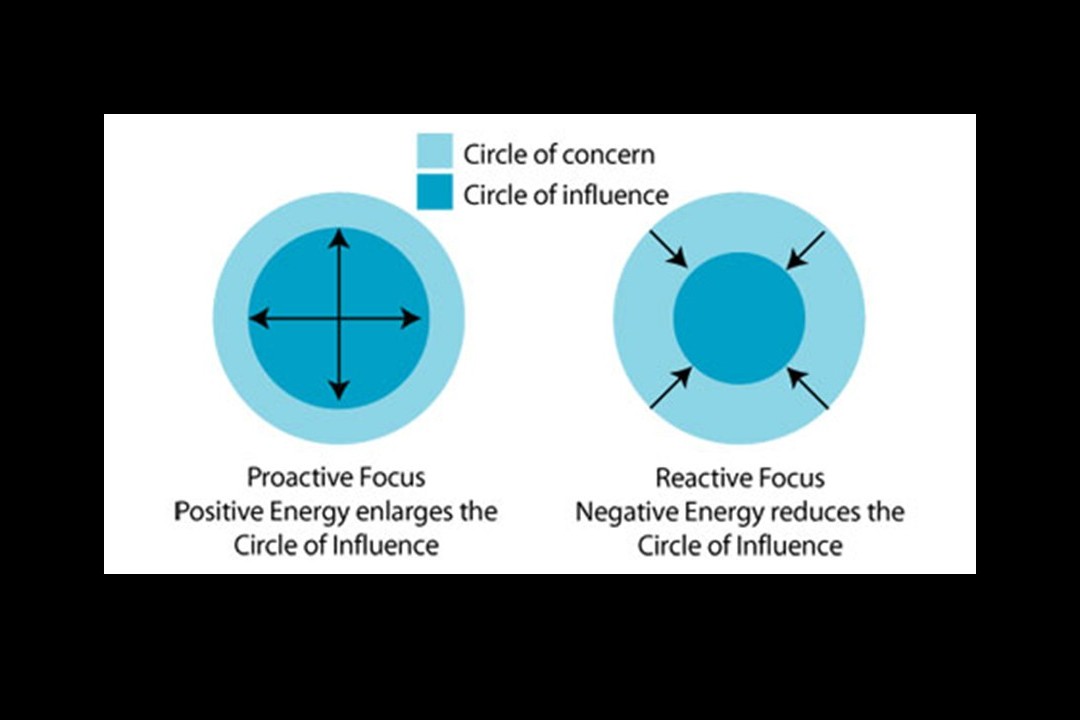
Circle of concern. Circle of influence.

This conversations took me back to Stephen R. Covey’s classic The Seven Habits of Highly Effective People. “Be Proactive” is the very first habit, and early in the book Covey notes that we each have a wide range of concerns—“our health, our children, problems at work, the national debt, nuclear war.” He suggests we separate those from things in which we have no particular mental or emotional involvement by creating a “Circle of Concern.”

“As we look at those things within our Circle of Concern, it becomes apparent that there are some things over which we have no real control and others that we can do something about. We could identify those concerns in the latter group by circumscribing them within a smaller Circle of Influence. By determining which of these two circles is the focus of most of our time and energy, we can discover much about the degree of our proactivity. Proactive people focus their efforts in the Circle of Influence. They work on things they can do something about.”

Circle of Concern and Circle of Influence (credit: Centre for Confidence and Wellbeing)

Those who focus on things they can influence radiate positive energy, causing their Circle of Influence to increase.  Reactive people, however, focus on things they cannot control or influence with results that include blaming and accusing attitudes, reactive language, and increased feelings of victimization.

Victimization, in case you haven’t noticed, is in vogue these days.

I captured this idea in 70 lessons from 70 years when I included “Focus on what you can control” as lesson #5.

“Epictetus described this as our ‘chief task in life.’ I can’t control the weather or how the president acts but I can control my attitude, emotions, desires and response to external events and challenges. Anne Lamott helpfully reminds us: ‘Expectations are resentments under construction.’”


Prioritize caring about others

In thinking about areas of personal influence, I am working to prioritize caring about other people. This goes against type for me, a somewhat natural introvert. That makes it hard but certainly not impossible. Poet and songwriter Carrie Newcomer suggests that the principle of kindness and goodness given and received “expresses a deeper wisdom, a more powerful picture of our true and natural state.”

“Why do I believe this to be so? Because when kindness bubbles up naturally, it feels good, it feels right, if feels like something that is suppose to happen in the course of a extraordinary ordinary day. I believe it because I have seen small daily acts of goodness and love change things in profound ways.”

With cynicism as an easy out it takes courage to respond differently. Instead of blaming others and using reactive language, I can train my focus in different areas so that I lean into hope and believe in the power of goodness. Yes it is risky. Yes you will be disappointed. And yes, you can choose to do it all again. Author Ryan Holiday suggests that we have to be proactive to fight tendencies not to care.

“I was reading a book recently and I could feel a part of my mind trying to find a way to blame the subjects of the book for their own problems. The reason I was doing this, I came to reflect, was that if it was their fault, then I wouldn’t really have to care. I wouldn’t have to do anything or change any of my beliefs. I think it is this impulse that explains so much of where we are in the world today. THIS HEADLINE HERE is one that I think about almost every single day for that reason. You have to fight that trick of the mind, the one that looks for reasons not to care. It’s the devil’s magic.”

Holiday adds:

“Despair and cynicism only contribute to the problem. Hope, good faith, a belief in your own agency? These are the traits that drive the change that everyone else has declared to be impossible.”


Think. Focus. Prioritize. Act.

There are so many things that concern us on a daily basis, and they differ for everyone. If we realize that the first thing we can influence is where our focus is trained, then we have the option to live a life that is much more purpose-filled. Perhaps one built around kindness.

The Irish poet and author John O’Donohue says:

“. . . if you send out goodness from yourself, or if you share that which is happy or good within you, it will all come back to you multiplied ten thousand times. In the kingdom of love there is no competition, there is no possessiveness or control. The more love you give away, the more love you will have.” 

Think about what concerns you. Focus on what you can influence. Prioritize caring for others. Act by sending out goodness and kindness.

I could be wrong, but when you work to focus on your concerns in this way you just might find that your life is acquiring deeper meaning. And you may also notice that your Circle of Influence expands.

More to come . . .

DJB


*NOTE: During a period of travel I’m returning to a few old chestnuts on MORE TO COME. Today’s post primarily relies on an essay from the Dark Ages of 2017.


UPDATE: It did not begin as part of a series, but this post has become the first of an August trilogy focused on recognition of the challenges we face and how we might respond in these times. Here’s the second in the series. The final is Choosing gratitude in difficult times.


Photo by Elijah Macleod on Unsplash

Talking murder mysteries with Anna Scotti

A few weeks ago I wrote a full review of a new book about a brainy librarian who confounds her handlers while running from a murderous ex.

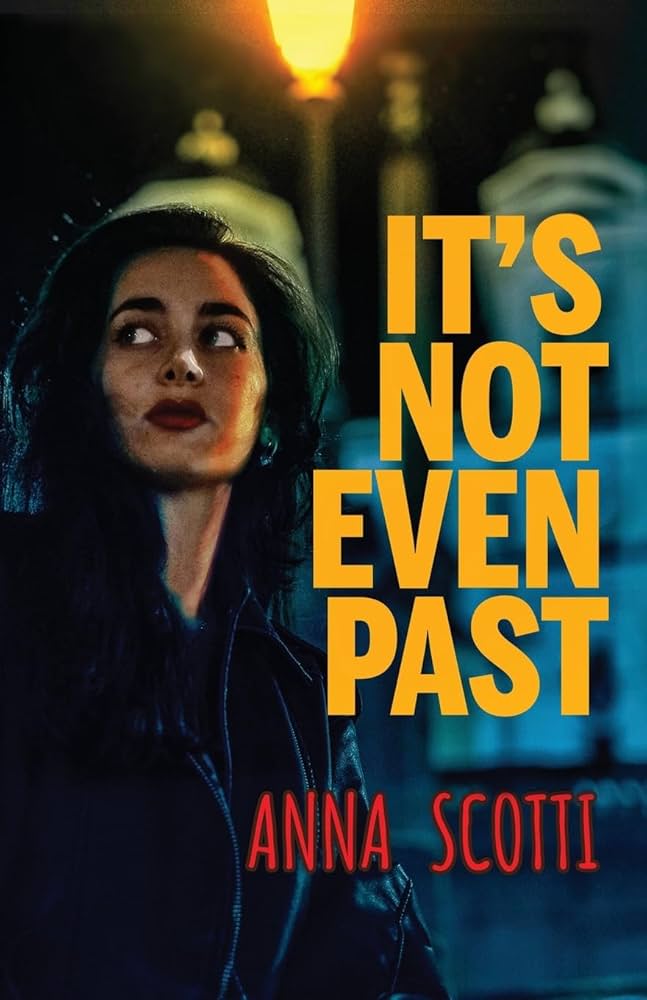
It’s Not Even Past (2025) by Anna Scotti is a brilliantly conceived set of murder mysteries involving the librarian originally known as Lori Yarborough. Lori moves through several aliases, multiple locations across the U.S., and a variety of rather menial jobs in order to stay a step ahead of her ruthless ex and his cartel henchmen. In each place our protagonist has an uncanny ability to find herself in the midst of trouble and murder; her ingenuity in solving those crimes inevitably forces her to move on, often to a new city with a new WITSEC-provided identity.

The original post generated so much positive feedback that I reached out to Anna to see if she would answer a few questions for my Author Q&A series. She did, and what follows is our delightful exchange. Enjoy!


DJB: Anna, how did you become interested in writing murder mysteries? Are there particular challenges and/or rewards in the murder mystery genre that you’ve recognized as opposed to, for instance, your writing of poetry or young adult novels?

AS: I’ve always loved reading mysteries―my mother would pass along her Agatha Christie and Elizabeth George paperbacks when she’d finished, and my dad his Dick Francis racetrack novels. My sister and I would fight over them, along with Ellery Queen and Alfred Hitchcock Mystery Magazines, which came out monthly back in the day. I even wrote a mystery―pseudonymously―when I was first getting started, but it wasn’t very good, and although it had a well-known publisher it didn’t get much attention. Around the same time I published a children’s book and a horror novel, with similar results. There was no self-publishing back then, so it was a bit of an accomplishment to publish at all. But I didn’t see how to make a living at it so I abandoned writing fiction for the longest time.

I was a journalist writing for InStyle and People, Redbook, all the big women’s magazines. I specialized in “wojep,” which is short for “woman in jeopardy” dramatic stories. The wronged wife or stalked woman would tell me her story, and I’d write it up in the first person, “as told to.”  Eventually I segued into teaching school, and because I was so busy―I was a mother, too―I tinkered with poetry, thinking a shorter form might fit my schedule better. I did find my way in the poetry world, but all those wojeps lingered in my consciousness, and I still refer to them for storylines and characters. Now I work in all three forms―my young adult novel, Big and Bad, won the Paterson Prize for Books for Young People back in 2020. It got rave reviews, but pandemic books didn’t sell well, if at all. 

Most of the chapters in “It’s Not Even Past” began as stand-alone short stories. At what point did you realize that you may have a book, and did that realization require you to change how you were writing your later stories?

I love this question because it reminds me to reflect on a lesson I learned the hard way! I had no thought of a series when I offered the first story, That Which We Call Patience, to Ellery Queen. But I liked the main character―a brainy, erudite, but naive librarian―so much that I wrote another story around her, then another. Ellery Queen readers are great about writing in―they will track a favorite writer down to ask questions, or more often, to lodge complaints―and whenever I published a “librarian” story in the magazine I’d hear from readers demanding the answers to questions posed or suggesting places for the character to be situated next. So I thought, this could really become something; an ongoing character who evolves and changes with each installment.

But the trouble―the lesson I mentioned earlier―was that I’d not kept notes about all the details of Cam’s personality and background. Is her tattoo on the right ankle, or the left? Or is it on her calf? Which greyhound is the male―is it Vindi, or Meme―because that’s the one that likes her? Does Cam drink coffee or is it Earl Grey Tea? Aiiii! Going back through published stories to make note of every detail that might come up in―or be contradicted by―a later story was a major task. But I learned. I have a new recurring character, Aubrey Blackwell. She’s a teacher and has appeared in a couple of anthologies, including Paranoia Blues (Down & Out Books, 2022). You had best believe I am keeping an excel spreadsheet listing every single thing readers know about Aubrey!

I love the character of Lori Yarborough/Cam Baker in part because a librarian who is in the witness protection program goes against type. But what the heck do you call her, given that her name changes every few stories? 

Oh, what to call her! Another lesson learned the hard way! Writers, take heed: if you are going to create a character with changing aliases, establish his or her real name from the beginning. In Patience, the librarian was called “Audrey Smith,” and she joked that she couldn’t divulge her true name because then she’d “have to kill you.” In the next installment, What the Morning Never Suspected (EQ Sept/Oct 2020) our librarian became “Cam Baker,” but she was eventually known as “Serena Dutton,” “Sonia Sutton,” “Dana Kane,” and “Juliette Gregory.” Eventually, in the sixth EQ story (which is seventh in the collection) readers learn her real name, Lorraine Yarborough, and it’s a bit of a plot point.

But readers often read stories out of order―more than a few have discovered the “librarian on the run” by picking up a Best Mystery Stories of the Year (Mysterious Press, 2022, 2024, 2025)―then gone back to read the rest. And I didn’t want to undermine the drama of story six by referring to Lori by her real name before it was revealed. Compounding that muddle, as the series gained popularity, I got requests for interviews and was invited to speak to various organizations. Not having a name to use for my character, or having to say “the librarian we call Cam,” or “the woman on the run in WITSEC” was really awkward! It was even a problem as my publisher was coming up with book cover blurbs and summaries for potential reviewers. So lesson learned: the character can live under as many aliases as she wants, but the writer and reader need one unchanging name to call her from the beginning!

I won’t give away the ending, but do you see a future for more stories about Lori and can you hint at what that might be? Can you tell us about other projects in the works in your writing practice?  

 Lori had a new story in the May/June issue of Ellery Queen―it’s called Traveller from an Antique Land―and there’s another coming up later this year. I think there are a few surprises in store for “librarian” fans! As for projects in the works, we’d need a series of interviews extending into 2027 to cover it all. I’ve got my little fingers in a lot of pies! That’s not necessarily a good thing, though. I think I might be further along in my career, better known and better remunerated, if I could stick to just one genre, but I find that impossible.

Right now I’m polishing a coming-of-age novel that I’m really excited about―it’s called Real Brothers, Spit Sisters, and the Baileys Lost Their Dog. It’s about a little girl, a white girl, growing up in Washington, DC in the sixties, at the time of the Civil Rights Movement. When Ima’s older brother becomes ill, she’s sent to South Carolina―at the time, a very racially segregated state―where she is befriended by an older girl and also becomes fascinated by a Black family she sees fishing on the lake every morning. There are a lot of layers to the story. It was an exciting book to write, and I hope it’s exciting to read. Right now I’m looking for a publisher. I’ve also got a thriller I’m finishing. It takes place in the 90’s and it’s dark, but also a fun travel back in time. And I’m working on a screenplay based on the “librarian on the run,” and on another collection of stories―noir, I guess.  They are stand-alone stories, not part of the series, from Ellery Queen, Black Cat Mystery Magazine, The Saturday Evening Post, and various lit mags.

For the past couple of years, I’ve had poetry on the back burner, as I worked on the novels and short fiction. And I teach creative writing classes online! But I’m getting back to poetry now. I’ve got some poems that are quite satisfactory, and I’m hoping to be able to provide publication links soon. If your readers are interested, they are most welcome to visit my website which is a good place to find links to some of my stories and poems―including audio recordings of some of the mystery stories―without a paywall.

What books/authors are you reading now that particularly inspire you?

I love and admire so many writers that it’s hard to pick even a few, but I think the writer whose work I devour most eagerly is Paulette Jiles. My God, what a talent! Each novel is based in American history, the history of the Old West, and each is a wonder, better than the one before. Enemy Women, Chenneville, News of the World … especially now, with my country in turmoil, these books are incredibly inspiring, beautifully written, and true to history. Jiles includes the stories of free Blacks, of women, of Indigenous People, of children…the reader experiences the stories from unusual viewpoints. And they’re all inspired by people who really lived. Elizabeth George’s Inspector Lynley novels are marvelous―she’s incredibly talented. What she did with the back-to-back novels, With No One as Witness and What Came Before He Shot Her provides a masterclass for mystery writers, as well as a feast for readers. I also love Emma Donoghue―she’s Canadian, I think. Sara Waters. Jonathan Franzen. And my all-time favorite book might be One Thousand White Women by Jim Fergus. You’ll cry, but you’ll also be astonished by Fergus’ trickery, and by his storytelling expertise. Oh, I had better stop. Just one more―my “comfort read” is anything by Ruth Rendell. I eat those up like candy―they are so good! I’m sure I’ve read every one of her books three or four times!

Thank you, Anna.

You’re welcome. I’ve gone on a little long, but I had so much fun with these questions.

More to come . . .

DJB

Mysterious street image from Unsplash

These cats are good!

NOTE: Saturday Soundtracks are semi-regular weekend updates on musical events, musicians and bands that catch my ear. Enjoy! 

Music is a salve for the soul. When times are difficult, I often find that I haven’t had enough music in my life. As Duke Ellington famously said, there are only two kinds of music: “good music and the other kind.” I go for the good music. That’s why I’ll mix baroque, jazz, blues, the Piano Prince of New Orleans, some good ole’ rock-and-roll, country, folk, and lots of roots music into a hearty musical stew. It is all different and its all good. There are amazing musicians and much to love and admire in each of those genres.

Which brings me to the International Bluegrass Music Association (IBMA) 2025 Award nominees. The 36th Annual IBMA Bluegrass Music Awards, where the winners, recipients, and inductees will be honored by their peers and fans, is scheduled for September 18th.

For this Saturday Soundtrack I thought it would be fun to pick out a few performances by some of the groups and individual musicians who have been nominated this year. As usual, I went down a rabbit hole. In doing so, I found quite a few new gems.

One of the nominees for the IBMA Entertainer of the Year award, Appalachian Road Show, is among those new finds for me. As you can see in the video for Blue Ridge Mountain Baby, these guys thrive on authentic bluegrass.

Outrun The Rain by Fiddlers Jason Carter and Michael Cleveland is one of the five nominees for Song of the Year. I just love hearing good twin fiddles, and these two masters can really bring it. Their Carter & Cleveland project is also up for Album of the Year.

The all-female bluegrass supergroup Sister Sadie has been nominated for Vocal Group of the Year while band member Gina Britt is a nominee for Banjo Player of the Year (one of three women in that category—more on that in a moment) and lead singer Jaylee Roberts is a nominee in the category of Female Vocalist of the Year.

The GrascalsTennessee Hound Dog—a take on the old Felice and Boudleaux Bryant composition made popular by the Osborne Brothers—is in the running for Music Video of the Year. Oh, and it features another of those great female five-string players up for Banjo Player of the Year: Kristen Scott Benson. Check out her hot break at the 1:20 mark when—in the great tradition of the banjo master Earl Scruggs—she plays amazing licks while her face has an “‘eh, this is nothing” look on it.

Another Music Video of the Year nominee is 5 Days Out, 2 Days Back. The song was written by Alison Brown and Steve Martin and features Tim O’Brien on lead vocal and mandolin, Martin on banjo, Brown on low banjo, Bryan Sutton (a perennial Guitar Player of the Year nominee) on guitar and harmony vocals, Stuart Duncan (Fiddle Player of the Year nominee), Todd Phillips (Bass Player of the Year nominee), and Vickie Vaughn (another Bass Player of the Year nominee) on harmony vocals.

Molly Tuttle, a now perennial Guitar Player of the Year nominee, is someone I’ve featured frequently on MTC. Let’s take a look at several of her recent outings, including a couple of duets with Old Crow’s Ketch Secor . . .

. . . and her most recent pop-influenced tune That’s Gonna Leave a Mark (if you can call having clawhammer guitar on a song pop).

A former member of Molly Tuttle’s Golden Highway band—two-time IBMA Fiddle Player of the Year winner Bronwyn Keith-Hynes—has now been nominated for New Artist of the Year. The first single on her debut album, Can’t Live Without Love, features several members of bluegrass royalty: Molly and Sam Bush sing harmony vocals while master of the dobro Jerry Douglas, guitarist Bryan Sutton, mandolinist Dominick Leslie, banjoist Wesley Corbett, and bassist Jeff Picker round out the studio band.

I’ve mentioned the three female nominees for Banjo Player of the Year (Benson, Bitt, and Brown), but I just want to say that if their terrific version of Ralph’s Banjo Special doesn’t win Instrumental Recording of the Year, then I demand a recount! Ralph Stanley is smiling up in heaven. Check out their smooth exchange of the same banjo beginning just after the 50 second mark, then the duet that Alison and Kristen pull off at the end of that little segment. Unreal! (And you have the added bonus of Bass Player of the Year nominee—the great Missy Raines—playing a short solo at about the 2:20 mark.)

Billy Strings is nominated for Entertainer of the Year, Male Vocalist of the Year, Instrumental Group of the Year, and Guitar Player of the Year, while his Highway Prayers project is up for Album of the Year. Whew! In the first video, Strings duets with Sierra Hull, a Female Vocalist of the Year and Mandolin Player of the Year nominee, on the Austin City Limits 50th anniversary show.

Here is Strings and the amazing Tommy Emmanuel just going crazy . . .

Malfunction Junction is from the Highway Prayers album. The live version below includes guest picker Sierra Hull.

And after a long absence, Alison Krauss & Union Station are back, leading the nominations following the release of their first album in over a decade, Arcadia. Between Krauss, and Union Station’s band members, the group have amassed nine nominations, including Entertainer of the Year—for which their last win was in 1995—Album of the Year, and Vocal Group of the Year. 

Looks Like the End of the Road is the first single from the Arcadia album.

If you have the time, watch this wonderful interview with Alison where she goes into all sorts of musical places (the good stuff) including riffs on O Brother Where Art Thou (34:00 mark), Tom Jones and Little Richard (at 39:55), followed quickly by Stevie Wonder and Glen Campbell.

Alison also talks about her friend and sometime musical collaborator, the late Tony Rice, at the 14:20 mark, in an explanation of why his version of Hard Love is just about perfect.

Tim O’Brien’s old band Hot Rize is being inducted into the Bluegrass Music Hall of Fame this year. Here’s a reunion show of the band on e-Town with guests Jerry Douglas, Stuart Duncan, and Sam Bush.

Finally, for the first time in the nearly 40-year history of the IBMA, a Black person will be inducted into the Bluegrass Music Hall of Fame.

Arnold Schultz, a seminal figure in bluegrass, blues, and old-time credited with greatly influencing the Father of Bluegrass, Bill Monroe, will be the first non-white member of the genre’s hall of honor.”

Shultz’s Dream is the name of a song written on commission by Dom Flemons, The American Songster. It pays tribute to bluegrass pioneer Arnold Shultz (1886-1931). The band is led by Flemons and he is joined by Dante’ Pope (formerly of Crossrhodes), Brian Farrow (of Ganstagrass), IBMA Award winning banjo player Tray Wellington, and Shultz expert Dr. Richard Brown. As Flemons sings, “Let’s send Arnold home” in style, as a Bluegrass Hall of Famer.

As I say at the top, these cats are good!

More to come . . .

DJB

Guitar by 42-north on Unsplash

A stunning work of great pain and grace

It is important to continue to put forward searing, difficult histories in the hope that they will break through the malaise of indifference. We hear “never again” to the point that there is a danger these words lose their impact. The genocidal treatment of the Jews during the Nazi-led holocaust, however, is history that should never be forgotten much less repeated. When indifference appears to be universal, this part of the past should always be there to inform and shape our individual and collective responses to evil. As those years recede into history, it is far too easy to stop telling the stories and dismiss the terrors of those times.

Thankfully, we have true accounts of the horrors of those years to shake us out of our complacency. They often demonstrate how easy it is to respond to the demands of authoritarians with self-serving collaborations and justifications.

I just finished one such work that I simply cannot get out of my mind. I write today to recommend it as a book you’ll never forget.

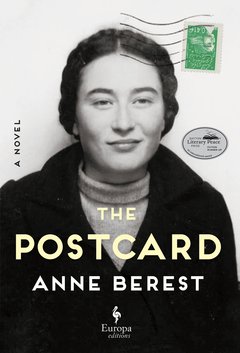
The Postcard (2021; translation from the French in 2023) by Anne Berest is a compelling and timeless work that is so necessary for our current moment. In January of 2003 an anonymous postcard is delivered to the Berest family home, arriving alongside the usual holiday mail. On the front, a photo of the Opéra Garnier in Paris. The back contains only the first names of Anne Berest’s maternal great-grandparents, Ephraïm and Emma, and their children, Noémie and Jacques. There were five members of the Rabinovitch family. These four were all killed at Auschwitz. The fifth—an older sister to Noémie and Jacques—is Myriam, Anne Berest’s grandmother, who never spoke about the loss of her family or acknowledged her Judaism. Although she had a harrowing escape from the Nazis and then worked for the Resistance, she was traumatized; filled with guilt and grieving. After the war Myriam assimilated into France. The quest to uncover who sent the postcard and why leads Anne and her chain-smoking mother Lélia Picabia on a multi-year journey of discovery.

The haunting, anonymous postcard that arrived in January 2003

Early in the book Anne—the author and narrator—is on bed rest and about to have her first child. She asks Lélia to tell her what she knows about the family to help her fill in what is essentially a blank canvas.

“These people were my ancestors and I knew nothing about them. I didn’t know which countries they’d traveled to, what they’d done for a living, how old they’d been when they were murdered. I couldn’t have picked them out of a photo lineup.” 

What follows is an autobiographical novel full of both pain and grace. The phrase un roman vrai—a true novel—describes what Berest has produced. Lélia is a retired professor who, in reaction to her mother’s silence, has spent her life searching for her family’s history. Her home office is filled with archive boxes of government documents and personal letters. As one commentator notes, the way Lélia speaks to Anne about her story “is a straightforward, effective way to tell readers about the making of the novel they are holding:”

“I should warn you,” she began now, “that what I’m about to tell you is a blended story. Some of it is obviously fact, but I’ll leave it up to you to decide how much of the rest comes from my own personal theories. And of course, any new documentation could flesh out those conclusions, or change them completely.”

In a book that moves along at the “pace of life,” the reader is confronted again and again with scenes that remind us of the psychological and physical terror of the treatment of the Jews in the decades leading up to and including World War II. The Rabinovitch family are Russian Jews who flee their home country as anti-Semitism rises early in the 20th century. Ephraïm and Emma move the family to Riga, Latvia—a place of remembrance for Jews—then to Palestine before finally returning to Europe and settling in France in 1929.

Ephraïm is an engineer, inventor, and business owner who is determined to assimilate his family, working unsuccessfully for years to obtain French citizenship. Emma teaches piano on a treasured family instrument. Noémie, whose photograph graces the cover of the book, is a budding writer whose tragic story of talent lost—a story that holds true for the entire family—clearly touches the author at her core. Jacques is just a young boy of 16 when he is murdered.

The story moves back and forth in time as Anne digs into her family’s past; recreates scenes based on historical fact; uses shifting narrators; and grapples with her relationships between grandmother, mother, and the author’s daughter. As translator Tina Kover notes, “[t]he book is deeply personal, breathtakingly emotional, raw and intense and beautiful. My translation had to be just right.”

“Climbing inside the story of Ephraïm, Emma, Noémie, and Jacques” [writes Kover] “meant that I would suffer their loss, and even though I was prepared for it, translating that part of the book was excruciatingly painful. But the revelation came in the happiness I felt as I was translating their lives. They were vibrant and funny, warm and smart and strong, and they lived. That’s what has stayed with me after finishing the translation, and what I hope will stay with readers, too. Their aliveness.”

Berest, in the sections where fact and fiction come together, is reclaiming the stories of her family. She is also reclaiming her Jewish identity and heritage which will pass along to her children.

So why is this book so important today?

Berest and her mom are discussing why foreign Jews, such as the Rabinovitch family, were among the first to be deported. They didn’t have the support systems that the “French Jews” had and so they were vulnerable. “They existed in the gray area of indifference. Who would take offense if someone attacked the Rabinovitch family?” The Nazis and their collaborators pulled families apart, working systematically to put Jews into a “separate” category. Anne speaks directly to her mother in this discussion:

“Maman . . . there comes a point when you can’t just keep saying ‘but people didn’t know . . . Indifference is universal. Who are you indifferent toward today, right now? Ask yourself that (emphasis added).”

That paragraph reminded me of recent writings by Quaker activist Parker J. Palmer on ways we can fight the indifference to injustice and evil in today’s world.

We could bear witness . . . that our commitment to human rights, the rule of law, the claims of truth, and constitutional democracy demand that we resist a tyrannical regime that refuses to abide by those cherished norms.

In bearing witness to those trying to isolate us today, Palmer asks that we recall . . .

  • that ICE is holding 65,000 immigrants in “detention,” working with a goal demanding at least 3,000 more detentions per day.
  • Of the 65,000 men, women and children now in custody, 72% have zero felony convictions, only 7% are classified as serious criminal threats, and none has been afforded due process.
  • We should also make it clear that immigrants—those who are being targeted—are NOT a major source of U.S. crime—in truth, they commit fewer crimes than U.S.-born citizens
  • Congress has just funded a massive $150 billion expansion of our ability to catch, cage and disappear racially profiled human beings. (The budget for building new ICE detention centers alone is 62% larger than that of the federal prison system.)
  • “These are your taxes and mine at work financing inhumanity and systematic injustice.”

The dear friend and former colleague who recommended The Postcard called it “painful at a profound level, of course, and yet somehow resilient and inspiring.” Well chosen words for a book that is both timeless and so necessary in today’s world.

More to come . . .

DJB


For further information, listen to this Scott Simon interview with author Anne Berest.


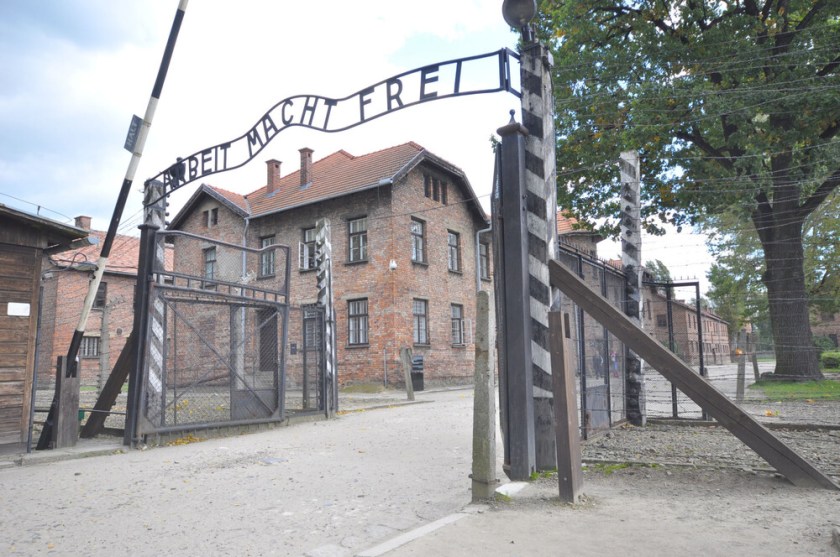
Photo of Auschwitz, Poland, World Heritage Site (credit UNESCO).