I recently saw an acquaintance for the first time in a number of years. This wasn’t someone I was particularly close to at any point in time. In fact, I had kept my distance through the years, recalling a perceived slight . . . which may or may not have actually happened.
Our recent encounter was pleasant and full of memories. In the course of that conversation they thanked me for a long-ago act of kindness that I, frankly, did not recall.
I’ve been thinking about my long-held pique ever since that encounter and wondering how many other things in my memory are there because of misunderstandings or misremembrances. In a recent post on 70 things learned in my 70 years of life, I suggested we could all benefit by entertaining the possibility that we might be wrong. Had I simply been wrong about this individual? After decades of low-grade simmering that did nothing to bring me joy and peace, did it really matter?
About the same time as this conversation took place, a post from the Franciscan Friar Richard Rohr showed up in my inbox. In it Rohr writes about the importance of moving beyond our need to be right, especially in today’s political climate.
“In our ugly and injurious present political climate, it’s become all too easy to justify fear-filled and hateful thoughts, words, and actions, often in defense against the ‘other’ side. We project our anxiety elsewhere and misdiagnose the real problem (the real evil), exchanging it for smaller and seemingly more manageable problems. The over-defended ego always sees, hates, and attacks in other people its own faults—the parts of ourselves that we struggle to acknowledge. Of course, we don’t want to give way on important moral issues, but this often means we also don’t want to give way on our need to be right, superior, and in control. Our deep attachment to this defended and smaller self leads us into our greatest illusions. Most of us do not see things as they are; we see things as we are.” (emphasis in original)
This hit home, and I had a perfect example from my own experience. Here I was, with an over-defended ego, working to tell myself that I was right. That I was superior. Perhaps I was struggling to acknowledge slights I had given to others through the years.
My friend and mentor Frank Wade once made a similar point. “The Chinese have a saying,” Frank notes. “Most of what we see is behind our eyes.” In other words we see what we expect to see, not necessarily what is really there. We force the world into our preconceptions and because of that we miss a lot. It was Marcel Proust who once said, “The real voyage of discovery consists not in seeking new landscapes, but in having new eyes.”
Rohr uses both Christian and Buddhist thought to encourage us to see things as they are as opposed to seeing things as we are. The Heart Sutra of Buddhist teachings, similar to saying “Alleluia” at Easter . . .
“. . . is liberation from our grief, our losses, our sadness, and our attachments—our manufactured self. It accepts the transitory and passing nature of all things without exception, not as a sadness, but as a movement to ‘the other shore.’ We don’t know exactly what the other shore is like, but we know it is another shore from where we now stand and not a scary abyss.”
In a time where we are all struggling to find our footing and defend ourselves against evil, taking the time to consider how we are looking at a situation—perhaps even considering how we are loving, or not loving, others—might help us, in the words of poet and songwriter Carrie Newcomer, to “pay attention to how the spirit of love is moving within us.” What new paths through the woods are we being called to create? Can we “find fresh springs of graciousness and laughter” that lighten the load we carry?”
Every time I visit a bookstore or library, I chance upon one or more volumes that haunt me. They seem to say, “Why didn’t you read me twenty, thirty, or fifty years ago?” My excuses are feeble. I may have been too busy reading histories and biographies to devote much time to literature and poetry. Perhaps I was hooked on a small number of well-known Southern authors and missed others I should have explored. Or maybe I was just lazy.
It never fails, however, that when I push myself to read a classic work for the first time, I am reminded of how much we have to learn between our birth day and our last day. Of all the different perspectives that could have enriched my time as an impressionable youth but that are now working their magic on my third stage of life. And that the saying “too many books, too little time” is a cliche for a reason: It is true.
A classic of the Harlem Renaissance that I only recently read for the first time is the latest of those “why didn’t I read this a long time ago” books that call to me from nearly every bookshelf I pass. Better late than never.
Their Eyes Were Watching God (1937) by Zora Neale Hurston is the story of Janie Crawford, a proud independent black woman who finds herself while navigating three marriages and a fair share of sorrow. In recounting her life’s story full of travel to her friend Pheoby, she explains that “you got tuh go there tuh know there.” Janie begins as a young girl, goes through a myriad of experiences in the Jim Crow South, and comes out a much wiser woman of 40. She learns that others—family, friends, lovers, busy-bodies—want to tell her how to live. Her Grandma reminds her that the black woman “is de mule of the world” and both white folks and black men will expect her to tote the heaviest load. But in the end Janie proclaims that she has done “two things everbody’s got tuh do fuh theyselves. They got tuh go tuh God, and they got tuh find out about livin’ fuh theyselves.” Hurston’s vivid writing and empathetic outlook towards Janie’s quest brings this story alive.
We see Hurston’s skill in creating images early in the book, when she describes Janie’s coming of age experience under a blossoming pear tree in West Florida. She was hearing singing that had nothing to do with her ears, and she watches a “dust-bearing bee sink into the sanctum of a bloom.” A passing boy gives her a kiss, and “that was the end of her childhood.”
Hurston grew up in Eatonville, Florida, which is important to the story.
“Established in 1887, the rural community near Orlando was the nation’s first incorporated black township. It was, as Hurston described it, ‘a city of five lakes, three croquet courts, three hundred brown skins, three hundred good swimmers, plenty guavas, two schools, and no jailhouse.’”
She could see the evidence of black achievement all around here, and it is here where the fictional Janie comes for part of her journey. She marries the mayor, has a big house, and seems to be set in life. But her soul remains restless as her husband refuses to let her think, talk, or act in ways that he doesn’t approve. When the mayor dies she is freed, and despite the disapproval of the townsfolk she leaves with a much younger man named Tea Cake. He “engages her heart and spirit in equal measure and gives her the chance to enjoy life without being a man’s mule or adornment.” They move to the Everglades and are loving life when a hurricane hits. Once again, Hurston’s descriptive writing pulls the reader along as Janie, Tea Cake, and their friend Motor Boat sit in a small shack and listen to the wind howl and Lake Okechobee rise.
“The wind came back with triple fury, and put out the light for the last time. They sat in company with the others in other shanties, their eyes straining against the crude walls and their souls asking if He meant to measure their puny might against His. They seemed to be staring at the dark, but their eyes were watching God.”
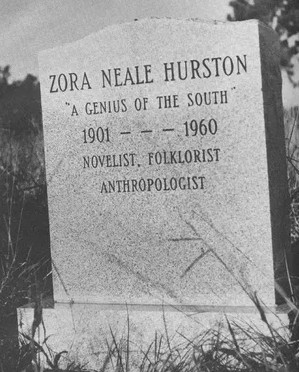
The ending is not happy but, as commentators note, it does draw to a satisfactory conclusion. Janie lives to tell the tale, a strong black woman able to hold her own and then some. It is a remarkable book that almost fell into obscurity until a young writer named Alice Walker traveled to Fort Pierce in 1973 to place a marker on the grave of the author who had so inspired her own work.
“Walker found the Garden of Heavenly Rest, a segregated cemetery at the dead end of North 17th Street, abandoned and overgrown with yellow-flowered weeds . . . Unable to afford the marker she wanted—a tall, majestic black stone called ‘Ebony Mist’—Walker chose a plain gray headstone instead. Borrowing from a Jean Toomer poem, she dressed the marker up with a fitting epitaph: ‘Zora Neale Hurston: A Genius of the South.’”
Despite what the tombstone says, Hurston was born in 1891. Confusion over her birth date is part of the “controversy and ambiguity that surrounds so much of her life and career.”
Walker’s acknowledgement of the debt she owed to Zora Neale Hurston led to reassessment, new editions of old works, and a renaissance that continues today.
More to come . . .
DJB
Photo: Images from Eatonville, Florida, from Southern Poverty Law Center
Having returned from a recent trip to Europe, I am still thinking of some of the comments made by our local guides and fellow travelers. Some were little snippets of conversation that caught my attention. At other times they were deeply held beliefs that our guides wanted to share.
Pico Iyer once wrote that you don’t travel . . .
“. . . in order to move around—you’re traveling in order to be moved. And really what you’re seeing is not just the Grand Canyon or the Great Wall but some moods or intimations or places inside yourself that you never ordinarily see . . .”
Travel can change us. I want to share three instances of times where I was moved during our visit along the Dutch waterways.
Getting along
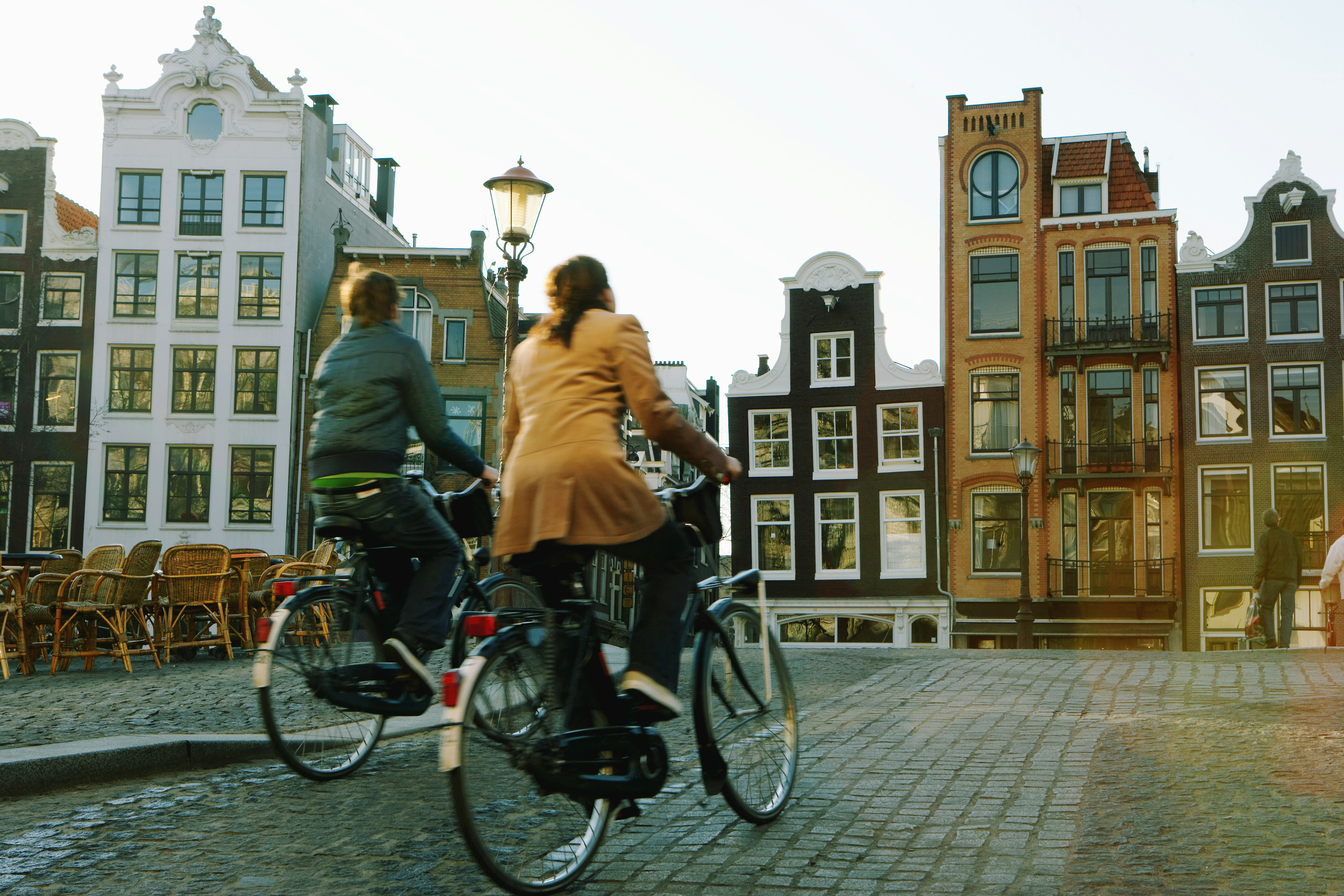
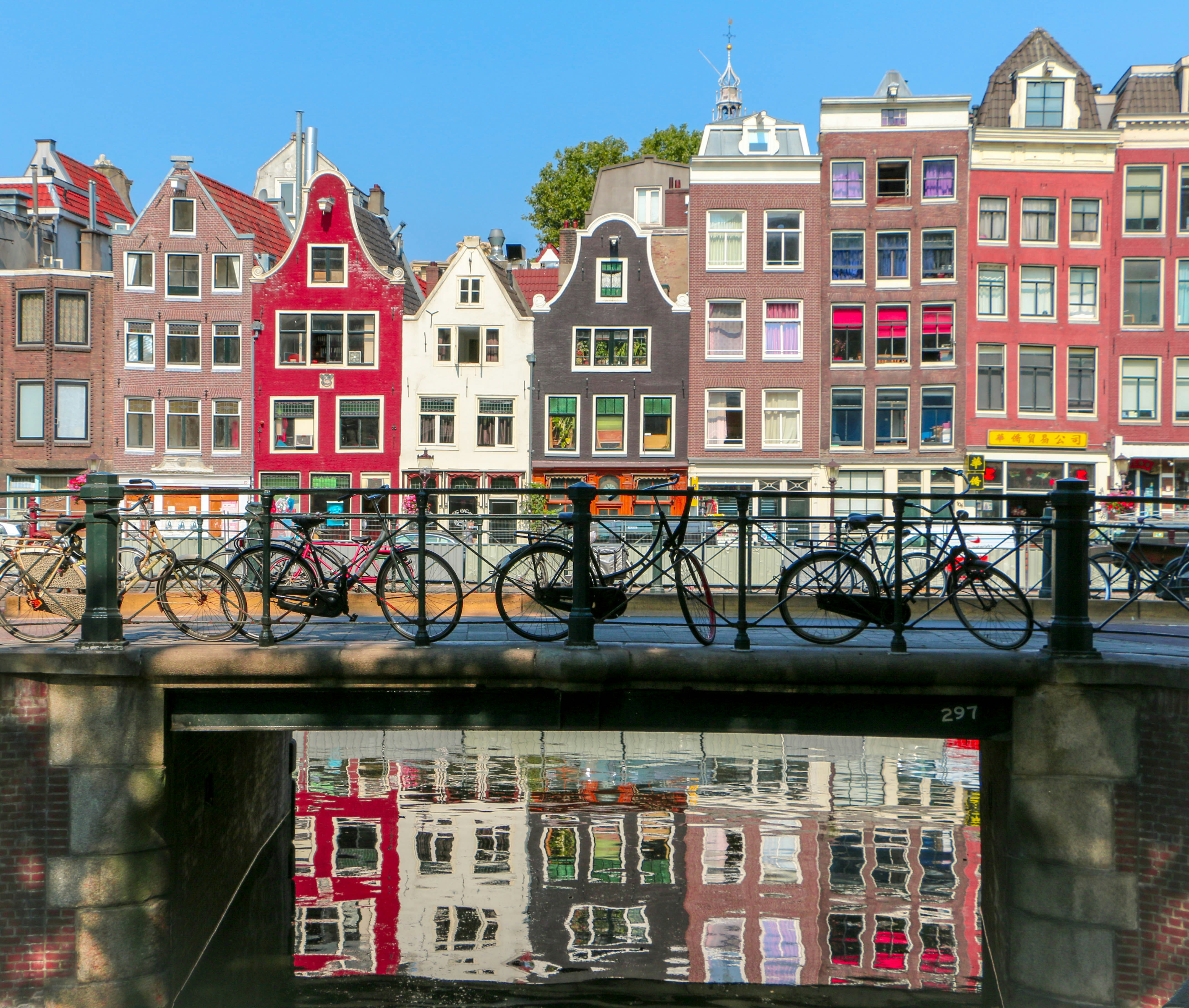
A favored mode of transportation in Amsterdam (Photo credit: Getty Images via Unsplash)
Everywhere we traveled the ability of bicyclists, pedestrians, and automobile drivers to navigate small and often winding streets was impressive. Even when crowds of tourists blocked the route, everyone stayed in their lane, followed the traffic signals, signaled their intentions, and performed a wonderful dance to reach their destination. We saw this time and again in large cities such as Amsterdam and in small towns such as Hoorn. It was a delight to behold.
I was reminded of how far a little respect for others can carry us along as I returned to navigate the often chaotic streets of Washington and Silver Spring. Bike lanes come and go, turn signals seem to be a thing of the past, and large cars with impatient drivers dominate our traffic system. The communities we saw on our trip show that it doesn’t have to be this way.
It was in the city of Nijmegen where our local guide made an off-hand remark that stuck with me. Our bus driver was skillfully negotiating one of the many circles found at intersections throughout this part of Europe when our guide casually commented that “roundabouts force us to learn to get along with others.”
Living in community. What a concept.
Do we have the monuments we deserve?
As I wrote in an earlier post, monuments and memorials from a variety of eras and historical contexts exist throughout the world. Memorials inevitably bring us face to face with philosophical questions of justice, collective memory, free will, moral culpability, and individual vs. national responsibility. Controversies over monuments and the memories they celebrate are not unique to the United States. We saw many examples on this trip.
When I was discussing monument controversies with some of our travelers, one mentioned that they had participated in a community discussion about this very issue in their hometown. The leading question of those organizing the conversation was, “Do we have the monuments we deserve?” We discussed how one could go about addressing that question, which is a topic for another post.
However, my mind returned to several monuments I saw on this trip that deviated from the traditional “conquering general on a horse” statue. In Nijmegen, there is a memorial commemorating the over 400 Jewish residents of the city who were murdered in the Holocaust.
The square is named after Kitty de Wijze who was murdered in Auschwitz on December 15, 1942. Monuments such as these help us recall that we should “never forget.”
Nearby is another statue, this one featuring Mariken van Nieumeghen. “Mary of Nijmegen” is a miracle play recorded in a Middle Dutch text from the early 16th century.
The protagonist of the story spends seven years with the devil, after which she is miraculously released. The oldest edition dates from 1515 and her tale is remembered to this day in the city’s large plaza. I loved the fact that the city was recalling its literary history with a statue.
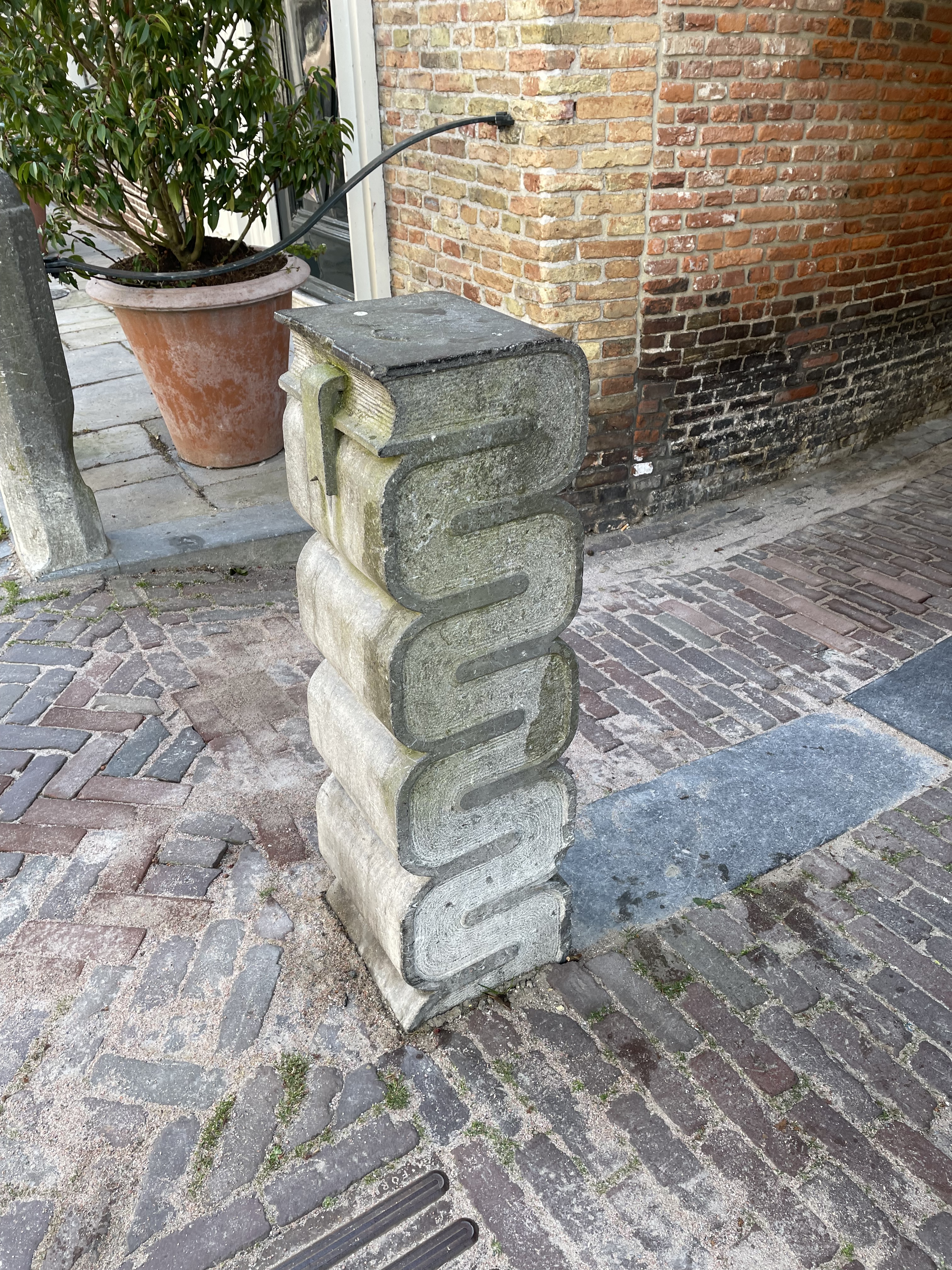
And I’ve also previously featured a small but personally meaningful monument to books found near the library in Hoorn. All three of these monuments, and others we saw throughout our trip, turn our attention to those who are lesser known, perhaps persecuted, yet very much a part of our human story.
A march to remember those who fought for our freedom
Finally, we heard about a different type of memorial on this trip that reminded us of a time when allies came together to stand up for what is right. Our guide in Nijmegen was 80 years old, born a month before WWII ended. That conflict was still very much on his mind, and the support of the Americans and other allies in liberating his hometown is very much a part of his story.
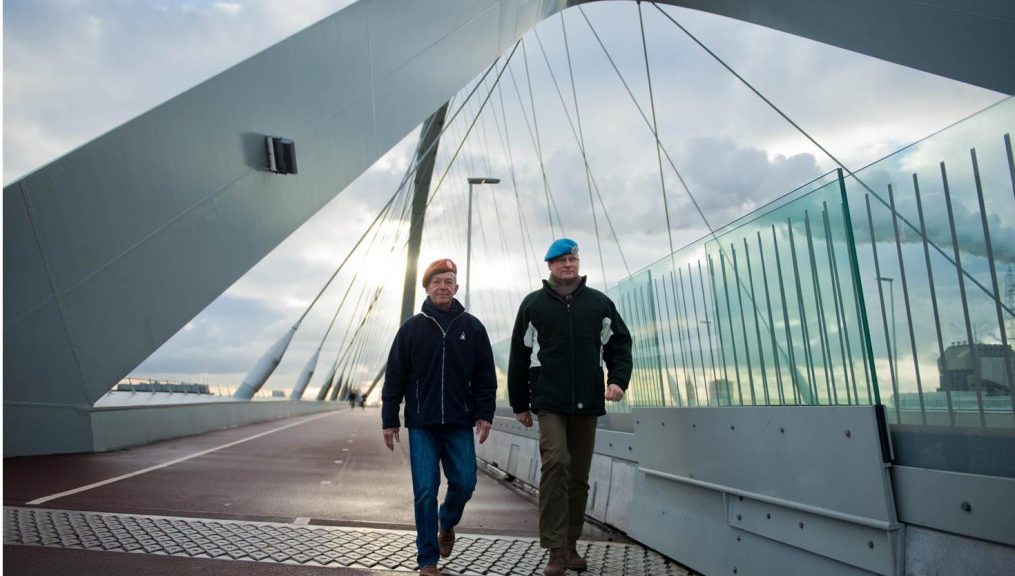
As we were driving into the town he pointed to a bridge and then told the story of the allied liberation of Nijmegen, and the Sunset March held each day to honor 48 allied war dead—mostly Americans—from WWII.
(Photo credit: War History Online)
“Sunset March is a daily tribute to the Allied soldiers who fought for the liberation of The Netherlands, especially to those soldiers who lost their lives. In 2013 the city of Nijmegen completed the construction of a new city bridge called Oversteek [The Crossing]. It was constructed close to the area where members of the US 82nd Airborne Division crossed the river Waal on 20 September 1944 as part of Operation Market Garden. 48 Allied soldiers lost their lives during this ‘Waal Crossing’. The recently completed bridge has been installed with 48 pairs of exceptional street lights. At sunset these sets of street lights are lit up pair by pair at a slow marching pace. The total duration of illumination of all these street lights is almost 12 minutes.”
Each and every night, our guide explained, a military veteran walks the Sunset March as the sun sinks below the horizon. Others can, and do, follow along. As the lights are turned on, the veteran walks along in pace with the lights being lit. It is a daily and poignant reminder that we are all part of a greater humanity, if we choose to live that way.
Work to make the change we can
These lessons learned while traveling reminded me that there is always trouble and struggle, as we see all around us today. But remembering that we can work to make the change we can, knowing that we are all part of a gathering of spirits, brought to mind two wonderful Carrie Newcomer songs.
“I see sorrow and trouble in this land | I see sorrow and trouble in this land | Although there will be struggle, we’ll make the change we can | If not now, if not now, tell me when”
“If not now, tell me when | If not now, tell me when | We may never see this moment or place in time again | If not now, if not now, tell me when.”
“Let it go my love, my truest, let it sail on silver wings | Life’s a twinkling and that’s for certain, but it’s such a fine thing | There’s a gathering of spirits, there’s a festival of friends | And we’ll take up where we left off, when we all meet again.”
As Newcomer wrote recently on her A Gathering of Spirits Substack, “. . . may we all pay attention to how the spirit of love is moving within us, what new paths through the woods we are being called to create, and find fresh springs of graciousness and laughter that lightens the load we carry.”
“If the path before you is clear, you’re probably on someone else’s.”
A summary of the April posts from the MORE TO COME newsletter.
Context is always important but especially when seeking clarity in chaotic times.
Much of what was in MORE TO COME this month focused on the importance of history in providing context. Far too often those who seek a new way forward envision a modernity that completely breaks with the past. We’re told that to reach new ways of thinking and living we must “grab the pick-axes, the hatchets, the hammers and demolish, demolish without pity” our venerable cities, governments, social systems, religions. It is an impulse as old as the ancients and as modern as today’s news.
But those who attempt to erase history are often doing so because it offers up uncomfortable facts that undermine their false narratives about a glorious future. That authoritarian regimes “often find history profoundly threatening” is a key lesson of the past century.
A robust study of history provides multiple perspectives on the past and places them in context. We lose those perspectives at our peril. So let’s jump in to visit the places and books where context mattered in this month’s MTC newsletter.
TOP READER FAVORITES
The post with the most reader views in April was the latest in my Author Q&A series, this time held with the editors of an important new work published by the Getty Conservation Institute. Challenging a narrative of rupture between past and present is my post about 2024’s New Building in Old Cities, a highly relevant and richly illustrated book of the largely forgotten work of Italian architect Gustavo Giovannoni, an important early advocate for the conservation of historic cities.
In this absorbing interview the editors Steven W. Semes, Francesco Siravo, and Jeff Cody discuss the ways historic context matters in shaping the modern city, why 19th century Paris served as a cautionary example rather than a model to follow in Giovannoni’s work, and the importance of the synergy he espoused between protecting the “democratic majority of the vernacular” and the “autocratic minority of the Monument.”
EXPLORING THE DUTCH WATERWAYS
The relationship between past and present was always near over the ten days we spent in The Netherlands and Belgium where I served as a lecturer for National Trust Tours. After returning, I posted deep-dives on four specific places before bringing the disparate pieces together in a late-month wrap-up.
The first place we visited after landing was the Portuguese Synagogue in the Old Jewish Quarter of Amsterdam. Pausing to think is how we sanctify time is my take on a place that another visitor described with the following quote:
“Its size intimidating, its rest calming, its purpose magical, and its history poignant and impressive. No one leaves the Portuguese Synagogue unmoved.”
Portuguese Synagogue in Amsterdam
The serendipity of life also hit home when our son, the tenor Andrew Bearden Brown, texted to tell us that he is singing the Song of Dedication concert for the 350th anniversary of the Synagogue with the Washington Bach Consort on May 2nd and 3rd.
Tulipmania, because if it is April in Holland that means tulips!
Finally, I wrapped up this series on Monday in the post Exploring the Dutch waterways. Among other things I highlight one of the world’s most beautiful train stations, a world-famous work of art, medieval Brugge, belfries, and why I would prefer to see more monuments to books and less statues of controversial generals.
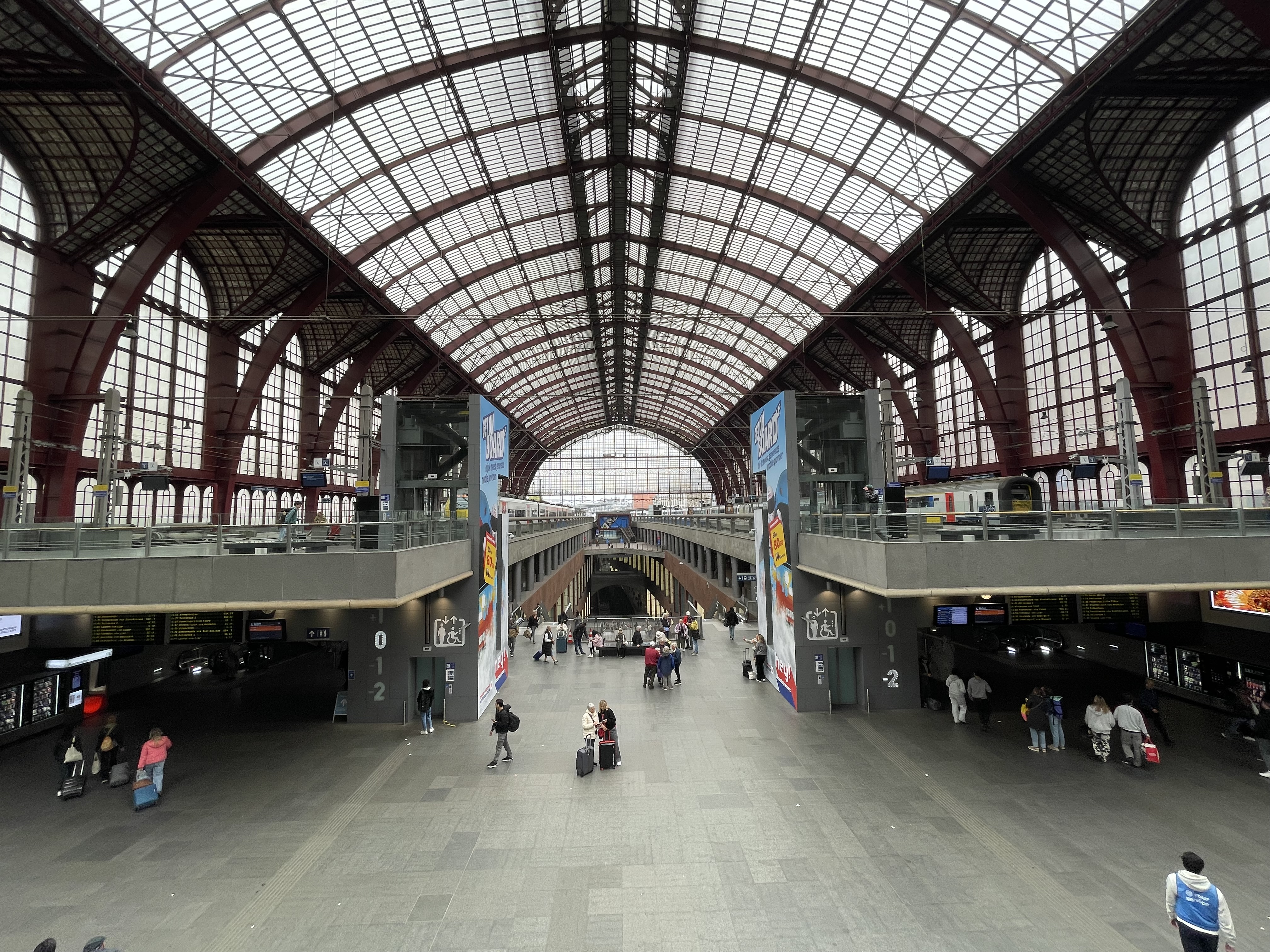
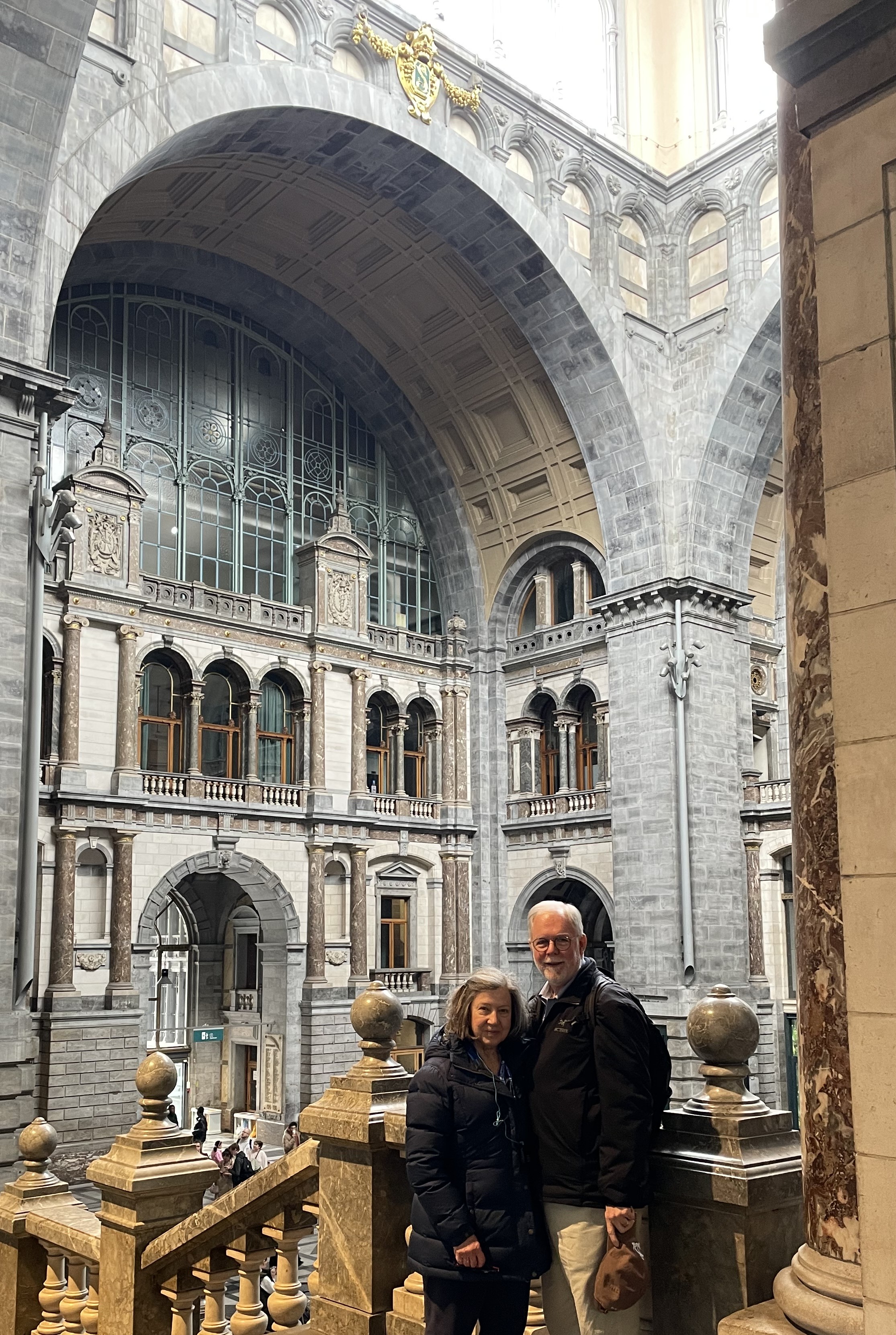
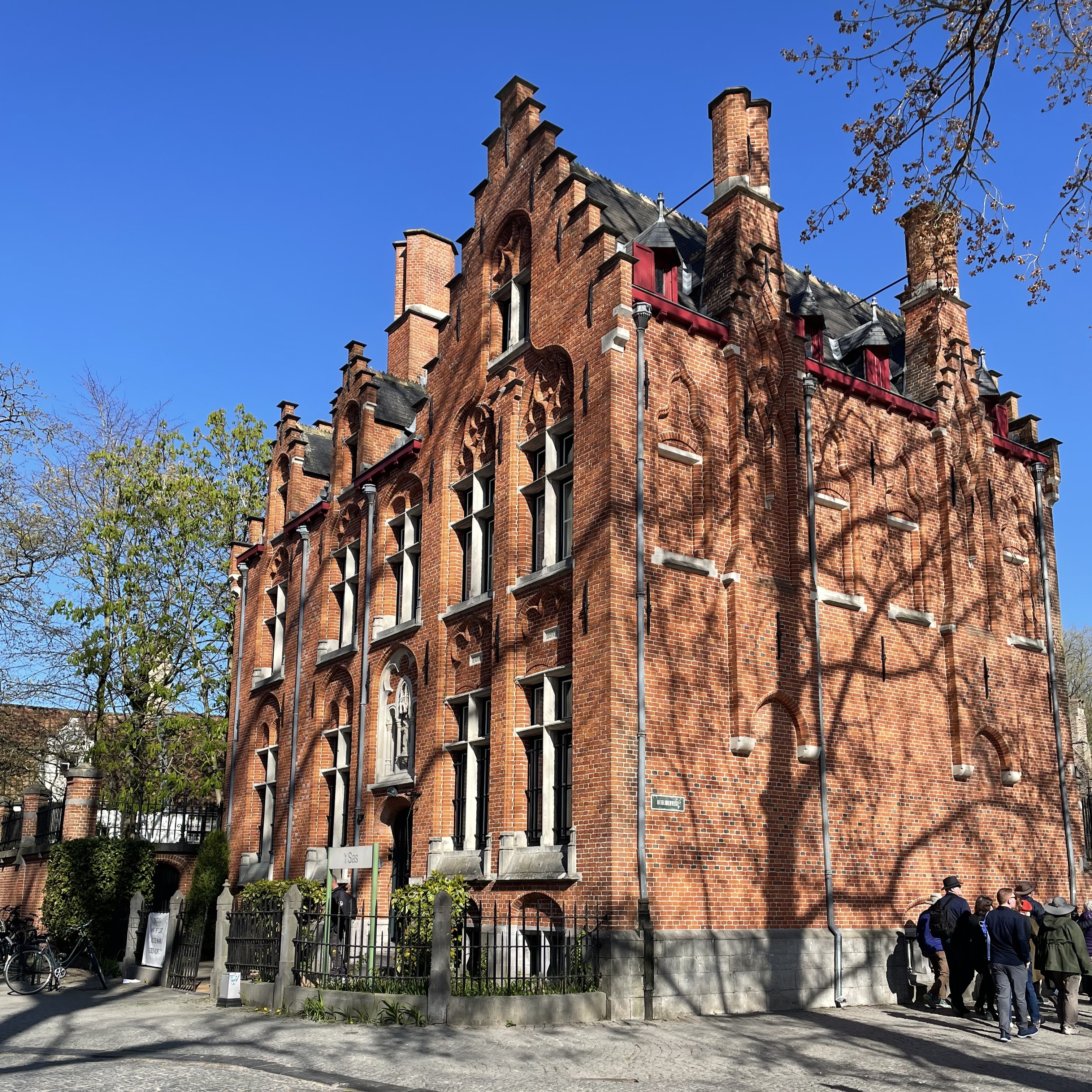
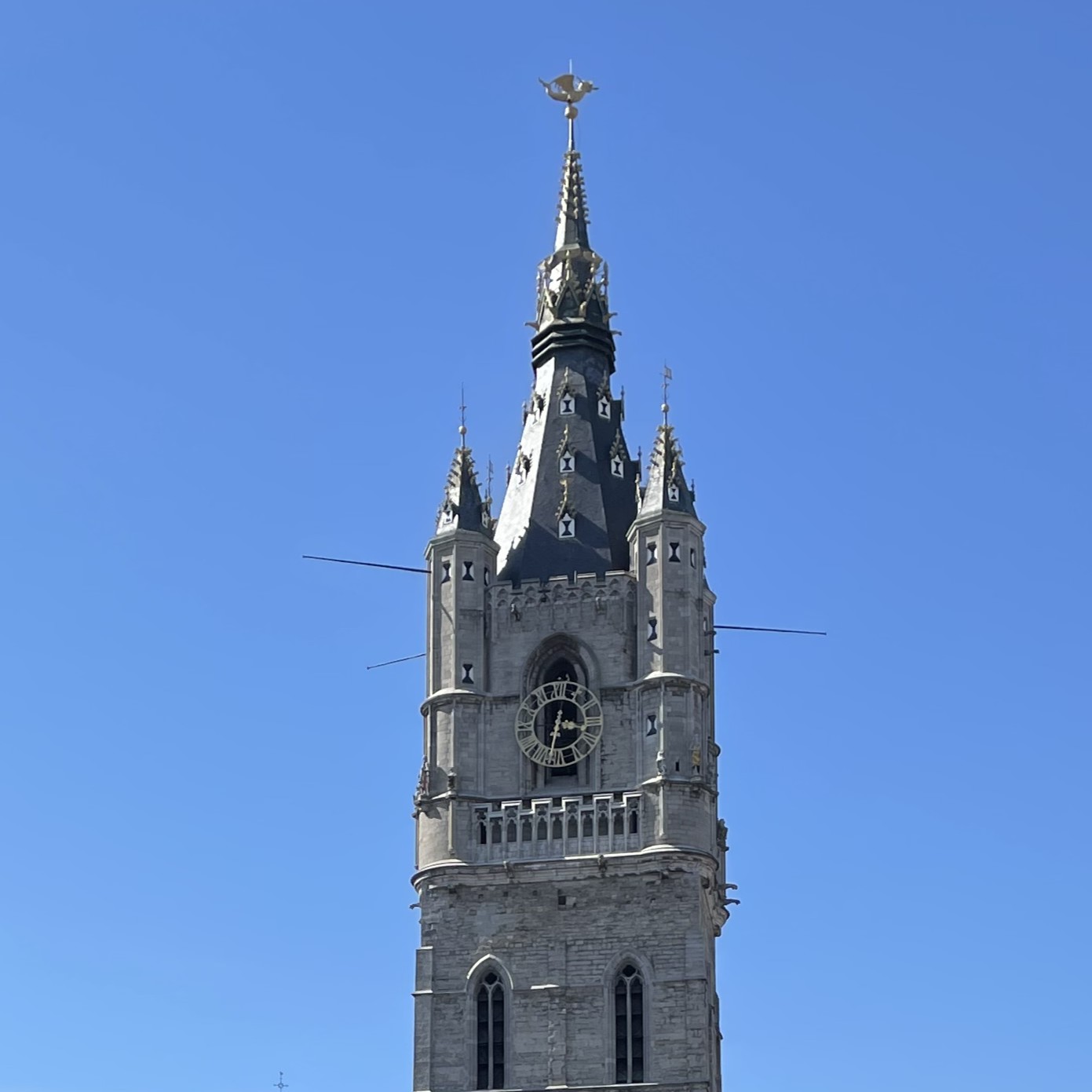
Antwerp’s beautiful train stationGhent Altar PieceBruggeView from the Ghent Belfry
THE BOOKS I READ THIS MONTH
In addition to New Building in Old Cities, I also highlighted four other books in April.
Far and away the most captivating was Richard Flanagan’s superb memoir Question 7. This man writes like God. My take on his book, When a butterfly flaps its wings, reminds us: “Experience is but a moment. Making sense of that moment is a life.”
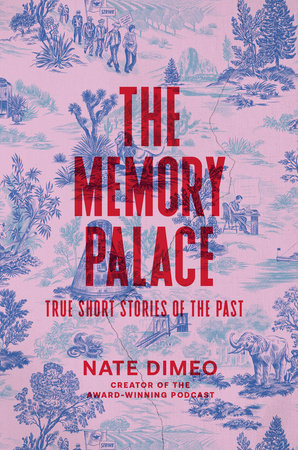
True short stories of the past is my post on The Memory Palace. Nate DiMeo has written short stories that connect us with our past and our present.
Ursula K. Le Guin’s deceptively simple handbook on writing well, entitled Steering the Craft: A 21st Century Guide to Sailing the Sea of Story, is reviewed in Life and death . . . and commas.
The writer Robyn Ryle wrote a comment on my windmill post to say, “I think we were in the Netherlands at the same time! We were on a Viking River Cruise April 1-11. Went to Kinderdijk on April 8 and then were in Amsterdam April 9-10.” She also wrote about her experiences on Monday, when her Substack newsletter had this amazing piece on reading Van Gogh: The Lifeafter a visit to the Van Gogh museum in Amsterdam. Because it is Robyn, her post is funny, observant, and—she’ll admit, much like Vincent at many stages of his erratic life—a little obsessed. Well worth a read.
CONCLUSION
Thanks, as always, for reading. Your support and feedback mean more than I can ever express.
As you travel life’s highways be open to love; thirst for wonder; undertake some mindful, transformative walking every day. Recognize the incredible privilege that most of us have and think about how to put that privilege to use for good. Women, people of color, LGBTQ+ individuals, immigrants, public servants, and others can feel especially vulnerable . . . because they are. Work hard for justice and democracy as the fight never ends.
When times get rough, let your memories wander back to some wonderful place with remembrances of family and friends. But don’t be too hard on yourself if a few of the facts slip. Just get the poetry right.
Remember that “we are here to keep watch, not to keep.” Pay attention. Be astonished. Tell about it. And bash into some joy along the way.
You can subscribe to MORE TO COME by going to the small “Follow” box that is on the right-hand column of the site (on the desktop version) or at the bottom right on your mobile device. It is great to hear from readers, and if you like them feel free to share these posts on your own social media platforms.
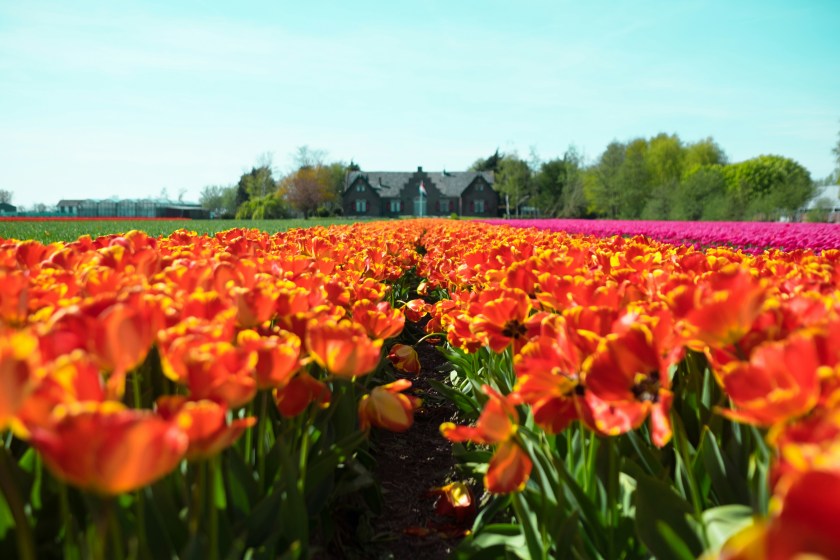
Photo of field of flowers by Owen Williams on Unsplash
My first 2025 trip as an educational lecturer with National Trust Tours was an exploration of Holland and Belgium along with Dutch waterways. It was an initial introduction to the Low Countries and Flanders (the Dutch-speaking portion of Belgium) and we enjoyed having time to dip our toes into this fascinating part of the world that has always been near the center of a web of history.
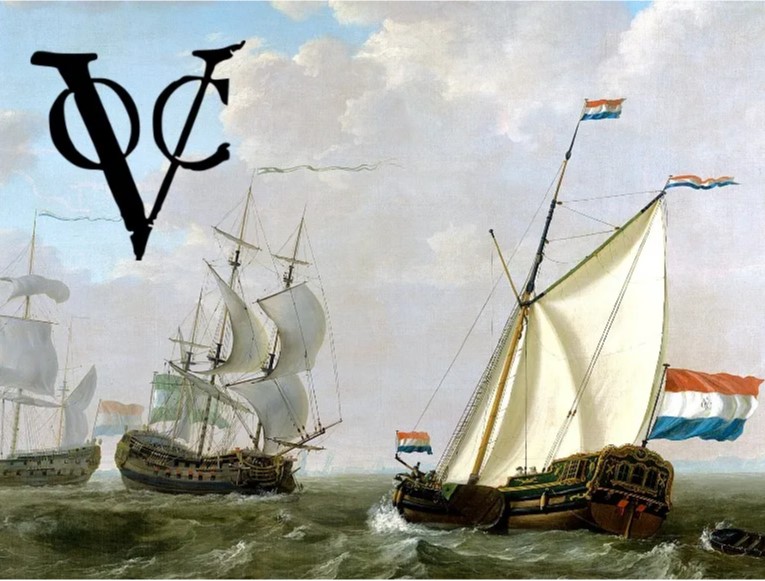
The Dutch East India Company was the world’s first great multinational corporation and one whose monogram became the first global logo. They were some of the earliest Europeans to be engaged in trading with eastern civilizations such as India and China, bringing parts of those cultures back to the west.
The places we visited were often conceived from an expansion of global connections. Trade was key to the growth of both The Netherlands and Belgium beginning at the dawn of the 17th century, a salient point made in Timothy Brook’s exhilarating Vermeer’s Hat: The Seventeen Century and the Dawn of the Global World.
Touching lightly on the places that moved me
While I posted deep-dives on specific places late last week* I’m going to take this opportunity to bring the disparate pieces of the tour together in a light wrap-up to highlight a few additional places that really moved me. Light doesn’t mean short . . . but I’ll make it as brief as possible.
Our home for much of the week: the Viva Enjoy (photo by Charles Porter)
Monumental Kerks, magnificent musical instruments, and beautiful train stations
An uneventful flight (the best kind) brought us to Amsterdam bright and early on an April Monday morning. By the afternoon we were exploring the Portuguese Synagogue, the Jewish Quarter and other parts of the Canal District, a UNESCO World Heritage Site.
Great churches (called kerks in Dutch) are at the heart of cities in both Holland and Belgium. The next day we eagerly took in the Westerkerk, where—as is our custom—we gravitated to the organs. In 1681 the Westerkerk commissioned Roelof Barentszn Duyschot to build a new organ. He died before the instrument was complete and his son finished the job. In 1727 the console was enlarged with a third manual by Christiaan Vater. The small mechanical action choir organ was built in 1963 by the Dutch builder Flentrop.
Rembrandt van Rijn was buried in the Westerkerk on October 8, 1669 but the exact location is unknown. Westerkerk’s impressive spire—the highest church tower in Amsterdam—can be seen throughout this part of the city.
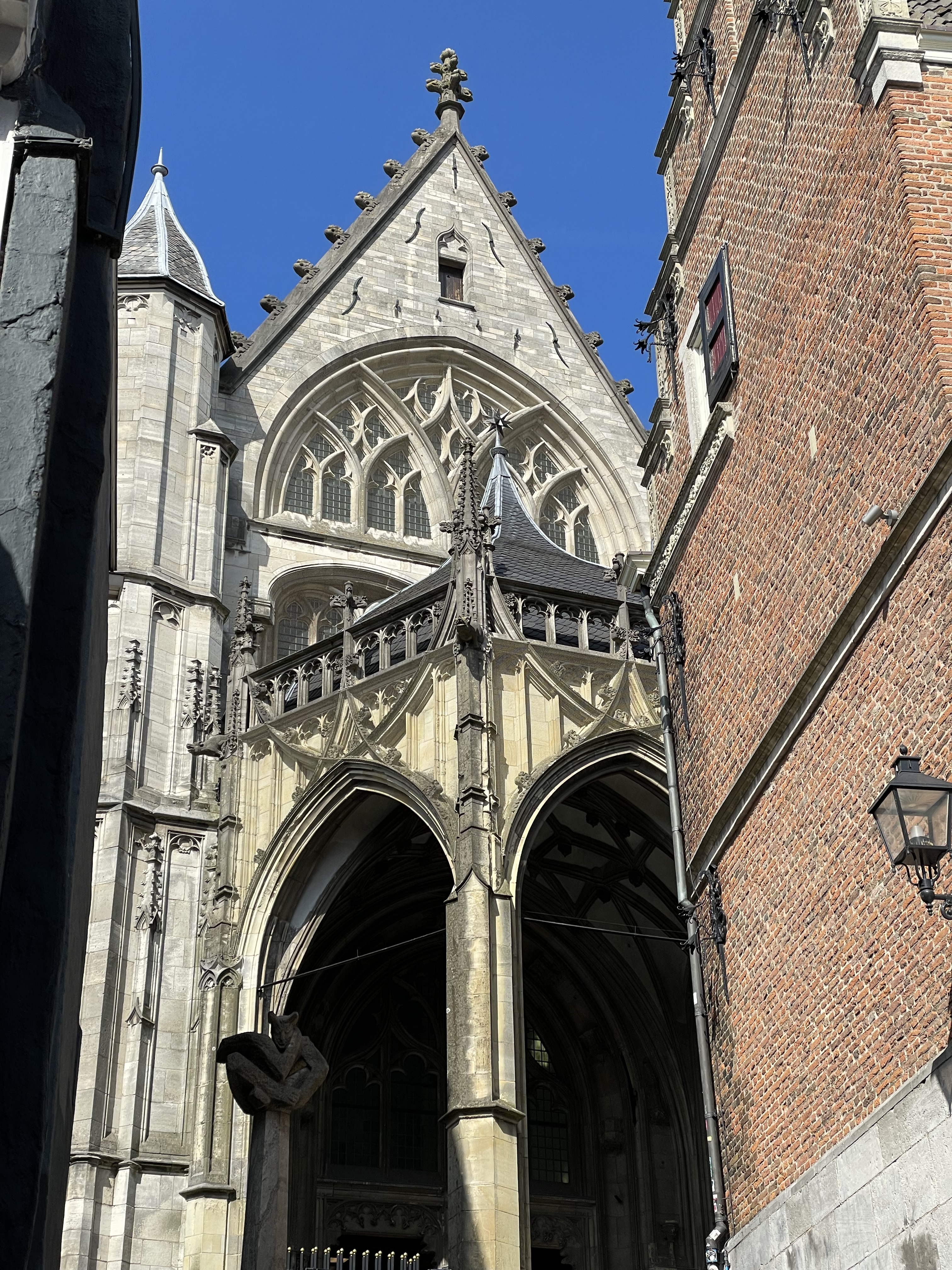
By Thursday we were visiting Nijmegen. Stevenskerk sits at the heart of this historic city and as is often the case, one went through winding streets before the church spire was revealed.
Stevenskerk in Nijmegen
Stevenskerk ceiling
In addition to Amsterdam, Nijmegen, and Antwerp, over the course of the next few days we saw a variety of beautiful churches, both large and small.
Spire on the church in Veere, once an important port for ScotlandBruggeHoorn
One of the most spectacular houses of worship was St. Bavo’s Cathedral in Ghent, where—following a terrific lecture by the University of Virginia’s Lisa Reilly—we had the opportunity to view the beautifully restored Ghent Altarpiece (featured in the movie The Monuments Men).
Ghent Altarpiece
St. Bavo’s
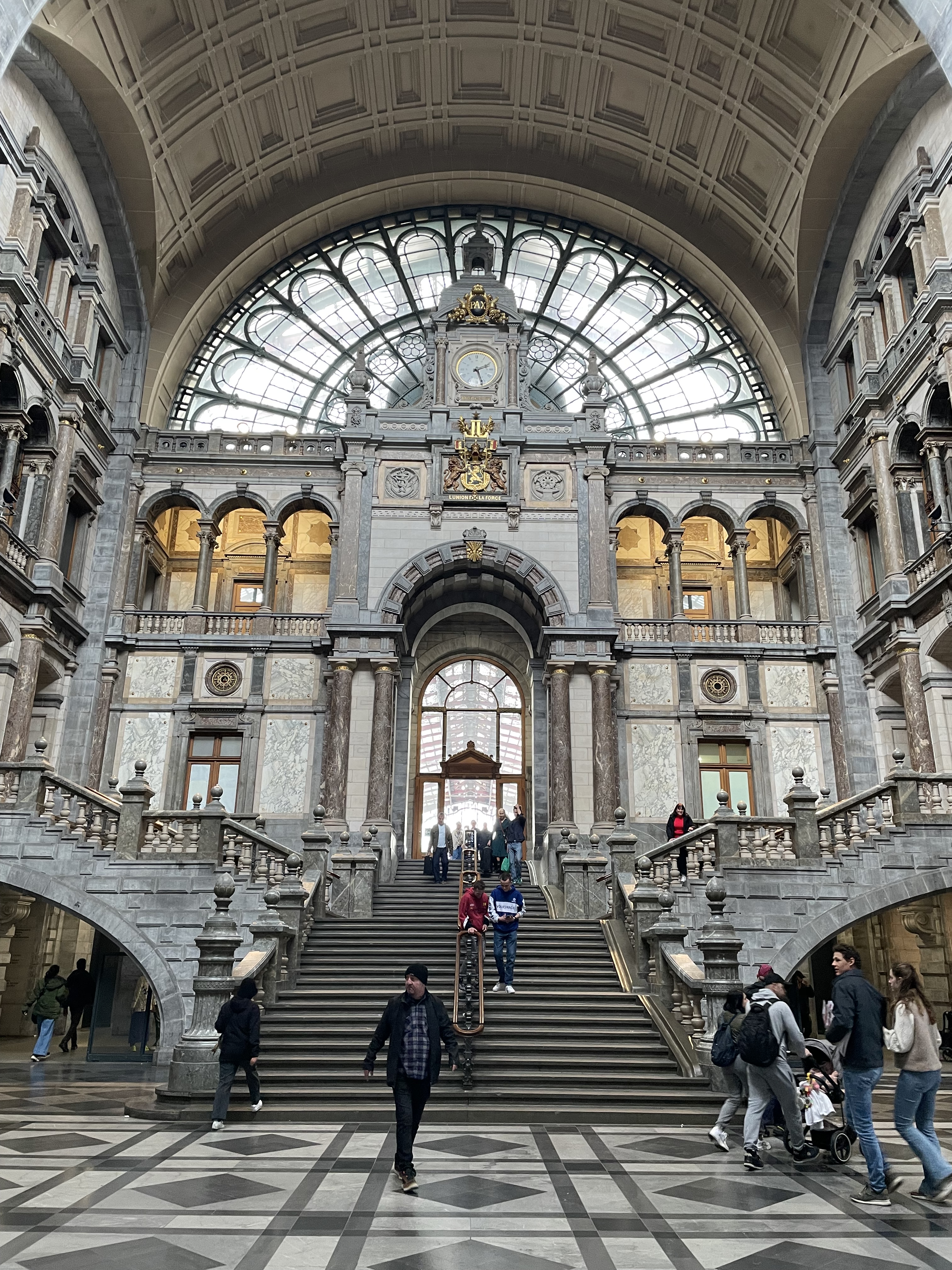
Finally, when it comes to lovely spaces, it is hard to top the train station in Antwerp which is often listed among the most beautiful in the world. I would agree.
Belfries, street patterns, and the loss of landmarks
There are fity-five belfries in Belgium and the North of France inscribed on the World Heritage List. The ensemble dates from between the 11th and 17th centuries and includes a range of architectural styles.
As a group, the belfries are highly significant tokens of the winning of civil liberties. While Italian, German and English towns mainly opted to build town halls, in this part of north-western Europe greater emphasis was placed on building belfries. Compared with the keep (symbol of the feudal lords) and the bell-tower (symbol of the Church), the belfry symbolizes the power of the aldermen and civic government.
The Norman Keep of Rochester Castle, England (Wikimedia)Church spire in Brugge
Brugge Belfry (Unsplash)
Over the centuries, they came to represent the influence and wealth of the towns. These central belfries have played a pivotal role in the development of the urban landscape right up to present times.
Brugge is an outstanding example of a medieval historic settlement where the original Gothic construction continues to form part of the town’s identity. As one of the commercial and cultural capitals of Europe, Brugge developed cultural links to different parts of the world.
We can still see the exchange of cultural influences on the development of the city’s art and architecture. The medieval street pattern, with main roads leading towards the important public squares, has mostly been preserved, as has the network of canals. While it remains an active city where we can still see the architectural and urban structures which document the different phases of its development, the medieval section does have more of a museum quality than, say, Amsterdam.
Ghent Belfry
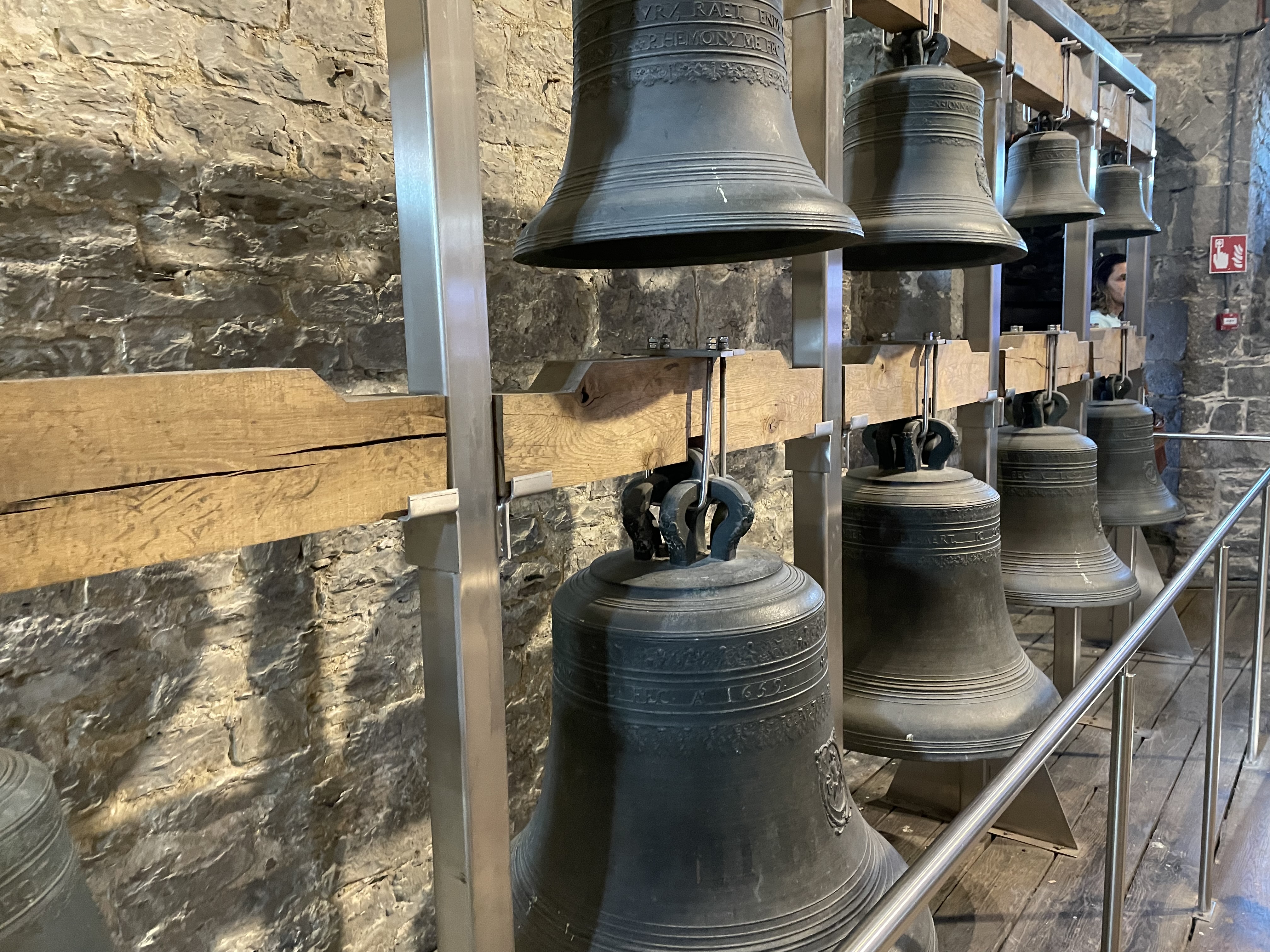
Construction of the Ghent belfry began in 1313 and after continuing intermittently through wars, plagues and political turmoil, the work reached completion in 1380. The uppermost parts of the building have been rebuilt several times, in part to accommodate the growing number of bells. I climbed to the top of the belfry while on our visit and had outstanding views of the city.
A major element of the cities where they are located, belfries were also a weak point; a symbol and sometimes a watchtower, they were regularly destroyed during armed conflict. It is impossible to consider authenticity only in material terms, referring only to their initial period of construction.
Instead, UNESCO considers the permanence of the existence of the belfries and their symbolic value as authentic. The reconstructions following the world conflicts of the 20th century are exemplary and constitute an important element of authenticity.
Credit: UNESCOBells in Ghent belfry (DJB)
War and natural disasters are facts of human existence. We’ve seen world landmarks lost—think of Notre Dame in Paris—whole cities destroyed (in the US think of the Great Chicago Fire or the San Francisco earthquake), and we’ve recently seen landscapes, towns, and cities overwhelmed by wildfires in Los Angeles. In each of these instances, we lose historic resources and have to make decisions about their future and how we remember the stories they hold.
Memorials
When issues around the demolition of landmarks or the removal of statues and monuments are raised during my lectures, I note that instead of “destroying” our history, what we may be doing is readjusting that part of the past that we are choosing in the present to remember, commemorate, and perhaps celebrate. What we know about history continues to grow. Heritage is also constantly changing and shifting as each generation chooses what part of the past it wishes to commemorate in the present, as we interpret what’s important through different lenses.
DJB lecturing on the Dutch Waterways National Trust Tours trip (photo by Charles Porter)
It is hard for any of us to see the world as others see it. It is possible, if we work at it, to remember that others see things differently. But we have to want to work at it.
Memorials inevitably bring us face to face with philosophical questions of justice, collective memory, free will, moral culpability, and individual vs. national responsibility. Controversies over monuments and the memories they celebrate are not unique to the United States. We saw a perfect example on this trip.
Jan Pieterzoon Coen was nicknamed the “Slaughterer of Banda” because of his role in the conquest of the Banda islands, in modern-day Indonesia. In 1621 only 1,000 of the 15,000 local inhabitants were believed to have survived the conquest, which was undertaken so that the Dutch East India Company could control the supply of nutmeg.
Jan Pieterzoon Coen statue in HoornSlaughter of Banda
For that reason, his statue in Hoorn has been a disputed monument from the day of its unveiling in 1893. It has been smeared with red paint and graffiti numerous times in the last six decades. In 2010 a citizens’ initiative pushed for removal and in response a contextualizing plaque was added in 2012. The debate over the monument has not abated, however.
After my lecture I was asked what types of monuments I would like to see erected in place of controversial military figures, and I noted that we’d seen one just a few blocks away earlier that day in Hoorn. On the street that led to the library was a modest yet endearing monument to books.
I think we need more monuments to books.
Hoorn, by the way, was one of my favorite small towns we visited over the ten days. Here’s a sampling of all that we saw:
And finally . . . a personal note
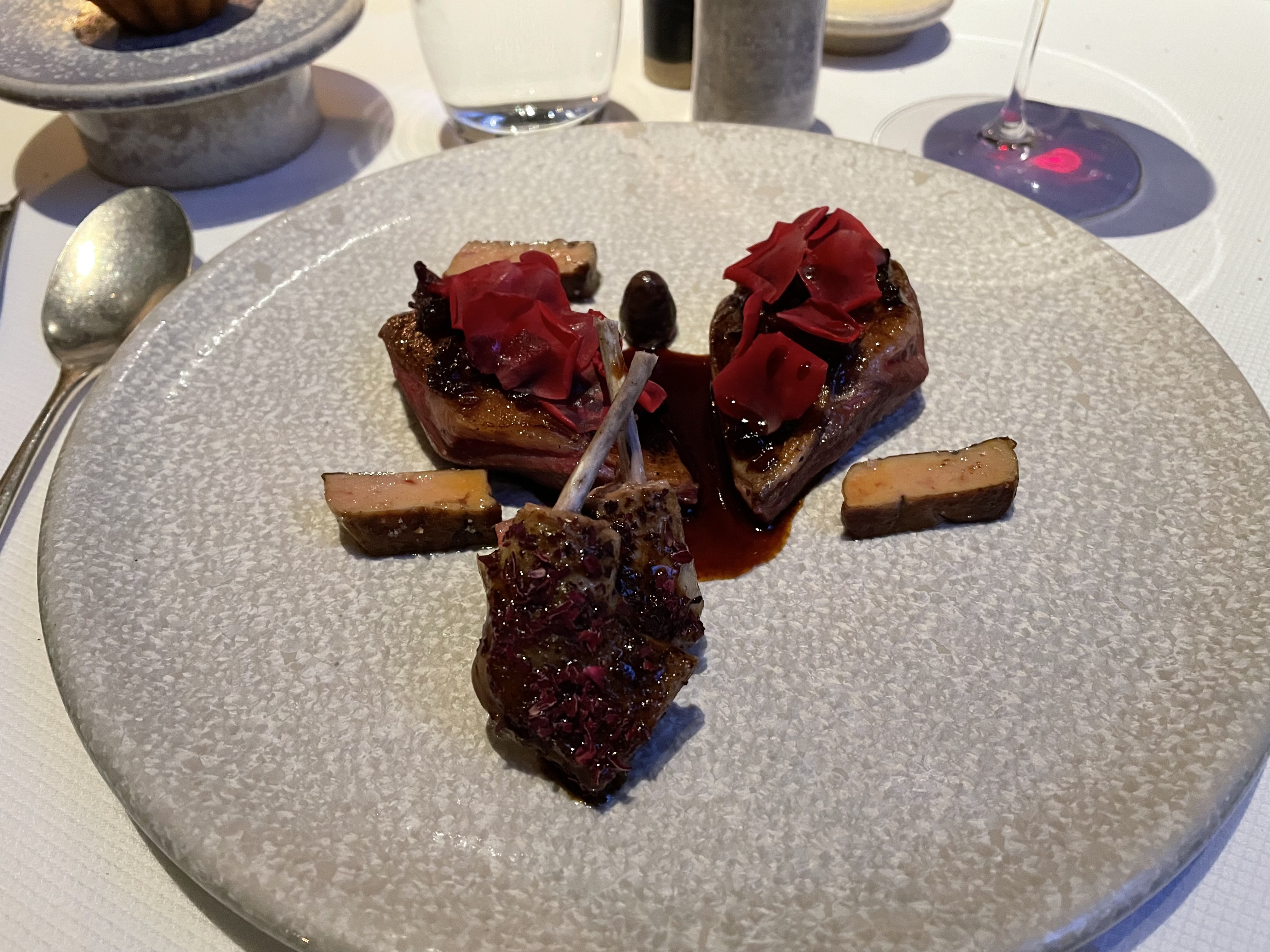
Candice is always great about searching for a stellar local restaurant for us to explore on our first couple of personal days in the city. In Amsterdam she hit a home run, as we savored one of the best meals either of us has ever experienced. Vinkeles, a two-star Michelin restaurant serving modern French cuisine, was a true “gastronomic journey.” Words fail me.
More to come . . .
DJB
*For additional posts on this National Trust Tour, visit:
Sometimes the serendipity of life is too wonderful to imagine.
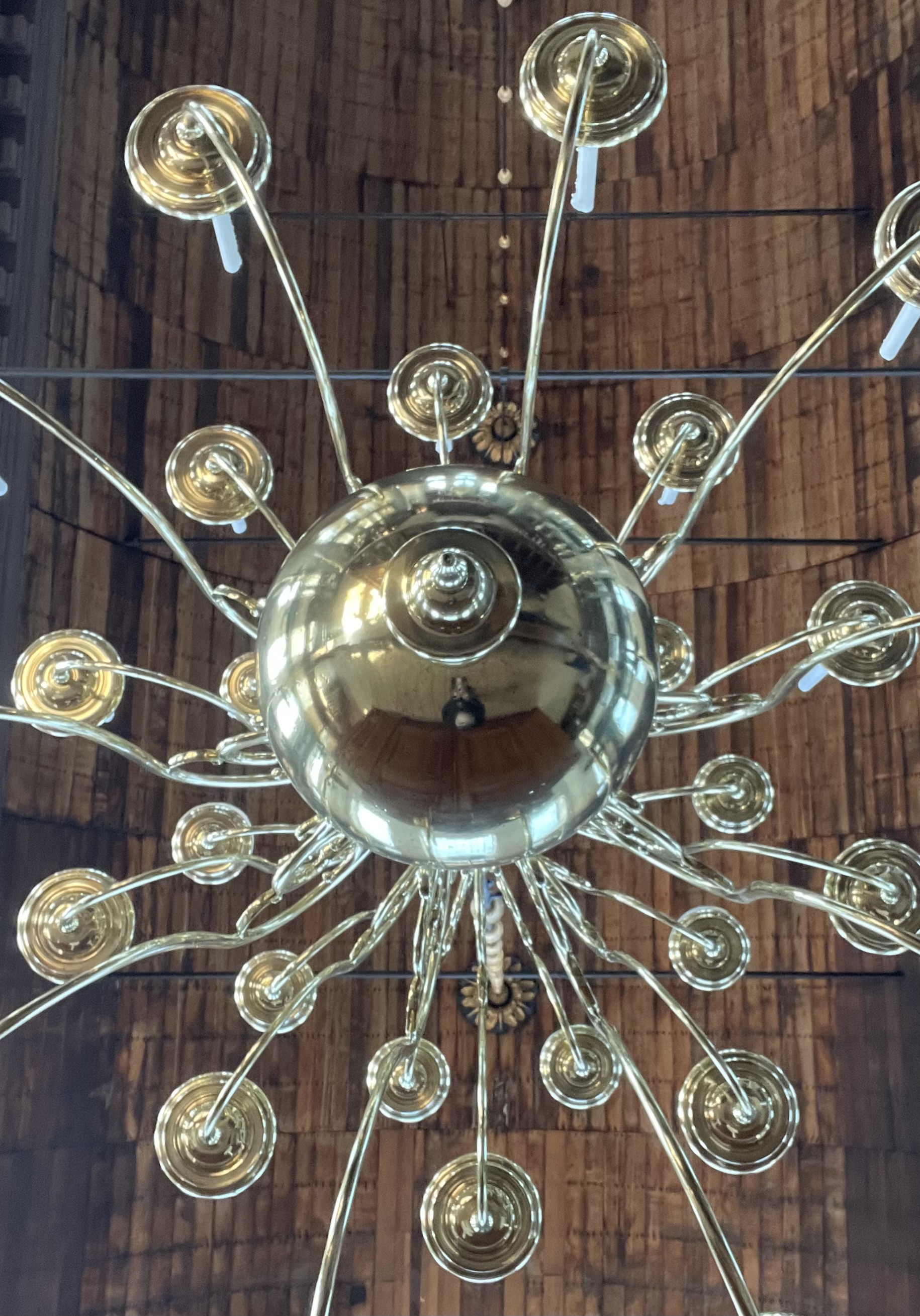
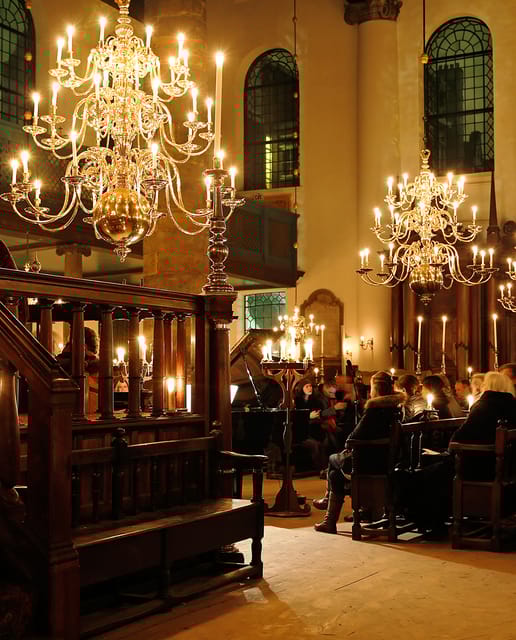
A little over two weeks ago we had barely landed in Amsterdam when we set out to visit the imposing Portuguese Synagogue. Standing in the middle of the former Jewish Quarter of the city, it was for many years the largest synagogue in the world. The spacious and airy interior features pinewood floors and is filled with gleaming brass chandeliers and candlesticks which take several thousand candles. They are still the only source of illumination after all these years.
We were awestruck by the sacredness of this space.
The Portuguese Synagogue
Tebah (to the left) facing the ark which holds the Torah scrolls on the far wall (Credit Wikimedia Commons)
Jews weren’t initially allowed to build houses of worship in Amsterdam, but when the law changed in the mid-17th century new synagogues soon appeared. Gerrit Berckheyde’s View of the Great and Portuguese Synagogues in Amsterdam (1675-1680), a painting on display across the street at the Jewish Museum, featured the two most prominent in the Quarter.
View of the Great and Portuguese Synagogues in Amsterdam (1675-1680) by Gerrit Berckheyde
To the left in the painting is the Great Synagogue, built in 1671 by Ashkenazi Jews from Central and Eastern Europe. This is now the home to the Jewish Museum. On the right is the Portuguese Synagogue, built by Sephardi Jews from Spain and Portugal. In this painting the Portuguese Synagogue is newly completed: the shed on the far right is the construction site cabin.
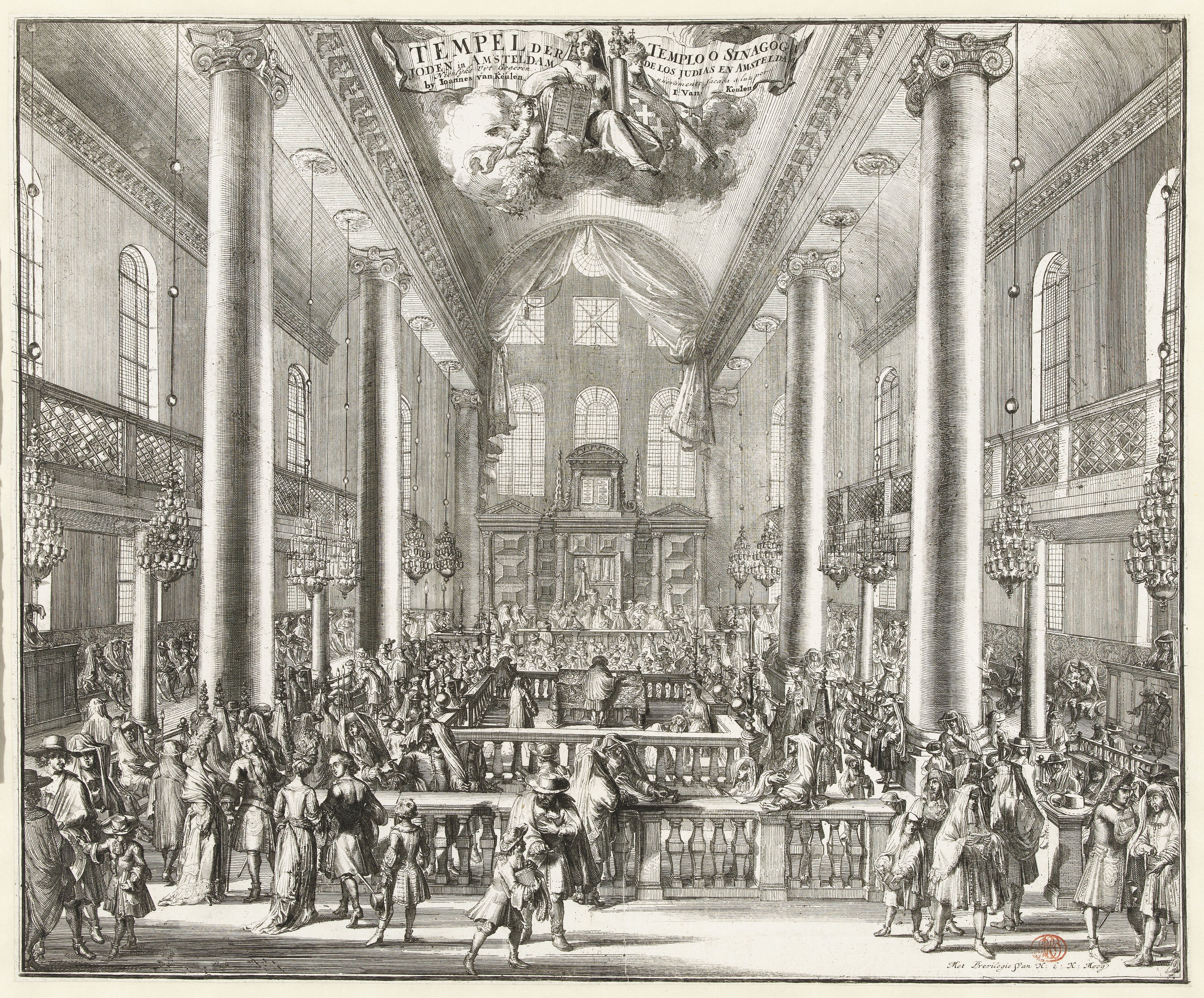
Interior of the Portuguese Synagogue in 1695 (credit Rijksmuseum)
Exterior, via Wikimedia Commons
The pews, the platform from which services are led (tebah) and the pinewood floor all date from 1675. Fine sand on the floor absorbs the footsteps as well as dirt and damp from the street. The furthest candle on the chandelier nearest the hechal (which houses the Torah scrolls) is the eternal light, which burns continually.
Interior looking toward the ark and the eternal candle (DJB)
The magnificent hechal stands against the wall in the direction of the Temple in Jerusalem. While working on the ark in 2022, renovators came across a hidden storage space below. There they found rolls of original linen wall hangings with superb prints from 1740-1760. These wall hangings can now be seen in the synagogue treasure chambers.
Chandelier and ceiling (DJB)
During the Nazi campaign to systematically murder Jews in the Holocaust, the synagogue was slated to become a deportation center. A teenaged firefighter—Leo Palache—and a team of volunteers managed to dissuade the Nazis from this plan. Instead, the building concealed Jewish ritual items for deported Jews in the sanctuary ceiling and attic floor. The World War II diary of executive director Salomon Coutinho was discovered in Amsterdam and details the synagogue’s works and efforts to protect the building during the war.
The synagogue remains an active house of worship while also welcoming guests to what has been called Amsterdam’s best kept secret. One visitor left the following quote, which perfectly sums up our experience.
“Its size intimidating, its rest calming, its purpose magical, and its history poignant and impressive. No one leaves the Portuguese Synagogue unmoved.”
Music in the synagogue . . . and a personal connection
One of the candlelight concerts in the beautiful acoustics of the Portuguese Synagogue
As we were visiting we heard about the importance of music to worship in the synagogue. Monthly candlelight concerts continue this tradition for all visitors.
It was only as we were texting pictures of this landmark to our children that we discovered that our son, the tenor Andrew Bearden Brown, is slated to sing the Song of Dedication concert for the 350th anniversary of the Synagogue with the Washington Bach Consort on May 2nd and 3rd.
Here’s the description from the Bach Consort website:
“From the 17th century until World War II, the Portuguese Israelite Synagogue of Amsterdam served as the heart of the Western Sephardic diaspora. This program commemorates the synagogue’s 350th anniversary with music written for or by this unique community, drawn from the archives of the Ets Haim Library of Amsterdam—the oldest active Jewish library in the world—alongside other gems of 18th-century European Jewish music.
An architectural marvel, the Esnoga stood as a striking symbol of religious freedom for Jews in a Protestant republic, unparalleled anywhere in Europe. This concert will also feature the North American premiere of Shir Hanukat Beth Hamiqdash. Reconstructed and sumptuously set by musicologist Alon Schab for the Jerusalem Baroque Orchestra, the piece is based on vocal music preserved in the manuscripts of 18th-century Rev. Hazzan Joseph ben Isaac Sarfati. With an inauguratory text by the Portuguese-born Rabbi Rev. Isaac Aboab da Fonseca, it stands as a lasting testimony to tolerance, the Dutch Golden Age, and the resilience of the Portuguese Jewish community.“
Included among the works to be performed are Synagogue Cantatas by Cristiano Giuseppe Lidarti (1730-1795). This aria from Lidarti’s oratorio “Esther” will be included in the Bach Consort program, giving you a flavor of some of the music we’ll hear in Washington next week to take us back to the magnificent Portuguese Synagogue.
Yes, serendipity is alive and well.
The Jewish Quarter
There were, of course, two synagogues in close proximity to each other in Amsterdam’s Jewish Quarter. The Great Synagogue was built in 1671 by Ashkenazi Jews from Central and Eastern Europe. It was badly damaged during World War II and has now been partially restored to serve as the Quarter’s Jewish Museum.
One of the Museum’s finest exhibits is the silver Rintel chanukiah, named after Sara Rintel.
“She donated this magnificent candelabrum to the Great Synagogue in 1753. A chanukiah is for the eight-day festival of Chanukah. Each day, one extra light is lit. The Rintel chanukiah is over a meter tall and a meter and a half wide (!), and was made specially for the Great Synagogue.”
While the Great Synagogue is now home to the Jewish Museum, the Rintel stands where it always stood for over two hundred years.
The Rintel chanukiah (photo by DJB)
We spent a couple of hours touring the exhibits, and I even had time to take a quick spin through the provocatively named exhibition Sex, which looked at perspectives on sexuality in Jewish culture. Certainly wasn’t expecting that, but hey, its Amsterdam.
Most of the exhibits focused on personal stories, unique objects and art to allow the visitor to explore Jewish religion, history and culture. After several hours at the Portuguese Synagogue and the Jewish Museum, I came to appreciate the exhibit title about how we sanctify time by pausing to think. Abraham Joshua Heschel has written:
“Judaism is a religion of time aiming at the sanctification of time . . . Judaism teaches us to be attached to holiness in time, to be attached to sacred events, to learn how to consecrate sanctuaries that emerge from the magnificent stream of a year. The Sabbaths are our great cathedrals; and our Holy of Holies is a shrine that neither the Romans nor the Germans were able to burn; a shrine that even apostasy cannot easily obliterate.”
As is true about so much I saw on that visit, this bit of wisdom from the elders remains with me to this day.
More to come . . .
DJB
Photo of Portuguese Synagogue in candlelight by Massimo Catarinella via Wikimedia Commons
The best-read person I know pulled me aside as we were visiting his apartment. He had a book to convey as a gift. Knowing the range of subjects I’ll tackle and with a good sense around what would pique my interest, he began, “This Richard Flanagan book is hard to describe.” Part memoir. Part history. Part love story.
“But,” George added, “he writes like a god.”
I began reading as soon as we returned home.
Question 7 (2023) by Richard Flanagan is a genre-defying memoir that examines the choices we make and the resulting chain reactions that explode halfway around the world and decades into the future. The choices Flannagan considers begin with the love affair of H.G. Wells and Rebecca West. He then take the reader through the work of nuclear physicists in the 1930s, the horrors of Japanese slave labor camps near Hiroshima, the world-changing 1945 atomic bomb attack on that city, and the fear of a young man trapped in rapids on a wild river, unsure if he is to live or die. But to lay them out in this sequential order does a disservice to Flanagan’s extraordinary ability to meld dream, history, science, and memory in this masterpiece.
The title relates to an early Chekhov story. The Russian author believed that the role of literature was not to provide answers but only to ask the necessary questions. In Chekhov’s stories, “the only fools are those with answers.” This belief permeates Flanagan’s writing.
So much of this work hinges on the fact that Flanagan’s Tasmanian father was a frail and dying slave in a Japanese mining camp during World War II when the Enola Gay banked over Hiroshima and dropped the first bomb that would quickly end the war, sparing his father’s life and permitting, if you will, Flanagan to have a place in this world. The book begins as the author returns to that camp to find the only thing near the former entrance to the mine is a love hotel. No memorial, no sign, no evidence that the camp ever existed. It is, he writes, “as if the need to forget is as strong as the need to remember. Perhaps stronger.”
And yes, Flanagan does indeed write like a god.
Consider this paragraph as Flanagan describes the father he remembers as a young boy.
“He saw the world aslant. It was for him a great tragicomedy in which the comedy was made poignant by the tragedy and the tragedy rendered bearable by the comedy. When the subject was sad or serious, he would smile wanly, his face turning inside out, a concertina of wrinkles compressing his eyes into wry sunken currants, and from him would flow a riversong of stories.”
This is a work that becomes a deep meditation “on the past of one man and the history that coalesced in his existence.” It is the butterfly effect of history, beginning with the tumultuous love affair that leads a frustrated Wells to write a book almost no one read, except for a physicist bedeviled by the question of nuclear fission who sees an answer in this story. Wells, it turns out, “had an unnerving ability to discern the destructive possibilities of embryonic scientific discoveries and new technology.” This same physicist plays a key role in ensuring that the Allies, not the Nazis, end up developing the bomb. Late in the book, Flanagan’s own near-death experience as a river guide trapped underwater by rapids, brings the fragility and unpredictability of life full circle.
Question 7 is a masterful piece of story craft. Flanagan’s begins with a kiss in front of a bookcase between West and Wells, moves through baths and traffic lights to arrive at the Manhattan Project. His gaze at the life lived by his parents after the war is loving yet sharp. His questions are moving and profound.
“Experience is but a moment. Making sense of that moment is a life.” Memories aren’t facts but stories, Flanagan contends, our lives an “ongoing invention.”
More to come . . .
DJB
Photos of Atomic Dome and Hiroshima Peace Memorial Garden by DJB
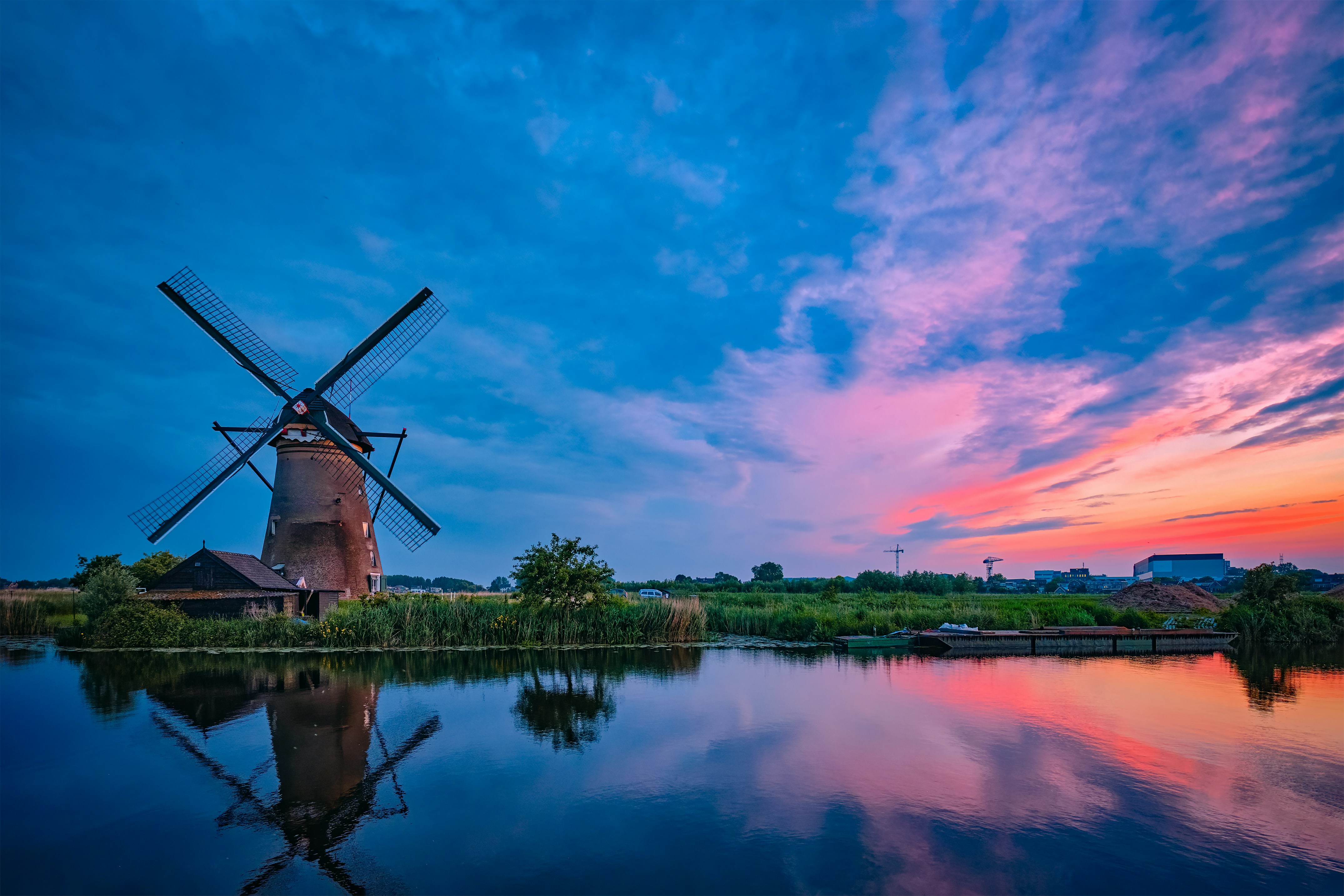
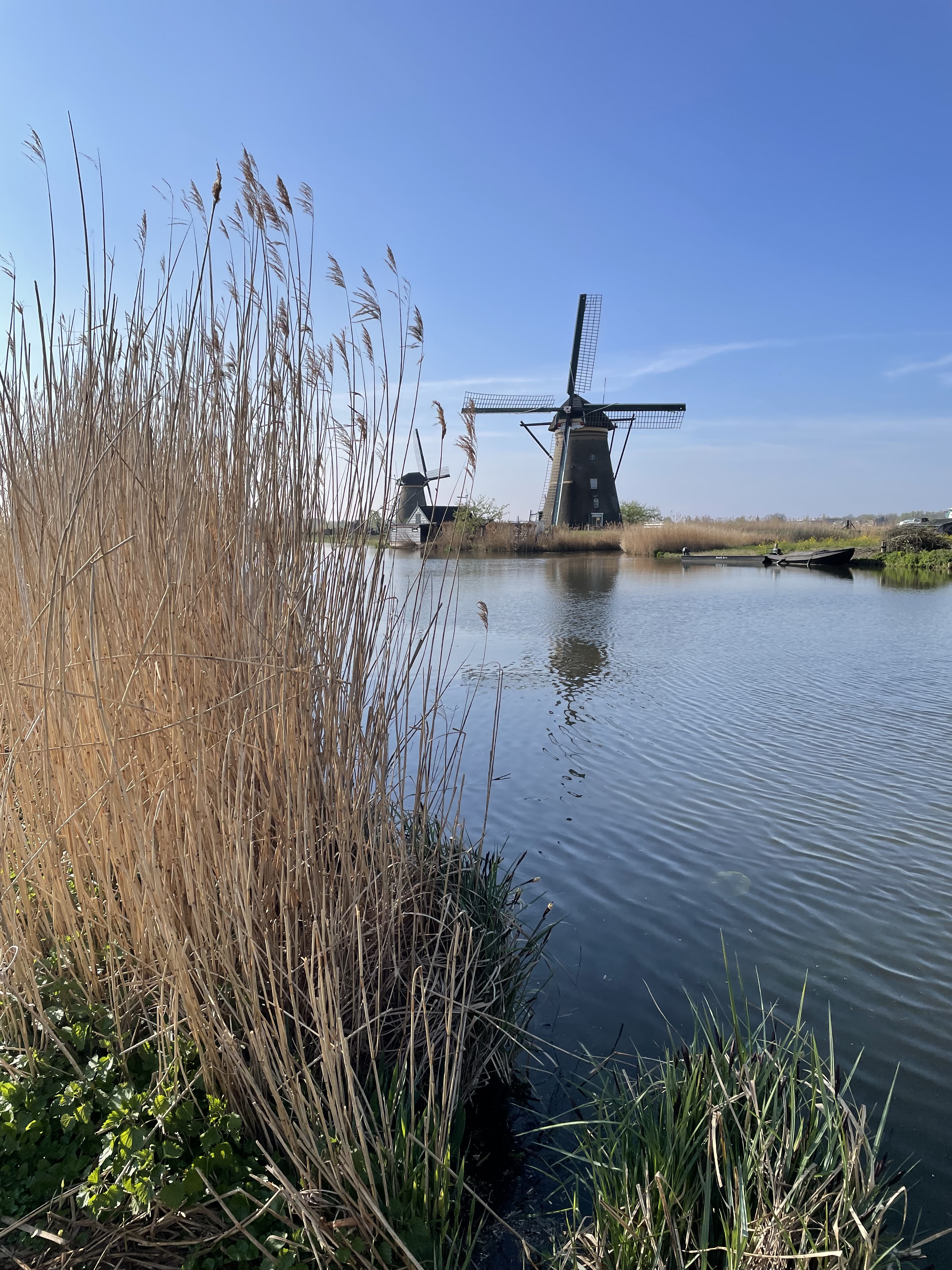
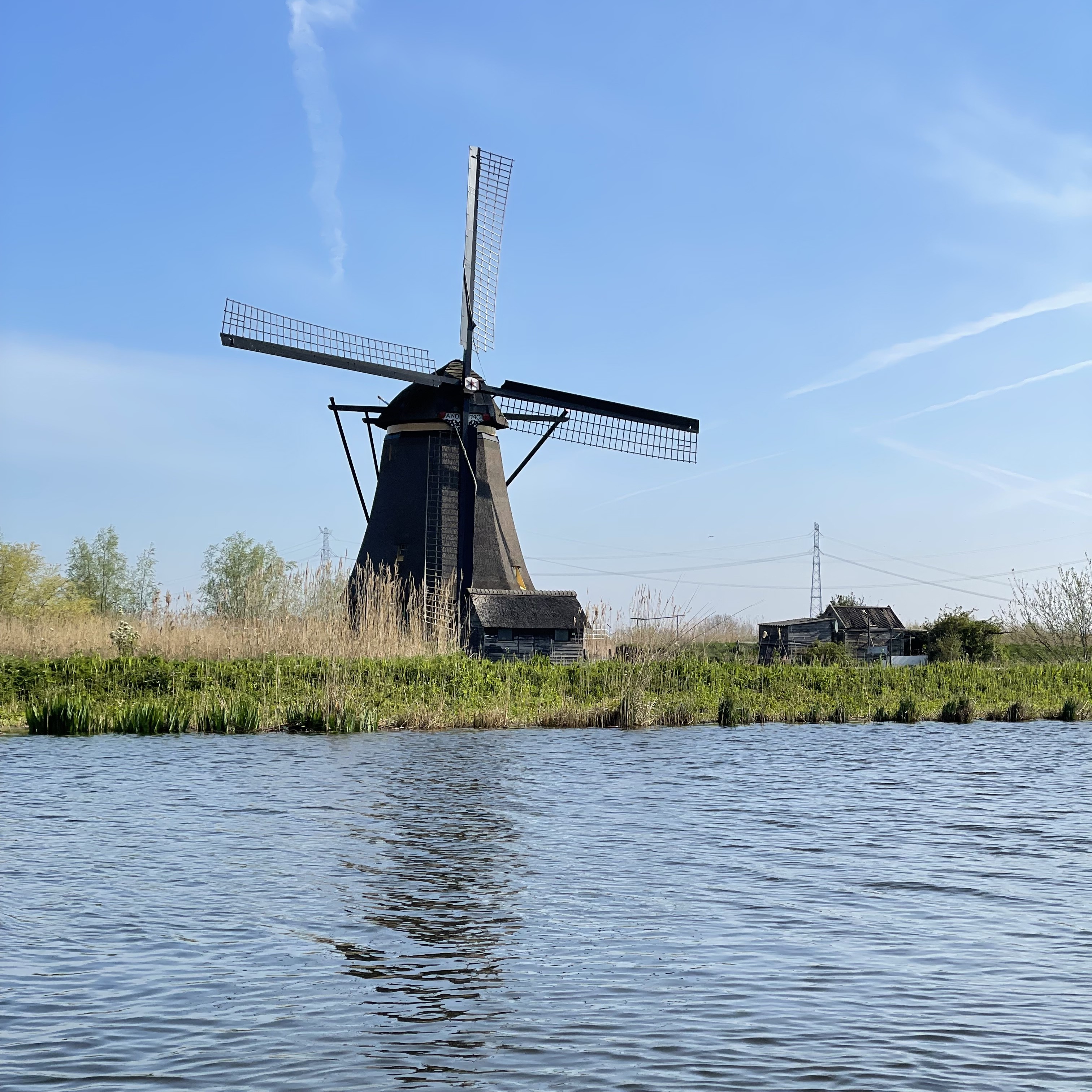
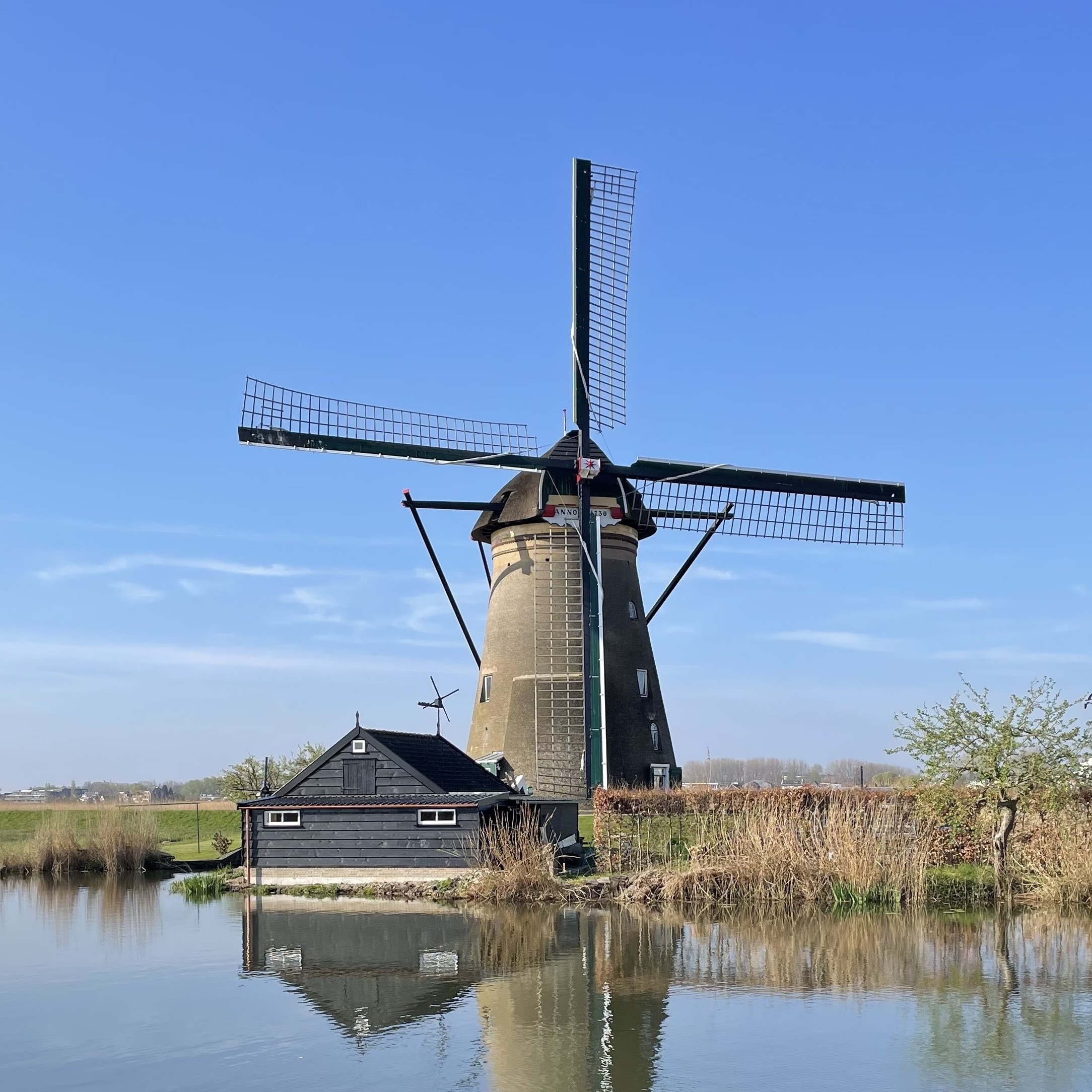
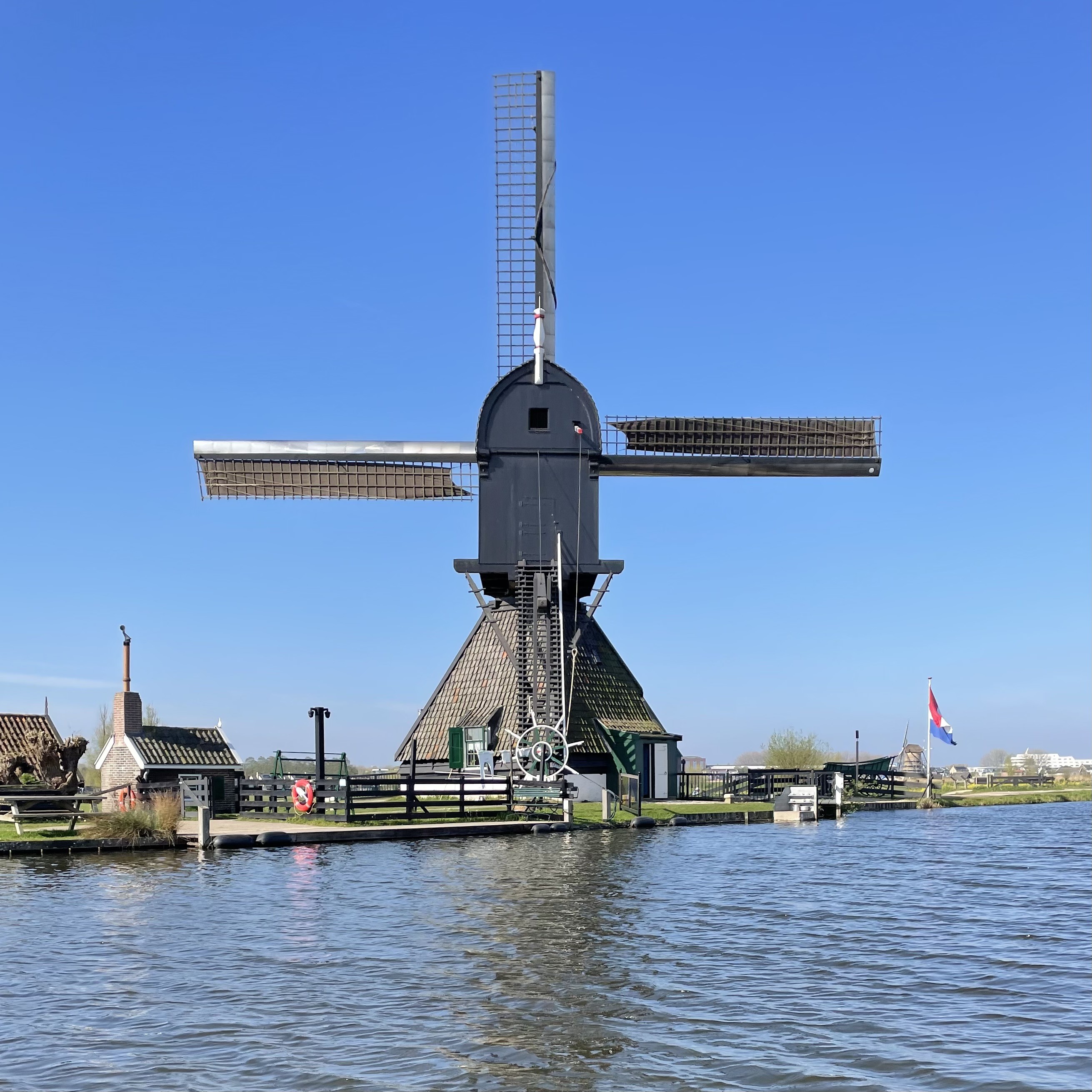
One did not have to drive far into the Dutch landscape on our recent National Trust Tours visit to Holland and Belgium to spot one of the iconic windmills that are as famous in The Netherlands as wooden shoes, tulips, and stroopwafels.
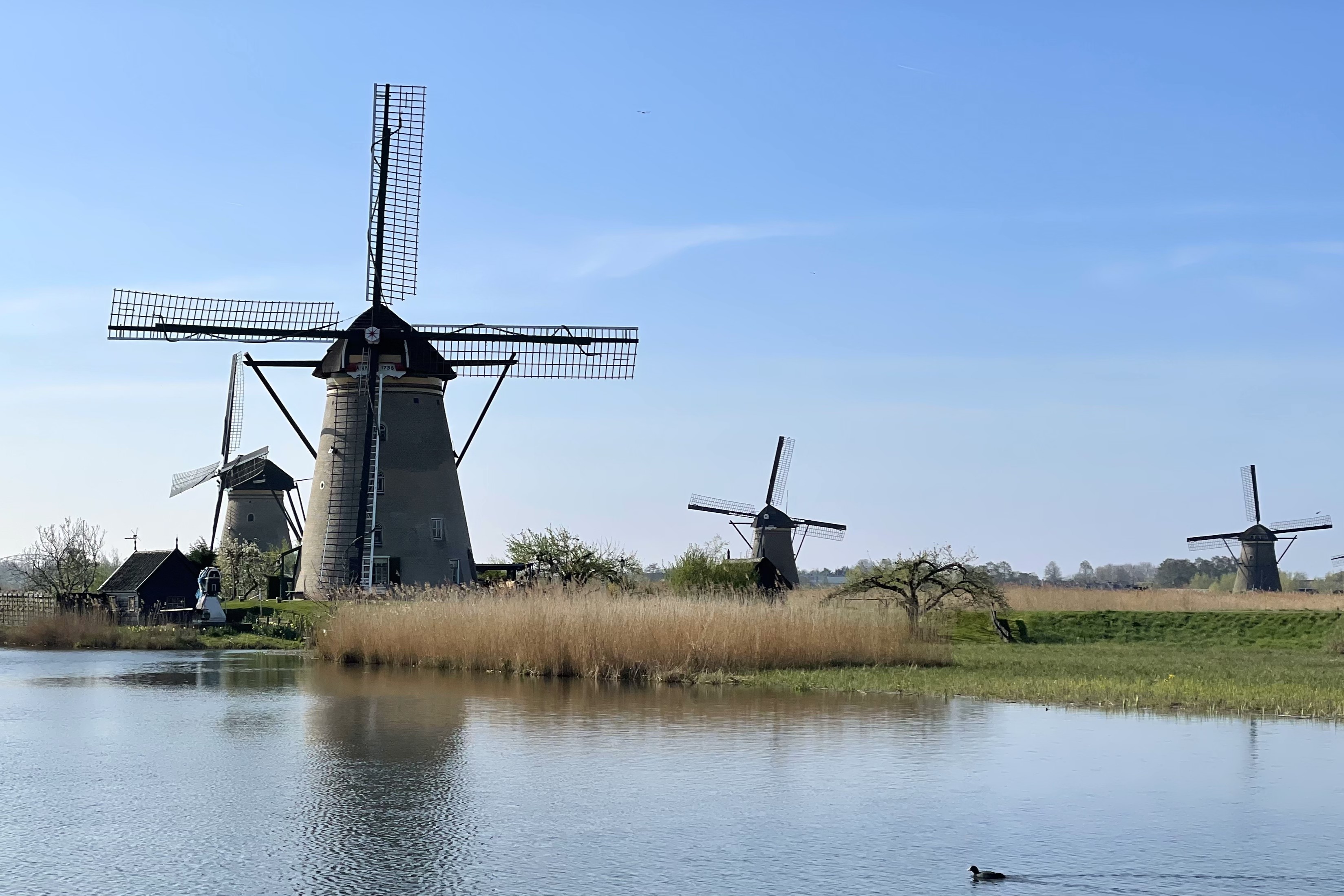
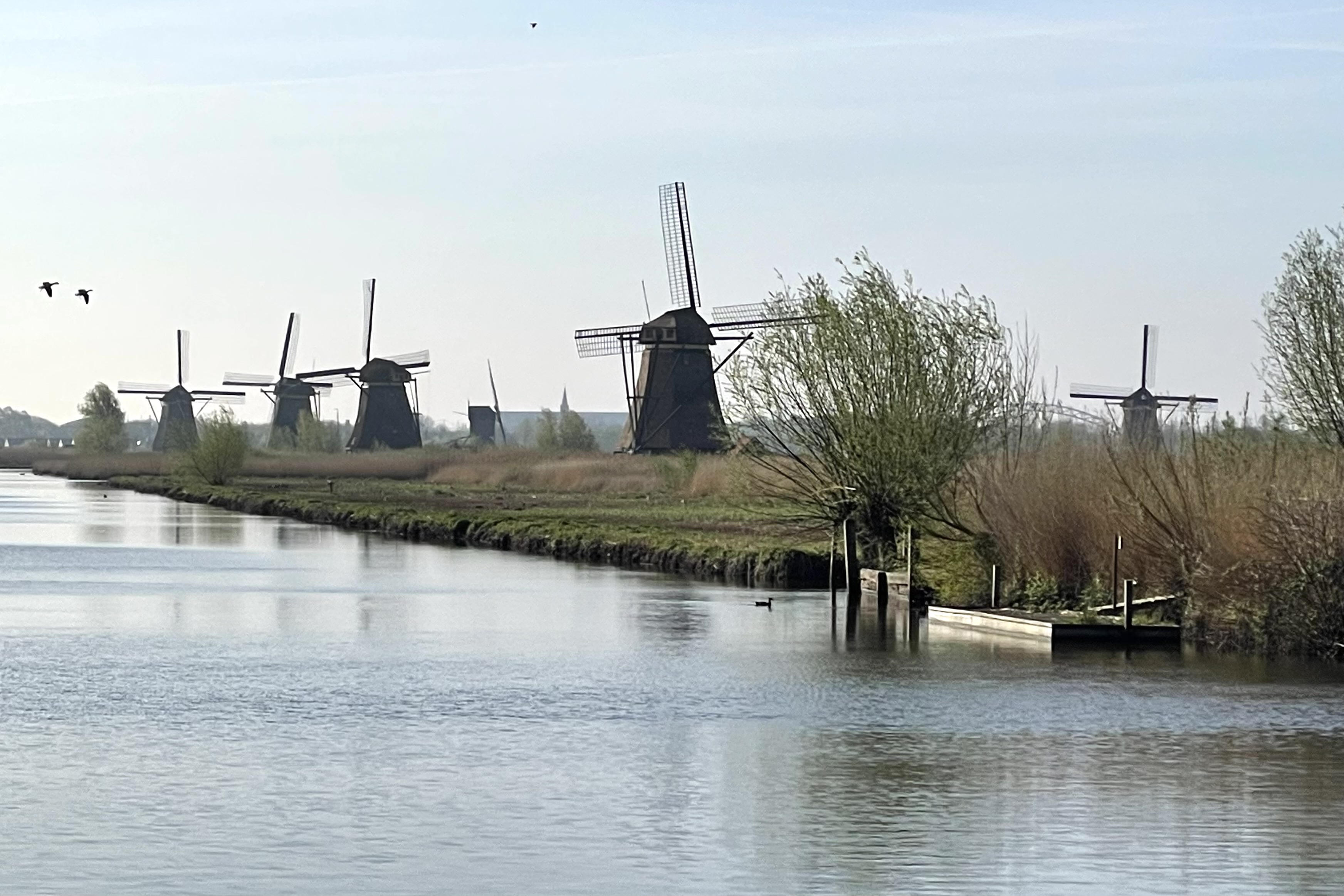
While the tendency is to see these large, silent giants as quaint and outdated modes of water management and milling, that would be the wrong conclusion, as we discovered when visiting the Mill Network at Kinderdijk. One of the country’s most famous UNESCO World Heritage Sites, it remains a relevant part of the hydraulic system today while admirably demonstrating the outstanding centuries-old contribution made by the people of the Netherlands to the technology of handling water.
“Construction of hydraulic works for the drainage of land for agriculture and settlement began in the Middle Ages and have continued uninterrupted to the present day. The site illustrates all the typical features associated with this technology—dykes, reservoirs, pumping stations, administrative buildings and a series of beautifully preserved windmills.”
My father, the lifelong engineer for the Tennessee Valley Authority with its history of water management, would have been amazed.
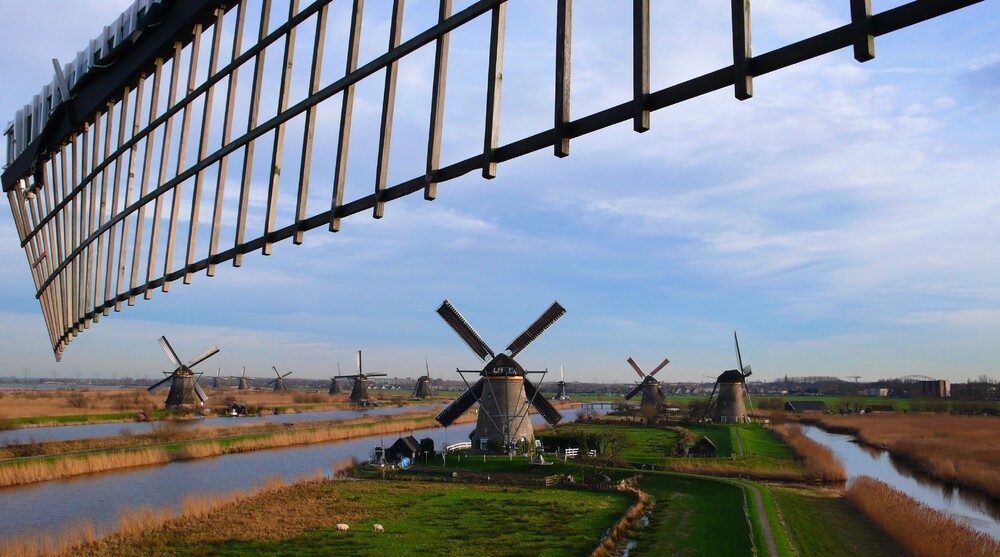
As the UNESCO designation notes, one is immediately struck by the juxtaposition of the landscapes’ horizontal features—represented by the canals, the dykes, and the fields—with the vertical rhythms of the mill system.
“There is no drainage network of this kind or of comparable antiquity anywhere else in the Netherlands or in the world.”
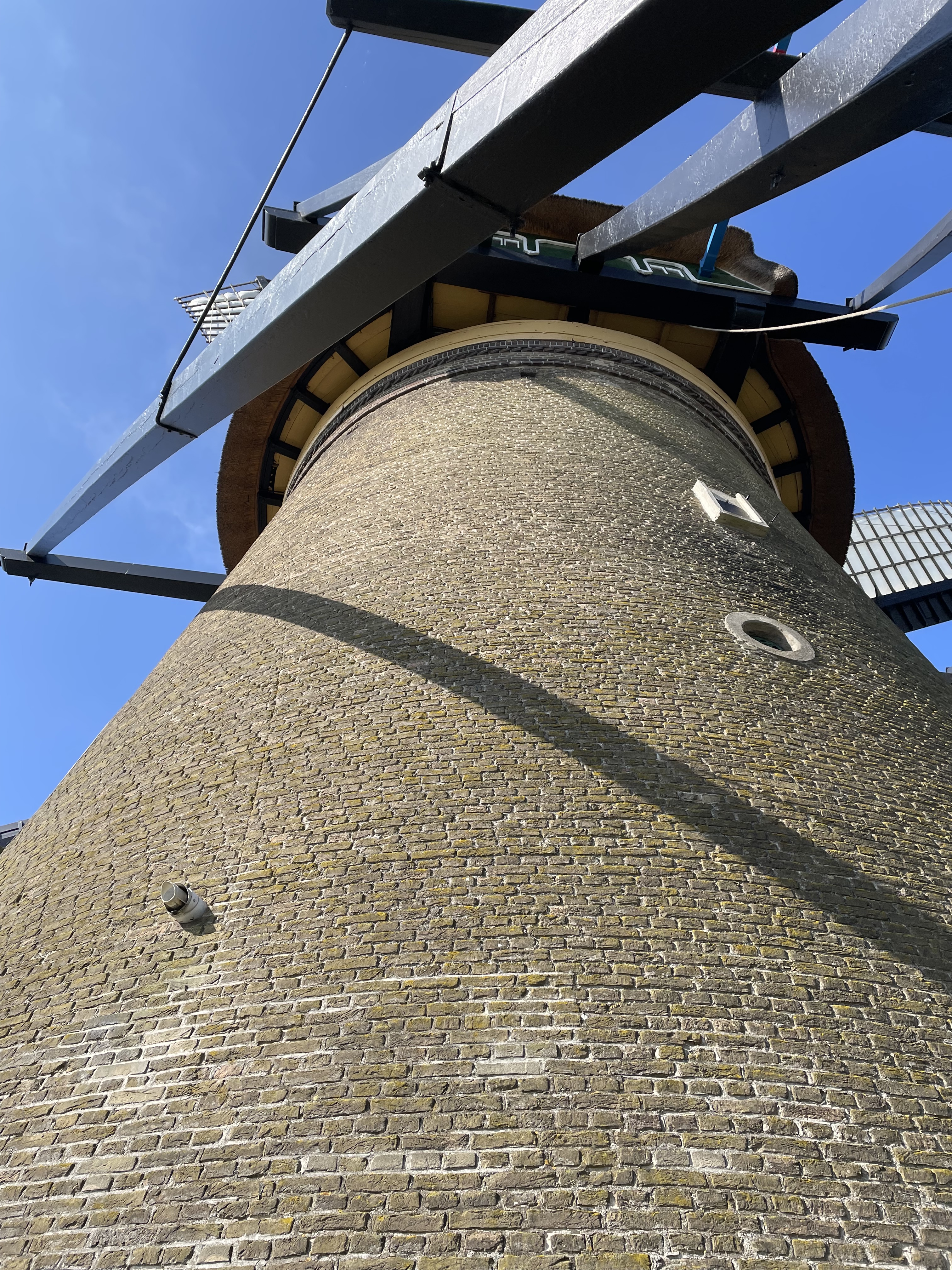
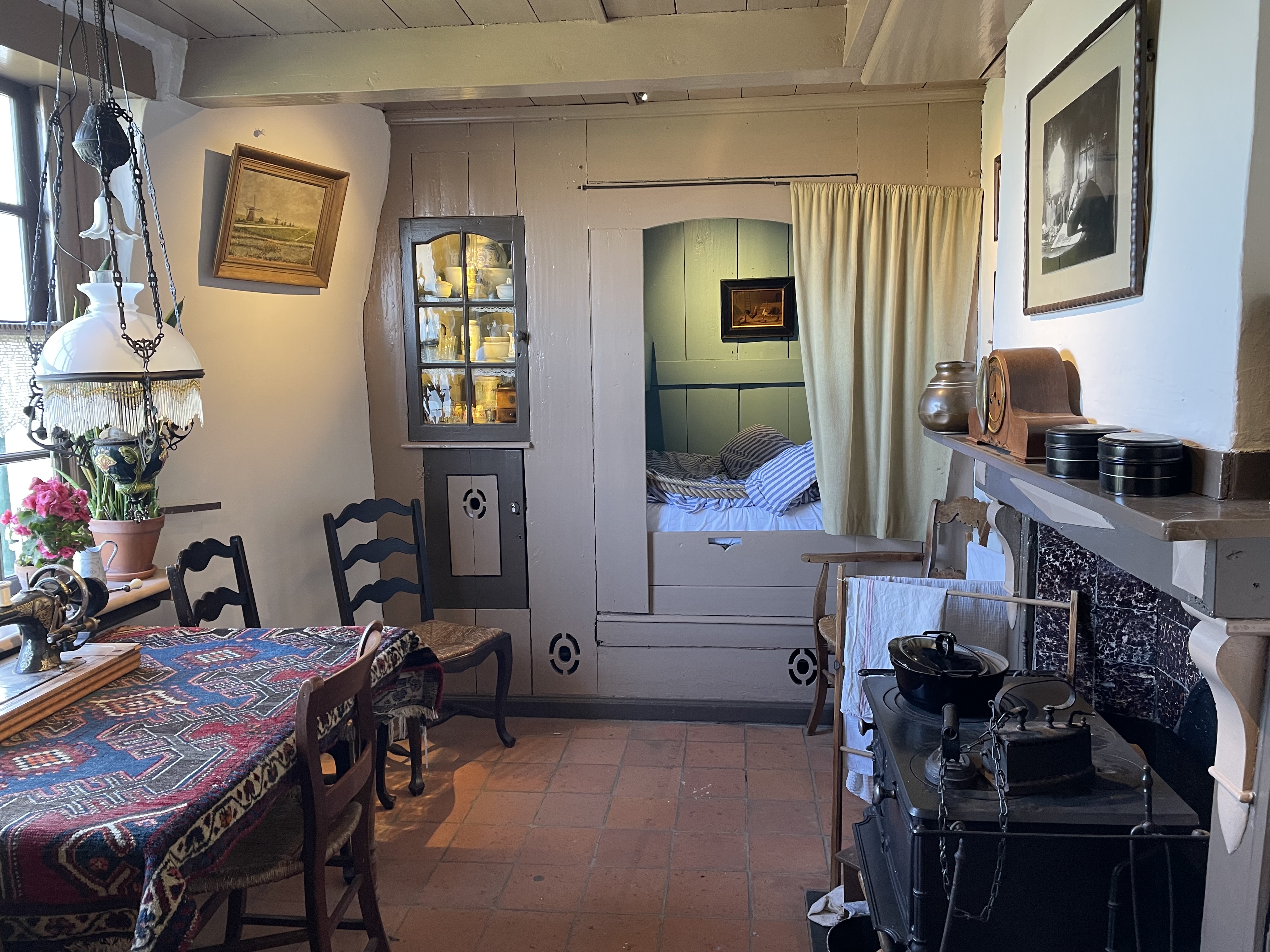
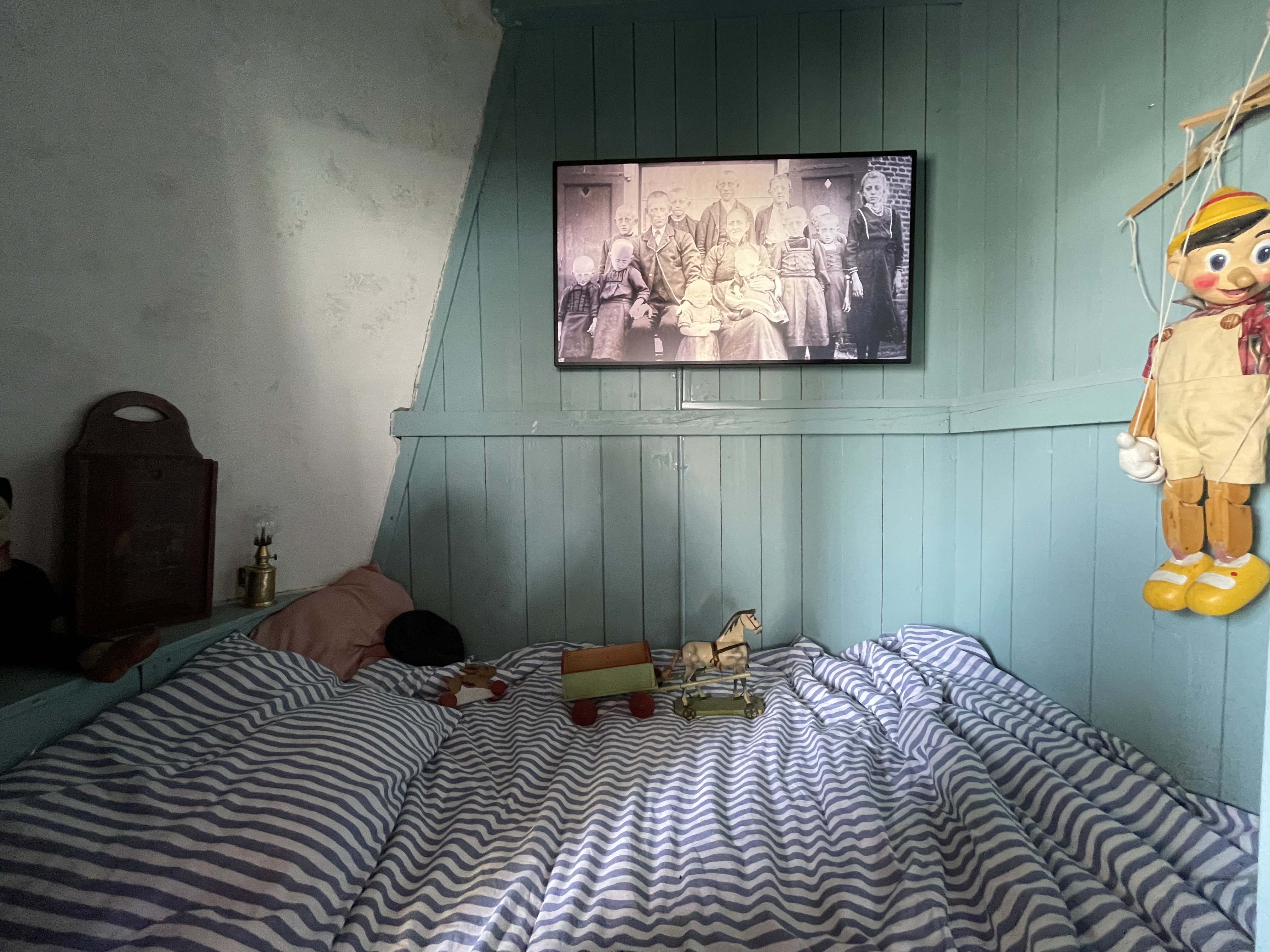
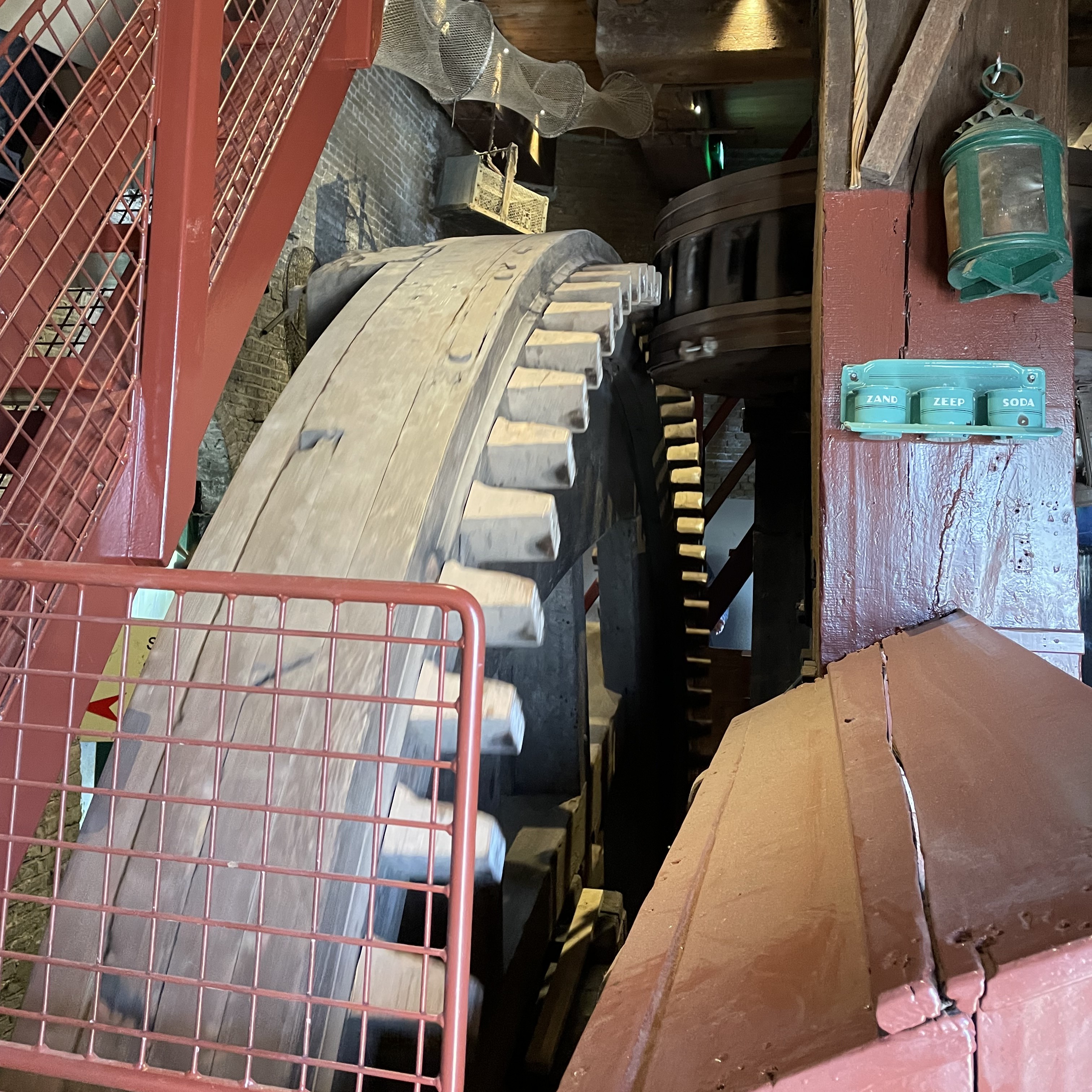
The nineteen mills that form this group of monuments are all still in operating condition, since they function as fallback mills in case of failure of the modern equipment. We were able to visit the inside of one mill that now serves as a museum. The others are occupied by working families, who have an obligation to operate the mills on a regular basis. In some instances, they also continue to serve their function as a mill for grinding wheat for flour.
Candice and I visit this extraordinary site on a brisk Spring Dutch day during our recent NTT tour
UNESCO’s nomination notes that “the authenticity in workmanship and setting of the structures and in the distinctive character and integrity of the human-made landscape is very high. No changes have been made to the functional hydraulic relationships between drainage machines, polders, and rivers since the sixteen mills of De Nederwaard and De Overwaard were built in 1738 and 1740 respectively.”
Most cultures agree that the spirit of place resides in its authenticity, a critical element in heritage conservation and with engagement. And yes, materials are an important part of determining authenticity. But as I mentioned in my lecture to our travelers, if we expand our thinking beyond materials we see that function and meaning are two additional methods for identifying authenticity. “Spirit of place comes alive not just in the ways a site is conserved and presented, but in the way it is used and valued by people.”
In the Mill Network, we certainly see authenticity of materials, but these places are also being used as critical backup parts of the modern hydraulic network. The fields don’t flood when the electric pumps go out because the historic windmills can still carry out their original function, moving water into the ditches and canals.
This site, representing the entire Lowcountry, is a testament to the industriousness, creativity, and inventiveness of the Dutch through the centuries. It also showcases the country’s care for building and managing the environment in a way that shows respect, resilience, rejuvenation.
(Photo Credit: UNESCO)
More to come . . .
DJB
For additional posts on this National Trust Tour, visit:
We are used to getting our history from books that take deep dives. Works like Ron Chernow’s U.S. Grant or Ned Blackhawk’s The Rediscovery of America. Even on the popular history front, we still expect books like Seabiscuit or The Devil in the White City.
Book publishers often don’t know what to do with a writer who is captivated by “the magic that lies in the liminal spaces between the plot points in people’s lives.” Thankfully, Random House decided that those spaces, which make up much of our time here on earth, are worth exploring as well.
The Memory Palace: True Short Stories of the Past (2024) by Nate DiMeo is a wonder-filled collection of stories from our past. DiMeo, who grew up in Providence, Rhode Island, wears the city’s past—full of Italian immigrants and plenty of places not named Brown or RISD—on his sleeve and in his heart. These “true short stories” are looks into the lives of people, some of them famous but many forgotten by time, whose stories deserve to be known. He looks at these places “between and beyond concrete facts and the well-worn language of familiar stories” to remind us that “life, in the present as in the past, is more complicated and more interesting and more beautiful and more improbable and more alive than we’d realized.” This is a work that surprises and informs and delights all while making us think.
He begins with the story of how Samuel Finley Breese Morse went from being a painter so successful that he was asked to paint a portrait of the Marquis de Lafayette to the individual who devoted the last forty-five years of his life inventing the telegraph and the code that is still known by his name. Why? Because while waiting in Washington for his distinguished visitor he received a note from a courier “breathless and dirty from a hard ride and a hard road.” It told him his dear wife was ill. Morse immediately dropped what he was doing and raced back to New Haven—a trip that took six days at that time—only to find that his wife had died even before he received the note. Those forty-five years were devoted to being able to transmit “the stuff of life and of dying wives.”
We learn of how Giovanni Schiaparelli “discovered” canals on Mars in 1877, a find that captivated people from New York to Sydney and scientists from Cambridge to Jaipur. Percival Lowell, the son of one of the wealthiest families in New England, confirmed that from a telescope in Flagstaff, Arizona, but he took it one step further and speculated that they were built by a civilization on par with our own. It was, alas, a case of seeing what we want to see. Schiaparelli had used the word “canali” by which he meant “furrows” but which was mistranslated by Lowell and most of the English speaking world. By 1907 enough scientists had reviewed the findings and picked holes in his evidence. Lowell’s work was important but in the end he went looking for canals and that’s what he saw. So there were canals on Mars . . . at least from 1877-1907.
The book is full of such stories.
“A socialite scientist who gives up her glamorous life to follow love and the elusive prairie chicken. A boy genius on a path to change the world who gets lost in the theoretical possibilities of streetcar transfers. An enslaved man who steals a boat and charts a course that leads him to freedom, war, and Congress. A farmer’s wife who puts down her butter churn, picks up the butter, and becomes an international art star.”
DiMeo ends his book with six origin stories, pieces drawn from his life as a younger person. And there, in the Federal Hill neighborhood of Providence and the surrounding landscape, we discover what drives his passion. He came to the realization that we are all products of the historic moments we are given.
“That in a different era maybe I wouldn’t be thinking about going to college; maybe I would be drafted into a war, or would be getting on a boat, hoping to find a place by a river to put a barbershop; maybe I wouldn’t be getting an easy cure for my Graves’ disease. I wouldn’t be meeting these friends. Now. This is our moment . . . These were the lives we got to live. Timing was everything, it turned out, and it was a gift to notice beautiful moments as they happened, but I felt alone in holding that particular melancholy of knowing they were, in that same moment, becoming the past.”
DiMeo realized that telling these stories well was what mattered. Tight, sharp remembrances infused with meaning. By doing so, he felt connected, and in the process he has connected all of us.
Nothing says Spring like flowers, and in Holland—where we spent the better part of ten days earlier this month—that means tulips.
On this National Trust Tours trip, I was fascinated with the web of history that ties us together. And yes, even the beautiful tulip has much to teach us about that web and the fact that while history doesn’t repeat, it often rhymes.
Following Holland’s independence from Spain and the establishment of the Dutch Republic in the late 16th century, international trade helped fuel the first of three major Golden Ages in the country’s history. By the early 17th century, Holland was one of the richest countries in Europe.
What happened next has been repeated over-and-over again throughout the world when wealth is coveted and concentrated in the hands of the few. While the names and assets change, the pattern repeats. We’re in the midst of one of those periods here in the early 21st century.
Amsterdam’s Tulip Museum picks up the Dutch story.
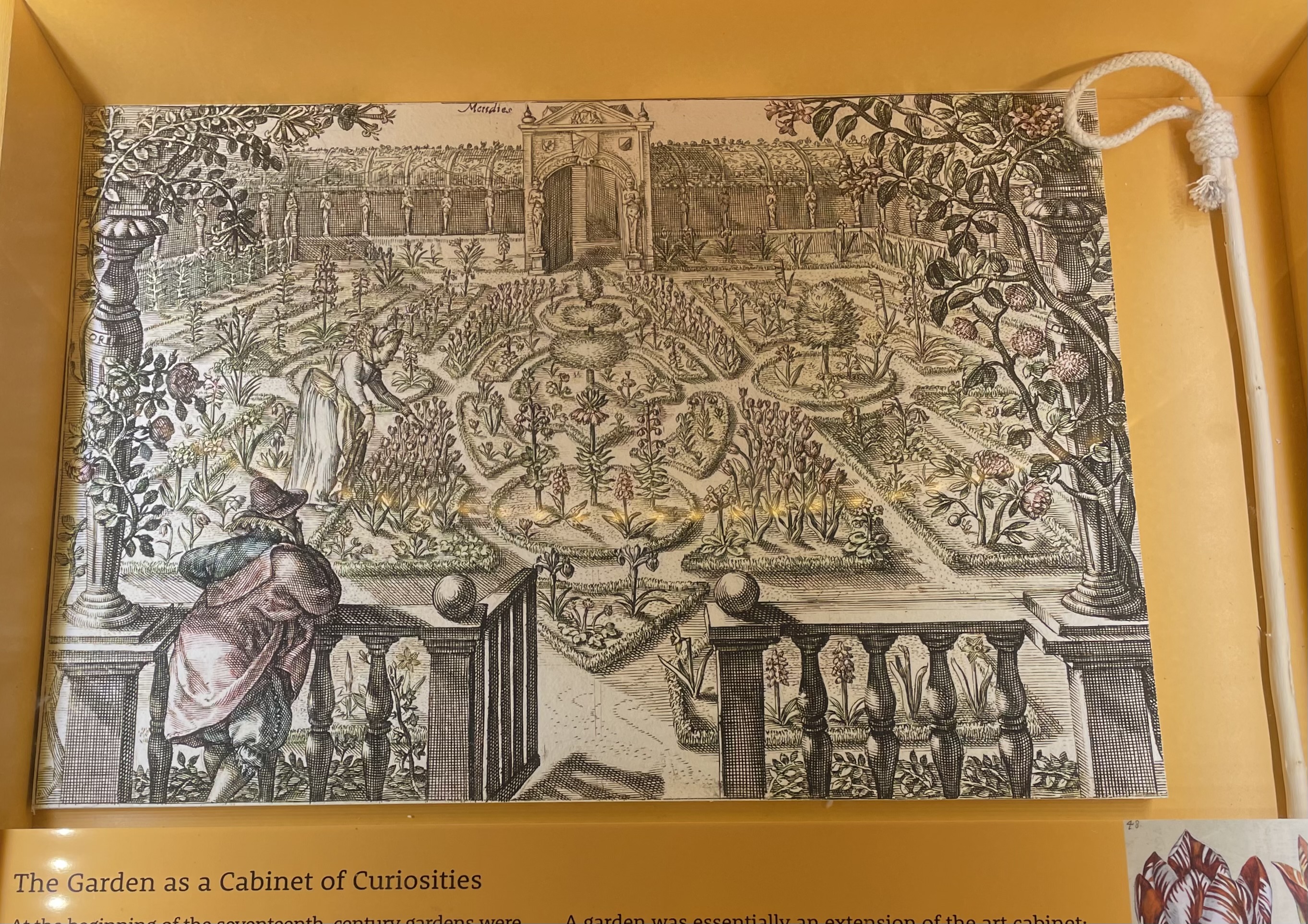
“The coveted tulip became a status symbol for men of means and a chance for mobility for the working class, as those lucky enough to raise and sell an outstanding seedling could make a great deal of money.
In the fall of 1636 and the winter of 1637, speculation and frenzied trade elevated the price of tulips to dizzying heights. Newfound wealth and greed drove the price of a single bulb to equal that of a townhouse in Amsterdam.”
“This situation was not to last. Fortunes and reputations were lost when the tulip market collapsed in February 1637.”
Tulipmania is generally considered to have been the first recorded speculative bubble or asset bubble in history.
Tulips are still a big business in The Netherlands, a fact we discovered as we traveled to see the world-famous Keukenhof Gardens last Monday. Along with 40,000 other visitors.
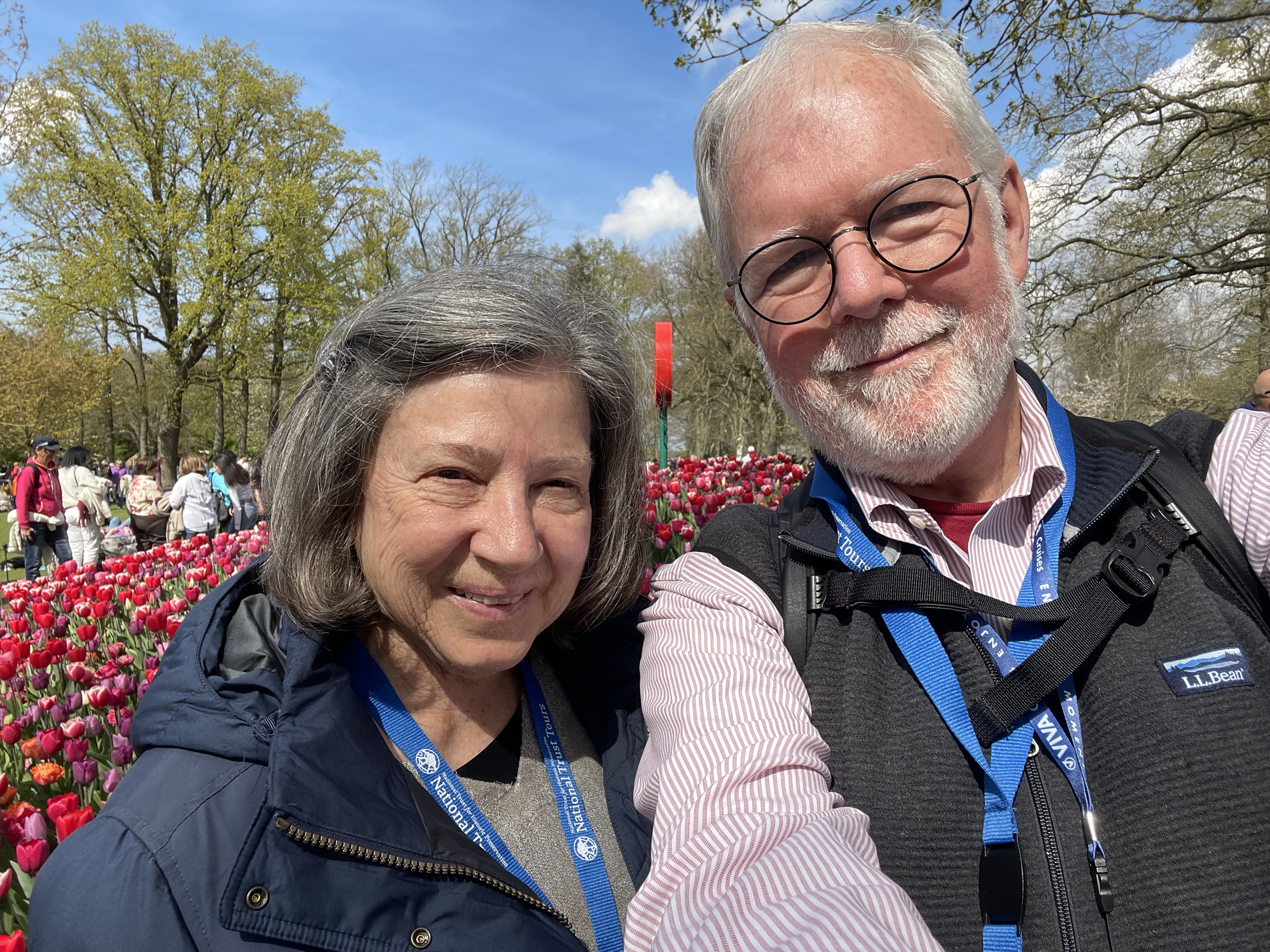
I’m just guessing, but I wouldn’t be surprised if our selfie was one of about 25,000 taken that day.
Keukenhof does its best to live up to the title of “The Most Beautiful Spring Garden in the World.” Tulips aren’t the only featured flower. Anytime we caught a fragrance on the wind, we would turn and see some marvel, like this river of hyacinths, nearby.
I took one hundred or more photos, but I’ll showcase just a few that really caught my eye.
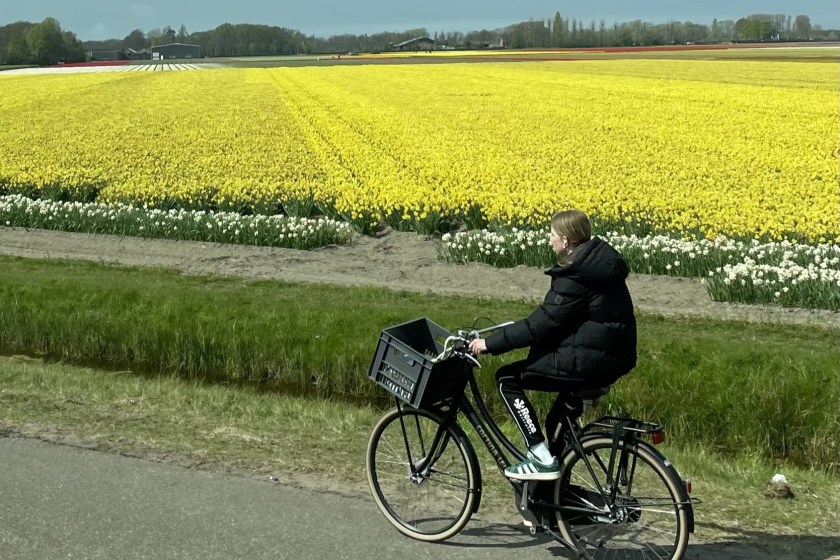
On our way back to our riverboat, we passed other fields. A few were designed for the “pick them yourself” tourists, but most were part of the very serious business of tulip bulb production.
As is true in many speculative bubbles, not everyone lost in the tulipmania craze. Some have called it more of a socio-economic phenomenon than a significant economic crisis. The term tulipmania is now often used metaphorically to refer to any large economic bubble when asset prices deviate from intrinsic values.
The Tulip Museum had a wonderful exhibit on Tulipmania. When one entered that part of the museum you were greeted by the sound of a single upright bass played by legendary jazz bass player, songwriter and raconteur Jay Leonhart singing his Tulip Song.
Leonhart has had a distinctive career, playing with the likes of Judy Garland, Duke Ellington, Thad Jones, Buddy Rich, Jim Hall, Peggy Lee, Mel Torme, Marian McPartland, Kenny Barron, Sting, James Taylor, Papa Joe Jones, Roy Eldridge, Jim Hall, Louie Bellson, Dick Hyman, Luciano Pavoratti, and many more. But he is best known from writing and singing idiosyncratic songs “about anything I wanted” which is probably how the Tulip Song came to be.
Another bit of off-beat history with a bass soundtrack is Leonhart’s Life In the Middle Ages.
Leonhart’s tale of finding himself next to Leonard Bernstein in first class on a New York to LA flight includes a funny introduction that describes his songwriting process (such as it is). And I’ll end with his most “famous” tune, Salamander Pie.
Happy Spring! And don’t pay too much for those tulip bulbs!










































 MORE TO COME...