Latest Posts

55 is the New 25…Or How Facebook has Reconnected Me to People I Haven’t Seen in 30 Years

I didn’t think turning 55 last month would be such a big deal, having already dealt with those milestone birthdays of 40 and 50. Everyone knows (and pollsters bear this out) that Boomers always undercount their age by 7-10 years in any event.  I may be 55, but I believe I’m really only 45.  Don’t believe me?  Just ask any Baby Boomer how old he/she feels and you’ll soon get the sense that we’re all this way (i.e., delusional).
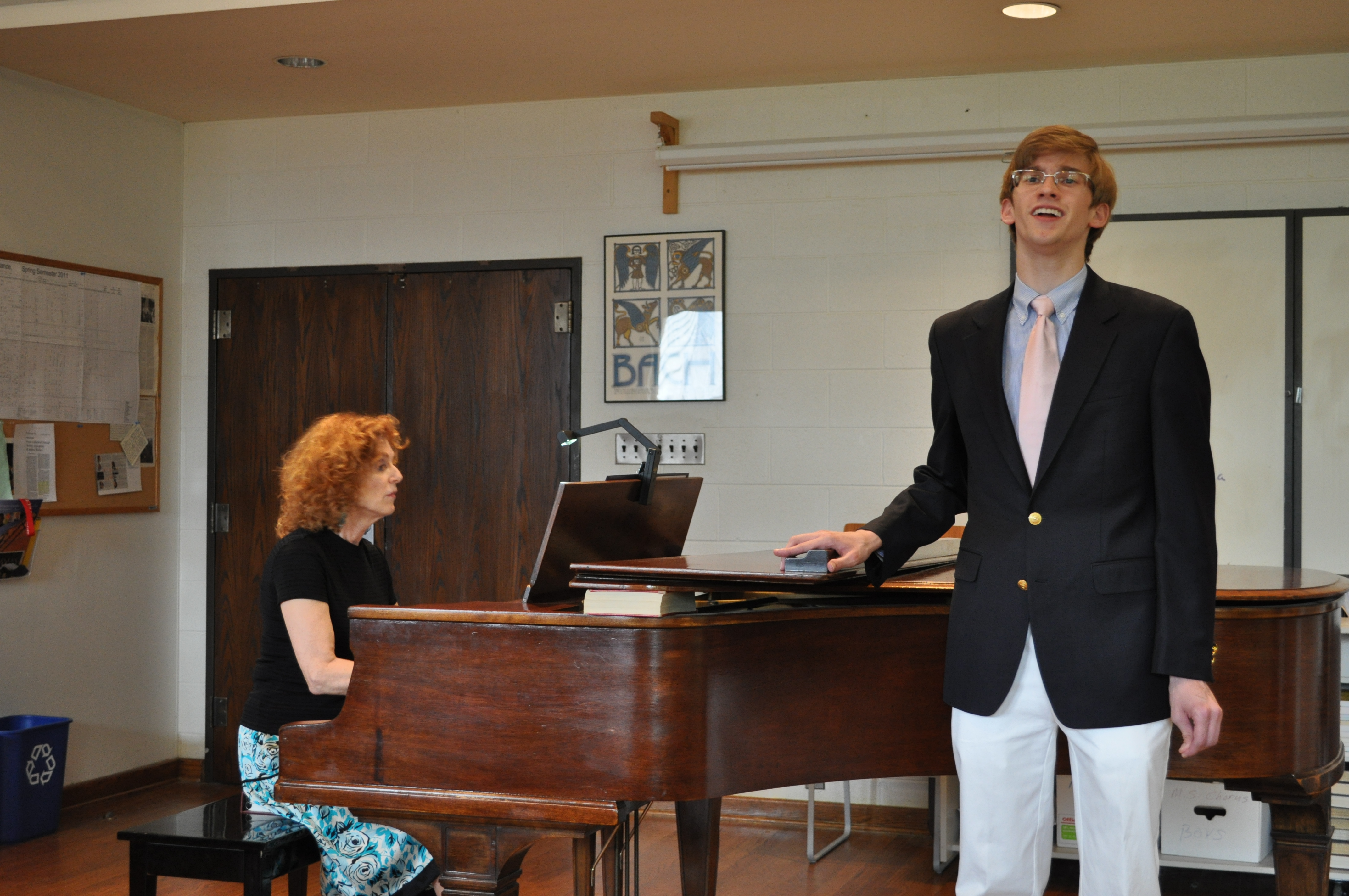
But this year has been very different and a little – well – just different.  And it is all because of Facebook.

First, a little back story.  I was not an early adopter for Social Media, as I had a wife, two teenagers, a demanding job, a guitar and mandolin sitting in the corner and other interests to fill my days.  But part of my job was to provide vision and direction to all parts of our online communications efforts at work.  It soon became clear that it was going to be difficult to do that job  well if I didn’t know what I was talking about when it came to Facebook, Flickr, YouTube, blogs and the like.  So I took  the steps that had already been taken by many of my friends and colleagues:  I had the web staff at work set me up on Facebook and I had both my children refuse to “friend” me.  I was off to a great start!  (More to Come…the DJB Blog was another outcome of my immersion in all things online, but that’s another story.)

Amazingly a group of 25-35 year old staff members at work did “friend” me on Facebook however and they were the ones who really showed me the power, reach and possibilities of this wonderful tool.  I was suddenly “welcomed” (if that’s the right word to use for people allowing their boss to see their status updates)  into an amazing set of conversations about everything from what’s for dinner tonight; gym habits; Lady Gaga’s gig with Elton John at the Grammys; Snowpocalypse; and the Caps chances to win the Stanley Cup to why old communities really are the most sustainable places on the planet; how we can respond to the devastation in Haiti; and life’s rhythms of births, new children, college searches, aging parents, and death.

Now to the real reason for this post.  I haven’t lived in my hometown since I was 22.  Many family members still live there, so I do go home regularly and see a small group of friends from my high school and college days – friends like Gary and Libby Green who are close to my sister and brother-in-law.  Van West, who I’ve known since his Mom was my 7th grade math teacher, is another friend I’ve stayed connected with due to personal as well as professional reasons.  Van is the very able director of Middle Tennessee’s Center for Historic Preservation.   But the more typical story is that I’ve lost connections with many friends who use to be very close.

And that’s where the 55th birthday comes in.

For some reason, as my classmates and I have faced the double nickles birthday (or the two-handed birthday as one of them called it), we’ve reconnected across all sorts of time zones and situations.  Someone set up a Facebook page for our high schools (we were the first graduating classes after the school system split up our Central High) and people started asking questions such as “Do you know where so-and-so is now?”  The Facebook group scheduled a “Hipwreck” dance in Murfreesboro for those who live nearby.  “Friend” requests have been coming from people I haven’t thought of – much less seen – in 25 years.  (They probably are thinking the same thing about me.) I’ve heard from dozens of classmates from my high school days in Tennessee.  One lived in Knoxville and through Facebook  I was able to connect her with my colleague who is the charismatic director of Knox  Heritage.  I now am very jealous when they tell me through Facebook they are going to attend the “Biscuit Festival” or “Big Ears” in downtown Knoxville.  Another has lived here in the Washington area since the 1980s but we never connected until Facebook came along.  We remedied that yesterday when Crouse and I had lunch to catch up on life and memories.  It seems like every other one of my birthday reminders on Facebook these days is for a former classmate facing 55.  (Happy Birthday tomorrow, Mary.)  Another dear friend who I had really regretted losing touch with turned up on Facebook yesterday as well.  We messaged back and forth and discovered that we now find ourselves in the same state after lives lived all across the country.

Having people look at your Facebook profile to ascertain what type of life you’ve lived for the past 30 years is another part of the experience that makes this…well, different.  Do they check out your photos and go, “Gee, it’s too bad David’s let himself go!” or do they say, “Hey, he held up pretty well!”  (One very kind and gentle friend said, “You have the same smile you did as a teenager.”)  My friends are probably saying, “David’s listening to the same music he was 30 years ago – doesn’t he ever change?”  (And it isn’t classic rock!  I will say that when I took Andrew to a Nickel Creek concert at the Kennedy Center I told him he should be impressed that I was among the oldest audience members there, by a factor of about 20 years.)  Your political leanings can come through in your Facebook profile – either directly or in a more subtle way.  Given my Tennessee roots, my classmates are more conservative than my colleagues at work, but I still see posts fighting homophobia and supporting health care reform.  Stories of marriages and relationships can also make their way into the Facebook profile, if one is so inclined, and so yesterday I “married” Candice on Facebook – 28 years after the fact – just so friends could find out more about her if they wished.  Of course, my children still refuse to “friend” me so my 17-year-old twins will just have to remain a mystery.

It has been wonderful to reconnect and part of the joy has been the process of discovery (and rediscovery).  I wrote a recent blog/Facebook post on my boy scout camping trips at Rugby, Tennessee (which were also my first experiences in historic preservation).  Lo and behold I heard back from my old scout master, the assistant scout master (and father of my best friend from high school), and the pastor of the church who sponsored our troop.  What memories!  I think about how different it will be for Andrew and Claire as they have the means to stay connected to their friends in ways that we couldn’t imagine back in 1973 when facing high school graduation.  There’s a sense of regret that we didn’t have Facebook then, but my twins won’t have as many opportunities to get a “friend” request one day and say, “WOW, I never thought I’d make this connection again!”

If you are reading this and are a classmate from 1973, write a comment on the blog or send me a “friend” request on Facebook.  55 be damned – we’re really only 45.  So while we’ve got plenty of time left, perhaps we should catch up!

More to come…

DJB

Iron Work for a Tennessee Farm

My younger brother Joe recently posted photos on his blog of the iron work on a barn project he just completed in Middle Tennessee.

This horse barn and the accompanying 19th century farmhouse near Pulaski were graced with Joe’s simple yet beautiful ironwork on the gates and in the tack room.  The owner and Joe agreed to an Iris theme that adds a little unexpected touch to the utility of the gates.

Check out the Joe Brown, Artist Blacksmith blog to see all the pictures and some of the other projects Joe has in the works.  And for those in Middle Tennessee, note that Joe usually participates in the Art Studio Tour as well as a few major shows throughout the year.

More to come…

DJB

Good Friday 2010

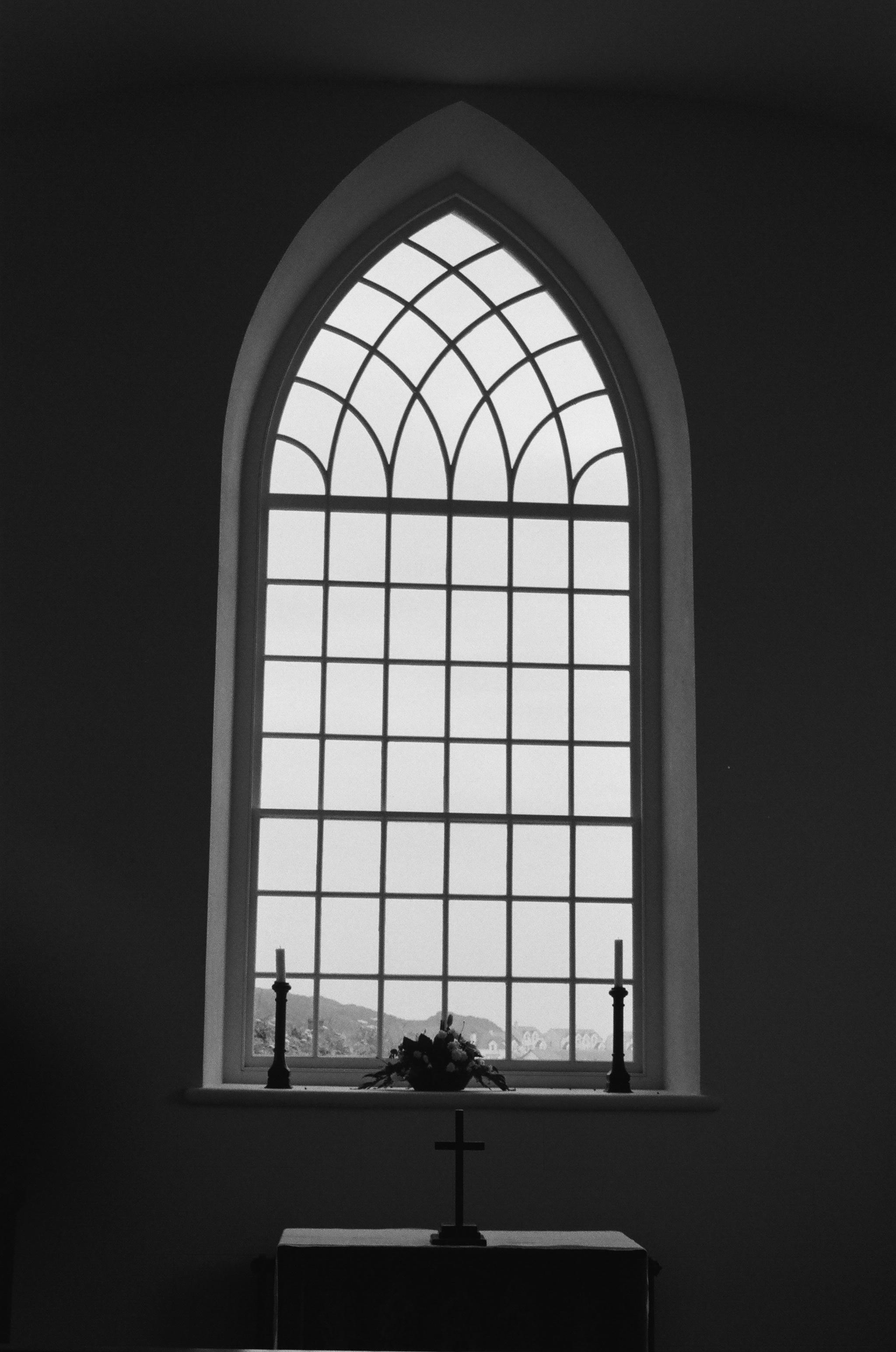
One of the treasures of Washington is the National Cathedral.  Earlier this evening Candice, Andrew, Claire and I gathered together in the Cathedral’s St. Joseph of Arimathea Chapel for the moving and beautiful Good Friday meditation.

There is no more appropriate place to spend Good Friday than the vault-like chapel deep in the heart of the Cathedral named for Joseph of Arimathea, the rich man who went to Pilate and asked for the body of Jesus in order to provide a proper burial in his own new tomb.  The stone and wood space is made for the chants, solo cello, and Taize music of this service.  The sounds have a special resonance that envelops the soul.

Cathedral Musical Director Michael McCarthy has structured a beautifully meditative service for this evening, beginning with Gita Ladd playing the groaning Sonata for Cello solo, Op. 28 by Eugene Ysaye.   The plainsong chant of Psalm 40 by the gentlemen of the Cathedral Singers begins in the traditional fashion, yet two-thirds of the way through McCarthy underpins the plainsong with spare piano chords that eventually lead into the Taize chant Wait for the Lord. Soprano Diane Atherton’s solos during the Taize chants are a delight throughout the evening.

To my mind, the highlight of this service every year is hearing Mike’s arrangement of the Troparian, and this year was no different.  Andrew used to sing as a Cathedral Chorister with many of the men we heard today, and he quickly identified Karl Hempel as the magnificent bass who sang the moving text while the choir repeated the “Give me that Stranger” figure underneath.

When he saw that the sun had hidden its rays, and that the veil of the Temple was rent as the Savior died, Joseph of Arimathea went to Pilate, pleaded with him, and cried out:  Give me the Stranger who since his youth had wandered as a stranger.  Give me that Stranger killed in hatred by his kindred as a stranger.  Give me that Stranger upon whom I look with wonder, seeing Him a guest of Death…

Mike told us later that he set these words to music about four years ago at the request of then-Presiding Bishop Frank Griswold specifically for this Good Friday service.  It is a marvelous piece that deserves to be recorded and shared.

I could always leave after that canticle, but there is a meditation and more music.  Tonight, the musical reflection following the meditation was the beautiful Sarabande to C major suite, BWV 1009 by Johann Sebastian Bach.  The solo cello was made to be played in that space on this day, and I’ve included a video of  Wen-SinnYang’s version of the same piece below.  Enjoy this special meditation on this Good Friday.

More to come…

DJB

Image: St. Joseph of Arimathea Chapel, Washington National Cathedral

The Business of Happiness

I took the occasion of an evening plane ride from Washington to Miami last month to read a new book by Washington Capitals owner and AOL co-founder Ted Leonsis called The Business of Happiness.   The fact that I was happy to be leaving the remains of Snowmaggedon in Washington for the warm climes of Miami (and spots further south) put me in the right mood.

The book has two parts, the first serving as biography and stage-setting for the second half listing of the “six secrets to extraordinary success in work and life.”  (What’s a popular business book without a list of secrets to success?)  When Candice saw the book on my bedside table she remarked, “He has happy eyes.”  That’s a pretty good summation of this book.  Leonsis looks on the world as a business-tested optimist – not a bad way to approach life.

His story of how he ended up at Georgetown University and then used the years in college to figure out his life’s calling is worth the price of the book for anyone with high school children thinking about college.  (I have two in that category.  Having just come off the spring break tour of schools I told them both I wanted them to read that portion of the book.)  It’s a love story to the value of higher education, curiosity, a balanced life, hard work, and planning.

That last point is worth exploring.  Leonsis makes the point over and over again that good businesses plan and that people who want to be happy need to be intentional about their goals.  After a near-death experience, Leonsis wrote out a life list and for a quarter of a century has worked through life goals.  The process, he tells you, has made him happy.  He does own a sports franchise (one of the items on his list), but he hasn’t made it into outer space (another life goal).  For those with more modest goals, Leonsis still makes the point that putting thoughts to paper gives one a systematic plan of aspirations.  And it keeps one open to opportunities.

This isn’t the deepest of books, but you can’t follow a Leonsis read without having a smile on your face and there is a lot to like.

More to come…

DJB

The Intersection of Preservation and Sustainability

Portland, Oregon is a city with a well-deserved reputation for livability and sustainable development.   I visited Portland late last week and was reminded again of how much this community can teach other American cities about building an environmental consciousness and offering transportation options that decrease reliance on the automobile.

In touring the city with friends and colleagues, I saw vibrant historic neighborhoods around an active downtown.  But I also learned of  preservation battles that ended with perfectly good buildings being demolished – even though preservation was the sustainable alternative.  Preservationists in Portland often feel left out of the discussions – and the decisions – on questions of livability.  It shouldn’t be that way.

While in Portland, I joined two colleagues in a discussion with Mike Francis, editorial board member at The Oregonian. We talked about the intersection of preservation and sustainability, as well as preservation’s ability to prime the pump for economic development.

In a piece entitled, To Be Sustainable, Use What You Have, Francis makes the case for preservation as a key to economic revitalization, sustainable development, and livability in Portland.  Here’s a section of his editorial on sustainability:

The case for preservation improving sustainability is more intuitive: Of course it’s less wasteful to reuse a building than to tear it apart, cart away the rubble, and import and erect new piles of steel, glass and concrete. That was what so maddening (to me, at least) with the arguments of those who wanted to tear down Memorial Coliseum to erect a “green” baseball stadium. As much as I appreciate the presence of baseball, beer and warm summer evenings, it seemed crazy to demolish a perfectly usable building a couple of miles away from the Beavers’ current home to relocate the team. The only argument in favor seemed to be that nobody had yet figured out how to put the coliseum to use since the Trail Blazers moved next door, so better to tear the place down than re-use it.

As cities across the country look for ways to enact policies that are environmentally sensitive, the intersection of historic preservation and sustainability – as Mike Francis suggests – is a great place to begin.

More to come…

DJB

The beauty of the Dutch Antilles

Late last month I had the opportunity to visit two of the islands of the Dutch Antilles – Bonaire and Curacao – as part of a National Trust Gardens of the Caribbean tour.  (These are the B and C islands of the A-B-C Antilles.  We didn’t make it to Aruba.)  This was a new part of the world for me and it was a great experience.

The scene was set with enlightening lectures prior to our arrival by long-time Trust lecturer Paddy Bowes and Williams College professor Michael Lewis, which prepared me for the very arid conditions on the islands (8 variety of cacti on Bonaire), and the Dutch city-planning and architectural influence.  You can see the latter in the photo at the top of the post of one of the most photographed streets in Willemstad.

Our first stop in the Dutch Antilles was the island of Bonaire and the town of Kralendijk.  The landscape and wildlife are the stars here, with clear blue waters and pink flamingos.

Our last day of the tour took us to Willemstad, Curacao’s capital.  There was much to take in:  the Queen Emma Bridge (aka “The Swinging Old Lady) which is a floating pontoon bridge that opens to allow boats to pass into the bay; the Floating Market on the waterfront; the beautiful colonial architecture of the government buildings; and my favorite, the oldest synagogue in the western hemisphere complete with a very unusual sand floor.  I was able to take a “This Place Matters” photo there – translated into Dutch!

The tour was wonderful…capped off by being able to spend a week on the beautiful Sea Cloud II.   I made a number of new friends, rekindled a couple of old friendships, and had a chance to learn more about the natural and cultural history of the Caribbean.  A great way to spend a week in February!

More to come…

DJB

VOA Highlights Preservation of Rosenwald Schools

Rosenwald Schools are unique in the American landscape.  Built in the early 20th century to educate African-Americans in the rural south, the 5,000+ schools quickly became  centers of community life as well as educational facilities during the difficult years of segregation.

I wrote a blog post in October of 2008 after reading Mary Hoffschwelle’s insightful book on Rosenwald Schools.  Now Voice of America has featured the Rosenwald Schools story – along with information on the preservation efforts led by the National Trust for Historic Preservation with funding from the Lowe’s Charitable Foundation – in a new video on their web site.  Take a look below.  I think you’ll enjoy it.

More to come…

DJB

Rugby, Tennessee: Where my preservation career began

Today’s PreservationNation blog has a story and video about Historic Rugby, a 2009 National Preservation Honor Award winner of the National Trust for Historic Preservation.  The blog post brought back great memories.

Rugby was established in the 1880s by the successful Victorian-era author Thomas Hughes as a Utopian community for the second sons of English gentry.  Due to the system of primogeniture, these men would inherit little or no property and had very limited career opportunities.  Hughes established this colony in the beautiful but hard-scrabble Cumberland Plateau area of Tennessee.  After some initial success, the colony fell on hard times, ultimately failed and was largely forgotten.  In the mid-1960s, residents of the area began to restore the remaining historic buildings and over the course of five decades have saved this wonderful place and turned it into a thriving community and a favorite spot for tourists.

That’s the official story.  The reason it is important to me is because it is where I undertook my first hands-on preservation work, leading to a career that’s now in its fourth decade.

Thomas Hughes Free Public Library at Rugby, Tennessee

One of the visionary individuals who began the hard work of saving Rugby was named Brian Stagg.  His brother, Alan Stagg, was my Boy Scout leader.  Beginning in the late 1960s, our scout troop would travel to Rugby during the summer, camp out on the site of the old hospital for a week, and undertake clean-up/fix-up projects around the historic buildings in between hikes and swims in the beautiful Clear Fork River (in the old “men’s swimming hole”).  My very first preservation experience was cleaning out the brush that had surrounded the amazing Thomas Hughes Free Public Library (pictured in the background above), which contained over 7,000 volumes of pre-1900 books, many first editions donated to Hughes.  Even as a young teenager I was astounded that such an amazing collection of historic books were just sitting in a sweet little structure in the middle of nowhere.  (And Rugby, dear friends, is far from the beaten path.)

Brian Stagg tragically died much too young, but the family connection has remained, as his sister Barbara has been a leader and stalwart at Historic Rugby since the 1960s.

If you are traveling down the interstate highway from Knoxville to Nashville and see a sign for Historic Rugby and the Big South Fork Recreation area, do yourself a favor and take a couple of hours detour to see a unique place in American history and learn about what the vision of a handful of hard-working citizens – mixed in with the sweat of some Boy Scouts – can accomplish.

More to come…

DJB

Mr. Hatch, Old Dogs and The Beatles

Somebody Loves You, Mr. Hatch is a favorite Valentine’s Day book in our family.  To quote from the dust jacket,

In a little town on a wintery day, a postman delivers a mysterious package tied up with a big pink bow to a lonely man named Mr. Hatch.  “Somebody loves you” the note says.

“Somebody loves me,” Mr. Hatch whispers as he dusts his living room.  “Somebody loves me,” Mr. Hatch whistles as he does errands in town.  “Who,” Mr. Hatch wonders, “could somebody be?”

This is a wonderful children’s book that sees Mr. Hatch come alive after learning that someone loves  him, and then deflated when the postman returns weeks later to say he had delivered the package to the wrong address.  That’s not how the story ends, as you might expect.  The town discovers the reason Mr. Hatch has returned to his solitary ways and they let him know that plenty of people really do love Mr. Hatch.  We read the book aloud last evening during a family Valentine’s dinner and our kids became 4-years old again.

Today a friend gave us a gift that reminded us – in several ways – of the joys of giving love.  She had read my blog about saying goodbye to Lilly, our Sussex Spaniel who died last December, and bought the book Old Dogs are the Best Dogs for us as a way of remembering Lilly. I had quoted from the book’s opening essay in my post, so she guessed – correctly – that we’d love it.

On the way home today, Claire read aloud from the book and I was struck, once again, about the joys of giving love.  The section Claire read went like this:

Some years ago, a humor contest in The Washington Post invited readers to come up with Item One from an underachiever’s to-do list.  First prize went to:  1.  Win the respect and admiration of my dog.

It is no big deal to love a dog, they make it so easy for you.  They find you brilliant even if you are a witling.  You fascinate them, even if you are as dull as a butter knife.  They are fond of you even if you are a genocidal maniac:  Hitler loved his dogs, and they loved him.

We all laughed, but it reminded me of all the love that’s come my way – deserved or not – through the years.  Valentine’s Day is a good day for those memories and also a good time to recall those words of the famous philosophers Lennon & McCartney:

And in the end, the love you take, is equal to the love you make.

Happy Valentine’s Day.  Tell someone you love them.

More to come…

DJB