Latest Posts

Welcome Spring

The beautiful weather this week had me thinking about songs for springtime. Here are a few for you to enjoy—let me know of others that are your personal favorites.


Here Comes the Sun: The Beatles

There is no better song to welcome Spring after a “long cold lonely winter” than the Beatles’ classic Here Comes the Sun. It is without a doubt George Harrison’s best known, and most-beloved, song.


April Come She Will: Simon & Garfunkel

Another from the 60s—Paul Simon’s wistful and beautiful April Come She Will—is short, with a melancholic tone about what’s to come.

April, come she will | When streams are ripe and swelled with rain | May, she will stay | Resting in my arms again | June, she’ll change her tune | In restless walks she’ll prowl the night | July, she will fly | And give no warning to her flight | August, die she must | The autumn winds blow chilly and cold | September, I’ll remember | A love once new has now grown old


Grazing in the Grass: Hugh Masekela

Here’s an infectious tune from South Africa-born Hugh Masekela that keeps the Spring 60s vibe going.


Sittin’ on Top of the World: Jimmy Martin

From the bluegrass world, one of my favorite songs about this season begins with a bit of a downer: the writer’s girl has left him. However, with the sun shining, our hero doesn’t stay down for long.

Jimmy Martin may have been the bluegrass performer most associated with the song, recording it on Volume 2 of the Nitty Gritty Dirt Band’s Will the Circle Be Unbroken as well as on other albums. Besides Martin’s signature vocals, this version contains killer breaks by Vassar Clements on fiddle, Jerry Douglas on dobro, and Mark O’Connor on mandolin. I like this song so much I wrote an entire post featuring different interpretations from a variety of artists.


April in Paris: Count Basie

In the hands of a master like Count Basie, no words are necessary to capture the feeling one gets while “strolling through the City of Light in that first warm month.”


Feeling Good: Nina Simone

What could be better than a beautiful day in the sun, a light breeze, and birds flying all around? That’s a rhetorical question.


The Point of Arrival: Carrie Newcomer

Newcomer’s recent Substack newsletter post entitled The Curious Promise of Limited Time was the inspiration for this post. Her tune The Point of Arrival was written “about how every ending is a beginning. It seems appropriate for springtime when nature begins again, sometimes growing out of the seeds and leaves that needed to fall last autumn.”

Newcomer’s practice—which is a regular feature of her newsletters—is a good reminder for all of us in this season, no matter our age.

Take a break from whatever you are doing. Step out into the springtime or open a window. Close your eyes and feel the freshness of the air and the way the sunlight feels soft and gracious in the early spring. Breathe in this singular moment in this unfolding spring time. Love the way all things start again and become new in April. Open your eyes, and carry that awe and appreciation through the day.

Find some time to get outside and enjoy the wonder of Spring.

More to come . . .

DJB

Photo by Arno Smit on Unsplash

From the bookshelf: March 2024

Each month my goal is to read a minimum of five books on a variety of topics from different genres. Here are the books I read in March 2024. If you click on the title, you’ll go to the longer post on MORE TO COME. Enjoy.


Not Too Late: Changing the Climate Story from Despair to Possibility (2023) edited by Rebecca Solnit and Thelma Young Lutunatabua is a project “to try and return hope and power” to our path forward in the climate crisis through both facts and perspectives. As Solnit writes in her first essay for this collection, “difficult is not the same as impossible.” Lutunatabua also reminds us that “nothing is inevitable.” The twenty-six essays are by climate scientists, indigenous writers, activists, religious leaders, historians, and futurists. Movements rarely “win” in the complete sense, Solnit writes, but “naming and reviewing the movement’s progress helps build momentum for the next win and the win after that.”


Why Louisiana Ain’t Mississippi . . . or Any Place Else! (2022) by Jay Dardenne with photography by Carol M. Highsmith is a companion book to a Louisiana Public Broadcasting documentary and a beautifully illustrated guide to a fascinating piece of America. Dardenne is a long-time politico who provides an updated look at Louisiana’s demographics, history, economy, and politics in a short but insightful introduction. The bulk of the book is composed of Highsmith’s wonderful photographs taken throughout the state, capturing the flavor of this place which calls us back again and again. Carol answered my questions and shared some of her favorite photographs in the latest of my author interviews on MORE TO COME.


American Oligarchy (2024) by the editors of Mother Jones provides a single-issue focus on the rise and ramifications of the American Oligarchy, pulling back the curtains that have been hiding their rampant pilfering of our country’s wealth. More than two dozen journalists contributed 17 stories to Mother Jones’ 50-page special magazine—the second time in its 48-year history it committed an entire issue to one topic. This is an eye-opening read, as we learn how it’s not only about the spoils but also about “what everyone else is losing in the process.” At its most basic, a small number of people have enormous power and wealth, “and they create a system which is designed to protect their interest.”


Now and Forever: Windows by Kerry James Marshall at Washington National Cathedral with Original Poem by Elizabeth Alexander (2023) by Washington National Cathedral tells the story of the decision in 2017 to permanently remove windows that honored Confederate Generals and replace them with two new windows at the nation’s best-known house of worship. This richly illustrated and easily accessible guide helps the reader—and ultimately those who view the new windows by acclaimed American artist Kerry James Marshall and accompanying poem by Elizabeth Alexander—put these works in context.


The Mysterious Affair at Styles (1920) by Agatha Christie was her first novel, the result of a dare from her sister. Arthur Hastings, sent back to England from the First World War due to injury, is invited to spend his sick leave at the beautiful Styles Court by his old friend John Cavendish. Not too long after Hasting’s arrival, John’s stepmother, Mrs. Inglethorp, is found poisoned. Suspicion falls on the family and another of Hasting’s old friends, Hercule Poirot, is invited to investigate. When some small, misplaced detail comes to mind, Poirot finally solves the crime which has baffled Scotland Yard.


What’s on the nightstand for April (subject to change at the whims of the reader):

Keep reading!

More to come…

DJB


NOTE: Click to see the books I read in February of 2024 and to see the books I read in 2023. Also check out Ten tips for reading five books a month.


Photo by congerdesign from Pixabay

Wrapping government and religion together never ends well

I had a good chuckle over a Quaker pastor’s declaration of some recent “good news.”

If you’ve been putting off buying a Bible until the right one comes along, you’ll be pleased to know the official God Bless The USA Bible became available this week. It includes the King James version of the Bible, the Declaration of Independence, the Constitution, and the Bill of Rights. A fellow Quaker pastor, David Kinsey, said, “Now Christian Nationalists can have in one book all the important documents they’ve never read!” The whole shebang cost only $59.99, or you can go online and read all those things for free. But then you wouldn’t have a Bible with a genuine vinyl cover embossed with an American flag, a clear violation of Section 3 of the United States flag code, but then dignity went out the window a long time ago. If you’ve been wondering when the apocalypse might start, it appears to be drawing near. 

Plain Speech with Philip Gulley

I write frequently about religious freedom and am fully on board with Gulley’s assertion that when government and religion mate, a devil is born. *

It is easy to make fun of a life-long criminal and walking national security threat hawking Bibles during Holy Week. But the larger topic is deadly serious. Christian nationalism is just one part of the Trumpian craziness, but it is key to stoking division among Americans.

Trump’s MAGA movement “is disinformation wrapped in a grift designed like propaganda to mislead and manipulate.” Historian of authoritarianism Ruth Ben-Ghiat reminds us that “propaganda is not only about getting people to believe individual falsehoods—say, that you won the 2020 election—but creating associations in people’s minds that can lead to action.” Actions like violence against judges.


We are in a new authoritarian age when a small minority is attempting to take away the rights of the majority. They do it primarily through violence and voter suppression while wrapping themselves in the flag and religion. Heather Cox Richardson recently wrote that authoritarians manipulate the vote to purge those they do not want to have a say in our government. Authoritarians do this in spite of the overwhelming opposition to their views and policies.

A poll out today from the Associated Press/NORC showed that the vast majority of Americans agree about the importance of the fundamental principles of our democracy. Ninety-eight percent of Americans think the right to vote is extremely important, very important, or somewhat important. Only 2% think it is “not too important.” The split was similar with regard to “the right of everyone to equal protection under the law”: 98% of those polled thought it was extremely, very, or somewhat important, while only 2% thought it was not too important. 

Election deniers including many Christian nationalist tell lies, encourage violence, and fight efforts to expand the vote. They are supported by those with money who believe that lower taxes and artificially lower interest rates to spike the stock market should take precedence over democratic government. Popular Information recently identified 50 companies that have donated more than $23 million to election deniers, most despite saying they would not make those donations.

Thoughtful citizens believe these corporations are actually working against their self-interest to enrich a few at the top. Bruce Freed, the president of the Center for Political Accountability, thinks the corporations sending millions in PAC donations to election deniers and Christian nationalists are “putting themselves at risk.”

[T]he companies are underestimating the economic danger of undermining “the rule of law.” Instead of focusing on the preservation of “the political system that they need to be able to operate and grow,” they are engaged in “very short term” thinking.

Grift is often caught up in short term thinking.


In her March 28th newsletter, Ben-Ghiat put Christian nationalism, voter manipulation, minority rule, corporate support, and grift into historical context. She sees it as a new form of fascism, providing a definition from Robert Paxton’s 2004 work The Anatomy of Fascism.

“Fascism may be defined as a form of political behavior marked by obsessive preoccupation with community decline, humiliation, or victim-hood and by compensatory cults of unity, energy, and purity, in which a mass-based party of committed nationalist militants, working in uneasy but effective collaboration with traditional elites, abandons democratic liberties and pursues with redemptive violence and without ethical or legal restraints goals of internal cleansing and external expansion.”

Scholar Jason Stanley deems fascism “a political method” that can appear anytime, anywhere, if conditions are right. “This line of thought,” notes Ben-Ghiat, “risks emptying the term of its historical specificity but is essential for understanding our new authoritarian age and the risks we face in America today.”

Mussolini’s paradoxical definition of Fascism as a “revolution of reaction” is perhaps the most accurate. Fascism aims at radical change brought about by violence and backed up by law to shut down political and social emancipation and take away rights.


The movement to take away our democracy by wrapping together the flag and religion is a revolution that Americans need to recognize and then fight at the ballot box, through the courts, and in our conversations with our fellow citizens. Philip Gulley turned to history to make this point.

After John Wilkes Booth killed Abraham Lincoln and was hiding in the Virginia countryside, he wrote in his journal that Lincoln had been the cause of all of America’s troubles and that “God has made me the instrument of his punishment.” There is nothing so wicked, so fraught with abuse, as when we create cultures of crucifixion, which invariably begin with the marriage of government, violence, and religion.  

Speaking unflinching truth to corrupted power is hard work. John Lewis reminded us that hard work is worth doing.

“Do not get lost in a sea of despair. Be hopeful, be optimistic. Our struggle is not the struggle of a day, a week, a month, or a year, it is the struggle of a lifetime. Never, ever be afraid to make some noise and get in good trouble, necessary trouble.”

Representative John Lewis, June 2018

More to come . . .

DJB


*For earlier posts on the separation of church and state see here, here, here, here, and here.

Most of what we see is behind our eyes

Last month I wrote that cataract surgery is both wonderful and weird. At that point, I had 20/20 vision in the right eye and could barely read the big “E” on the eye chart out of the left. But neither the “seeing” nor the procedure was the weirdest part. That comes when your self-image gets all screwed up along with your eyesight.

Last Wednesday I had a new lens put into the left eye and, to quote the beautiful Johnny Nash, I can see clearly now. Sort of.

I can see clearly now the rain is gone
I can see all obstacles in my way
Gone are the dark clouds that had me blind

It’s gonna be a bright (bright)
Bright (bright) sunshiny day . . .

As of today, the seeing thing is still weird because, for the first time in over 60 years, I’m no longer nearsighted. The clarity comes when I look off into the distance. Everything from the end of my outstretched arm to the horizon is beautifully clear and crisp. Yet when I pull out my phone, it is all fuzzy. Reading glasses are now a necessity for everything from work on the computer to navigating a menu to reading books in bed. Yikes!

My friend and mentor Frank Wade made the point that this whole seeing thing may be weird in more ways than one. “The Chinese have a saying, ‘Most of what we see is behind our eyes.’” In other words, Frank notes, we see what we expect to see, not necessarily what is really there. We force the world into our preconceptions and because of that we miss a lot, whether we have new eyes or not.

Think of racial profiling, advertising slogans, and our experience of God. Frank suggests that in each one we come to the table with preconceived notions instead of looking afresh at what is right in front of us. It was Marcel Proust who once said, “The real voyage of discovery consists not in seeking new landscapes, but in having new eyes.”

On this first Saturday after receiving my full set of new eyes, let’s highlight a few songs about the wonder of sight.


I Can See Clearly Now

Johnny Nash’s anthem about a bright future has been recorded by many artists including the reggae and soul singer Jimmy Cliff. But I most enjoy the version by the incomparable Ray Charles who, although he contracted glaucoma at age six that literally left him blind, could see so much more than many of us with 20/20 vision.

Ranked #10 on the Rolling Stone list of the “100 Greatest Artists of All Time,” Charles was called by none other than Frank Sinatra, “the only true genius in show business.”


Doctor My Eyes

Jackson Browne‘s Doctor My Eyes takes a different path to understanding sight. The bouncy beat and bright piano chords belie a sadness and tone of weariness from the singer. The American Songwriter provides an explanation of what’s behind the song.

“Doctor My Eyes” is sung from the perspective of a reflective, hardened narrator. He’s lived a challenging life, and regrets that a jaded mentality may have left him cold and senseless. The song sets a scene of introverted desperation in its opening lines . . .

The chorus echoes this sentiment. Browne ponders whether he should have turned the other cheek to shield himself from the true nature of our cruel world. Was I unwise to leave them open for so long? he questions of his eyes in the chorus’s closing line, seemingly yearning to regain naivety.

I saw Browne play this song live in a Nashville concert while I was still in college. We’ve both clearly been around a long time, and a jaded outlook might seem appropriate given the years. Yet the Songwriter posits that Browne had a more hopeful outlook than the lyrics might suggest on first reading.

Once you get past the heartbreak and depression at the root of the track, though, a more uplifting meaning begins to reveal itself, namely that it’s important to process your emotions, even when the going gets tough . . . Sometimes things can be painful, but finding the good at the heart of any struggle can shape you into being a stronger person.

In a wonderful video we get to experience the magic of musical collaboration. Playing for Change brings together Browne and a dozen other great musicians from around the world. Collectively they “create an evocative piece that speaks to the unifying power of music” and sight.


Amazing Grace

It seems appropriate to end the post with one of the best known and most loved hymns of all time.

Amazing grace! how sweet the sound,
  That saved a wretch; like me!
I once was lost, but now am found,
  Was blind, but now I see.

The lyrics are a poem, written in 1773, by Rev. John Newton—a former slave ship captain who not only fully recanted his egregious sins but became a minister and the first abolitionist to state that slavery was inhumane.

The Blind Boys of Alabama sing Amazing Grace to the tune of House of the Rising Sun, proving once again that true vision comes from more than the eyes.

There is really only one version of the song residing at the pinnacle. As I wrote in a 2019 review of Amazing Gracethe movie of Aretha Franklin’s 1972 recording of the gospel album of the same name—her version is a national treasure. 

The Reverend James Cleveland, who was a gospel legend himself, plays solid back-up to the Queen.  When her whole being goes into another world during Amazing Grace, Cleveland is literally overcome. It is an arresting, emotional moment.

The official audio version captures the music from that day while a video taken from the movie shows the power of her performance.

As we learn to hold the “both/and” of human existence and possibility, may your sight, in whatever condition, be open to seeing both the needs of the world and the wonder of creation that is all around us.

Pay attention. Look with new eyes. See clearly. Be astonished. Tell about it.

More to come . . .

DJB

Image by Sergey Nemo from Pixabay.

Difficult is not the same as impossible

As a country and as a planet we are facing difficult—some would say existential—challenges. Our democracy at home and democratic institutions around the globe are under attack. One of our political parties in the U.S. has decided to throw its lot in with a man who speaks “from his lofty platform making jokes about people who stutter, mimicking their struggle with a difficult speech challenge in a brutally ugly way.” They support a man whose life-long criminal activities, resulting financial penalties, and authoritarian tendencies to dismiss the rule of law have made him a walking national security threat. That alone is enough to cause high anxiety. But there’s more.

At the same time, Russia’s senseless war of aggression against Ukraine continues

In its occupied zones, Russia continues to kidnap Ukrainian children for assimilation and continues to torture Ukrainians and place them in concentration camps.  It continues to send glide bombs, drones, cruise missiles and rockets at Ukrainian towns and cities. 

On the same day as the attack at Crocus City Hall, Russia carried out its single largest attack to date on the Ukrainian energy grid, leaving more than a million people without power.  Among other things it fired eight cruise missiles at the largest Ukrainian dam. Russia attacked the city of Zaporizhzhia and other cities throughout Ukraine.

And we are also deep in a global climate emergency. This crisis, notes Mary Annaïse Heglar—a New Orleans-based writer on climate change, climate grief, and climate justice—is “the ultimate culmination of a centuries-long run of exploitation and extraction, including slavery and colonialism and all their offshoots.”

How does one not despair in the face of such threats? The late environmental scientist and author Donella Meadows wrote, “There is too much bad news to justify complacency. There is too much good news to justify despair.”

And there you have it. As folksinger, writer, and activist Carrie Newcomer says, we simply have to learn to hold “the both/and of human possibility.”

Not Too Late: Changing the Climate Story from Despair to Possibility (2023) edited by Rebecca Solnit and Thelma Young Lutunatabua is a project “to try and return hope and power” to our path forward in the climate crisis “through both facts and perspectives.” As Solnit, a writer I’ve long admired, writes in her first essay for this collection, “difficult is not the same as impossible.” Lutunatabua also reminds us that “nothing is inevitable.” Twenty-six essays are grouped into five sections beginning with “Join Us” all the way through to “Take This with You.” These essays are written by climate scientists who provide takes on hope, indigenous people who ask the reader to consider their long history of living with the land, activists who have spent decades fighting the fossil fuel industry, religious leaders, historians, and futurists.

And their message is altogether consistent, reassuring, and galvanizing. We have seen challenges before. “The world is both better and worse than we imagined twenty years ago,” and the editors compile “an extremely incomplete list of climate victories” since 1974 just to remind us. The list alone goes on for 11 pages.

The actions and words of those who believed it was worth trying to act on their beliefs and commitments “are connected to the way that new ideas about justice, equality, kindness, about interdependence as the first lesson nature teaches us, appeared on distant horizons like clouds and then soaked into the soil of the collective imagination like spring rain.”

Solnit, who writes brilliantly about hope in this and other contexts, reminds us that “to hope is to accept despair as an emotion but not as an analysis.” She turns to Václav Havel to underscore that point. “Hope is not the conviction that something will turn out well but the certainty that something is worth doing no matter how it turns out.”

The editors and writers are not naive. They understand that the work to reverse climate change is “a deep, uphill confrontation with entrenched powers that have had the luxury of domination for too long.” They beat down fallacies such as “the expectation that a single, neat behavioral change will be enough” and that “there’s a stop button somewhere” when the madness will end.

But they have seen change and believe that further change is possible, and that the more we change the more the earth will become sustainable. We are not going to reverse the damage that has been done, but as the lead author for the most recent Intergovernmental Panel on Climate Chage report notes, “there is no evidence to support the notion that we are currently facing runaway climate change or the inevitability of an unlivable future.” He adds, “once emissions start to stabilize, temperatures follow suit.”

Change, in so many areas of our lives, happens gradually, then suddenly. I recalled an example for a recent book group discussion on this title. In my younger days, smoking was pervasive and accepted. Until suddenly—after years of education, regulation, social pressure—the tipping point was reached and smoking was no longer cool.

Capitalistic values frame us as consumers. But we are citizens—both of our democracy and of this planet. When we take on the role of citizen, we fight for our rights. Organizer and writer Yotam Marom suggests:

. . . fighting is one of the ways we get to nurture our courage and generosity and hope and all those other fundamentally human traits that we treasure most—because our lives will be infinitely richer in the struggle than outside of it. We do it because it is how we get to truly live.

Movements rarely “win” in the complete sense, Solnit writes, but “naming and reviewing the movement’s progress helps build momentum for the next win and the win after that.”

Keep fighting. Keep a sense of hope.

More to come . . .

DJB


For other MTC posts on Rebecca Solnit’s work, see:


Photo by Carol M. Highsmith

Opening Day . . . 2024

Baseball’s Opening Day was last Thursday, or—if you want to be a stickler about it—on Wednesday, March 20th when the Dodgers and Padres played the first ever regular season MLB game in Seoul, South Korea. Right on cue the game’s biggest star was embroiled in a betting scandal.

As I wrote back in 2021, turning sports stadiums and arenas into casinos will not end well.

But back to Opening Day. The full complement of teams played last Thursday, MLB’s official Opening Day, while the Nationals first home game is today, April 1st. Given both the struggles of the club’s opening weekend in Cincinnati and the longer-term challenges with the team as a whole, it is okay to focus on the fun of home openers. I don’t expect that fun to last.

Old Glory at Opening Day
Opening Day 2017, in more hopeful times for the Nationals

Our Nats, you see, have finished last in four straight years immediately after winning the 2019 World Series. That’s “the first time that has happened since . . . ever.”

On Opening Day in Cincinnati, the Nationals starter Josiah Gray was rocked for seven runs in four innings. But that wasn’t the worst of it. Two hours before the first pitch the Nationals third baseman, Nick Senzel, broke his thumb fielding a ground ball. And they can’t even manage a decent retirement agreement with their 2019 World Series MVP. In an impasse with Stephen Strasburg, the club placed him on the 60-day IL.

They bounced back to triumph in the second game and were one strike away on Sunday from earning their first season-opening series win since 2018 and their first over-.500 record—at any point—since 2021. Alas, a double and back-to-back home runs—the last a walk-off—ended that dream.

It hurts just to type this stuff. But the Nationals are where they are today because of bad ownership decisions. In a “grading the owners of area sports teams” column, retired dean of Washington sportswriters Thomas Boswell is generous when it comes to the Lerners.

The Lerners—“C’s,” to be sure—still run the Nationals. You could do better. But Washington almost did a lot worse last year when (Ted) Leonsis bid more than $2 billion to buy the team. Sometimes you don’t know the bullet missed your head until it hits the wall behind you.

Boswell was right to point out that at least Ted “DraftKings” Leonsis didn’t get his mitts on the Nationals.

For years I considered Ted Leonsis a harmless “C” of an owner. Unfortunately, Leonsis has devolved into a sports-arena-as-casino, District-dumping “D” who’s working on his “F” résumé. Money-loving double-talking blowhards are so common in sports ownership that D.C.-area fans should probably expect one Leonsis on the scene. At least he’s just distasteful, not despicable.

I think Boswell could have said much more about the Lerners, and I have. After they traded generational star Juan Soto, Kevin Blackistone took the forceful case directly to the owners in 2022.

We enriched the Lerners through taxes to build the stadium and this season by shelling out $279.30 on average for a family of four to watch the worst team in the game. The owners promised last year that they were rebuilding—quickly—around Juan Soto when they traded off the core of their 2019 World Series championship team. Then they broke that promise earlier this week. Their “stewardship” of the team (and I use that term loosely) has led to what may be the fastest fall of a World Series champion in history.

Have you heard that last line before?

All of which made the news about the sale of the terrific, young Baltimore Orioles so wonderful. As Brittany Ghiroli wrote in The Athletic, Thursday’s Opening Day represented the “Next Chapter” for the Orioles in so many ways.

[A] new ownership group—led by Baltimore native David Rubenstein—was officially unveiled to the media, making a day always charged with emotion one the city will perhaps never forget.

The reigning American League East champions, with reigning Manager of the Year Brandon Hyde and reigning Executive of the Year Mike Elias, had new ace Corbin Burnes on the mound, the kind of frontline starter the Orioles have long craved . . . 

There is the on-field team and its successes, coming off a 100-win season for the first time since 1980. The Orioles are brimming with young talent, from reigning Rookie of the Year Gunnar Henderson to franchise cornerstone Adley Rutschman.

The Orioles Bird at a game at Camden Yards. Yes, I’ve been to more than a few Orioles games over the years.

But even more important is what Rubenstein knows about the responsibilities of sports owners. This proud product of Baltimore public schools understands the city. Adding franchise icon Cal Ripken Jr. as part of the new ownership group “is the kind of slam dunk the previous regime resisted.”

I have met David Rubenstein on several occasions, as he was a generous supporter to several National Trust historic sites. He doesn’t mince words.

Listen to what he said.

Baltimore is a unique city, I know the pluses, I know the minuses, I know the challenges, I know the opportunities. And we have now a political team in the city and the state that I think can really help make this city live up to all of its potential. I hope the Orioles can play a small part in that. I hope what can happen is that the Orioles can, by winning, by unifying the city, by recovering the kind of greatness that it had in 1966 or ’70 or (’83), we can win a World Series again.

Rubenstein and Gov. Wes Moore “have a clear rapport built from a friendship of more than 20 years.” Rubenstein “made it clear: He owns the Orioles, but they belong to the city.”

“This is more than a baseball team,” Moore said. “The Orioles are the soul of Baltimore . . . This team reminds us of what we are made of.”

What a refreshing concept. Someone who sees stewardship of a sports team as involving the fans, the city, the citizens, and its elected officials. I have a feeling that I’ll be traveling north a few times this year to take in this great, young team that still plays in one of the most iconic “new” stadiums in major league baseball.

“I don’t want (Opening Day) to be the high-water mark,” Rubenstein said. “I want the high-water mark to be in the fall when we go to the World Series and we show what we are. A city that supports a great team … a city that is represented by a great team. And we unify the city in a way that only the Orioles can really do.”

Opening Day. Hope springs eternal.

More to come . . .

DJB

Observations from . . . March 2024

A summary of the February and March posts from the MORE TO COME newsletter.

The heart of winter seems a good time to refresh and refuel before the activity of spring sweeps us forward. After stepping back from writing in February for a short winter break, the newsletter posts blew in like the March wind with reviews of books I’d read, highlights of recent trips and lectures, thoughts on the weirdness of acquiring new eyes, and the welcoming of another birthday.

March’s MORE TO COME offerings come with a warning: hang on to your hat!


TOP READER VIEWS

It may be a sign that as I send this summary out on Good Friday, the post with the most views is about . . . the crucifixion.

Amy-Jill Levine speaks to a full house at the 2024 St. Alban’s Memorial Lecture Series

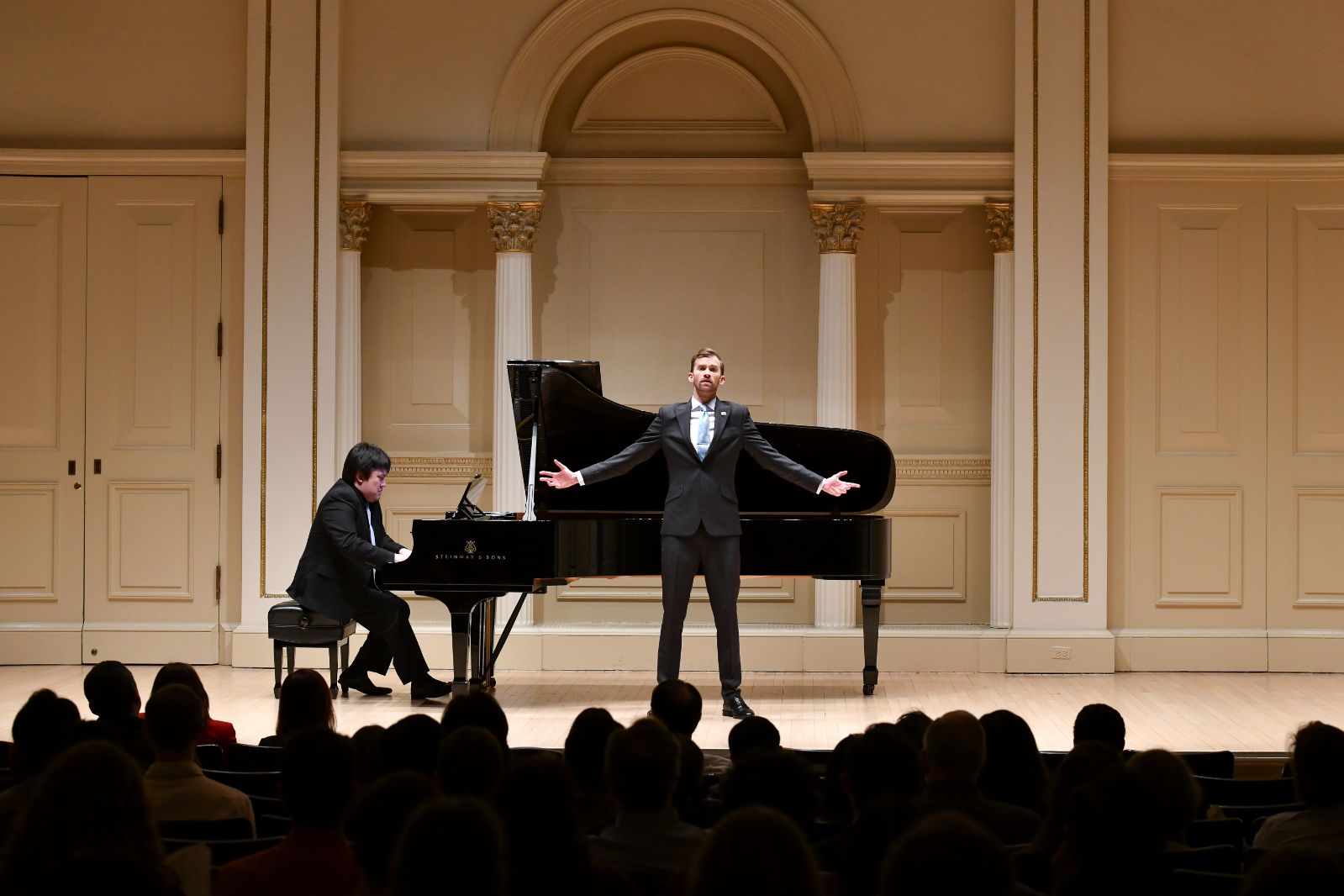
When the Biblical scholar and internationally known author and speaker Amy-Jill Levine agreed to answer a few of my questions about her book Witness at the Cross: A Beginner’s Guide to Holy Friday, I knew it would be of interest. But when AJ linked to the post on her Facebook page it reached a whole new audience, easily coming in as the leader in reader views for the month. The transformational power of stories is our fascinating conversation, where AJ describes—with her characteristic insight and wit—how a young Jewish girl came to be a New Testament scholar, why some stories are too grand for a single version, and the important perspective her “insider students” at the Riverbend Maximum Security Institution bring to her work.


OTHER READER FAVORITES

Three other posts attracted a lot of eyeballs. If you haven’t seen them, I hope you’ll find something that tickles your fancy.

  • When I suggested in A kind of alchemy that communal singing would be another small step in healing the chasms in our civic life, it hit a chord (pun intended) with readers.
  • My birthday post—A lifetime of letting go—was also popular. This year I’ve been noticing the value of slowing down in order to see the wonder around us. To help me with that change, I’ve turned to sources I haven’t always appreciated, such as Malcolm Guite’s poetry anthology The Word in the Wilderness.
  • Music for Holy Week—2024 features some of my favorite choral groups making beautiful music for this special week on the Christian calendar.

OTHER TREASURES FROM THE BOOKSHELF

In addition to the works by Levine and Guite, I encountered several other gems this month.

  • Onions, celery, and bell peppers is a celebration of the State of Louisiana as seen through the photographs of Carol Highsmith. Carol answered my questions and shared some photographs in another of my author Q&As.
  • In his engaging memoir Never Forget Our People Were Always Free: A Parable of Healing, Ben Jealous uses a series of stories, as I discuss in Faith to hand our children a better, stronger nation, to make the point that the country must truthfully and fully address our tensions.
  • Benjamin Labatut’s When We Cease to Understand the World—a haunting nonfiction novel about the complicated links between scientific discovery and destruction—is reviewed in When the lines are never clear.
  • Oligarchy in America isn’t just about the spoils; it’s about what everyone else loses in the process as I note in Predatory Plutocrats, focusing on a special issue of Mother Jones magazine.
  • Looking for solutions considers the ongoing fascination with murder mysteries, such as Agatha Christie’s first novel, The Mysterious Affair at Styles.
  • Our stories tell what we choose to believe provides the context for the decision to permanently remove windows that honored Confederate generals from the Washington National Cathedral and replace them with two new windows by acclaimed American artist Kerry James Marshall and an accompanying poem by Elizabeth Alexander.

MUSICAL GEMS

Singing—as seen in the reader choices—was the MTC musical theme of the month. Here are two more musical highlights.


SEEING WITH NEW EYES

New perspectives bring a wider and more generous vision.


SOME OLD FRIENDS

While on my writing retreat, I posted a few old chestnuts. You’ll find:


CONCLUSION

Thanks, as always, for reading. Your support and feedback mean more than I can ever express.

As you travel life’s highways be open to love, thirst for wonder, undertake some mindful walking every day, recognize the incredible privilege that most of us have, and think about how to put that privilege to use for good. Women, people of color, LGBTQ+ individuals, immigrants, and others can feel especially vulnerable . . . because they are. Work hard for justice and democracy as the fight never ends.

Bash into some joy along the way.

And finally, try to be nice. Always be kind.

More to come . . .

DJB


For the January 2024 summary, click here.

You can follow MORE TO COME by going to the small “Follow” box that is on the right-hand column of the site (on the desktop version) or at the bottom right on your mobile device. It is great to hear from readers, and if you like them feel free to share these posts on your own social media platforms.


Photo by Umut YILMAN on Unsplash

Our stories tell what we choose to believe

Elizabeth Alexander was raised among monuments. Growing up in Washington, D.C., she was surrounded by them. 

When she was a toddler, her parents took her to the March on Washington in 1963, where hundreds of thousands of protesters brought ebullient life to the steps of the temple-like Lincoln Memorial. When she was a girl, someone told her that the obelisk-shaped Washington Monument was actually “God’s pencil.” As a student, she took field trips to the various memorials whose designs were inspired by Classical architecture. Of these structures, she says she grew to understand “something about their scale and awe.”

She also came to realize everything monuments could distort and elide. . . In the capital, where the breadth of the nation’s history is presumably honored, in a city that in the early 1970s was largely populated by Black people, any depiction of them was exceedingly rare. 

Los Angeles Times, March 14, 2024

Yes, the Emancipation Memorial in D.C.’s Lincoln Park, unveiled in 1876, showed a slave kneeling at the foot of Abraham Lincoln. But that memorial has been rightly criticized for whitewashing the role of Black activists such as Frederick Douglass in ending slavery and for showing emancipated slaves as “kneeling supplicants to a great white savior.” It wasn’t until 1974 that the situation was addressed. That year the “National Council of Negro Women installed a sculpture in honor of educator and civil rights leader Mary McLeod Bethune across the plaza from Lincoln (which was rotated to face her). It was the first monument to honor an African American and a woman on public land in D.C.”

As head of the Mellon Foundation since 2018, Alexander has taken a leading role in helping the country rethink its monuments. The foundation has committed $500 million to study, preserve and recontextualize monuments—as well as remove them when their communities no longer deem them appropriate. 

The foundation website notes that monuments are just as much about the present and future as they are about the past.

Monuments and memorials—the statues, plaques, markers, and place names that commemorate people and events—are how a country tells and teaches its story. What story does the commemorative landscape of the United States tell? Who are we instructed to honor and uplift, and who do we not see in these potent symbols? Does the civic landscape show an accurate picture of our nation, or propagate a woefully incomplete story? 

Alexander says “monuments are a critical part of the civic landscape. For one, they are public—their forms and their messages absorbed by anyone who happens across them. ‘You’re saying this is a focal point,’ she says. ‘This is where we meditate, where we worship, where we are.'” And as a 2021 national audit showed, our monuments do not reflect our diversity as a country nor the diversity of our history.

Monuments to war outnumber those to other causes. Celebrations of white men outnumber everyone else. Confederate leaders Robert E. Lee, Stonewall Jackson and Nathan Bedford Forrest are on that list, as is Junípero Serra, the controversial Franciscan friar who established the mission system in California.

Mermaid statue in San Angelo, TX (photo by Courtney Rose on Unsplash)

Monument Lab’s researchers found that there were more recorded monuments to mermaids (22) than to U.S. congresswomen (2). “The story of the United States as told by our current monuments misrepresents our history,” concluded the report.

Los Angeles Times

Alexander, was a finalist for the Pulitzer Prize in poetry in 2006 for her collection American Sublime, where monuments “materialized in her verses.” And her work on monuments—both as a poet and a major philanthropic leader—has come together in the removal and replacement of the Lee-Jackson windows at the Washington National Cathedral.

Monuments have long been on my mind both professionally and personally, especially monuments around the “Lost Cause” of the Confederacy. As I wrote in 2020, the history portrayed by those monuments of the Southern restoration period tell a false story. The erased history isn’t what is happening today with the removal of the monuments; instead, the erased history is what happened more than 150 years ago, beginning shortly after Robert E. Lee’s surrender at Appomattox.

The whole Lost Cause narrative was to change the story from the South’s defense of slavery—of owning other human beings and treating them as property—to one that puts forward the Southern cause as noble, in defense of states rights, and with leadership that stood as exemplars of old-fashioned chivalry. Defenders of keeping the Confederate monuments today often add that they are about “heritage, not hate.”

But that easy slogan is just not true. 

Now and Forever: Windows by Kerry James Marshall at Washington National Cathedral with Original Poem by Elizabeth Alexander (2023) by Washington National Cathedral tells the story of the decision in 2017 to permanently remove windows that honored Confederate Generals Robert E. Lee and Thomas “Stonewall” Jackson and replace them with two new windows at the nation’s best-known house of worship. This short and informative guide to the process includes essays from the cathedral leadership and the artists, histories of how the old windows came to be gifted in 1953, helpful guides to the artists and fabrication process, and more. Richly illustrated and easily accessible, it helps the reader—and ultimately those who view the new windows by acclaimed American artist Kerry James Marshall and accompanying poem by Elizabeth Alexander—put those works in context.

Cathedral Dean Randy Hollerith and artist Kerry James Marshall in the workshop

In a short but moving forward, Harvard historian Henry Louis Gates, Jr. writes, “Stained glass windows have been a feature of churches since the Middle Ages. But this was a different kind of stain, and it would take another 70 years to cleanse it. We celebrate that cleansing and renewal with this publication.”

Dean Hollerith noted that the Cathedral has worked “to model what it means to be repairers of the breach, both in our own lives and in our life as a nation.” One way forward is to fully understand the power of monuments. Our monuments tell stories. Our stories tell what we believe.

More to come . . .

DJB


UPDATE: In the comments, my friend Sandy Kolb tells a wonderful story about the building of the All American Indian Days memorial in Sheridan, Wyoming. It is a terrific piece of family, community, and regional history and I’m so glad she shared it. Here’s a photo pulled from a local website that shows the memorial and here’s a post with more background and photographs. Many thanks to Sandy! DJB


Photos of Now and Forever windows from Washington National Cathedral.

Looking for solutions

Regular readers know that I began binging on murder mysteries at an advanced age. Age 67, to be exact. After Andrew was gifted a box of Agatha Christie novels one Thanksgiving by our friend Oakley Pearson, I dove in and decided to read at least one murder mystery a month, my self-proclaimed year of reading dangerously.

It seemed appropriate, given the national discussions of 2023.

While I haven’t committed to keeping that same pace in 2024, I have already returned twice to see what else these clever writers have up their sleeves. There’s an inexplicable draw to murder mysteries that some may find difficult to comprehend.

A recent column by Amanda Taub in the New York Times described the appeal perfectly. She, like me, had turned to whodunit fiction—in her case as “a respite from the accumulated exhaustion of a long year, and the more recent stresses of writing about the horrors of the war in Israel and Gaza.” 

But why, if that was my purpose, would I find solace in such an inherently violent genre?

I now realize that what I really craved, and found in abundance in these novels, was solutions. The heart of this genre is not the murders that precipitate the plot, but the process by which they are solved—and, above all, the promise that they will be.

And what makes mysteries comforting even when the events they depict are horrifying?

Unlike the horrors of the real world, or even less formulaic forms of crime fiction like thrillers, the mystery genre promises readers an ending in which their questions are answered and some form of justice is done.

So here I was again, back at the source.

The Mysterious Affair at Styles (1920) by Agatha Christie was her first novel, the result of a dare from her sister Madge who challenged her to write a story. As the Christie website notes, the story begins when Arthur Hastings is sent back to England from the First World War due to injury. He “is invited to spend his sick leave at the beautiful Styles Court by his old friend John Cavendish.”

Here, Hastings meets John’s stepmother, Mrs. Inglethorp, and her new husband, Alfred. “Despite the tranquil surroundings Hastings begins to realize that all is not right. When Mrs. Inglethorp is found poisoned, suspicion falls on the family, and another old friend, Hercule Poirot, is invited to investigate.”

The book has some of the hallmarks of a first novel. There are, for instance, some overwritten passages and it certainly wasn’t my favorite among those I’ve read to date. Hastings can be an annoying narrator at times, so much so that Christie decides to marry him off in a later book and send him halfway around the world. That’s a good choice from my perspective.

Yet the book picks up steam as one moves into the murder itself and then the inquest. Finally, Poirot discovers the missing link when some small detail comes to mind, and he quickly sees that the crime is solved to everyone’s satisfaction. (Well, not to the murderer.)

At the end of the day, The Mysterious Affair at Styles provides a solution, which Poirot is all too ready to explain to Hastings in the final chapter of this period piece by a master of the genre. Like all of Christie’s books, it is a gift that keeps on giving.

More to come . . .

DJB

Image by Arek Socha from Pixabay.

Music for Holy Week – 2024

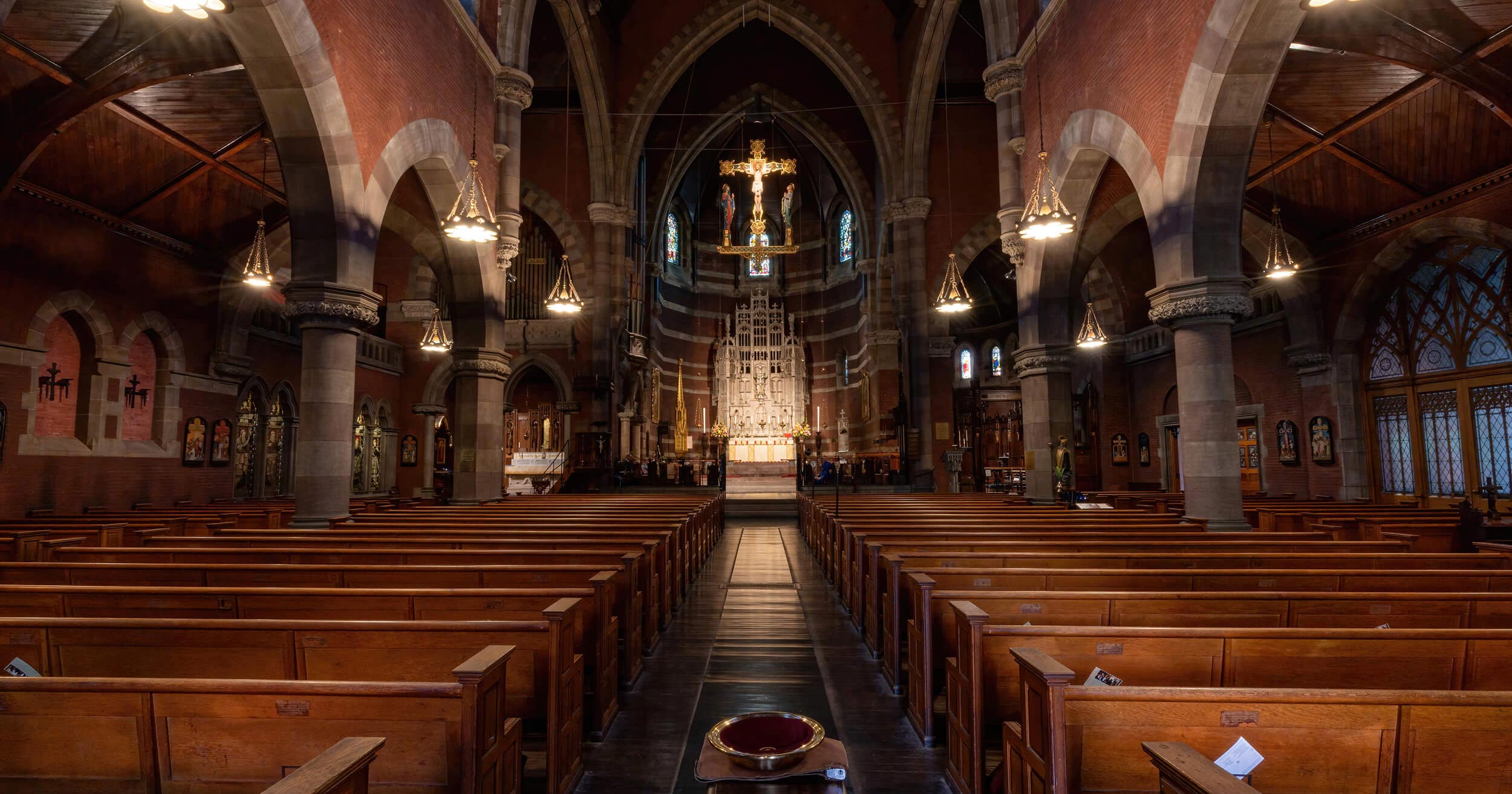
During Holy Week 2023 I reposted a selection of music that had been curated during the pandemic by our son, Andrew Bearden Brown. Together we featured some of the world’s best vocal ensembles. Church of the Advent in Boston, where Andrew is currently a member of the professional choir, has an outstanding music program, so for 2024 their programming is a good place from which to highlight a piece of music for each of the major days of the week.

I’ll include a listing of the entire program of musical selections for each particular service and then highlight one piece from those selections. The videos showcase some of my favorite vocal groups from around the world.

Church of the Advent, Boston

24 March – The Sunday of the Passion (“Palm Sunday”)

To remember the day of Jesus’ entrance in Jerusalem that begins Holy Week, the musical selections for the 11 a.m. service at Advent are:

Josquin Desprez: Missa “Pange lingua”
Frei Manuel Cardoso: Turbæ quæ præcedebant
Antonio Lotti: Crucifixus à 8
Paul Nicholson: Velum templi scissum est

The chosen selection is Antonio Lotti’s Crucifixus à 8 by Ensemble Altera (where Andrew is also a member).

I have also added a video of Ah, holy Jesus, sung by the congregation to a diminishing accompaniment, at the end of the Church of the Advent’s 2019 Palm Sunday liturgy.


27 March – Tenebræ

Tenebræ is a religious service of Western Christianity held in the evening during Holy Week. One of its most notable visible characteristics is the gradual extinguishing of candles. For this Wednesday service at Advent, the choir will sing:

Gregorian chant
Tomás Luis de Victoria: Versa est in luctum
Paul Nicholson: Velum templi scissum est
Tomás Luis de Victoria: O Domine, Jesu Christe

The featured video is of The Tallis Scholars singing Victoria’s Versa est in luctum.


28 March – Maundy Thursday

The Last Supper
Leonardo da Vinci’s painting “The Last Supper” in Milan, Italy (by DJB)

The fifth day of Holy Week commemorates the Washing of the Feet and Last Supper of Jesus with the Apostles, as described in the canonical gospels. “Maundy” comes from the Latin word mandatum, or commandment, reflecting Jesus’ words “I give you a new commandment.”

The selections to be sung by the choir at Church of the Advent are:

Josquin Desprez: Missa “Pange lingua”
Giovanni Pierluigi da Palestrina: Fratres ego enim accepi
Healey Willan: Ave verum corpus
Thomas Tallis: O salutaris hostia

Once again, I’ll call on The Tallis Scholars for their performance of O salutaris hostia.


29 March – Good Friday

Tomás Luis de Victoria: Reproaches
Giovanni Maria Nanino: Adoramus te, Christe
Thomas Wingham: Vexilla regis prodeunt

The Reproaches have been “sung for many centuries during the Adoration of the Cross at the Celebration of the Lord’s Passion on Good Friday. The structure of the text, alternating between refrains sung by the choir and couplets sung by one or more cantors, allows the length of the music to be adjusted easily to fit the ceremonial.”

A video from nine years ago features the choir at Church of the Advent singing these beautiful Reproaches.


30 March – The Great Vigil of Easter and 31 March – Easter Day

Giovanni Pierluigi da Palestrina: Missa “Papæ Marcelli”
Giovanni Pierluigi da Palestrina: Angelus Domini descendit
Giovanni Pierluigi da Palestrina: Et introeuntes in monumentum
Francisco Guerrero: Sicut cervus desiderat
(for Vigil)

arr Andrew Reid: Victimæ paschali laudes (for Easter Day)

I had difficulty finding a good video of these selections, but VOCES8 has a beautiful performance of the Sicut cervus desiderat by Palestrina that I have chosen to share with MTC readers.

As the hart panteth after the water brooks | so panteth my soul after thee, O God.


Whatever your religious tradition or beliefs, Andrew and I hope you can enjoy the beautiful choral music of Holy Week.

More to come…

DJB

Photo of water lily by Couleur on Pixabay.