Mysteries are a special kind of journey. One picks them up knowing that something bad—probably fatal—will happen to one or more of the characters. Yet most readers don’t tune in for those details. Instead, we read them to indulge in—and then when in the hands of a master, admire—the circuitous journey to get to the answer.
The satisfaction in reading murder mysteries comes from a well-crafted journey and, perhaps most of all, the solutions. Having a believable answer is more important than the type of murder or who solves it. A column by Amanda Taub in the New York Times, which I referenced recently here and here, described the appeal perfectly. “The heart of this genre is not the murders that precipitate the plot,” wrote Taub, “but the process by which they are solved—and, above all, the promise that they will be.”
No one was better at delivering on this promise than Agatha Christie, even when she reportedly hated getting there.
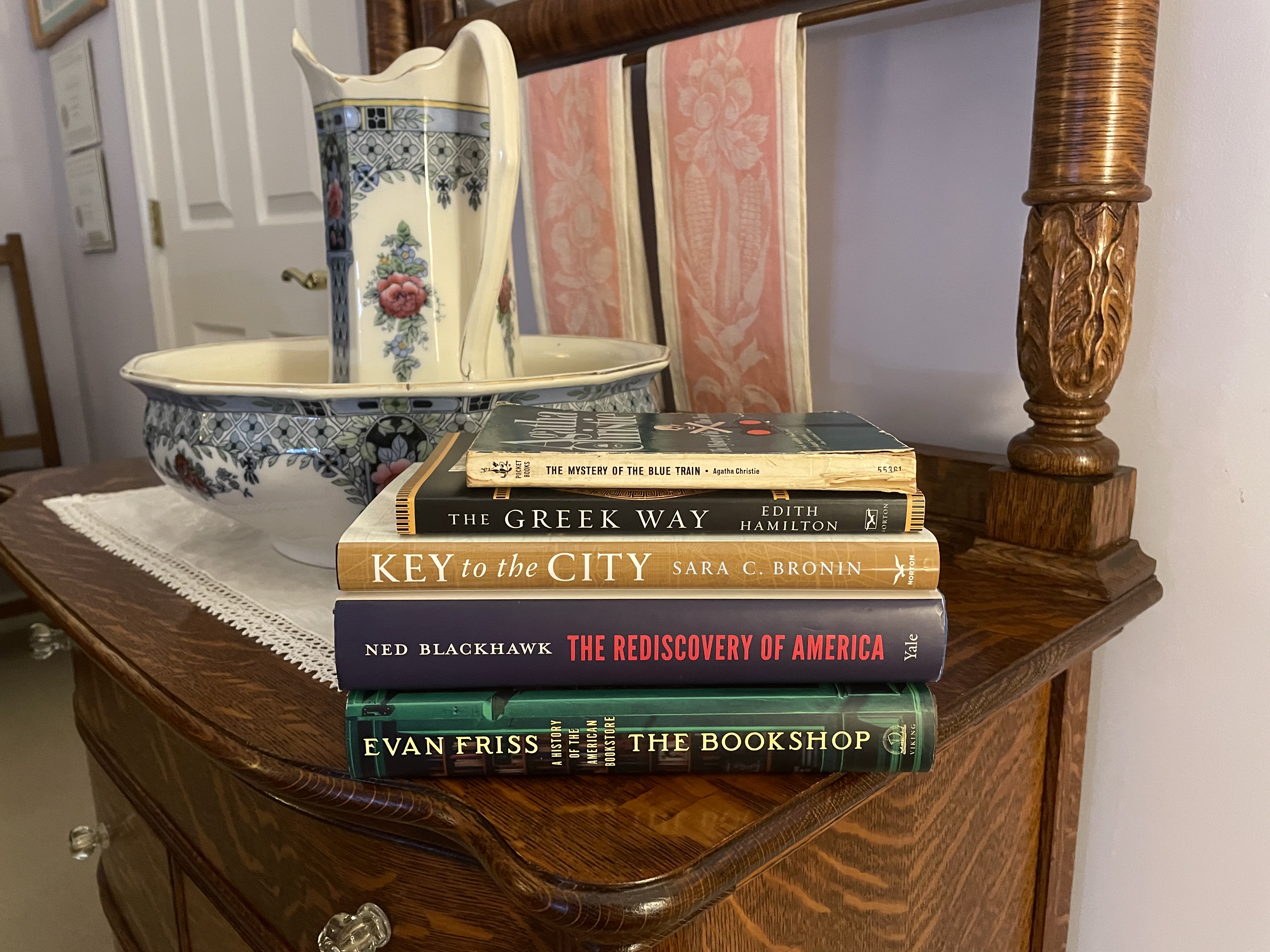
The Mystery of the Blue Train (1928) by Agatha Christie finds famed detective Hercule Poirot, now semi-retired, on the luxurious Blue Train running from London to the Riviera. Another passenger, the pampered millionaire’s daughter Ruth Kettering, is murdered en route and her expensive jewels are missing. Kettering is one half of an unhappy couple, each having an affair and each on the train, although they are unaware of that fact upon departure. A cast of eccentric characters are also along for the ride including an international jewel thief; a scoundrel who is attractive to women; a venerable dealer in unique antiques; Ruth’s father, a hard-wired American businessman; his resourceful male secretary; Ruth’s maid who has only taken up the job two months before the fateful train ride; an exotic dancer; and a thoughtful and grey-eyed woman who has a new fortune, thanks to the generosity of the elderly spinster she has faithfully served over the years.
The story was derived from the 1923 Poirot short story The Plymouth Express. Christie suggested that the novel did not come easily to her, but the readers and critics of the time loved it. While perhaps not among her best, The Mystery of the Blue Train was not a disappointment in Christie’s original written form. What I did object to is the complete reworking of the story for the television adaptation in 2006 with David Suchet as Poirot. After finishing the book, I sat down and watched the two-hour version, reset in the late 1930s to match the rest of the Poirot TV series. The adaption by Guy Andrews lost much of the nuance and subtlety of Christie’s original, dropped storylines that were important elements from the book, and added a much too dramatic ending. Katherine Grey, the grey-eyed companion and clearly a favorite of Poirot in Christie’s telling, is rewritten into a cardboard figure for the television series, which also features a large and overbearing Elliott Gould as Rufus Van Aldin, the American millionaire and Ruth’s father.
Crafting a journey that one wants to follow takes time and talent. As Poirot says to Katherine Grey and her cousin’s daughter, Lenox Tamplin, late in the novel, things take their course and cannot be hurried. The journey and a believable solution require time and craft. While perhaps not in the top tier of Christie novels, The Mystery of the Blue Train is nonetheless worth the ride.
A twelfth-century Judaic scholar once wrote, “Make books your treasure and bookshelves your gardens of delight.”
September 22-28—Banned Books Week—is a good time to remember that advice. Deborah Caldwell-Stone, director of the American Library Association’s Office for Intellectual Freedom, notes that “This is a dangerous time for readers and the public servants who provide access to reading materials. Readers, particularly students, are losing access to critical information, and librarians and teachers are under attack for doing their jobs.”
Censorship is on the rise across the United States. A decade ago, 183 unique titles were challenged over the course of the year, while last year that number skyrocketed to 4,240. This increase began with the radicalization of today’s Republican party and the growth of far-right pressure groups such as the discredited Moms for Liberty, the organization birthed by MAGA political operatives, bankrolled by far-right funders, and designed to coerce American families into the war on freedom and equality.
Book banners target a wide range of titles and subjects
“Groups and individuals demanding the censorship of multiple titles, often dozens or hundreds at a time, drove this surge in 2023. Attempts to censor more than 100 titles occurred in 17 states: Colorado, Connecticut, Florida, Idaho, Illinois, Iowa, Kentucky, Maryland, Missouri, North Carolina, Ohio, Pennsylvania, Tennessee, Texas, Utah, Virginia, and Wisconsin.”
Universities and bookshops are also targets of book bans. In the case of universities, historian of authoritarianism Ruth Ben-Ghiat recently described how authoritarians target these institutions. Florida Governor Ron DeSantis’s quest to restructure higher education in line with his far-right views is only one of the most egregious examples.
“The sad sight of all those books discarded by far-right New College employees in a dumpster for being politically “unacceptable” will stay with me a long time, not least because it is similar to what happened to books from public and private libraries during the right-wing Chilean military dictatorship, the Chinese Communist “Cultural Revolution,” and many other regimes.
As the Tampa Bay Times reported, 13,000 books were thrown into a dumpster as though they were trash or toxic waste.”
After images of the dumpster circulated, causing a public outcry, New College went into damage control mode.
“They made a preliminary decision to fire the dean of the college library for not following proper procedures, including justifications for each book selected for elimination. But the New College was just fine with having hundreds of other booksdiscarded as part of a purge of the Gender and Diversity Center!
As the GOP transforms into an autocratic entity allied with foreign far-right parties and governments, it’s worth understanding how authoritarians target institutions of higher learning. “They don’t only shut down intellectual freedom and change the content of learning to reinforce their ideological agendas, but also seek to remake higher education institutions into places that reward intolerance, conformism, and other values and behaviors authoritarians require.”
Bookshops—which are places where you could walk in off the street “and read yourself into an international consciousness”—also have a long history of fighting book bans.
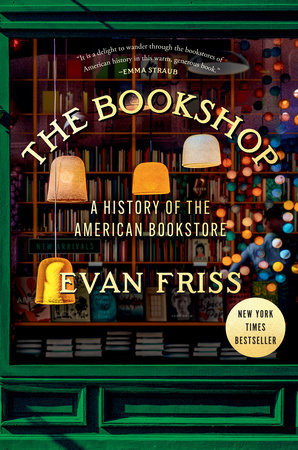
The Bookshop: A History of the American Bookstore (2024) by Evan Friss is an eye-opening and charming tour of bookshops through the years and across the country—places often owned by individuals who believe in the profound power of literature, creativity, and the freedom of expression. Benjamin Franklin was there at the founding of the country’s love affair with bookshops. Thomas Paine’s Common Sense *—encouraged by Franklin and the first best-seller in America—kickstarted the revolution as well as the growth of bookshops across the colonies. Friss moves on to highlight a variety of shops and booksellers, taking us all the way to Ann Patchett’s Parnassus bookshop in Nashville, the face of today’s renaissance of independent bookstores. This is a deeply researched yet highly personal consideration of the enduring power of places devoted to the buying and selling of books.
Banned books are often a major part of the story.
Banning “Hop on Pop” shows the absurdity of the book banning movement. “Hop on Pop!” Seriously!
The reader visits The Gotham Book Mart and The Strand in New York City, precursors to the mega bookstore. The Aryan Book Store in Los Angeles—also headquarters for the American Nazi Party until it was shut down following Pearl Harbor—is a reminder that radical bookstores selling misinformation and hate have a history before Amazon. The rise of LGBTQ+ literature promoted by Craig Rodwell at his Oscar Wilde Memorial Bookshop is part of the story of the American bookshop, as is the rise of African American literature (sold at shops such as the Drum & Spear in D.C. and Oakland’s Marcus Books) and feminist works (as at the original Amazon bookstore—not the online behemoth—in Minneapolis). Barnes & Noble and the online Amazon (which couldn’t make it as a brick-and-mortar bookstore) are also considered by Friss, but his emphasis is clearly on the independent bookstore, often run by an owner who loves books more than making money. Throughout this delightful work, Friss introduces us to many individuals who select, buy, sell, print, read, and discuss books at the bookshops we love.
In the end, Friss notes that because they push us to think beyond ourselves, “bookshops can shape the world around them. They already have.”
Support your favorite independent bookstore, even if you do feel as if you are captured in a difficult escape room! People’s Book in Takoma Park is one of my two go-to independent bookstores in DC (the other is the venerable Politics & Prose).
America’s problem is not that we’re reading too many books. Free people read freely! And as Minnesota Governor and Democratic VP candidate Tim Walz phrases it:
“I’m surrounded by states who are spending their time figuring out how to ban Charlotte’s Web in their schools while we’re banishing hunger from ours with free breakfast and lunch.
We’re not banning books; we’re banishing hunger. It’s that simple.”
The snazzy reminder from People for the American Way is worth seeing twice, alongside my bookshelf that definitely was not created by a designer buying “books by the foot” to provide me with an attractive video background (“shelfies”)—another bit of information from The Bookshop.
Read!
More to come . . .
DJB
*Critic Lewis H. Lapham looks at Paine and meets a man
“’writing in what he knew to be the undisguised language of the historical truth.’ To read Tom Paine is to encounter the high-minded philosophy of the eighteenth-century Enlightenment rendered in words simple enough to be readily understood.”
For other MTC essays on libraries, bookstores, and banned books, see:
Tom Paxton is a much beloved singer-songwriter who helped bridge the transition from traditional folk music to “the more modern conception of the field, with its inclusion of performing songwriters.” With a professional career that began in 1962, the still-active Paxton has written hundreds of songs and released more than 60 albums. Some of his classic tunes include Last Thing On My Mind (sung below with IMT regular Robin Bullock), Bottle Of Wine, I Can’t Help But Wonder (Where I’m Bound), and Ramblin’ Boy. He is a voice of a generation.
“In describing Tom Paxton’s influence on his fellow musicians, Pete Seeger has said: ‘Tom’s songs have a way of sneaking up on you. You find yourself humming them, whistling them, and singing a verse to a friend. Like the songs of Woody Guthrie, they’re becoming part of America.'”
Other musicians heard and recorded Paxton’s songs. The late Doc Watson is one example and the two musicians had a long friendship. Paxton tells the story of hearing Doc for the first time at a small Italian neighborhood coffee house in New York City in 1961 or 62.
“Those who hear Doc Watson for the first time find it difficult to describe their amazement. No one we knew of could play so fast and so cleanly. You could hear the space between the notes, no matter how amazingly fast they came. He had this wonderful untrained baritone that carried the lyrics unfailingly. He was jaw-dropping great.”
Later, Watson would sit backstage at The Gaslight and operate a reel-to-reel tape recorder, listening to the other musicians sing. Paxton surmises that this is how Doc came to know and record several of his songs. Leaving London is a Paxton tune that Watson recorded for his Portraits album. It includes a solo by Jerry Douglas that another guitar great, Billy Strings, describes as his favorite dobro solo ever. Paxton’s tune has now become a staple of Billy’s live shows as well.
Michael Berick writing in The Bluegrass Situation had a terrific article earlier this month on the newest Paxton project: Bluegrass Sings Paxton. As Berick notes, “Paxton has earned Lifetime Achievement Awards from the GRAMMYs, ASCAP, and the BBC.” His tunes have been covered “by a wide spectrum of acts, ranging from Harry Belafonte and Neil Diamond to the Pogues and Norah Jones,” and several fellow singer-songwriters have devoted entire albums to Paxton music. But “it took a group of admiring bluegrass musicians to deliver the first multi-artist tribute album of his songs.”
“The genesis for Bluegrass Sings Paxton started with a conversation that GRAMMY-winning musician/producer [and DC-area resident] Cathy Fink had some years ago with Paxton, who she has worked with since the early 1980s and has known even longer. ‘I know Tom’s catalog really well and have often thought there was great material there for bluegrass,’ she shared with BGS. ‘I could hear this album before we even began.’”
The album opens with Della Mae and their version of I Can’t Help But Wonder (Where I’m Bound) which has long been a part of their live show. Paxton joins in to sing with the band.
On some of the tunes Paxton is the co-writer. On You Took Me In his collaborator was Tim O’Brien. In a short interview, Paxton talks about this gospel song that has “everything but the gospel in it.”
Traditional and bluegrass music pioneer Alice Gerrard brings her haunting and distinctive voice to the project on Paxton’s The Things I Notice Now.
Several of the leading ladies of bluegrass are included in this project. Besides newer acts like Della Mae and Sister Sadie, older musicians—including Gerrard, Laurie Lewis (Central Square) and the great Claire Lynch (I Give You the Morning)—have tunes on the album.
A much younger DJB with Claire Lynch
It is worth noting that there was a de facto “house band” that played on the majority of Bluegrass Sings Paxton’s tracks.
“This team of bluegrass all-stars includes IBMA award-winners banjo player Kristin Scott Benson (the Grascals), fiddler Deanie Richardson (Sister Sadie), and Chris Jones on guitar, along with mandolinist Darren Nicholson (formerly of Balsam Range), bassist Nelson Williams (Chris Jones & the Night Drivers, New Dangerfield) and harmony singers Travis Book (The Infamous Stringdusters) and Wendy Hickman.”
Cathy Fink, along with Mountain Home executive Jon Weisberger, co-produced the album. Fink and her long-time partner, Marcy Marxer also added a tune, All I Want, for the project.
Judy Collins once said of Paxton,
“Tom Paxton’s songs are so powerful and lyrical, written from the heart and the conscience, and they reach their mark, our most inner being. He writes stirring songs of social protest and gentle songs of love, each woven together with his personal gift for language. His melodies haunt, his lyrics reverberate. I have sung Tom’s songs for three decades and will go on doing so in the new century, for they are beautiful and timeless, and meant for every age.”
Vice President Harris spoke to the National Association of Black Journalists earlier this week. You’ll recall that when former president Trump spoke to the NABJ at the end of July it was a dumpster fire. He made his famous “Kamala only recently became black” remark, and the interview was such a train wreck that his own people pulled the plug and hustled him off stage after only half an hour.
The Vice President, on the other hand, was sane. She didn’t say crazy stuff. She answered questions on a range of issues like a responsible adult and world leader. The political press was upset because she didn’t go off the rails. But I think America is ready for a leader who is dynamic and steady, visionary and empathetic, serious and joyful. It may be the reason her polling continues to improve week after week.
The NABJ panel had one final question at the end of the interview:
“Before we conclude, Madam Vice President, ‘joyful warrior’ has been used to describe your campaign, and your opponent and Republicans have at times weaponized your laughing in campaign ads, for example. Why is joy important to you to insert into this election, and what do you make of Republicans using that as way to suggest that you’re not a serious candidate?”
Her answer is—to my mind—pitch perfect and one reason that millions of Americans are ready to turn the page.
(Vice President Harris): “I’ll say to whoever the young people are who are watching this: there are sometimes when your adversaries will try to turn your strength into a weakness. Don’t you let them. Don’t you let them. I find joy in the American people. I find joy in optimism—in what I see to be our future, and our ability to invest in it. I find joy in the ambition of the people. I find joy in the dreams of the people. I find joy in building community. I find joy in building coalitions. I find joy in believing that the true measure of the strength of a leader is not who you beat down, but who you lift up. and we should all find joy and have a sense of optimism about who we are as Americans and what we mean to each other, and what we can do to lift each other up.”
What an amazing answer. She begins with advice to young people, noting your adversaries will try to turn your strength into a weakness. Don’t you let them. Then she mentions the things about America that give her joy: optimism, ambition, dreams, community, coalitions.
And Tim Walz is doing a fantastic job at being joyful as well. Watch his reaction to seeing a supporter wearing earrings with his face on them, during his visit to the H&H Soul Food Restaurant in Macon, Georgia. Priceless!
Both videos take less than two full minutes to watch, but they will bring a smile to your face.
Let’s find joy. Let’s be the joy in America. Let’s get out and vote.
The image, which Miles Curland created in response to the Shepard Fairey one, is available under Creative Common license. DNC photo from Letters From An American.
The political reporters and editorial board of the New York Times have been widely criticized in recent years. But the news and investigative divisions of the Times continue to publish incredibly important articles, uncovering blockbuster story after blockbuster story that demonstrates how seriously off-course the pro-Trump editorial and political reporting slant remains.
Last Sunday, New York Times investigative and Supreme Court reporters Jodi Kantorand Adam Liptak released a major story entitled How Roberts Shaped Trump’s Supreme Court Winning Streak. It is devastating in showcasing how Chief Justice Roberts and the conservative supermajority have unilaterally blown up the legitimacy of the Court.
“In a momentous trio of Jan. 6-related cases last term, the court found itself more entangled in presidential politics than at any time since the 2000 election, even as it was contending with its own controversies related to that day. The chief justice responded by deploying his authority to steer rulings that benefited Mr. Trump, according to a New York Times examination that uncovered extensive new information about the court’s decision making.
This account draws on details from the justices’ private memos, documentation of the proceedings and interviews with court insiders, both conservative and liberal, who spoke on the condition of anonymity because deliberations are supposed to be kept secret.”
All three cases were important and unprecedented in their scope, but the immunity case, which I discussed in July, was perhaps the most consequential. And it is here that we see Roberts not as the pillar of the establishment and defender of the constitution, a legacy he clearly strives to attain, but as a devious and distrustful political hack.
“During the February discussions of the immunity case, the most consequential of the three, some of the conservative justices wanted to schedule it for the next term. That would have deferred oral arguments until October and almost certainly pushed a decision until after the election. But Chief Justice Roberts provided crucial support for hearing the historic case earlier, siding with the liberals.
Then he froze them out. After he circulated his draft opinion in June, Justice Sonia Sotomayor, the senior liberal, signaled a willingness to agree on some points in hopes of moderating the opinion, according to those familiar with the proceedings. Though the chief justice often favors consensus, he did not take the opening. As the court split 6 to 3, conservatives versus liberals, Justice Sotomayor started work on a five-alarm dissent warning of danger to democracy.
In his writings on the immunity case, the chief justice seemed confident that his arguments would soar above politics, persuade the public, and stand the test of time . . .
But the public response to the decision, announced in July on the final day of the term, was nothing like what his lofty phrases seemed to anticipate.”
Roberts, the political hack, had misread the sentiment of the nation.
“Chief Justice Roberts’s language in the opinion seemed intended to stay above the fray, extending protections to ‘all occupants of the Oval Office, regardless of politics, policy or party.’ But in a withering dissent, Justice Sotomayor wrote that the majority opinion gave Mr. Trump ‘all the immunity he asked for and more.’ It also, she wrote, protected ‘treasonous acts,’ transformed the president into ‘a king above the law’ and ultimately caused her to ‘fear for our democracy.’
Read the entire article, which I’ve included with a gift link. Those on the inside who shared memos and background documents to ensure that this story reached a broader readership should be applauded. And this courageous reporting led me to return to a book I first read last year.
Supreme Inequality: The Supreme Court’s Fifty-Year Battle for a More Unjust America (2020) by Adam Cohen is a devastating and damning argument against today’s Supreme Court and the Republican party’s fifty-year plan to circumvent the Constitution, overturn the gains of the New Deal and Civil Rights eras, and cement inequality into American law and life. Cohen surveys Supreme Court rulings on a variety of topics from poverty, education, and campaign finance to labor, corporations, criminal justice, and democracy itself to expose how little the Court does to protect the rights of the poor and disadvantaged. In fact, since the Nixon era “the Court has, with striking regularity, sided with the rich and powerful against the poor and weak, in virtually every area of the law.”
Cohen shows how President Johnson and the liberal lions of the Court under Chief Justice Earl Warren made a number of tactical mistakes concerning retirement and appointments. That allowed a go-for-the jugular Richard Nixon to ruthlessly push a justice with lifetime tenure out the door and make four strongly conservative appointments to the high court. He was stopped only when forced to resign in disgrace. Similarly, Senate Majority Leader Mitch McConnell and the Republicans built the current 6-3 constellation as the result “of several questionable—to use a wonderfully euphemistic term—actions” so that the corrupt, twice impeached, twice indicted Donald Trump could make three appointments that have sealed the Court’s supermajority before he was voted out of office and his coup attempt failed.
Cohen carefully reviews the decisions that case-by-case have undermined America’s rule of law, handing control over to an extremist minority. Even conservatives like Reagan administration Solicitor General Charles Fried are appalled.
“[I]t has undermined or overturned precedents that embodied long-standing and difficult compromise settlements of sharply opposed interests and principals. These decisions are not the work of a conservative Court.”
Heather Cox Richardson reminds us that “just as in the 1850s, we are now, once again, facing a rebellion against our founding principle, as a few people seek to reshape America into a nation in which certain people are better than others.”
Brad added that “we haven’t crossed the finish line just yet because he still has a concept of a plan.”
Brilliant.
You can take heart that this is a post primarily drawn on the thoughts, words, and perspectives of others. In fact, the working title was “better minds than mine.” It is a long post, but these brilliant writers have a great deal that is worthy of our consideration.
What took you so long?
It took a real-time meltdown by Donald Trump on national television for the country’s political journalists to realize that the man is a “disgrace”—to quote many of our nation’s military leaders—and should never be allowed near the Oval Office again. I’ve said that our political reporters haven’t been able to rise to the moment. Better minds than mine are now driving this point home on a daily basis.
With the exception of some intransigent outlets (e.g., Fox News, the New York Times), most political observers used the debate to open their eyes ever so slightly—some for the first time—to the dangerous nature of the former president and his policies. In part they were forced to do so. As media critic Margaret Sullivan noted, a few smart commentators started using the word “sanewashing” just before the debate to describe the way journalists translate the rambling and nonsensical “word salad” that Donald Trump cooks up and turn it into something coherent.
“Like whitewashing a fence, sanewashing a speech covers a multitude of problems. The Urban Dictionary definition: Attempting to downplay a person or idea’s radicality to make it more palatable to the general public … a portmanteau of ‘sane plus ‘whitewashing.’”
Sanewashing is harder to do when the practice has been called out and especially when more than 67 million Americans are subjected to 90 minutes of Trump craziness in real time.
The moderators—David Muir from “World News Tonight” and ABC News anchor Linsey Davis—gave us some hope for the political media. A broad range of commentators have praised their no-nonsense approach. “They followed up when Trump wouldn’t answer a question. They fact-checked Trump’s nonsense multiple times, on everything from abortion to the 2020 election.”
A dangerous and unhinged lie long attached to immigrant groups
Moderators couldn’t help but offer a forceful and repeated fact check when he insisted the racist lie that “Haitians are eating dogs and cats” is real, a lie pushed by his own running mate (who just yesterday admitted to CNN that it is fabricated). Harris burst out laughing during the debate. It was “next-level unhinged” and has featured prominently in post-debate clips and coverage.
Not surprisingly, it isn’t new.
As Merrill Kaplan, the director of Ohio State University’s Center for Folklore Studies wrote in the Columbus Dispatch,
“The pet-eating rumor is just the latest iteration of a legend that has long attached to assorted immigrant groups in the US. In the 1890s, recent German immigrants were accused of using people’s pets for sausages, as a popular folk song of the day attests.
The core of this legend was updated in later decades to attach to other groups.
In the 1980s, Asian immigrants (Chinese, Vietnamese, Hmong) were accused of stealing and eating pets in Eau Claire, Wisconsin, documented by folklorist Roger Mitchell in the 1987 Midwestern Journal of Language and Folklore piece “The Will to Believe and Anti-Refugee Rumors” (freely available online through Hathi Trust here).”
As professor Kaplan notes, her students “frequently learn to their own surprise” that some knowledge of tradition may reveal that “today’s hateful rumor was once applied to one’s own immigrant ancestors.”
It is also very dangerous.
As Adam Serwer at The Atlanticnoted, because Trump and JD Vance have been unable to race bait Kamala Harris they’ve turned instead to demonizing a small, vulnerable community to stir up hatred and keep immigration in the news, even if someone gets hurt or killed. In fact, it is a type of permission structure for MAGA types to commit political violence. Historian Heather Cox Richardson provided both the immediate backstory to how this lie was developed and the historical context for how it is being used by Republicans to recapture the Senate. As both Serwer and Richardson’s work demonstrates, this is a highly cynical and despicable form of politics that deserves to be called out in the press and defeated at the polls.
Of course, the right-wing echo chamber screamed that Trump was “fact checked 4 times and Kamala Harris was never fact checked.” That may be because she wasn’t the one on stage saying crazy stuff. The former president could have been fact checked 30-50 more times, according to CNN. And it isn’t like Trump and his advisors didn’t know what was coming, as Rep. Jared Moskowitz notes.
“The three full years of stupid press coverage of Kamala Harris has finally come to an end.”
In a stinging critique backed up with facts and stories, O’Donnell—who has covered Kamala Harris for much longer than the major news outlets—showed that the public didn’t think the Vice President was up to the job because the Washington press corps spent three full years telling the American public that she wasn’t up to the job. And it wasn’t based on facts or her record. It was simply lazily reporting gossip and depending on misogyny and racism to do the dirty work.
Debates are funny things. They usually don’t have anything to do with how well someone will do the actual job of being president. But every now and then debates can be revealing.
O’Donnell discusses how both the Washington press corps and Donald Trump bought into a “pile of journalistic trash” and were not ready for the strength of the Vice President’s performance on September 10th. While Trump had already demonstrated that he didn’t know how to be president of the United States, O’Donnell argued that this debate showed that he didn’t know how to be a human being, beginning with that handshake. And Sarah Longwell, the publisher of the Bulwark, made the point on several shows that in this particular debate, voters used Trump as a stand-in for foreign strongmen to see how the Vice President would react to bullies and liars. Harris more than passed the test.
Historian Kevin Kruse—who makes a living looking into the past—had a similar take: the Vice President has been preparing for this her entire life.
“I’ve always been puzzled by the pundits who worried that Kamala Harris wouldn’t do well in a debate. Again, this is the senator who reduced Brett Kavanaugh to rubble.
Yes, her 2020 presidential campaign didn’t pan out, but that was largely because she was running in a very crowded lane of center-left candidates and had little opportunity to break out of the pack. Her debating skills had nothing to do with it. Her one bright moment in that race, in fact, was this memorable exchange with Joe Biden.
And of course, once Biden tapped her to be his running mate, she had a chance to show off her debate skills in the vice-presidential debate against Mike Pence. And once again, she came off very well.
So I had fairly high expectations for Harris in this year’s presidential debate. The line she repeats on the campaign trail — that she’s an experienced prosecutor, and she’s dealt with law breakers like Trump her whole life — isn’t just a good zinger; it’s an apt description of her experience and her style. She’s been preparing for this for decades.”
There were scores of exchanges in the debate that continue to live on in clips and press coverage. As the Vice President said so eloquently in pushing yet another button in the fragile Trump ego, 81 million Americans fired Donald Trump, and he is clearly having a hard time processing that fact. But for me, a reminder of her policy smarts, strength with bullies, great political instincts, and ability to tell the truth came through in her “Putin would eat you for lunch” moment.
Sabrina Haake, a lawyer who writes for the Chicago Tribune among other outlets, said that “to be fair, Trump was up against a master, intellectually outmatched from the jump.” Harris looked directly at Trump when making her charges.
“She landed her punches unflinchingly, sometimes laughingly, clearly unafraid of the man who would follow his mentor and execute rivals. Mike Johnson and other GOP toadies should take note of how it’s done.”
Marcy Wheeler has written perceptively that “for most of the campaign—indeed, for the last nine years—the press has convinced themselves that Donald Trump is the protagonist of the story of US politics. Last night, for at least two hours, Kamala Harris disabused them of that outdated notion.”
Kamala Harris is cutting off Trump’s political oxygen
Writing before the debate, David Lurie noted that not only is Kamala Harris playing mind games with Donald Trump, but she’s also refusing to take the bait from the press.
“It’s hardly a coincidence that over the past several weeks, the power of the press to impact the tenor and focus of the presidential campaign—and the power of Trump to do the same—has been suddenly thrown into question. By refusing to engage with Trump’s taunts or play by journalists’ rules, Harris has upended presumptions about politics that have dominated during most of the past decade. And that’s a good thing.”
Wheeler has been forceful in reminding readers that while we are in the 22nd month of Donald Trump’s campaign and as such it is 92% complete, Harris is just beginning the second half—the last 50%—of her run for the White House.
In the first half of her campaign, Vice President Kamala Harris pantsed Donald Trump in a debate, out-TVing a TV pro.
I’ve been tracking the weird timing of this race. Sunday begins the 22nd month that Trump has been running. Because his damn campaign has been going on forever, he’s been plodding through the 92% mark of his campaign for days, stuck in slow-motion.
Today marks the 54th day of Harris’ campaign, with 53 left. Thus begins the second half of her campaign.“
Wheeler makes the point that one reason Harris isn’t taking Trump’s bait or playing by the media’s rules is that she simply doesn’t have time to deal with that foolishness.
The accelerated timeline shrinks the time between the moment something — perhaps an endorsement from some disgusted Republican or seeing Harris’ stature in the debate — leads a voter to first consider the possibility of voting for her and the moment they have to decide. The endorsement by the Cheneys is about creating a permission structure for Republicans to do so — to help them believe they can be patriots even if voting for a Democrat. Swift’s endorsement makes it more likely younger women will make more effort that twenty-somethings normally do to turn out. With more time, the Vice President might convert more voters, might get more voters to decide to show up . . .
Donald Trump is making it clearer every day what a vote for him would mean. “But there are still far too many American voters who want the con he’s selling.”
What journalism isn’t
Why did it take Trump’s public meltdown and Harris’s mastery for the press to open its eyes to the obvious? Perhaps it is because they don’t practice journalism in this day of the attention economy.
Mark Jacob, the former metro editor of the Chicago Tribune, has an excellent reminder entitled What journalism isn’t. Here’s a brief sample, but I encourage you to read the full essay.
“Journalism isn’t the mere act of turning on the microphones and letting politicians talk.
Journalism isn’t inviting proven liars to come on your TV show and lie to your audience, and then thanking them for it. . . .
Journalism isn’t entertainment.
Journalism isn’t a game of access that’s won when you avoid asking hard questions and doing follow-ups. . . .
Journalism isn’t easy, but it’s damn important, and more people in the news industry need to start doing it before they wake up one day and realize that journalism has become illegal.”
Journalism also doesn’t depend on polls where there is a clear conflict of interest. Nate Silver, the celebrity statistician who gained notoriety for his FiveThirtyEight election models, is facing backlash over alleged skewing in his new model, which could be tied to his “gambling problem.” You see, Silver has been hired by billionaire fascist Peter Thiel at the crypto-based gambling company Polymarket. He is now pushing his model while promoting election betting opportunities. That’s not journalism and his polls should be dismissed for the conflict-of-interest they so clearly are.
Journalism depends on self-awareness and a willingness to course correct, something that the New York Times in particular finds difficult. Kevin Kruse noted that Times publisher A.G. Sulzberger authored a piece a few days before the debate in the pages of his competitor, the Washington Post *, chronicling the rising dangers to a free press in America.
[A]fter detailing the very real dangers posed by Trump, Sulzberger essentially argues that the press should still pretend everything is normal.“
Kruse shows that the Times has not been fair and balanced and has, despite Sulzberger’s protestations, “had a heavy thumb on the scale all along—it’s just that it’s been for Trump rather than against him.” As Heather Digby Parton wrote in Salon, Donald Trump’s incoherence makes the media’s double standard hard to hide. Special counsel Robert Hur made a gratuitous comment about Biden being an elderly man with a bad memory and “from that moment on almost every story about Joe Biden was framed in terms of his advanced age and the question of whether he was up to the job . . . No one in the media cut Joe Biden any slack for his performance.” But when it comes to Donald Trump, sanewashing has been the name of the game.
“Despite his regular protestations that he’s ‘like, really smart,’ he communicates at a 4th grade level (the lowest level of any of the past 15 presidents going back to Hoover) and uses the same handful of words and phrases over and over again to cover for the fact that he never really has any idea what he’s talking about.”
Jacob does see a bright side, as he notes that not all journalism outlets are lame. ProPublica comes in for special praise, but then he identifies 14 other bright spots in news and commentary. Just a handful of examples will do:
“Media Matters for America tracks right-wingers’ rhetoric in the most persuasive method possible—by documenting their own words.
It should embarrass U.S. publications to be routinely outdone on coverage of American politics by Guardian US, part of a British-based news organization. . . .
Political scientist Brian Klaas notes that the press didn’t really seem to learn all that much from their miscalculations about the debate, and he says it is because of a phenomenon—the most easily fixable in American politics—that he calls The Banality of Crazy.
“I highlight the banality of crazy, in which the American press—and by extension, the voting public—grows numb to the insane behavior and statements of Donald Trump simply because they have become repetitive and routine.”
The day after the debate on what was the anniversary of 9/11, Donald Trump attended a somber memorial in New York. But when Trump and J.D. Vance visited a fire station in lower Manhattan on that same day, “they were accompanied by Laura Loomer, a white nationalist conspiracy theorist.”
“. . . Loomer has previously spread the bogus lie that September 11th was ‘an inside job,’ an attack carried out with the cooperation of the United States government. Call me old fashioned, but shouldn’t it matter that the Republican nominee for president of the United States brought a deranged 9/11 “truther” to a 9/11 memorial event?
And yet, there are no blaring ALL CAPS headlines in America’s major newspapers that Donald Trump’s guest of honor to a 9/11 memorial is a white nationalist 9/11 truther and self-proclaimed bigot. A day later, The New York Times noted Loomer’s presence in two sentences . . . The headline was—I promise I’m not making this up: ‘After a bruising debate, Trump is warmly embraced in Lower Manhattan.’ That’s the framing that The New York Times went with for a visit in which he brought a 9/11 truther to a 9/11 remembrance day.”
Thanks to the persistence of reporters like MSNBC’s Chris Hayes, this story has started to have legs. Major media outlets are finally picking it up. But it still begs the question as to what took them so long.
As I said, better minds than mine see that our political journalists just can’t seem to rise to the moment. And as the Vice President said at rallies following the debate, we still have a lot of hard work ahead. “But hard work is good work.”
More to come . . .
DJB
*As many joked on social media, Sulzburger apparently had to run it in the Post because acknowledging the clear threat posed by Trump goes against the house rules at his own paper.)
Two famous musicians of different generations made news this week. They both happen to be cat owners.
Shortly after last Tuesday’s presidential debate ended, pop megastar Taylor Swift, the most popular musical artist on the planet, announced her endorsement of Kamala Harris and Tim Walz.
Posting to her 283 million followers on Instagram, Swift wrote:
“Like many of you, I watched the debate tonight. If you haven’t already, now is a great time to do your research on the issues at hand and the stances these candidates take on the topics that matter to you the most. As a voter, I make sure to watch and read everything I can about their proposed policies and plans for this country.
Recently I was made aware that AI of ‘me’ falsely endorsing Donald Trump’s presidential run was posted to his site. It really conjured up my fears around AI, and the dangers of spreading misinformation. It brought me to the conclusion that I need to be very transparent about my actual plans for this election as a voter. The simplest way to combat misinformation is with the truth.
I will be casting my vote for Kamala Harris and Tim Walz in the 2024 Presidential Election. I’m voting for @kamalaharris because she fights for the rights and causes I believe need a warrior to champion them. I think she is a steady-handed, gifted leader and I believe we can accomplish so much more in this country if we are led by calm and not chaos. I was so heartened and impressed by her selection of running mate @timwalz, who has been standing up for LGBTQ+ rights, IVF, and a woman’s right to her own body for decades.
I’ve done my research, and I’ve made my choice. Your research is all yours to do, and the choice is yours to make. I also want to say, especially to first time voters: Remember that in order to vote, you have to be registered! I also find it’s much easier to vote early. I’ll link where to register and find early voting dates and info in my story.
With love and hope,
Taylor Swift Childless Cat Lady
We were watching MSNBC as Governor Tim Walz heard the news directly from Rachel Maddow during a live interview. His reaction is so lovely and sincere. It warms the heart.
CNN reported that “If song selections were a subtweet, Vice President Kamala Harris said a lot with The Man on Tuesday.”
‘Hard work is good work, and we will win,’ she told the crowd.
‘See you later,’ Harris added before she exited the stage with Swift’s 2019 song ‘The Man’ playing.
‘I’m so sick of running as fast as I can / Wondering if I’d get there quicker if I was a man,’ Swift could be heard singing as Harris high-fived and greeted supporters. . . .
Swift, who wrote the song and directed the music video, used makeup and special effects to appear as ‘Tyler Swift’ in the project, which references stark cultural double standards between men and women.“
So appropriate, given the context. Well played, Harris campaign!
Another pop and rock superstar—this one from my generation and whose poster adorned my college dorm room—also made an endorsement this week.
“Donald Trump is holding a rally on Thursday in a rented hall in my hometown, Tucson. I would prefer to ignore that sad fact. But since the building has my name on it, I need to say something.
It saddens me to see the former President bring his hate show to Tucson, a town with deep Mexican-American roots and a joyful, tolerant spirit.
I don’t just deplore his toxic politics, his hatred of women, immigrants and people of color, his criminality, dishonesty and ignorance — although there’s that.
For me it comes down to this: In Nogales and across the southern border, the Trump Administration systematically ripped apart migrant families seeking asylum. Family separation made orphans of thousands of little children and babies, and brutalized their desperate mothers and fathers. It remains a humanitarian catastrophe that Physicians for Human Rights said met the criteria for torture.
There is no forgiving or forgetting the heartbreak he caused.
Trump first ran for President warning about rapists coming in from Mexico. I’m worried about keeping the rapist out of the White House.
Linda Ronstadt
P.S. to J.D. Vance:
I raised two adopted children in Tucson as a single mom. They are both grown and living in their own houses. I live with a cat. Am I half a childless cat lady because I’m unmarried and didn’t give birth to my kids? Call me what you want, but this cat lady will be voting proudly in November for @kamalaharris and @timwalz.
As one commentator noted, Ronstadt’s reaction to Trump trying to associate his campaign with her name and fame is not unique. “The list of legendary artists who can’t stand even a tangential association with Trump is legion. The list of musicians who have demanded he cease from using their music reads like a Rock & Roll Hall of Fame docket.”
Ah but the Republicans still have Ted Nugent and Kid Rock.
(Photo illustration via Slate)
Let’s listen to the great Linda Ronstadt. You’re No Good seems appropriate when we’re talking about the former president.
And just to prove that we could fill those stadiums back in the day, here’s Heatwave in front of tens of thousands at San Diego’s Balboa Stadium.
Each month my goal is to read a minimum of five books on a variety of topics from different genres. Here are the books I read in August 2024. If you click on the title, you’ll go to the longer post on MORE TO COME. Enjoy.
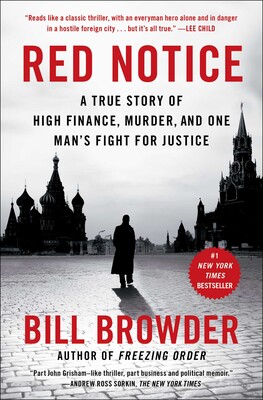
Red Notice: A True Story of High Finance, Murder, and One Man’s Fight for Justice (2015) by Bill Browder is the story of an unlikely hero who took on the oligarchs and political leaders of post-Soviet Russia. Once the largest foreign investor in Russia, Browder was expelled from the country in 2005 as a threat to national security after exposing corruption in business and government. His Russian lawyer, Sergei Magnitsky, wasn’t so lucky after he uncovered $230 million in stolen taxes. Magnitsky ended up in jail where he was tortured and killed. His death changed the direction of Browder’s life, a transformation told in this thriller-like account.
G.E. Kidder Smith Builds: The Travel of Architectural Photography(2022) by Angelo Maggi (Foreword by Michelangelo Sabatino) is a beautifully illustrated and long overdue assessment of the work of George Everard Kidder Smith (1913–1997), a “multidimensional figure within the wide-ranging field of North American architectural professionals in the second half of the twentieth century.” Trained as an architect, Kidder Smith chose not to practice within the “conventional strictures of an architecture office.” Instead, he designed, researched, wrote, and photographed a remarkably diverse collection of books focused on architecture and the built environment. This abundantly illustrated overview of Kidder Smith’s work is a book of wonder, joy, and some sadness. Kidder Smith’s photos and books capture a transformational era in world history. G.E. Kidder Smith Builds is, simply, a book to savor.
A Thousand Mornings (2012) by Mary Oliver is a slim book of poetry that covers a lifetime of daily experience. Oliver, who writes in a style that has been described as a “pathway of invitation,” returns to the land around her Provincetown, Massachusetts home—the marshland and coastline—to observe and be amazed by the everyday. As her publisher notes, Oliver is open to the teachings contained in the smallest of moments and explores with startling clarity, humor, and kindness the mysteries of our daily experience.
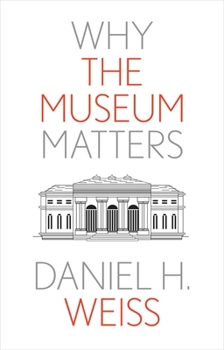
Why The Museum Matters (2022) by Daniel H. Weiss makes the case that art museums have been vital in the growth and understanding of our culture and continue to have a critical role in our communities today. A short history begins in the ancient worlds of Greece and Rome, touches on how churches were often the museums of the Middle Ages, considers the European “Grand Tour” as a precursor to both collecting and curating practices, and looks at the way Enlightenment ideals of “shaping ideas, advancing learning, fostering community, and providing spaces of beauty and permanence” were key to the development of the modern art museum. He understands that the future of art museums is far from secure, but this is generally an optimistic look at a future “where the museum will serve a greater public while continuing to be a steward of culture and a place of discovery, discourse, inspiration, and pleasure.”
The CIA: An Imperial History (2024) by Hugh Wilford sheds important and eye-opening light on an agency shrouded in secrecy and cloaked in conspiracy theories. With memorable characters, eloquent prose, and a well-researched story, Wilford’s new work will appeal to both scholar and the general public. This is a thoughtful look at a little-understood aspect of the CIA’s history—its ties to European empires and America’s own imperial instincts. At a time when we are debating the importance and very future of democracy, this book is timely, informative, at-times deeply troubling, and an altogether vital work about the often unintended and disastrous effects of unaccountable power.
What’s on the nightstand for September (subject to change at the whims of the reader)
The years surrounding World War II were ones of intense ideological battles over competing approaches to modern architecture and planning. As the old world order was crumbling around the globe, there were many calls to sweep away the physical remains of those times as well as the scars left from a devastating war, beginning anew with a fresh vision for the places where humans live, work, and play. Urban renewal of the 1950s and 60s in the United States, which led to the destruction of the historical fabric of America’s cities and towns, was one manifestation of this vision.
But there were authors, architects, artists, and activists of the period who were interested in beautiful and meaningful buildings and sites of all ages. One individual in particular—G.E. Kidder Smith—brought all of these skills together in his life’s work. It is a legacy that has now been recognized in a handsome, thoughtful, and comprehensive overview that captures his genius in “understanding the needs of his time and of the role that a photographer and critic might play in presenting the grandeur of new and old architecture in a compelling way.”
G.E. Kidder Smith Builds: The Travel of Architectural Photography (2022) by Angelo Maggi (Foreword by Michelangelo Sabatino) is a beautifully illustrated and long overdue assessment of the work of George Everard Kidder Smith (1913–1997), a “multidimensional figure within the wide-ranging field of North American architectural professionals in the second half of the twentieth century.” Trained as an architect, Kidder Smith chose not to practice within the “conventional strictures of an architecture office.” Instead, he designed, researched, wrote, and photographed a remarkably diverse collection of books focused on architecture and the built environment. This abundantly illustrated overview of Kidder Smith’s work—which won the 2024 Society of Architectural Historians Catalog Award—is written by Italian-British educator and architectural photography historian Angelo Maggi, currently based in Venice, where the Smith family generously donated a significant portion of Kidder Smith’s extensive archives.
“[Kidder Smith’s] work and life were deeply interwoven and punctuated by travel related to the research, writing, and promotion of books that sought to reveal the genius loci of the countries whose built environments he admired and wished to share with a broader audience. From the early 1940s to the late 1950s his interest in architecture led him to describe visually the architectural and historical identity of many European countries. After his far-flung travels over the decades, with his wife Dorothea, Kidder Smith focused on his own country . . . Kidder Smith’s vision and narrative betray the gaze of the traveler, the scholar, and the architect.”
A representative spread from “G.E. Kidder Smith Builds”
This overview begins with a perceptive foreword by Michelangelo Sabatino focused on the reputational shadow of this talented “builder” of books. (In addition to the foreword, Sabatino with Maggi conceptualized the “books as buildings” approach of G.E. Kidder Smith Builds.) Kidder Smith—or GEKS (pronounced “Jeex”) as he became known during his student days at Princeton—had a broader public in mind for his diverse collection of books about architecture and the built environment. His photographs almost always included human figures, his publishers were commercial rather than university presses, and he would curate accompanying exhibitions to widen the reach of his work.
Credit: MAS Context
Kidder Smith used a variety of formats to appeal to different audiences: hardcover for the “Builds” series, paperback pocket-size Penguin books for the traveler, and large-format slip-covered books that were at home on the coffee table. With his focus on revealing intimate relationships between buildings, landscapes, and people, GEKS anticipated the perspective of New York Times architectural critic Herbert Muschamp when he wrote that “the essential feature of a landmark is not its design, but the place it holds in a city’s memory.”
Maggi begins this work with a short overview of Kidder Smith’s life and career, one that took a different course than his study of architecture would have suggested. During the summers of 1937 and 1938, an early professor hired GEKS to photograph the built environment of the English Cotswolds, an area that remains an unspoiled and protected countryside to this day. It was here in rural England “that the young student encountered ordinary, vernacular architecture that grew out of and responded directly to the materials and needs of the people.” He would never forget this time of exploration and the connectivity between all eras of architecture and people. As a result, photographs of vernacular structures were a feature of all his later works.
Cantilevered granite steps in a farm near Gordola, Ticino, Switzerland, 1948
The overview is structured around the books that G.E. Kidder Smith carefully planned and executed over his career. As such, it is not a biography—but it is much more than an expanded bibliography. Maggi delves into the look and feel of each work, crediting the designers who helped craft the striking covers and focusing on Kidder Smith’s design choices in subject, photography, and layout.
Kidder Smith “evokes a modern Grand Tour” in his photographs of the 137 steps from Piazza di Spagna towards Trinità dei Moni in Italy, “a masterful contribution of the late Baroque to urban design.”
Taken chronologically, Maggi begins with Kidder Smith’s prewar work in Brazil, a country “building while America slept.” He then moves through the amazing collection of postwar books that looks at Europe emerging and rebuilding from the horrors of war, in part because of U.S. support through the Marshall Plan. This section covering Switzerland, Sweden, Italy, the new architecture of Europe, and the new churches of Europe from 1950-1964 radiates with the excitement that GEKS and his wife Dot must have felt moving through these countries at the dawn of a new age.
Church of São Francisco de Assis | Salvador, Baia. 1710
Casino Pampulha, Brazil, 1942
Pier Luigi Nervi’s Exhibition Hall, Turin, Italy, 1951
Kidder Smith’s two-volume deluxe edition of the pictorial history of architecture in America was produced by American Heritage Publishing Co. as part of the bicentennial celebration. In this work, later compressed into a one-volume edition that was a long-time companion in our home, Kidder Smith wanted to showcase the important historic structures as well as the great variety of architecture available in his home country. It took GEKS and Dot eight years to visit all 50 states and photograph the works in this collection.
Beinecke Rare Book and Manuscript Library, Yale University, designed by Gordon Bunshaft (Skidmore Owings and Merrill), New Haven, Connecticut, 1973.
Throughout this delightful overview, Maggi brings the reader into the world that GEKS and Dot inhabited. Dot’s many contributions to the success of these projects is recognized multiple times in ways that demonstrate their vital partnership not only at the family level but professionally.
Self portrait of GEKS and Dot at breakfast in Egypt
As the book and exhibitions were released in 2022, MAS Context included an enlightening interview with the authors and designers that touches on their intent and excitement for this work. It provides other important perspectives on Kidder Smith and this new assessment.
This is a book of wonder, joy, and some sadness. As Sabatino notes, Kidder Smith’s photos and books “will continue to serve as an important documentary record of cities and landscapes that have subsequently undergone significant transformation due to mass tourism, pressures associated with ‘development,’ and neglect.” His life’s work captures an evolutionary era in world history and—as a result—G.E. Kidder Smith Builds is, simply, a book to savor.
More to come . . .
DJB
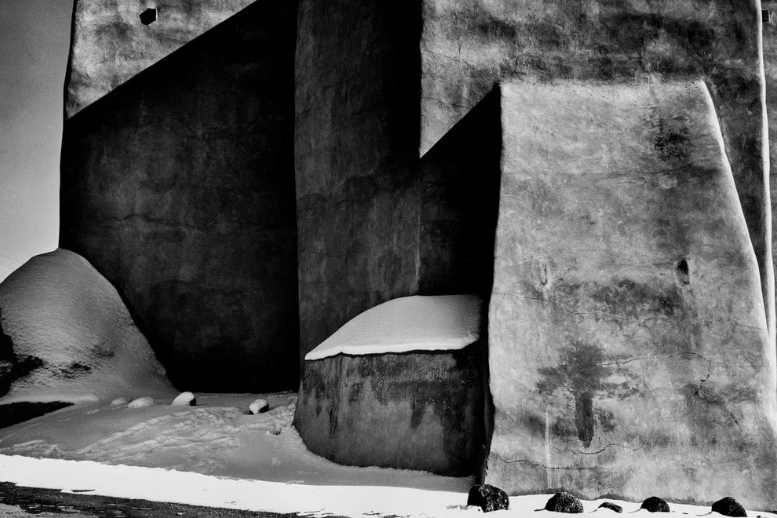
Photo of San Francisco de Asis, Ranchos de Taos, New Mexico, 1970 by G.E. Kidder Smith.
In the last few weeks of summer, the DC area has hosted several established and up-and-coming roots music bands. It is good to see that the field is in good hands.
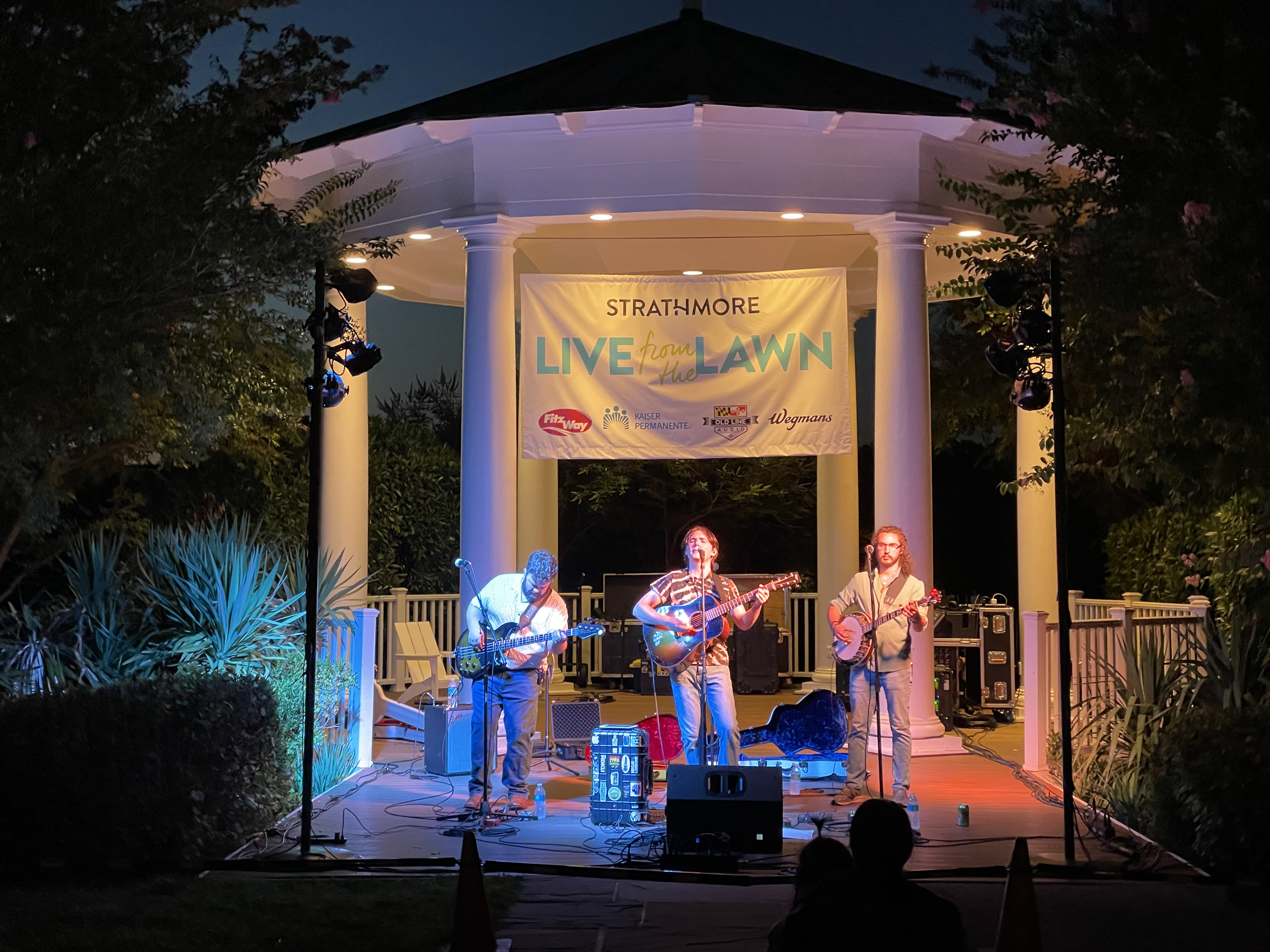
On August 21st, we enjoyed an evening Strathmore Live from the Lawn concert featuring Liam Purcell & Cane Mill Road. Sitting near the gazebo and munching on a delicious picnic with our friends Bob and Judy, we had a close-up look at Purcell, a hot young flatpicker from Deep Gap, NC, the home of musical legend Doc Watson and the birthplace of bluegrass flatpicking guitar.
A perfect night for a bluegrass picnic
“Rapidly rising on the bluegrass scene, Liam Purcell & Cane Mill Road have garnered industry awards and captivated fans worldwide with their dynamic performances. Led by Purcell, the band infuses traditional bluegrass with bold originality, earning recognition as the 2019 Momentum Band of the Year by the International Bluegrass Music Association . . . and in 2022, Purcell made history by winning the RockyGrass Music Competition on guitar, mandolin, and banjo. The band features Purcell on mandolin, Ella Jordan on fiddle, Colton Kerchner on banjo, Rob McCormac on guitar, and Jacob Smith on bass.
Liam Purcell and Cane Mill Road
Purcell brought a slimmed-down version of the band to Strathmore with bassist Jacob Smith and banjo player Zack Vickers, but these three musicians—augmented on some tunes by a guitar-playing fellow student from the Berklee College of Music—more than held their own. While a number of the selections were covers of tunes from venerable bands such as the Seldom Scene (Rider) and New Grass Revival (White Freightliner), I found the original material from their albums Roots and Yellow Line more satisfying.
This live version of Cazadero featuring Purcell on mandolin—from a February performance in Raleigh—is especially tasty.
At the end of August, my good friend Marty went to see Molly Tuttle and Old Crow Medicine Show play at Wolf Trap. Marty, who has seen more than his share of great bluegrass bands live, told me it may have been the best concert he’s ever attended.
Molly Tuttle and Golden Highway
The fiddle playing of Golden Highway’s Bronwyn Keith-Hynes especially caught Marty’s attention. To see her work, along with the talent of the entire ensemble, let’s begin with a terrific song from the band’s performance at the Newport Folk Festival at the end of July about our beautiful public lands . . .
“Come on out to the big backyard | It ain’t mine or yours | its all of ours”
. . . with a rousing cut to Woody Guthrie’s This Land is Your Land.
The PBS News Hour had an enlightening assessment of Tuttle and her journey to bluegrass stardom that’s worth a listen.
And we’ll follow that with a live version of Crooked Tree.
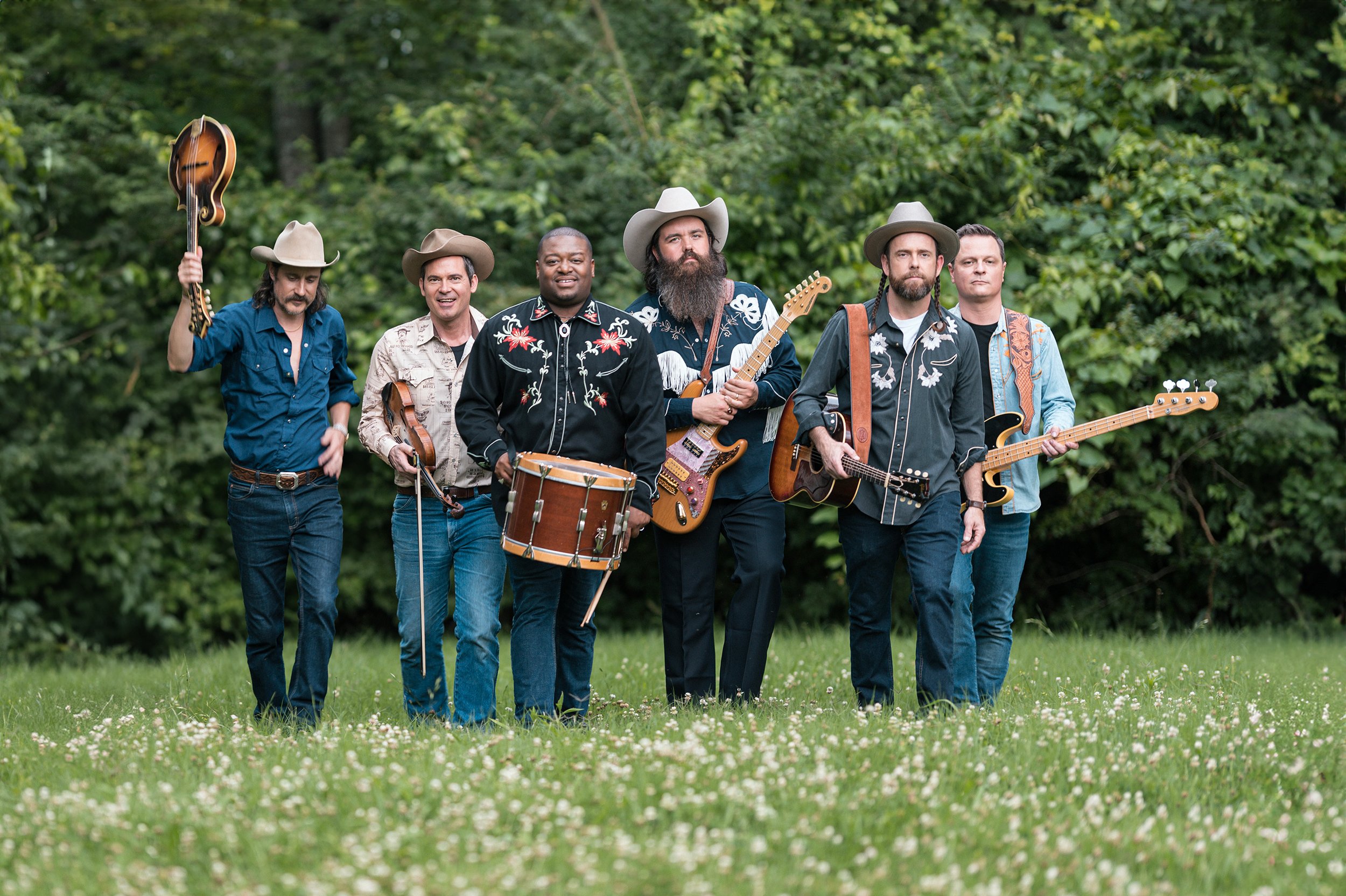
Old Crow Medicine Show (Credit: Chris Wood via crowmedicine.com)
OCMS has been delighting audiences for 25 years with their unique brand of old-time string music mixed with punk sensibilities. Here’s founder Ketch Secor’s take on recent moves within the band.
“In April 2022, [the band] released the critically acclaimed Paint This Town, our first album of all original material in five years, recorded in our very own Hartland Studios and co-produced with Memphis hitmaker Matt Ross-Spang. The album and title track landed in the top five of Americana Radio’s 2022 Album and Single airplay charts. After Pentecost’s surprise “call up to the major leagues” early in 2023, Dante’ Pope joined the Old Crow team on drums. Dante’ first sat behind the kit as a special guest back in 2014 and is featured in the “Brushy Mountain Conjugal Trailer” video of that same era. A former member of the Fisk Jubilee Singers, he brings to the stage more than just a mastery of percussion. Utility player PJ George III also was enlisted. A native of Salem, Virginia, and a master on banjo, accordion, and mandolin, PJ is a veteran of the bluegrass and Americana scene and brings a rascally energy to the band not seen since Critter’s departure. Together we’ll be crisscrossing the nation, connecting with fans who remind us night after night why a life in music is the most rewarding.”
Belle Meade Cockfight from a Ryman New Year’s Eve concert showcases the band’s energy and showmanship.
The Conjugal Trailer video Secor references perfectly captures the band’s quirky (is that the right word?) sensibilities.
And then why not end with OCMS and Molly playing together during last year’s New Year’s Eve concert on the classic The Weight.
Molly Tuttle will be back in the area on November 16th, playing about two blocks away from our house at the Fillmore in Silver Spring. I have my tickets!