Latest Posts

A revelatory journey to find the nation’s soul

Everyone thinks they know the South. No matter the state of birth, political persuasion, musical proclivities, taste for food, or ethnic background, Americans find it an all-too-easy region to typecast. However, having lived my entire sixty-eight years in Southern states as varied as Tennessee, Georgia, Virginia, South Carolina, and Maryland, I easily recognize the South’s many disparate and contradictory pieces.

The South is a region to celebrate and chastise. It is a place to enjoy at the emotional, sensual level and to approach thoughtfully with eyes wide open. It is a part of our collective soul we both love and mourn.

And I agree with many of our keenest observers who suggest that if we want to understand America, we have to both recognize and come to grips with the complexity of the Southern experience, history, and culture. By reframing our understanding of the South, “we gain a more honest rendering of the country.”
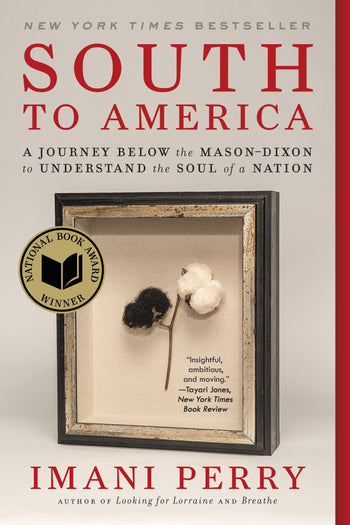
South to America: A Journey Below the Mason-Dixon to Understand the Soul of a Nation (2022) by Imani Perry is one such revelatory journey by a Black daughter of the South, crafted very much in the lineage of Albert Murray’s South to a Very Old Place. A native of Birmingham, Alabama, Perry grew up the daughter of Southern freedom movement leaders of the Civil Rights era and now teaches at Princeton. South to America is not, however, an academic work. Instead, Perry is traveling home to help the reader “tip over from curiosity and integrity” to acts of urgency. To “help the reader dig deep enough to discover the truth.”

Though she has lived in many places, Birmingham is home.

Home, for the Southerner eases into the cracked places like Alaga, thick and dark sugarcane syrup. Woundedness is pro forma; disaster touches everyone, even if only because you caused it. The unregulated emissions gather in your chest. The blood is so deep into the red earth that grief spirals into madness. We Alabamians have the highest rates of mental illness and the lowest rates of medical care. Inside home, terrors happen and repeat. This is what is neatly called trauma. But its facts are never neat … We will tell you about the warmth and charm more easily, but you cannot understand what a remarkable grace they are without the other part. Murderous home, sweet home, old home week, home.

This journey to look at home with fresh eyes begins in the Mid-Atlantic, the land of so many of our origin stories, and winds its way throughout the region. Each page of South to America, which won the 2022 National Book Award for Nonfiction, is written with a “righteous purpose and a stunning pen” — language Perry used to describe the work of her fellow National Book Award finalists in a moving acceptance speech. “I write for my people,” she noted. “I write because we children of the lash-scarred, rope-choked, bullet-ridden, desecrated are still here, standing.” She writes “because I love sentences, and I love freedom more.”

The dream of what the South — and thus America — can be drives Perry’s work. “I believe writing can be a moral instrument if it asks you to do more than read.”

This work is a meditation coming out of the realization that “the consequence of truncating the South and relegating it to a backwards corner is a misapprehension of its power in American history.” She demonstrates that power, both good and evil, in each and every story. Perry is asking us to look at the South’s significance to the nation and then “throw a wrench in the works.”

Perry’s reflections ring true when placed against my life experience. Pearl High School, for example, was a big part of the Nashville of my youth. That institution “nurtured Black children” — many of them friends of Perry and her family — in a fashion that is broad and lasting. I have also seen White people in Nashville who, as Perry describes in one encounter, sneer at “affirmative action.” They do so without realizing that while they “have a meaningful claim against the nation,” their problem is that the “claim is misdirected” when it comes toward Black folk instead of to those who have offered the false promise of Whiteness.

Perry uses her hometown of Birmingham to think about interracial and gay intimacy, and then ties in the region’s famous conservatism.

What makes a secret a secret? It really isn’t who knows — somebody always knows … What makes it a secret is that it cannot be spoken about in a whisper without something breaking. Much of the South’s conservatism is little more than an effort to zone where we place the yearnings that we don’t know what to do with.

Perhaps no Southerner wrote about stranger and more eccentric people and yearnings than Flannery O’Connor. At one point Perry visits Savannah to consider O’Connor’s famous Southern gothic-style work and to assess the recent attention given to the famous author’s bigoted beliefs. Perry admires O’Connor’s work and believes she uniquely understood Southern idiosyncrasy and violence. But Perry despairs at the thought that O’Connor — like Perry a life-long Catholic — had been “such an utter failure when it came to what might be the most basic moral question in the history of this country.” There are ways, she suggests, “to tell difficult stories about who we are that are tender rather than gothic.”

O’Connor — like so many other Southerners — refused to reckon with those yearnings that we don’t know what to do with. The South, notes Perry, has a “strong queer culture and a deep intolerance of any order other than patriarchy.” Because we haven’t learned as a culture and as a nation how to accept a wide variety of perspectives, we continue to fight and hate and shame and kill.

Perry’s look at her native South would not often be described as tender, but she approaches this journey into the nation’s soul with honesty and care and with a look to the future.

“I write for my children … and for their entire generation who deserves so much better than what we’ve offered them. May they succeed where we have failed.”

Amen.

More to come…

DJB


Photo: Trisha Downing on Unsplash
City of Gold

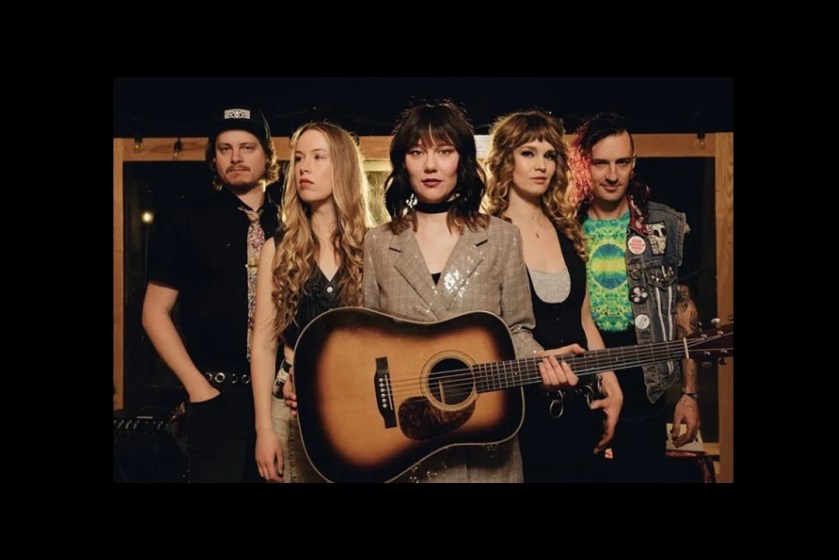
The Grammy-winning artist Molly Tuttle and her band Golden Highway released their new record City of Gold on July 21 on Nonesuch Records. This is a terrific new work that showcases the versatility of the band and the expansiveness of Tuttle’s musical interests. Tuttle and Golden Highway were also nominated in seven categories at the 34th Annual IBMA Bluegrass Music Awards just days before the album’s release.

Molly Tuttle

A musical adventurer who plays a killer flatpick guitar, sings with the confidence of someone with many more years of experience, and writes some of the best Americana and roots music tunes coming out today, Tuttle has gathered a group of friends around her into a tight musical unit. Bronwyn Keith-Hynes (fiddle), Dominick Leslie (mandolin), Shelby Means (bass), and Kyle Tuttle (banjo), have been a part of Tuttle’s musical life for years, and the closeness of their relationship shows time and time again.

The band told BGS that the writing of the songs on the new album came out of a partnership primarily between Tuttle and modern roots music icon Ketch Secor of Old Crow Medicine Show. With the tune Yosemite, featuring vocals by Dave Matthews, Tuttle and Secor show they know how to pitch a great story as two people falling out of love with each other hit the road to try and patch things up.

I’m riding shotgun through prairies and plains /You say how pretty I’m thinking how strange / It feels to follow this sinking ship down / Maybe the mountains will turn us around

When all that remains is the gas in the tank / The tread on the tires and what’s left in the bank / Sometimes the road is the best remedy / For a love that’s grown old try some new scenery / So how many more miles to Yosemite

Playing a live version of San Joaquin

San Joaquin has a great modern bluegrass feel. The band’s energy and drive pushes it forward while the lyrics, for a roots music tune, are both modern and timeless.

Riding on the San Joaquin / Bringing in some Humboldt green / I’m just rolling down the line / Looking for the next high time / Riding on the San Joaquin

Police banging on the boxcar door / Brakeman threw me overboard / Hit the ground and I clicked my heels / Hopped back on in Bakersfield

Tuttle told BGS that there’s a definite Old Crow influence on the tracklist…

which makes sense given “Down Home Dispensary” is a tune on the record originally written for the group best known for hits like “Wagon Wheel.” Tuttle said she initially worried the song was “too Old Crow” for Golden Highway but is glad it ended up on the record. She and Secor got “into a good groove,” as she puts it, and churned out the tunes for City of Gold in about six months, often while driving in the car or passing around instruments during jam sessions. 

Here’s a live version of Down Home Dispensary, where Tuttle makes it clear in the intro who she is lobbying with the plea for more “modern” crops, shall we say, in the state’s agricultural program.

And it contains this great line directed at the Tennessee legislature:

Hello legislators the voters have spoken / there’s too much politicking and not enough tokin’

Cover photo of City of Gold

El Dorado is told in the first person by “Gold Rush Kate” who sings her way through the characters she has seen in her life.

Better stay away from Snake Oil Jake / He’ll fool you with a fountain pen / One look in his eyes you’ll be hypnotized / He’s got that slight of hand / He’s sleek and fat like an old tom cat / They say he has nine lives / But Snake Oil Jake sure met his fate / When they shot him down ten times . . .

I’ve seen it all the rise and fall and now I take my rest / I’m Gold Rush Kate from the Golden State / And I’m the last one left

The First Time I Fell in Love and Where the Wild Things Are also come from the City of Gold album.

Tuttle is an artist who speaks openly about her beliefs and life’s challenges. Her allyship with the LGBTQ+ community is well known in bluegrass and roots music circles as is her journey with Alopecia Areata. She was diagnosed with the common autoimmune skin disease causing hair loss on the scalp, face and sometimes on other areas of the body when she was three years old. Her website has a full page on her journey with the disease that affects as many as 6.8 million people in the U.S.

Then there is the tune on City of Gold that has a bit of a backstory. As you start listening to Alice in the Bluegrass, those of us of a certain age begin to hear cultural references you don’t really expect in roots music.

But it all becomes clear when you hear Golden Highway perform the 60s rock anthem White Rabbit, a concert favorite for the band. Here’s a live version performed by Tuttle and Golden Highway during Levitate Flannel Jam at Maine Craft Distilling in Portland, ME. The “Flannel Jam” moniker is important, because as one online commentator noted, “The flannels are jarringly awesome.” Another said he never dreamed he “would hear White Rabbit sound like a mixture of Bluegrass and Middle Eastern Folk music.” It does, and it works.

Just so we don’t go down the rabbit hole with Grace Slick, let’s wrap up this appreciation of Molly Tuttle and Golden Highway by watching them perform the old folk tune Sleepy Eyed John.

Enjoy!

More to come…

DJB


Other MTC posts featuring Molly Tuttle:


Photos of Molly Tuttle and Golden Highway from the artist and record company websites.

From the bookshelf: July 2023

Each month my goal is to read a minimum of five books on a variety of topics and from different genres. Here are the books I read in July 2023. If you click on the title, you’ll go to the longer post on More to Come. Enjoy.


Upstream: Selected Essays (2016) by Mary Oliver is a beautiful and moving set of essays where Oliver describes how she discovered her life as a writer. Oliver writes words in a way that suggests, but these are suggestions that compel the reader to go to the source of their own lives. Nature — and other writers — are both keys to Oliver’s self-discovery and she writes about them simply yet eloquently. Oliver, more than anything, calls us to pay attention, noting that, “Attention is the beginning of devotion.” This is a book where we should pay attention to what Oliver is saying as we savor it over and over again.


Sleeping With the Ancestors: How I Followed the Footprints of Slavery (2023) by Joseph McGill, Jr. and Herb Frazier is a compelling work about a crusading effort to draw attention to the preservation of dwellings where enslaved people lived, worked, and raised their families. Joe — who founded and leads The Slave Dwelling Project — and his co-author Herb Frazier have compiled a captivating account of his years working to “change the narrative, one slave dwelling at a time.” In it, the authors recount the broadening of a modest regional effort into a national force. For this blog post, Joe graciously agreed to chat with me about the book and his work.


The Alaska Native Reader: History, Culture, Politics (2009) edited by Maria Sháa Tláa Williams is a good place to seek understanding of the Indigenous perspective in our 49th state. Home to more than 200 federally recognized tribes, the voices and history of these Native Alaskans are nonetheless often overlooked or silenced, as Alaska’s history is told through the stories of “Russian fur hunters and American gold miners, of salmon canneries and oil pipelines.” However, Native Alaskans have been here much longer and have stories, histories, landscapes, ways-of-living, and cultural perspectives worth knowing and preserving. The selections in this fascinating work “provide new models for viewing knowledge and the indigenous perspective on math, science, astronomy, and the cosmos.” We are all the richer for hearing these voices.


Supreme Inequality: The Supreme Court’s Fifty-Year Battle for a More Unjust America (2020) by Adam Cohen is a devastating and damning argument against today’s extremist Supreme Court and the Republican party’s fifty-year plan to circumvent the constitution, overturn the gains of the New Deal and Civil Rights eras, and cement inequality into American law and life. Cohen surveys Supreme Court rulings on a variety of topics from poverty, education, and campaign finance to labor, corporations, criminal justice, and democracy itself to expose how little the Court does to protect the rights of the poor and disadvantaged. In fact, since the Nixon era “the Court has, with striking regularity, sided with the rich and powerful against the poor and weak, in virtually every area of the law.” Cohen shows how the Supreme Court has made a power grab in order to drive the law far to the right in service of an agenda that most Americans don’t share.


Death in a Strange Country (1993) by Donna Leon is the second in what has become a 32-book series featuring the Venetian detective Guido Brunetti. Leon describes Brunetti as someone whose “clothing marked him as Italian. The cadence of his speech announced he was Venetian. His eyes were all policeman.” As one gets closer to the end of this compelling story, we fear that Brunetti’s great detective work will come to naught when faced with the might of the military-industrial complex. However, a distraught and vengeful Sicilian mother provides some small sense of justice in this world of deceit and destruction of things beautiful and meaningful. This very satisfying work whets the appetite for more of that great Italian architecture — damp and crumbling as it is — as well as a glass of wine and a cup of espresso.


What’s on the nightstand for August (subject to change at the whims of the reader):

Keep reading!

More to come…

DJB


NOTE: Click to see the books I read in June of 2023 and to see the books I read in 2022. Also check out Ten tips for reading five books a month.


The Weekly Reader links to the works of other writers I’ve enjoyed. I hope you find something that makes you laugh, think, or cry. 


Photo by Ben White on Unsplash
Observations from . . . July 2023

A summary of posts included on MORE TO COME in July 2023.

We’ve spent the better part of July on the road, with the majority of that being in the great state of Alaska. Not only was it Our 49th state to join the Union, but it is also #49 toward my bucket list goal of visiting all 50 states! You’ll have to read the post to see what the final holdout is . . . and my plans for crossing that off the list.

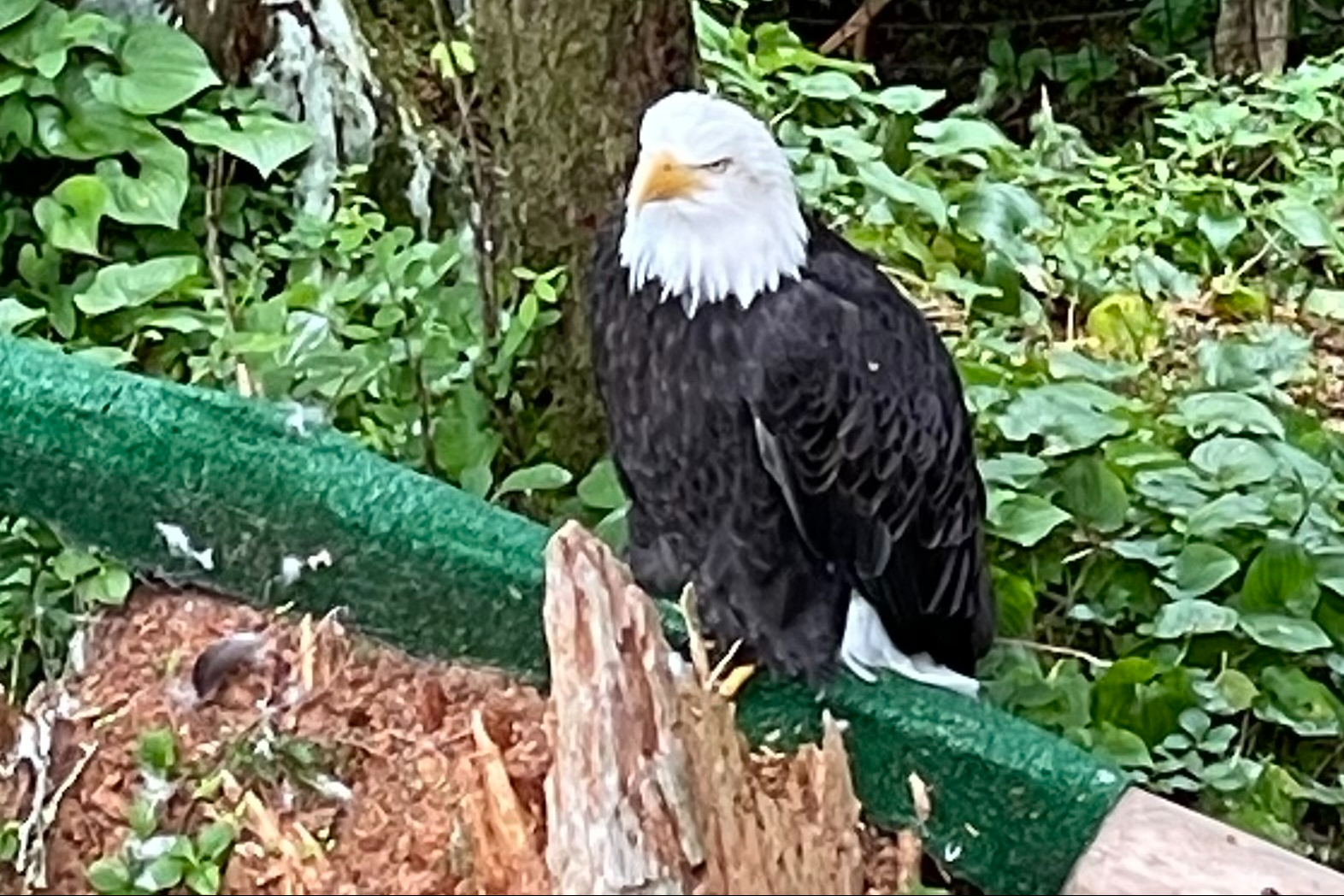
Bald eagles were everywhere in Alaska. Seriously, you could see them sitting on the top of light poles in Juneau. I captured the view of this one at the state’s Raptor Center in Sitka.

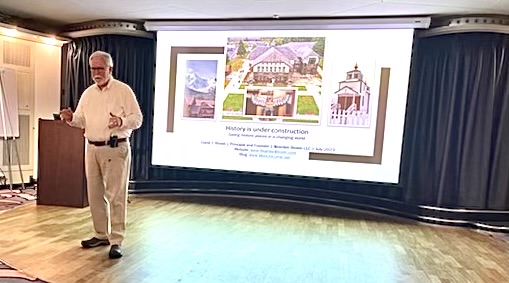
I was in The Last Frontier (or Land of the Midnight Sun ― take your pick) as an educational expert for a National Trust Tour to visit the Alaskan Glaciers and Inside Passage. Naturally I wrote about the experience (with photos) on MORE TO COME. You can find them as:

  • Names matter with thoughts on the historic name for the highest peak in North America;
  • Song for Alaska which is the catch-all post at the end of the trip with even more pictures.

But there was more going on during July than just being on the road again. So let’s jump in and see what else was on my mind.


TOP POST BY READER VIEWS

Joseph McGill, Jr.

My former colleague at the National Trust, Joe McGill, is the founder and leader of The Slave Dwelling Project. Joe has just written a book on his experience in growing this modest regional effort into a national force for saving and interpreting the homes of enslaved individuals. He graciously agreed to chat with me about his work in Changing the narrative one slave dwelling at a time. I found it to be a fascinating book and an enlightening discussion. Many MTC readers apparently agreed with that assessment.


OTHER BOOKS THAT CAME OFF THE TBR LIST

In my mind this is what my “To Be Read” pile looks like. In reality, this is the Starfield Library in Seoul, South Korea (credit: Book Riot)

In addition to Sleeping With the Ancestors and The Alaska Native Reader, I took three other books off my “To Be Read” pile during the month of July. As always, I shared my thoughts on these works with the readers of MTC.

  • Legitimacy, once lost, is hard to reclaim considers Adam Cohen’s 2020 book Supreme Inequality and the 50-year effort to design a high court that “has sided with the rich and powerful against the poor and weak” in virtually every area of the law.
  • The poet and writer Mary Oliver is someone I’ve come to admire in recent years. After reading a book of her thoughtful and inspiring essays, I pondered some of the key insights that struck my mind in If this was lost, let us all be lost always.
  • In the July installment of “my year of reading dangerously” I discovered Donna Leon and the Commissario Guido Brunetti series. Destroying what is beautiful highlights the second in Leon’s Brunetti canon, and I was pleased when long-time fans (who travel frequently to Italy) wrote to say that they loved the observations I made about this book.

DEMOCRACY AND HISTORY PUSH BACK

Jamie Raskin’s Democracy Summer Fellows marching in the Takoma Park July 4th parade

July has been an important month in the fight to maintain our democracy and push back against the whitewashing of history. I didn’t cover as much of that news as was possible, but I did make observations on two important milestones.

  • In what is fast becoming a holiday tradition, I wrote This is what democracy looks like to celebrate democracy, diversity, and our founding principles from the vantage point of the Takoma Park July 4th parade.
  • Moving us forward was my piece in response to President Joe Biden creating the Emmett Till and Mamie Till-Mobley National Monument. I visited one of the sites included in the new monument in 2018 and I brought back those reflections and added new considerations by historian Heather Cox Richardson for this recent post.

And in the “this doesn’t fall into any category” list, While the sun shines is a very short reminder of what one old saying is telling us in today’s world. Also, I explain why there is no Saturday Soundtrack feature this month.


CONCLUSION

Thanks, as always, for reading. As you travel life’s highways be open to love, undertake some mindful walking every day, recognize the incredible privilege that most of us have, and think about how to put that privilege to use for good. Women, people of color, LGBTQ+ individuals, immigrants, and others can feel especially vulnerable . . . because they are. Work hard for justice and democracy as the fight never ends.

Bash into some joy along the way.
And finally, try to be nice. Always be kind.

More to come . . .

DJB


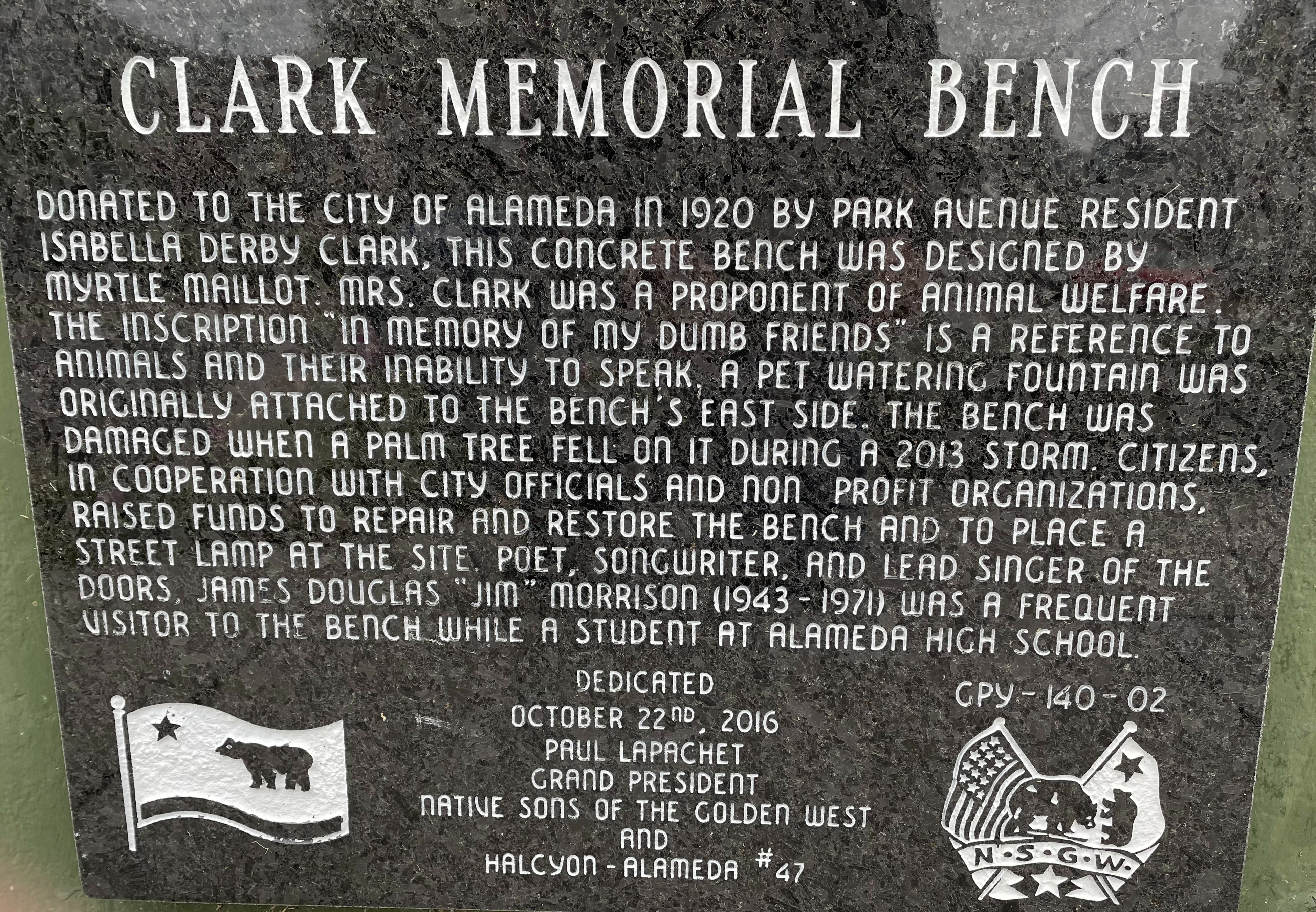
*For instance, Jim Morrison went to high school in Alameda, CA during his freshman and sophomore years, but if the plaque can be believed he apparently spent a lot of time hanging out in the local park before he became the lead singer for The Doors.


You can follow MORE TO COME by going to the small “Follow” box that is on the right-hand column of the site (on the desktop version) or at the bottom right on your mobile device. It is great to hear from readers, and if you like them feel free to share these posts on your own social media platforms.


For the June 2023 summary, click here.


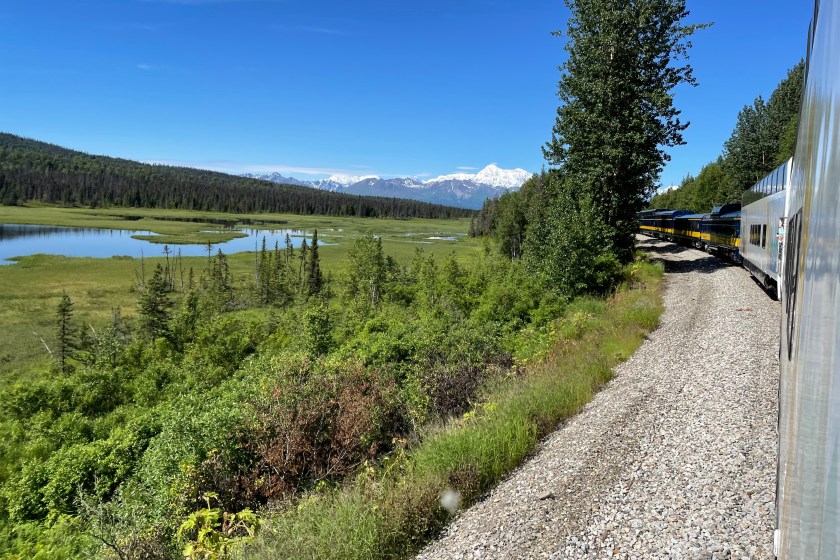
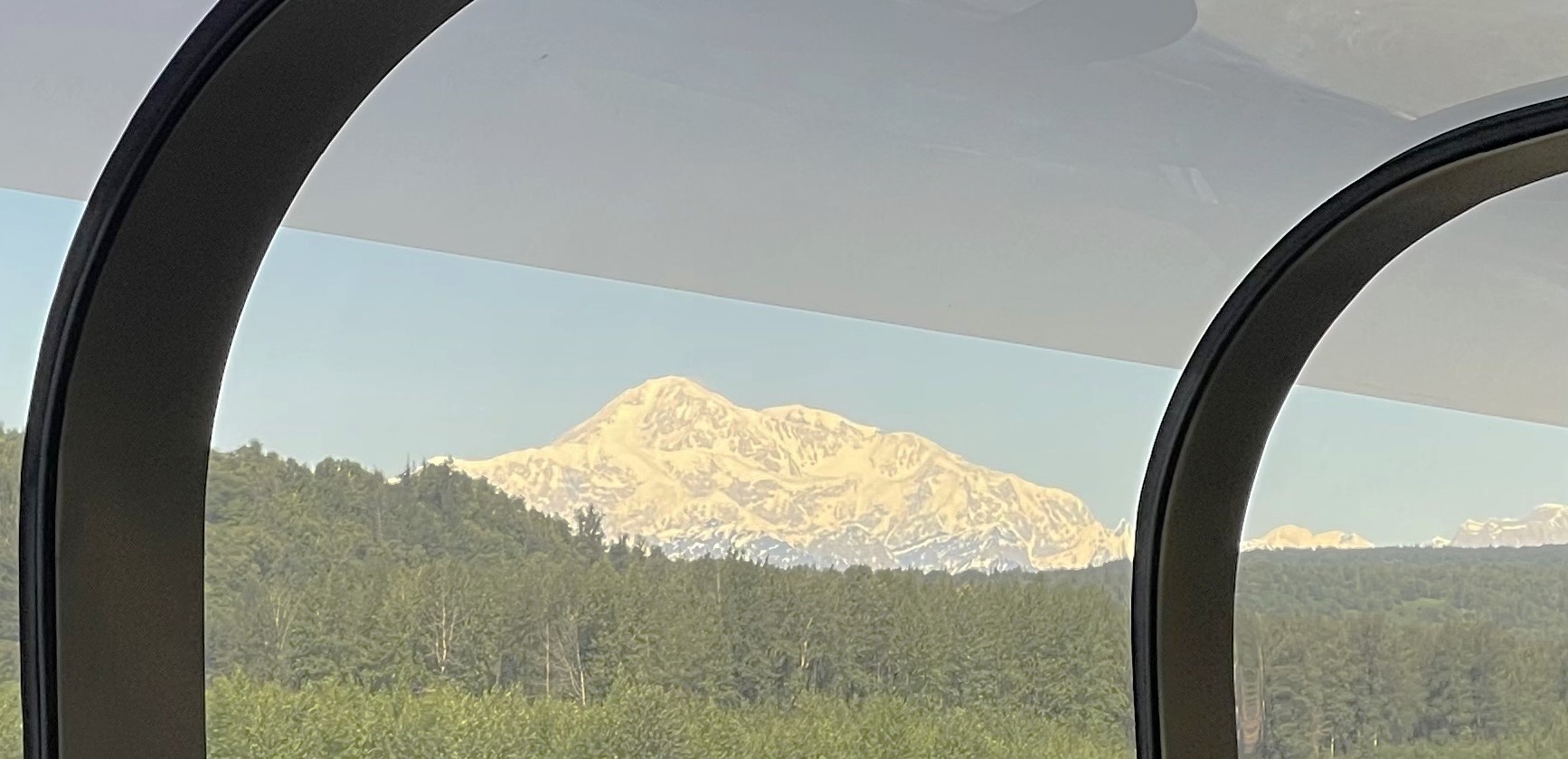
Photo on the Alaska Railroad, with Denali coming into view by DJB

Song of Alaska

While serving as an educational expert for National Trust Tours, I’ve been fortunate over the past two weeks to take in Alaska’s breathtaking landscapes and gain an even deeper understanding of the state’s complex history. It has been a remarkable experience.

The Star Breeze: our access to the Glaciers and Inside Passage

During one of my presentations, I reflected on the spirit of place alongside the Teddy Wilson classic Body and Soul. Many westerners think of historic preservation as focused almost exclusively on architecture and buildings. Laurence Loh — one of the foremost conservation specialists in Southeast Asia — suggests that the cultural essence may be better understood if one alludes to the notion of “body and soul.”

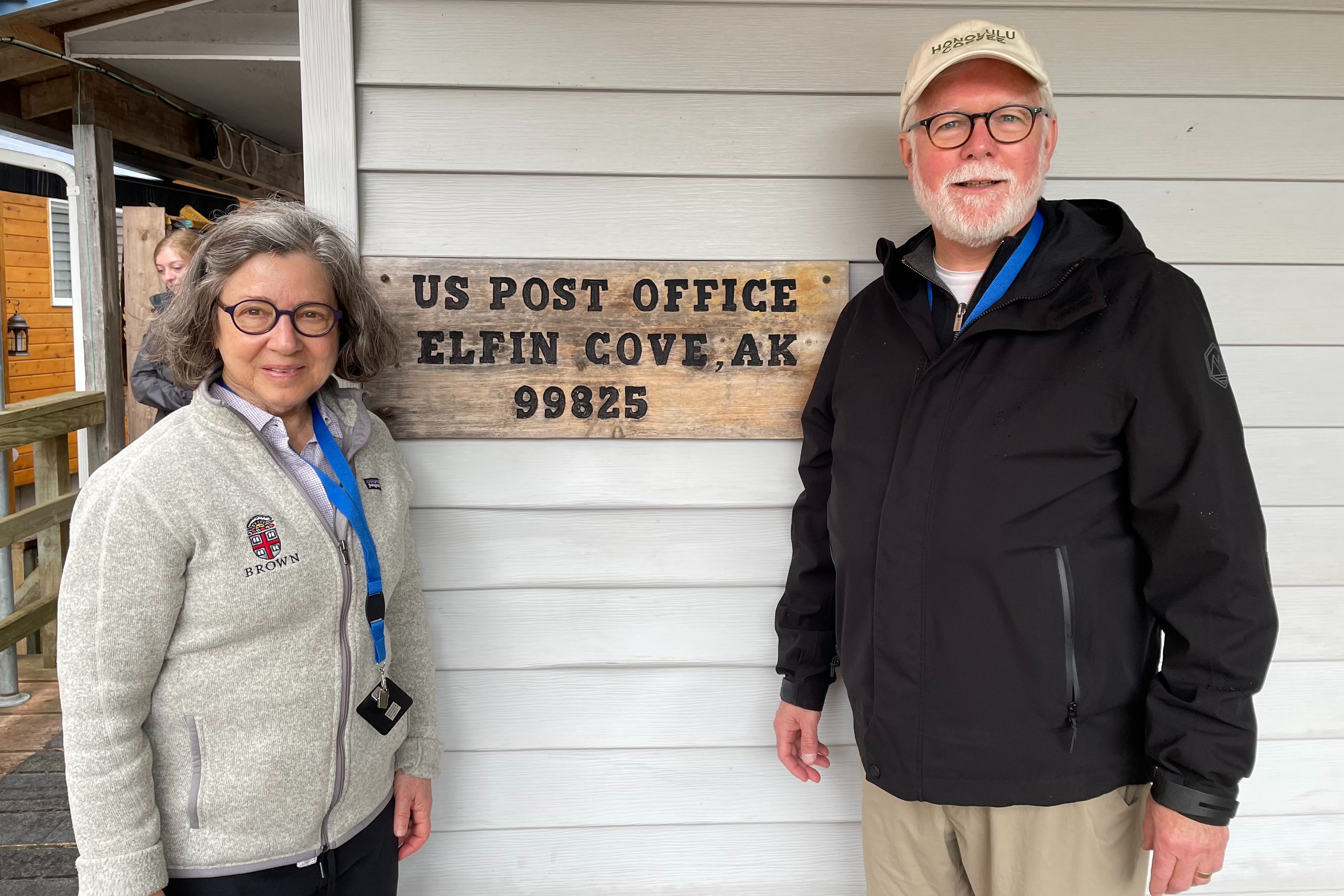
Elfin Cove

The body in this framing is “the physical fabric of the heritage site. The soul is the sum of the site’s history, traditions, memories, myths, associations, and continuity of meaning connected with people and use over time.” The two are intertwined with heritage places, even if one or the other may initially be hard to find.

I referenced Loh’s work because while we were in the United States, it is important to remember that Alaska’s ties to Asia are part of our country’s earliest known history.

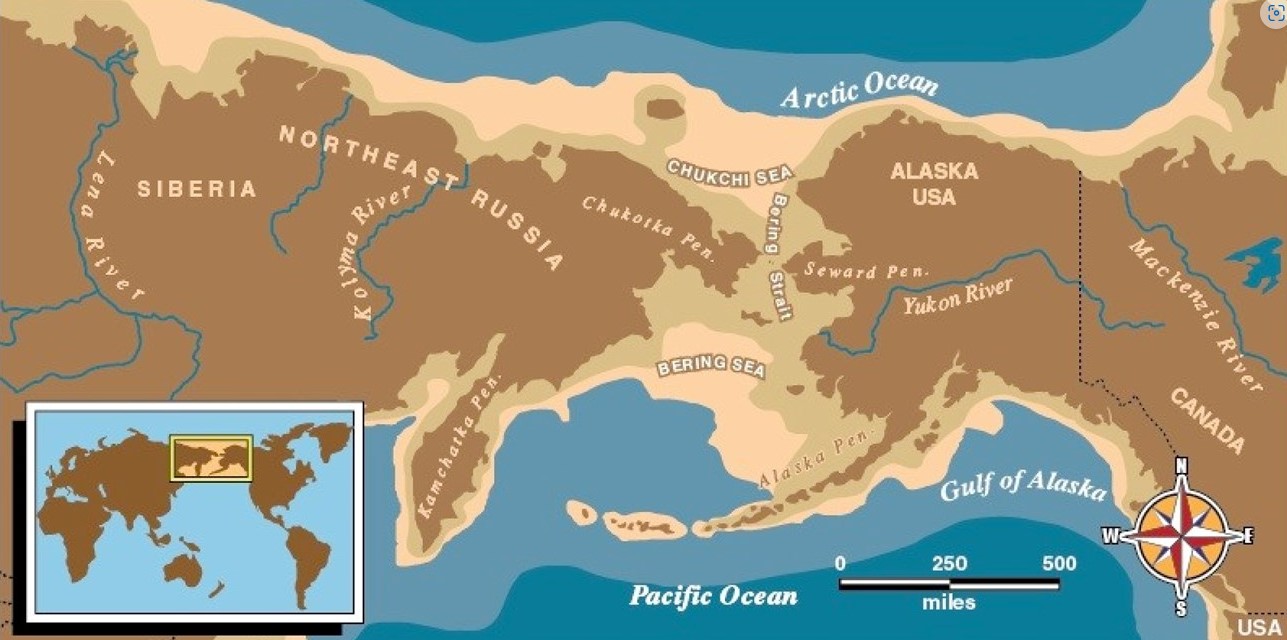
When archaeologists first discovered the National Historic Landmark Dry Creek site in the early 1970s, its 11,000-year-old archaeological artifacts were the first pieces of evidence to confirm that people migrated across the Bering Land Bridge to Alaska, validating a long-standing cultural connection between Asia and Alaska.

Bering Land Bridge (Credit: NPS)

The earliest non-Native contact in Alaska came from Russian fur traders, and we were enlightened on this trip by the perspective of University at Albany Russian studies professor Nadieszda (Nadia) Kizenko. Her father, a Ukrainian-born Russian Orthodox priest, fled Russia in 1943 in the face of executions of priests and bishops by Joseph Stalin.

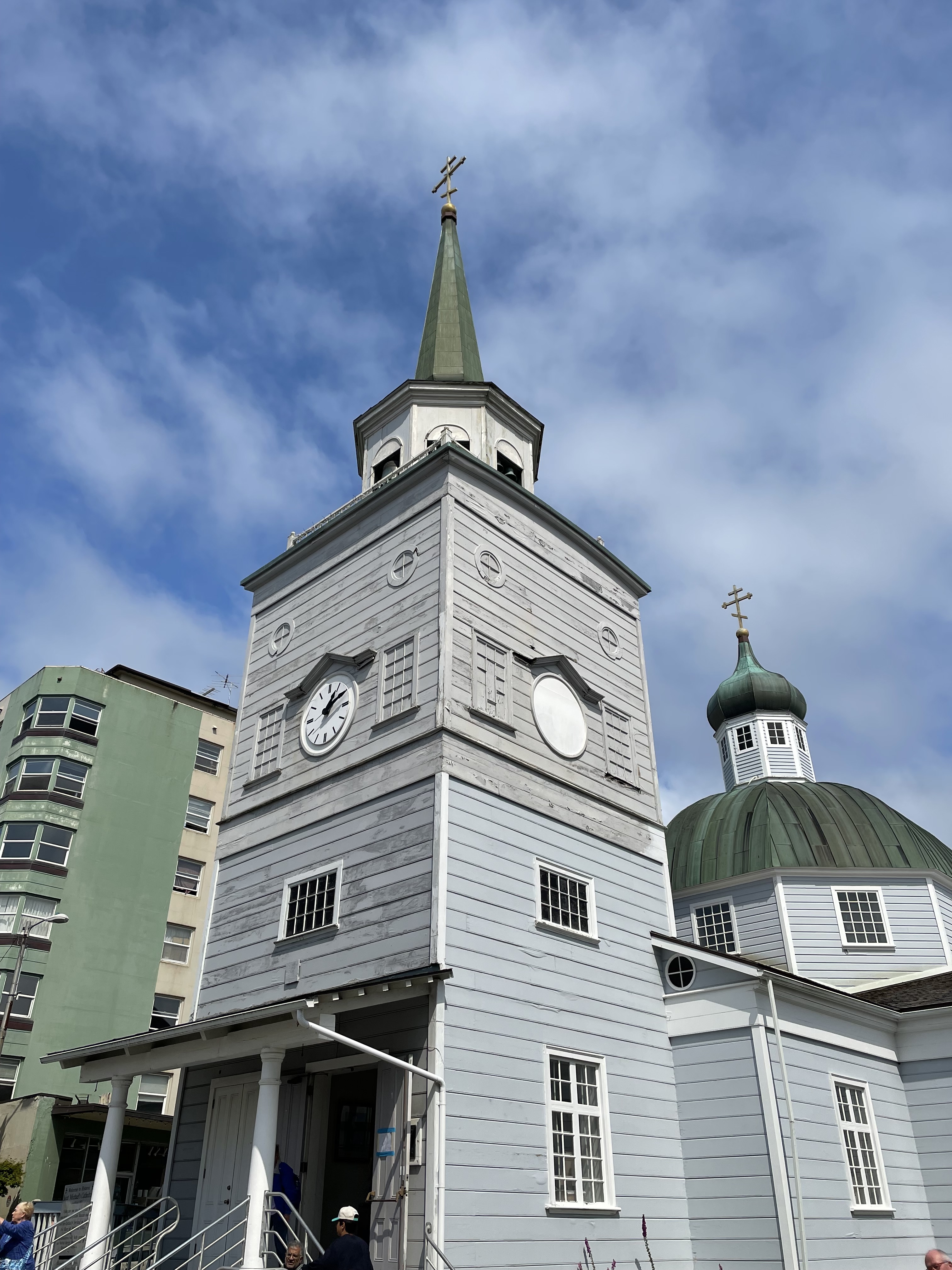
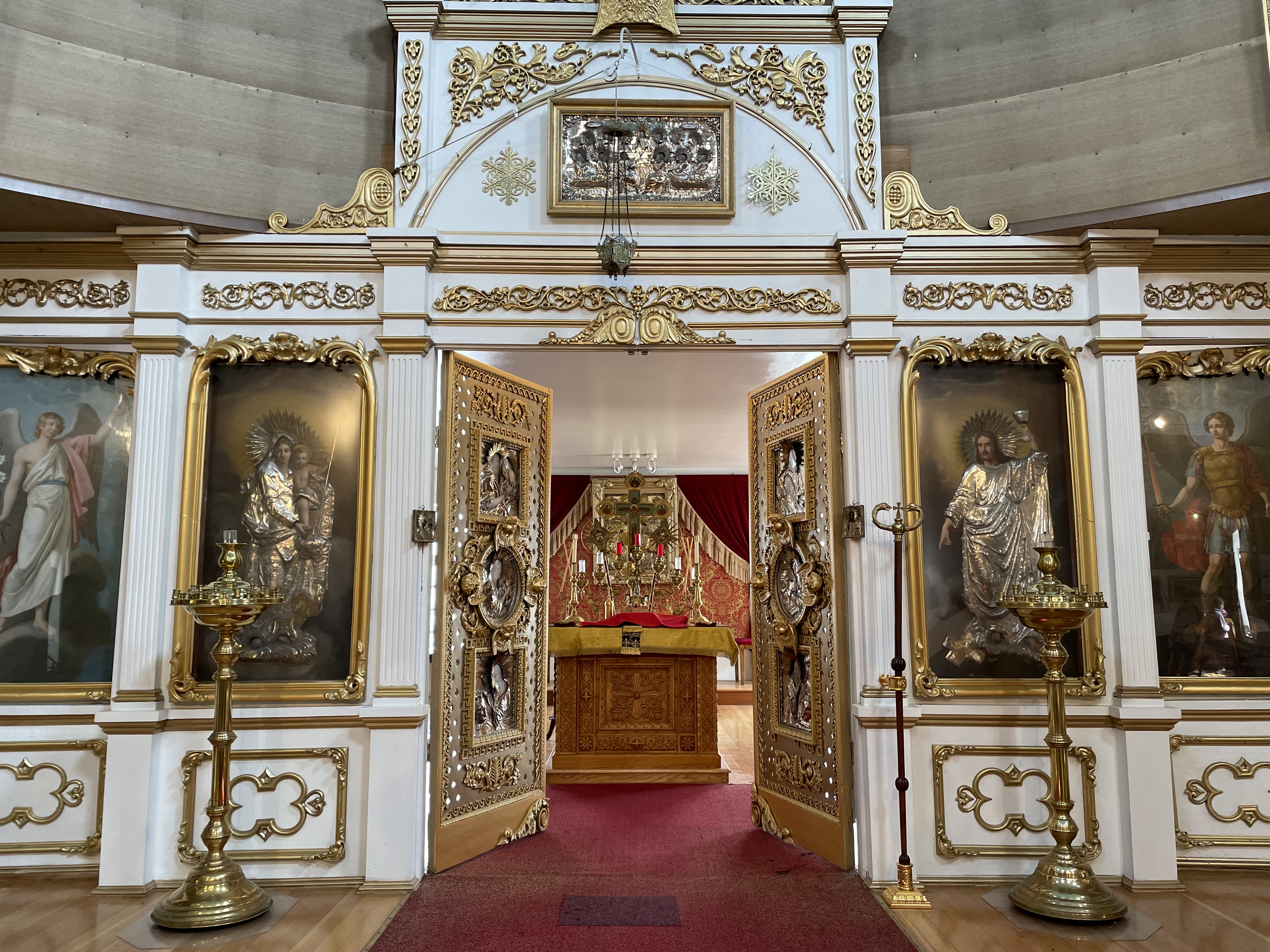
Nadia’s specialty is Russian history with a focus on religion and culture and her lectures expanded our perspective about collaborations between Native Alaskans and non-Native Russians. After touring Sitka where we visited St. Michael’s Cathedral and the faithfully restored Russian Bishop’s House, she returned with new thoughts and ideas to explore. Travel opens up so many new ways of seeing the world, and Nadia’s presentations on the Russian presence in Alaska was mind-expanding for this particular traveler.

St. Michael’s Russian Orthodox Cathedral in Sitka
Interior of St. Michael’s
The Russian Bishop’s House in Sitka

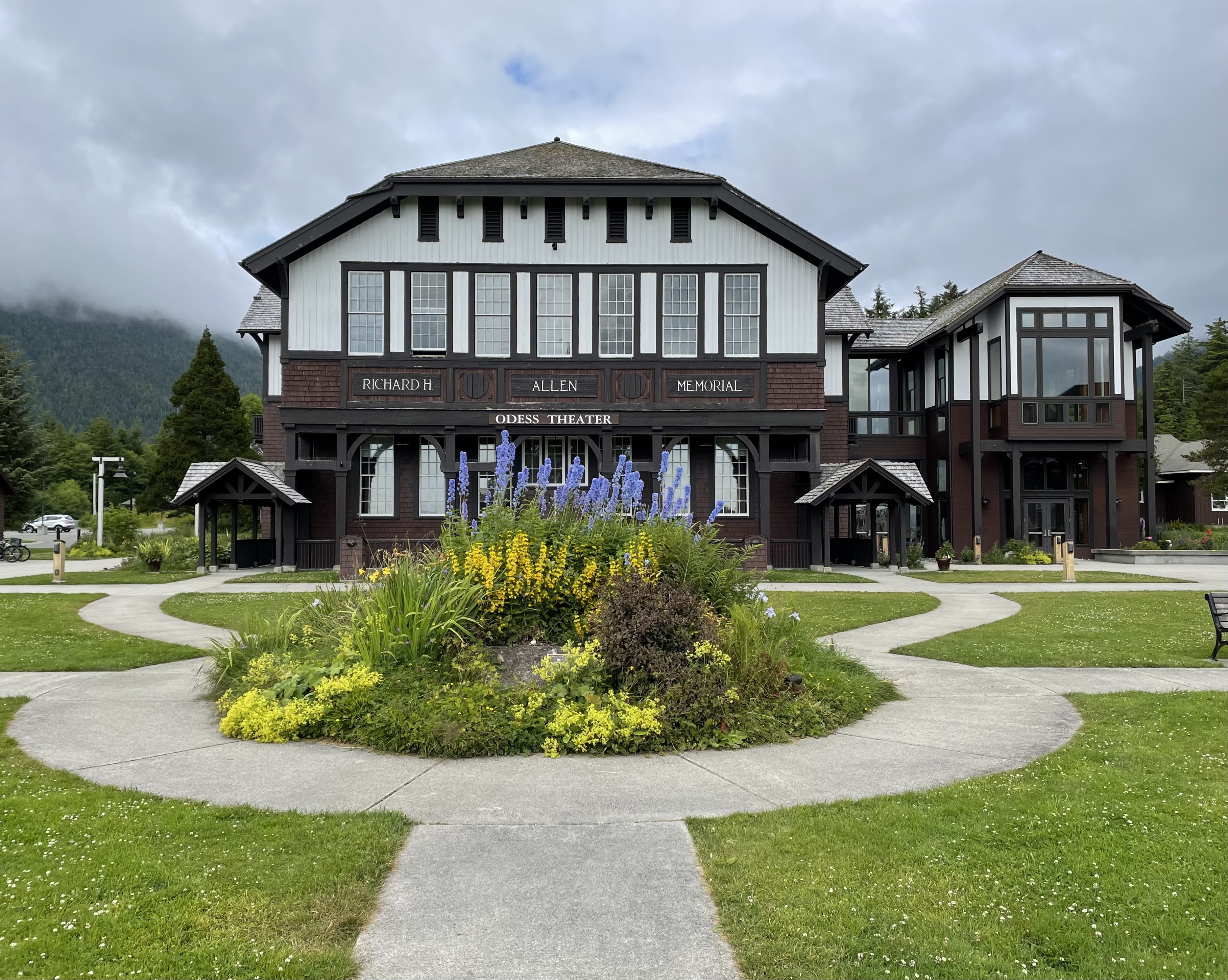
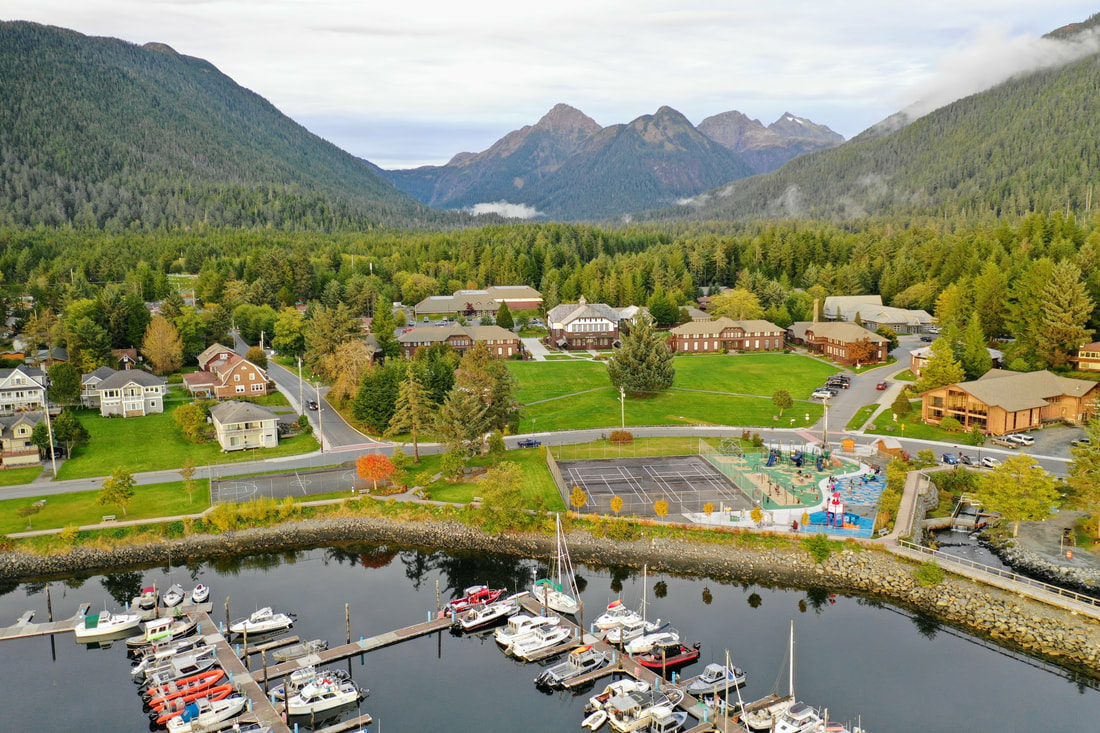
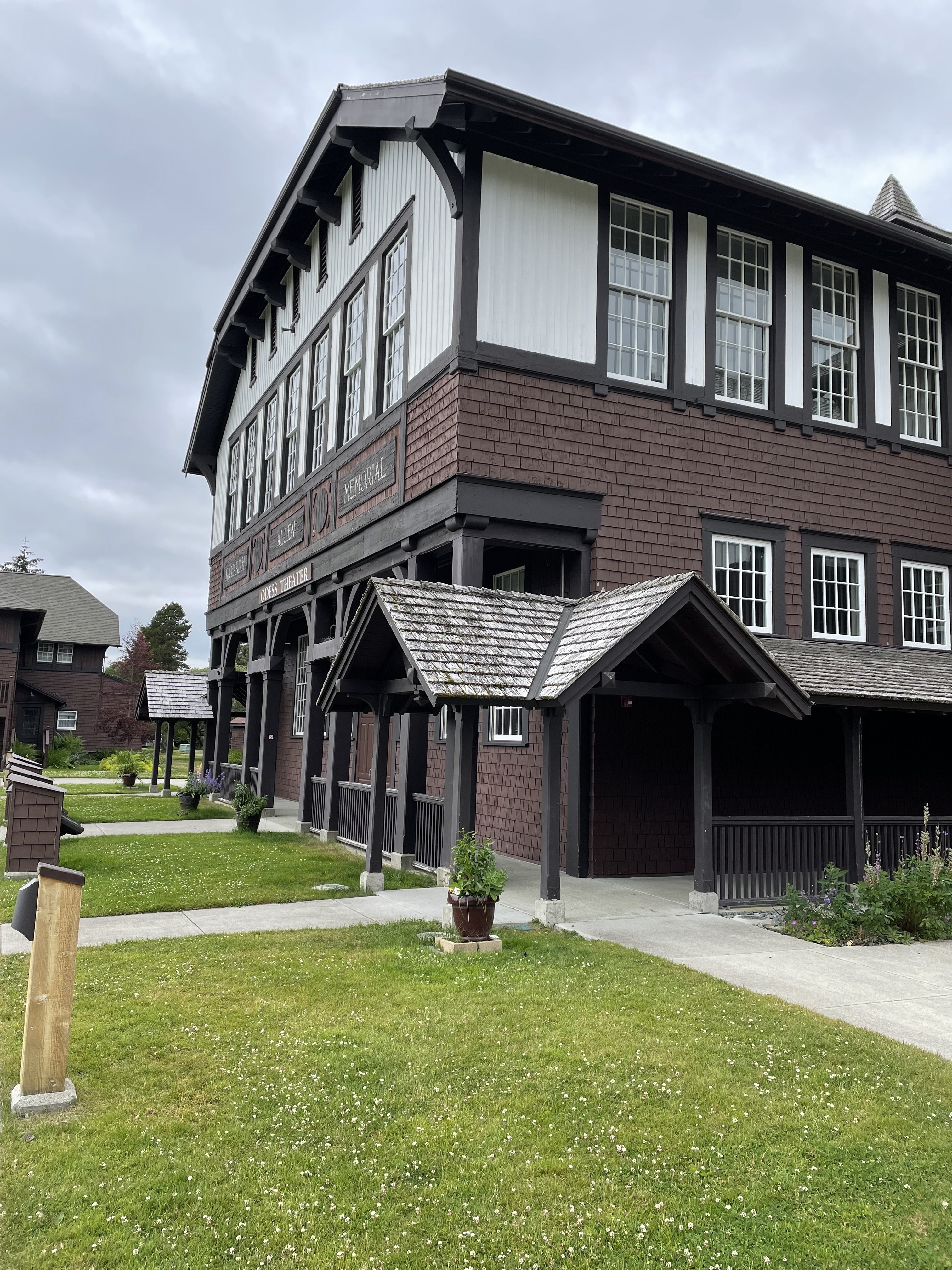
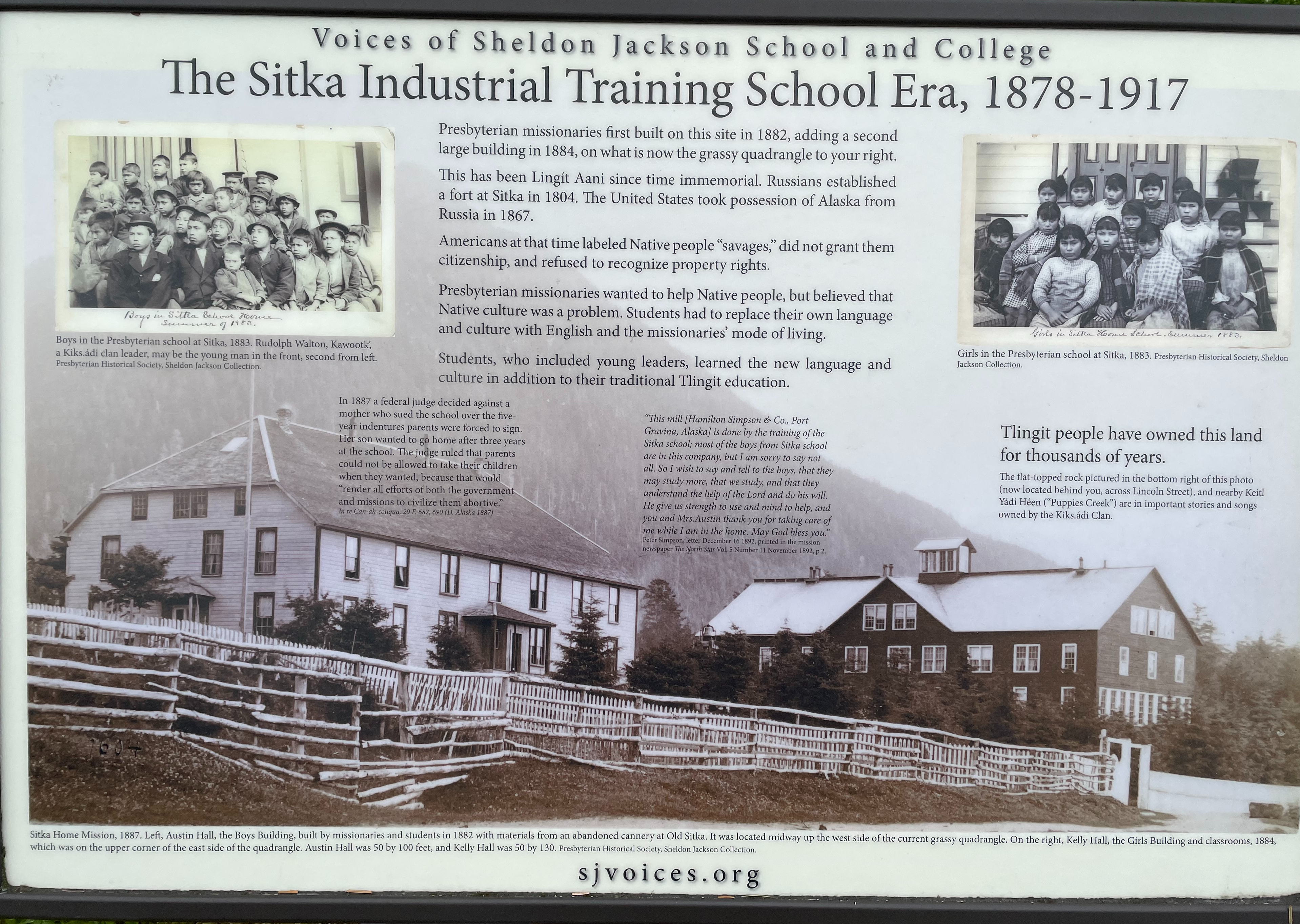
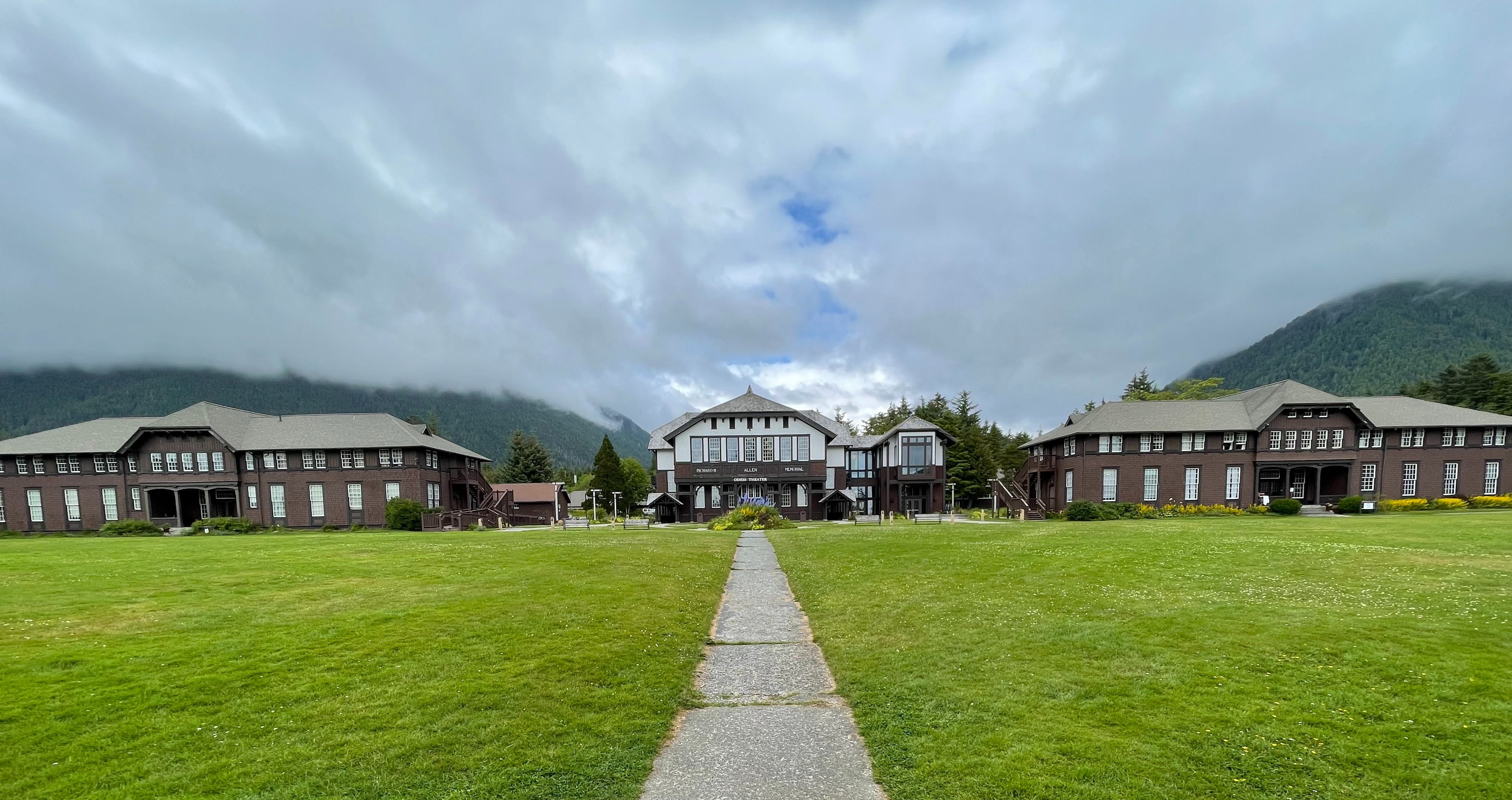
Sheldon Jackson School, also in Sitka, was another historic site that I discussed in my presentations. Sheldon Jackson began as a Presbyterian mission for Native children in 1878 and the current campus was built in 1910-1911. The Richard H. Allen Memorial Auditorium is a key part of the complex, and the National Trust helped highlight the threat to the building when it was included on the 1999 list of America’s 11 Most Endangered Places.

Allen Memorial Auditorium
The Sheldon Jackson school campus and backdrop in Sitka (from Pixabay)

When the Sitka Fine Arts Camp took over the campus in 2011 these buildings were near the point where repair would be impossible. However, Sitka was invested in the stewardship of this landmark and once we visited the town you could see its prominence in the community’s landscape. The preservation of this campus by hundreds of dedicated volunteers is now a model which is leading to its revitalization as a home for the arts.

The Sheldon Jackson School complex: now the Sitka Fine Arts Center

While the boarding school was better than most, it actively suppressed Native language and culture, leaving a complicated and difficult legacy. The goal of the Fine Arts Camp is to acknowledge and share the stories of those who lived and worked here in the past, and the many facets of meaning this place holds. In other words, to highlight the soul as well as the body of this place.

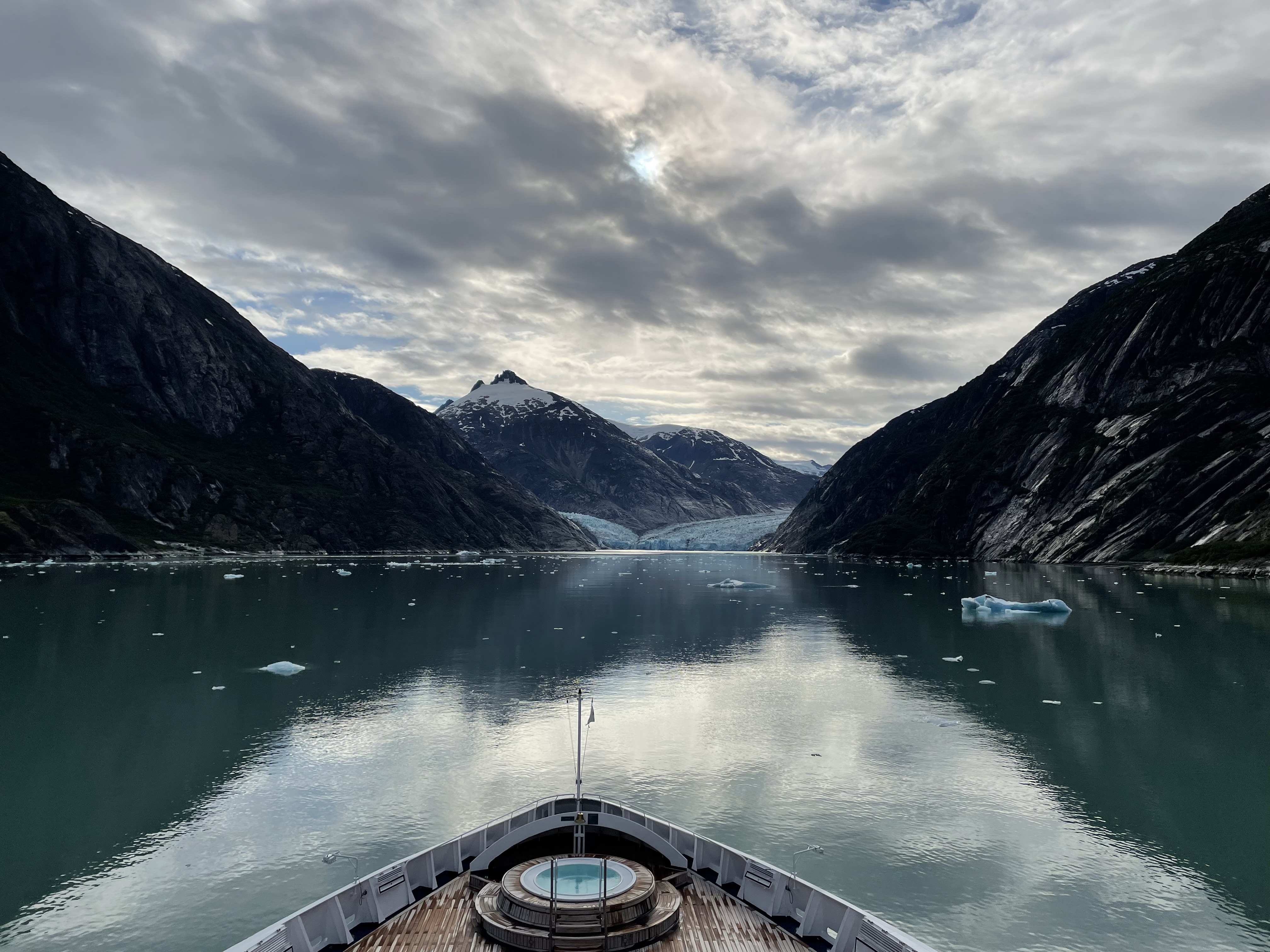
Throughout the trip we also heard from experts on glaciers, geology, and climate impacts as we explored fjords and natural wonders such as Dawes Glacier.

Approaching Dawes Glacier early in the morning.
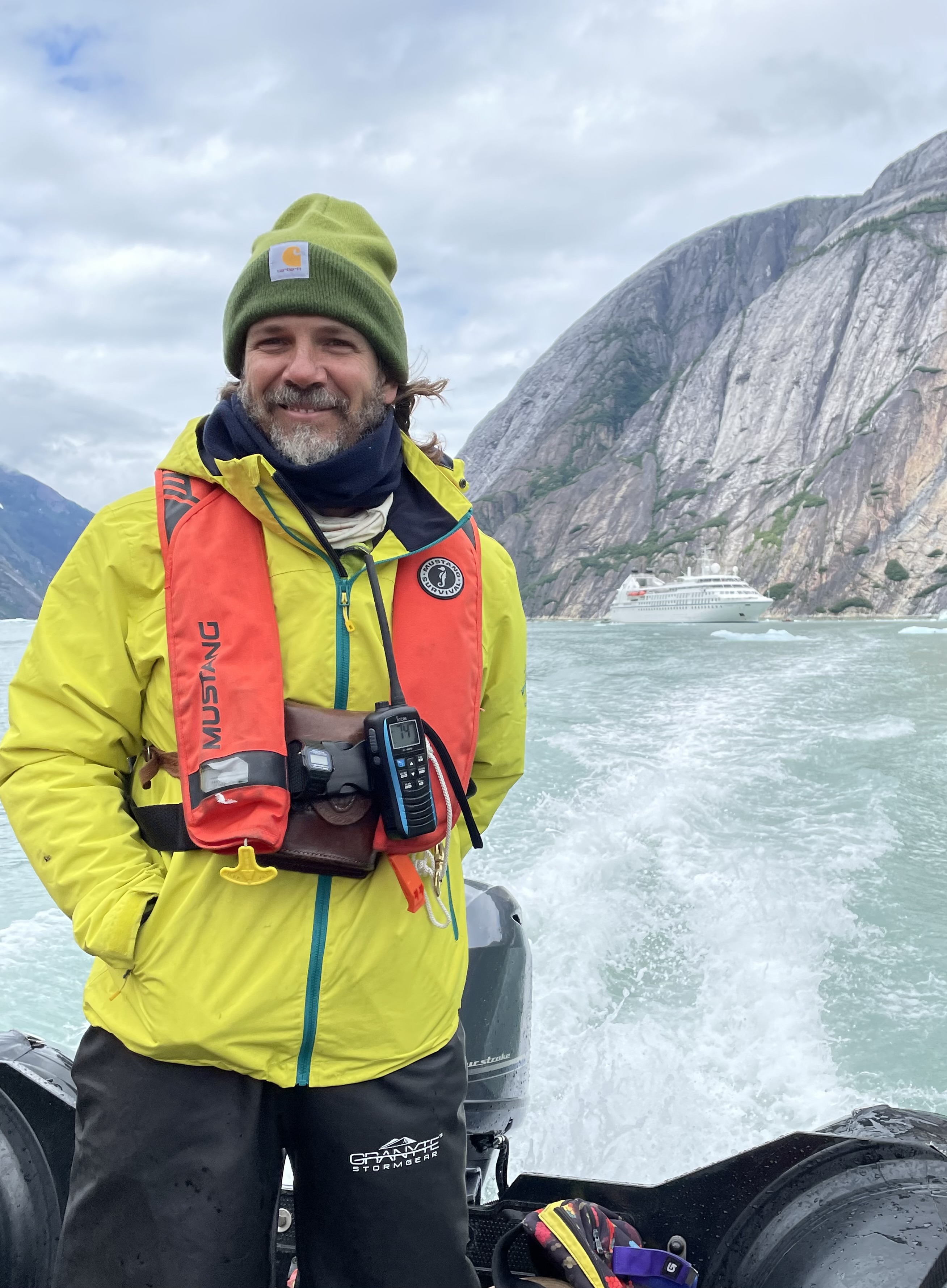
Our expedition leader pilots our zodiac to Dawes glacier.
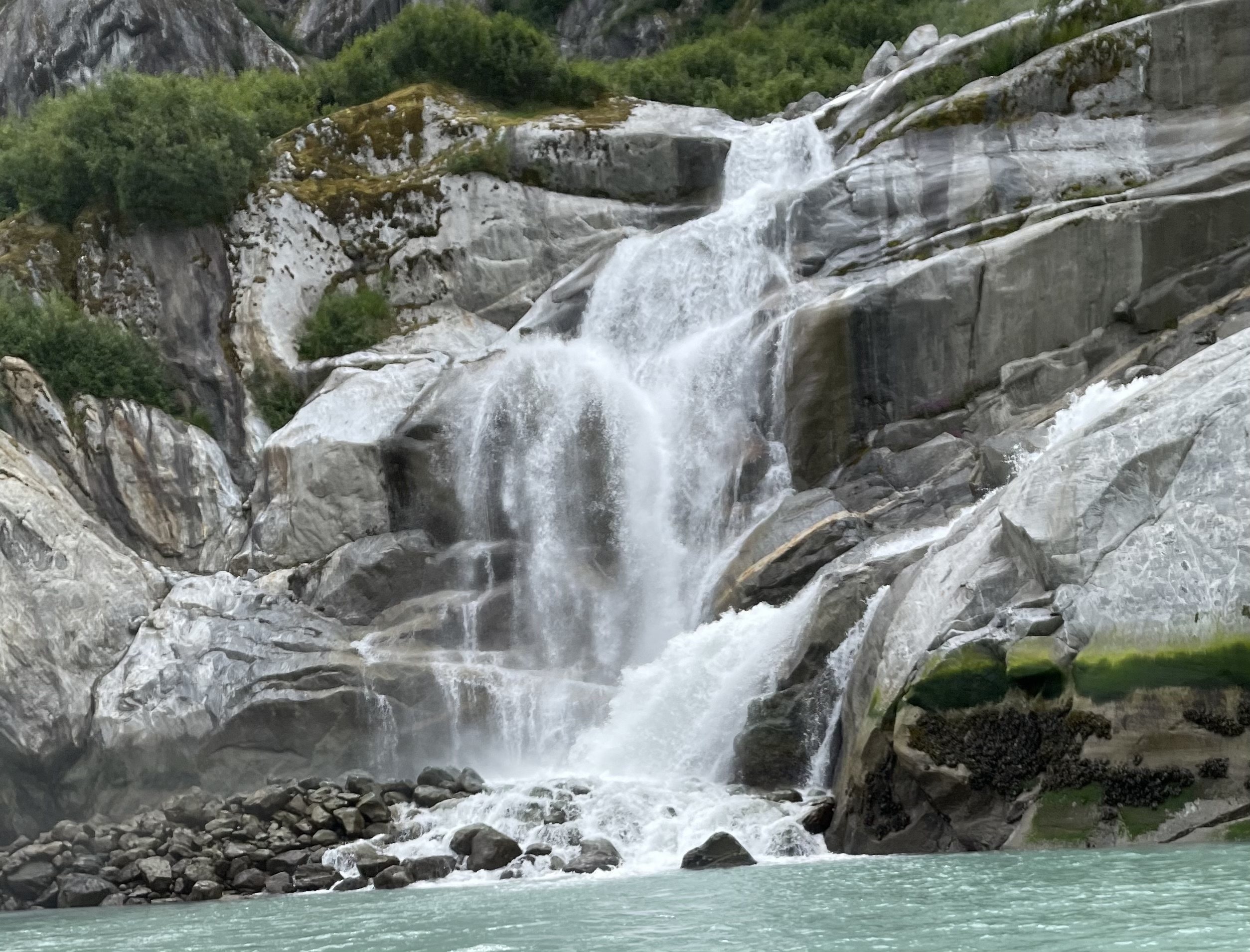
Waterfalls coming down from the glaciers above.
We get a closer look at the glaciers from our zodiac (credit: Mary Belser).
Calving at Dawes Glacier

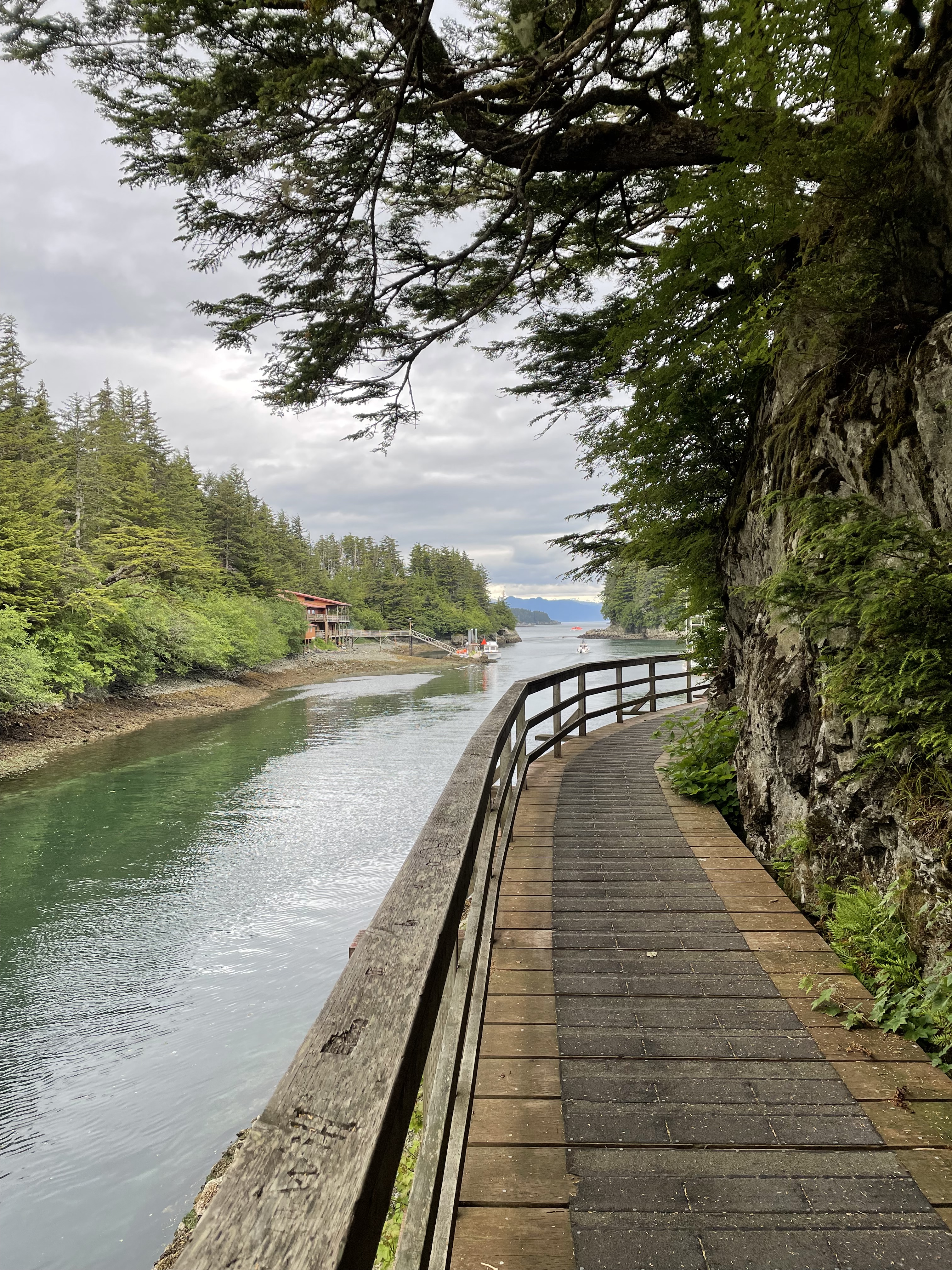
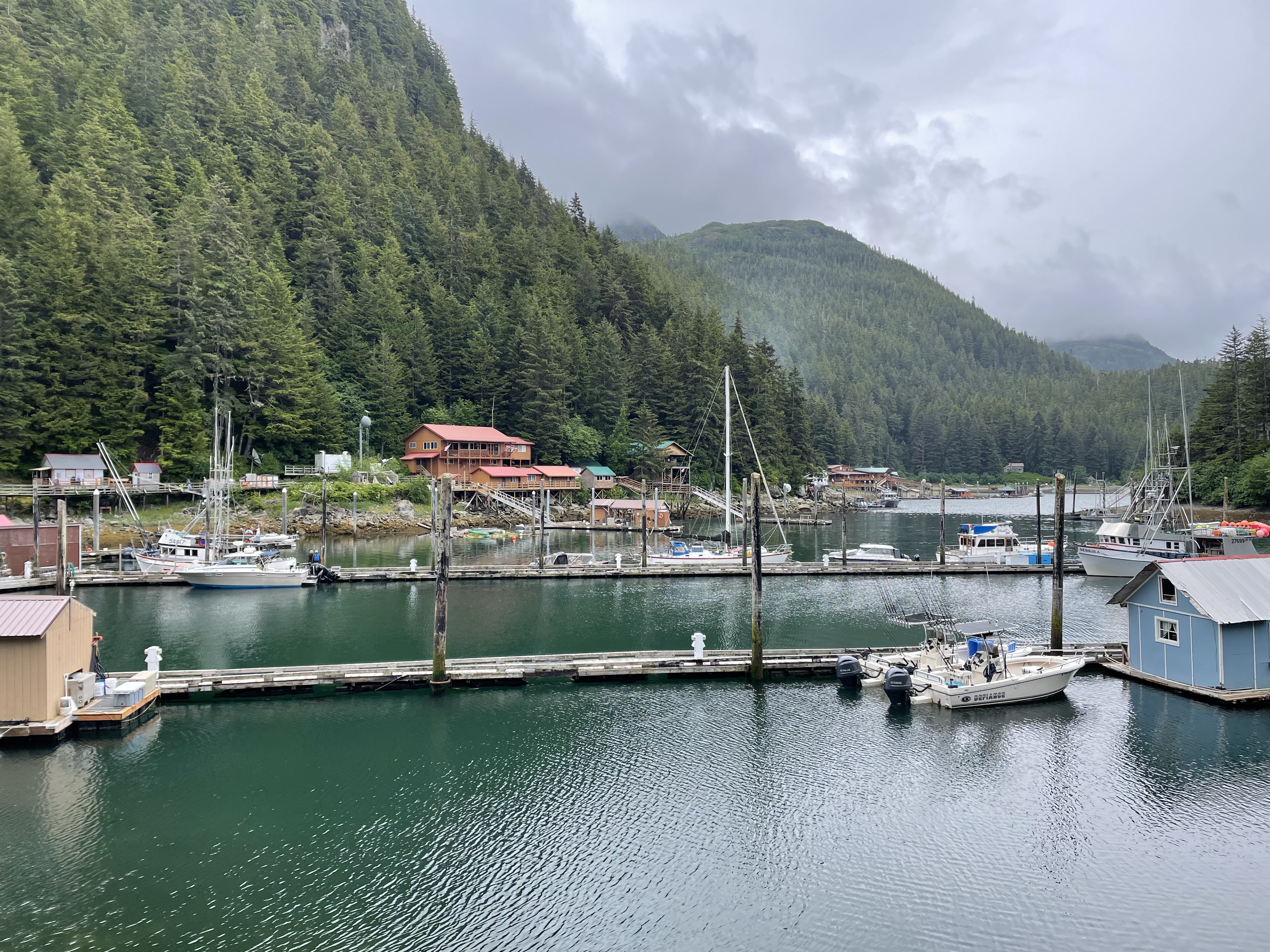
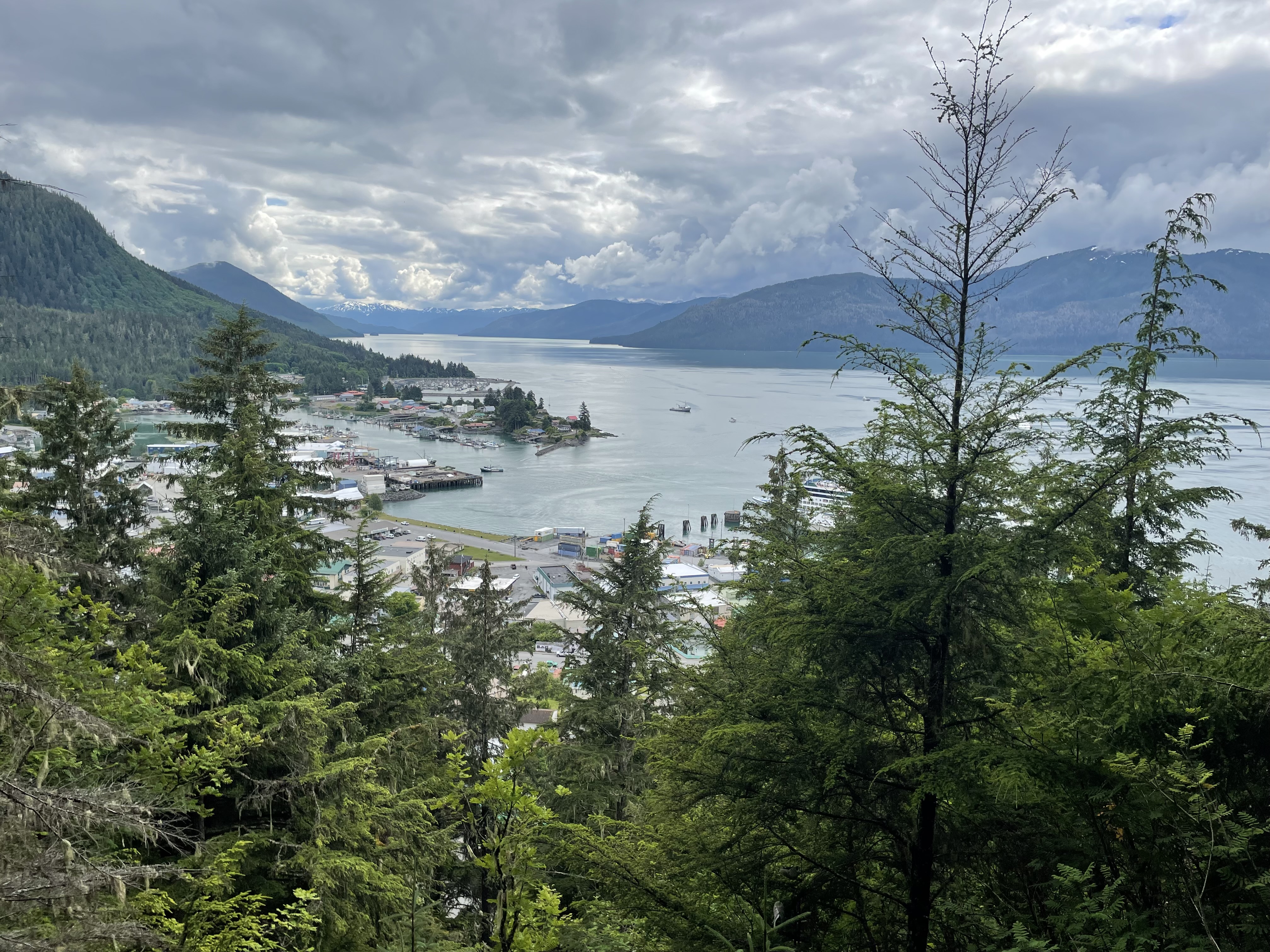
Our tour also took us to tiny Elfin Cove, an isolated village accessible only by water with boardwalks connecting the few dozen buildings. The summer sees an uptick of residents and sports tourists while the winter population is six . . . on a good day.

Downtown Elfin Cove
That’s not the highest zip code in the US . . . that honor goes to Ketchikan at 99950.

We also visited other small communities, including Wrangell along the Inside Passage (with its first-class museum) and Nenana, a small interior railroad town north of Denali.

Wrangell, Alaska
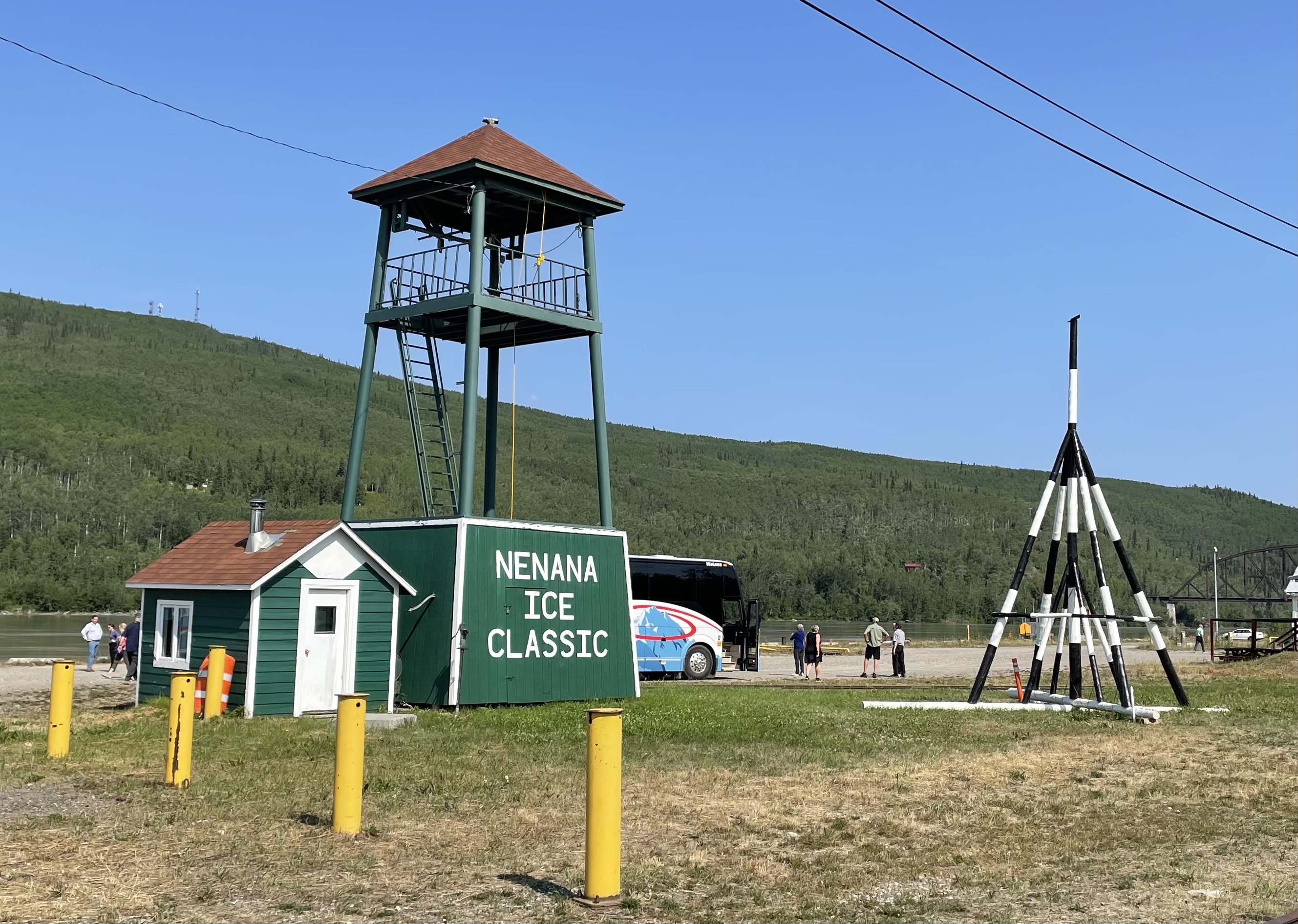
Only in Alaska: The Nenana Ice Classic is held each year, with the winner guessing the correct date and time (down to the minute) when the wooden structure on the right will break through the frozen ice on the Tanana River.
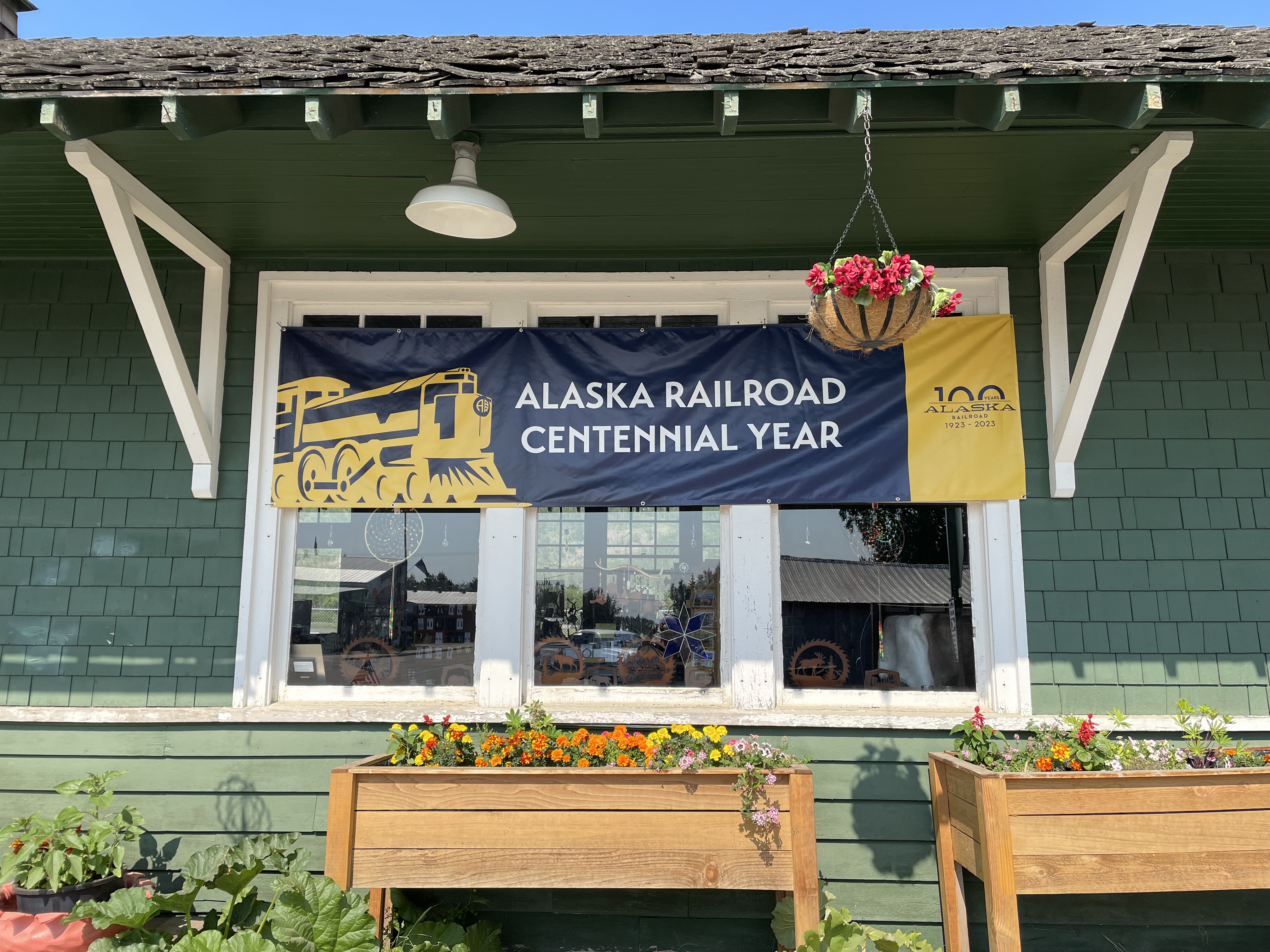
Alaska is celebrating its railroad centennial in 2023 as seen on the Nenana depot.

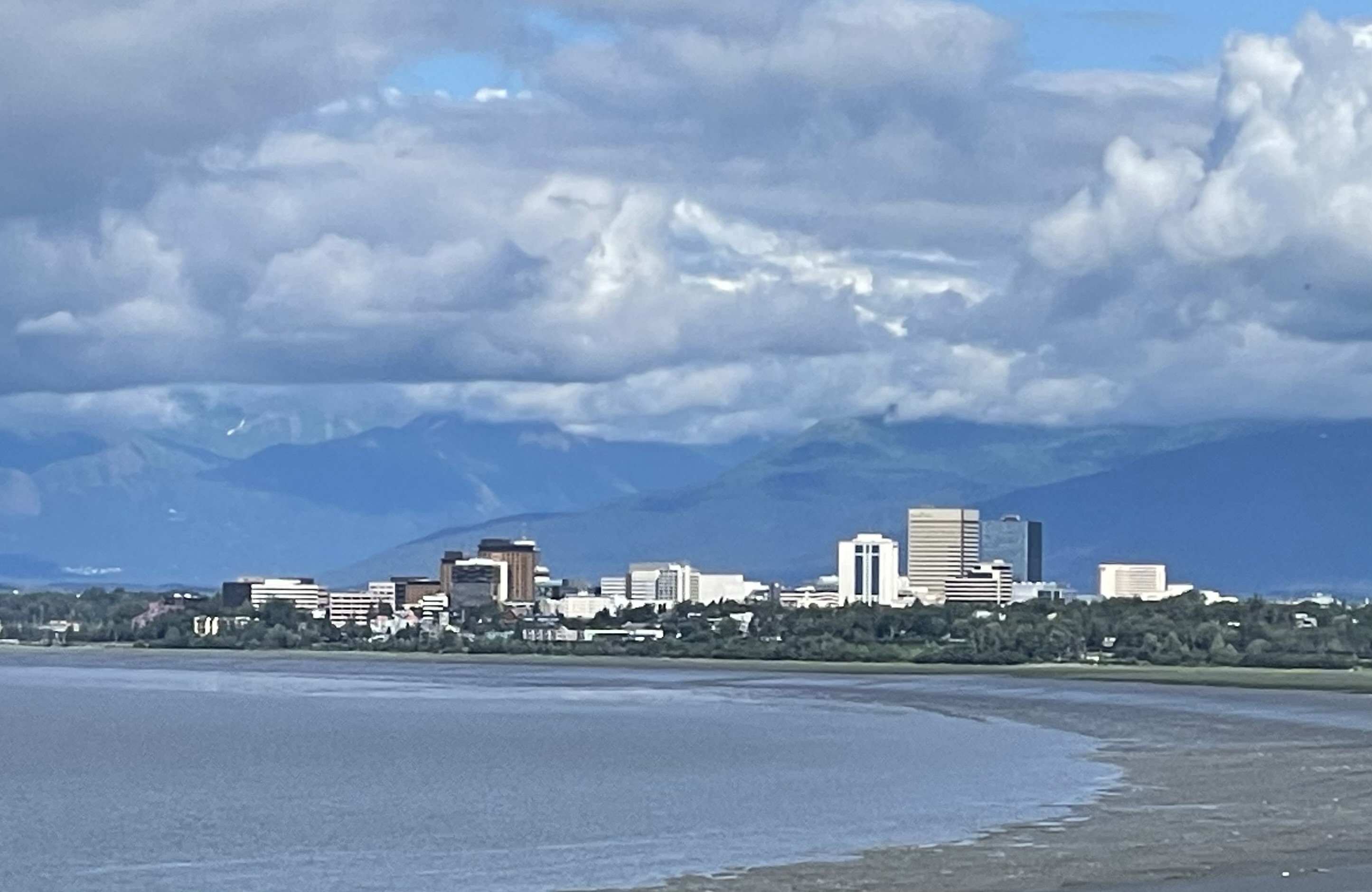
The isolation of the rural villages was juxtaposed against the few large population centers such as Fairbanks, Juneau, and the largest of them all, Anchorage, which more than 30% of the state’s population calls home.

Our approach to Anchorage
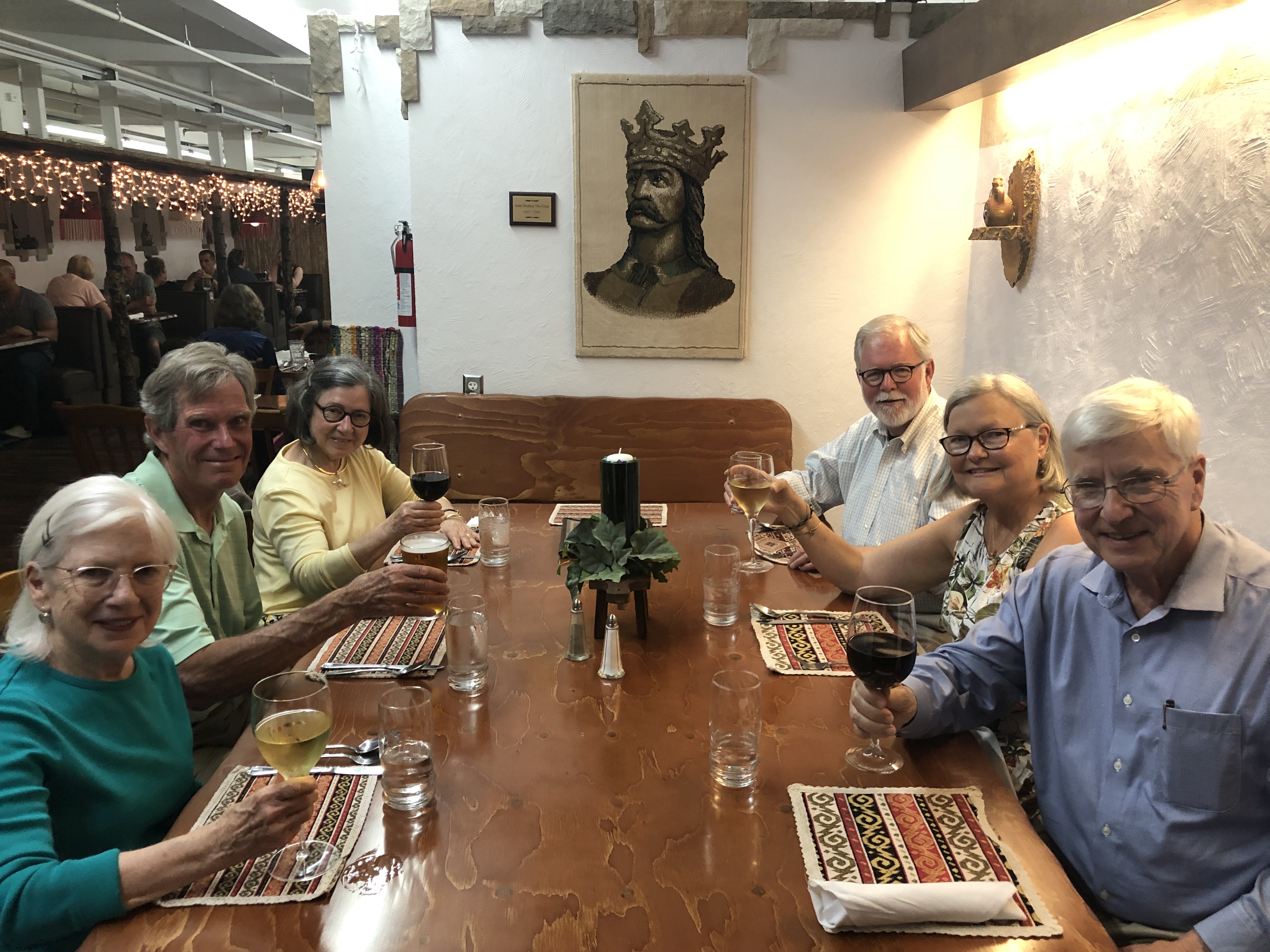
We join a group of our fellow NTT travelers to toast our explorations over Moldovan food (and a Russian server) at Soba Restaurant in Fairbanks.

This tune Song of Alaska by the folk duo of JoAnn and Monte was the theme for the film Aurora Hunter by photographer Todd Salat. I saw this in our Fairbanks hotel and was mesmerized by the beautiful images of sunrises, sunsets, and the Northern Lights.

A beautiful Alaskan sky at sunset

In its beauty and simplicity, Song of Alaska seems to fit the landscape I experienced over the past two weeks. Enjoy.

More to come…

DJB

For other Alaska-related posts on MTC see:


Mendenhall Glacier and all other photos by DJB except where noted.

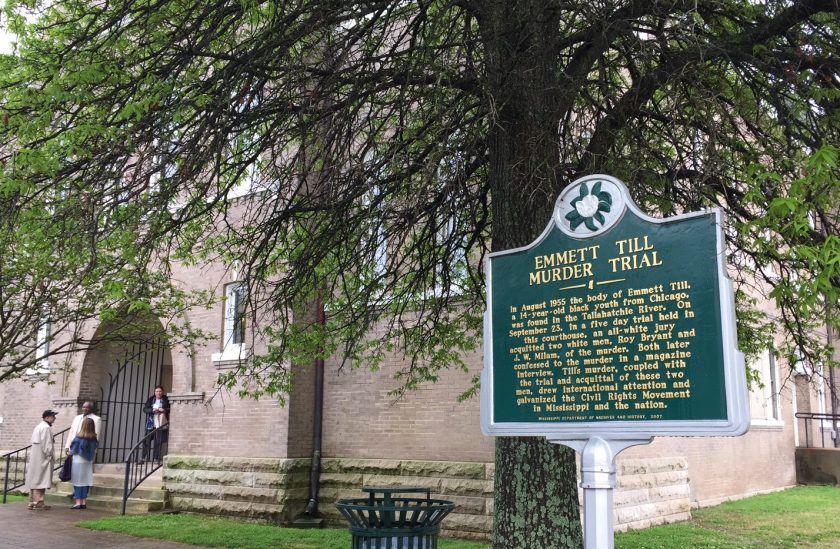
Site of Till Murder Trial

Moving us forward

Two days ago, on what would have been Emmett Till’s eighty-second birthday, President Joe Biden established the Emmett Till and Mamie Till-Mobley National Monument. It covers three historic sites in Mississippi and Chicago: the site in Graball Landing, Mississippi, where Till’s body is believed to have been pulled from the Tallahatchie River; the Chicago church where mourners held Till’s funeral; and the courthouse in Sumner, Mississippi, where an all-white jury acquitted Roy Bryant and J.W. Milam.

Vice President Kamala Harris opened an event to mark Biden’s designation of the national monument with what historian Heather Cox Richardson describes as “a searing reminder of what those determined to make the United States a country defined by white supremacy can do.” The Vice President said, “We gather to remember an act of astonishing violence and hate and to honor the courage of those who called upon…our nation to look with open eyes at that horror and to act.”

In August 1955, fourteen-year-old Emmett Till, a Black boy from Chicago, was visiting relatives in a small Mississippi town. After the wife of a white man named Roy Bryant accused the boy of flirting with her, Bryant and his half-brother, J. W. Milam, kidnapped Till, brutally beat him, mutilated him, shot him in the back of the head, and dumped his body in the Tallahatchie River. The county sheriff directed that the body be buried quickly, but his mother insisted that her son’s body be returned to Chicago. 

There, she insisted on an open-casket funeral. “Let the world see what I have seen,” she said.

Till’s murder became a symbol of what would happen if men were not called to account for their actions and a rallying cry to make sure such a society of white supremacists could not survive. 

I was with a group of National Trust staff and members who visited the Mississippi Delta in 2018. As I wrote at the time, perhaps the most meaningful and moving part of the entire weekend was the 90 minutes we spent at the courthouse in Sumner, where the murderers of young Emmett Till were tried and acquitted in 1955, setting off events that led to the modern Civil Rights movement.  Visitors are invited to “engage in the story of Emmett Till, explore your own story, and create a new emerging story with us.”

At its best, memory is a poet and not a historian.  But not all recollections are correct, and some are purposefully misleading, including “Lost Cause” memories told by my beloved grandmother and the whitewashed versions of history currently being promoted in places such as Florida.

Sumner Courthouse
Courthouse in Sumner, Mississippi

It is important to bring this past into the present, where we are still grappling with the racism that led to Till’s murder and the murder through lynching of at least 4,000 African Americans from 1877 – 1950.  In that restored courthouse, we read aloud an apology from citizens of Tallahatchie County to the family of Emmett Till.  One of our National Trust Council members spontaneously used that venue to speak from the heart about his mother’s recollections as a young African American woman in the Delta who was only five years older than Till.  This is a historic site that exists to tell the story of Emmett Till in order to move people forward.

You don’t have to be a historian to play a role in the telling of the full American story.  I happened to be with attorney Bryan Stevenson — the dynamic founder and head of the Equal Justice Initiative — soon after my visit to Sumner and was reminded of the work we all have to do when he said, “injustice prevails where hopelessness persists.”

If we want to build communities and a nation full of hope, it is important that we set forth a new narrative about the injustices in our lives, past and present. As Richardson wrote last evening on the 75th anniversary of the desegregation of the armed forces by President Harry S. Truman in 1948, the White House statement celebrating that anniversary did more than acknowledge it and praise today’s multicultural military. It recounted the history of Black service members from the American Revolution to the present.

Taken with yesterday’s quite comprehensive history of the 1955 murder of 14-year-old Black child Emmett Till, it seems as if the White House has found a simple way to push back on the whitewashed history taught in places like Florida: making the country’s real history easily available.
Historic sites and national monuments that tell the country’s full story can be good places where we can begin to understand that past, heal our divisions, and move people forward.

More to come…

DJB

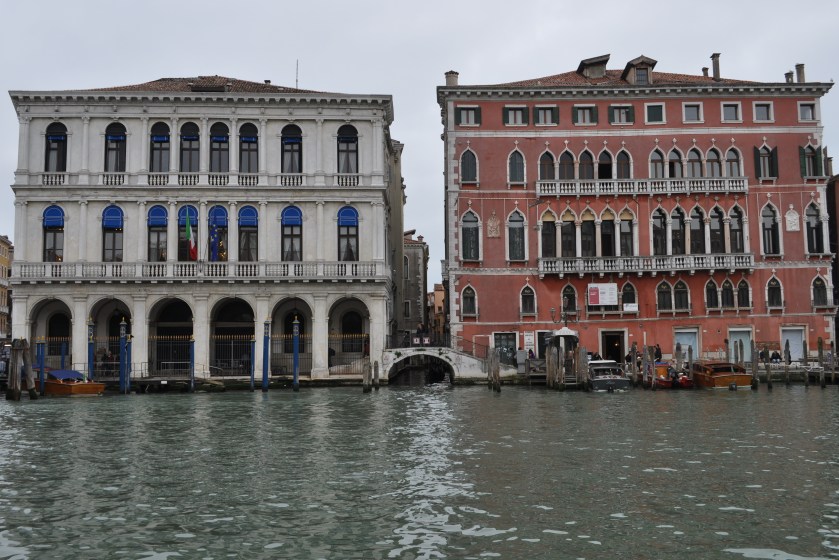
Along the Grand Canal

Destroying what is beautiful

When the first sentence of a crime novel begins “The body floated face down in the murky water of the canal,” there’s a very good chance you are being transported to Venice. Long-time fans of the genre could also tell you instantly that you have picked up a book by one of the masters of the mystery novel and are about to be introduced to Commissario Guido Brunetti. Both assumptions would be correct.
Death in a Strange Country (1993) by Donna Leon is the second in what has become a 32-book series featuring the Venetian detective Guido Brunetti. In her first novel, Death at La Fenice, Leon describes Brunetti as “a surprisingly neat man, tie carefully knotted, hair shorter than was the fashion; even his ears lay close to his head, as if reluctant to call attention to themselves. His clothing marked him as Italian. The cadence of his speech announced he was Venetian. His eyes were all policeman.”

Brunetti is called down to the canal much-too-early in the morning to take over the investigation of the death of the young victim, an American serviceman who at first glance appears to have met an unfortunate end after a mugging. However, several things don’t appear right — from the angle of the knife blade that killed him to the frightened reaction of his superior officer, a young American doctor sent to identify the body, to something found in his apartment that leads Brunetti to believe that someone is working hard to make this death-from-mugging seem all-too-convenient.

In a fast-moving and briskly written story, Leon — who was born in New Jersey, lived for 30 years in Venice, and now resides in Switzerland — takes the reader into the seamier side of the beautiful city. Along the way we meet the cast of characters who make up Brunetti’s life: his vain and pompous superior, Giuseppe Patta; his fellow policeman, the detective sergeant Lorenzo Vianello; the medical examiner Ettore Rizzardi who often works out of the morgue on the city’s cemetery island; Paola Falier, Brunetti’s wife and a university lecturer in English Literature who is a delightful and loving foil for her husband; Paola’s father and Brunetti’s father-in-law, the wealthy and connected Orazio Falier; and his children Raffaele and Chiara. Leon once said that she wrote Brunetti’s character so that she would like him, and the reader quickly comes to the same conclusion.

The emotional and frightened response of the young American doctor sent to identify the victim, Captain Terry Peters, is among the first signs that Brunetti sees that something could be amiss. She is — like Sergeant Mike Foster, the victim — young, attractive, and oh-so-American. We learn later that they were also lovers, one of many secrets that Brunetti uncovers as he works his way through Venice and to the nearby American military base in Vicenza. The tale becomes darker as he uncovers evidence of U.S. military base collusion with Italian and international business interests in the disposal of toxic waste. As one gets closer to the end, we fear that Brunetti’s great detective work will come to naught when faced with the might of the military-industrial complex. However, a distraught and vengeful Sicilian mother provides some small sense of justice in this world of deceit and destruction of things beautiful and meaningful.

Leon writes about Venice with love and affection, while recognizing the city’s issues. She is less understanding with the Italian government’s corruption. And she is unsparing in her take on the U.S. military, its contractors, and Americans in general. When Brunetti first visits the base, he is fascinated to learn that it has a supermarket, bowling alley, cinema, and “even a Burger King.” His host laughs at the policeman’s surprise as he says, “It’s remarkable, isn’t it? There’s a whole little world here, one that has nothing to do with Italy. Out there lies America,” he gestures out the window. “It’s what we’re all going to become, I think.”

To Leon, and so many others, this is a sad outcome of the American century. Paola and Brunetti are discussing his visit to the base and she asks him if everyone still smiles all the time. I wonder why that is, he muses. And Paola sets him straight.

Why shouldn’t they smile, Guido? Think about it. They’re the richest people in the world. Everyone has to defer to them in politics, and they have convinced themselves, somehow, that everything they have ever done in their very brief history has been done for no purpose other than to further the general good of mankind. Why shouldn’t they smile?

Well, the 2016 election sure ended that myth.

A long-time friend gave this book to me when he heard I was becoming familiar with mystery novels. Donna Leon, he suggested, was someone I needed to know, and he was right. Death in a Strange Country was a very satisfying work, and simply whets the appetite for some more of that great Italian architecture — damp and crumbling as it is — as well as a glass of wine and a cup of espresso.

More to come…

DJB


To see reviews of the other books in my year of reading mystery novels, click here for JanuaryFebruaryMarchApril, May, and June.


The Weekly Reader links to written works I’ve enjoyed. I hope you find something that makes you laugh, think, or cry. 


Photo on the Grand Canal by DJB

Names matter

When there are disputes about history, we often find that they occur at places where the meaning and memories can bring forward powerful emotions. Places where the underlying causes and events are either unclear or not recognized.

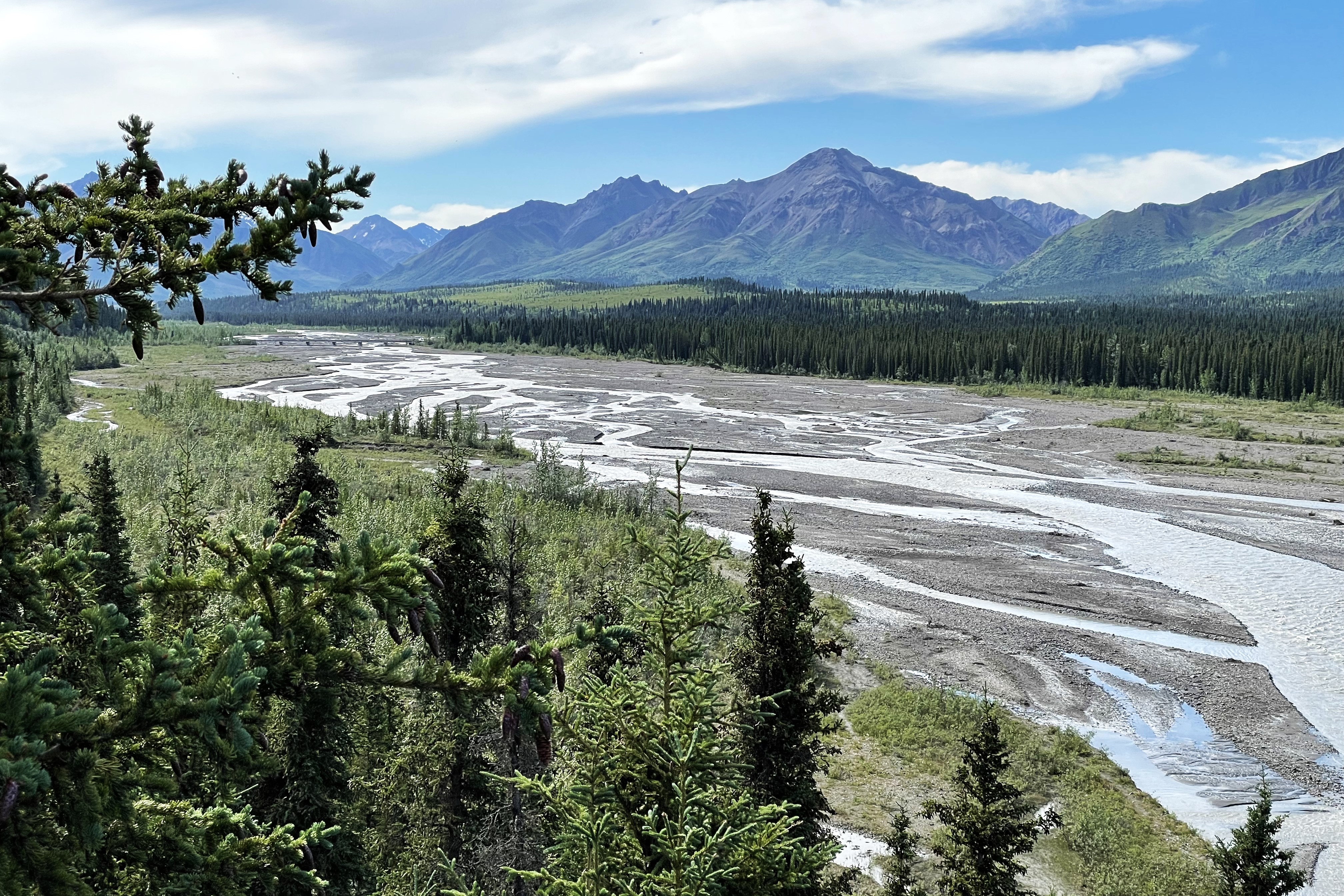
Teklanika River in Denali National Park and Preserve

Disputed history can also arise simply out of different perceptions. If we’re being truthful, we’d admit that there are many perceptions around death. Perceptions that can be deeply felt yet that ultimately must be considered part of life’s mysteries.

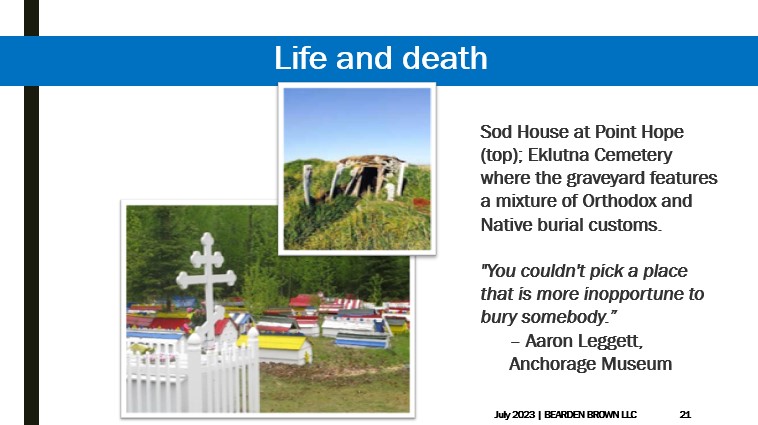
There is an old Alaska Native joke that people used to live below ground and bury their dead above ground and after the white man came they had to live above ground where it was cold and bury their dead in the permafrost. Different perceptions as to what’s important.

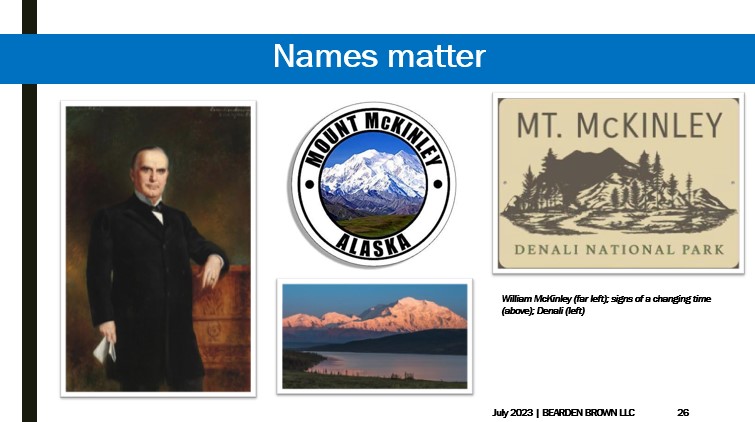
Slide from my presentation on the Alaskan Glaciers and Inside Passage Tour

Sometimes disputed history begins with a name. For example, think of the different names Americans give our Civil War.

I’ve just completed a visit to Denali National Park and Preserve in Alaska. For more than 100 years, most Americans knew of the highest peak in North America as Mount McKinley. That is now changing.

Stepping into the Alaska Railroad’s viewing car for the scenic ride to Denali National Park and Preserve
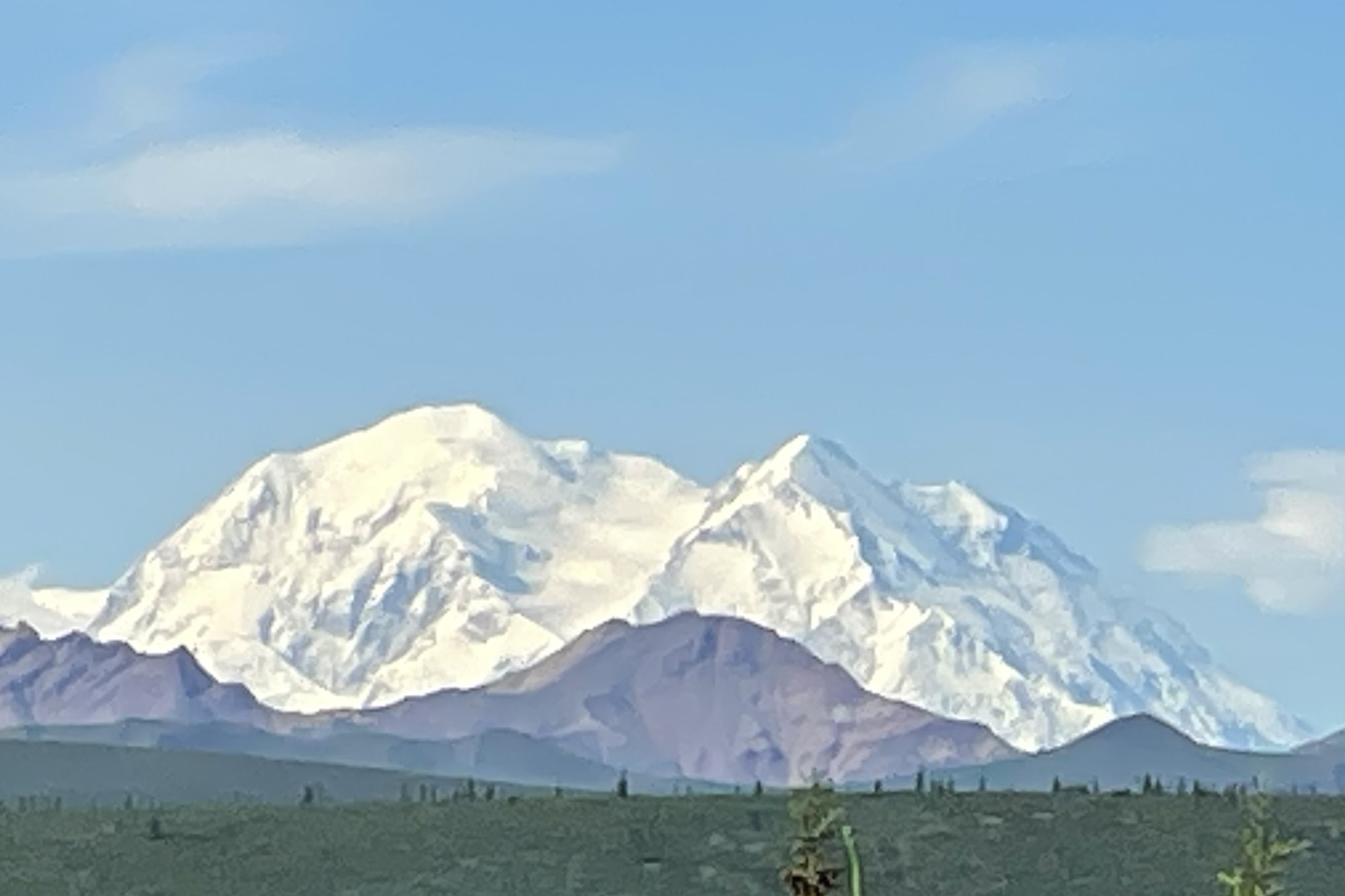
Our first view of Denali from the viewing car of the Alaska Railroad

Nine different Native groups have used unique oral place names for the mountain, words that translate as “the tall one” and “mountain-big.” In 1794 George Vancouver referred to the “stupendous snow mountains” while Russian explorers had several names for the peak, including “great mountain” and “Big One.”

Disputed or difficult histories can be tied to places of destruction, colonialism, enslavement, exploitation, death, and remembrance even when that’s not the prevailing narrative being told or interpreted at those places in this moment. Battlefields, plantations, monuments, Native lands, and more often evoke strong emotions where the memories differ.

A couple of decades after the US purchased Alaska, gold prospector Frank Densmore explored the interior and subsequent prospectors along the Yukon River started calling the mountain “Densmore Mountain” or “Densmore Peak.”

“Mount McKinley” emerged after a gold prospector named William Dickey (who was an admirer of President-elect McKinley and his support for the gold standard) used the name in an 1897 New York Sun article. Although the new president had no direct connection to Alaska, the name Mount McKinley was popularized following the president’s assassination in 1901.

Slide from my presentation on the Alaskan Glaciers and Inside Passage Tour

Mount McKinley became established in the American vernacular in the early 1900s, and it was enshrined when a National Park was created in 1917 with that name. However, there were still many people with connections to Interior Alaska who were disturbed by the dismissal of the Native names and history. 

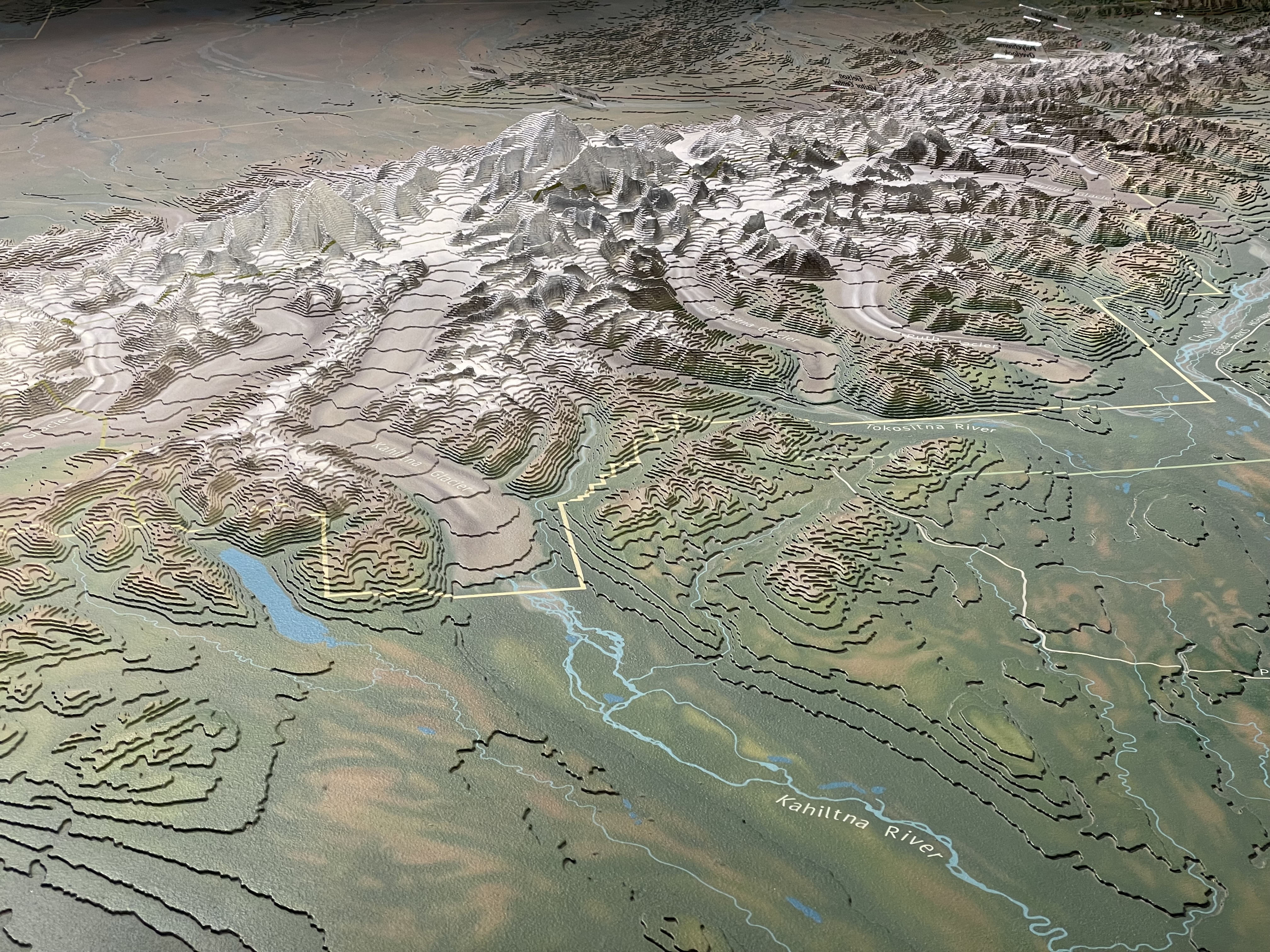
Map of the current boundaries of the heart of the Denali National Park and Preserve

Fast-forward to the 1970s when Alaska’s legislators butted heads with Ohio’s congressional delegation, who wanted the name to continue to honor their native son. The park name was changed in 1980, but the name of Mount McKinley remained in use for the peak for four more decades. Finally in 2015, the Secretary of the Interior officially changed the name to Denali, shining a light on the long human history of the park — not just the period from the nineteenth century forward.

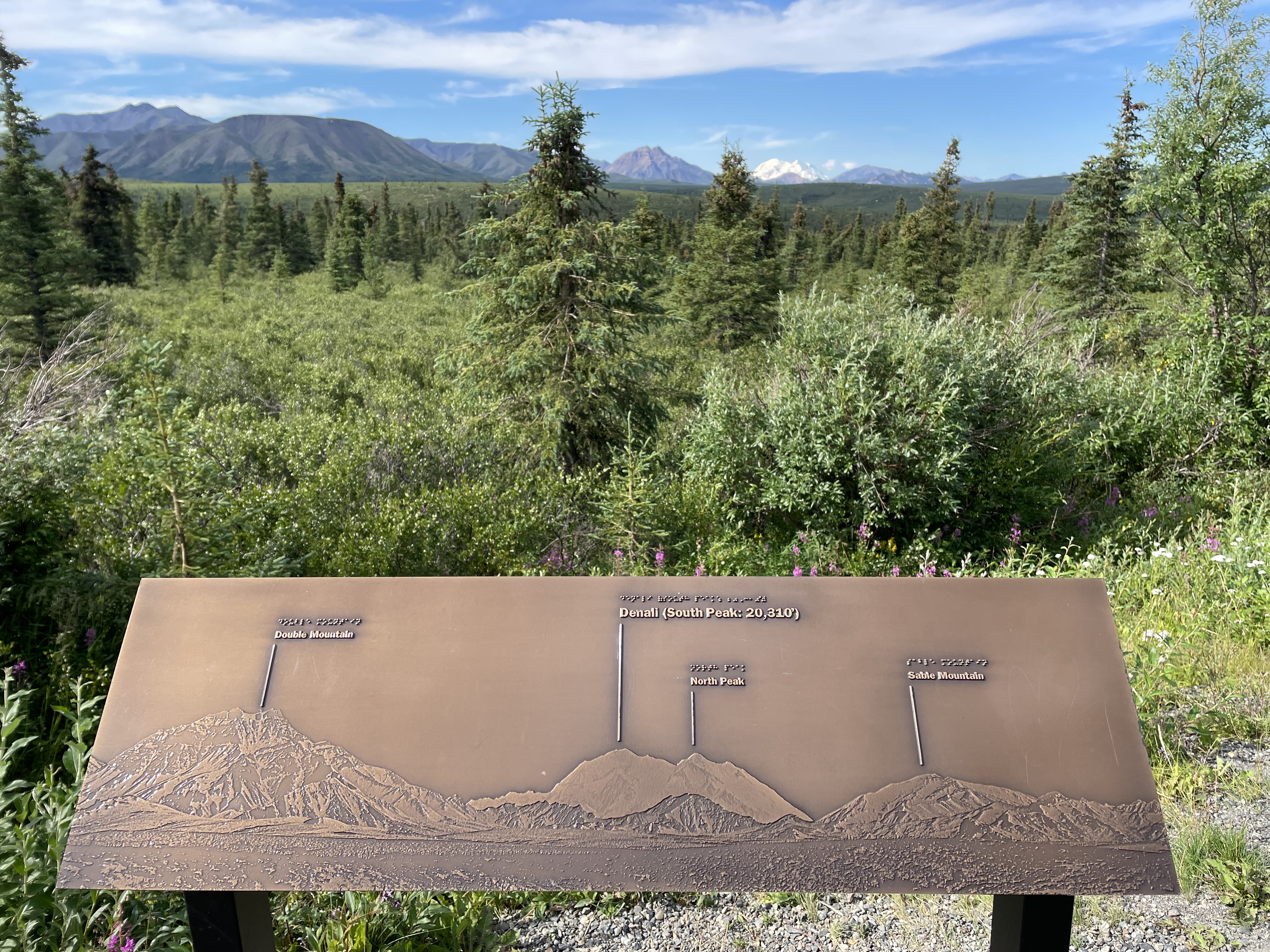
View of Denali from more than 60 miles away, with the elevations of some of the surrounding mountains.

The National Park and Preserve is, of course, more than a name and even more than a mountain.

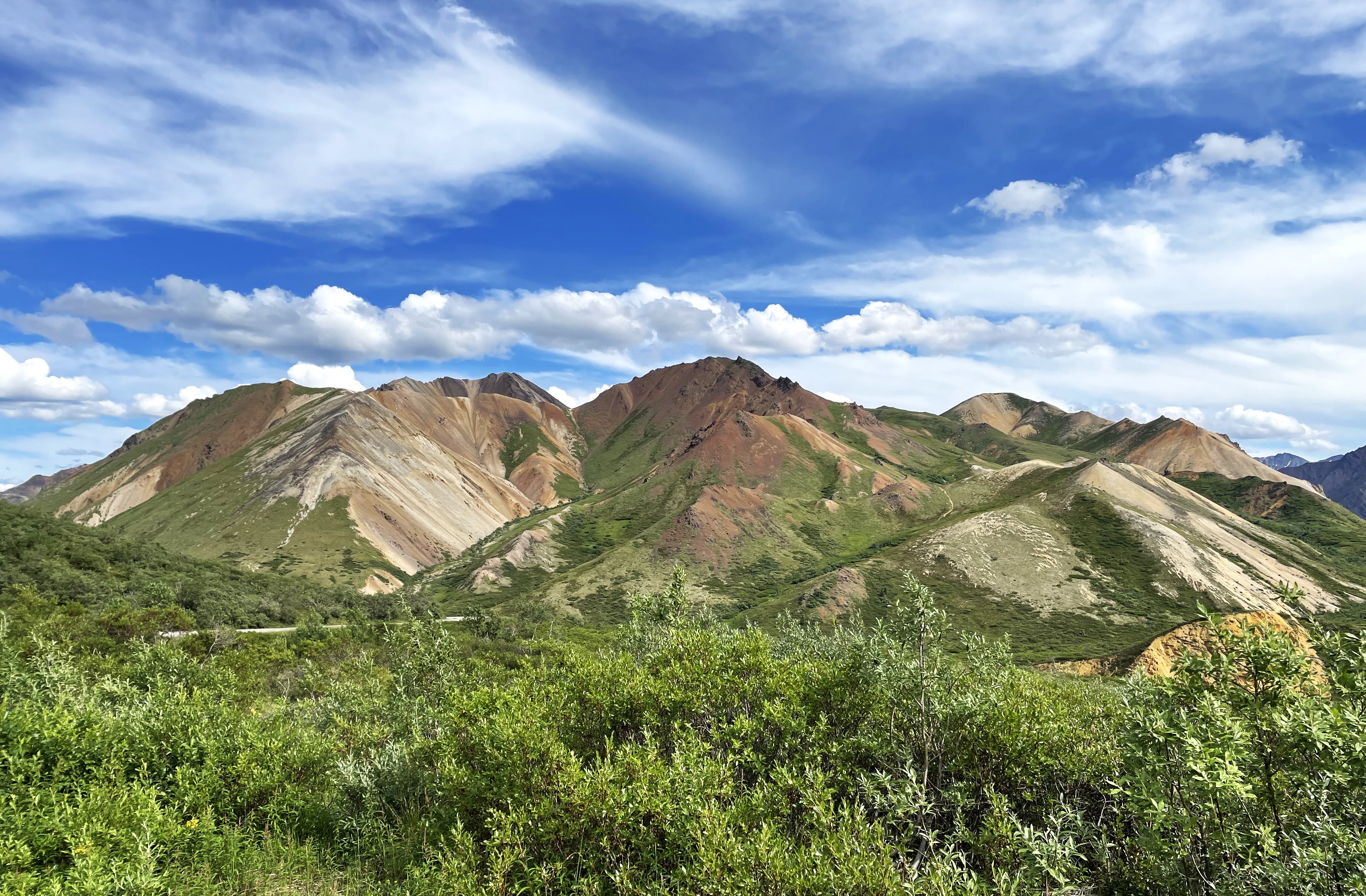
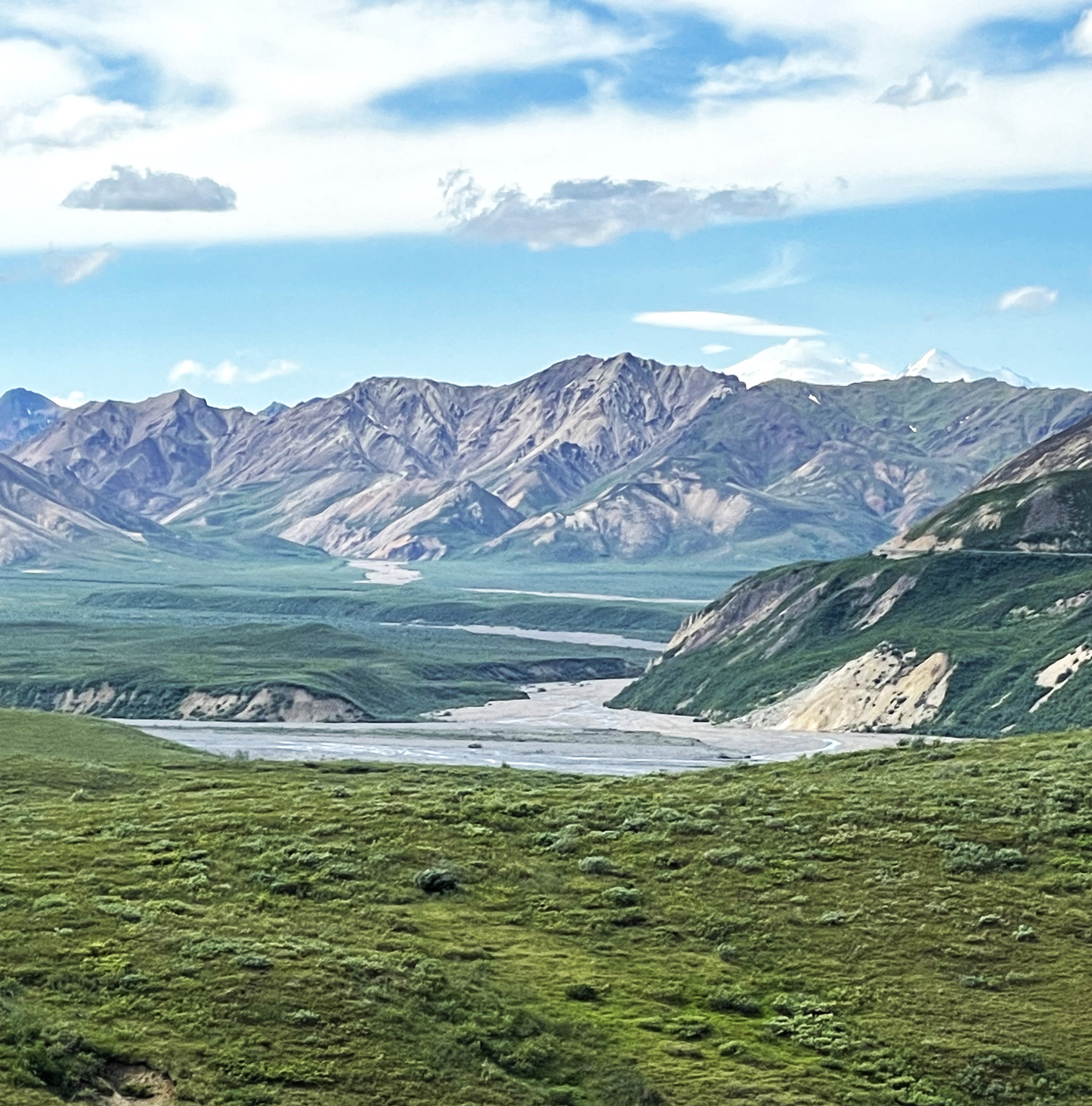
Denali is six million acres of wild land, bisected by one ribbon of road. Travelers along it see the relatively low-elevation taiga forest give way to high alpine tundra and snowy mountains, culminating in North America’s tallest peak, 20,310′ Denali. Wild animals large and small roam un-fenced lands, living as they have for ages. Solitude, tranquility and wilderness await.

We took an awesome six-hour bus ride along that ribbon of road on what was a picture-perfect day. On that tour we saw so many extraordinary vistas as well as wildlife in their natural habitat.

While visiting Denali I’ve considered how much difficult and disputed history comes from perspectives and memories. Perspective is a point of view . . . not the whole view. As the poet Marie Howe notes, “Memory is a poet, not a historian.” While memory is present in our minds, it inevitably points to what is no longer there. And it is shaped, and reshaped, in thousands of ways we seldom recognize or acknowledge.

All of which suggests that there will be differences in how we see the places we visit. And when we discuss hidden histories instead of covering them up, we are broadening our thoughts around the lives and contributions of those whose history has been hidden.

On two beautifully clear days that even astonished the locals, we were able to see part of the wonder of Denali and to be open to the many histories that come together at this exceptional place.

More to come…

DJB

All photos of Denali by DJB

If this was lost, let us all be lost always

The little girl left her parents and began walking upstream, “sometimes in the midst of the ripples, sometimes along the shore.” It was a spring day and her companions were “violets, Dutchman’s breeches, spring beauties, trilliums, bloodroot, ferns.” Her parents lost track of her and thought she had walked downstream. Eventually they put out a call on the hotline of help, and yet there she was “slopping along happily in the stream’s coolness.” Maybe she had taken the right way after all.

“If this was lost, let us all be lost always.”

My heart opened, and opened again. The water pushed against the effort, then its glassy permission to step ahead touched my ankles. The sense of going to the source.

I do not think that I ever, in fact, returned home.

Upstream: Selected Essays (2016) by Mary Oliver begins with this simple story, yet in it we see the guiding light of this insightful poet and writer. Oliver knows that we are very much alike, yet all individuals in our own ways. To truly live life we have to discover that individuality and its source. And in this beautiful and moving set of essays, Oliver describes how she discovered her life as a writer, someone who produces “neither vibrant life nor docile artifact but a text that would put all its money on the hope of suggestion. Come with me into the fields of sunflowers is a better line than anything you will find here” she writes, “and the sunflowers themselves far more wonderful than any words about them.”

Oliver writes words in a way that suggests, but these are suggestions that compel the reader to go to the source of their own lives. Nature — and other writers — are both keys to Oliver’s self-discovery and she writes about them simply yet eloquently. Oliver, more than anything, calls us to pay attention. Her guidance to writers — Pay attention. Be astonished. Write about it. — has taken on special meaning late in my life. “Attention,” she notes at the end of the first essay, “is the beginning of devotion.”

Essays on Walt Whitman, Emerson, Edger Allen Poe, and Wordsworth are interspersed with writings on ponds, turtles, and owls. It all goes together beautifully and is written to be savored. Language to Oliver is “a door — a thousand opening doors! — past myself. I thought of it as the means to notice, to contemplate, to praise, and thus, to come into power.” And while that rippling stream of her youth was important, “clear, sweet, and savory emotion” came in the stories and poems of other writers.

Oliver, like Madeleine L’Engle, sees herself as living in different stages and times of life as she grows older. L’Engle says she is every age she’s ever been. Oliver writes that she is “three selves at least. To begin with, there is the child I was . . . It is not gone, not by a long shot. It is with me in the present hour. It will be with me in the grave.” And then there is the “attentive, social self. This is the smiler and the doorkeeper.”

What this self hears night and day, what it loves beyond all other songs, is the endless springing forward of the clock, those measures strict and vivacious, and full of certainty.

And finally,

…there is within each one of us a self that is neither a child, nor a servant of the hours. It is a third self, occasionally in some of us, tyrant in others. This self is out of love with the ordinary; it is out of love with time. It has a hunger for eternity.

“Writing that loses its elegance loses its significance,” suggests Oliver, who always writes elegantly and yet with moderation. For her, that hunger for eternity is near. “Prayer is the contemplation of the facts of life from the highest point of view.” She suggests Emerson as someone to study, for writing that “is a pleasure to the ear, and thus a tonic to the heart, at the same time that it strikes the mind.”

Teklanika River in Denali National Park and Preserve, Alaska by DJB

She ends this work with a note on aging that strikes my mind at this stage in life.

There is something you can tell people over and over, and with feeling and eloquence, and still never say it well enough for it to be more than news from abroad — people have no readiness for it, no empathy. It is the news of personal aging — of climbing, and knowing it, to some unrepeatable pitch and coming forth on the other side, which is pleasant still but which is, unarguably, different — which is the beginning of the descent. It is the news that no one is singular, that no argument will change the course, that one’s time is more gone than not, and what is left waits to be spent gracefully and attentively, if not so actively.

Upstream is full of thoughtful, attentive essays that are pleasures and tonics, while striking the mind. It is a book that one can return to again and again.

More to come…

DJB

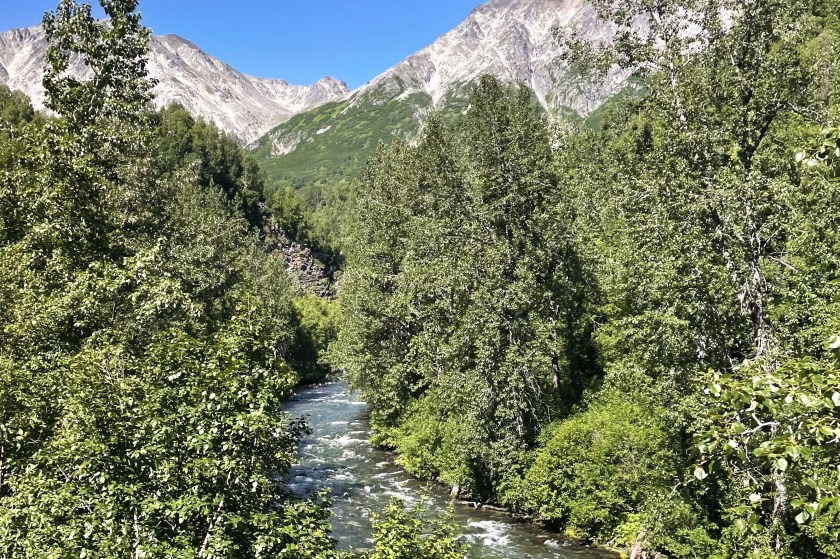
Photo of river along the Alaskan railroad by DJB

You can learn a lot by reading the plaques

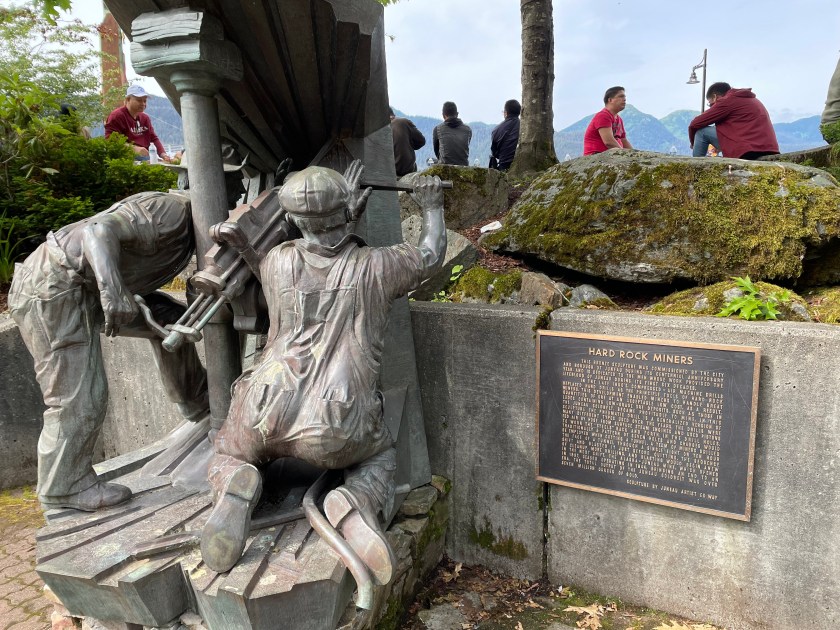
I have been traveling this month, and almost every day I am reminded of the advice given by Roman Mars that I quoted in a 2021 post: always read the plaque.

By following this suggestion, I have discovered that:

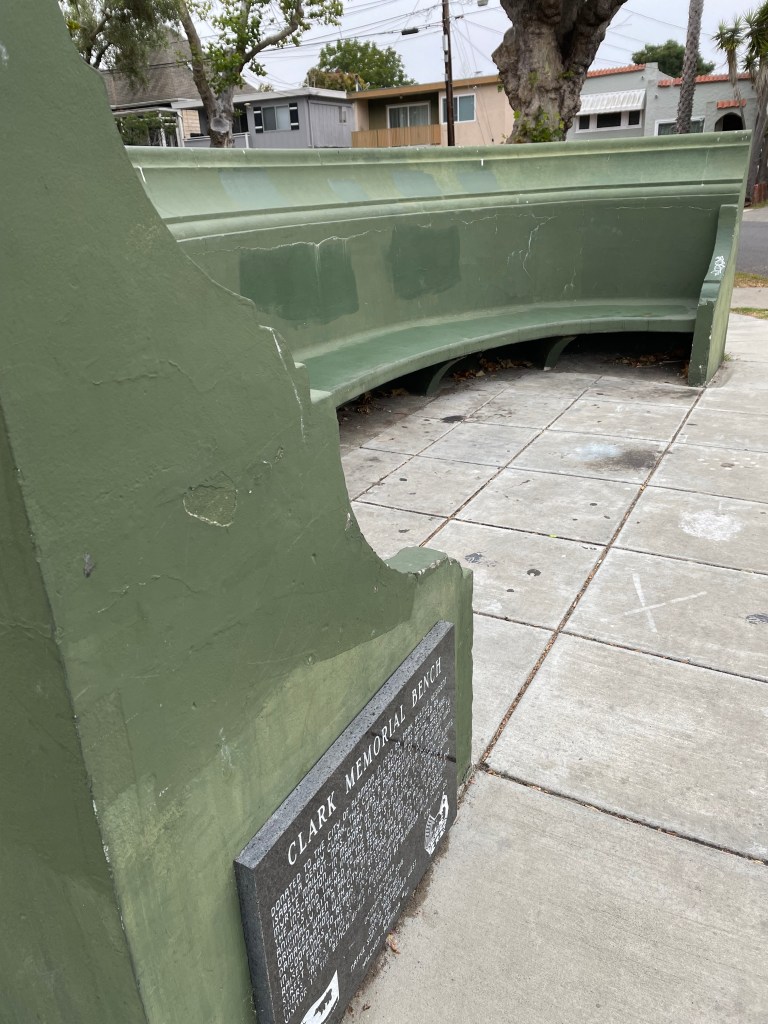
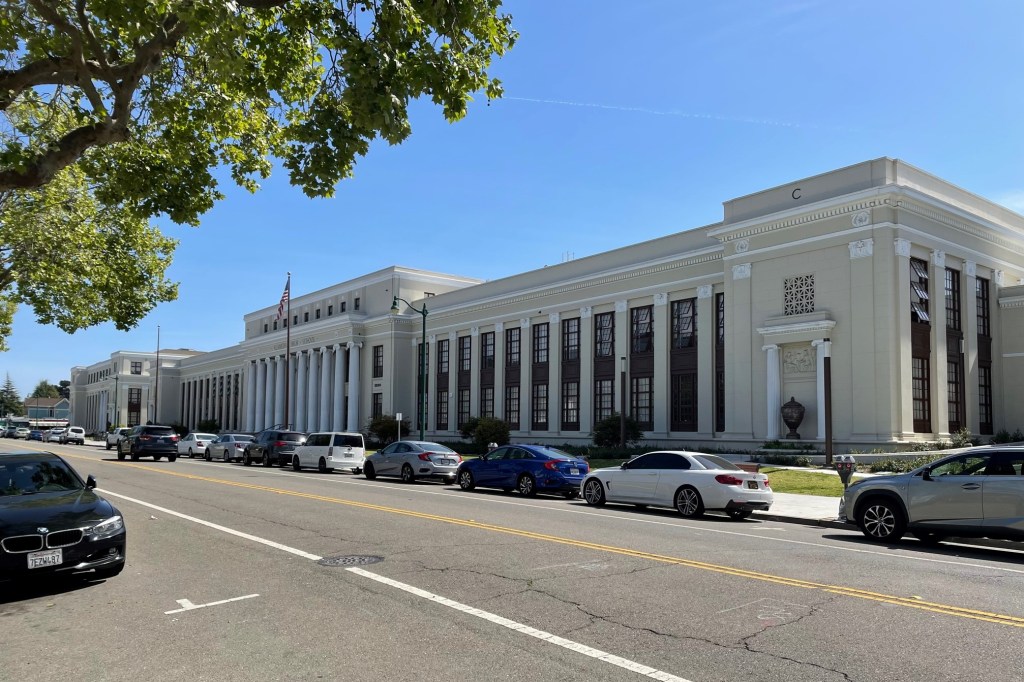
  • Jim Morrison, the lead singer of the 60s rock band The Doors, was a frequent visitor to the Clark Memorial Bench while a student at Alameda High School in Alameda, California.
Alameda High School
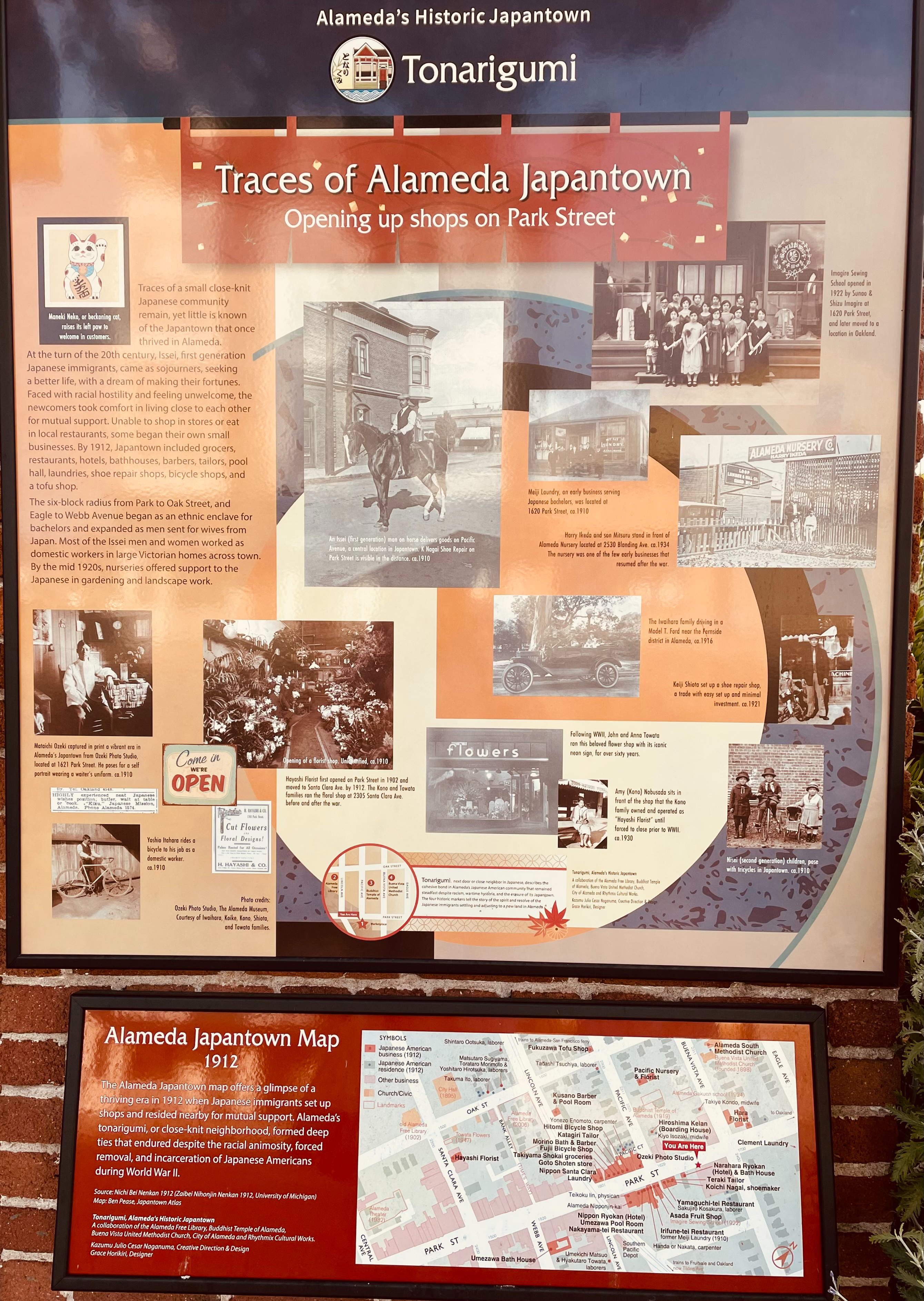
  • The small ethnic enclave known as Tonarigumi or “Japantown” in Alameda was originally inhabited almost entirely by bachelors, but it expanded as men sent for wives from Japan. Most of the men and women were domestic workers in Alameda’s large Victorian homes, but by the mid-1920s, nurseries offered support to the Japanese in gardening and landscape work.
One of Alameda’s many wonderful Victorian-era homes
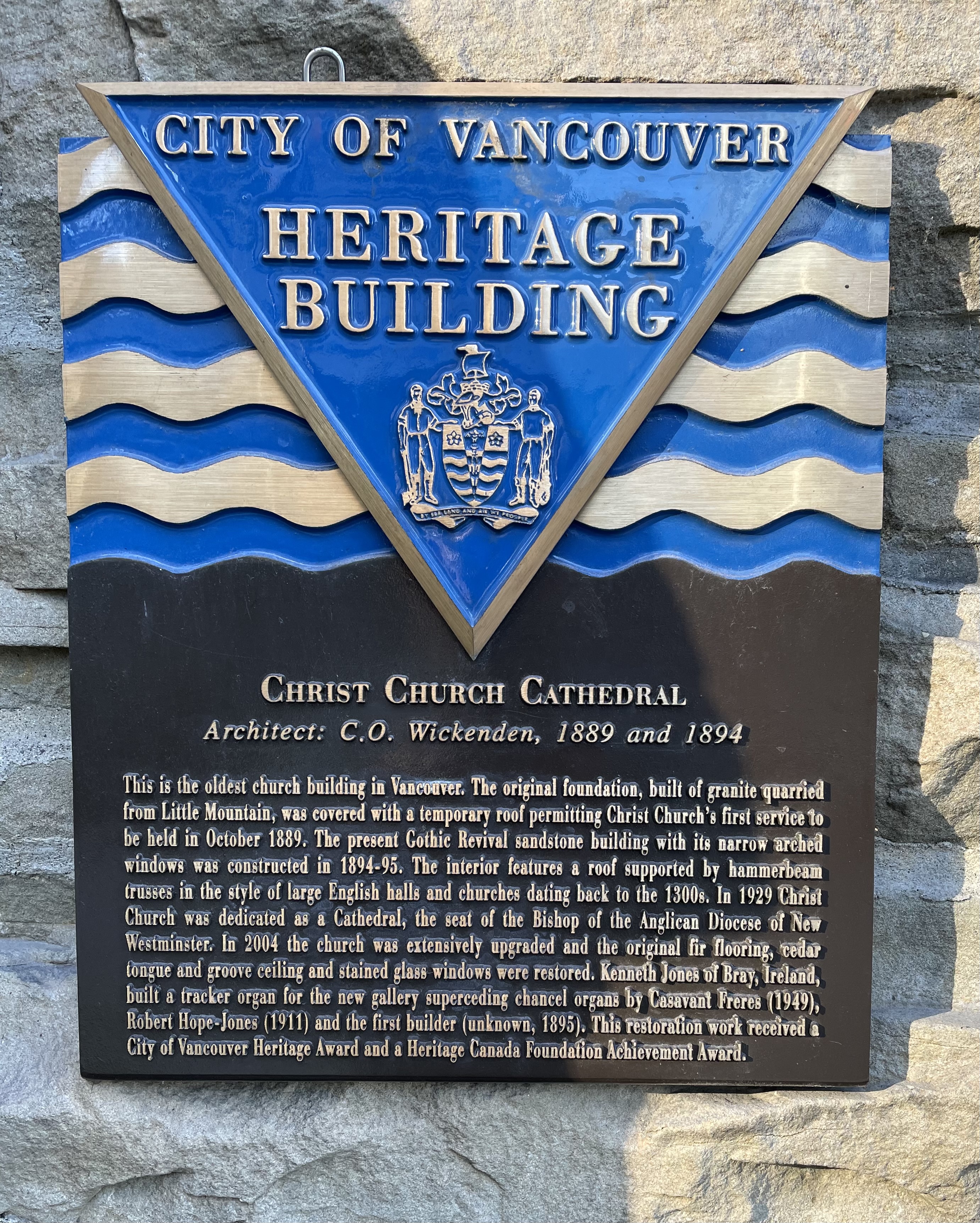
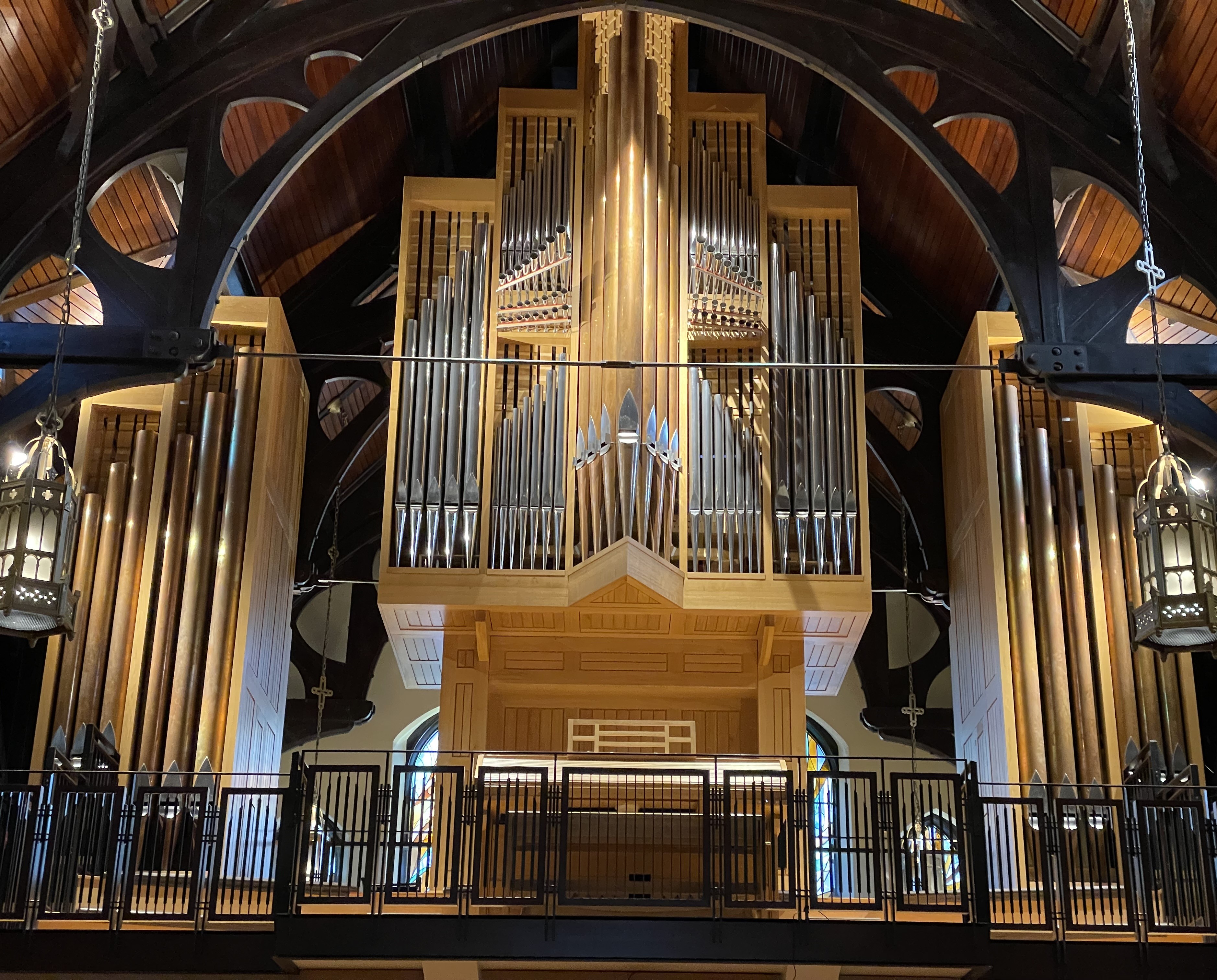
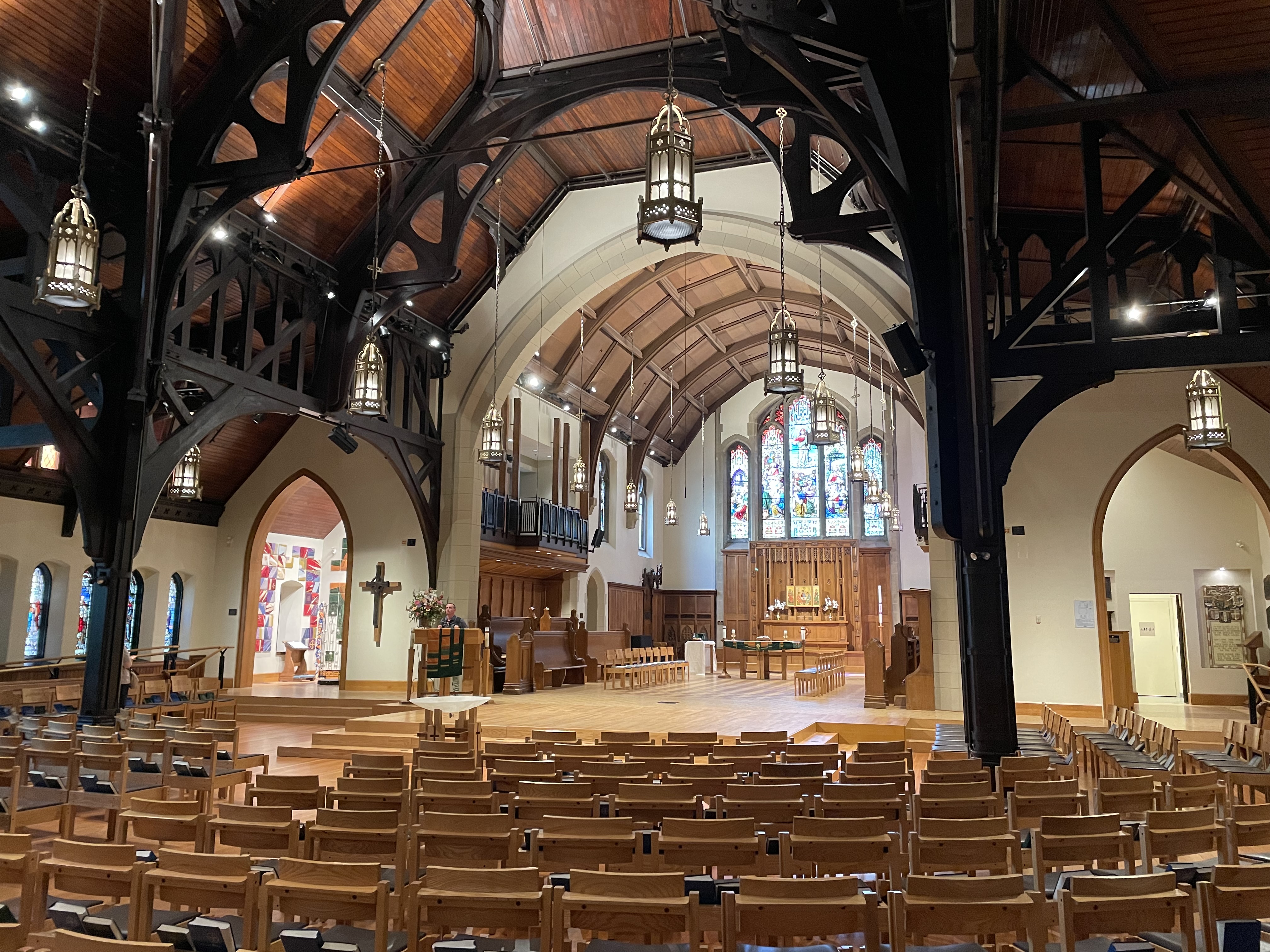
  • Christ Church Cathedral, the oldest church building in Vancouver, has a mechanical-action tracker organ built by Kenneth Jones of Bray, Ireland, in 2004 as part of an extensive renovation and restoration of this beautiful building.
Christ Church Cathedral, Vancouver, BC
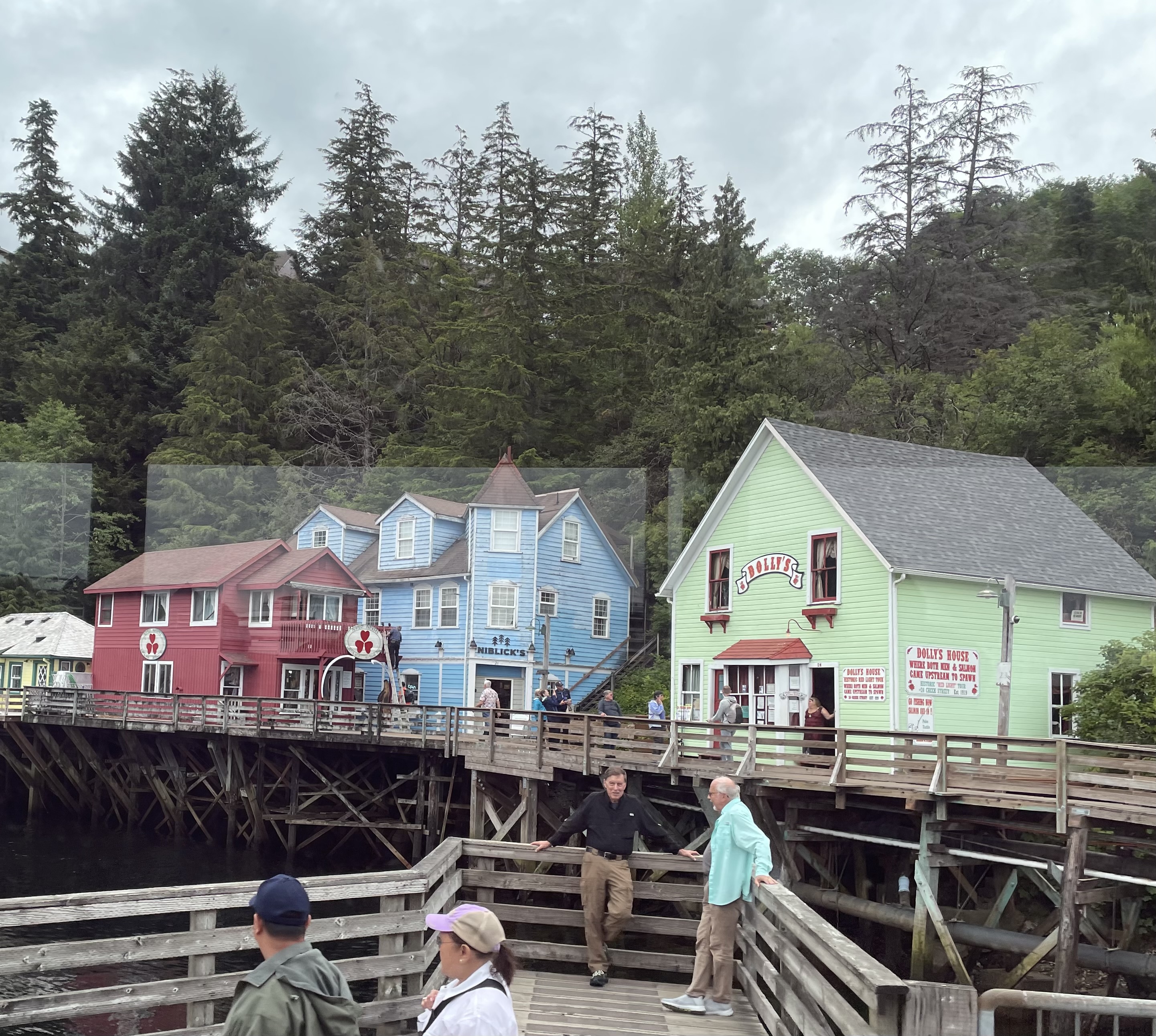
  • Ketchikan makes a BIG deal out of its historic house of ill repute . . . Dolly’s House. As we’ve learned on every stop in Alaska, bordellos were just as important as church buildings in this frontier land. (But I already knew that bit of history, truth be told.)
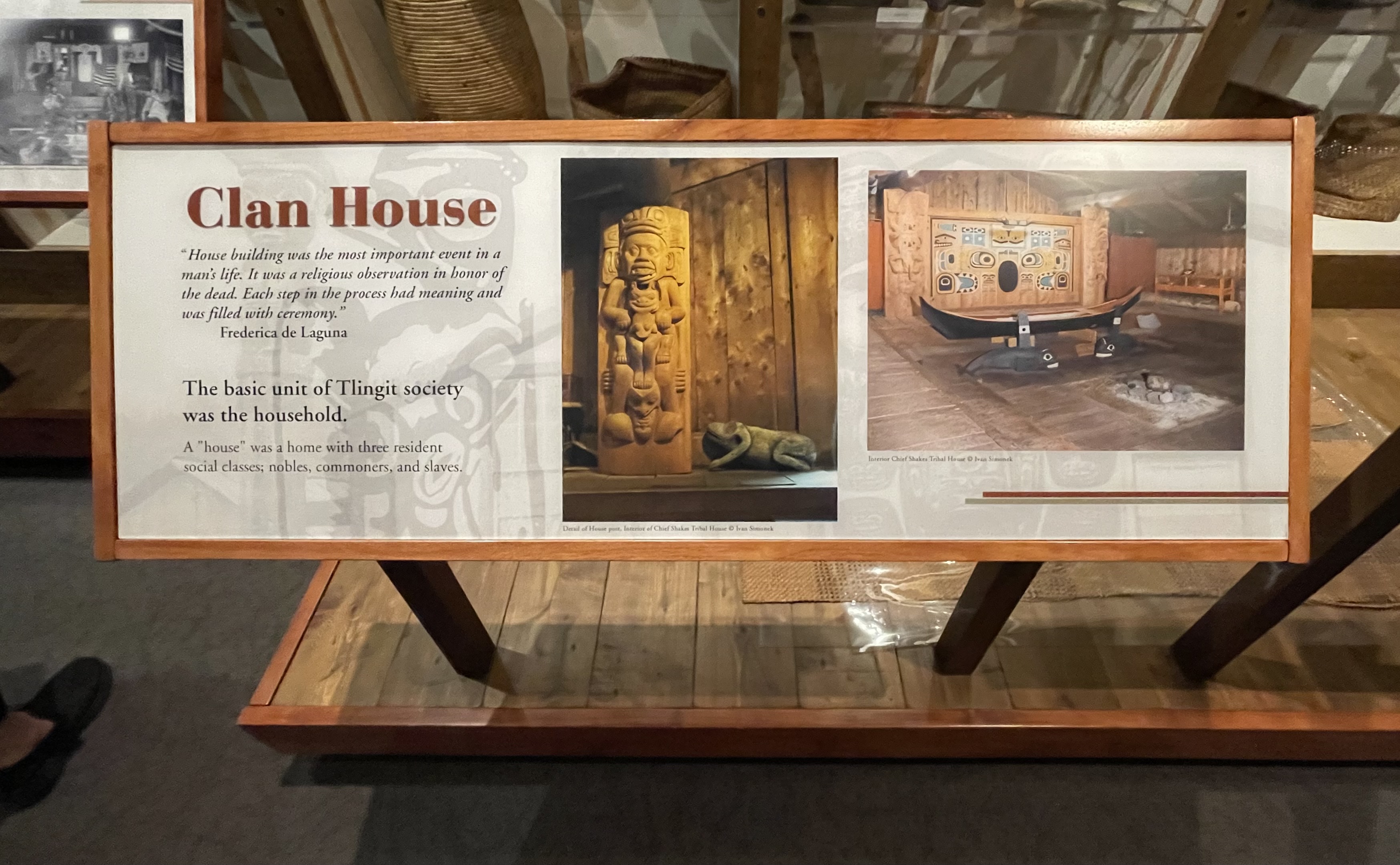
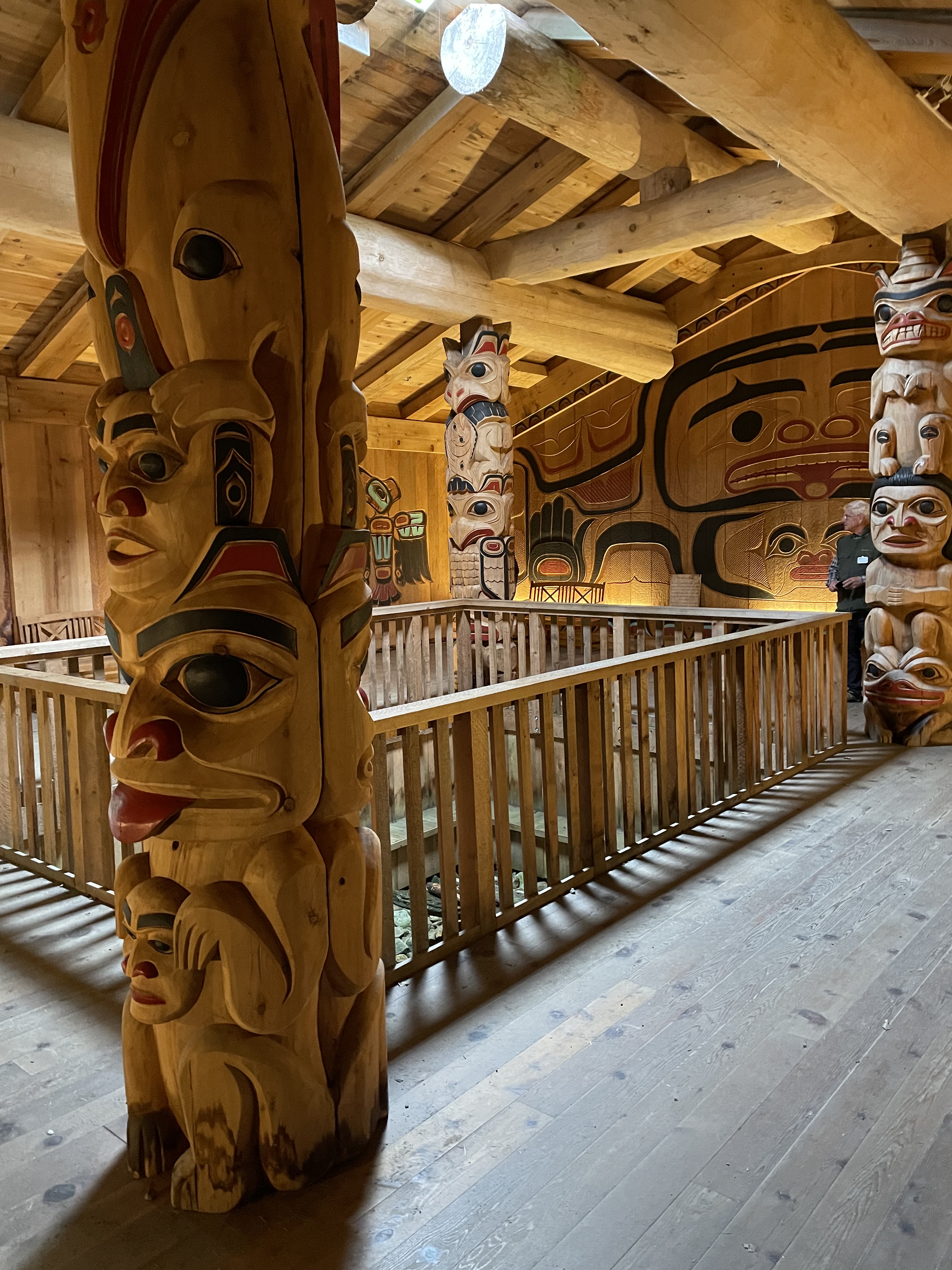
  • The basic unit of the Tlingit society was the household, as seen in the clan house, which were built to be taken apart and moved as conditions and climate required.
Reproduction of a Tlignet Clan House in Ketchikan, Alaska
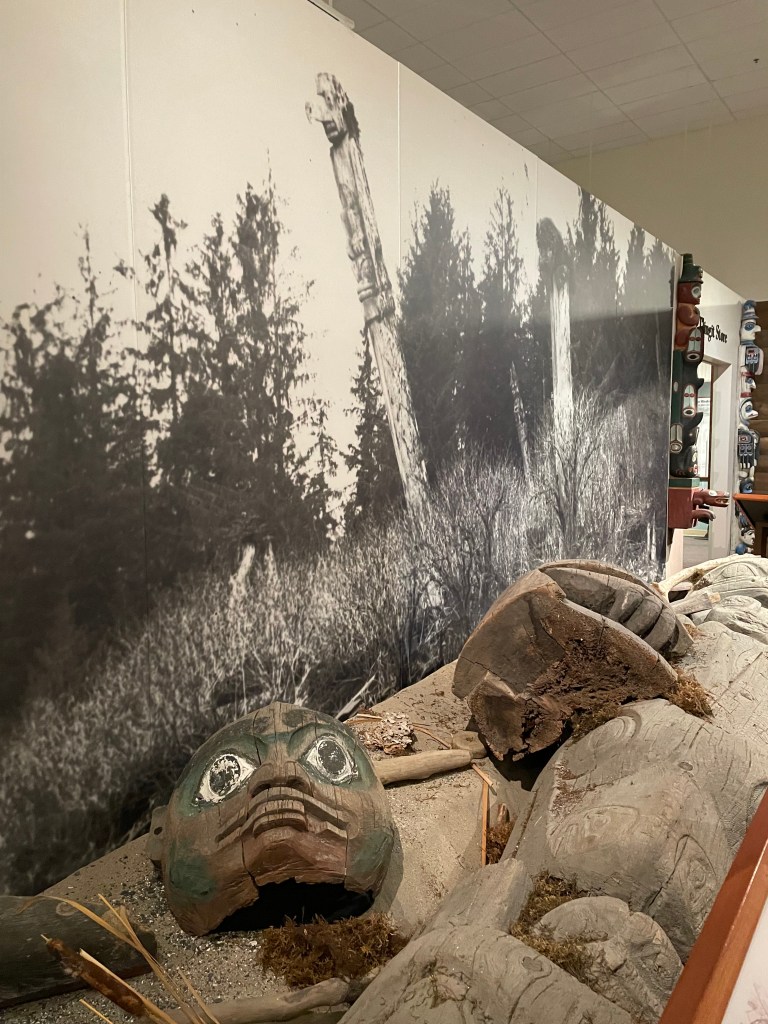
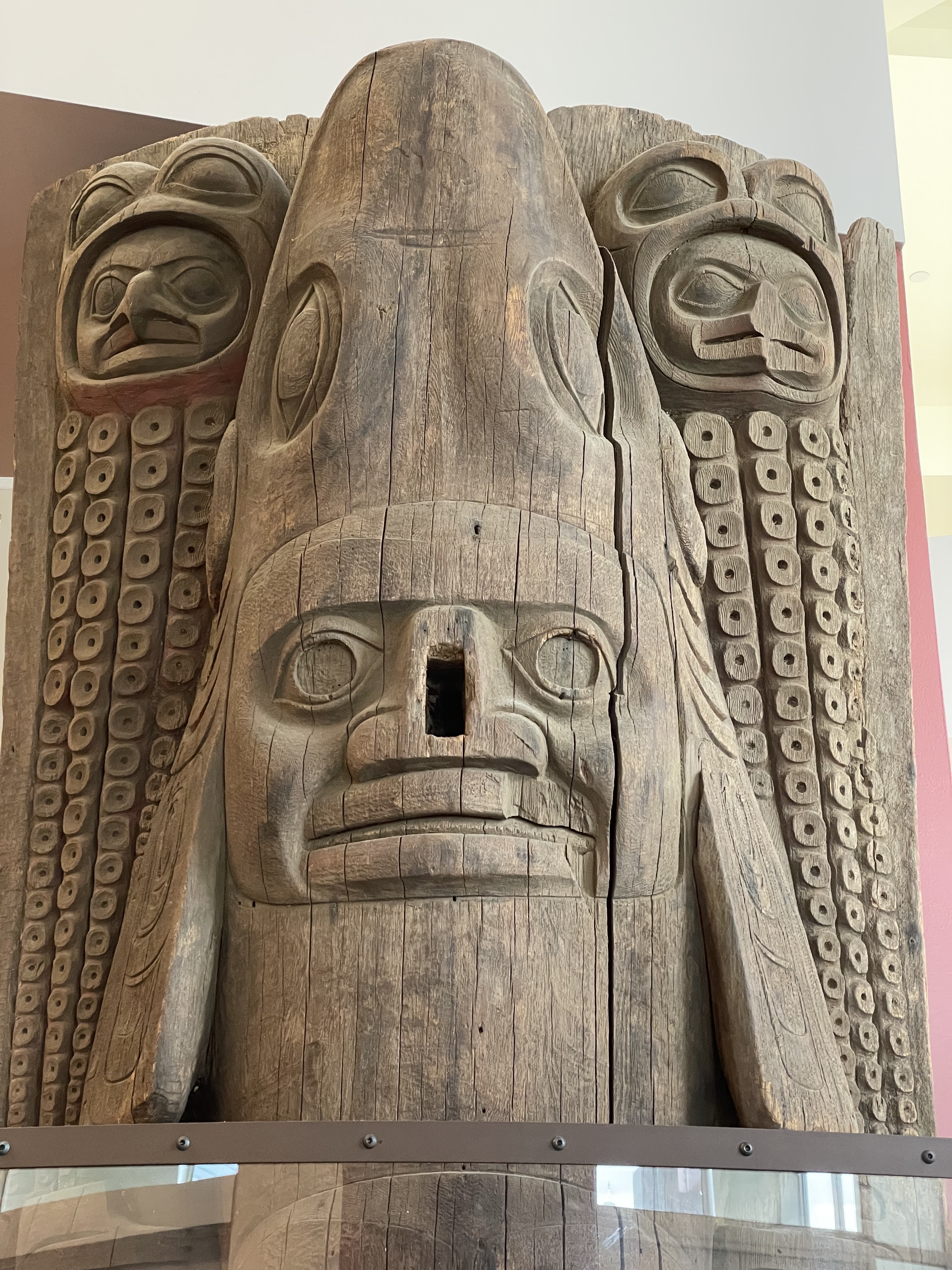
  • Totem poles were originally built to decay into the ground from which they came, but recently — and especially with a decline in master carvers — Alaskans are opting to restore the poles they have. It takes a master carver about a year to carve a large size totem pole.
Historic house totem pole in the Wrangell Museum
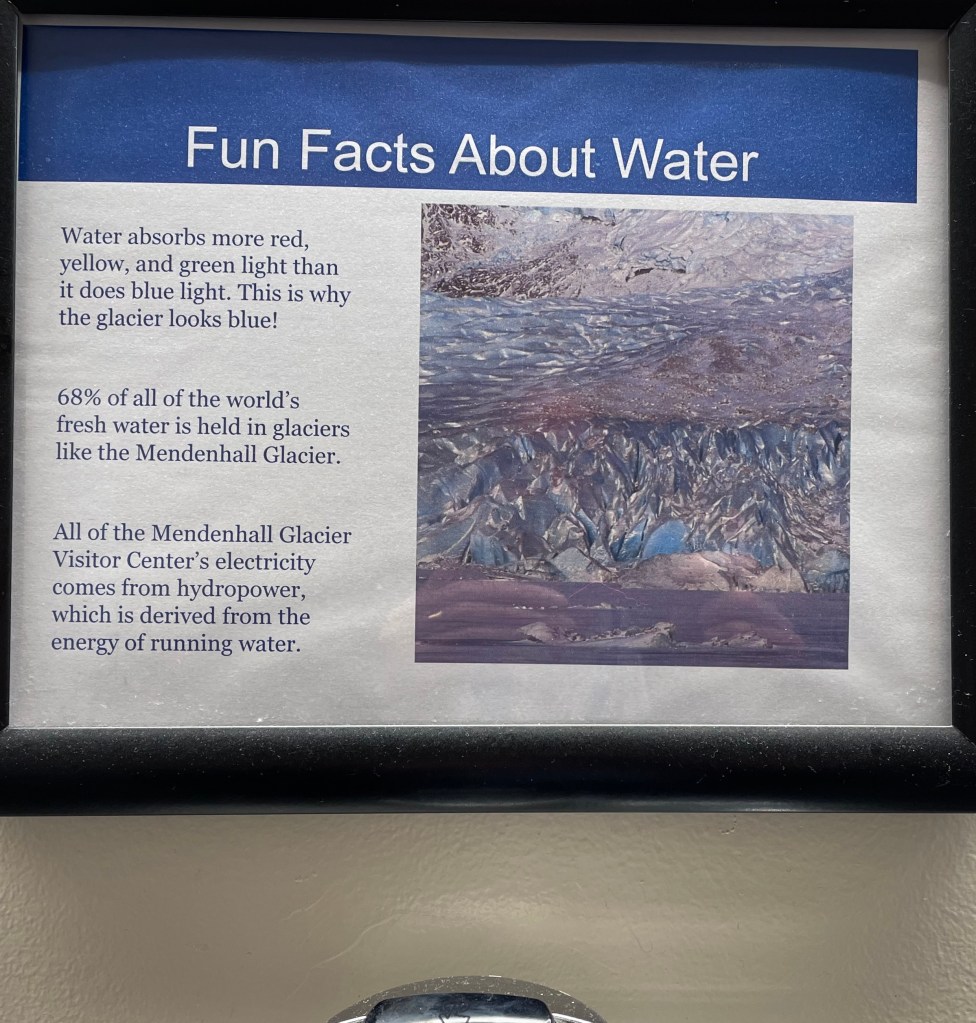
  • Plaques about the water in glaciers can be effectively placed to ensure a large reading public . . . such as in restrooms in the visitor’s center!
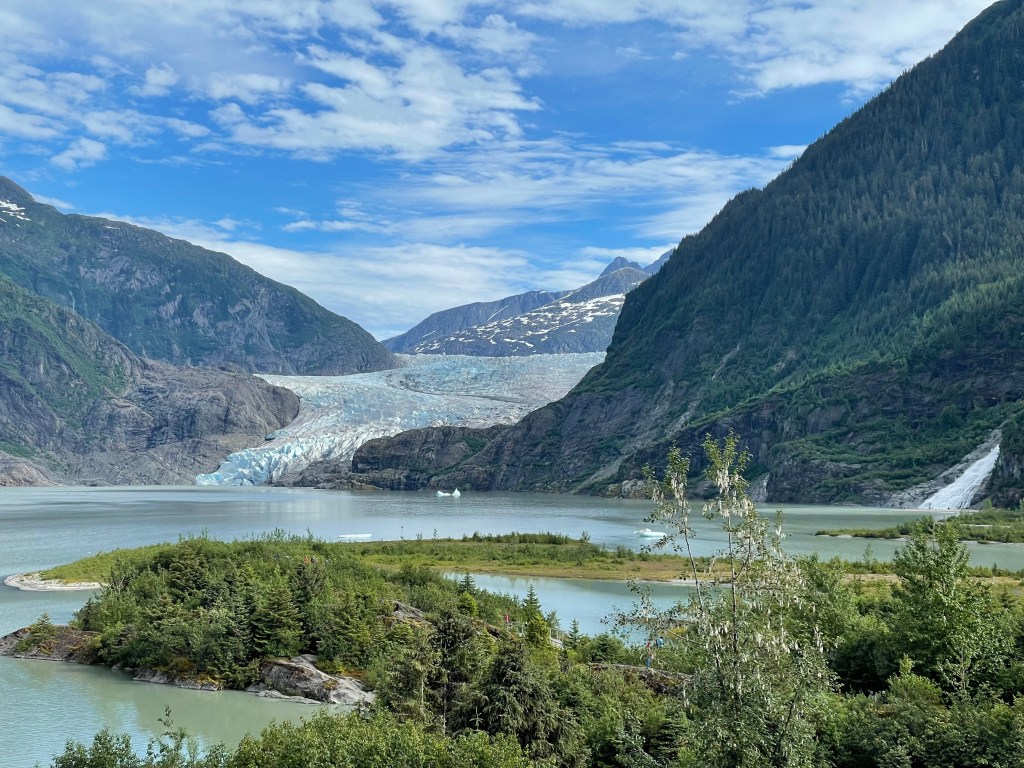
Mendenhall glacier
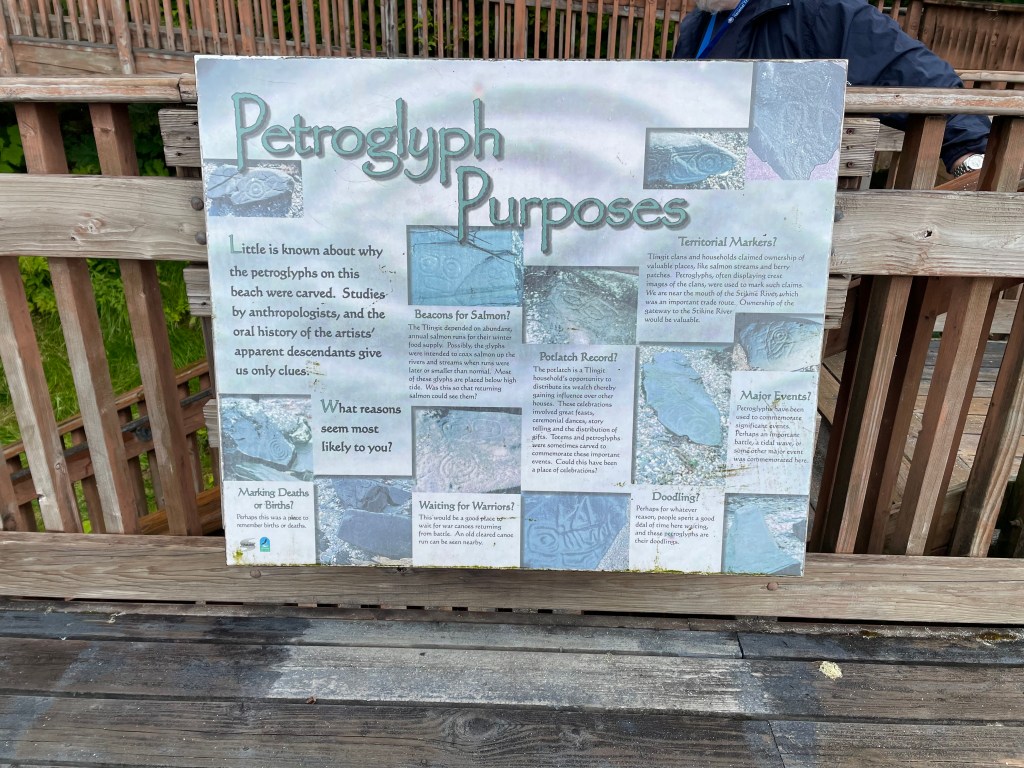
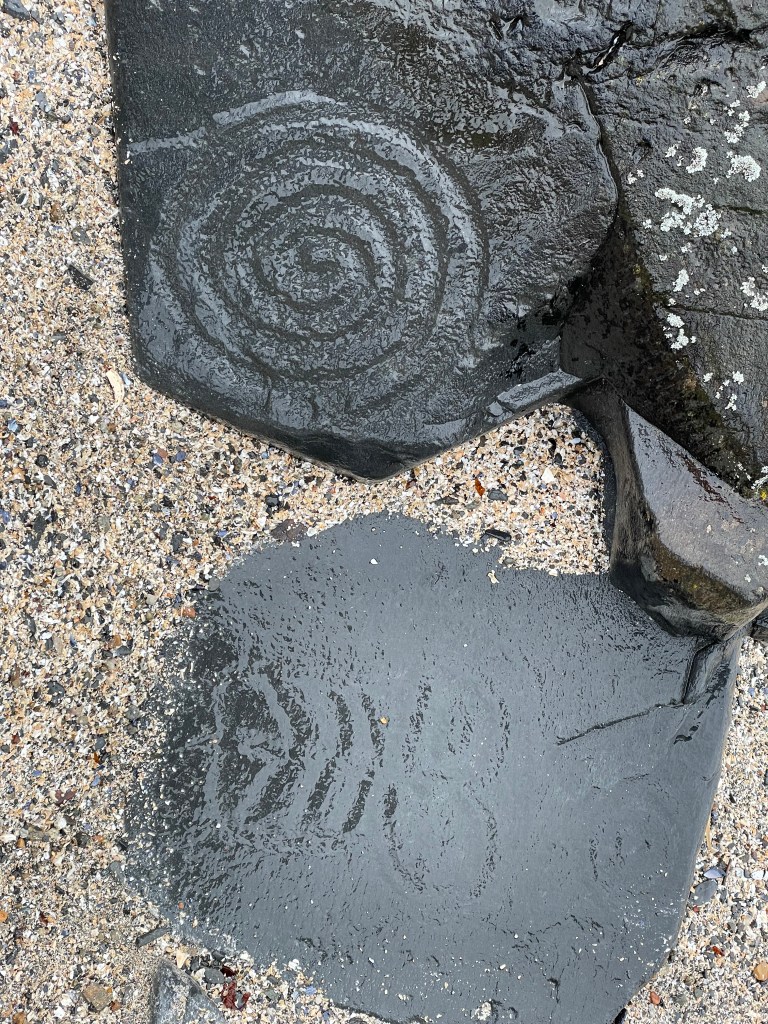
  • Petroglyphs are largely mysteries . . . which is why they are so endlessly fascinating.

Grandmother Brown taught me not to believe everything you hear and only half of what you read. In my hometown, a plaque was entitled The Square During Occupation. The occupying force? The U.S. Army. Grandmother was wonderful, but her support of the Lost Cause of the Confederacy was not among her greatest attributes.

We need to read plaques with a grain of salt and a healthy understanding of basic history so that as we travel we can learn and gain new perspectives. National Trust Tours are wonderful ways to see the world. Come travel with us!

More to come…

DJB

The Weekly Reader links to the works of other writers (or plaques) I’ve enjoyed. I hope you find something that makes you laugh, think, or cry.


All photos by DJB.