Latest Posts

Step back to see what’s good

On the day after the Republicans selected election-denier Mike Johnson as the next Speaker of the House and the former president was hit with yet another fine for violating the gag order that protects witnesses and court officials, it can be difficult to see beyond the dysfunction and disarray. *

But step back and take in the broader view. Democracy has persisted throughout our history despite the many attempts to undermine it.

House minority leader Hakeem Jeffries (D-NY) took the broad view yesterday.

House Democrats (he said) will continue to protect Social Security, protect Medicare, protect Medicaid, protect our children, protect our climate, protect low-income families, protect working families, protect the middle class, protect organized labor, protect the LGBTQ community, protect our veterans, protect older Americans, protect the Affordable Care Act, protect the right to vote, protect the peaceful transfer of power, protect our democracy, and protect a woman’s freedom to make her own reproductive health care decision.”

Jeffries pointed out that “Joe Biden won the 2020 presidential election,” and “[h]e’s doing a great job under difficult circumstances.” No amount of election denial “will ever change that reality.”


In fact, people are noticing that Joe Biden is in the midst of the most successful Presidency in the last 60 years.

Andrew with the VP
Andrew with the 46th President of the United States, taken in 2016 when Biden was VP.

The facts speak for themselves. With small (or nonexistent) majorities and with constant right-wing attacks, Joe Biden continues to be what historian Heather Cox Richardson calls a transformational president. He is, in her words, putting the nail in the coffin of the Reagan Revolution which has failed our country again-and-again. Here are a few top line examples of Biden’s accomplishments:

Part of the driver of this big number was strong consumer spending, another sign that Americans are not down and distressed. This “everything is terrible” narrative about the economy is increasingly feeling . . . like the false red wave narrative in 2022 . . . there is a great deal of data showing that people are content in their work and lives, spending money, aware that things are not as bad as many say.

  • Biden’s “Big Deal” at the recent G-20 summit will integrate railway lines and port connections from India to Europe, across the UAE, Saudi Arabia, Jordan and Israel, leading to faster transit of goods. 

Voters Respond Positively When Informed About Biden Accomplishments

“Voters don’t know much about what Biden has done, and when they are informed (what campaigns do) his approval jumps.” Navigator just released some new research looking at this dynamic, which includes these two key charts:

Check out this compilation to read more about why Joe Biden, while not perfect, is the transformational president America has needed.


Journalist and author Krista Tippett says “we each have a calling, to be “friends, neighbors, family, citizens, lovers of the world.” Yes, “we are still reeling from so many kinds of loss and fear and enduring, unnerving uncertainties that the pandemic surfaced. But as humans, “we are called to wholeness.”

Seek out the wholeness. Don’t be afraid to take in the good.

More to come . . .

DJB

*The entire House Republican caucus — in complete defiance of their oath to protect the constitution — voted unanimously for Mike Johnson:

Johnson was instrumental in Trump’s attempt to overturn the results of the 2020 presidential election. Routinely in touch with Trump, he rallied his colleagues to object to counting the electoral votes from states that Democratic candidate Joe Biden won. As Trump’s legal challenges to the results failed, Johnson pushed a Texas lawsuit against the four states that had given Biden the win, calling for the invalidation of millions of his fellow Americans’ ballots, and echoed lies about Venezuelan interference with ballots. 

Johnson is also a far-right culture warrior, a Christian nationalist who “is staunchly anti-abortion, anti-LGBTQ rights, anti-union, and anti-immigration;” someone who supports Russian dictator Vladimir Putin by opposing further aid to Ukraine. Johnson has also called for trillions in cuts to Social Security and Medicare.


      Jeffries, in his response to the vote, noted, “Our country has often confronted adversity, and the good news is we always find a way to make it to the other side.”

      “We faced adversity in the 1860s, in the middle of the Civil War, when the country was literally tearing itself apart. We faced adversity in October of 1929 when the stock market collapsed, plunging us into a Great Depression. We faced adversity in December of 1941, when a foreign power unexpectedly struck, plunging us into a world war with the evil empire of Nazi Germany.

      “We faced adversity in the Deep South in the 1950s and 60s, when the country was struggling to reconcile the inherent contradictions between Jim Crow segregation and the glorious promises of the Constitution. We faced adversity on September 11th, 2001, when the Towers and the Pentagon were unexpectedly struck, killing thousands of lives in an instant.”

      And then, “by placing House Republicans in this list, Jeffries tied them to the wrong side of history.”

      “We faced adversity right here in the House of Representatives when on January 6, 2021, a violent mob of insurrectionists incited by some in this chamber overran the House floor as part of an effort to halt the peaceful transfer of power.”

      “Every time we faced adversity, the good news here in America is that we always overcome….”


      Read my disclaimer for political posts here.

      More gifts of joy and wonder

      I heard from a number of readers about how much they enjoyed Monday’s post of Carol Highsmith’s photographs of America. The beauty and evocative nature of her work captured many hearts, but others appreciated her outlook to “keep on the sunny side” as well as the generosity of her gift to America.

      Kathryn Schulz reminds us that there is both a wonder and fragility to life. While many feel small and powerless in the face of that reality, it is also easy to feel amazed and fortunate to be here. Carol’s work helps us feel amazed and fortunate. With that in mind, I decided to post more of Carol’s photographs today. Enjoy another appetizer from what I promise will be a long and delicious feast!


      Amazing landscapes, from coast to coast

      Light streams into a “slot canyon” near Page, AZ
      Hawaii’s Volcanoes National Park
      Maine’s rocky coast
      Utah’s Arches National Park
      Spectacular Yosemite Falls, Yosemite National Park
      California’s Pacific coast
      Unspoiled north shore of Hawii’s Oahu Island
      Scenic view from the Seward Highway in Alaska’s Chugach National Forest

      Scenes on Main Street

      In a remarkable 43-year project, Carol has visited all 50 states and photographed the people and places of this incredible country. Hundreds of thousands of these images will eventually be donated copyright free to the Library of Congress for use by the American people.

      Dusk shot of South Philadelphia’s famous Geno’s Steaks advertising the city’s Philly Cheesesteak
      Contestant and owner at the annual Weiner Dog Races sponsored by Main Street Charleston, WV
      Store window at Holden’s Hardware in my hometown of Murfreesboro, TN
      A block of Main Street that includes the 1886 Beaumont Hotel in Ouray, CO, an old mining community (pronounced “you-RAY”) high in the San Juan Mountains
      Main Street in the Flushing neighborhood of the New York City borough of Queens

      Roadside America

      “Cadillac Ranch” along Old U.S. Route 66 outside Amarillo, TX, where visitors are encouraged to bring along a spray can to add a touch or two to the unusual public art installation, keeping the overall look the same over time, but with daily changing details
      A beer-drinking, guitar-playing “Muffler Man” cowboy at the Copperhead Road Bar in Colorado Springs, CO that has nothing directly to do with automobile mufflers, but is inspired by a series of large, molded fiberglass sculptures that were placed as advertising icons in the early days of travel across long-distance, two-lane highways
      The Prehistoric Gardens in Port Orford, OR, an old-time roadside attraction founded by amateur paleontologist E.V. Nelson, that opened in 1955 but continues to transport vacationers through an ancient rainforest in which lurk 23 gigantic dinosaurs

      Remembering our heroes

      We can purchase photographs through Carol Highsmith’s America Shop. We can also do what I’ve done here: simply pull them from the LOC archives.

      Vietnam Memorial, Washington, DC, on Memorial Day
      A life-size bronze statue of African-American civil-rights stalwart Rosa Parks, sitting on a bus bench, the focal point of a plaza at a Dallas Area Rapid Transit, or DART, station in Dallas, TX
      Immigrants, who helped build America, are remembered in the Immigrants statue, erected outside the Harrison County Courthouse in Clarksburg, WV as part of the celebration of the city’s bicentennial in 1985
      The Civil Rights Memorial at the Edmund Pettus Bridge in Selma, AL
      Edmond Pettus Bridge located in Selma, AL, where on “Bloody Sunday,” state and local lawmen attacked marchers with billy clubs and tear gas and drove them back into Selma
      Daniel Chester French’s “Seated Lincoln” at the Lincoln Memorial in Washington DC

      Gathering together

      An array of pies for sale at the “Back to Church Sunday” festival, organized by the nearby St. Paul’s Episcopal Church, on the grounds of the New Hampshire state house in Concord
      Mummers at the annual New Year’s Day parade in Philadelphia
      University of Alabama Spring Football scrimmage where 92,000 football fans attended what amounts to a practice
      A street band on Bourbon Street in New Orleans’s French Quarter

      Monumental architecture

      Stained glass in the San Francisco Neimann Marcus store
      Mount Washington Hotel, Bretton Woods, NH
      George Peabody Library, Baltimore
      Lyndhurst, a historic site of the National Trust and a Gothic Revival country house within its own 67-acre park beside the Hudson River in Tarrytown, NY

      And a few final views

      “Road to Nowhere” view along Artists’ Drive in Death Valley National Park
      Infrared view of a streetcar on St. Charles Avenue in New Orleans, the oldest continuously operating street railway system in the world
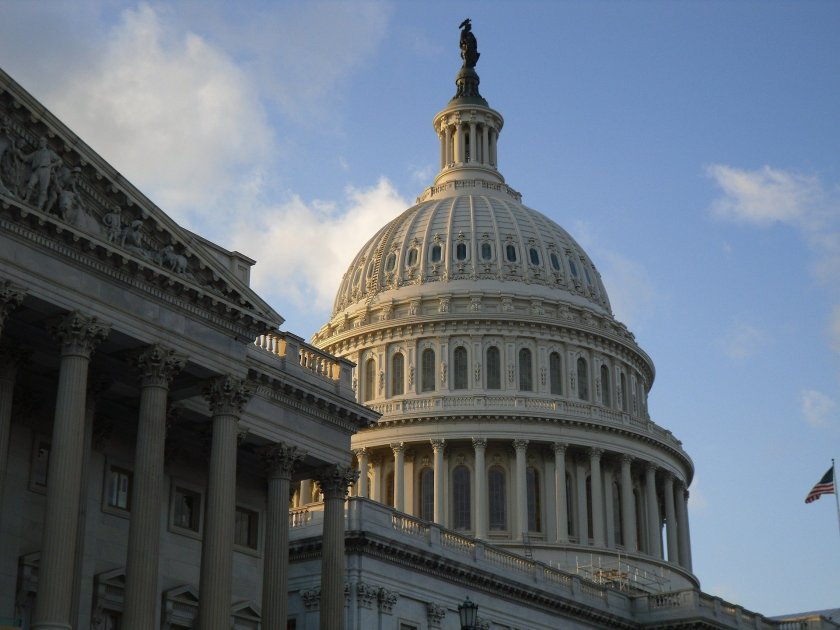
      U.S. Capitol, Washington DC as photographed from the Thomas Jefferson Building

      Thank you, Carol, for capturing glimpses of the good in America.

      More to come . . .

      DJB

      Image of the Colorado River’s Horsehoe Bend in Arizona and all other photographs from the Carol M. Highsmith Archive, Library of Congress, Prints and Photographs Division.

      A gift to America

      Journalist and author Krista Tippett suggests that the first practice in a life of wisdom is to see the generative narrative of our time. “We are fluent in the narrative of catastrophe and dysfunction and disarray” but that is not all there is to this world. “There is also an abundant reality of things going right at any given time.” Those practicing a life of wisdom “take in the good.”

      Our brains are hardwired for protection, so we quickly look for the worst in order to build our defenses. But we also have a calling to be “friends, neighbors, family, citizens, lovers of the world.” We are called, Tippett says, “to wholeness.”

      Seeing the generative narrative in today’s world can seem difficult. Yet there are artists, poets, writers, mentors, and friends who regularly take in the good, the wonder, the joy around us and share it with others.

      Carol Highsmith is a photographer who has taken the time to notice and share the wonder.

      While a student at Washington’s Corcoran School of Art, Carol began documenting the restoration of the Willard Hotel, once called the “Hotel of Presidents.” And it was there that she “first saw the astonishing images of Frances Benjamin Johnston, a pioneer female photographer who had also shot in the Willard Hotel 75 years earlier. She had donated her life’s work to the Library of Congress.”

      I was inspired and energized by her work, and her generosity, and I was determined to follow in her footsteps. I, too, would give my work to our great national library — with no stipulations or restrictions, just as Frances did.

      In a remarkable 43-year project, Carol has visited all 50 states and photographed the people and places of this incredible country. Tens of thousands of those images now reside with the Library of Congress. Hundreds of thousands will eventually be donated copyright free to the American people.

      I came to know Carol’s extraordinary work through her photographs of the historic sites of the National Trust for Historic Preservation, where I worked for more than two decades. Her evocative and timeless images of iconic Trust sites were imprinted on my mind.

      Drayton Hall Plantation, Charleston, South Carolina, a National Trust Historic Site and one of the most handsome examples of Palladian architecture in North America.

      Creative Commons noted that “by removing copyright restrictions from her photographs, Highsmith is engaged in the important work of growing a robust commons built on gratitude and usability; her singular archive at the Library of Congress is a testament to one woman’s passion and generosity.”

      Here are a handful of Carol’s photographs that have caught my eye through the years.


      Ordinary people doing extraordinary things

      Rodeo action at the Cheyenne Frontier Days celebration, a mountain-states tradition since 1897.
      The Mummers Parade, held each New Year’s Day in Philadelphia. It is believed to be the oldest folk festival in the United States, with the first parade held January 1, 1901.
      Statue of the magnificent Juan Marichal outside Giant’s ballpark in San Francisco.
      Waitress Tara Keogh serves a vanilla ice-cream soda at the Five & Diner diner-style restaurant in Phoenix.

      The passages of life

      Carol’s work is, to put it simply, a gift to America. While we can purchase photographs through Carol Highsmith’s America Shop, we can also do what I’ve done here: simply pull them from the LOC archives.

      Navajo Eula M. Atene holds three-month-old Leon Clark on a ridge in Monument Valley Navajo Tribal Park.
      Andrea Prada, holding the flowers, and Luis Castano have just been married on the Brooklyn Bridge. Flanking them are best man Jose Prada and bridesmaid Andrea Bolaños.
      Marilyn Monroe’s vault at the Westwood Village Memorial Park and Mortuary, Los Angeles, California.

      Lighting up the night

      Telluride Balloon Festival in Colorado
      Old Las Vegas casino, taken in the 1980s at the beginning of Carol’s career.
      Mountaineer Inn in Asheville, NC
      Bring your sweet tooth to the Colorado State Fair in Pueblo
      San Francisco at night

      Houses big and small

      Courtyard in Sky City, one of four Native American communities that make up Acoma Pueblo in north central New Mexico and a National Trust historic site. Still home to a number of families, Acoma is the oldest continuously occupied community in the United States.
      Monticello at dusk
      Truro in Cape Cod is known for its rolling dunes; pristine beaches; the historic Highland Light; and Cape Cod’s oldest golf course, Highland Links.
      Interior of Frank Lloyd Wright’s Harold C. Price, Sr. House, Paradise Valley, AZ
      The Greek Revival-style manor house at Oak Alley in Vacherie, Louisiana. The exterior features a free-standing colonnade of 28 Doric columns on all four sides that correspond to the 28 oak trees in the “allée,” The home’s first owner, French Creole Valcour Aime was known as the King of Sugar.

      America the beautiful (and strange)

      Anytime I feel the need to take in the good, I’m going to post 15-20 more photographs from the Carol M. Highsmith collection. So consider this just the very first appetizer in a long and delicious feast.

      Denali (“The Great One”) in Alaska is the highest mountain peak in North America, at a height of approximately 20,320 feet (6,194 m) above sea level.
      Cape Neddick lighthouse in York, Maine. A digitized image of the lighthouse was sent into space aboard Voyager II as part of the collection of materials designed to teach extraterrestrials about Earth.
      Hackberry General Store along old Route 66 in Hackberry, Arizona.
      Idaho farm and field
      You see the strangest things in the South Dakota countryside.
      The George Peabody Library in Baltimore. Designed by architect Edmund G. Lind in collaboration with the first provost, Dr. Nathaniel H. Morison, the Peabody Stack Room contains five tiers of ornamental cast-iron balconies, which rise dramatically to the skylight 61 feet above the floor.
      Infrared-camera view of the New River Gorge Bridge in West Virginia.

      Thank you, Carol my friend, for your incredible generosity. As the old Carter Family song reminds us, “Keep on the Sunny Side.”

      More to come . . .

      DJB
      Image of Mono Lake, a large, shallow saline soda lake in Mono County, California, and all other photographs from the Carol M. Highsmith Archive, Library of Congress, Prints and Photographs Division.

      A Great Wild Mercy

      Singer-songwriter Carrie Newcomer has a new album that was released October 13th. Titled A Great Wild Mercy, the chorus of the title track conveys what so many feel today.

      I’m tired of all the rage / tired of all the worry / I’m ready for a great wild mercy.

      As I wrote in a post earlier this year, Carrie Newcomer has always explored “the intersection of the spiritual and the daily, the sacred and the ordinary. Over the course of her career she has become a prominent voice for progressive spirituality, social justice and interfaith dialogue.”

      It was the richness of the voice, along with the depth of her spirituality and the accessibility of her songs, that drew me in when I first heard her live in 2014. “We are living moments of grace and wonder, shadow and light,” Newcomer says. These are the moments she captures in her music.

      Hers continues to be a voice we need to hear today.

      Take More Time, Cover Less Ground from the new album has an almost jaunty sound that nonetheless shares important truths. As Newcomer wrote on her most recent A Gathering of Spirits newsletter, the song is based upon a Thomas Merton quote and “it’s about the practice of attention and developing a sense of gratitude and awareness even in the midst of a busy day.”

      The song begins with . . .

      I’m an old wind up clock in an ancient tower / I’m a long table lamp and the appointed hour

      I’m what’s never been named and what’s nameless still / I’m the echo that comes back from the bottom of the well . . .

      And it works its way down to the chorus.

      Time to pick it all up and lay it back down / Time to know what I seek has already been found / Time to listen to what never made a sound / Time to take more time and cover less ground.

      Writing in her newsletter, Newcomer tells a story that helps explain the concept of taking more time.

      My friend Parker tells the story of a surgeon who is explained something important to a new resident who would be assisting during the surgery. The surgeon said, “This is a very delicate and important moment in the procedure and I will have only 3 1/2 minutes to make the repair and tie off the vessels.” The new resident said, “I get it, at that point you really need to hurry.” But the surgeon replied, “ Just the opposite. Because this is delicate and so important, I need to slow down, be completely focused and do each movement intentionally.”

      Take More Time might be what the doctor ordered, to expand the moment from the inside with interest, curiosity and gratitude.

      The spiritual also comes to the forefront in Start With A Stone. Newcomer says that it “isn’t in the bread, it’s not in the wine, it’s not in a scroll or in any one line.”

      Start with a stone, the humblest of things / From this relic of bedrock eternity springs / Go back to the source, go back to your home / Heaven is waiting but start with a stone.

      The full album of A Great Wild Mercy is now available on all streaming platforms as well as available for purchase through Newcomer’s website store, I-tunes or wherever you get your music.

      Here’s the Direct Spotify Link for the full album.

      On her A Gathering of Spirits newsletter — which includes music, poetry and commentary on art, spirit and life — Newcomer wrote a post in late December 2022 entitled Singing in the Dark, which is a song on the new album.

      It begins by describing a recent visit to a monastery.

      Last weekend I visited The Abbey of Gethsemani, which is the oldest Trappist monastery in the United States. There is a small hermitage on the grounds where monk, author, mystic, poet and social activist, Thomas Merton, lived and wrote his more than 50 books on spirituality, interfaith understanding, eastern and western mystic contemplative practice and peacemaking. The Cistercian (Trappist) monks of this community are dedicated to lives of simplicity, prayer, contemplation, meaningful work, solitude and union. Together they practice the daily Liturgy of the Hours, which means seven times each day they stop everything they are doing to gather as a community and sing. They believe this practice of regular prayer and singing is a way to express their devotion and that it is a manner of doing service to all humankind.

      And then she writes about going to the 3:15 a.m. vigil around the Winter’s Solstice, when the monks sing in the darkest hours of the year. She’s honest about her feelings around the problems of “deformed religion.”

      And yet, I found myself so deeply touched, moved by the idea that a community of monks keeping vigil, faithfully singing for those (awake or asleep) at 3AM, the most vulnerable time of the day. I continue to be comforted by the fact that there are so many of us who literally and metaphorically continue to sing in the dark, lean into the light and believe in what is still so worthy and beautiful, despite all the brokenness of a suffering world. I am encouraged that what continues to connect us may not be gravity (that pulls us down), but rather a song (that lift us up).

      The lyrics to Singing in the Dark speak to that searching and hopefulness.

      I’m a wayfaring stranger / hungry for some grace / A soul forever searching / a pilgrim to this place / I’m here to meet whatever is listening for me here / while all the world is waiting at the turning of the year

      Singing in the dark / calling out the day / Joining with the voices / opening the way / sitting here . . . waiting for the spark / that bursts into being / singing in the dark.

      Author Barbara Kingsolver has written of Newcomer, “She’s a poet, storyteller, snake-charmer, good neighbor, friend and lover, minister of the wide-eyed gospel of hope and grace.”

      Carrie Newcomer is currently touring in support of the new album. A Great Wild Mercy — like so much of her music — is a gift to us all.

      Enjoy!

      More to come . . .

      DJB

      Carrie Newcomer portrait by Jim Krause via carrienewcomer.com

      From the bookshelf: September 2023

      Each month my goal is to read a minimum of five books on a variety of topics and from different genres. Here are the books I read in September 2023. If you click on the title, you’ll go to the longer post on More to Come. Enjoy.


      Life on the Mississippi: An Epic American Adventure (2022) by Rinker Buck tells of the author’s 2016 quest to take a flatboat from Pittsburgh to New Orleans, recreating the approximate route traveled by a young Abraham Lincoln and millions of other Americans of that day. When Americans think of pioneers, settlers in wagon trains heading west usually come to mind. Yet the role of the flatboat in our country’s evolution is far more significant than most realize. Buck undertakes this adventure to set the history straight, but in the process, he learns a great deal about himself, our country, and human nature.


      The Tao of the Backup Catcher: Playing Baseball for the Love of the Game (2023) by Tim Brown and Erik Kratz is “a story about a part of the game that hasn’t drifted into a math contest.” A catcher at Eastern Mennonite University, Kratz is discovered by a scout who sees something that suggests he has what it takes to get to the majors. Perhaps not to be a star, but to be the guy who is always there when the star catcher needs a day off from bending down behind home plate, catching 100-mph missiles, and taking foul balls off the left kneecap. This is a story about Kratz and his nearly two-decade journey through pro ball. But more importantly, it is a story about the servant leadership of backup catchers who spend a career watching, listening, pondering, and ultimately setting aside their ego to make the team — and game — better.


      Whose Body? (1923) by Dorothy L. Sayers is a delightful period puzzle that turns deadly serious for Lord Peter Wimsey as he works to find the answer to two mysteries. As the book opens he receives a call from his mother, the Dowager Duchess of Denver, asking for his assistance in helping clear her architect of suspicion of murder. It seems that overnight a body, clad only with a pair of fashionable pince-nez, has appeared in his bathtub. At the same time, a famous London financier vanishes from his bedroom across town, leaving no trace. The body in the bathtub is not that of the financier, so whose body is it? The police do not suspect that the two cases are connected, but Lord Peter has his doubts.


      The Swedish Art of Aging Exuberantly (2022) by Margareta Magnusson is a humorous look at how to live and age gracefully well into your final third of life. The first chapter is an exhortation to have a gin and tonic with a friend but there are also suggestions to embrace new technology and spend more time with young people. Magnusson was introduced to the world through her bestseller The Gentle Art of Swedish Death Cleaning (or the clearing out your unnecessary belongings so others don’t have to do it for you). This follow-up work — which is a short 140 pages because “old people don’t want to read 400 pages” — is a witty yet useful take on how to approach life when more of it is behind you than ahead. Yet it is appropriate for all ages, including those who may not yet feel old, as her advice is simple and pragmatic.


      Biological Diversity: The Oldest Human Heritage (1999) by Edward O. Wilson is a short work designed to introduce readers to the topic of biodiversity. We don’t have much time to waste if we want to reverse the trends of loss as human-induced changes to the habitat come with “such a velocity that it is too great for life to handle” and we simply do not know all the consequences of that loss. “Simple prudence,” Wilson suggests, “dictates that no species, however humble, should ever be allowed to go extinct if it is within the power of humanity to save it.”  Wilson — by that time a highly decorated and somewhat controversial natural scientist who had already won one Pulitzer Prize for his book On Human Nature and was soon to receive a second for The Ants — wrote this work to educate young people about the importance of biodiversity, the threats to it, and our response.


      What’s on the nightstand for October (subject to change at the whims of the reader):

      Keep reading!

      More to come…

      DJB


      NOTE: Click to see the books I read in August of 2023 and to see the books I read in 2022. Also check out Ten tips for reading five books a month.


      The Weekly Reader links to the works of other writers I’ve enjoyed. I hope you find something that makes you laugh, think, or cry. 


      Photograph of the George Peabody Library, Baltimore from the Carol M. Highsmith Archive, Library of Congress, Prints and Photographs Division.

      The blood cries out from the ground

      In my year of reading dangerously™, I’ve become immersed in the world of crime stories. I’ve focused — until now — on fictional accounts. But with Indigenous Peoples Day and a major movie release of this book both scheduled for October, I turned my attention this month to the true-life story of one of the most heinous crimes in American history: the Osage murders.

      Killers of the Flower Moon: The Osage Murders and the Birth of the FBI (2017) by David Grann is a well-known and highly praised work, a finalist for the 2017 National Book Awards for Nonfiction. In the 1920s, the richest people per capita in the world were members of the Osage Indian nation in Oklahoma, whose land sat above some of the largest oil deposits in the United States. “To obtain that oil, prospectors had to pay the Osage for leases and royalties . . . In 1923 alone, the tribe took in more than $30 million, the equivalent today of more than $400 million.” And in 1921, one of the Osage, Anna Brown, was brutally murdered.

      Grann’s story begins with that killing, and in a tightly woven tale he takes the reader through an evil crime spree arising from white settlers’ attempted dispossession of an Osage family’s Oklahoma lands. This shocking series of crimes saw dozens of people murdered in cold blood. Many of those who dared to investigate the killings were themselves murdered. Grann’s work exposes once again the dark and odious underbelly of race in America. White wealthy robber barons of the 1920s — openly displaying their wealth as they stole their way to riches — were often celebrated in contemporary accounts as captains of industry. But commentators and neighbors expressed contempt for the Osage, who had servants and chauffeurs — blacks, Mexicans, and “even whites” — to work in their homes. In contrast to many of the robber barons, the Osage came by their wealth honestly.

      After white settlers pushed them out of Kansas and from land they were assured would be their home forever, the Osage were forced into a corner of Oklahoma that most whites regarded as “broken, rocky, sterile, and utterly unfit for cultivation.” However, smart tribal leaders and attorneys insured that the underground oil and mineral rights on this land belong to the Osage. And then oil was discovered.

      In something of a perfect storm, the wealth that came to the Osage arrived at the same time as Prohibition. Both brought out some of the worst criminal elements in American history. And the government’s paternalism toward the Osage meant that most of the wealth that was rightfully theirs had to be “managed” by white “guardians.” These events came together to put a target on the back of the Osage nation.

      Grann tells a parallel story as part of his narrative. Local and state justice systems — as well as the courts — were notoriously corrupt. Murders of the Osage went unexamined and no one was held accountable. Seeing this situation from a distance in Washington, a very ambitious J. Edgar Hoover, the newly appointed head of what was then known as the Bureau of Investigation, saw a chance to score a major win for this small agency and begin to build the national police force he coveted. Fortunately for the Osage, Hoover selected a former Texas Ranger named Tom White to unravel the mystery. White was a rarity — a principled lawman who approached everyone with empathy and understanding — and he put together an undercover investigative team that solved a key murder in the Reign of Terror. After a protracted trial with bogus confessions, changing witness testimony, attempted bribes, and dramatic courtroom scenes, the men primarily responsible — including one pillar of the community — were given life sentences.

      But as Grann reports in the final portion of the work, Hoover didn’t follow through and many of the other murders were covered up. Through dogged detective work and research almost 100 years after the fact, Grann was able to uncover more of the mystery. Again, Hoover’s desire to control the narrative about the FBI coupled with general racism against the Osage meant that the story was buried and forgotten until Grann brought it forward in this haunting true-life murder mystery. The FBI said twenty-four people died over a roughly five-year period from 1921 to 1926. In fact, the number is probably in the hundreds and the Reign of Terror as the Osage called it probably began as early as 1918 and lasted until 1931. History, he writes, is a merciless judge, laying bare “our tragic blunders and foolish missteps.” The historical record told stories that the principals at the time could not see.

      The granddaughter of an Osage man who was poisoned in the 1920s during the Reign of Terror points out the vast expanse of prairie, and then quotes what God told Cain after he killed Abel: “The blood cries out from the ground.”

      This “is a searing indictment of the callousness and prejudice toward American Indians that allowed the murderers to operate with impunity for so long. Killers of the Flower Moon is utterly compelling, but also emotionally devastating.”

      More to come . . .

      DJB

      Photos: Mollie Burkhart and her sisters (credit: Osage Nation Museum); The graves of Mollie and her murdered family members (credit: Aaron Tomlinson); Phillips Petroleum workers strike oil in Osage territory (credit: Bartlesville Area History Museum)

      Free to be myself, regardless of fashion

      A work friend from Edinburgh who calls herself a “Fermanagh girl” recently posted a note on LinkedIn that caught my attention. It was the weekend, and Ruthanne suggested that one “may be having a lazy breakfast and seeking company that will drift you off to places of tranquility or provide some lesser-known heritage stories.” Her recommendation? The music, voices and sounds of nature from that morning’s Radio 3’s Breakfast tour of Northern Ireland’s loughs. Among the offerings from the pastoral setting of Crom Castle on Upper Lough Erne, was the Irish pianist and composer Joan Trimble. I listened, was mesmerized, and wanted to share some of what I heard on this MTC Saturday Soundtrack.

      Born in Enniskillen, County Fermanagh in 1915, Trimble studied at the Royal Irish Academy of Music and Trinity College in Dublin before going to the Royal College of Music in London to study piano with Arthur Benjamin and composition with Vaughan Williams and Herbert Howells. As the Contemporary Music Centre of Ireland notes, recognition as a composer first came with the publication in 1938 of songs and two-piano music.

      Buttermilk Point, heard below in a studio setting and also in this live version, is a beautiful example of her folk-influenced sensibilities.

      Trimble’s father “was a distinguished folksong collector, starting Trimble on a lifetime of immersion in Irish folk music.” You can hear that influence in her compositions The Green Bough and The Humors of Carrick.

      The Coolin, her composition of a traditional Irish Air for cello and piano, is performed in this interesting arrangement by cello and accordion.

      After studying composition with Howells and Vaughan Williams, Trimble’s Phantasy for Piano Trio won the 1940 Cobbett competition for English chamber music.

      During World War II,

      Trimble’s career as a duo-pianist with her sister Valerie took precedence; during the war, they regularly performed on BBC radio and at Myra Hess’s legendary National Gallery concerts. (Trimble also managed to work full time for the Red Cross.) The sisters’ success continued after the war, when they premiered two-piano concertos by English composers Arthur Bliss and Lennox Berkeley. In addition to her career as a pianist and teacher, she raised three children. As a result, Trimble’s compositional output was small; but it is well crafted, and she lived long enough to be recognized as Ireland’s most prominent female composer.

      In works such as her Suite for Strings, the tunes “sound completely folk-like even though they are Trimble’s own.” As Mark Arnest writes for the Chamber Orchestra of the Springs,

      Some of the most fearsomely modern music ever composed comes from the decades following World War II, when faith in and respect for the traditions that had culminated in the war were at an all-time low; but Trimble’s music is untouched by these experiments — “I am free to be myself, regardless of fashion,” she wrote — and is closer in spirit to the music her teacher Vaughan Williams composed several decades earlier.

      The suite is in three movements. The opening Prelude is in duple meter and features strong rhythm and sophisticated, very unfolk-song-like harmonies . . . The slow second movement features a sweet and sad melody in triple meter. It’s further contrasted from the first movement by its simple harmonies — though they get more chromatic in the piece’s second half. A violin solo two-thirds of the way through is reminiscent of Vaughan Williams’s The Lark Ascending. The Finale features several sprightly tunes. The string writing throughout the suite is assured and effective, and justifies Trimble’s reputation as a composer whose works deserve wider hearing.

      Trimble passed away in 2000 in her hometown of Enniskillen. On this fall Saturday morning, take time to enjoy this beautiful music, written by a very talented pianist and composer who was inspired by the folk tunes of her native Ireland.

      More to come . . .

      DJB

      Image of Crom Castle, County Fermanagh by Chris Lacey via National Trust

      If I were commissioner of baseball

      A CORRECTION AND A NOTE: I obviously wrote this little piece in a great deal of haste and just to have some fun. So my normal phalanx of fact-checkers * did not give this the once over. So there was (at least) one mistake. Tampa Bay was booted out of the playoffs so quickly, I simply forgot that they had won 99 games in the regular season. Oh well, I’ve gone back and changed any misleading numbers in this piece.

      As for the note, again I wrote it in haste or fun. Some commentator tried to tell me it wasn’t worth considering, or at least I think that’s what s/he was saying. Neither Candice nor I could quite figure out the point of the comment, so I took it down. As I say in the “About MTC” post . . . I will check comments and if you disagree strongly just get your own newsletter.

      I’ve been living the bachelor life for the past 10 days. That means three things:

      • First, I don’t eat as well as I do when Candice is home.
      • Second, I often end up eating supper in front of the television.
      • Finally, I watch way too much baseball.

      These are all connected. I want to focus on #3.

      The baseball playoffs began in early October with four wild card games on one day. I watched the vast majority of all four games. The eventual wild card winners — Texas, Minnesota, Arizona, and Philadelphia — took their first steps to sweep these best-of-three series. (Yes, all four series were 2-0 sweeps . . . which led to the first of several problematic days off.)

      On to the Division Series games, which are best-of-five. Five teams across baseball won more than 90 games this year, and three of the five (Milwaukee and Tampa Bay were the exceptions) played for the first time in this round. As of last night, all five are now out of the playoffs. How could those teams with the better records all be out? Why, they never stood a chance.

      There has been some exciting baseball, and we’ll never forget this play:

      But there have also been a lot of blowouts over these two rounds, which has given me plenty of time to think about how I would improve the game if I were commissioner.**

      First, get the (monetary) gambling out of baseball.

      I am so tired of seeing David “Big Papi” Ortiz spray champagne on some schmuck who has just won a $100 bet I could scream. Listen, David Ortiz is not coming over to your house. I’ve written about this before, so go read the earlier article to get the full firehose of my opinion.

      Second, make the regular season count again.

      Baseball is unique because teams play day-in-and-day-out for six months over a 162-game season. But all three teams that excelled by winning 100 or more games over the regular season had a five-day layoff while the wild card series took place. These top regular season teams all looked rusty and were quickly dispatched in the first round in which they participated. There are, of course, explanations for those outcomes besides being disadvantaged by the layoff.

      • Atlanta pulled off that miracle win in game #2 against the Phillies, but let’s be honest: Philadelphia has Atlanta’s number in the playoffs at the moment. Those kind of streaks happen.

      So, should we give some more advantage to those who do well — even exceptionally well — in the regular season? As commissioner I want the regular season to count for something, so I would consider:

      • Cut back on off days. After playing pretty much every day for six months, teams get rusty when they sit for 4-5 days. Squeeze that schedule however many rounds you have and let’s end before Halloween. November games are just stupid.
      • Put fewer teams in the playoffs. This is the best way possible: drop the third wild card team. Let’s go back to the system where the two non-division-winning teams with the most wins play one play-in game, and then move immediately into the Division Series. Hey, it worked for the 2019 Nationals!

      UPDATE #2: Joe Posnanski has a good column today on how we came to have three divisions in each league. Before 1969 there were two leagues and the winners of the two leagues went straight to the World Series.

      Third, limit the number of pitching changes.

      I hadn’t given this much thought until Joe Posnanski wrote about it, but “few things are more annoying than when a manager comes out during an inning to pull a pitcher with nobody on base just to get the platoon advantage.” It interrupts the flow of the game. Joe suggests that MLB outlaw changing pitchers with nobody on base.

      Finally, no cheerleaders in baseball.

      Look at the video above at about the 25-second mark. When Atlanta pulls off that miracle, CHEERLEADERS in skimpy outfits run out onto the top of the dugout. Just like there’s no crying in baseball, there should be no cheerleaders!

      Atlanta has a good team but they have an ownership group with no soul. As I’ve written earlier, the Braves started the very ominous period of building sterile corporate campuses/amusement parks. Their decision to build and move to Truist Park in the far northern suburbs was terrible. It was a move away from the city, public space, public transportation, and — most egregious from my point of view— communities of color.


      Since these ideas have as much chance of being implemented as I have of being commissioner, let’s move along to a few other observations from my intense week of watching baseball.

      • The new rules are working. The games are faster, there’s more offense, and if you head upstairs for an adult beverage you’re likely to miss something fun and significant. That’s a good thing.
      • Second, I’m coming around on Harper. Maybe. Regular readers know that I dislike the Phillies Bryce Harper. A lot. When he played with the Nationals he was an aloof, arrogant, self-centered jerk, but he was ours. He’s also one of the most exciting players in the game. His clubhouse reputation has apparently improved since he went to Philadelphia, and I like his teammates Trea Turner and Kyle Schwarber (also former Nats). I’m still not going to root for Harper, but I won’t be sad when he does something amazing either.
      • Finally, Dusty Baker was the only thing good about the Astros last year; now he has company. I like Dusty and was glad when his Astros won the World Series. However, I’m now all in on Yordan Alvarez. What a monster! He’s just so much fun to watch.

      That’s enough for now. My bachelor days are over yet the League Championship Series games await. Play ball!

      More to come . . .

      DJB


      *There is no phalanx of fact-checkers here . . . there’s barely one (i.e. me)


      **I’d probably need to be the king of baseball, as the commissioner is just a working stiff for the owners these days.


      Photo of DJB at Nats Park during 2019 World Series. If I were commissioner, I’d get better seats.

      Fighting for a people-powered future

      If our family had a dollar for every time I said, “I’m not going to give Jeff Bezos my money!” we still wouldn’t threaten his title as one of the world’s richest individuals but our nest egg would get a nice boost. Suffice it to say I’ve long had a visceral reaction to Amazon. When I saw this book with concrete examples of how to fight for local economies, data privacy, fair labor practices, independent bookstores, and “a people-powered future” it leapt off the shelf into my hands. I had to buy it.

      Prime Day is a good time to spread the word.

      How to Resist Amazon and Why (2022) by Danny Caine makes the case for resisting what at times seems to be the takeover of the world by this corporate behemoth. Caine — who co-owns the Raven Book Store (with his employees) in Lawrence, Kansas — has provided a wealth of strongly sourced information about how “big tech monopolies, especially Amazon, are bad for communities, small businesses, the planet, consumers, and workers.”

      In seven detailed chapters, Caine focuses on the “why,” giving example after example of Amazon’s devastating impact on the book industry, small business in general, the labor force and workers’ rights, competition, privacy, the environment, and every level of government. And the examples are not from crazed left-wing socialists: a number of the exposes come from such bastions of corporate power as The Wall Street Journal and from trusted sources like PBS.

      Sign at Books, Inc. in Alameda, CA

      Between each chapter, Caine inserts an interlude that points toward the “how” part of the equation. These are tales of resistance and personal essays. The penultimate chapter then describes ten specific ways to resist Amazon.

      What is wrong with Amazon? This is a company with a 150% turnover rate whose workers face inhuman schedules and are literally dying on the job. Their business model relies on preying on local businesses and even their own vendors. Amazon’s founder and long-time CEO is one of the richest individuals in the world “while his workers make low wages with impossible quotas.” They use their considerable weight ruthlessly when others try to stop those destructive practices.

      Among the issues:

      • Amazon leads to the devaluation of products — By being able to offer items such as books on their site for impossibly low prices, Amazon’s business practices have led consumers to now expect outrageously low prices everywhere. A normal business cannot survive without making a profit.
      • Amazon is both a platform and a competitor — Amazon’s business model, writes Caroline Jenkins, allows them to “skew profit unfairly in their favor. They have been known to directly duplicate products being sold on their virtual shelves and sell that same product at a lower price than the original.”
      • Amazon is lying when it says it pays its employees $15 an hour — Many of Amazon’s “employees” are not actually their employees. Those people driving Amazon-branded trucks and wearing Amazon vests work for third-party contractors, who pay lower wages and don’t offer benefits. And those vans? Amazon makes their contractors buy a specific type of van that is conveniently just below the size that would require strict government regulation. When something bad happens to or with one of those vans/drivers, Amazon just throws up its hands. “Hey, they aren’t our employees.”

      While the loss of personal connections and community-oriented support is at the heart of Amazon’s destruction of America, much of the fight requires government intervention to protect consumers from monopolies. We are seeing progress on that front from the Biden Administration. The Federal Trade Commission and 17 state attorneys general sued Amazon on September 26th, alleging that the company is a monopolist that uses a set of interlocking anticompetitive and unfair strategies to illegally maintain its monopoly power. That step has been long overdue, but the new FTC Chair Lina M. Khan wrote an article in 2017 that galvanized the moribund antitrust movement, and her recent appointment has already led to swift action.

      Fittingly, a bookstore (and coffee shop) does business inside the Storyteller Building in Thermopolis, Wyoming. (From the Carol M. Highsmith Archive, Library of Congress, Prints and Photographs Division.)

      Caine lists ten things you can do to resist Amazon, and they are pretty straightforward. Here are a few:

      Shop local — Simple. Take the money you’d send to Amazon and spend it at your local grocery story, bookstore, drugstore, etc.

      Cancel your Prime subscription (or better yet, your Amazon account) — That promise of “next day delivery” with Prime began exacerbating many of the problems and impacts of the company.

      Avoid Amazon-affiliated brands — While I knew all about The Washington Post and Whole Foods, I was surprised to discover the names of some other brands affiliated with Amazon, including AbeBooks, Goodreads, and Ring. The Post is our local newspaper, but we’ve dropped home delivery and haven’t missed it. The amount we buy at Whole Foods continues to shrink, as we’ve shifted more-and-more purchases to our local farmer’s market, fish monger, and neighborhood grocery.

      Unplug your house from Amazon’s privacy-invading security and surveillance network — Ring, which is being sold for Amazon by more than a thousand local police departments(!), is opening us up to Orwellian levels of privacy invasion and police surveillance. And you don’t want to know what Alexa knows about you (but perhaps you should).

      Amazon is having a corrosive effect on our culture. The “value” of everything is compared against low consumer prices. There’s more to life than cheap underwear. Plus, Amazon’s next-day-delivery promise — which is literally built on the broken backs of its overtaxed workers — has helped exponentially increase impatience in our culture. You know what I mean: when the guy behind you honks his horn the second the light changes, or when a co-worker complains that you didn’t answer their email, which they sent all of 10 minutes earlier.

      Read this book. Stop giving money to Jeff Bezos. Fight to keep your dollars in the local economy, to shield your data from ravenous online marketers, to enact fair labor practices and a living wage, and to keep your local independent bookstore alive and thriving.

      More to come . . .

      DJB

      UPDATE: This cartoon captures my sentiments exactly!


      The Weekly Reader links to the works of other writers I’ve enjoyed.


      Top image from Pixabay.

      Traveling through the ages of life

      A trim and stark memoir, written in plain language, begins with a simple sentence. Yet in the hands the 2022 winner of the Nobel Prize for Literature, it turns into an unexpected study of life.

      Five years ago, I spent an awkward night with a student who had been writing to me for a year and wanted to meet me.

      I stumbled upon this intriguing work at Takoma Park’s wonderful new independent bookstore — People’s Book — on a recent visit, and I’m glad I made the discovery.

      The Young Man (2022) by Annie Ernaux (translated by Alison L. Strayer) is the account of her love affair with A., a man some 30 years younger, when she was in her fifties. That first awkward dinner followed by drinks at her home turned into weekend connections and daily phone calls. For some, hers is an awkward romance, although she notes that if the roles were reversed between man and woman few would look twice. It is awkward in some respects, as he “tore her away from my generation, but I was not part of his.” Yet she saw it as a relationship of mutual gain, where she was “the one who could change his life.” She led her young admirer to see making love as something more than “a more or less slow-motion satisfaction of desire,” becoming, instead, “a sort of continuous creation.”

      In more than one domain — literature, theater, bourgeois customs — I was his initiator, but the things I experienced because of him were also initiatory. My main reason for wanting our story to continue was that, in a sense, it was already over and I was a fictional character within it.

      This is not a salacious memoir; rather, Ernaux uses the backdrop of this brief romance to explore themes of the movement back and forth between youth and age, of memory and time, of misogyny and class, of life’s pitfalls and pleasures.

      Along the way Ernaux is transported back to Rouen, the city where she lived as a young student, and to the places, now much changed, where she first experienced those heady years. It is, she suggests, as if she is living life backwards. Yet this time is different, as A. is very much a “young man of his times.” He would “say ‘stop’ or ‘that’s good’ instead of ‘thank you’ when I served him at the table . . . Work for him meant nothing more than a constraint with which he did not wish to comply, if other ways of life were possible . . . He had never voted . . . (and) believed that nothing whatsoever about society could be changed.” Thirty years earlier, she writes, “I would have turned away from him” not wanting to be confronted with the signs of her own working-class origins. Now she was the literary bourgeoisie.

      Ernaux writes that during this time her memory “seemed to me infinite. There was a great sweetness to that layer of time which stood between us, it gave more intensity to the present.” She looks at this time without sentimentality and is able, through the power of her words, to “analyze all kinds of intersecting threads — aging, class, desire, regret — without a sense of shame or an impulse to sugarcoat any of the truths she uncovered during her time with A.” 

      The Nobel Prize description suggests how The Young Man fits into her larger body of work.

      In her writing, Annie Ernaux consistently and from different angles, examines a life marked by strong disparities regarding gender, language and class. Her path to authorship was long and arduous. Among her novels are A Man’s Place, A Woman’s Story, and The Years. Ernaux’s work is uncompromising and written in plain language, scraped clean. And when she with great courage and clinical acuity reveals the agony of the experience of class, describing shame, humiliation, jealousy or inability to see who you are, she has achieved something admirable and enduring.

      It is when A. begins to say that he would like to have a child with her that she realizes “that his role in my life — that of revealing where I stood in Time — had come to an end. Mine of initiatrix in his life had no doubt ended too. He left Rouen for Paris.”

      It was autumn and the end of the twentieth century. Ernaux begins a new book and found “that I was happy to be entering the third millennium alone and free.”

      More to come . . .

      DJB

      Photo of Rouen by jimmy desplanques on Unsplash