Latest Posts

Becoming receptive to what lies all around us

We were vacationing in Vermont with Andrew and Claire (and Lily, our Sussex Spaniel) in the late summer of 2001. The sky was clear and although Andrew fell asleep, we went outside our cabin where the Milky Way opened up before us. We were staring in awe at the grandeur of the heavens when eight-year-old Claire exclaimed, “Let’s wake up Andrew. He has to see this.”

The wonder of the world was right before us and part of the joy of discovery was in sharing it with others.

There is a remembered child in each of us. It recalls that wonder-filled period, as author Linda Lear writes, that “stirs in us that ancient longing for unity with the living world.” Unfortunately, we too often lose that delight of discovery as we grow older.

But there are ways we can reclaim and nurture a lifelong sense of wonder, as Lear writes in the introduction to a slim but vital meditation by one of our greatest nature writers. This work is a prescription on “how to maintain the freshness with which we saw the natural world for the first time, and how to preserve awe and wonder in lives lived so often in opposition to nature.”

The Sense of Wonder: A Celebration of Nature for Parents and Children (1965; Harper reprint 1968) by Rachel Carson may seem slight upon first examination but looks can deceive. In these few pages about the introduction of children to nature there is much that is inspiring, spiritual, and timeless. Carson’s story begins as she takes her twenty-month-old nephew Roger down to the beach on a rainy night. “Out there, just at the edge of where-we-couldn’t-see, big waves were thundering in, dimly seen white shapes that boomed and shouted and threw great handfuls of froth at us. Together we laughed for pure joy — he a baby meeting for the first time the wild tumult of Oceanus, I with the salt of half a lifetime of sea love in me.”

It was clearly, she notes, “a time and place where great and elemental things prevailed.” And she marveled at Roger’s “infant acceptance of a world of elemental things, fearing neither the song of the wind nor the darkness nor the roaring surf.”

It is in both their reactions that Carson draws the inspiration for her call to contemplate the awe and beauty of nature, bringing a “spiritual renewal, inner healing, and a new depth to the adventure of humanity.”

The friend who recommended this book wrote that it “reconnects the reader with some of our core (pre-adult and thus pre-worker bee) humanity — reminding one to do things like walk barefoot on grass, look up at the night sky in our own backyard . . . basically to stand in awe of the mystery and the beauty of it all.”

The Sense of Wonder began life as a magazine essay that grew out of the summertime visits that Carson’s grandnephew, Roger Christie, made to her cottage in Maine. Together they wandered the beaches, woods, and tide pools where she taught Roger the natural wonders around them. Carson wrote that the learning was based on “having fun together rather than teaching,” and in that act she began to see those wonders anew. The essay was her gift to others who might hope to introduce a child to the beauty of nature. “If a child is to keep alive his inborn sense of wonder,” writes Carson, “he needs the companionship of at least one adult who can share it, rediscovering with him the joy, excitement and mystery of the world we live in.”

We have let Roger share our enjoyment of things people ordinarily deny children because they are inconvenient, interfering with bedtime, or involving wet clothing that has to be changed or mud that has to be cleaned off the rug. We let him join us in the dark living room before the big picture window to watch the full moon riding lower and lower toward the far shore of the bay, setting all the water ablaze with silver flames and finding a thousand diamonds in the rocks on the shore as the light strikes the flakes of mica embedded in them. I think we have felt that the memory of such a scene, photographed year after year by his child’s mind, would mean more to him in manhood that the sleep he was losing.
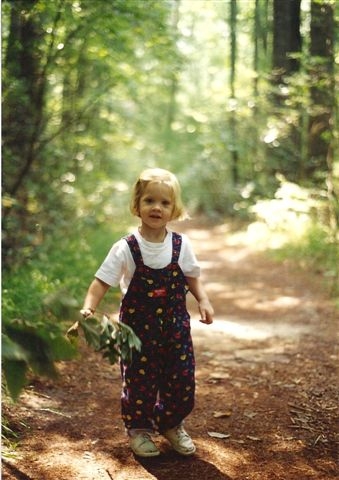
We had the same feeling about lifetime memories versus a night’s sleep in Vermont, or a few years later when Andrew returned the favor and led us to a 2 a.m. meteor shower over the Grand Canyon.

Not everyone has access to a rocky shore in Maine or the majesty of the Grand Canyon. But Carson has options, be they the whistling of the wind around the eaves, rain in our face, or a nearby park where we can observe migrating birds. The object in exploring nature with a child is to “become receptive to what lies all around you. It is learning again to use your eyes, ears, nostrils and finger tips, opening up the disused channels of sensory impression.” And ask yourself, “What if I had never seen this before?” or perhaps, “What if I knew I would never see it again?”

A child’s world is fresh and new, yet we often lose that clear-eyed instinct about “what is beautiful and awe-inspiring” before we reach adulthood. Many don’t attempt to know, and “because they can see many of these things almost any night perhaps they will never see it.”

Life is fascinating and remarkable. Rachel Carson’s sense of wonder led to “something much deeper, something lasting and significant” where we are “never alone or weary of life.”

There is something infinitely healing in the repeated refrains of nature — the assurance that dawn comes after night, and spring after the winter.

And even on our deathbed, what can sustain us is an “infinite curiosity of what is to follow.”

More to come…

DJB


The Weekly Reader links to the works of other writers I’ve enjoyed. I hope you find something that makes you laugh, think, or cry. 


Photos: Jackson Hendry on Unsplash; Claire at Kanuga, NC and Andrew at a SC beach by Candice Brown.

D-Day and the ongoing fight against government by the few and for the few

Tomorrow, June 6th, is the 79th anniversary of D-Day. As I wrote from Britain on the 75th anniversary, almost 160,000 troops from the United Kingdom, Canada, and the United States — including smaller contingents from Australia, Belgium, Czechoslovakia, Denmark, France, Greece, the Netherlands, New Zealand, Norway and Poland — invaded Nazi-occupied Europe on the beaches of Normandy.  Over the next three months of fighting, 209,000 Allied troops would die before the Nazis were pushed back across the Seine.

June 6, 1944 — D-Day — should never be forgotten. It was a time when the countries of the world came together to combat bigotry, racism, and hatred.  Many men and women made the ultimate sacrifice in that fight.

Months after that invasion, as the Allies were closing in on Berlin and Nazi Germany, the U.S. Army distributed one of its weekly pamphlets to the troops. The topic for the week was “FASCISM!”

Historian Heather Cox Richardson included much of the text from that pamphlet in her recent Memorial Day Letters from an American newsletter. It is worth the full read as we think about the sacrifices made by our fathers, mothers, uncles, aunts, grandparents, and millions of others in this country during the 1940s to defeat Hitler. It is important to read it as well in the context of the efforts by our home-grown fascists to take over and destroy our democracy today.

“You are away from home, separated from your families, no longer at a civilian job or at school and many of you are risking your very lives,” the pamphlet explained, “because of a thing called fascism.” But, the publication asked, what is fascism? “Fascism is not the easiest thing to identify and analyze,” it said, “nor, once in power, is it easy to destroy. It is important for our future and that of the world that as many of us as possible understand the causes and practices of fascism, in order to combat it.”

Fascism, the U.S. government document explained, “is government by the few and for the few. The objective is seizure and control of the economic, political, social, and cultural life of the state.” “The people run democratic governments, but fascist governments run the people.”

“The basic principles of democracy stand in the way of their desires; hence—democracy must go! Anyone who is not a member of their inner gang has to do what he’s told. They permit no civil liberties, no equality before the law.” “Fascism treats women as mere breeders. ‘Children, kitchen, and the church,’ was the Nazi slogan for women,” the pamphlet said.

Fascists “make their own rules and change them when they choose…. They maintain themselves in power by use of force combined with propaganda based on primitive ideas of ‘blood’ and ‘race,’ by skillful manipulation of fear and hate, and by false promise of security. The propaganda glorifies war and insists it is smart and ‘realistic’ to be pitiless and violent.”

The pamphlet writers noted that fascists understood that “the fundamental principle of democracy — faith in the common sense of the common people — was the direct opposite of the fascist principle of rule by the elite few.” That’s why they fought so hard against democracy.

And those writers in 1945 went on to point out that America had its own history with fascism, and that those who pushed for a government by the few and for the few would continue to try and take over our country.

The War Department thought it was important for Americans to understand the tactics fascists would use to take power in the United States. They would try to gain power “under the guise of ‘super-patriotism’ and ‘super-Americanism.’”

To do so, they would use three techniques:

  • First, they would pit religious, racial, and economic groups against one another to break down national unity. Part of that effort to divide and conquer would be a “well-planned ‘hate campaign’ against minority races, religions, and other groups.”
  • Second, they would deny any need for international cooperation, because that would fly in the face of their insistence that their supporters were better than everyone else. . .
  • Third, fascists would insist that “the world has but two choices—either fascism or communism, and they label as ‘communists’ everyone who refuses to support them.”

As we look at America in 2023, there are clear signs of a large segment of one party that is turning to fascism and its techniques to retain power in the face of the declining popularity of their policies. We see:

  • voter suppression to keep those they oppose from exercising their democratic right to self-representation;
  • extreme gerrymandering to thwart the will of the people by keeping the minority in power;
  • corrupt Supreme Court justices who disregard law and precedent to shape the country into their vision of government by the powerful and for the powerful;
  • use of violence against political enemies; dehumanization of minorities, LGBTQ individuals, and immigrants;
  • control over women’s bodies and reproductive rights;
  • extreme patriotism;
  • Christian nationalism; and
  • much more straight out of the fascist playbook.

In 2019 I quoted an op-ed by Michele Heller — whose father served at D-Day — from the Washington Post to help Americans remember what our parents’ generation was fighting against and how that contrasts with our current amnesia over the importance of leadership.  She ends her remembrance of her father — a Jew who escaped Nazi-occupied Czechoslovakia and eventually found safety in the United States, only to enlist two years later in the U.S. Army “to fight, as many immigrants still do, for their adopted country” — with the following:

“They all were war heroes — the captured, the killed, the wounded, the mentally maimed, the lucky survivors such as my dad — because of circumstance, not desire. They went to war because of what happened when xenophobia and demagoguery supplanted real leadership.”

Demagoguery, xenophobia, and hatred remain all too prevalent in today’s America. As we remember the anniversary of one of the key battles in that fight against fascism, let us never forget that the fight for democracy never ends.

More to come…

DJB

Photo of American cemetery at Normandy by DJB.

Stranger in a strange land

Stranger in a Strange Land was the title of a 1961 science fiction novel by American author Robert A. Heinlein. Heinlein writes of a human who comes to Earth in early adulthood after being born on Mars and raised by Martians. It became the first science fiction novel to enter The New York Times best-seller list and in 2012 it was named one of 88 “Books that Shaped America” by the Library of Congress.

The book’s title is a direct quote from the King James Version of Exodus 2:22.

And Moses was content to dwell with the man: and he gave Moses Zipporah his daughter. And she bare him a son, and he called his name Gershom: for he said, I have been a stranger in a strange land.

Exodus 2:21-22, King James Version

These are strange times. And yet if we’re paying attention, as all good writers are trained to do, we might admit the times are often strange. Some ten years after Heinlein’s book, that title inspired a song of the same name.

How many days has it been
Since I was born
How many days until I die
Do I know any ways
That I can make you laugh
Or do I only know how to make you cry

When the baby looks around him
It’s such a sight to see
He shares a simple secret
With the wise man

He’s a stranger in a strange land
Just a stranger in a strange land
Tell me why
He’s a stranger in a strange land
Just a stranger in a strange land

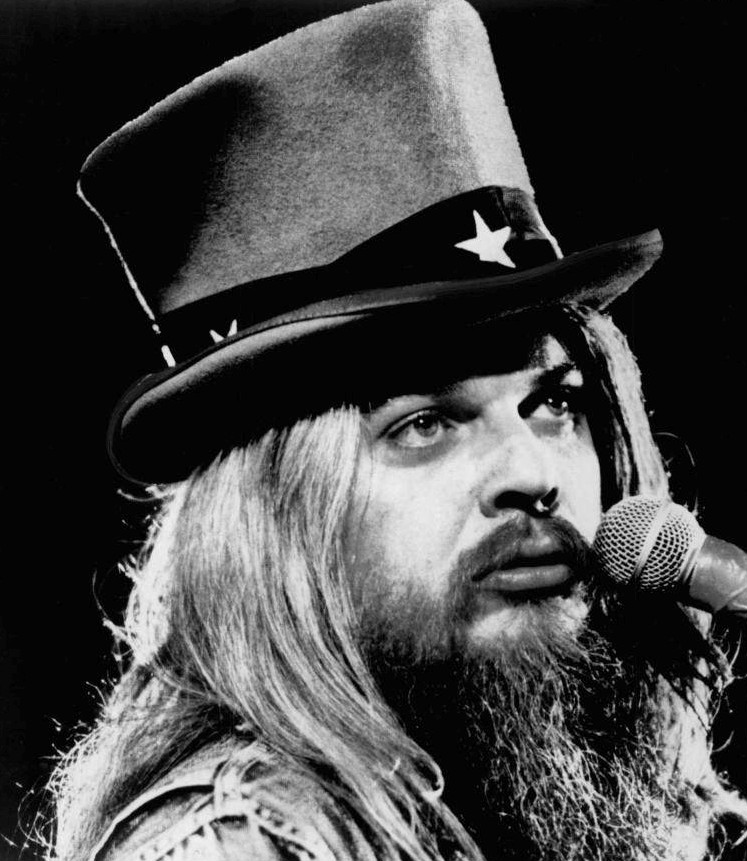
The 1971 song Stranger in a Strange Land was written by the Rock and Roll Hall of Famer, the “Master of Space and Time”, the inimitable Leon Russell.

Leon Russell (credit: Wikimedia Commons)

Leon had an otherworldly career. As an admiring Sir Elton John said in his must-hear Hall of Fame induction speech, Leon played with everyone:

Bing Crosby, Johnny Mathis, Doris Day, Dean Martin, Herb Alpert, Frank Sinatra, The Ventures, The Everly Brothers, Dale Shannon, Duane Eddy, Bobby Vee, Bobby Darrin, Jan and Dean, Sandy Nelson, The Fleetwoods, Connie Francis, The Crystals, the Ronettes, every Phil Spector record, The Byrds, Delaney and Bonnie, every Beach Boys album including Pet Sounds, J.J. Cale, Harry Nielson, Bob Dylan, Joe Cocker, Freddie King, and B.B. King … “just to name some of them he played on.”

It’s a preposterously impressive roll call. And it was the “rediscovery of real authentic American roots music” that helped to rehabilitate this singular talent, “a man as capable of composing a modern standard like Delta Lady as he was interpreting something from the Golden Age of songwriting.”

I’ve always thought the best versions of Stranger in a Strange Land were his live ones. A friend and I saw Leon’s band in a memorable 1972 concert and she has remained a friend even though, if memory serves, her take on the concert was less “enthusiastic” than mine.

Leon wrote the song with long-time bandmate Don Preston and recorded it multiple times, including as a much slower gospel-influenced tune on this piano-only version for Signature Songs. I like this more with each listening, as the voice sounds appropriately weary with a take on the piano that could have come out of a downtrodden New Orleans bar.

After the two opening verses, the B section kicks in with Leon taking off a great rant that’s as fresh today as it was in 1971.

Well, I don’t exactly know
What’s going on in the world today
Don’t know what there is to say
About the way the people are treating
Each other, not like brothers

And then he asks those wonderful backup singers to chime in as the children sing:

Do you recognize the bells of truth
When you hear them ring
Won’t you stop and listen
To the children sing
Won’t you come on and sing it children

He’s a stranger in a strange land
Just a stranger in a strange land

The song has been recorded by multiple artists, including in a 2019 concert by the Tedeschi Trucks Band featuring a soulful vocal by Charlie Starr of Blackberry Smoke and terrific guitar leads by Derek Trucks and Starr. Susan Tedeschi picks up the vocal in the B section, to great effect.

Stranger in a Strange Land wasn’t the only time this son of Tulsa, Oklahoma pulled out biblical references in his songwriting. Prince of Peace includes reminders to think of how we treat others:

Never treat a brother like a passing stranger
Honey, won’t you always try to keep the love light burning
Sing a song of love and open up your heart
For you might be the prince of peace returning
Yeah, you might be the prince of peace returning

And in Roll Away the Stone, Russell implores a girl whose done him wrong and taken off with a friend to return instead of “leaving him layin’ here | what will they do in two thousand years?”

Leon Russell wrote so many amazing songs during his long career, including two simply gorgeous tunes: This Masquerade and A Song for You. The former was most memorably covered by the jazz artist George Benson, whose version won the Grammy Award for Best Record of The Year in 1977.

A Song For You is the tune Leon played live at his 2011 Hall of Fame induction, joined by John Mayer with a beautifully understated guitar solo.

As Malcolm Jones wrote in The Daily Beast shortly after Leon died near the end of 2016, Russell had a voice “that death can’t touch.”

So in his honor, I’m going pull out that first solo album and punch the repeat button for a week or so. . . . “Hummingbird” alone would seal its greatness, although for me, “Shootout on the Plantation” just defines rock-and-roll fun. . . . It’s got a timeless life and energy all its own that dares you not to boogie. Death can’t touch that, and right now I need things that death can’t touch.

The master of space and time indeed. Listen to the children sing here in our own strange times.

More to come…

DJB

Image by Coombesy from Pixabay

From the bookshelf: May 2023

Each month my goal is to read a minimum of five books on a variety of topics and from different genres. Here are the books I read in May 2023. If you click on the title, you’ll go to the longer post on More to Come. Enjoy.

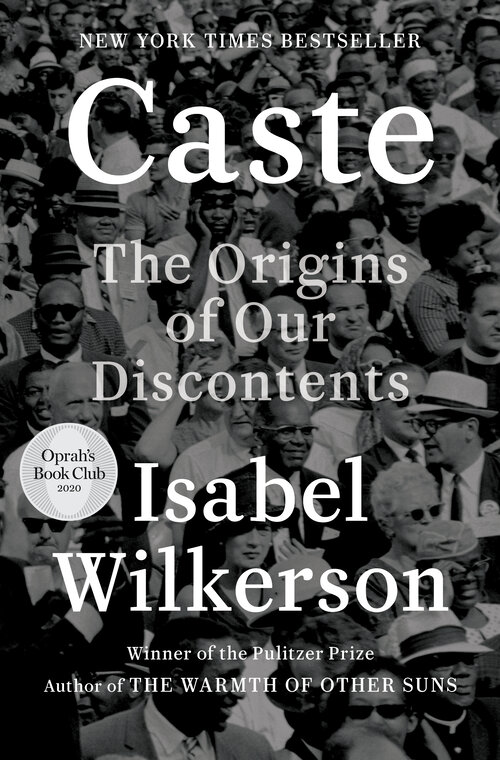
Caste: The Origins of our Discontent (2020) by Isabel Wilkerson is the latest work by a writer who takes stories we thought we knew and pushes us to look at them through a different lens. Author of the landmark The Warmth of Other Suns, Wilkerson’s earlier book reminded us that the exodus of blacks from the American South deserved to be seen as part of refugee stories of displaced and marginalized people stretching back over thousands of years. Instead of focusing on the misunderstood and often misused word racism, she writes in Caste of our unwillingness to see that the hierarchy built only on skin color — the “infrastructure of our divisions” which has been in place since our founding as a nation — is just another manifestation of caste, as seen in India and Nazi Germany. Wilkerson writes persuasively, clearly, and honestly about the American failure of character. In this important and timely book, Wilkerson notes that “caste makes distinctions where God has made none.”


Never Say Whatever: How Small Decisions Make a Big Difference (2023) by Dr. Richard A. Moran reveals how the W-word is a career — and life — killer. We have a chance to make a big impact in both, but to do so we have to make the numerous daily decisions that everyone faces. The choices we make, even the small ones, help us pivot toward the life and career we want. But that becomes much harder if we tend to rely on “whatever” as a substitute for decision-making. It is a word that “can be a whole sentence, an attitude, an ‘OK,’ or nothing at all.” It can also be habit forming, with disastrous long-term consequences. I’ve known Rich and his wife Carol for more than a decade, and I was pleased and honored when Rich agreed to share insights he’s uncovered with readers of More to Come in my most recent author interview.


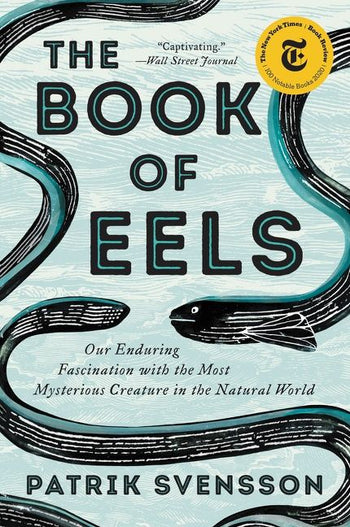
The Book of Eels: Our Enduring Fascination with the Most Mysterious Creature in the Natural World (2021) by Patrik Svensson is one man’s attempt to get to the bottom of what scientists and philosophers have for centuries dubbed as “the eel question.” Very little is actually known about the European or American eel, except that they are somehow mysteriously spawned in the Sargasso Sea. The first glimpse we get of them is as tiny willow leaf-shaped larvae only a few centimeters in length floating along in the great ocean current until some peel off to live in North America and others head to the Mediterranean, the coastal waters of Northern Europe, or Scandinavia. We still don’t understand what drives them, after living for decades in freshwater, to swim great distances back to the ocean at the end of their lives. Even in an age of great scientific discovery they remain a mystery. Which makes them utterly fascinating and a great subject for a writer who wants to explore what it means to live in a world full of questions we can’t always answer.


Maigret and the Lazy Burglar (1961) by Georges Simenon begins on a cold night in Paris when detective chief inspector Jules Maigret receives a telephone call from inspector Fumel telling him about the discovery of a body. There is something oddly off, which leads Fumel to break the new rules of French law enforcement and call his old colleague before notifying the prosecutor. As it happens, the body is that of Honoré Cuendot, an old burglar acquaintance of Maigret’s, who only breaks into homes that are occupied. The story includes a woman and her son-in-law who were lovers, just as her husband and their daughter-in-law were lovers (this is France); a mother who doesn’t seem too concerned to be left without any visible means of support when her son is found dead; and a bar/brothel owner — the “lovely Rosalie” — who has an “obscenely picturesque way of expressing herself.” The Times of London has called Simenon’s books “gem-hard soul-probes,” and this certainly fits the bill.


Bad Blood: Secrets and Lies in a Silicon Valley Startup (2018 with a 2020 afterword) by John Carreyrou is the story of the building of the myth and the ultimate disgrace of Elizabeth Holmes. The Theranos founder dropped out of Stanford while still in her teens to focus full-time on the health tech startup which claimed to have invented technology that could accurately test for a range of conditions using just a few drops of blood. Theranos raised $945 million from a well-known list of investors and was valued at $9 billion at its peak. Yet her story began to unravel after Carreyrou’s 2015 Wall Street Journal investigation reported that the company had only performed roughly a dozen of the hundreds of tests it offered using its proprietary technology, with questionable accuracy. Carreyrou takes the reader through this sordid story of how the thirst for money, fame, and control — “Apple envy,” he names it, in honor of Holmes’s pursuit to become the next Steve Jobs — wrecked lives, endangered patients, led to a man’s suicide, and wasted almost a billion dollars of investment.


What’s on the nightstand for June (subject to the last minutes changes at the whims of the reader):

Keep reading!

More to come…

DJB


NOTE: Click to see the books I read in April of 2023 and to see the books I read in 2022. Also check out Ten tips for reading five books a month.


The Weekly Reader links to the works of other writers I’ve enjoyed. I hope you find something that makes you laugh, think, or cry. 


Image of library from Pixabay.

Observations from … May 2023

A summary of posts included on More to Come in May 2023. If you receive my monthly email update, feel free to skip this one.

Pausing to take in the fragrance of May’s flowers is a small way to capture a sense of wonder in the world. It is also a reminder to slow down and stop struggling to control things beyond our understanding. Life is unpredictable. Who knows, for instance, if the iris will bloom in April or May each year?

Writer Satya Robyn suggests “the unpredictability is how I learn. The uncontrollability is how my heart is stretched open. Not dodging things means I end up bashing into joy.”

Bashing into joy sounds like a good lifestyle choice at the moment.

This newsletter clues you in on the observations and recollections that made it to More to Come… in May. Bashing into joy — where I write about the genius of Willie Mays, owning my decision to retire, accepting unpredictability, and finding joy along the way — was the top post in terms of reader views this month.

Speaking of unpredictability…


THE TOTAL UNPREDICTABILITY OF WHAT MORE TO COME READERS WILL FIND OF INTEREST

Sometimes you surprise me.

  • When I wrote an essay that began with my history of sin (well, actually, the history of my thinking on sin), I had no idea it would be near the top of reader views. When we can’t be bothered to love describes the clash of cultures in my head when this four-decade Episcopalian who nonetheless still finds elements of his Baptist upbringing lurking somewhere deep in his soul was sitting in his current church listening to a black Methodist minister speak words from a Jesuit theologian. Yes, it is about sin, but it is much more about love.

At other times, I’m less surprised about what rises to the top of reader views.

  • Author interviews are usually a reader favorite. My most recent was with business consultant, winery owner, former college president, author, and long-time friend Rich Moran. Banish apathy is the core message of Rich’s new book, Never Say Whatever: How Small Decisions Make a Big Difference. Rich told me that we make about 35,000 decisions in a day. In an informative back-and-forth, we talk about why small decisions matter and how to rid yourself of a “whatever” attitude.
  • Thanks to the Biden/Harris administration, the US is in the midst of an astonishing economic run. Celebrate the good news! was popular because many regular readers appreciate hearing good news about our civic life.

And then there are the things I wish more of you had found.

  • Sometimes readers pass over what I find fascinating. Take The Book of Eels for instance. I mentioned the lack of response to Candice and she said, “David, it’s about eels for goodness sakes!” Unperturbed, I want to point you to One odd and fascinating creature. Even in an age of great scientific discovery eels remain a mystery. Which makes them utterly fascinating to thinkers from Aristotle to Rachel Carson and a great subject for a writer who wants to explore what it means to live in a world full of questions we can’t always answer.

BOOKS ON CRIME (REAL LIFE, FICTIONAL, AND THINGS THAT SHOULD BE CRIMES)

Now that I’m five months into my newfound interest in murder mysteries, I’ve taken to calling 2023 The Year of Reading Dangerously. That hit closer to home in May when three of the five books I read were about criminals and criminal behavior. They were not limited to fictional who-done-its.

  • The most important book I read in May was highlighted in A civilization searching for its humanity. Isabel Wilkerson’s Caste: The Origins of Our Discontent is a persuasive and honest look at the American failure of character. Our hierarchy built only on the color of one’s skin is the “infrastructure of our divisions” ― an infrastructure that is another manifestation of the caste system as seen in India and Nazi Germany.
  • Beware the half-truths and false narratives is my review of John Carreyrou’s Bad Blood: Secrets and Lies in a Silicon Valley Startup. This true-life story of the myth and the ultimate disgrace of Elizabeth Holmes, the Theranos founder, reads like a crime novel thriller. As I was finishing this book, the New York Times (predictably) wrote a piece white-washing Holmes’s white-collar crime entitled “Liz Holmes Wants You to Forget About Elizabeth.” The New York Times Pitchbot parody Twitter account and the brilliant Oliver Willis were not buying it.

MOTHER’S DAY AND BASEBALL

These posts focused on two staples of the month for me.

  • Lessons from Mom was my Mother’s Day post. It never hurts to remember things your mom taught you, especially if your mother is as wise as Helen Brown.
  • Why I love baseball recounts my recent trip to Fenway Park with good friend Ed Quattlebaum (with great seats behind home plate!) and a home-team walk-off home run win in my first in-person game at Nationals Park this year.

WHATEVER ELSE TICKELD MY FANCY

The affirmation of human dignity, the passing of musical heroes and our ongoing senseless gun violence all made an appearance.

  • Affirming human dignity suggests that those who value human rights, democracy, and civic life need to be consistent and persistent in returning to that fundamental belief and strong affirmation of human dignity.
  • Tina Turner also passed away in May. There was no one like Tina Turner, as I write in Tina Turner, R.I.P.
  • On a happier note, You’re Not Alone ― a song featuring Brandi Carlisle by one of the up-and-coming singer-songwriters I admire, Allison Russell ― was nominated for the Americana Song of the Year Award. Give it a listen.
  • Historian Heather Cox Richardson wrote of how we moved from a sensible reading of the 2nd Amendment to the crazed belief in the unfettered right to own guns. I quote her extensively in Still shocked, despite the regularity.

CONCLUSION

Thanks, as always, for reading. As you travel life’s highways, do your best to treat others with kindness, undertake some mindful walking every day, recognize the incredible privilege that most of us have, and think about how to put that privilege to use for good. Women, people of color, LGBTQ individuals, immigrants, and others can feel especially vulnerable…because they are. Work hard for justice and democracy because the fight never ends.

Bash into some joy along the way. And finally, try to be nice, always be kind.

More to come…

DJB


You can follow More to Come by going to the small “Follow” box that is on the right hand column of the site (on the desktop version) or at the bottom right on your mobile device. It is great to hear from readers, and if you like them feel free to share these posts on your own social media platforms.


For the April 2023 summary, click here.


Photo of bees at work on flower at Giverny by Claire Holsey Brown

Bashing into joy

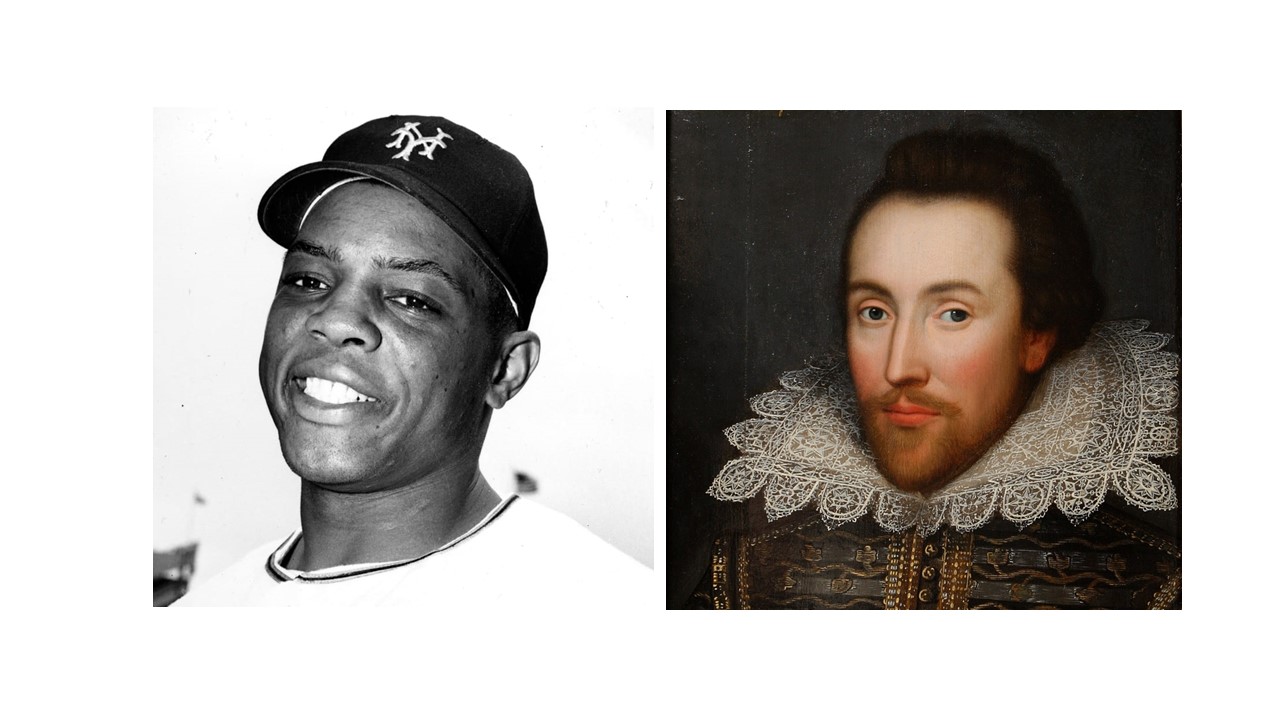
Willie Mays has always been my favorite baseball player. He could hit for average and power, steal bases, catch every ball that came his way in centerfield, and throw like no one else. He loved playing baseball and he played with the childhood joy that was forever captured in his immortal nickname: The “Say Hey Kid.” The actress Tallulah Bankhead said, “There have been only two geniuses in the world — Willie Mays and Willie Shakespeare.”

Mays and Shakespeare

In fact, it was said of Mays that the only thing he could not do on a baseball diamond was stay young forever.

Willie, you see, played too long after his skills had declined and the joy was harder to find. Those last years were not kind.

We’re all the young Willie Mays early in life, believing we can chase down fly balls forever. Yet when one has to make a decision to let go of a place in the world supported by long-held beliefs, identities, or expectations — perhaps even something you cherish and love — there can be a big difference between understanding what’s necessary intellectually and owning that choice through emotional acceptance. Owning and even embracing the realization that our time here is limited, unpredictable, and sacred is more difficult. The more awareness we can bring to this, the more it will support us to live well.

“The paradoxical reward for accepting reality’s constraints,” Oliver Burkeman notes, “is that they no longer feel so constraining. The sooner we accept that fact, “the sooner we can live the only life we have more fully.”

Retirement — as an active ballplayer for those so fortunate or at some point in a more traditional career for the rest of us — is the classic head/heart decision.

We all face these types of choices. It can take months or years after we’ve crossed the intellectual threshold to finally accept those decisions emotionally. Yet personally, only then do I have the opportunity to discover something better. It is the classic “when one door closes, another opens” situation.

What looks like a barrier is often a catalyst in disguise.

When I’ve made a choice but haven’t fully owned it, life seems out-of-whack. But dropping an identity without a real sense of where the new path may lead is seriously scary stuff. The author Elizabeth Marro tells how two years passed between the decision not to have more children and publicly admitting that she was letting go of that path in order to become a writer. She owned her decision only when she told a colleague “I am going to try to write. I am going to use all the energy I would put into mothering a human being into growing another side of myself.” She finally realized that she “had energy, experience, intelligence and opportunity to try things. Be things. Grow.”

Letting go emotionally places certain hopes and dreams out of our lives, probably forever. We are also relinquishing some measure of control. But seriously, how much in life do we really control anyway? And how might we live happily with that uncontrollability?


Gold watch time: Felix Mittermeier from Pixabay

When it came to retirement, my father taught us not to be defined by our jobs. He was proud of his career as a TVA engineer, yet he retired in his early 60s and easily moved on. Tom Brown enjoyed life. Every day was a new day.

After more than four decades, I decided 2019 was my year to follow Dad’s example. It was a scary decision and involved letting go not just of the perception of control but of dreams. So I hedged my bets, described the step as “not quite” retirement, and took a gap year.

Pandemics hit when you have other plans. Life became surreal, overwhelming, and lonely. Writing, consulting, and an initial foray as a heritage tour lecturer brought satisfaction. I found I enjoyed the latter experience, especially the research and crafting of stories that fellow travelers would find of interest. A renewed commitment to reading outside my comfort zone introduced me to indigenous writing, fungal networks, immigrant perspectives, awe, beavers, liberation theology, and so much more.

Yet I still self-described as “semi-retired.” Being employed somehow remained at the core of my existence. I was very happy in my retirement but perhaps hadn’t fully owned this new life.

Ironically it was only at a recent retirement party that I took the plunge, telling friends my life consisted of exploring the world I’d missed during the decades I was a busy nonprofit executive. Books, travel, conversations, essays, and lectures helped me discover new appreciation for the diversity and wonder around me. Unwrapping and sharing those discoveries with others brought me joy. Unsurprisingly, I often found myself working in the rich stew of our messy, often misunderstood, increasingly weaponized, yet always fascinating history.

Mary Oliver’s recommendation to writers — “Pay attention. Be astonished. Tell about it.” — had become my North Star.

It is the fortunate who realize the incredible amount we learn “between our birthday and our last day.” Some never lose their childhood curiosity. I’m reclaiming mine.

When she steps out gently from the busyness of life to engage the world through curiosity and wonder, Satya Robyn also stops struggling. She floats as in a river, embracing the liminality.

The unpredictability is how I learn. The uncontrollability is how my heart is stretched open. Not dodging things means I end up bashing into joy.

No longer semi-retired, I have a new life description: I am bashing into joy. I’m discovering new worlds while diving deeper into things I love. The sum of traditions, memories, myths, and associations connecting people and place over time — history’s soul — remains utterly fascinating. I find joy in sharing these personal and collective explorations in essays and lectures.

Letting go in retirement, relationships, and with long-held expectations can involve disappearance along with a sense of transience and fragility. Disappearance, Kathryn Schulz writes, reminds us to notice, transience to cherish, fragility to defend. “We are here to keep watch, not to keep.”

Pay attention. Be astonished. Tell about it.

When we let go we find there truly is more to come…

DJB


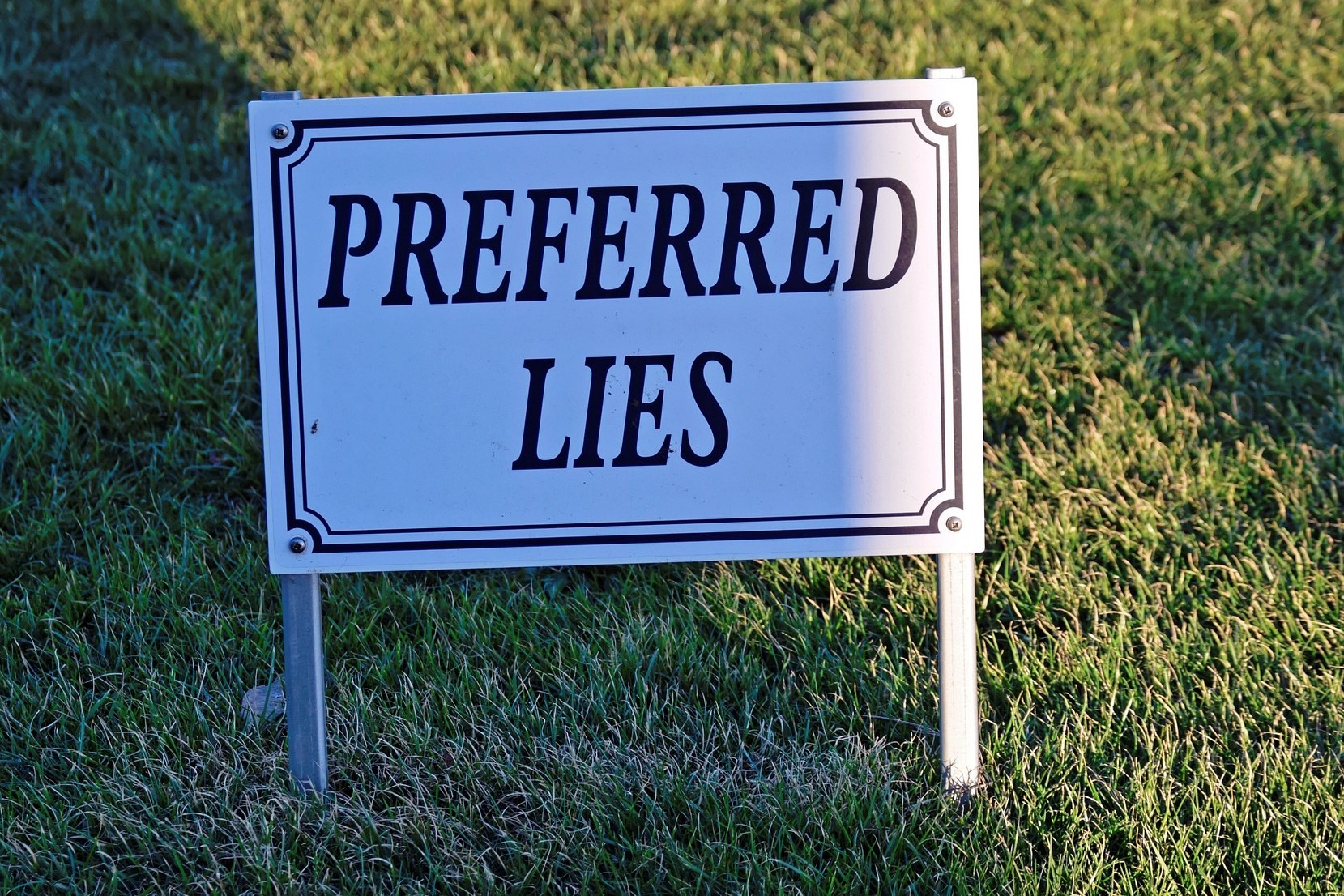
Door photo by Jan Tinneberg on Unsplash. Sign photo by DJB.

Celebrate the good news!

It is time to shout out the obvious:

Thanks to the Biden/Harris administration and Democrats all across the country, we are in the midst of an astonishing economic run in the U.S.

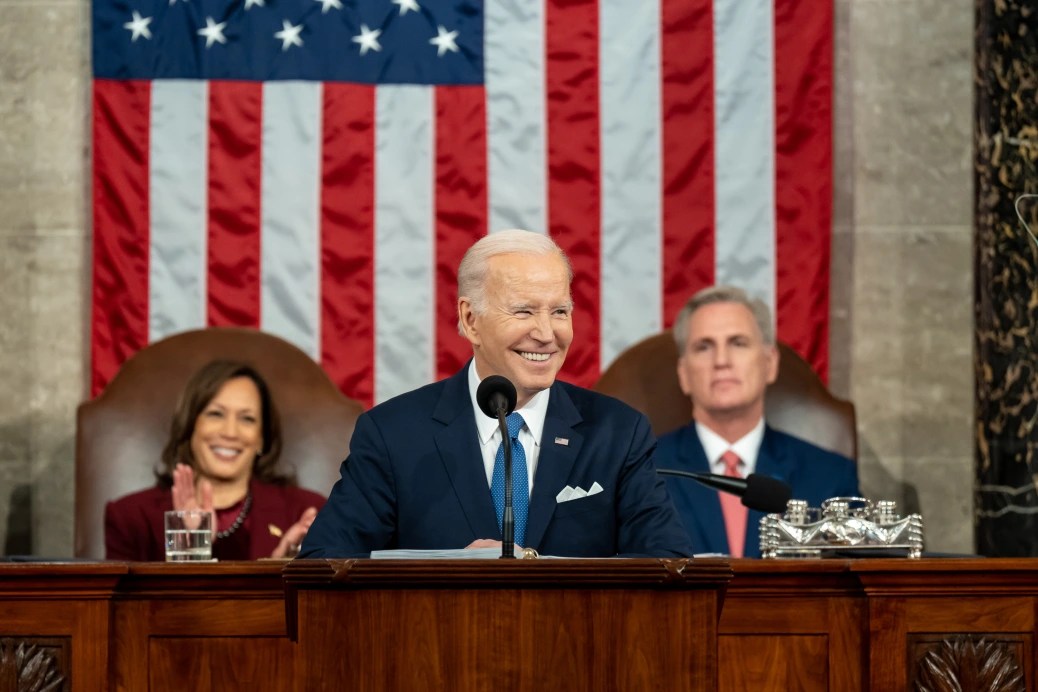
President Joe Biden’s 2023 State of the Union Address

Ours is “a stunning success story—one of enduring but underappreciated outperformance.” America remains “the world’s richest, most productive and most innovative big economy . . . it is leaving its peers ever further in the dust.”

Simon Rosenberg outlines some of the basics:

  • The US unemployment rate today is 3.4%, the lowest peacetime unemployment rate since WWII, and the lowest since 1969 . . . The current Black unemployment rate, 4.7%, is the lowest ever recorded. The worker participation rate for prime age workers is now higher than before the pandemic.
  • In the last few months, America has experienced the lowest uninsured and lowest poverty rates in its history.
  • GDP growth is averaging over 3% in the Biden era, a very strong number. Our economic recovery from COVID is the strongest of all advanced economies.
  • The Dow is up 24% since Election Day 2020, and is at the upper end of its performance over the past generation.
  • The current Atlanta Fed GDPNow forecast has GDP growth coming in at 2.9% this quarter. Job growth remains very strong – 253,000 last month . . . we are not currently headed toward a recession.

Rosenberg notes that IF we do hear the good news from the corporate media (a very large “if”), it comes out something like this:

The economy is historically strong, people are making more money and are content in their work, a recession is not on the horizon as of today, and inflation is too high.

Republicans — and their enablers in the media who thrive on conflict — leave out the stuff in the beginning and just focus on inflation. That picture is incomplete and a parroting of right-wing talking points.

It is “not journalism or honest commentary.”

The issues around inflation are more nuanced than reported. With rapidly rising wages for those in the bottom 50% of earners, “the net impact of inflation on American workers over the past two years has been less than many have claimed.” Also, rising gas prices had the largest impact on inflation. Gas prices have been falling over the past year and are now lower than they were before the beginning of the Ukranian war.

Americans “do not choose to blame Biden” for inflation, but instead point to supply chains, COVID, and Russia/OPEC.

The Biden/Harris administration has also passed transformational legislation like the $1.9 trillion American Rescue Plan, the $1 trillion Bipartisan Infrastructure Law, the $750 billion Inflation Reduction Act and the $280 billion CHIPS and Science Act. These laws have generated record investment in infrastructure, record job growth, and a reset of American competitiveness.


Biden’s performance is better than any other in modern history, but is typical for Democratic administrations.

Sunrise Image by Franz Roos from Pixabay

As Rosenberg notes, with May’s strong jobs report in, the monthly jobs tracker clocks in at:

  • 33.8m jobs — 16 years of Clinton, Obama
  • 12.7m jobs — 26 months of Biden
  • 1.9m jobs — 16 years of Bush, Bush and Trump

Biden’s 12.7 million jobs is 6 times as many jobs as were created in the 16 years of the last 3 Republican Presidencies, combined

  • It is also millions more than were created in the entirety of any of their three individual Presidencies. 
  • Since 1989 and the end of the Cold War, the US has seen 49 million new jobs created. Remarkably 47 million of those 49 million jobs were created under Democratic Presidents, 96%. 

Oh, and in Biden’s first two years they’ve also lowered the deficit by an unprecedented $1.7 trillion.

The Trump tax cuts and Trump’s increased spending even before the pandemic ultimately added $7.8 trillion to the national debt, about $23,500 for every person in the country. The increase in the annual deficit under Trump was the third-biggest increase of any administration, relative to the size of the economy. He was beaten out only by George W. Bush and Abraham Lincoln.” 

President Biden’s 2024 budget proposes to reduce the federal deficit by $3 trillion over the next decade by raising taxes on those who make more than $400,000 a year, along with other measures.


Folks, by every reasonable measure, the economy does much better under Democratic presidents than under Republicans.

Image of infrastructure workers by Peggy und Marco Lachmann-Anke from Pixabay

So besides trying to crash the economy by defaulting on bills that were run up in the Trump administration because they believe it will hurt Biden politically, what are the Republicans up to at the moment?

  • Arizona Senate Republicans are focused on COVID conspiracy theories, and they branded their committee with a trolly QAnon reference. 
  • Tennessee Republicans appointed a 9/11 truther to the committee overseeing the state’s social studies standards, “but not just any 9/11 truther, a 9/11 truther who believes Obama caused tornados.” Just the kind of person you want setting standards for your child’s education.
  • And — leaving the best for last — Georgia GOP District Chair Kandiss Taylor is a flat-earther. “For me, if it is not a conspiracy, if it is real, why are you pushing so hard everywhere I go?” she asks. “Every store, you buy a globe, there’s globes everywhere . . . Everywhere there’s globes. You see them all the time, it’s constant. My children will be like ‘Mama, globe, globe, globe, globe’ — they’re everywhere.” Taylor actually said that.

These people are nuts and are not serious about governing. It is all performance art to generate outrage and sweep in money from those addicted to conspiracy theories and hatred. We are grappling with a former president fomenting insurrection, a corrupt Supreme Court, and a party that is intent on blocking people from voting while regulating women’s bodies but not guns. I hate to say this, but they continue to go off the rails (to the detriment of our country). And, unfortunately, our corporate-backed mainstream media coverage is not helpful. Check out Press Watch if you want to know why.

Perry Bacon, Jr., an opinion columnist at the Washington Post, did us all a favor recently when he wrote about seven media platforms that are helping as they redefine politcal coverage and investigative journalism in the face of fascism. They don’t, as a matter of choice, focus on the horse race that seems so alluring to the mainstream press. I read many of these regularly and have begun checking out the others:

  • With the Republican Party stacking the courts with appointees who carry out its policy goals, Balls and Strikes has coverage “premised on the reality that interpreting the law is an inherently political act with real-world consequences.”
  • The U.S. edition of the London-based Guardian is one of the few outlets that “covers up-to-minute news like the New York Times or The Postopenly acknowledges its left of center ideology; and writes about politics without the “insider” approach (unnamed sources, an obsession with consultants and strategy) that makes so much political coverage hard to parse.”
  • Hammer & Hope “takes it as a given that anti-Black discrimination still exists in America and concentrates on what should be done to address it.”
  • Judd Legum at Popular Informationfocuses on finding scandals, unlike most political writers. But he publishes regularly, unlike the investigative reporters at most large news organizations, who might only write a few times a year.”
  • Over the past six years, States Newsroom has founded news outlets focused on state government in 34 states. 

The bottom line is this: Joe Biden’s presidency is working and it’s why Republicans are trying so hard to blow it up.

Defending democracy is hard and the work never ends. Thankfully, there’s much good news to build on. Let’s get to work!

More to come…

DJB


Note: Read my disclaimer about my political posts here.


Note #2: A reader who shared this with several individuals asked about the sources for these items. While I’ve linked to all of them in the original post, most of the information comes from:


Note #3: The blistering May jobs report — released on June 2nd — continues the amazing streak that Biden’s economy has been on, with 339,000 net new jobs, 432,000 with upward revisions from previous months. That makes the cumulative tracker:

  • 33.8m jobs – 16 years of Clinton, Obama
  • 13.1m jobs – 28 months of Biden
  • 1.9m jobs – 16 years of Bush, Bush and Trump

Image by Brian Odwar from Pixabay. Image of Dark Brandon from White House Correspondents Dinner by AP

Tina Turner, R.I.P.

When I was a teenager listening to rock ‘n roll in the 1960s, I followed all the artists one would expect of a white, southern boy being introduced to things beyond his imagining. No artist from that period — and I mean NO ARTIST — came close to taking me into new worlds where I came out “all shook up” more than Tina Turner, who passed away on Wednesday at age 83.

Turner, as described by New York Times music critic Ben Sisaro in his article on her 11 Essential Songs,

…started off as an R&B shouter and inexhaustible dancer who, alongside her husband Ike, put on the most exhilarating live show this side of James Brown. Then she was a rock heroine who toured with the Rolling Stones and served as the Who’s Acid Queen. And finally she became the ultimate survivor — the abused woman who left her man in the dust and, without apologies, claimed a crown all her own.

For me, nothing says Tina Turner better than her amazing remake of the Creedence Clearwater Revival hit Proud Mary. In the original with the Ike and Tina Turner Revue, you get to see not only Tina but the Ikettes (formidable singers/dancers in their own right); the abusive and controlling Ike, who arranged their material; and that amazing horn section. As one commentator noted, it was akin to having the whole Stax-Volt Revue in one band.

And then, this live version — at the amazing age of 69 (a year older than I am now!) — from the Netherlands. Oh. My. God.

As you might expect, the cartoonists have had a field day saluting the Queen.

But seriously, I can’t do Tina justice. However, I can point to a writer who probably captures her impact as well as anyone. Even though she came to know Turner’s music after I had left rock behind, MSNBC nightly news host Joy-Ann Reid wrote about the impact of the 1960s Tina, and how Tina Turner taught Black women like me to be fearless.

When I was a little girl, I had a rag doll … the only doll I’ve ever owned…

That line, from the song “River Deep — Mountain High,” is how I came to love Tina Turner. But it was my mom who was obsessed with her. In the 1980s, Tina was a megastar — churning out pop-rock hits that had Miss Philomena (my music-loving single mom) dancing across our kitchen floor and cranking it up in the car. But it was ‘60s Tina Turner that captivated me, in old videos from before I was even born that played on an eclectic local music video show that aired on Saturdays in Denver, where I grew up. 

“River Deep” was not a hit in 1966. The music industry didn’t get the Phil Spector-produced song (written by Spector, Jeff Barry and Ellie Greenwich for the Ike and Tina Turner ensemble. Nor did it get her once she separated from Ike, her abusive husband and musical Svengali, and sought to enter the world of “white” rock ‘n’ roll (which of course, was merely a permutation of Black rock and blues.)

Still, I was fascinated by the Tina Turner who existed in black and white video, scampering across the stage in short skirts, with her voluminous hair and long legs dangling, and some wild combination of rock and R&B belting out of her scratchy throat. I thought she was one of the most beautiful women alive. And she stayed that way, right through her 70s and 80s when she appeared in color — with that lineless skin and spiky hair that got bigger and wilder with time. Tina was, in every way, an icon. …

In the 2021 documentary “Tina,” we learned even more: about the pain of abandonment she suffered as a child, and the seemingly unsurvivable abuse not just from Ike, but from a music industry that found her, at various times, to be too Black, too white, too rock ‘n’ roll, too sexy for her age, and too ambitious for a woman. And we learned of Tina the mom, who struggled to balance the responsibilities of being a working, traveling musician and nurturing children when so few had bothered to emotionally nourish her.

Yet this is the diva who taught Mick Jagger how to move; David Bowie how to do rhythm and blues, and the industry how to respect an artist who could throw on a miniskirt in her 50s and 60s, sing her heart out or act her behind off, and be whoever the hell she wanted to be, unapologetically.

For all of those reasons, Tina shone. She showed Black women — really, all women — what we can be when we stop being afraid. And my mom was right. She was pretty damn cool.

Simply put, there was nobody like Tina Turner.

Rest in peace.

More to come…

DJB

Photo from Tina Turner online

A civilization searching for its humanity

Every so often we come across a writer who takes a subject we thought we knew and completely shifts the perspective in a way that challenges us to think afresh. To see something common through a different lens. That upsets a long-held narrative. Their works tend to sit with the reader for months, years, or a lifetime, shaping our worldview in ways we don’t really understand at the time of the reading.

Caste: The Origins of our Discontent (2020) by Isabel Wilkerson is the latest work by just such a writer. Author of the landmark The Warmth of Other Suns, Wilkerson’s earlier book about the Great Migration of blacks out of the American South was not simply a story from America’s Jim Crow era. No, she reminded us that this exodus deserved to be seen as part of refugee stories of displaced and marginalized people stretching back over thousands of years. In Caste Wilkerson writes persuasively, clearly, and honestly about the American failure of character. Instead of focusing on the misunderstood and often misused word racism, she writes of our unwillingness to see that the hierarchy built only on skin color — the “infrastructure of our divisions” which has been in place since our founding as a nation — is just another manifestation of caste, as seen in India and Nazi Germany.

Antebellum abolitionist and U.S. Senator Charles Sumner fought segregation in the Boston public schools before the Civil War. One of the first to recognize the role of caste in our nation, he said: “Caste makes distinctions where God has made none.”

A caste system is an artificial construction, writes Wilkerson. …

…a fixed and embedded ranking of human value that sets the presumed supremacy of one group against the presumed inferiority of other groups on the basis of ancestry and often immutable traits, traits that would be neutral in the abstract but are ascribed life-and-death meaning in a hierarchy favoring the dominant caste whose forebearers designed it.

Caste systems use “rigid, often arbitrary boundaries to keep the ranked groupings apart, distinct from one another and in their assigned places.”

While we often see the visible expectation of centrality in upper-caste citizens, that racial hierarchy, though seldom hidden, is too infrequently acknowledged. To understand today’s upheavals in our civic life, we need to realize that most turning points in our past, including the Civil War and the civil rights movement, were about attempts to either defend or overturn the caste system.

Wilkerson’s very human and compassionate writing doesn’t make Caste any easier to digest. This is a hard book to read for someone from the dominant group, especially if the reader is willing to be honest and open. On page-after-page as she walks us through the eight pillars of caste, one can see the totally arbitrary advantages given to those of us who were born “white” in America.

“Divine Will” — the first of those pillars — often calls upon Noah’s infamous curse of Ham and his children to make the case that God ordained racial hierarchies. “Purity versus Pollution” examines, among other things, the banning of African Americans from white beaches, lakes, and pools until well into the 20th century. After the Supreme Court ended the practice, white Americans closed and filled more than a thousand public pools rather than swim in the same water as blacks.

“Endogamy,” which means restricting marriage to people within the same caste, was legal in the U.S. until the famous Loving vs. Virginia Supreme Court case in 1967. “For much of American history,” Wilkerson notes, “dominant-caste men controlled who had access to whom for romantic liaisons and reproduction.” Just like the use of terror for enforcement, cruelty as a means of control, and dehumanization as a tool to separate castes, the control of marriage and reproductive rights is still a political issue today.

Much more than the economic issue often identified as the source of our discontent, the fear of displacement brings on a malaise that “is spiritual, psychological, emotional.” As Wilkerson drives home again and again, the caste system makes a captive of everyone within it. It is “a system that thrives on dissension and inequality, envy and false rivalries, that build up in a world of perceived scarcity.”


Wilkerson sees the resurgence of caste and Donald Trump’s rise — when he let Americans fearing for their standing say the quiet parts out loud — as being about 2042. That’s the year the census projects that people of color will outnumber whites in this country.

And we have a political party that now represents white grievance. Willing to give up public services, public education, health care, political stability, “in order to preserve what their actions say they value most — the benefits they had grown accustomed to as members of the historically ruling caste in America” — they have also proven that they are willing to give up on democracy.


Near the book’s end, Wilkerson drives home the unbelievable cost of our caste system, as compared to our counterparts in the developed world. Caste is something that hurts and costs each of us. America “can be a harsh landscape, a less benevolent society than other wealthy nations.”

The United States, for all its wealth, lags in major indicators of quality of life among the leading countries of the world.

  • Life expectancy in the U.S. is the lowest among the eleven highest-income countries.
  • American women are more likely to die during pregnancy.
  • Americans own nearly half the guns in the world owned by civilians, and the number of our public mass shootings far surpasses other countries.
  • If the U.S. prison population were a city, it would be the fifth largest in America, as we have the highest incarceration rate in the world.
  • Infant mortality in the United States is highest among the richest nations.
  • American students score near the bottom in industrialized nations in mathematics and reading.
  • America quickly had the largest coronavirus outbreak in the world and the number of deaths from the virus also led the world.

Caste is a book I cannot recommend highly enough. Wilkerson is a thoughtful writer with a hopeful message we should all hear: “A world without caste would set everyone free.”

More to come…

DJB


UPDATE: After reviewing this work, I happened to listen to Krista Tippett’s On Being interview with Isabel Wilkerson. Tippett begins by saying, “Here’s what I so deeply appreciate about Isabel Wilkerson’s voice: she trains an unflinching eye on histories we are only now communally learning to tell, and she holds that with a huge heart for humanity — a devotion to understanding not merely who we have been, but who we can be.” It is a thoughtful and lovely hour-long interview, and I recommend you read the transcript or listen to the podcast. It is well worth your time. DJB


Photo by Library of Congress on Unsplash

Affirming human dignity

I have never been especially enamored of the apostle Paul or the Pauline letters in the New Testament. That may sound harsh or woefully simplistic (or just plain dumb) but it is true. I often find the first century apostle to be self-centered, sometimes aggrandizing, occasionally circular in his logic, and long-winded. *

My hope is that readers won’t see this as projection.

A recent meditation suggests, however, that I may have it wrong. Richard Rohr makes his point by stressing the apostle’s unwavering belief in the holiness of the entire human race. Paul, writes Father Richard, “offers a theological and solid foundation for human dignity and human flourishing that is inherent, universal, and indestructible by any evaluation, whether it be race, religion, gender, nationality, class, education, or social position.” That is clearly important, but Rohr adds, “we now believe the reason this one man enjoyed such immense success in such a short time is that he gave human dignity back to a world that had largely lost it.”

“One more god in Greece and Asia Minor would have meant little,” Rohr asserts, “but when Paul told shamed populations they were temples of the divine, this made hearts burn with desire and hope.”

We are at a time in this country when the presumed leader of one political party can go on national television and stoke racism, misogyny, and hatred for the “others” and be cheered by hand-picked friendly audiences. It is a shameful display by a party that claims the mantle of Christianity, only to use it — like the fascists we fought against in World War II — as a cudgel against those they dislike.

Rohr sees a different type of Christianity, and he points to the story of Pentecost — which Christians celebrate next Sunday — to make his point.

The theological message [of that day] is clear: God loves everyone! God’s love and favor are both totally democratic and unmerited. This was meant to be the end of all exclusive and elitist religion. Sadly, it did not last long.

I came across this meditation as I was reading Isabel Wilkerson’s national bestseller Caste: The Origins of our Discontent. Wilkerson’s message is that here in America we have turned that belief in human dignity on its head by establishing and maintaining a system which sets up rigid hierarchies of human worth. Rohr’s meditation suggests that America today could benefit from St. Paul’s hopeful message.

One of the reasons Paul’s teachings had so much influence in Asia Minor was that he restored human dignity at a time when the region was a key source of enslaved people, women were considered the property of men, temple prostitution was a form of worship, and oppression and injustice toward poor and marginalized people were universal norms. Most of the world was not yet aware that human rights even existed.

This message was frightening to some people then, as it is today. They want to cling to power. But it is “utterly attractive and hopeful to the majority who had been given no dignity whatsoever.” Everyone wants to be told they are worthy and good. “Such an unexpected affirmation of human dignity,” writes Rohr, “began to turn the whole Roman Empire around.’  

No matter how far short it has fallen, America was built upon the founding idea — reinterpreted by Abraham Lincoln in what historian Eric Foner calls the second founding — that all humans were created equal. As historian Doris Kearns Goodwin wrote of our country’s greatest president,

“At Gettysburg, he challenged the living to finish ‘the unfinished work’ for which so many soldiers had given their lives — that ‘government of the people, by the people, for the people shall not perish from the earth.’ At the Second Inaugural, Lincoln asked his countrymen ‘to strive on to finish the work we are in, to bind up the nation’s wounds.’ These same words nourished Franklin Roosevelt. He drew upon them, he said, because Abraham Lincoln had set goals for the future ‘ in terms of which the human mind cannot improve.’”

Because the voices that degrade others and spread hatred are so loud, we need to be consistent and persistent — no matter our religious affiliation — in returning to that fundamental belief and strong affirmation of human dignity.

Such work might be critical in turning another empire around in our day.

More to come…

DJB


*I am aware of the fact that the apostle Paul did not actually “write” his letters. Our rector at St. Alban’s just gave a quick history of the formation of the New Testament which I recommend if you’d like to know more.


Photo by Dave Lowe on Unsplash