Latest Posts

Aligning the way we eat with our values

UPDATE: See below to watch the presentations from these sessions.

The Rev. Dr. Christopher Carter delivers the 2023 Memorial Lecture Series Keynote address at St. Alban’s Episcopal Church in Washington, DC on April 22, 2023

How might you eat in ways that are in alignment with your social and theological values?

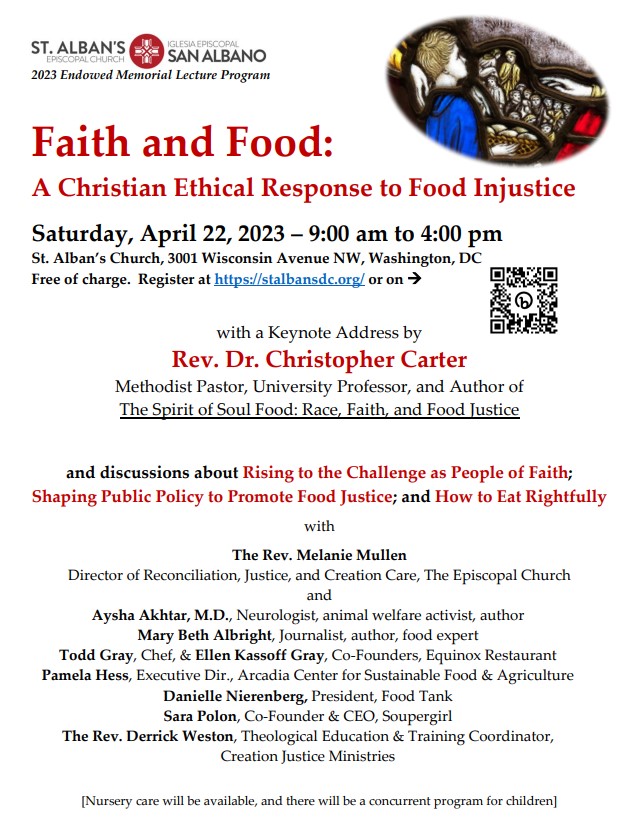
Earth Day 2023 is an especially appropriate time to consider that question with a discussion around ethical responses to food injustice. St. Alban’s Episcopal Church in Washington, DC will be hosting Methodist pastor and theologian the Rev. Dr. Christopher Carter who will keynote a daylong examination of Faith and Food: A Christian Ethical Response to Food Injustice on Saturday, April 22nd.

The event is free and open to all from all faiths (and those with no faith affiliation). You can register by clicking on the QR code in the poster below. If you can’t make it to DC, the event will be livestreamed.

I wrote a review of Christopher’s book The Spirit of Soul Food last fall, and I began by noting that while our food production system has been broken for a long time, many of us have only touched the surface of the problem and seldom in ways that reach across racial and class lines to address systemic issues. Thankfully, my lack of comprehension about an ethical response to food injustice and the impact of our broken production system on communities of color was brought home to me in Christopher’s book.

Christopher gives a short introduction to the program in this St. Alban’s video:

The Spirit of Soul Food: Race, Faith, and Food Justice merges a history of Black American foodways with a Christian ethical response to food injustice. Panelists will address public policy responses to the challenges of food injustice and the very personal issue of how to eat rightfully.

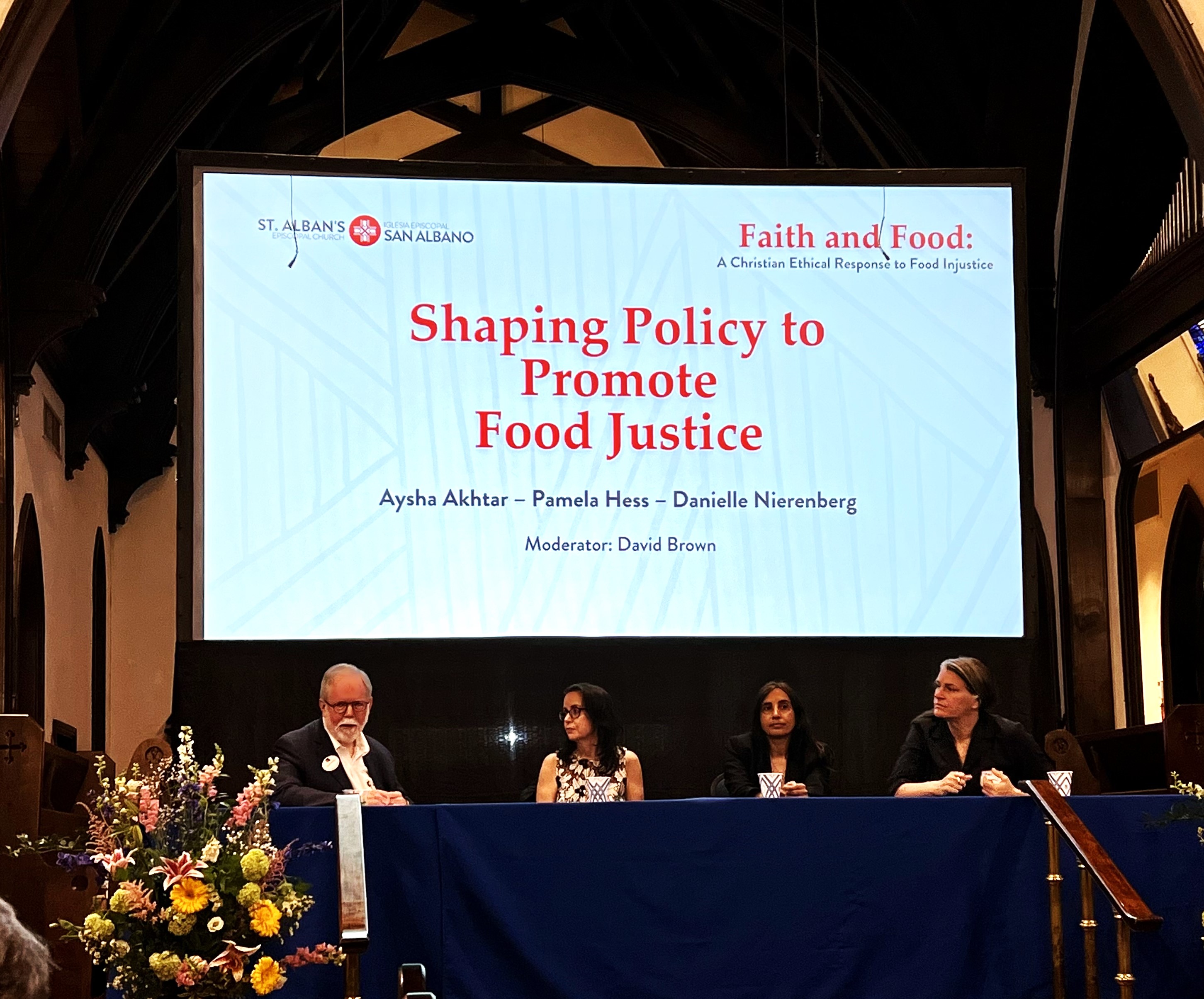
I’m honored to be moderating the “Shaping Public Policy to Promote Food Justice” panel which will feature Aysha Akhtar, MD, MPH, CEO of the Center for Contemporary Sciences; Pamela Hess, Executive Director of the Arcadia Center for Sustainable Food & Agriculture; and Danielle Nierenberg, President of Food Tank. 

As you can see in the poster below, there are a number of other outstanding speakers scheduled for the day.

Full disclosure: I am a member of the Endowed Memorial Lecture Series committee, the group responsible for bringing Christopher Carter to DC and for organizing the day’s events. More important disclosure: I am also very excited about this event!

I hope to see you there!


UPDATE: The morning and afternoon sessions have now been posted on the St. Alban’s parish YouTube channel, and I include them below. The Rev. Dr. Christopher Carter’s keynote address begins the morning session. Our policy panel which I moderated and which featured Dr. Aysha Akhtar, Pamela Hess, and Danielle Nierenberg, opens the afternoon session. These are posted as they were livestreamed.

Morning session featuring keynote address
DJB (left) moderating the Shaping Policy panel at the MLS program with (l to r) Danielle Nierenberg, Dr. Aysha Akhtar, and Pamela Hess
Afternoon sessions with the panels on policy and eating rightfully

More to come…

DJB

Photo by Anya Bell on Unsplash

Life beyond the road system

Americans have always spoken of the frontier in mystical terms, often while brutally taking it from the indigenous people, decimating the once-abundant natural resources, and working tirelessly to reshape the wilderness into forms more convenient for our lifestyles. This primeval wilderness where one could “live close to nature and be purified of civilization’s corruption” helped define and shape us as a nation even as we moved relentlessly to tame those very characteristics that made it wild. The restlessness that is part of our DNA has led many to imagine that they could live in a cabin in the wilderness even though the vast majority live in urban areas.

When historian Frederick Jackson Turner presented his thesis in 1893 that the west was closed, many looked elsewhere to fill the void. And nowhere said wilderness to 20th century Americans more than Alaska, the last frontier.

As is usually the case, it is a much more complicated story than what our mystical dreams have conceived. In planning for an upcoming trip and lecture, I looked for those who could help explain Alaska today.

The Wake of the Unseen Object: Travels Through Alaska’s Native Landscapes (1991; classic reprint edition 2020) by Tom Kizzia is one man’s exploration of Alaska’s ancestral landscapes and contemporary life in bush country. Kizzia, who wrote some 80 stories in the 1980s for the Anchorage Daily News that became the basis for this work, lets the native Alaskans tell their story. He went beyond the road system to visit villages and people who are working to maintain their balance and connections with the past while still living in the present. As Kizzia says in the new introduction to the University of Alaska’s classic reprint edition, “the great dramas of Alaska Native life revolve around efforts to adapt and resist, to preserve hunting and fishing and sharing traditions for future generations, to balance self-government and corporate capitalism, to overcome traumas that followed subjugation by colonial powers.”

Survival in a land that is harsh yet beautiful has always been the challenge of the Alaska Natives. The book opens with a saying by Inupiat shaman Najagneq that describes how the spirit speaks. “His speech to man comes not through ordinary words, but through storms, snowfall, rain showers, the tempest of the sea, through all the things that man fears …” Yet when times are good, the spirit disappears into “his infinite nothingness and remains away as long as people do not abuse life but have respect for their daily food.”

Throughout his travels, Kizzia relates stories of ancestors crossing into Alaska from what is present-day Russia. Of the first outside contact coming from Russia and then gold-hungry Americans bringing strange customs, unfamiliar religions, and — in 1918 — the worldwide epidemic of the Spanish influenza. Of World War II, which opened up previously untraveled territory with new military-built roads. Of oil booms to dwarf the gold rushes of the 19th century.

Everything in the land was shifting, migrating, becoming something new.

Kizzia would stay in a tent on the edge of the villages. But as this was before most native communities had a special place in which to funnel visitors, he was welcomed into the homes of the residents and introduced to family and friends over meals and long tales. He spends time in a summer fish camp where entire families take up residence and watch for the wake of the unseen object — the V-shaped formation in the water — that signals the return of the salmon. He takes a ride in a “tundra taxi” that uses a frozen river as its road.

Over the course of 11 chapters, Kizzia takes the reader on an adventure from the inland village of Tok, near the Canadian boarder, to the villages of Wales and Teller at Cape Prince of Wales, mere miles from Russia. It is, as one reviewer notes, not really “memoir, or a travel book, or a collection of nature essays, or a work of cultural history, but it somehow manages to be all of these things.”

Kizzia grew up in New Jersey but has lived in Alaska since his early 20s. In his late 20s, fearing he hadn’t launched a traditional career, he returned to Washington, D.C., where he was asked at a party what he had done since college. When he replied that he’d been living in a little fishing town in Alaska …

The guy said, “well that must have been weird.” He said it would be hard to live in a place like that where everybody is the same … I looked around the room and everybody there had like horn-rim glasses and a dress shirt and tie and had gone to an Ivy League school and was working in some sort of liberal spin-off politics. I thought about the incredible variety of old timers and fishermen and world travelers I’d gotten to know in Homer and it was a blazing moment of realization.

We’re all the better because Tom Kizzia decided to return to Alaska to tell its incredible, varied, and fascinating stories.

More to come…

DJB


The Weekly Reader links to written works I’ve enjoyed. I hope you find something that makes you laugh, think, or cry. 


Image by David Mark from Pixabay

A country that was built on a protest

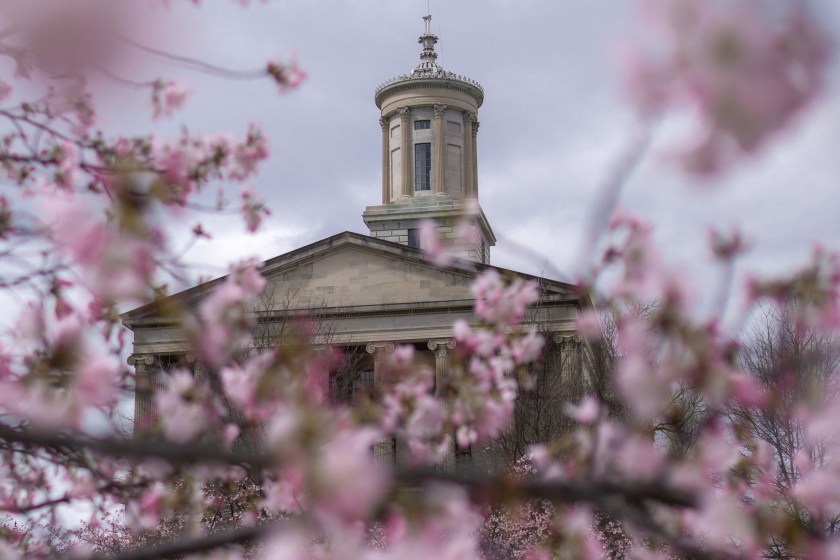
My native state of Tennessee has taken new steps toward authoritarianism. History tells us that those tendencies have never, unfortunately, been far from the surface.

Here is what led to the latest brush with tyranny:

As with most of life, Tennessee is a paradox.

It has achingly beautiful landscapes and a history of welcoming environmentally destructive extractive industries, beginning in the 19th century with cotton cultivated by enslaved labor. The people there can be amazingly friendly and yet forcefully defend the retention of monuments that were built to intimidate the state’s African American population.

Generations of marginalized Americans learned how to fight for liberty in Tennessee’s historic Fisk Memorial Chapel and the Highlander Research and Educational Center and the state is also the birthplace of the Ku Klux Klan. Tennessee provided the critical approval needed for passage of the 19th amendment giving women the right to vote and it has gerrymandered away the right to fair representation for almost half of its citizens.

Tennessee has world-class educational institutions and hosted the infamous Scopes “Monkey” Trial that challenged a state law making the Bible — a religious document — the standard of truth in a public school. It is a state that has produced presidents, vice presidents, and heroes and yet regularly elects a legislature which, in the words of investigative journalist Radley Balko, holds “nothing but contempt for the people they claim to serve.”

Life is “and.”

Tennessee politics has long been the home of charlatans. In the 1970s Democratic leaders participated in a “coup” in support of an early inauguration of incoming Republican governor Lamar Alexander due to dozens of unprecedented last-minute pardons of political friends and convicted murders by the corrupt sitting Democratic governor, Ray Blaton.

Now Tennessee is working toward a new low standard.

  • In 2013, Republican lawmakers were fearful that a renovation to the Capitol building might have added a footwashing sink for Muslims to one bathroom. In reality, it was a mop sink.
  • Former Tennessee House Speaker Glen Casada resigned as speaker (but was not expelled) after a scandal involving his chief of staff using cocaine in the statehouse, sending racist texts, and doctoring an email to try to frame a student activist. The Republican Casada and the chief of staff were indicted for fraud, theft, and bribery in 2022 while he was still in the legislature.
  • Nashville — a city that voted 65% for Joe Biden — was gerrymandered out of political existence by Republicans. Because they could. Margaret Renkl wrote in the New York Times, “They want to silence anyone who disagrees with them, even when those people are in the majority.” Piqued over the city’s refusal to host the Republican National Convention, they are currently working to strip representation from Nashville’s Council.

The actions of the Republicans to expel Rep. Justin Jones (D-Nashville) and Rep. Justin Pearson (D-Memphis) but not Rep. Johnson (D-Knoxville) is a naked display of power. Yet as President Obama noted, “Silencing those who disagree with us is a sign of weakness, not strength.” To leave no doubt as to the power play, new reporting quotes a Shelby County commissioner saying that the Republican state government is threatening to pull funding for Memphis schools and infrastructure projects if they vote to re-appoint Rep. Pearson to his democratically-elected seat.

This played out on Maundy Thursday. As one Tennessee resident noted, it was beyond ironic “that the Republicans produced a trial that felt rigged to give a foregone conclusion on this day of all days.”

Coupled with allegations that Justice Clarence Thomas took millions of dollars of gifts from a Republican mega donor with business before the Supreme Court without reporting it as required by law and the work of the Republicans in the U.S. House of Representatives to undermine an ongoing New York criminal case with an unprecedented campaign of harassment and intimidation, these actions make one wonder — as historian Heather Cox Richardson recently wrote — what country we live in.

Representative Justin Pearson told his suddenly former colleagues how he saw it. 

You are seeking to expel District 86’s representation from this house, in a country that was built on a protest. IN A COUNTRY THAT WAS BUILT ON A PROTEST. You who celebrate July 4, 1776, pop fireworks and eat hotdogs. You say to protest is wrong because you spoke out of turn, because you spoke up for people who are marginalized. You spoke up for children who won’t ever be able to speak again; you spoke up for parents who don’t want to live in fear; you spoke up for Larry Thorn, who was murdered by gun violence; you spoke up for people that we don’t want to care about. In a country built on people who speak out of turn, who spoke out of turn, who fought out of turn to build a nation. 

I come from a long line of people who have resisted.

The fight for democracy never ends.

More to come…

DJB

Photo by Brandon Jean on Unsplash

Music for Holy Week

In 2020, I asked our son, Andrew Bearden Brown, to curate a selection of his favorite music from Holy Week.

Currently pursuing a Performance Diploma at the Boston University Opera Institute, Andrew performs with the Opera Institute as the Stage Manager in Rorem’s Our Town, Laurie in Adamo’s Little Women, and Oronte in Handel’s Alcina. In the 2022/2023 season, he also debuts with Opera Neo as Marzio in Mozart’s Mitridate and covers Tempo in Handel’s Il trionfo del Tempo e del Disinganno. Andrew’s solo concert appearances for the season include Handel’s Messiah with Ensemble Altera and with Tempesta di Mare, as well as with Ashmont Hill Chamber Music for Bach’s St. John Passion, in a performance praised by The Boston Musical Intelligencer as a “carefully balanced interpretation of the Evangelist with deep expression and gravitas.” 

Andrew as the Stage Manager in “Our Town” at Boston University’s Opera Institute, 2023 | photo by Jacob Chang-Rascle

Andrew, a member of the outstanding professional choir at Church of the Advent on Beacon Hill, * was just named a 2023 finalist in the Oratorio Society of New York’s Lyndon Woodside Oratorio-Solo Competition.

On another Holy Saturday here in 2023, I’m going to share once again Andrew’s curated selection of four of his favorite pieces of the season(Selections by ABB; notes and any mistakes by DJB.)


Tallis Scholars, Lobo, Versa est in luctum

We’ll begin with the Tallis Scholars, who “over four decades of performance and a catalogue of award-winning recordings have done more than any other group to establish sacred vocal music of the Renaissance as one of the great repertoires of Western classical music.” In this video, we hear their version of Alonso Lobo’s Versa est in luctum. Lobo, who was active in the later Renaissance, composed his most famous motet in 1598 upon the death of Phillip II of Spain. The motet is for six voices, and the performance notes for the piece indicate that, “Lobo creates, with his wall of gorgeous sound, an appropriately majestic work of mourning.”

Versa est in luctum cithara mea,
et organum meum in vocem flentium.
Parce mihi Domine,
nihil enim sunt dies mei.

My harp is turned to grieving
and my flute to the voice of those who weep.
Spare me, O Lord,
for my days are as nothing.


VOCES8, Byrd, Ne Irascaris Domine | Civitas Sancti Tui

The English composer William Byrd has long been a favorite, and in this video VOCES8 sings Byrd’s double motet Ne Irascaris Domine and Civitas Sancti Tui in the Gresham Centre in London. The Catholic Byrd wrote these motets in the 1580s as a protest against the Elizabethan Catholic persecutions, and the text refers to the Babylonian captivity of the Jews. One online commentator wrote, “This is perfection (and an exceptionally brilliant piece of writing by William Byrd). The perfection of the upper voices (not the slightest hint of a vibrato), and the sonority of the lower voices make for a magical performance of this epic masterpiece.” VOCES8 regularly performs in the U.S.; ranks among my personal favorites thanks to the wide range of music they perform with impeccable style and taste; and finally, in full disclosure, has added Andrew as a singer on occasion with the Choir of the VOCES8 Foundation.

Ne irascaris, Domine, satis
et ne ultra memineris iniquitatis nostrae.
Ecce, respice, populus tuus omnes nos.
Civitas sancti tui facta est deserta.
Sion deserta facta est, Jerusalem desolata est.
(Isaiah 64 v. 9)

Be not angry, O Lord, still,
neither remember our iniquity for ever.
Behold, see, we beseech thee, we are all thy people.
The holy cities are a wilderness.
Sion is a wilderness, Jerusalem a desolation.


TENEBRAE, Howells, Like as the Hart

Tenebrae, under the direction of Nigel Short, is one of the world’s leading vocal ensembles renowned for its passion and precision. Their version of Like as the Hart by the English composer Herbert Howells is a beautiful and thoughtful rendering of this classic, which is based on Psalm 42 vv. 1–3. Howells taught composition at the Royal College of Music for almost 60 years, and this particular composition — which I sang back in the day — has long been another favorite of mine.

Like as the hart desireth the waterbrooks,
so longeth my soul after thee, O God.
My soul is athirst for God,
yea, even for the living God.
When shall I come to appear before the presence of God?
My tears have been my meat day and night,
while they daily say unto me,
“Where is now thy God?”


CAMBRIDGE SINGERS, Durufle, Ubi Caritas

Finally, we’ll end with the Cambridge Singersunder the direction of John Rutter, singing one of my all time favorite pieces of choral music, Maurice Duruflé’s setting of Ubi CaritasThis hymn of the Western Church, long used as one of the antiphons for the washing of feet on Maundy Thursday, comes from a Gregorian melody composed sometime between the fourth and tenth centuries. Duruflé’s choral setting makes use of the Gregorian melody, but incorporates only the words of the refrain and the first stanza.

Ubi caritas et amor, Deus ibi est.
Congregavit nos in unum Christi amor.
Exsultemus, et in ipso jucundemur.
Timeamus, et amemus Deum vivum.
Et ex corde diligamus nos sincero.

Where charity and love are, there God is.
The love of Christ has gathered us into one.
Let us exult, and in Him be joyful.
Let us fear and let us love the living God.
And from a sincere heart let us love each other (and Him).

Whatever your religious tradition or beliefs, Andrew and I hope you can enjoy the beautiful choral music of Holy Week.

More to come…

DJB


*The music schedule for Church of the Advent for Easter Sunday 2023 is:

9 April – Easter Day
Rodney Lister: Kyrie “Euge bone”
Dr Christopher Tye: The Mass “Euge bone”
Ludwig Senfl: Regina cœli lætare
Matthew Martin: A Hymn of St Ambrose
arr Andrew Reid: Victimæ paschali laudes

If you are in or near Boston, I recommend a visit to Church of the Advent to hear their music.


Photo of water lily by Couleur on Pixabay.

From the bookshelf: March 2023

Each month my goal is to read five books on a variety of topics and from different genres. Here are the books I read in March 2023. If you click on the title, you’ll go to the longer post on More to Come. Enjoy.

Masters of Tonewood: The Hidden Art of Fine Stringed-Instrument Making (2022) by poet and author Jeffrey Greene is dedicated to exploring how fine stringed instruments acquire the mysterious personalities we admire when they are skillfully played. Wanting to see the birthplace of these magnificent instruments firsthand, Greene takes us on a delightful tour of the seven European “musical forests” where the conditions are such that the Norway spruce can thrive. Along the way he visits with luthiers who take carefully selected pieces of wood and craft them into prized pieces of art in their own right, tonewood millers who carefully cut and prepare the logs for sale around the world, and the foresters who tend to these “renewable gardens” that are under attack by multiple forces in the modern world. It is a pleasing and illuminating deep dive into a fascinating world, skillfully written with the clarity of a poet and the love of an artist.


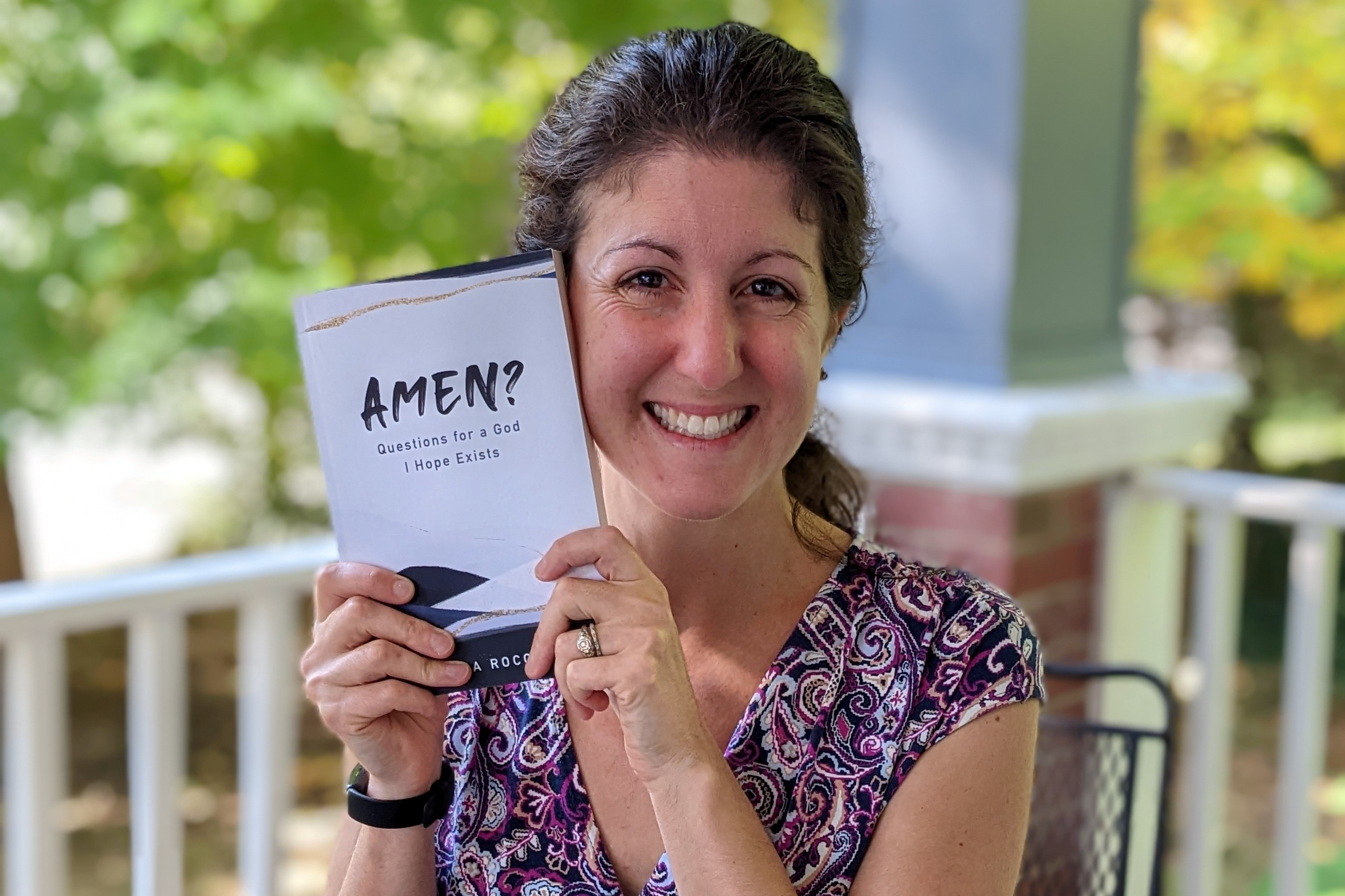
AMEN? Questions for a God I Hope Exists (2022) by Julia Rocchi is full of wisdom, vulnerability, and questions asked in an open and seeking spirit. Julia’s is a questioning faith where she invites the reader to join in her journey. Essays, quotations, poems, and prayers probe the mysteries that make up life. One reviewer sees in this honest and hopeful exploration, “a psalter for the post-modern, exhausted age.” Julia writes of a God who is imminently approachable and ready to answer our deepest questions. In the blog post, I interview Julia about the role and importance of doubt, mystery, prayer, and community in her spiritual journey. AMEN? is for those who seek to cultivate vulnerability, gratitude, and awe to enrich the precious time we have on earth.


Eight Perfect Murders (2020) by Peter Swanson begins as we learn that bookseller and mystery aficionado Malcolm Kershaw once wrote a blog post for his store’s website titled Eight Perfect Murders that listed the genre’s most unsolvable murders. He is surprised when an FBI agent shows up in his Boston store to ask questions about the list. She has studied a number of unsolved crimes and has a hunch that someone is working their way through the list and leaving dead bodies in their wake. Someone else is also interested in the list and in Malcom, a killer who seems to know much more about the bookseller’s life than he’s ever told anyone. In his investigation into who is committing these murders, Malcolm — to his horror — finds death in places where he didn’t expect it. The plot keeps twisting, and the reader is brought along to see if the killer can literally get away with murder.


The Hope of Glory: Reflections on the Last Words of Jesus from the Cross (2020) by Jon Meacham reminds us that “The work of discerning — or depending on your point of view, assigning — meaning to Good Friday and the story of the empty tomb is a historical as well as a theological process.” There is no better guide through this process than the Canon Historian of the Washington National Cathedral and the author of several seminal books that look at religion’s impact on American society. A life-long Episcopalian, Meacham’s hope in writing this slim volume is to provide illumination to readers so that they may make more sense of the cross “in a world too much given to the competing forces of hostile skepticism, blind acceptance, or remote indifference.” When asked how he can believe in God, Meacham replies that his belief is based “on the same evidence” as with his belief in love. “Both are invisible forces with visible effects.”


Awe: The New Science of Everyday Wonder and How It Can Transform Your Life (2023) by Dacher Keltner is a scientific and personal look at awe, the feeling we get when we’re in the presence of something vast that transcends our current understanding of the world. For a number of years scientists studied reactions like fear and disgust, “emotions that seemed essential to human survival.” Keltner’s book takes us on a review of a different set of emotions. As humans, we’ve survived “thanks to our capacities to cooperate, form communities, and create culture that strengthens our sense of shared identity — actions that are sparked and spurred by awe.” As it takes us beyond our normal ways of thinking, awe moves us, empowers us, stretches us, and can transform us.

More to come…

DJB


NOTE: Click on the month to see the books I read in January and February. Also check out my Ten tips for reading five books a month.


The Weekly Reader links to written works I’ve enjoyed. I hope you find something that makes you laugh, think, or cry. 


Image by tank air from Pixabay

Faith, race, and the American experience

Today is Holy Monday, the third day of Holy Week in the Eastern Orthodox Church and the second for those in the Western tradition. It is another step in the narrative toward the arrest, trial, flogging, and ultimately the Good Friday death on the cross of Jesus of Nazareth. We’ve heard this story so many times that we often forget the horrific — and public — nature of that death.

New Testament scholar Paula Frederickson reminds us:

Crucifixion was a Roman form of public service announcement: Do not engage in sedition as this person has, or your fate will be similar. The point of the exercise was not the death of the offender as such, but getting the attention of those watching. Crucifixion, first and foremost, is addressed to an audience.

Now consider that we could easily substitute lynching in the United States in this description for crucifixion.

Crowd at a lynching (Library of Congress collection)

After being confronted with a revelation, it is the fortunate who wake up to realize they are treading on holy ground. Revelations can serve to open eyes and hearts to new ways of experiencing the world, both seen and unseen. “To paraphrase (Romanian historian of religion Mircea) Eliade, once contact with the transcendent is found, a new existence in the world becomes possible.”

The Cross and the Lynching Tree (2011) by James H. Cone is a revelation of a book that invites us to see the world through different eyes, those of the world’s marginalized and oppressed. It takes us into this world through one of our most recognized religious symbols, the cross, and one of America’s most terrible national sins, lynching. The pioneer of Black Liberation Theology begins by noting that though both are symbols of death, “one represents a message of hope and salvation, while the other signifies the negation of that message by white supremacy.”

And we forget that they had the same purpose: to strike terror in the subject community.

This is a deep, penetrating exploration of these symbols and their “interconnection in the history and souls of black folk.” It is a book, writes the president emeritus of Morehouse University, that will “upset your equilibrium in all the best ways.”

“The crucifixion was clearly a first-century lynching,” writes Cone, who died in 2018. “Both are symbols of the death of the innocent, mob hysteria, humiliation, and terror. They both also reveal a thirst for life that refuses to let the worst determine our final meaning and demonstrate that God can transform ugliness into beauty, into God’s liberating presence.”

Over those 2,000 years the cross has been detached from “any reference to the ongoing suffering and oppression of human beings.” It has become a form of “cheap grace … that doesn’t force us to confront the power of Christ’s message and mission.” Cone is out to change that by pointing to the very real connection in the minds of African Americans between the horror of the cross and the suffering of the lynching tree. His life was focused on addressing the great contradiction white supremacy poses for Christianity in America, something we see all too clearly in today’s fascist-oriented Christian nationalism. He wants white Americans to see and understand “the racial context that defined the actual cross bearers in American society.”

Cone takes the reader through the way that the cross and the lynching tree have been seen in the black experience, points to the absence of white theologians in this engagement, holds up the words of black literary leaders, and ends with a consideration of the intersection of the two symbols from the perspective of womanist theologians. Along the way, he brings a variety of individuals — well known and ordinary alike — into the narrative. People like Mamie Till Bradley, the mother of lynching victim Emmett Till; Civil Rights leaders Fannie Lou Hamer and the Rev. Dr. Martin Luther King, Jr.; preeminent 20th-century theologian Reinhold Niebuhr; social activist Dr. W.E.B. Du Bois; and singer Billie Holiday, who made the song Strange Fruit her own.

Black Americans had to find their own way on this journey.

Cut off from their African religious traditions, black slaves were left trying to carve out a religious meaning for their lives with white Christianity as the only resource to work with. They ignored white theology, which did not affirm their humanity, and went straight to stories in the Bible, interpreting them as stories of God’s siding with little people just like them.

Their language wasn’t the pious theology of white churches. When they consider Jesus’ cry from the cross, “My God, my God, why hast thou forsaken me?” black cultural critic Stanley Crouch calls it “perhaps the greatest blues line of all time.” It is a language that comes from shared experience and adopts the belief that evil does not have the last word.

Considering the cross and the lynching tree together requires that we speak truthfully about who we are as a people. As Bryan Stevenson of the Equal Justice Institute and founder of The Legacy Museum has said so eloquently, that “requires engagement that we have not yet made” because there is a narrative of racial difference that we have not confronted. EJI’s Lynching in America: Confronting the Legacy of Racial Terror documents more than 4,000 racial terror lynchings of African-Americans between 1877 and 1950. 

Yet as W. Fitzhugh Brundage writes, “Perhaps nothing about the history of mob violence in the United States is more surprising than how quickly an understanding of the full horror of lynching has receded from the nation’s collective historical memory.”

As lynching has ended, violence in the U.S. has continued and escalated, especially with easy access to guns. Increasingly a symbol of white Christian masculinity, “Guns stand for defending home and family against ‘criminals’ — a term which, in the dogwhistle rich environment of the right, means ‘non-white people.’” 

If we want to redeem the soul of America, we need wider perspectives, humility, empathy, and a new way of thinking about the stories we tell. James H. Cones’ examination of the cross and the lynching tree is one important step in that journey.

More to come…

DJB

Photo by John Mark Arnold on Unsplash

The Delta Rhythm Boys rattle those dry bones

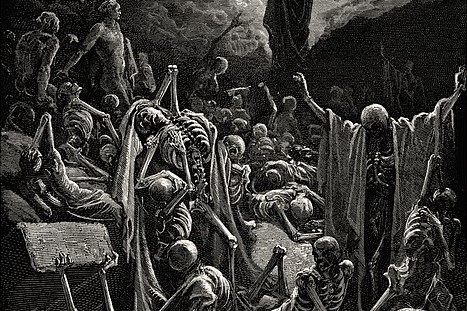
One of the most evocative stories in the Old Testament is Ezekiel’s encounter with God in the valley of the dry bones.

The hand of the LORD was upon me, and he brought me out in the Spirit of the LORD and set me down in the middle of the valley; it was full of bones

Ezekiel is famously asked, “Mortal, can these bones live?” His answer is perfect for those who are open to mystery: “O Lord God, you know.”

In other words, you tell me!

But Ezekiel has faith in the face of mystery and begins to prophesy to the dry bones, as he’s instructed.

(And) as I prophesied, suddenly there was a noise, a rattling, and the bones came together, bone to its bone. I looked and there were sinews on them, and flesh had come upon them, and skin had covered them …

The Vision of The Valley of The Dry Bones,’ Gustave Doré – 1866. (Wikimedia Commons)

Can’t you just hear the rattling of those bones!

When Ezekiel’s encounter in the valley of the dry bones was part of the lectionary last Sunday, I immediately checked ahead in the bulletin to see if the choir at St. Alban’s was going to sing the classic Dry Bones.

Alas, they never do … perhaps because any good choir would realize that the Delta Rhythm Boys have already put down the definitive version of the song.

The story of the Delta Rhythm Boys begins in an era of segregation and Jim Crow laws: the 1930s at Langston University, the only historically Black college or university (HBCU) in Oklahoma.

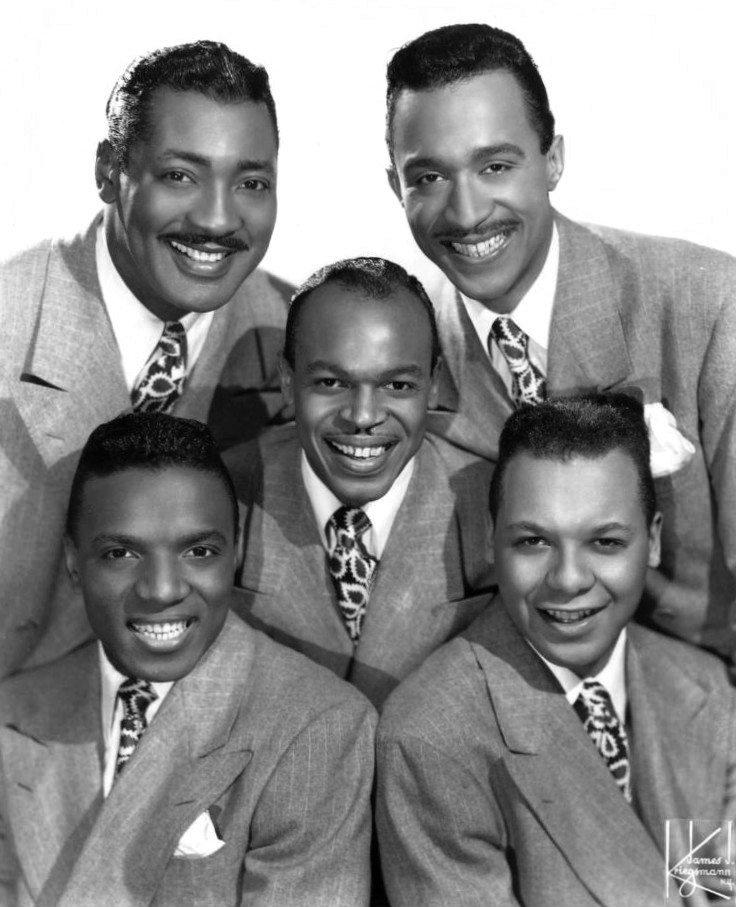
The Delta Rhythm Boys

As Jay Warner writes on the Vocal Group Hall of Fame website:

Second-year student Lee Gaines had been chosen by school president Dr. Isaac Young to form a university quartet. Lee, a sousaphone player who had led his freshman vocal quartet to a first prize in class competition, recruited first tenor Elmaurice Miller, second tenor Traverse Crawford, and baritone Essie Atkins while keeping himself on bass. The group arranged to transfer to Dillard University of New Orleans after meeting Dr. Horace Mann Bond (father of politician Julian Bond), who got the boys excited about the new music program he was assembling at Dillard as its new dean. In their haste, the group arrived at Dillard a week before classes and had to move furniture and clean floors in order to settle in at the dorm ahead of time.

During the school year, the tutelage of Professor Fredrick Hall and the various concerts at the college and in New Orleans sharpened the group’s harmonies on their repertoire of folk songs, spirituals, and Mills Brothers pop.

But the quartet (plus pianist) was so popular that once they hit the road, they never returned to school. After a seven-month stint in 1936 singing in Buenos Aires, the group moved to Harlem into the house where composer Eubie Blake was living. Blake heard the group rehearsing and suggested they audition for the Broadway show Sing Out the News, an integrated play requiring a black vocal group. The quartet won the audition which set the Delta Rhythm Boys off on a long and successful career.

Quick: Which singers performed in more motion pictures than any other group in history? The Beatles? Wrong. THE MILLS BROTHERS? Wrong again. The Delta Rhythm Boys appeared in 15 films from the early ‘40s to 1956. But this was only one of the many achievements of the pioneering rhythm and blues group. If their name doesn’t have the same familiar sign as THE INK SPOTS or Mills Brothers it’s because their 50-year career yielded only one chart hit. But in terms of singing, they were a hit every time out and became popular through the media of radio, live performances, films, and even Broadway shows.

In 1942, they began playing Las Vegas (when it only had two hotels), and they followed this up post-WWII with successful tours in Europe.

In 1949, the Deltas made their first trip to Europe, performing in Stockholm and then London. They went on to record numerous Swedish folk songs in Swedish (for Metronome Records in Stockholm) and Finnish folk tunes in Finnish.

The group were fine musicians, writing and arranging their own songs, and they sang more than spirituals.

With the changing American music scene, the Delta Rhythm Boys decided to relocate permanently to Europe. Through the 1960s, 70s, and 80s the group continued to perform to enthusiastic audiences. Founder Lee Gaines died in 1987, after 50 years of leading the group that the Mills Brothers regularly cited as their favorite.

We’ll end this celebration of the Delta Rhythm Boys with the wonderful Lee Gaines singing lead in the tale of Joshua at the walls of Jericho … and stick around to hear that great low note at the end.

Now that’s music to rattle any bones!

More to come…

DJB

Observations from … March 2023

A summary of what was included on More to Come in the month of March. If you receive my monthly email update, you can skip this post.

Few things say “retirement” better than being able to watch NCAA basketball tournament games guilt-free in the middle of the day. This has been a terrific tournament, made even more entertaining by the fact that I don’t have a dog in this hunt. All the #1 seeds from the power conferences were gone by the round of 16, which is my idea of how it should play out each year. I was able to email my friend and (also retired) colleague John Hildreth in real time when his Furman Paladins pulled off a shocking upset of Virginia on Day 1. Oh. My. Goodness. March Madness indeed!

Now that the Final Four is set, I’m cheering for anyone but UConn (which has won the championship before). My support is probably the kiss-of-death for the underdogs!

But even with wall-to-wall basketball and The good, the bad, and the ugly of Opening Day of the baseball season to distract me, I wasn’t a couch potato the entire month. Let’s take a look and see what roared in with those blustery March winds on More to Come.


AUTHOR INTERVIEW AND FAMILY MILESTONES TOP READER VIEWS

Three posts were bunched together at the top of the reader favorites this month. On the family front, March is a busy time with both my birthday and anniversary.

  • Journeys are often about finding either something we’ve lost or discovery of something we’ve never seen before. And when we’re lucky, a journey with a lifetime partner is one of extraordinary discovery, as I write on our anniversary. In spite of myself I’ve been very lucky.
  • From certainty to mystery is a perfect description for my life after 68 years on this earth. It is surprising just how much I’ve forgotten since I was sixteen and knew everything.

On a more sublime note, my second author interview of the year ― this with friend and former colleague Julia Rocchi ― was also a reader favorite. A questioning faith is focused on AMEN? Questions for a God I Hope Exists, a new book full of wisdom, vulnerability, and questions asked in an open and seeking spirit. Take a look if you haven’t already. You’ll enjoy the conversation Julia and I have about the role of community, doubt, and prayer in a life of faith.


LIVING IN COMMUNITY

One of the ways we can live a good life of purpose, enlivened by joy, is to embrace community. Learning how to live together in ways that strengthen our fellow citizens is not only good for democracy, but also for our soul. Three March posts examine different aspects of this idea.

  • A spirit of thankfulness is recognition that no one creates or acts in a void. It also contributes to our personal well-being. Turning gratitude into thankfulness has four easy tips for building a stronger practice of radical gratitude.
  • History teaches us many things. In Equality means equality we learn, for instance, how ordinary people have worked together to save democracy. History also shows us that “once you give up the principle of equality, you have given up the whole game … you have stamped your approval on the idea of rulers and subjects.” Just hope that no one in power decides that you belong in the lesser group.
  • A new book on the science of the everyday experiences of awe speaks to how this simple recognition of things greater than ourselves takes us beyond our normal ways of thinking. The transformational power of everyday wonder shows how awe moves us, empowers us, stretches us, and can transform us, awakening the better angels of our nature.

BOOKS

Pieta
Michelangelo’s Pieta in St. Peter’s

Besides AMEN? and Awe, I reviewed three other books during the course of March.

  • Wood that rejoices in transmitting music is poet and author Jeffrey Greene’s love letter to the wood that makes our stringed instruments sing. My review was also high in reader views this month and is worth a look.
  • A lie never lives to be old is the March selection in my monthly murder mystery series. In Eight Perfect Murders, Peter Swanson has written a thriller full of plot twists, lies, and intrigue.
  • Open to mystery is a review of historian Jon Meacham’s exploration of the intersection of history and theology. This is a slim but thoughtful volume.

MUSICAL TREATS FOR THE LATE WINTER SEASON

Photo © Colin Gillen/framelight.ie

March’s Saturday Soundtrack musical offerings featured an anniversary, a holiday, and a regathering of friends.

  • Celebrating Doc was written during the month when Doc Watson would have turned 100. A new album by fans as diverse as Dolly Parton and Yasmin Williams was released to celebrate the occasion.

CONCLUSION

Thanks, as always, for reading. As you travel life’s highways, do your best to treat others with kindness, undertake some mindful walking every day, recognize the incredible privilege that most of us have, and think about how to put that privilege to use for good. Women, people of color, LGBTQ individuals, immigrants, and others can feel especially vulnerable…because they are. Finally, work hard for justice and democracy because the fight never ends.

More to come…

DJB

You can follow More to Come by going to the small “Follow” box that is on the right hand column of the site (on the desktop version) or at the bottom right on your mobile device. It is great to hear from readers, and if you like them feel free to share these posts on your own social media platforms.


For the February 2023 summary, click here.


Image by Xuan Duong from Pixabay

Old Glory at Opening Day

The good, the bad, and the ugly of Opening Day

Today is opening day of the baseball season for the homestanding Washington Nationals.

The Nats play the 2022 division-winning and 2021 World Series Champion Atlanta Braves. The starting pitcher for the Nationals finished last year with a won-loss record of 6-19 and a 6.31 ERA. Yes, Patrick Corbin avoided the 20-loss mark, but just barely. Many saw him as the worst starting pitcher in baseball.

So, I have very mixed feelings about this year’s season.


Let’s get the ugly out of the way first.

Baseball has sold its soul to the gambling interests. The game is awash in gambling advertising and, like horse racing did long ago, it seems intent on pushing betting into stadiums and driving away long-time fans. All for the lure of “easy” money.

What truly disturbs me about sports betting [wrote a mentor] is the dislocation of joy. The joy is supposed to be in watching the game. Monetizing it, as you point out, changes the focus — as if there could be no simple pleasures which are not really about cash.

That baseball will continue this alliance with the devil is not a surprise. As Robyn Ryle wrote,

Let me put it more plainly — the players want baseball to be good. The owners just want to make money. Period. End of story.


Next, let’s tackle the bad.

The Nationals will be very bad — again — in 2023. It didn’t have to be that way, but the Lerner family tore down the 2019 World Series champion team and fielded a historically bad one in what is almost record-breaking time. The fans and local government enriched the Lerner’s original $450 million investment to the point where they are now are seeking to sell for more than $2 billion. As a way of saying thanks for our financial and emotional investment, they turned a great — and fun — team into a mediocre AAA franchise.

The Washington Post had a piece as we approached Opening Day speaking to the loss of fans that has resulted from ownership’s moves. One fan who, like me, has decreased his season ticket package (I’m going to half the games of past years) said it well. “The goodwill from fans has worn really, really thin.”

Especially given that all our former star players are killing it for other National League teams.

Joe Posnanski has been writing about “fun” players and teams recently, and he had this to say about the Nationals.

[T]he 2018 Washington Nationals had Trea Turner (fun!), Bryce Harper (so much fun!), Juan Soto (delightful fun!), Max Scherzer (ferocious fun!) and a bunch of what John Updike called “gems of slightly lesser water,” like Anthony Rendon and Stephen Strasburg and Matt Wieters and Howie Kendrick and Ryan Zimmerman and others you could say brought at least a little fun to the party.

What I’m saying is that the 2018 Nationals were as fun as any team in baseball.

And the 2023 Nationals are so devoid of fun, they need Kevin Bacon to show up and rescue the whole town.

Five years should not be enough time to completely and utterly tear down such an awesome team. But it is — frankly, they did it in much less time. Washington GM Mike Rizzo had a quote earlier in camp where, in talking about the Nationals’ minor league system, he said; “It’s the best group of upside players we’ve ever had.”

Hey, look, maybe it works out that way … but it strikes me as an utterly ridiculous thing to say. Upside players? In the 2010s, the Nationals at different times had in their system Harper, Strasburg, Soto, Turner, you can throw Anthony Rendon in there, you can throw Lucas Giolito in there, I’m just going to tell you right now that as promising as this system might be, they are not going to develop a half dozen players like THAT. Rizzo has offered several quotes along these lines (“we don’t rebuild, we reload”) that suggest he’s struggling to make sense of just how quickly things got so disastrously bad in Washington.

I would only quibble with Joe by suggesting that while Harper is a unique talent, he was not the “fun” player he’s become while playing in Washington. The 2019 Nationals were even more “fun,” especially after a Baby Shark named Gerardo Parra arrived.

Parra brought joy back to Washington baseball after too many seasons of pinning our hopes on the talented but moody and aloof Harper. Heck, Parra even got that old head case Stephen Strasburg to dance and laugh in delight when enveloped in a group hug.

Now we’re all struggling to figure out how it got so disastrously bad so quickly.


But there’s always some good in Opening Day.

Nats Rainbow
Nothing says hope better than a rainbow at a baseball stadium

Hope exists on Opening Day. My predictions for the 2023 Nationals could be wildly pessimistic.*

More importantly, Opening Day means spring is here. And sitting in a stadium with a beer and friends is just great, no matter the quality of the game.

Plus, I love baseball’s new rules!

I thought I would hate the pitch clock, but guess what? I was WRONG! I’ve watched a few innings of spring training, and the pace is fabulous … like the games of my youth. A little over two hours is just perfect for a baseball game, and spring training with the new pitch clock showed that baseball can drop from over three hours average to just under two and one-half hours.

Don’t believe me? Just watch Landon Knack throw an entire half inning in the time that it once took Pedro Baéz to throw one pitch!

Baseball has gained an average of more than a half hour of dead time in the last 40 years. Players will take up all the time you give them … so give them less time. Thomas Boswell even came in from retirement to say how much he loves the pitch clock.

In the end, the rule changes are designed to make the game better for fans. And I’m one fan who is all in with those changes.

Let’s play ball!

More to come…

DJB


*I wouldn’t bet on it.


Image of Opening Day 2017 at Nationals Stadium by DJB.

Sunset in Maine

The transformational power of everyday wonder

What gives you goosebumps? Brings you to tears? Causes a chill? Makes you sit up and say, “Whoa!”?

I get goosebumps when listening to Bach’s Double Violin Concerto live, when my congressman passes by at the July 4th parade, and when a California Condor swoops near the edge of the Grand Canyon. I cry at sad yet hopeful movies, when watching loving interactions between mother and child, and when saying goodbye to someone I may not see for a long time. I feel an effervescent chill when singing Take Me Out to the Ballgame with thousands of fans and when finding a completely unexpected flavor upon tasting an exquisitely prepared dish in a Parisian restaurant.

And when the Furman Paladins pull off a shocking upset of Virginia during the NCAA March Madness tournament, I definitely jump up and yell Whoa!

Goosebumps, tears, chills, and Whoas are all emotional responses to things greater than ourselves. Awe — of things extraordinary and ordinary — is the feeling we get when we’re in the presence of something vast that transcends our current understanding of the world. We respond emotionally in the moment, but then we begin an intellectual searching.

As it takes us beyond our normal ways of thinking, awe moves us, empowers us, stretches us, and can transform us.

Awe: The New Science of Everyday Wonder and How It Can Transform Your Life (2023) by positive psychologist Dacher Keltner is a scientific and personal look at awe. For a number of years scientists studied reactions like fear and disgust, “emotions that seemed essential to human survival.” Keltner’s book takes us on a review of a different set of emotions. As humans, we’ve survived “thanks to our capacities to cooperate, form communities, and create culture that strengthens our sense of shared identity — actions that are sparked and spurred by awe.”

After twenty years of studying how we can live a good life of purpose, enlivened by joy and community, Keltner says he has discovered an answer.

Find awe.

Fear, horror, and anxiety are emotions that might be confused with awe. But Keltner notes that “feelings of awe are located,” on the emotional spectrum, “near admiration, interest, and aesthetic appreciation.” Awe unfolds in a space of its own, “one that feels good and differs from feelings of fear, horror, and beauty.”

Brief moments of awe, he notes, “are as good for your mind and body as anything you might do.” And those moments are all around us. They can be found without having to jump on a plane to visit the Grand Canyon or Paris. They are there in what he identifies as “the eight wonders” of life.”

… which include the strength, courage, and kindness of others; collective movement in actions like dance and sports; nature; music; art and visual design; mystical encounters; encountering life and death; and big ideas or epiphanies.

Keltner quotes the English writer and philosopher Aldous Huxley in describing what vanishes during awe. It is “the interfering neurotic who, in waking hours, tries to run the show.” It is our default self that focuses on how we are distinct, independent, in control, “and oriented toward competitive advantage.” That overactive default self makes us too focused on ourselves, at the expense of others.

Thankfully, the top two awe-inducing factors are other people. Research shows that what certain experiences of awe tend to have in common is community.

Sociologist Robyn Ryle writes, “We cry when we see people forming community. Or reinforcing community. When the audience responds to Beethoven’s symphony. When a ghost story suggests that even after death, maybe we’re not alone. What moves us most frequently are our attempts to bridge the great, lonely divide between us.”

Awe moves us out of thinking about ourselves and awakens the better angels of our nature. We sense “we are part of a chapter in the history of a family, a community, a culture.” Stepping into a “mental state of openness, questioning, curiosity,” we embrace mystery and are moved to wonder.

Examining the evolutionary science, Keltner notes that by getting outside ourselves, awe “integrates us into larger patterns — of community, of nature, of ideas and cultural forms — that enable our very survival.” He shares stories from everyday life of how awe can transform us, placing the stresses of life in larger contexts.

And it doesn’t cost anything.

In fact, research shows that wealth undermines everyday awe and our capacity to see the moral beauty in others. People who have less wealth report feeling more frequent awe and more wonder about their everyday surroundings. Keltner encourages us to take awe walks, where we purposefully look for awe-inspiring everyday moments; where we tap into our childlike sense of wonder.

Living a life open to awe helps us understand that we are part of systems larger than ourselves. It is about “knowing, sensing, seeing, and understanding fundamental truths.” It is a recognition that there is much we cannot know in this life. It is an embrace of mystery, and the fascinating journey we share with others in this time and in this place.

Our remarkable, mysterious life is all about change. Communities evolve. Nature grows, dies, and decays before being born anew. Sunsets turn from bright orange to deep purplish blues.

Embrace the awe. Allow yourself to wonder.

More to come…

DJB


The Weekly Reader links to written works I’ve enjoyed. I hope you find something that makes you laugh, think, or cry. 


Image of a sunset in Brooklin, Maine, by DJB