Many of us have had a variety of uncles, aunts, professors, teachers, colleagues, and friends who teach, mentor, or inspire us during our time on earth. One of those special people in my life recently gifted me a book about a journey and complicated relationships. The gift came just as I was leaving on an extended voyage of my own with family members and friends old and new in places that were far from home.
Whether the timing was intentional or simply serendipitous, travel was the perfect backdrop to read and ponder what one reviewer calls a “stellar contribution” to the genre of memoirs about reading.
An Odyssey: A Father, A Son, and an Epic (2018) by Daniel Mendelsohn is a brilliant combination of memoir and literary exploration that begins when the author’s father, eighty-one-year-old Jay Mendelsohn, decides to enroll in the undergraduate Odyssey seminar his son teaches at Bard College. Jay is a retired research scientist and professor who adheres to the unbending rules of mathematics. Daniel has “always been made nervous by arithmetic and geometries and quadratics, unforgiving systems that allow for no shadings or embellishments, no evasions or lies.” So it is not surprising that early in the course, the father and son have a public disagreement in class over the nature of Odysseus. Was he a hero or a self-pitying liar? Jay, in his Long Island accent, makes his point loudly, in front of the seminar students.
“I don’t know why he’s supposed to be such a haihhro,” he says. “He cheats on his wife, he sleeps with Calypso. He loses all of his men, so he’s a lousy general. He’s depressed, he whines. He sits there and wants to die.”
It is the beauty and genius of this book that Daniel can hear his father’s disagreement; listen to how his seminar students react to father, son, and the text; and lead everyone to a far deeper understanding of the epic poem. After the semester ends father and son take a Mediterranean cruise, retracing the mythical journeys of Odysseus, where another side of Jay is revealed. Like Odysseus and perhaps most of us, he is polytropos: “many-sided” or “much-turning.”
An Odyssey is also a courageous work on Daniel’s part. He is the public intellectual and the “expert” in the classics, yet he is willing to admit that the perspective his difficult father brings to the class discussions helps deepen and sometimes even change how he interprets Homer’s epic. Late in the book Daniel recounts a long-ago conversation with a mentor as he was stuck in the writing of his dissertation. It is a confession lesser writers might have excluded:
“Your problem is that you see everything that doesn’t fit your theory as a problem, instead of as an opportunity to enlarge your thinking, to come up with a better theory. You’re so fixated on your own ideas that you don’t see what’s right in front of your face.”
Homer’s Odyssey—which the author often characterizes in the phrase “expect the unexpected”—is many things. Daniel works through most of these as he recounts his interactions with Jay in class, childhood family memories, his own growth as an individual and son with a challenging father, and the insights of his undergraduates. Scholar Emily Wilson, whose much-praised translation of The Odyssey has now moved much higher in my TBR pile, identifies many of these elements of Homer’s epic in an insightful review of Mendelsohn’s book for The Guardian. Do we have a single “true” identity? Can or should people ever be self-sufficient? Is it possible to ever really know another person? The book also explores, Wilson notes, how stories and shared memories help people to form deep connections with one another across time.
A student’s comment near the end of the class sticks in Daniel’s mind.
“I wonder,” [the student asked,] “if you think we could say it’s a story about listening? About how your own perspective affects how you hear things? I mean, the real problem in this story is that from the very start Polyphemus hears what he wants to hear.”
An Odyssey: A Father, A Son, and an Epic does not require that one be a classics scholar, or even to have read Homer’s poem; but it does provide what one reviewer calls “a rich introduction or reintroduction.” Most importantly Daniel Mendelsohn has produced a moving and insightful book that doesn’t require a trip around the globe to absorb its meaning. Dwight Garner’s review in the New York Times suggests that Daniel has “written a book that’s accessible to nearly any curious reader.”
“In her memoir ‘Slow Days, Fast Company,’ Eve Babitz remarks that ‘early in life I discovered that the way to approach anything was to be introduced by the right person.’
For Homer, that person is Daniel Mendelsohn, and this blood-warm book.”
An Odyssey ends with Jay’s death, which ties beginning and end together. In his introduction (or Proem) Daniel mentions an especially touching moment that will come on the Odyssey cruise when father and son visit “the desolate spot on the Campanian coast near Naples that, the ancients believed, was the entrance to Hades, the Land of the Dead.” It was another unexpected stop on Odysseus’ journey home . . .
“but perhaps not so unexpected because, after all, we must settle our accounts with the dead before we can get on with our living.”
Daniel, by examining their life together and ending this memoir with Jay’s death, is making his own peace with the past. It is a beautiful and thoughtful journey.
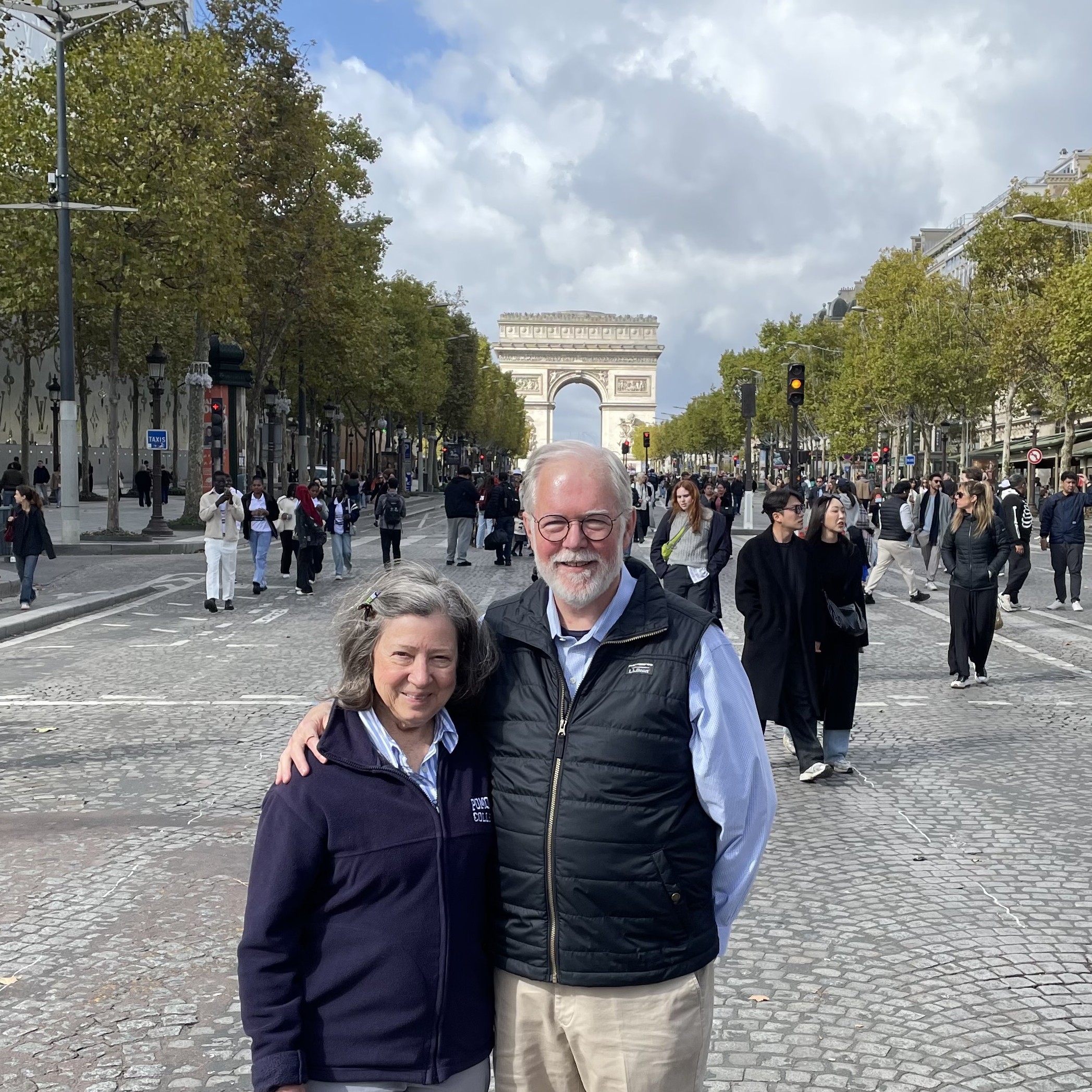
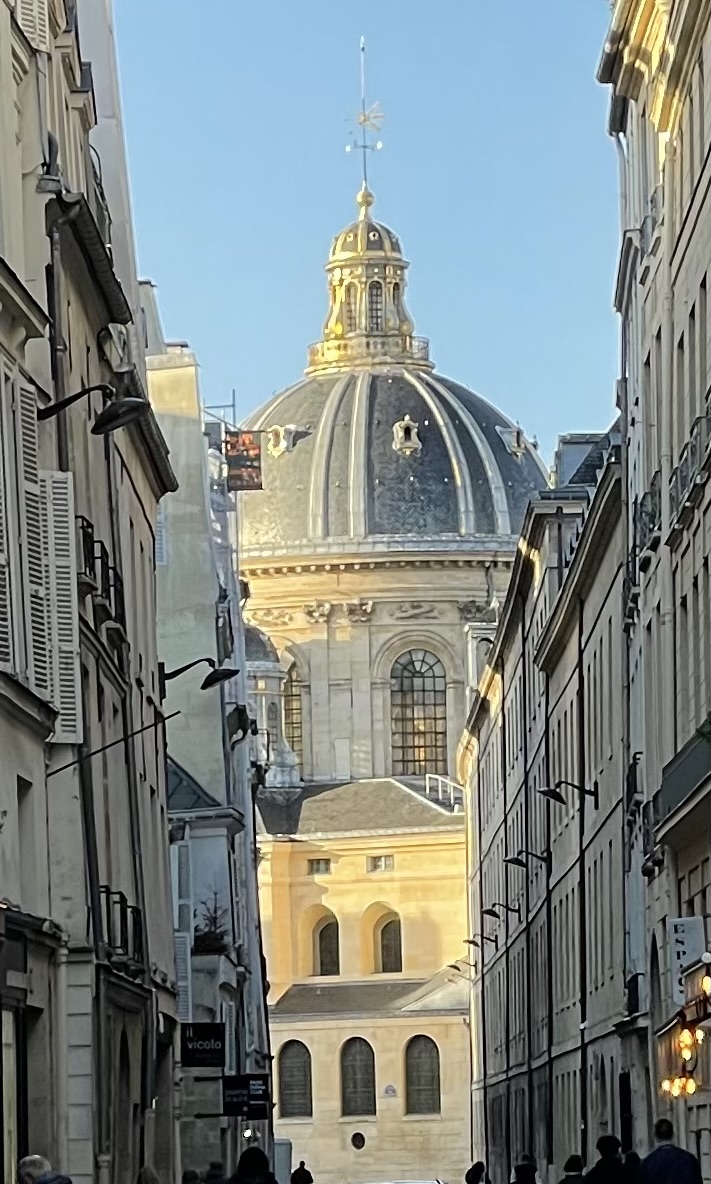
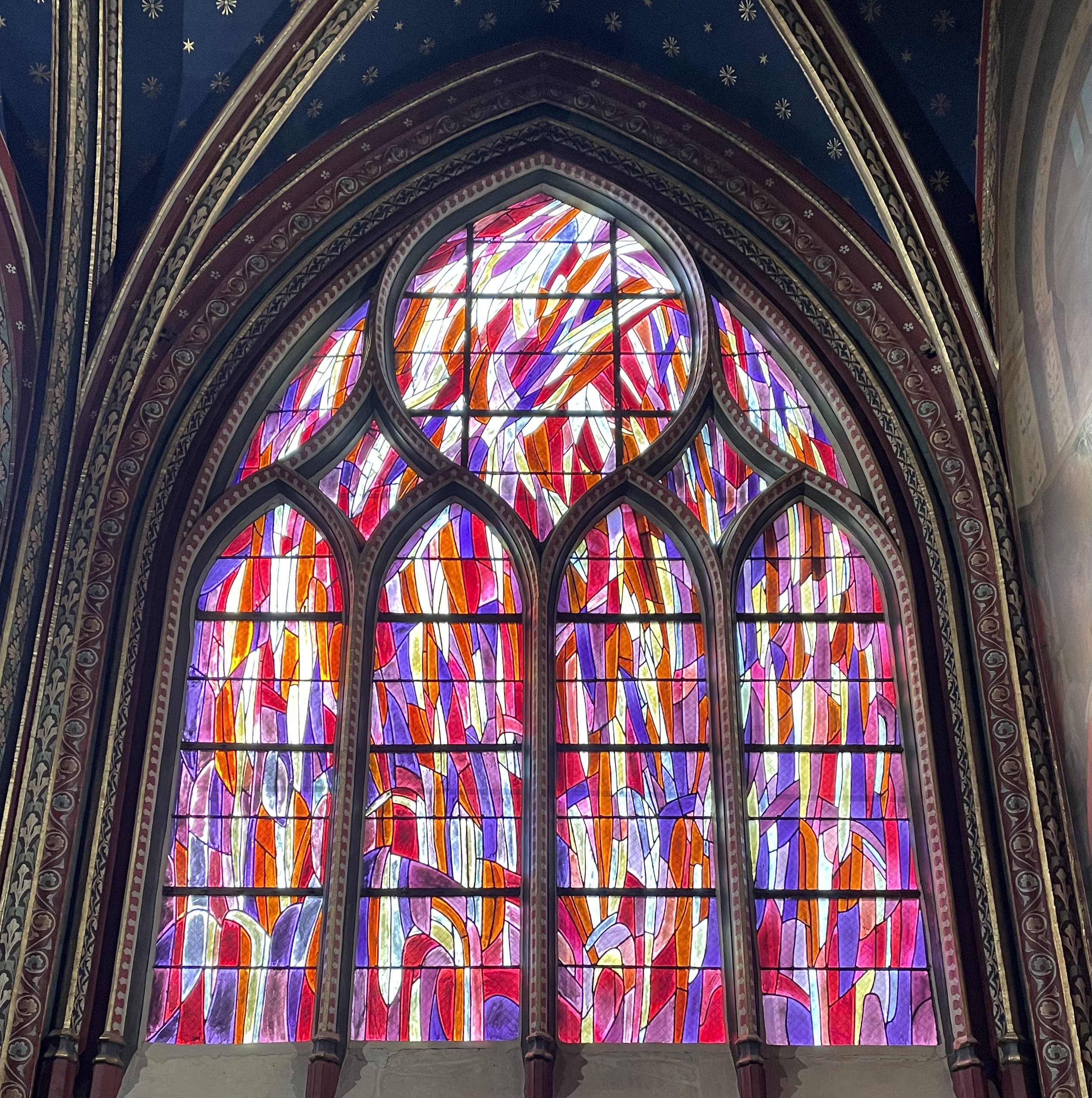
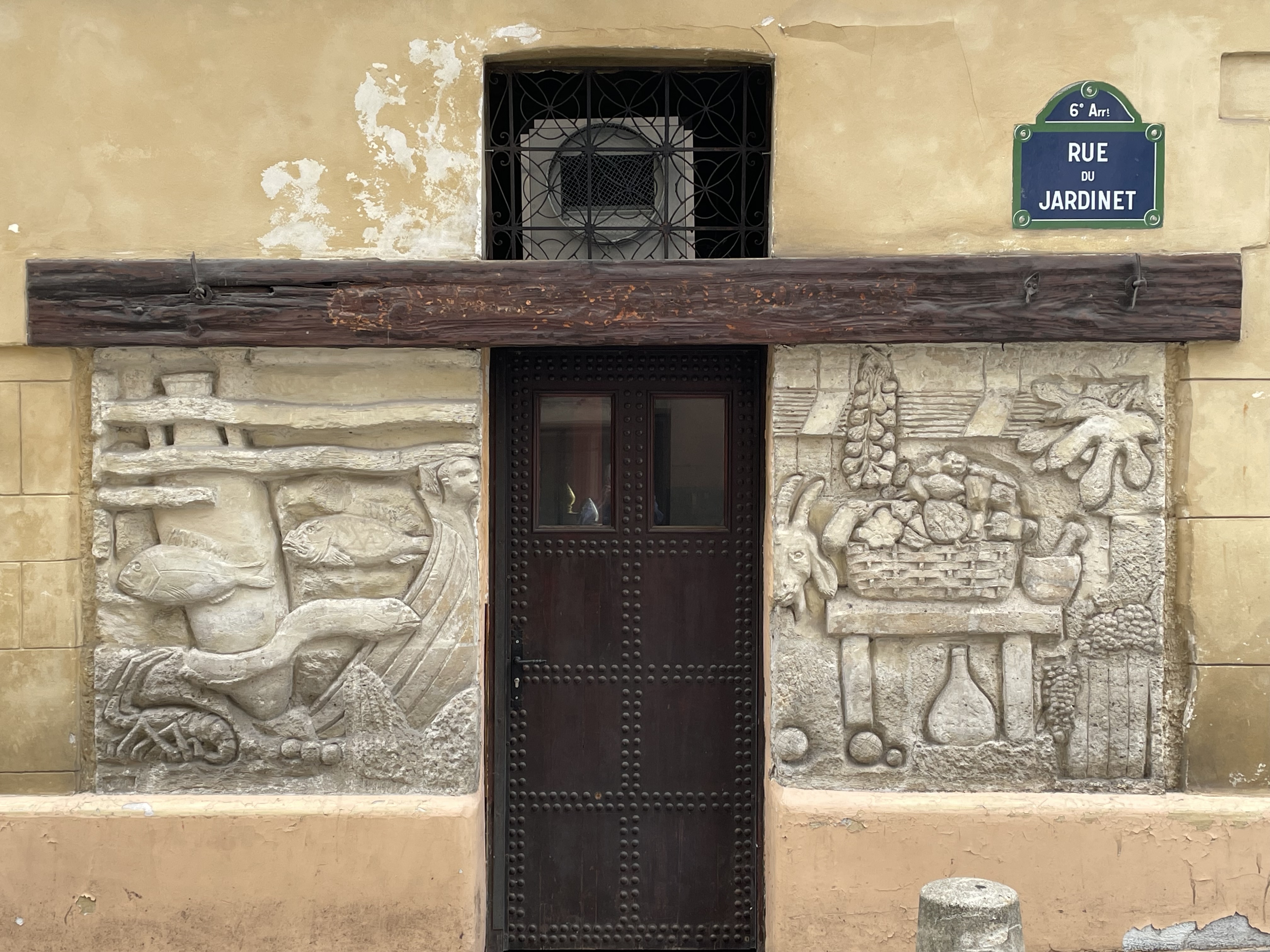
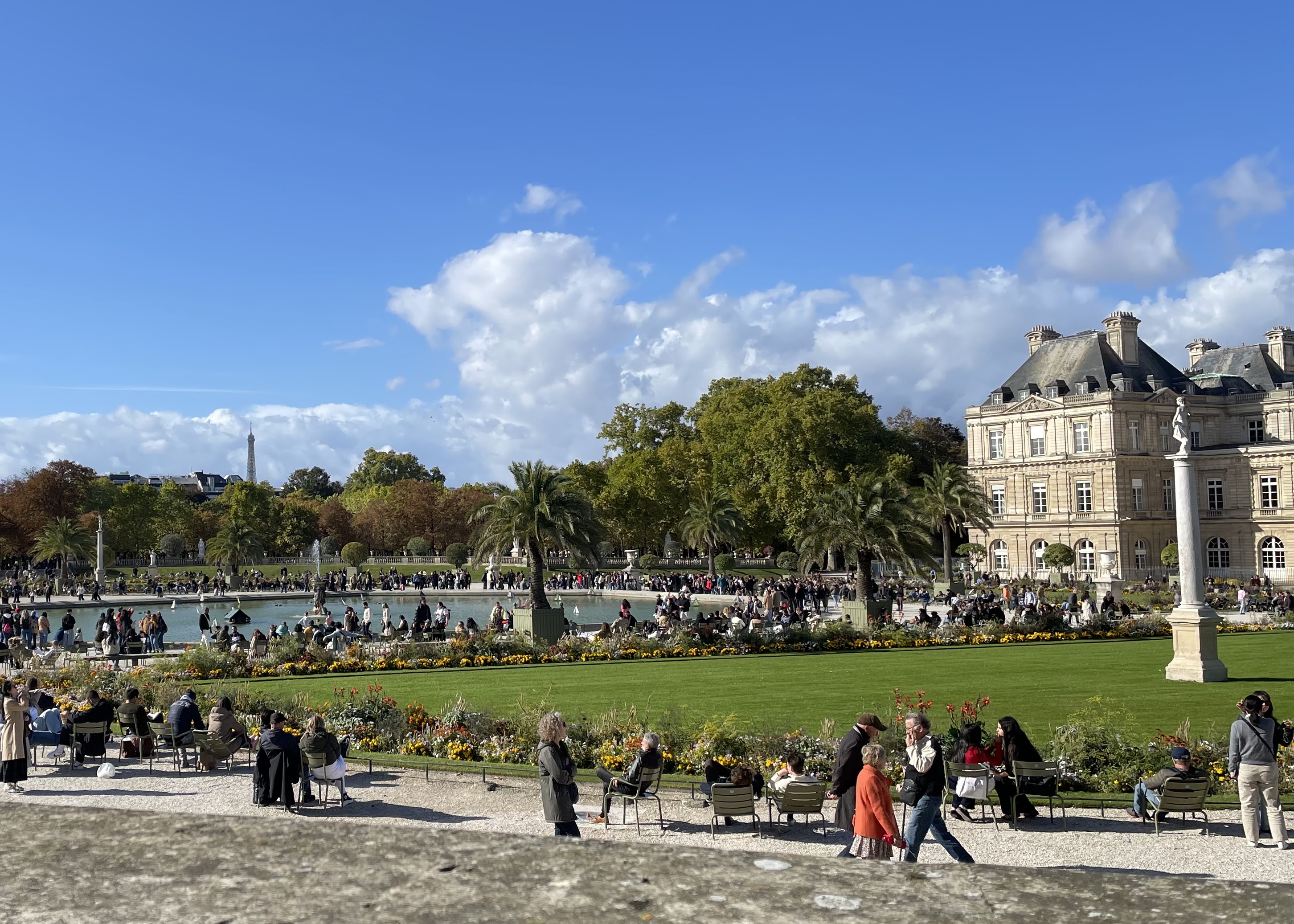
In 2022 I posted three separate photographic essays entitled You can’t take a bad picture in Paris (parts I, II, and III). Now that we’ve returned from another family holiday in the city I’ve once again posted pictures in the hopes that the images will delight you as much as the city has enchanted us over these past twelve days.
But first, let’s begin with the incomparable Tatiana Eva-Marie singing the Cole Porter classic I Love Paris . . .
“I love Paris in the spring time | I love Paris in the fall | I love Paris in the winter when it drizzles | I love Paris in the summer when it sizzles
I love Paris every moment | Every moment of the year | I love Paris, why, oh why do I love Paris | Because my love is here”
ART AND HISTORY IN AN ICONIC PARISIAN NEIGHBORHOOD
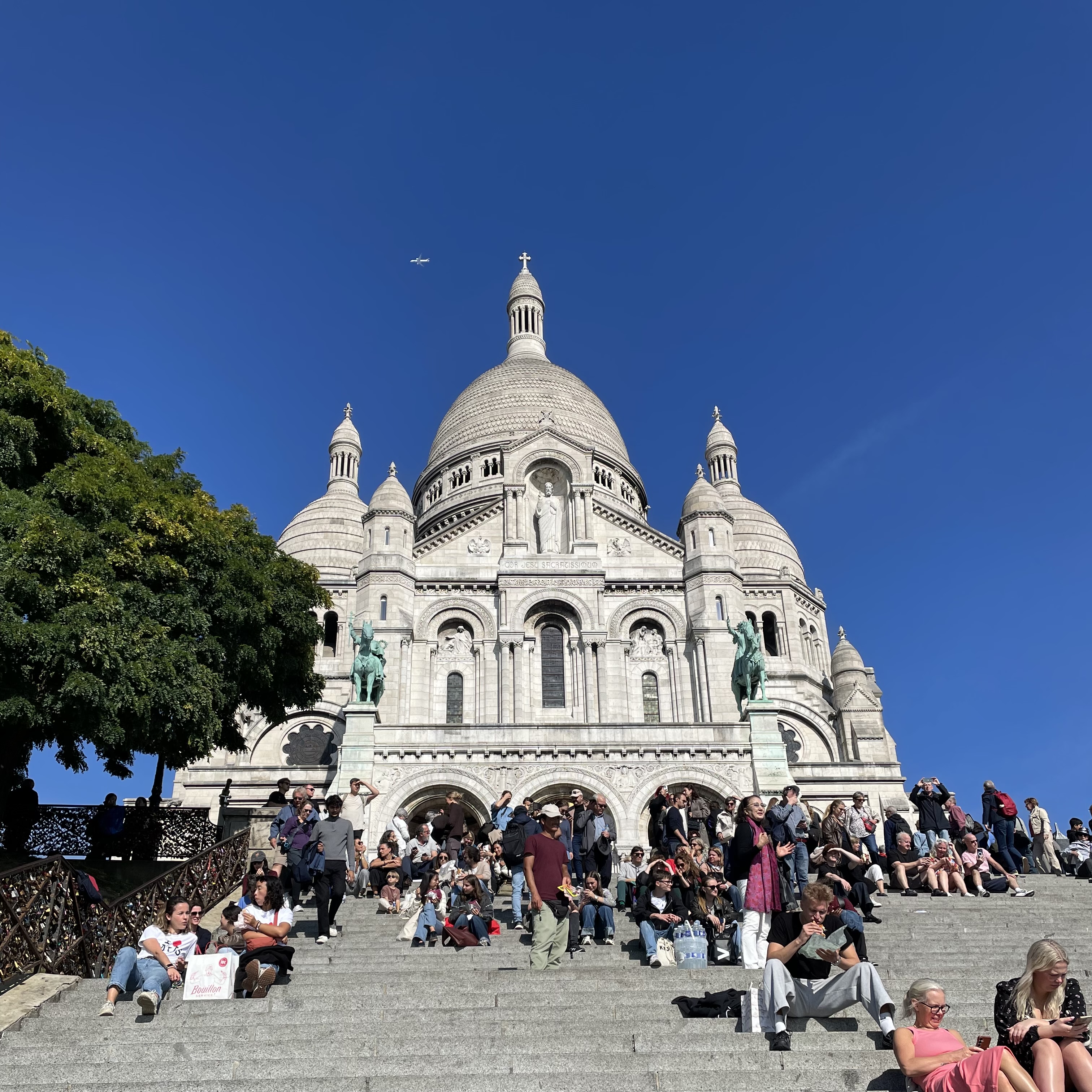
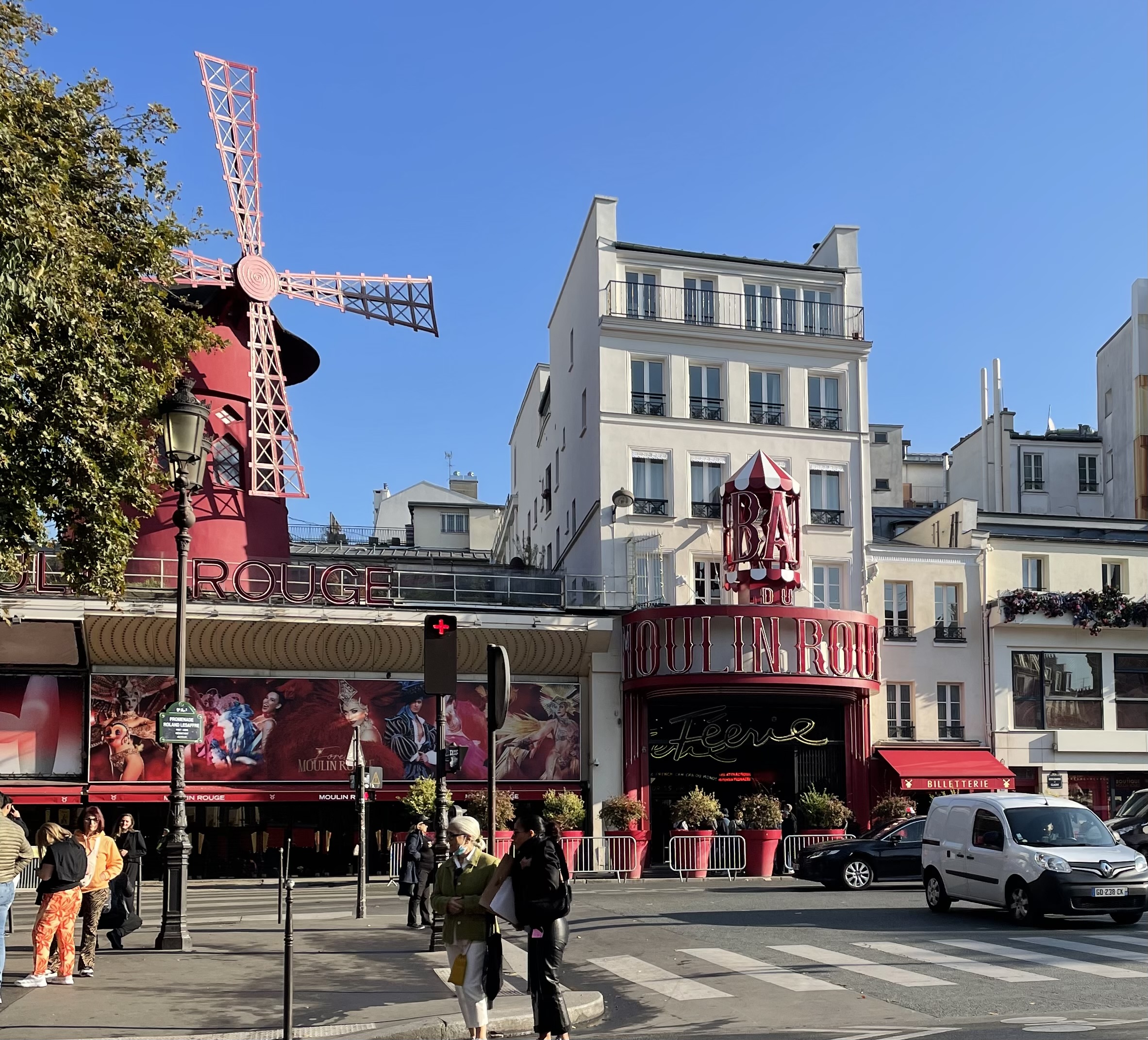
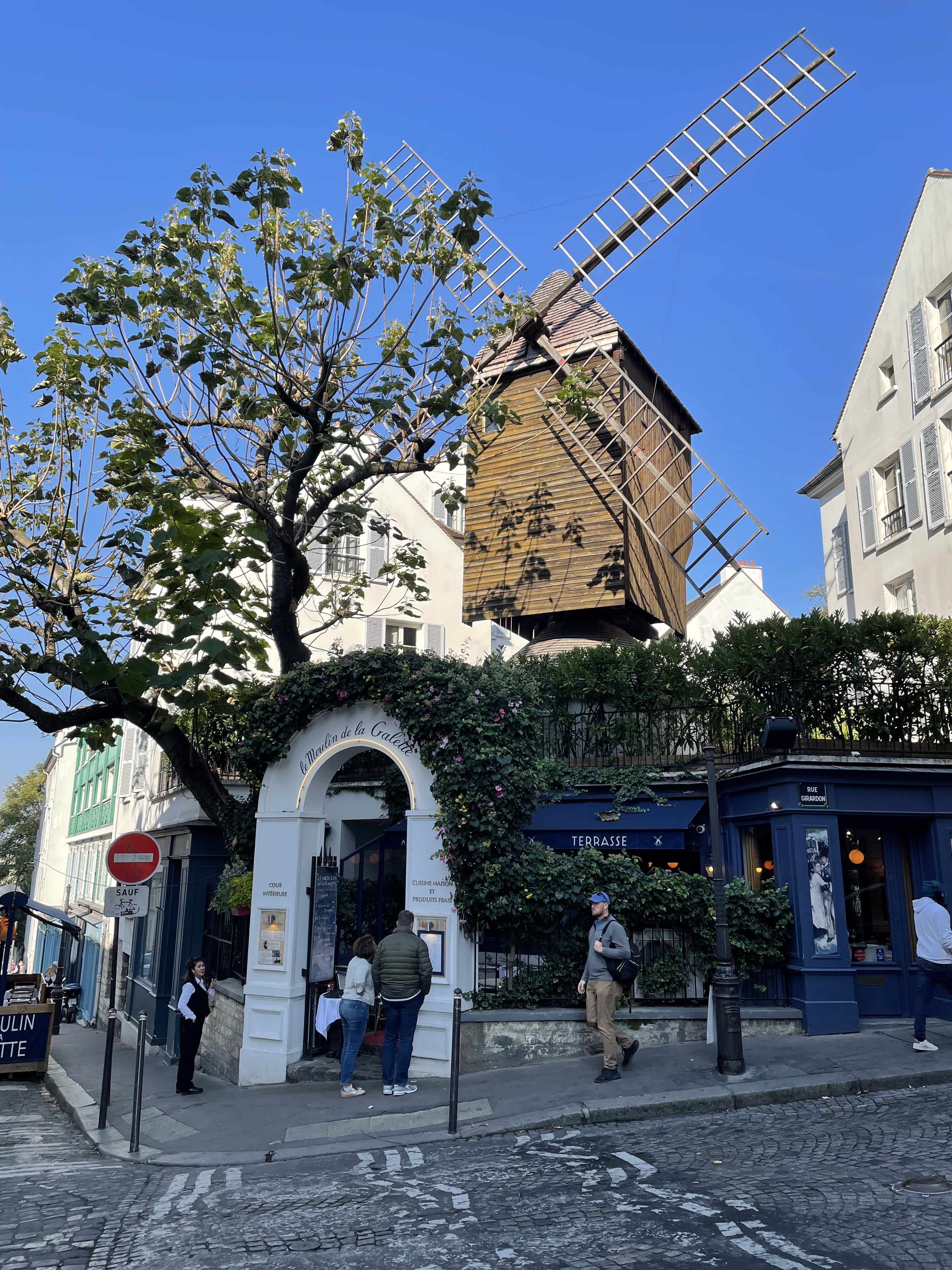
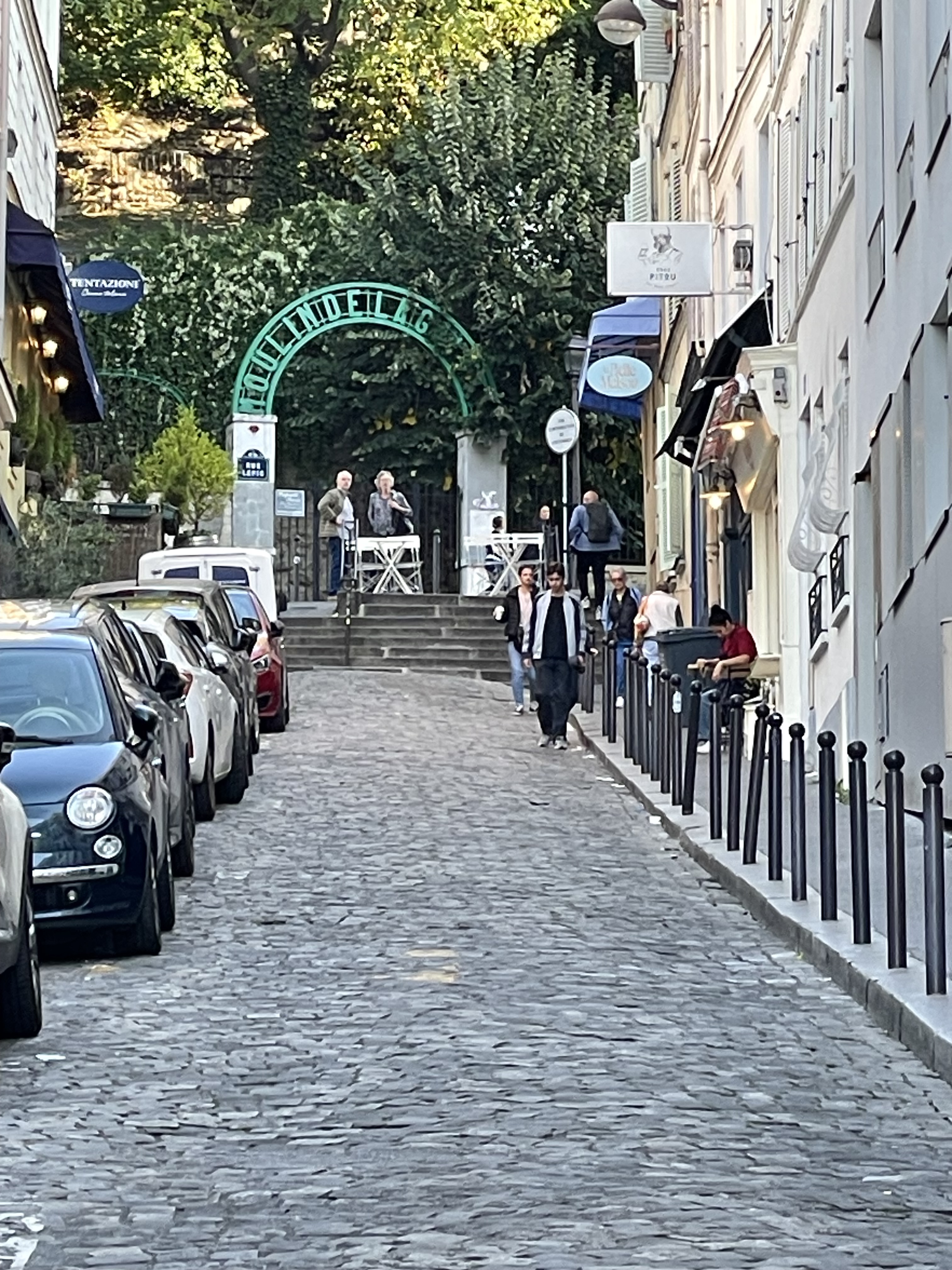
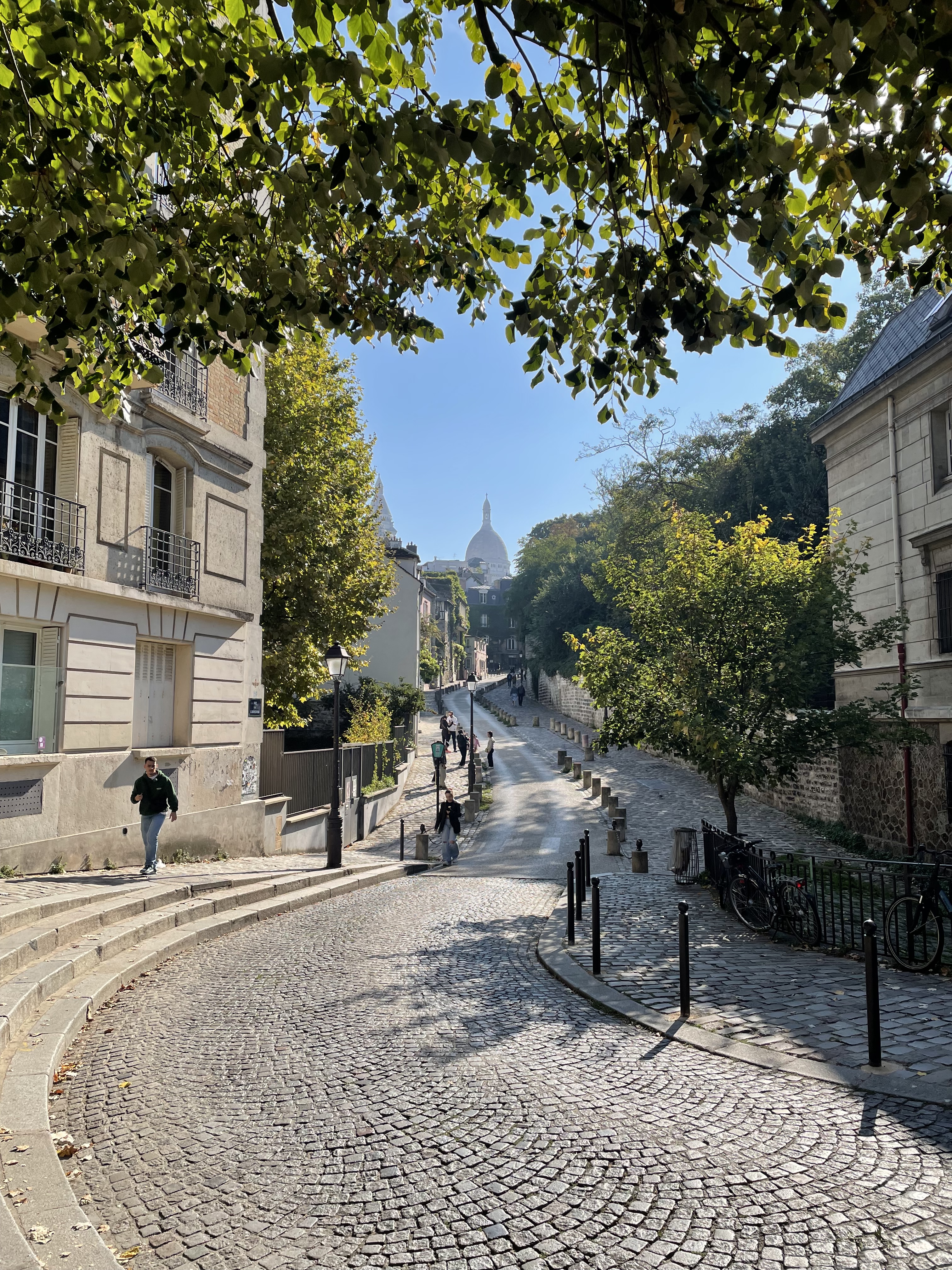
As mentioned in my post about our evening of opera at Palais Garnier, each family member took the lead in planning an activity for all to enjoy. Claire chose “Montmartre: A journey through art and history” where we saw monuments like Moulin Rouge and Sacre-Coeur and walked in the footsteps of legendary artists like Picasso and Van Gogh who lived in the area at the end of the 19th and beginning of the 20th century.
It was an enlightening and delightful introduction to one of the city’s best-known neighborhoods undertaken on a picture-perfect early fall day.
Sacre-Coeur Basilica
THE TREASURES OF MUSEUMS
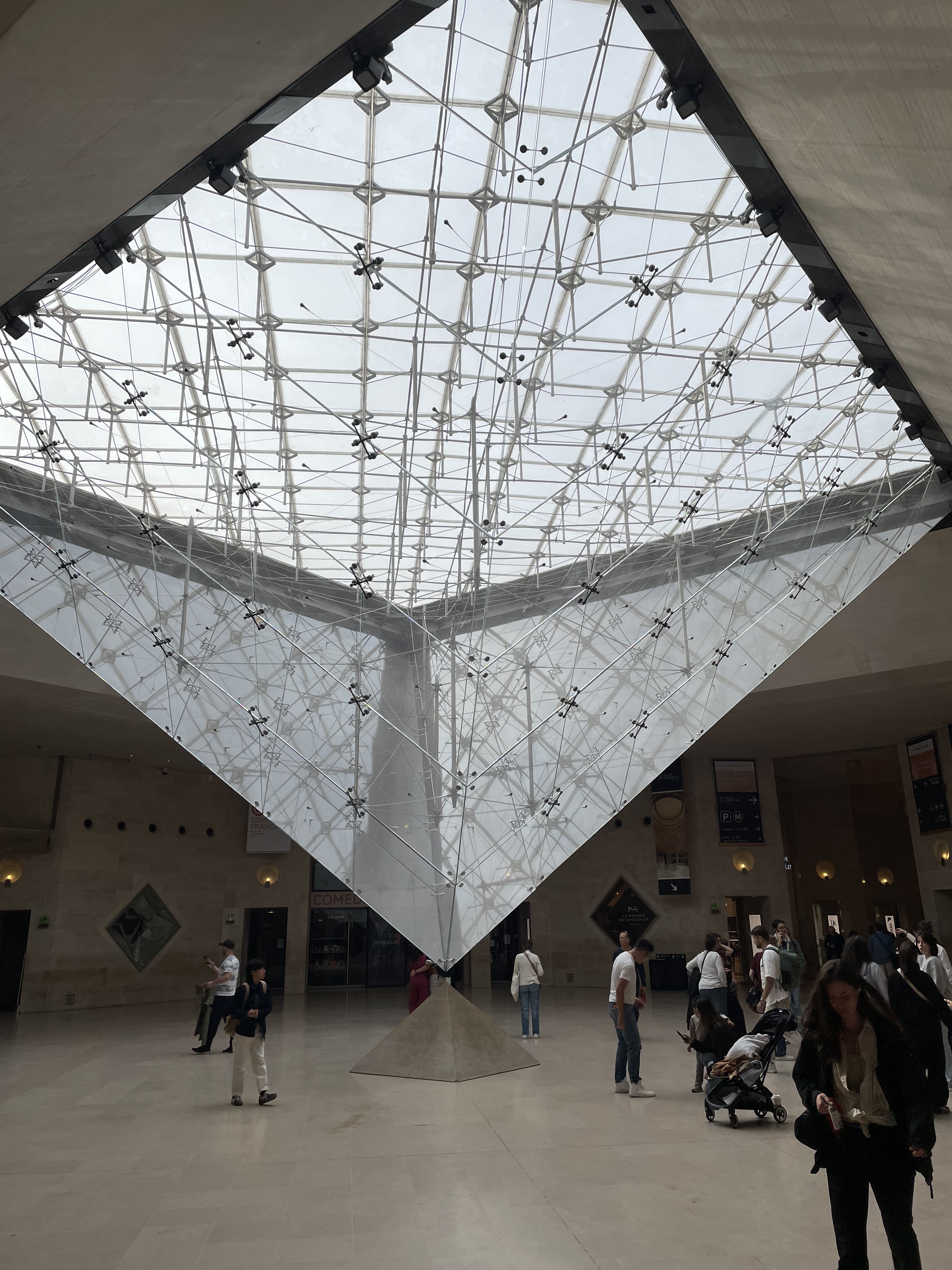
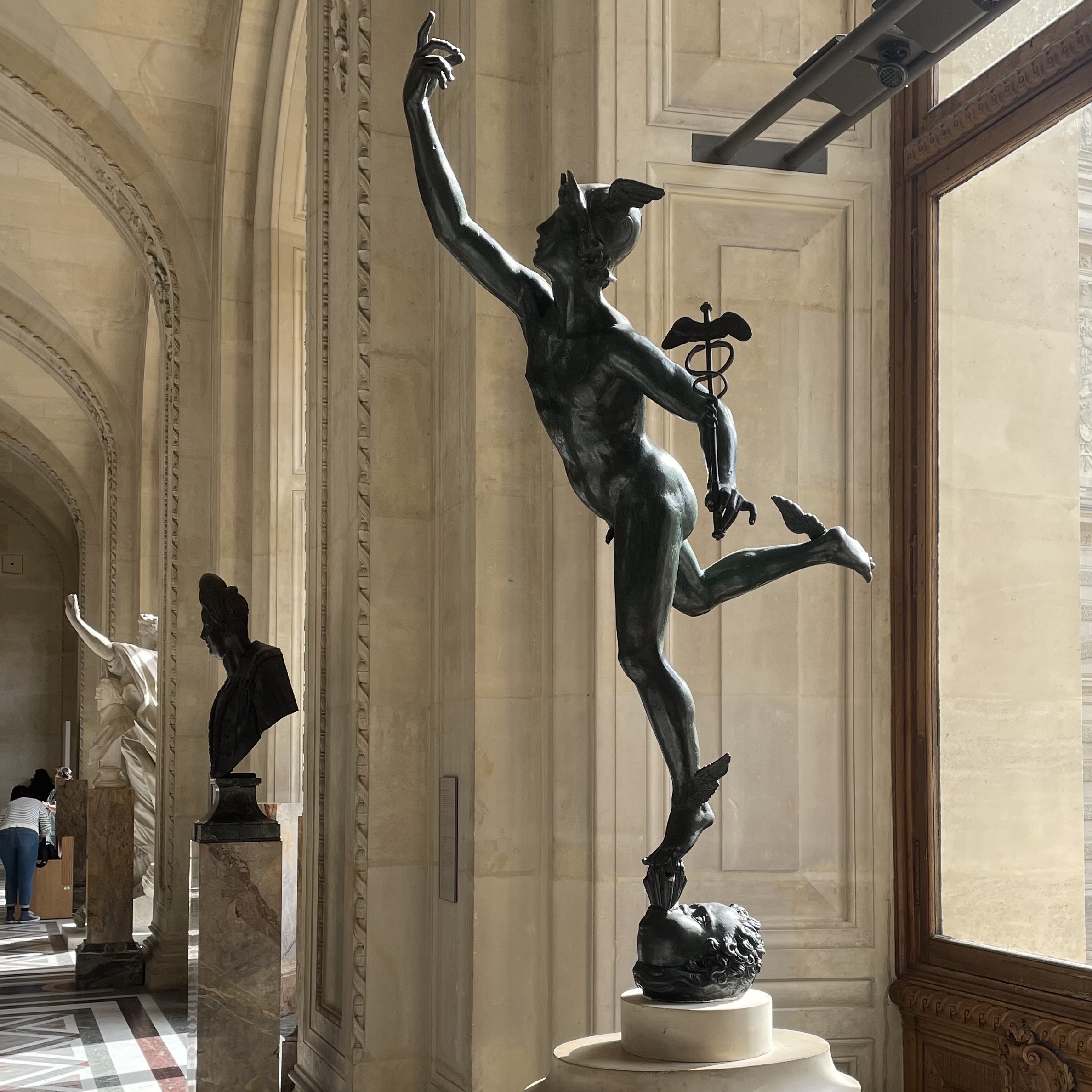
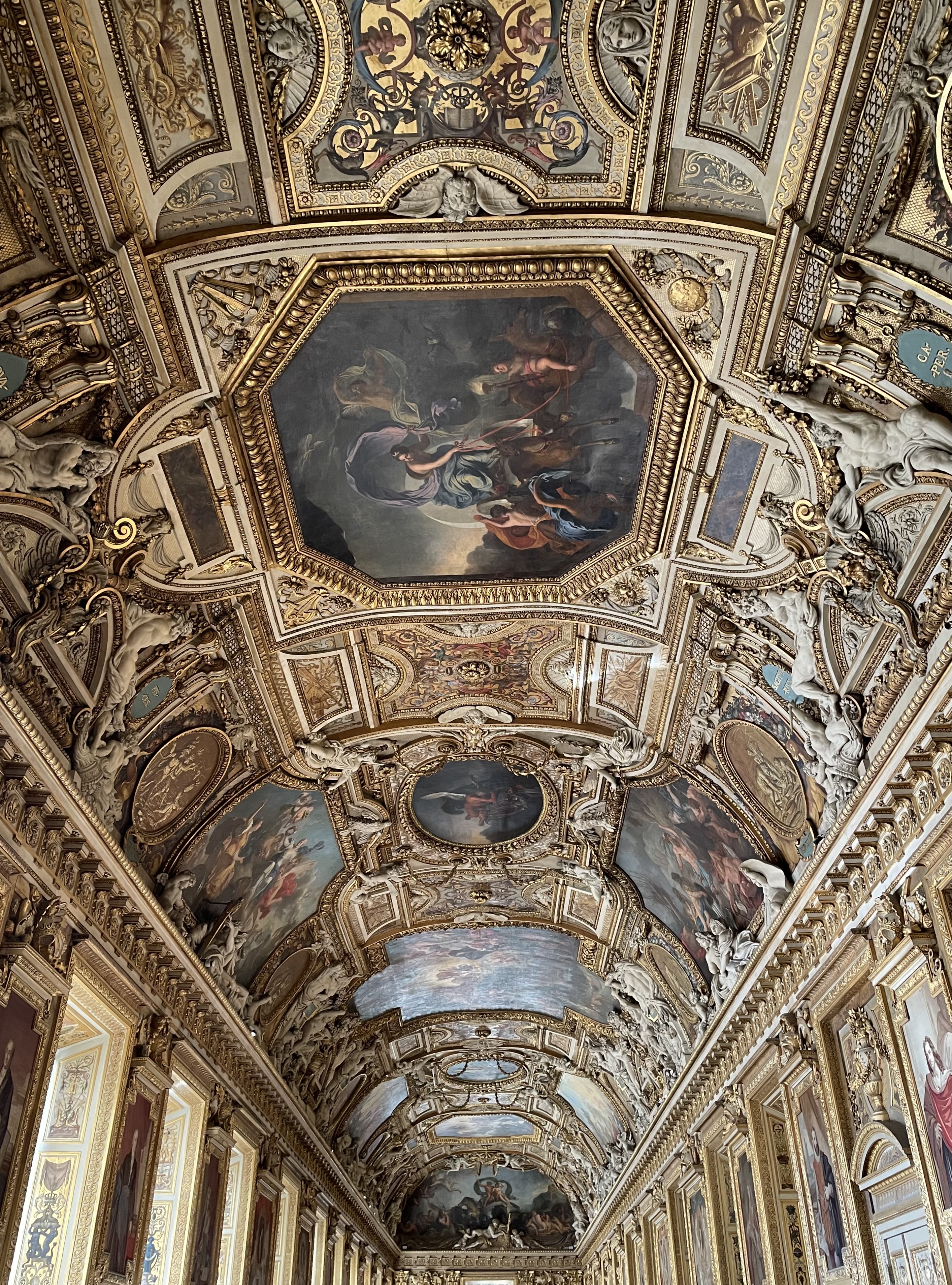
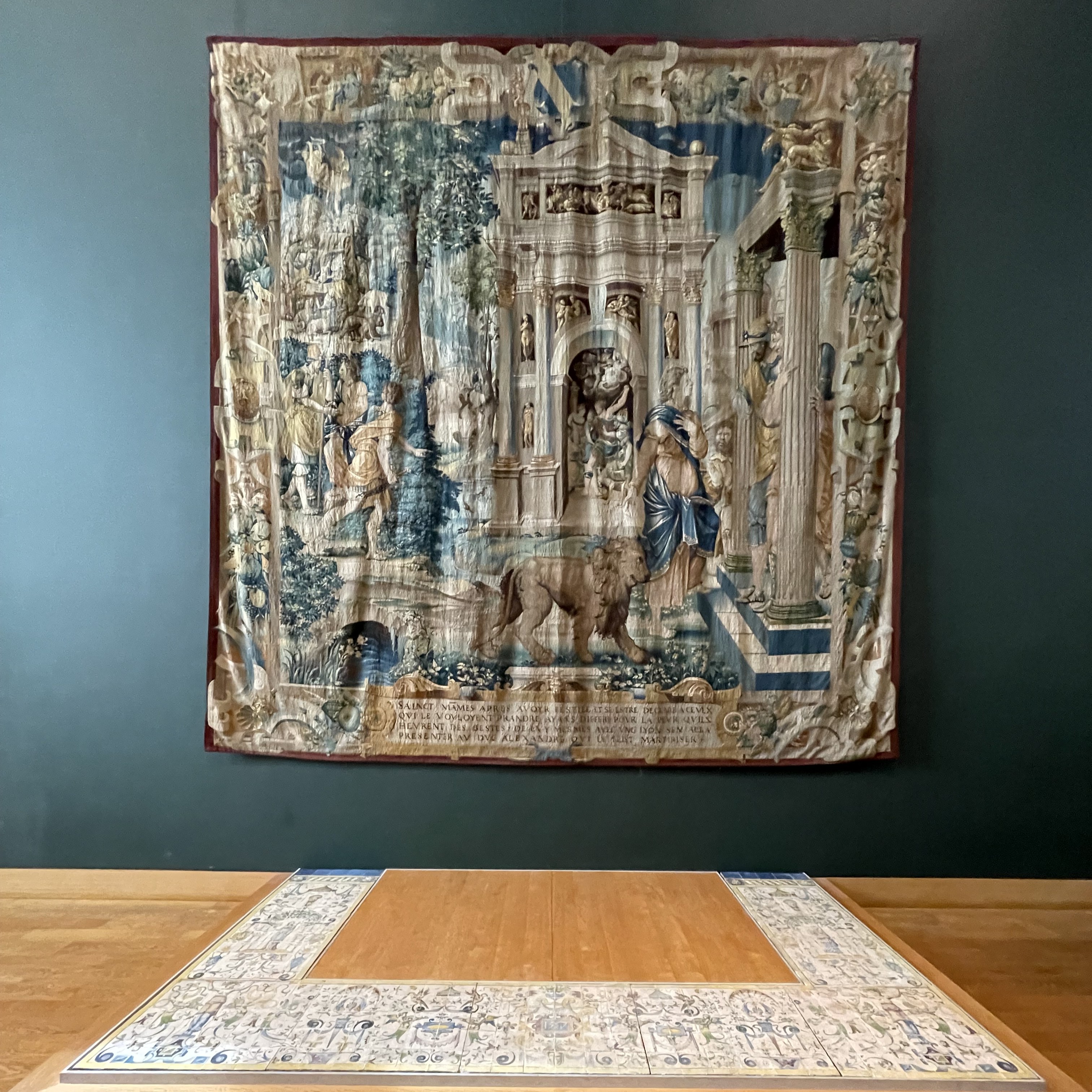
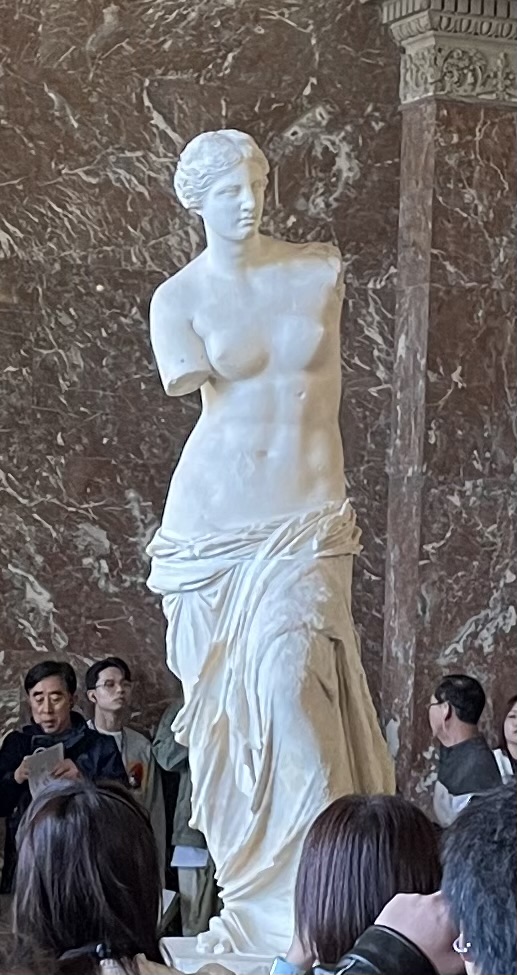
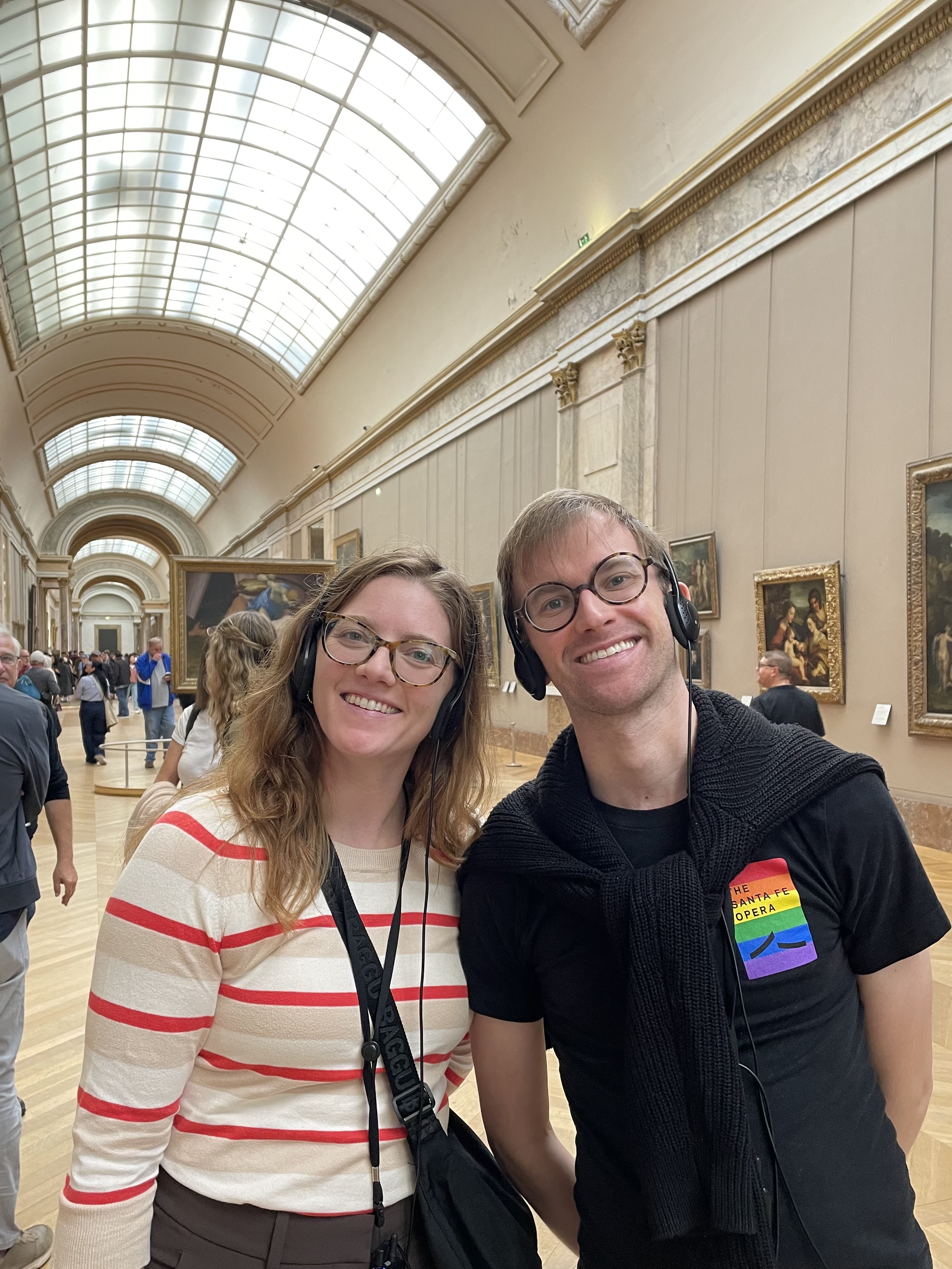
Paris is a city of extraordinary museums. While we’d visited the most famous on earlier visits, Candice put together a tour and scavenger hunt at the Louvre (once a teacher, always a teacher!) using Elaine Sciolino’s highly regarded Adventures in the Louvre: How to Fall in Love with the World’s Greatest Museum as her guide. It made for a terrific “field trip” as we saw the “Big Three ladies of the Louvre”* and found often unseen treasures in out-of-the-way galleries.
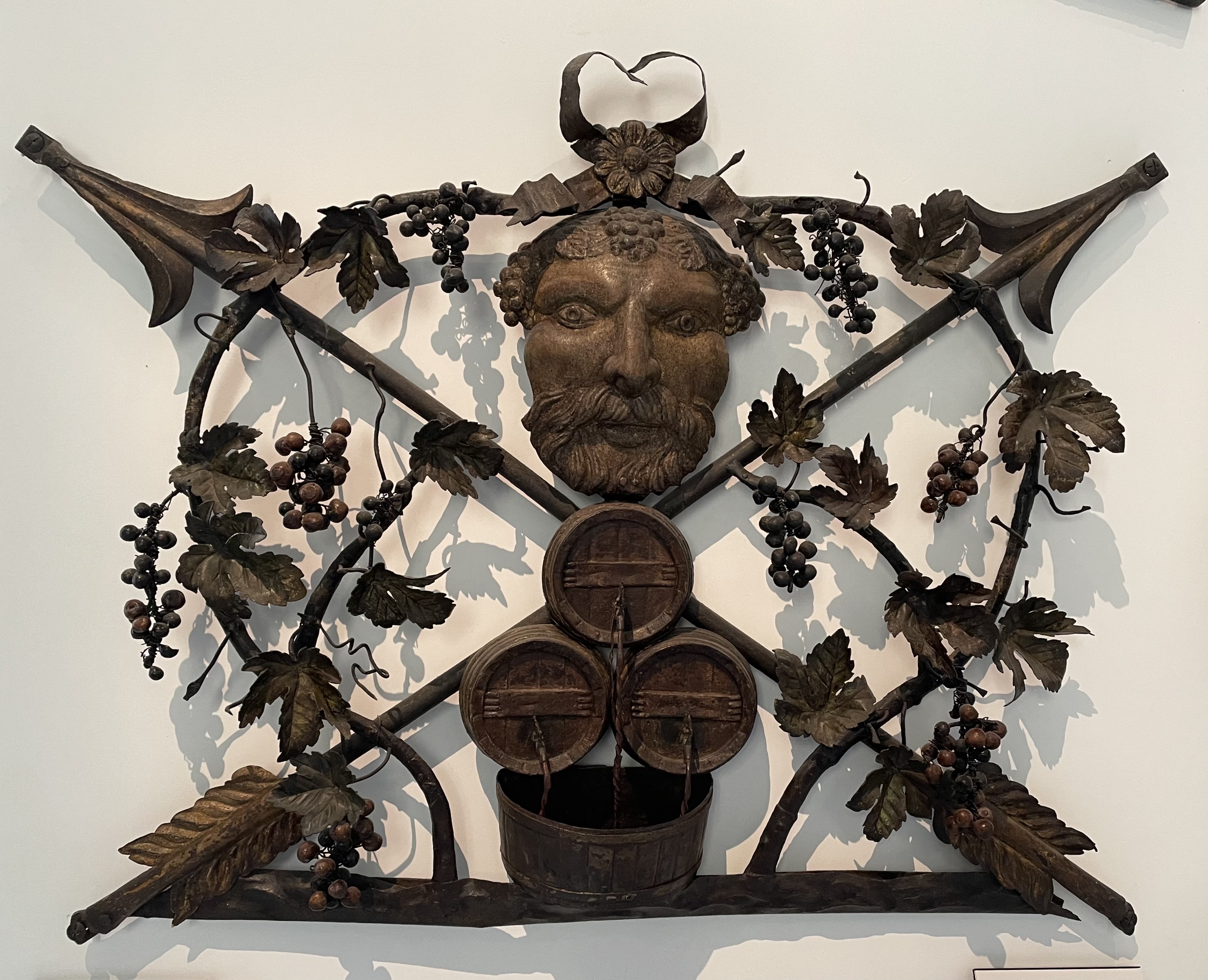
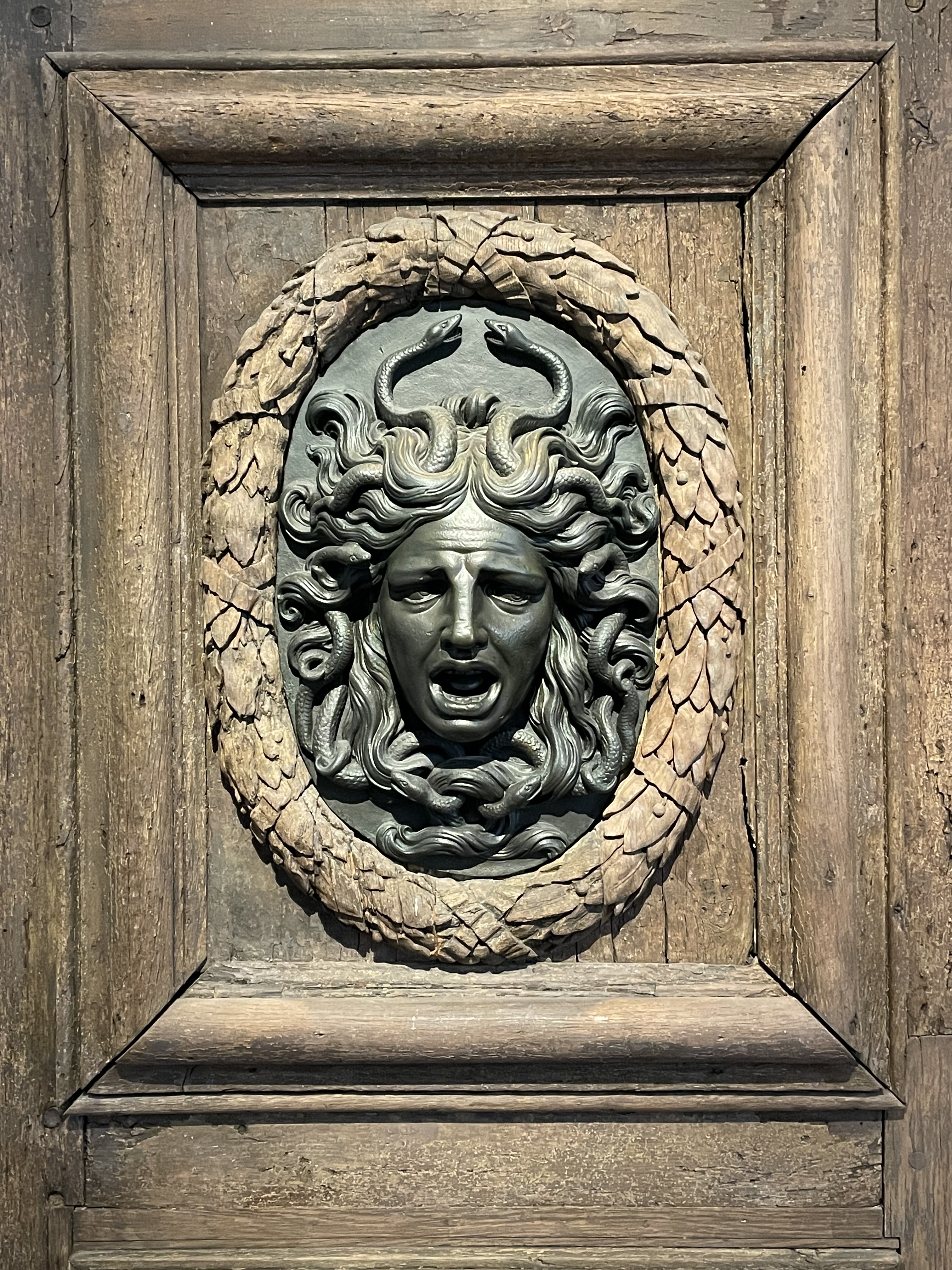
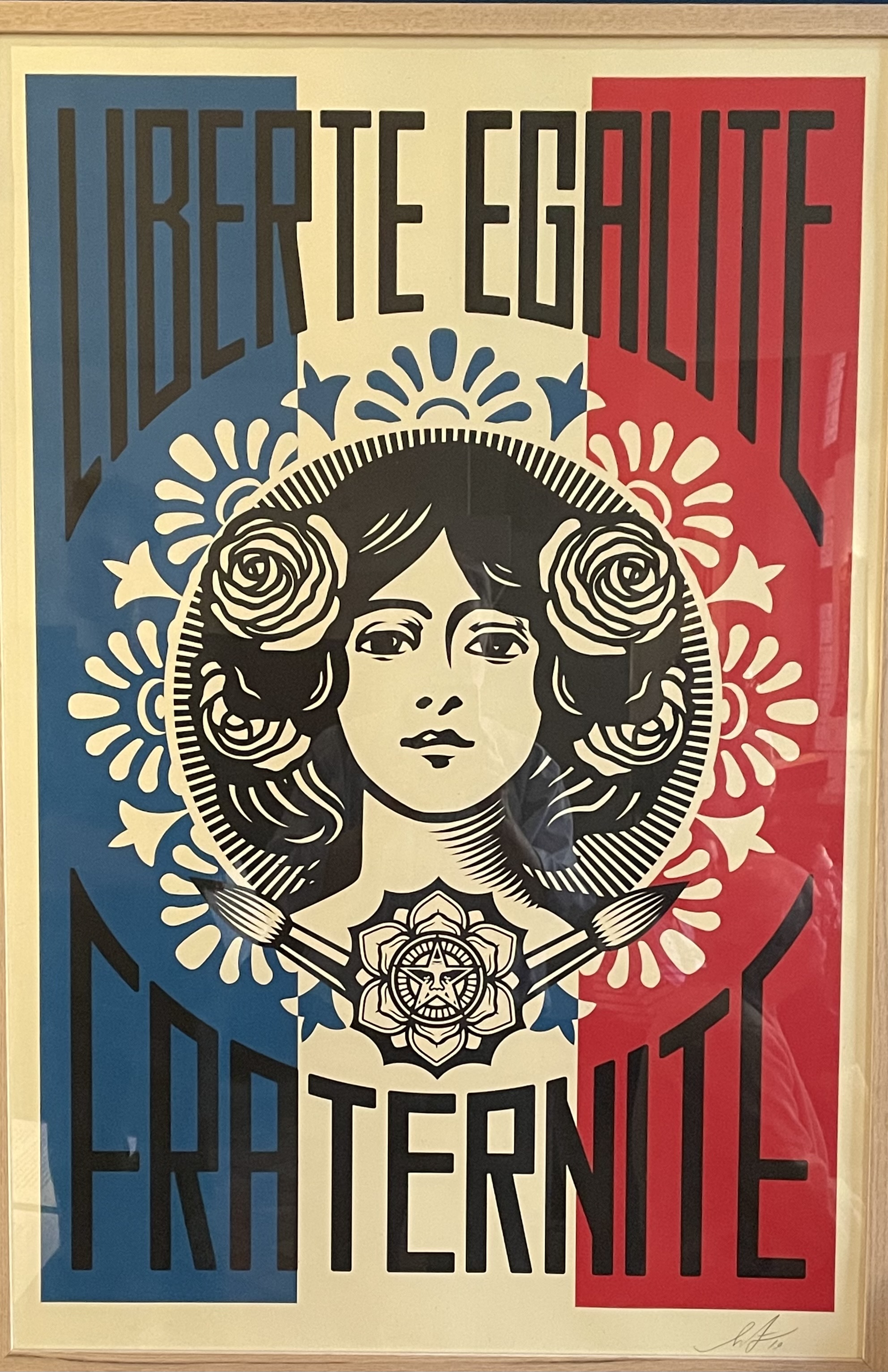
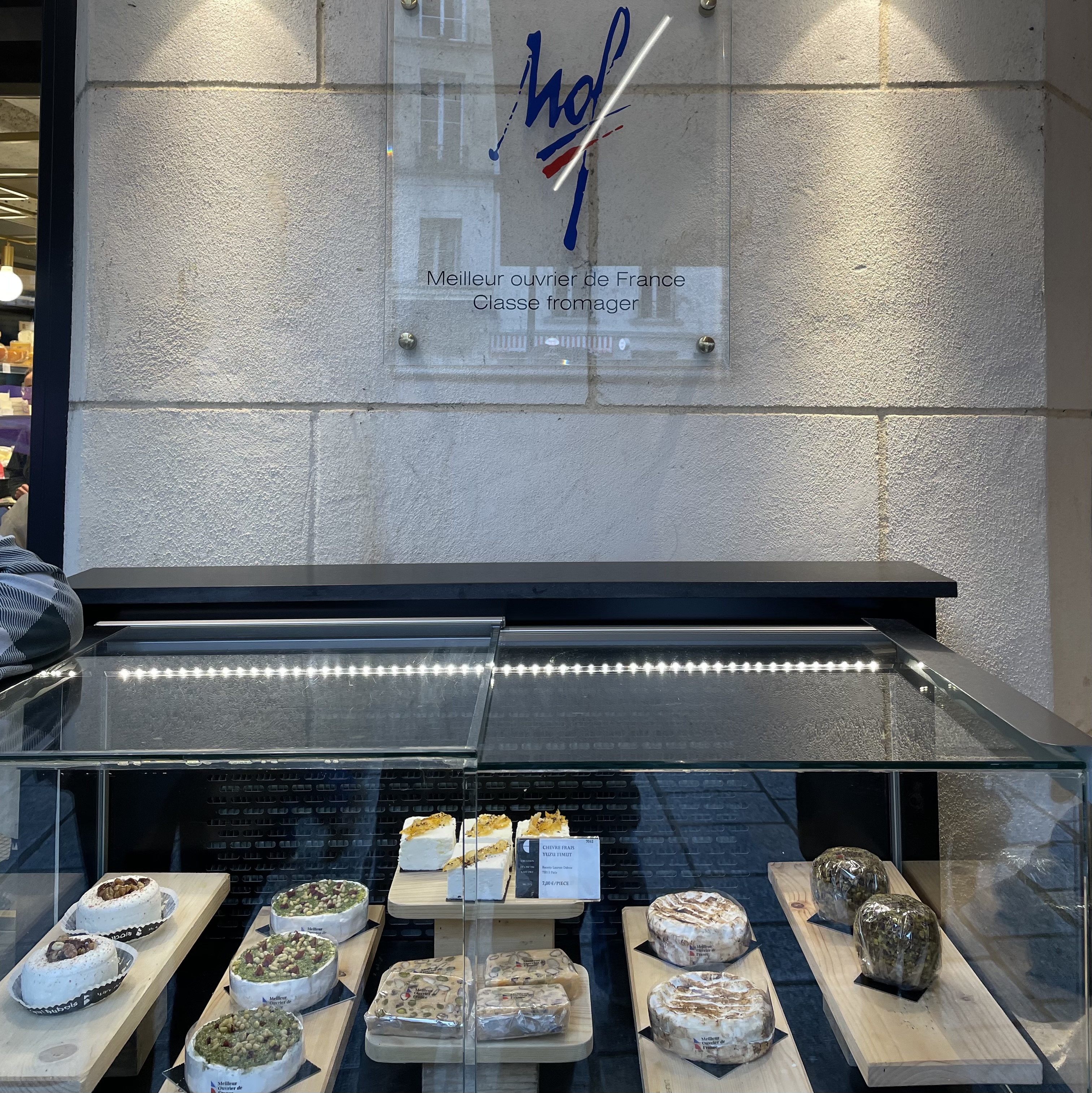
Andrew encouraged us to visit Musée Carnavalet—Histoire de Paris (The Museum of the City of Paris), which we did on our last full day in the city. The Musée Carnavalet begins with a delightful opening exhibition of city street signs and includes in-depth and informative exhibits on such topics as 17th century Paris and the French Revolution. I was clearly taken by the historical signs and posters (from cheese shops to the response to the Charlie Hebdo shooting and the subsequent November 2015 attacks in the city.)
Historic sign for a Parisian cheese shop
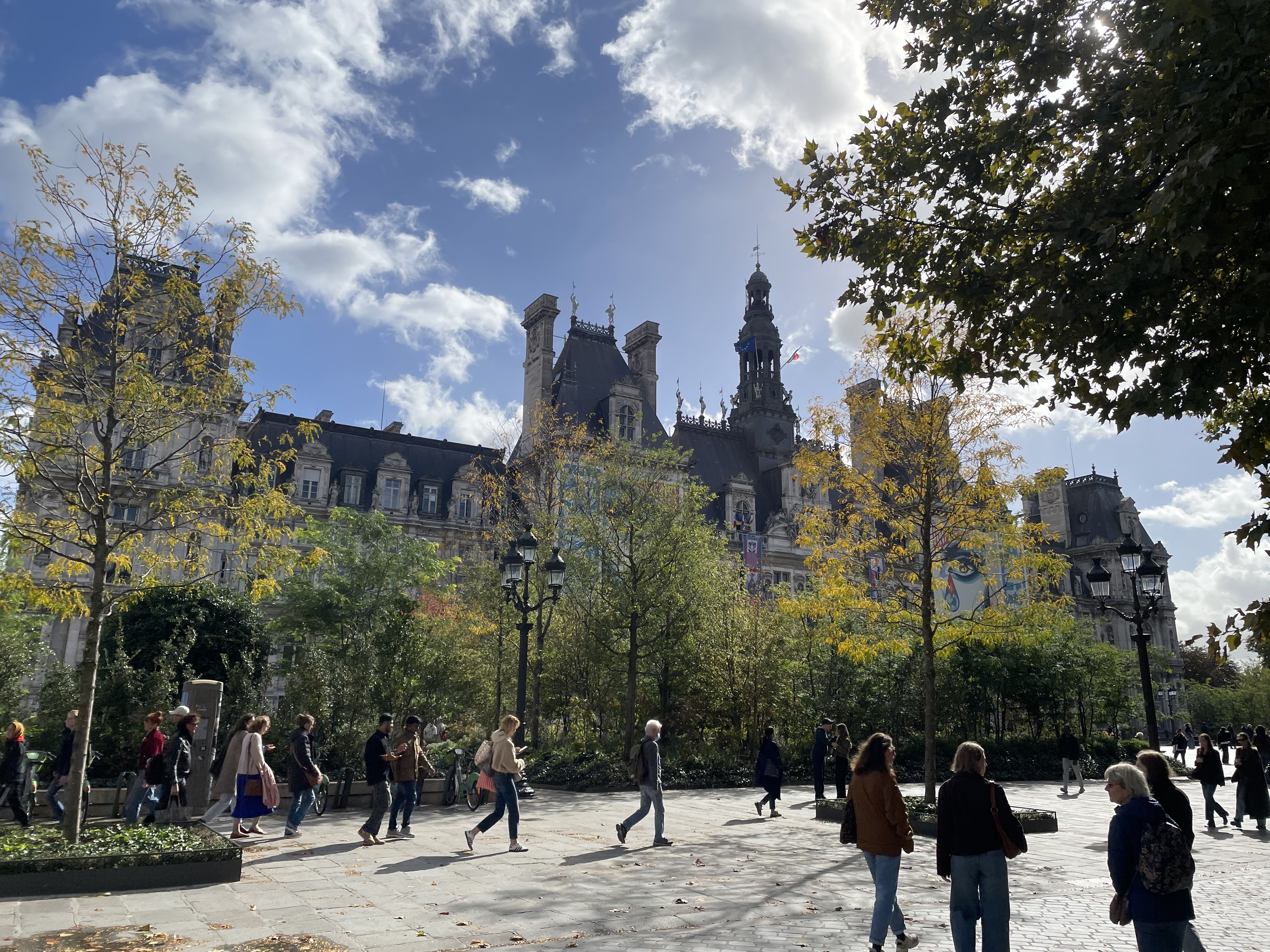
Image of Medusa from the City Hall door . . . added after one of the country’s many revolutions as a warning
Street art that became an iconic poster following the attacks of 2015
WALK. EAT. DRINK. SLEEP. REPEAT.
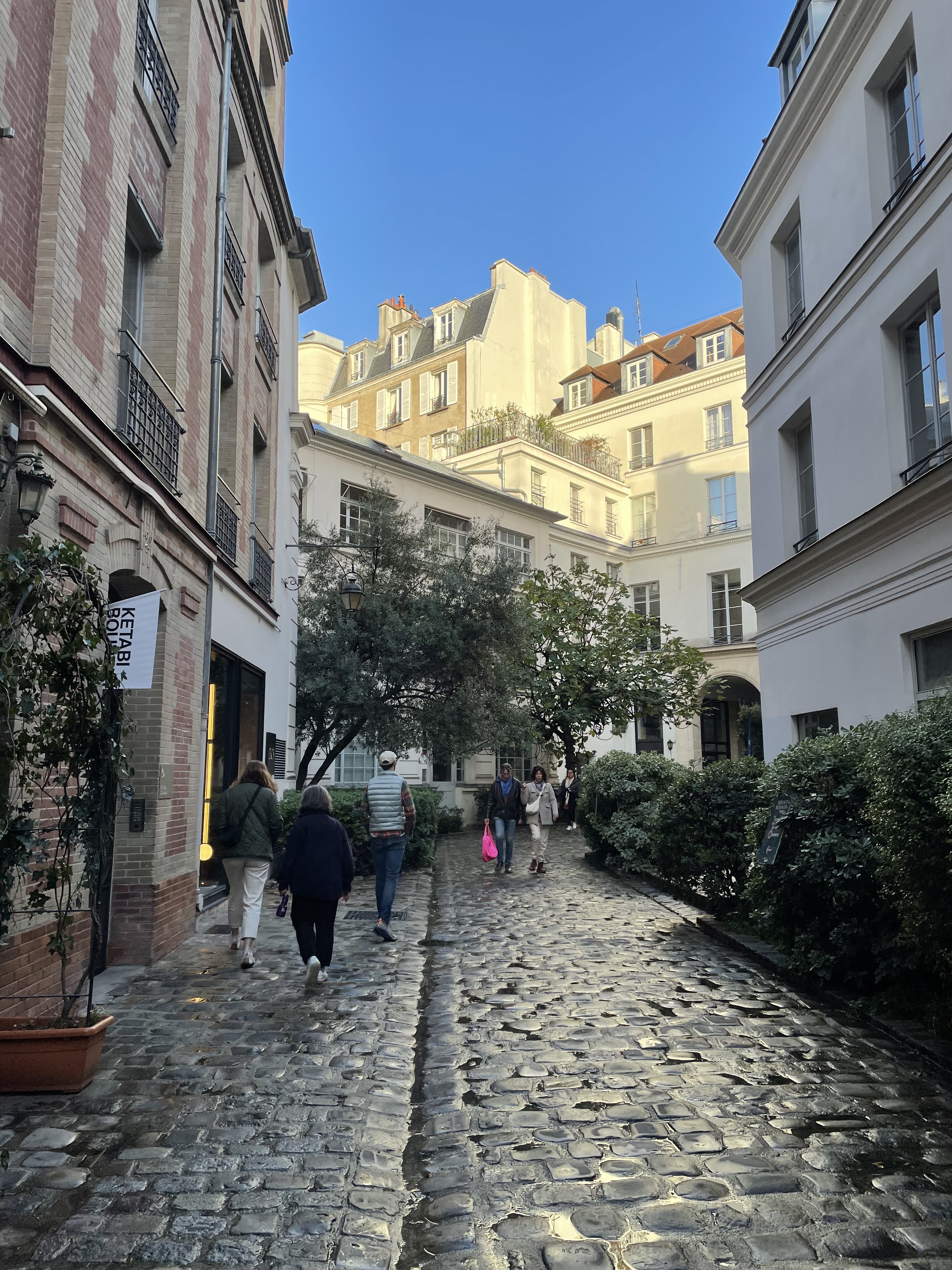
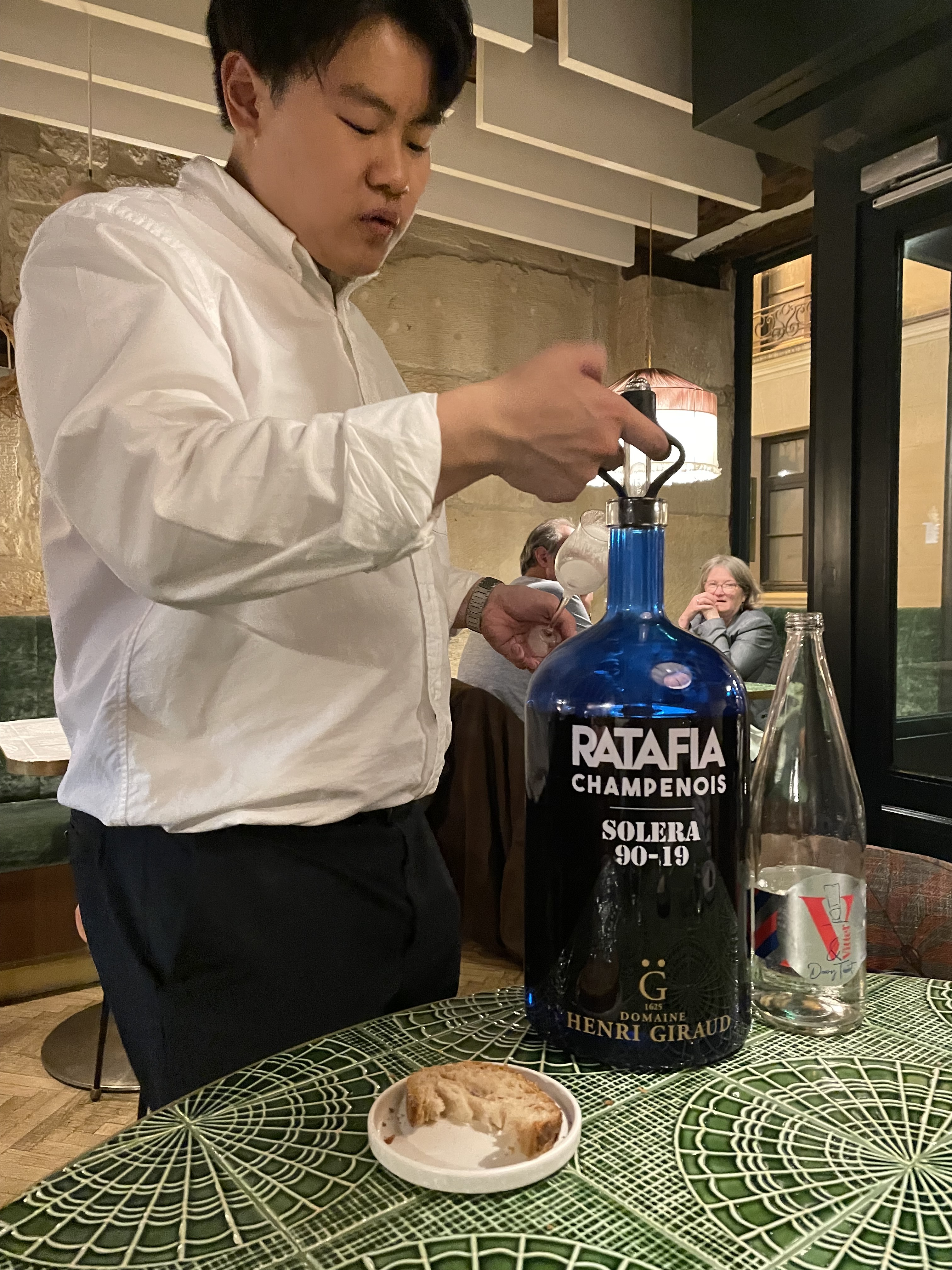
Many of the early autumn days were filled with walks through various neighborhoods enjoying the architecture, people, weather, change of season, and unexpected treasures. There were—as is to be expected—multiple stops along the way to sample the city’s food and wine offerings. A special treat was our culinary tour of South Marais led by Paris by Mouth! Highly recommended!
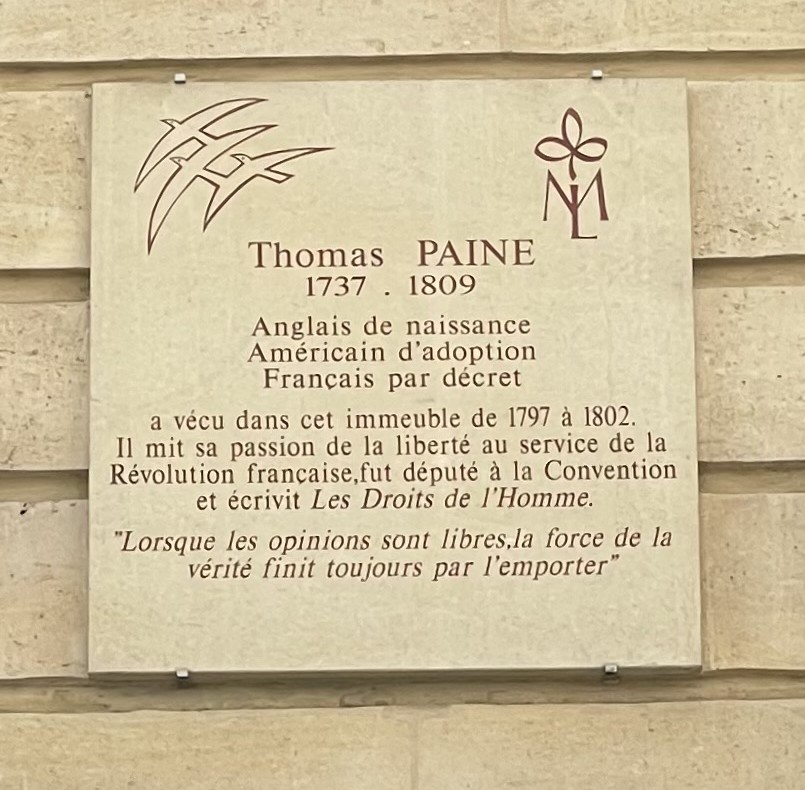
After a satisfying Sunday lunch at a small Italian bistro we walked out the front door to discover that we’d been in the building where Thomas Paine, the great American patriot, had lived during his time in the city. That meant that I had to stop and explain to Andrew and Candice why Paine was the Founding Father we’d do well to find again.
Thomas Paine: English by birth, American by adoption, French by decree
MUSIC. ALWAYS MUSIC.
Music was, of course, an important part of our time in the city and throughout our month of travel. Tatiana Eva-Marie is working on a new project of Django Reinhardt music, so let’s dip our toes into that era to conjure up thoughts of wonderful times, good friends, and happiness.
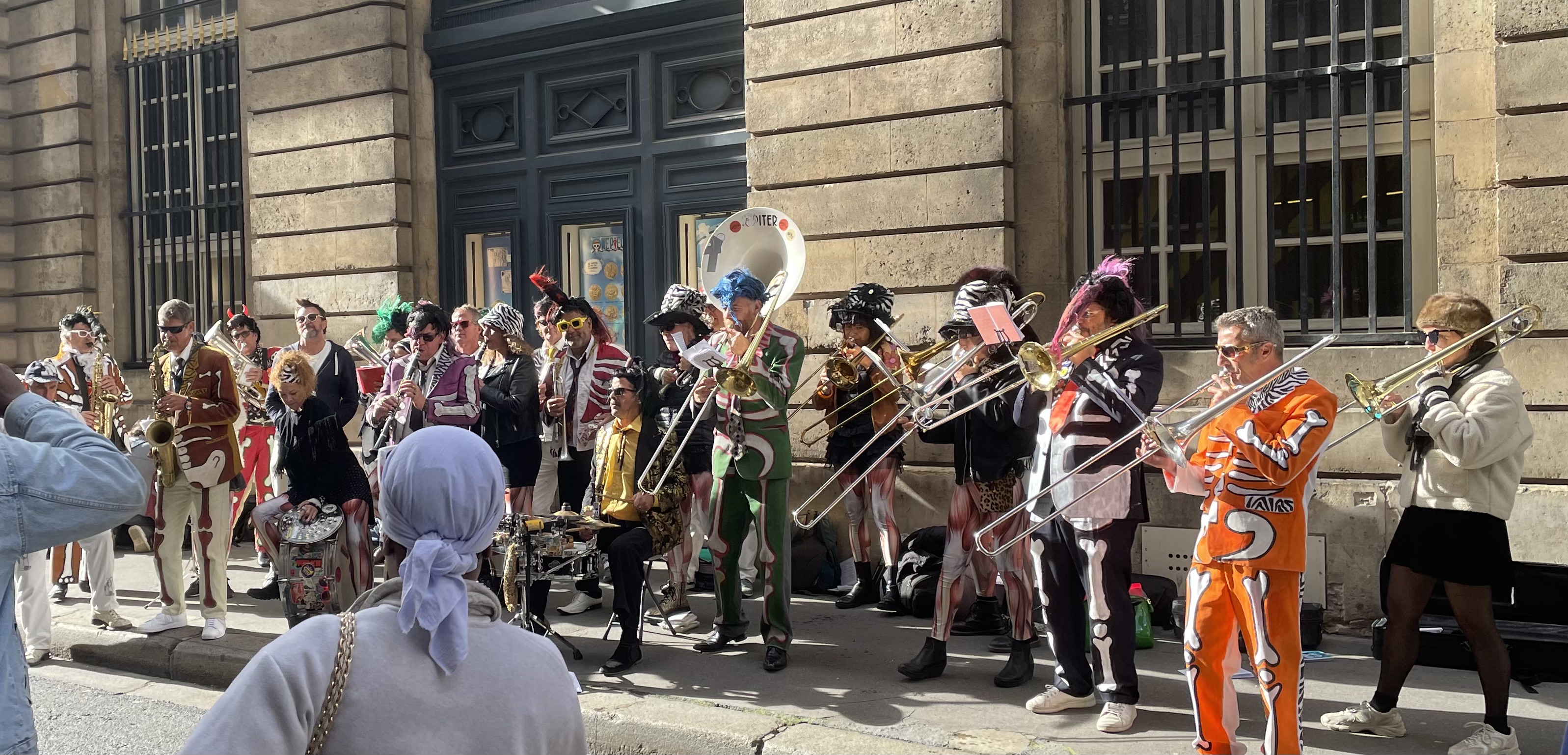
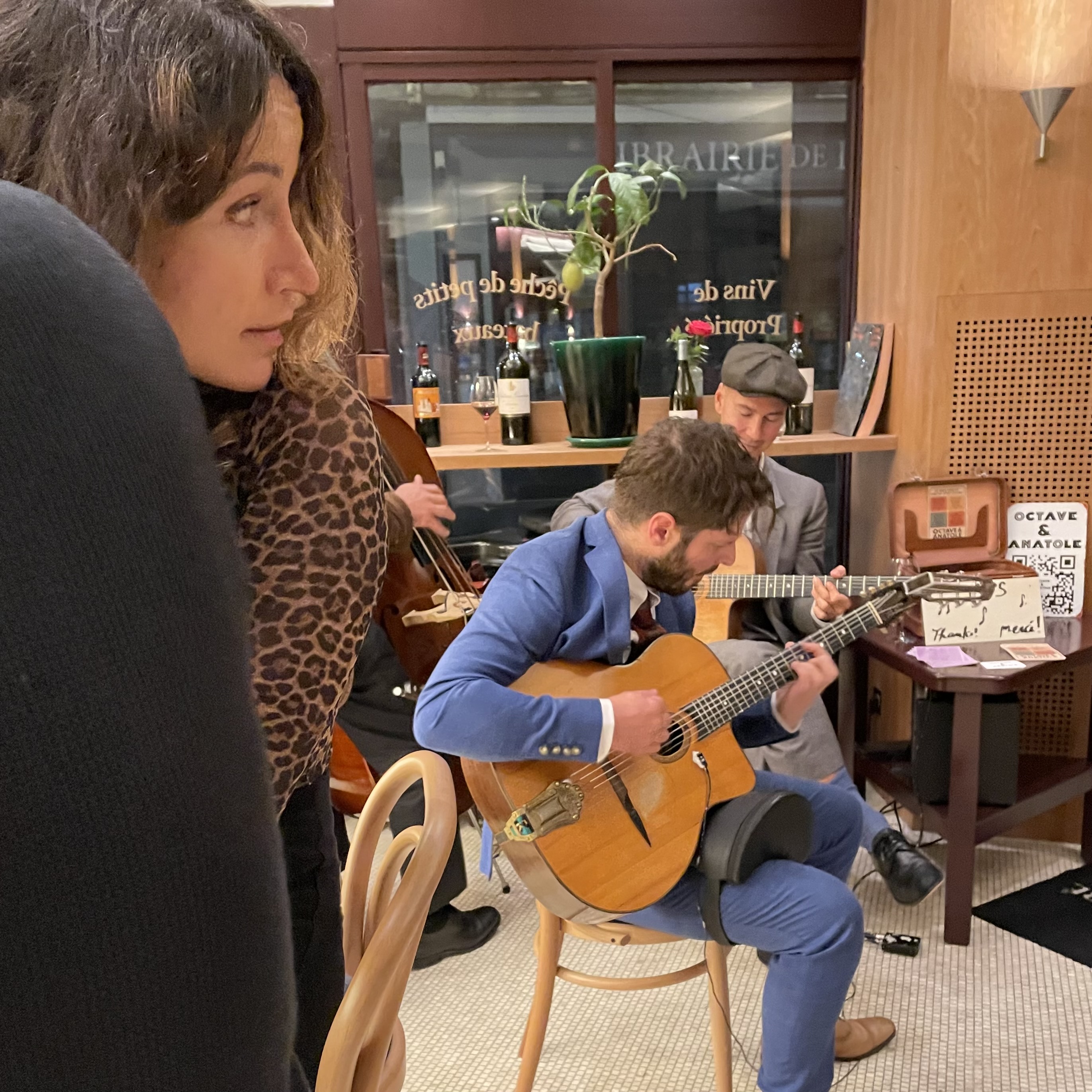
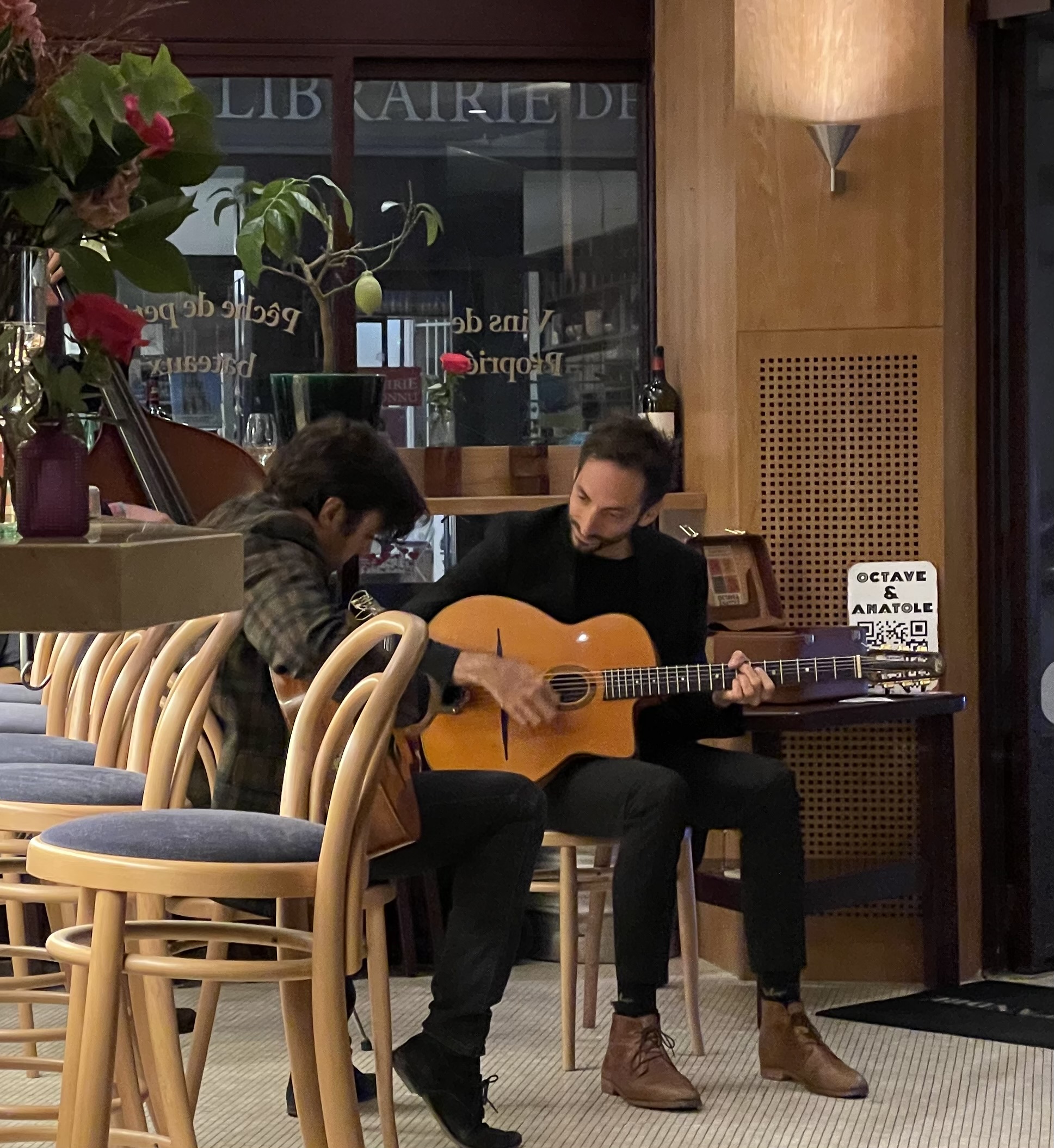
Beyond the music found during our night at the opera we also came across random street bands and took in gypsy jazz on a couple of nights at the restaurant at the end of our block, where the trio was playing in the style of Reinhardt and the Hot Club of France.
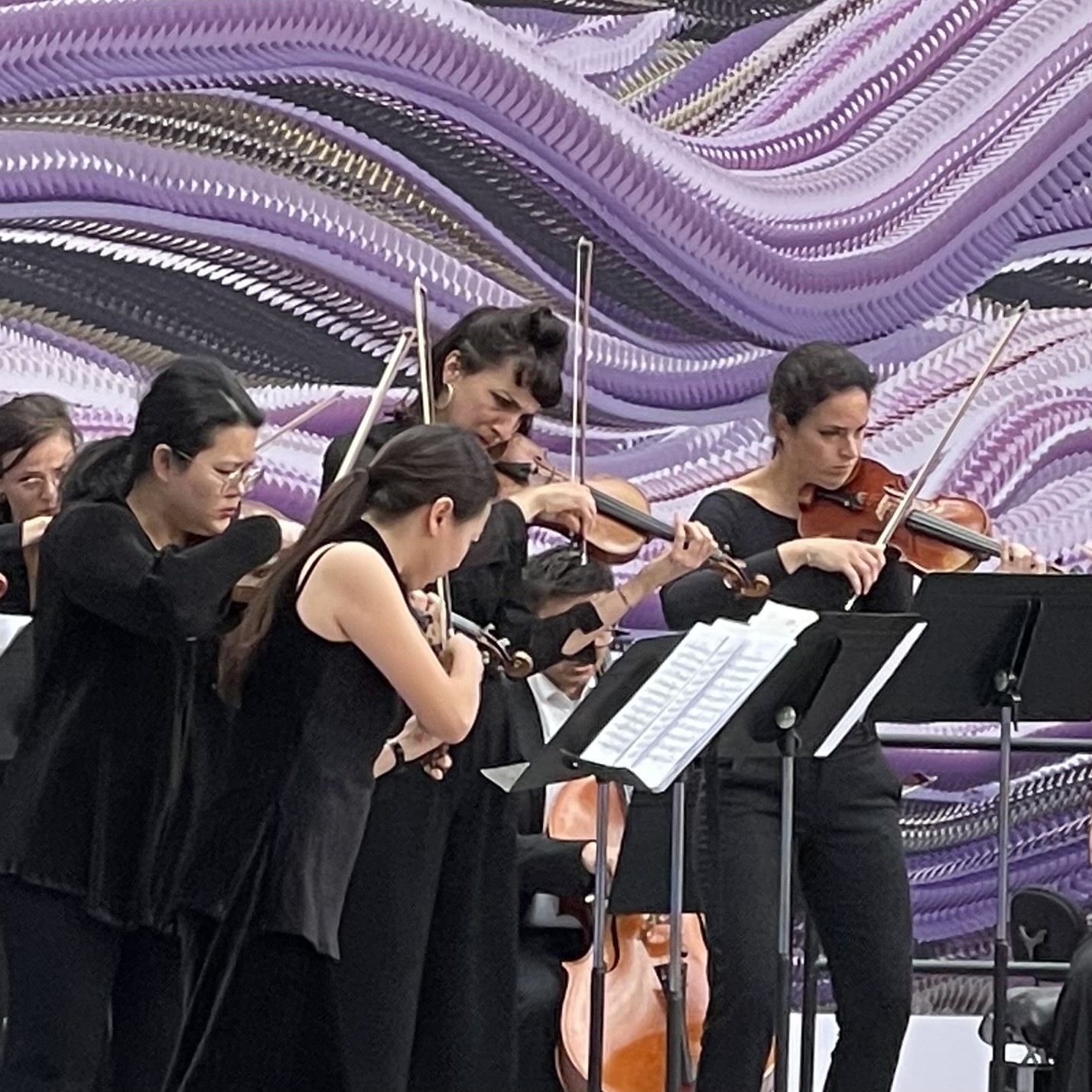
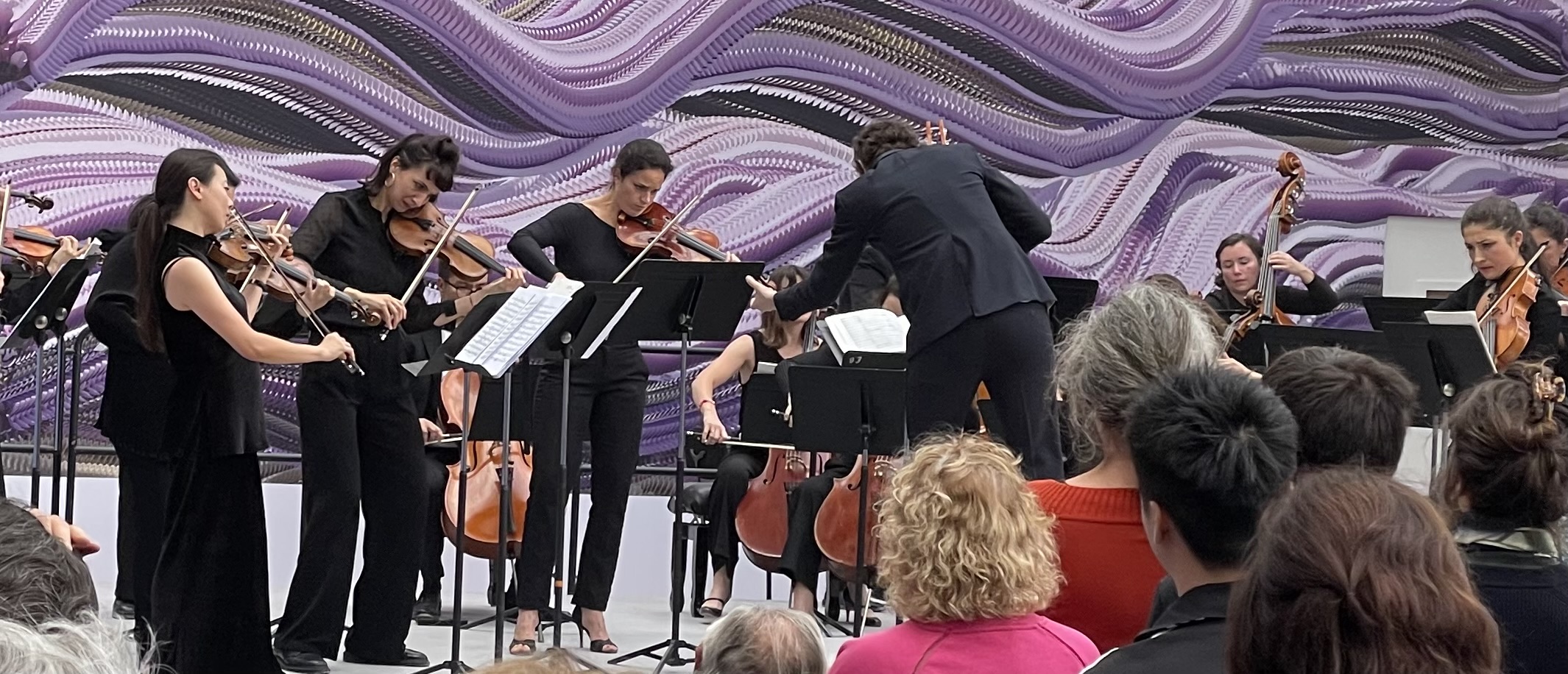
While walking through Luxembourg Gardens, Andrew, Candice, and I also stumbled into the most extraordinary concert by the chamber orchestra Le Balcon performing the Richard Strauss masterpiece Metamorphosen in L’Orangerie du Sénat.
“Strauss’s Metamorphosen is a profound elegy for 23 solo strings, composed in the final months of World War II as a memorial to a vanishing world and culture. The work, completed in 1945, features complex transformations of themes and a poignant quotation of Beethoven’s funeral march from the ‘Eroica’ Symphony in its final bars, symbolizing the devastation of the war.”
I have embedded a video of the Norwegian Chamber Orchestra performing this deeply moving piece. When you have a half hour, stop and take the time to let the sound of this composition envelop you.
When you expect the unexpected, sometimes magic happens.
CATHEDRALS RESTORED AND WELCOMING
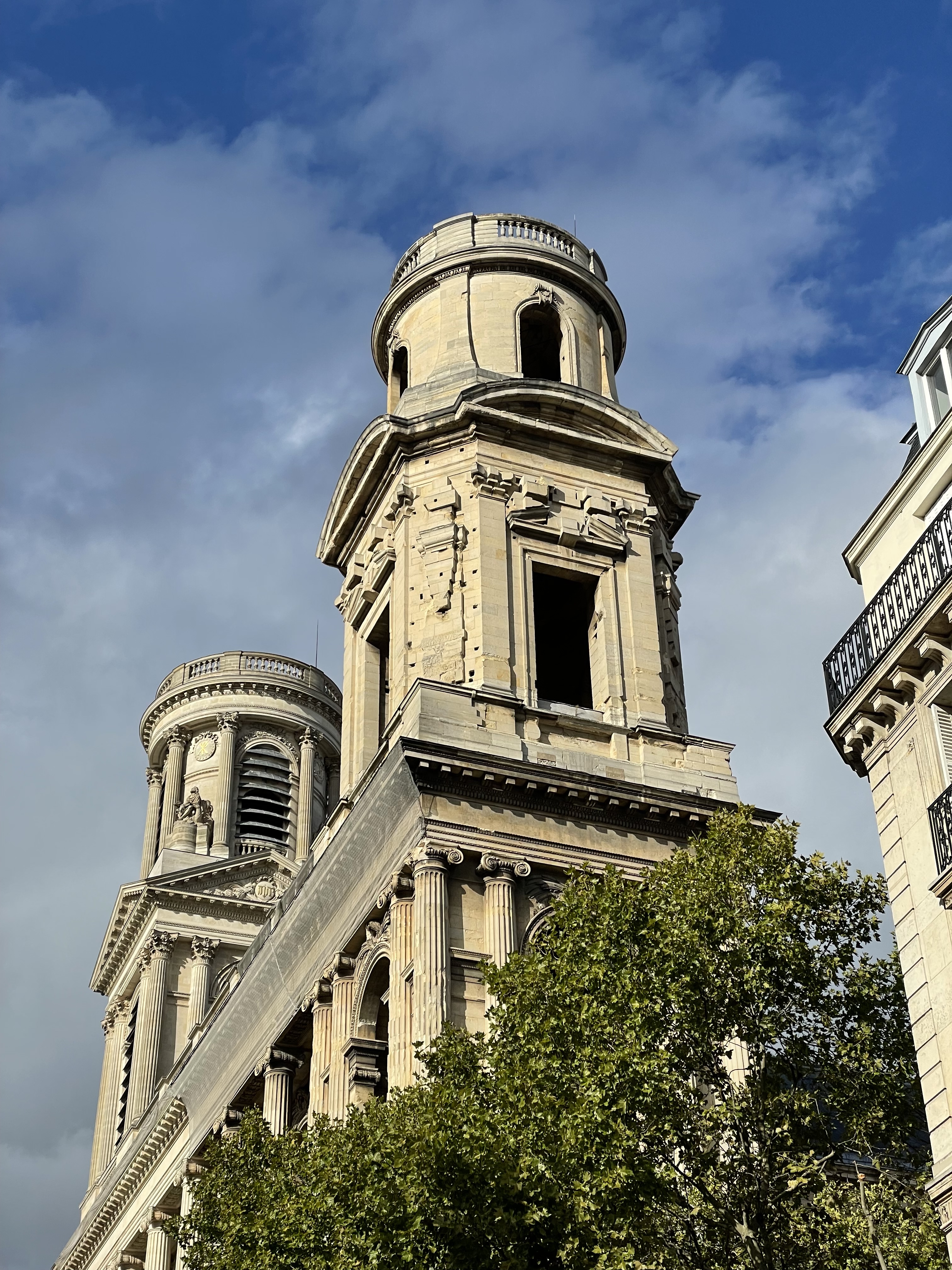
We visited several churches during our time in Paris, but two cathedrals stood out. During our two visits to attend Sunday services at the American Cathedral in Paris we first 1) heard about the upcoming “blessing of the animals” for the feast of St. Francis and then 2) participated in the service when the blessing—for more than 100 dogs and cats (and perhaps some other pets we missed)—took place in the middle of this beautiful cathedral. It was a treat!
The American Cathedral in Paris (photo from our 2022 visit)
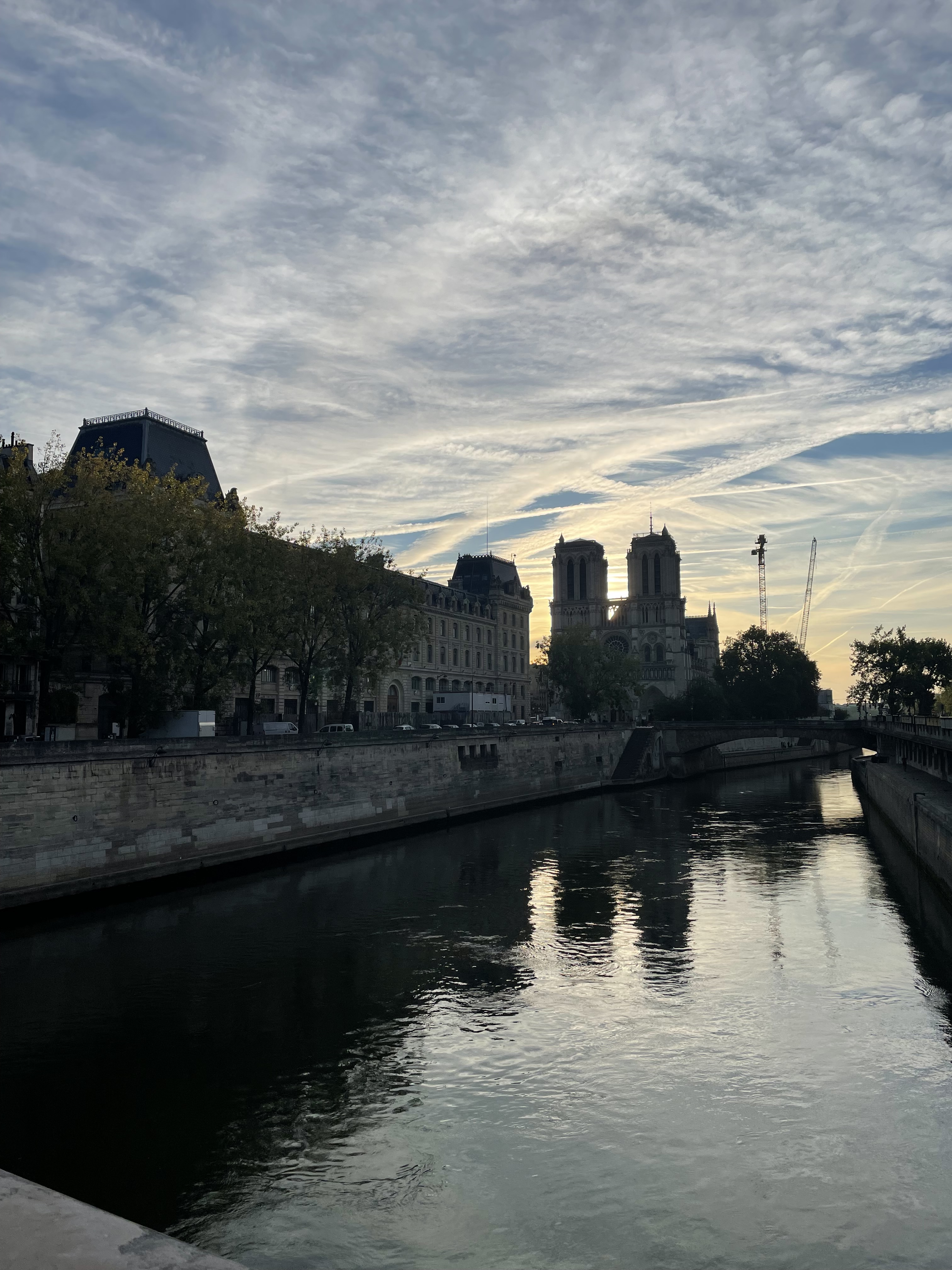
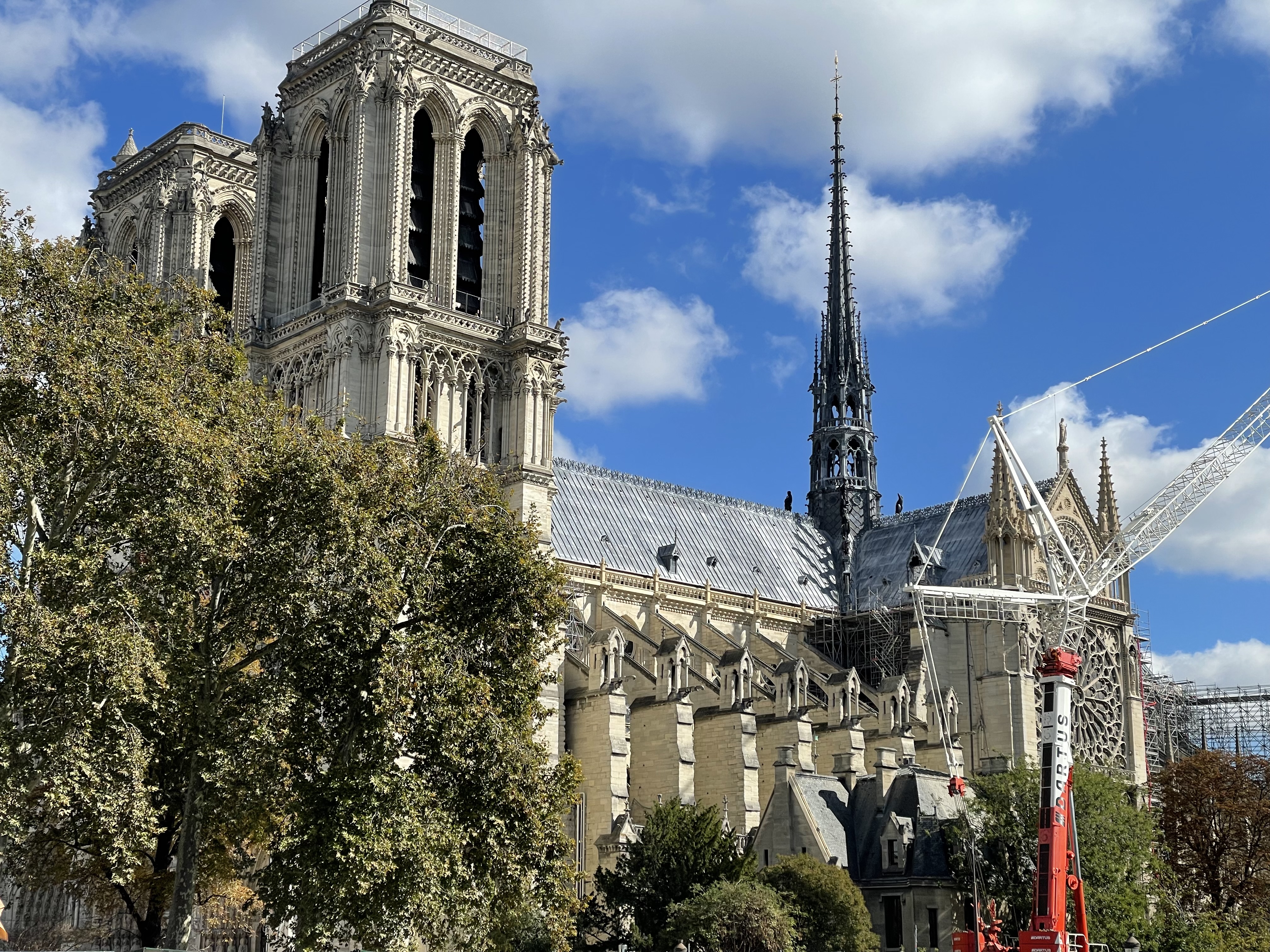
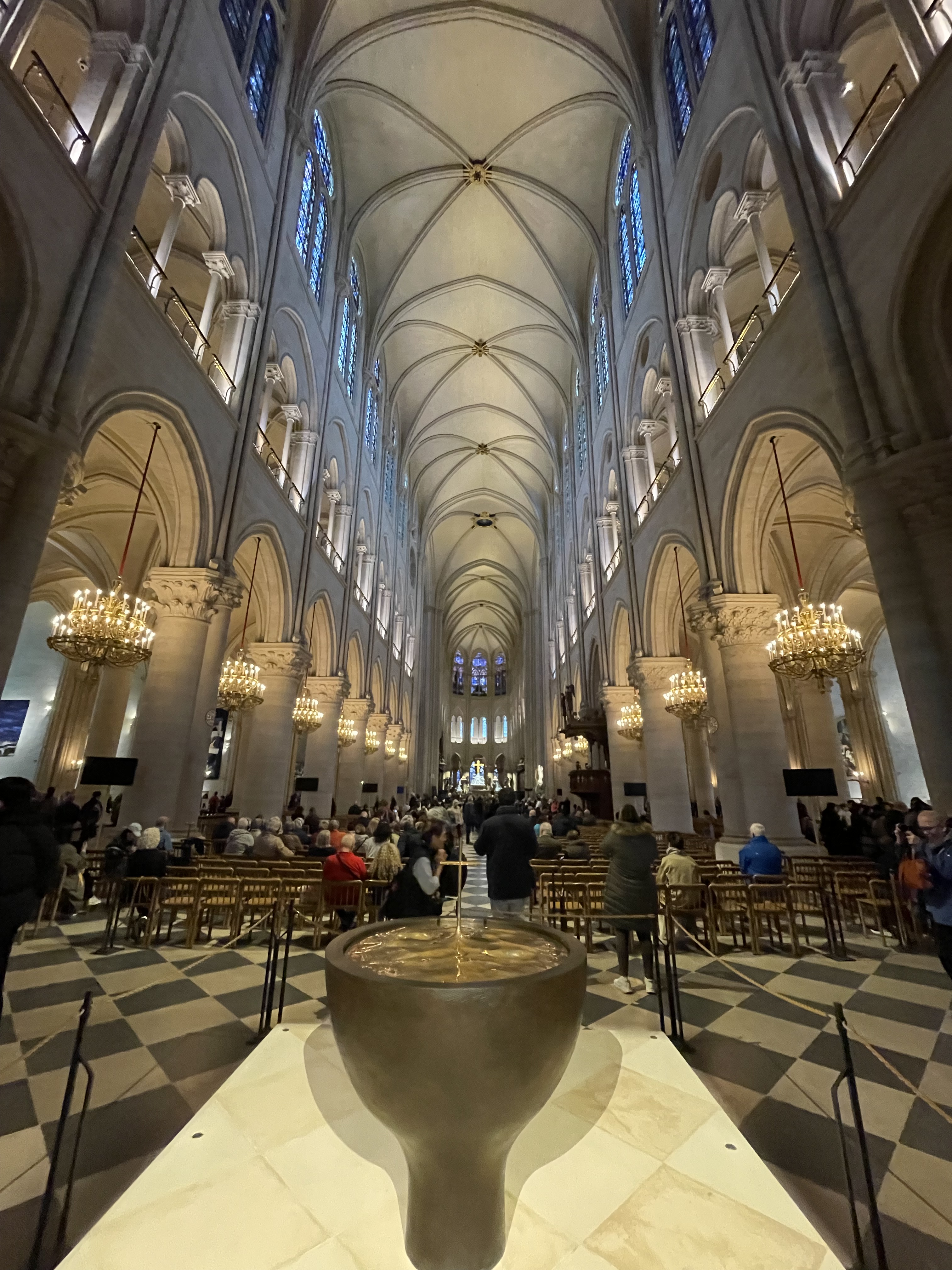
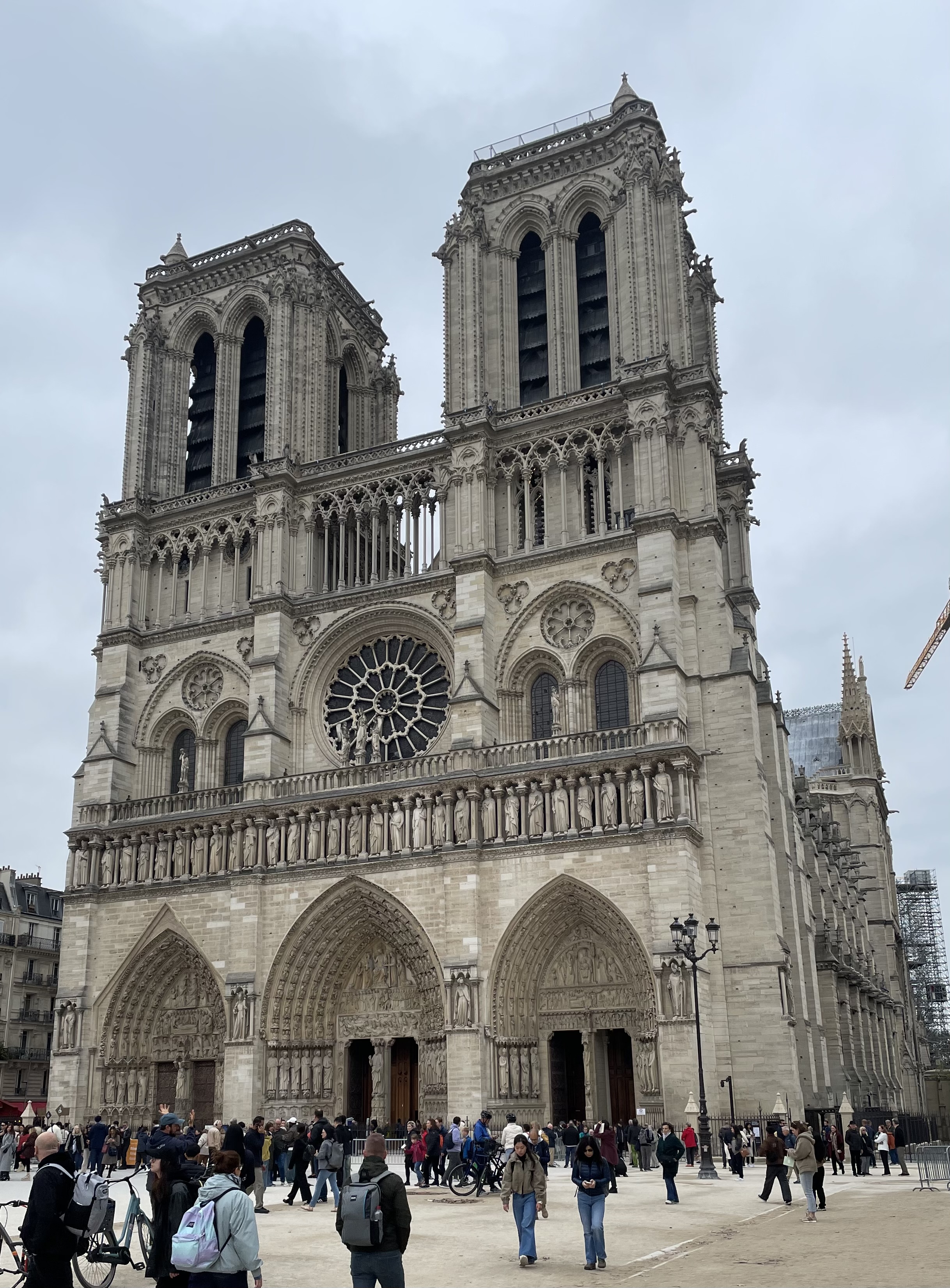
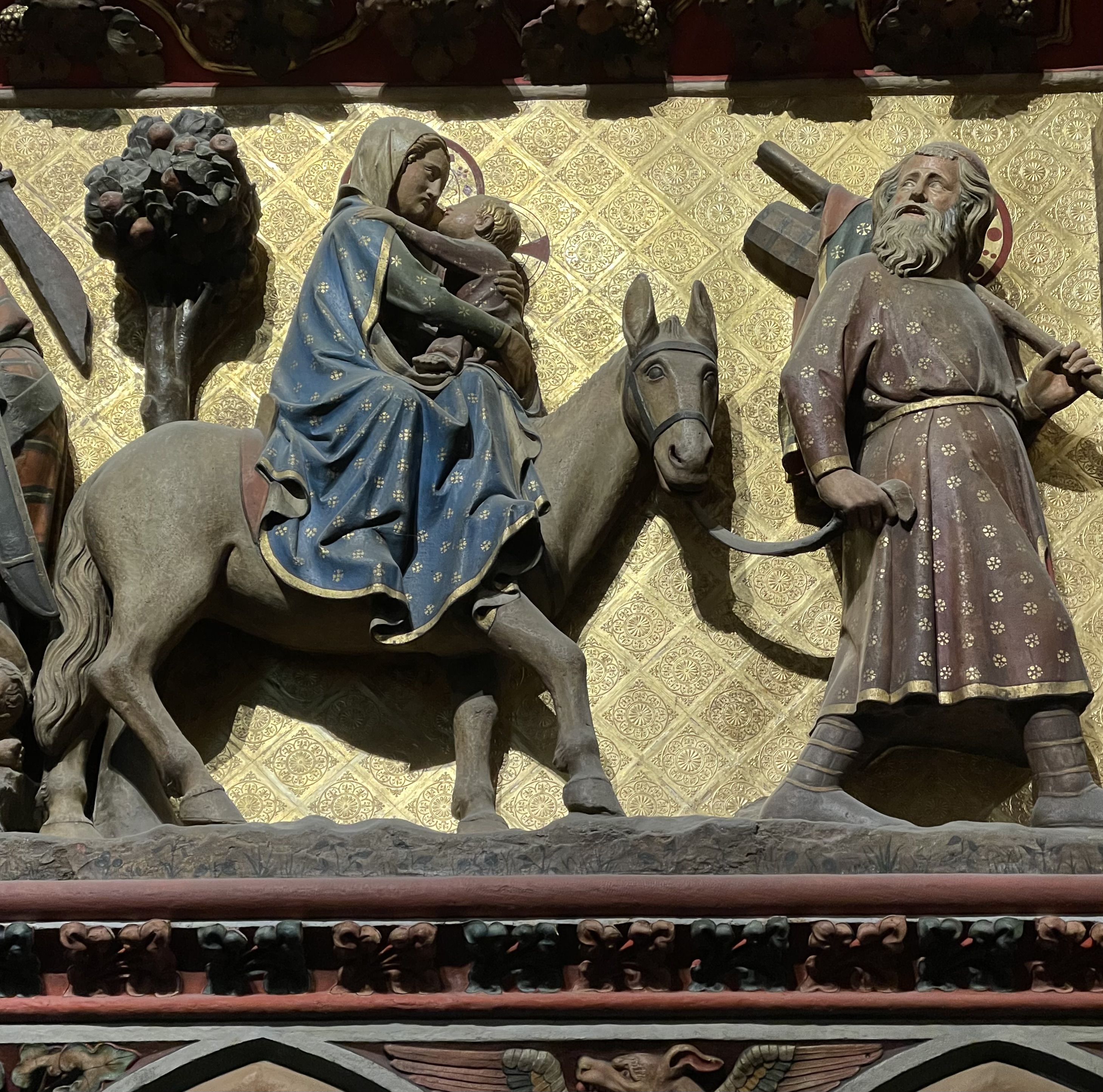
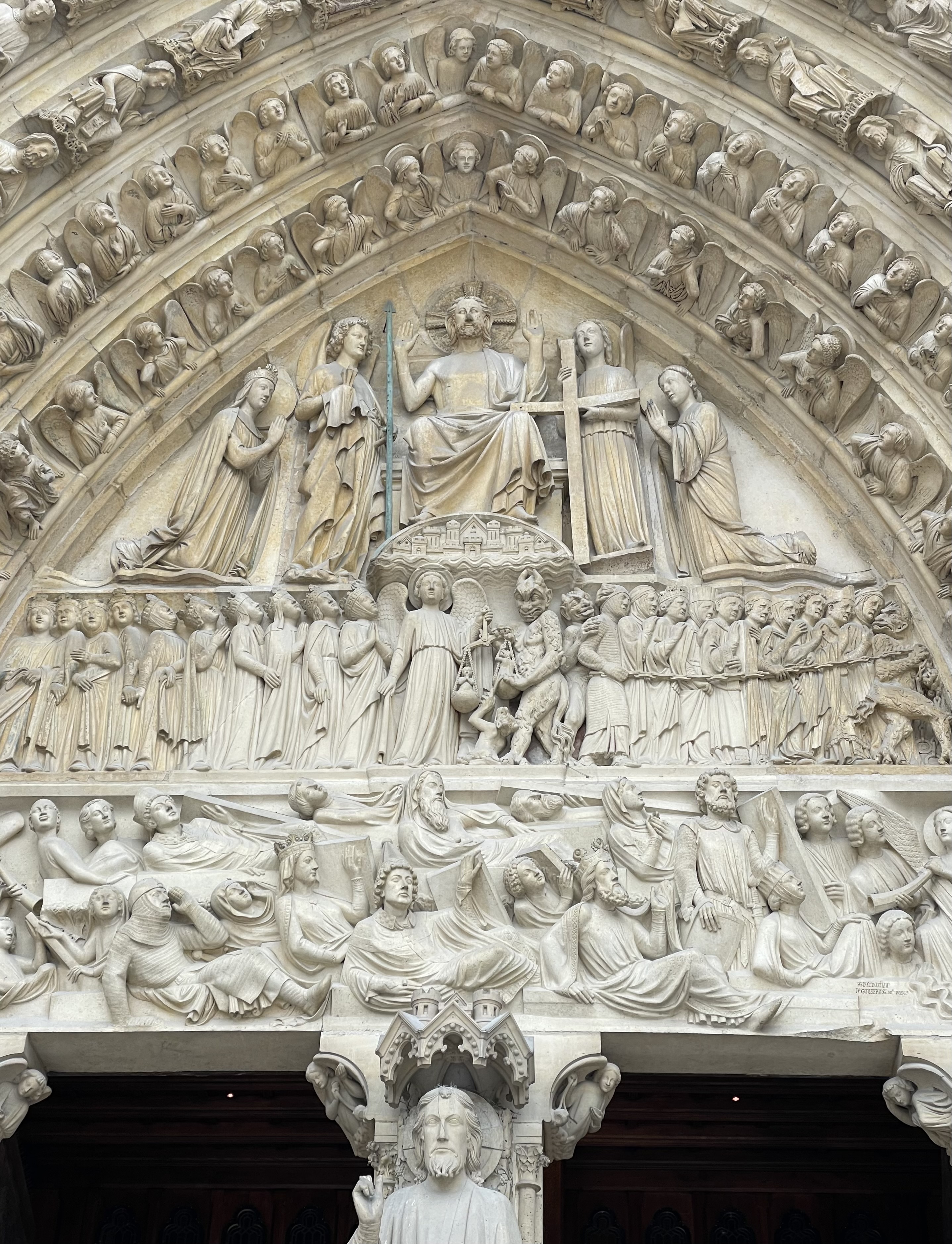
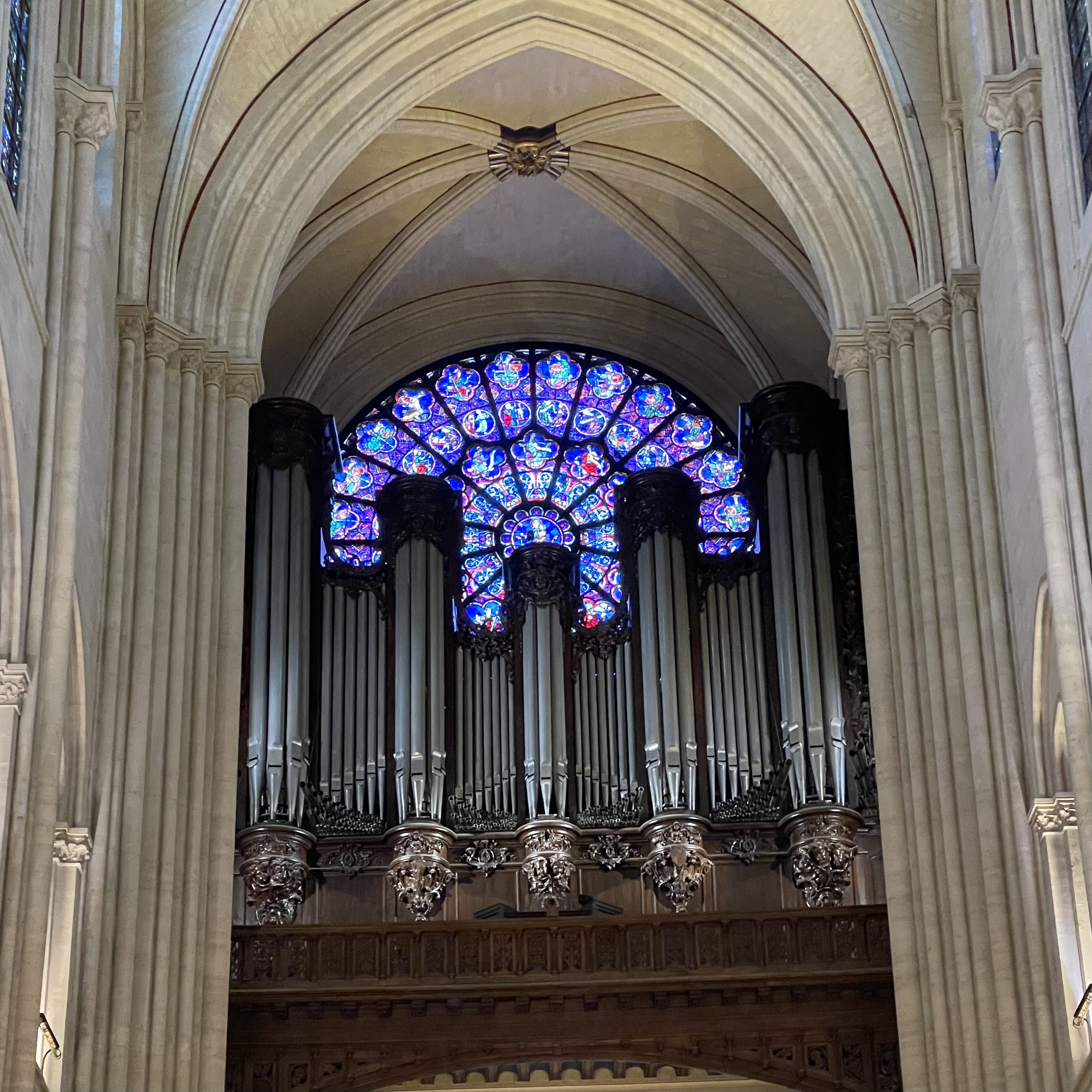
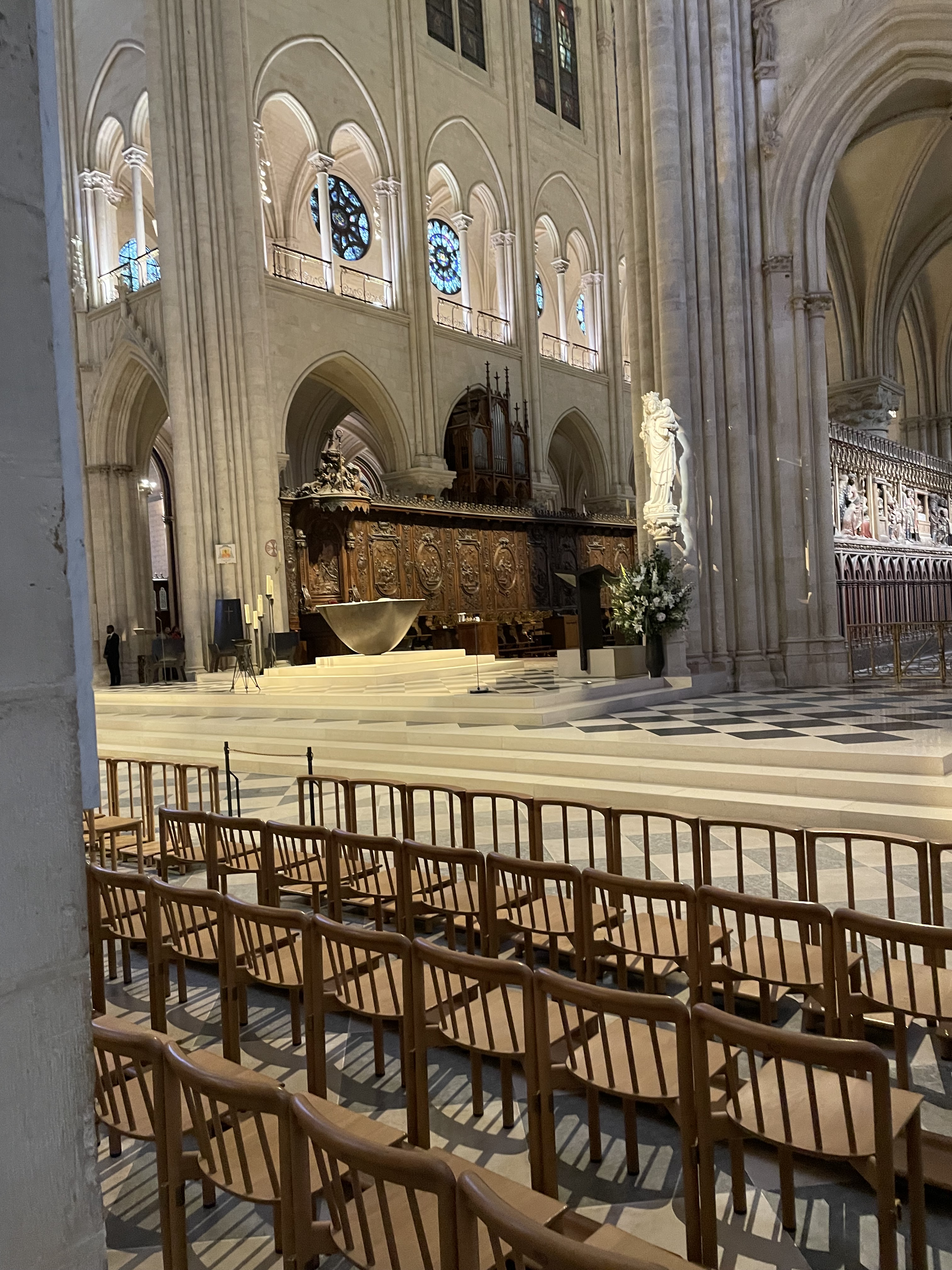
My selected activity for our visit was a tour of the restored Notre-Dame cathedral which was closed due to the disastrous 2019 fire on our last trip to the city. It was a moving and meaningful experience on multiple levels for each one of us.
ALL ROADS LEAD TO PARIS
“Ménilmontant” was written by Charles Trenet in 1938 as a tribute to the famous Parisian neighborhood. Eva-Marie’s band mates playing the hot solos on this video are Kate Dunphy on the accordion, violinist Adrien Chevalier, Koran Agan on the guitar, and Eduardo Belo on the bass.
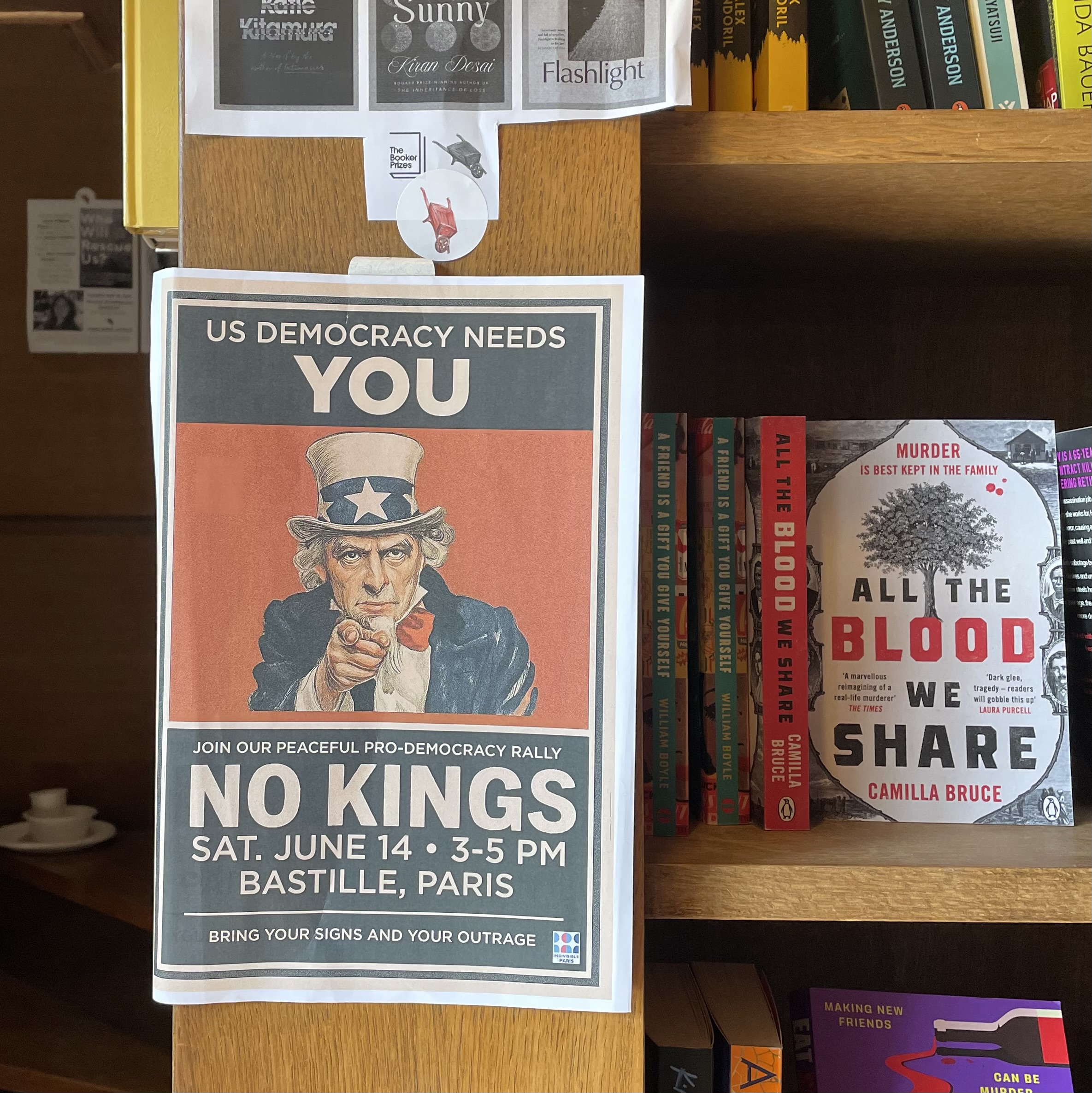
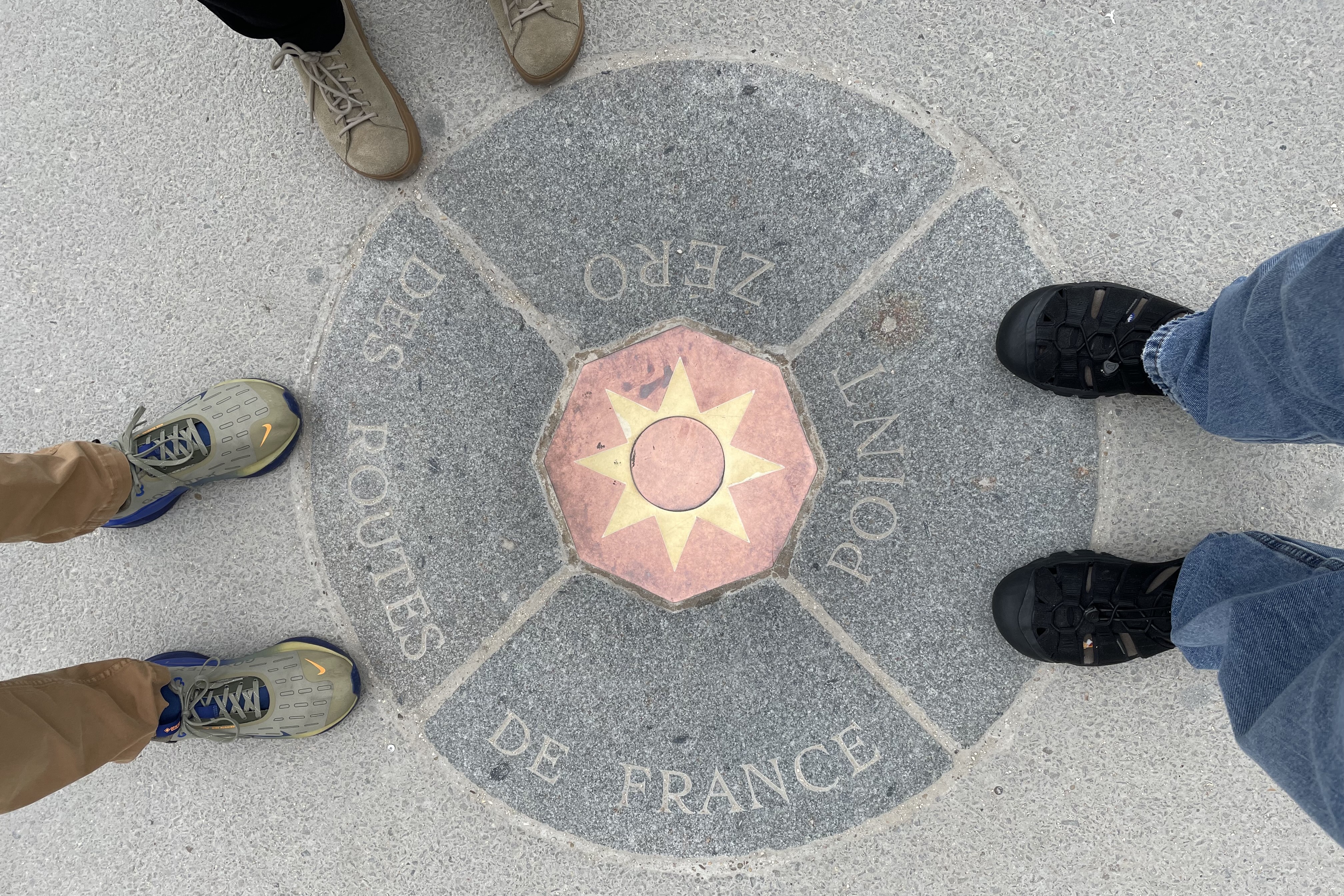
I’ll end with two photos. While Claire had already flown home, Andrew, Candice, and I (at least our feet) are seen at the Point Zero marker in front of Notre-Dame. This small and obscure plaque is the official starting point for measuring distances in France, and every road in the country is connected to this spot. When you see a road sign saying, for example, “Paris 200 km,” the distance is measured from this plaque.
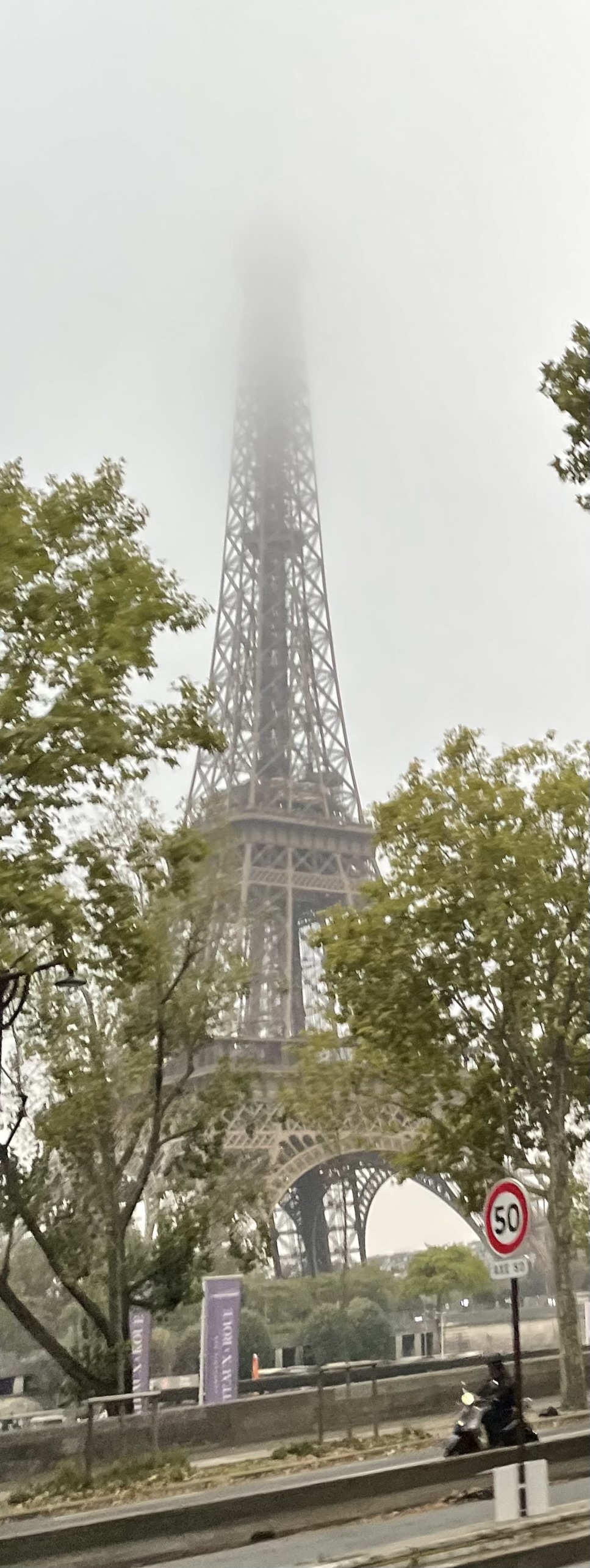
And from our taxi on the way to the airport, it seemed appropriate that the Eiffel Tower was shrouded in mist, capturing the beauty and mystery of France, and calling us to return.
Thanks for traveling these roads with us.
More to come . . .
DJB
*The “Big Three ladies of the Louvre” are the most famous and highly visited female figures in the museum’s collection. They are the Mona Lisa, Venus de Milo, and Winged Victory of Samothrace.
My monthly intention is to read a minimum of five books on a variety of topics from different genres. I hope that you’ll enjoy seeing what I read in September of 2025. As always, if you click on the title, you’ll go to the longer post on MORE TO COME.
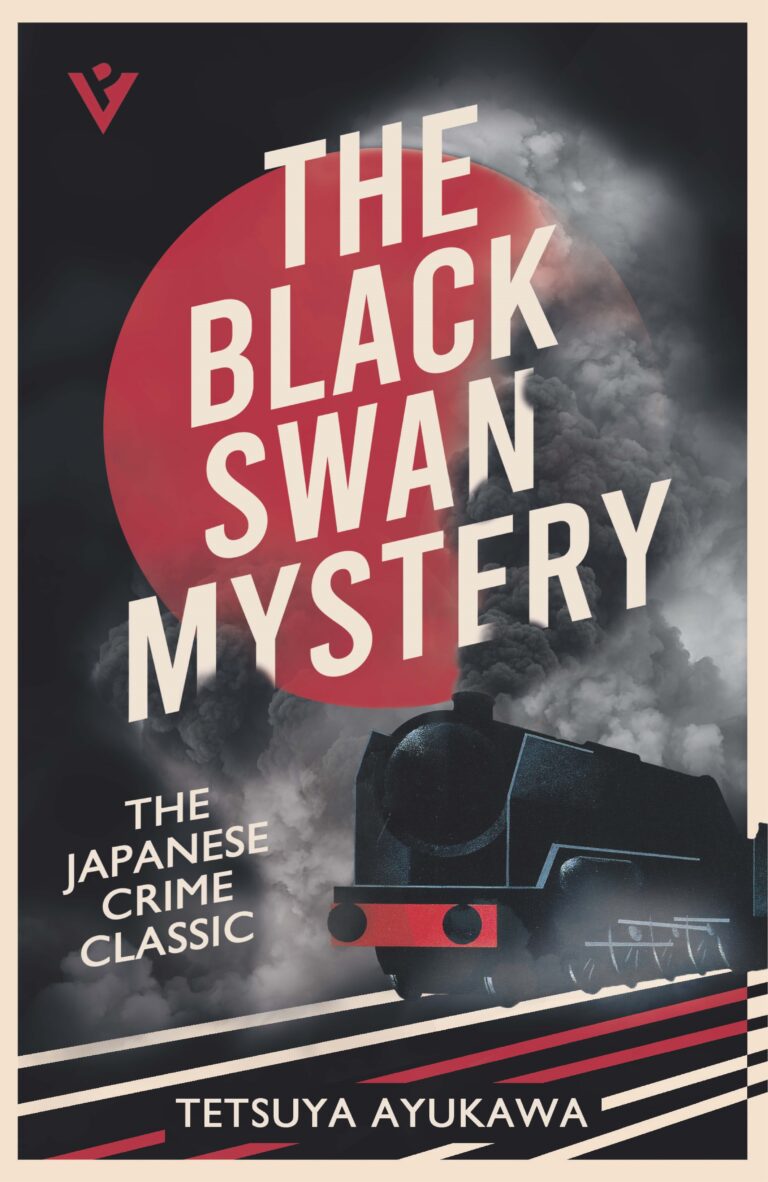
The Black Swan Mystery (1960; English translation 2024) by Tetsuya Ayukawa (the pen name of Toru Nakagawa) is an alibi-deconstruction mystery of the first order. One morning railway workers find the body of a well-dressed, middle aged man just outside of Kuki Station in Saitama Prefecture, shot dead. “Such an impressive mustache . . . what a waste,” one of them says. It turns out that the victim is the much-hated owner of a local mill who is involved in a labor dispute. It seems that everyone in Gosuke Nishinohata’s orbit—including the labor union and a new religious sect—harbored ill feelings for the man, or worse. When the initial investigative team hits a dead end the decision is made to bring in an expert, Inspector Onitsura, who has a special skill at unraveling difficult schemes. Onitsura and his trusty assistant Tanna crisscross Japan, taking trains to track down leads and stay one step ahead of the killer, who strikes again and again in this first-rate addition to the railway mystery genre.
Bird by Bird: Some Instructions on Writing and Life (1994; Vintage Books Edition 2019) by Anne Lamott is worth reading even if you are not a professional or serious writer. If you’ve ever wanted to write, this funny, wise, at times cranky, and insightful work is full of wisdom that can support your journey. Lamott encourages her readers and students to get off their duffs, look around, explore, and then write about it. Good writing is about telling the truth, Lamott asserts, and this work is full of truth telling for the aspiring writer.
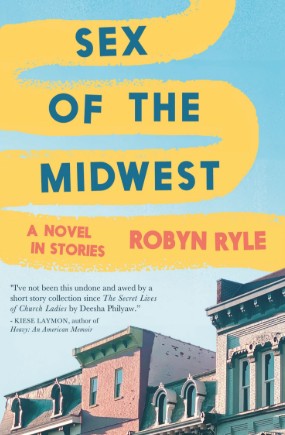
Sex of the Midwest: A Novel in Stories (2025) by Robyn Ryle begins as the residents of Lanier, Indiana (population 12,234) wake up to discover an email in their inbox inviting them to participate in a study of sexual practices. The town is soon abuzz (as small towns often are) trying to figure out how Lanier was chosen and who wrote the email. A legendary basketball coach is convinced the e-mail and the epidemic of STDs at the junior high are both part of the moral decline of the town, and although he has to drag around an oxygen tank he sets out for action. The bartender at the Main Street Bar finds that the email brings back fear of a midlife crisis. A town employee who likes to follow the rules is surprised to find where life’s pathway takes her after receiving the email. “Street by street and house by house, the e-mail opens up the secret (and not-so-secret) lives of one small town, and reveals the surprising complexity of sex (and life) in the Midwest.”
A Man’s Head (1931) by Georges Simenon begins when Joseph Heurtin—who awaits his fate on death row—escapes out of the High Surveillance wing of an infamous Paris prison. As he moves toward freedom, Heurtin is being watched by Inspector Maigret, the detective who convicted him of the murders of Madame Henderson and her maid. Maigret has come to believe that he convicted the wrong man and the Chief Inspector devises a plot, much to the consternation of his superiors, to uncover the truth. Along the way, through the twists and turns of the plot, Maigret realizes he has to contend with a criminal mastermind who has nothing to lose and believes he is the smartest person in the room. However, Maigret knows that if he is simply present and carefully listening, the real murderer will eventually tell his story.
Everyone on This Train is a Suspect (2024) by Benjamin Stevenson is a modern take on—or at least a big hat tip to—the classic Agatha Christie novel that is a (mostly) clever and always fun murder mystery. The set-up gives you a hint as to both the cleverness and devilishness that Stevenson has in mind: six authors are invited by the Australian Mystery Writers Society to their crime-writing festival aboard the Ghan, the famous train through the vast Australian desert. One of the six is murdered in this locked room (train) mystery, and the other five writers all turn into detectives. Because, as Ernest Cunningham—the debut writer and hero of the series—writes, “together we should know how to solve a crime. Or commit one.”
What’s on the nightstand for October (subject to change at the whims of the reader)
A twelfth-century Judaic scholar once wrote, “Make books your treasure and bookshelves your gardens of delight.”
October 5-12, 2025 is Banned Books Week, a good time to remember that advice. Since I’m still on the road, I’m just going to highlight this activity with a few words and then send you to other posts and past MTC essays on the topic.
Book banners target a wide range of titles and subjects. My vote for most ridiculous is Hop on Pop. Seriously!
If you are looking for events to support those who are fighting book bans, the American Library Association is a good place to start. As for steps we each can take, here are a few of my favorites from their list:
Write a letter to a favorite banned or challenged author. Take some time to thank a banned or challenged author for their words. Author addresses and Twitter handles can be found on the Dear Banned Author page.
Submit content that address censorship and banned books to the Intellectual Freedom Blog. Posts can be news items, reviews and listicals.
Proclaim Banned Books Week at your local library. Use our proclamation template to announce your library’s dedication to the freedom to read.
Stock up on Banned Books Week materials. Every year, OIF produces a line of Banned Books Week products. Show your literary pride with T-shirts, bookmarks and posters, while helping support OIF. We also offer a free downloads page with graphics, official logos and social media tools.
Write a letter to the editor. Edit and adapt this “Read a Banned Book” opinion column for your local newspaper. Include local Banned Books Week programs so your community can support their right to read.
America’s problem is not that we’re reading too many books. Free people read freely! Minnesota Governor and former Democratic VP candidate Tim Walz phrased it so simply and eloquently during last year’s campaign:
“I’m surrounded by states who are spending their time figuring out how to ban Charlotte’s Web in their schools while we’re banishing hunger from ours with free breakfast and lunch.
We’re not banning books; we’re banishing hunger. It’s that simple.”
The snazzy reminder from People for the American Way is worth seeing twice in one post, alongside my bookshelf that definitely was not created by a designer buying “books by the foot” to provide me with an attractive video background (or “shelfies” as they are known).
Read!
More to come . . .
DJB
For other MTC essays on libraries, bookstores, and banned books, see:
We have now taken two family trips to Paris: the first in the summer of 2022 and the second this fall. In our planning, we’ve asked each member of our family to choose an activity. To no one’s surprise and our utter delight, Andrew has chosen a night at the opera on each visit.
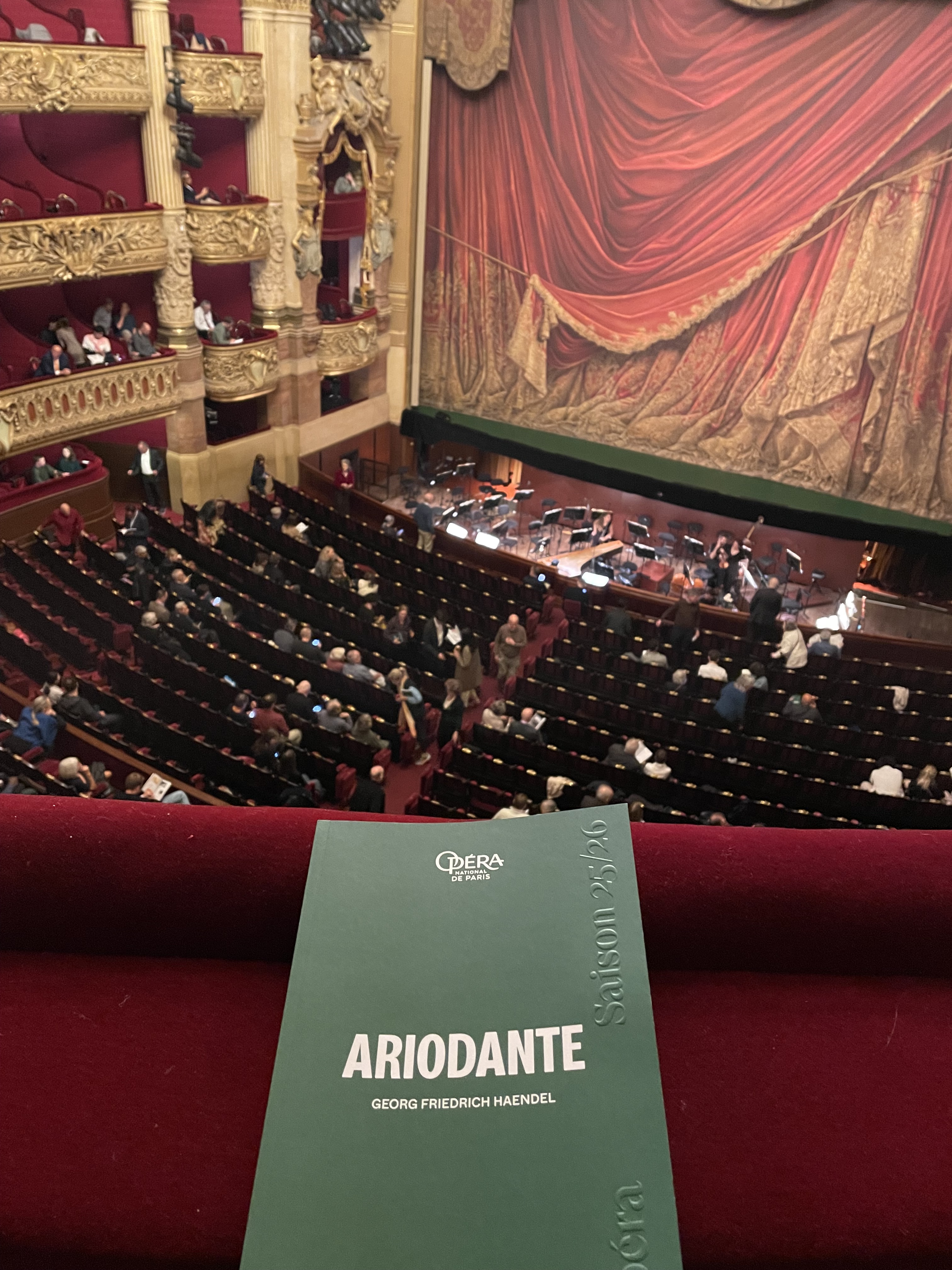
Which is how we arrived at the historic and beautiful Palais Garnier on October 1st for a performance of George Friedrich Handel’s Ariodante.
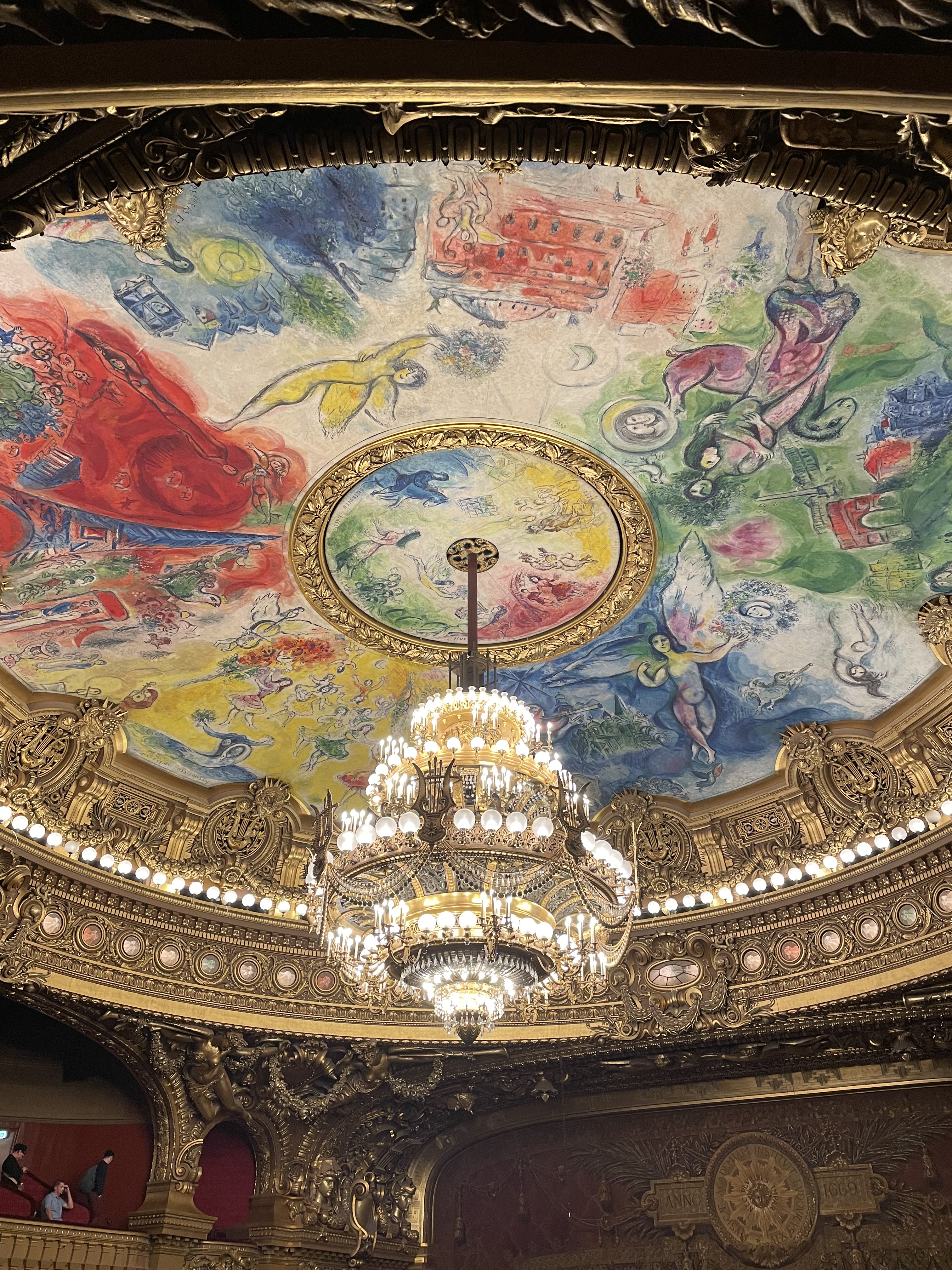
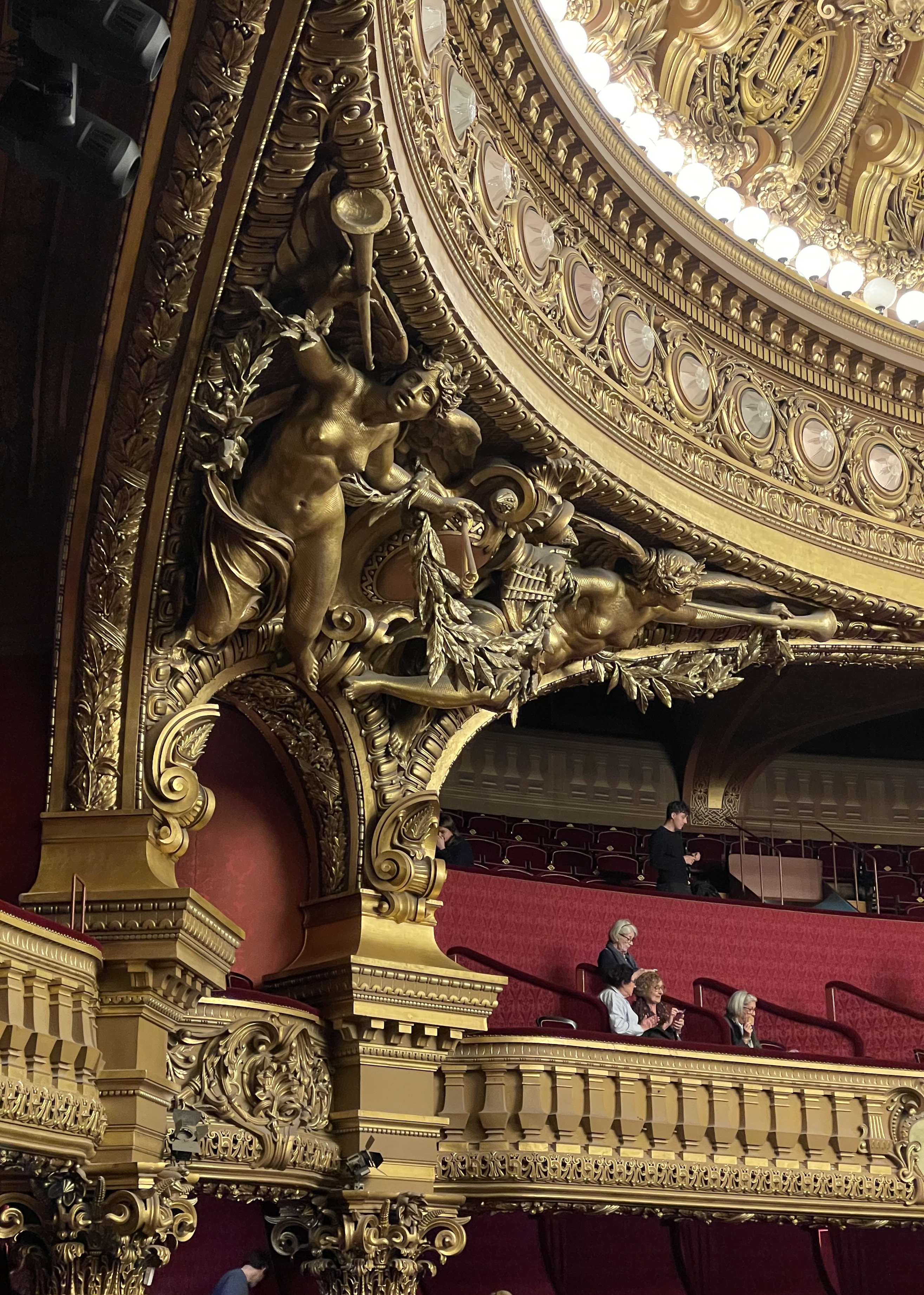
The hall itself is a wonder to behold. As described on the Garnier’s website:
“Beyond the Rotonde des Abonnés, the Bassin de la Pythia leads to the Grand Escalier with its magnificent thirty-meter-high vault. Built of marble of various colours, it is home to the double staircase leading to the foyers and the various floors of the theatre. At the bottom of the stairs, a true theatre within the theatre, two female allegories holding torches greet spectators.”
“Ariodante is one of three Handel operas—Orlando, Ariodante, and Alcina—that are based on episodes from Ariosto’s great epic Orlando furioso. The story, set in Scotland, is the only one among his operas set in the British isles. A spurned lover undertakes a plot to destroy the reputation of the king’s daughter, Ginevra, and thereby puts her life in danger. The story of her downfall and ultimate rescue is told simply and straightforwardly with no subplots or digressions . . .“
Life, of course, is never quite as simple and straightforward as an opera libretto, but I still found the underlying story and the drama that Handel’s music creates to be a useful reminder that our times are not unique in the treachery, turmoil and trouble that surrounds us.
“The opera is in three acts. Most of the first act is a celebration of the love between Ariodante and Ginevra and anticipates their wedding. The true action of the drama with the unfolding of Polinesso’s plot begins only in Act II and builds into Act III. It is there in the darkest moments of the story that we hear Handel’s most inspired music, as he reveals the deep emotions of his characters. Ginevra, lighthearted and naïve in Act I, ends the second act with the deeply moving aria, “Il mio crudel martoro” (“My cruel torment”). Also in Act II, her lover Ariodante, thinking himself betrayed, expresses his profound grief in the famous aria “Scherza infida.” Here the striking orchestration reflects his anguish, as muted violins and pizzicato basses pulse over wailing long notes in the bassoon. Even the king sings a beautifully poignant aria in Act III, when, in a major key, he says farewell to his daughter.”
The second act of the National Opera of Paris production was profoundly moving. As the treachery and pure evil of the Duke Polinesso unfolds (he actually sings that “since my treachery has worked so well, I’m giving up on those who practice virtue”), what has seemed to be moving along so well—love, life—suddenly falls apart and deep despair begins to take over. Soprano Jacquelyn Stucker—who sang the role of Contessa in this summer’s Santa Fe Opera production of Le nozze di Figaro (where Andrew sang the role of Don Curzio)—was in the role of the princess Ginevra for the production we saw earlier this week in Paris. Her aria “Il mio crudel martoro” (“My cruel torment”) ends the second act in a performance that is gut-wrenching musically as well as in the dance and staging. Watching a nightmare play out in slow motion, knowing that the princess has been wrongly accused . . . as so many are in this life . . . hits one in the pit of the stomach.
Ukrainian soprano Olga Kulchynska was in the role of Ginevra two years ago in the same National Opera of Paris production and, in the absence of one from the current production, it is her remarkable version of the aria from YouTube that I have included here.
We had magnificent seats to view this wonderful performance that tells so much about both the pleasures and challenges of life.
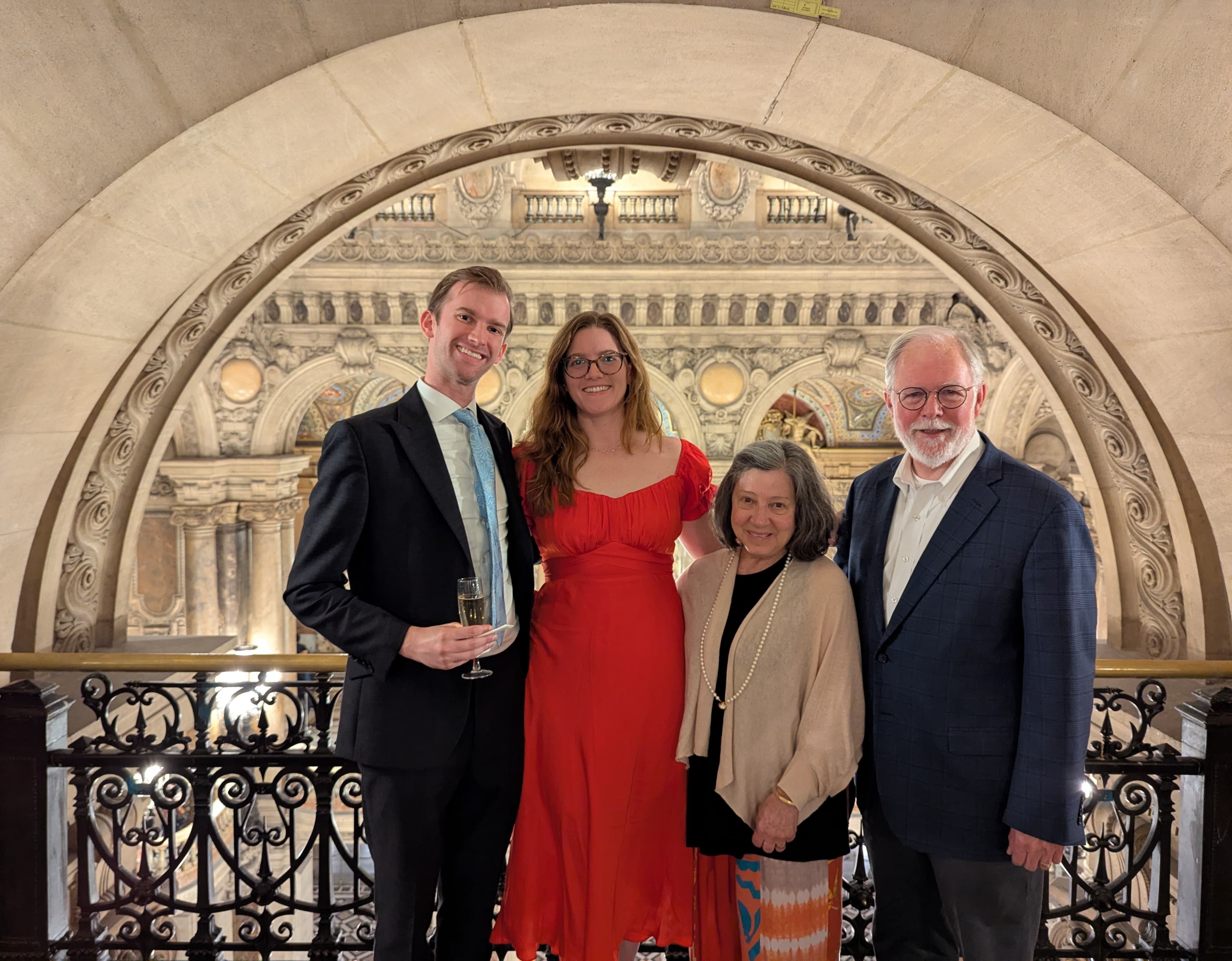
The Browns at the opera
Once again Paris proves to be a unique place to bring memory, identity, and continuity together in art, music, history, architecture, and dance.
As we’ve been on the road (or in the air. . . or on the sea) this month, I’ve frequently thought of Pico Iyer’s words on why we travel. We don’t travel, Iyer wrote,
“. . . in order to move around—you’re traveling in order to be moved. And really what you’re seeing is not just the Grand Canyon or the Great Wall but some moods or intimations or places inside yourself that you never ordinarily see . . .”
Those thoughts from Pico Iyer then began to mingle with a short poem used by a writer I follow to begin a recent post. Her first few lines were:
“Perhaps the place to start is not to ask ‘What can I do’ but first ask ‘What do I love?’ Begin from there, where the heart expands Where you know for sure What actually matters . . .”
All of which led me to consider what I’ve seen from the places I’ve traveled over this month that expands my heart and touches parts of my soul that are not as frequently moved in ordinary life. What actually matters.
This post from the road is not exhaustive, but I hope it is illustrative.
SMALL OASES OF BEAUTY
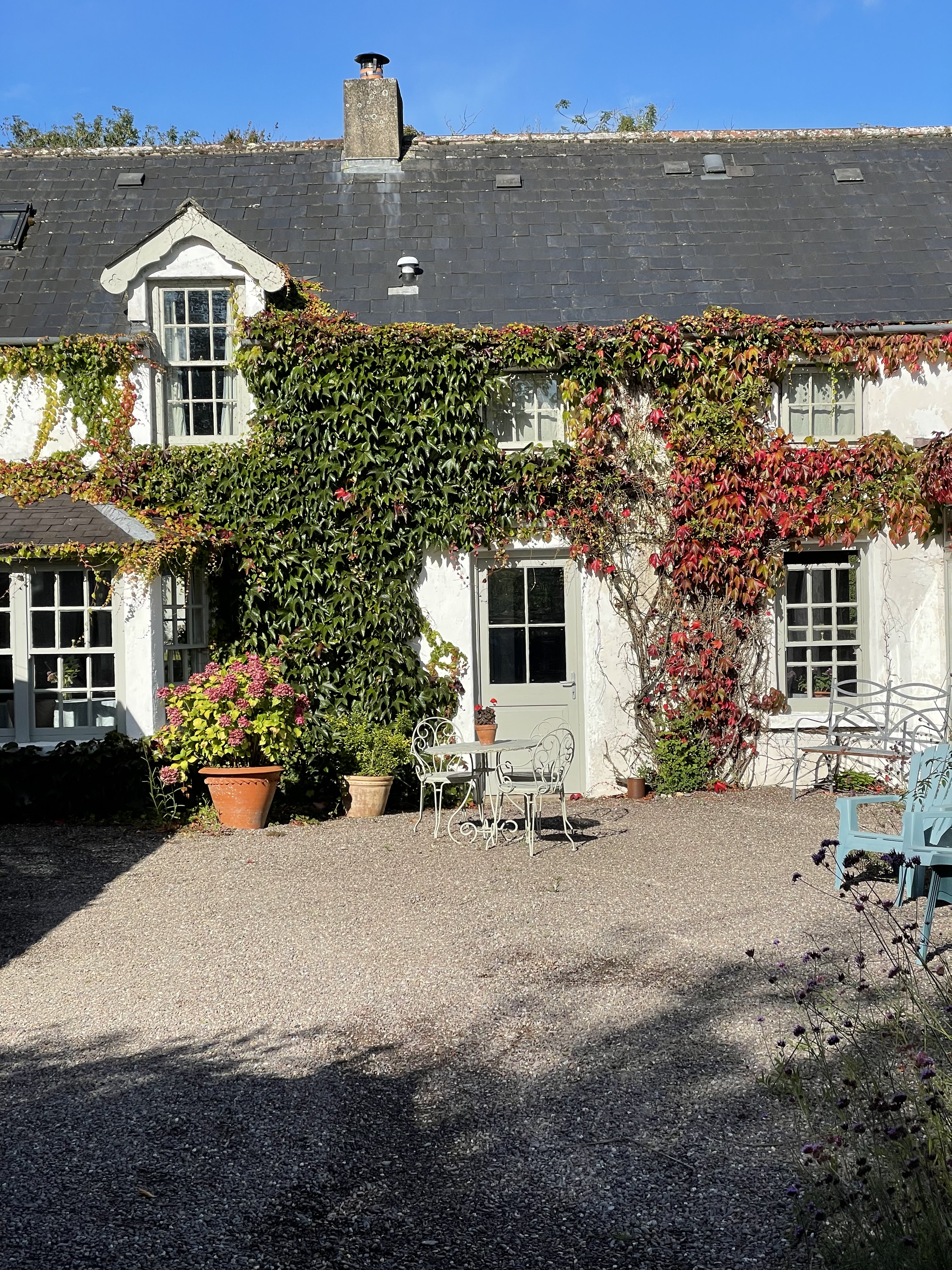
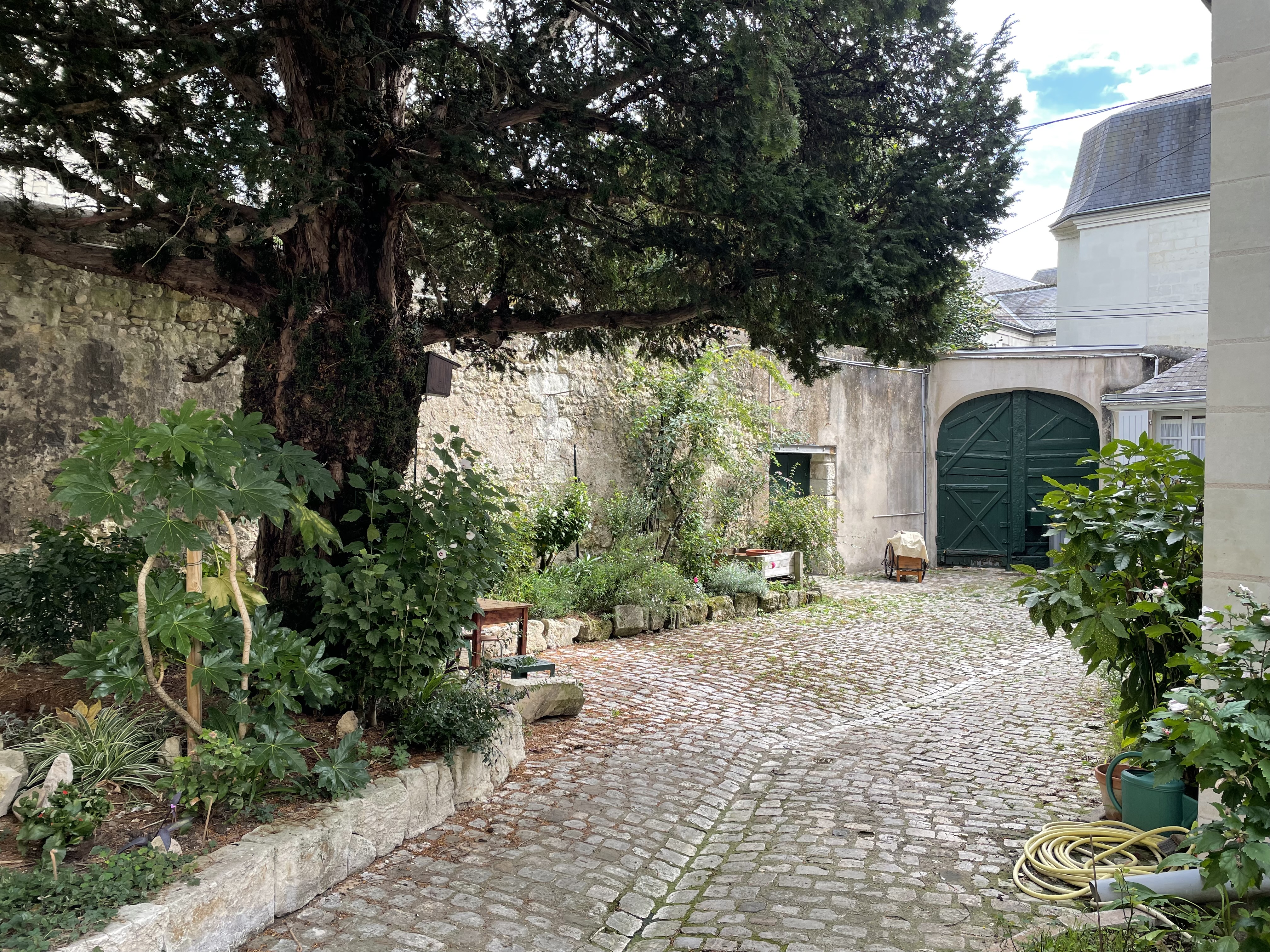
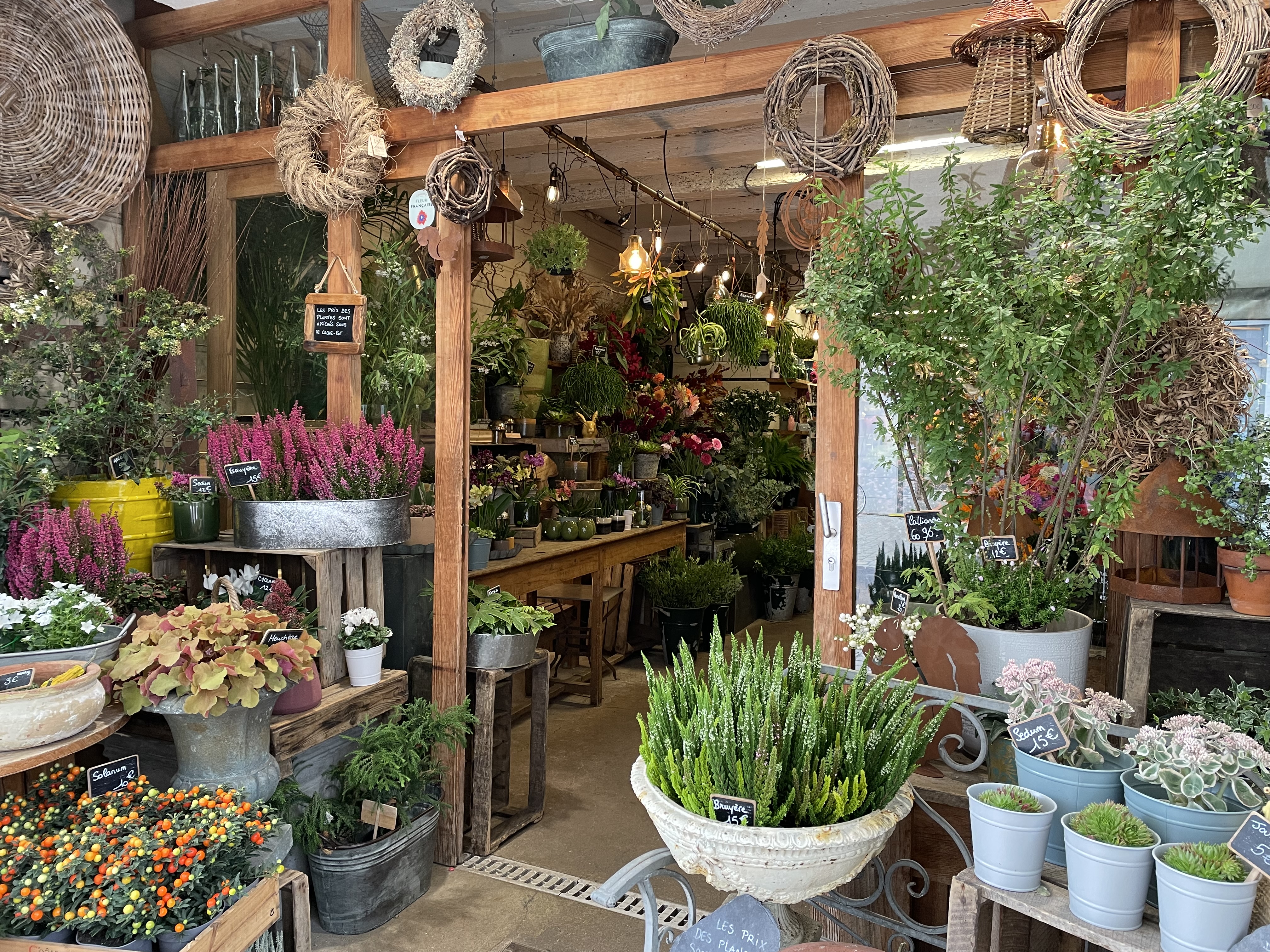
When exploring new places, I love turning corners—be they on city streets, as one exits the back of a basilica, or in a large kitchen garden—and seeing a small scene of beauty. From Dublin and Ballymore to Tours and villages throughout the Loire Valley, I’ve been moved by the work that gardeners, shopkeepers, designers, and everyday citizens do to bring the natural wonder and grace of the world to our attention. And I even learn something along the way. Who knew, for instance, that artichokes had these amazingly vibrant purple blossoms?! (It turns out my daughter Claire, who lives near the artichoke capital of the world, knew.)*
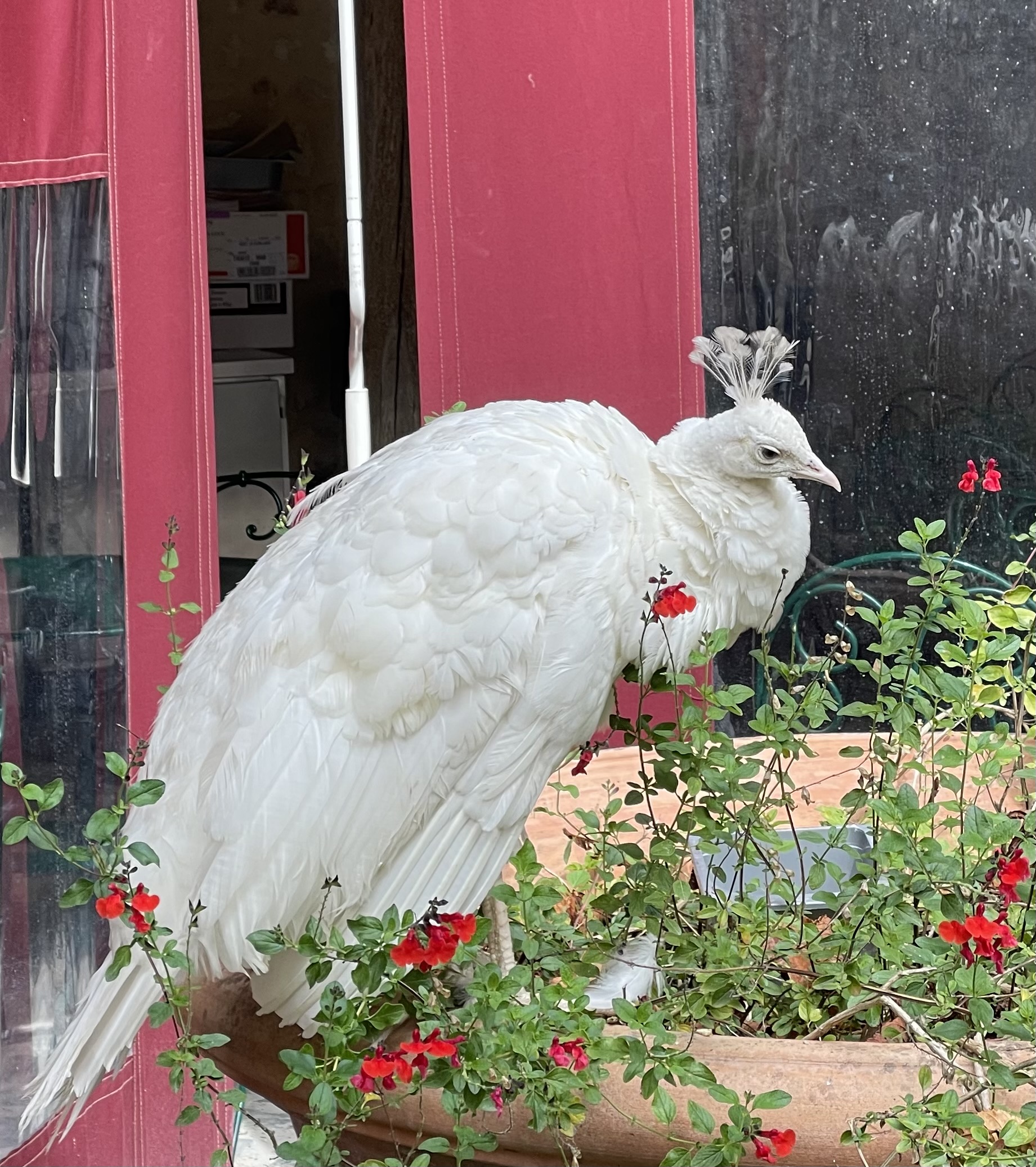
And while walking through the delightful town of Amboise—a place full of small, hidden gems—who would expect to see a rare white peacock? **
The small oases of beauty remind us that there is much that is right and good in the world, if we will disengage from the addictions of our misery machines.
A small yet active flower shop in the Old Town section of Tours
HEARING PERSONAL STORIES
One important reason we’ve lost a feeling of community among our fellow humans is that we do not really listen and hear their personal stories. Somehow in my travels I’ve been privileged to meet people in different walks of life and hear their stories. Some are like Julie—the 10th generation of the White family to live at Bantry House—who told us how at 35 years of age she now “runs the family business” of managing the estate with her mom, who is owner and “head gardener.” Both come at their work from a love of family, land, and history.
At the Jameson whiskey distillery in Midleton, County Cork, a feisty young Irish woman named Abbie who said she was one of five sisters with the same bright hair and outlook on life—a “personality hire” was the way she phrased it—took us through the process of making Ireland’s special nectar. With wit, wisdom, and a deep love for her native land, she told us why this place mattered to her.
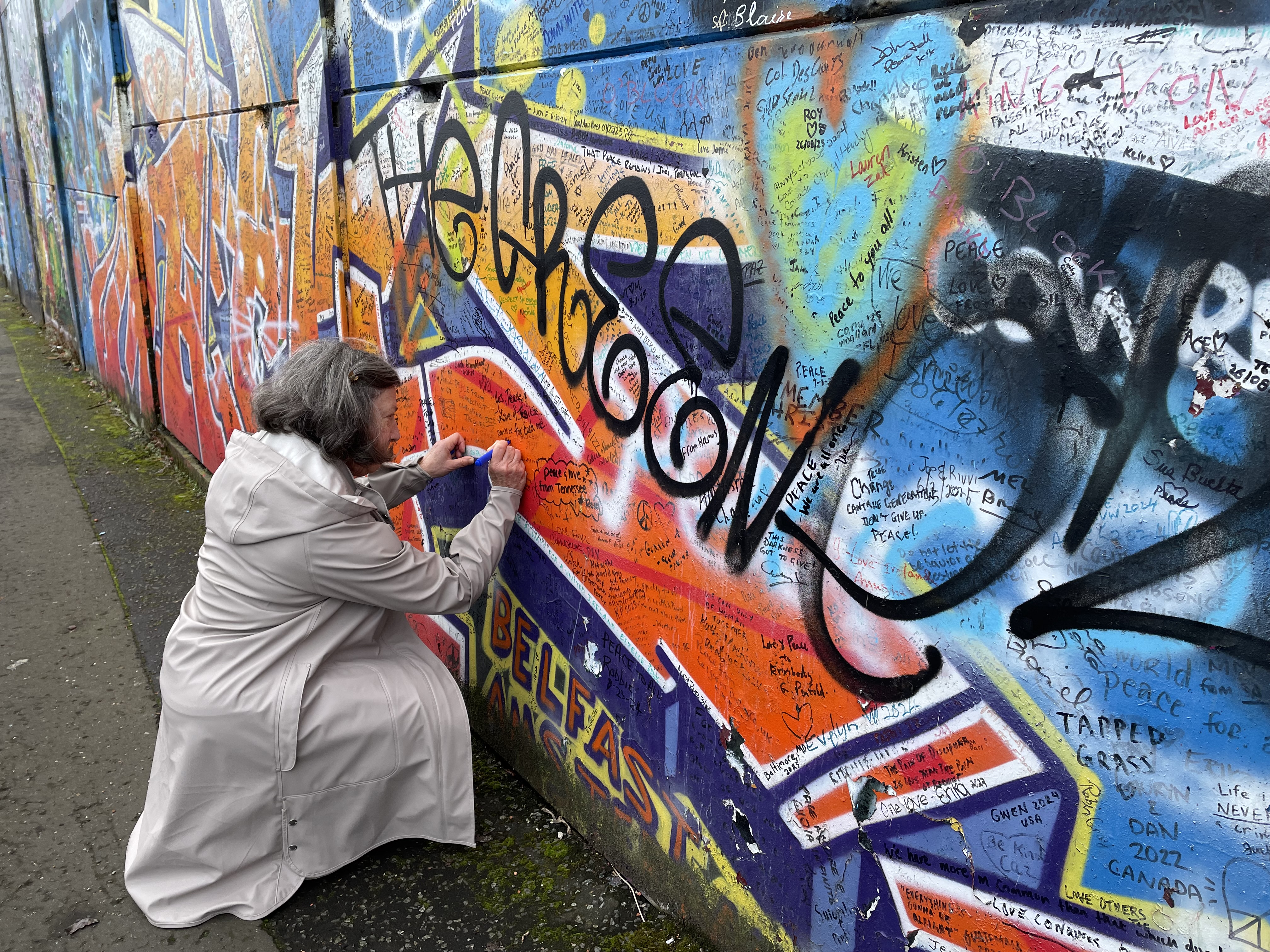
Finally, one of the most moving storytellers (in both the literal and figurative sense) was Joel, our black taxi cab driver in Belfast. In that strife-torn city that has been working for the past 25 years to heal generations of hatred and mistrust, working class men who came up through “The Troubles” on both the Protestant and Catholic side have come together to share their stories with visitors in a uniquely personal way. Joel drove us through neighborhoods, explained the various murals, and provided a first-hand account of how so much has been accomplished and why so much healing remains to be done.
I stopped to see what Candice’s contribution to the Belfast peace wall had been, and was not surprised to find a short yet compelling statement written in her clear hand:
“Healing begins within . . .”
It is an important reminder in our own time of discord and distrust.
During our recent adventures I was also moved by conversations among our fellow travelers telling their personal stories. Over the course of several meals, new friends Ed and Karin taught me how to have difficult conversations with others by focusing on empathy, deep listening, and an ability to hold on to reality and the truth without being judgmental of others. Building community, like building democracy, never ends.
EXPECT THE UNEXPECTED
During the trip I’ve been reading Daniel Mendelsohn’s book An Odyssey: A Father, A Son, and an Epic, which was gifted to me by my dear friend George Farr. It is a work about a father and son’s transformation as they study Homer’s classic tale together. In the opening section, Mendelsohn notes that the Odyssey, “filled as it is with sudden mishaps and surprising detours, schools its hero in disappointment and teaches its audience to expect the unexpected.” As our plans were changed day-after-day by Atlantic typhoons and airport security alerts, “expect the unexpected” became our mantra.
Of course not all unexpected surprises are disappointments.
When we travel, we know we’ll see magnificent cathedrals and castles (in Europe) as well as vast and awe-inspiring landscapes (from the American West, Norway, and the Alps to New Zealand, Australia, and Africa).
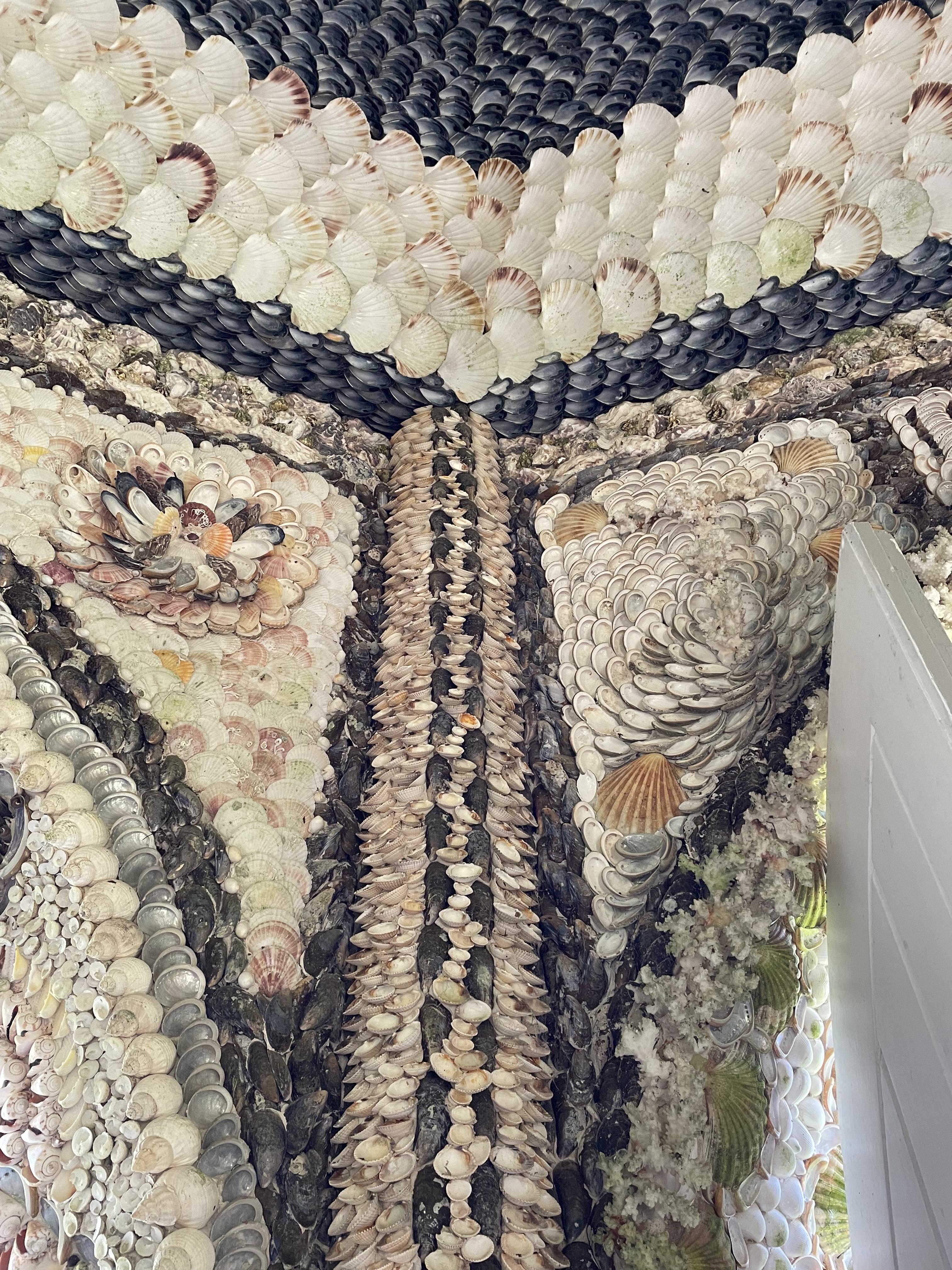
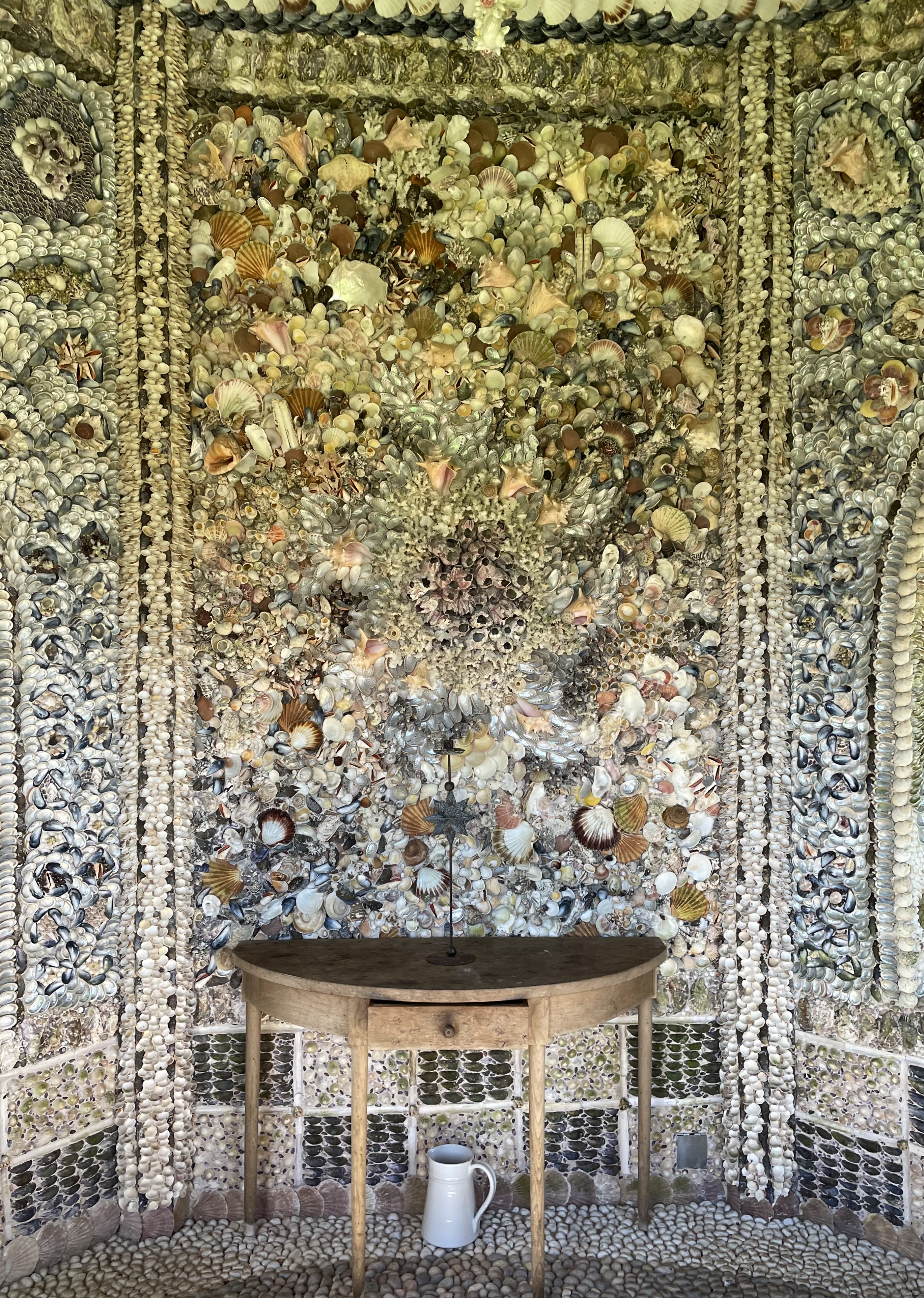
But I didn’t expect to see a “shell house” folly in Ballymaloe, complete with an intricate dome the equal—in its own quirky way—of many a cathedral. The interior design of The Shell House was begun by Blot Kerr-Wilson in July 1995 and completed on the 26th of October—the day before the farm and cooking school owners, Darina and Tim Allen, celebrated their Silver Wedding Anniversary. The house was built as a surprise present by Darina for her husband. This small folly contained many unexpected treats, including the fact that every shell used in the ceiling once encased a mussel or scallop that was consumed at Ballymaloe House or at the Ballymaloe Cookery School.
Then there were the too rare memorials and statues to people and events often marginalized or forgotten in daily life. Instead of some long-forgotten general, this Dublin statue—simply entitled “The Kiss”—perhaps unexpectedly reminds us that while life is finite, love lasts forever.
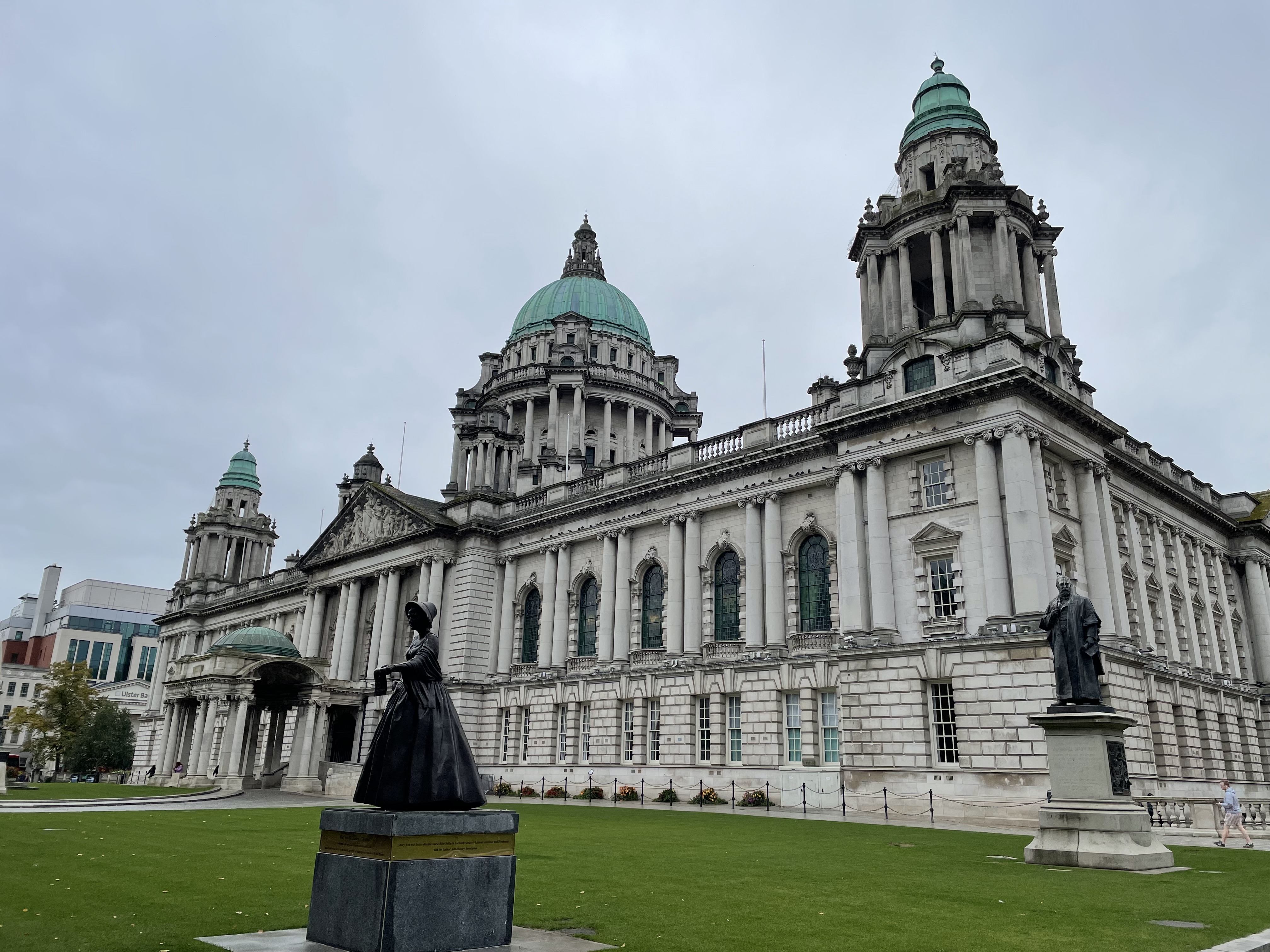
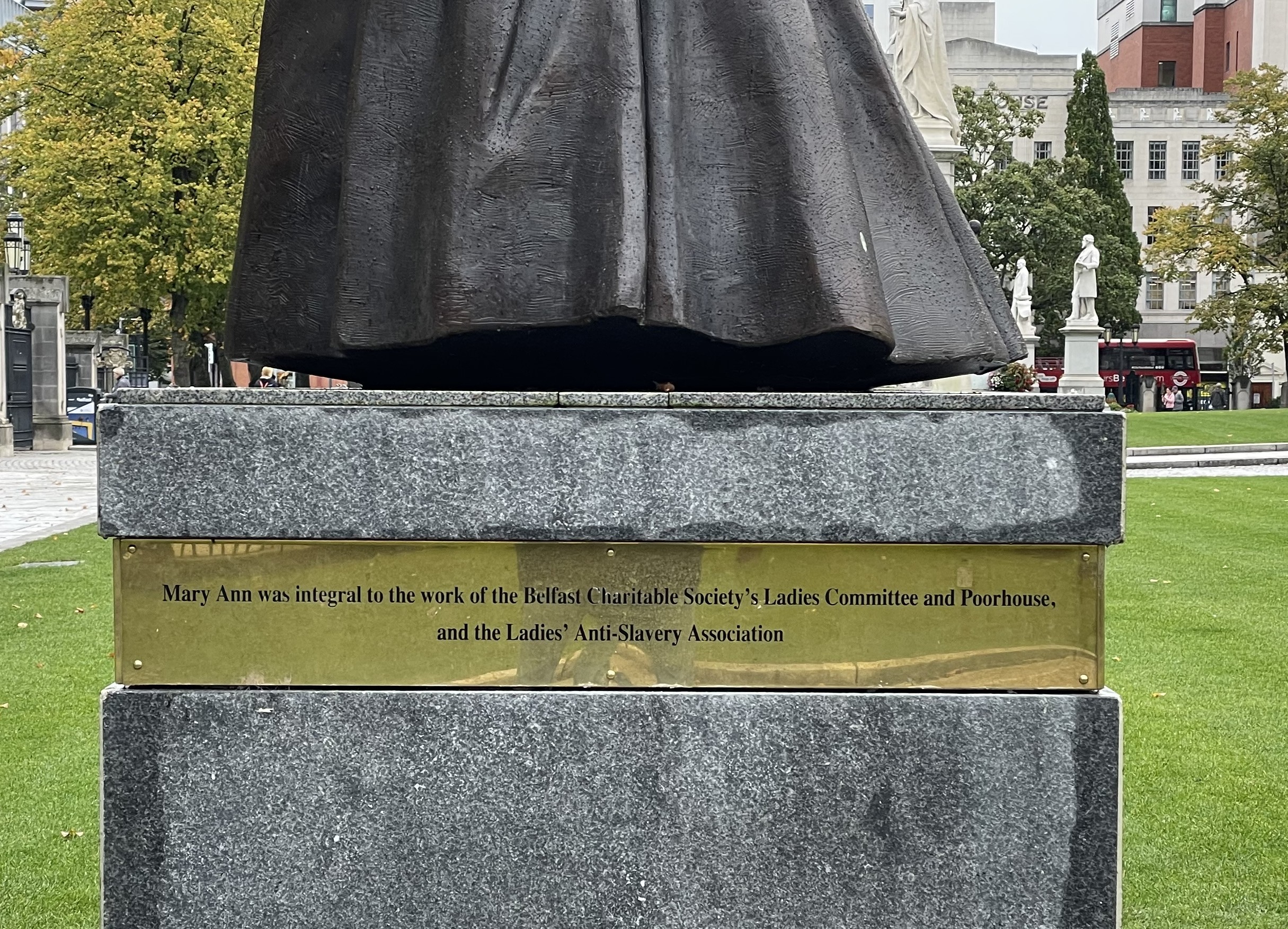
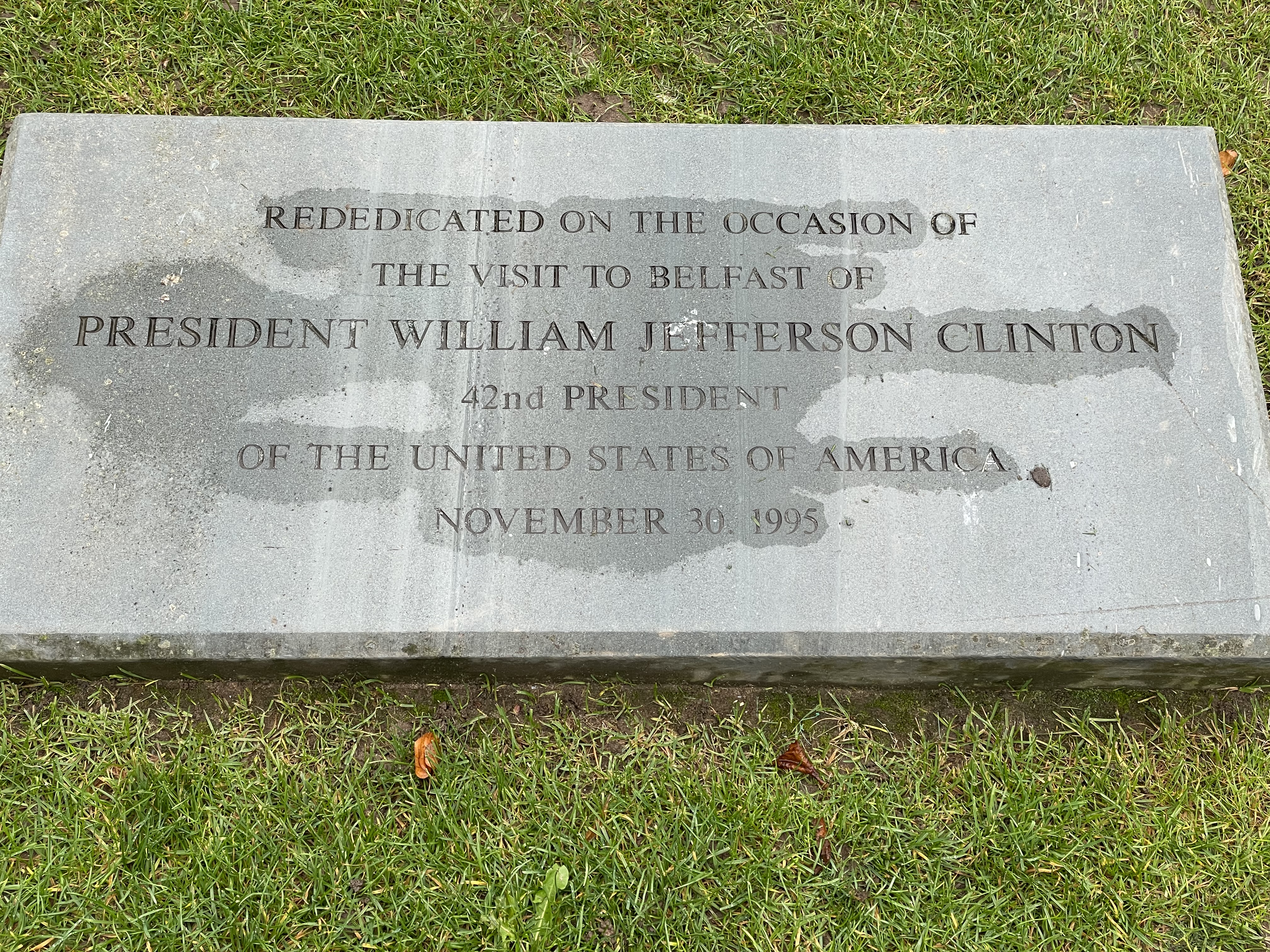
City Hall in Belfast is a structure worthy of its place in public life, but even there, one finds the unexpected: a statue among the statesmen and queens of Mary Ann McCracken, a social reformer, educator, businesswoman, and lifelong anti-slavery campaigner; a Pride stained glass window; and a small remembrance of the transformative and life-changing work that President Bill Clinton and Senator George Mitchell did to help bring about the Good Friday Peace Accords (back when US leadership meant something in the world).
I often think of craftsmanship in terms of architecture or writing, but I’m reminded when we travel and discover such delightful small restaurants as Richmond in Dublin . . .
Richmondcase.case.Dining at Richmond restaurant in Dublin
. . . or Nobuki Table Japonaise and case. in Tours, that chefs are also experts at their craft, creatively assembling flavors and delivering artful presentations that make for a tasteful and delightful experience.
And then there’s music. Always music. What a wonderful treat it was to find a restaurant at the end of our block in Paris that featured gypsy jazz music. During our meal, this trio took us back to the 1930s origins of gypsy jazz, as played by the incomparable Django Reinhardt and Stéphane Grappelli. A street musician, playing a mouth accordion, even stopped by the open door and played along for a few bars.
I love these unexpected discoveries.
Among so many other things I have encountered along the way, I’m so very grateful for the small oases of beauty, the personal stories, and the wholly unexpected treasurers that have moved me in new and important ways over the past few weeks.
More to come . . .
DJB
*Perhaps the farmers and gardeners who read this newsletter knew this fact . . . but I’m neither, and this beautiful purple blossom came as a big surprise to me.
**In peacock-land, white peacocks are not considered beautiful (especially to other peacocks). As a result they have difficulty finding mates . . . which may be one explanation as to why they are rare.
Photo of the retreat of St. Finbar in Ireland by DJB.
A summary of the September posts from the MORE TO COME newsletter.
We’ve been traveling over the past few weeks: first in Ireland and now in France. Nonetheless, I still have a full monthly roster of posts and book reviews for MTC. My features were highlighted by our son Andrew’s fall singing schedule and the sharing of a lovely conversation I had with the author Robyn Ryle about her delightful and wonderfully written new novel.
I’ll catch up on my observations from the Emerald Isle, the Loire Valley, and the City of Light over the next few weeks, so please return as I revisit some of these magical places. In the meantime let’s jump in to see what did tickle my fancy this month.
READER FAVORITES
Two posts on MORE TO COME topped the list of reader favorites. Neither was unexpected. My conversations with authors are usually a big hit, and I can count on family highlights to draw a number of readers.
A love letter to small towns highlights Sex of the Midwest, a refreshing new novel of linked stories about living in community. The author, my friend Robyn Ryle, sat down (virtually) with me for a thoughtful and engaging conversation about what she loves about small towns like Madison, Indiana (where she currently lives); the pandemic and its aftermath as experienced in small town America; and why stories that are less about sex and more about complex and complicated relationships in places where we least expect it are definitely worth your while. Don’t miss our conversation . . . you won’t regret it.
Fall 2025 is a preview of the upcoming concert schedule of our son, the tenor Andrew Bearden Brown. Andrew is excited about each of these performances, but the opportunity to be the tenor soloist for Messiah at the Washington National Cathedral has special meaning. He grew up singing as a treble and a tenor at the Cathedral, so he notes that this is “truly a full-circle moment.”
AN APPRECIATION FOR THE GIFTS OF LIFE
Two additional posts also generated a great deal of reader interest this month.
In Writing a present, I recounted three recent conversations with “a priest, a recovering lawyer, and a retired professor” where I note that sometimes others see things in your writing that are not always obvious as you put pen to paper. I also used this post to highlight Anne Lamott’s classic Bird by Bird: Some Instructions on Writing and Life, which several readers have told me is one of their all-time favorite books.
Late in the month I published Richard Moe: A personal appreciation after the passing of the longest-serving president in National Trust history. Dick’s generous and expansive spirit came through in everything he did.
READING DANGEROUSLY
I was able to post many of these pieces prior to our leaving on extended travel because I devoured several murder mysteries—which always fly by in the reading.
Looking beneath the surface in a Japanese crime classic is my review of Tetsuya Ayukawa’s The Black Swan Mystery, a classic Japanese alibi-deconstruction mystery of the first order, available in a new English translation.
Another look at the train murder genre appears in When everyone is a suspect. Five mystery writers come together to solve a crime that one of them probably committed in Benjamin Stevenson’s 2024 Everyone On This Train is a Suspect.
The mysteries of the human personality is my review of Georges Simenon’s 5th book in the Maigret series—A Man’s Head—where a criminal mastermind doesn’t account for the Inspector’s tenacity. A New York Times article on Simenon suggested that “an Inspector Maigret mystery is like a shot of good liquor: sharp, tasty stuff that delivers a sock to the senses when you swallow it in a single gulp.”
EVERYTHING ELSE
At this stage in life my interests are much too wide to be bound by a single-focus newsletter; however, as a friend generously observed after a recent conversation, I seek to derive “simple, enduring meaning” from observing and writing about those diverse interests. So this is the section of the update that touches on “whatever else tickled my fancy” in September.
Three recent pieces showed up in my newsfeed this month that all touched on the idea of cynicism vs. hope as I wrote in You are the way you play.
In this age of rage, I highlighted—in Values and beliefs—the advice of a good friend and author who encourages us to take the time to articulate what we value and believe.
One of my brilliant readers at MTC is the internationally recognized graphic designer and author Michael Bierut. I came to know Michael through work at the National Trust and then we also got to know Michael and his wife Dorothy even better during our time at the American Academy in Rome. Michael wrote the following comment in response to Richard Moe: A personal appreciation.
“Dear David, This was such a great remembrance of Dick Moe. I met him when I was brought aboard by Paul Goldberger to do the branding for the Glass House, and later worked on a new logo for the Trust (eventually replaced by the current one, which I like) and, unless I’m hallucinating, something for the Lincoln Cottage. Doing this sort of work involves managing a lot of strong opinions. I don’t think I ever saw anyone do that better than Dick. We need more like him these days.”
I posted the essay Values and beliefs on LinkedIn. One of the authors I quote—brilliant reader Julia—reposted my essay with the following lead:
“Thanks to David J. Brown for fulfilling one of my lifelong writing ambitions: speaking of me in the same breath as Anne Lamott [followed by a laughing/crying face emoji]. But for real, thanks for reading and sharing, David. May we all ground ourselves in our own values and beliefs.”
Always glad to help authors fulfill a lifelong ambition!
DON’T POSTPONE JOY
Thanks, as always, for reading. Your friendship, support and feedback mean more than I can ever express.
As you travel life’s highways be open to love; thirst for wonder; undertake some mindful, transformative walking every day. Recognize the incredible privilege that most of us have and think about how to put that privilege to use for good. Women, people of color, LGBTQ+ individuals, immigrants, public servants, and others can feel especially vulnerable . . . because they are. Work hard for justice and democracy as the fight never ends.
But also keep some room in your heart for the unimaginable. Take time to dawdle and dream. Leave enough empty space to feel and experience life. Those gaps are where the magic begins. When times get rough, let your memories wander back to some wonderful place with remembrances of family and friends. But don’t be too hard on yourself if a few of the facts slip. Just get the poetry right.
Remember that “we are here to keep watch, not to keep.” Pay attention. Be astonished. Tell about it. And bash into some joy along the way.
You can subscribe to MORE TO COME by going to the small “Follow” box that is on the right-hand column of the site (on the desktop version) or at the bottom right on your mobile device. It is great to hear from readers, and if you like them feel free to share these posts on your own social media platforms.
Richard Moe passed away on September 15th at the age of 88. The New York Times obituary is extensive in covering Dick’s legacy of public service, first in politics as chief of staff for Vice President Walter Mondale and then as the longest-serving president of the National Trust for Historic Preservation.
Richard Moe
I only knew Dick by reputation during the first half of his career but we worked closely together over his term as National Trust President, especially after he recruited me to join the organization in 1996. The following year I came to Washington where I first served as Dick’s chief of staff and then as Executive Vice President.
The obituary and tributes from others fill in Dick’s many accomplishments in the preservation field. I’ll briefly mention only two.
President Lincoln’s Cottage (photo by Carol Highsmith)
The first day I came to work as chief of staff we had a meeting to discuss the future of President Lincoln’s Cottage, which is located on the grounds of the Soldier’s Home in Washington. The summer refuge of Abraham Lincoln—he moved his family into the Gothic Revival home and commuted to the White House during the Civil War—it was also the place where the Emancipation Proclamation was conceived in the president’s mind. Dick’s long-time dream was for the public to experience the place where Lincoln went to work, think, and reflect away from the constant demands made of him at the White House.
Because of complicated ownership issues it was a difficult project to bring to fruition, but over ten years, with many individuals playing key roles and with $17 million raised, the Trust made it happen. Lincoln’s Cottage would not have been saved, restored, and open to the public without Dick’s deep commitment and his belief in using the cottage not simply as a museum, but as a home for brave ideas.
The Edith Farnsworth House (photo by Carol Highsmith)
The other landmark that was saved in large measure because of Dick’s leadership and perseverance is the Edith Farnsworth House in Plano, Illinois. As I wrote in my 2024 review of a new book on the conception, building, and preservation of the house:
“The public’s understanding of preservation is often limited to the restoration process, but that doesn’t happen without financial support. Put simply, the Edith Farnsworth House would not have been saved and opened to the public without the untiring work of former Landmarks Illinois President David Bahlman, former Sara Lee Corporation CEO and renowned fundraiser and philanthropist John Bryan, and former National Trust President and CEO Richard Moe. It is a small quibble with an otherwise terrific new work, but I would have preferred to see more recognition given to their roles in pulling every string possible to quickly raise the millions of dollars required to bring the site into the public realm. David, John, and Dick’s fundraising efforts—married with smart, strategic choices during the auction—were ultimately successful and made the preservation work of the past twenty years possible.”
Opening day of the Edith Farnsworth House as a National Trust Historic Site
These are just two examples out of dozens, both big and small. But I want to share more personal remembrances at this time of his passing.
The Dick Moe I saw on a daily basis for 14 years had a generous and expansive spirit. He was under many different pressures but he always made the time to listen and to thank others. I’ll never forget the fact that Dick called me in 1993 right after the Disney fight ended to thank the Preservation Alliance of Virginia—where I was the Executive Director—although our contribution was small in comparison to the work of others. Remembering how Dick’s call made our organization feel appreciated and recognized, I followed his example several times in my career to reach out personally to a variety of partners and collaborators after major battles and victories. One of Dick’s favorite lines was that we “stand on the shoulders of giants.” It is a lesson in generosity in the sharing of credit that I learned from Dick Moe.
That generosity extended to me professionally and to our family personally in a number of ways. Dick would open doors and make opportunities available when he saw potential in an individual, a group, or a project. Turning over the organization’s first-ever capital campaign for me to run was life changing in how I envisioned my capabilities. More importantly, the everyday leadership lessons he exhibited—depend on others, build partnerships, think deeply about options, just show up—helped me and so many others in the field grow and succeed in our work.
As others are remembering Richard Moe for his life and legacy of public service, I want to offer this personal note on the occasion of Dick’s passing in thanksgiving for all the support and guidance he gave to me. I will always treasure our work together.
Rest in peace, my friend.
More to come . . .
DJB
Photo of Acoma Sky City, an affiliate site of the National Trust for Historic Preservation, by Claire Holsey Brown. Dick loved the American West and worked hard to tell a more complete and accurate American story. Acoma Sky City is just one example of that work.
Most of the classic murder mysteries involve our indefatigable sleuth hard at work to put someone behind bars. Seldom do you have a scenario where the Chief Inspector convicts a man of murder and then helps him escape death row in a daring attempt to uncover the identity of the real killer. And the truth.
The true killer thinks he’s a criminal mastermind . . . but he doesn’t account for the tenacity of Detective Chief Inspector Maigret.
A Man’s Head (1931) by Georges Simenon begins when Joseph Heurtin—who awaits his fate on death row—escapes out of the High Surveillance wing of an infamous Paris prison. As he moves toward freedom, Heurtin is being watched by Inspector Maigret, the detective who convicted him of the murders of Madame Henderson and her maid. Maigret has come to believe that he convicted the wrong man and the Chief Inspector devises a plot, much to the consternation of his superiors, to uncover the truth. Along the way, through twists and turns, Maigret realizes he has to contend with a criminal mastermind who has nothing to lose and believes he is the smartest person in the room.
A Man’s Head is the fifth book in the Inspector Maigret series written in a year when the prolific author produced the first ten installments. Apparently he would complete a work in 10-11 days, writing as a New York Times article notes with “simplicity and economy.”
“An Inspector Maigret mystery is like a shot of good liquor: sharp, tasty stuff that delivers a sock to the senses when you swallow it in a single gulp.”
I found A Man’s Head to be a satisfying shot. As a PBS article notes, Inspector Maigret transformed detective fiction when it was first introduced, toppling detective tropes, addressing real social issues, and using Paris as a character. The New Yorker wrote that Maigret is “a man of moral restraint who practices the art of listening, not interrogating,” and that is very evident in this book. Maigret seems to know that by simply being present and listening, the real murderer will eventually tell his story.
“Invitation to Participate: Sexual Practices in a Small Midwestern Town.” As subject lines went, it left a lot to be desired.
The reader might be as initially confused as the characters in this “thoroughly refreshing” work (Kirkus starred review). But thanks to the love, delight, and deep understanding of small town America that pours through the writing, one is quickly caught up in a series of linked stories that are less about sex and more about complex and complicated relationships in places where we least expect it.
Sex of the Midwest: A Novel in Stories (2025) by Robyn Ryle begins as the residents of Lanier, Indiana (population 12,234) wake up to discover an email in their inbox inviting them to participate in a study of sexual practices. The town is soon abuzz (as small towns often are) trying to figure out how Lanier was chosen and who wrote the email. A legendary basketball coach is convinced the e-mail and the epidemic of STDs at the junior high are both part of the moral decline of the town, and although he has to drag around an oxygen tank he sets out for action. The bartender at the Main Street Bar finds that the email brings back fear of a midlife crisis. A town employee who likes to follow the rules is surprised to find where life’s pathway takes her after receiving the email. “Street by street and house by house, the e-mail opens up the secret (and not-so-secret) lives of one small town, and reveals the surprising complexity of sex (and life) in the Midwest.”
Sex of the Midwest, the first book of the independent Galiot Press, is a work to treasure. I first met Robyn many years ago when she spoke at a National Main Street conference. We’ve stayed in touch since then and I was delighted when she agreed to this chat for my Author Q&A series.
DJB: Robyn, some might see the title “Sex of the Midwest” and think they are getting a titillating romance novel, but your love in this book is really for small towns and the people who live in them. What is it about small towns that captures your heart and imagination, and how does that play out in your new book?
RR: I grew up in a small town, which I then escaped when I turned 18 and went away to college—a very familiar story. It took me a long time to realize the things I appreciated about growing up in that small town. The sense of being known and held. I was always Julia’s grandchild. Tom and Shirley’s daughter. Wendy’s sister. That can be stifling, but also very comforting.
When I moved to Madison (where I live now) I wasn’t intentionally choosing to live in a small town again. I moved for the job at the college up the road. But in Madison, I remembered all those things about small towns that I’d loved growing up, with the added bonus of not being from here, which made it much less stifling.
In Madison I realized that one of the advantages of living in a small town is the opportunity to learn a place deeply. Yes, a small town is never going to have the same diversity you get in a city, but you get the chance to find a different kind of diversity through intimacy with the lives of the people around you. It’s much harder in a small town to categorize or stereotype people. You know too much about them to reduce them to an over-simplified label. I love the way living in a small town can force you to confront the complexity of your neighbors. I think there’s something really beautiful about that. Maybe even a little sacred?
Which isn’t to say that there also isn’t a lot of small-town drama. Enough drama, in fact, to fill a book! But at the end of the day, we still have to live next to each other. So there’s more pressure to figure it out. There’s more incentive to keep doing the hard work of seeing each other as fellow human beings.
Reviewers have compared your work to “Olive Kitteridge,” “Spoon River Anthology,” and even Chaucer. (High praise indeed!) Did you first envision these as stand-alone pieces or were they always intended to be part of a larger novel-in-stories?
I tried as much as possible when I started the first story (which was “Don Blankman Saves the Youth of America”) to not really define what I was doing—whether it was a novel or a short story collection. I find it much easier to write short stories. They’re so neatly self-contained compared to the unruliness of a novel. I’d tried to write many novels with what I felt like was limited success. So I just started writing without really making a decision about where I would end up. I had to trick myself a bit, so to speak.
Because they were stories about a small town, it made sense that people would keep reappearing. And gradually, trajectories for the characters began to emerge. After I had most of the stories written and had edited them a few times, I thought about making it more novel-ish. I thought about leaning toward a more traditional novel structure. But it felt forced. And certain stories would probably have had to go (like “Return” which introduces a new character well into the narrative). Also I was reading more books that ignored the line between short story collection and novel (like Jonathan Escoferry’s If I Survive You) so it seemed like it might be possible to do that, too.
The pandemic and its aftermath as well as the political divides in this country play supporting roles in “Sex of the Midwest.” One character―a grouchy former basketball coach―refuses to get vaccinated, comes down with Covid, and now needs a new lung. He’s also on a crusade to save the youth of Lanier from sex while carrying on his own long-time affair. Older residents have to navigate newcomers, gentrification, and change. Loneliness and the search for connection and community pop up frequently. What was it in these storylines―and how they play out in small towns―that captured your imagination and led you to share them with your readers?
I started the stories in late 2022, which was a time when I felt like I had a little distance from both the pandemic and the first Trump presidency. I had a little breathing room and I was very tired of being angry. I wanted to try something different. I wanted to put myself imaginatively into the mind and heart of someone who didn’t think like me at all. It was my coping strategy. I still do it sometimes when I’m just totally baffled by something or someone in the world. I put a version of that person in a story and see what happens. It’s very hard to hate someone once you really try to see the world from their point of view. You can definitely still disagree with them, but probably not hate them.
I also realized that the experience of the pandemic I had in my small Indiana town was very, very different from how people experienced the pandemic in New York or Boston or Chicago. I wanted to tell that story.
In my writing, I’m almost always trying to push against over-simplified, stereotyped narratives of small town life and rural places and flyover states. There’s a lot of anger in rural America about the way we get depicted in the media and the assumptions people make about us. I think that anger makes sense, even if gets directed and channeled in dangerous ways. National media only show up in towns like ours when there’s a disaster—a tornado, a flood, or a mass shooting. But we have interesting stories, too. Our lives are also complex and complicated in ways that are important.
If you know New York, you don’t know all big cities. Each city is unique. The same is true of small towns and I wanted to tell one unique story about one unique place.
The bartender Rachel Barr discovers that she has a gift for writing stories about her observations, and in that way she seems your alter ego. Were there characters who really spoke to you and conversely, were there characters who were more difficult to bring to life?
Clearly, I think Don Blankman as a character jumps off the page. There were things about writing in his voice that were fun, but there were also moments when I did not want to be inside his head one moment longer. I love Don, but I wouldn’t want to spend a lot of time hanging out with him. He was a difficult character to write because on the one hand, I didn’t want people to think that I agreed with many of Don’s beliefs. On the other hand, I didn’t want readers to feel like I was making fun of him, which was not at all my intention. I have great hope for Don. I believe that in writing and making art, we are trying to create the world we want to live in. So I try to be hopeful about Don and his capacity for change.
Yes, Rachel is a writer and, like me, she has some complicated feelings about the whole idea of writing workshops. There is, in fact, a Virginia Woolf Room at the Sylvia Beach Hotel in Newport, Oregon, and I have stayed there, though, unlike Rachel, I did not have a breakdown that involved a duck. I put a lot of my thoughts and feelings into Rachel, but also into Loretta and Joyce and James and Sam and Nancy and even Don. It’s the great thing about writing. You can take all your thoughts—even the weirdest ones—and put them into other people’s heads and no one knows which ones are yours or not.
Do small towns have lessons for the rest of the country?
I think small towns do have a lesson for the rest of the country. I think the loss of community is part of how we got to this very frightening place we’re in right now as a country. I think small towns can remind us how to live together, here, in this actual physical world, rather than in the cruel and terrifying spaces of social media and the internet and the news.
It is so, so hard in our current historical moment to hold on to the full humanity of the people around us. There is so much dehumanization going on. I’m guilty of this myself, even as I’m consciously aware of trying not to. I’m not saying that it’s impossible to dehumanize each other in a small town, but I think the proximity and the intimacy make it a little harder. To see your neighbors as fully human certainly makes life more pleasant.
My husband and I are academics and on our small campus, we have to line up several times a year for formal ceremonies like graduation or honors convocation. We stand around in what we call the line of march, often for 20-30 minutes before the ceremony starts. So a saying my husband and I have is, “Never have someone you can’t stand next to in the line of march.” Which is a way of saying, never create a situation where you can’t at least chit-chat with someone for 20 minutes or so. You don’t have to want to be their best friend. You don’t have to agree with them about everything. But make sure you can be civil, even if it’s only twice a year.
The same applies to a small town. Never have someone you can’t stand in line at the coffee shop with. That seems very small, but that basic civility is what allows us to trust that we are all humans with largely good intentions. That civility might eventually lead us to areas of commonality. It might lead us into conversations and compromise and understanding and, you know, community. Which isn’t at all an easy thing, but, I think, is a big part of what we’re on this planet do do.
Thank you, Robyn.
It was such a pleasure to talk to someone who really understood the book and what it’s all about. Thanks for doing this.
More to come . . .
DJB
UPDATE: Robyn was interviewed on NPR’s Weekend Edition by Scott Simon, and she “was smart and funny and thoughtful, and she had a great and important message to share.” Recommended!
For other chats in my Author Q&A series, click here.









































 MORE TO COME...