
Don’t create followers, create more leaders
Leaders don’t create followers, they create more leaders.
Leaders don’t create followers, they create more leaders.

Some of the most interesting travelers are life-long learners. While taking in the wonders of place, people, and culture on recent trips to Japan, South Korea, and the United Kingdom, I’ve spent time observing my fellow travelers. The reasons for travel vary widely. Some individuals finally have the time and resources to venture to new horizons while others are serious compilers—and completers—of bucket lists. The reasons are almost as endless as the people joining me in visiting the temples, shrines, gardens, mountains, priories, theatres, museums, and much more along the way. Life-long learners take a special approach to travel, just as they do in life. They are curious, to be certain, but most are also risk takers. In The Leadership Machine, authors Michael Lombardo and Robert Eichinger suggest that learners are “willing to feel and look stupid” because they can admit what they don’t know and are eager to move forward to learn. In the working world they are often the ones willing to “go against the grain of what they know how to do and …
It is that time of year, dear readers, when I look back over the past twelve months, assess progress (or lack thereof) against my goals, and think ahead for 2019. Careful readers know that for several years I have worked with a set of life rules (rather than annual resolutions) for living the next third of my life. This review is just one small part of an exercise to have an honest conversation with myself, so I’ll be able to have real conversations with the larger world. We don’t do enough looking at our uncertainties and vulnerabilities, sometimes choosing as an alternative getting angry at others—which hinders real understanding. Steve Almond, in the book Bad Stories, asserts that’s true because we take our grievances seriously but not our vulnerabilities. In the 2017 essay “Facing the Furies” (found in the collection Call Them by Their True Names: American Crises and Essays), Rebecca Solnit frames it this way: “. . . more often, lashing out is a way to avoid looking inward. A 2001 study by Jennifer …
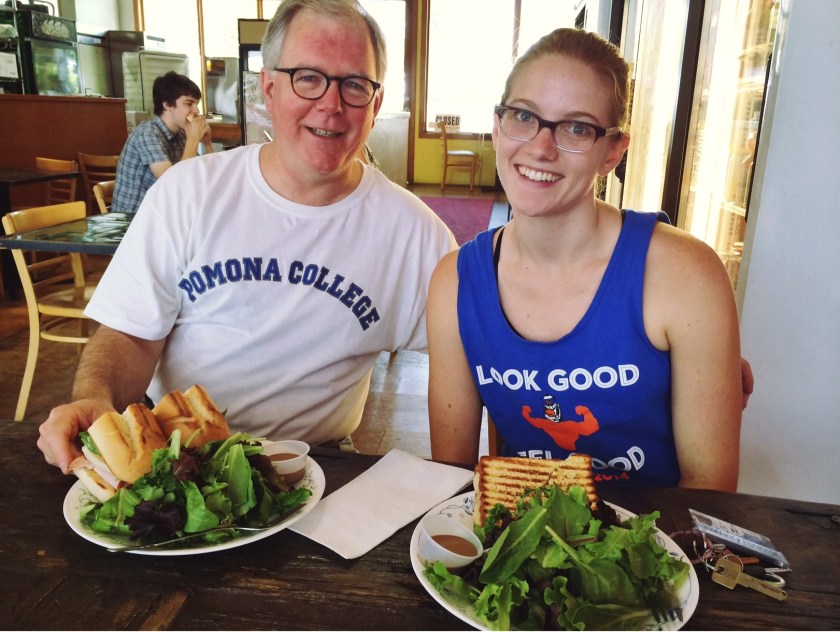
When I was a freshman in college, I waited tables at a local restaurant and bar in Nashville. Waiting tables is hard and humbling work, which I highly recommend. Once you’ve experienced it you’ll forever be mindful of 1) how you treat wait staff, and 2) how to tip properly. When I was leaving at the end of the school year, the manager, Bill, and his sister Ruth invited me over for a drink. At the end of the night, Ruth gave me a hug and said, “Have a good life!” This was the pre-Facebook/email/Instagram days, and she meant it as a heartfelt farewell to someone she’d probably never see again. I stuck that sentiment in the back of my mind. But to paraphrase folksinger Arlo Guthrie halfway through the 17-minute-long Alice’s Restaurant, this isn’t a post about waiting tables. This is a blog post about the emotional and intellectual value of personal connections. One of our staff members had her final day at the National Trust coincide with the last day of our 2018 …
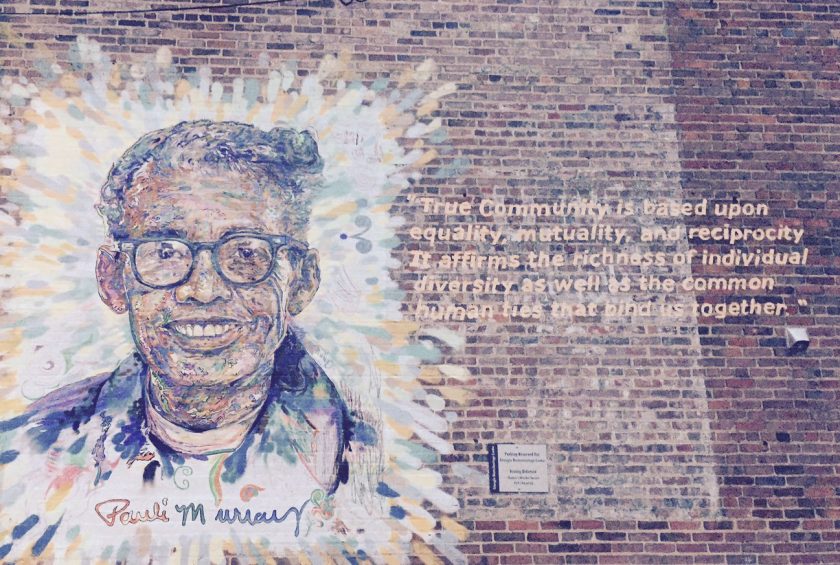
I’ve been thinking recently about “where I’m from” and its impact on my life and work.

Photos of family and travel from 2018.

Today is bittersweet, as our Andrew prepares to leave tonight for London and his graduate studies at conservatory. Over the past month, we’ve been savoring both his presence and his music. When we were in California in August, we had the chance to attend the final concert in San Francisco’s 2018 American Bach Soloists’ Summer Bach Festival, the stirring Mass in B Minor. Andrew joined three other musicians for the Benedictus. This tenor aria comes near the end of the mass, and Andrew’s beautiful singing was supported by just a flute, cello, and double bass. Then just this past weekend, Andrew had a call to sing the state funeral for U.S. Senator John McCain at the Washington National Cathedral. He had turned in his badge and music at the cathedral, where he most recently was one of the tenors in the men’s choir. But his replacement had not arrived from out-of-town so Andrew had the chance to sing his third state funeral (Reagan and Ford, while a boy chorister, were the others) to go along …

For several years I’ve regularly traveled for work to Monterey, California, a small coastal city some two hours south of San Francisco. So when we went looking for a west coast destination for this year’s family vacation, I suggested we check out the Monterey Peninsula. Now that we’ve wrapped up a week-long visit to Pacific Grove—next-door neighbor to the city of Monterey—we’re just coming to realize how much we’ve seen and explored in this new (to us) part of the world. Let’s begin with the coastline, the attraction to visitors for thousands of years. I awoke every day shortly after 6 a.m. and went for walks of as much as two hours along the well-used (and well-loved) Monterey Bay Coastal Trail. Pacific Grove’s portion of this 18-mile trail, which follows the path of the old Southern Pacific Railroad train tracks, hews close to the water and rock-strewn coastline, while Monterey’s comes inland a bit to incorporate Cannery Row, the Monterey Bay Aquarium, and Fisherman’s Wharf. My walk often began before sunrise and was shrouded in …
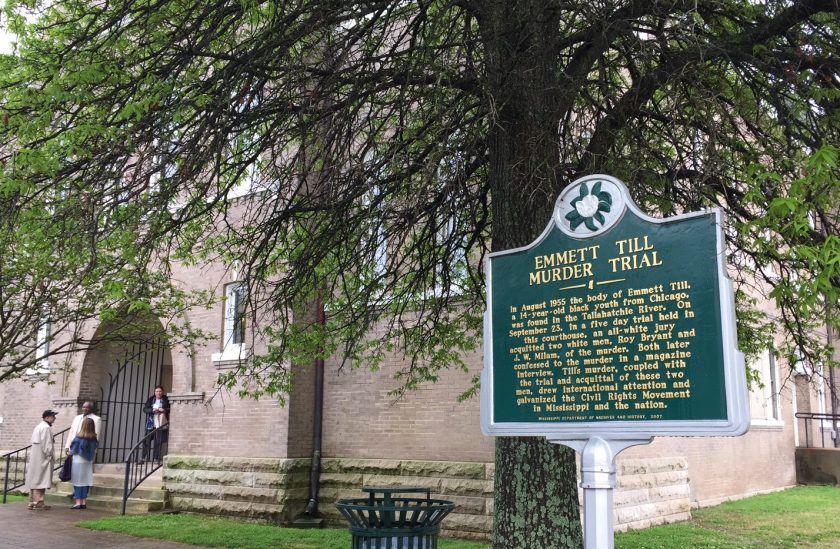
A trip through Mississippi, where Bill Ferris quoted a relative who said “he was raised on cornbread and recollections.”

At yesterday’s service on the First Sunday in Lent at the Washington National Cathedral, Andrew — a tenor in the men’s choir — was the soloist for the Lenten Litany. This particular version of the litany was arranged by Canon Michael McCarthy, the Director of Music at the National Cathedral. It is a moving seven minutes of music, to help bring the faithful into an observance of the holy season of Lent. The solo begins around the 13 minute mark. With blessings for whatever practice you bring to the season. More to come… DJB Image: Central Tower of the Washington National Cathedral
 MORE TO COME...