All posts filed under: Monday Musings

Thoughts to start off the work week

Clarity of Vision

We all benefit when we are clear about what matters. I  have always admired the clarity of vision that comes through the work and writings of Morris Vogel, the retiring president of the Lower East Side Tenement Museum.  Morris is one of my colleagues at the National Trust, and I value our professional relationship.  On a personal level, Morris is someone I look to for both advice and inspiration. In these days when the nation is – once again – struggling with its checkered history on immigration, the Tenement Museum has stepped time and again into these conversations in ways powerful, relevant and timely.  I found the following statement, which Morris recently shared with his board and staff, a great reminder of how clarity of vision and mission is so important in finding one’s voice. “Tenement Museum leadership in the museum field means that our colleagues at other institutions regularly ask how we handle difficult issues, and we’ve recently fielded requests for information about how we determined our pro-active response to the government’s refugee ban. …
NLDS 2016

Seeing opportunity in every difficulty

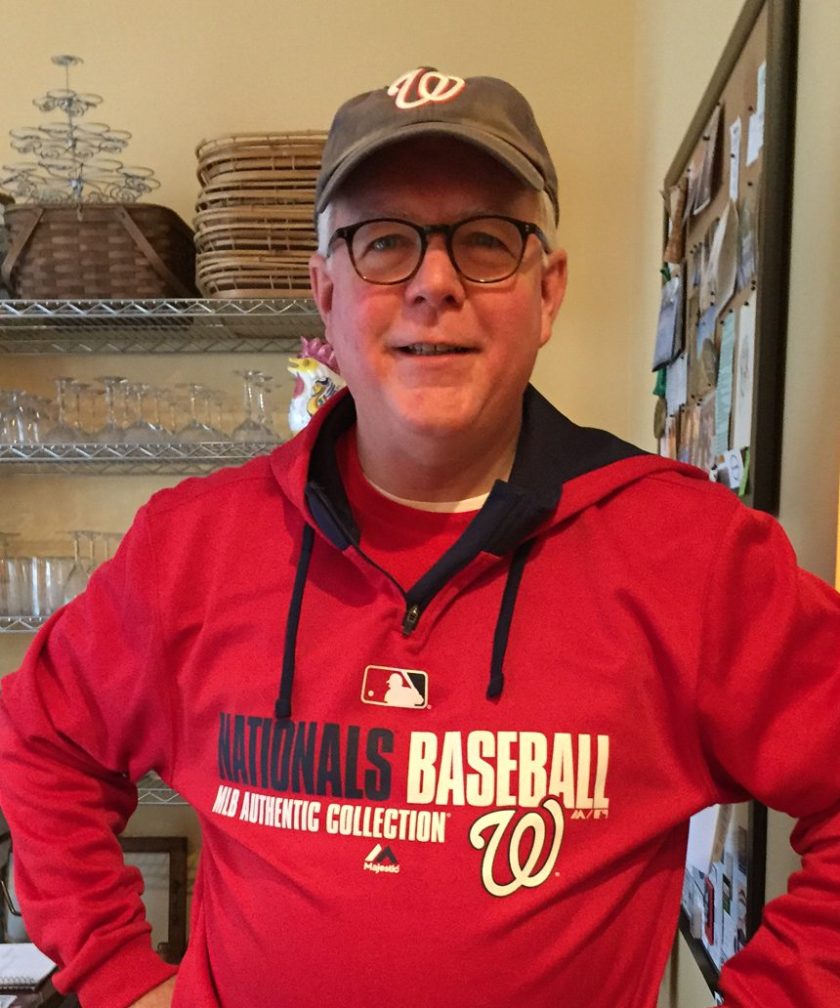
Today is opening day for the Washington Nationals.  If the president really wanted to make America great again, he would declare opening day of the baseball season a national holiday.  It could be a celebration of optimism and new beginnings. I find that a clear-eyed optimism is an important element for a balanced outlook on life.  While former British Prime Minister Harold Wilson spoke for one approach when he said, “I’m an optimist, but an optimist who carries an umbrella,”  one of his predecessors as prime minister – Winston Churchill – probably did a better job of hitting the nail on the head. Churchill, who governed during some of the darkest days of civilization, said, “The pessimist sees difficulty in every opportunity. The optimist sees the opportunity in every difficulty.” Circling back to baseball, fans for every team in America are optimistic (clear-eyed and otherwise) on opening day.  They know that in years past teams have gone from “worst to first” in one year (see Atlanta Braves, 1991), so it could happen again.  Heck, even …

Problem Solvers

I spent much of last week with eight mayors, and seven other resource panelists at the Mayors’ Institute on City Design in Charleston, South Carolina.  The mayors – two women and six men – came from cities as large as San Bernardino, California, and as small as Juneau, Alaska.  Three of the cities were state capitols, at least two were located on historic Route 66, they spread from coast to coast, every community had a historic core that the mayors saw as vital to their identity and future, and all were ethnically diverse. The political leanings of the mayors – and those of their cities – spanned the spectrum.  Some had been in office for several years, others were relatively new to either the mayoral office and/or public service.  One was a writer on social justice.  Two were accountants by training, while another was a banker.  One had spent much of his career running YMCAs.  As befits the mayor of a city that abuts Canada, the mayor of Juneau had worked for the U.S. Customs …

The Blessing of Silence

Madeleine L’Engle – the well-known author of A Wrinkle in Time and many other works of both fiction and nonfiction – is a writer I return to again-and-again when I’m looking for wisdom from a different perspective.  As Candice and I took time off this past weekend to celebrate our anniversary, I found time to re-read L’Engle’s Two-Part Invention:  The Story of a Marriage, which is the one book both of us included several years ago on a list of influential readings. Reading that book made me think of L’Engle’s other writings, selections of which became the basis for a collection of daily readings entitled Glimpses of Grace.  Over the weekend I looked at the reading for March 20th.  It was titled “The Blessing of Silence” and while the references to transistors and records are dated, it is still worth a read. “Why are we so afraid of silence?  Teenagers cannot study without their records; they walk along the street with their transistors. Grownups are as bad if not worse; we turn on the TV …

The “Risk” of Values

At the National Trust, we begin each executive team meeting with an example of our values in action. Discussing how our colleagues have exemplified our values of integrity, collaboration, diversity, and innovation – all focused on making a difference – is often my favorite part of the meeting. National Trust Trustee emeritus Ken Woodcock was a consistent proponent of the importance of organizational values, an approach that came from his years at the energy company AES.  At Ken’s urging, I read Joy at Work by the highly unconventional AES co-founder and CEO Dennis Bakke, who spoke eloquently about the importance of values.  In one especially telling example, Bakke quoted from the company’s public-offering memo, which read in part: “An important element of AES is its commitment to four major “shared” values:  to act with integrity, to be fair, to have fun, and to be socially responsible….AES believes that earning a fair profit is an important result of providing a quality product to its customers.  However, if the Company perceives a conflict between these values and …

What I Learned From Reading the Obituaries

Every day I get an email with the daily Ted Talk.  I have to admit, I end up deleting the majority of them without opening the video.  But every now and then, a title catches my eye, and I decide I want to indulge. “What I Learned from 2,000 Obituaries” which showed up in last week’s email fell in the latter category.  Here was the teaser: “Lux Narayan starts his day with scrambled eggs and the question: ‘Who died today?’ Why? By analyzing 2,000 New York Times obituaries over a 20-month period, Narayan gleaned, in just a few words, what achievement looks like over a lifetime. Here he shares what those immortalized in print can teach us about a life well lived.” Spoiler alert…I’m going to tell you the punch line in just a few sentences, so if you want to watch a very entertaining, short (for Ted Talks) and thoughtful piece, just click straight on the video (also inserted below). The premise is easy to understand.  Reading the New York Times obituaries with a …

Each of Us is Needed

In his wonderful 1987 book Leadership is an Art, retired Herman Miller CEO Max DePree tells a story about diversity.  He notes that one of the key people in the 1920 furniture business founded by his father was the millwright, who oversaw the steam engine that powered the enterprise.  One day the millwright died. DePree’s father went to visit the family, and after some awkward conversation the widow asked if it would be all right if she read aloud some poetry. DePree continues with his story. “Naturally, he agreed.  She went into another room, came back with a bound book, and for many minutes read selected pieces of beautiful poetry.  When she finished, my father commented on how beautiful the poetry was and asked who wrote it.  She replied that her husband, the millwright, was the poet.  It is now sixty years since the millwright died, and my father and many of us at Herman Miller continue to wonder:  Was he a poet who did millwright’s work, or was he a millwright who wrote poetry?” …

The spirit of our institutions

When I was young, we did not celebrate the generic “Presidents Day.”  Instead, we attached the names of real men — flawed but great, each in his own ways — in celebrating first Lincoln’s Birthday on February 12th, followed shortly by Washington’s Birthday on February 22nd.  I am pretty sure — growing up in the South — that we were not given a day-off from school on the 12th, but we did generally receive the 22nd off…even if it was smack in the middle of the week. There is an interesting history to this holiday, beginning with its name and including the story of how it was moved to the third Monday in February.  According to the federal government, what we celebrate today is officially Washington’s Birthday.  But states actually decide which federal holidays to celebrate, and they can also rename them.  So in Maryland, where I live, we celebrate Presidents Day. I’m a bit old-fashioned and like my holidays well defined and not simply an occasion to get an extra-long weekend and a great …

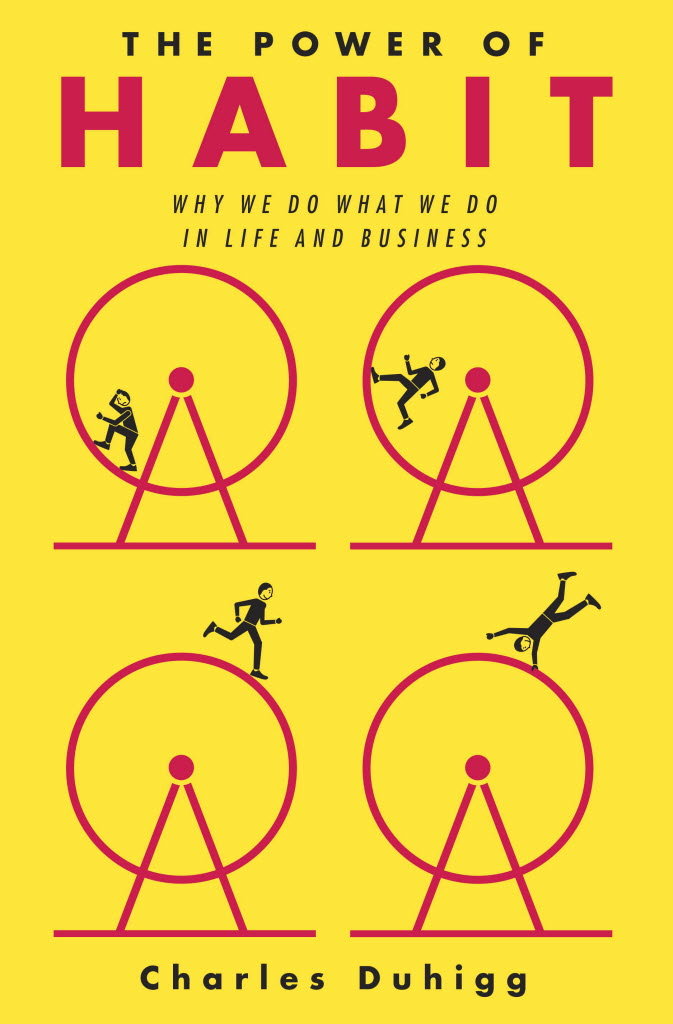
The Power of Habit

Habits are not destiny

“Most of the choices we make each day may feel like the products of well-considered decision making, but they’re not.  They’re habits.”  That’s according to Charles Duhigg, author of The Power of Habit:  Why we Do What We Do in Life and Business. I got to thinking about the habits that we undertake while reflecting on the discussions from a recent management team retreat.  We were probing how and why we do certain things to see if there were routines – or habits – we wanted to break or establish. Scientists tell us that habits emerge because our brains are looking for ways to save effort.  We all can identify habits – both personal and professional – that impact our lives.  Just as we have good and bad personal habits, organizations have good and bad routines.  We want to avoid habits that turn important decision-making over to a process that occurs “without actually thinking,” but at the same time we want to build routines that support our goals and aspirations. Thankfully, habits and routines can …

He (or She) Who Hesitates is Not Always Lost

A couple were riding in their car recently when they approached an intersection and pulled into the right lane in order to make a turn.  Immediately in front of them was a car with the left blinker engaged.  The husband made the comment – with irritation in his voice – “Why does this guy think he can turn left from the right hand lane?”  A few seconds later he looked up, realized that the four-lane street dead-ended into another four-lane road, and that the overhead signage indicated that the right lane could indeed be used for either left or right turns. Turning to his wife, he pointed to the sign and said, “Never mind.” His wife, speaking with a tone of voice that reflected more than three decades of patiently waiting for him to observe the obvious, replied, “Several years ago I came to a realization that changed my life.  When I faced a situation where I thought someone was in the wrong,” she said, “I stopped myself from judging them and asked instead ‘What …