All posts filed under: Recommended Readings

Hearing feedback

Stop talking and listen

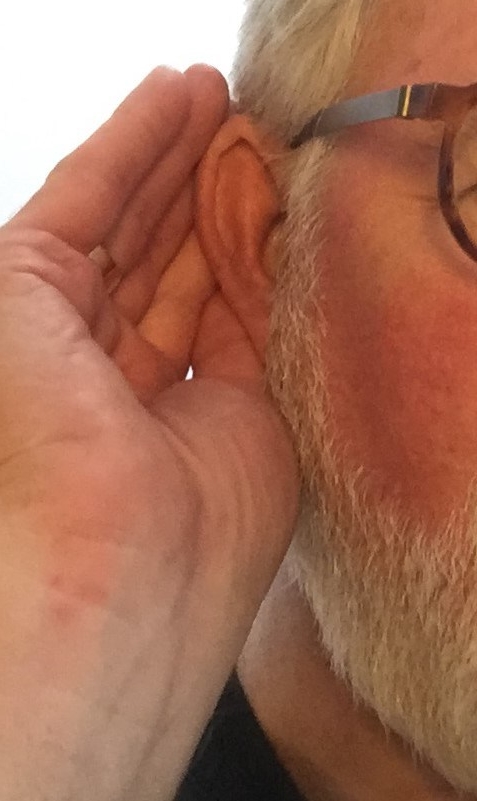
Old habits can be very hard to break. Case in point: my difficulty in breaking out of the mold of being a stereotypical male. I’m reminded of this far too often and in many different ways. However, one of the more consistent occurrences involves listening. Or, to be more accurate, not listening. The stereotype is that men are encouraged, and even trained, to be the center of attention. It is a stereotype, in this case, because it is usually true. Studies show that boys are called on more in school, that boys grow up to become men who talk more in meetings, and that we interrupt women more than we interrupt men. Most of the time I fall into this pattern of interruption because I’m not thinking. But a few times I do it knowingly and with the best of intentions. That was the case earlier this year when I found myself talking over a friend to “help her” explain something that I thought might be difficult to articulate. Not because she isn’t a smart, …

Something More Significant

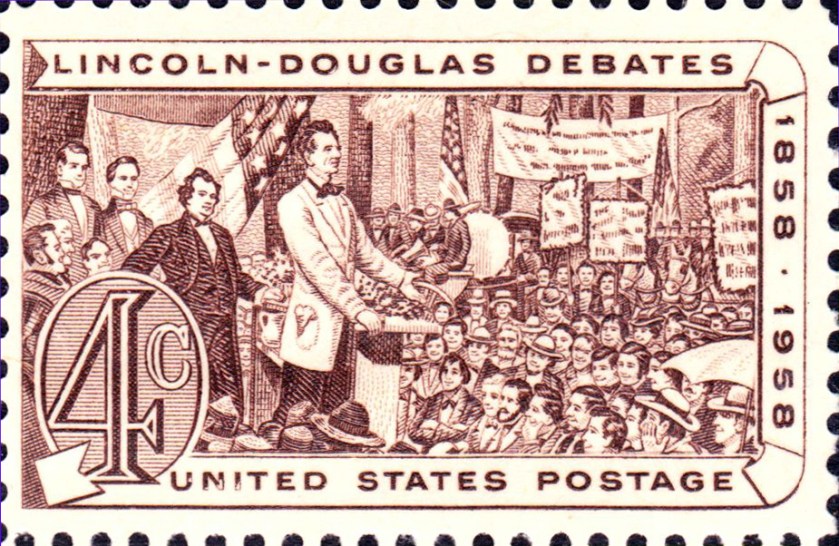
In her 2018 study Leadership in Turbulent Times, historian Doris Kearns Goodwin tackles a subject that could not be more relevant. Drawing on the life and lessons of four U.S. presidents, Goodwin holds up the achievements, foibles, and resilience of Abraham Lincoln, Theodore Roosevelt, Franklin Delano Roosevelt, and Lyndon Johnson. She examines how each came to be known for leadership as they dealt with civil war, the inequalities of the Industrial Age, the twin crises of global economic depression and war, and, finally, the struggle for civil rights. Leadership, in other words, in times of crisis and transformation. Something like the times we are in at the moment. I’m in the midst of reading Goodwin’s study. However, her examination in the opening chapter of the young Abraham Lincoln, and one quality she calls out from that period, came to mind this week after hearing the hate speech of the current resident of the White House directed at Somali Americans in Minnesota. In contrast to the powerful having a sense that they can bully and hurt …

Citi Field

Ballpark

The latest stop on my quest to visit all 30 Major League ballparks* found me, earlier this week, with a friend at the front gate of Citi Field, home of the New York Mets. It had taken almost an hour by train during the height of the evening commute to get from midtown Manhattan to Flushing. After stepping off the subway, I was disappointed to find the ballpark — home to one of two major league baseball teams in the nation’s largest city — in what was essentially a suburban setting, surrounded by parking lots. The game had just begun so we stopped only briefly to take in the entry rotunda, yet even that short pause made me think of the gateway to Ebbets Field, the famous home of the Brooklyn Dodgers. It was only later that I discovered that the ballpark was in its unfortunate location thanks to that old enemy of urbanism, Robert Moses. And yes, the owners of the Mets had appropriated the Brooklyn Dodgers and the “New York City history of …

The First Baptist Church

Religious freedom and the American experiment

Few things set my father into action more than news of some fellow Baptist or other Evangelical Christian trampling over the doctrine of the separation of church and state in order to advance the views of their personal brand of religion or to persecute a faith community they saw as un-American. That rare breed of liberal Southern Evangelical Christian, my father was a regular on the Letters to the Editor page of the local newspapers, as he worked to tell his neighbors why Baptists—of all denominations—should cherish religious freedom. Just before he died, my father—a proud member of the Religious left—sent in his last letter on the topic, in response to Tennessee’s consideration of naming The Bible the official State Book. As one of his neighbors described the letter to me at his funeral, “It was a good one!” Suffice it to say that Tom Brown would have appreciated Steven Waldman’s new book, Sacred Liberty: America’s Long, Bloody, and Ongoing Struggle for Religious Freedom as a welcome addition to our understanding of this important right. Waldman’s 2019 …

Infinite Baseball

It takes however long it takes

After his death, Stephen Jay Gould, the great paleontologist and scholar of evolutionary history, was still teaching about a subject he loved—through a posthumous book of essays about baseball. Gould and other famous scholars and writers—individuals such as historians David Halberstam and Doris Kearns Goodwin, novelist John Updike, financial journalist Michael Lewis, and New Yorker essayist Roger Angell—have all written with a special affinity for the game. Ken Burns found many of them for his 9-part PBS documentary Baseball. Yes, even poet Walt Whitman wrote about baseball in the mid-nineteenth century. I’m here to report that we have a candidate for the 2019 addition to the “smart people write about baseball” library. Let’s see what it might tell us about baseball, and life. Infinite Baseball: Notes from a Philosopher at the Ballpark is a short and entertaining work written by Alva Noë, a professor of philosophy at the University of California, Berkeley, and a lifelong New York Mets fan. I went against my standing policy of rejecting books with jacket blurbs by George Will and took …

Toni Morrison, R.I.P.

Toni Morrison, Nobel Prize-winning author and arguably our First Lady of Letters, passed away last evening, August 5th, at the age of 88. She left this earth as a new book of essays, The Source of Self-Regard, along with a recently released documentary entitled Toni Morrison: The Pieces I Am, introduced long-time fans and new readers alike to her towering intellect and broad vision. These works could not have come along at a better time. Now that she has died, we will have to rely on the power of Morrison’s words; the clarity of her vision for social justice; the love of art, music, and literature that permeates the meditations in The Source of Self-Regard and the interviews in The Pieces I Am more than ever. At the end of “Peril,” the very first offering in The Source of Self-Regard, Morrison makes the bold statement that, “A writer’s life and work are not a gift to mankind; they are its necessity.” And through 350 pages of speeches, essays, and meditations, she shows why. There are 43 pieces in The Source of Self-Regard, …