
An ongoing conversation with the past
The study of history is an ongoing conversation between past and present from which we all have much to learn.
The study of history is an ongoing conversation between past and present from which we all have much to learn.

In the coming weeks, if we are able as individuals to stay healthy, we may all be looking at books in our “to be read” pile to fill up this time of coronavirus. For very good reasons sports leagues and tournaments are shutting down. Opera houses and theatres are going dark. Schools are closing. Restaurants may be next on the list. Watching cable news is just too damn depressing (and not always very informative). As I was writing this, Major League Baseball cancelled the rest of spring training and has pushed back opening day at least two weeks. If you are looking for a good sports book to fill up your hours, I wish I could send you to Jane Leavy’s 2018 The Big Fella: Babe Ruth and the World He Created with more enthusiasm. Those who know my reading habits are aware that I always read a baseball book as part of my personal spring training. (The other part of the regimen is watching Bull Durham, the best baseball movie ever.) In 2020, The Big Fella was the …
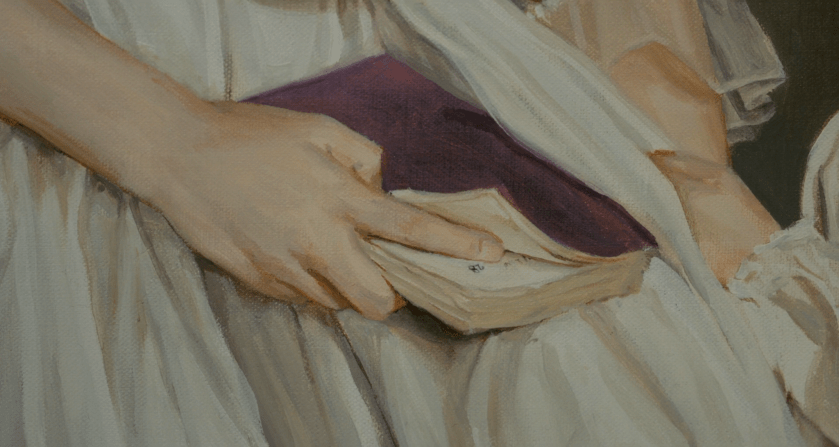
“Portrait of a Lady on Fire” is a stunning movie, created by artists who bring craft and vision to their work.

The February 10th newsletter of Chapter 16, a website celebrating Tennessee literature, was titled Paying Attention. Editor Maria Browning writes that, to her mind, February is “the most fickle month of the year in Tennessee,” with shifts between the stirrings of spring and days of snow (or, worse, ice). She continues, “Wardrobe challenges notwithstanding, this is a wonderful time to pay attention to the ever-dynamic natural world.” Her suggestion for some inspiration led me to read “Eleven Ways of Smelling a Tree” by Sewanee writer David George Haskell. As Browning notes, the piece at Emergence Magazine is a collaborative effort, with musician Katherine Lehman and art by Studio Airport. I’ve recommended Haskell’s The Forest Unseen in the past as a delightful book written by a scientist with the soul of a poet. “Eleven Ways of Smelling a Tree” has the same observational mix and magic. Haskell opens his piece with an ode to the American Basswood. “Harlem, New York CityVintage: 1908 We crack the windows on summer’s first warm days. I taste diesel smoke, acid and oily. The fumes rise …

It is surprising that a field that has focused so much on the preservation of history has an unfortunate blind spot to its own history. Historic preservation is one of the longest-lasting examples of community development, land use reform, and public history in the United States. The stories of the past efforts of our fellow citizens to ensure that parts of our history are with us today and tomorrow are varied and fascinating. Yet many, both inside and outside preservation, tell themselves a simplistic and usually inaccurate story of how we came to value parts of our past in a country that too often only values the new and what’s over the horizon. The recently released second edition of Giving Preservation a History, edited by Randall Mason and Max Page, is a strong attempt to reverse our trend at historical amnesia in the preservation field. Through seven essays retained from the first edition, six new essays prepared for the 2020 book, and two concluding chapters to wrap both works together, the editors have endeavored to put forward …

So many today seem content to settle in the midst of their ignorance and not face life with astonishment, awe, and a sense of wonder. As Margaret Renkl writes, that approach is their loss.

My annual take on the movies nominated for the “Best Picture” Oscar.
Americans have a long history of living with an eye on the horizon, seeking something shiny and new. The first religious communities of New England, founded to escape the tyranny of the established churches in Europe, led to Roger Williams and others leaving those new settlements for Rhode Island to escape the tyranny of the Puritans. The Jeffersonian search for freedom in land led to grid-and-garden patterns of development across much of the Midwest and West and, eventually, the push out of the city into the “land” of the suburb. Communitarian journeys to places like New Harmony, the Shaker villages, and (a personal favorite) the 19th century English town of Rugby, Tennessee are part of the story. Henry Ford noted that, “We shall solve the problem of the city by leaving the city,” so Ford, George Pullman and other industrialists, up to and including today’s Silicon Valley elites, have constructed company towns and “E-topias” to build something new in the land of opportunity. All of these examples and many more are part of Alex Krieger’s …

While we’ve come a long way towards “fulfilling the agenda of Reconstruction,” deep inequalities remain.
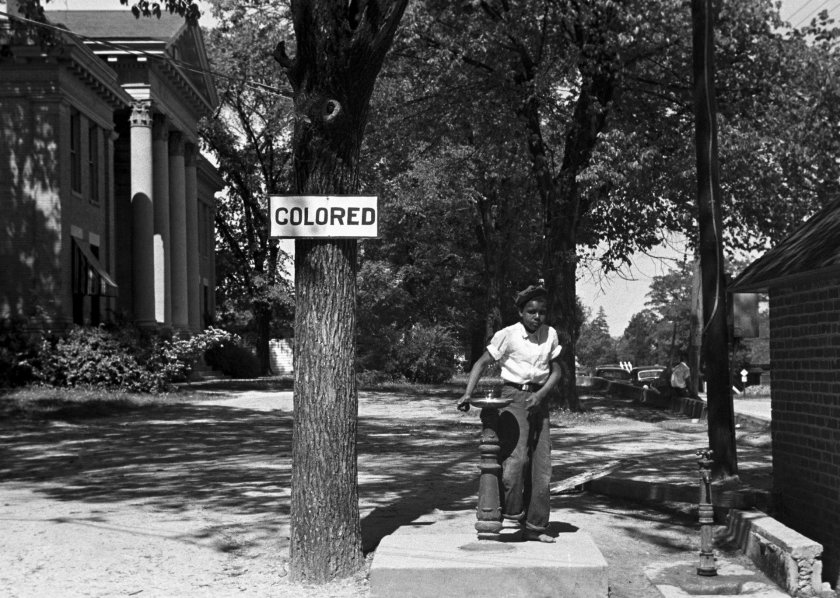
As we celebrate the life and work of The Rev. Dr. Martin Luther King, Jr. this weekend, we are reminded of how far we’ve come in terms of racial justice and equality in America. And—this year more than most—we are also reminded of how so very far we’ve yet to go. In honor of the work of Dr. King, I quoted author Michael Eric Dyson in 2019 from his book Tears We Cannot Stop: A Sermon to White America, where Dyson argues of Martin Luther King, Jr. that America has “washed the grit from his rhetoric” in order to get to a place where he can be seen and admired by the country at large. Yet it was King who said that the country’s race problem “grows out of the…need that some people have to feel superior. A need that some people have to feel…that their white skin ordained them to be first.” Difficult words for many to hear, yet, “This is why King is so important to this generation, to this time, to this …

