History and hope in the midst of denial and darkness
Historians are speaking up to help make sense of what we are facing today, and to provide hope for what can come.
Historians are speaking up to help make sense of what we are facing today, and to provide hope for what can come.
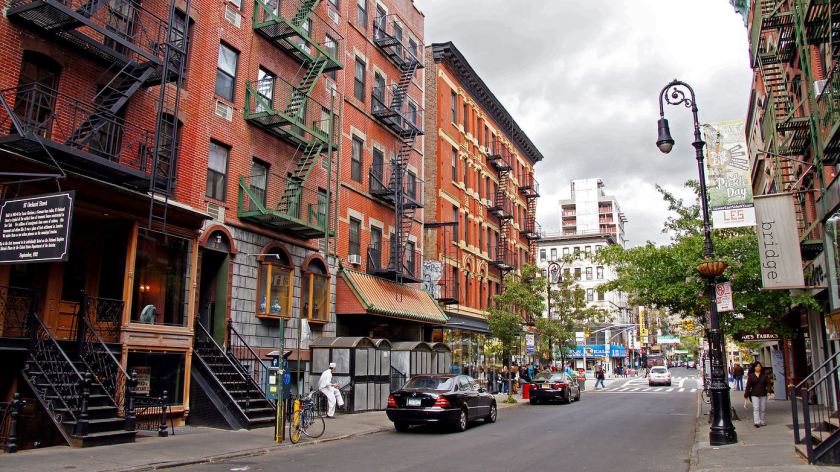
On Tuesday I spent a good part of the day at the Tenement Museum, on New York’s Lower East Side. I was there to meet with the museum’s new president, Kevin Jennings, and to tour their new Under One Roof exhibit with Annie Polland, the EVP for Programs and Interpretation. An affiliate historic site of the National Trust, the Tenement Museum tells the full American story about how many have come together to make our nation today. Which brings me to the so-called War on Christmas. The day I arrived, Kevin had just published an op-ed in Newsweek entitled “A War on Christmas? What Christmas Are You Talking About?” Early in the piece he asks the key question: “In recent years, a new holiday tradition seems to have emerged in America. From pundits to Presidents, the airwaves fill each December with people decrying the so-called “War on Christmas.” As a historian and museum President, I find myself wanting to ask “War on whose Christmas?” Those bemoaning the “War on Christmas” harken back to a mythical …
We all benefit when we are clear about what matters. I have always admired the clarity of vision that comes through the work and writings of Morris Vogel, the retiring president of the Lower East Side Tenement Museum. Morris is one of my colleagues at the National Trust, and I value our professional relationship. On a personal level, Morris is someone I look to for both advice and inspiration. In these days when the nation is – once again – struggling with its checkered history on immigration, the Tenement Museum has stepped time and again into these conversations in ways powerful, relevant and timely. I found the following statement, which Morris recently shared with his board and staff, a great reminder of how clarity of vision and mission is so important in finding one’s voice. “Tenement Museum leadership in the museum field means that our colleagues at other institutions regularly ask how we handle difficult issues, and we’ve recently fielded requests for information about how we determined our pro-active response to the government’s refugee ban. …
We are hearing a great deal these days about religious freedom. Much of it comes from individuals who appear – from their comments – to know little of our country’s history. For the past three days, I’ve been immersed in a state where all Americans would be well advised to come for a class on Religious Freedom 101. One of the truly misunderstood stories in American history is that of Rhode Island and the establishment of religious freedom. My father – that lonely breed of Southern Christian liberal – has spent the past decade or more writing letters to the editor that remind his fellow church-goers of the importance of the separation of church and state. For my part, I’ve been in Providence and Newport this week, and took the time to visit two of the landmarks of the nation’s move to ensure that all had religious freedom, including the right not to worship. Friday, I was in Newport for a series of meetings that began at Touro Synagogue, a National Historic Landmark and an …
 MORE TO COME...