All posts tagged: National Trust for Historic Preservation

Tenement Museum

A war on whose Christmas?

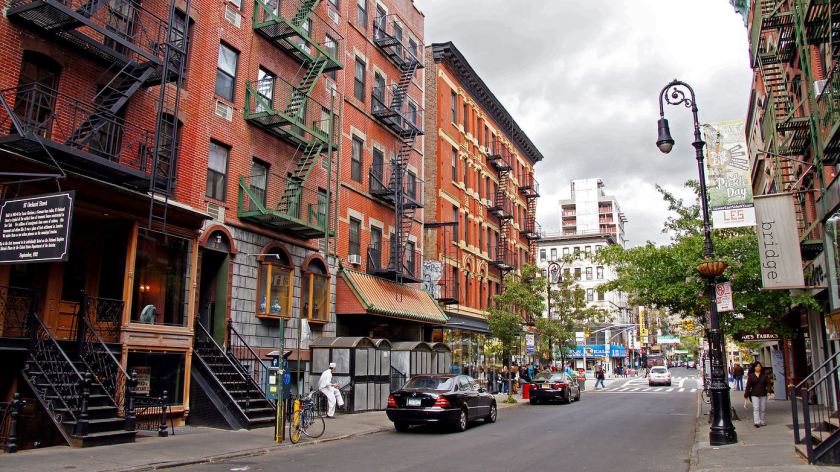
On Tuesday I spent a good part of the day at the Tenement Museum, on New York’s Lower East Side.  I was there to meet with the museum’s new president, Kevin Jennings, and to tour their new Under One Roof exhibit with Annie Polland, the EVP for Programs and Interpretation.  An affiliate historic site of the National Trust, the Tenement Museum tells the full American story about how many have come together to make our nation today. Which brings me to the so-called War on Christmas. The day I arrived, Kevin had just published an op-ed in Newsweek entitled “A War on Christmas?  What Christmas Are You Talking About?”  Early in the piece he asks the key question: “In recent years, a new holiday tradition seems to have emerged in America. From pundits to Presidents, the airwaves fill each December with people decrying the so-called “War on Christmas.” As a historian and museum President, I find myself wanting to ask “War on whose Christmas?” Those bemoaning the “War on Christmas” harken back to a mythical …

We Shine a Light on the Past to Live more Abundantly Now

This week at the National Trust, we are preparing to host the 2017 PastForward national preservation conference in Chicago.  Long-time colleagues and new friends who care about the past and the places that bring that past into the present will gather from all across the country.  I suspect that we’ll share thoughts that challenge the conventional wisdom, offer support for a broader understanding of the American story, and come away with a new appreciation for the work that takes place by preservationists and by those who don’t (yet) identify as preservationists. Why do these people gathering this week in Chicago care about the past?  And what’s with that name, PastForward? In a recent conversation that included Pulitzer Prize-winning historian Annette Gordon-Reed, (The Hemingses of Monticello: An American Family), journalist and author Krista Tippett summed up the answer to those questions with her opening line:  “In life, in families, we shine a light on the past to live more abundantly now.” I think that’s a great summation of why so many of us will gather this …

Complicity in a Shared Work of the Imagination

Last week I had the privilege of launching the National Trust’s National Treasure campaign for Clayborn Temple, a landmark in the history of the Civil Rights movement.  It was here where Memphis sanitation workers gathered in 1968 and decided to go on strike, marching with their “I Am a Man” signs that became a potent symbol for all that is at stake in the fight for equal justice.  Clayborn Temple was where the leadership of The Rev. Dr. Martin Luther King, Jr. transformed the strike from a local labor dispute into a national issue, effectively tying the sanitation workers’ cause with the national issues of economic justice and racism. It was to Memphis and Clayborn Temple that Dr. King was returning when he was struck down by an assassin’s bullet. To be in that sacred space with more than 150 Memphis residents, young African American poets and musicians, revered spiritual leaders who walked with the sanitation workers, preservationists of all ages, and current members of the workers’ union was an honor and a reminder of …

Cooper-Molera Garden

To learn something new (about old places), bring in new partners with different perspectives

At the National Trust for Historic Places, where I work, we believe that historic sites are fundamentally places of intersection. When we allow them to share their stories, historic sites are dynamic spaces where past, present, and future meet in a variety of ways.  One very important way they intersect is with community. About ten days ago, I visited Cooper-Molera, one of our National Trust historic sites where delight and enjoyment are at the heart of our community intersections.  Cooper-Molera is a two and one-half acre property in the heart of downtown Monterey, California’s historic commercial district. There we are implementing a new model that combines commercial uses and interpretation in creative ways.  We will have a bakery, restaurant, and event center in adaptively used historic buildings operating in collaboration with museum uses in one of the adobe residences to reinvigorate the site, sustain it financially and engage audiences that might never visit a historic site or house museum. Those are the people we should all want to meet at this intersection. We call this …

Emotions Flow Through Places – Thoughts After Charlottesville

Last week I referenced Dr. Mindy Fullilove’s book Root Shock with a story that spoke to how emotions flow through places.  I wrote before the events in Charlottesville—and the reactions to that weekend—brought place, memory, and emotion to the forefront of our national conversation. Stephanie Meek’s statement on Confederate memorials and the confronting of difficult history speaks to how emotions that arise from place are not always built upon strong, positive memories.  Of course, Dr. Fullilove understands this all too well.  Root Shock is focused on the difficult history of urban renewal, something seen in Charlottesville’s destruction of the African-American community of Vinegar Hill in the 1960s.  At the Trust, as Stephanie notes, “we believe that historic preservation requires taking our history seriously. We have an obligation to confront the complex and difficult chapters of our past, and to recognize the many ways that our understanding, and characterization, of our shared American story continues to shape our present and future.”  That is especially true of our Civil War history, and the fact that many of …

Clarity of Vision

We all benefit when we are clear about what matters. I  have always admired the clarity of vision that comes through the work and writings of Morris Vogel, the retiring president of the Lower East Side Tenement Museum.  Morris is one of my colleagues at the National Trust, and I value our professional relationship.  On a personal level, Morris is someone I look to for both advice and inspiration. In these days when the nation is – once again – struggling with its checkered history on immigration, the Tenement Museum has stepped time and again into these conversations in ways powerful, relevant and timely.  I found the following statement, which Morris recently shared with his board and staff, a great reminder of how clarity of vision and mission is so important in finding one’s voice. “Tenement Museum leadership in the museum field means that our colleagues at other institutions regularly ask how we handle difficult issues, and we’ve recently fielded requests for information about how we determined our pro-active response to the government’s refugee ban. …

Panama Hotel

Those who do not know their history…

The recent executive order temporarily banning travel from seven predominantly Muslim countries brings to many minds an earlier, ugly incident from American history.  As is often the case, those who do not know their history are destined to repeat it. An op-ed in yesterday’s New York Times spoke to this earlier, discriminatory ban.  When Lies Overruled Rights tells the story of the internment of Japanese-Americans during World War II. “Seventy-five years ago on Sunday, under President Franklin D. Roosevelt’s Executive Order 9066, all people of Japanese ancestry living on the West Coast were forced to leave their homes and report to incarceration camps. Two-thirds were American citizens. Fred Korematsu, my father, then 23, refused to go. A proud and loyal citizen, he had tried to enlist in the National Guard but was rejected and was wrongly fired from his job as a welder in an Oakland, Calif., shipyard He was arrested and tried for defying the executive order. Upon conviction, he was held in a horse stall at a hastily converted racetrack until he and …

Who Tells Your Story

The full story of America can be seen, told, and appreciated at so many places and on so many levels…if one only cares to stop and listen. Candice and I are in New York City for the Martin Luther King, Jr. holiday weekend.  New York is the poster child for how our rich national story is a blend from so many different people, both ordinary and extraordinary, and it is timely to be here this weekend.  The Rev. Dr. Martin Luther King, Jr. is among the most powerful examples of an extraordinary person who fought to ensure that the full talents, opportunities, and stories of all Americans would be supported and recognized.  In the first 24 hours in the city, we saw, heard, and thrilled to various aspects of the story that it truly American. We are staying in Greenwich Village, which counts among its many notable former residents Richard Wright, author of Black Boy and urban activist Jane Jacobs.  Neither was seen as anything other than ordinary, until they put pen to paper, spoke …

A Wider, More Generous, More Imaginative Perspective: Preservation in 2017

(Note:  This post originally appeared – in a slightly edited form – on the National Trust for Historic Preservation’s Preservation Forum blog.) 2016 was a time of reflection and anticipation for many Americans, including preservationists. We celebrated the 100th anniversary of the National Park Service and the 50th anniversary of the National Historic Preservation Act, but we also used this year to anticipate the future. Moving past those milestones, we have the opportunity—some would say the obligation—to rethink preservation and seek our place of relevance in the changed political and social climate of 2017. Many people contributed to our convenings on the future of preservation. Out of those conversations, we envisioned a preservation movement that grounds its work in human needs and aspirations: “A people-centered preservation movement empowers people to tell their stories and to engage in saving the places that matter to them; plays an increasingly important role in creating sustainable, resilient, equitable, and livable communities; and works collaboratively with a wide range of other fields to fulfill fundamental human needs and achieve essential …

Relevance

Nina Simon, the Executive Director of the Santa Cruz Museum of Art and History, gave a powerful TrustLive talk at the recent Houston PastForward conference on place and relevance.  She defines relevance as a key that unlocks meaning, opening doors to experiences that matter to us, surprise us, and bring value into our lives. In her book The Art of Relevance, Nina applies two criteria to all the stories she tells about relevance.  First, how likely new information is to stimulate a positive cognitive effect – to yield new conclusions that matter to you.  Second, how much effort is required to obtain and absorb that new information.  The lower the effort, the higher the relevance.  As those of us who heard her speak know, she frames this work in terms of doors and keys that help different groups access rooms of information.  To understand individuals different from us, we have to go outside our rooms and look – with empathy – at the views of the community outside the door.  We have to learn from …