All posts tagged: Recommended Readings

The struggle between tyranny and freedom

America faces great challenges in 2020. It is even tempting to call these times unprecedented, but they are not. Harry Truman, of course, made this point in very plain language: “It was the same with those old birds in Greece and Rome as it is now. . . . The only thing new in the world is the history you don’t know.” As Samuel W. Rushay, Jr. wrote about Truman’s understanding of history and the threats to democracy in the 1940s, “(H)is understanding of history provided him with a wider perspective on communism, whose assault on democracy was, in the words of historian Elizabeth Edwards Spalding, the ‘current form of a timeless struggle on earth’ between the forces of tyranny and freedom.” We have seen that struggle between tyranny and freedom over and over again here in America. I was reminded of that feature of American life during my summer break, as I read of one particular moment in that struggle as told in Edward Achorn’s fascinating new book Every Drop of Blood: The Momentous …

Pathway Free-Photos

The lens is not the landscape

How did you respond when you first discovered the many ways there are to view the world? For some, this isn’t a problem. From an early age they have looked at the world through a particular set of glasses, assuming that their view is the correct one. They learn how to describe what they see in terms that others who wear the same glasses understand. And unless they have some life-changing jolt — perhaps a worldwide pandemic that doesn’t care about their nationality, religion or political ideology; or an especially graphic picture of systemic racism that refuses to be ignored — they never ask questions about the things that are not clear. But for those who see another perspective or choose to try on different pairs of glasses, all of a sudden they realize that their world view is not the only one. They have to choose how to respond. Buddhist monk Thich Nhat Hanh describes this broader existence when he notes, “While living the life of a wave, the wave also lives the life …

Finding your potential: Aging in a time of turmoil

I recently dove into two books on aging. It wasn’t because I felt old, aged, infirmed, or any of those descriptors we often use when talking about the elderly. However, I can read a calendar, and I recognize that I can’t claim to be middle age when no one lives to be 130 years old.* My study began just as the global pandemic struck, with the coronavirus focusing so much of its potency on the vulnerable and those 60 years of age and older. I finished the second book as the nation roiled from both the largest economic downturn since the Great Depression and the injustice that was highlighted in the grotesque and brutal deaths of black men, women, and children at the hands of the police. Whether I liked it or not, I was forced to think about aging in a time of turmoil. Talk about your inauspicious timing. In light of current events, I quipped to some friends that these book choices could be interpreted as: a sign of naiveté, a sign of …

Grant

Hope, redemption, and U.S. Grant

Last evening the History Channel began a three-part mini-series entitled Grant. The series* is based on the Ron Chernow magnificent biography of the same name. I decided to repost my 2018 review of Chernow’s work here to provide readers with some background along with encouragement to watch the mini-series. I was thinking of the themes of hope and redemption and how much impact they can have on our lives as I’ve been reading Ron Chernow’s new biography of Ulysses S. Grant.  Chernow is one of the few historians who, through deep scholarship and powerful writing, can drive the country toward a full reappraisal of a historical figure’s life and impact.  David McCullough’s works on Truman and John Adams come immediately to mind as examples of this type of national reassessment, but Chernow has also worked his magic in the past with Alexander Hamilton and George Washington. He does so again with this biography of Grant. The historical stereotype of U.S. Grant — especially if you grew up in the South — is of a failed …

Remembering the uncounted

Today we pause to honor and mourn the military personnel who have given the last full measure of devotion for our country. As we fight a worldwide pandemic on this particular Memorial Day, we would do well to recognize the global identities of those American service men and women we honor. Let us remember the more than 57,000 Filipino soldiers who died fighting as members of the U.S. Army from 1941-1945. We should add our gratitude for the 23 members of the Army’s 65th Infantry Regiment, a segregated Hispanic unit made up primarily of Puerto Ricans, who were killed in World War II while participating in the battles of Naples-Fogis, Rome-Arno, central Europe and Rhineland. And we should never forget the more than 600 soldiers who died while serving in the 442nd Regimental Combat Team — the most decorated unit for its size in U.S. military history and almost entirely composed of second-generation American soldiers of Japanese ancestry (Nisei) — fighting valiantly in Europe against the Axis powers although many had families confined to internment …

Finding our way

Dr. Jennifer Eberhardt’s powerful 2019 book Biased has been where I turned over the past week when I had wanted to read more than New Yorker cartoons or internet comment boards. And it has been worth the investment of time. As an African American scientist helping to teach and train groups as disparate as the Oakland Police Department, prisoners in the San Quentin penitentiary, and Silicon Valley tech companies, Dr. Eberhardt is helping us understand the way that prejudice hides below the surface of polite society yet shapes so much of what we see, think, and do. She calls on the latest neuroscience to track how our brains develop, react, and think. Then she lays out stories and studies that establish the pervasiveness of unconscious bias, even in those of us who work to fight tendencies toward prejudice. The widely-hailed book looks at bias against a range of individuals and communities, yet Dr. Eberhardt speaks most often about our prejudice towards African Americans. “In this country,” she writes, “blacks have become a reminder of the racial …

Geography and imperialism

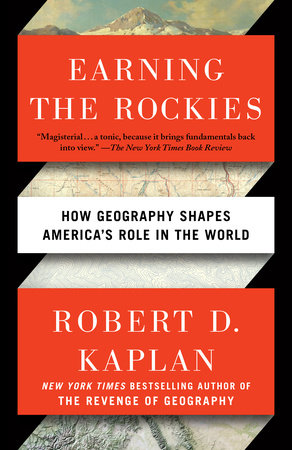
I picked up Robert D. Kaplan’s 2017 book Earning the Rockies: How Geography Shapes America’s Role in the World based on several high profile recommendations. In a short 178 pages, Kaplan — a card-carrying member of the East Coast elite that he proceeds to denigrate throughout the book —describes a cross-country trip taken in 2016 and mixes in his thoughts on how our geography led the U.S. to become a benevolent imperialist power. And calling on his impressive foreign policy experience and credentials, there are parts of this meditation on America’s rise and decline that are skillful and insightful. Kaplan argues that America became a great country not just because of our constitution and values, but because it occupies some of the best, most fertile land on the planet that is connected by a river system (running diagonally) that unites the heartland into a strong political unit. “America’s greatness,” in his words, “ultimately, is based on it being a nation, an empire, and a continent rolled into one.” And in taming the frontier, America — according to Kaplan’s analysis …

Babe Ruth and the creation of the modern celebrity

In the coming weeks, if we are able as individuals to stay healthy, we may all be looking at books in our “to be read” pile to fill up this time of coronavirus. For very good reasons sports leagues and tournaments are shutting down. Opera houses and theatres are going dark. Schools are closing. Restaurants may be next on the list. Watching cable news is just too damn depressing (and not always very informative). As I was writing this, Major League Baseball cancelled the rest of spring training and has pushed back opening day at least two weeks. If you are looking for a good sports book to fill up your hours, I wish I could send you to Jane Leavy’s 2018 The Big Fella: Babe Ruth and the World He Created with more enthusiasm. Those who know my reading habits are aware that I always read a baseball book as part of my personal spring training. (The other part of the regimen is watching Bull Durham, the best baseball movie ever.) In 2020, The Big Fella was the …