All posts tagged: Recommended Readings

Books (along with a smattering of movies and plays) that I have found of interest and want to share

What a Wonderful Washington Weekend!

It is a great weekend to live in Washington… Stanley Cup Celebrations Continue — From bars in Arlington to today’s game at National Park to the Georgetown Waterfront, the Stanley Cup Champion Washington Capitals are having a great time celebrating the franchise’s first Stanley Cup championship with the hometown fans.  While I was across the country when they clinched on Thursday evening, I could hear the city explode from Phoenix. We’re ALL CAPS here in D.C. It was an especially satisfying run, given 1) that they weren’t expected to go very deep due to losses of players to the expansion draft, and 2) that they got through a couple of perennial stumbling blocks:  John (Torts) Tortorella of the Columbus Blue Jackets and—most significantly—the Pittsburgh Penguins.  Too bad Martin St. Louis—who was always a playoff pest—no longer plays for Tampa Bay. If you want another thrill, watch the highlights from the cup-clinching game. Pride 2018 Celebration — Thousands have descended on DC this weekend for the annual Pride celebration.  Andrew almost always makes it to Pride, but because of …

Bad stories

I am in the middle of an impressive yet troubling book by Steve Almond entitled Bad Stories.  This work about the American psyche in 2018, by the New York Times best-selling author and co-host of the Dear Sugars podcast (with fellow writer Cheryl Strayed), looks at the many reasons we came to be where we are today as a nation. There is much to consider in this work.  But for now, I want to focus on stories — good and bad — and what they can mean personally and professionally for those of us who look to “tell the full American story.” Almond writes, “I’ve placed my faith in stories because I believe them to be the basic unit of human consciousness. The stories we tell, and the ones we absorb, are what allow us to pluck meaning from the rush of experience.”  He then quotes the Israeli historian Yuval Noah Harari, who insists that our species came to dominate the world in part because of “our unique cognitive ability to believe in the imagined, …

Trinity Church Labyrinth

Sometimes the only way is the long one

During a 2013 vacation where each family member chose an activity close-to-home for us to share, my wife’s selection was a day at a local retreat center.*  Upon arrival, I was pleased to see that the center had created a labyrinth in the woods.  Labyrinths have come to have a special place in my heart.  A dear friend of our family who died in his early 20s was memorialized with a labyrinth designed for people of all physical abilities.  Andrew had spent the majority of his life in a wheelchair, but that never constrained his spirit. Back at the retreat center, “walking the labyrinth” became my activity for the morning. I was reminded of this recently while re-reading Rebecca Solnit’s wonderful book Wanderlust:  A History of Walking.  An early chapter is titled “Labyrinths and Cadillacs: Walking Into the Land of the Symbolic.” (I told you it was a wonderful book!)  Solnit, who describes herself as “having been raised as nothing in particular by a lapsed Catholic and a nonpracticing Jew,” found herself walking the labyrinth …

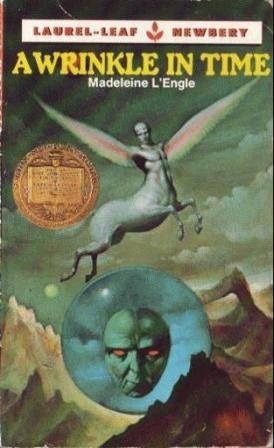
A Wrinkle in Time

I am still every age that I have been

It was a big week in our household, as we acquired a new hip and celebrated a birthday.*  As a small child, you may have received a new puppy on your special day.  Others years may bring clothes for college or gifts for the new apartment. Later, you might rejoice with a new child or a special trip abroad. On occasion one might celebrate a birthday with a broken shoulder.  Now that we’re in the new hip stage (for a second time), I’m comforted by this thought of the author Madeleine L’Engle: “I am still every age that I have been. Because I was once a child, I am always a child. Because I was once a searching adolescent, given to moods and ecstasies, these are still part of me, and always will be… This does not mean that I ought to be trapped or enclosed in any of these ages…the delayed adolescent, the childish adult, but that they are in me to be drawn on; to forget is a form of suicide… Far too …

Writer's Block

Writing, briefly. Writing well.

I am a frustrated writer.  Not the kind who needs to work on The Great American Novel (or TGAN)*.  If I wanted to write fiction — great or otherwise — there are plenty of models to follow, such as Flannery O’Connor’s habit of three-hours of writing first thing every morning, or advice to be found in places like Annie Dillard’s eloquent The Writing Life  and Cheryl Strayed’s direct and somewhat salty response (be forewarned) to a young aspiring writer.  No, I want to be able to write essays, blog posts, magazine articles, reports, letters, and speeches that pull people in, make them care about the topic at hand, show a bit of my personality, and only say what needs to be said and nothing more. If you have similar aspirations, you may not want to take advice about writing from a computer programmer, but let me suggest that Paul Graham — a programmer, writer, and investor who helped co-found Y-Combinator, a new type of startup investment firm — should be the exception. In a tiny …

Hope and Redemption

This Wednesday features a coming together of events that cannot be a coincidence.  For those who believe in romance, the 14th of February is, of course, Valentine’s Day.  On the same day, Christian believers — especially of the liturgical persuasion — will observe Ash Wednesday, the first day of the penitential season of Lent leading up to Easter.  And for those like Annie Savoy* and me who worship at the Church of Baseball, February 14th is when, as spring training begins, we hear those magical words “pitchers and catchers report” that take ever-optimistic fans into flights of fancy about the prospects for their favorite team. I’m going with the thought that this particular February 14th is a harmonic convergence of Hope and Redemption.** I was thinking of those two themes and how much impact they can have on our lives as I’ve been reading  Ron Chernow’s new biography of Ulysses S. Grant.  Chernow is one of the few historians who, through deep scholarship and powerful writing, can drive the country toward a full reappraisal of …

Running Dog Guitar Ought-3

Practicing

Over the holidays I returned to a book I first read some ten years ago.  Glenn Kurtz’s Practicing:  A Musician’s Return to Music is, in its simplest form, a memoir of a young child prodigy on the classical guitar who attends the prestigious New England Conservatory of Music and then quits playing in his early 20s when he realizes he won’t be the next Segovia.  Fifteen years and a career change later, Kurtz returns to the guitar and finds, in the process, a richer love for music. But like all good memoirs, Practicing is so much more than a simple life’s story. Kurtz has been practicing since he was eight years old, but it isn’t until he returns after his hiatus that he begins to understand all the richness of the various aspects of preparing for performance, or life. “Practicing is training; practicing is meditation and therapy. But before any of these, practicing is a story you tell yourself, a bildungsroman, a tale of education and self-realization. For the fingers as for the mind, practicing …

Responding to Anger

Our recent national conversations too often seem soaked in anger. I don’t know anyone who hasn’t become angry.  It is a trait we all seem to share.  What differs is how we respond to anger:  our own and others. Over the winter holiday, our family visited the National Museum of African American History and Culture.  Last Friday, our divisional management team toured the Mere Distinction of Colour exhibit at the National Trust Historic Site Montpelier.  Both cultural institutions showcased the many ways a people oppressed have responded to anger held against them by others as well as that held inside themselves. While at Montpelier, I picked up Michael Eric Dyson’s book Tears We Cannot Stop, a powerful call for recognition and redemption which brims with this Baptist preacher’s righteous anger. In her collection of essays No Time to Spare:  Thinking About What Matters, Ursula K. Le Guin has a two-part piece on anger. The first half looks at public anger, while the second focuses on our private anger.  I thought of the first in the …

Of Love and Loss

It is a special mind that can take a sliver of historical fact and spin out an imaginative and totally unexpected tale of love and loss as intriguing and captivating as in a new novel I recently read. Lincoln in the Bardo (2017) by George Saunders is an at times perplexing yet ultimately satisfying novel. Saunders builds off the fact that in February 1862, just a year into the Civil War, President Abraham Lincoln’s 11-year-old son Willie dies of typhoid fever.  It is known from contemporary accounts that the President went several evenings to stay in the crypt with his son’s body in Georgetown’s Oak Hill Cemetery. Saunders takes that bit of knowledge and turns it into a rich story populated with dozens of spirits who reside in the Bardo, which is the Tibetan Buddhist name for a transition period between death and rebirth.  They are the primary narrators of Lincoln’s visit, which in Saunders’ telling occurs all in one night.  In the first half of the book, the supernatural narration goes on a bit …

Respect is a Decision

We are heading into a season when generations will mix together with more frequency than they may at other times of the year (around a dining table for a holiday meal, for instance.)  While we interact with people of a variety of ages at work, the differences in generations are often much wider when we move outside the office. I was thinking of the clashes that often arise during these gatherings as I was reading a new book of essays by the science fiction writer Ursula K. Le Guin entitled No Time to Spare:  Thinking About What Matters.  Le Guin is 88 and, in this delightful and insightful book, she is not shy about saying she is old.  In fact, don’t suggest otherwise.  As she notes, “Encouragement by denial, however well-meaning, backfires.  Fear is seldom wise and never kind.  Who is it you’re cheering up, anyhow?  Is it really the geezer?” But what got me to thinking about relationships between generations, and the importance respect plays in all of our dealings with each other, is …