Touch the earth
Moving at the speed of life as we walk, we touch the earth, transforming and healing ourselves.
Moving at the speed of life as we walk, we touch the earth, transforming and healing ourselves.
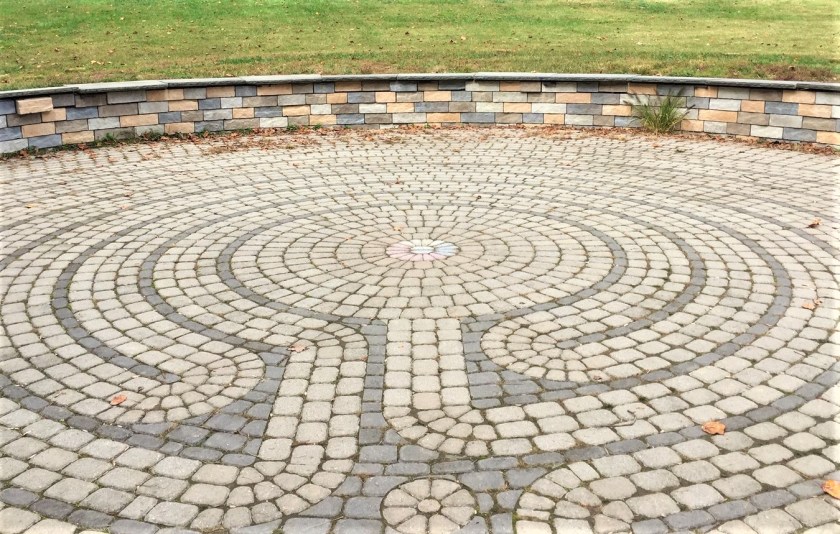
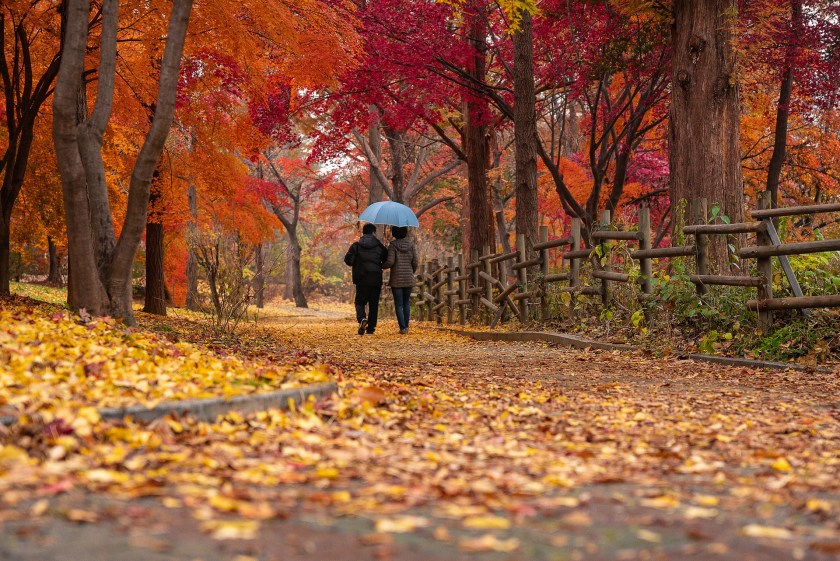
Yesterday we took a walk through Brookside Gardens. It was a beautiful fall day, the colors were vibrant, and the air was clean. Along the path were small signs of “Garden Mindfulness” with reminders to “feel the air moving across your skin” and to “bring awareness to those parts of the body where you could feel the wind.” After a while we came upon a labyrinth placed in a tranquil meadow setting. As I slowly walked the curving stone path, I recalled the rules and morals of the practice from my reading of Rebecca Solnit’s delightful book Wanderlust: A History of Walking. “…sometimes you have to turn your back on your goal to get there, sometimes you’re farthest away when you’re closest, sometimes the only way is the long one. After the careful walking and looking down, the stillness of arrival was deeply moving.” In these troubled times, we are all on a difficult journey. It is important to recall that sometimes the only way is the long one. Work that is meaningful takes time …

As 2018 draws to a close, I’m sharing this list of the books I read over the past twelve months. Since returning from sabbatical early in 2016, I committed to reading more, and to seek out a wider range of works beyond my normal histories and biographies. Here are the treasures I found on my reading shelf this past year. Lincoln in the Bardo by George Saunders. I began the year with a work of fiction. In this at times perplexing yet ultimately satisfying novel, Saunders builds off the fact that in February 1862, just a year into the Civil War, President Abraham Lincoln’s 11-year-old son Willie dies of typhoid fever. It is known from contemporary accounts that the President went several evenings to stay in the crypt with his son’s body in Georgetown’s Oak Hill Cemetery. Saunders takes that bit of knowledge and turns it into a rich story populated with dozens of spirits who reside in the Bardo, which is the Tibetan Buddhist name for a transition period between death and rebirth. Tears …

During a 2013 vacation where each family member chose an activity close-to-home for us to share, my wife’s selection was a day at a local retreat center.* Upon arrival, I was pleased to see that the center had created a labyrinth in the woods. Labyrinths have come to have a special place in my heart. A dear friend of our family who died in his early 20s was memorialized with a labyrinth designed for people of all physical abilities. Andrew had spent the majority of his life in a wheelchair, but that never constrained his spirit. Back at the retreat center, “walking the labyrinth” became my activity for the morning. I was reminded of this recently while re-reading Rebecca Solnit’s wonderful book Wanderlust: A History of Walking. An early chapter is titled “Labyrinths and Cadillacs: Walking Into the Land of the Symbolic.” (I told you it was a wonderful book!) Solnit, who describes herself as “having been raised as nothing in particular by a lapsed Catholic and a nonpracticing Jew,” found herself walking the labyrinth …

Walking the streets is what links up reading the map with living one’s life.
 MORE TO COME...