
“The only thing I know that can effectively change hearts and minds is story. The ONLY thing that I have ever, ever seen melt an icy soul is when someone hears another’s story.” *
Two people may look at a situation and see two very different things. That’s not necessarily a bad thing. Two heads are better than one, as the old saying goes. But when one of the two is working to seize the narrative and shape facts to belief, two stories can become very problematic. Let’s take a few minutes to consider stories and myths that stretch from Eden to Birmingham to Minneapolis.
TWO STORIES. ONE GIFT.
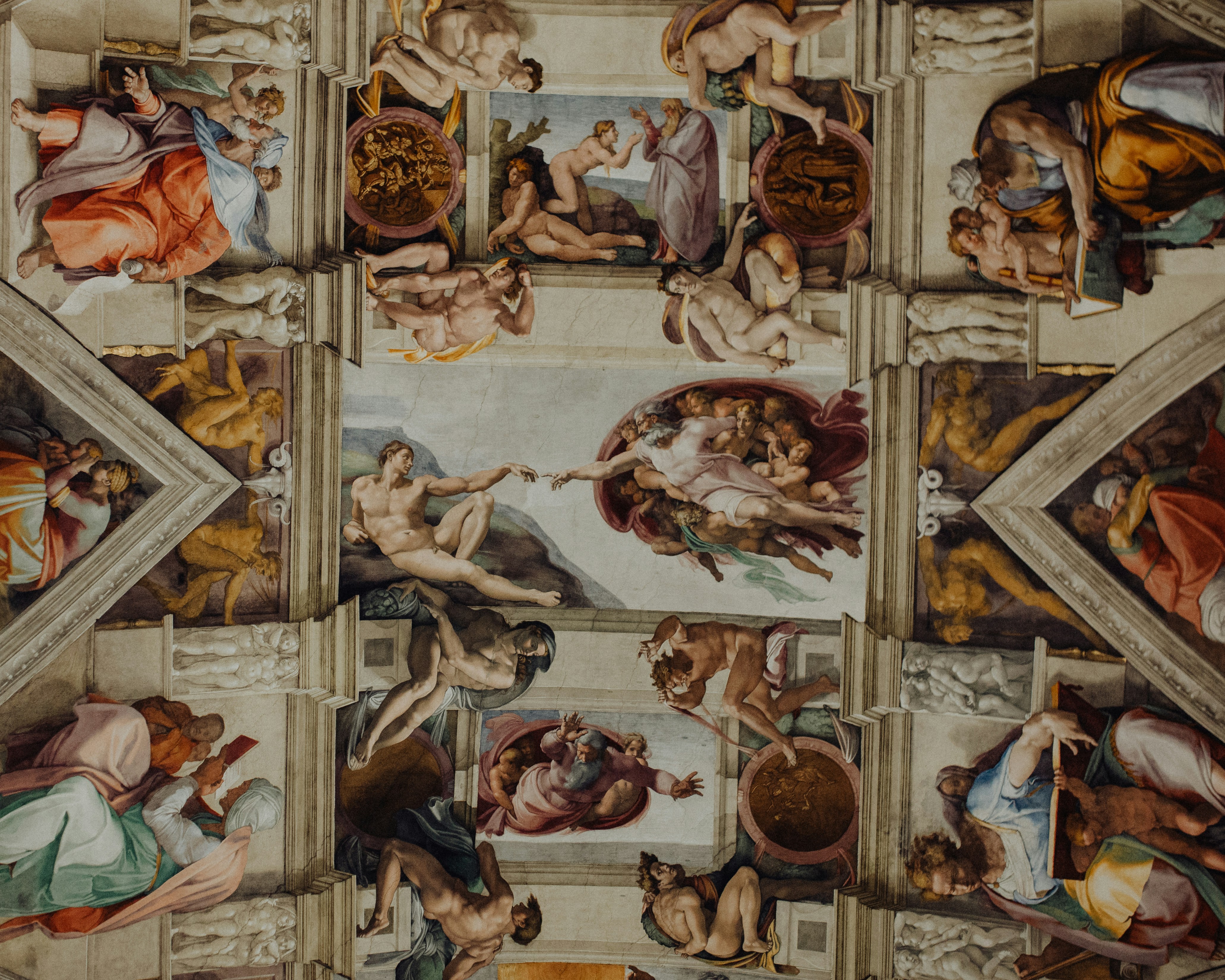
Some of the oldest stories known to humankind are creation stories.
In Serving Up Scripture: How to Interpret the Bible for Yourself and Others, Biblical scholars Jennifer Garcia Bashaw and Aaron Higashi point out the difficulties in trying to read the Genesis creation stories literally.
“There are many Bible readers who, out of a sense of loyalty to a literal-historical understanding of Genesis 1, feel compelled to deny the conclusions of modern sciences. But this feeling is unnecessary because Genesis 1–2:3 does not claim to be a literal-historical text. Rather, it’s a part of a common genre of ancient religious literature known as the creation myth, which is not intended to be a historical representation of events.”
The second creation story in Genesis contradicts much of the first. To count the ways, click on the link.
The Bible does us a favor by beginning with two contradictory stories, signaling “at the outset what this text actually is: a diverse collection of religious traditions that have been brought together by different communities of faith over a long period of time. When you read the Bible,” Bashaw and Higashi argue, “you’re reading an anthology of ancient religious literature—not a textbook, not an instructional manual, not a love letter from God, and not a complete work of systematic theology.”
“Now, just because it’s an anthology of ancient religious literature doesn’t mean it can’t be inspired by God, or say true things about God, or be helpful in trying to understand God. Its being an anthology just means that whatever is in it that is true, inspired, or helpful will come through in many, sometimes conflicting, voices.”
We should not work to protect belief from scrutiny but rather we should subject our beliefs to the light of day and have the courage to trust the result.
Which takes me to recent events in Minnesota.
WHEN TWO STORIES DON’T LEAD TO THE TRUTH
In Nineteen Eighty-Four George Orwell famously wrote: “The Party told you to reject the evidence of your eyes and ears. It was their final, most essential command.” Rebecca Solnit adds that it “is only by learning to distrust yourself that you come to trust those who are unworthy of it, who are transparently dishonest and self-serving, who offer lies that contradict yesterday’s lies and new promises after breaking the old ones.”
The attempts at erasure and memory manipulation we are seeing in today’s world are everywhere. As has been reported, the administration is working overtime at narrative control, whether it be after the killing of a young woman by a federal agent in Minnesota, with the unbelievable infatuation with Greenland, or the slow-walking of the release of the Epstein files, the latter in direct violation of federal law.
While many involved with political journalism have lost their way, one of the journalist who continues to speak truth to power is Greg Sargent. Writing in The New Republic, Sargent has shown how the administration is trying to restore ethnic engineering to the center of immigration policy. Yet few in the mainstream media have made this connection. Sargent reminds us that the White House Deputy Chief of Staff, by taking this path, is denying to millions the blessings that his Jewish ancestors—who fled antisemitic oppression when they first arrived here in 1903—and he himself have been so fortunate to enjoy.
But the shooting of Renee Good is breaking through the both-siderism of the media, at least on some levels, even at the New York Times.
Award-winning journalist Nesrine Malik writes in the powerful conclusion of her first book We Need New Stories: The Myths that Subvert Freedom that myths “work hard to prevent change from happening. They are powerful. But they are not all-powerful.”
The strength of the myths is not in facts, but in the narratives, so it is impossible to fight fake facts with other facts. What is needed, Malik asserts, are new stories that are not just the correction of old stories, but are visions that assert that “for societies to evolve, an old order must change.”
FROM BIRMINGHAM TO MINNEAPOLIS
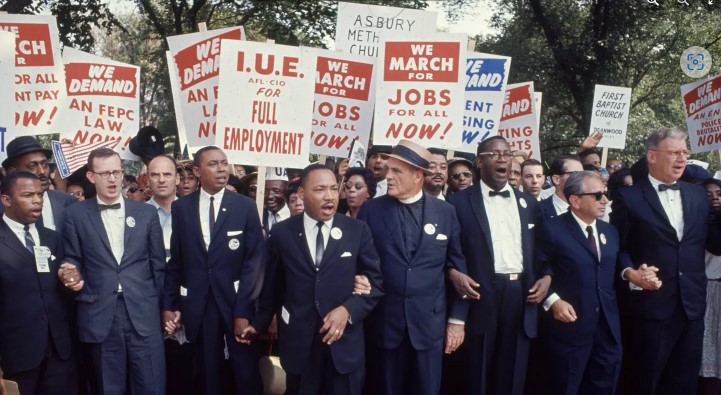
Quaker activist Parker J. Palmer looks at two stories which he frames as moving from Birmingham to Minneapolis. Palmer reminds us that while we will speak of MLK with reverence on the holiday celebrating his birthday—“lifting up his famous I Have a Dream speech”—we need to remember “that during King’s years as an unwanted civil rights activist and unheeded prophet, he was at the top of white America’s most-hated list.”
On April 12, 1963, King was jailed in Birmingham, charged with violating a state court injunction banning anti-segregation activity in that city. King used his time there to write his 6,500 word Letter from a Birmingham Jail, encouraging whites to join the nonviolent protests for love, truth, and justice. Palmer suggests we use our celebrations of the MLK holiday to wrap our hearts and minds around the words of the prophet:
“If America does not respond creatively to the challenge to banish racism, some future historian will have to say that a great civilization died because it lacked the soul and commitment to make justice a reality for all [people].“
Palmer asks us to take King’s question seriously: “Where do we go from here—chaos or community?”
Anand Giridharadas in his Substack The Ink also sees two stories.
“I see then that this is both a very dark time and, potentially, a very bright time. It’s important to hold these truths together.
When I look down at the ground of the present right now, I feel depressed. If I lift my head to the horizon, I see a different picture.
This is not the chaos of the beginning of something. This is the chaos of the end of something. . . . We are living through a revolt against the future. The future will prevail.”
STORIES CAN HELP US LINK PAST AND PRESENT
Consider once again those creation stories, which were collected and put into their final form after the Babylonian exile, around the mid-5th century BCE. “In the aftermath of their national calamity, the Jewish people realized that their heritage might indeed be lost if it were not written down.”
Their stories were the links between past and present.
Richard Rohr suggests the most important thing to bear in mind when reading the first eleven chapters of Genesis is that they are written not only about the past but about the present—”the perennial present that is always with us.”
All good stories ask us to consider past and present. Birmingham and Minneapolis. Our beliefs are meant to be held up to scrutiny, not covered up with lies.
The Chinese have a saying, “Most of what we see is behind our eyes.” We see what we expect to see, not necessarily what is really there.
This is an important time for seeing exactly what’s going on around us and not fall back just on what we believe or wish to be true. Most importantly, we should all seek to understand when different perspectives and stories are being used for enlightenment and, conversely, when an alternative narrative is being used to hide the truth.
More to come . . .
DJB
*Quote by Heather Demetrios
Photo of stories sign by S O C I A L . C U T on Unsplash
 MORE TO COME...
Pingback: Observations from . . . January 2026 | MORE TO COME...