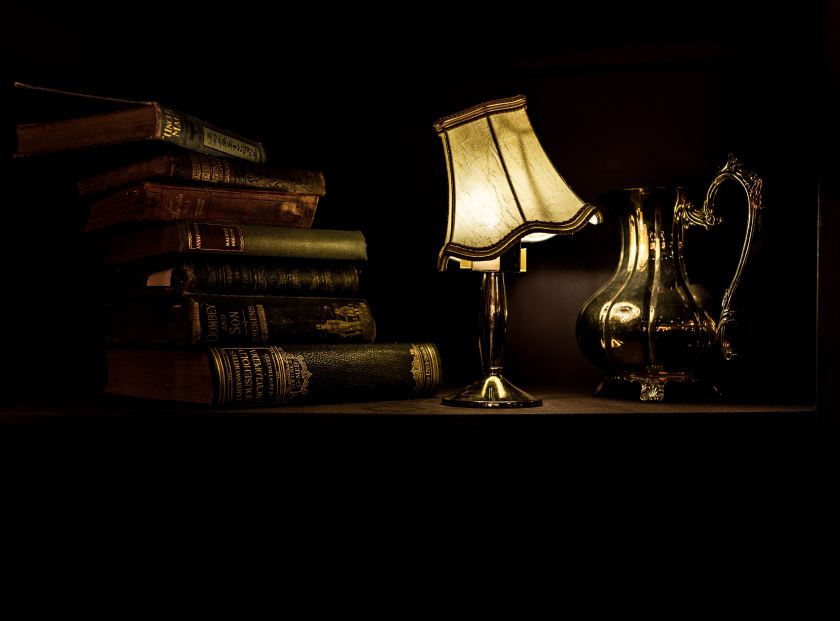
Five books. Every month. A variety of topics from different genres. Here is the list from January 2026.
Here we are, five days away (and counting) from the start of Spring Training.

“People ask me what I do in winter when there’s no baseball. I’ll tell you what I do. I stare out the window and wait for spring.”
Rogers Hornsby
Yep, Washington has had what for us seems an interminably long run of winter here for the last couple of weeks. We even went away for five days and the snow and ice were still around when we returned. It just never left. But unlike the great Rogers Hornsby, I’ve been using this time of winter, of snowfall, of general yuckiness (that’s a technical meteorological term) to read. Here are the five books I read in January.
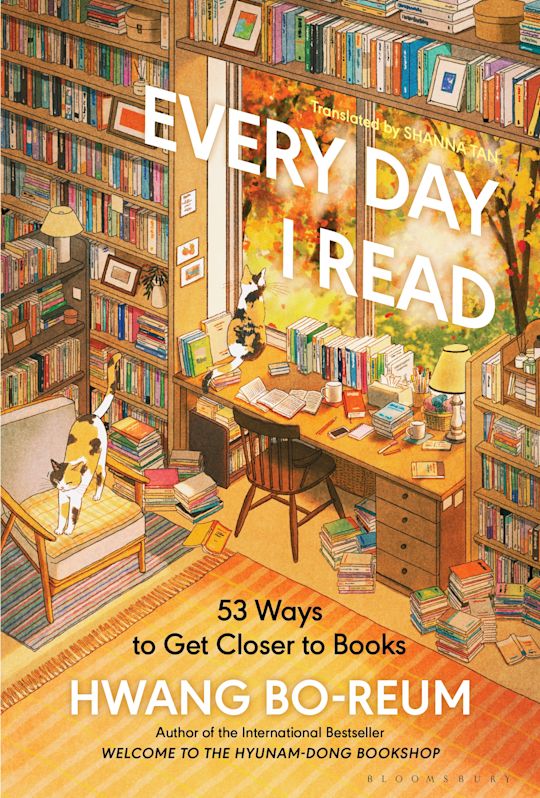
Every Day I Read: 53 Ways to Get Closer to Books (2025 for the first English translation) by Hwang Bo-Reum is a collection of short essays where the young South Korean author considers what living a life immersed in reading means. It is a book about books, but it is also much more than that. Bo-Reum is asking her readers to contemplate their lives, and how we should live in a world where we are bombarded by commercialism and the loss of community. She asks why we read, has thoughts on ways to read through a reading slump, and suggests we think more deeply about how we read. Bo-Reum approvingly quotes Patrick Süskind in suggesting that reading isn’t about remembrance but the change that can come when a book truly moves us.
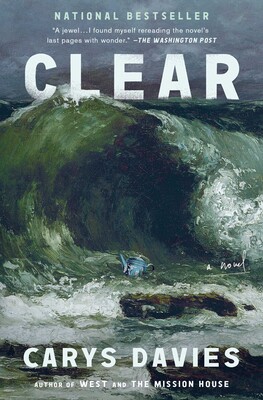
Clear (2024) by Carys Davies is a historical novel that brings a great deal of power, intelligence, and empathy into a few short pages. The story, told from three different perspectives, is set in the 19th century when two somewhat related and truly seismic events were shaking Scotland: the establishment of the Free Church of Scotland and the infamous Scottish Clearances. In this setting we meet John Ferguson, an impoverished Scottish Free Church minister who has accepted a job to help clear land for one of those landowners; John’s wife Mary who is apprehensive about her husband’s trip; and Ivar, the lone remaining occupant of an island north of Scotland. Davies says only what is necessary to bring the reader into this loving look at a vanished way of life, a magnificent but harsh landscape, and the building of human relationships against all odds. The different perspectives provided by John, Mary, and Ivar give us new and unexpected ways of looking at a story that is about finding life amidst loss.
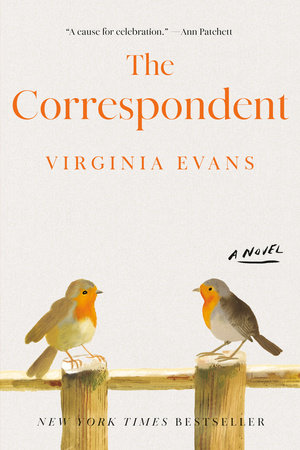
The Correspondent: A Novel (2025) by Virginia Evans revolves around a lifetime of written correspondence to and from Sybil Van Antwerp. A mother, grandmother, wife, divorcee, distinguished lawyer, retiree . . . Sybil has lived a very full life. For much of it she has used letters to make sense of that life. Letters, usually written in a clear hand, go to her brother; to her best friend; to the president of the University of Maryland who will not allow her to audit a class; to Joan Didion, Ann Patchett, and Larry McMurtry to tell them what she thinks of their latest books; to a young son of a former colleague who is brilliant but troubled. Those individuals usually respond. It is what one would call a “rich” correspondence, although some would say it chronicles a small life. And that’s the wonder of this book. In capturing one woman’s life—the joys, sorrows, births, deaths, pain experienced, pain hidden, pain finally explored—Evans has produced a vibrant work that envelops and moves the reader.
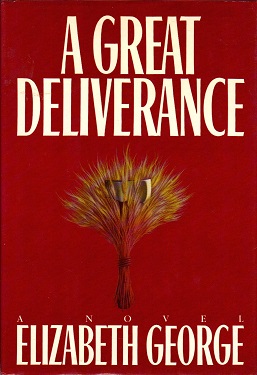
A Great Deliverance (1988) by Elizabeth George introduces us to Inspector Thomas Lynley, the eighth earl of Asherton, and his unconventional working-class partner, Detective Sergeant Barbara Havers. Lynley and Havers are assigned to investigate a gruesome murder in the Yorkshire Moors. The unlovely Roberta Teys has been found in her best dress, an axe in her lap, seated in the old stone barn beside her father’s headless corpse. Her first and last words were “I did it. And I’m not sorry.” Scotland Yard Superintendent Malcolm Webberly has sent two unconventional detectives into the situation knowing they will be met with several old external and internal grievances, but believing that their pairing can break through a difficult case. Fans of detective fiction have been singing the praises of Elizabeth George since the arrival of this, her first novel, speaking of the beauty of her writing and the depth of her characters. As one friend wrote, “I am so envious that you have the entire Lynley-Havers universe still ahead of you!”

Oh, the Places You’ll Go! (1990) by Dr. Seuss is the beloved and well-known children’s book that is a favorite for graduates of all ages, as well as for those exploring life’s ups and downs. In colorful and playful poetry it reminds us that we have agency: “You have brains in your head | You have feet in your shoes | You can steer yourself | any direction you choose.” But I was also reminded in re-reading this classic that Dr. Seuss doesn’t sugarcoat life. Early in the story the reader is flying high, leading the whole gang, topping all the rest. “Except when you don’t. | Because, sometimes, you won’t. | I’m sorry to say so | but, sadly, it’s true | that Bang-ups | and Hang-ups | can happen to you.” But that’s how we grow as humans. “And when things start to happen | don’t worry. Don’t stew. | Just go right along. | You’ll start happening too.” A well-deserved classic.
WHAT’S ON THE NIGHTSTAND FOR FEBRUARY (SUBJECT TO CHANGE AT THE WHIMS OF THE READER)
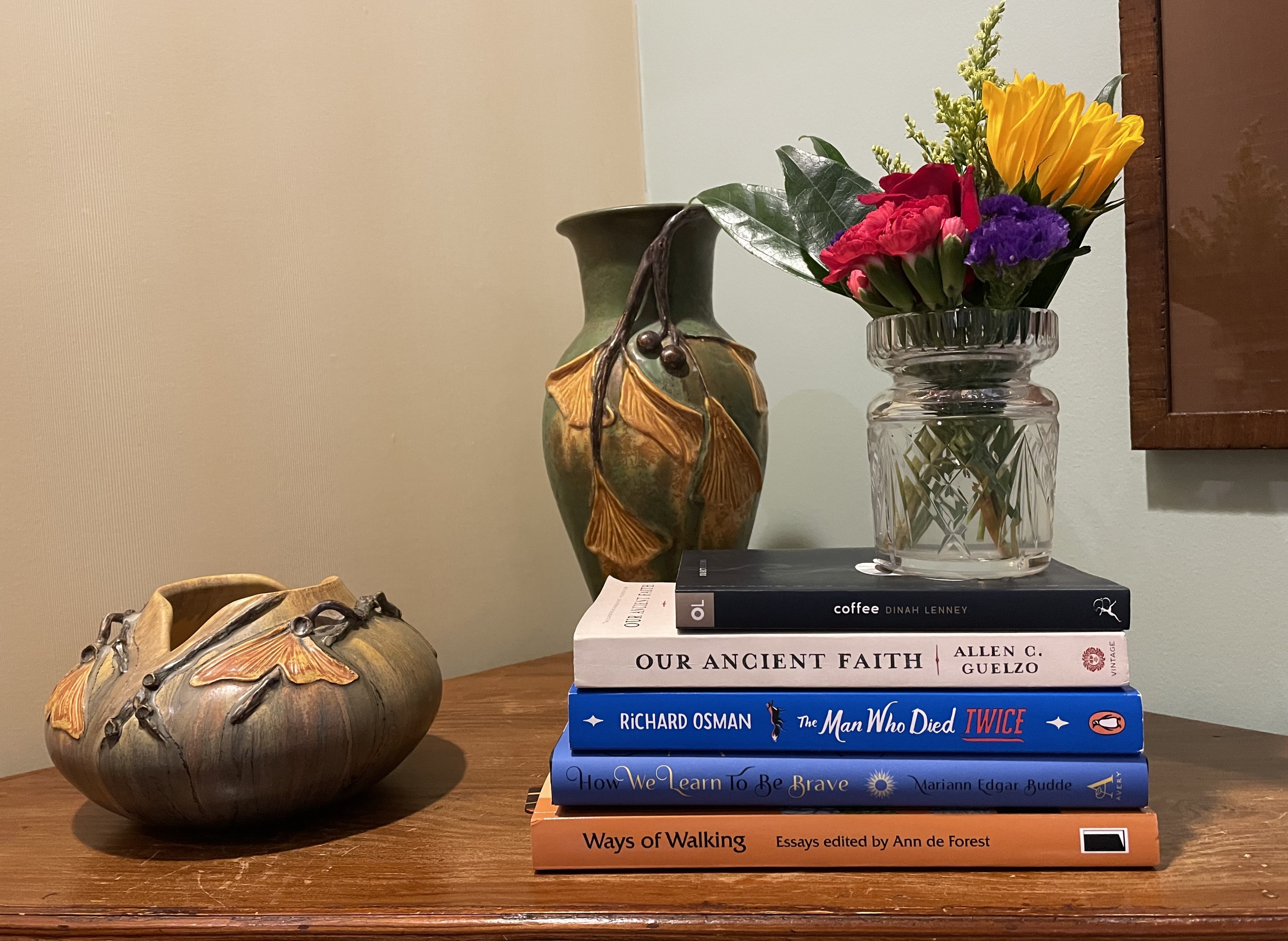
- How We Learn to be Brave by Marianne Budde
- Ways of Walking essays edited by Ann de Forest
- Our Ancient Faith by Allen C. Guelzo
- Coffee by Dinah Lenney
- The Man Who Died Twice by Richard Osman
Keep reading!
More to come . . .
DJB
NOTE: Click to see the books I read in December of 2025 and to see the books I read in 2025.
Photo of books and lamp by Jez Timms on Unsplash
 MORE TO COME...
Pingback: Observations from . . . February 2026 | MORE TO COME...
Pingback: From the bookshelf: February 2026 | MORE TO COME...