
Five books. Every month. A variety of topics from different genres. Here is the list from February 2026.
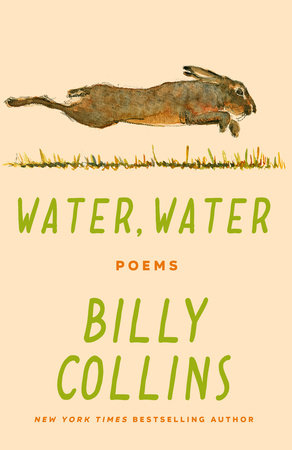
Water, Water: Poems (2024) by Billy Collins is a collection of 60 new poems that looks at life with his typical informality and attention to the commonplace and all that’s around us. The topics Collins considers are serious—being counted, getting older, connecting with others—but he addresses them in a lighthearted way that asks us see the humor and occasional absurdity in life. There is beauty in the everyday, even in getting older, and Collins helps us see and appreciate it. And he’ll write about the everyday parts of life we encounter as we stroll down the street, sit down to a bowl of cereal, watch a cat drink from a swimming pool, turn our attention to the nurse in a doctor’s waiting room. There is a reason Collins is one of America’s favorite poets.
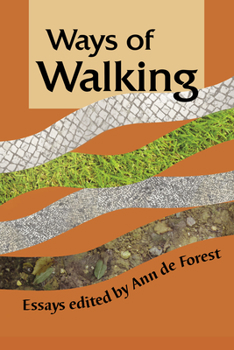
Ways of Walking (2022) edited by Ann de Forest is a collection of 26 wide-ranging essays whose writers reflect on where they have walked and what they have discovered. Exuberant, troubled, surprised, and reflective—often as part of the same journey—these authors are always thoughtful and observant. They grapple with a multitude of questions, the most basic one being, “Why did you start to walk?” Once one makes the decision to reach out and grab life, walking at a human pace is a decision to encounter it intimately. In their walking these writers are sometimes crossing forbidden lines and breaking boundaries. Some are walking for social justice and peace. Others are pushing themselves to deeply explore their immediate environment in order to understand the challenges to our lives on this planet. Throughout there are discoveries, both small and large. The collection has been described as “a moving, endlessly stimulating invitation to walk, to think, and to rethink walking.”
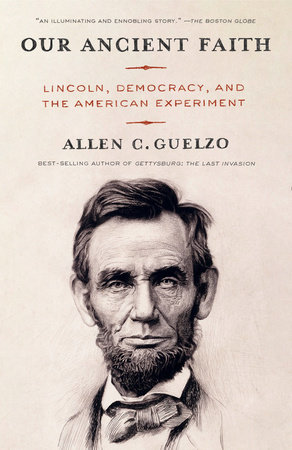
Our Ancient Faith: Lincoln, Democracy, and the American Experiment (2024) by Allen Guelzo is written for those “who have despaired of the future or whose lives have been ruined by the failures of the present.” Lincoln came along in his time to rescue our democracy on its last gasp. His was an intervention “so unlooked for as to defy hope.” Guelzo, who is a lover of democracy “as only the descendant of immigrants can love it,” focuses on Lincoln’s principles with both the skill and passion of someone who yearns that “this last, best hope of earth may yet have a new birth of freedom.” This is a story that, as one reviewer notes, is for those short on hope and—just as important and just as troubling—perspective. Guelzo reminds us, as all good historians do, that while we live in difficult, uncertain times and have worries about our future, so it has nearly always been.
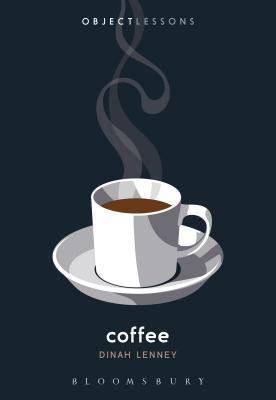
Coffee (2020) by Dinah Lenney is part of Bloomsbury’s Object Lessons—a series of short books about the hidden lives of ordinary things. And what could be more ordinary, perhaps even ubiquitous, than a cup of coffee? We turn to coffee to get us through our waking hour, the morning, the meeting, the day. We have coffee breaks and coffee shops and some of us, with our grinders and slow-drip brewers in our home kitchens, have coffee rituals. Coffee can be used to slow ourselves down or speed ourselves up. There is so much that could be said about coffee’s place in our lives and in our culture. And if you aren’t careful, one can try and explore all those possible avenues and come off appearing if you wrote this extended essay while being overcaffeinated. Lenney, unfortunately, falls in that category. She needed to skip a cup (or pot) each day and decide what this book wants to be when it grows up.
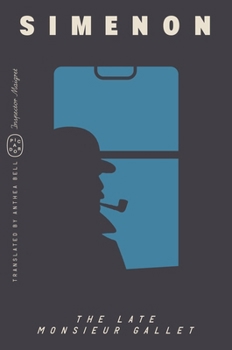
The Late Monsieur Gallet (1931) by Georges Simenon, an early work in the Inspector Maigret series, is a tale of misdirection, betrayal, and misfortune. Called to the crime scene in a small hotel outside Paris, Maigret is immediately struck by the fact that so much about the case seems fake. The grieving relatives don’t exactly grieve. The dead man used an alias and had not worked at his stated place of business for 18 years. He traveled extensively throughout the country although his health was poor. Monsieur Gallet had been shot in the head, but it was a knife stabbed in the heart, administered almost immediately after the gun wound, that killed him. And was the dead man right or left-handed? Maigret delves into the contradictions that are all around him, trying desperately to sort out the facts from fiction.
WHAT’S ON THE NIGHTSTAND FOR MARCH (Subject to change at the whims of the reader)
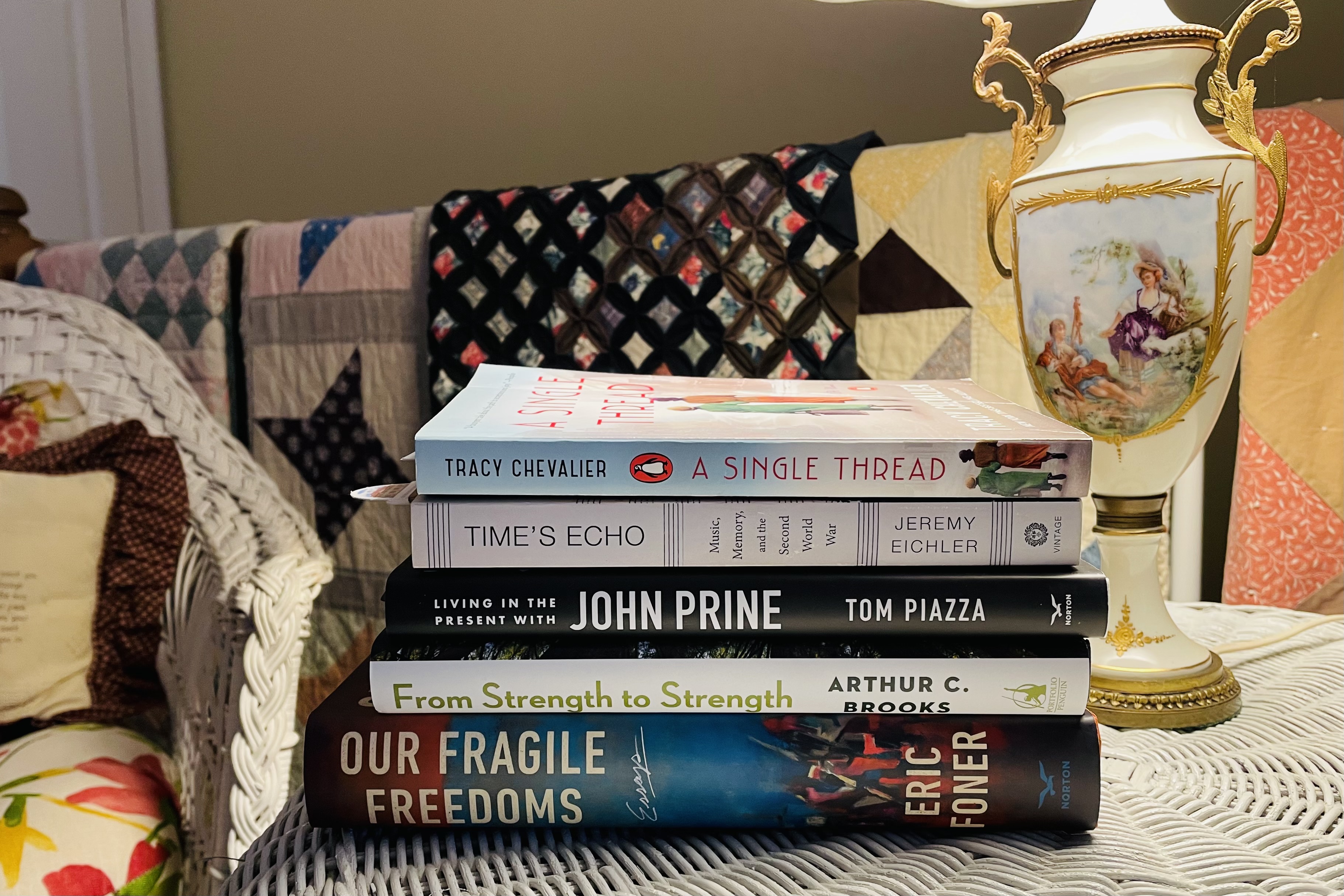
- From Strength to Strength: Finding Success, Happiness, and Deep Purpose in the Second Half of Life by Arthur C. Brooks
- A Single Thread by Tracy Chevalier
- Time’s Echo: Music, Memory, and the Second World War by Jeremy Eichler
- Our Fragile Freedoms: Essays by Eric Foner
- Living in the Present with John Prine by Tom Piazza
Keep reading!
More to come . . .
DJB
NOTE: Click to see the books I read in January of 2026 and to see the books I read in 2025.
Photo of library from Pixabay.
 MORE TO COME...
Pingback: From the bookshelf: March 2026 | MORE TO COME...