
Taking the time to look at the unique connections to baseball found throughout all fifty states.
As the baseball season reaches its traditional midpoint—the All Star Game—MLB.com has been running an entertaining series of stories that highlight the game’s place as the national pastime. In celebration of our 250th anniversary the writers and editors have been featuring one baseball story from every state. There are unique connections to the sport, many unrelated to the big leagues.
To warm the heart, check out a few of these very local stories about America’s pastime, beginning in South Carolina.
“Take the Legion Collegiate Academy Lancers as an example, a high school team in Rock Hill, S.C., a suburb just down I-77 from Charlotte, N.C. Their Senior Night is an especially poignant one, with players taking on-field batting practice thrown by their fathers, and then running the bases one final time with a message playing over the speakers narrated by their mothers, who await them for a warm embrace at home plate. They call it ‘the last childhood lap before college and adulthood starts.’”
As the editors at MLB.com noted, it’s stories like these that might otherwise go undetected. These are the ones this project is attempting to highlight.
“That also means digging deep into the past, sometimes traveling all the way back to the 1800s for what is widely recognized as the first baseball game ever played, taking place in New Jersey. Or honoring the many Negro Leaguers who barnstormed their way across the country in the 1930s and ’40s to places like Miami’s Dorsey Park, where legends like Satchel Paige and Josh Gibson took the field.”
And there are plenty of other great stories in this ongoing series.
I was taken with the high noon at midnight classic in Fairbanks, Alaska, having once visited the area near the summer solstice.
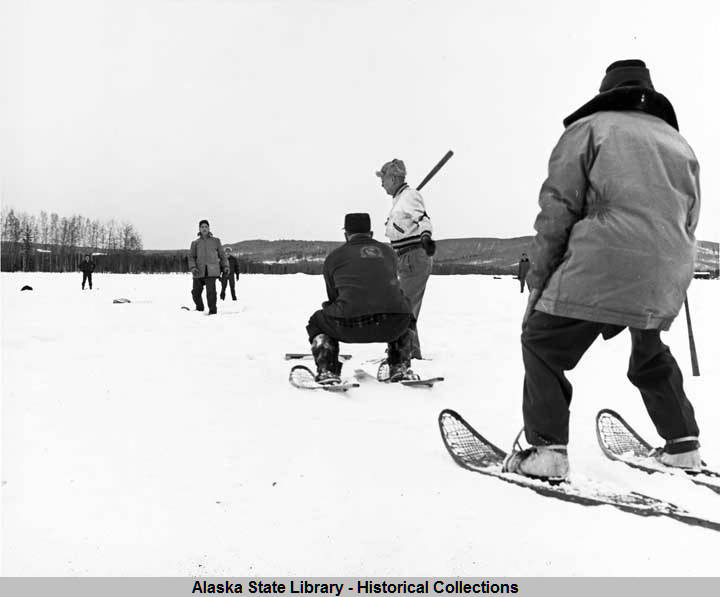
Alaska has a long history with baseball. “Whalers and prospectors from the contiguous U.S., Asia and other parts of the world—holed up in the area for months—passed the time playing hardball on fields of ice and heavy snow . . . Snowshoe baseball was a fairly common activity.”
“And back on June 21, 1906, the area’s most famous baseball event, and one of the more unusual on Earth, began its inaugural foray into sports history. Two local bar teams in the gold-rich town of Fairbanks agreed to play each other in a game that would run through midnight because, well, they could: For 70 days, from about mid-May through mid-July, this part of Alaska sees about 24 hours of daylight—with the summer solstice on June 21 remaining the longest under the sun’s beams. So much so that no stadium light is needed to catch a pop-up or hit a curveball.”
Since 1960 the Alaska Goldpanners—a collegiate summer team based in Fairbanks—have hosted the event at Growden Memorial Park. They typically play local amateur teams or other summer college squads from around the country.
“The ‘Panners, as lovingly abbreviated by Fairbanksans, have popped in and out of the Alaskan Baseball League over the years—a summer circuit that, since its inception, has hosted some of the best college players and future pros in America. It’s toned down recently, but during certain time periods, it rivaled the Cape Cod League for collegiate summer league prominence.
Mark McGwire and Randy Johnson played for the Glacier Pilots. Jeff Kent and Paul Goldschmidt appeared for the Anchorage Bucs. Aaron Judge scouted moose by day and pitchers by night during the endless Alaskan summer.”
From Utah, there is another connection between snowy fields and baseball.
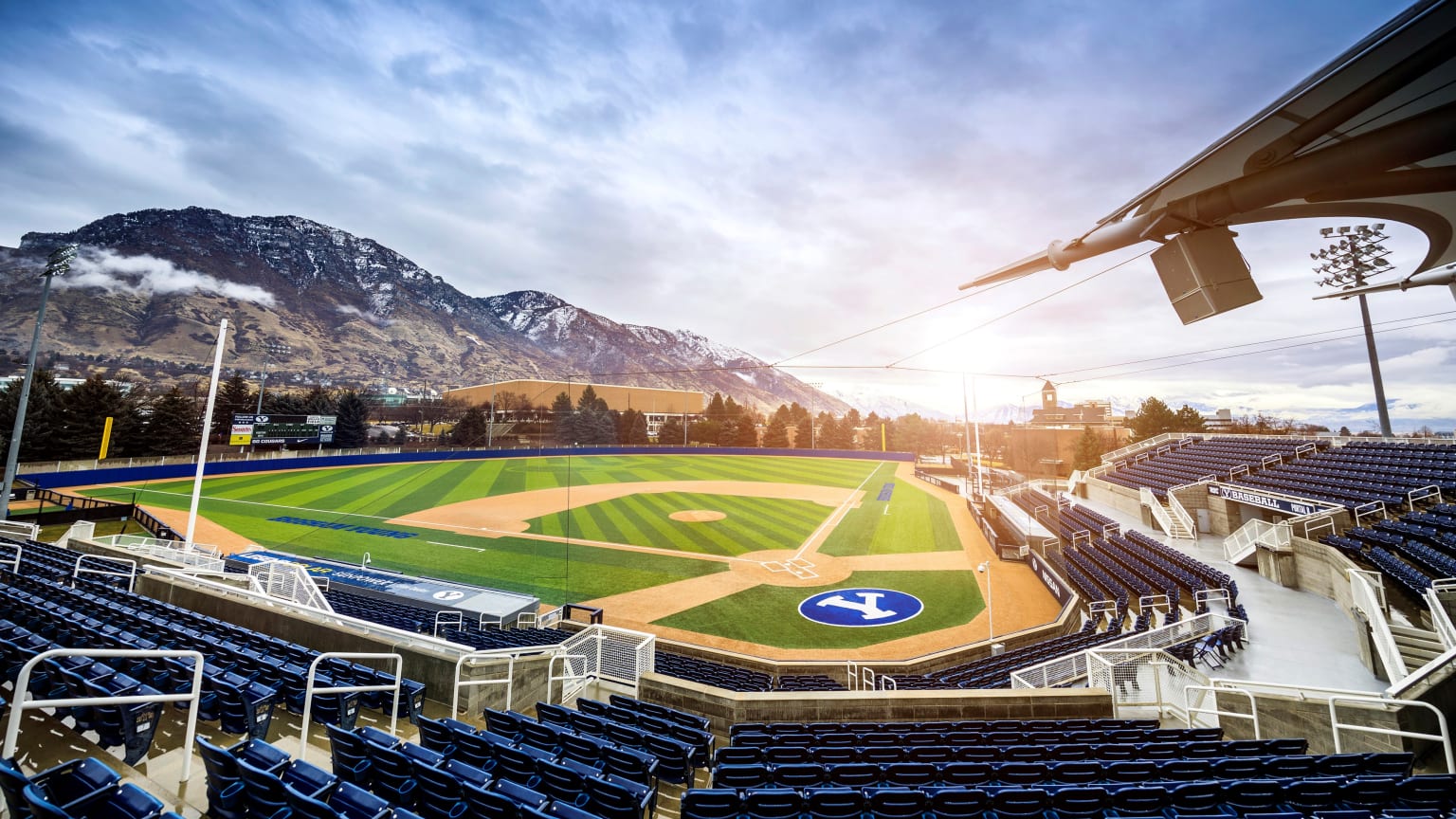
The writers note that the baseball field at BYU, with snow-capped mountains rising beyond the wall, was made to be put on a postcard. But the state-of-the-art heating coils beneath the field can clear off the snow from the all-too-frequent blizzard to ensure that the games go on.
Closer to home is Maryland’s story which features Baltimore’s Camden Yards.
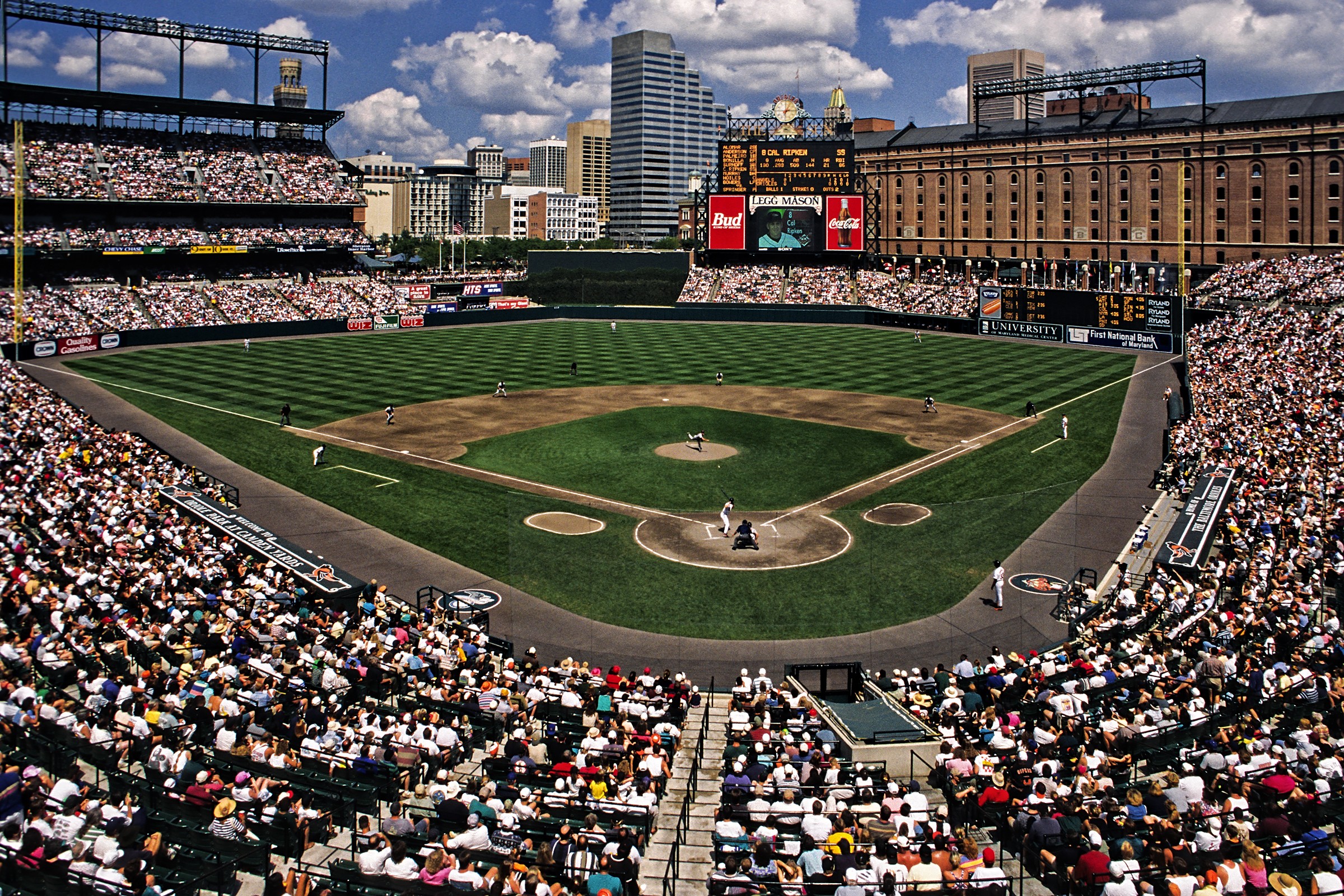
The south end of Eutaw Street is a pedestrian walkway. Located inside of Camden Yards it serves as a primary entrance/exit but also as a gathering spot for fans to socialize and “to dine on ballpark fare, most notably at Boog’s BBQ—the famous barbeque stand named after longtime O’s slugger Boog Powell.”
“But watch where you step. Much of the southern half of the walkway is littered with bronzed plaques designed like baseballs, and at any time of day—before, during or after games—there may be somebody squatting down or hunching over to read one.
And there are a lot of them—134 on the ground for every in-game home run that landed there from 1992-2025, as well as two temporary markings for the pair hit so far in ‘26. There’s also an honorary plaque on the B&O Warehouse that runs parallel to Eutaw Street, marking the only ball to hit the historic brick building, which came off the bat of Ken Griffey Jr. in the 1993 Home Run Derby.”
Sometimes in the midst of the uncertainty and turmoil of life in America today, I search for a book that helps me remember what is good about our country. This year I went back to what was an instant classic, an intimate and very personal look at baseball history through the lives of the 100 greatest players of all time.

The Baseball 100 (2021) by Joe Posnanski—the self-described “writer of sports and other nonsense”—is characterized by the publisher as “a magnum opus . . . an audacious, singular, and masterly book that took a lifetime to write.” It is pure baseball bliss. Posnanski originally wrote this over a 100-day stretch for the web pages of The Athletic. But the compendium is much more satisfying. First, the rankings are important—and instantly give the reader a chance to argue with Joe, which he encourages. But they serve the larger purpose of providing this talented writer and lifelong fan with a chance to explore baseball’s rich, deep, diverse, and at times challenging history. A history that—like all history—is under construction.
Since early May I’ve been re-reading this work on what is, in some instances, my fourth pass through this work. Truth in advertising, I did not go back and read every one of the 827 pages but that’s the joy of this book. You can dip in and out whenever you want. Chances are very good that you’ll find one or more of your favorites included. Number 1—in Joe’s book and mine—is Willie Mays. “The greatest baseball player is the one who lifts you higher and makes you feel exactly like you did when you fell in love with this crazy game in the first place.” Rest in Peace, the Say Hey Kid.
On the night before the midsummer classic, enjoy this little bit of baseball history for everyone.
Let’s play ball!
More to come . . .
DJB
UPDATE: Joe Posnanski had a segment of his post on July 17th that I agree with SO MUCH that I have to post it. Unfortunately it is a story about how the game has lost its way (at the MLB level).
BETTING ODDS NOW AVAILABLE!
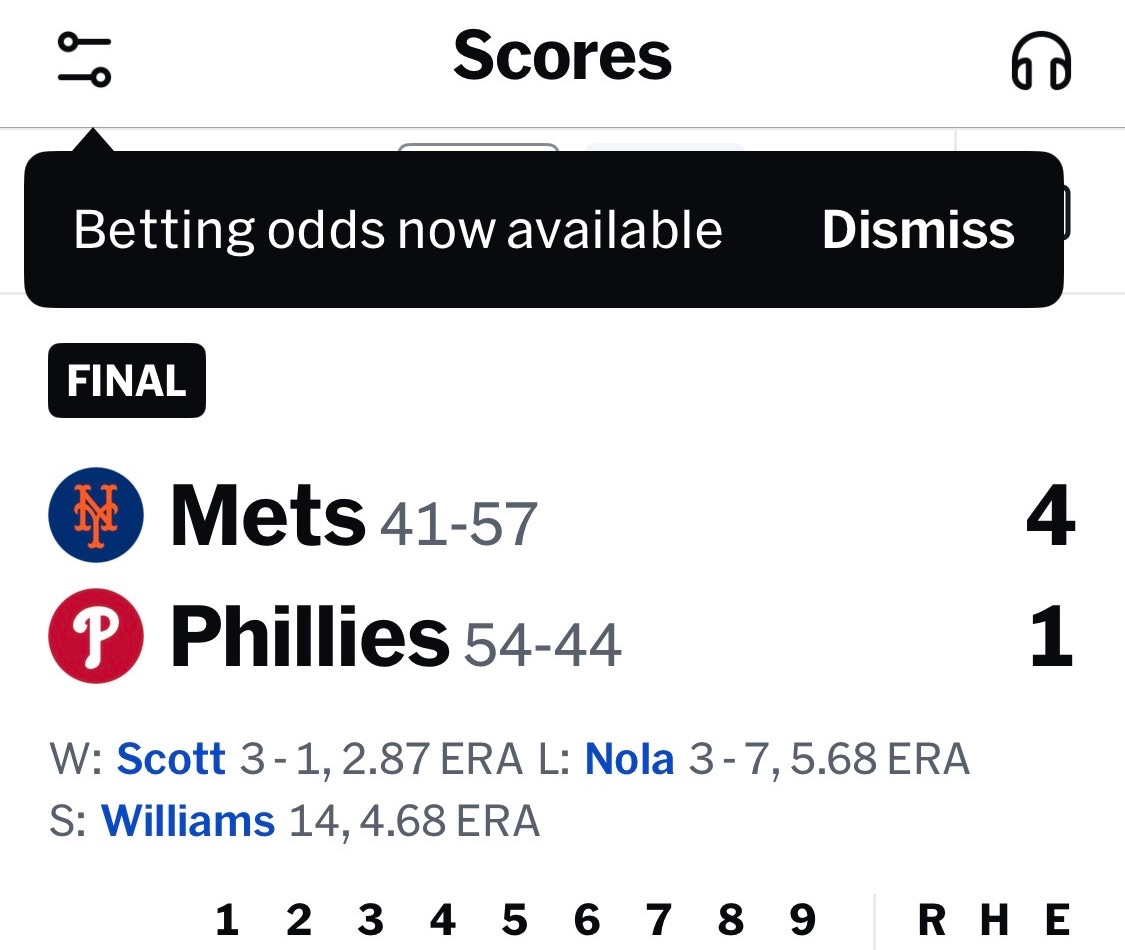
“This is now at the top of the MLB App — ‘Betting odds now available.’ Arnold Rothstein looks down — or up, depending on your theological leanings — and smiles at what has become of the National Pastime. Owners hired the first commissioner to rid the game of gambling. Owners charge today’s commissioner to make as much money off gambling as possible.
I’ve been thinking a lot lately about why I find MLB’s whole vibe so utterly distasteful, and I think it’s this: They’re constantly telling us that the game is not enough. Baseball is the best game there is. I know that not everyone thinks that — I know that most people don’t think that — but a lot of us do, enough of us do, and we fill the ballparks and watch on television and check the scores and buy the merch and spread the gospel and tell the stories and learn the history and follow the news. And we are constantly told that we don’t matter. MLB is always chasing theoretical new fans who apparently will only watch baseball if they can lose money in the process, who apparently want games constantly interrupted with endless patriotic displays and Boyz 2 Men mini-concerts, who apparently need constant diversions because baseball is not enough.
Betting odds now available.
Thank goodness MLB is now offering those. I wouldn’t have known where else to go to find them.”


Nationals fans will also want to read Joe Posnanski’s column this morning entitled Ten Thoughts at the All Star Break. You should read it because he begins with how wonderful the Nationals are (and how much a surprise that is), and then how utterly awful their bullpen is. I’m as surprised by all this as much as Joe (except for the lousy bullpen part . . . they’ve had a terrible pen since 2020).
Thanks David. “Baseball has been very good to me”. So goes an old SNL skit featuring comedian Garrett Morris (?) I would add, “until the most recent HomeRun Derby televised on Netflix on July 13, 2026.” It might as well have been staged on The White House Lawn. I could not bear to watch. Was it a rerun of, The Apprentice? Someone needs to fire whoever conceived of it.
Thanks for the reminder about the old SNL skit, Bob. Here’s a link to the first appearance by Morris as Chico Escuela: SNL: Chico Escuela’s First Appearance. Morris was classic . . . I miss all those members of the original cast.
As for the Home Run Derby, I heard they were making changes but since I’m one of the 3 people left in America who doesn’t subscribe to Netflix, I didn’t see it. Sounds like that might have been a good thing.
I think that the “fighting” match staged on the White House Lawn is going to have a long shelf life as an exemplar of bad taste and poor decisionmaking.
Take care, and looking forward to catching up again over lunch — perhaps after Labor Day.
DJB
Bob,
Here was Joe Posnanski’s take on the Home Run Derby: (18) Sport and Spectacle – by Joe Posnanski – JoeBlogs. The folks at The Athletic thought is was generally good, although they panned the Netflix coverage of it, as does Joe in this piece.
I was at the 2018 All Star Game which was held in Washington during Bryce Harper’s last season with the Nats. Harper had won the Home Run Derby the night before. At that day and age he could still will himself to be #1 on his home field. That hasn’t happened as much for him in Philly. He’ll get into the Hall of Fame but he may not win a World Series. And I believe the Nats would not have won in 2019 had Harper stayed with the team. He’s mellowed some, but back then he was all about himself. (You can tell I still harbor grudges against Harper. And the Lerners.)
End of rant,
DJB
Pingback: One challenge down, two to go | MORE TO COME...
Pingback: Observations from . . . July 2026 | MORE TO COME...
Pingback: From the bookshelf: July 2026 | MORE TO COME...
Pingback: Summer reading . . . check! | MORE TO COME...