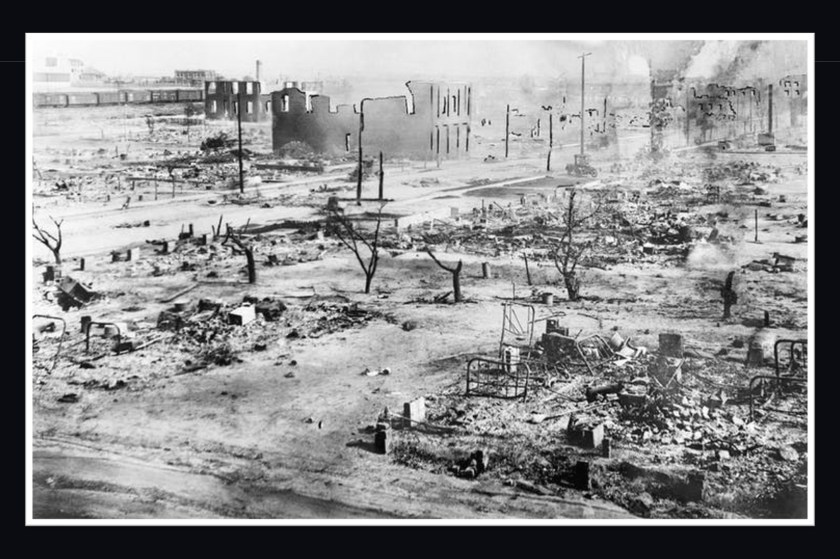
Damario Solomon-Simmons tells of the Tulsa Race Massacre and its century-long aftermath—an American story that must be faced if we are to truly move forward as a nation.
Installment #26 in my series on the region’s independent bookshops.
There are horrific stories in American history that are often buried for decades, even centuries. The Colfax Massacre. The violent coup to overthrow an elected bi-racial government in Wilmington, North Carolina. Wounded Knee.
Some are hidden in order to maintain an uplifting yet false fiction about who we are as a nation. Some keep them buried in order to simply survive.
At the end of the day, these stories have to be told, and an important perspective is that of the survivors and their descendants: those who endured and are most affected by the tragedy. I found a work about one such ugly piece of our history at an independent bookshop dedicated to the proposition that Black books, Black stories, and Black storytellers matter. It was a bracing reminder of the importance of telling the full story.
MahoganyBooks, located in the National Harbor development on the Potomac River in Oxen Hill, Maryland is:
“Unapologetically Black-owned, family-run and operated. MahoganyBooks is a local independent bookstore that believes in social entrepreneurship. We take a leadership role in the African American community by promoting reading, writing, and cultural awareness as tools to improve self-esteem, self-love and ultimately our communities to enrich the lives of motivated individuals.”
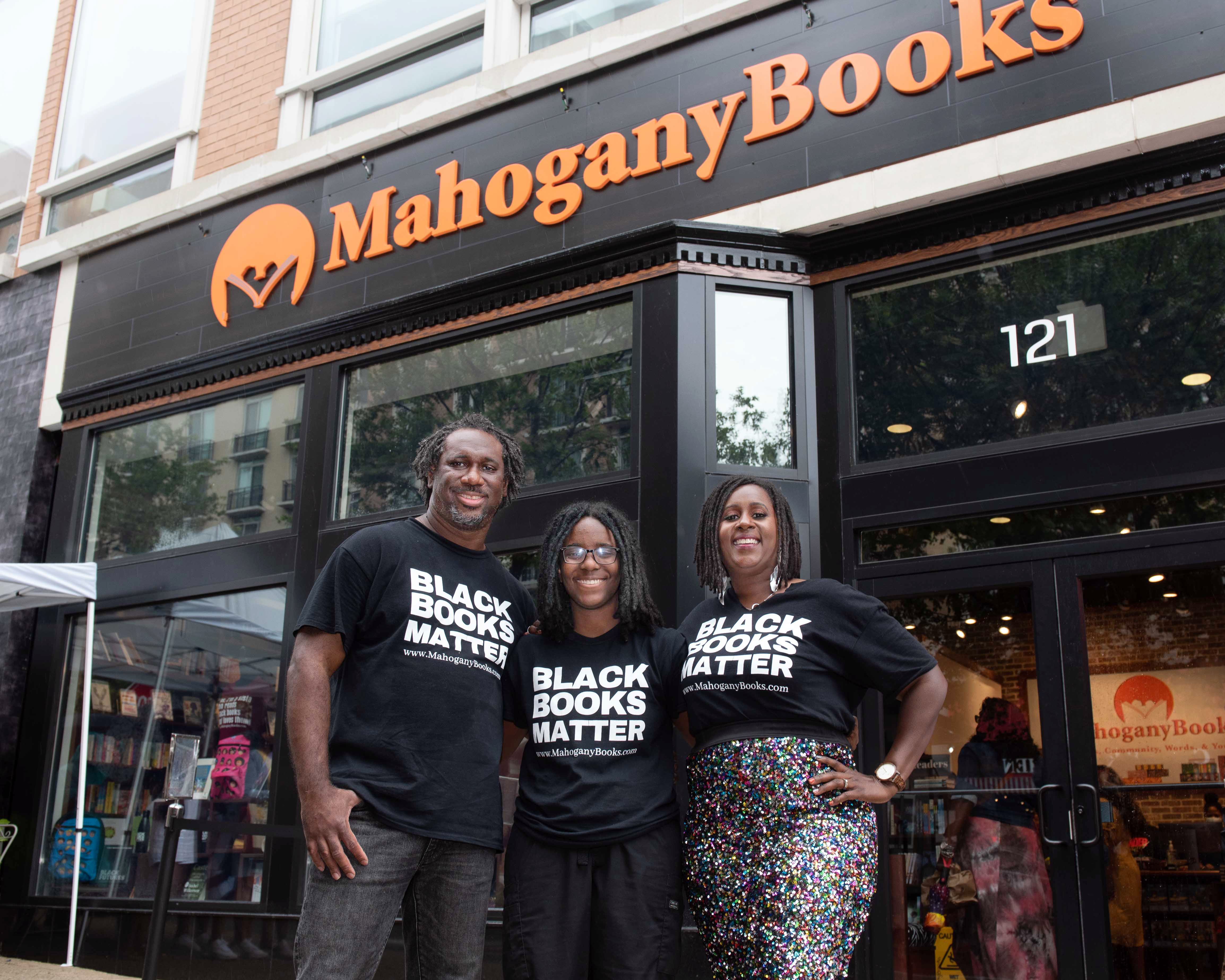
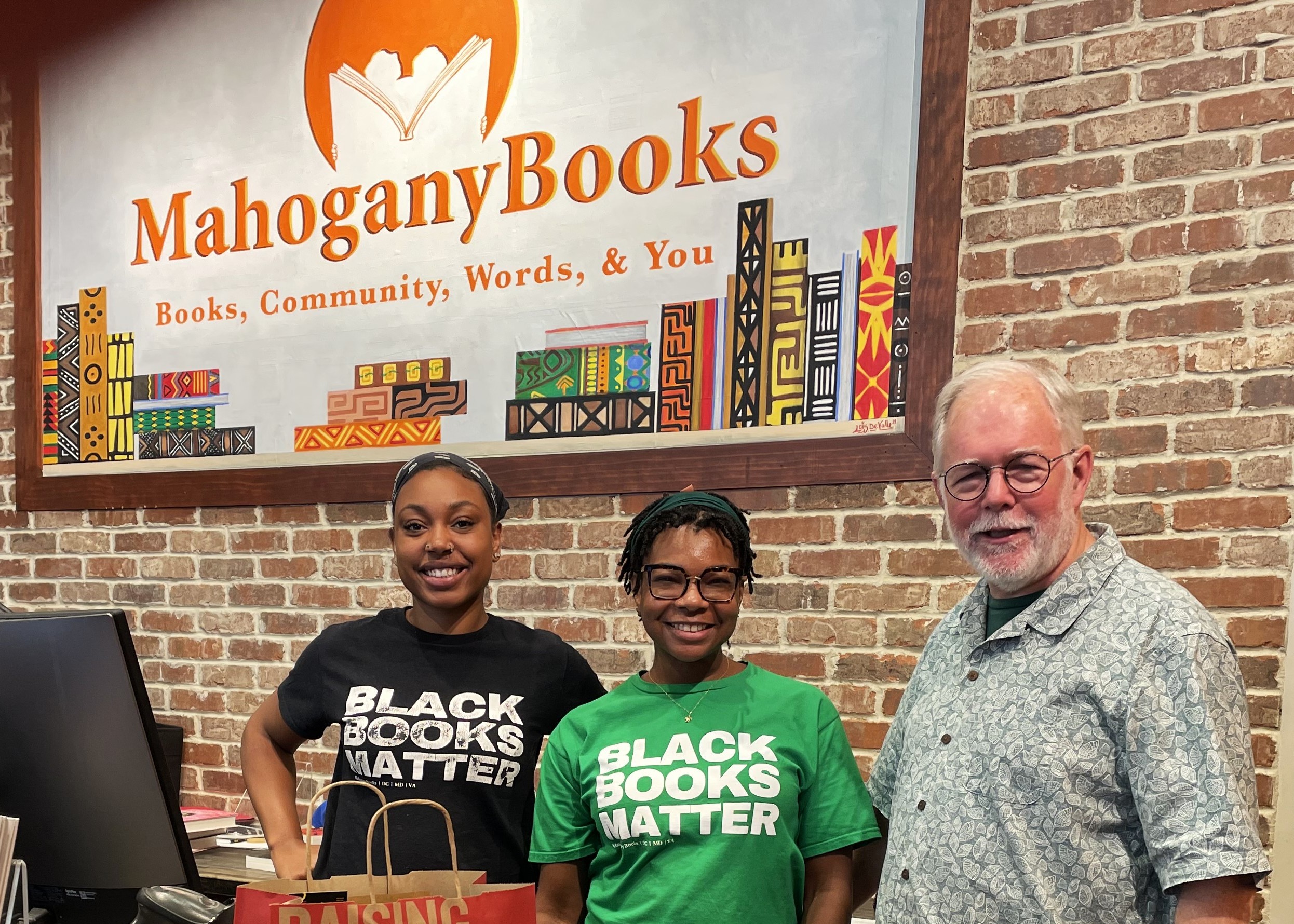
Candice and I drove to Prince George’s County—the DC region’s largest Black majority community—on a beautiful August day. Once we arrived I began talking with Emma (in the green Black Books Matter t-shirt below) about my project to visit all 30 area independent bookshops, and she was excited to show me all that Mahogany had to offer. And it was quite the selection.
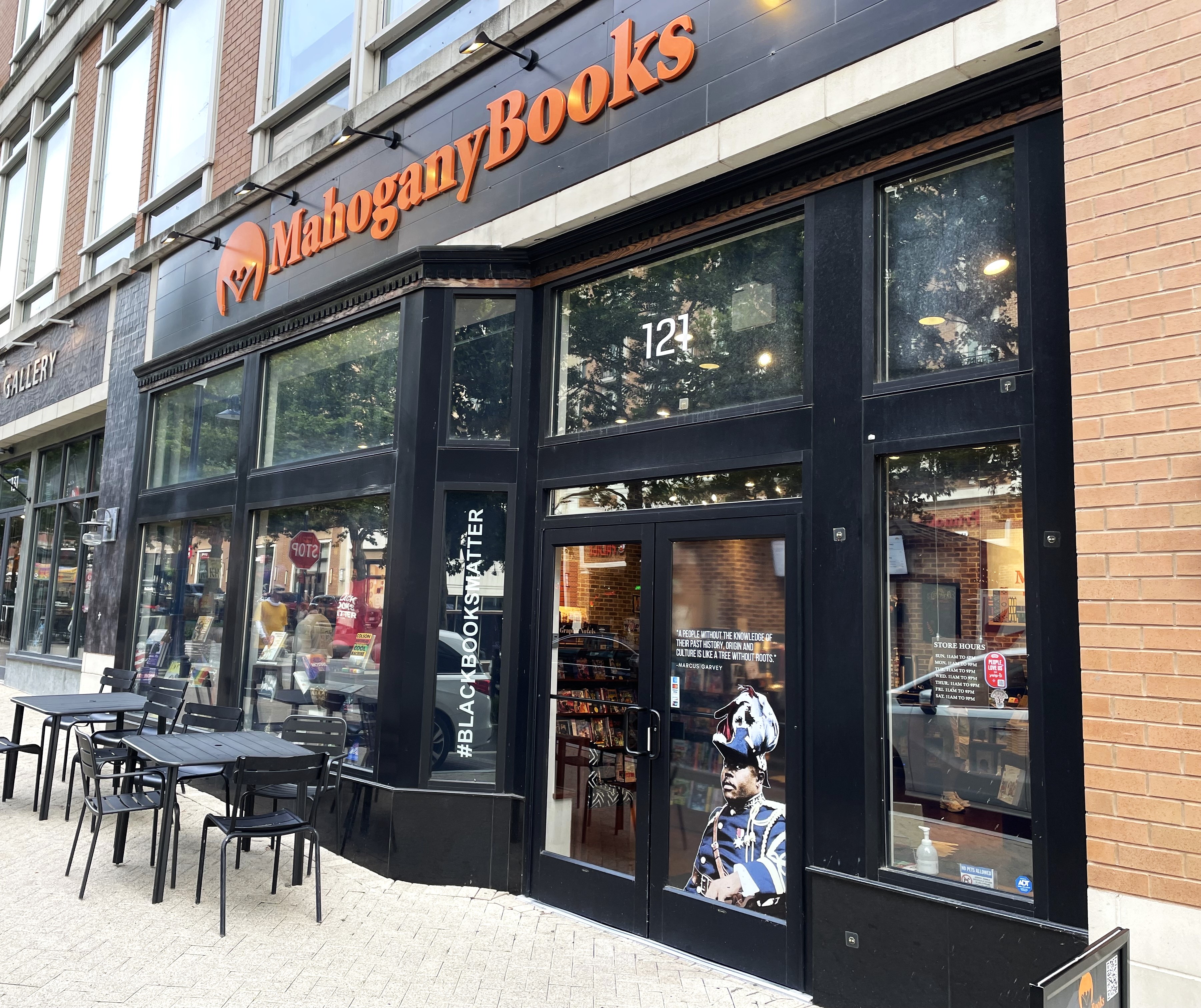
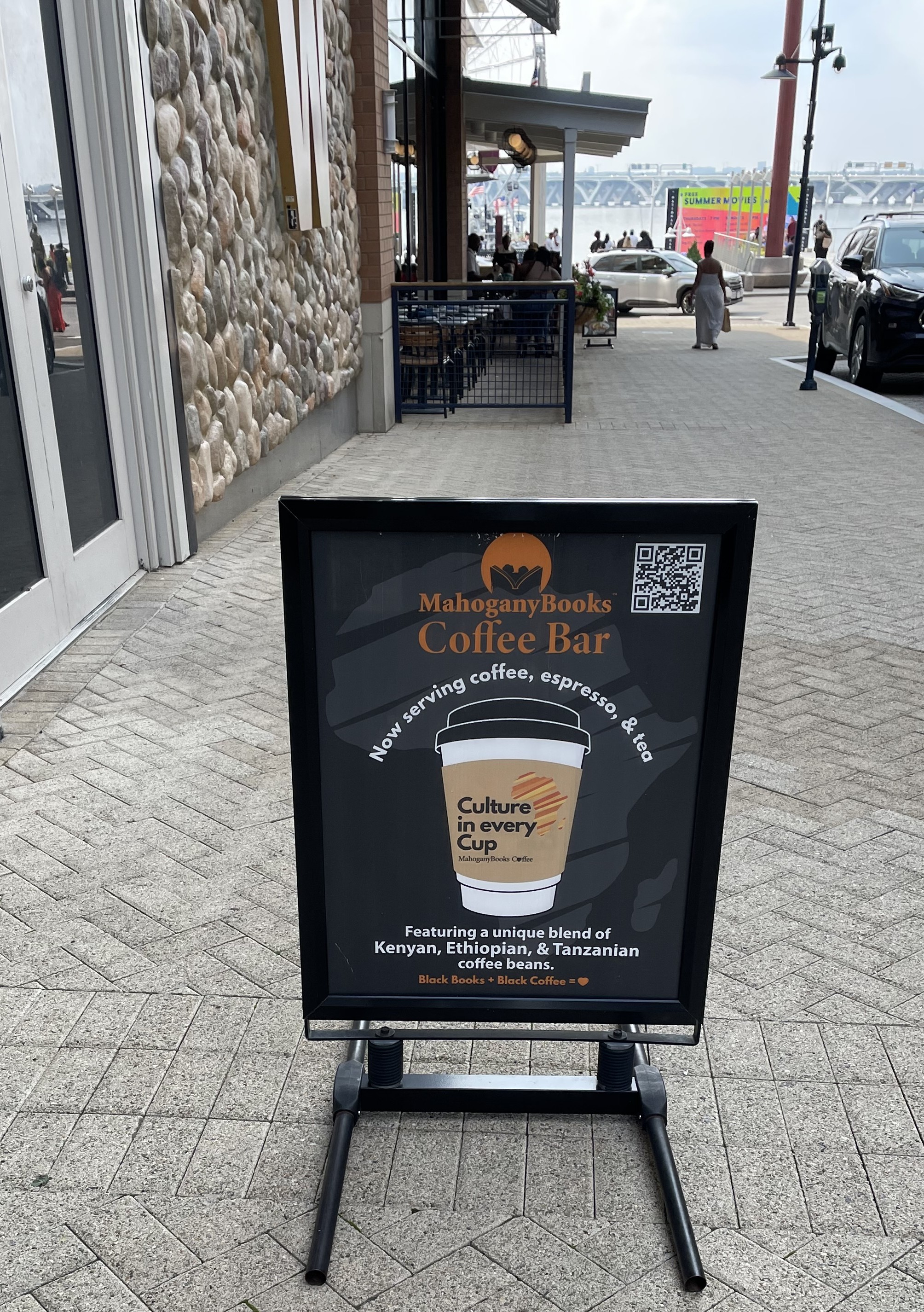
While there I examined works of fiction (everything from drama to mystery to romance), cultural literature (history, biography, and politics), nonfiction (wellness, philosophy, and religion), and much more. All of the offerings were geared toward subjects that mattered to the Black community and most were by writers of color. It was difficult to limit myself to 2-3 purchases from such a rich and varied selection.
A new book that was listed among the store’s bestsellers caught my eye. In recent years I have been catching up on the story of one of America’s worst acts of genocide, filling in gaps in my woefully inadequate knowledge of the time when the white citizens of Tulsa completely destroyed one of the most successful Black neighborhoods in America . . . and worked overtime to hide the story from the rest of the nation and the history books for the next 100 years. This book is both eye-opening and long overdue.
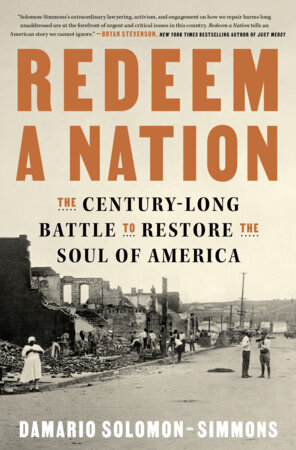
Redeem a Nation: The Century-Long Battle to Restore the Soul of America (2026) by Damario Solomon-Simmons tells the story of the Tulsa Race Massacre from a legal, community, survivors, and personal point of view. The frame is the historic legal case for reparations and the deeply moving testimony of survivors and descendants of Greenwood, a Black community unlike any other in the world. Solomon-Simmons grew up in North Tulsa, but it wasn’t until he was in college that he even heard of Greenwood or the two days when an entire neighborhood of ten thousand people, hundreds of successful businesses, $100 million in property, and generations of wealth were destroyed by an angry mob of racist whites. A mob deputized, armed, and directed by government officials and city leaders who resented the love, the success, the very idea of a thriving Black community that was known as Black Wall Street. Hundreds were killed and their bodies thrown in the river or dumped in mass graves. Thousands were left homeless. The aftermath reminded observers of the bombed out cities of Belgium in World War I. The story changed Solomon-Simmons’ life and gave him a purpose: to find justice for the survivors and descendants while holding the government accountable for what can only be described as genocide. This is his story alongside that of the fight for justice for Black Americans.
Solomon-Simmons, an attorney and the founder/director of the nonprofit advocacy group Justice for Greenwood, has brought history, personal memoir, legal analysis, and tireless advocacy together in a searing, emotional work. Some parts of his presentation resonate more than others, but the entire scope of his work and passion make for a compelling argument for change.
Oklahoma has one of the most distinctive yet unknown Black histories in all the United States. This part of the country was declared Indian Territory where the U.S. government forcibly sent tens of thousands of Native Americans. “What many people don’t realize,” writes Solomon-Simmons, “is that a substantial portion of the members of these ‘Five Tribes’ [those sent along the Trail of Tears] would be labeled as Black today.” The U.S. government then forced the Tribes to give up tribal title to their lands and eventually set up 160-acre allotments. Greenwood, ironically, was made possible by the destruction of the Creek Indian way of life. Oklahoma became—and remains—home to the greatest number of all-Black towns in this nation’s history, “islands of freedom and safety in a deeply racist, violently oppressive state.”*
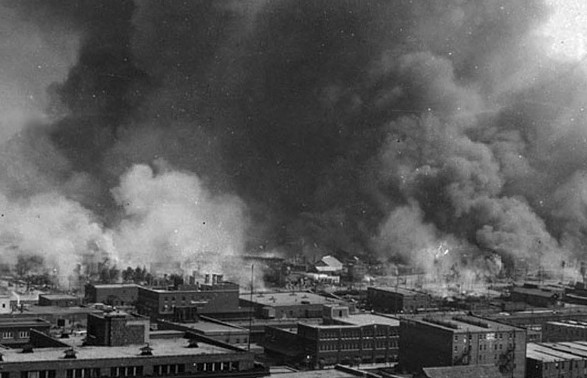
One of the most effective sections is the retelling of what happened on those fateful spring days in 1921. “The discovery of the Glenn Pool Oil Reserve (on land owned by a Black Creek woman, Ida Glenn) had in a few short years transformed northeastern Oklahoma from rural Indian Territory into the world’s largest crude oil producer and Tulsa from a small railroad stop into a cash-rich boomtown.” While most of Tulsa’s Black population didn’t participate directly in the regional oil boom, the four-square mile Greenwood District (larger than Harlem) had a remarkably vigorous, mostly self-contained economy. It included more than 1,250 homes, numerous churches, a library branch, two newspapers of its own, and “a bustling business district featuring grocery stores, barbershops, hotels, schools, pharmacies, bus companies, airplane taxi services, movie theatres, concert halls, doctors’ offices, and legal practices, nearly all of them Black owned.”
The most serious threat to Greenwood “was white Tulsa’s deep resentment of the economic success, self-confidence, and landholdings of the community’s residents.” In Tulsa, a nationwide fear of Black success became a dangerous local stew of jealousy, entitlement, and hate stoked by a racist newspaper editor. All it took was a minor incident to bring that stew to a boil. What happened next, Solomon-Simmons writes, was for decades described as a spur-of-the-moment eruption of violence, but was, instead, deliberate. It had long been planned by the city’s white leaders. Mob members were “deputized” with special temporary badges, planes were brought in to attack the community from the air, and a premeditated war “with the intent of killing Black citizens and stealing their property” was unleashed.
On the 100th anniversary of the Greenwood Massacre, the New York Times produced a 3D model What the 1921 Tulsa Race Massacre Destroyed explaining and showing what was lost in terms of property and intergenerational Black wealth. The massacre, Solomon-Simmons notes, was “intended to be an extinction event for Black pride, aspiration, and economic achievement, and to a great degree it was.”
Amazingly, Greenwood began to rise out of the ashes as the residents attempted to rebuild, even in the face of deep hatred. The Second Greenwood Massacre—urban renewal—made sure that this later attempt was stomped out and the government effectively stole the land for good.
Solomon-Simmons makes it clear that horrific crimes such as the Greenwood Massacre—crimes where the perpetrators have never been punished and where the victims have never received compensation—have major implications even today.
“Whether you live in a house by the coast in San Francisco, in a New York City high-rise, on a family farm in Georgia, or deep in the desert of the American Southwest, the horrific crimes against Black citizens and freed and former enslaved people and their families affect you. They stunt the American economy, create a permanent underclass, lead to blight in our cities, and perpetuate inequality throughout the nation. They mark America as a cruel, uncivilized, and unjust country.”
As he represents the last living survivors from the courtrooms of Tulsa to the nation’s capital, Solomon-Simmons makes the strong case for reparations—a remedy that has been used countless times in the U.S. including to compensate entire groups of people, such as Japanese-Americans following internment during World War II. He provides three main reasons:
- The evidence that a crime has been committed is ironclad. White society took property, wealth, homes, and lives from the Black citizens of Greenwood. That debt has never been settled.
- Without reparations and reform, we can never close the Black wealth gap. We will always have a group of second-class citizens.
- Finally, without “repairing the injustice done to Black people, America will never achieve greatness.”
This is an important work for anyone tracking the ongoing work of restoration, repair, and respect. Black Americans have shown us again and again—most recently in the 2026 midterms—that when we fight we win. We need to repair what is broken. We need to “redeem America not for what it has claimed to be but for what it must become.”
More to come . . .
DJB
*Nafissa Thompson-Spires’ recent novel is set in a fictional all-Black Oklahoma town.
(Image of Greenwood after the Tulsa Race Massacre in 1921, from Bettmann Archive/Getty Images)

