
Flux
Jerry Douglas has defined, transformed, and elevated the dobro.
Jerry Douglas has defined, transformed, and elevated the dobro.

On this Labor Day full of challenges, remember the poet Wallace Stevens who wrote in the midst of WWII that we need to “resist the pressure of reality.”

We may hear more about “Back to School” sales this weekend than we do about why we celebrate Labor Day. I’ll do my little part to rectify that problem. Labor Day has been around in one form or another since the 1880s, highlighting the work of trade and labor organizations and their members. However, unions and workers have both taken a beating in recent decades, as financial interests have fought to rollback or restrict the gains made by the working classes over the years. I grew up in the South and saw first-hand the open hostility to unions. The powers that be wanted cheap labor and they used all sorts of tools to ensure that they succeeded. I was reminded of the promise and challenge of Labor Day while reading one of my posts from 2015 on the designation of Pullman, just outside Chicago, as a National Monument. Pullman, if you do not know the history, is a remarkably intact industrial town of historic buildings and landscapes. Located 13 miles south of downtown Chicago, it …

A couple — friends since our years in Staunton in the 1980s — came to visit this weekend. We spent most of our time over the past three days cooking, drinking wine, eating, playing guitars, and talking. But mostly talking. No matter if it has been a decade since college and you’re meeting with your former classmates at a wedding, or almost four decades since you moved to a new town and established lasting relationships, when you gather with long-time friends the stories pick up where you last left off and weekends can turn magical. The legendary New York Yankees catcher Yogi Berra once noted that towards the end of his career he played a good number of games in left field. When World Series games were still played in the daylight, left field in old Yankees Stadium could be difficult to navigate because of the deep, autumn shadows. Berra was asked about playing that position and he said, “It gets late early out here.” People laughed, but Berra recalled that someone told him that …

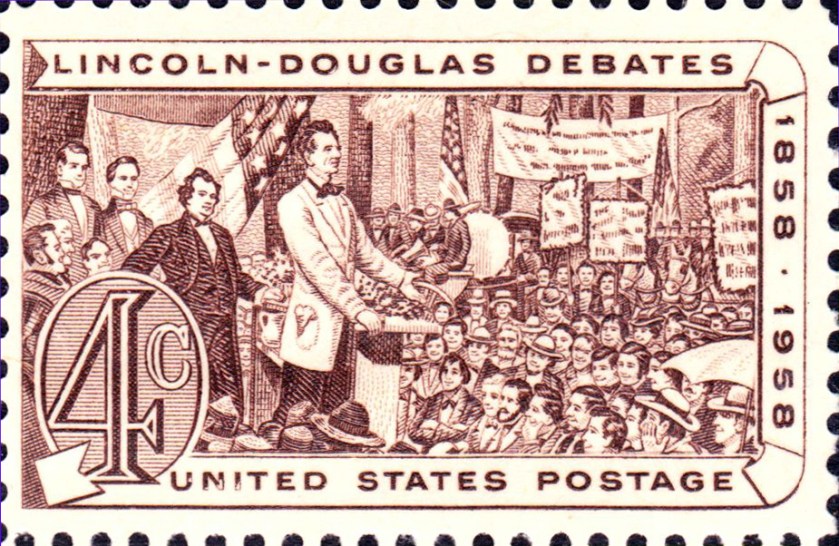
Abraham Lincoln wrote a letter in 1855 to Joshua F. Speed that became famous for the future president’s stand against the anti-immigration Know-Nothing Party. Lincoln and Speed met during the 1830s and remained friends even though their views differed on slavery. Speed grew up on a plantation and owned slaves. A turning point in Lincoln’s life that rekindled his interest in politics was the passage of the Kansas-Nebraska Act in 1854, repealing the Missouri Compromise of 1820 and opening the territories to slavery. It was in this context that the 1855 letter was written. In referring to the nativist Know-Nothing Party—which came out of a secret society in the 1850s and was primarily anti-Catholic, xenophobic, and hostile to immigration—Lincoln used his letter to make his point of view very clear: “I am not a Know-Nothing. That is certain. . . .Our progress in degeneracy appears to me to be pretty rapid. As a nation, we begin by declaring that ‘all men are created equal.’ We now practically read it ‘all men are created equal, except …

A self-styled “comma queen” has an infectious take on her chosen obsession.

After his death, Stephen Jay Gould, the great paleontologist and scholar of evolutionary history, was still teaching about a subject he loved—through a posthumous book of essays about baseball. Gould and other famous scholars and writers—individuals such as historians David Halberstam and Doris Kearns Goodwin, novelist John Updike, financial journalist Michael Lewis, and New Yorker essayist Roger Angell—have all written with a special affinity for the game. Ken Burns found many of them for his 9-part PBS documentary Baseball. Yes, even poet Walt Whitman wrote about baseball in the mid-nineteenth century. I’m here to report that we have a candidate for the 2019 addition to the “smart people write about baseball” library. Let’s see what it might tell us about baseball, and life. Infinite Baseball: Notes from a Philosopher at the Ballpark is a short and entertaining work written by Alva Noë, a professor of philosophy at the University of California, Berkeley, and a lifelong New York Mets fan. I went against my standing policy of rejecting books with jacket blurbs by George Will and took …

A dear friend passed away. She lived with a sense of individual wonder, the power of hope, and the vivid but questing belief in a future for the globe.
Toni Morrison, Nobel Prize-winning author and arguably our First Lady of Letters, passed away last evening, August 5th, at the age of 88. She left this earth as a new book of essays, The Source of Self-Regard, along with a recently released documentary entitled Toni Morrison: The Pieces I Am, introduced long-time fans and new readers alike to her towering intellect and broad vision. These works could not have come along at a better time. Now that she has died, we will have to rely on the power of Morrison’s words; the clarity of her vision for social justice; the love of art, music, and literature that permeates the meditations in The Source of Self-Regard and the interviews in The Pieces I Am more than ever. At the end of “Peril,” the very first offering in The Source of Self-Regard, Morrison makes the bold statement that, “A writer’s life and work are not a gift to mankind; they are its necessity.” And through 350 pages of speeches, essays, and meditations, she shows why. There are 43 pieces in The Source of Self-Regard, …
Wisdom includes meaningful self-knowledge as well as an important outward-facing impact that translates into action.

