The news that our country is being taken over by oligarchs intent on theft and destruction leaves the average citizen puzzled and baffled at best; worried, scared, and angry at worst. Hope can be difficult to find. But as Parker J. Palmer notes,
“Hope is holding a creative tension between what is and what could and should be, each day doing something to narrow the distance between the two.”
Even without doomscrolling and regularly checking online news sources, one can—and should—follow what is happening to our democracy and then do what we can individually and in community to narrow that distance between what is and what should be.
Timothy Snyder is, for me, one of the voices I trust to provide clear-eyed analysis. In the model of his small pamphlet On Tyranny, he recently laid out steps for different groups to take in this moment: for those who voted Republican but not for the takeover and destruction of government by oligarchs, for members of Congress, for mayors and governors, for federal workers. And he also suggests what the rest of us can do:
“Make sure you are talking to people and doing something. The logic of ‘move fast and break things,’ like the logic of all coups, is to gain quick dramatic successes that deter and demoralize and create the impression of inevitability. Nothing is inevitable. Do not be alone and do not be dismayed. Find someone who is doing something you admire and join them.”
Those who have gone before, like Baltimore native Virginia Hall, the most feared Allied spy of World War II and the linchpin of the French Resistance, have shown us why solidarity in the fight against oligarchical autocracy is crucial. Building back a sense of community as Americans will help us find our way.
Poet Wendell Berry wrote a short poem about what is truly happening when we find ourselves no longer knowing what to do. I first found a portion of it online as a meme.
Here’s the full poem, and the last two lines are critical in this day.
“It may be that when we no longer know what to do we have come to our real work, and that when we no longer know which way to go we have come to our real journey. The mind that is not baffled is not employed. The impeded stream is the one that sings.”
Wendell Berry
We’re in this together. We can do this hard work. Snyder’s last paragraph reminds us of the stakes and requirements of freedom.
“What is a country? The way its people govern themselves. Sometimes self-government just means elections. And sometimes it means recognizing the deeper dignity and meaning of what it means to be a people. That means speaking up, standing out, and protesting. We can only be free together.”
More to come . . .
DJB
*I continue to believe that we should stop, pause and be intentional about how we frame our thoughts, opinions and actions, and to select carefully the media we read or consume. I begin each morning with a meditation from the Center for Action and Contemplation. These are reminders that interior grounding is important as a prelude to external action. I also look to the poets and writers who see the world from a wider perspective than just politics. Historians like Snyder are also some of the voices I turn to, especially the daily newsletter of Heather Cox Richardson. I have a few other newsletters that arrive in my in-box, but what no longer comes is the Washington Post where I’ve cancelled my long-term subscription. The Post has both a publisher problem and an owner problem. I do not watch any television news.
Uncertainty, like tragedy, is part of the human experience. It is easy to try and ignore what we don’t understand, but we can also choose to engage more deeply, allowing our spirits to be captivated by the mystery of this uncertainty.
“The true nature of reality is far more complex, subtle, and illusive than we care to admit. Beyond our capacity for human observation and the rigorous research of science lies a more mysterious but real world. Religion has known this for several millennia, but religion itself has failed to honor the mysterious depths.”
We are called to focus on and engage in this mystery. To do so may help us see our role in the act of creation that is always unfolding, emerging, and becoming.
In the Beginning was the Spirit: Science, Religion, and Indigenous Spirituality (2012) by Diarmuid O’Murchu takes a broad look at what many know as the third member of the Christian Trinity. O’Murchu’s ambitious work broadens the analysis to include science (specifically Quantum Physics) and Indigenous spirituality. For many readers it will be both eye-opening and difficult to fully comprehend. To some it may seem heretical.
In place of anthropocentric traditional approaches to Christianity which tend to place the spirit in a type of little brother relationship to the creator (God) and savior (Jesus), O’Murchu wants us to look at the creative act described in Genesis, as well as the insight of indigenous people who see the Great Spirit inhabiting the whole of creation from time immemorial, and recognize the Spirit as that which breathed over the formless void. The Spirit, in O’Murchu’s telling, “is the force behind the recurring words ‘Let there be . . .'”
O’Murchu notes that the New Revised Standard Version of the Bible goes back to the Hebrew to suggest that “God did not create the world from nothing” but worked on the chaos. The divine is calling forth order, or potential. This foundational creativity may be what some theologians conceive of as divine eros, which “lures life into greater being.” This “originating work” of the Spirit, O’Murchu asserts, is “always based on a lure from the future.”
Images from the Webb telescope
Many commentators, from J.B. Phillips to Stephen Hawking, have declared that “your God is too small.” O’Murchu adds that the God of formal religion is “too anthropocentric and ‘ecclesiastical’ to be relevant for new scientific vision.”
“(S)cience rather than religion is recovering the mystical and spiritual depths of the creation that surrounds us. Religion for the greater part still seems wedded to the idea that the human comes first, and everything else in creation is there for human use and benefit.”
In another of his books, O’Murchu calls on the reader “to embrace the grandeur, complexity, and paradox that characterize evolution at every stage.” The strategies of this divine spirit “always have, and always will, outwit our human and religious desire for neat, predictable outcomes.”
“Deep down is an intelligence, a source of meaning and possibility that defies all our rational theories, and indeed all our theological dogmas as well. It is difficult to avoid the conclusion that this is the Great Spirit so long cherished by the world’s indigenous peoples, ancient and modern alike.”
Rather than embrace and engage with this mystery, O’Murchu notes that it is so much easier to divide the world into a battle between good and evil, and to place ourselves on the side of the good. “Needing a ladder to climb only appeals to our egotistical consciousness and our need to win or be right,” asserts the priest Richard Rohr, “which is not really holiness at all—although it has been a common counterfeit for holiness in much of Christian history.”
Mystery is hard. But O’Murchu helps the reader see that the energy of creation, of the spirit, “is not random, but unfolds in patterns and relationships, indicating a guiding wisdom that indigenous peoples call the Great Spirit.” How do we approach and begin to understand the “rational and compelling logic” to this process of unfolding? It requires the “contemplative gaze to access its greater depths.” Yet we can all see this spirit of creation at work when we see affirmations of “life over against death, liberation over against oppression, justice over against injustice . . . To live by the Spirit is to affirm life unambiguously.”
As the publisher describes it, “Poets knew it. Mystics knew it. Indigenous people knew it.” I, however, did not begin to understand all of In the Beginning Was the Spirit. What O’Murchu is doing—sometimes in prose that goes down too many rabbit holes and challenged my ability to comprehend—is to explore what religion has often forgotten or ignored: the power and presence of this sacred spirit “in our lives and in the breath of all things.”
As attacks on history ramp up and many on the right threaten a bishop who dared to speak truth to power, it seemed appropriate to kick off Black History Month this Saturday with a musical reminder that the bishop is following the lead of Moses who “mixed religion and politics” when he told Pharoah to “let my people go.”
Moses before the Pharaoh, a 6th-century miniature from the Syriac Bible of Paris (Wikimedia)
Go Down Moses, sung here by the Harlem Gospel Singers, is one of the great spirituals of the Civil Rights Movement, and it helped galvanize a generation.
Politics, religion, and the fight for freedom have always been intertwined. Ain’t Gonna Let Nobody Turn Me Around calls out several political actors and policies of the day.
“Ain’t gonna let segregation turn me ’round, turn me ’round, Ain’t gonna let segregation turn me ’round, I’m gonna keep on a-walkin’, keep on a-talkin’, Marching up to freedom land.”
Mavis Staples takes a similar stance in We Shall Not Be Moved.
The bishop called for mercy, which is as fundamental a belief as there is in the Christian faith. As one commentator noted, however, decency and kindness and mercy and truth are just signs of weakness to many of today’s so-called political leaders. “Blaming is not leading. Sticking to your bash-the-other-side talking points is marketing, not leadership. We deserve better.”
As seen in the 2015 movie Selma, the Civil Rights Movement—and American resistence—has long seen a mixing of politics and religion. Ledisi’s solo rendition of Take My Hand, Precious Lord captures “the soul, the spirit, the love, the prayer” of the song that has uplifted and encouraged so many fighting for freedom.
We are in for four years of gaslighting, lies, and hypocrisy. After conservative weaponizing of religion for centuries, we’ll hear now that progressive spiritual voices should be quiet. But Sweet Honey in the Rock knows better. As the old spiritual says, “Keep Your Eyes on the Prize.”
“I got my hand on the gospel plow Wouldn’t take nothing for my journey now Keep your eyes on the prize, hold on, hold on”
We can do this hard thing. So many before us have shown the way.
A summary of the January posts from the MORE TO COME newsletter.
Earlier this week I saw three dads with about a dozen children all riding their bikes on their way to the neighborhood school. I smiled. The next generation is picking up the torch, eager to learn. We can do this!
Winter, which can be difficult, is also the crucible of the life cycle, a metaphor for the idea of retreat and renourishment. We need this reminder especially in trying times. Yes, January brought savage wildfires, a polar vortex, and that thing that happened at noon on the 20th. Throughout the month the “Winter is coming” warning of House Stark in Game of Thrones—a message often heard in the series when someone wanted to scare the bejesus out of another character or simply keep them in line—kept running through my head.
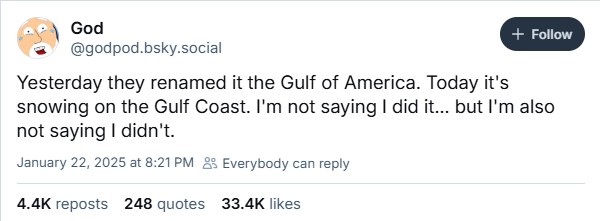
When we had a blizzard in New Orleans earlier this month I begin to think that perhaps we’re not heeding that admonition.
Jackson Square in New Orleans (credit Nicholas Gerbo, Garden & Gun)
But . . . I keep coming back to this mantra: You can do this hard thing. My post, which followed Bishop Mariann Budde’s speaking truth to power at the National Prayer Service, builds off a song of the same title by singer/songwriter Carrie Newcomer. It calls on us to acknowledge the difficulties in life while affirming that we have everything needed to move forward.
Let’s jump in and see what else caught my eye in January.
TOP READER FAVORITES
Wooden Salmon Troller taken in 1955 from NOAA Historic Fishers Collection (via Wikimedia)
Two posts topped the list of reader views for January.
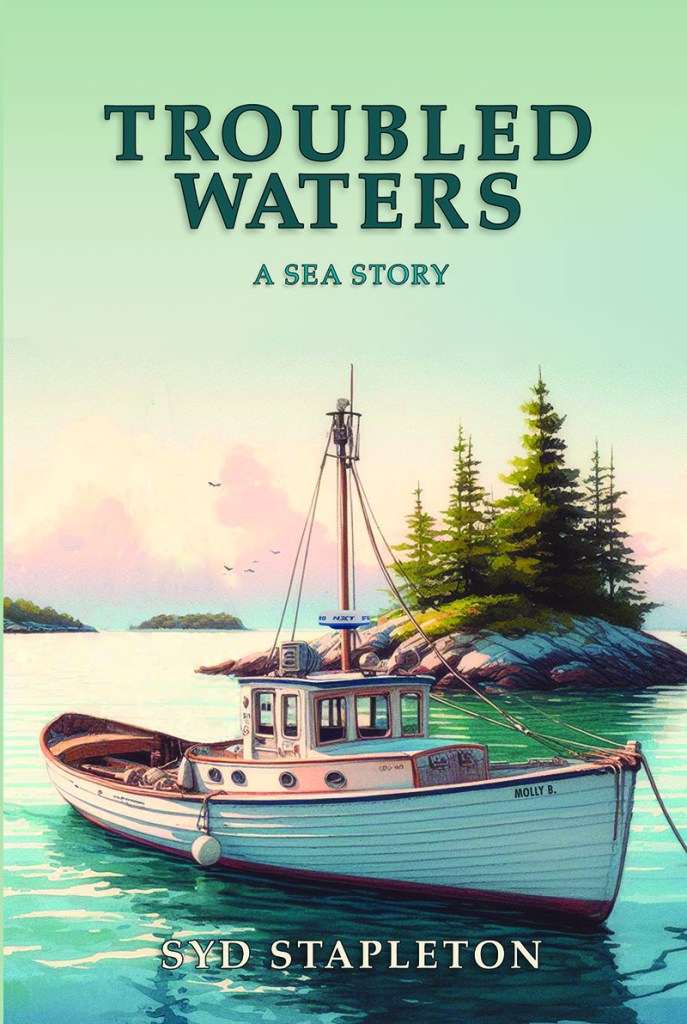
In my first Author Q&A of the year, Syd Stapleton answers my questions about his novel, Troubled Waters: A Sea Story (available here), which is an environmental disaster cloaked as a whodunit. In Fiction as a pathway to the truth we discuss the impacts of rapid change on the environment of the San Juan Islands, the building of wooden boats and ships, and how—in an age filled with disinformation—sometimes the use of fiction in literature is the best way to discover the truth. Syd has an interesting background: he studied at Berkeley in the 1960s and became a leader of the Free Speech Movement; debated William Colby, former Director of the CIA; ran for Congress as a socialist in 1970 (and lost); and has been a former ferry captain, landing craft relief skipper, and tugboat worker. Plus, he’s a regular reader of MORE TO COME. I enjoyed our conversation and hope you’ll take a look at it as well.
In 2013 I established eight rules of how I want to live day-to-day. I highlighted them on January 1st in Rules for the road of life. “Don’t be a Grumpy Old Man. Enjoy life!” (#8) is my reminder to “just say ‘no’ to negativity.”
READINGS FOR A TIME OF CHALLENGE
So many comments and emails this month begin or end with some variation of “here’s hoping 2025 will be a better year than I expect.” Living through this period is going to be a challenge. Reading helps.
Systemic change only occurs after acknowledging a systemic problem is a review of Tech Coup: How to Save Democracy from Silicon Valley. If there is one thing we learned in January, the tech oligarchs don’t care for, and actively work against, democracy. But we can resist.
The questions we ask about the facts of history is a bit of a grab bag, touching on the 50th anniversary of Richard Scarry’s Cars and Trucks and Things That Go, history lessons from a horror film writer, a link to the best online history writing of 2024, and thoughts on the eulogies at President Carter’s funeral. Steve Ford’s words to the Carter children—“God did a good thing when he made your dad”—deserves a hearty amen.
Several posts turned toward the theme of following your passion.
Put your best cup forward—an appreciation written for a new coffee shop/micro-roaster that opened around the corner—has helped me realign with another of my rules of the road.
Savor life’s gentle moments is a meditation about how, in the midst of an angry world, we can respond from a different place. In the words of Marv and Nancy Hiles, “We do not build our souls as much as we find them along the way. We discover them by accident as much as by intention. There is a time to take our lives in hand, but there is also a time to take our hands off our lives, and to leave what seems apparent and trust ourselves to the hidden.”
For anybody who could use a break looks at an optimistic, charming, and contemplative novella. I don’t usually read science fiction, but this one came along just when I needed it.
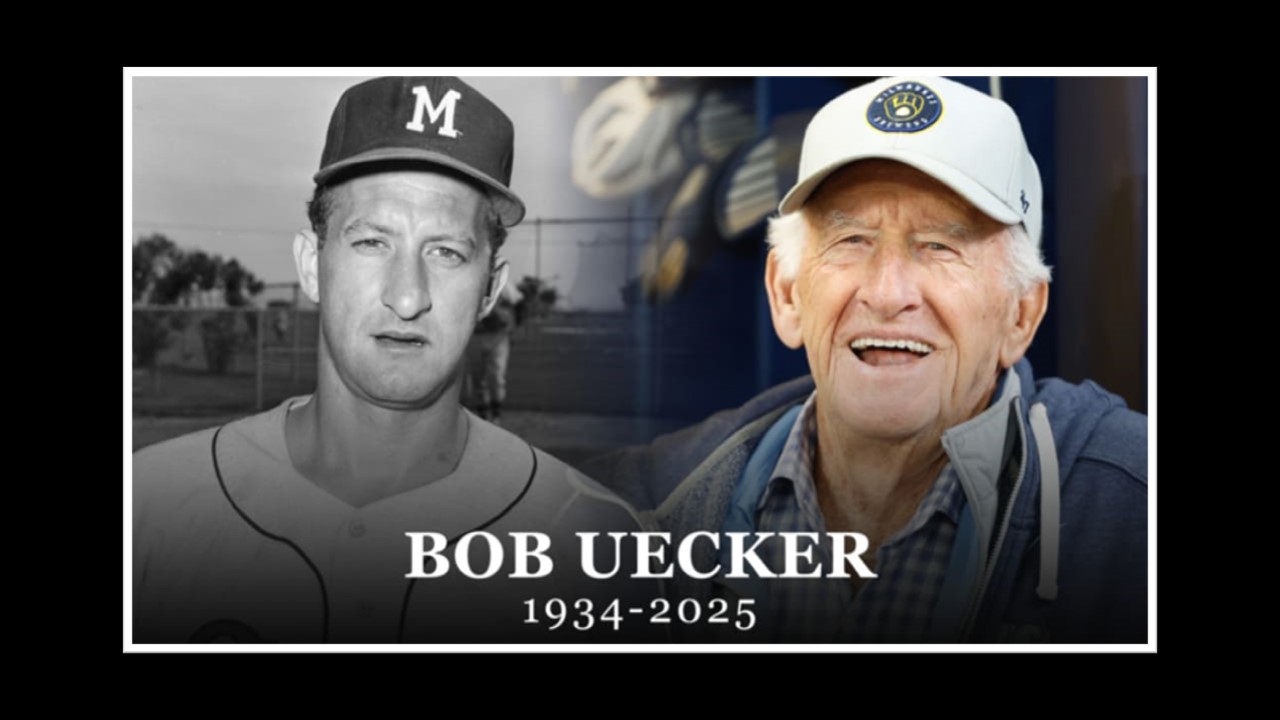
Rest in Peace, Mr. Baseball is my appreciation for Bob Uecker, whose humor and self-deprecating style earned him fame and affection far beyond his .200 batting average.
FEATURED COMMENT
The Uecker appreciation generated a number of comments. Brilliant reader Bob Stephenson wrote to say that “the Niekro knuckleball story” was also his favorite. Uecker had famously said that the best way to catch Phil Niekro’s knuckleball was “to wait for it to stop rolling and then pick it up.” I replied that I’d seen Niekro pitch live when I lived in Atlanta in the early 80s and chasing after passed balls was something any catcher did. Bob replied:
“Ryne Duren was the only uncatchable pitcher I saw in person when he came to Savannah for a Yankees-Senators exhibition. Coke-bottle glasses made his blazing fastball even scarier. Stengel famously said, ‘If he ever hit you in the head you’d be in the past tense.’ Glad that Uecker didn’t have that misfortune!”
Baseball stories are the best!
CONCLUSION
Thanks, as always, for reading. Your support and feedback mean more than I can ever express.
As you travel life’s highways be open to love; thirst for wonder; undertake some mindful, transformative walking every day. Recognize the incredible privilege that most of us have and think about how to put that privilege to use for good. Women, people of color, LGBTQ+ individuals, immigrants, and others can feel especially vulnerable . . . because they are. Work hard for justice and democracy as the fight never ends.
When times get rough, let your memories wander back to some wonderful place with remembrances of family and friends. But don’t be too hard on yourself if a few of the facts slip. Just get the poetry right.
Remember that “we are here to keep watch, not to keep.” Pay attention. Be astonished. Tell about it. And bash into some joy along the way.
You can subscribe to MORE TO COME by going to the small “Follow” box that is on the right-hand column of the site (on the desktop version) or at the bottom right on your mobile device. It is great to hear from readers, and if you like them feel free to share these posts on your own social media platforms.
It has probably been years since I last read science fiction. But when a friend, former colleague, and voracious reader added a comment on my year-end-reading post, I quickly jumped on her suggestion. She was noting how much she loved that Small Things Like These was on my list and agreed that it was a remarkable book. Then she added, “For something equally well written and ‘short’ though perhaps not your usual genre might I recommend Becky Chambers A Psalm for the Wild-Built?”
Takoma Park’s People’s Book, had a copy so I bought it and jumped right in. The dedication page is “For anybody who could use a break.”
Yes, my friend Priya had recommended this work at the perfect time.
A Psalm for the Wild-Built (2021) by Becky Chambers is an optimistic, charming, and contemplative novella. It takes place on a small moon called Panga, centuries after the Awakening at the end of the Factory Age, when the robots “employed” by humans decided they wanted to depart for the wilderness to observe “that which has no design.” They had long ago faded into myth and legend until Sibling Dex takes a turn off the paved road, heads into the wilderness, and meets Mosscap, a 7-foot tall, metal-plated, boxy-headed, wild-built robot—part of the fifth generation since the Awakening. They meet because Chambers has written a lovely story that reminds us of the necessity of taking a break, of not getting so bogged down in routine that you don’t “set aside time to care for yourself before getting up again to continue caring for others.”
Dex is a tea monk who travels between the human settlements on Panga to provide tea, a sympathetic ear, and quiet moments to any person who needs it. Even in the idyllic setting, where no one manufactures or uses nonrenewable resources or materials, “It was hard to find a Pangan who hadn’t, at least once, spent a very necessary hour or two in the company of a tea monk.”
After two years of service and constant travel, in which time they become the best tea monk in Panga and have a genuine belief in what they do, Dex decides to step away and plunge into the wilderness to visit the ruins of an old hermitage. His encounter with Mosscap—who is on his own mission to reconnect with humans to “find out what they need”—-and the subsequent challenges and truths they find along the way makes for an optimistic and hopeful vision.
In a world of false facts and disinformation, the truth can be very hard to uncover. When a new work of what we in the South use to call “regional fiction” came across my desk—a mystery novel set in part on an old wooden boat among the San Juan Islands—I wasn’t expecting that the compelling story would be a pathway to considering several fundamental truths. But in the hands of a skilled storyteller that’s exactly what I discovered.
Troubled Waters: A Sea Story (2024) by Syd Stapleton is a tale about an environmental disaster and cover-up wrapped in a whodunit. Our hero, Frank Tomasini, is a 47-year-old marine surveyor who lives comfortably on the Molly B, a 1937 salmon troller, which has been lovingly refurbished by its former owner who also happens to be Frank’s best friend. Near the first of 280 pages filled with crisp and clever writing, Frank is asked to unofficially survey the damage to an abandoned and adrift boat that belongs to Arthur Middleton, a “rich and holier-than-thou environmental warrior.” Middelton’s current crusade had centered on a polluting salmon fish farm located on remote Baker Island, near to where his boat is found. It turns out very few people, including Arthur’s brother, a high-powered Seattle business shark, seem too eager for Frank to find out what happened.
Frank’s telling of the story can slip into an irascible and cantankerous tone on occasion, but his dogged determination to find answers to this mystery make it work. He brings friends old and new along on his discovery, including Arthur’s somewhat eccentric but endearing aunt Agnes and Frank’s longtime friend turned lover, Carol. Much of the story takes place on the boat, which Frank keeps stocked with food and Laphroaig.
Troubled Waters is an engrossing read. If you want a full review I recommend this one from LineTime.org and this one from Against the Current. Stapleton—who studied at Berkeley in the 1960s and became a leader of the Free Speech Movement; debated William Colby, former Director of the CIA; ran for Congress as a socialist in 1970 (and lost); and has been a former ferry captain, landing craft relief skipper, and tugboat worker, graciously agreed to answer my questions about his new book.
DJB: Syd, “Troubled Waters” is a work of fiction about something we see all too often: environmental disasters and the subsequent coverup by those most responsible. Why choose fiction―and specifically the mystery genre―to tell this story?
Syd Stapleton
SS: One of the big problems with coverups is that it’s hard to get the facts. We all know that more than a few humans, including officials, can be heavily influenced by money, power and pressure, and that can weave a very tangled web. I wanted to make the point clearly, and I’m afraid that in today’s world, fiction is sometimes one of the few ways to make the truth clear.
For those of us with limited knowledge of the San Juan Islands, its gritty maritime and fishing history comes as something of a revelation. When you set the story here, were there specific aspects of the region’s past, present, and future you were hoping to weave into this tale?
I do think it’s important to remember that the impact of “modern life” has come in a very short time, when you look at things a little more broadly. Maybe it’s because I’m getting a little older, but I think the rate of change in the world is important to remember. Every generation has someone who lives to be a hundred years old. So, two lifetimes ago, the San Juan Islands were very, very far from being a vacation spot! Even just a hundred years ago, Native Americans were still a big presence, fishing and farming (well, and smuggling booze) were the main activities there, and life was not always easy.
That gap in time also lets us see a little more clearly the impact of “business” on the natural environment. Making money, as the principle moral value of our social organization, is a pretty scary thing when you look at the way it has affected many things, from Orca whales to housing prices to the pace of life, to the environment in general.
Your narrator, Frank Tomasini, has a bit of the lovable yet tenacious curmudgeon in his spirit. Your personal story has chapters that would seem to have required a similar outlook on life. Does Frank’s character come from someone specific, is he more of a composite of people you’ve met in the past, or is he a total creation from your mind?
Well, I’m not half Italian! I really put together the Frank character as someone whose voice I thought it would be easy for me to make consistent and believable. But he is a composite of people I’ve known and liked over the years. Some of the other characters are drawn straight from people I know and have worked with, with names changed to protect the innocent (or guilty). Particularly Frank’s history as a Berkeley radical in the ‘old days’ is something I know about and identify with.
I was interested in showing that even people without advanced degrees, or lots of money, can think clearly. They may not have a lot of power in the modern world, but they can still recognize a problem, and sometimes take steps to solve it.
Wooden Salmon Troller taken in 1955 from NOAA Historic Fishers Collection (via Wikimedia)
Your descriptions of Frank’s boat, the Molly B, reflect a real love for this refurbished 1937 salmon troller. Knowing that many of your readers (including this one) wouldn’t know their port from their aft, what went through your mind as you began to think about including nautical terms in this story?
As you know, there are a lot of “sea stories,” from Moby Dick through Joseph Conrad, B. Traven, Steinbeck and even some more modern writers. It can be an intense and intriguing world—a whole world of knowledge that allows for the consideration of different kinds of rules and priorities. The isolation of a small group under intense circumstances can lead to interesting interactions.
In the days before the dominance of plastic boats (excuse me, “fiberglass”), the building of wooden boats and ships, and their maintenance, was an art, an incredibly complex skill, with some positive features that are hard to find today. It’s not really an exercise in nostalgia, so much as it’s another appeal to look at the impact of “efficiency” and “low labor costs” on the world.
In finding out the “who,” but not seeing a satisfactory resolution of justice for those who perpetrated the disaster, I saw reflections of mystery writers such as Donna Leon. In her books she returns again and again to the theme that the truth can be very hard to discover in this life and justice isn’t always simple and easy. What books are you reading these days, and are there any mystery writers among that group?
I grew up an only child on a small farm, miles from the nearest town, let alone city, and my parents told me it was too far out to have television. So, unlike most of the kids my age, books were my companions and entertainment. It turns out my parents hadn’t been completely honest with me, but I forgive them! I’ve read intensely my entire life—history, politics, biographies, but mostly fiction over the last thirty years or so—good stuff, like Alice Munro, Henry Roth, Philip Roth, Henry Miller, Joseph Heller and on and on. And also a lot of “mysteries.”
I like Donna Leon! But among some favorites are (not in order of preference): K.C. Constantine, Qui Xiaolong, Caimh McDonnell, Percival Everett, Martin Walker, John Banville, Elizabeth George, Andrea Camilleri, Walter Mosely, James Lee Burke, Martha Grimes, Sara Paretsky, Laurie R. King, S. A. Cosby, Craig Johnson, Carl Hiaasen, Jonathan Lethem, Jo Dereske, T. C. Boyle, Cormac McCarthy, Dennis Lehane, Mauricio de Giovanni, Tony and Anne Hillerman, and more…
Thank you, Syd.
I really appreciate it.
More to come . . .
DJB
Aerial view of forested San Juan Islands in the Salish Sea with snowy Mount Baker on the horizon by Chris Linnett on Unsplash
“Don’t let him get in your head” has been my mantra for Trump 2.0. I have generally followed the suggestions of Cal Newport and others and have stepped away from the exhausting digital chatter. Ryan Holiday, the author of Trust Me, I’m Lying, a book about media manipulation, wrote recently that “we’ve fooled ourselves into thinking that endless news consumption is how you stay ‘informed.’” However, Holiday argues . . .
“If you want to make a positive difference in the world—or simply maintain your sanity—you need to step back. You need to learn how to be more philosophical—which means being more discerning about what you let into your mind and learning how to see the big picture, calmly and with perspective.”
Rather than letting Trump and his minions get in our head, I believe progressives need to follow the advice of Jason Linkins in The New Republic and make him own every bad outcome that occurs on his watch. There will, unfortunately, be many.
Bringing water to our desert
It was a woman, naturally, who showed us how to speak truth to power, bringing—as one commentator has noted—water to our desert.
As an Episcopalian in the Diocese of Washington, Bishop Mariann Budde is my bishop. I haven’t always agreed with her, but I was so very proud of the way she spoke, in her firm, quiet voice, and asked Trump “to have mercy” on those who were scared and powerless. As the New York Times put it:
“For everyone watching, the vastness of Washington National Cathedral compressed, in one stunning moment, into a sudden intimacy. And with it, all the existential fights not simply of politics, but of morality itself. In a flash, the war over spiritual authority in America burst into a rare public showdown.”
The Canterbury Pulpit confronted the bully pulpit on the greatest possible stage.”
Bishop Mariann didn’t go into histrionics or make wild accusations. But she stated the truth of the situation plainly, placed the burden on his shoulders, and clearly—given the middle-of-the-night response on social media—got into his head.
She showed us how to do the hard thing.
One of the best summations of the national prayer service came not from the billionaire media but from a Lutheran pastor who wrote Herod goes to the National Cathedral and is disappointed. It is long but worth the time. He begins by noting that this was “A Service of Prayer for the Nation.”
“Not for ‘the citizens of’ the nation. Not for ‘the taxpayers of’ the nation. Not for ‘the leaders of the nation. This was a service for the nation – the ‘whole’ nation.”
After reviewing all that preceded the sermon, Pastor Peterr then writes,
“What Budde did, in all humility and in all power, was to name Trump for what he is: one of us, with specific powers and abilities to directly shape life for all the people of the country, and indirectly for the world. Note, though, that what she pleaded for from Trump was of a piece with all the music and prayers, calling on every one of us to use our own far smaller powers and abilities to shape life for all the people in our orbit for the better, as small as our powers may be compared with the powers wielded by Trump.”
Newcomer’s music “has always explored the intersection of the spiritual and the daily, the sacred and the ordinary.” She is a prominent voice for progressive spirituality, social justice and interfaith dialogue.
The title for the Substack post came from a song on Newcomer’s 2016 the beautiful not yetalbum. In the notes, Newcomer provides some background to this work.
“Barbara Kingsolver has written about a phrase she uses to encourage her children, ‘You can do hard things.’ I loved this idea behind this phrase. It absolutely acknowledges the difficulty of the task at hand, and yet, at the same time it completely affirms that the child has everything they need to move forward, and that they have support. I began to think about all the times in my own life that someone has given me that kind of sound advice and encouragement.”
The official version has the lyrics, and a lovely video interpretation.
“Late at night I called, and you answered the phone | The worst it had happened, and I did not want to be alone | You quietly listened, you said, “we’ll see this through” | You can do this hard thing, you can do this hard thing | It’s not easy I know, but I believe that it’s so | You can do this hard thing”
In 2022, Newcomer sang the song live at the annual International Women’s Day Performance, and it includes a wonderful introduction.
The bridge is so moving in the images it conjures. Then it ends with the hopeful: “Impossible just takes more time.”
“Here we stand breathless and pressed in hard times | Hearts hung like laundry on backyard clothes lines | Impossible just takes a little more time.”
Toward the end of Pastor Peterr’s post on the National Prayer Service, he references James Taylor’s Home by Another Way.
“Like the wise men of old, Bishop Budde knows another way, as do all those who planned this most powerful service . . . In JT’s words, in the face of Trump’s blizzard of executive orders which are designed to take and take and take some more from the most vulnerable among us, Budde didn’t give an inch. Instead, she stood in the path of our American Herod along with a host of others, naming that other way home . . . And that’s what each of us can do, wherever we are: name Trump’s way as the path of division, destruction, and death, and point to another way.”
The chorus is powerful.
“Yes they went home by another way | Home by another way | Maybe me and you can be wise guys too | And go home by another way | We can make it another way | Safe home as they used to say | Keep a weather eye to the chart on high | And go home another way”
Don’t let him in your head. We can speak the truth every way we can. We can point to another way.
We can all do this hard thing.
More to come . . .
DJB
*The nation’s comics have had a field day with Bishop Mariann’s speaking truth to power, and Trump’s response.
And keeping with the “God vs. ‘Divinely Inspired’ Trump” theme, there was more.
This story begins with an email on our neighborhood thread from my friend (and fellow morning walker) Ed Read. Early in January he posted the following:
“Hi neighbors,
I’m unabashedly putting in a plug here for this new coffee shop/ ‘micro-roaster’ just a few steps away from us.
I’m a coffee snob. I LOVE good coffee, especially fresh coffee, where the roast date is within several days. There IS a difference. There really is!
NO more buying coffee that is good ‘if used by 9 mo’s (or more!) from now’. I can now walk by, drop in, place an order for some freshly roasted beans and have them after a short wait or return the next day and literally have beans freshly roasted. He sources from small independent coffee farms all over. He has a great set-up, super equipment, and I’m just totally stoked that I can get such good coffee!
Like a dream come true for me.
So, please help out Doug as he launches his new business and start buying your fresh beans here.”
Within days I had stopped by Celtic Cup Coffee, the brainchild of Doug Ilg, and tried it out for myself. Doug gave me a flight of coffee (light, medium, and dark roast) to try and we talked about his business and how he came to launch this new endeavor. The story can be found on his website, but the short version is that Doug, the founder and roast master, is a computer scientist who had a 30+ year career, including working with NASA and other agencies to devise ways of computing, organizing, storing, and distributing science data imagery from various Earth observing environmental satellite systems. We laughed about our shared experience of finding ourselves, as we aged, being a bit too much of the curmudgeon at work and deciding that it was time for the younger generation to have their shot. Doug’s decision was to follow his passion for coffee—one that began when he was just a boy—and help his community by broadening their home coffee brewing horizons.
After tasting the offerings, I made my choices and Doug roasted them while I waited. It took about 20 minutes, during which time a couple of other folks from the community stopped by, indicated they had seen Ed’s note (and the robust follow-up conversation), and wanted to give Celtic Cup a try. Since then, I’ve been making my coffee at home and loving it . . . which leads to the other part of the story.
The coffee roasters where Doug produces his micro-roasts on demand.
One of my rules for the road of life (#4 to be exact) is “spend less than you make.” These rules are really personal guidelines; not quite a principle but rather a reminder of how I want to live over time.
However, I had convinced myself that it was okay to stop in a local coffee shop and buy a fresh cup of coffee each morning (cost of $3-$5 a day plus a tip) to take with me on my morning walks (see rule #2). This was a habit I began during the pandemic and had continued for the next three years.
Candice would ask why I did it, given that I had a very nice coffee maker sitting on the counter at home. Now $5 each day wasn’t going to break our budget, but it didn’t really follow the spirit of that rule, as I was spending money unnecessarily. I told myself it was to support a local business (I’m a Main Street kind-of-guy) plus I liked getting to know the young people who were working early in the morning. But it still bugged me, and I know it bothered Candice although she was too kind to bring it up.
Celtic Cup helped me set a new path in life, for which I’m grateful. I still support a wonderful local merchant, the coffee is superb (better than what I was getting in most, if not all, of the shops I frequented), my coffee maker is back in business on a daily basis, and since Celtic Cup Coffee isn’t going to feature “all those fancy coffees” you’ll find at a place like Starbucks, I can still stop by Kefa Cafe, or Takoma Bev Co for the occasional latte. Win-win-win!
(Celtic Cup storefront. Credit: Source of the Spring)
If you live in the neighborhood, stop by and give Celtic Cup Coffee a try. And if you don’t, email Doug and he’ll chat with you about shipping a pound of freshly roasted coffee direct to your house.
I’m sure that if you do, you’ll get that “Top of the morning” feeling to start your day!
More to come . . .
DJB
UPDATE: Here’s the photo that goes along with the comment I posted below:
The original of the micro-roaster, co-invented by MTC reader Syd Stapleton
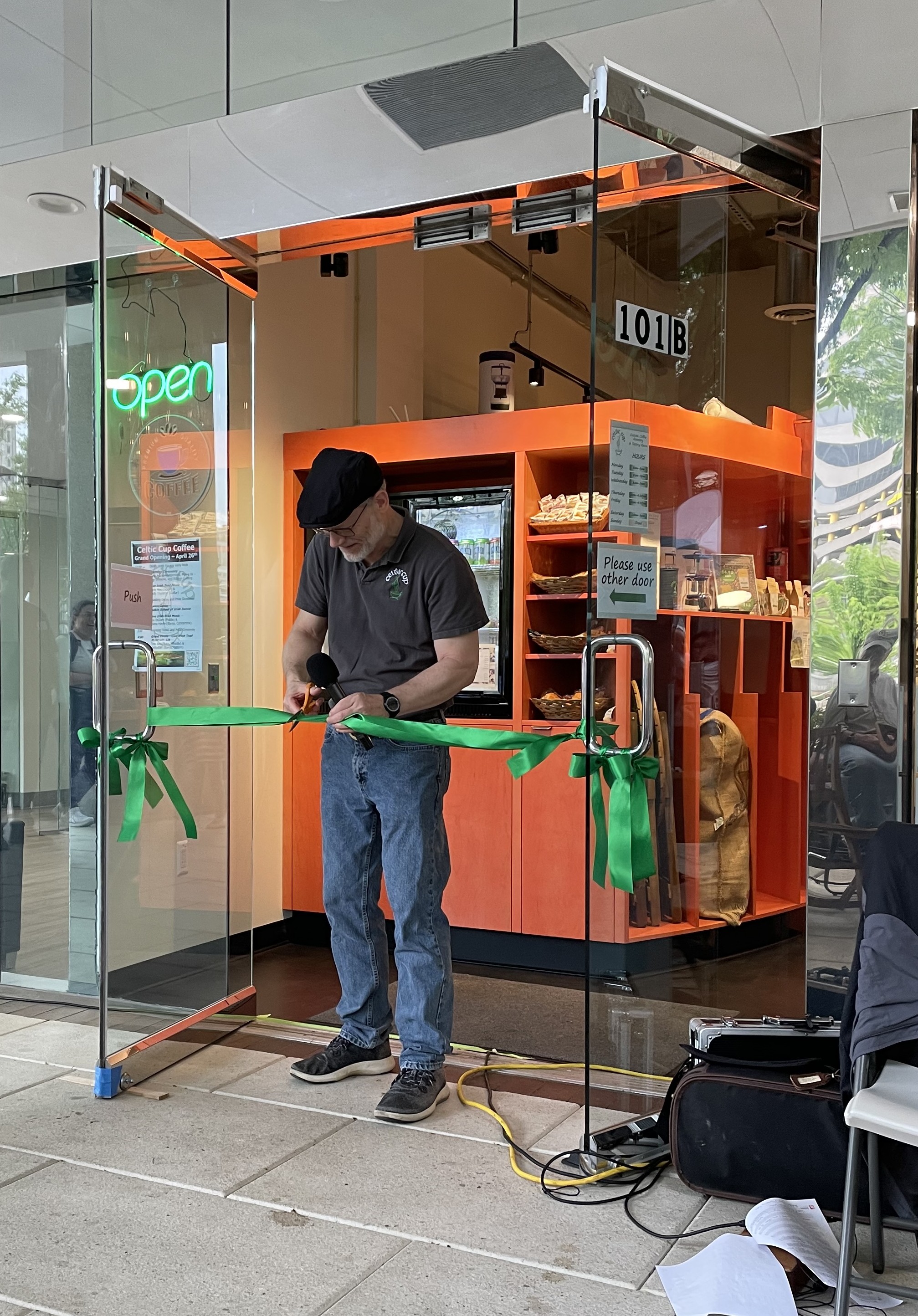
UPDATE NUMBER 2: Here are photos from the April 26, 2025 grand opening of Celtic Cup Coffee:
“Power at its best is love implementing the demands of justice, and justice at its best is power correcting everything that stands against love.”
The Rev. Dr. Martin Luther King, Jr.
My book group is currently reading a work by one of the twentieth century’s most influential preachers, educators, prophets, poets, and mystics. I first read what has been cited as “a timeless testimony” that demonstrates “how to thrive and flourish in a world that attempts to destroy one’s humanity from the inside out” several years ago. But our current turmoil—stirred up by those focused on hatred and division—provides an updated context. The juxtaposition of the MLK holiday and the inauguration of this new president makes it an especially auspicious moment to look back while looking forward.
Jesus and the Disinherited (1949) by Howard Thurman is the work that inspired The Rev. Dr. Martin Luther King, Jr. and countless other advocates for peace and justice. Rev. Otis Moss, III highlighted the uniqueness of Thurman’s book when he wrote, “No other publication in the twentieth century has upended antiquated theological notions, truncated political ideas, and socially constructed racial fallacies like Jesus and the Disinherited. Thurman’s work keeps showing up on the desk of anti-apartheid activists, South American human rights workers, civil rights champions, and now Black Lives Matter advocates.” Vincent Harding called the book the centerpiece of Thurman’s “lifelong attempt to bring the harrowing beauty of the African-American experience into deep engagement with what he called ‘the religion of Jesus.'”
At the beginning of this slim but deep work, Thurman notes that there is a striking similarity “between the social position of Jesus in Palestine and that of the vast majority of American Negroes” (using the term that was popular in his day), an observation that “is obvious to anyone who tarries long over the facts.” He “begins with the simple historical fact that Jesus was a Jew.” As such, Jesus was a member “of a minority group in the midst of a larger dominant and controlling group.” Thurman argues that it would be “utterly fantastic to assume that Jesus grew to manhood untouched by the surging currents of the common life that made up the climate of Palestine.” He, like almost all Jews of his day, was disinherited.
“There is one overmastering problem that the socially and politically disinherited always face: Under what terms is survival possible?”
But while he grew up in the same society, we have to recognize that he was Jesus, and the other Jews in Palestine at the time were not. Thurman stresses that Jesus, in the midst of a very difficult psychological climate for Jews, focused on “the urgency of radical change in the inner attitude of the people.”
“(Jesus) recognized fully that out of the heart are the issues of life and that no external force, however great and overwhelming, can at long last destroy a people if it does not first win that victory of the spirit against them.”
It is the “inward center” which is the critical arena. The attempt to kill the soul is everywhere. As a mentor of mine phrases it, one way evil affects us is by isolating the mind and killing the heart.
In chapters on fear, deception, hate, and love, Thurman “demonstrates how the gospel may be read as a manual of resistance for the poor and disenfranchised.” He suggests that the position of the disinherited in every age is to determine “(w)hat must be the attitude toward the rulers, the controllers of political, social, and economic life?” Jesus, Thurman notes, rejected hatred.
“It was not because he lacked the vitality or the strength. It was not because he lacked the incentive. Jesus rejected hatred because he saw that hatred meant death to the mind, death to the spirit, death to communion with his Father. He affirmed life; and hatred was the great denial.”
The hatred for “the others” has existed for centuries. Hatred often begins in situations where there is “contact without fellowship.” There are no overtures of warmth and genuineness. It is easy, Thurman asserts, “to have fellowship on your own terms.” It is unsympathetic understanding breeding ill will. Hatred becomes a source of validation for us and for our personalities.
Thurman’s words ring as clear today as they did when he wrote them almost 80 years ago.
“The basic fact is that Christianity as it was born in the mind of this Jewish teacher and thinker appears as a technique of survival for the oppressed. That it became, through the intervening years, a religion of the powerful and the dominant, used sometimes as an instrument of oppression, must not tempt us into believing that it was thus in the mind and life of Jesus.”
On January 20th, writer Carrie Newcomer notes, there will be two stories presented. This is our national holiday celebrating the birthday of Dr. Martin Luther King Jr. We “honor stories that are real and lasting, stories of hope and faithfulness, of courage and deeply ethical living.”
“I think it is important to say clearly that our celebration of Dr. Martin Luther King Jr.’s life is not a story that ended after his tragic assassination in 1968 . . . We honor the work that has come before, we take humble and grateful insight from those who have faced enormous challenges and suffering and did not quit—even in the face of grievous cost . . . [and we] decide the kind of power we choose to believe in, and the power we hope to build upon each in our own way, through our own daily actions.”
And there will be another, very different type of story presented today.
“To be sure, this is the beginning of a new and dangerous regime, but it is an old story that is essentially unoriginal and without the kind of true power Dr. King described. In the story of this new regime, there is no room for anything that is truly expansive, no room for our highest values, no room for the good we can imagine and then create, there is no room for spiritual growth, only spiritual decay.”
We each choose fear, deception, hatred . . . or love. It is the “inward center”—our soul—which is the critical arena.
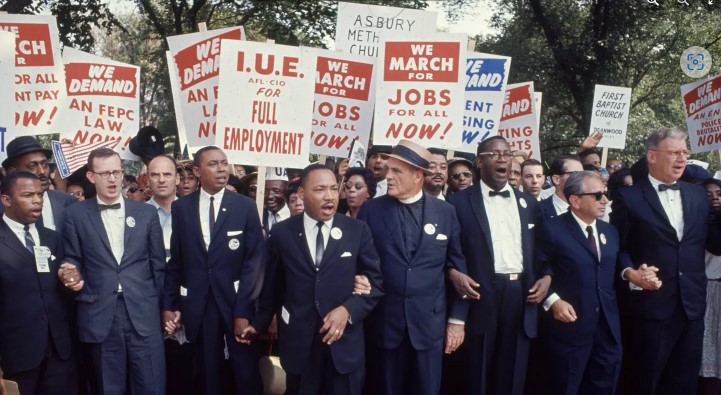
The annual King Holiday Observance is a time that we celebrate, commemorate and honor the life, legacy and impact of Dr. Martin Luther King, Jr. The King Center’s theme for this year is “Mission Possible: Protecting Freedom, Justice, and Democracy in the Spirit of Nonviolence365”. Focusing on nonviolence every day of the year—and not just on this weekend which includes the presidential inauguration that many fear will lead to increased violence—is a lofty goal.
I’ve told the story before of being in a meeting following the 2016 election. Several white participants were close to apoplectic in their concern over what the country had just done. But two older, very accomplished African-American friends had a less emotional reaction. Yes, they were concerned about what was to come but they were not surprised at the white community’s backlash against the nation’s first Black president. * They reminded us that their families—their mothers, fathers, grandmothers, and grandfathers—had always dealt with adversity in this land of opportunity. It went along with being Black in America. They persevered and they never gave up hope. Their unspoken message to us was if they did it in the midst of the oppression they faced, then persevering was the least we could do from our positions of privilege.
I remember their example and courage today and whenever I’m feeling hopeless. And this weekend, I turn to the music of hope and perseverance to help focus on the work ahead.
In his farewell address to the nation, President Biden noted the “short distance between peril and possibility” but promised that “what I believe is the America of our dreams is always closer than we think. It’s up to us to make our dreams come true.”
If we want to make our dreams come true and save our democracy, it is well past time for white Americans to join with all people of good intentions; dig into our deep history of racism fueled by greed; and fully commit to the hard, antiracist work to repudiate white supremacy and the corresponding minority rule that is a feature of that vile belief system.
THE BLACK NATIONAL ANTHEM
There’s no better place to start this look at peril and possibility than with the Black National Anthem. With words by James Weldon Johnson and music by his brother John, Lift Every Voice and Sing was written at the turn of the 20th century, a time when Jim Crow laws were beginning to take hold across the South and Blacks were looking for an identity. In a way that was both gloriously uplifting and starkly realistic, it spoke to the history of the dark journey of African Americans.
“Lift ev’ry voice and sing
‘Til earth and heaven ring
Ring with the harmonies of Liberty
Let our rejoicing rise
High as the list’ning skies
Let it resound loud as the rolling sea
Sing a song full of the faith that the dark past has taught us
Sing a song full of the hope that the present has brought us
Facing the rising sun of our new day begun
Let us march on ’til victory is won“
“It allows us to acknowledge all of the brutalities and inhumanities and dispossession that came with enslavement, that came with Jim Crow, that comes still today with disenfranchisement, police brutality, dispossession of education and resources,” Shana Redmond — author of Anthem: Social Movements and the Sound of Solidarity in the African Diaspora — says. “It continues to announce that we see this brighter future, that we believe that something will change.”
“Stony the road we trod
Bitter the chastening rod
Felt in the days when hope unborn had died
Yet with a steady beat
Have not our weary feet
Come to the place for which our fathers sighed?
We have come over a way that with tears has been watered
We have come, treading our path through the blood of the slaughtered
Out from the gloomy past
‘Til now we stand at last
Where the white gleam of our bright star is cast“
While there are many versions by great artists, the one I learned is the one sung by choirs and congregations in church. Here is that version from late November 2016—another auspicious time—at Abyssinian Baptist Church.
“God of our weary years
God of our silent tears
Thou who has brought us thus far on the way
Thou who has by Thy might
Led us into the light
Keep us forever in the path, we pray
Lest our feet stray from the places, our God, where we met Thee
Lest, our hearts drunk with the wine of the world, we forget Thee
Shadowed beneath Thy hand
May we forever stand
True to our God
True to our native land“
RUTHIE FOSTER
Ruthie Foster
The Grammy-nominated 2020 album Ruthie Foster’s Big Band Live at the Parmount includes Woke Up This Morning, a freedom song created in 1961 from the old gospel favorite I woke up this morning with my mind stayed on Jesus. The song was written by The Rev. Robert Wesby of Aurora, Illinois, who sang it in the Hinds County, Mississippi, jail after his arrest and incarceration during the Freedom Rides. Foster takes us to church and to the streets with her powerful version.
We need to walk and talk with our mind “stayed on freedom.” For everyone, not just the wealthy.
ARETHA AND MAVIS
So much of the music of the Civil Rights era was built off of gospel music. O Happy Day with Mavis Staples and Aretha Franklin brings together two of the greatest and most powerful Soul and Rhythm & Blues voices not just of their generation, but of all time. (Check out the interplay at about the 1:50 segment and then again at 4:00. Good gawd!)
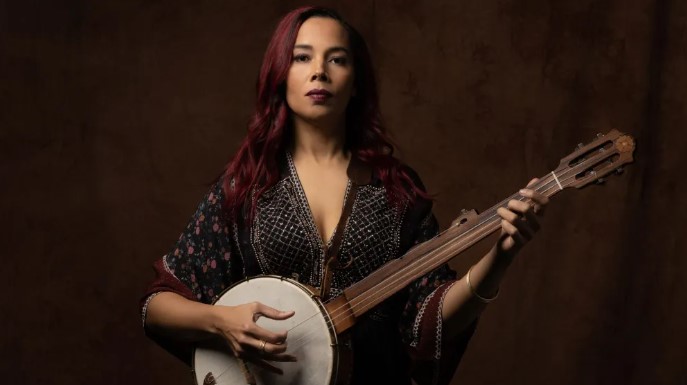
RHIANNON GIDDENS
Rhiannon Giddens
Rhiannon Giddens has, in her own way and on her own path, become a true musical treasure. In the powerful I’m On My Way, she sings “I don’t know where I’m going, but I know what to do.”
“I don’t know the hour that finds me in this room
Dust around my feet and still no sugar in my spoon
But I’ve only got the taste for something sweet as time
Not bottled on the table but still hanging on the vine
I don’t know where I’m going But I’m on my way
Lord if you love me Keep me I pray
A little bird is stretching out to the shimmering, shaking blue
Don’t know where I’m going But I know what to do
Don’t know where I’m going But I know what to do“
Several years ago Giddens updated the old Civil Rights anthem Freedom Highway, which has the great line, “made up my mind that I’m not turning around,” something we all need to do in this day and age.
The Giddens version of Wayfaring Stranger captures the tune’s haunting, yet ultimately hopeful message. We’re all strangers in a strange land, yet we still must persevere.
In a more modern tune, Giddens sings Keep On Keepin’ On with the Silkroad Ensemble, where she’s the artistic director.
One foot in front of the other. Day after day. Its what we have to do.
More to come . . .
DJB
*This past election cycle we could note that the backlash was against a woman of color who was running for the nation’s highest honor.

























 MORE TO COME...