Latest Posts

Boswell on China

Thomas Boswell of the Washington Post is one of the smartest sportswriters on the planet.  (For evidence see Why Is Baseball So Much Better Than Football.) 

So I found his column today on the Beijing Olympics (They Made the Buses Run on Time) to be smart, funny, and – I suspect – pretty accurate.  My father often told me, “Don’t believe everything you see on TV.” 

Many of you who don’t normally read the sports pages of the Post will find Boswell’s comments of interest.

More to come…

DJB

Practicing

Four restful days on the Patuxent River in Southern Maryland brought our summer holiday to a close.  We used this time for unwinding from our western travels, reading, talking as a family – but mostly for being.  The sunset on the river was illustrative of the four wonderful days of weather we experienced…nary a day when the AC was required…but it also struck us as appropriate for an end-of-summer-holiday post.

We’ve been fortunate enough to have access to this retreat for nine years, and there are some traditional activities we’ve taken on during that time.  While our visit was shortened this year, we were still able to visit Cone Island at Solomon’s to buy the traditional “Monster” ice cream cones that Andrew and Claire showcase below.  It just wouldn’t be a summer without a Monster!

Candice and I were also able to finish some reading over the weekend.  Candice completed an out-of-print book she bought on Amazon entitled Nourishing the Soul:  Discovering the Sacred in Everyday Life and said it was transformative in its insights.  The book is a series of 24 essays grouped into topics such as Mapping the Territory of the Soul, the Individual Soul Journey, and Soul and Community.  She recommends it highly.

I finished a small but insightful book I purchased on a whim at Maria’s Bookshop in Durango (motto:  “Independent Bookstores for Independent Minds”) entitled Practicing:  A Musician’s Return to Music by Glenn Kurtz.  On the surface this is the autobiographical story of a prodigy who takes up the classical guitar at age 10, graduates from the New England Conservatory of Music, moves to Vienna for a professional career, quits when he realizes that he’ll never make it to the concert stage, and then after a decade-long hiatus, takes up the guitar again with new insights and appreciation.  He weaves this story around a single practice session undertaken upon his return to the guitar.  But as Samantha Dunn wrote in her Los Angeles Times review of the book, “Practicing is a fantastic example of what memoir as a literary form can best deliver:  a person delving honestly, profoundly, and fearlessly into one aspect of life, not necessarily coming up with answers so much as struggling in the face of life’s big questions.  The core of memoir is the writer moving into deeper levels of self-understanding and awareness.  Magically, although it is a personal journey, it becomes universal, elevating all in the process.”

As I read Practicing I thought about the real musicians in my family – my brother Steve, my son Andrew, my daughter Claire.  They would all read this (well, perhaps Andrew & Claire in later years) with a great appreciation for what Kurtz goes through as a musician.  I enjoyed it on that level, but most of all I took pleasure in the graceful writing and insights that do, in fact, become universal for anyone who has dreamed of achieving something big and has had to deal with the disappointment that comes when one falls short.  Here’s an excerpt that – for me – captures the grace of this book:

Practicing can be a dream world in which you escape the reality of time.  You believe that you have everything to do over again, that you have all the time in the world to achieve perfection.  And every day we must practice.  There is no other way to improve.  Still, practicing, by itself, cheats you of half your life.  Even if you are your only audience, music lives fully only in performance.  Performance brings all the strands together, for a moment, joining the many conflicting voices with which music speaks – the joy, the frustration and anger, the loneliness, regret, and sudden elation.  But unlike practice, every performance has an end.  And without an end, music is just a fantasy….

You must make the music of today.  You have to perform what you hear, what you feel, what you can grasp, today.

At least that’s what I tell myself.  It’s taken me more than ten years to let go of the story of my failure and find a new one I could believe in, this myth of growth and return that helps me continue.  I started practicing again because I felt I could do it better this time.  Now, whatever my fingers allow me to play, I sit down to practice the fullness of my doubts and desire, my fantasies and flaws.  Each day I follow them as far as I can bear it, for now.  This is what teaches me my limits; this is what enables me to improve.

I think it is the same with anything you seriously practice, anything you deeply love.  For me, it was music.  The guitar.  But whatever “music” is for you, if you practice for real, eventually it will show you everything that is within you.  Because as accomplished or as disappointed as you may feel now, you don’t know what remains concealed in your hands.  Maybe you’ll never grasp all of it.  What you want may never yield to your touch.  And yet maybe one day a performance will surprise you.  Maybe today your music will reveal all the joy and disappointment, all the love and the fear you are capable of, your whole life, the true concord of your own heart.

I suspect that you don’t need to be a musician to glean something of value from Practicing.  I found it to be a wonderful little book.

More to come…

DJB

Interviews with Dobro Master Jerry Douglas

My father sent along the news that WPLN public radio in Nashville featured an interview on August 18th with Dobro master Jerry Douglas that some readers will find interesting.  The interview and an on-line web extra are available at WPLN’s web site.   Many of you will recognize Douglas’ name from his work with Alison Kraus + Union Station featuring Jerry Douglas, but those of us who’ve been listening to bluegrass and new acoustic music since the 1970s know that he’s played with just about everyone – from the Country Gentlemen (his first professional gig as a teenager), to J.D. Crowe and the New South (with bandmates Tony Rice and Ricky Skaggs), to Boone Creek, to Nashville session man extraordinaire from the 1980s on.  At least one regular reader of More to Come thinks Jerry Douglas is God.  If you want to see him live, go to YouTube to see this great set from Eric Clapton’s Crossroads Festival featuring Vince Gill and Jerry Douglas.

This posting reminds me that I haven’t made my quarterly update on the wonderful magazine The Fretboard Journal.  The Summer 2008 issue came just as I went on vacation, but this posting is timely as a reminder because there’s a great interview with Jerry Douglas (who talks about how it took NPR to force him back to the comedic beginnings of Dobro).  The cover story is an interview with mandolin phenom Chris Thile by a mandolin phenom from an earlier (sigh) age…David Grisman.  Many readers will remember Thile from the band Nickel Creek, which is now in semi-retirement.  The Fretboard Journal advertises itself as “Not Just Another Guitar Magazine” and there’s truth in that statement.  It is a great quarterly with coffee table photography of beautiful instruments and straight-ahead interviews of well-known and obscure musicians and builders.  (Others featured in the Summer issue include Ranger Doug and his great collection of Stromberg guitars, electric guitar pioneer Les Paul, and master acoustic guitar builder Jean Larrivee.) 

More to come…

DJB

IMT Concerts Begin Fall Season

I have found one of the best acoustic music/folk concert series in the Washington area is hosted on Monday evenings during the school year by the Institute of Musical Traditions.  IMT is headquartered at Takoma Park’s House of Musical Traditions, but the concerts are held at St. Mark’s Presbyterian Church on Old Georgetown Road in Rockville.  Click on the link to find this fall’s schedule. 

This is a very friendly venue, where IMT sells homemade cookies and other treats in addition to CDs of the featured artist.  Over the course of several years, I’ve heard some tremendous musicians (including the great guitarist John Jorgenson and west coast bluegrass fiddler Laurie Lewis among many others) and have run into good friends and music lovers like Max and Mary van Balgooy and Tom Dews (a well-respected regional singer-songerwriter in his own right).  For this fall, several acts caught my eye, including the great Irish fiddler Kevin Burke on September 29th and the band Nightingale on October 6th.   I was introduced to the latter by my Staunton friends Jim and Constance Harrington & Oakley and Margaret Pearson.  Nightingale plays a mix of music from Newfoundland, Ireland, and France (plus they have a terrific accordion player!).

Finally, Candice and I have made it something of a tradition to attend IMT’s Celtic Christmas Celebration, held this year on December 8th.  Al Petteway and Amy White, along with guitarist Robin Bullock, always have a beautiful set featuring some wonderful acoustic guitar work.

If you live near Washington and enjoy good acoustic and folk music, check out the IMT concerts.

More to come…

DJB

Stadium Memories

Some people read 1000 Places to Visit Before You Die and think about how many they can check off in a year.  My quest is more modest:  to visit all the major league baseball stadiums in the next ten years.  I’m about 1/3 of the way through my list, but I have to admit that given stadium demolitions, I’ve had to make up my own rules about what counts.  Essentially, I’m just trying to get to at least one stadium  per team.

So along that line, I wanted to let you know there’s a great online story – accompanying a magazine feature in Preservation – of Yankee Stadium memories on PreservationNation.org.  If you like baseball stadiums and/or baseball stories, check it out.

FYI, this has been a good year in my quest.  So far I’ve visited three new (for me) parks this year:  Oakland (with Anthea and all the folks from the Trust’s Western Office), Coors Field in Denver (with Mountains/Plains Office Director Barb and Dolores), and – of course – the new Nationals Park in Washington, DC (multiple times with a variety of friends and family). 

I’ve posted a picture (taken from my phone – sorry for the quality) from a Nats game in June. 

More to come…

DJB

A few “classic” photos

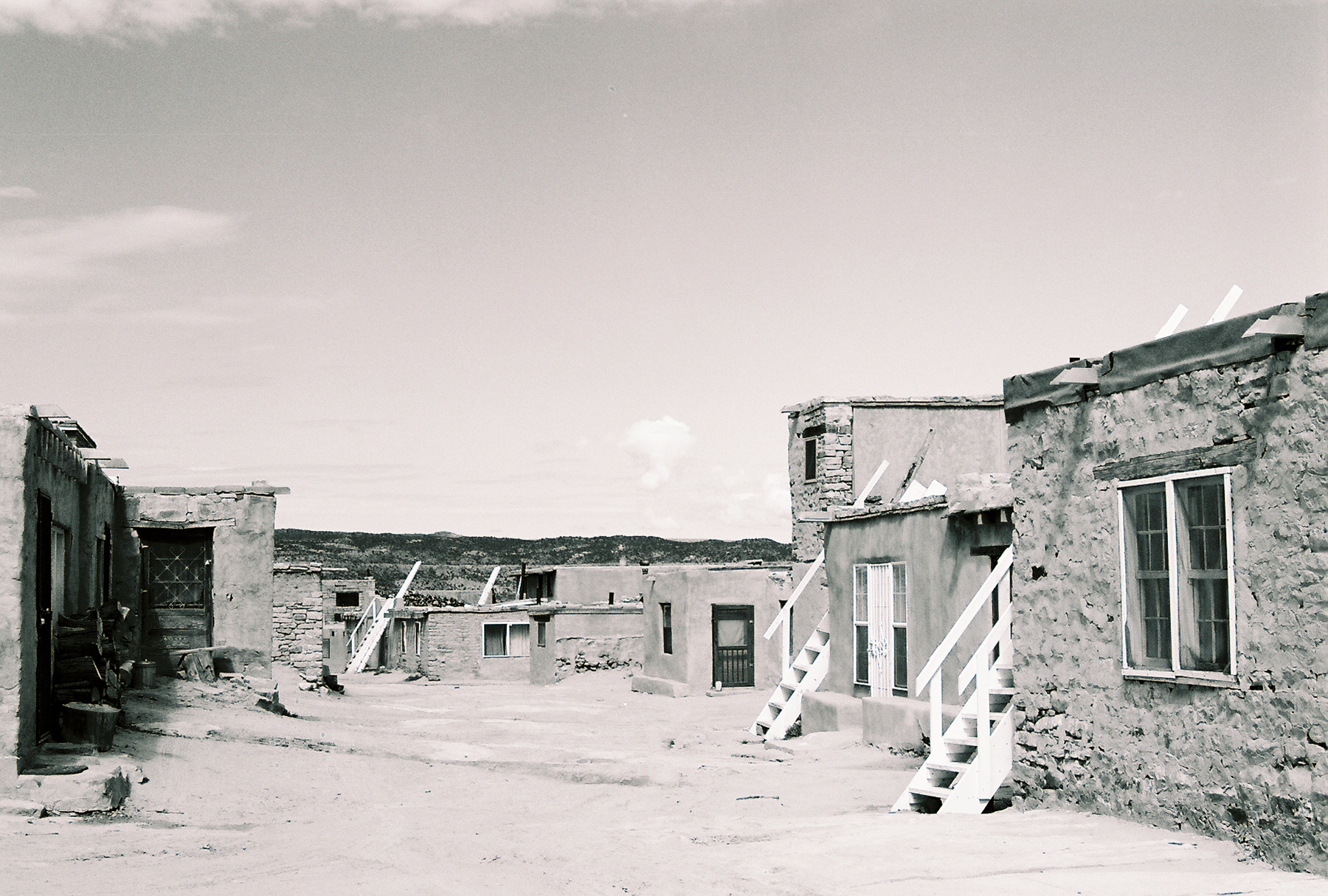
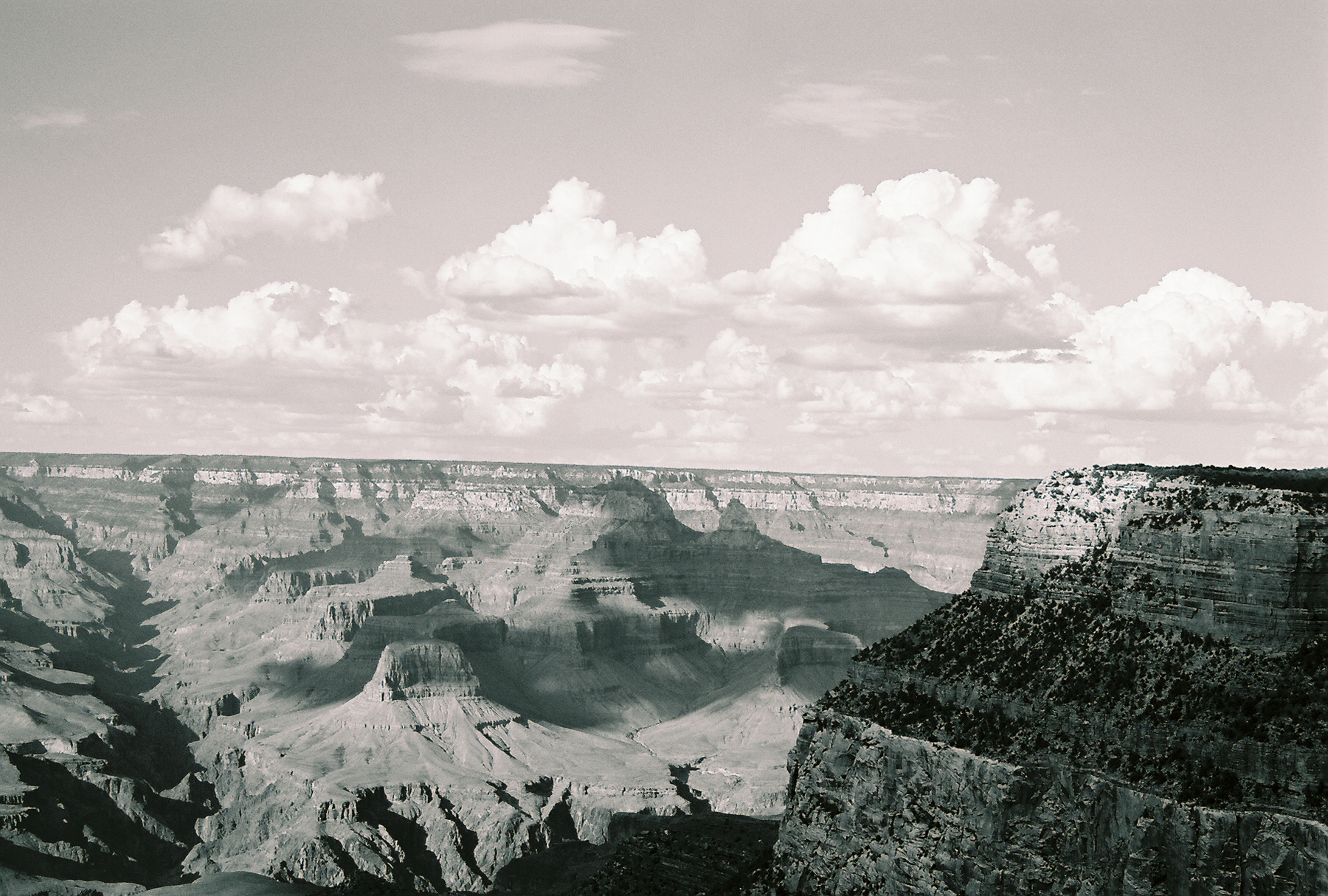
I mentioned in an earlier post that my daughter Claire took black & white photos during our western trip on my old film camera that she calls “the classic.”  We just had that film processed (since Claire doesn’t have access to the dark room at school during the summer) and I thought I’d post a couple of her shots for all to see. 

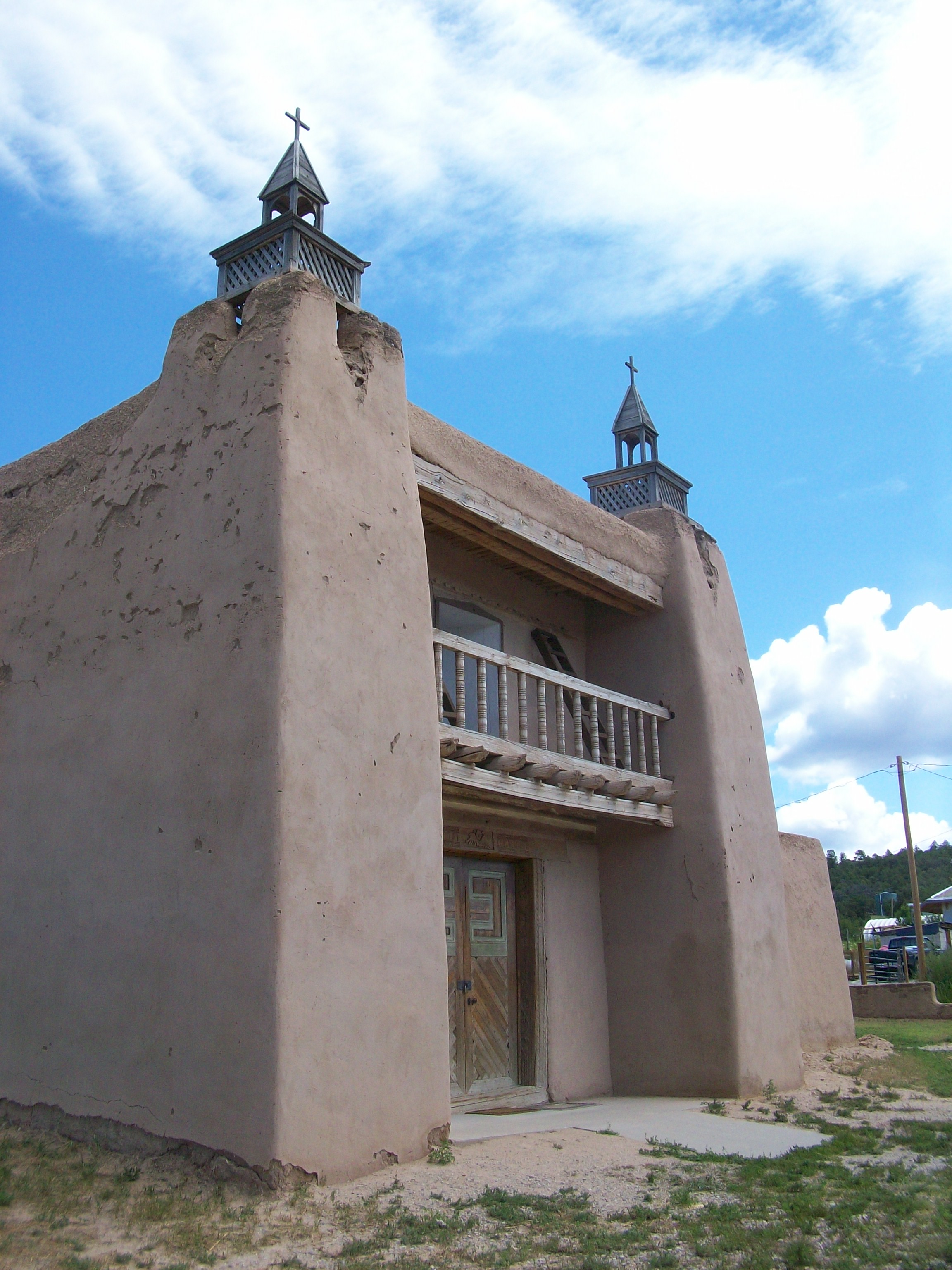
The shot above was taken in the church yard of the 1760 mission church in Las Trampas, on the High Road to Taos.  Claire said this was her favorite of about 140 shots she took during the trip. 

The second photo I’ve posted is from Acoma, where Claire took two full rolls of film.  She loved the mission church at Acoma, so I’ve posted a shot she took of the bell tower early in our tour of the site.  There are so many great opportunities for photos at Acoma — the buildings and landscape are so evocative both individually and together.  In the photo at right, I liked the interplay of the clouds, stone, and metal of the bell.

The third photo is another Acoma shot.  After posting two details, I have included a view Claire took of the buildings on the mesa.  At one point she said, “It seems that every corner you turn offers another great photograph.”  And she’s right.  If you missed it, our post from Acoma can be found in the earlier posts under the Heritage Travel tag. 

Finally, I didn’t realize Claire had taken so many photos at the Grand Canyon until we had the film processed, but they were great to see.

I’ve posted one of Claire’s landscapes of the Grand Canyon which I especially enjoyed…and I hope you will as well.

More to come…

DJB

Charles Wolfe Inducted into IBMA Hall of Fame

When I was a young undergraduate student at Middle Tennessee in the late 1970s, there were two English professors who influenced my life in ways that I’m still only understanding.  One was Ralph Hyde, who was serving as editor of the Tennessee Folklore Society Bulletin.  Ralph published the first articles of mine in a professional journal or magazine, introduced me to the rich cultural traditions of the mid-South, and gave me my first bottle of moonshine.  I still think all three are significant in shaping my life (although that’s the first and only time I drank moonshine!)

The other was Charles Wolfe, who taught English, succeeded Ralph as the editor of the TFS Bulletin, and – most importantly – brought scholarship and love to old time and bluegrass music.  Charles was an avid collector, writer, and recorder of music from the mid-South, and I was lucky enough to be with him on occasions when he was recording or interviewing some of the area’s old-time musicians.

Just the other day my father sent me a note saying that Charles – who died in 2006 – will be inducted into the International Bluegrass Music Association Hall of Fame in October at Nashville’s Ryman Auditorium.  This is a well-deserved award for an individual who brought rigorous scholarship and deep affection to a subject that many thought marginal at best.  One of Charles’ best books is A Good-Natured Riot:  The Birth of the Grand Ole Opry which chronicles the early days of an American institution.  It is especially fitting that Charles’ induction will come at the Ryman (the long-time home of the Opry), as Charles and I were both featured as “talking heads” in a Nashville Public Television production entitled The Ryman:  Mother Church of Country Music.   In this excellent history, Charles is one of the country music experts while I speak about the preservation issues along with other Nashville preservationists.  Highly recommended!

While I was still living in Middle Tennessee, Charles had me help him record an obscure brother duo (so obscure that I can’t remember the name or find any information on Google) from Alabama that sang in the style of the Delmore Brothers.  It was great fun to hear these two older men sing from the heart and to watch Charles work with them to capture their history on tape.

Charles was an institution, but he also had a great sense of humor.  In the compilation The Bluegrass Reader, Charles had a great article full of in-jokes entitled The Early Days of Bluegrass, Vol. 117 (Fiction), which you can read in its entirety by clicking on the link.  For this posting, I’ll just quote a few of my favorite tunes on this fictional album, which Charles notes (very tongue-in-cheek) as “peripheral influences on the development of bluegrass”

The Big Mouth Sacred Singers, “No Potholes in Heaven” (Backhoe 5440-B)

This was apparently a family group headed by a self-styled preacher named Tyler Tyree, who was the founder of a sect called the Church of the Speckled Bird, which venerated wrens.  They were fond of singing out of round-note songbooks in shape-note style, giving their music a striking diatonic effect.  Their special significance to bluegrass stems from the fact that they moved to Rosine, Kentucky, in 1929; a few short weeks later young Bill Monroe left Rosine.  So did several other people.

The Bluegrass Nuns, “Yellow Road to Camptown” (Merton 102-A, recorded ca. 1949)

The Bluegrass Nuns were three or four sisters from an obscure Carmelite order in south central Kentucky who entertained in various orphans homes from 1948 to about 1952.  Little is known about them except that they used an unusual three-stringed banjo, and they often sang part of their songs in Latin.  They are one of the first real sister acts in bluegrass.  In 1975 bluegrass scholar Boggs Hickey disguised himself as a nun and went around the area trying to learn more about this band, but he was arrested in Corbin.

Blind Oscar Thornton, “She Poisoned Me Boys” (Vocalion 5890)

This is Blind Thornton’s last recorded number, thought by some scholars to be autobiographical.

Doc Stanley, “Corn Cob Blues” (Harry Ace 345-A, recorded 1947)

This is Doc Stanley’s famous complaint about how rough dried corn cobs are; some scholars think Doc was trying to comb his hair with them, and there is speculation that this custom might have once been quite common in West Virginia.  Others see this song as related to Woody Guthrie’s “Hard, Ain’t It Hard.”

Thanks for the memories, Charles…and I’m glad the bluegrassers are recognizing your many contributions.

More to come…

DJB

Rafting the Rio Grande

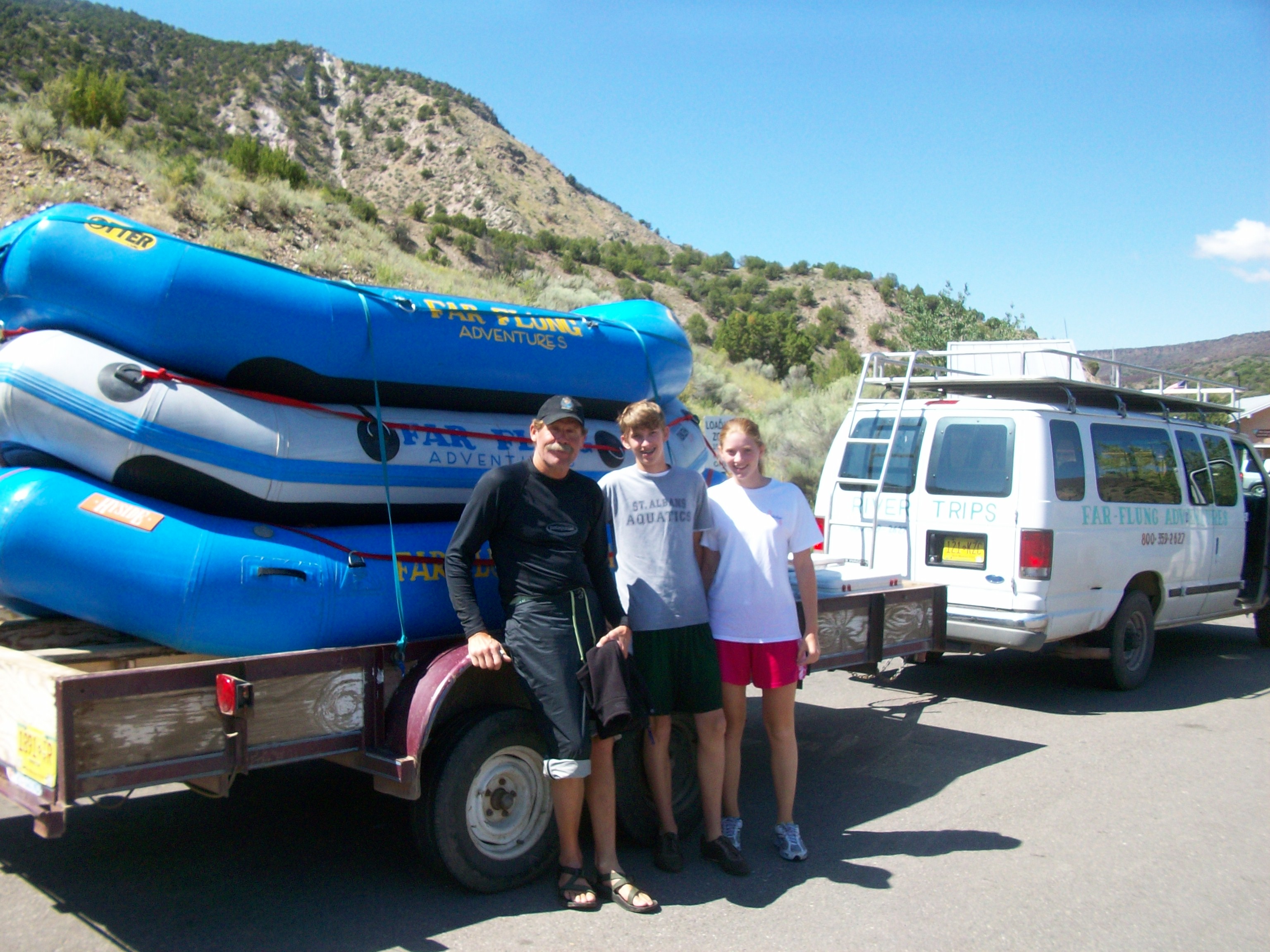
We awoke early this morning as we were heading out to raft the Rio Grande River south of Taos (see photo at left).  As everyone in town had promised, the rainy, cool evening gave way to a beautiful, sunny, yet cool morning.  Bundled up with fleeces, but in our quick-drying shorts (i.e., bathing suits and gym pants) we shivered our way to the little town of Pilar to meet with our guide from Far Flung Adventures.

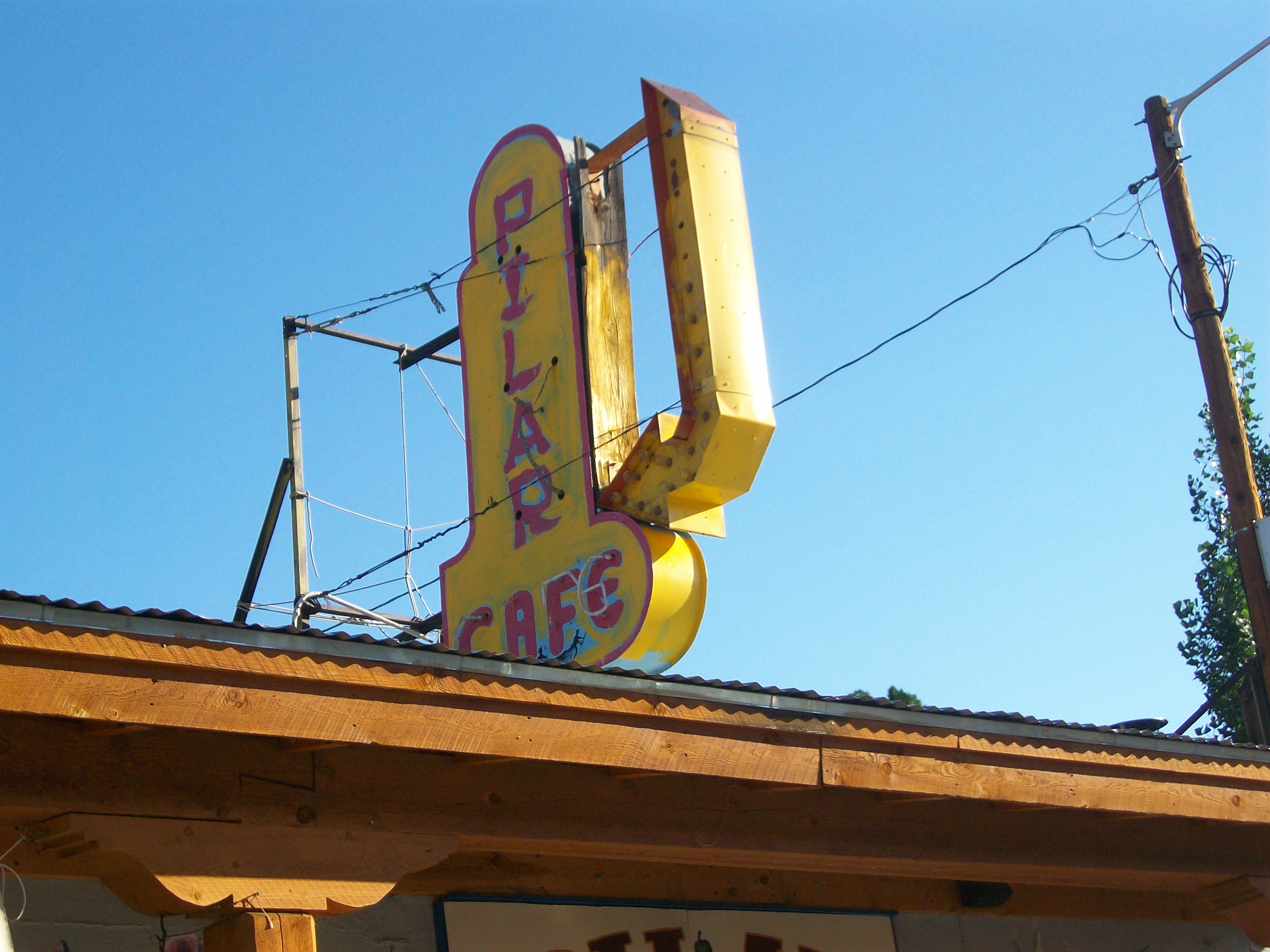
Claire has a classmate named Pilar, so we began by taking 12 different photographs around the “Pilar Yacht Club” (actually, a little hole in the wall – see photo below) so they could post a Where in the World is Pilar? album for her Facebook page.  Then we met up with Hank, Bill, and Erica – the three Far Flung Adventures guides.

After a quick safety lecture, we joined up with Hank – a late 50s river guide, metal artist and all-round outdoors guy who was perfect for the four of us.  With Andrew and Claire in the front, Candice and I in the middle (i.e., the “safest” seats), and Hank in the rear we pushed off into the river for a wonderful two hour ride.

While the river was up from the recent rains, it was still relatively low and the rapids were just about right since three of us were first-time whitewater rafters.  One of the other boats got stuck going through one set of rapids, but all-in-all it was a pretty tame although somewhat wet ride for the four of us.  We all had a great time checking out the gorge, paddling through the rapids, and listening to Hank’s tall tales of 28 years in the river-guide business.  His funniest tale was when we came to the rapids where they take your picture.  He told of the time when he was taking a group of old ladies off a tour bus (Hank’s description) and they called him cranky because he wouldn’t let them smoke.  He said by the time they got to the rapids for the picture (near the end of the run), “These ladies had all decided that they didn’t care what I said and the photo showed a couple of them lighting up while I was yelling ‘paddle forward.’  Their attitude was ‘our husbands are all dead and buried, we’re having fun spending their money, and we don’t care what you tell us to do.'”  We all got a good laugh out of that and other stories about his dog, Monster, wearing a helmet while going through a Class 5 rapid in the front of the boat.

At the end of the run we took a picture with Andrew, Claire, and Hank; said our good-byes; changed into dry clothes, and headed to Santa Fe on the “high road.”  This was a beautiful drive through the mountains between Taos and Santa Fe.  There were fantastic views of the landscape (too bad Andrew and Claire were sound asleep through most of it), and a couple of 18th century mission churches along the way.  We stopped and took pictures at the 1760 church at Las Trampas (see photo below).

We arrived in Santa Fe and after checking in at La Fonda, another Historic Hotel of America, we walked through the historic district for a tasty lunch at Cafe Pasqual – a great Santa Fe dining spot that my colleague Dolores introduced me to a couple of years ago when the National Trust was in New Mexico.  Claire declared that, “Everything tasted so good she didn’t know what to eat” as she was tasting from everyone’s plate.  Yet another great culinary experience that we’ll remember from this trip.

We spent the afternoon visiting the shops.  (Unfortunately, one of the FINEST guitar stores in America – High Desert Guitars – is closed on Mondays and Tuesdays as I was hoping to spend an hour or more playing some of the most unique guitars designed and built by America’s top luthiers.  My former colleague Emily Espenshade can testify that I’ll drag anyone who is willing to a great guitar shop and then make them wait for hours while I sit and play guitar after guitar, as she went with me on my first visit to High Desert Guitars.)    One by one we all ended up back at La Fonda to rest up – either for dinner or for watching the Olympics.

Our trip is almost over.  Tomorrow we return to Albuquerque and fly home.  I’ll try and make one more post as I think about some of the random experiences that meant a lot to us.  But we’ve all agreed that this has been a terrific introduction to the west for Andrew and Claire.  Thanks to Jim, Janet, Dick, Mary Ann, Jerry, Judy, Bob, Dolores…and perhaps others I’ve forgotten…for all the great suggestions for our itinerary.  It has been wonderful.

More to come…

DJB

Great Little Towns; Wonderful Drives

After our visit at Mesa Verde, we took off on the short drive to Durango on Saturday morning.  But along the way, we passed the historic little town of Mancos and saw a sign for the Absolute Bakery & Cafe.  Since we love small Main Street communities AND we were ready for breakfast, we pulled over. 

Mancos has a small historic downtown, and the Bakery & Cafe was in one of those older buildings.  We found a wonderful menu, a soundtrack of late sixties and early seventies songs on the stereo, and an eclectic mix of patrons.  More than once, one of us said, “This place would fit right in at Takoma Park” (the DC/Maryland neighborhood which has a great counter-culture 4th of July parade and is the area’s only nuclear-free zone – as approved by their City Council).  It has been a while since I’ve heard so much Steppenwolf, Neil Young, and Jefferson Airplane that early in the morning!

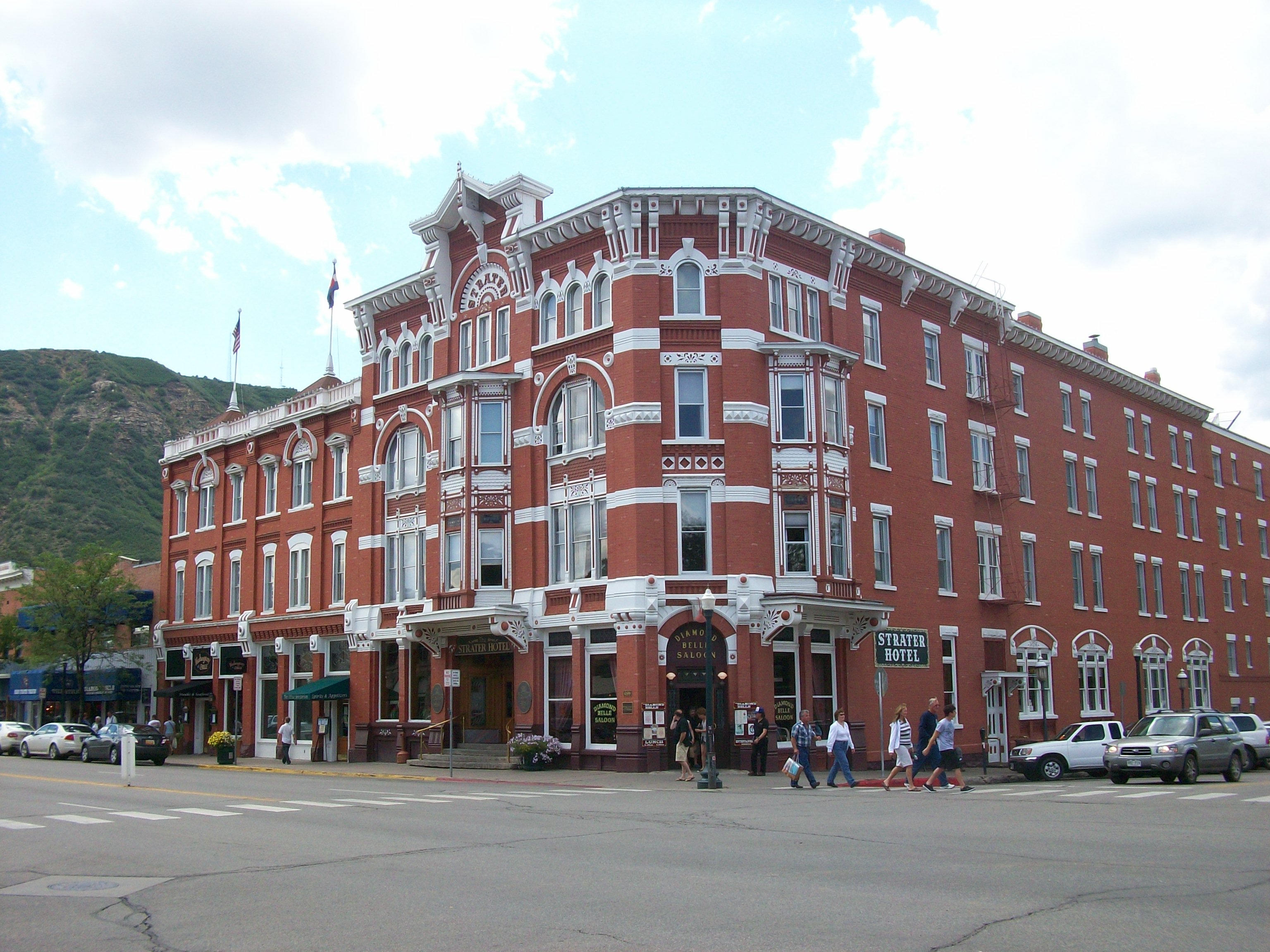
After breakfast, we visited a nice local arts cooperative and then took off for Durango, a 2007 Dozen Distinctive Destination of the National Trust for Historic Preservation.   We checked in to a great room at the Stater Hotel, a Historic Hotel of America (see the photo at the top of the post), and then spent the afternoon exploring the town.  As we were walking down the street, Claire said, “Now this is a town where I could live.”  (I don’t know if that was before or after our stop in the Rocky Mountain Chocolate Factory store, where all but Candice decided to sample the wares.)  The downtown has nice stores, although the number of T-Shirt shops was troubling for such an historic destination.  Just off Main Avenue is a very walkable residential historic district.  The surrounding mountains and river add to the overall feel of a great place to live.  We had an excellent dinner at the Mahogany Room at the Stater before calling it a night.

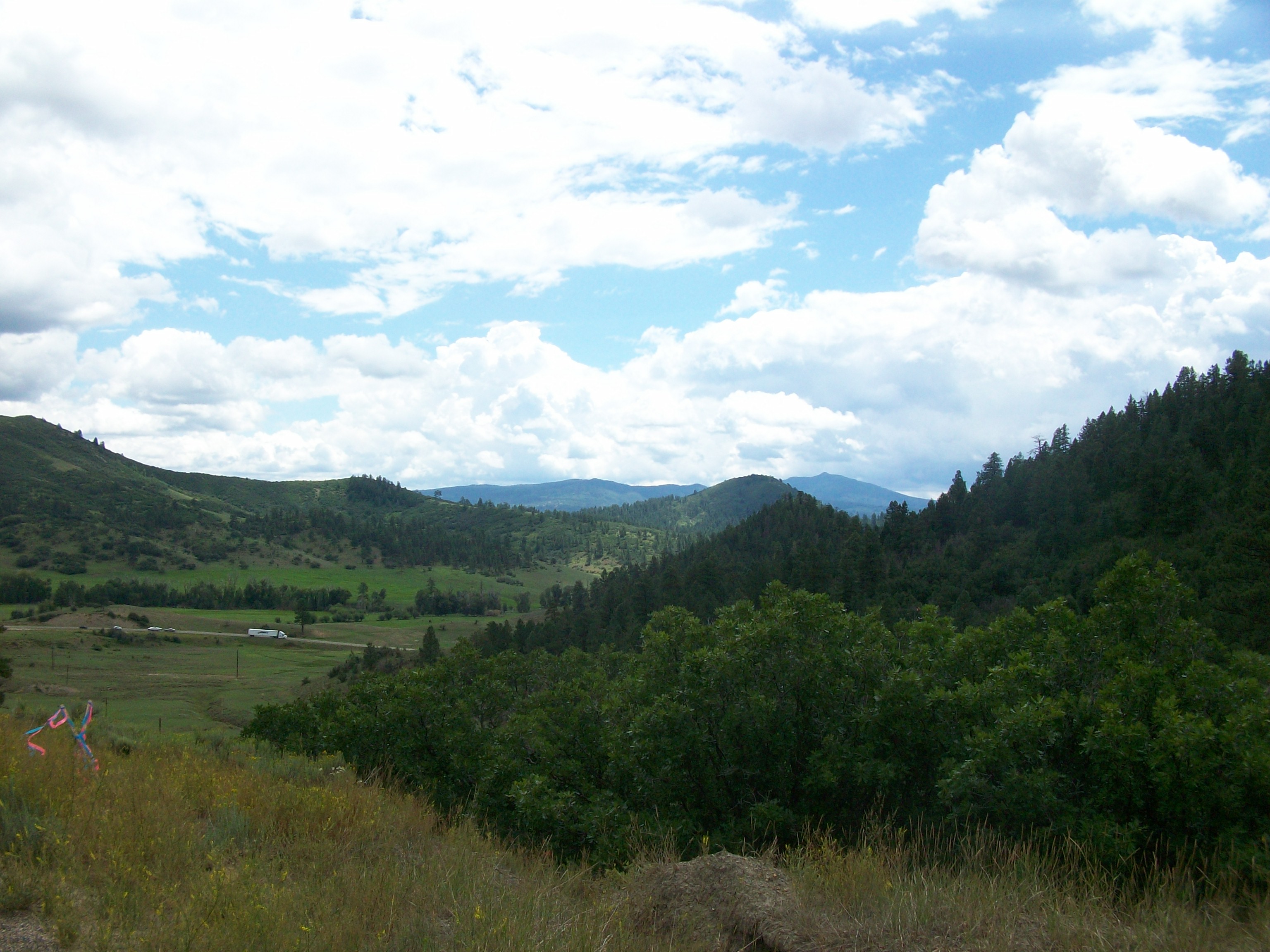
On Sunday, we had our last long drive of the trip, as we drove from Durango to Taos.  Simply stated, this is just a wonderful drive through the beautiful scenery of the San Juan Mountains and National Forest.  There was very little traffic, and we just sat back and enjoyed the view.  I’ve posted a photo and another panorama (click on the X if it doesn’t show in your view) so you can get a sense of what we enjoyed.

Traveling with teenagers has been great, and we couldn’t have better companions on the road than Andrew and Claire.  But lunch today was one of those times when the “fun” of traveling two weeks with your parents may have been too much.  We stopped in the little town of Chama, NM for lunch, where our prospects beyond a hamburger/biker bar joint didn’t look too promising.  But we drove and found another section of town that had a sandwich cafe.  Claire immediately voted for the cafe, but upon inspecting the menu Andrew pushed for a hamburger.  When we opted with Andrew, we ended up in a very busy joint with a very harried waitress who would come racing to the table and say, “What do you want? You? You? You?”  Claire was incredulous and when the food was as mediocre as we expected, she kept saying, “If we get food poisoning it will be ALL your fault.”  The scene became more and more surreal, and we spent the last half of the lunch laughing – and we even got Andrew and Claire to laugh.  Suffice it to say that we survived and will always remember Chama…as well as “Blondie’s Pub & Grub” in Cortez, CO as our biker bar experiences of this trip.

We arrived in Taos amid torrential rains, so our touring was limited to the plaza, and we had a light dinner in the Adobe Bar of the Taos Inn.  (Don’t worry…we haven’t been taking Andrew & Claire out drinking on this trip through the west!)  Tomorrow morning we hope the weather cooperates for our whitewater rafting on the Rio Grande.

More to come…

DJB

Chinese Bluegrass

I thought is was appropriate – on the morning after Michael Phelps won his eighth gold medal at the Beijing Olympics – to post something about China.  Luckily, the Bluegrass Blog helped me out, with this recent post and video about Mei Han’s Red Chamber playing Katy Hill along with mandolinist John Reishman.  So from Durango, Colorado – which has its own strong bluegrass community (I just missed seeing Tim O’Brien who plays in town next week) – I’ll pass along this post in the Olympic Spirit.  The bluegrass enthusiasts among the readership will enjoy, and the others may find it mildly amusing.

More to come…

DJB