Latest Posts

Home of the Cliff Dwellers

We had been told by friends and colleagues that Mesa Verde was a special place.  But until we saw the stone communities, hiked the canyons, climbed among the cliff dwellings, heard the rangers tell the stories of the Ancestral Puebloans, and took in the majesty of the landscape, it was hard to comprehend its wonder.

We spent two days at Mesa Verde National Park and the lack of internet connectivity…not to mention the lack of televisions in the hotel rooms…helped us focus on the people and their stories.   It made for a very special visit for our family.

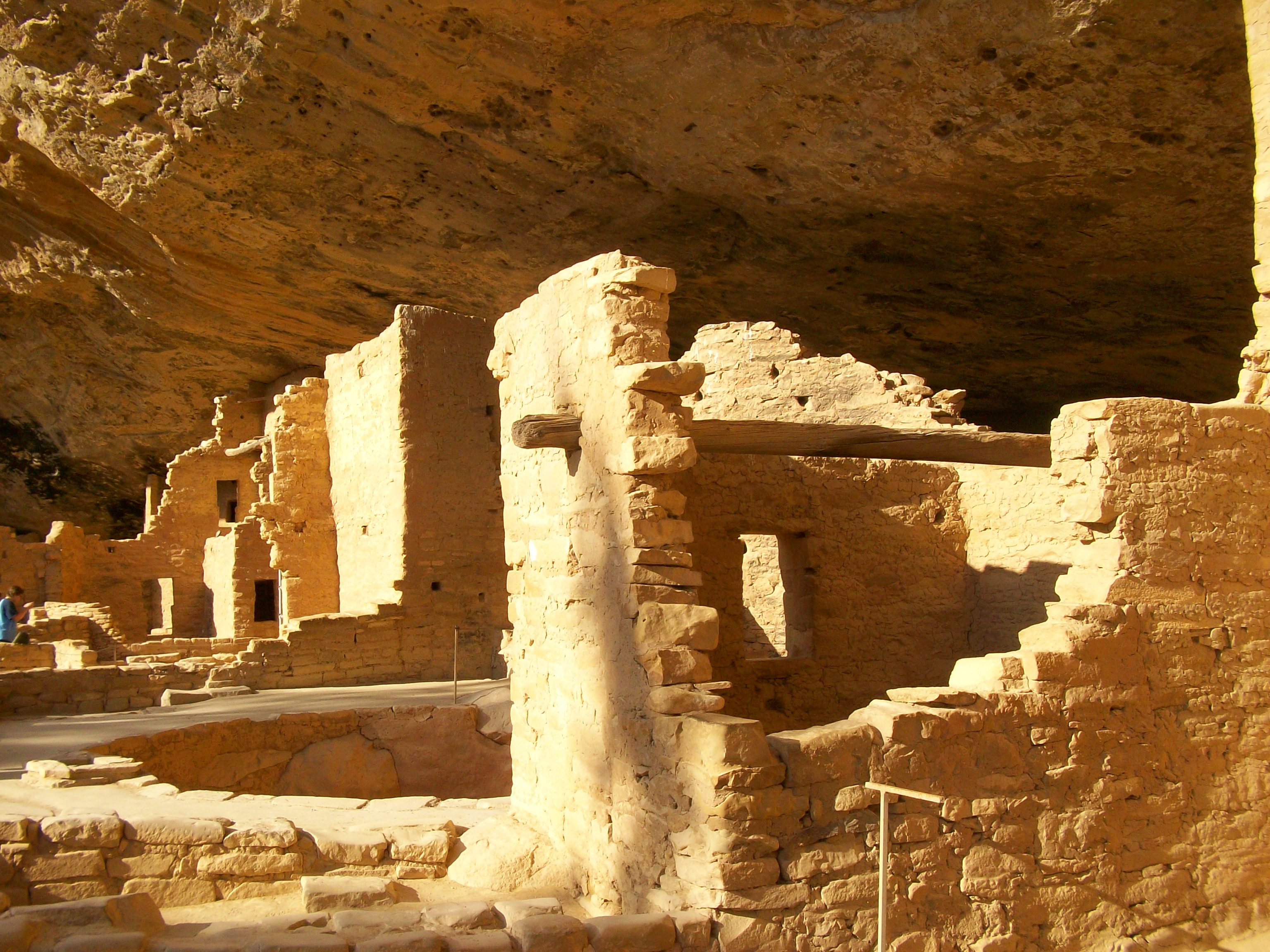
On the first day, we arrived in time to visit the Spruce Tree House site (see photo above), which is easily accessible and a good introduction to what we’d see the next day.   With our appetites for the site visit whetted, we satisfied our appetites for food with a great meal at the Far View Lodge’s restaurant.

The second day was full of hiking and climbing.  All four of us began the day by visiting the Long House site, which is the second largest (by 1 room) in the park.  We had chosen this tour because good friends had told us that visitors were allowed to walk among the site (as opposed to viewing from the edge at the more famous Cliff Palace).  After climbing down into the canyon and then up a short ladder, we found ourselves in this beautiful site.  The hour-and-a-half tour seemed to fly by, as we explored the kivas, storage sheds, and stone houses. 

When we heard about the “adventurous” tour of Balcony House when buying our tickets, we knew Andrew and Claire would jump at the chance to climb a 32′ ladder, crawl through two 6′ tunnels with 18″ widths, and generally hang out over the edge of a steep canyon.  Candice decided that she would pass on the thrills, so I signed up to join the twins.  And am I glad I did!

To reach Balcony House we hiked down into the canyon and then climbed up that 32′ ladder.  Our ranger, Zack, had given us a pretty good “scare” lecture at the rim, but we plunged ahead anyway.  My colleague Dolores McDonagh says that many rangers are frustrated actors, and Zack fit that bill.  He gave a great tour with lots of funny asides that kept us all laughing.  The beauty of this particular site is hard to overstate.  We explored the buildings and took lots of photographs as we crawled around the rooms and kivas.
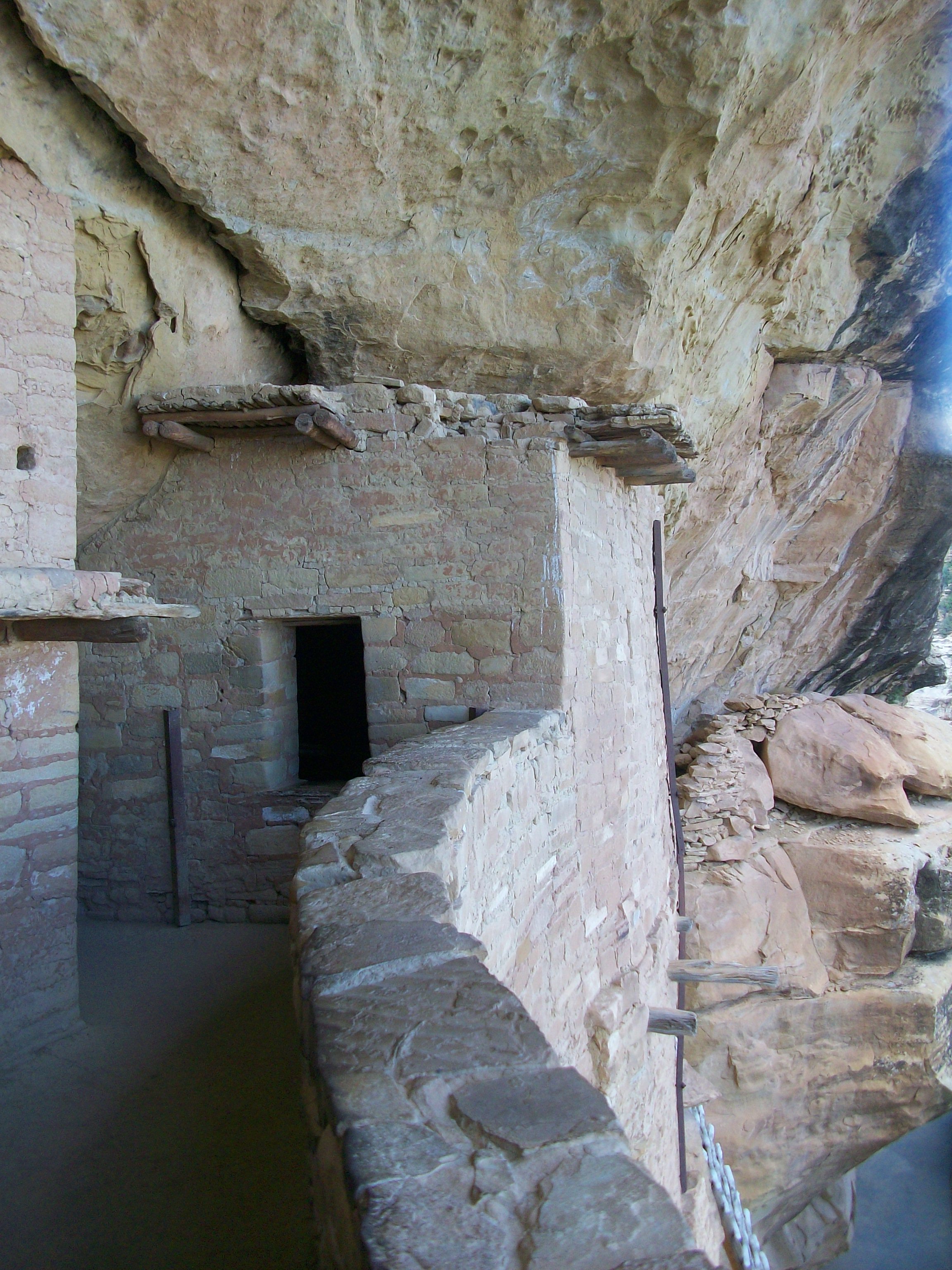
Finally it was time to leave.  Earlier in the day at Long House we had met a couple that had visited Balcony House.  The wife told us, “don’t worry about the ladder, and the tunnels aren’t bad…but beware of that exit!”  And was she right! 

Getting through the tunnels didn’t prove to be a problem.  They are 6′ in length, but there’s a break in the middle where you can actually stand.  Andrew and Claire took my picture coming out of the tunnel, which we’ve included to give you all a laugh.  But then we faced that exit.
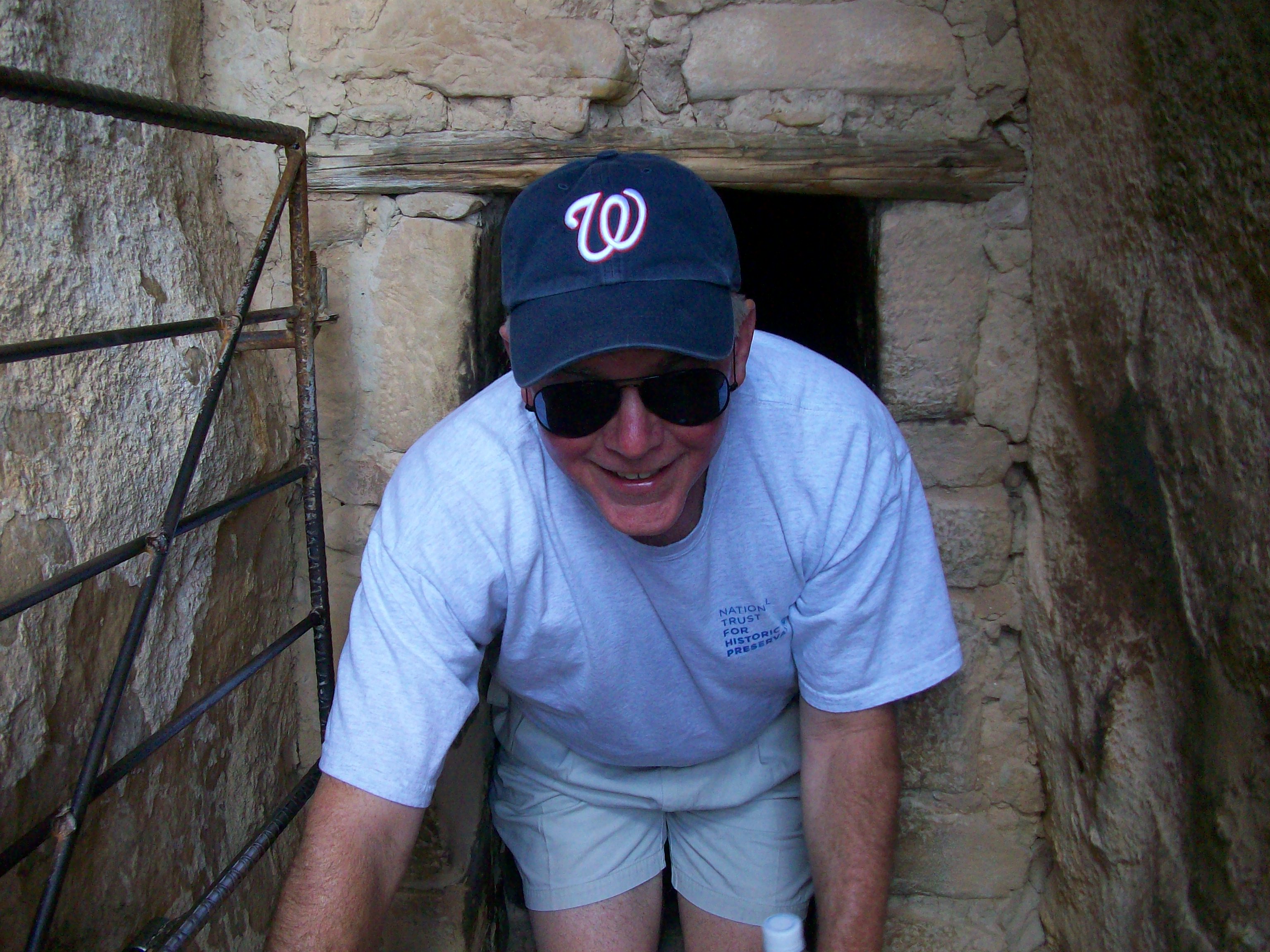
Once you are through the tunnel, you have to climb a ladder that’s much steeper than the entrance ladder…and that gets you to a toe and hand hold path.  You climb up the side of the canyon for a bit to a set of steep steps…and finally you reach an asphalt path where you can catch your breath and then turn around and gasp at what’s below you.  I think there’s a reason they don’t tell you about that exit!

Anyway, as we walked back to our car, Claire, Andrew and I agreed it was the best $9 we had spent on the entire vacation.  It was educational, beautiful, exciting, and fun…just what all historic sites should be.  We shared stories and photos with Candice throughout the evening, ate an early supper, and played a round of Scattergories before turning in for the night.  Just another great day in the American Southwest.

More to come…

DJB

Bluff(ing) our way to Canyon de Chelly

When last we were in the land of Internet connectivity, we left you in Bluff, Utah – population 320.  After driving through Monument Valley with a stop at Goulding’s Trading Company for some great Navajo tacos, we arrived in Bluff to spend the night at the historic Decker House Inn.  We were met by Sandy the innkeeper in one of the town’s more substantial homes, and shown to a wonderful double room where we could all spread out.  Needless to say, Andrew and Claire were pleased!

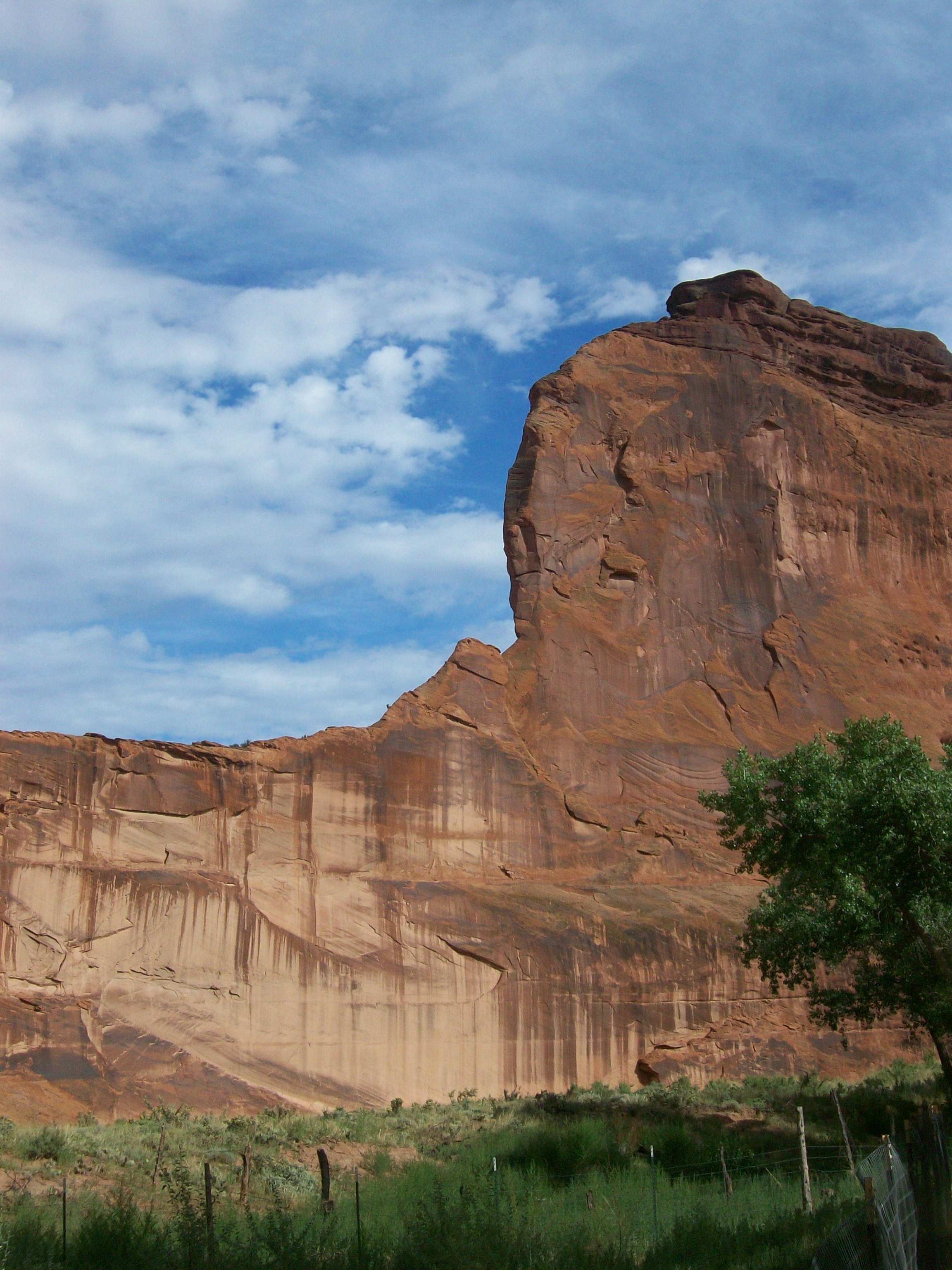
Bluff is located in the middle of a very harsh landscape of red sandstone and deep gorges.  The town was settled by Mormon pioneers in the middle of the 19th century, and some of the buildings from that era (such as the Decker House Inn) have survived.  Even with such a small population, Bluff had some good restaurants, probably the best quality trading post we’ve seen so far, and a historic preservation organization which had prepared walking tours and great brochures of the town’s history.  After a scrumptious breakfast served by Kaye (her son is married to Sandy’s daughter), we visited the trading post in Bluff, took a picture (at the front of this post) of the “Navajo Twins” – backdrop to the town – and hit the road for Canyon de Chelly.

Canyon de Chelly (pronounced d’SHAY) National Monument was a wonderful find for us.  Archaeological evidence has shown that people have lived in these canyons for nearly 5,000 years, and although it is a national monument, Navajos still live in the canyon during the summer months and the guides and businesses are all Navajo.  The Navajo entered the canyon about 300 years ago, where they established a farming community raising corn and peaches.

We arrived in time to join a tour of the canyon floor led by our Navajo guide David, who grew up in Canyon de Chelly and has been giving tours for 28 years.  Over the next 3 1/2 hours we drove through the dry river bed and stopped along the way to hear of the farming practices of the Navajos, admire the sheer cliff walls of the canyon, and learn of the actions of Kit Carson to rid the canyon of Navajos in the late 1800s.  We saw houses and hogans from the historic period as well as the present.  Families that were living in the canyon today were still in evidence.

Canyon de Chelly is really three canyons (we made our way into two), and the walls of the canyon (see photo at right) rise from 30′ at the opening to over 1,000 feet deep into the canyons.  David, our guide, told wonderful stories and patiently answered our questions throughout the afternoon.  Continuing the pattern we saw at the Grand Canyon, we toured with huge groups of European visitors.  (Is ANYONE left in Europe?)  When we went to dinner that evening at the Navajo-run Thunderbird Lodge, we all agreed it was a very special tour that we’d all remember.

More to come from Mesa Verde…

DJB

A Few Observations From the Road

Observation #1:  Native Americans didn’t locate near cell towers.  That’s a good thing.  But it means that we’ve had almost zero connectivity from Canyon de Chelly and Mesa Verde.  Expect the next full post on Saturday when we’re in Durango.

Observation #2:  Is ANYONE left in Europe?  I can’t believe it because they are ALL touring the American Southwest.  Our experience has been that there are 3/4’s international visitors to 1/4 domestic visitors everywhere we go.  We went on a great tour of Canyon de Chelly with a big group from Italy.  Out of 24 people, only 8 of us were from the US.  It has been great to listen to all the languages but what it says about the exchange rate…and my upcoming trip to Slovakia…isn’t so wonderful.

Observation #3:  Once you get the post from Durango, you can learn how I made it through an 18″ tunnel I  climbed yesterday afternoon at Mesa Verde with Andrew and Claire at the Balcony House ruins.  I woke up in the middle of the night thinking about that – plus the 32′ ladder I had to climb to get the chance to get stuck in that tunnel!

Hopefully, more to come…

DJB

Sacred Places

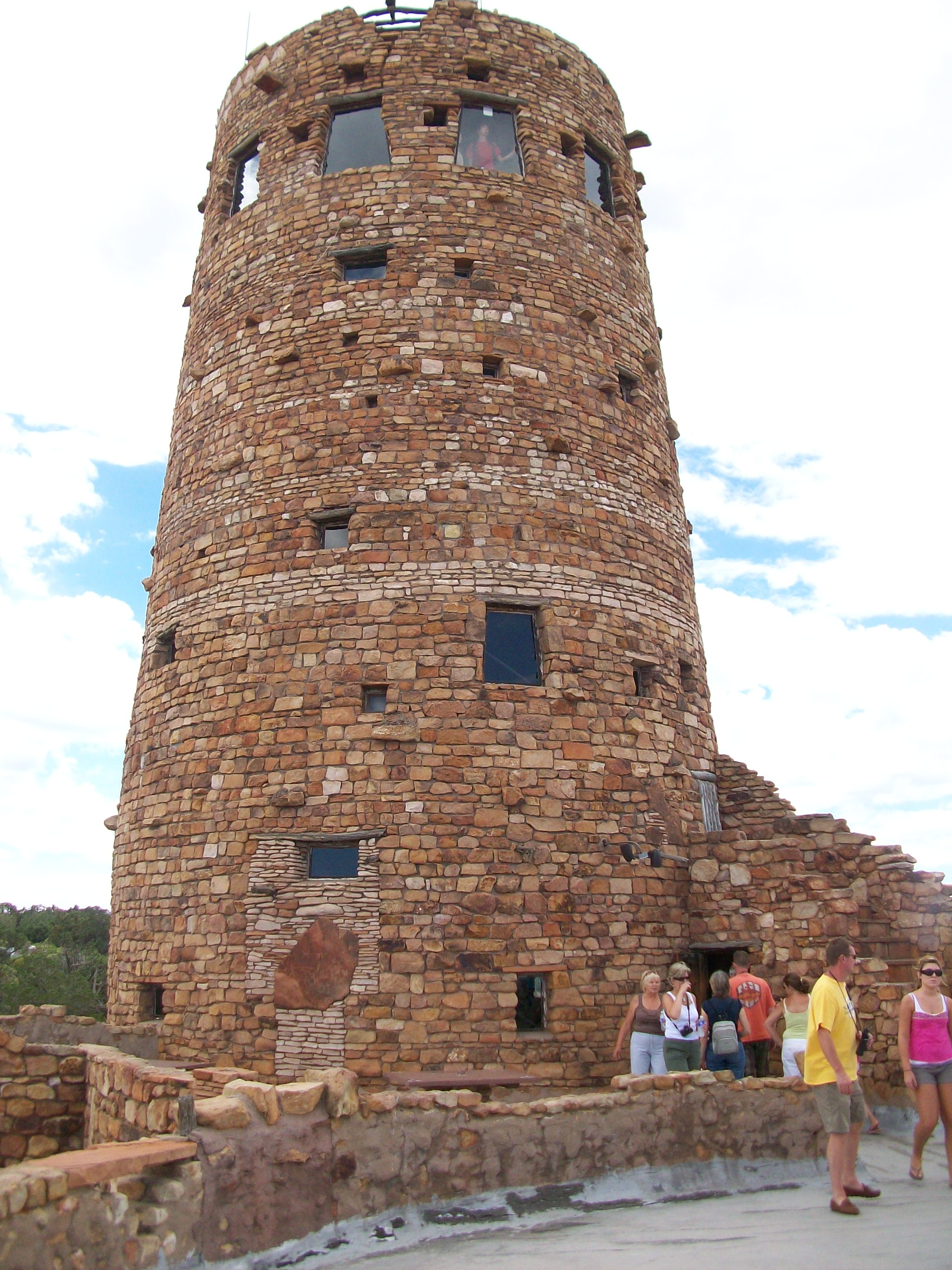
After two wonderful days at the Grand Canyon, we headed out on Tuesday – but not before making a stop at Mary Colter’s beautiful Desert View Watchtower at the eastern entrance to the park.  Colter designed this gift shop and observation tower for the Fred Harvey Company in a way that appears to blend into the landscape.  She also brought in Hopi artist Fred Kabotie to paint the interior of the tower with symbols that depict various elements of Hopi mythology and religious ceremony.  There is a great reverence for the Native American culture here in Colter’s work.  Click on the link above for a description of the construction of the tower.  This structure is also featured on the beautiful cover photograph of my colleague Arnold Berke’s wonderful book on Mary Colter.

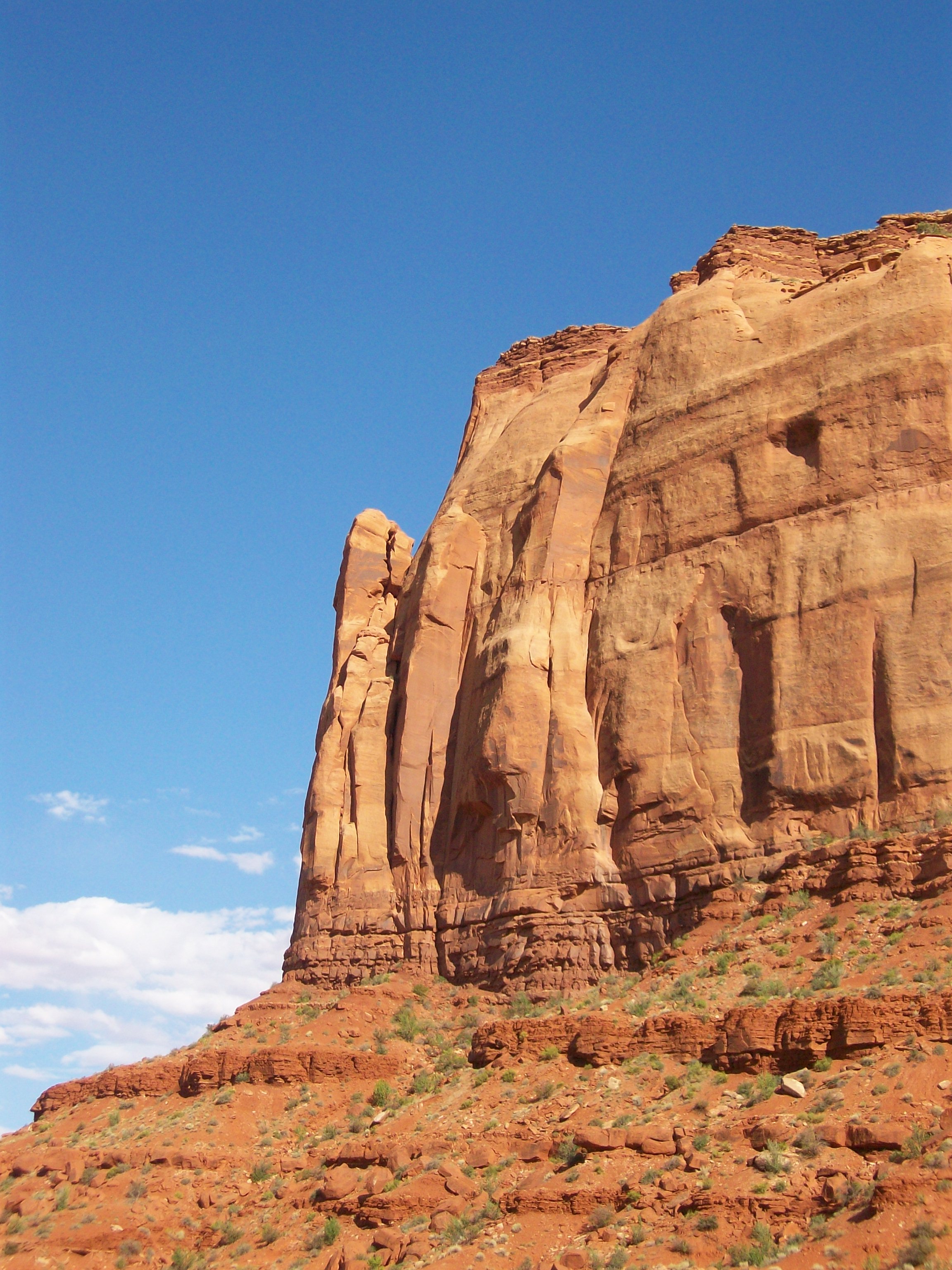
After leaving the Grand Canyon, we headed to Utah, driving through the magnificent Monument Valley of Arizona and Utah.  Read the Wikipedia write up linked above to begin to understand the geological and tourism aspects of this wonderful place, but it is best understood as the sacred place it is for the Navajo Nation.  We drove through this incredible landscape, listening to Native American music and simply soaking up the experience.  As is to be expected in one of the most photographed places on the planet, we stopped and captured some images of our own, a couple of which we share with you below, but it is difficult to capture this special place in photographs or words.


We end the day in the small (population 320) historic town of Bluff, UT.  A wonderful day in sacred places.

More to come…

DJB

Meteor Shower Over the Grand Canyon

We were fortunate to be staying at the Grand Canyon on the night of August 11-12, when the Perseids Meteor Shower took place over North America.  Had we been at home, we would have lamented the fact that we’d have to drive a long distance to get away from the city lights to hope to have a chance to see the meteors.  However, when Andrew saw a feature while checking his email yesterday, he stopped by the front desk to see if the park was planning anything special and yes! – we were going to be up at 2 a.m. checking out this celestial fireworks display.

The Olympics have come along at a bad time for us, because we stayed up until 11:30 p.m. (local time) to see if the USA men’s gymnastic team would hang on to the silver team medal.  (They didn’t, losing in the last event and dropping to the bronze.)  So we got about 2 hours of sleep before the alarm went off, but everyone pulled themselves out of bed, put on some warm clothing, and then we hopped in the car for a short drive to a Grand Canyon overlook…with about 100 of our newfound star-gazing friends from all around the world.

Even if there wasn’t going to be a meteor shower, just having the chance to see a beautiful night sky on a cloudless night over the Grand Canyon was a real treat.  But for about 45 minutes we were treated to the commentary of a friendly park ranger, some Beethoven (courtesy of the ranger’s boom box), and dozens of meteors whizzing across the night sky.

It was a night to remember and something that we’ll take away as one of the special moments from our western trip.

We leave the Grand Canyon in about an hour to travel through Monument Valley.

More to come…

DJB

A Grand Day

Monday dawned clear, sunny, and beautiful over Grand Canyon, and we made the best of it.  The crowds thinned considerably from Sunday, so we could hike, eat, and enjoy all there is to see at our own pace.

On Sunday, we stopped to talk with a ranger and had looked through his telescope to see one of the California Condors in his nest.  These remarkable birds — now being re-established in the wild after having a brush with extinction — have a 9′ wing span, fly at about 55 miles per hour, and can soar to 20,000 feet and then coast for two hours.

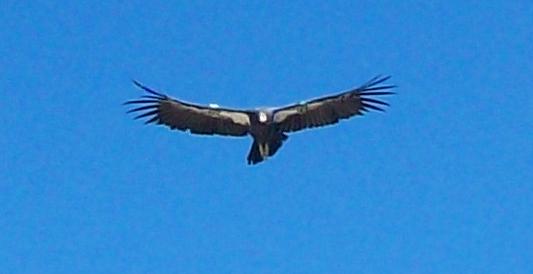
So imagine our surprise on our way to breakfast on Monday when a California Condor (#72 as tagged on his wings — he was that close) came swooping over our heads looking for his breakfast.  It was wonderful, and I whipped out the camera and captured this picture as he circled overhead.  The size of this bird was amazing…as Andrew points out, just think that one wing is about the size of a short person.  Very majestic — and a great start to the day.

We hiked for most of the day — a short ways down into the canyon and then more time up on the South Rim.  We saw unforgettable views, took videos and photos for the family scrapbook, and all picked up a little sun.  In the morning we stopped to view a very nice exhibit on the Civilian Conservation Corps (CCC) and their work at the Grand Canyon.  The evening ended with a great dinner in the main dining hall at El Tovar.

But tomorrow (actually today since this is being posted on 8/12 in east coast time) will begin very early.  Andrew was checking his email and came across a note about a meteor shower tonight.  He went downstairs to check, and found out that a ranger will lead a viewing this morning between 2 – 4 a.m.  When Claire protested about getting up at that hour, Andrew said “it is a meteor shower over the Grand Canyon!  How often do you have a chance like that?!?”  Needless to say, we’re all going to try and attend.  We’ll let you know on the next post how it turned out.

More to come…

DJB

Skip Carey – RIP – A Follow-up

A friend of mine, John Lane, sent an email after the post I made last week on the death of long-time Braves announcer Skip Carey.  It included a great story that I just had to share.  After noting that he appreciated baseball and was headed to Fenway next month for a game, John turned to basketball announcers when he wrote:

“That brings to mind Johnny Most, who was for many years the radio voice of the Boston Celtics (1953-1990), one whose allegiance was never in doubt.  Catch him on YouTube.

On one occasion the game had gotten very exciting.  Most was screaming into the microphone when suddenly his voice was lost, though the crowd noise in the background continued at a roar.

After nearly two minutes of no play-by-play, Most’s voice resumed:  ‘Sorry about that Celtics fans.  I got so excited I fell out of the press box.'”

If you have stories to tell on your favorite sportscaster, please feel free to write a comment to this post.

Off to hike the Grand Canyon.  More to come…

DJB

Take It Easy

“Standing on the corner in Winslow, Arizona; What a fine sight to see…”

But I get ahead of myself.

Sunday was a big travel day on our western trip, but we did manage to see some great historic sites and landscapes, eat a couple of nice meals, and recall a part of our youth.

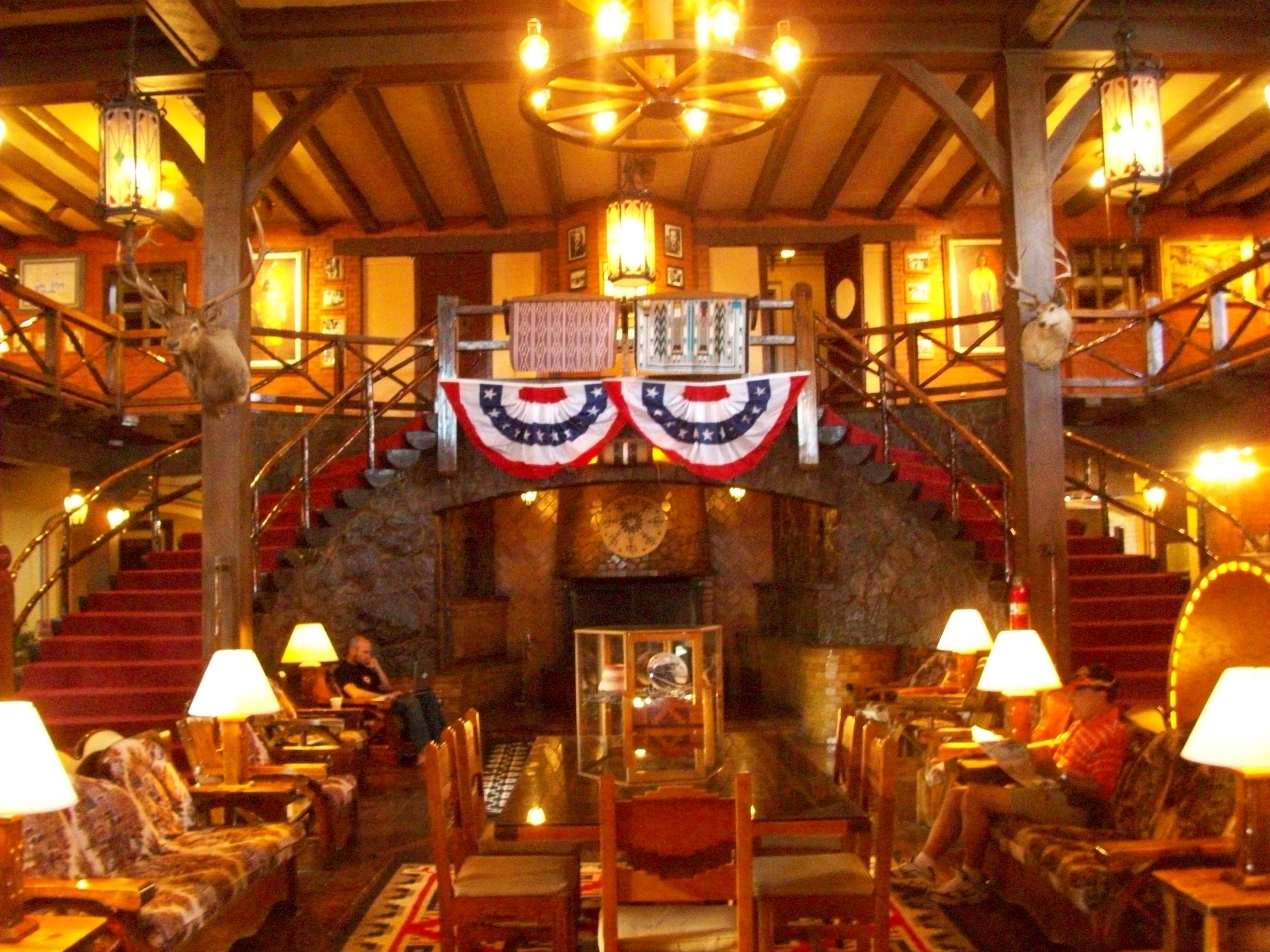
Sunday morning we left the first of three hotels with a great history that we visited that day.  El Rancho in Gallup, New Mexico bills itself as the “Home of the Movie Stars” – as long as you mean movie stars of the 1930s-1950s.  We stayed in the Spencer Tracy Room and had fun walking through this funky western-style lobby (see photo below) looking at pictures of Errol Flynn, an early Fred McMurray, Katherine Hepburn, and the like. 

We left El Rancho and found a great local breakfast diner in Gallup – called My Sister’s Place – that reminded us of the Beverly Restaurant in Staunton and the City Cafe in Murfreesboro (two of our favorite family breakfast restaurants).  Suitably fortified we hit the road.

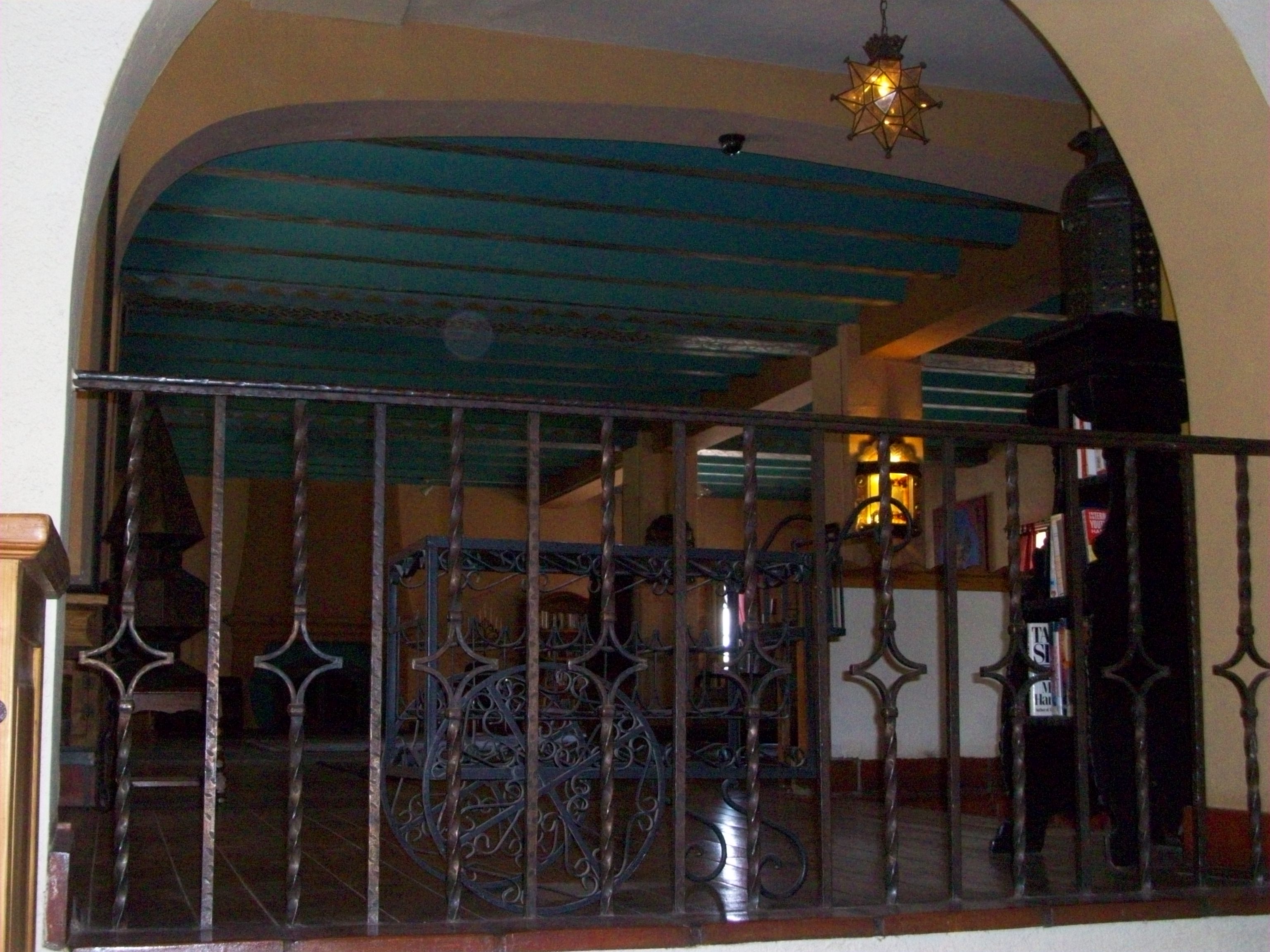
We made a stop at the historic Hubbell Trading Post and then took off for the Grand Canyon.  Along the way we stopped in Winslow, Arizona to have lunch at the historic La Posada Hotel, designed by the great Southwestern architect Mary Colter.  La Posada was one of her later designs and the building has been beautifully restored.  We ate lunch in the Turquoise Room and had the best meal of our trip to date.  Squash blossoms, trout, a black bean/cream corn soup…ummmmm….Highly recommended.  We then visited all the public spaces in the hotel to take pictures (see Claire’s offering below) and enjoy the space.  I was pleased to hear from the ladies in the gift shop that Arnold Berke’s biography of Mary Colter is a strong seller!  They celebrate Colter at La Posada, which is great. 

And since we were in Winslow, we had to go “Stand on the corner” so that girl in the “flatbed Ford” could slow down “and take a look at me.”  Our 15 year olds were just shaking their heads as we lined up with all the other baby boomers to have our picture taken on that famous corner (the opening shot of this post).  If you’re too old or too young to understand the reference (and to identify the band), just quote the first line to any baby boomer and you’ll get your answer.

Leaving Winslow, we drove through a torrential downpour to get to the Grand Canyon, where the sun broke through when we were about 20 miles away.  We are staying at the historic El Tovar Lodge – a National Historic Landmark and one of the historic Harvey Hotels of the Southwest (as was La Posada).  We’ve walked a bit and saw our first sunset at the Grand Canyon, but we’re here for a couple of nights so we’ll have more to post tomorrow and Tuesday.

Just remember to take it easy…

DJB

A Magical Day at Acoma

Yesterday was magical for the Browns as we visited Acoma Sky City, the country’s oldest continuously inhabited community, on a splendid summer day.  Acoma Sky City is a National Trust for Historic Preservation Historic Site and one of this country’s very special places.  Rising early we arrived at the spectacular Sky City Cultural Center – a center that blends with the land and was designed only after the community held a series of focus groups with tribal members ranging from age 4 to 96.  Every detail at the center has been thoughtfully considered, and we received a top-to-bottom tour from Center Operations Director Randy Howarth.  Randy was our host for the day and saw to it that we got to experience all that Acoma had to offer.

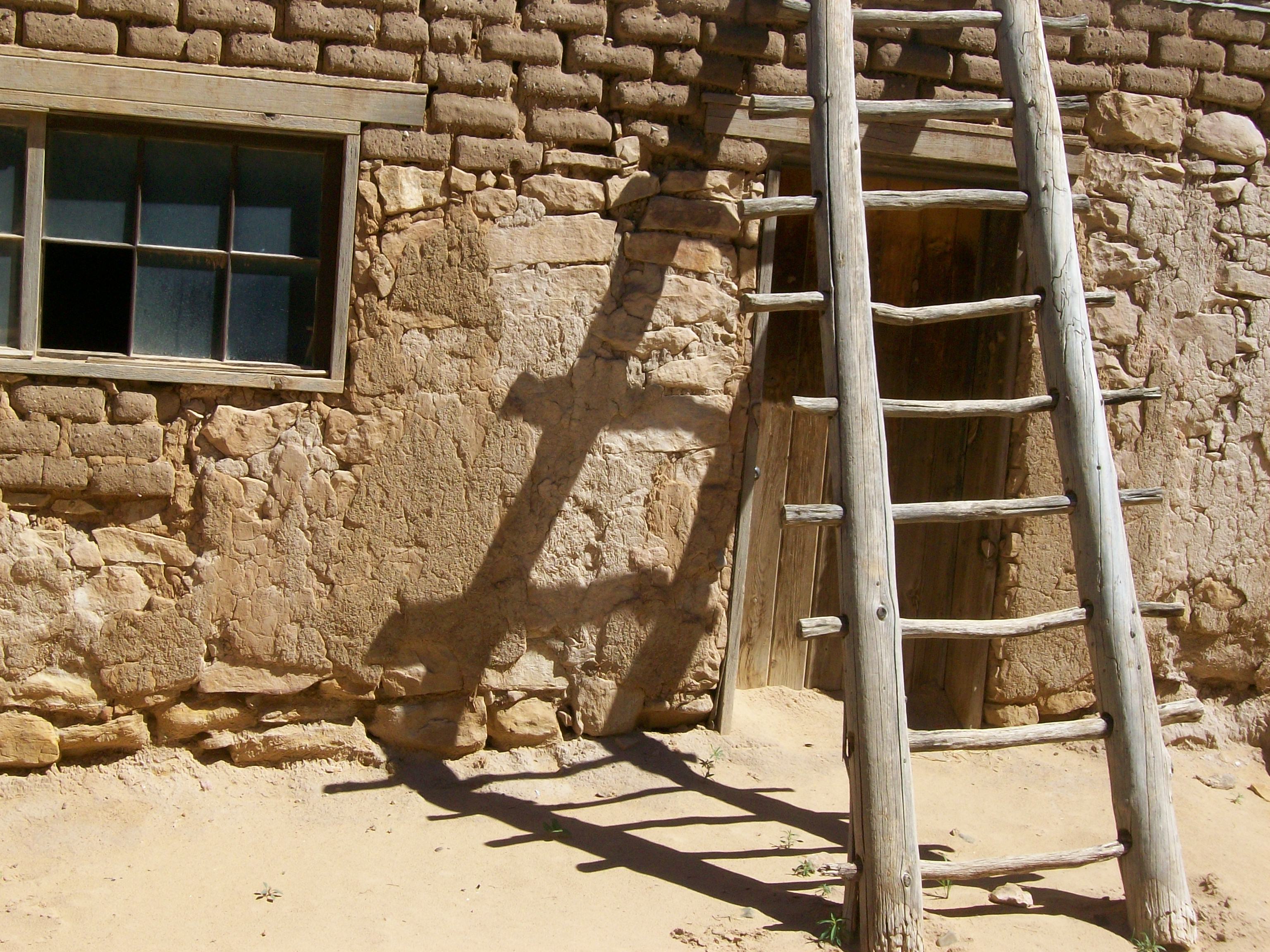
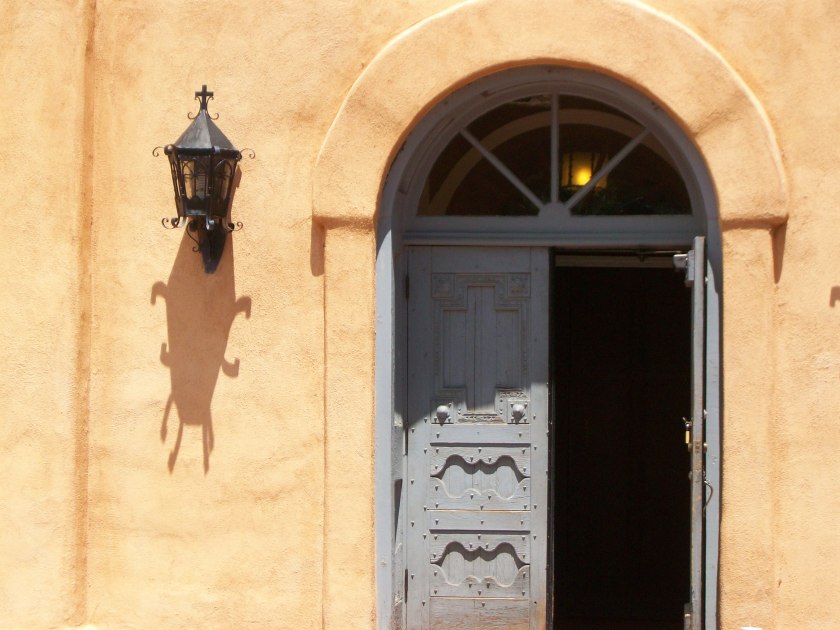
Acoma Sky City – the spiritual home of the pueblo – sits on the top of a 357 foot mesa.  We joined a tour group that included some bikers from Belgium who were riding Historic Route 66 from Chicago to LA.  After riding to the top of the mesa, we met our tour guide Gary and spent the next hour and a half touring the historic Mission Church of San Estevan Rey (see Andrew’s picture at the top of the post), the plaza, and the exteriors of the historic houses.  Sky City is a photographer’s dream, and Andrew and Claire took over 100 pictures between them.  With the brilliant blue sky and bright sun, the shadows made for great pictures, such as the one Claire took below of one of the historic ladders leading to the second floors.

We had enjoyed the tour but were honored when Connie Garcia, the General Manager of the Cultural Center, invited us into her home that faces the plaza.  For the next hour, we talked with Connie about life on the mesa.  Connie is a member of the Antelope clan on her mother’s side, the clan that appoints the leadership for the pueblo, including the War (or Field) Chiefs who have oversight for the historic mesa.  It was touching to hear Connie speak of the deep responsibility she and other members of the clan feel to identify effective male leaders for the various tribal posts.  Acoma is a matriarchal society in terms of dominant clans (Connie is a “little bear” on her father’s side) and yet all the tribal leaders are male.  We were all moved when she spoke of how her lack of daughters meant that she would be the last in her line to be a member of the Antelope Clan.  Connie passed along so much wisdom to us while sitting in that special place.  It was truly an honor.  

After leaving Connie’s, we hiked down the mesa on the “Padre’s Trail” – the very steep set of steps cut into the rock that for centuries was among the handful of foot trails that provided the only access to the top of the mesa.  For our adventuresome daughter and rock-climbing son, this was a thrill.  Candice and I enjoyed it…but I wouldn’t say we enjoyed it to the same level of excitement as Andrew and Claire.  We all made it down in one piece and have the photo to prove it.

When we returned to the Cultural Center, we met with Tribal Historic Preservation Officer and Site Director Theresa Paschal.  I’ve come to know Theresa in my work and it was great to have the opportunity to sit down over a lunch of traditional Acoma food with Theresa and Randy.  We talked about stabilization needs of the oldest structures on the mesa, funding, historic preservation review with the NM Department of Transportation, and all sorts of work-related issues, but her eyes really lit up when we talked about Claire’s black-and-white photography course.  Theresa told Claire of going through 12 rolls of film at Spanish market in Santa Fe as an example of her passion for photography.  “Black-and-white is the real photography” said Theresa…and Claire agreed.  After a walk through the museum exhibit (appropriately of historic black-and-white photographs of Acoma) and the wonderful gift shop, we said our good-byes and left this magical place physically, but the spirit of Acoma will certainly remain with us for a long time.

Andrew and Claire have seen more National Trust Historic Sites that most people in America.  In 4th grade, Claire’s teacher asked her what her father did for a living and she replied “he goes to meetings and signs papers.”  When she told me that story, I laughed and said that was a pretty good description of many of my days, but it wasn’t WHY I worked for the National Trust for Historic Preservation.  So over the next five years, I’ve taken one or more of my children with me on a business trip over their spring break, and they’ve now seen our sites from Filoli and Cooper-Molera Adobe on the west coast to the Museum of African American History and Chesterwood on the east coast – and many in-between.  They’ve learned a lot about historic preservation, but they both agreed that Acoma Sky City was among the highlights of these visits.  A truly magical day.

More to come…

DJB

Petroglyph National Monument

On our first day headed west, we spent most of the day in the air getting to Albuquerque, but did arrive in time to walk a bit around Old Town and then visit Petroglyph National Monument; Our time in Old Town was spent eating some good New Mexican food and taking photographs. We’ve included one above by Claire that we all enjoyed.

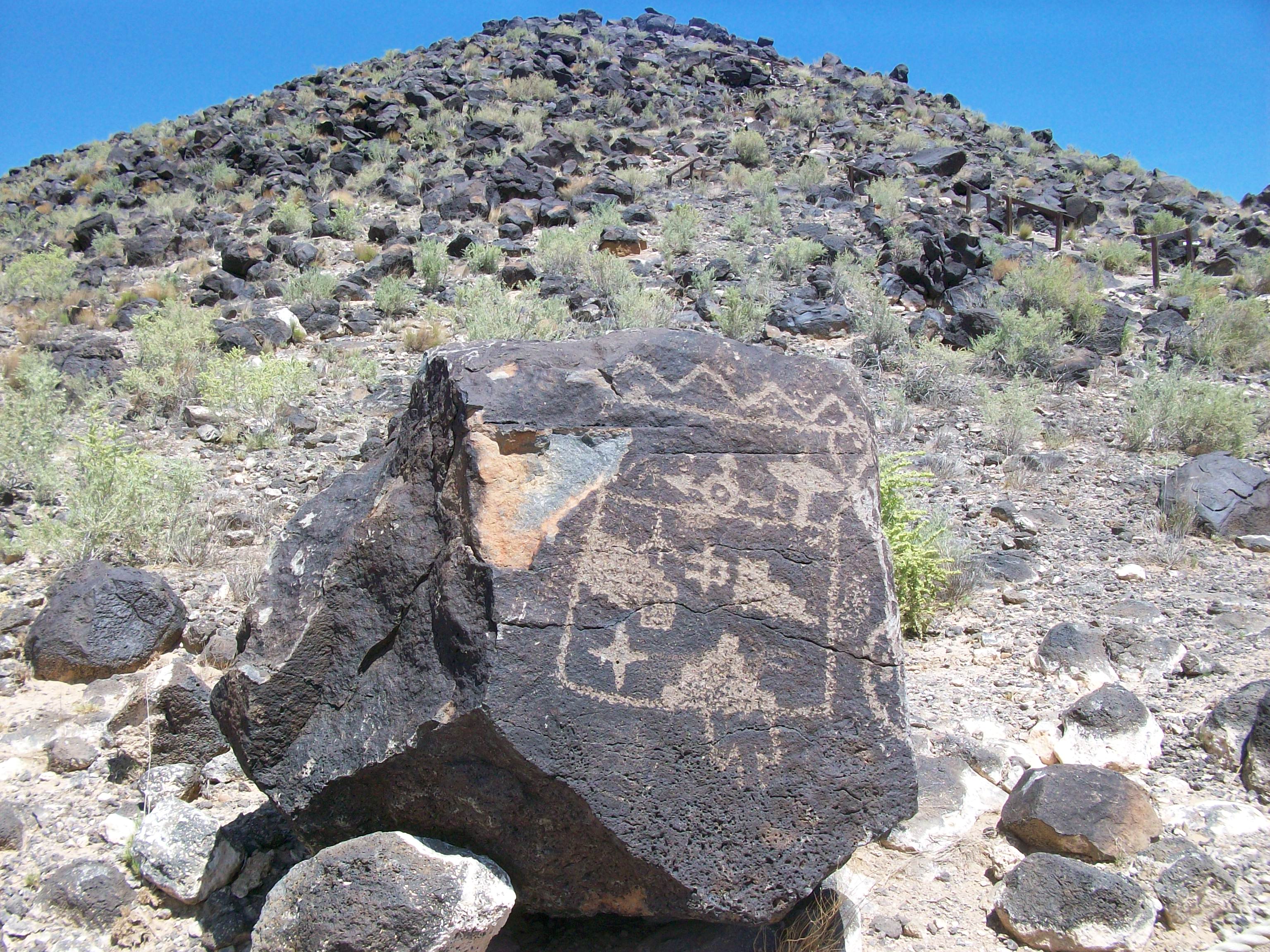
After leaving Old Town, we drove out of Albuquerque a short way to visit the Petroglyph National Monument.  Most readers will know that Petroglyphs are Native American sacred art — images etched in stone that may date from 2,000 – 3,000 years ago according to the NPS brochure.  The landscape itself is amazing. 

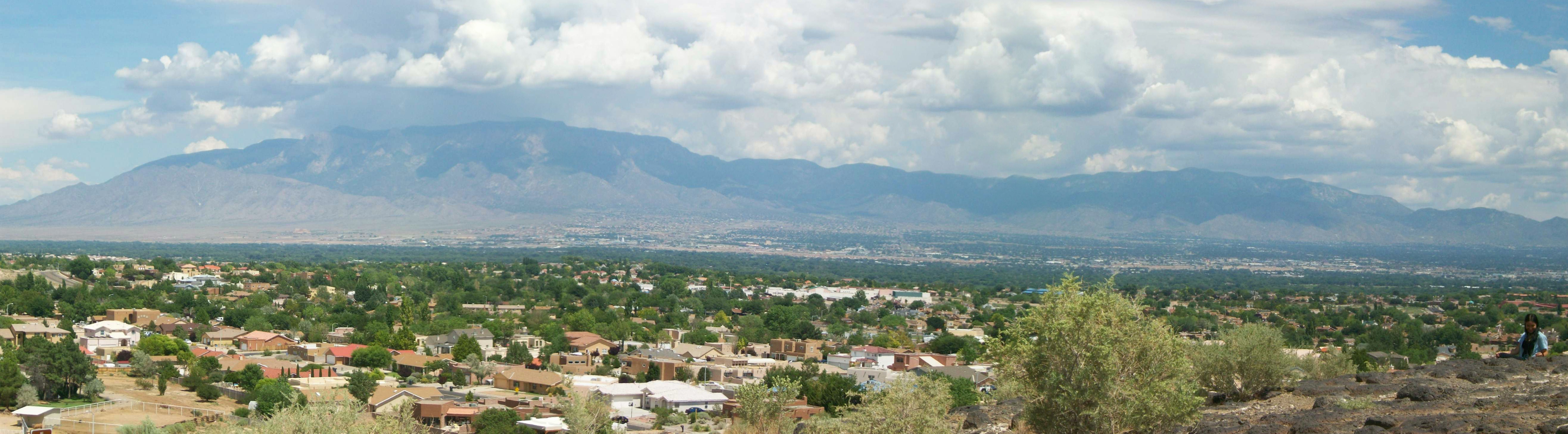
This is a 17 mile mesa created by volcanic eruptions which left striking basalt boulders.  The images were then etched into these boulders — some 20,000 in all with the majority made 400 to 700 years ago.  On our hike to the top of the mesa, we took countless close-ups of the petroglyphs. 

These are wonderful works of art and we couldn’t get enough photos.  Claire was taking shots with her black & white camera (the “classic” she calls it), while Andrew took over with the digital.  I’ve included one of his shots of a petroglyph in the thumbnail photo above, but the photograph of his that we all enjoyed was the panorama view from the top of the Mesa looking back towards Albuquerque and the mountains that point the way to Santa Fe. I have a feeling that’s not the last panorama shot you’ll see from this trip (especially since Andrew taught me how to use that feature!  It is great having techno-savvy teenagers.)  

We’re now watching the opening ceremonies at the Olympics and gearing up for tomorrow’s trip to Acoma Sky City.

More to come…

DJB