Latest Posts

The hard, but necessary work of living together with others

Many of us are “given the language of the soul” early in our lives. For most, it speaks of something eternal and holy. For Southerners of various races, it can speak of home. But in the hands of a poet, especially one as talented as a former poet laureate, that language—if possible—takes on an even deeper and richer meaning.
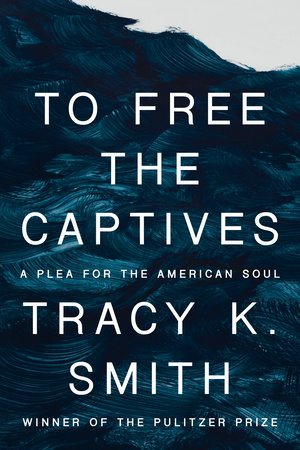
To Free the Captives: A Plea for the American Soul (2023) by Tracy K. Smith, the former Poet Laureate of the United States and Pulitzer Prize-winning author, is described as a “memoir-manifesto” which examines her life and her family history as a microcosm of the Black experience in America. It is a powerful and moving prayer for Americans to accept accountability and do the hard but necessary work of living together with others.

She describes To Free the Captives with these words:

“To write a book about Black strength, Black continuance, and the powerful forms of belief and community that have long bolstered the soul of my people, I used the generations of my own patrilineal family to lean backward toward history, to gather a fuller sense of the lives my own ancestors led, the challenges they endured, and the sources of hope and bolstering they counted on. What this process has led me to believe is that all of us, in the here and now, can choose to work alongside the generations that precede us in tending to America’s oldest wounds and meeting the urgencies of our present.”

Look what she did in that first sentence as she speaks of “leaning backward” toward history. Smith reminds us of the importance of memory by calling out “the conundrum of history.” While we think it is behind us, perhaps—because it came first—it should be “up ahead, turning back now and again to see if we are keeping up.”

“Where are we going? Whence have we come? Can we yet train ourselves to admit the past more fully and honestly? If so, what might we learn about this thing we call freedom?”

The story of her father’s family from Sunflower, Alabama, places them squarely within America’s story. This is the place where her grandfather returned after serving in France during World War I, perhaps motivated to enlist because of hope that by helping to defend democracy in Europe he and other Black men might “prove their loyalty” to this nation.

This history is never gone. It’s not even past.

In the difficult summer of 2020, Smith recognizes that she has misunderstood that past. She believed she was “free” and that her “freedom had long ago been won” for her, but she comes to realize that she and other Black Americans are simply “freed.” She understands that she is “a guest in the places—we might just as easily call them institutions—where freedom is professed.” Smith suggests that, somewhere in the space between “free” and “freed,” the soul of America resides.

Throughout the tale of her family’s history, told in exquisite language both ordinary and gripping, the reader comes to see this space. The story of her parents’ honeymoon night, when they are turned away from the hotel her father has been assured will welcome them, is one example of many.

“‘This is no place for negroes,’ they are told. As much as you know about segregation, as many times as it’s touched you, the blow of discrimination doesn’t go away. You talk yourself back up. You put things into perspective. But you’ve been hit nonetheless. It’s no accident. Second-class citizenship does its work over the duration. A large part of this work hinges on the fact that, no matter how much you have been taught by experience to anticipate, the punch still lands, every time. You do and do not ever get used to it. This is part of segregation’s insidious design. My parents go elsewhere to celebrate their first night together as husband and wife.”

This paragraph shows the vigor and energy of Smith’s prose. Short sentences follow one-after-another to make you feel the pain of separation. There is power in “the punch still lands, every time.” Smith tells the reader again and again that “America is a soul-making enterprise.” And for too long we’ve been creating those souls between those who are free and those who are simply freed.

Throughout Smith writes of the spirituality of the soul, her move toward sobriety and accountability, and her own growing spiritual practice. She makes the case that the soul is not merely “a private site of respite or transcendence,” but it is also a tool for fulfilling our duties to each other, and a sounding board for our most pressing collective questions. She often finds that her family’s history has been erased by institutional insensibility and racism. That history still happened, and it can still be used—in her skillful hands—to call us to bridge the gap between free and freed.

“What if the object each of us is undertaking is no longer an individual life,” she asks, “but a collaborative work massive in scale, which finally we must admit has long spanned lives and times?”

“What might we stand to gain if we were to but adjust our gaze to the scale and the stakes of this other larger undertaking, this colossal enterprise to which each is essential? Not in the hereafter. Not on the other side of the divide between death and life. Perhaps not even Soon. But here, today, where we ache and grieve, and where our best effort is mightly needed.”

In struggling to find the starting point for this journey . . .

“. . .something causes me to understand it is the work of paradox: we approach the large and the far by means of the near and the small.”

This luscious, compelling book reminds us, as one reviewer has noted, that we find the soul “in the warm weight of the actual.”

More to come . . .

DJB

Photo by James Chan on Pixabay.

Observations from . . . April 2024

A summary of the April posts from the MORE TO COME newsletter.

Our news feeds this month are something of a hot mess. With the continuing fight over providing the funding Ukraine desperately needs to continue to beat back Russian aggression; to attempts to just skip the entire 20th century and roll our laws back to 1864; to trying to keep the multiple trials of the former president straight; to bizarre (at best) oral arguments in the Supreme Court; to the rewriting of history and the abandonment of democracy by the leaders of one of our political parties, it has been quite the month for drama.

Surprisingly (or not), I found myself drawn to stories and works of empathy, wonder, and kindness (along with some history) on MORE TO COME during April. Let’s take a look at what tickled my fancy.


TOP READER VIEWS

The lessons history shares to help us understand today’s events piqued the interest of many MTC readers. In Wrapping government and religion together never ends well, I quoted a Quaker pastor who turned to history to show that the current movement to take away our democracy by wrapping together the flag and religion is an old one in America. 

After John Wilkes Booth killed Abraham Lincoln and was hiding in the Virginia countryside, he wrote in his journal that Lincoln had been the cause of all of America’s troubles and that ‘God has made me the instrument of his punishment.’ There is nothing so wicked, so fraught with abuse, as when we create cultures of crucifixion, which invariably begin with the marriage of government, violence, and religion.” 


HOPE FOR THE FUTURE

Several posts this month looked at the topic of hope in various forms.

  • In a post entitled Citizenship, I write that we each have a role to play in choosing the type of country we want. How we respond to others is part of that choice. We can choose to perpetuate injustice against “the other” or—in our own flawed but unique way—take on the job of choosing to fight it. In FDR’s words, we can “apply social values more noble than mere monetary profit.”
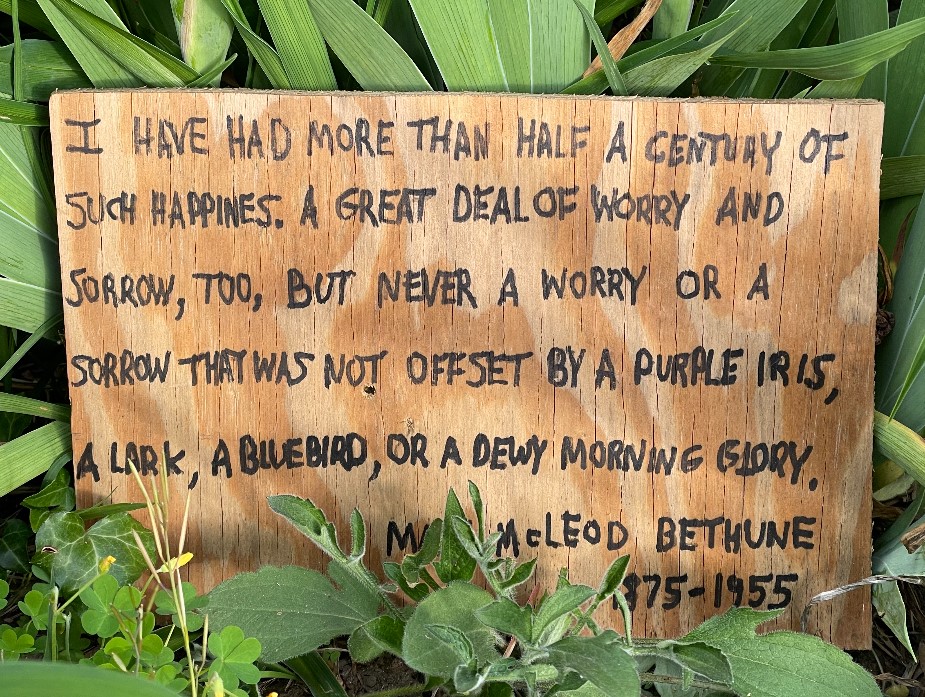
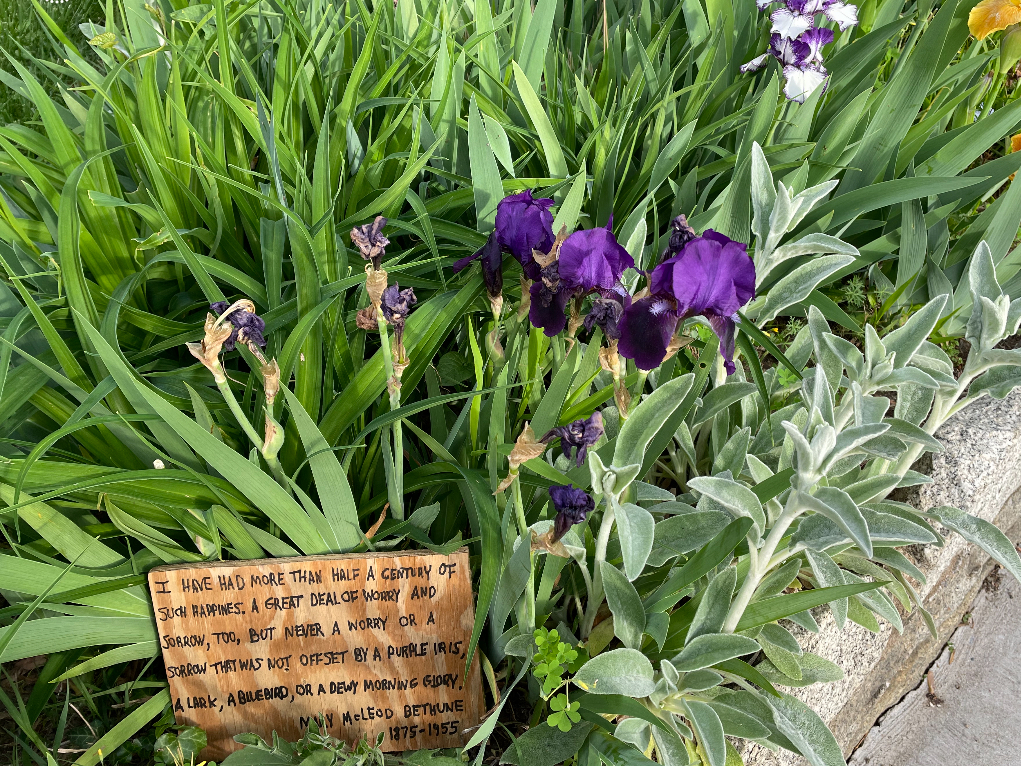
  • The purple iris as the antidote to worry and sorrow is a short piece that features a handmade plaque and a quote from civil and women’s rights pioneer Mary McLeod Bethune. Her words suggests that a great deal of worry and sorrow can be offset by a purple iris. Or a lark. Or a morning glory.
  • Because it is baseball season, hope spring eternal . . . at least in Baltimore. Read my take on both the Nationals and the Orioles in Opening Day . . . 2024.

TREASURES FROM THE BOOKSHELF

In addition to the book on climate change, I included reviews of several other works in this month’s newsletter.

  • In Places give access to minds, I look at Adam Nicholson’s wonderful new book How to Be: Life Lessons from the Early Greeks and suggest that his image of the “harbor mind” is an apt metaphor for thinking more expansively about the world.
  • Megham Daum’s book The Problem with Everything has been summarized as a work about “feeling old, spending too much time online, and getting ornery about the politics of young people.” In Contradictions, nuance, and humanity I write that it is a bit more complicated that that, but sometimes our resistance to the resistance is simply generational.
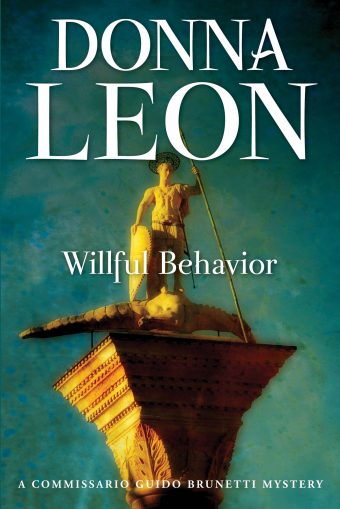
  • Two murders in Venice lead to long buried secrets about collaboration that few want revealed, as I note in the post Just Rewards which examines another work from Donna Leon’s Detective Guido Brunetti series.

EYE-OPENING MUSICAL SELECTIONS

Cataract surgery, Spring, and special celebrations all played a role in this month’s Saturday Soundtrack musical selections.

Andrew takes in the eclipse in Boston
  • Most of what we see is behind our eyes came after my second eye was operated on to have the cataract removed. New eyes are not the only reason to wake up, look around, and be astonished. But they help. And it also gave me a chance to pull up some favorite songs about sight from artists as diverse as Ray Charles, Jackson Browne, The Blind Boys of Alabama, and Aretha Franklin.
  • Welcome Spring was my take on songs about the season from The Beatles, Nina Simone, and Carrie Newcomer, among others.
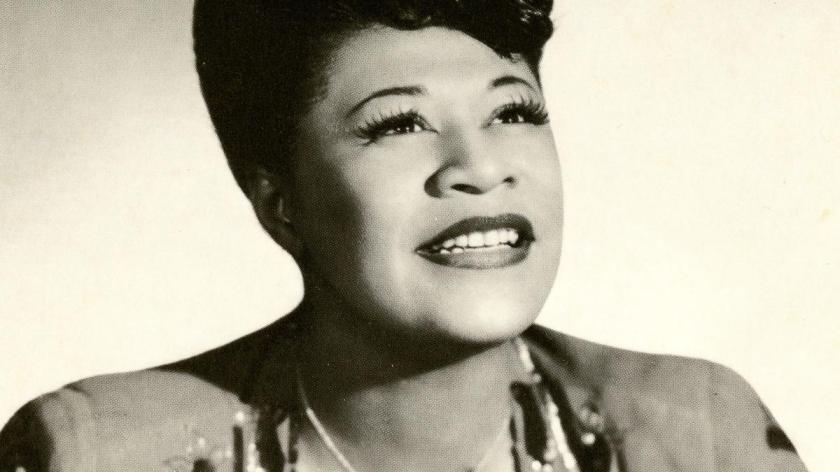
  • The upcoming celebration of the anniversary of Ella Fitzgerald’s birth prompted me to highlight her amazing musical legacy in A pioneer and a powerhouse.

CONCLUSION

Thanks, as always, for reading. Your support and feedback mean more than I can ever express.

As you travel life’s highways be open to love, thirst for wonder, undertake some mindful walking every day, recognize the incredible privilege that most of us have, and think about how to put that privilege to use for good. Women, people of color, LGBTQ+ individuals, immigrants, and others can feel especially vulnerable . . . because they are. Work hard for justice and democracy as the fight never ends.

Bash into some joy along the way.

And finally, try to be nice. Always be kind.

More to come . . .

DJB


For the March 2024 summary, click here.

You can follow MORE TO COME by going to the small “Follow” box that is on the right-hand column of the site (on the desktop version) or at the bottom right on your mobile device. It is great to hear from readers, and if you like them feel free to share these posts on your own social media platforms.


Photo of child playing in some April showers by Kristin Brown on Unsplash

Places give access to minds

Places tend to shape us in ways we don’t fully understand. Even in something as universal as our contemplation of the basic ideas around knowledge, truth, right and wrong, religion, and the nature and meaning of life, we focus through the lens of our daily encounter with the world. In a place.

The premise that philosophy has a geography is the driving force of a delightful new book on the dawn of investigative thought.

How to Be: Life Lessons from the Early Greeks (2023) by Adam Nicolson looks at the time in western history where a few individuals decided to move beyond the oppressive world of god-kings and their priests and think more expansively about the nature of things. In this thought-provoking work, Nicholson is focused on “the motley group of mathematicians, moralists and mystics” we know as the pre-Socratic philosophers from between 800 and 450 BCE. What makes it a book wise beyond its self-help-like title is his attention to the importance of place—Megale Hellas (Greater Greece)—in shaping how they thought. He makes the brilliant case that day-to-day existence in the “bustling port cities” of archaic Greece, where there was an emphasis on “fluidity . . . interchange and connectedness,” gave birth to philosophy. Trade, in other words, along with the coming and going of peoples and ideas that trade brings, required “new ways of thinking about the world, of configuring our relationships with one another.”

He calls this approach to life the “harbor mind” and in his skillful hands it becomes an apt metaphor for thinking more expansively about a world that is always expanding before our eyes, in ancient times as well as today. Nicholson is, in effect, arguing that “engagement with the environment is always a philosophical act,” with one reviewer noting that “the close looking of the naturalist is more similar than we might think to the work of the philosopher.” 

Throughout this book, Nicholson travels to the ruins of these ancient port towns on islands and along the coasts of present-day Turkey, Greece, and Italy to try and envision what life was like in the centuries when they were at the hub of new and expanding trade routes. He wants to see “why this eruption of new thinking had happened in this place and at that time.”

Bertrand Russell wrote that in an attempt to “to conceive the world as a whole” the “greatest men who have been philosophers have felt the need both of science and of mysticism.” Nicholson continues that philosophy’s stature comes from its attempts “to bridge the transition between the perception of a universal harmony and the daily encounter with the world as it is, in all its difficulty and multiplicity.” To get there, those men and women—the early philosophers—did so not with assertions, but with inquiry. “They lived in a fluid world and thought with a harbor mind.”

Place is so very important to Nicholson. It is in the “meeting of the western limits of Asia, the northern shore of Africa in Egypt and the braided and tasseled fringe of southern Europe” where a new way of thinking about the world took root. He uses a variety of maps and numerous photographs and illustrations to help us understand how the world moved from a time where the texts that survive are “self-centered and repetitious” paeans by autocratic monarchs to works with dialogue, opposing views, and “multilayering of perspective.”

The author sails with us around the islands and into ancient harbors to consider, as another reviewer notes—“the lives of the pre-Socratic philosophers—some of whom you may know: Pythagoras, Heraclitus (‘You can’t step into the same river twice’) and Zeno. Others have been more or less forgotten: Anaximenes, Xenophanes and Archilochus.”

Nicolson is an English aristocrat (though he doesn’t use his title) and his father-in-law, John Raven, was “a Cambridge classicist who literally wrote the textbook when it comes to the pre-Socratics.” He uses this background to good effect to help us understand the world of the ancient Greeks and their writings in the context of today’s world. He is also upfront about how slavery is the foundation of this world’s wealth. Multiple times he takes pains to show the reader how the luxury of the those who rule and benefit from this trading in ideas and goods comes by standing on the backs of conquered people who are often interchangeable and ultimately disposable. Like many of the questions he explores, this facet of life in the world—of the wealthy exploiting others to hold on to their wealth—is persistent to the present day.

Each chapter is structured around a specific question—How to Be Me? Does Love Rule the Universe? Can I Live Multiple Realities?—and then ends with a chapter of takeaways, which readers of the self-help genre will find familiar. Yet even that chapter is written with a sparkle and wit that makes it a joy to read. Here he reminds us that the habit of questioning is the foundation of knowing and that because our knowledge is “afloat on a certain liquidity,” it is best not to cling too tightly to what we know. Yet because such liquidity can lead to anarchy in thought, we should work to determine what it is that makes the world whole. We can come to better understand that coherence, Nicholson suggests, when we see that our own individual soul is just the entry point to the “presence of souls throughout all aspects of creation.”

And he ends by pointing to the words of Empedocles. “Neither an intolerant idealism nor the tragic aspects of existence” can be allowed to dominate. They should be held in check by the “power of clear-eyed love, caught in its endless tussle with the forces of strife.” Empedocles considers each of his fellow citizens a harbor, and we take and give in our contact with other humans, accepting wisdom where we find it. “Existence will always carry within it the seeds of its own redemption.”

More to come . . .

DJB

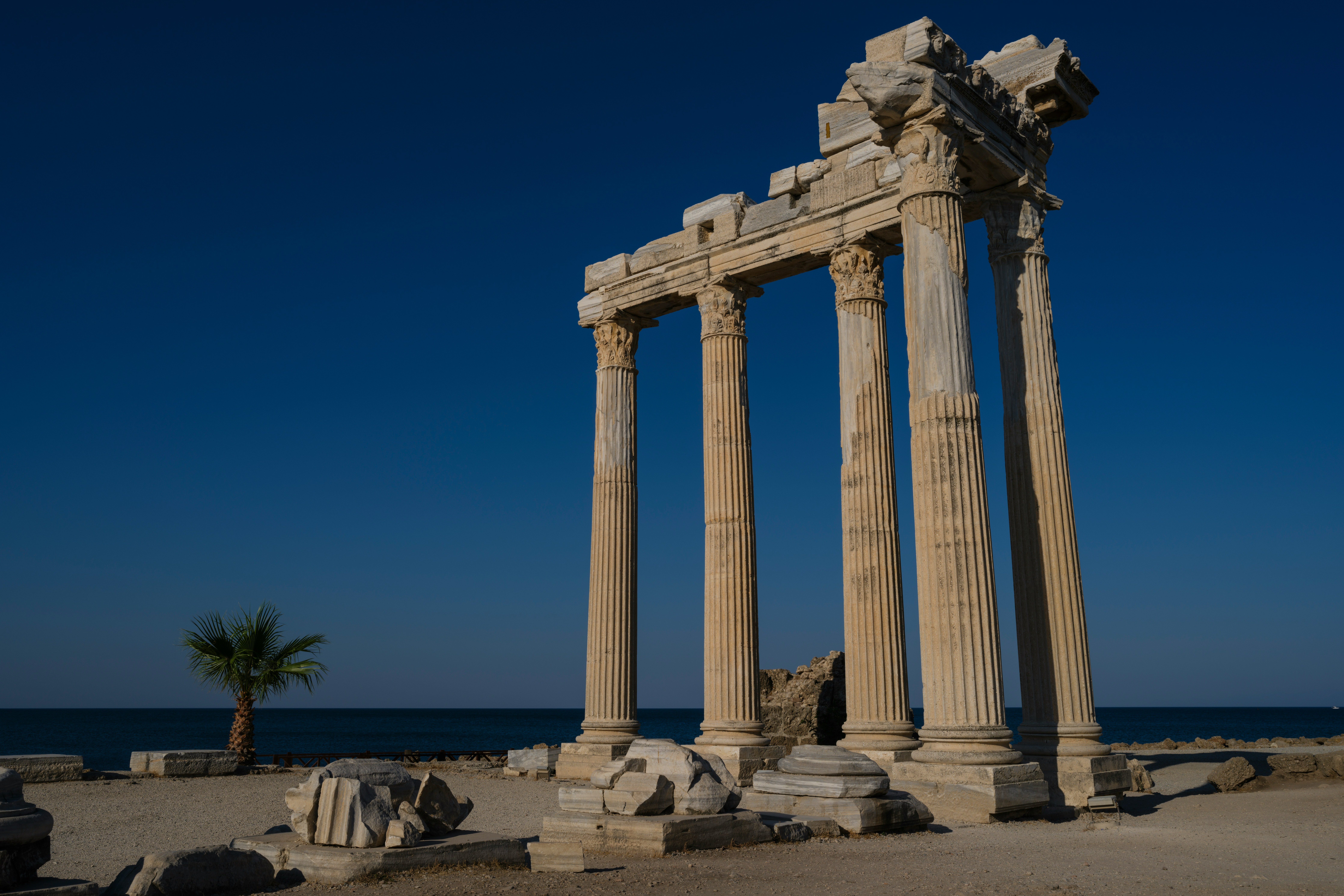
Photo by engin akyurt on Unsplash

Praise for the independent bookstore

Today is Independent Bookstore Day . . . that’s cause for celebration!

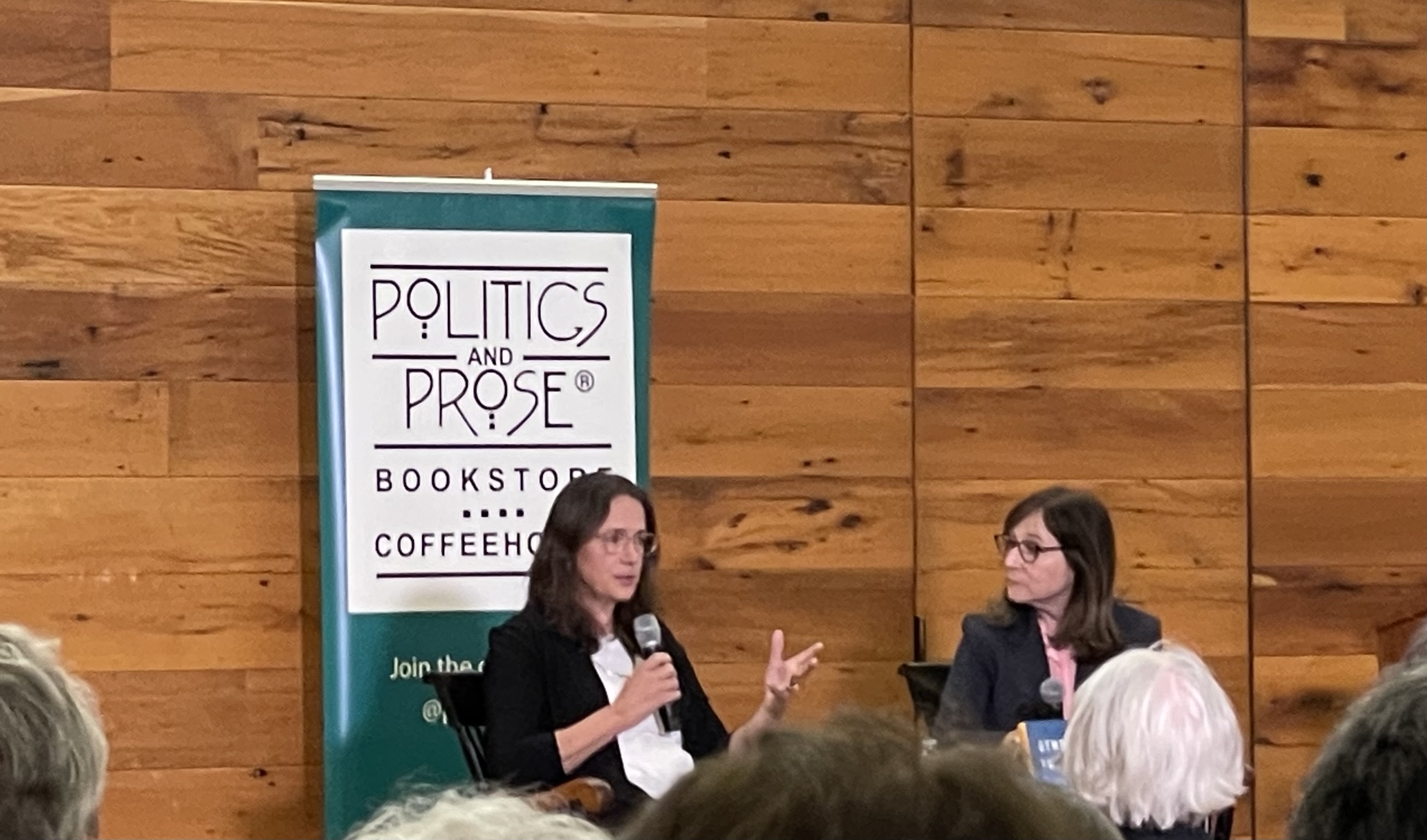
Regular readers know I love independent bookstores. My go-to bookstores in the Washington area are Politics and Prose on Connecticut Avenue and the relatively new People’s Books in Takoma Park. Through the years I’ve bought countless works from their shelves; participated in several small book group discussions; and attended a number of their author events, most recently for historian Heather Cox Richardson (P&P) and Robert Jones (People’s).

Heather Cox Richardson (left) at a Politics and Prose book event last fall (photo by DJB)

I’ll also visit independent bookstores on my travels, often mentioning them in a review of the book or books I purchased while in town. Just a sampling include:

Frankly, there are many more too numerous to list.

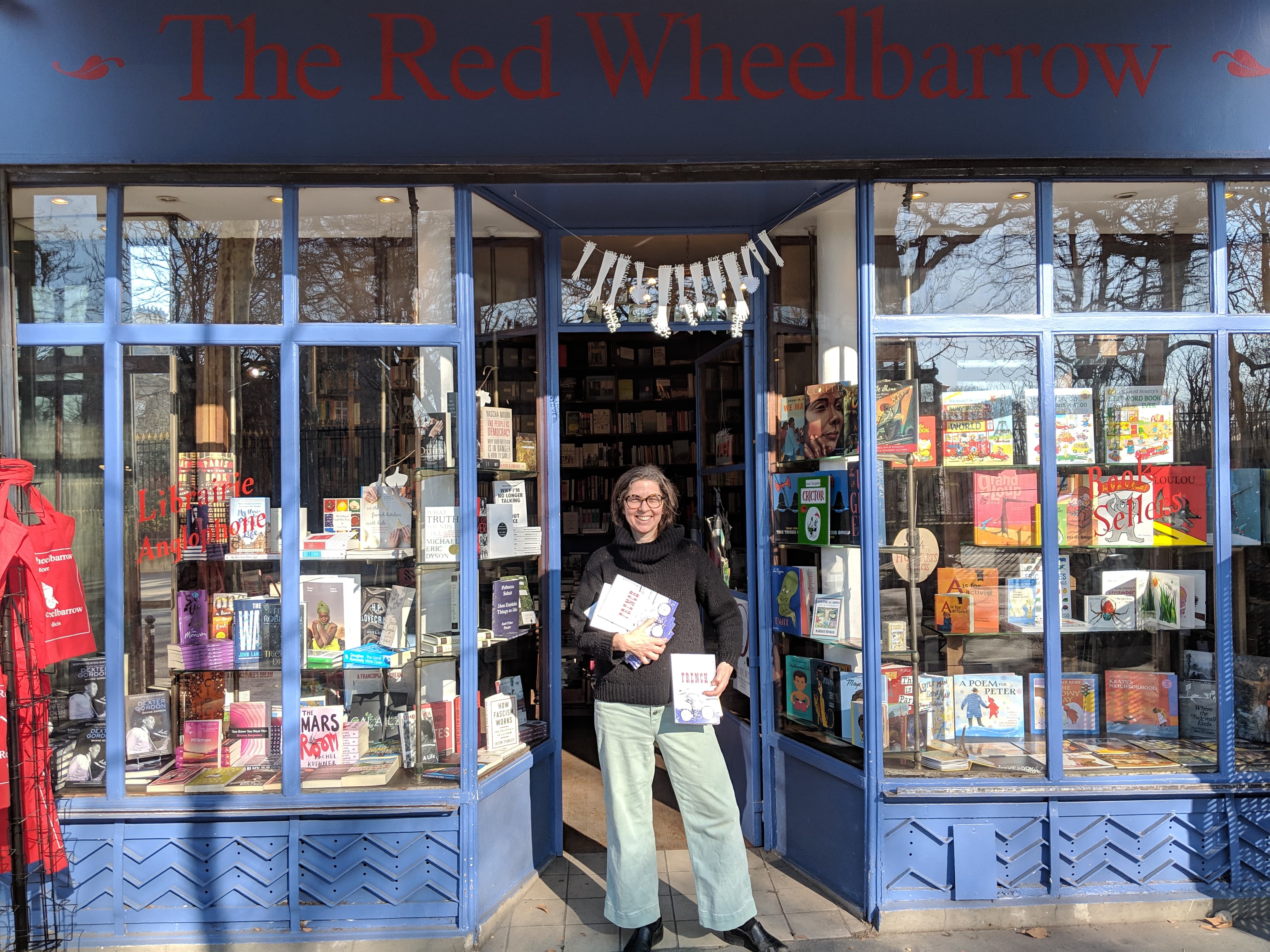
The Red Wheelbarrow in Paris (Photo by Janet Hustrand)

I even find and support independent bookstores when I’m traveling overseas, like The Red Wheelbarrow and Shakespeare and Company (both in Paris), and the Shetland Times Bookshop in Scotland.


Since today is a Saturday—music day here at MTC—I thought it would be fun to share a few songs about books. Let’s begin with a classic (aren’t they all) by the Beatles, Paperback Writer. Here’s the tune’s backstory from Wikipedia:

“Paperback Writer” was largely written by Paul McCartney, who based the lyrics on a challenge made to him by his Aunt Lil. McCartney said in 1966: “Years ago, my Auntie Lil said to me, ‘Why do you always write songs about love all the time? Can’t you ever write about a horse or the summit conference or something interesting?’ So, I thought, ‘All right, Auntie Lil.'” According to Radio Luxembourg DJ Jimmy Savile’s recollection, the inspiration for the song came backstage at a concert venue when McCartney, mindful of his aunt’s request, saw Ringo Starr reading a book and declared his intention to write a song about a book.


Another Beatles book tune is John Lennon’s I Am the Walrus. The title of the 1967 composition “refers to Lewis Carroll’s poem The Walrus And The Carpenter, which is included in the 1871 book Through The Looking Glass.

And, if that’s not enough, the end of the track also includes snatches of a BBC radio dramatization of Shakespeare‘s King Lear: “If ever thou wilt thrive, bury my body; / And give the letters which thou find’st about me / To Edmund Earl of Gloucester; seek him out / Upon the British party: O, untimely death!”


I Write the Book by the wonderful singer-songwriter Patty Griffin was “one of the six songs from Patty’s first official release”—which was sold on cassette tapes at her early gigs. This song was recorded in 1991 at a small studio in a barn behind the house where she lived in Arlington, MA.

I write the book on loneliness | I write the poem on pain | I’m the obituary in the newspaper | Lying out in the pouring rain


Does it get any better than Dick Clark introducing Newark, New Jersey’s own The Monotones and the classic Who Wrote the Book of Love? Nope.


For those a little younger, here’s Elvis Costello and his hot guitar licks with a live version of Everyday I Write the Book.


Let’s end with the always entertaining John Hiatt singing his composition Book Lovers from 1983.

I heard the news from every fool in town | You got somebody new | And I never hurt so bad | The strangest fiction just came true . . .

Since you turned away | I turned the page on my happiness | We were just book lovers | Once upon a time you were mine | Now I must confess | We were just, we were just book lovers | (Since you turned away I turned the page on my happiness) | Chapter one- having fun (Once upon a time you were mine Now I must confess) | Chapter two- look at me and you | Chapter three- chapter three, baby I was down on my knees . . .

If you are a book lover, go find a great independent bookstore in your community and start reading. Maybe you’ll even be inspired to write a song!

More to come . . .

DJB

The purple iris as the antidote to worry and sorrow

Yesterday morning I was on a walk through my Silver Spring neighborhood when I came upon a tiny handmade sign among some flowers. Since it is my custom to always read the plaque, I stopped to investigate.

The little plaque reads:

“I have had more than half a century of such happiness. A great deal of worry and sorrow, too, but never a worry or a sorrow that was not offset by a purple iris, a lark, a bluebird, or a dewy morning glory.”

Followed by the name and dates of the author:

Mary McLeod Bethune, 1875-1955

And as I looked up, I noticed that it sat among a stand of beautiful irises in full bloom.

I’ve always had a special place in my heart for the old-fashioned iris. They were my mother’s favorite flower, and we always had some in our backyard on East Main Street. So I’m glad to know that I share at least one thing with the great educator and civil rights pioneer Mary McLeod Bethune.

Here’s some of her bio from the National Women’s History Museum:

The daughter of formerly enslaved parents, Mary Jane McLeod Bethune became one of the most important Black educators, civil and women’s rights leaders and government officials of the twentieth century. The college she founded set educational standards for today’s Black colleges, and her role as an advisor to President Franklin Delano Roosevelt gave African Americans an advocate in government . . .

Mary McLeod Bethune (credit: National Women’s History Museum)

A champion of racial and gender equality, Bethune founded many organizations and led voter registration drives after women gained the vote in 1920, risking racist attacks. In 1924, she was elected president of the National Association of Colored Women’s Clubs, and in 1935, she became the founding president of the National Council of Negro Women. Bethune also played a role in the transition of Black voters from the Republican Party—“the party of Lincoln”—to the Democratic Party during the Great Depression. A friend of Eleanor Roosevelt, in 1936, Bethune became the highest ranking African American woman in government when President Franklin Roosevelt named her director of Negro Affairs of the National Youth Administration, where she remained until 1944. She was also a leader of FDR’s unofficial ‘black cabinet.’ In 1937 Bethune organized a conference on the Problems of the Negro and Negro Youth, and fought to end discrimination and lynching. In 1940, she became vice president of the National Association for the Advancement of Colored Persons (NAACP), a position she held for the rest of her life. As a member of the advisory board that in 1942 created the Women’s Army Corps, Bethune ensured it was racially integrated. Appointed by President Harry S. Truman, Bethune was the only woman of color at the founding conference of the United Nations in 1945. She regularly wrote for the leading African American newspapers, the Pittsburgh Courier and the Chicago Defender.

In addition to being a civil rights pioneer and educator, Bethune was a businesswoman who has been honored with a memorial statue, a postage stamp, and—in 2022—she became the first African American to be represented with a state statue in the National Statuary Hall Collection at the U.S. Capitol.

It gives me great joy to know that such an amazing and transformational leader took the time to stop and admire the iris. And a dewy morning glory.

Irises near Koiner Urban Farm in Silver Spring

More to come . . .

DJB

Contradictions, nuance, and humanity

When I bought a book on the culture wars last weekend, I’m not exactly sure what I was expecting. I clearly didn’t think through the very real possibility that many of the battles in this modern-day “noisepool” of “one-note outrage” play out on social media and college campuses.

In other words, two places where I’m not exactly an expert.

I was not an early adapter on social media. I had a wife, two children, a job, a guitar and mandolin sitting in the corner, and other interests to fill my days. But I did finally take the plunge into Facebook and initially found it to be intoxicating in its reach. But that initial enthusiasm lasted less than three years and I told MORE TO COME readers in January of 2013 that I was leaving the platform to get a life.

A modicum of self-awareness helped me make the choice to never go on X/Twitter.* And let’s just say that it has been a very long time since I have spent more than a parents’ weekend in a college or academic setting.

Add in the fact that the GenX author is writing primarily about identity politics and feminism—so a generation where I don’t get the cultural references and yet another topic where I’m not exactly a scholar—and we have the potential of a post based on limited or incorrect knowledge and generational bias.

But that’s never stopped me before!**

The Problem with Everything: My Journey Through the New Culture Wars (2019 with a new 2022 Foreword) by Meghan Daum could be summarized as a work about “feeling old, spending too much time online, and getting ornery about the politics of young people.” That quick, somewhat snarky characterization from the New Yorker review could be seen as both accurate and yet somehow incomplete. Yes, there are plenty of times when Daum comes across as that person yelling “get off my lawn” at the kids. And there are very good reasons why you may not want to invest the time it takes to read what one commentator compared to a 222-page Twitter rant. There are also more nuanced reviews that capture what this work is trying to do.

It is complicated.

I read the entire book in one setting (seven-hour train rides are good for that type of immersion) and here are a few hot takes for your consumption.


Three times where I found myself nodding in agreement

  • Having conversations in short, online bursts of outrage misses all the nuance that makes life real for those who have lived in a world that isn’t consumed with technology. Life is seldom so neat as one-word hashtags and expletives would have us believe. “We need fewer sensitivity readers and more empathy . . . to deny people their complications and contradictions is to deny them their humanity.”
  • There are enough real challenges to life; we don’t need to manufacture problems. “The collective hunger for honest engagement with objective reality is something close to ravenous.”
  • We should not dismiss elders simply because they are old or because they frame issues in a way that seems culturally insensitive in today’s world. History is messy, but it also matters.

Three times where I thought Daum went off the rails

  • You simply cannot write a book-length work on culture wars—even a work about the hypocrisy of liberals—and wait until page 188 to note that conservatives on the right have a great deal to answer for in the coarsening of our civic life and the creation of manufactured problems that dwarf many of the outrages on the left. “Bashing the right, especially in the age of Trumpism, was easy and boring, the conversational equivalent of banging out ‘Chopsticks’ on the piano,” Daum writes. Well, it may be boring, but the age of misinformation and the weaponization of media has a parent who goes totally AWOL in Daum’s analysis.
  • Never write a book that bashes online outrage while admitting that you spend an inordinate time online reading and listening to contrarian conservative voices. Alone.
  • Daum’s personal journey (she was going through a divorce and a cross-country relocation) is touted throughout as something of singular importance to her coming to terms with the failings of feminism. To my mind, it simply set the stage for her falling in love with new internet friends who challenged the status quo. That’s not terribly original or insightful.

Write what you know

A friend suggests Daum “write about feminism, because as a straight, cisgendered, able-bodied (mostly) heteronormative white chick, it’s the only thing available to you anyway.” That’s good advice. I can only respond to this book as a straight, white male Baby Boomer who has spent a lifetime working in the rich stew of our messy, often misunderstood, increasingly weaponized, yet always fascinating history. When she calls up the Freedom Riders of the early Civil Rights movement—dressed in their coats, ties, and Sunday best—as excellent representatives of respectability politics that worked as a strategy, I am on board. However, too often Daum writes as someone who is challenged by change and seems to be certain about the “right way” to approach a problem.

“Trumpism has made us feel that the world is out of control. In turn, we’ve forgotten how to control ourselves,” Daum suggests. I don’t disagree. I want to hear her voice, but I also want to hear those of older and younger activists with backgrounds that aren’t so close to mine.

Those who find outrage over what may be overblown problems, and those who quickly criticize because that approach is different than their generation’s perspective may still need to move further down the path to discover that life is hard because mystery is hard. Age—with all its problems—does help us undertake that move from certainty to mystery.

More to come . . .

DJB


*For MORE TO COME posts on digital clutter, check out:


**These paragraphs could be shared as an example of why I never went into marketing.


Image by Engin Akyurt from Pixabay

Keep some room in your heart for the unimaginable

Many of us are grappling with anxiety and worry at this moment in time. We see troubles in every part of the world. Our own political divisions threaten to destroy the best—however imperfect—form of government humans have every devised. Some are at a stage in life where what’s next in this journey is much closer than how we began. As I was reminded at yet another funeral last week, we don’t get to make that choice. It almost always comes in unexpected ways.

And even though we knew it was coming, the eclipse was eerie enough to bring on its own special type of anxiety.

In a 2023 On Being podcast with Krista Tippett, the best-selling author, teacher, and Episcopal priest Barbara Brown Taylor describes the tumultuous times in her past. She called upon something John Claypool once said that helped her sort through the challenges. He simply asked her, “What is saving your life right now?”

I love the right-now-ness of it . . . I think that’s the answer. What’s saving my life right now in my early 70s, married to a man who turns 86 next month, going to more funerals than baptisms, with all that we’ve talked about that there is to lament. ‘Right now’ has become a place where I can find, every day, great joy if I don’t get too ahead of myself. If I get way ahead of myself, I’ll need to take more drugs or something.

But if I can stay right now, there is something every single day that is worth staying alive for and worth increasing the life available to everything and everyone about me within a local radius. So what’s saving my life right now is this locality I’ve been talking about. I am at this moment a better grandmother, aunt, sister, spouse than I’ve ever been by my own measure because I’m attending in ways I have not attended . . . staying in the present as best I can and being amazed that life, as it unrolls every single day, is more than scenery as I rush from here to there. That it’s the real deal.


Every single day “is more than scenery.” I love that thought. Life brings a continuous stream of unimaginable wonders. Our job is to pay attention, focusing on the wonder of what’s around us and acting in the locality of where we are. Our local actions—as Isabel Wilkerson reminds us—are one way we participate in the great dramas of our day. How we interact with those in our immediate presence, how we talk about those present and those not in the room, how we seek to grow in knowledge—these are among the ways we save ourselves on this journey.

Rigidity in mind and spirit can be a challenge. We’ve all seen examples of people who fear what’s next and want to hang on to what they have and what they wish to be true. Yet it is with an open spirit that we best see the wholeness and love that is around us. Among Taylor’s work is an essay on physics called “The Luminous Web.” In it she writes of the evolution of science and then of physics in particular. Krista Tippett spoke of it in their interview.

“’The deeper revelation’ of physics in our time . . . is one of undivided wholeness, in which the observer is not separable from what is observed. Or, in Heisenberg’s words, ‘The common division of the world into subject and object, inner world and outer world, body and soul is no longer adequate.’”

“Is this physics or theology, science or religion?” Taylor asked. “At the very least, it is poetry.” Which seems appropriate to consider here on Earth Day 2024.


Poetry comes in all different forms. “Poems arrive ready to begin. Poets are only the transportation,” writes Mary Oliver in Humility.

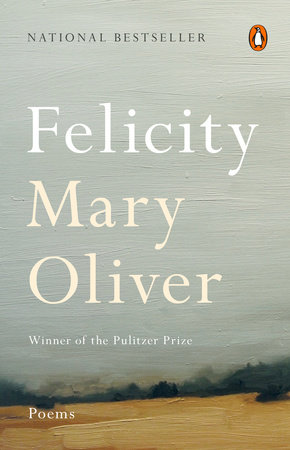
Felicity (2015) by Mary Oliver is a wonderful work, released a few years before the poet’s death, with poems that help save me in this moment. “Here, great happiness abounds,” writes one reviewer. “Our most delicate chronicler of physical landscape, Oliver has described her work as loving the world. With Felicity she examines what it means to love another person.”

And she begins with the very first poem and the notion that love, like time, works in ways mysterious and wonderful.


Don’t Worry

Things take the time they take. Don’t
worry.
How many roads did Saint Augustine follow
before he became Saint Augustine?


She reminds us in Storage that the things we accumulate over a lifetime are, in the end, unimportant. Burn those things that clutter so you can, “Make room in your heart for love, for the trees! For the birds who own nothing—the reason they can fly.”

Perhaps we need to throw caution to the wind.


Moments

There are moments that cry out to be fulfilled.
Like, telling someone you love them.
Or giving your money away, all of it.

Your heart is beating, isn’t it?
You’re not in chains, are you?

There is nothing more pathetic than caution
when headlong might save a life,
even, possibly, your own.


There is a strangeness and wonder of human connection, and with Felicity Oliver “honors love, life, and beauty.” And in the spirit of Taylor’s focus on presence and locality, nothing is too small.


Nothing Is Too Small Not to Be Wondered About

The cricket doesn’t wonder
if there’s a heaven
or, if there is, if there’s room for him.

It’s fall. Romance is over. Still, he sings.
If he can, he enters a house
through the tiniest crack under the door.
Then the house grows colder.

He sings slower and slower.
Then, nothing.

This must mean something, I don’t know what.
But certainly it doesn’t mean
he hasn’t been an excellent cricket
all his life.


Oliver provides useful instructions for life:

“Pay attention. Be astonished. Tell about it.”

When we do so, we may also find it wise to follow another of her suggestions and keep some room in our heart for the unimaginable.

More to come . . .

DJB

Photo by pine watt on Unsplash

A pioneer and a powerhouse

The birthday of the First Lady of Song, Ella Fitzgerald, comes around next Thursday, April 25th. Born in 1917 in Newport News, Virginia to Temperance (Tempie) Henry and William Fitzgerald, the singer moved with her mother to Yonkers, New York a few years later after her parents separated.

The story of her discovery is now the stuff of legend.

In the fall of 1934, Ella Fitzgerald—then a homeless, 17-year-old girl in Harlem—took the stage at the Apollo Theater’s very first Amateur Night. She had planned on dancing in hopes of securing her shot at fame but was intimidated by a tap-dancing act who won the crowd over with their fancy footwork before her turn. She sang the songs ‘Judy’ and ‘The Object of My Affection’ instead and won the evening’s top prize. The rest is history.

I was fortunate to have seen Fitzgerald perform live twice, first around 1978 at midnight on the lawn at the College of Charleston where she fronted a big band (what a fabulous once-in-a-lifetime experience) and then again in 1982 when Fitzgerald sang with a small combo at an intimate outdoor amphitheater in Atlanta. She shared the bill that evening with the Oscar Peterson Trio (another memorable night).

I’m on the road this weekend with limited time to write, but I wanted to capture the anniversary and encourage readers to go online to find some of the many pieces about Fitzgerald’s groundbreaking career.

First, the Smithsonian’s Musuem of American History has a wonderful piece about her place in civil rights history, describing how she broke down racial barriers with her voice. Discover Music has a nice birthday write-up from last year featuring 20 memorable jazz classics that we associate with this performer, who was both a pioneer and a powerhouse.

And for a few of my favorites, to whet your appetite, let’s begin with Airmail Special which finds Ella at her scat-singing best.

I’m not the only one who adores her live recording from Berlin of Mack the Knife. She forgot the lyrics . . . but that doesn’t mean a thing to a great improviser like Ella. She just made up new ones and the performance won her a Grammy. I love how she kept on singing despite forgetting the lines and along the way mimics Louis “Satchmo” Armstrong’s voice.

“You won’t recognize it | It’s a surprise hit.”

Indeed!

And finally, Cry Me a River was originally written for a movie called “Pete Kelly’s Blues,” where it was to be sung by Fitzgerald.

However the producers of the movie objected to the line ‘told me love was too plebian,’ saying that a black woman wouldn’t use a word like ‘plebeian.’ The songwriter refused to change the lyrics, so they dropped the song. A year or two later, the song was used in another movie, ‘The Girl Can’t Help It,’ where it was sung by Julie London. It was the only Number One hit she ever had.

Ella did finally record the song, and her version has all the emotion one would need with those classic opening lines:

Now you say you’re lonely | You cried the long night through | Well, you can cry me a river | Cry me a river | I cried a river over you.”

Make a toast this week to the First Lady of Song and put some Ella Fitzgerald on your Pandora or Spotify stations to remind yourself of just what a treasure she was.

More to come . . .

DJB

Photo of Ella Fitzgerald from the Museum of American History.

Just rewards

The satisfaction in reading murder mysteries comes from the solutions. Having a believable answer is more important than the type of murder or who solves it. A column by Amanda Taub in the New York Times, which I referenced in a recent post, described the appeal perfectly. “The heart of this genre is not the murders that precipitate the plot,” wrote Taub, “but the process by which they are solved—and, above all, the promise that they will be.”

The Detection Club, a literary society, was formed in 1930 by a group of prominent British mystery writers, including Agatha Christie, Dorothy Sayers, and G.K. Chesterton. Members had to swear an oath promising that their fictional detectives ‘shall well and truly detect the crimes presented to them, using those wits which it may please you to bestow upon them,’ and that their mystery solutions would never rely on ‘Divine Revelation, Feminine Intuition, Mumbo-Jumbo, Jiggery-Pokery, Coincidence or the Act of God.

It’s a telling promise: No one cared what kinds of crimes were to be solved, or who was to solve them. But when it came to the process of solving the crimes, rules were rules.

That post led to a conversation with a friend who suggested that for a number of readers of this genre, the other promise that goes unspoken is that the killer will get their “just rewards.” The Old Testament part of our brain, it seems, wants everyone (or at least everyone else) to get what they deserve.

True justice is when you reap what you sow. The tyrannical ruler who terrorizes the people should not die of old age while asleep in their bed.

My friend noted that there were discussions around how some of the more modern mystery writers, like Donna Leon, wrote stories that might not fulfill this second, unspoken promise and have less satisfying endings. I actually touched on this point in my earlier review of Leon’s Death in a Strange Country. As one gets closer to the end of that work, we fear that Commissario Guido Brunetti’s great detective work will come to naught when faced with the might of the military-industrial complex. However, a distraught and vengeful Sicilian mother provides some small sense of justice in this world of deceit and destruction of things beautiful and meaningful. Yet in the end, the underlying forces were not changed with the comeuppance of that one killer.

Which brings me to my most recent descent into the murder mystery genre.

Willful Behavior (2018) by Donna Leon is the eleventh in what is now a 33-book series featuring the Venetian detective Guido Brunetti. The story begins as Brunetti receives a visit from one of his wife’s students “with a strange and vague interest in investigating the possibility of a pardon for a crime committed by her grandfather many years ago.” At first the detective dismisses it even as he is intrigued by the student’s “intelligence and moral conscience.” Soon, however, the girl is found stabbed to death, and Claudia Leonardo becomes Brunetti’s next case.

At one point Claudia, who seems to have no living family members, lived with an elderly Austrian woman—Hedwig “Heidi” Jacobs—who has an extraordinary art collection. Soon after Claudia’s murder Signora Jacobs is also found dead. The plot twists and turns and Brunetti begins to unlock long buried secrets of Nazi collaboration and the exploitation of Italian Jews during World War II, “secrets few in Italy want revealed.”

I turned to this particular work because I have been thinking of secret (and sometimes not so secret) collaborations in our own time. This work of fiction brought forward much to ponder as we grapple with our own age of authoritarianism and oligarchy. Thankfully, we have the opportunity to consider these thoughts while reading Leon’s compelling narrative that brings the reader along page-after-page.

Once again we meet the cast of characters who make up Brunetti’s life: his vain and pompous superior, Giuseppe Patta; his fellow policeman, the recently promoted Detective Inspector Lorenzo Vianello; the ever-resourceful secretary Elettra Zorzi, a woman of “endless and instinctive deceit” who always finds a way to get the information Brunetti needs as long as he isn’t too squeamish about her methods; the medical examiner Ettore Rizzardi; Paola Falier, Brunetti’s wife and a university lecturer in English Literature who is a delightful and loving foil for her husband; Paola’s father and Brunetti’s father-in-law, the wealthy and connected Orazio Falier; and his children Raffaele and Chiara. Leon once said that she wrote Brunetti’s character so that she would like him, and the reader quickly comes to the same conclusion.

Without giving away the plot, it is fair to say that Leon has once again written a masterful mystery where the killer is found, but the underlying issues that led to the murders go unaddressed. The Times of London had an excellent description of the challenge in her books.

What makes Leon’s work especially unnerving is the sense that corruption is a continuing process. . . . This is a powerful story, brilliantly evoking Venetian atmosphere, and the characters of Brunetti and his family continue to deepen throughout the series.” 

A very worthwhile read.

More to come . . .

DJB

Photo by Leonardo Yip on Unsplash

Citizenship

Participation and community are at the heart of citizenship. In a democracy, citizens are participatory members of a political community that grants us certain rights and privileges. In return, we have duties that extend beyond the individual.

Engagement with our fellow citizens—“We the people”—is one of the benchmarks of a healthy democracy.

Of course, engagement comes in a variety of fashions. We each make thousands of daily choices about the particular terms of that engagement. We may be cranky or pleasant, resentful or empathetic, hateful or loving. Most of us go through these daily interactions blissfully unaware of our own contradictions and hypocrisies. Are our choices a factor of our environment or outside stimuli? The result of values and beliefs? Does our past impact the way we engage with the present?

I suspect these and more all come into play, but I want to focus on the past—our “raising” as we say in the South.


Personal histories

Sorting out personal histories is hard work. I have spent years trying to recognize and acknowledge the complicated family history that is part and parcel of who I am today. Understanding how Scotch-Irish immigrants who settled primarily in the American South prior to the Civil War influenced my perceptions, opportunity, fortune, and worldview is important as I navigate life in the 21st century. How did these Presbyterians, Baptists, Episcopalians, and Restorationists ingrain their religious tenants in my beliefs? Where do the influences I inherited from my Depression/New Deal/World War II-era parents show up today in everything from lifestyle choices to voting patterns? How much white male privilege have I called upon in things large and small in my almost seven decades of life?

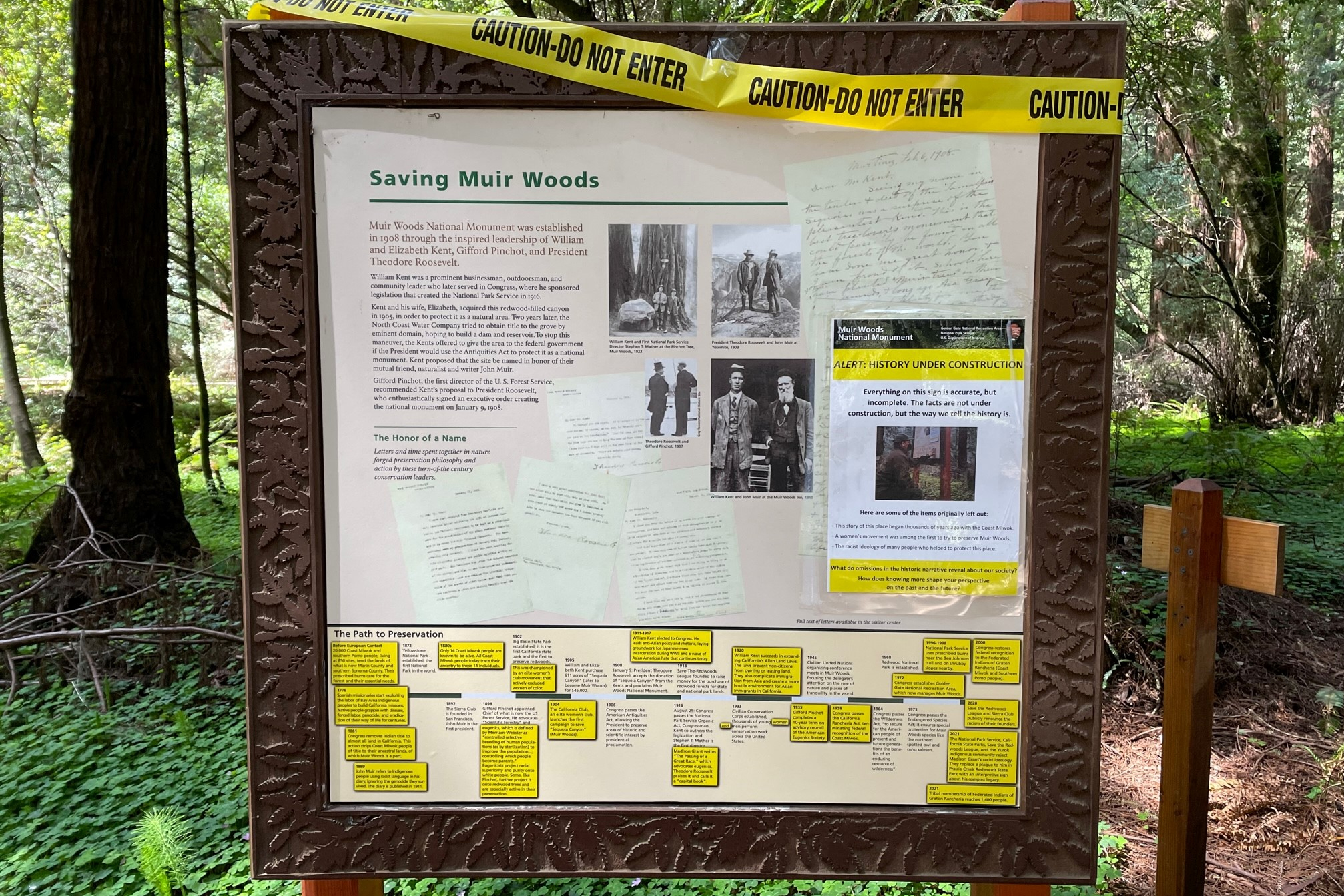
Caution: History is under construction

What we know about the past is changing as we uncover new information, recognize previously hidden bias, and engage with broader communities. History is always under construction. Part of my personal construction project is trying to recognize the limiting and destructive patterns of living and thinking I’ve unconsciously adopted through the years. Patterns which, no doubt, affect my ability to be a good citizen.


Everybody has a role

Krista Tippett, in introducing last year’s exceptional On Being interview with author Isabel Wilkerson, talks of how we fall into these patterns. She gives as an example our ranking of human value—who matters the most and who matters less—and identifies it as “communal infrastructure” (there’s that community piece again) that “becomes internalized and perpetuated at every level along the hierarchies that result.”

Wilkerson suggests we have the power and expertise to change history. Instead of thinking “I wish we could do something about the Supreme Court” as if it is someone else’s problem, she calls on us to recognize that we each have power, influence, and expertise—as bankers, doctors, teachers, union members, and more—that we can bring to our role as citizens.

Recognizing that everyone has a role to play is key to being a good and conscientious citizen.


Lifting all Americans

How we respond to others is important in building the type of country we want America to be. Just don’t expect the outrage agenda of today’s traditional and social media to help. As Teri Kanefield noted recently, it is becoming increasingly difficult to find news sources not enthralled to misinformation and conspiracy theories. Most thinking people understand that Fox is a propaganda network that keeps people enraged for profit. But like Kanefield, I’ve noticed an uptick in the outrage agenda from progressive voices as well. It has led me to stop watching cable news shows and to unsubscribe from several newsletters.

Leslie Moonves, a former CBS executive, famously said of Trump’s presidency: “It may not be good for America, but it’s damn good for CBS.” Joking or not, this is simply bad corporate citizenship. * Rather than focusing on drama or the binary choice of who is up/who is down, socially responsible media—good corporate citizens—inquire about where candidates want to lead the country and how they envision leading “all” Americans, not just the ones who agree with them.

Helping lift all Americans reflects the optimism of the New Deal, which is part of my personal history.

“The foundational belief of the New Deal was the conviction that democracy in the United States—limited and flawed though it remained—was better kept than abandoned, in the hope of strengthening and extending it.” The New Deal mattered then, at the cusp of spring in 1933, because “it gave Americans permission to believe in a common purpose that was not war.” 

Belief in a fundamentally uplifting common purpose leads naturally to how we think about others. The presiding bishop of the Episcopal Church, Michael Curry, has encouraged us to “Love the neighbor you like and the neighbor you don’t like.”

In my religious worldview none of us is perfect. We are all—to use Biblical language—sinners. Richard Rohr reminds us that Jesus is shockingly not upset with sinners.

This is a shock so total that most Christians still refuse to see it. He is only upset with people who do not think they are sinners: These denying, fearful, and illusory ones are the blockage. They are much more likely to hate and feel no compunction.

Our job, and the mission of religion, is not to expel sin and evil. There is no place to expel it to because “we have met the enemy, and the enemy is us.”

We can choose to perpetuate injustice against “the other” or—in our own flawed but unique way—take on the job of choosing to fight it. In FDR’s words, we can “apply social values more noble than mere monetary profit.”

The next time I prepare to respond with outrage, I’ll try instead to love the neighbor I don’t like. The reality is that we’re all in this together.

More to come . . .

DJB


*Corporate citizenship is a recognition that a business has “social, cultural and environmental responsibilities to the community in which it seeks a license to operate, as well as economic and financial ones to its shareholders or immediate stakeholders.”


Photo by Matt Collamer on Unsplash