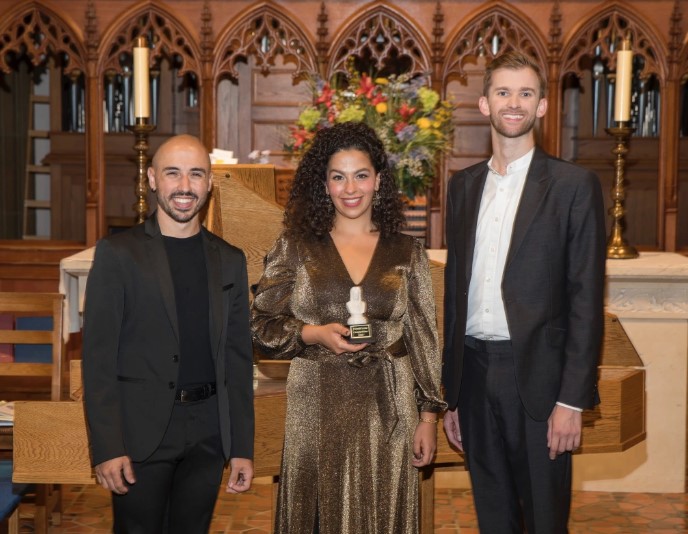
Earlier this month our son — the tenor Andrew Bearden Brown — was a finalist in the 10th annual Handel Aria Competition held at historic Grace Episcopal Church on the capitol square in Madison, Wisconsin. The Handel Aria Competition is dedicated to promoting the performance of Handel’s extensive vocal repertoire. Established in 2013 by Dean and Carol “Orange” Schroeder, enthusiasts of the vocal repertoire of George Frideric Handel, the competition is to encourage emerging singers of all voice types to explore the repertoire of Handel. The finalists were selected out of 125 auditions from around the world.
This year’s prize winners were: Emily Donato, soprano, first prize; Andrew Bearden Brown (right) tenor, second prize; and Fran Daniel Laucerica, tenor, third prize.
For his two pieces, Andrew began with “Alla offesa…È un folle” from the opera Alcina.*
That was followed by “Comfort Ye…Ev’ry Valley” from Messiah.
All of the finalists sang beautifully in this wonderful historic setting. Needless to say, we are so proud of Andrew’s performance, and I just wanted to share it with the readers of More to Come.
*UPDATE: I thought it might be helpful to have a synopsis of the two pieces he’s singing.
Alcina Synopsis: Oronte struggles with his conflicting feelings around his lover, Morgana, who has rejected him for the dashing new arrival on their island. He concludes that it’s not her beauty, but rather his own madness that is to blame for his inner turmoil.
Messiah Synopsis: In this aria, the tenor soloist calls out to the listener and invites them to prepare for the coming of God, joyfully celebrating the peace and justice to come.
An incredibly rare event is often described as coming along “once in a Blue Moon.” On August 30/31 we’ll experience the second full moon within the span of one month, which has me thinking about blue moons and the beloved singer-songwriter Nanci Griffith.
As the website Space.com tells us, “There are two types of Blue Moons but unfortunately neither has anything to do with color.”
A seasonal Blue Moon is the traditional definition of a Blue Moon and refers to the third full moon in a season that has four full moons according to NASA. Whilst the second definition — borne out of a misunderstanding of the first — is a monthly Blue Moon which refers to the second full moon within a single calendar month. The monthly Blue Moon is nowadays considered the second definition of a Blue Moon rather than a mistake, according to Time and Date.
Not to get too deep into the science or the folklore, but the cycle of the phases of the moon lasts approximately one month. So we typically experience 12 full moons each year, and they often fall into one per month. (But not always … February which at best has 29 days, can go without a full moon. That’s known as a Black Moon.)
Many cultures have given distinct names to each month’s full moon. 12 months, 12 full moons, 12 names. Simple right?
Well, not quite. Here’s where the Blue Moon comes into the equation.
The moon phases actually take 29.5 days to complete which means it takes just 354 days to complete 12 lunar cycles. So every 2.5 years or so a 13th full moon is observed within a calendar year.
This 13th full moon doesn’t conform to the normal naming scheme and is referred to as the Blue Moon.
Okay, enough science.
I’ve always loved the simple tune by Nanci Griffith entitled Once in a Very Blue Moon that was the title track of an early album. It begins with the arrival of a letter:
I found your letter in my mailbox today You were just checkin’ if I was okay And if I still miss you Well you know what they say
Followed by the chorus:
Just once in a very blue moon … And I feel one comin’ on soon
After another verse and chorus, Griffith goes into the bridge:
There’s a blue moon shinin’ When I’m reminded Of all we’ve been through Such a blue moon shinin’ Does it ever shine down on you?
Shortly after her death in 2021, Texas Monthly wrote the following about Griffith’s work:
Best known for such Texas folk-country classics as “Last of the True Believers,” “Love at the Five and Dime,” and “Lone Star State of Mind,” as well as her near-definitive versions of Julie Gold’s “From a Distance,” Townes Van Zandt’s “Tecumseh Valley,” and John Prine’s “Speed at the Sound of Loneliness” (in a duet with Prine himself), Griffith’s music transcended genre, generations, and her home state. Seguin-born and Austin-raised, she may have had even more fans outside of Texas, whether in Nashville, Ireland, New York, or Australia … and she introduced those fans to other Texas artists.
I always felt that Griffith was best live. Here, from her 1985 Austin City Limits performance, Griffith sings Once in a Very Blue Moon. A young Lyle Lovett (also from Texas) joins on background vocals while a young Mark O’Connor plays violin.
And it ends with the haunting last verse of love lost where the feeling’s not shared:
You act as if it never hurt you at all And I’m the only one whose gettin’ up from a fall Don’t you remember Or can’t you recall
Just once in a very blue moon … And I feel one comin’ on soon
For those with love that’s been lost as well as for those who have found an incredibly rare love, enjoy the blue moon.
UPDATE: Unfortunately, we had a fair amount of cloud cover here in the DC region on the evening of August 30/31, so while we could see the supermoon, it wasn’t very distinct. Luckily, our nephew David Ghattas had a clear night to get a beautiful photo in Tennessee, with the moon peeking through the leaves of the trees.
And then Claire took two beautiful photos of the supermoon over the San Francisco Bay in Alameda.
First impressions — whether in meetings, personal encounters, books, dates, lectures, or reports — set the tone for what follows. Bad first impressions can be overcome, but in the vast majority of encounters we tend to make up our minds quickly and stick to our initial perceptions.
Yet some first impressions are so bad they are deserving of a prize. Which is why I was delighted to see the 2023 winners of the Bulwer-Lytton Fiction Contest (motto: Where “www” means “wretched writers welcome).
You’ve never heard of this prestigious competition? Well, let’s enlighten you. The Bulwer-Lytton Fiction Contest has been around since 1982, challenging participants to write an atrocious opening sentence to the worst novel never written. The “whimsical literary competition honors Sir Edward George Bulwer-Lytton, whose 1830 novel Paul Clifford begins with ‘It was a dark and stormy night.'”
When writing a paper about Sir Edward, Professor Scott Rice of San Jose State University came up with the idea of challenging writers to compose opening sentences to the worst of all possible novels. “Dark and Stormy” has its own category, but contestants can also enter lines for adventure, historical fiction, romance, and more.
And the 2023 Grand Prize winner is a doozy!
She was a beautiful woman; more specifically she was the kind of beautiful woman who had an hourlong skincare routine that made her look either ethereal or like a glazed donut, depending on how attracted to her you were.
Maya Pasic, New York, NY
I was also rather taken with the winner in the “Adventure” category.
The man squinted his eyes as the blistering cold winds battered his rugged face, his eyes darting about, desperately hoping, daring to dream that amidst the frozen wasteland, he would find the last Klondike Bar that he had hidden in his freezer.
Have you ever been in a situation where you’ve just learned about something that the rest of the world has known for years? Where you feel a step or two (or more) behind everyone else?
As I began this year reading crime novels and murder mysteries for the first time in my life, I have this feeling oh, I don’t know … maybe about once a month. But recently I felt really late to the party, when I finally picked up one of the best-known spy novels ever written.
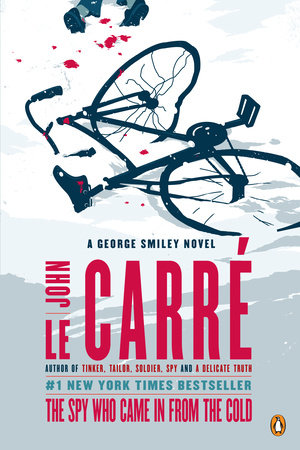
The Spy Who Came in From the Cold (1963) by John le Carré has been described as “the greatest spy novel of all time” written by “the world’s greatest fictional spymaster.” Richard Burton starred as Alec Leamas in the acclaimed 1965 film, with Claire Bloom as his ill-fated lover. I’ve heard the phrase used in the title for many years, so you may ask how I missed this classic until now.
Well, I was just eight years old when the book was published and ten when the film was released. As to why I didn’t pick it up later, just chalk it up to different priorities. But after seeing the book in Alameda’s terrific Books, Inc. on a recent visit, I made a spur of the moment decision that it was time to rectify my cluelessness.
I’m so very glad I did.
Many know the basics of le Carré’s classic of duplicity and espionage. (Spoiler alert for the handful who don’t know the story.) The Cold War is heating up, and the Berlin Wall has just been erected. Alec Leamas, the head of the West Berlin Station for British Intelligence (known as “The Circus”), watches as his last undercover agent is shot down trying to cross that divide by East German sentries. Leamas is recalled to London where a man named Control, who heads up The Circus, tells him that he will be put out to pasture. Yet Control gives Leamas a chance for revenge: he can assume the guise of an embittered ex-agent in order to trap Hans-Dieter Mundt, the deputy director of the East German Intelligence Service.
Le Carré said the “inspiration for the character of Leamas came from a ‘Peter Finch-like figure in a raincoat’ whom he remembered seeing pull out a wad of foreign currencies at London Airport, demanding a large Scotch; an ‘archetypal secret agent figure — exhausted, barely knows what country he’s in, much-travelled, down on his luck.'”
Leamas perfects that down-on-his-luck persona by drinking heavily, becoming surly with colleagues and acquaintances, and missing payments on essentials like food and rent. He becomes the quintessential potential defector. When desperate for money he takes a job at an obscure library where he meets Liz Gold, the young, idealistic secretary of her local branch of the Communist Party of Great Britain. They become friends and then lovers. When he leaves for his final job Leamas asks Control and George Smiley — a career British intelligence officer and another of le Carré’s famous characters — to leave Liz alone.
The well-written story quickly moves to the steps Leamas takes to gain the confidence of the East Germans. The dialogue is interspersed with the agent’s private thoughts, as he helps explain both the motive and plot. Yet his plan to share information quickly in the Netherlands and then return to England is dashed when Leamas finds he is suddenly a wanted man in his own country and he is forced to make the decision to go to East Germany and meet Jens Fiedler, an East German spy and Mundt’s deputy.
“For the first time since it all began,” writes le Carré, “Leamas was frightened.”
Leamas is ultimately called upon to stand as a witness against Mundt in a dramatic courtroom scene. Here Leamas provides information designed to send Mundt to face the firing squad, but there’s a twist. In the end Leamas has a choice to make, one where following his heart may cost him his life.
One reader notes that in the James Bond era, le Carré wrote spy fiction “of a type not previously encountered, especially The Spy Who Came in from the Cold.”
Bleak, prosaic, featuring ordinary people, involved in plots they were ignorant of, manipulated by people toward ends they didn’t understand… It’s easy to see why it proved popular.
Just as Liz comes late to a discovery of the true nature of the Communist Party, I have a similar feeling of later-in-life discovery of something all around me. In the case of The Spy Who Came in from the Cold, better late than never.
More to come …
DJB
To see reviews of the other books in my year of reading dangerously (i.e., mystery novels), click here for January, February, March, April, May, June, and July.
The Weekly Reader links to the works of other writers I’ve enjoyed. I hope you find something that makes you laugh, think, or cry.
We all choose our myths. Some can be illuminating and positive; others are powerfully destructive. Many have elements of both mixed-up together.
Myths help us chart our way through life and make sense of what is essentially mystery. We latch onto myths in our origin stories, in our memories of family, in our national narratives, in our deepest spiritual beliefs.
This is a story about myth that involves brown water. Perhaps over ice. Sometimes with a twist.
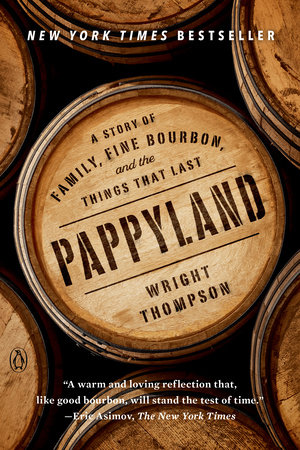
Pappyland: A Story of Family, Fine Bourbon, and the Things That Last (2020) by Wright Thompson is, on the face of it, the story of how Julian Van Winkle III saved the bourbon business his grandfather had founded on the mission statement: “We make fine bourbon — at a profit if we can, at a loss if we must, but always fine bourbon.” That grandfather was the now famous Pappy Van Winkle. In tracing the story of a grandson’s determination to resurrect his grandfather’s dream, Thompson has written a beautiful and warm reflection that goes well beyond the basic story, blending together “biography, autobiography, philosophy, Kentucky history, the story of bourbon’s origins and an insider’s look at how the Van Winkle whiskey is made and marketed.”
This bourbon-loving historian and son of the South savored every sip.
(Photo Credit: The Adventures of Sarah and Derrick)
In 1935, just after the lifting of prohibition, Julian P. “Pappy” Van Winkle, Sr. used wheat instead of rye as the dominant secondary grain in his mash bill to create a bourbon named “Old Fitzgerald” at the Stitzel-Weller distillery near Louisville. By all accounts it measured up to that mission statement. Rye had come from Pennsylvania and was the “traditional” grain used alongside corn and barley in the making of bourbon. But Kentucky grew wheat, which also happens to survive extended aging better than rye. It was part of Pappy’s genius that he turned to wheat — which gave Old Fitzgerald a memorably softer and smoother taste — and made “bourbon truly of Kentucky.”
Pappy’s son, Julian, Jr., continued to operate the distillery until he was forced by stockholders to sell in 1972. Julian, Jr. resurrected the one pre-prohibition label to which the Van Winkles kept the rights, called “Old Rip Van Winkle”, and began making his own brand. When his father passed away in 1981, Julian III took over the business, determined to bring back the family bourbon and the taste he came to love as a young man.
In his do-or-die determination to save the family namesake, Julian III discovered that hundreds of barrels from the family distillery had survived their sale to a multinational conglomerate. He bought those up and began making what was soon hailed as the greatest bourbon in the world. It would also soon be the hardest to find. As those stocks dwindled, Van Winkle worked on a joint venture with Buffalo Trace distillery to create a new brand that carries the tradition of “always good bourbon” forward into the future.
Thompson — a Mississippi native and a lover of good bourbon — takes us for this ride. Along the way he talks with Julian III about craft, family, history and the myths around bourbon distilleries and brands. Many of the famous brands, writes Thompson, “like Elijah Craig and Evan Williams, were created by Jewish distillers who presumed that their customers didn’t want to open a bottle of Rosenstein Straight Bourbon Whiskey.” Bourbon is sold by today’s marketers based on nostalgia and with a longing for a time that is past. It is all BS, of course, and yet we buy it. Thompson understands the power of mythology in a day when “most distilleries are run by accountants” and when he can write, “Perhaps no word sums up the death of truth in America better than the word brand.”
A bottle of bourbon is a coded way for so many unspoken ideas to be transmitted and understood. In many ways, the most important ingredient in bourbon is added by the drinker once the bottle is purchased, which is why whiskey companies know how to tell one story and stick to it.
In the final third of the book, Thompson begins to share his own story about family. First there is the father-son relationship and how to span a generational divide. Julian, Jr. was a tank captain in WWII and was hard on his son. For the first time in print Thompson admits that his own father drank too much. Thompson and his wife have finally conceived after years of futility, and the Van Winkle family story has him thinking about the connections in life and what’s important.
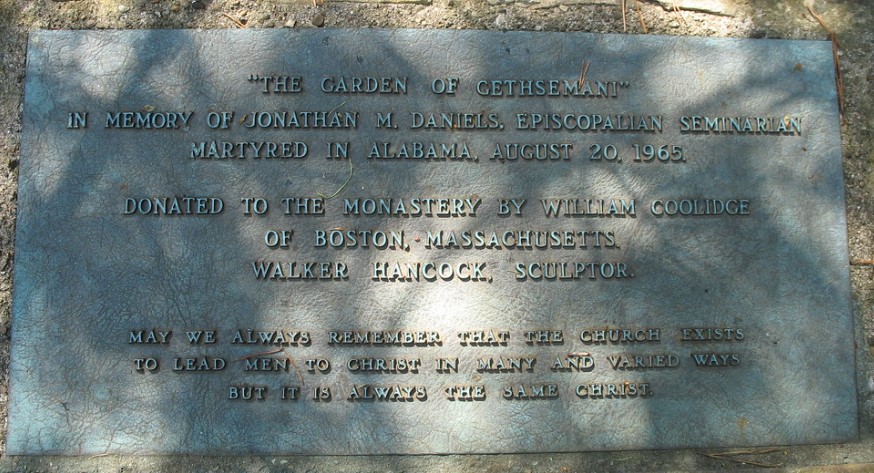
He is working to sort out adulthood and calls upon an Updike quote: “Myth is both the deliverance and the curse. We tell ourselves a story to survive and then that story consumes us, destroys us. The mask eats the face.” He reads and quotes Thomas Merton, not too far from his home monastery: Abbey of Gethsemani. He thinks about being Southern and how there’s a responsibility to “shake off the comforting blanket of myth and see ourselves clearly . . . (with) our long history of trying to do the right thing while benefiting mightily from the wrong thing.”
Those of us who live in the reality-based world are having a difficult time keeping up with the former president’s crimes. If it is a day that ends in “y” we seem to learn another bit of damning information about something he did to obstruct justice, intimidate witnesses, and/or overthrow the government so he could retain power.
On Wednesday, the DOJ released information that indicated that Donald Trump and his loyal employees at Mar-a-Lago (aka indicted co-conspirators) were not being truthful about the locks and surveillance video in the stolen classified documents case. Yes, I know you’re shocked. Shocked!
Lawyer and investigative journalist Marcy Wheeler lays this out on her Empty Wheel blog. The entire piece is rather short and I encourage you to read it, but the nub of the matter is that in all the work at Mar-a-Lago to move and hide the boxes that held the nation’s classified secrets, Trump and his minions moved some into the residence and then changed the locks on a closet within the residence — one that may have stored some subset of the roughly 35 boxes that didn’t get moved back into the storage closet so Trump’s lawyer and ultimately the FBI could search them. And they changed the lock on the closet before adding a lock — as requested — to the main storage facility.
When FBI agents arrived at Mar-a-Lago the morning of Aug. 8 with a court-issued search warrant, (Carlos) De Oliveira was one of the first people they turned to. They asked him to unlock a storage room where boxes of documents were kept, people familiar with what happened said. De Oliveira said he wasn’t sure where the key was, because he’d given it to either the Secret Service agents guarding the former president or staffers for Trump’s post-presidency office, the people said.
Frustrated, the agents simply cut the lock on the gold-colored door. The incident became part of what investigators would see as a troubling pattern with the answers De Oliveira gave them as they investigated Trump, the people said.
I wasn’t the first person to read this story and think of Dr. John, the New Orleans musician who mixed blues, jazz, funk, and R&B into his one-of-a-kind gumbo. Dr. John’s tune Somebody Changed the Lock fits this story perfectly, especially with the classic line: “Somebody changed the lock on my door … And I, I know, something is definitely going on wrong.”
Somebody changed the lock on my door, yeah, now And my key, it won’t fit in that lock no more I’ve been standin’ on my little front porch all night long, mm-mm And I, I know, something is definitely going on wrong You know that the lights is dim, the shades are way down low, yes And I knocked and knocked, until my fist got sore, ah, play it now
Growing up in a home where National Geographic magazines filled several bookshelves, I became fascinated with the stories and photographs of Egypt’s pharaohs, gods, hieroglyphics, and colossal monuments. Few international affairs of the 1960s were etched into my impressionable mind more completely than the suspense of the race to save the Abu Simbel temples from the rising waters of Lake Nassar.
Yet until this year I was oblivious to the work of the woman who was indispensable in this effort.
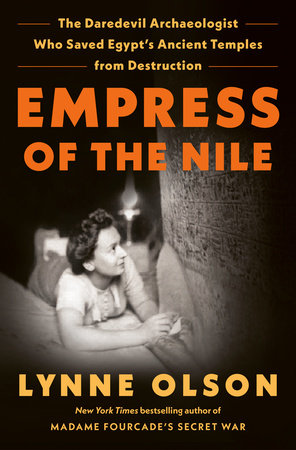
Empress of the Nile: The Daredevil Archaeologist Who Saved Egypt’s Ancient Temples from Destruction (2023) by Lynne Olson is the true-life story of Christiane Desroches-Noblecourt, the remarkable French archaeologist, WWII resistance fighter, and Louvre Egyptologist who played a key role in saving the temples at Abu Simbel. She was also the first to arrange for the treasures of Tutankhamun to be displayed outside Egypt, leading indirectly to the blockbuster US tour several years later. Throughout her long career she never let the misogynistic men’s club of Egyptian archaeology stop her from achieving her goals. Desroches-Noblecourt had a variety of nicknames, but the one she preferred was given by her Egyptian colleagues: “Umm Simbel” — Arabic for “Mother of Simbel.”
Born in 1913 Paris, Christiane Desroches was the daughter of educated and artistic parents. Christiane’s lifelong passion was set when, as a child, she was taken on her grandfather’s shoulders to see the Obelisk of Luxor in the Place de la Concorde.
Desroches was instantly smitten with ancient Egypt.
This curious and intelligent young child was first enrolled in a progressive girls’ public school then encouraged to study for a degree in Egyptology at the prestigious École du Louvre. There she made the first of many field trips to excavate sites along the Nile, working with Étienne Drioton, the teacher who became the first of many influential mentors. Desroches stayed in camps infested with cobras and scorpions, mastered Arabic, and developed a rapport with the local workers that would serve her well throughout her career. She also made her first discovery of an untouched tomb while enduring the mistreatment of a chauvinistic French archaeologist who later stole credit for her notes and photos.
Desroches was appointed a curator in the Egyptian department of the Louvre just as war clouds were overtaking Europe. Thanks to the farsighted planning of director Jacques Jaujard, the Louvre’s staff began a massive transit of its treasures to temporary sanctuary. Desroches, who married André Noblecourt during the war years and added his name to her own, was given the task of shepherding the museum’s Egyptian treasures to safety, often navigating roads clogged with refugees. On top of that she was acting as a courier for the Musée de l’Homme resistance network, smuggling messages out of Paris. Desroches-Noblecourt fell under Nazi suspicion, but she escaped unharmed even after scolding and cursing her interrogators for their bad manners.
Desroches-Noblecourt was always a fighter.
The book’s thrilling account of the rescue of the giant statues of Rameses II and the Abu Simbel temples from inundation by the Aswan High Dam is the unquestioned highlight of the book. After Egyptian President Nasser announced plans for the dam as part of a modernization drive, Desroches-Noblecourt began a years-long effort to move them out of the path of the rising waters of Lake Nasser. As the chief of a UNESCO mission to Egypt, she pulled strings, twisted arms, called in favors, and maintained that the world simply could not let these treasures of civilization disappear.
Along with Egyptian Minister of Culture Sarwat Okasha and UNESCO chief René Maheu, Desroches-Noblecourt worked tirelessly to change minds in the Egyptian, French, and American governments.
In her first meeting with Charles de Gaulle, the French president rebuked her for her unilateral pledge of French government support for the plan. “And you — did you demand the authority of Pétain’s government on June 18, 1940?” she shot back. “Then Charles de Gaulle did something exceedingly rare for him: He laughed,” Olson writes. The funding was approved.
Desroches-Noblecourt found a quiet, behind-the-scenes supporter in the U.S. in First Lady Jacqueline Kennedy. In several chapters Olson leaves her primary subject behind to focus on the First Lady’s role not only in saving Egypt’s treasures but in the growth of the historic preservation movement in the U.S., as she links Abu Simbel, the designation by UNESCO of World Heritage Sites, Mrs. Kennedy’s work to preserve Lafayette Square and Grand Central Station, and her lobbying for the successful passage of the National Historic Preservation Act in 1966.
Interior of Abu Simbel
The U.S. has just rejoined UNESCO after an on-again-off-again relationship that first came apart in the Reagan years. This book is a powerful reminder of how international cooperation can help save the world’s cultural treasures for all of humanity.
Olson brilliantly describes this cooperation at Abu Simbel where archaeologists, engineers, construction workers, historians, curators, and government officials worked in concert to figure out how to safely deconstruct the monuments and then piece them back together at a higher elevation. The Italian quarry workers are especially important. “We know rocks like hearts,” one of them said. “We know when they break.” Olson’s description of their backbreaking work, often operating by instinct, does credit to the words of the Italian engineer in charge of the cutting: “These men could feel the soul of the stone. They shed tears over a single chip. They worked like demons, but with the touch of angels.”
Olson can be over-the-top in her praise of Desroches-Noblecourt, while accounts of her difficult personality are limited to three pages. Occasionally her writing gets in the way of the story. After the thrill of the Abu Simbel rescue, the last sections drag in comparison. This book, therefore, is important but not perfect.
Jacqueline Kennedy Onassis said, “If we don’t care about our past, we can’t have very much hope for our future.” This vital first biography of Christiane Desroches-Noblecourt brings to life a visionary and resolute leader in the fight to save that heritage.
More to come …
DJB
The Weekly Reader links to the works of other writers I’ve enjoyed.
“I am struck,” historian Heather Cox Richardson has written, “by how completely the Republican Party, which began in the 1850s as a noble endeavor to keep the United States government intact and to rebuild it to work for ordinary people, has devolved into a group of chaos agents feeding voters a fantasy world.”
Unfortunately, a once great political party has created a fantasy world dripping in resentment, all in service to an agenda to turn back the clock to the 50s.
The 1850s.
The current war against modern America has historical antecedents. Powerful interests supporting chattel slavery led to the Civil War. Southern Redeemer governments of the 1880s and 1890s undermined the gains of our second founding and Reconstruction, ushering in the dark period of Jim Crow. Various forces supporting the rise of the KKK or opposing women’s suffrage fought women, people of color, and immigrants in their attempt to turn back the clock. Much of corporate America began opposing the New Deal reforms in the 1930s. They haven’t stopped in their attempt to avoid regulation and diminish the power of labor as they seek to return to the great inequalities of the Gilded Age.
Robert Kuttner, co-founder of the independent news magazine The American Prospect, summarizes the current methods used by those politicians and groups pushing issues such as restricting reproductive rights that are at odds with the views of most voters. To keep power they use voter suppression, extreme gerrymandering, and rigged courts, while red-state legislators and governors countermand the preferences of citizens in blue cities.
Yet history also shows that Americans fight back when you take away their rights and their democracy.
FIRST, THEY COME FOR THE BOOKS
Kuttner described one battle over unpopular issues: the right’s all-out war on libraries to limit what people can read and discuss.
Houston is a city with a diverse, progressive electorate and an African American mayor, Sylvester Turner. So it was bizarre when the new superintendent of the Houston Independent School District, Mike Miles, recently announced plans to fire librarians at dozens of schools, while converting libraries into discipline rooms for misbehaving students.
Tom Gauld: “Revenge of the Librarians”
How could such a thing happen in diverse, progressive Houston?
If you made a wild guess that the state administration of Texas Gov. Greg Abbott used a ploy to take over the local school system, you guessed right.
This move is a “state pre-emption to override local city governments.” As they lose support, the party that built its brand on local control is now overruling local government.
(R)ight-wing state governments are becoming more flagrant and cynical in their use of state pre-emption to block progressives from using home rule, in areas as far-flung as minimum wage ordinances, paid sick leave, gun control, climate initiatives, and rent control.
And did I mention that the GOP-controlled legislature passed a law last December to eliminate August elections because of the difficulty in holding them?
Yes, to keep people from having a say in their government, the legislature set an election in a month they’d just decided to eliminate from the voting calendar.
Why? “Anti-abortion groups lobbied GOP lawmakers to support a constitutional amendment to make it harder for any future amendments to pass.” When liberals pointed out the obvious contradiction, the Republican-majority on the state’s Supreme Court ruled the Legislature could simply break the law it passed less than a year ago.
Their strategy may have just reached its limits when the people of Ohio had their say last Tuesday.
By overwhelming numbers they knocked down the anti-democratic proposal to raise the threshold for ballot initiatives to amend the state constitution.
The move backfired. Spectacularly. Ohio has voted Republican by at least 55-45 in recent elections. The measure, however, went down in flames 57% to 43%.
Washington Post, columnist E.J. Dionne suggested: “When you do everything you can to rig an election and still lose, you have a problem.” Voters told the Republican Party that it has a big problem when a majority simply refused to accept the Republicans’ invitation to throw away its own power.
— Editorial & Political Cartoons (@EandPCartoons) August 8, 2023
Simon Rosenberg believes “that the current radicalization of the GOP is intimately linked to its repeated failure to handle the challenges of the post-Cold War era.” Their rigid ideological approach leaves them “unable to govern in a time of rapid change; and those repeated failures have left many Republicans angry, reactionary and willing to do the unthinkable to stay in or regain power.”
(A)ll authoritarians are victims. They have victimhood cults. It’s extremely important because their aggression must always be presented as self-defense, and any prosecution of their corruption must be presented as persecution.
At some point the strongman has to bring in others. Donald Trump has started saying:
“I’m the victim, but the real target is you” … “They’re really going after you, and I’m just standing in the way.” … We also know from the history of fascism that if you want people to engage in violence on your behalf, you have to get them to feel personally threatened.
FIGHTING THE FUTURE
Restrictions on libraries and access to government — all while wrapped up in victimhood and a nostalgia-drenched remembrance of history — is like the authoritarianism we’ve seen throughout history.
People are pushing back in the voting booth, in the courts, at public meetings … and at their jobs. Just remember that the first-ever FBI raid on a former president was spurred by a request by archivists and librarians.
The musical force of nature that is Sam Bush is not everyone’s cup of tea. But I’ve been a huge fan since the early 1970s when I saw Sam and the original version of his seminal band New Grass Revival onstage at the old Exit/In in Nashville with special guest Vassar Clements. After what must have been a 25-minute jam on Lonesome Fiddle Blues, I was hooked!
Fast forward fifty years and we find Sam coming back to his roots with Radio John: Songs of John Hartford. This is Bush’s heartfelt tribute to his hero and mentor, John Hartford. Sam has long credited Hartford — best known for his huge hit Gentle on My Mind — with being a pioneer of the newgrass movement and he has covered many of Hartford’s songs throughout his career, including NGR’s renditions of Vamp in the Middle and Steam Powered Aereo Plane.
The Americana UK site entices the reader to jump right into this album with the description on how Radio John — which was released in November of 2022 on Smithsonian Folkways — begins.
The album gets off to a great start with ‘California Earthquake’, a song written by Hartford back in the 1960s, when everyone first started talking about “the big one”, an earthquake that could split the San Andreas fault line. Bush attacks the song with real verve, starting with a busy, finger picked guitar, joined almost immediately by mandolin and then Bush’s vocal, “They tell me the fault line runs right through here”! The banjo joins and bubbles along and the short mandolin solo that ends the track is just perfectly judged.
Sam Bush at Merlefest 2012
At this point, the review notes, “it’s probably appropriate to point out that this is all Sam Bush.” Yes, Bush is playing “every instrument on this track — guitar, mandolin, bass and banjo, as well as doing the vocal.”
He plays every instrument on virtually every track and his playing is faultless, regardless of which instrument he’s playing.
The album version of A Simple Thing As Love, included here as a solo performance, features Bush on various instruments.
The Americana UK review notes that this was an album born of pandemic necessity.
Worth noting that, in many ways, this is yet another lockdown project. The album was conceived prior to the pandemic but a lot of the recording was done during the lockdown periods. Bush started out recording the different instrument parts as demos for his band but the lockdowns prevented them getting together. A friend of his, the owner of Neptone records in Florida, provided Bush with a whole load of home recording equipment and offered to help engineer the recordings, making Bush realise that this could be a completely solo effort and a true reflection of Bush’s gratitude to Hartford for the time they’d spent together. Whether or not this was really doing Bush a favour is something to ponder on.
That last sentence reflects the reviewer’s belief that Bush — who produced an exceptional album with Radio John — could also have benefitted by some musical collaboration. You get a sense of that when the full Sam Bush Band performs Hartford’s wonderful and wistful ode to the country life — In Tall Buildings — live.
Now someday, my baby, when I am a man / And others have taught me the best that they can / They’ll sell me a suit then cut off my hair / And send me to work in tall buildings
So it’s goodbye to the sunshine / Goodbye to the dew / Goodbye to the flowers and goodbye to you / I’m off to the subway I must not be late / I’m going to work in tall buildings
Oh when I retire / My life is my own / I made all the payments / It’s time to go home / And wonder what happened Betwixt and between / When I went to work in tall buildings / So it’s goodbye..
There are two tongue-in-cheek songs on the album: ‘I’m Still Here’ and ‘Granny Wontcha Smoke Some Marijuana.’
Hartford was a talented writer who wrote about what was important to him and wasn’t deterred by the views of others. That he wrote many of these songs back in the 1960s shows both that he was ahead of his time and that country and folk music has never been shy in its choice of song subjects.
The Americana Music Association has awarded Sam Bush a well-deserved Lifetime Achievement Award. Besides Billy Strings, “Punch Brothers, Steep Canyon Rangers, and Greensky Bluegrass are just a few present-day bluegrass vanguards among so many musicians he’s influenced.”
I’ve most often seen Sam at various festivals, where his performances are annual highlights. As was true at the 25th anniversary Merlefest Festival when Susan Tedeschi and Derek Trucks showed up for an inspired set, you never know who will join him on stage, or what they’ll perform.
Sam Bush (mandolin) and John Cowan (vocal) with Derek Trucks and Susan Tedeschi at Merlefest 25 in 2012.
Go smoke some. Hartford (and Sammy) would approve.
More to come …
DJB
Photos of Sam Bush at Red Wing Roots Music Festival and Merlefest by DJB (naturally).
Christopher Nolen’s stunning new movie Oppenheimer attracted a large crowd to the historic AFI Silver Theatre on Sunday afternoon, August 6th — the 78th anniversary of the 1945 dropping of the atomic bomb by the U.S. on Hiroshima. Today is the anniversary of the dropping of a second atomic bomb, on Nagasaki, at the end of World War II. These seem appropriate times to remember the story of J. Robert Oppenheimer, along with the intertwined memories of our actions on the cities of Hiroshima and Nagasaki.
Oppenheimer of course was the brilliant head of the Manhattan project and the father of the atomic bomb. His story and choices are important to understand. As for the two Japanese cities, John Hersey, the author of the landmark 1946 piece on Hiroshima in The New Yorker, once wrote:
What has kept the world safe from the bomb since 1945 has not been deterrence, in the sense of fear of specific weapons, as much as it’s been memory. The memory of what happened at Hiroshima.
The movie is a complicated piece of storytelling about a complex and flawed genius. It is based on American Prometheus: The Triumph and Tragedy of J. Robert Oppenheimer, the authoritative 2005 biography by Kai Bird and Martin J. Sherwin. Triumph and tragedy, brilliance and errors are all evident throughout Oppenheimer’s story. In the film, Nolen weaves together Oppenheimer’s consequential career and a large cast of characters into a structure that moves back and forth in time to maintain dramatic tension. The New York Times movie critic has an excellent review.
The ensemble cast, beginning with Cillian Murphy as the American theoretical physicist who leads the Los Alamos lab known as the Manhattan Project, is almost uniformly strong. Both female leads — Emily Blunt as Oppenheimer’s boozy yet no-nonsense wife Kitty and Florence Pugh as his “darkly beautiful” first love Jean Tatlock — are extraordinary. Matt Damon as the project’s military head, General Leslie R. Groves, describes his role as a “kindergarten teacher” in that he has to herd a group of brilliant scientists, who cannot always be trusted, toward their goal. Robert Downey Jr. is also strong as Lewis Strauss, an ambitious, behind-the-scenes man consumed with petty grudges who also happens to be the chairman of the Atomic Energy Commission. Strauss and rival physicist Edward Teller end up bringing Oppenheimer down during the fear mongering of the McCarthy era.
A-Bomb Dome at Hiroshima, Japan
While the movie doesn’t show scenes of the attack on Japan or the havoc and chaos that followed, it is impossible to watch this story and not think of the destruction at Hiroshima and Nagasaki. After a 2019 visit to Hiroshima I wrote about the site and reporting from that era.
Hiroshima (1946) by John Hersey grew out of the only single-content edition of The New Yorker in the history of that publication. The initial report was serialized in some 70+ newspapers, turned into this book (never out-of-print), produced as a national radio reading, and became a touchstone for the nuclear non-proliferation movement. I bought a copy at the Hiroshima Museum and finished reading it in two nights. An important key to understanding this larger story, Hersey’s reporting was so powerful that it led the U.S. government to revise its narrative about why dropping the bomb was necessary. In Oppenheimer, you can see the military-industrial complex push forward with what they perceive as only a next generation bomb, as opposed to a world-changing weapon of mass destruction.
Oppenheimer was caught right in the middle of that fight. As his biographer Kai Bird wrote in a recent New York Times op-ed, “His forthright dissents against the prevailing view of Washington’s national security establishment earned him powerful political enemies.”
Those who wanted to destroy him set Oppenheimer up during the era of red baiting so that he walked into a kangaroo court where he was stripped of his security clearance and subjected to public humiliation. That piece of the story comes through powerfully in the film. And Bird asserts that Oppenheimer was right to challenge the false charges and — even more importantly — to speak out against a nuclear arms race.
The “Oppenheimer Affair” as it came to be known had a chilling effect on the idea of scientists speaking out as public intellectuals. Bird writes:
Sadly, Oppenheimer’s life story is relevant to our current political predicaments. Oppenheimer was destroyed by a political movement characterized by rank know-nothing, anti-intellectual, xenophobic demagogues. The witch-hunters of that season are the direct ancestors of our current political actors of a certain paranoid style. I’m thinking of Roy Cohn, Senator Joseph McCarthy’s chief counsel, who tried to subpoena Oppenheimer in 1954, only to be warned that this could interfere with the impending security hearing against Oppenheimer. Yes, that Roy Cohn, who taught former President Donald Trump his brash, wholly deranged style of politics. Just recall the former president’s fact-challenged comments on the pandemic or climate change. This is a worldview proudly scornful of science.
As William Faulkner famously wrote, “The past is never dead. It’s not even past.”
After America’s most celebrated scientist was falsely accused and publicly humiliated, the Oppenheimer case sent a warning to all scientists not to stand up in the political arena as public intellectuals. This was the real tragedy of Oppenheimer. What happened to him also damaged our ability as a society to debate honestly about scientific theory — the very foundation of our modern world.
The story of J. Robert Oppenheimer is clearly one of genius, mixed with generous helpings of hubris, error, and tragedy. But when we add in the memories of Hiroshima and Nagasaki along with Oppenheimer’s own calls for nuclear regulation — and pit that against the ongoing war on science by one of our political parties — we should support renewal of the work toward peaceful regulation while we also strive to ensure that America never again gives the nuclear codes to such a morally bereft con man as our disgraced former president. The next time could be catastrophic.
More to come …
DJB
The Weekly Reader links to the works of other writers I’ve enjoyed. I hope you find something that makes you laugh, think, or cry.


























 MORE TO COME...