Every state has its claim to uniqueness, but none of them is so “out there” as Louisiana. It has what can truly be called a human gumbo of European, African, Native American, and Caribbean cultures, to name just a few, all mixed together. The northern part of the state is predominantly Protestant while the South is distinctly Catholic. The broad Mississippi River goes along the eastern border of the state before bisecting the southern portion, winding some 337 miles before it empties into the Gulf of Mexico. The state’s laws are based on the Napoleonic Code rather than English Common Law. The Holy Trinity in Louisiana also refers to onions, celery, and bell peppers.
Why Louisiana Ain’t Mississippi . . . or Any Place Else! (2022) by Jay Dardenne with photography by Carol M. Highsmith is a companion book to a Louisiana Public Broadcasting documentary and a beautifully illustrated guide to a fascinating piece of America. Dardenne is a long-time politico who provides an updated look at Louisiana’s demographics, history, economy, and politics in a short but insightful introduction. He writes that Louisianans innately recognize that we’re different. The title of the book “isn’t a knock on our neighbor. It’s just a recognition that our unique blend of religious zeal and joie de vivre exists nowhere else in America.”
The bulk of the book is composed of Highsmith’s wonderful photographs taken throughout the state, capturing the flavor of this place which calls us back again and again.
Carol Highsmith is a photographer who has taken the time to notice and share the wonder. In a remarkable 43-year project, Carol has visited all 50 states and photographed the people and places of this incredible country. Tens of thousands of those images now reside with the Library of Congress. Hundreds of thousands will eventually be donated copyright free to the American people.
Carol was gracious enough to answer a few of my questions about Why Louisiana Ain’t Mississippi and—most importantly—share some of her pictures with the readers of More To Come.
DJB: Carol, how did you become interested in photography and what subjects first drew you in as you were establishing your career?
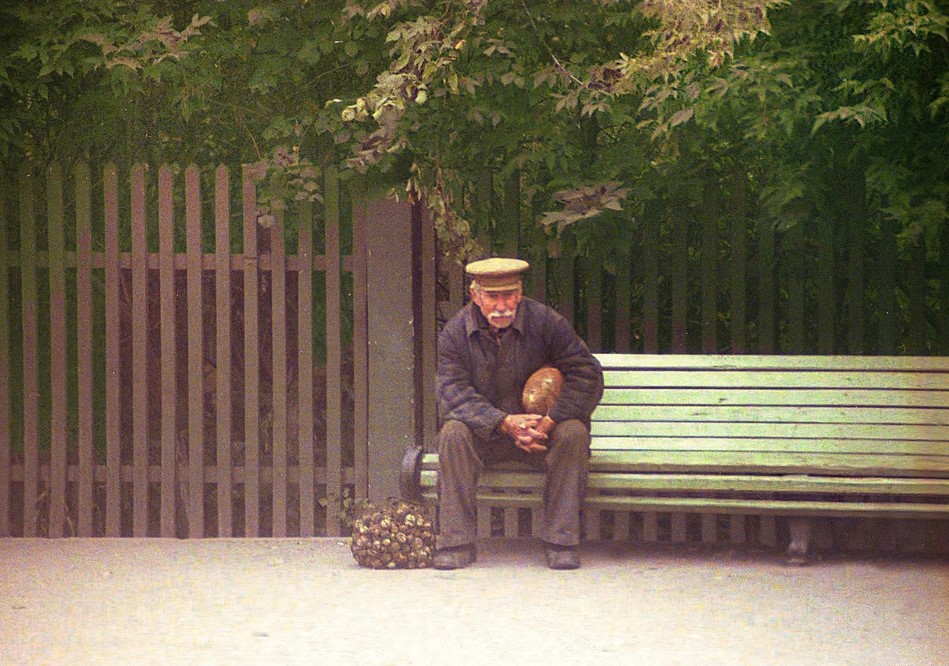
CMH: In the 70s I traveled to Russia and came home with some amazing images because it was so remote—this is one:
When I arrived home from Russia, I noticed all of downtown Washington, D.C. was under renovation. I decided to document it . . . starting with the Willard Hotel—this is the first image I took in a broken mirror. And it went from there.
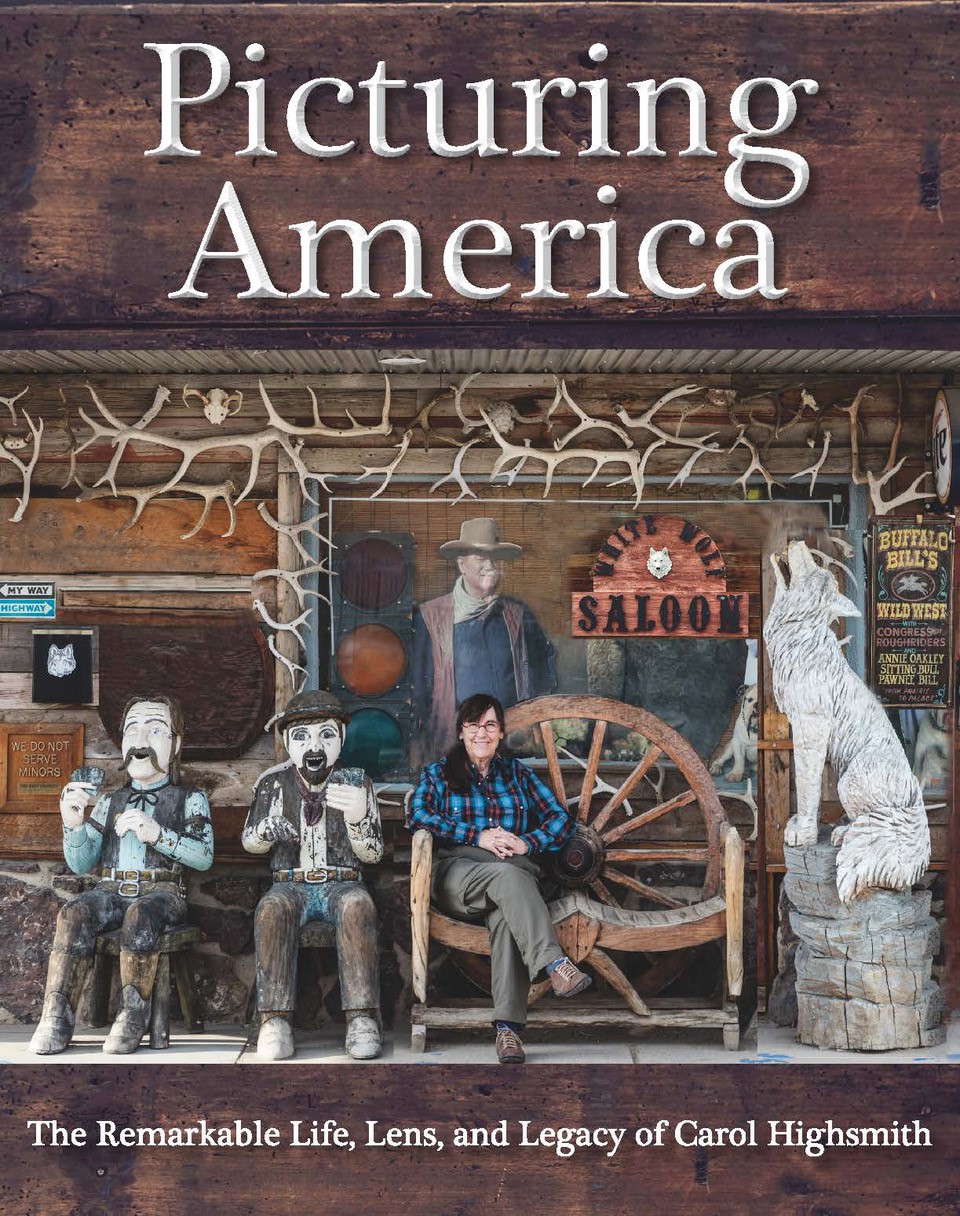
A soon-to-be released book on Carol Highsmith’s work
Louisiana is an incredibly diverse state. Were there particular regions or communities that intrigued you or called out to you to linger as you captured their unique essence in your work?
I worked closely with the staff at Louisiana Public Broadcasting (PBS) and Jay Dardenne who was the Lieutenant Governor of Louisiana and the narrator of the 4-hour documentary on the state of Louisiana that was tied to the book. I’m a Louisiana fan so I love all of it, but they told me what they wanted, and I caught it. The book has done very, very well.
Louisiana ‘Steamboat House,’ New Orleans
Infrared view of a streetcar on St. Charles Avenue in New Orleans. The St. Charles Avenue Streetcar line is the oldest continuously operating street railway system in the world.
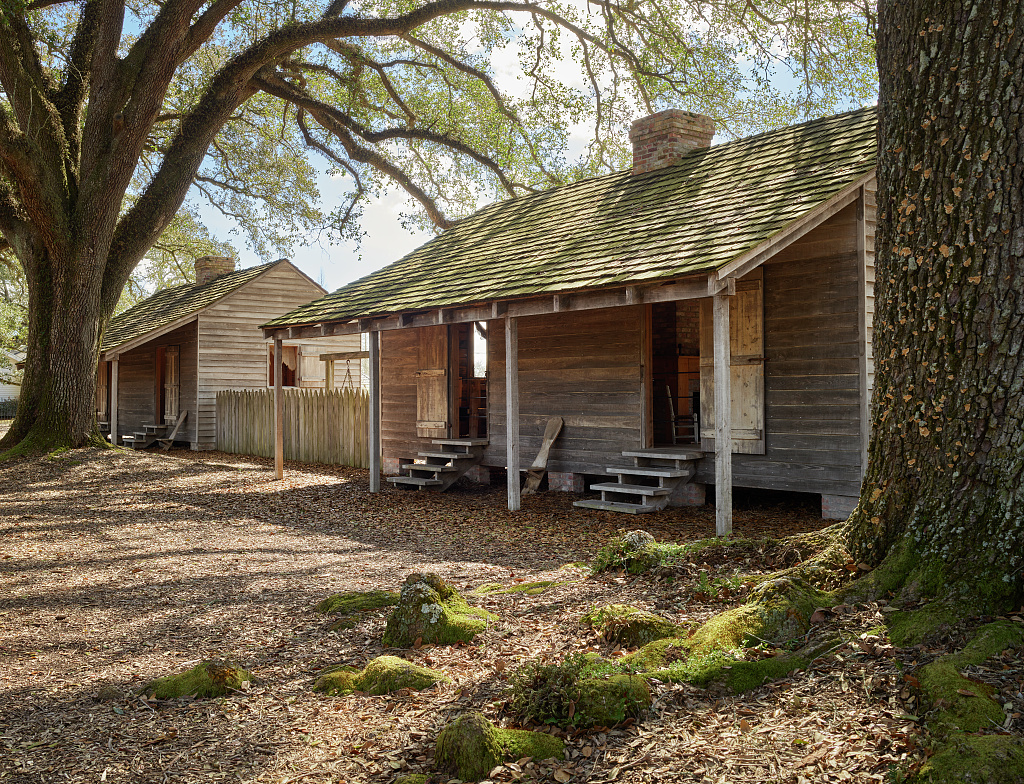
Slave quarters at Oak Alley in Vacherie, Louisiana, one of the historic former plantations along the River Road that winds along the Mississippi River. Although it was a sugar plantation, Oak Alley became world famous in the mid-1800s when a slave named Antoine perfected the practice of grafting pecan trees, including those with paper-thin, easily cracked shells.
Flowers sprout in a tiny island within a meandering bayou that flows through Tallulah, a small city in northeastern Louisiana, just across the Mississippi River from the State of Mississippi.
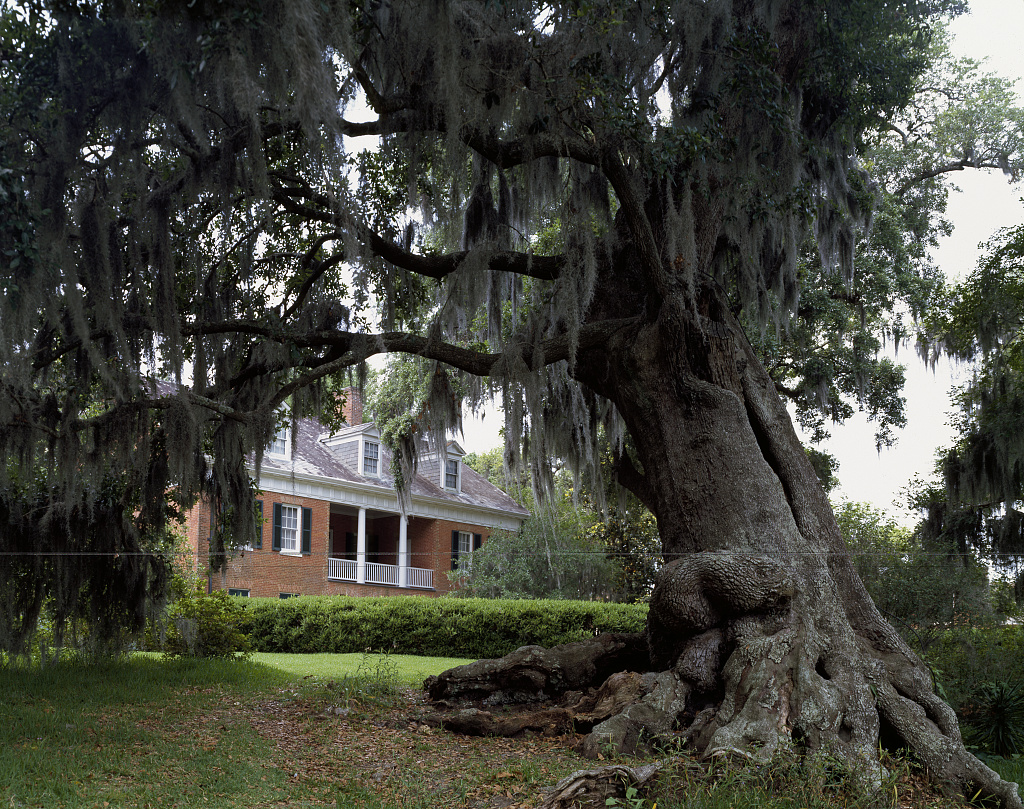
Shadows-on-the-Teche, a National Trust Historic Site in New Iberia, Louisiana
Your photograph of Gayle Benson, the owner of the NFL’s New Orleans Saints and the NBA’s New Orleans Pelicans, was taken in St. Louis Cathedral, where she is a regular lay reader. How did you choose that particular spot in which to capture this influential and powerful woman?
She is very tied to the St. Louis Cathedral so we decided it would mean a great deal to her to have her photograph taken there.
Gayle Benson at the St. Louis Cathedral, where she is a lay reader
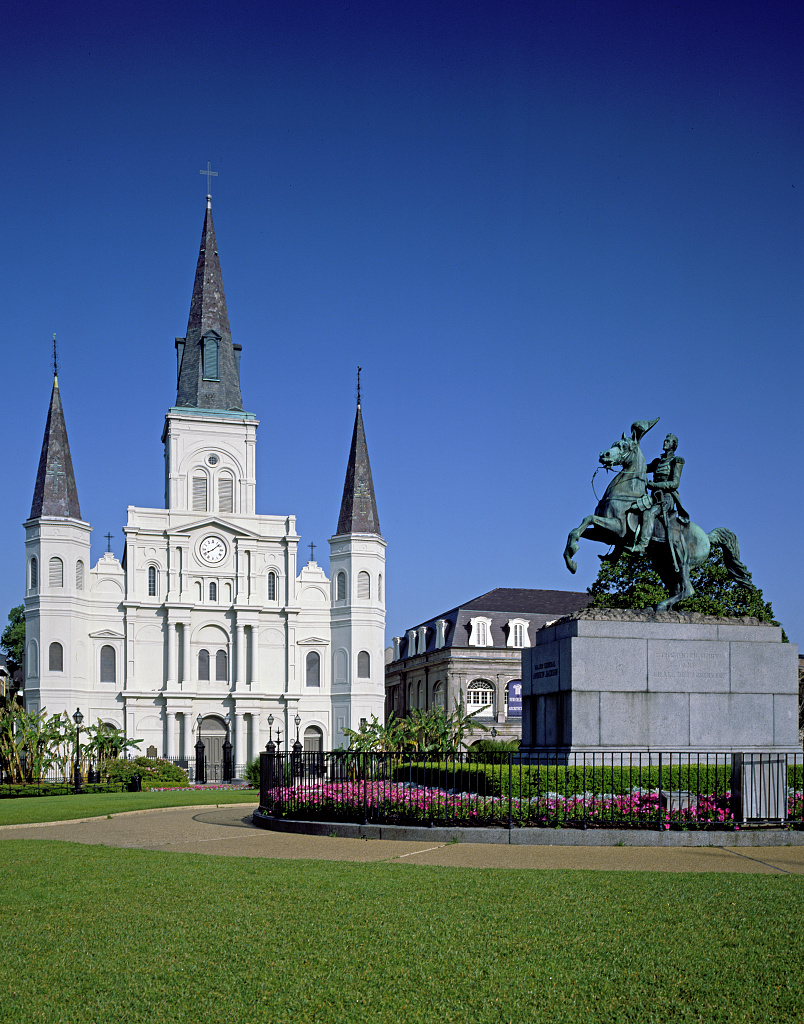
St. Louis Cathedral on Jackson Square in New Orleans.
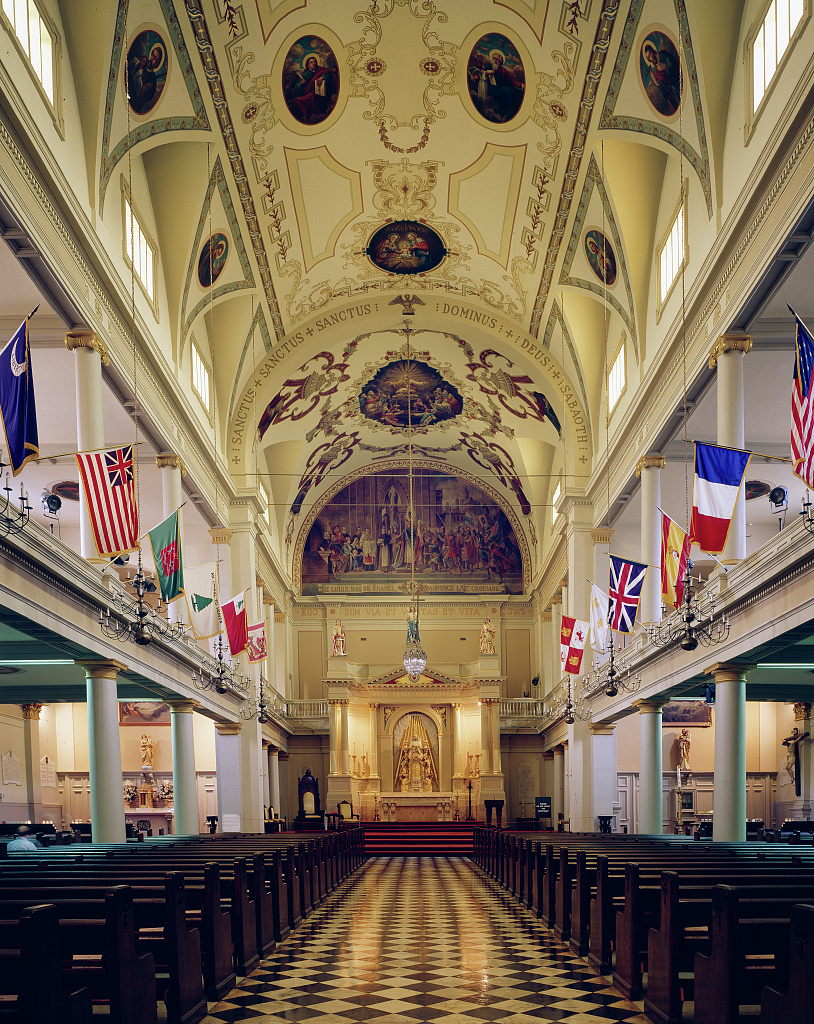
St. Louis Cathedral Interior in New Orleans
There are so many intriguing, unique, and even wacky characters in Louisiana. Which particular photographs and subjects provided the most fun for you, as a photographer?
Here’s a sampling from the book.
A street musician from New Orleans
Do you have other books in print that capture specific states?
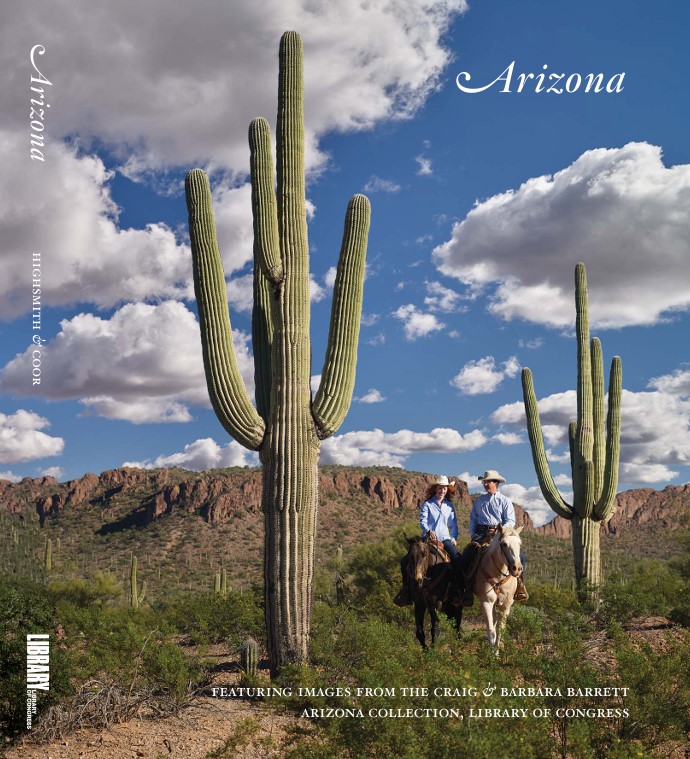
These are all available. You can click on the links to order the books (shipping included) for Arizona . . .
The Weekly Reader links to the works of other writers I’ve enjoyed. I hope you find something that makes you laugh, think, or cry.
NOTE: All pictures by Carol M. Highsmith. Some are from the book and others are from the Louisiana section of the Highsmith Collection in the Library of Congress.
Viewpoint is just a view from a single point. Given that caveat, I’m here to say that from where I stand, cataract surgery is weird.
Wonderful, yes, but weird.
To begin with, once you start telling friends your eyesight is cloudy and you are having cataract surgery, you find out that everyone has had, or is having, cataract surgery. Your next-door neighbor, your best friend, your brother-in-law, your lunchtime companion, your book-club acquaintance. I fully expect someone to tell me that their cat just had this procedure, somewhere between lives number 6 and 7. I’m worried that cataract surgery is just a precursor to hip replacement, another much-discussed procedure in what we third-stage folks call our “organ recitals.”
So yes, I just had a cataract removed in my right eye, the first in a two-step process of receiving new eyes. My doctor (who has done literally thousands of these procedures) and my wife (who went through it a year ago) told me everyone reacts differently and that, in fact, each eye is different. As of this writing—and it is guaranteed to change tomorrow—I have 20/20 vision in my right eye and I can barely read the big “E” on the eye chart out of my left.
My brain is confused.
So that actual “seeing” thing is weird at the moment. In the course of writing this post, I began without any glasses on, then I switched to my “regular” multifocal glasses seeking more clarity. Later I put on my multifocal reading/computer glasses in hopes of a better view, only to give up and take them off entirely.
And then there’s the procedure itself. Here’s my imperfect understanding of the way it works. First, while you are still awake, they use a laser to break the cataract into pieces. You never want to hear the words, “you will feel something pressing against your eye” if you can help it. Then the anesthesiologist gives you her cocktail of drugs (she refused to just go with a bourbon on the rocks) and while you are under they cut a slit (or something) in your eye to take out those pieces and install a new lens. You wake up and voilà—you can see things you couldn’t see before until your brain kicks into gear and tries to adjust to seeing through new eyes.
But this isn’t the weirdest part. That comes when your self-image gets all screwed up along with your eyesight.
You see, I’ve always worn glasses. Always.
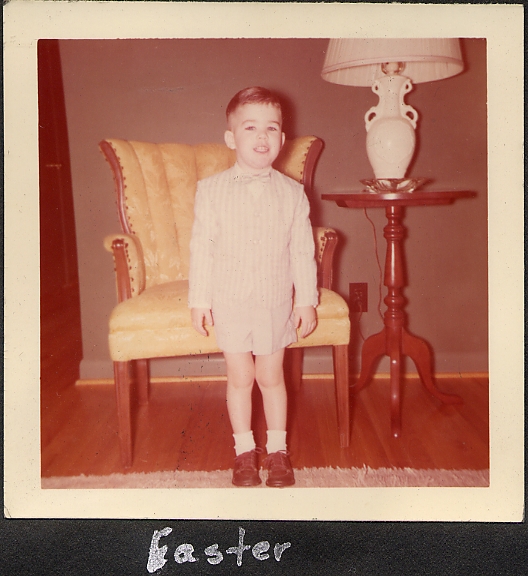
Yes, there was a time in life when I didn’t wear glasses, but I was this big:
DJB at Easter in 1958. Hey, I had good-looking legs even then!
Apparently, I kept running into things because somewhere along the way my parents figured out that I needed glasses.
In first grade I was cute but couldn’t see a thing!
I was in the third grade when my mom and dad bought me glasses. The story is that they were appalled at how long they had waited because I was exclaiming over being able to see things like tree limbs for the first time. But they also knew I was an active little guy who would have quickly lost a pair of expensive glasses if they weren’t fastened to my face (figuratively), so they bought an extra-dorky pair (that’s a technical term) that curved around the ear to ensure they stayed on my face.
Here’s a not-so-cute and not-so-happy DJB in 1965 with my new, dorky glasses. I look like I’m ready to go to the office . . . in the 1950s.
My self-image immediately changed. I went from being a hellraising, fun-loving, active kid to a dork whose friends called him four-eyes. (Kids can be very mean.) I still played every sport imaginable, but I had to be careful not to break my glasses. And when I took them off to play football I couldn’t see past my nose, so the coach stuck me in as a lineman. I stopped playing football soon afterwards.
I once went to the doctor to see about getting contacts, but my eyeballs apparently weren’t made for contacts. Which was fine by me, since that whole “touching your eyes” thing is a problem I’ve had my entire life.
I’ll spare you the tedium (and me the embarrassment) of posting my various class pictures through high school. Suffice it to say, my glasses did not become any more fashionable. My parents were all-in on the dorky look. Maybe they got a discount. It was probably because my father was an engineer, where dorky equals cool. Who knows.
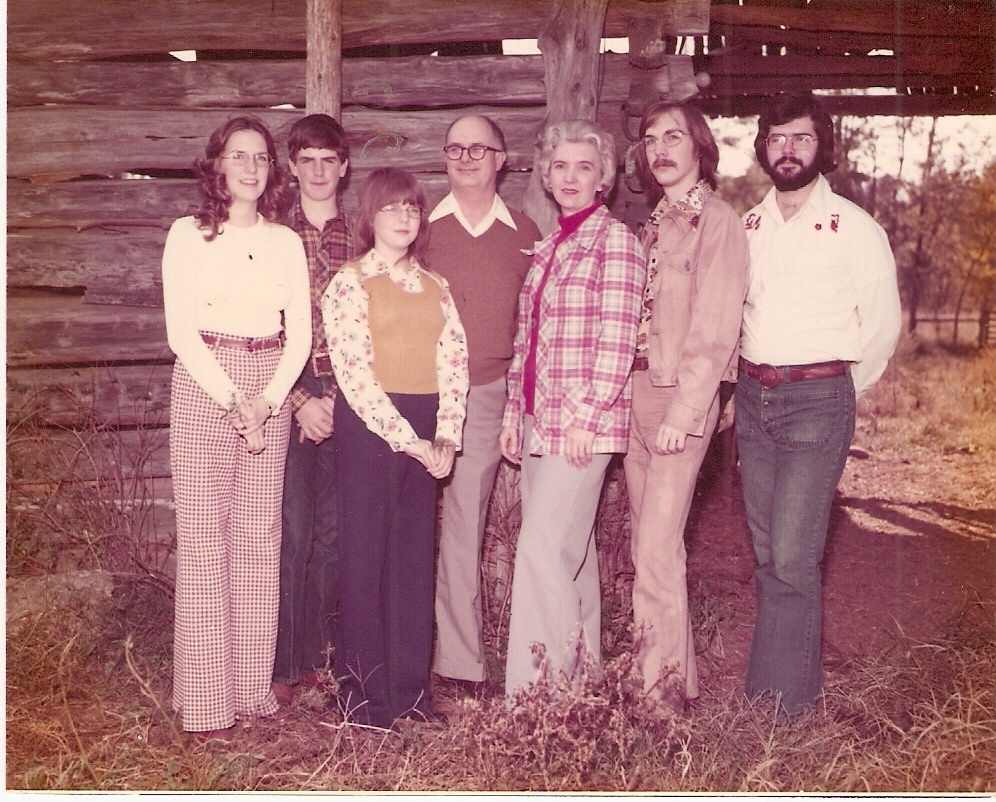
When I was able to assert more control over my glasses I tried to go with something that was fashionable for the era, as seen in the family photo from 1974, where Steve and I—in our wire rims—look as if we’ve just taken a break from a country-rock band.
Debbie, Joe, Carol, Daddy, Mom, Steve, and DJB around 1974…the country-rock band era
Again, glasses were very much a part of my self-image throughout adulthood. I wore glasses. Period. Sometimes that look came off better than at others. I rather liked the pair I ended up with in my 60s.
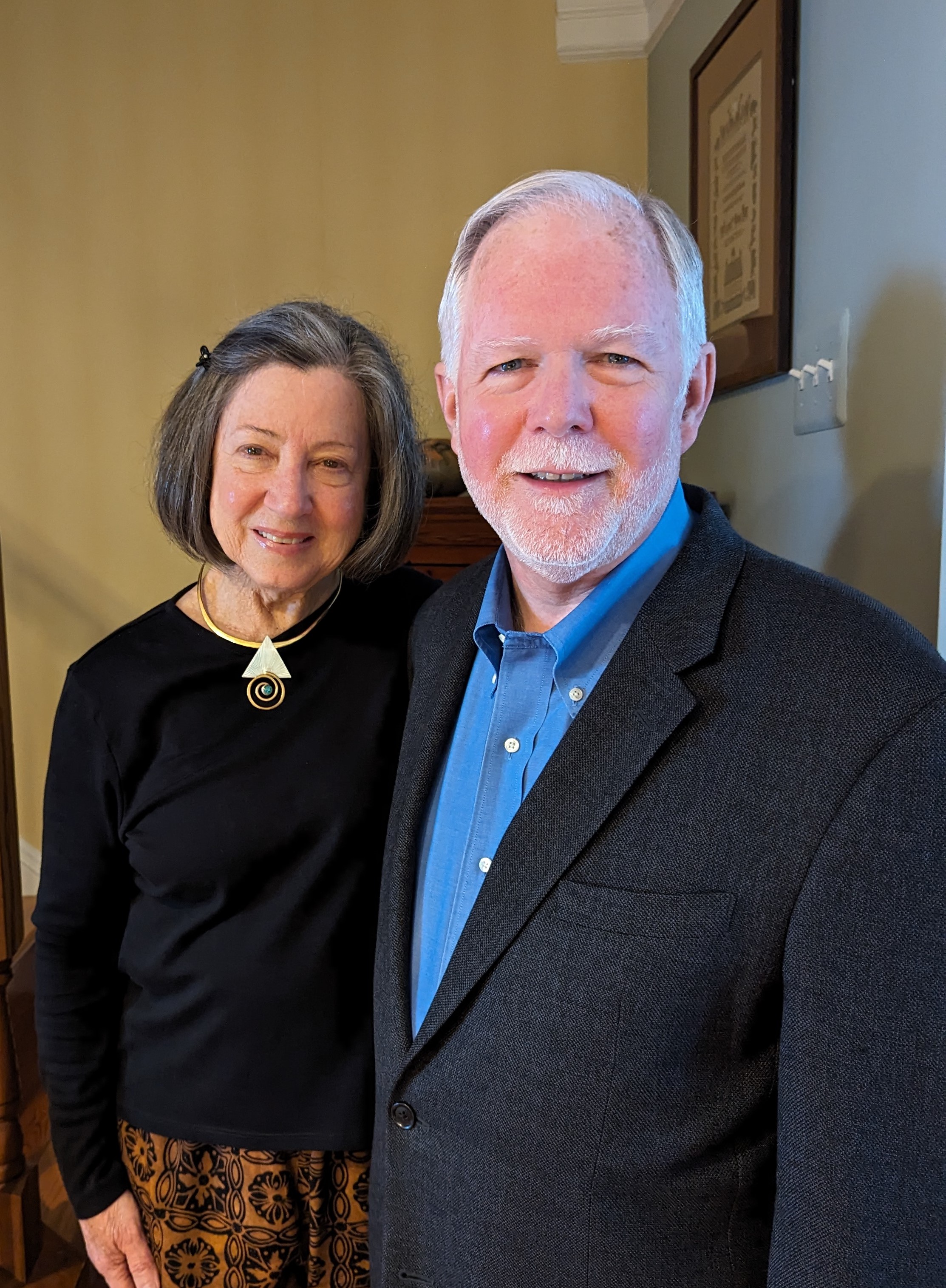
But now my doctor tells me that I probably won’t have to wear glasses for driving and normal activity, but I will need a pair of reading glasses. So, when Candice and I were recently photographed we decided to try both the glasses look . . .
and the naked look (or so it seems to me).
I’m learning about letting go in life. And excessive worry over self-image—which, let’s face it, is all vanity—may be a good thing to jettison. I get it. But who is this guy?
So many of us sleepwalk through the phases of life secure in the comfortable nest of our self-image. Yet we can grow when we open up our inner places and question some of those core assumptions. Perhaps we should take a different viewpoint more frequently. As Marcel Proust once said, “The real voyage of discovery consists not in seeking new landscapes, but in having new eyes.”
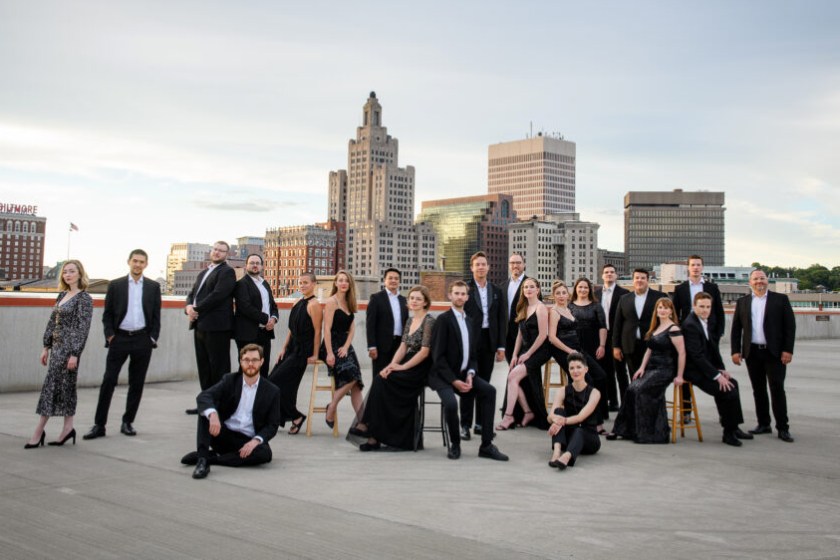
A chamber choir of “seamless ensemble perfection” (The Boston Musical Intelligencer), Ensemble Altera is led by internationally celebrated countertenor Christopher Lowrey. Known for “thoughtful programming, passionate performances, and tireless advocacy for the importance of ensemble singing in the broader music culture,” the group has quickly established itself among the finest choral ensembles in North America.
Our son, the tenor Andrew Bearden Brown, is a member of Ensemble Altera, and I recently featured works from their program A Christmas Present, described as “a sumptuous collection of seasonal music written in the new millennium.”
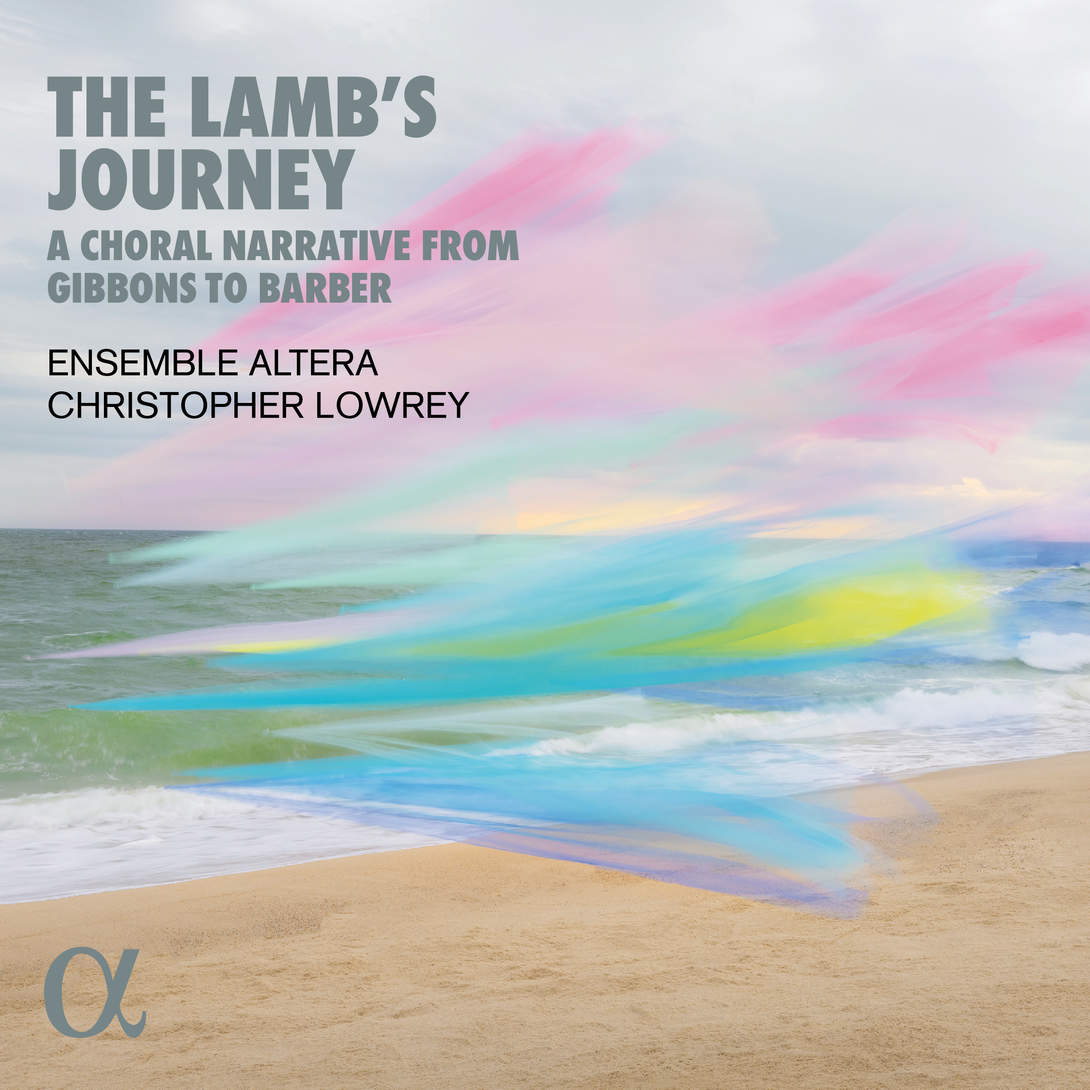
Today I want to celebrate the release of Altera’s first commercial album.
The second preview track from the debut album is Antonio Lotti‘s Crucifixus, a work for which the 17th century Italian composer is most famous.
Here’s how the Alpha Classics website describes this album:
Altera has devised this musical tour through sacred territories which focuses on epic narratives from various periods, from Renaissance music to the present day. The program includes timeless works by Gibbons, Lotti, Scheidt and Bruckner, as well as twentieth-century compositions by Poulenc, Messiaen and others. Barber’s celebrated Adagio sits alongside the moving Salvator Mundi, taken from Herbert Howells’s Requiem. Not forgetting three world premiere recordings of works written or arranged for Altera by composers Joanna Marsh, Zuzanna Koziej, and Michael Garrepy, who has arranged Were You There?
Upcoming projects for the group “include A New Song: Psalms for the Soul, charting a survey of the Psalms of the Hebrew Bible, in all their dizzying variety, and Feminine Voices, featuring works by female composers for treble voices arrayed around Britten’s Ceremony of Carols.” Additionally, Altera will be making their debut at Carnegie Hall in Brahms’ Requiem, on May 9th with the Orchestra of St. Luke’s.
Each month my goal is to read a minimum of five books on a variety of topics from different genres. Here are the books I read in February 2024. If you click on the title, you’ll go to the longer post on More to Come. Enjoy.
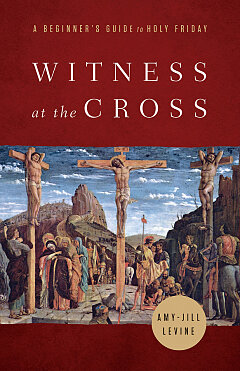
Witness at the Cross: A Beginner’s Guide to Holy Friday (2021) by Amy-Jill Levine examines the stories, texts, social contexts, religious background, and perspective of those who watched Jesus die: Mary his mother; the Beloved Disciple from the Gospel of John; Mary Magdalene and the other women from Galilee; the two men, usually identified as thieves, crucified with Jesus; the centurion and the soldiers; Joseph of Arimathea and Nicodemus. Dr. Levine, known as AJ to friends, brings her deep understanding of scripture, insightful commentary, broadness of perspective, and engaging wit to help us consider this climatic moment in the Christian story. AJ also graciously agreed to answer my questions about this work in the latest of the More to Come author interviews.
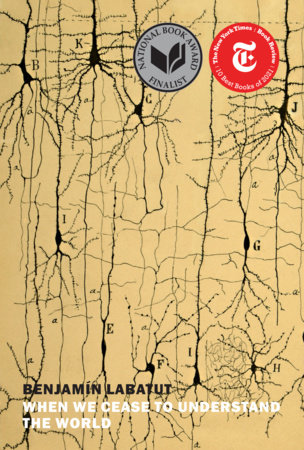
When We Cease to Understand the World (2021) by Benjamin Labatut (translated from the Spanish by Adrian Nathan West) is a troubling and haunting book that I could not put down “about the complicated links between scientific and mathematical discovery, madness, and destruction.” By taking the real-life discoveries of scientists and adding rich fictional detail to link their compelling stories with real-life consequences, Labatut makes the reader face uncomfortable truths. Labatut “has written a dystopian nonfiction novel set not in the future but in the present.”
Never Forget Our People Were Always Free: A Parable of American Healing (2023) by Ben Jealous is a work of pragmatic and enduring optimism in a sea of national malaise. President of People for the American Way, former president of the NAACP, civil rights leader, scholar, and former journalist, Jealous writes from a lifetime of reaching out to others and listening to what they have to say. In this engaging memoir, Jealous uses a series of more than 20 stories from his life — modern-day parables — to make the point that we must truthfully and fully address the tensions that have been building up throughout this century if we are to survive. And yet he remains optimistic, recalling the words of his grandmother that “pessimists are right more often but optimists win more often.”
The Word in the Wilderness (2014) by Malcolm Guite features a poem for each day of Lent. The season in which we traditionally reorient ourselves, slow down, and recover from distractions is also a good time to change the very way we read. Guite, in this thoughtful forty-day journey, suggests poetry is a good tool to achieve that change. “Poetry asks us to be savoured, it requires us to slow down, it carries echoes, hints at music, summons energies that we will miss if we are simply scanning. In this way poetry brings us back to older ways of reading and understanding both the Word and the World.” In the hands of writers such as the great Irishman Seamus Heaney, poetry — much like prayer — can be “banquet, music, journey, and conversation.”
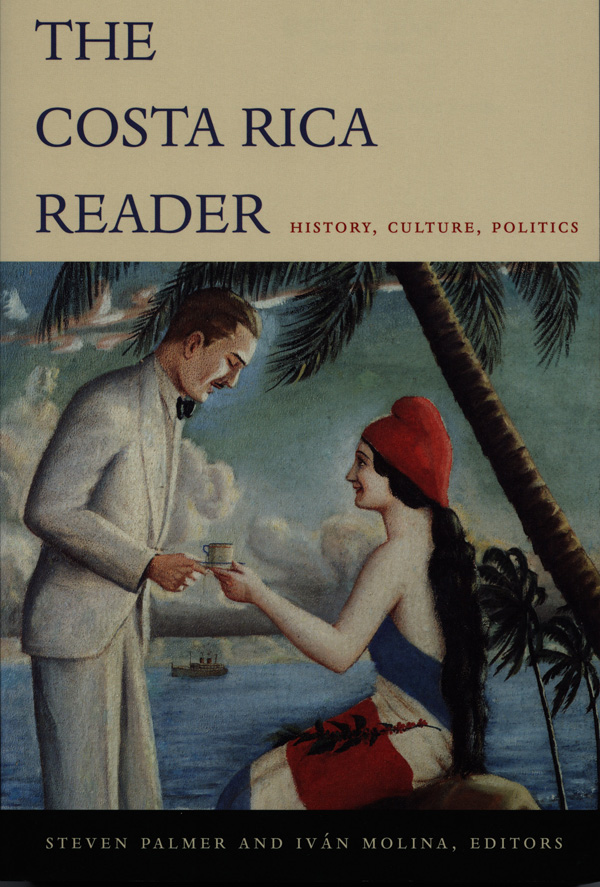
The Costa Rica Reader: History, Culture, Politics (2004) edited by Steven Palmer and Iván Molina expands the perspectives around this intriguing Latin American nation by bringing new voices to the conversation. “Exceptionalism” is a term often used to describe Costa Rica, which is seen as “different from other Latin America countries.” It has never been consumed by civil strife or race-based oppression, the story goes, and it is the only country to have enjoyed uninterrupted political democracy for three-quarters of a century. Yet as Palmer and Molina write, some observers suggest that exceptionalism is at the center of a dubious mythology. This work is composed of short pieces that give a much fuller understanding of Costa Rica, showing it “as a place of alternatives and possibilities that undermine stereotypes about the region’s history and call into question the idea that current dilemmas facing Latin America are inevitable or insoluble.”
What’s on the nightstand for March (subject to change at the whims of the reader):
We all face profound questions of existence. The way in which we grapple with this existential inquiry has consequences, but for many and perhaps most of us those choices do not change the world. However, some individuals possessing brilliant, far-reaching intellect determine that their discoveries are so important that the impact to their fellow humans is of little consequence in the grand scheme of life. They make choices and follow explorations that literally blow up the world around them.
When they make these choices, the lines between good and evil are too often blurred so that they may pursue their singular study.
When We Cease to Understand the World (2021) by Benjamin Labatut (translated from the Spanish by Adrian Nathan West) is a troubling and haunting book “about the complicated links between scientific and mathematical discovery, madness, and destruction.” By taking the real-life discoveries of scientists and adding rich fictional detail to link their compelling stories with real-life consequences, Labatut makes the reader face uncomfortable truths. Labatut, notes one reviewer, “has written a dystopian nonfiction novel set not in the future but in the present.”
When We Cease to Understand the World is not a work to be taken lightly. The first chapter is a fast-paced trip through the discoveries that alternately saved hundreds of millions of lives and — in the hands of the war machines of the first and second world wars — killed millions of people. Most of what he writes at this point is based on historical fact. It isn’t long before we are “introduced to a blur of real-life characters,”
. . . including the drug-raddled Hermann Göring, who crushed a cyanide capsule in his mouth to avoid the hangman’s rope; the father of computing, Alan Turing, who is reputed to have killed himself by biting into an apple he had injected with the same poison; Johann Jacob Diesbach, the inventor of Prussian blue, thefirst modern synthetic pigmentand the basis of cyanide; and the alchemist Johann Dippel, who may have been the model for Mary Shelley’s Frankenstein.
The real villain here, however, is the chemist Fritz Haber (who died in 1934), who directed the program of poison gas attacks that killed tens of thousands of soldiers in the first world war, an accomplishment that drove his disapproving wife to suicide. Haber also discovered how to harvest nitrogen and make the fertiliser that saved the hundreds of millions of people who would have died in worldwide famines at the beginning of the 20th century. All the same, in the end he was overwhelmed by guilt, “not,” Labatut writes, “for the part he had played . . . in the death of untold human beings . . . but because his method of extracting nitrogen from the air had so altered the natural equilibrium of the planet that he feared the world’s future belonged not to mankind but to plants”.
Haber, Alexander Grothendieck, Werner Heisenberg, Erwin Schrödinger and others are among the luminaries “into whose troubled lives Benjamín Labatut thrusts the reader,” showing us how they grappled with the most profound questions of existence.” Along the way their discoveries and strokes of genius begin to alienate friends and lovers as these individuals of impressive intellect descend into isolation and insanity.
Some of their discoveries reshape human life for the better; others pave the way to chaos and unimaginable suffering. The lines are never clear.
Included on Barack Obama’s Summer 2021 Reading List, this was a troubling book that I could not put down. As the work progresses into the explorations of quantum mechanics, Labatut weaves webs of association across scientists, fields of study, and decades of time. The annihilation of nuclear holocaust is always nearby. He spins more and more fiction into the lives of these individuals, having us imagine what they dreamed, considered, and did as they chased their illusive answers to questions that may not have answers.
There is liberation in the vision of fiction’s capabilities that emerges here—the sheer cunning with which Labatut embellishes and augments reality, as well as the profound pathos he finds in the stories of these men. But there is also something questionable, even nightmarish, about it. If fiction and fact are indistinguishable in any meaningful way, how are we to find language for those things we know to be true? In the era of fake news, more and more people feel entitled to “make our own reality,” as Karl Rove put it. In the current American political climate, even scientific fact—the very material with which Labatut spins his web—is subject to grossly counter-rational denial. Is it responsible for a fiction writer, or a writer of history, to pay so little attention to the line between the two?
At the end of this book, Labatut introduces us to “the night gardener” who tends his plants when they’re asleep and won’t be distressed by his interfering with them.
It is to this mysterious figure that the narrator—or Labatut, since the two seem synonymous—gives the last, alarming, word. For the gardener, sums are the root of all contemporary evil: “It was mathematics—not nuclear weapons, computers, biological warfare or our climate Armageddon—which was changing our world to the point where, in a couple of decades at most, we would simply not be able to grasp what being human really meant.”
Some things are, to my mind, mysteries that will not be discovered in this life. Scientific inquiry can help explain the “how” but not necessarily the “why” just as spiritual works and the teachings of the mystics can lead us along the path to the “why” of being human without necessarily being too terribly factual on the “how.” The ToE, or Theory of Everything that the “scientific heirs” of this generation search for may be illusive for a reason.
Singing for many of us is something we do because we can. Singing together is something we should do because it helps break down the isolation that tears at too many souls, bringing us together into a supportive community and sustaining us during good times and bad.
An increase in communal singing would be another small step towards healing the estrangements in our civic life. The makers of Jim Beam bourbon certainly understand the value of singing together in an ad appropriately titled People Are Good for You.
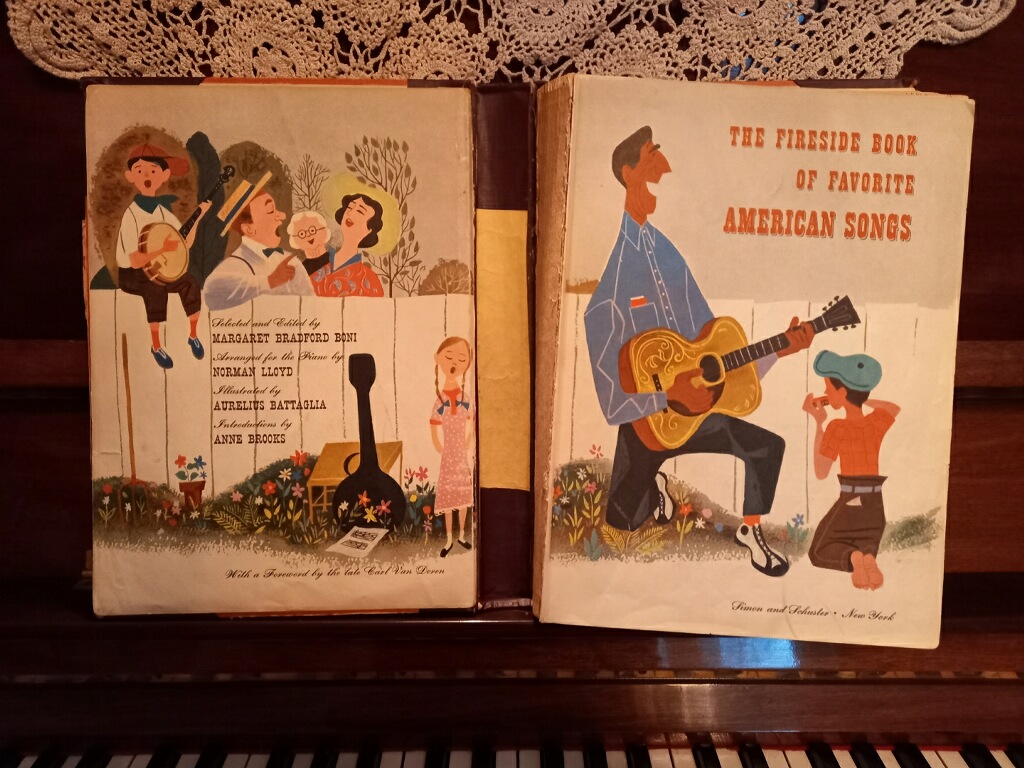
I grew up singing at home with my brothers and sisters while mom played the piano. The Fireside Book of Favorite American Songs* and the sad tale of Springfield Mountain are a big part of my memory bank. My sister Carol still has that songbook, cracked spine and all, and she pulls it out occasionally to bring back memories.
I’ve often felt sorry for people who did not have places where they could sing in public. Even when my faith has been clouded by doubt or in moments of darkest despair, I’ve always found solace in the music at church. There I can sing robustly and without self-consciousness and feel unity with the world and release from the world at the same time. Many’s the time during the recessional at funerals I’ve sung the wonderful O God Our Help in Ages Past—with its incredible tenor line—while tears streamed down my face.
In her book Wintering, the author Katherine May speaks to the importance of robins during our coldest months. First, they seem to be around when other birds disappear. “Only in the far north do they migrate, and their bright plumage and friendly habits make them more visible than other birds.”
And they sing through the darkest months.
Other birds “call in the winter” but they are warding off predators, Robins, on the other hand, “engage in full, complex song during the coldest months when its far too early to consider breeding.” The well-fed robin will sing well in advance “of the time that he expects females to act on his display.”
In evolutionary biology, this is known as costly signaling, a gesture that advertises superior strength and vitality, yet by its very nature is potentially dangerous to the creature. A robin sings in winter because he can, and he wants the world—or at least the female robins—to know it. But he is also in practice for happier times (emphasis added).
May then describes what singing means to her, in a way that resonated deep in my soul.
One of the greatest blows was that I could no longer sing [when I lost my voice]. It’s tempting to glibly write, “Not that singing played a huge part in my life,” but that wouldn’t be true. Singing might not be my profession or my ambition, but it has sustained me for as long as I can remember, from attempting harmonies in the car with my mother to warbling along to the radio while I cook. I sang in choirs at school and at university, my low alto knitting with the other voices. Singing with others is a kind of alchemy, an act of expansive magic in which you lose yourself and become part of a whole. I have long been reliant on the stress release of booming out half-remembered choir parts when I’m driving alone in my car.
In twenty-first-century Britain and America, we’ve linked singing with talent. As the father of a professional tenor, I’m all for having professionals perform so we can enjoy their amazing gifts. I think we should even pay them handsomely for their work.
Andrew Bearden Brown, accompanied by Richard Rivale on piano, at Carnegie Hall in January where they performed composer Jake Heggie’s art songs “Friendly Persuasions: Homage to Poulenc” (photo courtesy of Boston University).
But as May writes, we’ve got it fundamentally wrong if all singing has to be by talented and gifted professionals. And since Andrew recently served as the tenor soloist in the Reston Chorale’s MessiahSing-Along, I know he would agree.
The right to sing is an absolute, regardless of how it sounds to the outside world. We sing because we must. We sing because it fills our lungs with nourishing air, and lets our hearts soar with the notes we let out. We sing because it allows us to speak of love and loss, delight and desire, all encoded in lyrics that let us pretend that those feelings are not quite ours. In song, we have permission to rehearse all our heartbreaks, all our lusts. In song, we can console our children while they are still too young to judge our rusty voices, and we can find shortcuts to ecstasy while performing the mundane duty of a daily shower or scrubbing down the kitchen after yet another meal.
Like the robin, we sometimes sing to show how strong we are, and we sometimes sing in hope of better times. We sing either way.
Pete Seeger was one of the great artists of the folk revival, in part because he knew—even at age 94—that music was made to be sung together.
Of course, we’re now so used to hearing such amazing versions of Lift Every Voice and Sing—the Black National Anthem—that we forget how wonderful it sounds when sung in community.
And the first link in this post refers to that great anachronistic American tradition of singing Take Me Out to the Ballgame. While it isn’t a “community” version, let’s begin with the Kansas City Symphony and Chorus having some fun with the tune while the Royals were on a World Series run.
And then, how it is traditionally—and best—heard.
Go find a place to sing in community. It’s good for you . . . just as people are good for you.
More to come . . .
DJB
UPDATE:
The British musician Brian Eno was once asked in an interview what he thought about music education in Britain’s school system. He said, “I believe in singing to such an extent that, if I were asked to redesign the British educational system, I would start by insisting that group singing becomes a central part of the daily routine. Group singing builds character and, more than anything else, encourages a taste for cooperation with others.”
In true community, we learn to sing not only with one another but with our world.
While traveling with new and long-time friends on a recent National Trust Tour in Panama and Costa Rica, I shared observations on how we engage with the past and old places. Both lectures were built around the premise that the reason older places matter is not so much about the past or only about the past. These places matter to people today and in the future.
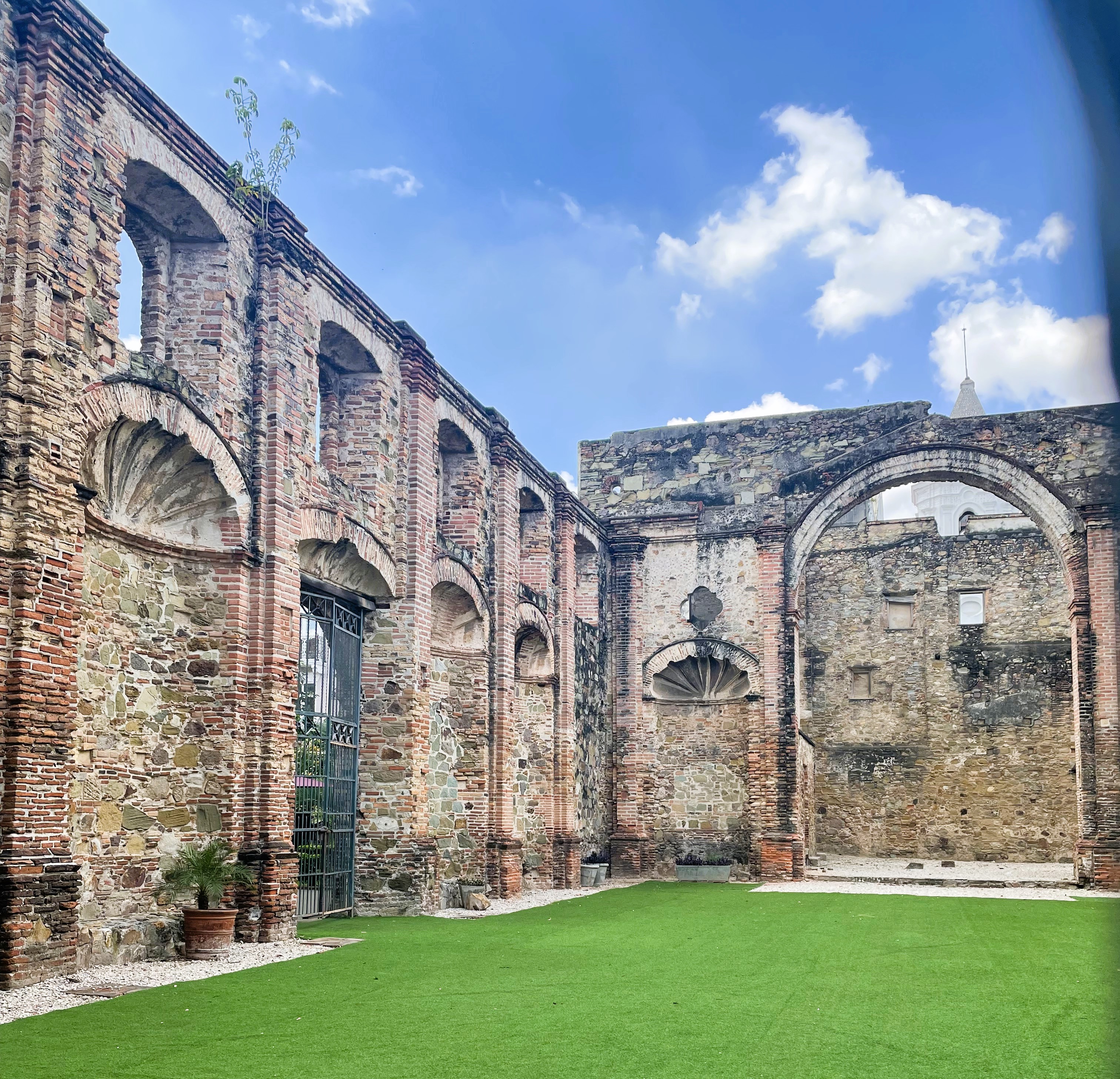
Ruins in the UNESCO World Heritage Site of Old Panama
We create a narrative out of our lives to make them meaningful and coherent, and I wove this into the context of our trip through the Canal, into the UNESCO World Heritage Site of Old Panama, and as we explored San José and other parts of Costa Rica. Memory, identity, and continuity are all part of the narratives — the pathways — of our lives. They are also fundamental reasons why old places matter.
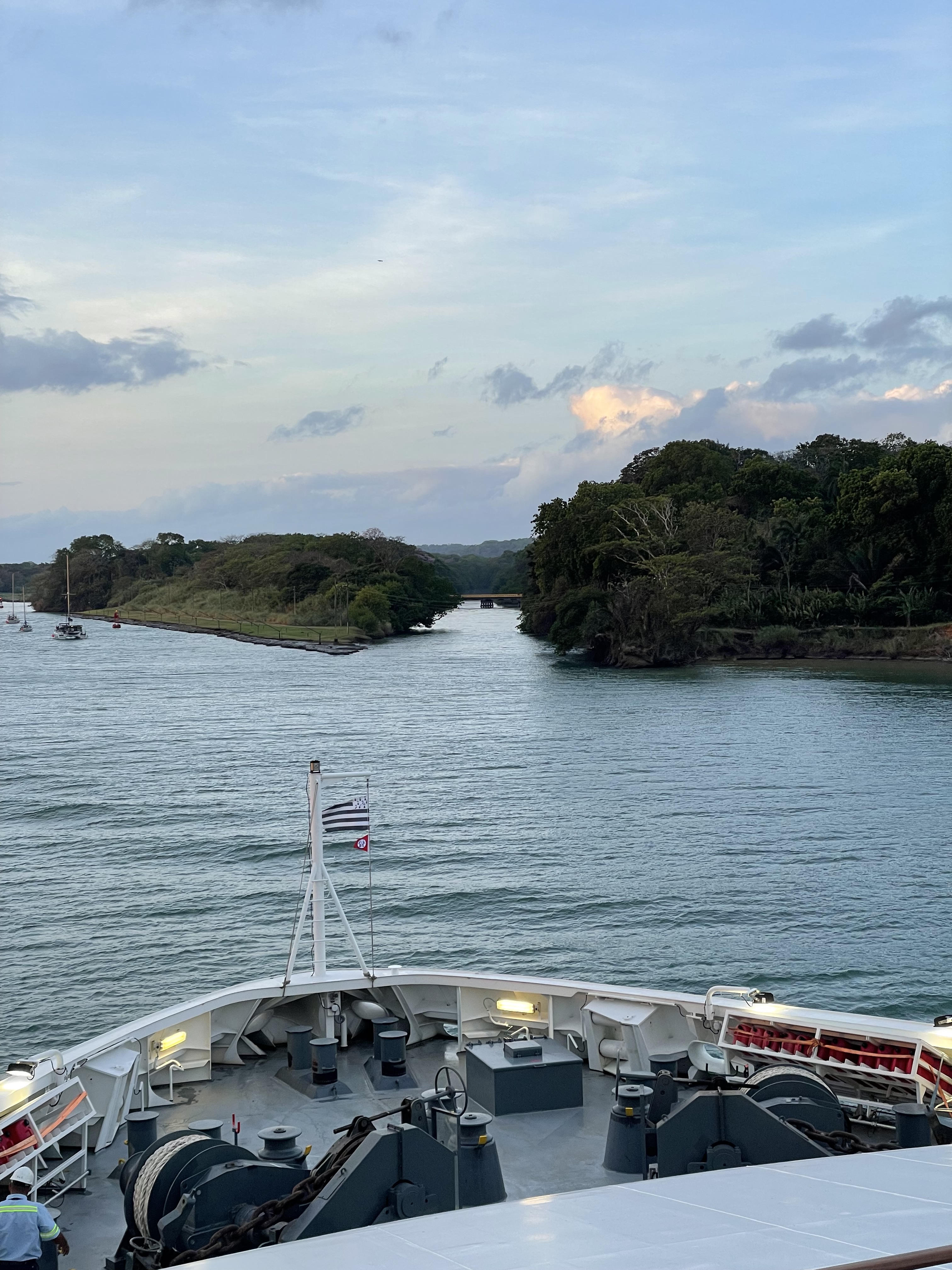
Passing by the only section of the French attempt to build a canal still remaining in Panama
Memory
History often comes from perspectives shaped by our memories. Perspective is a point of view . . . not the whole view. “Memory is a poet, not a historian” suggests Marie Howe.
Memories fade with time and they change as others share the story of the same event. Points get lost — or found — in translation. What begins as metaphor ends up being repeated as fact.
Yet memory is an essential part of consciousness and so many memories are tied to places. Memories are shaped and reshaped in thousands of ways we seldom recognize or acknowledge. All of which suggests that there will be differences in how we see the places we visit.
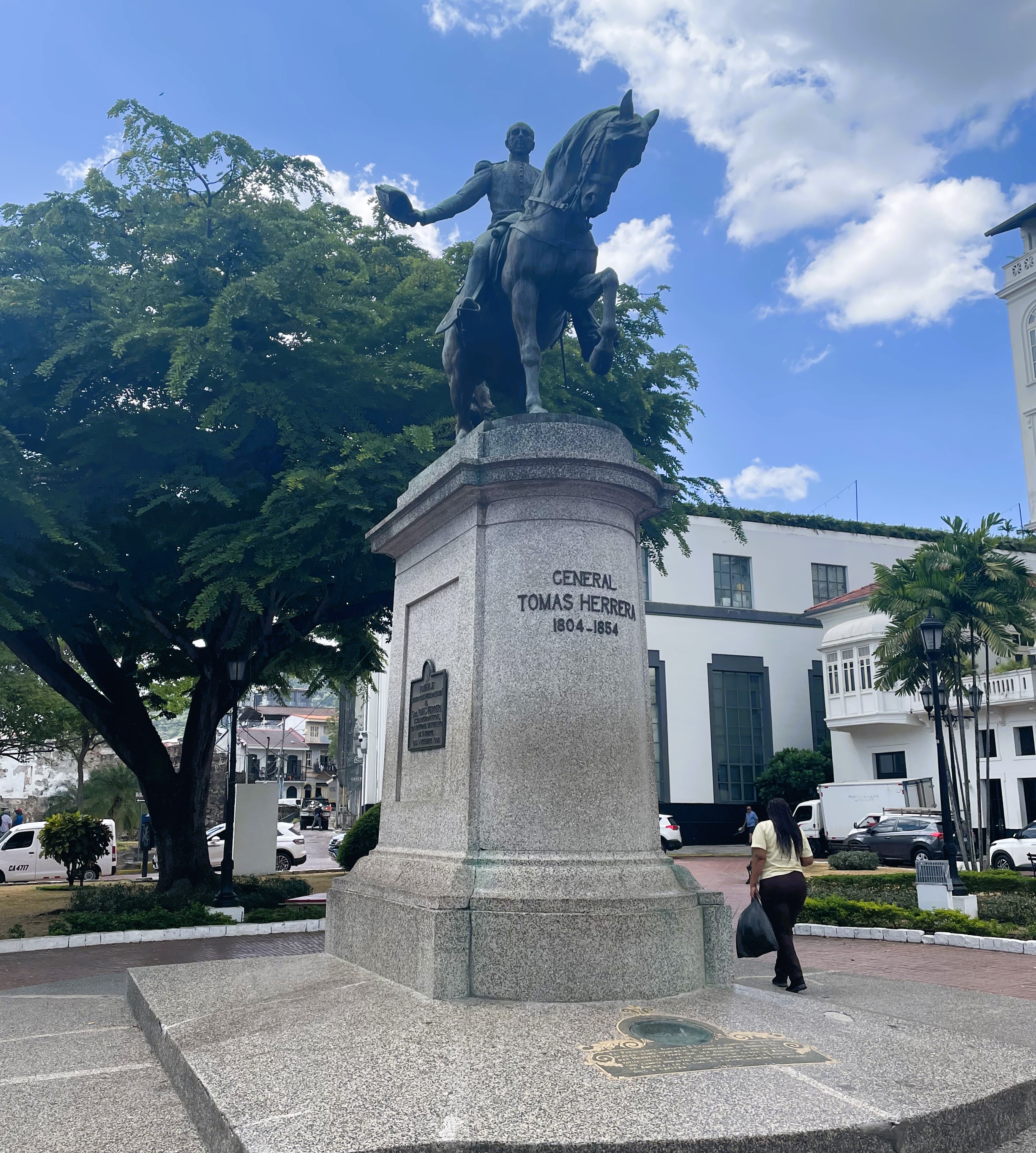
Square and statue in UNESCO World Heritage Site of Old Panama
We have generally chosen to save that which reflects well on us — beautiful buildings and sites that uplift. One of the challenges we face in the U.S. and in Latin America is to find ways to preserve and interpret sites that tell the stories of those who have traditionally been marginalized and not part of the long-told narrative, places where the story and the intangible and hidden history are just as important, if not more so, than the architecture.
Places of all types are important in how we understand our past as they key both individual and collective memories. We may have individual memories related to baptisms, bar and bat mitzvahs, weddings, and funerals in a specific religious site, but those we visited on the tour also spark collective memories, both for residents and for those of us who visit.
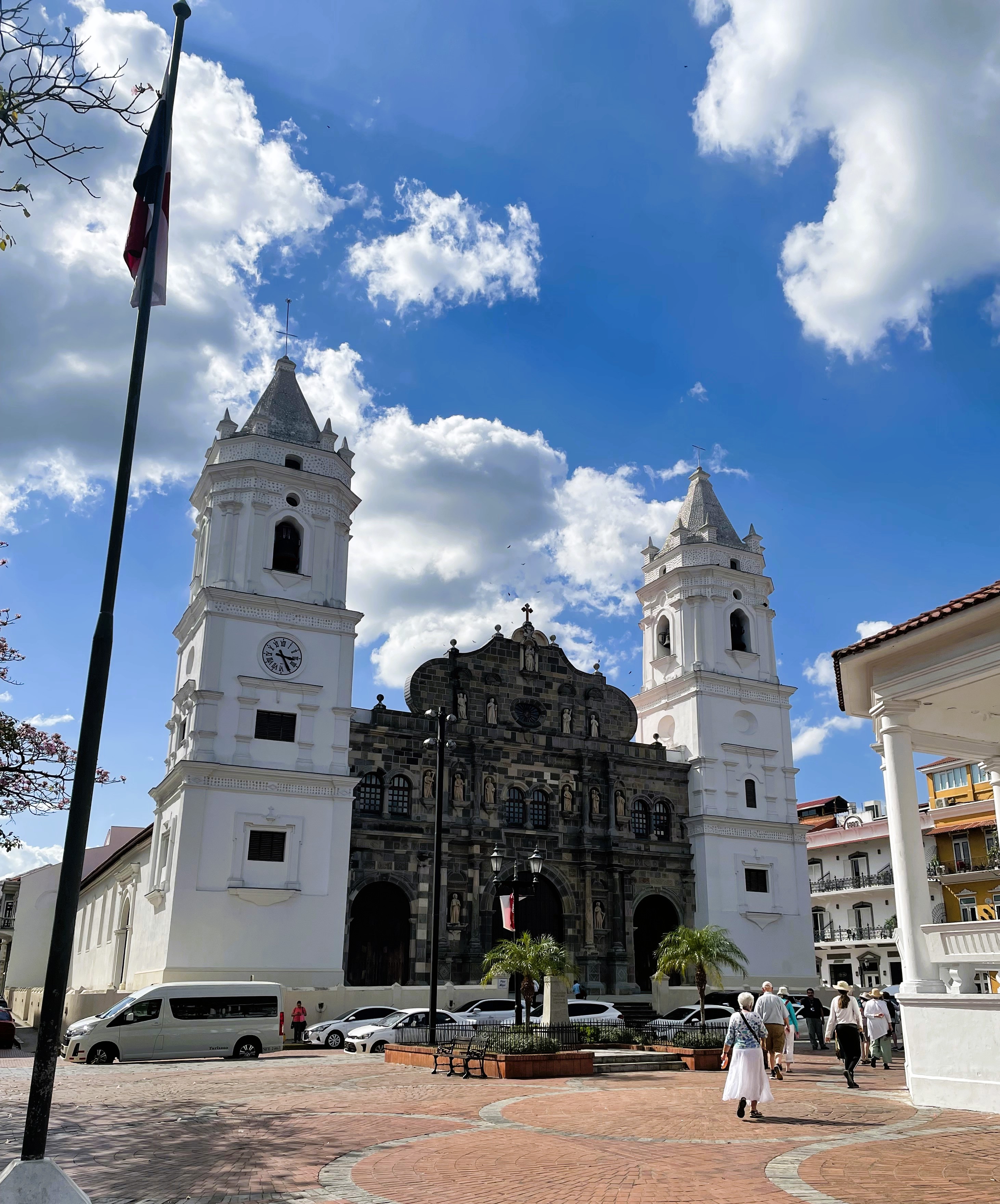
Cathedral in Old Panama
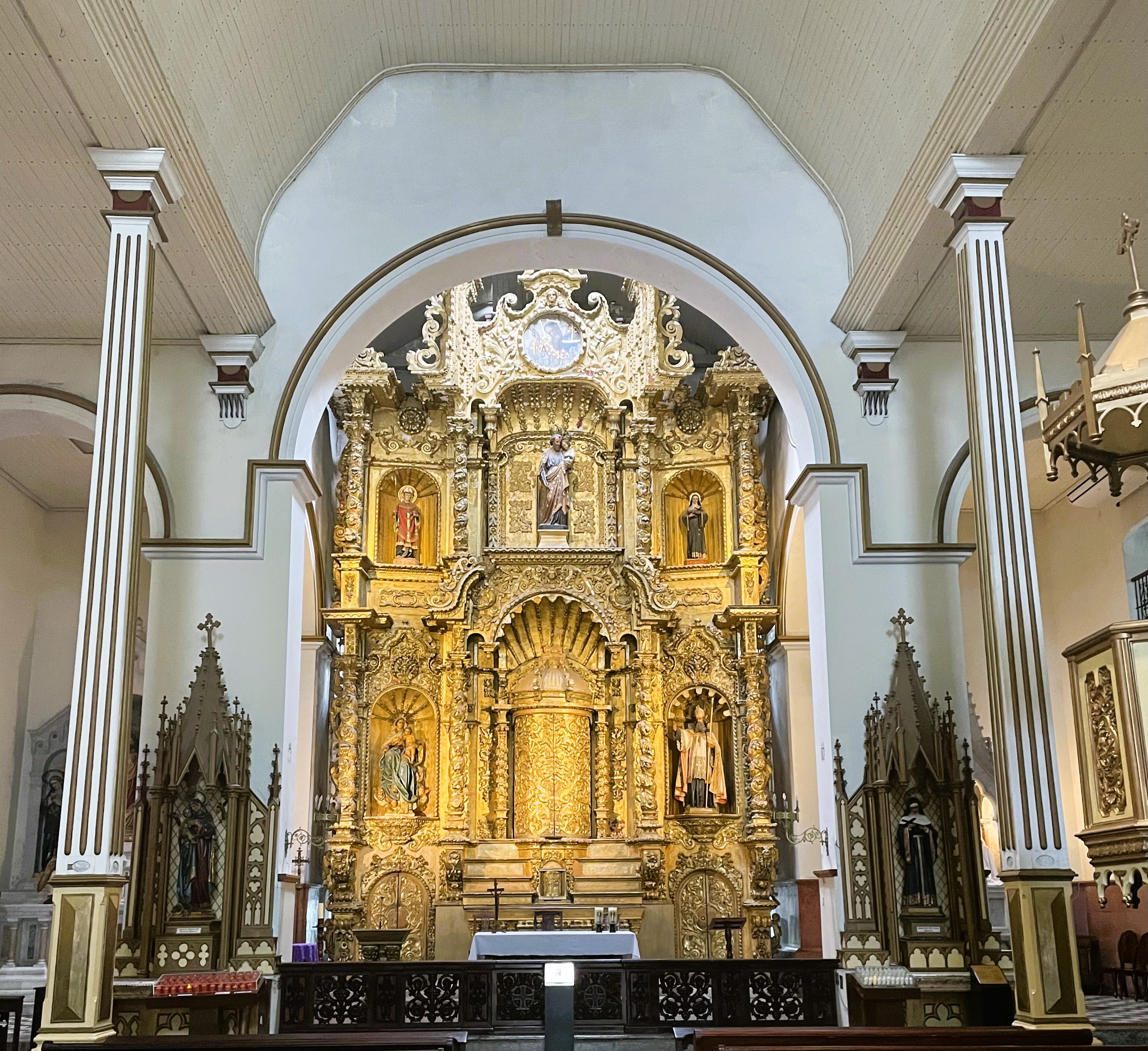
The distinctive golden altar at St. Joseph Church was one of the few items saved from Panama Viejo during the 1671 pirate siege. It was buried in mud during the siege and then secretly transported to its present location in the UNESCO World Heritage City of Old Panama
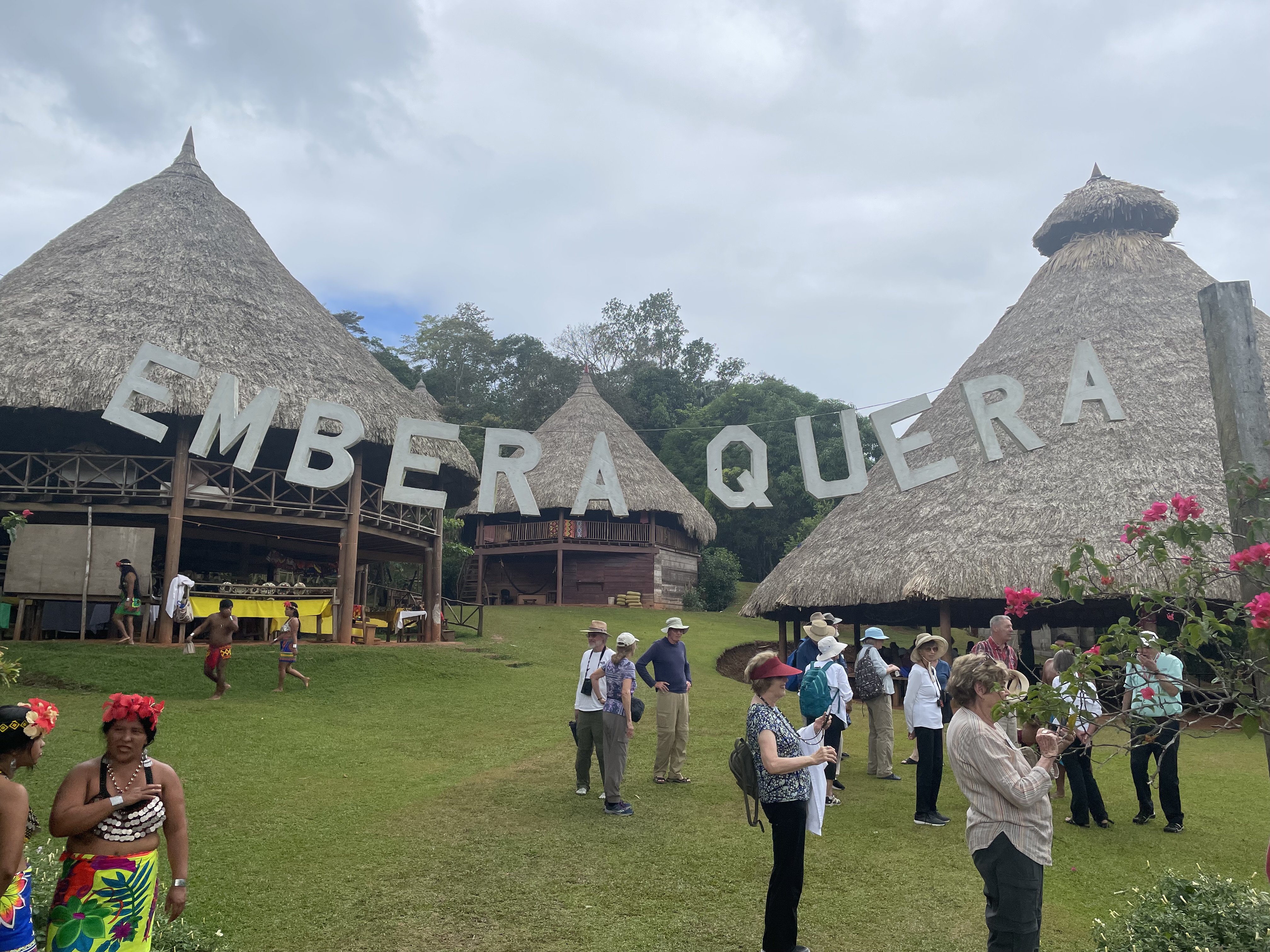
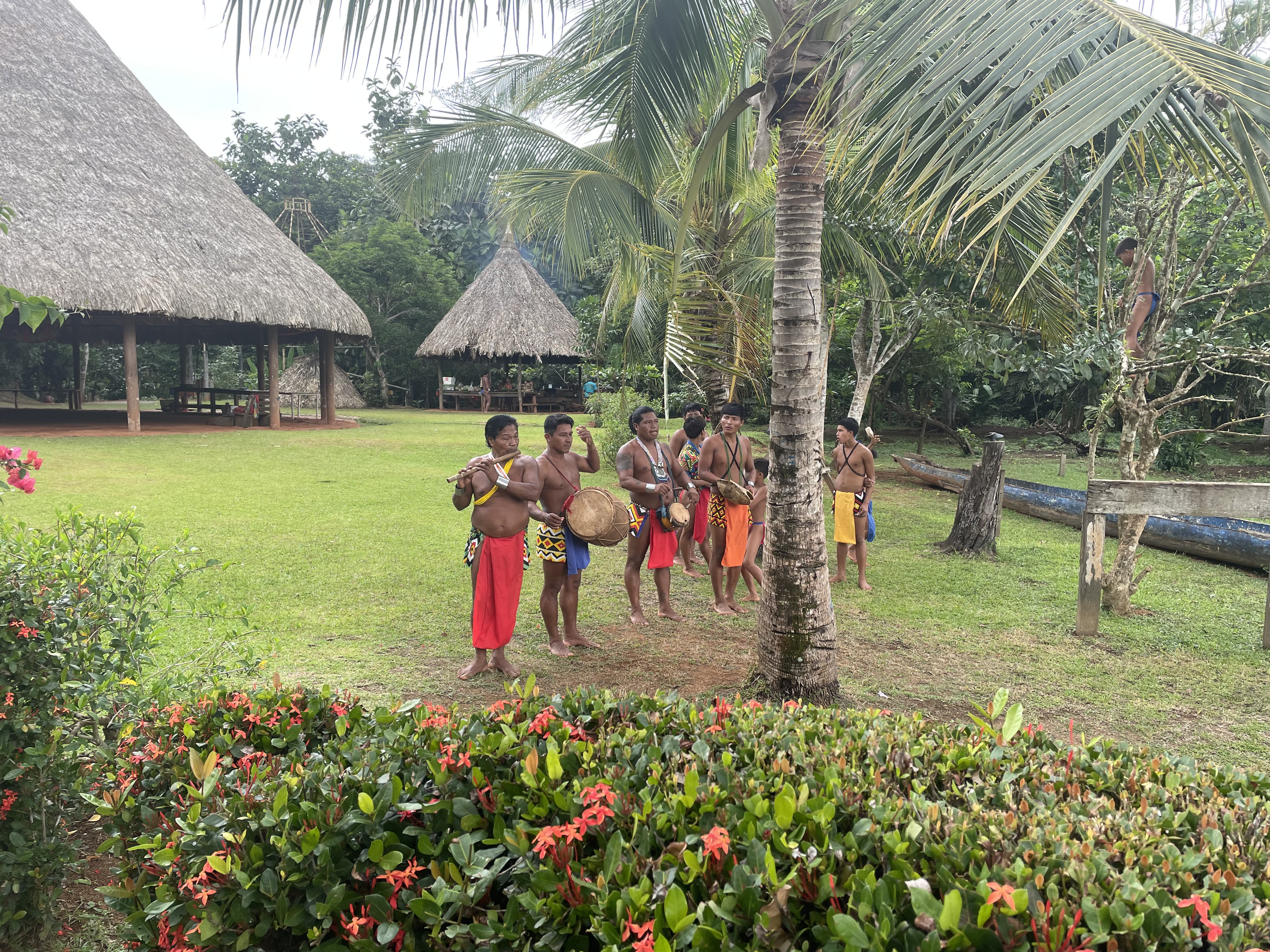
Why are memories of the Embera community, visited by some of us on the pre-tour, important? Those memories and places tell us something about ourselves as humans. They may spur thoughts about the longevity of the human race or the importance of different relationships to the earth. The resilience this community has exhibited over millennia can inspire us today.
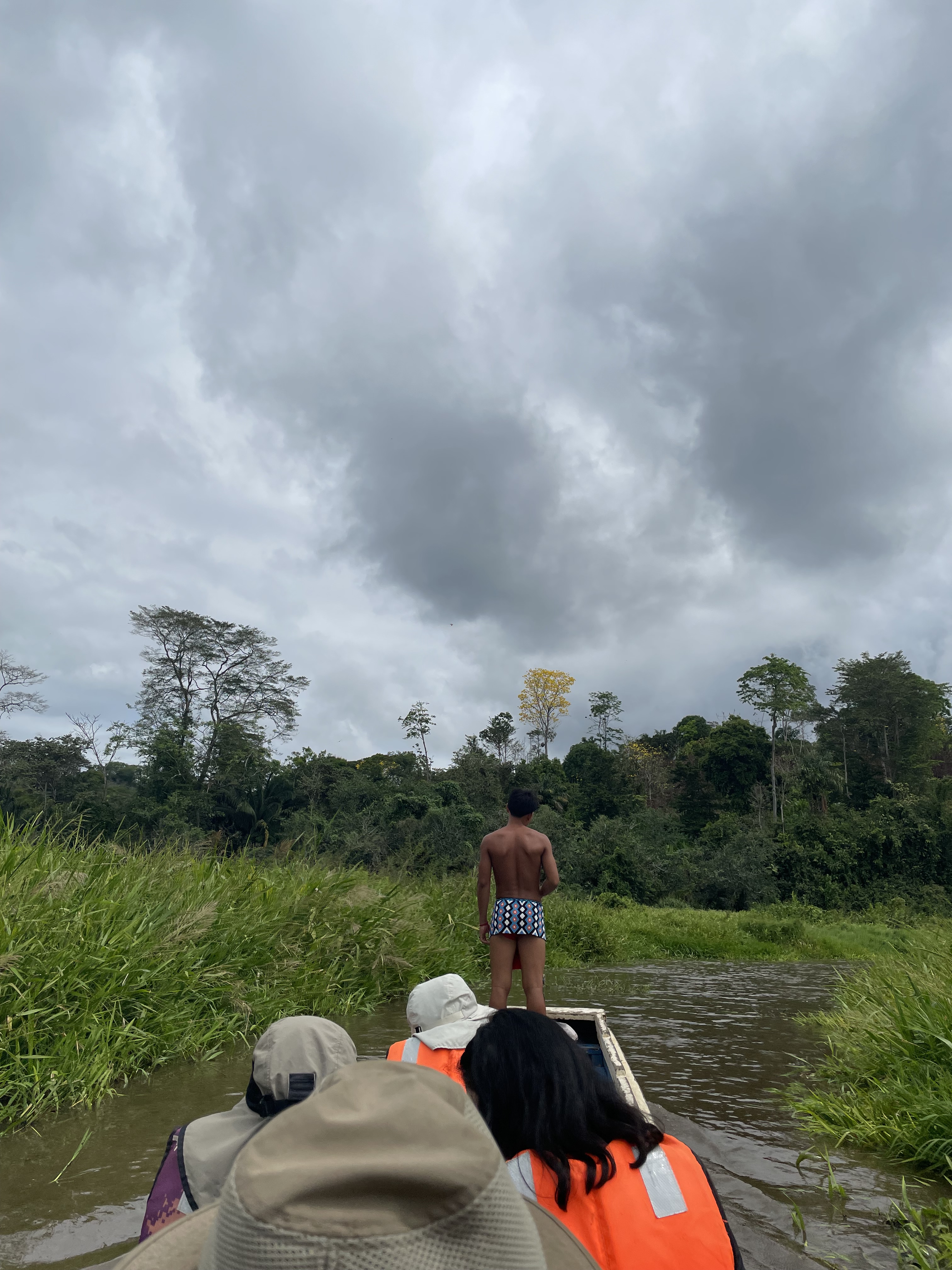
On a canoe through the Darién
There is no road, not even a primitive one, across the Darién where the Embera live. “The “Gap” interrupts the Pan-American Highway where some 66 miles has never been built. We had to access it by canoe. But it was a trip well worth making.
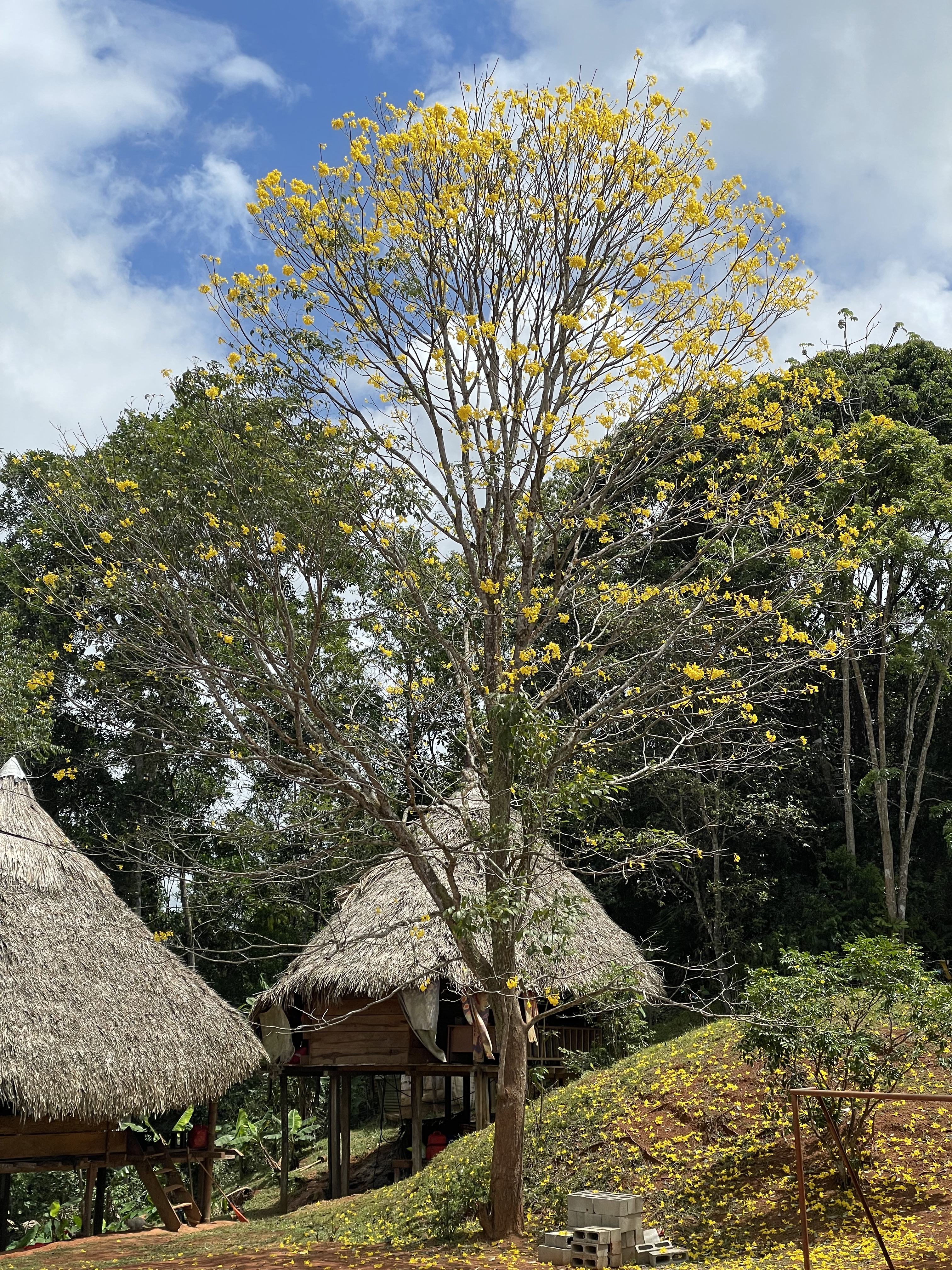
Our arrival in the Embera community
Traditional materials and techniques are seen in the Embera roofs and ceilings
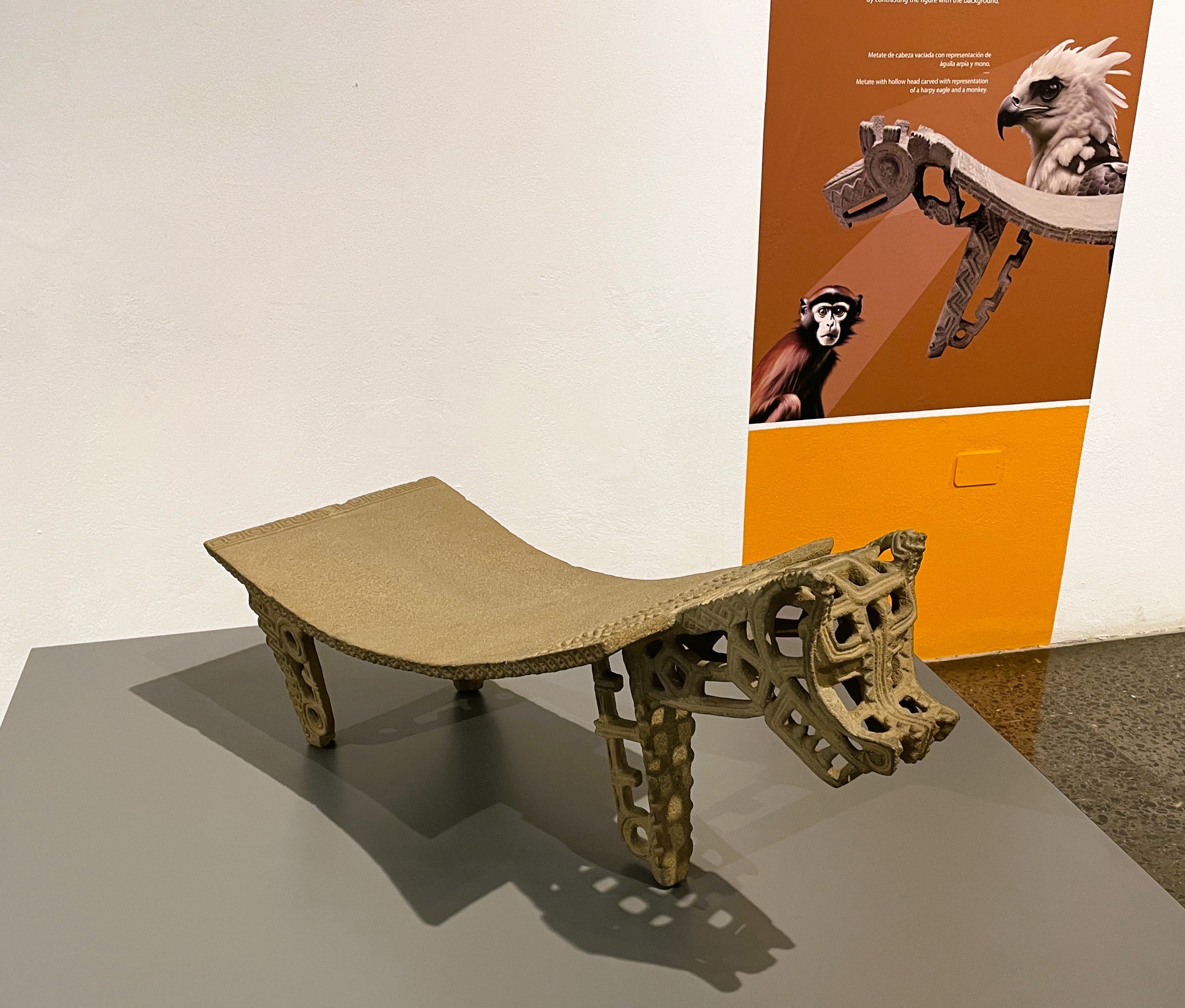
Stone carving from Costa Rica’s indigenous communities, now displayed in the National Museum in San Jose
Old places give us a chance to feel a connection to the broad community of human experience.
Identity
We often talk in language that recognizes the crucial connection between identity and old places. In the ancient world, Seneca phrased it as, “No man loves his city because it is great, but because it is his.”
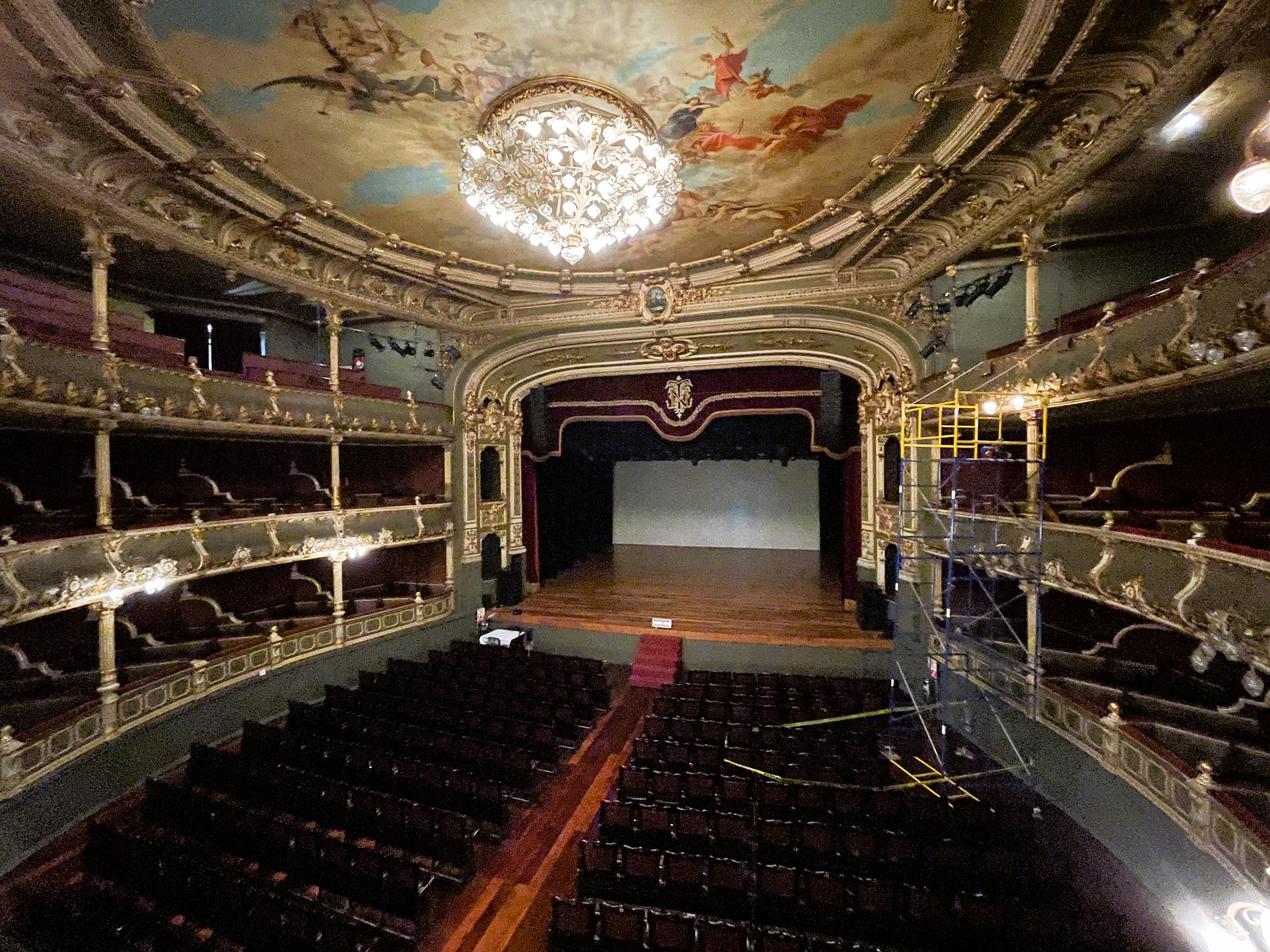
National Theatre in San Jose, Costa Rica
Buildings, and neighborhoods, and nations are insinuated into us by life. Think of the way we may be linked, directly or through symbolic forms that tie people and land together, such as links through history or family lineage. And then there are “universal links through religion, myth and spirituality, links through festive cultural events, and finally narrative links through storytelling or place naming.”
Old places also embody our civic, state, national, and universal identity. In the U.S. we speak of American exceptionalism. But citizens of other countries also hear that their homeland possesses desirable qualities that others lack. French nationalists “tout the elegance and sophistication of their ‘civilization,'” while Serbians “have traditionally considered themselves the shield of Christianity.”
We heard of Costa Rica “exceptionalism” from our tour guides. “Costa Rica is different” they would say.
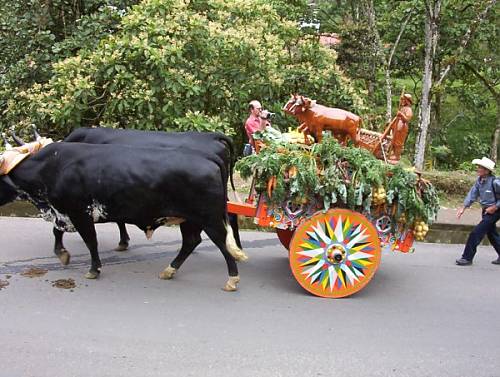
UNESCO listed oxcarts in Costa Rica (credit: Ministry of Culture)
Painted oxcart in the National Museum in San Jose
As with most countries, it is complicated.
The Costa Rica Reader: History, Culture, Politics (2004) edited by Steven Palmer and Iván Molina expands the perspectives around this intriguing Latin American nation by bringing new voices to the conversation. “Exceptionalism” is a term often used to describe Costa Rica, which is seen as “different from other Latin America countries.” It has never been consumed by civil strife or race-based oppression, the story goes, and it is the only country to have enjoyed uninterrupted political democracy for three-quarters of a century. Yet as Palmer and Molina write, some observers suggest that exceptionalism is at the center of a dubious mythology. This work is composed of short pieces that give a much fuller understanding of Costa Rica, showing it “as a place of alternatives and possibilities that undermine stereotypes about the region’s history and call into question the idea that current dilemmas facing Latin America are inevitable or insoluble.”
National identity is important, but we can resist the temptation to “see the country as an exception” while insisting “on the distinctiveness of its past and present.”
Continuity
In a world that is constantly changing, old places provide people with a sense of being part of a continuum — a necessity to psychological and emotional health, connecting us over time and space.
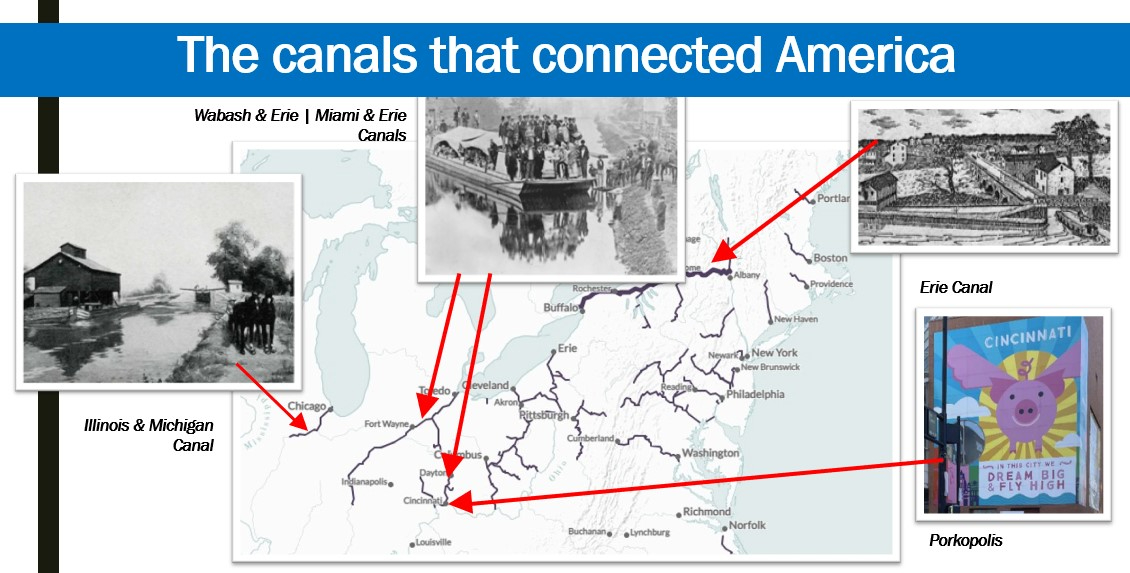
A key part of the continuity of canals that many don’t readily see is the vast network that sprang up in the United States in the first half of the nineteenth century. While the heyday of the canals lasted only a few decades, they transformed the American economy by connecting the areas west of the Appalachian Mountains to eastern population centers and Atlantic ports. Concentrated largely north of the Mason-Dixon line, they shaped American regionalism by linking the northeast and northwest together into a region that increasingly came to see itself as the “North.”
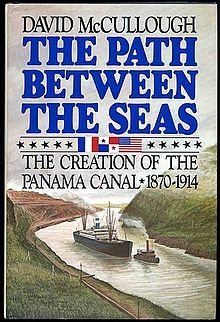
Applying his remarkable gift for “writing lucid, lively exposition,” David McCullough “weaves the many strands” of the momentous building of the Panama Canal “into a comprehensive and captivating tale.”
I last read The Path Between the Seas: The Creation of the Panama Canal, 1870-1914 (1977) by David McCullough several decades ago. But I picked it out of my bookcase and reviewed David’s work prior to this trip, as it is the indispensable work that “tells the story of the men and women who fought against all odds to fulfill the 400-year-old dream of constructing an aquatic passageway between the Atlantic and Pacific oceans. It is a story of astonishing engineering feats, tremendous medical accomplishments, political power plays, heroic successes, and tragic failures.”
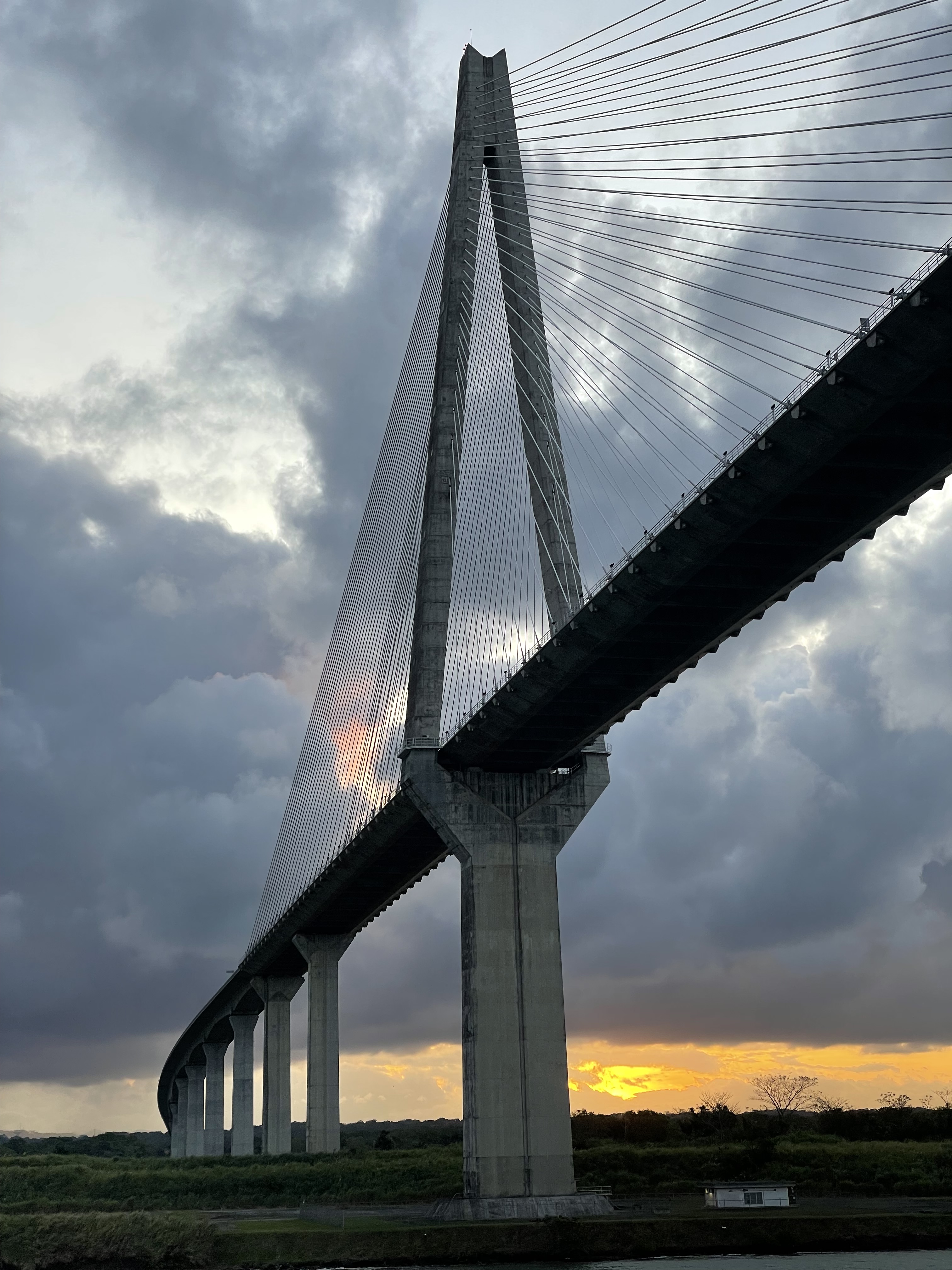
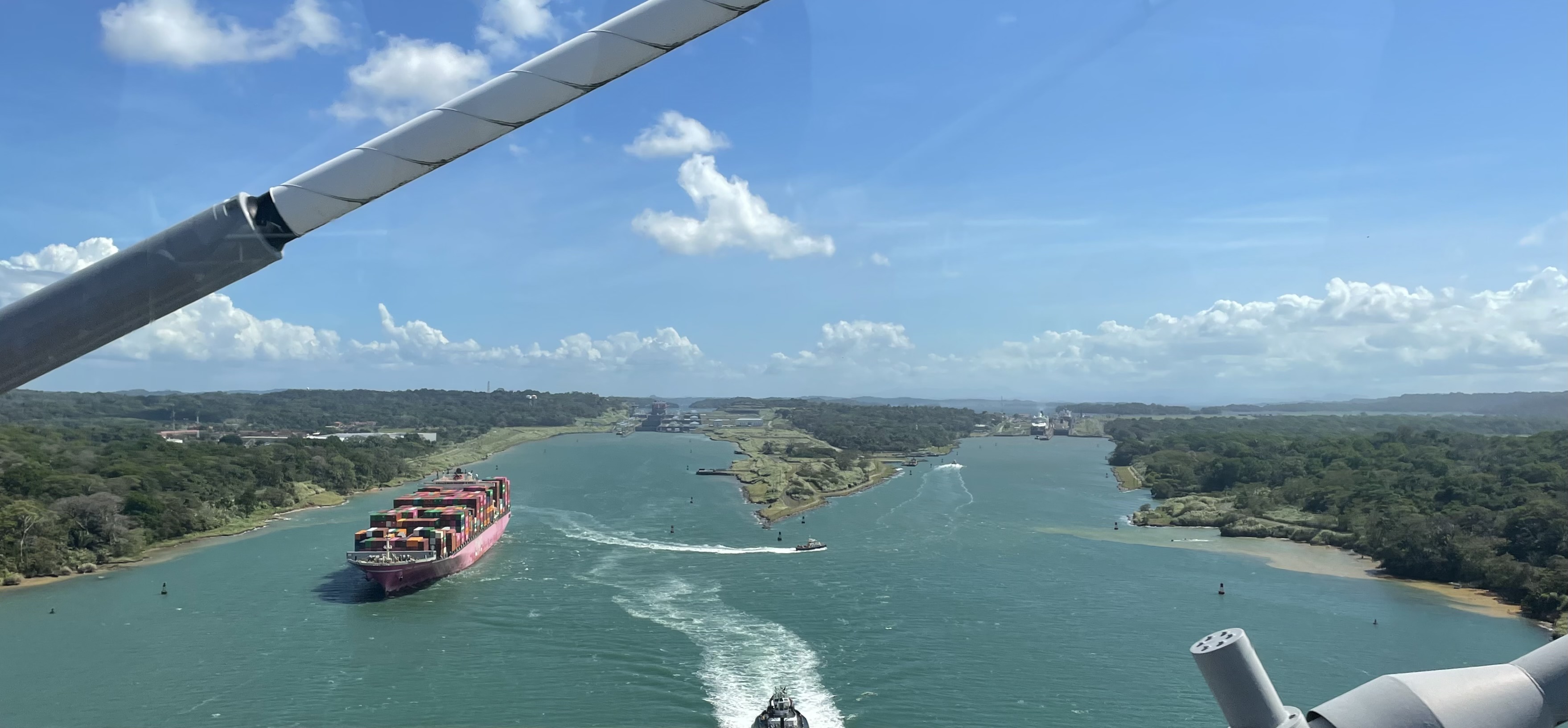
Sailing under the new Atlantic Bridge to enter the Panama Canal at daybreak
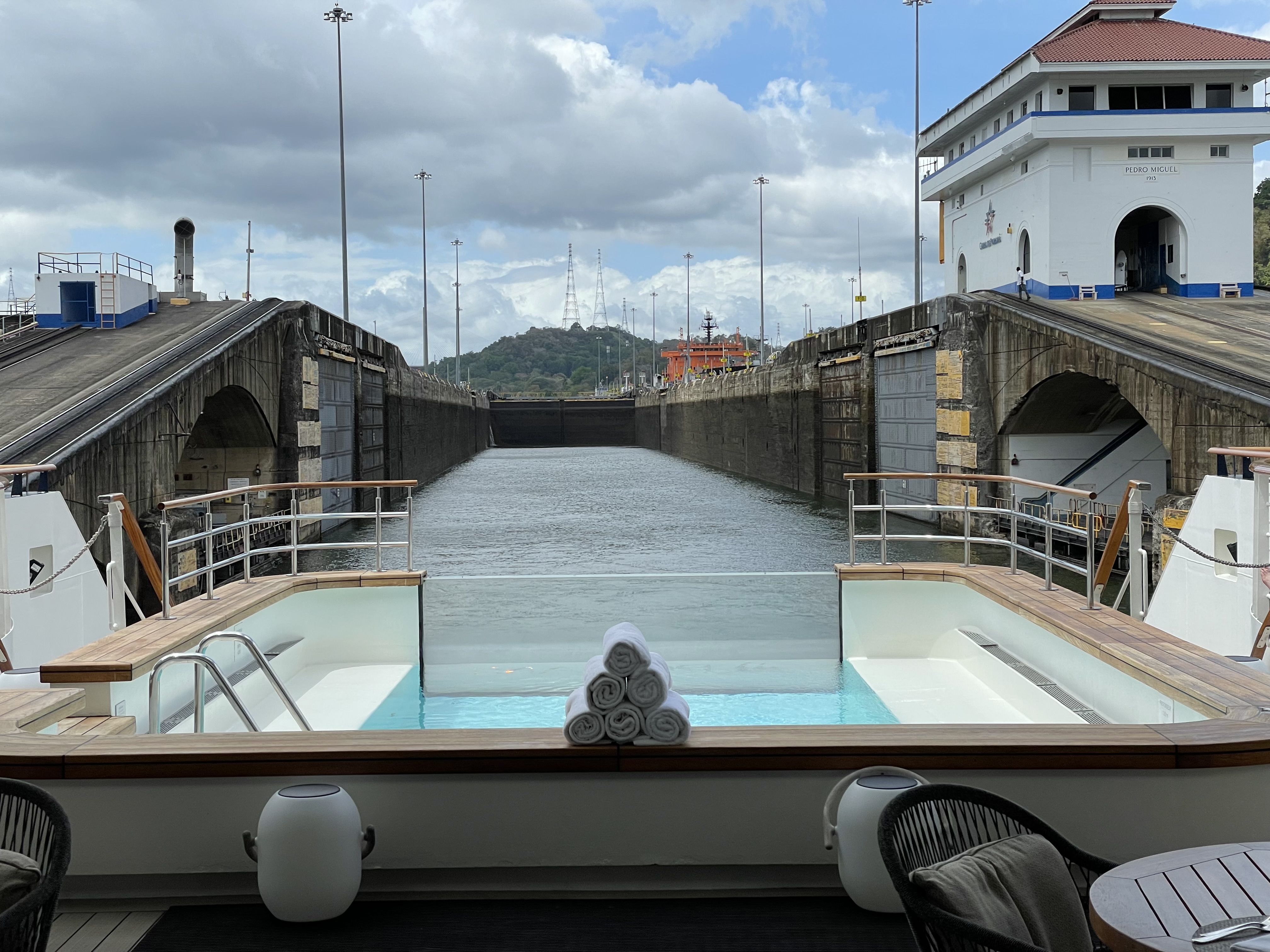
We saw this marvel up-close as we sailed under the 2019 Puente Atlántico — the Atlantic Bridge — entered the canal and moved through the locks over the better part of a Sunday, rising first to reach the level of the massive man-made lake in the center of the isthmus that makes this canal work on many fronts before being lowered back down again to sea level on the Pacific side.
Entering the canal’s first lock early on a Sunday morning
Gates closed as we wait for the water level to rise in order to enter the next lock
Documenting our passage through this pathway, in the typical selfie photo of the early 21st century
The canal is busy . . . a 24/7 operation 365 days a year (or 366 in this leap year)
View from the rear of the ship as we leave the lock
McCullough spends time in his book talking about the color line that cut through almost every facet of daily life in the Panama Canal Zone during construction. It was clearly drawn and as closely observed as anywhere in the Deep South during that period.
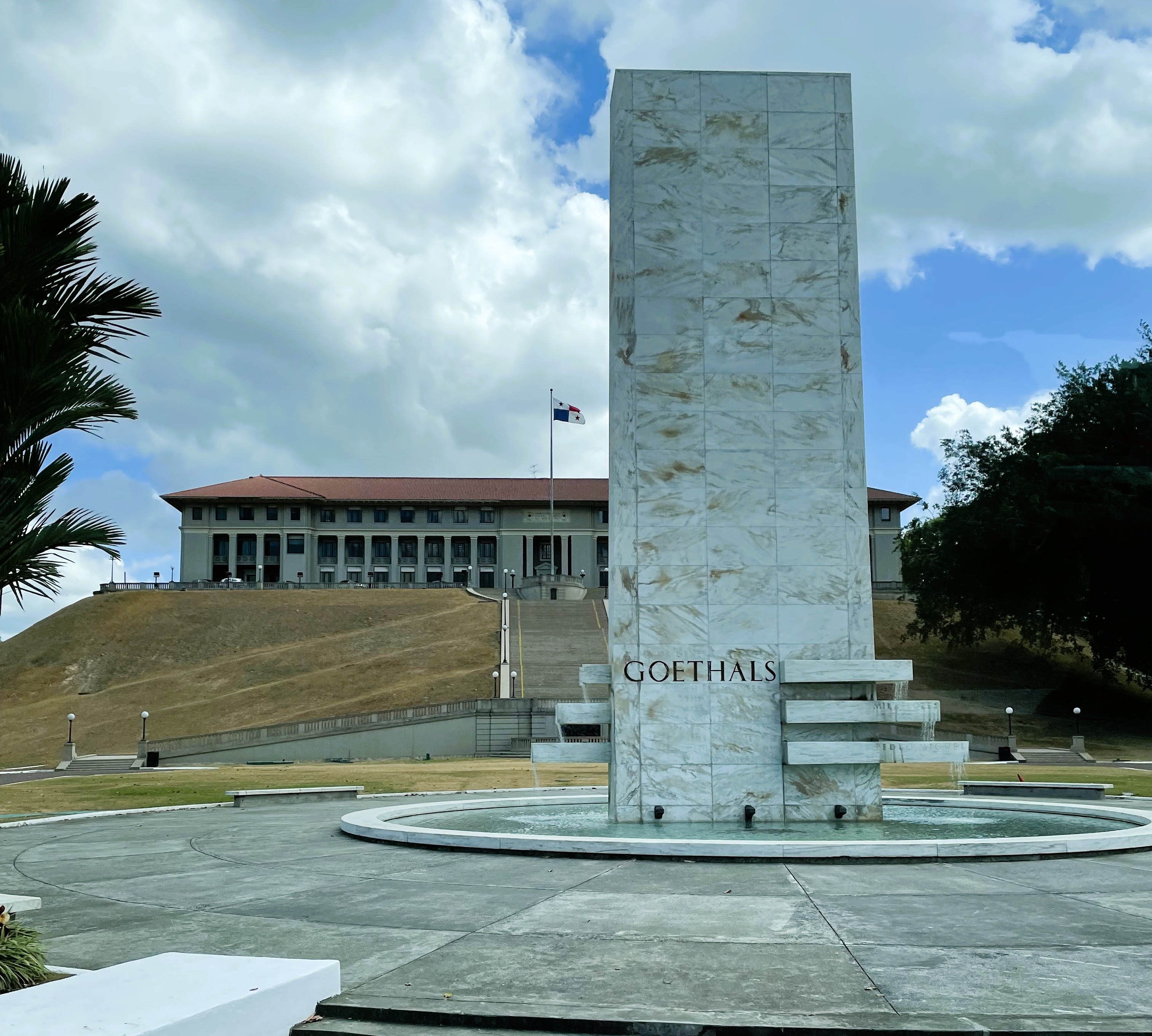
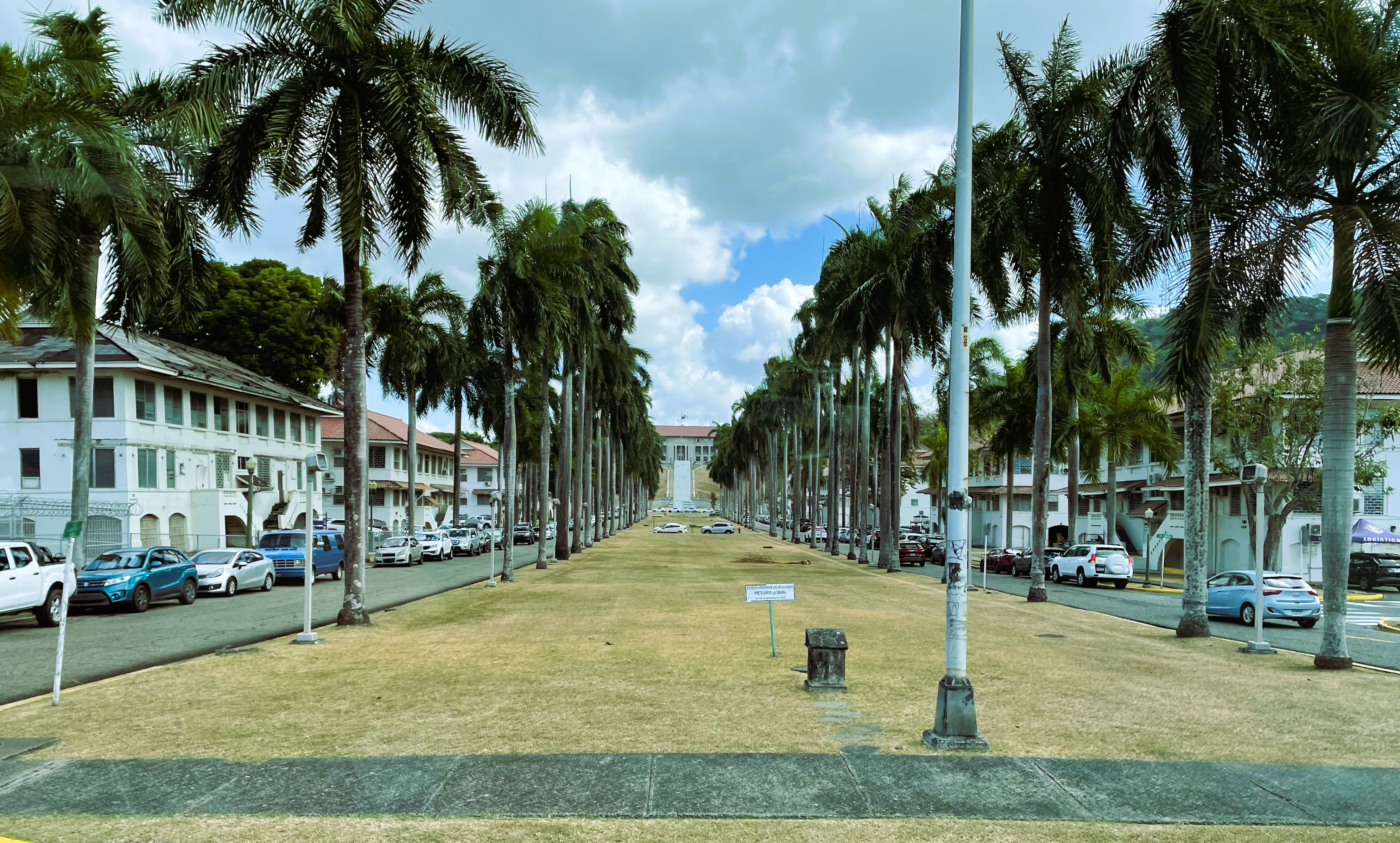
Historic U.S. headquarters of the Panama Canal Commission
West Indian laborers working at the Miraflores locks (Library of Congress)
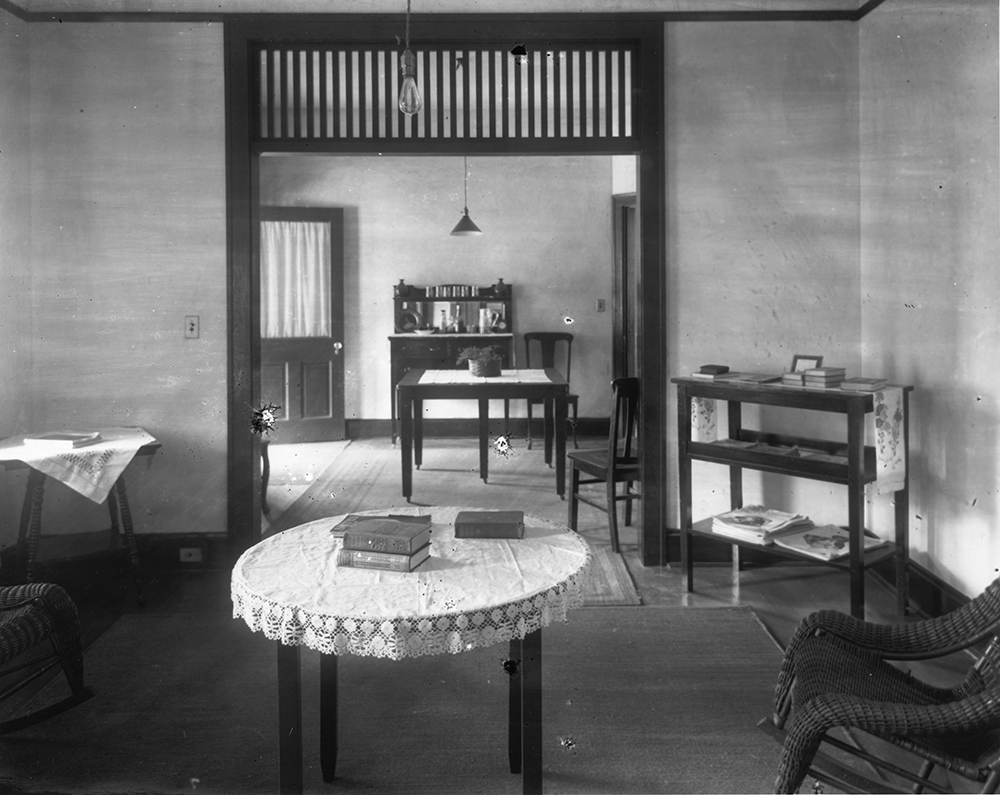
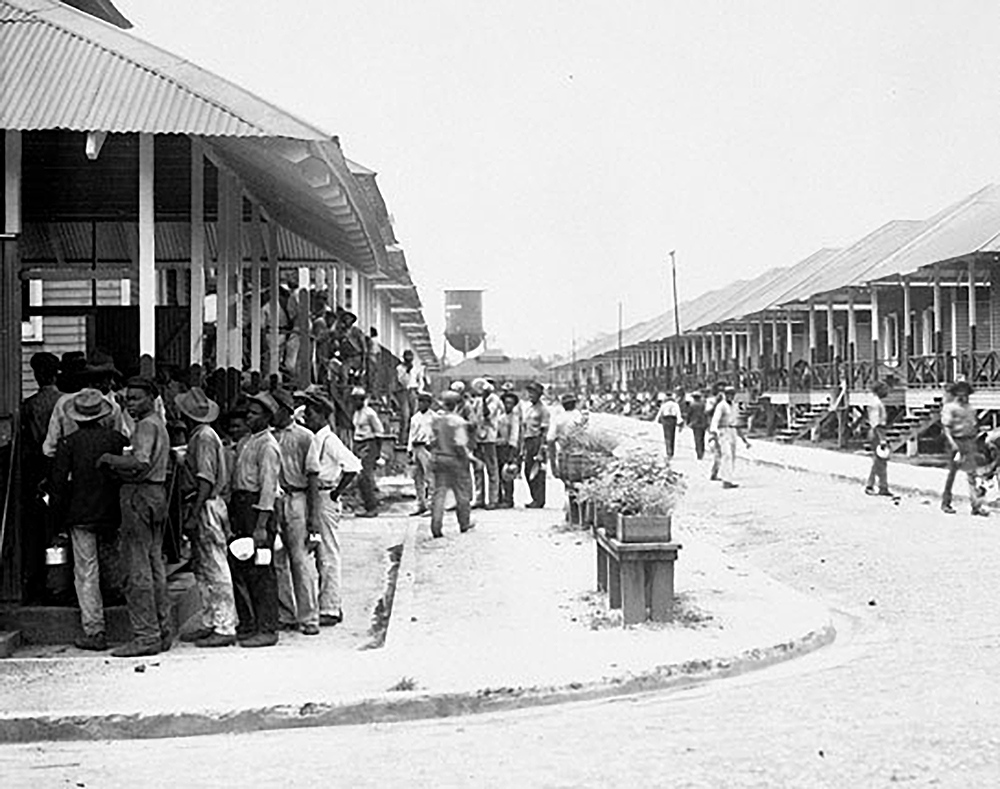
Black West Indians and white North Americans “not only stood in different lines when the pay train arrived, but at the post office and the commissary. There were black wards in the hospitals and black schools. White workers had living quarters while the Black West Indians had 50 X 30-foot rooms that slept 72 men . . . or they had none at all.
Living quarters for white workers and their families during the canal’s construction (Library of Congress)
Sleeping quarters for the West Indian workers who were fortunate enough to have them (Library of Congress)
David — a long-standing National Trust Trustee Emeritus before he passed away — wrote that it was debatable if the West Indians working in Panama were better or worse off than a Kentucky coal miner or an immigrant mill hand in Homestead, Pennsylvania. They did get free medical care and ate very well. It’s just that the working classes at the turn of the 20th century were expendable, conditions which led to major changes throughout that century.
As we marveled at the engineering wonder of the Panama Canal it was important to remember that this particular pathway between the seas is just part of a much larger pathway of continuity, connecting our past, present, and future, with all of its glory and with all of its challenging history.
Historic offices and headquarters for the U.S. Panama Canal Commission
Panama Canal as seen from the Atlantic Bridge
And more!
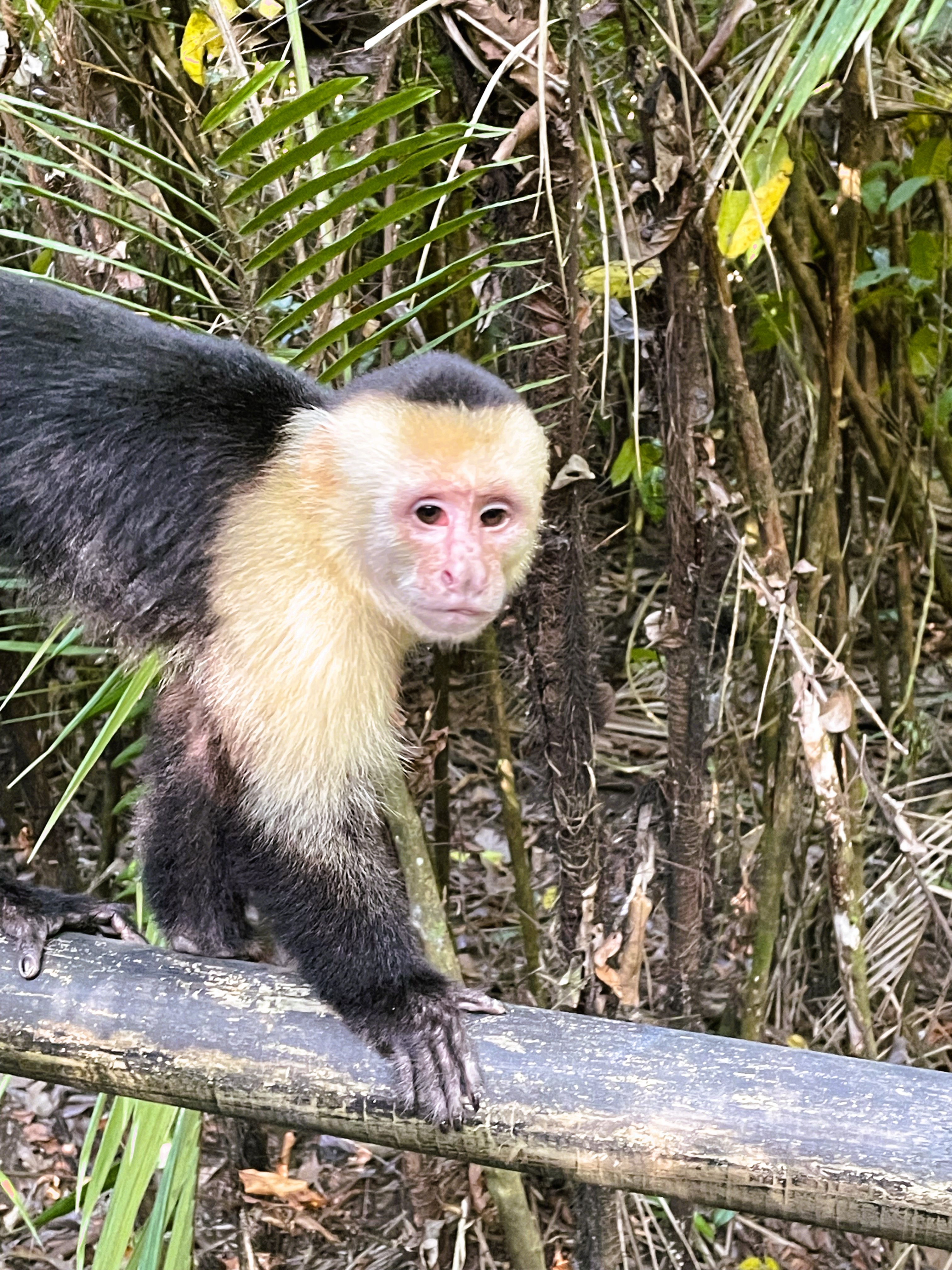
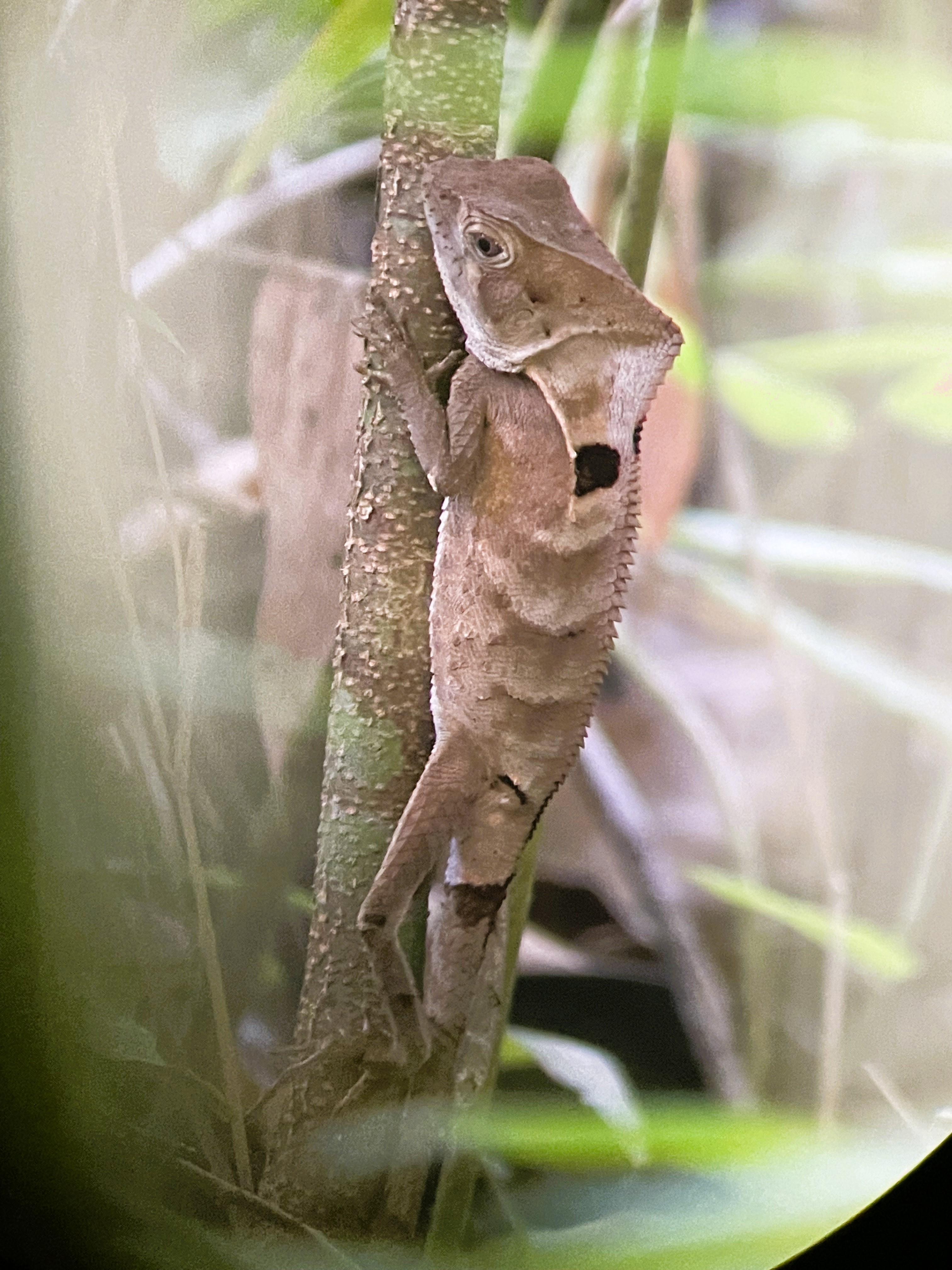
Several days were devoted to wildlife viewing along the coasts and in Costa Rica’s parks, including the wonder-filled Manuel Antonio National Park.
All-in-all a fascinating ten days and yes, just another wonderful National Trust Tour.
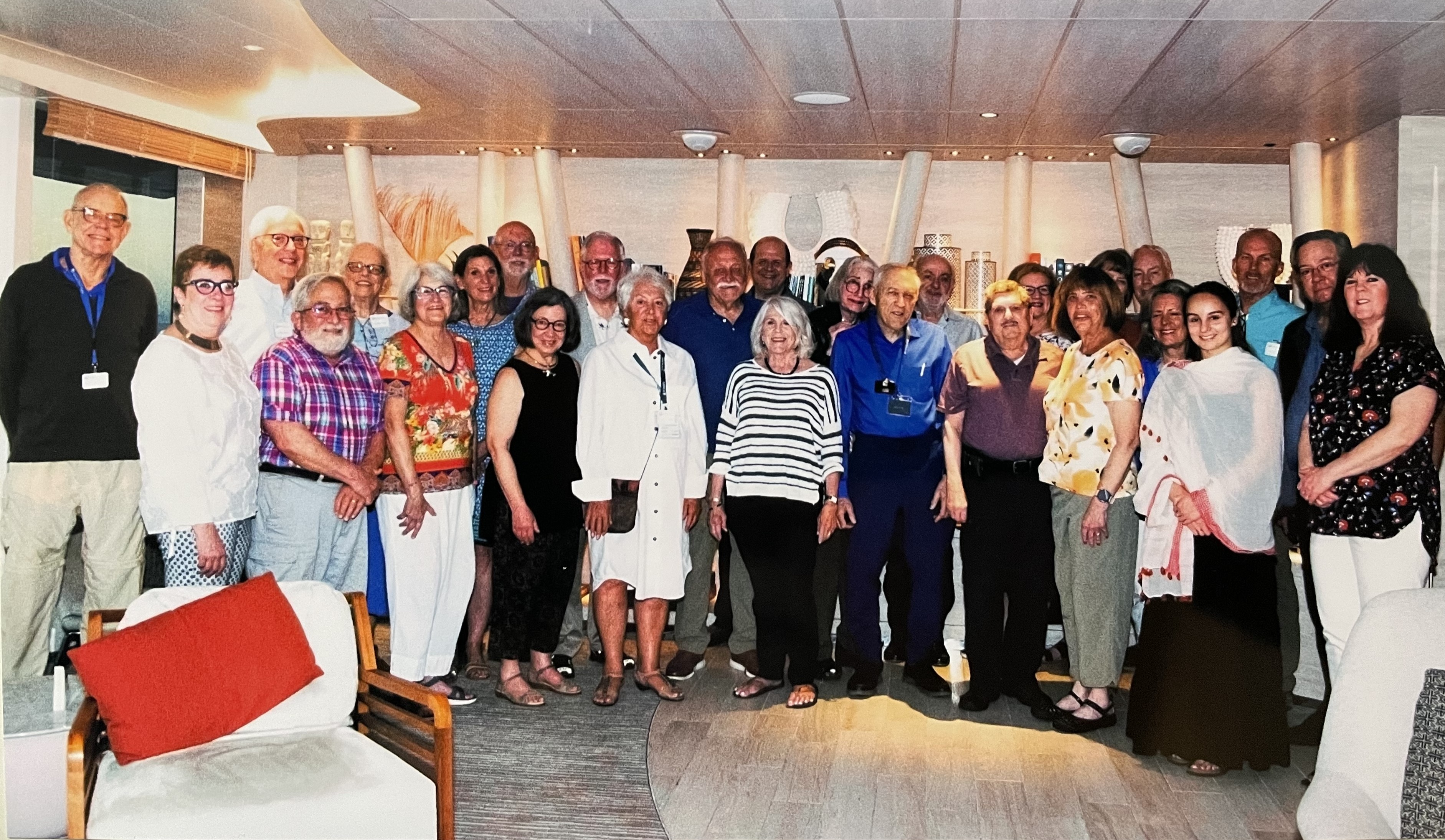
National Trust Tour travelers in Panama and Costa Rica February 2024 (Credit: Ponant)
Join us for a future trip!
More to come . . .
DJB
The Weekly Reader links to the works of other writers I’ve enjoyed. I hope you find something that makes you laugh, think, or cry.
As happens every year on March 4th, today marks the beginning of my annual trip around the sun. While each year has its own opportunities for wonder and amazement, this is an especially important one personally. Should I be so lucky, I’ll turn 70 on March 4, 2025. Oh my. . .
March 4th has an interesting history. Until 1936, this was the day for presidential inaugurations in the U.S. Lawmakers chose that date because it was the one on which, in 1789, the Constitution went into effect. It was on this date in 1865 that Abraham Lincoln gave what many consider his greatest speech. In a short 703 words with the famous last paragraph — “with malice toward none with charity for all” — he provided the nation with a timeless and brilliant example “of his moral and rhetorical genius.”
March 4th is also known as “Do Something Day,” the only date that is also a command. My dear mother, it seems, was acting in the spirit of the day when she delivered me into this world.
I’ve used recent birthdays to take the time to stop and pay attention. Some important lessons are slowly revealed as one gets older, such as the realization that we spend a lifetime letting go. Sometimes grudgingly, at other times willingly, we may let go of a job, a career, a relationship, a house, a friendship, a community, or a child who leaves for college or other pursuits. It could be seen as preparation for this next stage of life.
Oliver Burkeman tells us of the paradox of limitations, suggesting that the more one tries to manage time with the goal of achieving a feeling of total control, the more stressful, empty, and frustrating life gets. But the more one let’s go, confronting the facts of finitude — working with them, rather than against them — the more “productive, meaningful, and joyful life becomes.”
We’ll only truly live the life we’re given when we accept the fact that we won’t live forever, when we let go of the world’s preconceptions of what makes a successful life and understand that there is simply no cure for being human.
In times past I rushed through to-do lists that I’ll never complete, trying to hold onto things where I should let go, increasing the anxiety that is an all-too-common feature of 21st century living. This year I’ve been noticing the value of slowing down in order to see the wonder around us, to focus on my place and calling in life, and — simply — to enjoy the ride. It is a process, but I have also come to understand that any sustainable change comes from within. To help me with that change, I’ve turned to sources I haven’t always appreciated.
The Word in the Wilderness (2014) by Malcolm Guite features a poem for each day of Lent. The season in which we traditionally reorient ourselves, slow down, and recover from distractions is also a good time to change the very way we read. Guite, in this thoughtful forty-day journey, suggests poetry is a good tool to achieve that change. “Poetry asks us to be savoured, it requires us to slow down, it carries echoes, hints at music, summons energies that we will miss if we are simply scanning. In this way poetry brings us back to older ways of reading and understanding both the Word and the World.”
Reading poetry has long been a hit-or-miss proposition for me. But I realize that in the hands of writers such as the great Irishman Seamus Heaney, poetry — much like prayer — can be “banquet, music, journey, and conversation.”
Guite also suggests another way of looking at the idea of letting go. In his reflection to the beautiful poem The Bright Field by the Welsh poet R. S. Thomas, he speaks of the gospel paradox,
. . . about losing to find, giving away to gain, giving everything away only to find it given back in a new and more beautiful form . . . it is not about giving up for its own sake; it is about making room for something wonderful.
Reading poetry — like retirement in general — requires some humility on my part. With poetry, I have to concentrate, still grasping only a piece of what the poet intended. In retirement we are no longer on the pedestal where our job placed us. As a retired person “I am just that — an older member of our society. Sometimes I am respected as an older person. Other times, I am taken for granted or even dismissed. Being retired is a slice of humble pie.“
Perhaps, on this birthday, I’m letting go of some long-held hubris as well, to find something more wonderful.
If we are honest with ourselves, we will admit that our memories are fragile. The poet Marie Howe has written that “memory is a poet, not a historian.” Yet we often rely on the memory of witnesses in histories, in courts of law, and in our personal lives. Memories fade with time and they change as others share the story of the same event. Points get lost, or found, in translation.
What happens when one of the most transformative events in human history, the crucifixion of Jesus of Nazareth at the hands of the Roman Empire sometime around the third decade of the Common Era, has to rely on witnesses for transmission across centuries?
Witness at the Cross: A Beginner’s Guide to Holy Friday (2021) by Amy-Jill Levine examines the stories, texts, social contexts, religious background, and perspectives of those who watched Jesus die: Mary his mother; the Beloved Disciple from the Gospel of John; Mary Magdalene and the other women from Galilee; the two men, usually identified as thieves, crucified with Jesus; the centurion and the soldiers; Joseph of Arimathea and Nicodemus. Dr. Levine, known as AJ to friends, brings her deep understanding of scripture, insightful commentary, broadness of perspective, and engaging wit to help us consider this climatic moment in the Christian story. The Rabbi Stanley M. Kessler Distinguished Professor of New Testament and Jewish Studies at Hartford International University for Religion and Peace, AJ is also University Professor of New Testament and Jewish Studies Emerita, Mary Jane Werthan Professor of Jewish Studies Emerita, and Professor of New Testament Studies Emerita at Vanderbilt University, an internationally known author and speaker, and the first Jew to teach New Testament at Rome’s Pontifical Biblical Institute. She acknowledges the fragility of the memory of witnesses and suggests that readers “do well to listen to their stories and see how their stories transform us. At that point we pick up the stories ourselves.”
DJB: AJ what led you, as a young scholar, to study the New Testament?
AJL: Stories about the divine have always interested me. This is probably why I liked Hebrew school (at Tifereth Israel Synagogue in New Bedford Massachusetts). My parents told me that Jews and Christians read the same books, such as Genesis and Isaiah; said the same prayers, especially the Psalms; worshiped the same G-d, who created the heavens and the earth, and that a Jewish man named Jesus and a Jewish woman named Mary, were very important to Christians.
When I was seven, a girl on the school bus accused me of killing her Lord. The Vatican II document Nostra Aetate (Latin: “In our Time”), promulgated in 1965, formally ended at least in Roman Catholicism the claim that all Jews are responsible for the death of Jesus. But this incident came before Nostre Aetate.
Not understanding why Christians, given the same G-d and the same prayers, let alone Santa Claus and the Easter Bunny, were saying such horrible things, I determined to go to catechism, Catholic education classes, to stop this hateful teaching (I thought it was a translation error, since in Hebrew School we learned Hebrew; nobody told me the New Testament was written in Greek). My very wise mother said something to the effect of, “As long as you remember who you are, go and learn something. It’s good to know about other people’s religions.”
When I read the New Testament, two things occurred to me. First, we choose how we read. Reading this book can incite antisemitism, but it need not. I wanted to learn what the switch was to help people read with compassion, not bigotry. Second, I realized that the New Testament records Jewish history. The first person in literature called “rabbi” is Jesus; the only Pharisee from whom we have writings is Paul.
I decided to study the New Testament. I also promised my mother that if I couldn’t get into a Ph.D. program, get a job, or earn tenure, I’d go to law school. I’m now 67 — law school is no longer an option.
Amy-Jill Levine
The four gospel writers bring different perspectives and perhaps agendas to the story of the crucifixion. How would you briefly describe what each brings to the story and why it is important to consider them together?
Jesus’s story, like creation (contrast Genesis 1 with Genesis 2-3) or the history of ancient Israel (contrast 1-2 Samuel and 1-2 Kings with 1-2 Chronicles), is too grand for a single version. Matthew’s Jesus is a new Moses, who escapes murder as an infant and who interprets Torah, originally given on Mt. Sinai, in the Sermon on the Mount. At Jesus’s death, the earth shakes, rocks are split, and tombs open: the women at his tomb are the first to see him, and they receive the first commission to proclaim the resurrection.
Mark’s mysterious Jesus can walk on water, as only G-d can do, but cannot perform miracles in Nazareth because the people do not believe in him. Mark’s focus is on Jesus’s suffering and death; the Gospel’s earliest versions depict the women fleeing from the empty tomb and leave the proclamation of the resurrection to the readers.
Luke’s Jesus is a storyteller (the Prodigal Son, the Good Samaritan, etc. appear only in the 3d Gospel) who forgives the people crucifying him, comforts the men dying with him, and calmly states, “Father, into your hands I commend my spirit.” While in Mark and Matthew Jesus dies surrounded by his enemies, Luke depicts the “daughters of Jerusalem” weeping for him and the people standing by him.
In Mark and Matthew, the Jesus cries Psalm 22.1, “My G-d, my G-d, why have you forsaken me?” Conversely, John’s Jesus always remains “one” with the Father. According to John, the dying Jesus establishes a new family between his mother and his Beloved Disciple, a family modeled by followers who are “born anew” or “born from above.” According to John, a soldier thrust his spear into Jesus’s side; from the wound pour blood and water, a parturition image suggesting that Jesus is birthing his new family.
How did your work teaching Vanderbilt Divinity School courses at Riverbend Maximum Security Institute influence your consideration of the two men who were crucified with Jesus?
My insider students consistently ask about the men crucified with Jesus: who stood by their crosses to comfort them, to drive away the birds and wild animals, to mourn? Who recovered their corpses and buried them? My insider students help me to complicate the common identifications of “good thief” and “bad thief,” to recognize the desperation of the man who demands of Jesus, “Aren’t you the Messiah? Save yourself and us!” together with the irony that Jesus, by dying, is for the Gospel “saving” — giving life to — humanity. They see the additional irony in the other man’s plea that Jesus welcome him into his kingdom, since this man is the only person in the Gospel who understands that Jesus has a “kingdom.”
Which reactions to “Witness at the Cross” from Christian readers are most common? Which have surprised or intrigued you the most?
Comments in emails, zoom programs, and presentations include gratitude for talking about the women at the cross (Mark 15 tells us that women followed Jesus from Galilee; now I have to incorporate their presence in the previous 14 chapters), for noting various ways of understanding Psalm 22 and the tearing of the Temple curtain, for flagging connections between the crucifixion and earlier Gospel chapters, so that second readings are richer, and for the freedom to appreciate differences rather than jumping through hoops to create harmonization.
Since October 7th and the news from Israel/Gaza, several people have commented on the Introduction’s discussion of Simon of Cyrene, and of Libya’s now-vanished Jewish community.
What books are you reading at the moment?
Marc Brettler and I are now editing the third edition of the Jewish Annotated New Testament. I am reading newly commissioned essays as well as editing revised versions of annotations and earlier essays. After a full day of work, I can’t read anything more. I am knitting a baby blanket for a former graduate student’s newborn son.
Thank you.
You’re welcome.
AJ Levine speaks to a packed house at the St. Alban’s Parish 2024 Memorial Lecture Series keynote speaker in Washington, DC on March 13th.
More to come . . .
DJB
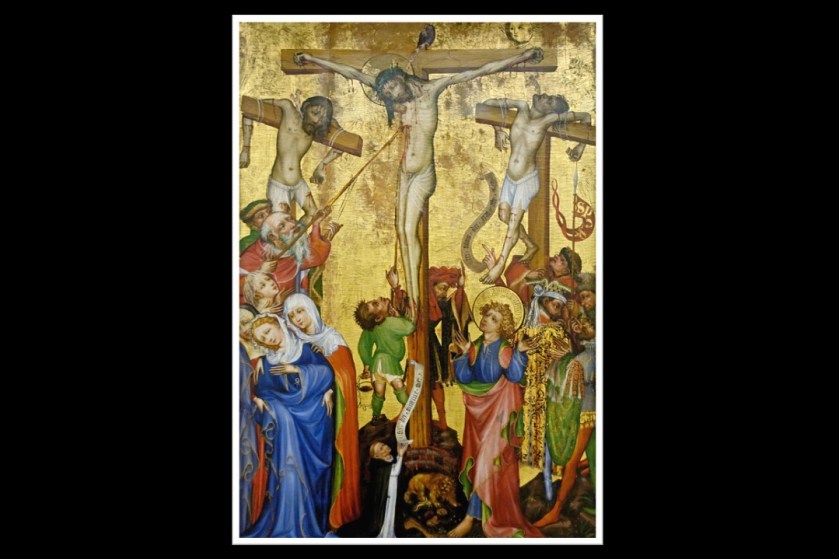
Crucifixion by a Strasburgian painter, possibly Hermann Schadeberg; photo by Marie-Lan Nguyen (2009), Public Domain (Wikimedia Commons)
We think of ourselves as a nation that makes stuff. In the past thirty years 63,000 factories have shuttered.
We think of ourselves as a free nation. We, Americans of all colors, are the most incarcerated people on the planet.
We are home to the most innovative healthcare system on the planet. High healthcare costs have been our nation’s leading cause of bankruptcy for decades.
We are home to many of the world’s greatest universities. Millions upon millions of our students and graduates are in massive debt.
The life expectancy for Black men remains low, “suppressed by sky-high homicide rates,” while the life expectancy for White men has been “declining for years” driven by suicide rates that are even “higher than the homicide rates for Black men and boys.”
It can be hard to remain optimistic about the future when we consider the harsh reality of life in 21st century America. Yet there are strong voices, speaking from a lifetime of activism, who tell us that having faith that we can hand over a better nation to our children is the “only path to national survival, let alone true greatness.”
They believe “we can rise up together to demand freedom on behalf of all our children.
But first we have to start listening to each other.”
Never Forget Our People Were Always Free: A Parable of American Healing (2023) by Ben Jealous is a work of pragmatic and enduring optimism in a sea of national malaise. President of People for the American Way, former president of the NAACP, civil rights leader, scholar, and former journalist, Jealous writes from a lifetime of reaching out to others and listening to what they have to say. In this engaging memoir, Jealous uses a series of more than 20 stories from his life — modern-day parables — to make the point that we must truthfully and fully address the tensions that have been building up throughout this century if we are to survive.
Jealous, the son of a White father and a Black mother, understands that we are all connected in ways both natural and spiritual. Early in the book he tells the story of meeting a man and woman from Los Gatos — the husband grew up in Minnesota and the wife in Virginia — at a retreat weekend in California for people who played important roles in their community. It turns out both Jealous and the woman of the other couple are from Petersburg. When he hears that “Bland” is her maiden name, he takes a big gulp of his drink and then says to the man, “I don’t know how to say this. I think your wife’s family used to own my mama’s family.” And the woman relates that she always knew she had Black family because “Mammy raised me until I was twelve” and “I could tell she was related.” Who is my family? is a familiar theme throughout the book. It turns out we’re all — in many ways — cousins.
Jealous uncovers and considers other revelations that would surprise many readers. Historians have documented that race, as we know it, was not a factor in the first century of the American experiment. Later, the civil rights movement helped Blacks get what they fought for but in the process they often lost what they had. The “legacy of race and racism has led our nation to equate poverty, addiction, and handgun deaths with Black people” and to ignore “even larger numbers of suffering White people and rendered uniting every one of those impacted communities all but impossible.”
Each of those narratives upends conventional wisdom in much of America.
Jealous finds friends and allies in unlikely places: Mississippi, Arkansas, and — that whitest of all states — Maine. “Race relations in America began with shared struggle, not mutually assured destruction.” We need to get back to working together for a better future.
Throughout this hopeful book, Jealous describes ways in which conversations, shared work, and thoughtful listening can lead to people striving towards freedom together. He gives specific examples that readers can relate to in their own lives. He has specific policy prescriptions, such as changing California law so that prisons no longer receive 50 percent more funds that state universities.
Jealous writes that he has long been indebted to General Colin Powell, who once told him, “Ben, it’s easy to recognize what you disagree with people on. What’s more urgent and important in any democracy is to spend your energy figuring out what’s the one thing that you can agree on with a political foe. Figure that out and you can get a lot done.”
As he does throughout, Jealous in the end calls on the wisdom of his grandmother, who died at 105 as he was finishing this book. He once confronted this woman — who had spent a lifetime in the struggle for civil rights, human rights — to ask how she could be so lighthearted and positive. Didn’t she know how much was wrong in the world?
“Baby it’s true. Pessimists are right more often, but optimists win more often. In this life, you have to decide what’s more important to you. As for me” — she smiled — “I’ll take winning.”