Latest Posts

The world unravels always and has to be rewoven every day

When we lose our innocence—or perhaps our ignorance—about America


Tomorrow marks sixty-two years since the assassination of President John F. Kennedy. Like everyone else of a certain age, I know exactly where I was when I heard the news: in my third grade classroom at Capshaw Elementary School. Mr. Bohannon came over the loudspeaker to tell us that the president had been shot in Dallas. A little later, the principal returned to tell us that our young president had died. Classmates were sobbing and in shock. An hour or so later my mother came to pick us up and we spent the rest of the weekend glued to our small black and white television, as the world seemed to spiral out of control.

I don’t want to write a long piece about that day, but I do want to commend to you Parker J. Palmer‘s essay In Praise of Disillusionment. He begins with a poem written on the twenty-fifth anniversary of the assassination; explains the disillusionment that took over his life at the time; and then describes the “long apprenticeship in the realities of ‘life together,’ the tools of nonviolent social change, and the inner journey required to keep [himself] anchored” in what is true.

Palmer makes the case that “weaving is a good metaphor for the work of caring for self and others.” As he wrote the post on the 25th anniversary, it became clear to him that he was to join the millions who do the daily “weaving” of life on which so much depends.

Seen through eyes unclouded by delusions of grandeur, the world is at once a wonderful and wounded place, filled with tattered souls and communities in need of reweaving. Millions render that kind of service every day, without having a name for it. They do it instinctively as family members, friends, neighbors, volunteers, educators, healers of various sorts, citizens of a democracy. I’ve aspired to join them as a writer, teacher and founder of a nonprofit that gathers people in ‘circles of trust’ whose intent is to reweave soul into the fabric of our common life.”

Palmer asserts that “disillusionment is key to living a grounded life. To be ‘dis-illusioned’ means you’ve lost an illusion—and that means you have a chance to live a little closer to reality.” 

Timely thoughts from Parker J. Palmer for this anniversary, and for our lives today.

More to come . . .

DJB

Image of woman grieving by A.C. from Unsplash

One person’s perspective . . . and why that’s important

Can ordinary people help write history?


In reading history we oftentimes come across an account that just sings. Yes, the dates and facts are there. But so are personal stories that help add context, color, and character.

When we encounter this type of history we often find that the historian or writer is relying on journals and letters to help add flesh to the bones of the story. Recall, for instance, how journals and the more than one thousand letters between John Adams and his wife Abigail enriched David McCullough‘s 2001 Pulitzer-prize winning biography of Adams as well as the brand new Ken Burns documentary The American Revolution.

Today, many of us have stopped writing letters. Emails—correspondence for a younger generation—are a poor substitute. Some have dropped email and rely on texts, videos, social media platforms, and phone calls. And when it comes to keeping a diary, too many of us feel we simply do not have the time or never really consider why we may want to take up this habit.

Personal perspectives—written down and saved for the future—are important for a variety of reasons. We lose them at our peril. As the theologian Richard Rohr has written, everybody looks at the world through their own lens, “a matrix of culturally inherited qualities, family influences, and other life experiences. This lens, or worldview, truly determines what we bring to every discussion.” We need to find ways to insert those rich and complex perspectives into our understanding of life and into our studies of history.

Thankfully, there is a project reaching out to help rescue, document, and preserve diaries and journals from individuals across the U.S. And I believe it is one important way to ensure that ordinary people can help write history.

My friend, the writer Janet Hulstrand, introduced me to the American Diary Project to collect, archive, and honor American stories. Kate Zirkle, the founder of the project, notes that their focus is on stories from and about everyday Americans. People just like you and me. People who have a perspective that is important to capture and include as historians, journalists, novelists, poets, and others work to tell the larger American story.

Why is that important?

Wars, elections, and famous speeches are only part of the American narrative. “The rest of history is lived in kitchens, on buses, in classrooms, and in bedrooms. Diaries capture that.” Different voices are added to the discussion of what makes our country unique. These connections—perhaps a diary of a soldier away at war who misses home—help us build empathy.

“They are honest in a way that few other records are. They are not polished, not edited, not written with an audience in mind. They are real.”

I worked for decades at an organization that strives to tell the full American story. We need other voices and other perspectives to reach that goal.

Can ordinary people help write history? My friend Janet certainly feels that way. As a young writer she was both fascinated and inspired by James Boswell’s famous London Journal. When she wrote in her own diary from 1982 about her personal experiences of participating in the largest demonstration in New York City’s history—a march calling for nuclear disarmament—she, like Boswell in 18th century London, added color and context that helps explain what happened in that extraordinary time.

“As we headed up 6th Avenue, a convoy of sailors—three or four busloads of them—were moved past us. They smiled and flashed peace signs! There was only one hint of dissent along the way. A group of about 35 people were standing at 42nd St & First Avenue, holding flags and a woman was singing God Bless America into a microphone. As we passed, a cop said, ‘Just ignore them,’ but instead someone in our group joined in the singing. Quickly, we all picked up the song, including the cops! We beamed at the protestors, & they were nonplussed. They were holding signs proclaiming ‘Peace is a Soviet Weapon’ and ‘Disarm and Freeze to Death.’”

We think we live in extraordinary times. But there have always been periods of turmoil and deep disagreement. The next four years will be filled with upheaval and uncertainty . . . just look at our history. It is important to hear the perspective of those not at the center of power. I agree with Janet’s assertion that “there is value in being able to read one person’s individual perspective on a time of national urgency (or any other time for that matter), written at the time as opposed to just reading about that period in history books.” And yes, most of what we see is behind our eyes, but we can fill that in, and come closer to the truth, by considering and examining the perspective—and worldview—of others.

I do keep a journal and I occasionally write here about my first hand account of current events. Janet’s essay, however, has given me pause to consider taking that journaling to a new level. Plus, this is personal. My sister Carol just sent the family a treasure trove of digitized family history documents written by our ancestors. I can’t wait to dive in to read about the lives of the Blackburns, Beardens, and Browns.

We all have a tendency to force the world into our preconceptions. Because of that we miss a lot. To understand the full story, we need other voices. Other perspectives.

Think of how access to a wide variety of journal entries can enhance our understanding of our personal, family, community, and national history. In just three years, the American Diary Project has already saved nearly 500 diaries, each carefully stored, documented, and, when possible, digitized. Thanks to the vision of Kate Zirkle and other ADP founders, each of those 500 “adds another thread to the fabric of history.”

More to come . . .

DJB

Photo of eyeglasses from Pixabay.

An unlikely freedom fighter

The fascinating and engaging story of how one of the most famous celebrities of her time became a French spy during World War II.


Before the Second World War she was known as “the Black Venus.”

Born in St. Louis, she grew up during the age of segregation. At 15 she had already been married twice. She was working full-time as a servant, resorting to rifling through public bins for scraps of food to survive.

Yet she could dance. In 1921 she was cast in an early all-Black musical on Broadway. Four years later she won a place in a Paris show, La Revue Nègre that paid her $1,000 a month. With that break Josephine Baker set sail for France. As the world’s first female superstar of color she danced the Charleston “dressed in nothing but pearls and a banana skirt, parading her pet cheetah.” Her act scandalized and delighted le Tout-Paris.

By 1939, as war was enveloping Europe and her beloved Paris, Baker was Europe’s highest paid entertainer and one of its best-known female celebrities.

But despite her meteoric rise to fame, it is what she did in the next few years—during the Second World War—that is truly extraordinary.

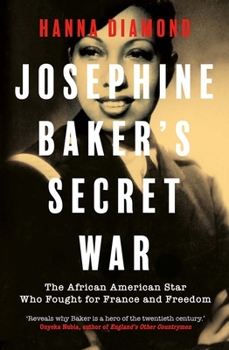
Josephine Baker’s Secret War: The African American Star Who Fought for France and Freedom (2025) by Hanna Diamond is an enlightening and thoroughly researched history of how one of the most famous celebrities of her time became a spy for the French Secret Services during World War II. It is also an important work, filling in a mysterious period of Baker’s life that helps explain her actions both before and after the war. Baker’s fame as a cabaret singer in the interwar years was well known. She also came to be known for her civil rights work in America and her humanitarian efforts globally in the 1950s and 60s. But drawing on contemporary sources, Diamond found that Baker was a valuable spy. She served as “our No. 1 contact in French Morocco” according to US wartime counter-intelligence officer Lt. Paul Jensen. Her support of the allied mission “at great risk to her own life” included helping pass along information that proved crucial at key moments of the conflict, such as after the allied landings in north Africa in 1942. Diamond’s new account helps explain the motivation for Baker’s involvement. We also learn how her actions shaped her post-war advocacy.

Baker’s decision to stay and fight for her adopted country, writes Jon Henley, “came from the huge debt she felt to France, which had made her a star—and it had its roots in the racism she grew up with.”

Château des Milandes in the Dordogne, purchased by Baker while she was one of Europe’s brightest stars; it was where Baker hid freedom fighters and a stash of weapons during the war (from Wikimedia Commons)

The writer Chloe Govan described Baker’s pre-war connection to the French in these words:

“She formed a special relationship with France due to its values of equality and freedom—quite unlike the ultra-conservative and religious atmosphere she had grown up in. For her, the skimpy costumes she now wore represented not shame and scandal but freedom from the oppressive culture which had persecuted her.

Meanwhile, her banana dance was an act of reclamation—taking back ownership of hurtful caricatures and reinventing them on her own terms. Once a tool of derision mocking her race, they could be reclaimed and redefined through costumed performances. The crowd implicitly understood—but sadly, this acceptance was unique to France.

On a 1928 tour, when she stepped outside the comfort zone of Paris and entered the largely Hitler-supporting territory of Vienna, she was met with boos and cries of ‘black devil!’. As indecency protests formed, Josephine was no longer a free woman, but a helplessly persecuted child all over again, crushed by racism. The church opposite even rang its bells during her concert to warn people they were ‘committing a sin’ by watching her perform.”

Baker had married and become a French citizen in the years before the war. So when she decided not to move back to America as the Nazi threat grew, she “stayed as a Frenchwoman, not as a Black American.” Diamond notes,

“Discrimination was behind her decision to stay in France. In Paris, she had distanced herself from the other African-American exiles. She wanted to be French and when the war came, unlike others who left France, she stayed to support her compatriots.”

Diamond carefully crafts three interlinking themes into Josephine Baker’s story. “The first is the theme of celebrity.” With her fame and easy-going manner, Baker learned to use her celebrity as a cover, enabling her “to play her part in the battle to free Europe from Nazi oppression.” It was relatively easy for Baker to move between countries as she entertained troops and met with local and national leaders. She became, notes Diamond, “a remarkably effective undercover intelligence agent for the Allies and for France.”

The second theme that weaves throughout the chapters is Baker’s growing “rediscovery” of her own African American identity. Much of this came from her contacts with American troops in North Africa, her base of operation for the first few years of the war. Baker’s personal growth led her to join the civil rights movement of the 1950s and 60s, to the point that she had a speaking role during the famous 1963 March on Washington alongside the Rev. Dr. Martin Luther King, Jr.

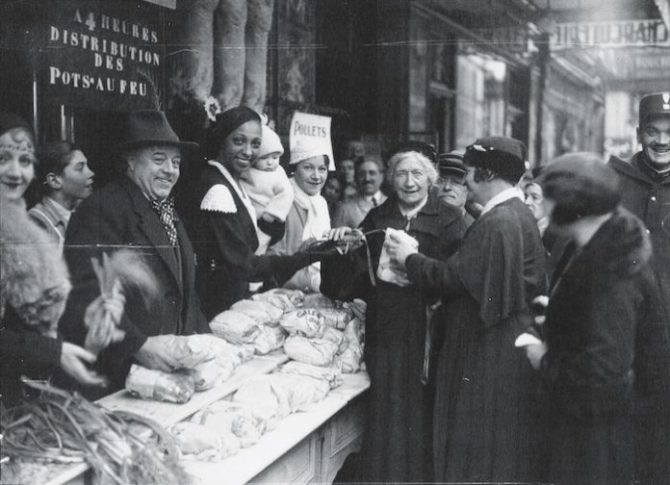
Josephine Baker distributing aid during the Second World War

Finally, Diamond explores Baker’s social fluidity—rare for anyone but rarer still for a Black woman—to “gain acceptance across different social groups and nationalities,” allowing her to play “an invaluable international role as a cultural facilitator and diplomatic intermediary.”

Diamond provides the reader with accounts of Baker’s growth as an undercover agent; how she learned spy craft from her handler and sometime lover, and the inventive ways she would hide messages in her bra or written with invisible ink on her music. It turns out she was a very good spy. “She proved expert enough at it to be awarded, after the war, the resistance medal and, belatedly, the Légion d’honneur with the military Croix de guerre.” Through Diamond’s writing we learn about Baker’s devotion to the Gaullists throughout the war and about her service as a second lieutenant propaganda officer of the auxiliary services of the Women’s Air Force. She easily slipped back into her role as a performer after the war. The French and all the Allies recognized her contributions, at least on a superficial level.

But we also learn of Baker’s blind spots. She could be a vocal advocate for racial minorities in the United States while at the same time, due to her “idealization of France,” keep largely quiet when the country’s north African colonies pushed for independence.

In 2021, French President Emmanuel Macron decided Baker should become the first Black woman to enter the Panthéon in Paris, the mausoleum for France’s “great men.” The French president’s reference of her wartime activities—which were a revelation to many—completely “transformed Baker’s legacy both in France and overseas.”

Diamond sums up Baker’s actions and legacy by noting that it is fitting that she attracted France’s highest national honor.

“Her wartime actions were driven more than anything by her conviction that France and its republican traditions had to be defended. France had offered her safety and opportunity, allowing her to thrive as an African American entertainer and to achieve a degree of success that would have been impossible in the context of America’s racial divisions. Her attachment to France was visceral and she embraced France completely. . . . After the war, Baker commented that ‘My life as a spy is the story of a Frenchwoman who loved her country.'”

Josephine Baker used her talents and her fame to fight for France and for freedom. So many, with so much more privilege, have done much less.

More to come . . .

DJB

Top images of Josephine Baker from A Mighty Girl

From the bookshelf: October 2025

Five books. Every month. A variety of topics from different genres.

Here is the list from October 2025. Clicking on the title will direct you to the original post on MORE TO COME.


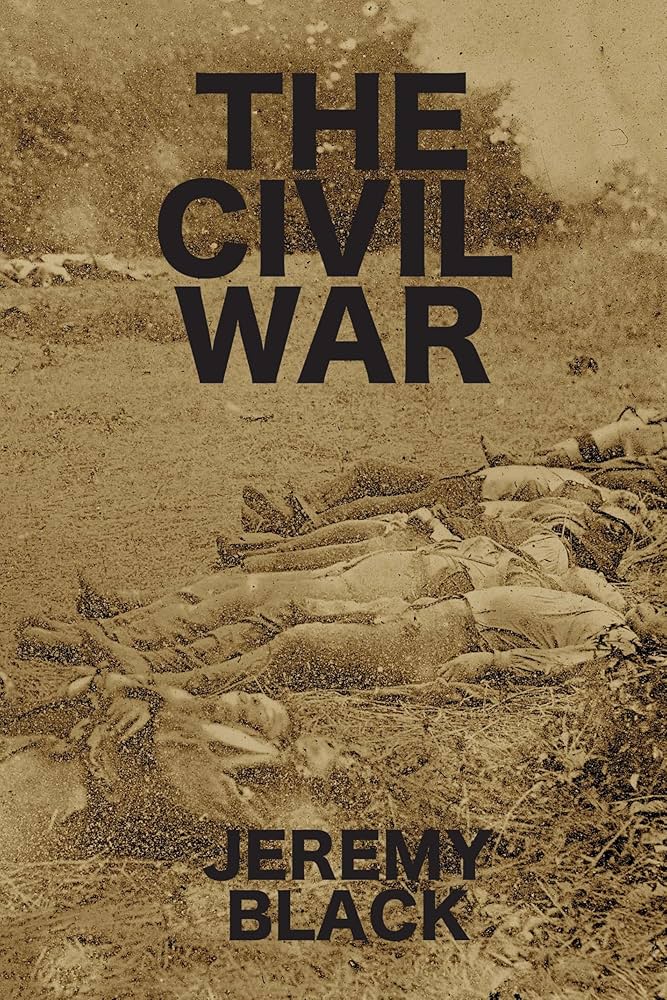
The Civil War (2025) by European military historian Jeremy Black, MBE reorients readers to see what was extraordinary in the civil war of “the American colonies.” As Black states early in this work, the Civil War “was the most traumatic conflict, indeed event, in American history.” That holds true even when compared with the War of Independence, as the divisions within the country at the time of the revolution were not as long-lasting. The Civil War in America was not just a military struggle; it was also a political struggle. Black steps back to take a larger, and more international view, to show that the conflict “helped define American politics and human geography for a century, and its echo remains strong today.” This concise new volume asks the reader to look at this watershed moment in world history with a broader international perspective.


The Searcher (2020) by Tana French begins as Cal Hooper, after twenty-five years in the Chicago police force, moves to a small rural Irish village seeking a fresh start. Having survived a broken marriage and drained by the demands of his job, Cal is seeking nothing more than a small fixer-upper, land to walk, time to think, and a good pub. But into his search for a new start walks a local kid who comes looking for help. Trey’s brother is missing and no one seems to care. Cal doesn’t want to get involved but he also cannot bring himself to walk away. Slowly Trey comes to trust Cal and the former cop comes to care about finding answers in a village that likes to hide secrets.


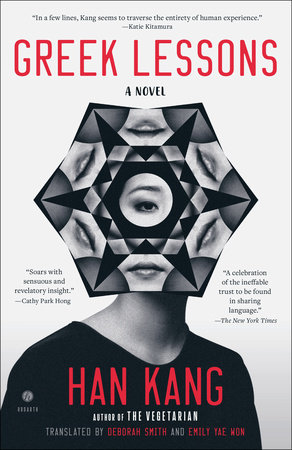
Greek Lessons: A Novel (2023) by Han Kang (translated by Deborah Smith and Emily Yae Won) is set in Seoul, South Korea, where a young woman watches her Greek language teacher at the blackboard. She tries to speak but has lost her voice. Her teacher is drawn to the silent woman, for he is also moving into isolation as day by day he is losing his sight. Two ordinary people are battling personal anguish in this extraordinary work. There is a sadness that pervades their story but there is also hope. There is shared suffering that brings the man and the woman together in this work that is, as more than one reader has noted, a love letter to human intimacy and connection.


Version 1.0.0

An Odyssey: A Father, A Son, and an Epic (2018) by Daniel Mendelsohn is a brilliant combination of memoir and literary exploration that begins when the author’s father, eighty-one-year-old Jay Mendelsohn, decides to enroll in the undergraduate Odyssey seminar his son teaches at Bard College. It is not surprising that early in the course the father and son have a public disagreement in class over the nature of Odysseus. Was he a hero or a self-pitying liar? It is the beauty and genius of this book that Daniel can hear his father’s disagreement; listen to how his seminar students react to father, son, and the text; and lead everyone to a far deeper understanding of the epic poem. After the semester ends father and son take a Mediterranean cruise, retracing the mythical journeys of Odysseus, where another side of Jay is revealed. Like Odysseus and perhaps most of us, he is polytropos: “many-sided” or “much-turning.” By examining their life together, Daniel is making his own peace with the past. It is a beautiful and thoughtful journey.


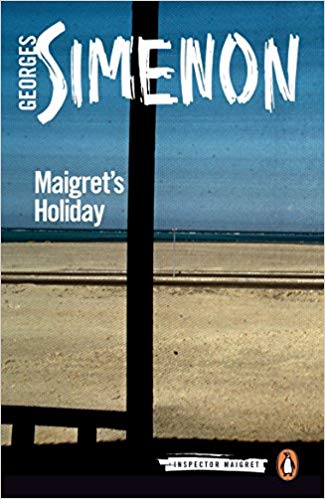
Maigret’s Holiday (1948) by Georges Simenon is the 28th book in the writer’s famous Inspector Maigret series. The tale begins as Maigret and his wife are on holiday in the seaside town of Les Sables d’Olonne. Madame Maigret, with a fever and complaining of vague pains, is admitted to a hospital. She is still there nine days later after an emergency operation for acute appendicitis. During that time a young woman in room 15 in another ward dies and Maigret is unable to resist investigating the circumstances of her death. Through his investigations the inspector discovers someone else’s life is in danger, but he doesn’t know whether it is a man or a woman and how the deed might be done. In the end Maigret uncovers the truth, even when some of the locals—including some very important men and women—do not want to accept it.


WHAT’S ON THE NIGHTSTAND FOR NOVEMBER (SUBJECT TO CHANGE AT THE WHIMS OF THE READER)

Keep reading!

More to come . . .

DJB


NOTE: Click to see the books I read in September of 2025 and to see the books I read in 2024. Also check out Ten tips for reading five books a month.


Photo by Kateryna Hliznitsova on Unsplash

I’m shocked—shocked—to find that gambling is going on in here

Gambling and sports . . . what could possibly go wrong?


Anyone with a brain could have seen this coming.

In fact, I did see what sports gambling would bring, beginning with three posts in 2021:

When I noted, among other things, that those in control are killing the product that baseball fans like me want to consume, that was just common sense. As it was when I made similar points in 2022, 2023 (here and here), and finally in 2024. So chalk this post up, if you wish, as my annual rant.

It doesn’t take a rocket scientist to figure out that bringing gambling money into sports will corrupt the games—the owners, the players, the fans, just about every aspect. Here’s a good column from the Nationals personal experience with this problem last year.

Only last month the NBA got caught up in a gambling scandal that was apparently being run by the Mafia.

And here’s Joe Posnanski’s story from yesterday about the bizarre case of the Cleveland Guardian pitchers:

“Emmanuel Clase and Luis Ortiz were indicted for attempting to rig pitches during a game. What is ‘rigging pitches?’ People bet on everything in sports now, including balls and strikes. Apparently, Clase and Ortiz worked out with gamblers which pitches they would purposely throw as balls.

Apparently, gamblers made hundreds of thousands of dollars on this scheme.

I mean, did anyone doubt that something like this was coming?

Does anyone think this will be the last of it?”

But what really made Joe’s story stand out for me was this ending:

“More and more players tell me how the gambling revolution has impacted their lives. They get threats. They get verbally abused. Their families hear from betting losers. It’s constant. It gets louder every day.

And the leagues that should protect them — the leagues that EXIST to protect them both because it’s the right thing to do and because this cuts to the very heart of sports trustworthiness and legitimacy — have surrendered to money instead.

It’s heartbreaking. And it’s only going to get worse.”

When we have a corrupt administration run by a convicted felon, big media companies run by oligarchs interested only in their personal bottom line, and a Supreme Court in the bag for business and money interests, what else did we expect from our sports leagues. I’ll quote once again this line from my friend Robyn Ryle:

Let me put it more plainly — the players want baseball to be good. The owners just want to make money. Period. End of story.

Betting parlors are now part of many ballparks and stadiums. Casinos are practically a license for their owners to print money, so they couldn’t resist. I only know of one person dumb enough to bankrupt a casino, which should tell you all you need to know about that individual’s so-called business acumen. But that’s another story.

We’ve seen this all before. In the 1910s and 1920s. In America. It did not end well. On multiple levels. We barely survived the crash and the turn away from democracy. Sports were so freaked out by the Black Sox scandal that the owners actually brought in a commissioner to clean up the game. Now those types who fought the people reclaiming their government (and their sports) and instituting rules, regulations, and accountability are back stronger then ever.

When will we ever learn.

More to come . . .

DJB

Image of roulette wheel by Greg Montani from Pixabay

America is an effort

Lessons in history—and on the art of being human—from David McCullough.


Last Tuesday Americans did the work of democracy. Against an administration that seeks authoritarian rule and an oligarch-controlled right-wing media system devoted to spreading misinformation and fear, Americans responded. They showed the truth behind what the greatest of our politicians said in the dark hours before the storm of the Civil War: “This country, with its institutions, belongs to the people who inhabit it.”

I happened to read that quote the day after the elections. It was in a short but powerful new book of essays by one of America’s most beloved historians and storytellers. A man who, in the words of Jon Meacham, “subtly tutored us in the art of being human—of loving our neighbor as ourselves, of giving as well as taking, of lending a hand rather than clenching a fist.” A national treasure who “lived and worked ‘like a man coming over the top of a hill singing.'”

History Matters (2025) by David McCullough (edited by Dorie McCullough Lawson and Michael Hill) is a posthumous collection of thought-provoking essays—many never published before—by the Pulitzer Prize–winning historian and bestselling author. McCullough, who passed away in 2022, wrote eloquently and carefully about the American experience. He told us why American history mattered. The editors have grouped these essays into sections that consider why history is important, central figures in McCullough’s work, his influences, and a final one on writing. History is not dead in these pages; in fact, history is living and unfolding. We are an important part of that history.

Consider the previously unpublished essay on the hard, essential work of being an American citizen. It is just as important today—perhaps even more so—than when McCullough wrote it in 1990. He begins with a few simple lessons from the past, the first being that “nothing of lasting value or importance in our way of life, none of our proudest attainments, has ever come without effort. America is an effort.”

That’s why I believe David would have liked the response of the people doing the work of democracy last Tuesday: poll workers getting up before the sun, voters standing in long lines, young adults making themselves aware of the issues, everyday Americans running for offices from governor to school board member, workers leaving the office early before the polls closed, so many making the effort to vote.

“Work got us where we are. Easy does it has never done it for us and never will. We are the beneficiaries of men and women who toiled ten, twelve hours a day on farms, on railroads, in mines, in mills, at kitchen sinks and drafting tables. We like to work; we judge one another by how well we work, because at heart we are an extremely industrious, creative people.”

And in another observation that fits our time, he implored us not to expect politicians to solve our problems for us which he characterized as “another lesson from the past.”

“History shows that Congress acts when the country wants action. Leadership takes charge in Washington when it is clear the country will accept nothing less. The sweeping reforms enacted at the start of the twentieth century—limits on child labor, women’s suffrage, protection of our natural resources—all came about because the country demanded such change. And the same was true during the next great upswelling of progressive action in Congress, in the early 1930s, when Social Security, rural electrification, and the minimum wage were established . . .

If we don’t vote, if we are unwilling to pay taxes, or even to take part in the census, then what good are we as citizens? What will history say of us?”

What will history say, indeed.

I was thinking about the work we have to do as citizens not only in the context of elections, but as we approach November 11th, long known as Armistice or Remembrance Day. Originally we commemorated the end of what was known as The Great War, which came to a close on the 11th hour, of the 11th day, of the 11th month. Kurt Vonnegut famously wrote of Armistice Day in the preface to Breakfast of Champions.

“It was during that minute in nineteen hundred and eighteen, that millions upon millions of human beings stopped butchering one another. I have talked to old men who were on battlefields during that minute. They have told me in one way or another that the sudden silence was the Voice of God. So we still have among us some men who can remember when God spoke clearly to mankind.”

Of course another war came after that war to end all wars, and we have places such as Normandy Beach to remember the hard work—and ultimate sacrifice—of so many to defend America and our democratic way of life.

McCullough’s masterful essay on what it takes to be an American citizen ends with the admonition:

“We are what we do. The test will be in what we value, what we want.”


The editors also include a delightful interview that McCullough gave to The Paris Review, one which shows the character of the man that permeates this new book. In it he spoke lovingly of his work on the history of the building of the Brooklyn Bridge, comments that brought back this personal memory.

A few short weeks after the trauma of 9/11, David—who was a proud trustee of the National Trust for Historic Preservation—gave the keynote address at the National Trust conference in Providence, Rhode Island, gracing us with the memorable speech included in an earlier collection of essays: The American Spirit.

I was alone backstage with David before he went out to remind us of who we are and what we believe as Americans. He could have said he needed this time to collect his thoughts. Instead, he wanted to talk. David McCullough was, first and foremost, interested in people. I mentioned that while I had difficulty selecting a favorite from among his many works, my father had no such problem. An engineer, Tom Brown loved his book on the building of the Brooklyn Bridge, a fact which delighted David to no end. He told me that it was one of his favorite books to write.

That day, in a room behind the sanctuary of The First Baptist Church in America, we discussed the Brooklyn Bridge as well as his recent study of John Adams. David offered to sign a copy of the former for my father and the latter for me, a generous gift I will always treasure.


There is so much to love and cherish in this new book of David’s essays. Works about the American painter Thomas Eakins and the writer Harriet Beecher Stowe enrich our understanding of their times and bring to light individuals who many of us know—if at all—from one or two touchpoints: perhaps Eakin’s The Gross Clinic or Stowe’s Uncle Tom’s Cabin. His commentary on George Washington is a masterclass in understanding what matters in life. In a long essay on Harry Truman, McCullough wrote that “character counts in the presidency more than any other single quality,” and that “a president with a sense of history is less prone to hubris.”

Let those two thoughts sit in your mind for a while.

I loved David’s lists of favorite and influential books.* When he reminds me of the power of the letters of Flannery O’Connor, I go straight to my bookshelf and pull out my volume to read in the coming days. When David writes . . .

. . . “I love beginnings. I love the beginning of books. I love the beginning of All the King’s Men with Robert Penn Warren’s description of Highway 58 in the night” . . .

. . . I pull my dog-eared paperback from my college days off the shelf and read the first two pages and marvel at the language.

And who would have guessed that Horton Hatches the Egg by Dr. Seuss was a McCullough favorite?


David’s remarks from the commencement address to the graduating class of 2018 at Providence College are a wonderful template not just for life, but for the work—the effort—we all have ahead to keep the spirit, the idea, of America alive.

“Be generous. Give of yourselves. Count kindness as all-important in life. Take interest in those around you. Try to keep in mind that everyone you encounter along the way, no matter their background or station in life, knows something you don’t. Get in the habit of asking people about themselves, their lives, their interests, and listen to them. It’s amazing what you can learn by listening.

Remember that speaking the truth, loyalty, decency, courage, and character all count. All matter greatly still, indeed, count more now than ever. We as a nation are experiencing serious bumps in the road. Don’t get discouraged, don’t give up. We’ve known worse times and come through, and we will now if we never forget who we are and what we stand for. The world needs you . . . there’s work to be done. Let’s never lapse into being spectators only. If you’re going to ring the bell, give that rope one hell of a pull.”

Last Tuesday, millions did the work of democracy, doing their small but essential part to ensure that history will look back favorably on our ringing of the bell in these times.

We are what we do.

More to come . . .

DJB


*In my personal list of influential books posted in 2014, I have several that were also on David’s list, plus there is one—no surprise—that was written by David McCullough.


Image of David McCullough at work from his Facebook page. Polling station image from Pixabay.

Pull up a chair and let’s talk

Summarizing 20 conversations with authors about writing, truth, the past, the present, and life’s lessons.


Wednesday’s post—a conversation with author Rich Moran about his new book The Accidental Vineyard—was the 20th in a series that I call Author Q&As. Three years ago I asked my good friend, the writer and editor Janet Hulstrand, if she would answer some questions about her recently published memoir. She said yes and the idea took off from there.

After reading these 20 books and following up with conversations, I’ve learned so much about history, theology, historic preservation, planning, architecture, perspectives, social and environmental justice, the art of observation, the writing craft . . . and life. Contrary to the title, these interviews did not take place face-to-face but were completed by email. In the give-and-take of pulling those emails into a coherent story, I feel I’ve been in my own personalized writing seminar. Some of the authors are long-time friends. Others have been colleagues from my years in the preservation field. A couple, having found these interviews via the magic of the internet, reached out to see if I would find their work of interest and became new-found friends. Two came to me via the lecture circuit. In one instance I was at a book reading at our local independent bookstore and brazenly approached the author to see if this was something that would pique his interest. These are some of the most observant, smart, often funny, always thoughtful individuals I know.

This milestone has been on my mind for a while, and in response I’ve taken a snippet from each of these conversations—little pieces of wisdom if you will—and compiled them into this post. Listed alphabetically by title, each entry includes the book’s publication date and a link to the original interview.

With that introduction, let’s jump in to the first conversation—which is, conveniently, the one that started it all—and see what these writers have to say!


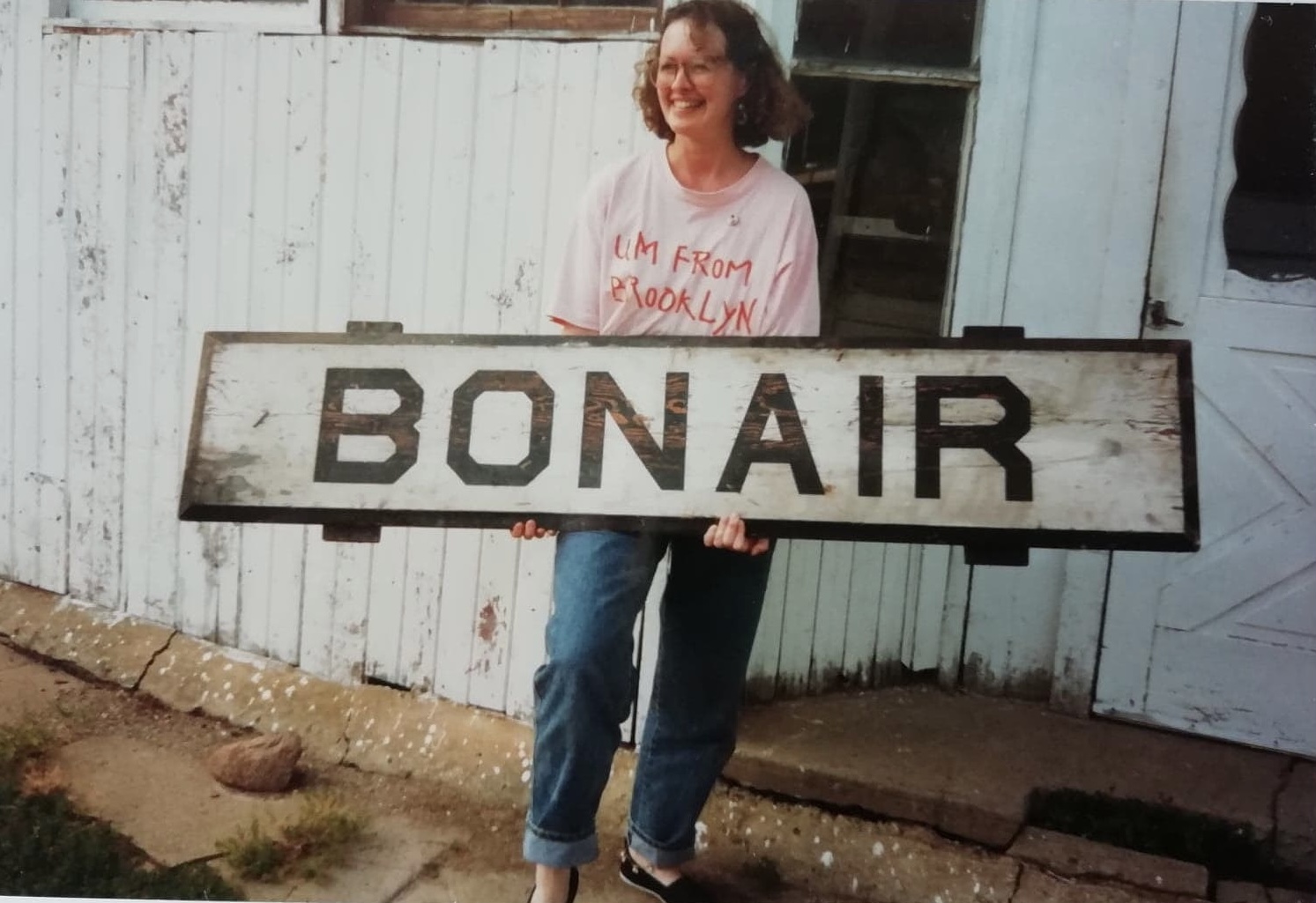
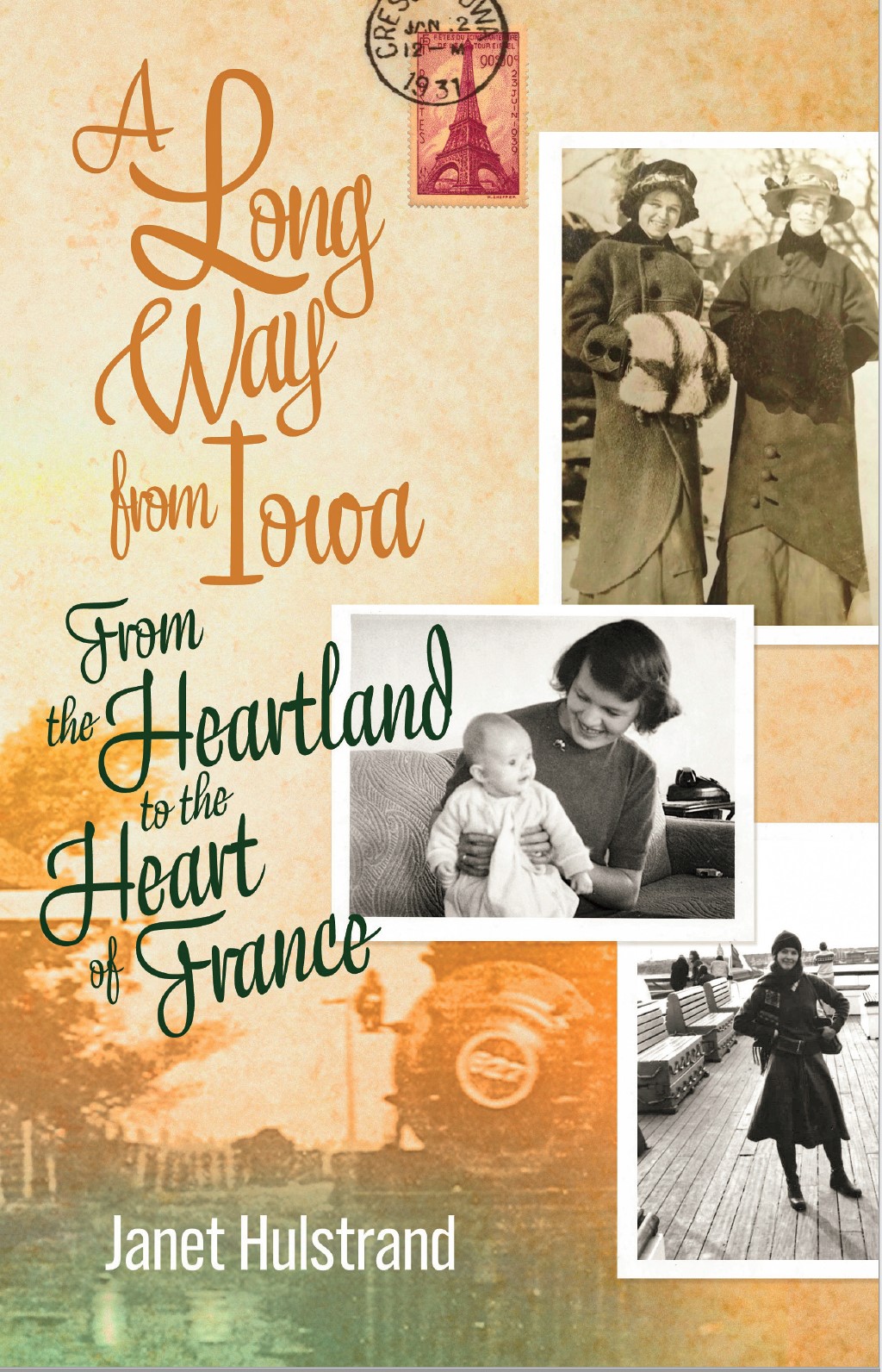
A Long Way from Iowa: From the Heartland to the Heart of France (2023) by Janet Hulstrand

Janet’s story, as seen in the title, is grounded in place. I was interested in knowing the importance of place—and these particular places—in understanding who she is.

“There are two main threads in my memoir: one is my coming to terms with my mostly positive, but often conflictual relationship with my mother, and to a lesser degree with my grandmother as well. And the other thread is about my becoming a writer. These two threads are very strongly interwoven, since I believe that both my mother and grandmother would have liked to be able to be writers themselves. But they didn’t have that chance . . . I wanted to pay tribute to them for the legacy they left me; so I’ve tried to tell a bit of their stories, as well as mine. . . . [Places] are very important [to these stories]. There are three places where I feel most at home: Minnesota, Brooklyn, and France. These places are very different from each other, and yet all of them are very important to me.


AMEN? Questions for a God I Hope Exists (2022) by Julia Rocchi

I observed that doubt and mystery play an important role in Julia’s search for meaning, beginning with the book’s title. I wanted to know how important it is to recognize and support questions and doubt in our spiritual quests.

“From early on in my writing process, I developed a deep attachment to the question mark in my book’s title. For me, this simple punctuation captured the essence of what I was trying to communicate—that when we ask questions of God, the Universe, whatever it is that we believe to be bigger than ourselves, we do so not to arrive at answers, but to inspire still more questions . . . as I grow more comfortable with mystery, I’ve come to see questions and doubts as cairns on a winding, unmappable journey—little signposts asked and shared by others so we can grapple with unknowing, together.”


Books and Our Town: The History of the Rutherford County Library System (2023) by Lisa R. Ramsay

Linebaugh Library—flagship of the Rutherford County Library System—has been led by a number of strong women. My mother and sister were among them. I asked Lisa about the role of the women at Linebaugh in shaping the broader community.

“Many women connected to the library system have made a lasting impression on our community; some have been publicly recognized for their impact. The video series Leading Ladies of Rutherford County History highlighted the lives of fifteen women, three of whom had links to the library system: Linebaugh’s first librarian Myla Taylor ParsonsMary Scales (a Linebaugh board member from 1968 to 1985), and Myrtle Glanton Lord, for whom the library at Patterson Park was named. These women made vital contributions as leaders, helping to provide access to educational resources and opportunities.”


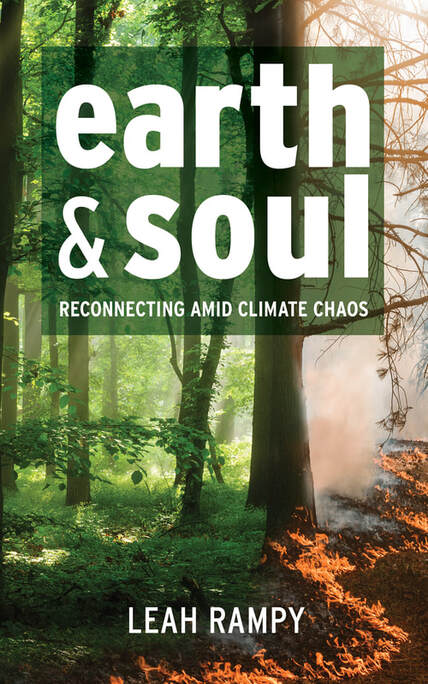
Earth & Soul: Reconnecting Amid Climate Chaos (2024) by Leah Rampy

In our conversation I noted that the writer Suzanne Simard had written that “the forest is a single organism wired for wisdom.” I asked Leah how believing and living into that perspective changes the way that we relate to nature.

“Teacher, author and long-time activist Joanna Macy offers four simple and profound sentences that continue to resonate deeply within me: ‘It’s all alive. It’s all connected. It’s all intelligent. It’s all relatives.’ If we could live into the truth of those statements, our relationship to the living world would change dramatically.”


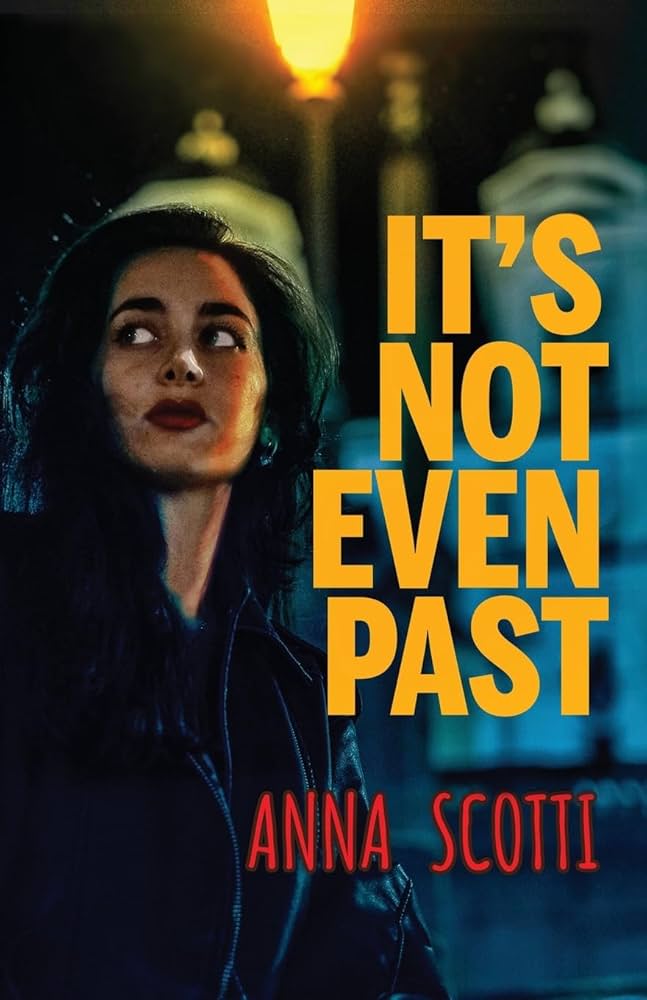
It’s Not Even Past (2025) by Anna Scotti

When I asked what writers working today inspired her, Anna—a mystery writer among other genres—had a long and wonderful list. You should check it out. Clearly good writers read the works of other writers for inspiration. Here’s one example.

Elizabeth George’s Inspector Lynley novels are marvelous―she’s incredibly talented. What she did with the back-to-back novels, With No One as Witness and What Came Before He Shot Her provides a masterclass for mystery writers, as well as a feast for readers.”


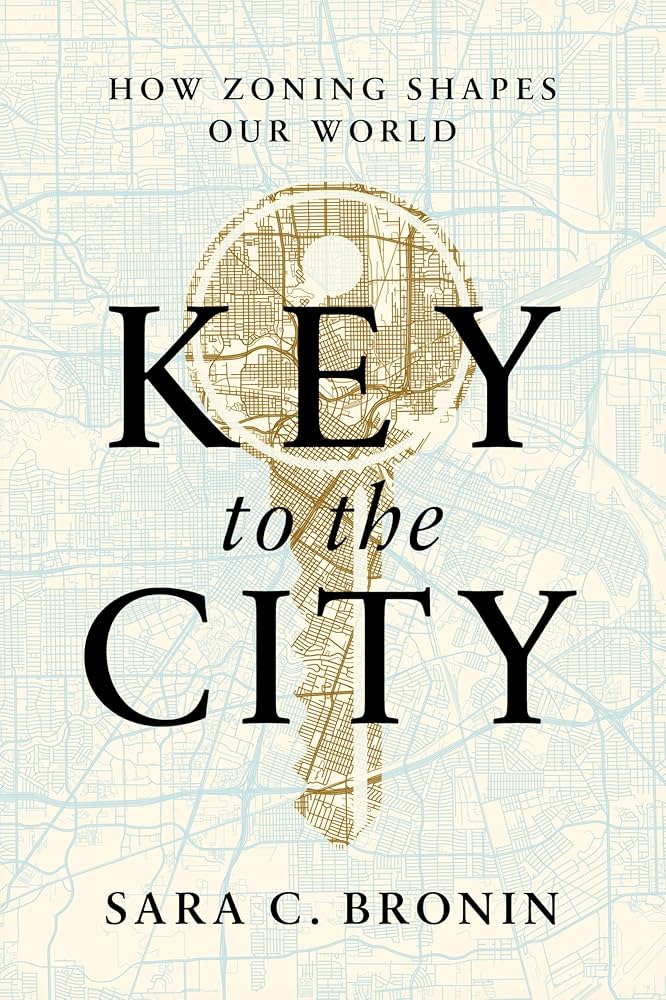
Key to the City: How Zoning Shapes Our World (2024) by Sara C. Bronin

Sara grew up in Houston which famously does not have a zoning code. I wanted to understand her take on the personal nature of zoning on all manner of Americans, and what lessons she wanted to share with her children and others of the next generation.

“Zoning affects all of us, whether we know it or not. In the book, I briefly mention my research project, the National Zoning Atlas, an online, public map that seeks to standardize information about zoning across the country . . . [E]ven if you live in one of those places [without zoning], the ways other communities zone have downstream effects. We’re all interconnected. And that’s why we have to collectively work to ensure that zoning, where adopted, works for all of us.”  


Never Say Whatever: How Small Decisions Make a Big Difference (2023) by Richard A. Moran

I was interested in hearing from Rich, a successful business consultant, former college president, and venture capitalist, about the reason the word “whatever” has come to be such a toxic response in both our business and personal lives.

“The word ‘whatever’ can be both a lazy response and a way to avoid a decision. Both are behaviors that are not going to live a better life or enhance your career. The small decisions are especially susceptible to a ‘whatever’ but it’s all the millions of small decisions that make for a good life and a successful career. . . . In global surveys about the most annoying words we deal with, ‘whatever’ is always near the top. The simple act of removing that word from your persona will make you a better person.”


New Building in Old Cities: Writings by Gustavo Giovannoni on Architectural and Urban Conservation (2024) edited by Steven W. SemesFrancesco Siravo, and Jeff Cody

To open this interview, I checked in with the editors to determine why they decided to focus on Gustavo Giovannoni, an architect working in Italy over 100 years ago.

“We chose to focus on Gustavo Giovannoni because he was one of the first to understand the historic city not as a collection of isolated monuments but as a coherent, living organism—a complete system whose value lies as much in its ordinary fabric as in its landmarks. His work established an integrated approach to urban conservation that remains highly relevant today. Giovannoni introduced concepts that have since become foundational to the field: the importance of vernacular architecture (what he called edilizia), the need to respect the ambient character of historic areas (ambientismo), and the idea of incremental urban renewal (diradamento) as an alternative to both neglect and wholesale demolition.”


Paris: A Short History (2024) by Jeremy Black, MBE

As I was preparing to travel to Paris, I asked Jeremy what places off the beaten track he would recommend for someone wanting to know more about the history and essence of the city. His reply was short and direct.

“The Canal and its route from Arsenal via Stalingrad; Asnieres as example of a swallowed community; Vincennes for history that few visit; mint tea at the main Mosque. Also, I recommend a visit to the Hotel de Sens for its late medieval splendour.”


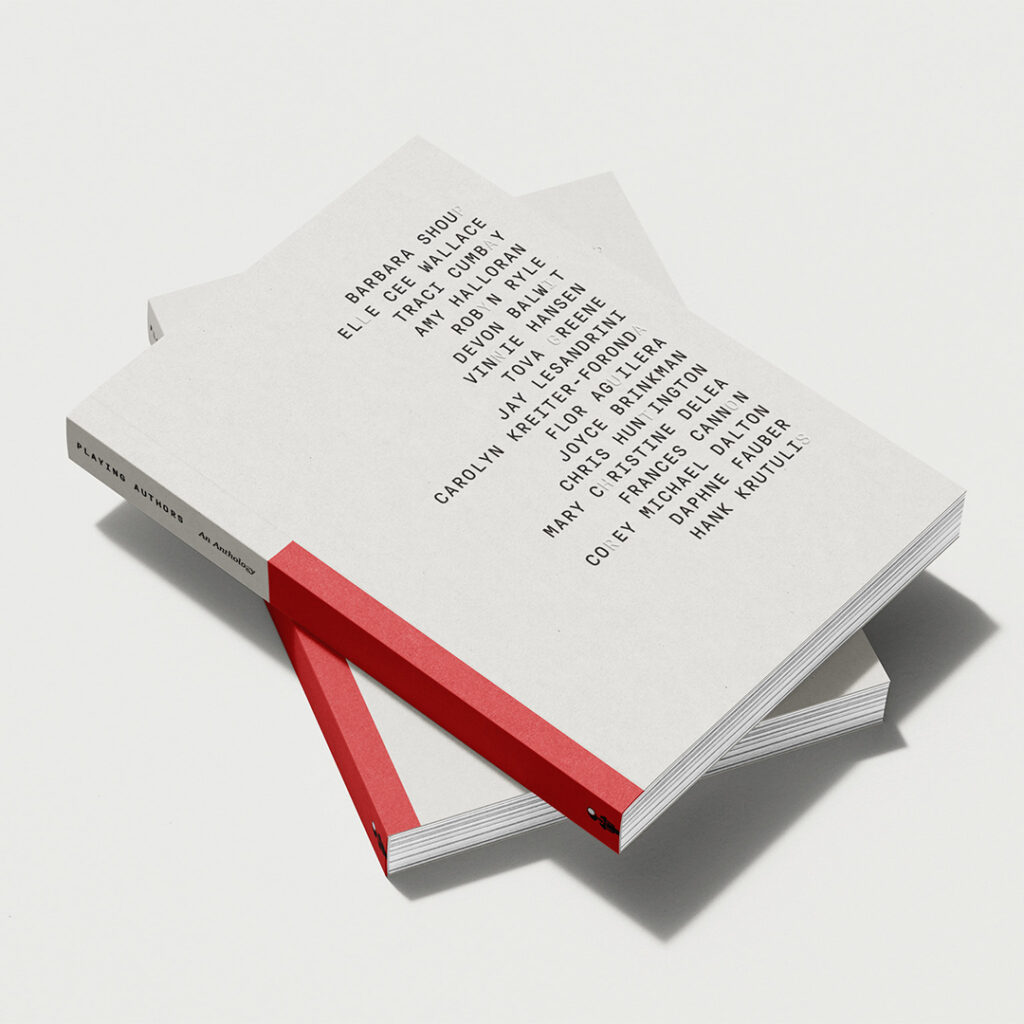
Playing Authors: An Anthology (2023) is a collection by 18 writers asked to consider this question of authorship; the anthology’s opening story, “Hemingway Goes on Book Tour,” is by Robyn Ryle

I noted that it reads as if Robyn had a great deal of fun in writing this story, and I wanted to know if other “famous authors on book tours” come to mind, and if so, which ones would she like to imagine in a sequel.

“For better or worse, Hemmingway’s the model against which a lot of American writers measure themselves. Plus, he really did create his own larger-than-life brand. Even as it was fun imagining Hemingway on book tour, there’s a sadness there, too. Book tours make you question your whole existence as a writer and a person. When I think of other writers on book tour, the sadness wins out over the humor. Virginia Woolf? Book tours would have been a nightmare for her. I like to think she would have stolidly refused to do any such thing. Maybe today’s authors should do the same. Jane Austen’s interesting with her wry sense of humor. I could imagine her getting into it, having a YouTube channel, a podcast, and thousands of Instagram followers.”


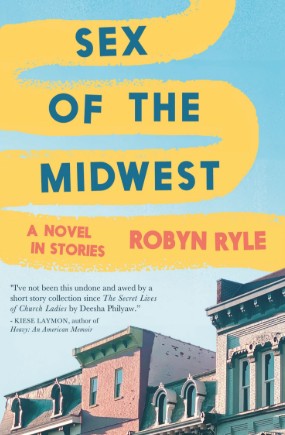
Sex of the Midwest: A Novel in Stories (2025) by Robyn Ryle

Despite the title, this is really a love letter to small towns. I asked Robyn, who lives in Madison, Indiana, if those places had lessons for the rest of the country. She responded with this thoughtful perspective.

“I think the loss of community is part of how we got to this very frightening place we’re in right now as a country. I think small towns can remind us how to live together, here, in this actual physical world, rather than in the cruel and terrifying spaces of social media and the internet and the news.”


Sleeping With the Ancestors: How I Followed the Footprints of Slavery (2023) by Joseph McGill, Jr. and Herb Frazier

Joe is the founder and director of the Slave Dwelling Project. In one of my questions, I wanted to know how his work has changed the way historic sites, museums, and preservation organizations present the narrative around slavery.

“Ten-to-twenty years ago, one would be hard pressed to encounter a historic site that interpreted slavery in a researched and respectful manner. Now historic sites are ridiculed if they don’t include the narratives of the people once enslaved at their sites. In my thirteen years of leading the Slave Dwelling Project, I’ve witnessed and influenced the changing of the narrative.”


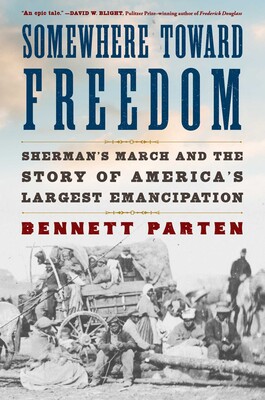
Somewhere Toward Freedom: Sherman’s March and the Story of America’s Largest Emancipation (2025) by Bennett Parten

Ben had asked his readers to reimagine the history of Sherman’s March to the Sea as a “veritable freedom movement” as well as “the first battle of reconstruction.” I wanted to know what important lessons we learn when we see the history of this seminal event through these lenses.

“First and foremost, we are able to see that the desire for freedom on the part of enslaved people pervades the campaign. It is quite clear just based on their actions that they viewed this as a march of liberation, which only underscores the central meaning of emancipation when it comes to understanding the Civil War. . . . Another thing we are able to see is just how important enslaved people were to the overall success of the campaign. They weren’t onlookers; rather, they were participants. . . . But there is also a large story to be told about Reconstruction. The fact is that the size of this emancipation event would go on to have an extraordinary influence on the early shape of Reconstruction.”


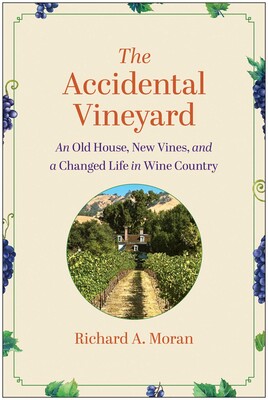
The Accidental Vineyard: An Old House, New Vines, and a Changed Life in Wine Country (2025) by Richard A. Moran

Restoring an old home, much less growing grapes and making a wine that can make the wine list at the Four Seasons, isn’t for everyone. I was interested in knowing what Rich discovered during this journey, and how each of us might apply those discoveries in our lives.

“When people are asked about regrets they’ve had in their lives, the answer almost always references the things they DID NOT do. I should have gone to medical school, I should have continued with the guitar, I should have married that boy/girl from college, I should have taken that big job. Of course, we all have regrets but I keep that philosophy in mind. That is, take the risk, I don’t want to regret not buying that house. I am glad we did.”


The Civil War (2025) by Jeremy Black, MBE

Jeremy wrote that “reconstruction was primarily about reunion rather than reconciliation.” In response to my question about reconstruction (the period following the Civil War), Jeremy responded with this insight.

“Circumstances came to trump ideology in Reconstruction with demobilisation a key context and the extent of Southern opposition leading to an emphasis on the fact of reunion rather than sustaining much that was broader.”


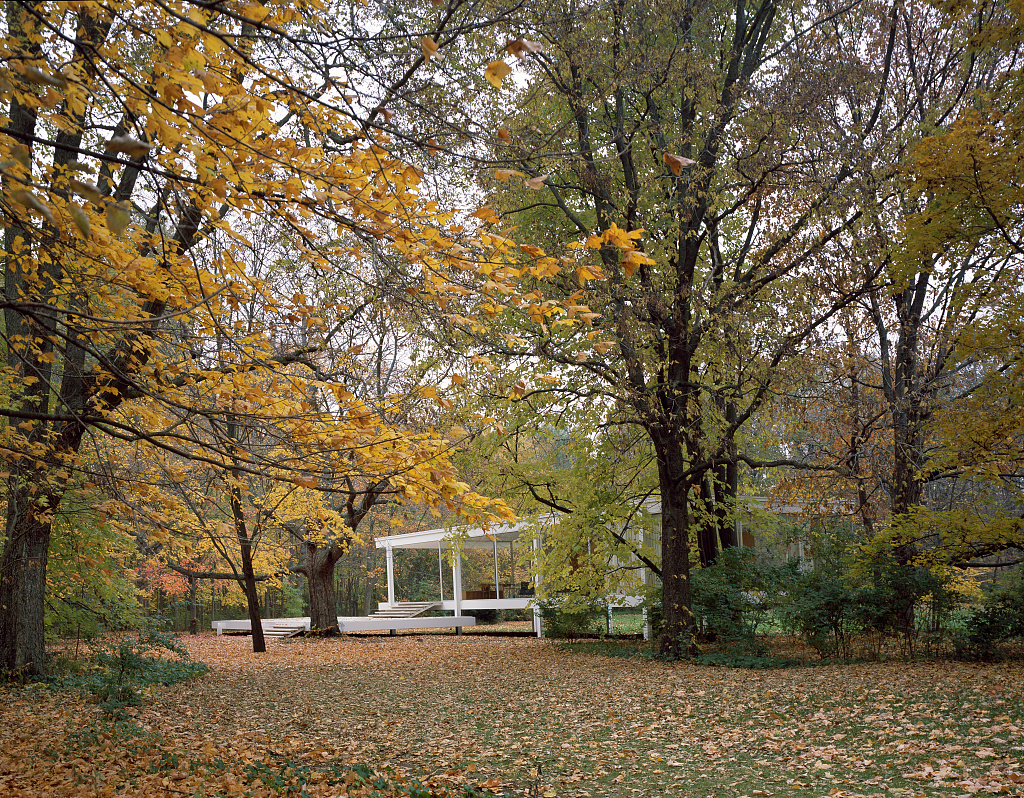
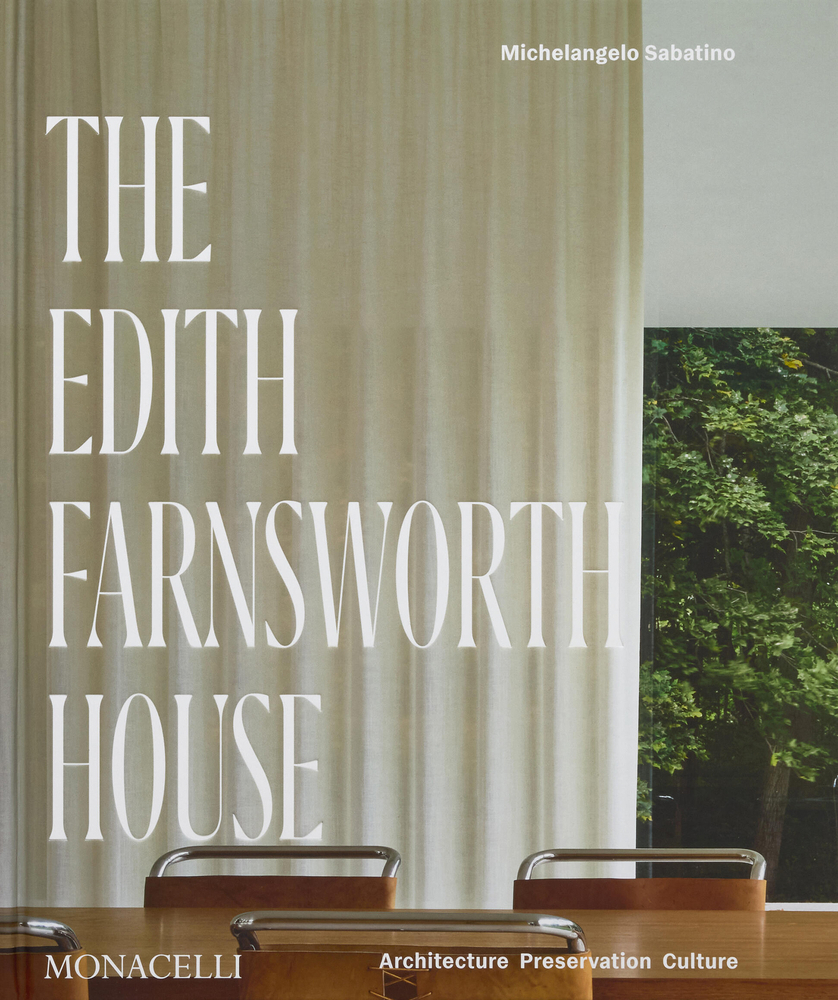
The Edith Farnsworth House: Architecture, Preservation, Culture (2024) by Michelangelo Sabatino

I asked Michelangelo why it was important to put Edith back into the story of the Farnsworth House.

“From the early 1950s onwards, visitors and writers alike did not refer to the house and site with Edith’s first name; in so doing they failed to acknowledge Edith, the client/patron who first commissioned this pioneering modern weekend country house. . . . Although Edith was single and therefore the only client, not acknowledging her name or her title as medical doctor (she was one of only 3 women to graduate in 1938 from Northwestern University’s School of Medicine), led most to associate the house primarily with its renowned architect, Ludwig Mies van der Rohe. Only by expanding the focus beyond the architect to include the client/architect relationship can social and cultural history enrich architectural history.”


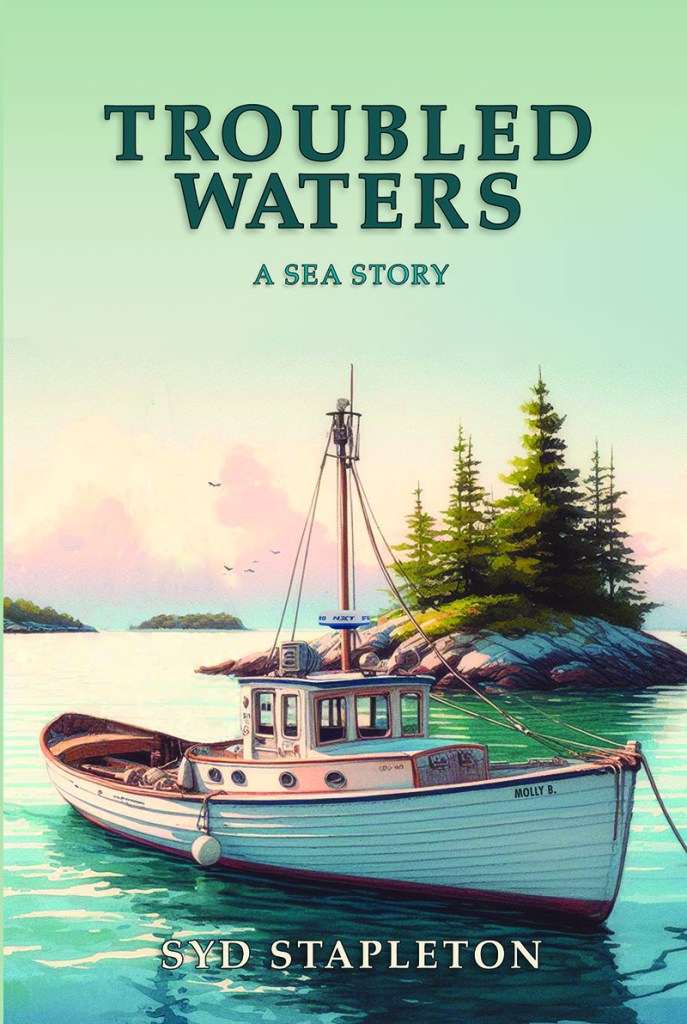
Troubled Waters: A Sea Story (2024) by Syd Stapleton

In one of my questions, I wanted to find out why Syd had chosen fiction―and specifically the mystery genre―to tell this story of environmental degradation and the subsequent coverup. He answered with the following.

“One of the big problems with coverups is that it’s hard to get the facts. We all know that more than a few humans, including officials, can be heavily influenced by money, power and pressure, and that can weave a very tangled web. I wanted to make the point clearly, and I’m afraid that in today’s world, fiction is sometimes one of the few ways to make the truth clear.”


Why Louisiana Ain’t Mississippi . . . or Any Place Else! (2022) by Jay Dardenne with photography by Carol M. Highsmith

In this discussion, I asked Carol how she became interested in photography and what subjects first drew her in as she was establishing her career.

“In the 70s I traveled to Russia and came home with some amazing images because it was so remote. When I arrived home I noticed all of downtown Washington, D.C. was under renovation. I decided to document it . . . starting with the Willard Hotel. And it went from there.”


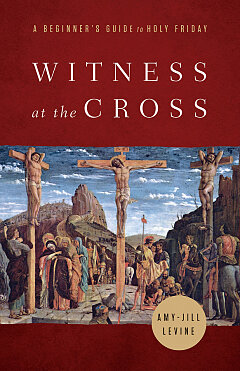
Witness at the Cross: A Beginner’s Guide to Holy Friday (2021) by Amy-Jill Levine

I was interested in learning from AJ how her work teaching Vanderbilt Divinity School courses at Riverbend Maximum Security Institute influenced her consideration of the two men who were crucified with Jesus.

“My insider students consistently ask about the men crucified with Jesus: who stood by their crosses to comfort them, to drive away the birds and wild animals, to mourn? Who recovered their corpses and buried them? My insider students help me to complicate the common identifications of “good thief” and “bad thief,” to recognize the desperation of the man who demands of Jesus, “Aren’t you the Messiah? Save yourself and us!” together with the irony that Jesus, by dying, is for the Gospel “saving” — giving life to — humanity. They see the additional irony in the other man’s plea that Jesus welcome him into his kingdom, since this man is the only person in the Gospel who understands that Jesus has a ‘kingdom.’”


Your City is Sick (2023) by Jeff Siegler

Jeff has been working for years to help communities look at their strengths and weaknesses, building on the former and addressing the latter. In our interview, I asked Jeff about the concept of civic health and how it will help heal our sick communities.

“For 70 years we have been building human habitats that aren’t fit for humans. A sick city is going to have sick residents and our places are making people physically, socially, mentally, and fiscally unwell. A healthy city will foster dignity, pride, connectedness, joy, companionship, and physical activity just to name a few. The concept of civic health is pretty simple, cities should be designed and managed with residents’ health and well-being as the primary concern.”


Many thanks to these wonderful authors for taking the time to share their wisdom with the readers of MORE TO COME. Look for additional interviews in the months ahead.

More to come . . .

DJB


UPDATE: To wrap up the year, my 21st conversation with an author, and the final one for 2025, was published in December when I spoke with Amy-Jill Levine about her new book A Child is Born: A Beginner’s Guide to Nativity Stories. AJ is always thoughtful, perceptive, and witty so you’ll want to check this out.


Image: Writing by Nick Morrison on Unsplash

A wild dream, an old Victorian, and a few grapevines from a kind neighbor

Rich Moran chats with me about his memoir of how an old house and a vineyard changed his life.


How many of us have ever had a wild dream, gulped, and took the leap of faith required to follow through? Dreams, wild and otherwise, are plentiful. Follow through—to the point where the result is a changed life—is much rarer in this world. Each of us has things we regret. Far fewer can say I didn’t want to regret a path not taken, and have built a new life complete with a compelling story to tell.

When those leaps of faith are described by a masterful storyteller who has taken his lumps, made mistakes, understands the difficulty of courageous choice, and yet succeeded at building his life’s dream, we do well to listen to that story.

The Accidental Vineyard: An Old House, New Vines, and a Changed Life in Wine Country (2025) by Richard A. Moran is a heartfelt memoir that begins with a spontaneous drive into California wine country in an attempt to lull a fitful, crying son to sleep. On the drive Moran, his wife Carol, and their three children chance upon an old Victorian house for sale. They make the commitment to restore the house, even though it had challenges by the boatload and would disrupt Rich’s busy, corporate consulting business. Both of those facts turned out to be keys to finding the well-rounded life he didn’t know he was seeking as the journey began.

Several years into the restoration of the dilapidated Victorian, a neighbor stops by and offers to plant some vines. Before he knows it, Rich and his family are wine makers. Restoration projects and building a winery are not for the faint of heart. Moran—in simple yet compelling language—happily lets us all in on the secrets he and his family uncovered in following their dreams. This is a memoir full of heart and humor, as one reviewer phrased it, and I was delighted when Rich agreed to chat with me about the book for the newest installment of our Author Q&A series here on MORE TO COME.


DJB: Rich, you and Carol decide to take a leap of faith, change your well-ordered and successful life, and buy a house that has a “manuscript length” inspection report. What was it about this old house, in this particular small town, that caused you to “fall in love” and lead many of your friends and family members to question your sanity?

RM: David, is falling in love ever easy to explain?  This old house just spoke to us. We felt like we were “adopting” it. As we looked at other houses it seemed that we would be buying someone else’s house. This one was destined to be ours. “Our” house had lots of space inside and out, it had a story to tell and we could be a part of that story, there were no neighbors nearby except for grape vines and it had, my now favorite word, “patina”. The small town of Calistoga had some of the same elements. Plus, the town was not letting money change its character.

Bats are a recurring theme, and perhaps a metaphor for other issues, during the early phases of repair and restoration. I laughed out loud at the stories of the flaming bats flying around the house and especially your recounting of the reactions of the Mexican construction crew after opening the walls on the third floor to release thousands of bats: they fell on their knees and made the sign of the cross because they felt your house was possessed by the devil. Can you describe those scenes and talk about how you dealt with dreams of a country house full of memories that are not always what you expect?

To be clear, I like bats, I just don’t appreciate them flying around in the bedroom at night. Like so many other things that seem like problems, the bats were part of the symptom, not the real problem. The problem was that the exterior of the house, including the roof, was pocked with holes into the house created by woodpeckers. The mortar in the chimney bricks had disintegrated allowing the bats to fly into and out of the chimney. To get rid of the bats, we had to fix all of the other issues first. And we couldn’t harm the bats because they are a protected species. 

Like the song “the shin bone’s connected to the thigh bone” every issue led to another, usually bigger issue. We kept our sense of humor through it all. The bats are now gone and we don’t miss them. I no longer go to bed with a tennis racket by my side. What was so important in our restoration was the notion that we would take our time. We didn’t rush to do anything, including bat removal. We enjoyed the ride. But not the bats so much.

The story of how you went from just restoring an old Victorian to becoming a winemaker speaks volumes about you and Carol and your approach to life. When your “accidental vineyard” shows up, what was on your mind, and what life lessons did acquiring a vineyard in this fashion teach you?
I like wine. I like to drink wine. I like movies about wine, and there are lots of them, BUT, I never thought I would own a vineyard or make wine. When approached to enter the wine world I jumped at the chance, not knowing all that was involved. Now I do and have immense respect for those who are making great wine. There is also a romance to wine. They don’t make movies about growing soy beans. Like the house, we resolved to take our time with the vineyard. Eventually, I realized that every fall we were going to have tons of grapes, we needed a plan and taking our time was less of an option. Life lessons include: “sometimes free isn’t free” (think boats, cars). The big lesson is the beauty of nature.

What do you mean when you say that “every day takes all day” and what are the experiences and lessons you want to convey to your reader in making this point?

Whether you sat around watching TV all day or pruned 100 grape vines, each activity took all day. Why not make it a productive day? I like to think about how to spend a day and be intentional about it. Sometimes days are wasted but it still takes all day. When you go about your day, no matter what it includes, it will take your day.  

Finally, Rich, restoring an old home may be great for people like you and me, but it isn’t for everyone. That certainly goes for growing grapes and making a wine that can make the wine list at the Four Seasons. But your story has a wider appeal than to preservationists and wine aficionados, and towards the end you suggest that we each ask ourselves “what am I saving this for?” Would you help us understand what you discovered during this journey, and how each of us might apply those discoveries in our lives?

When people are asked about regrets they’ve had in their lives, the answer almost always references the things they DID NOT do. I should have gone to medical school, I should have continued with the guitar, I should have married that boy/girl from college, I should have taken that big job. Of course, we all have regrets but I keep that philosophy in mind. That is, take the risk, I don’t want to regret not buying that house. I am glad we did.

Another driving force in retrospect is that I wanted to enter a world that could be shared. Golf is nice but it takes all day and Carol and the kids are left out. Same with sailing, skiing and other things. The restoration and wine making has been a family affair.

And, we are all passionate about preservation and wine. It all worked.

Thank you, Rich.

My pleasure.

More to come . . .

DJB


To see an earlier Q&A with Rich Moran, check out Banish Apathy.


Photos courtesy of Moran Manor Vineyards.

A baseball postseason for the ages

Thinking . . . and thinking . . . and thinking about the 2025 baseball postseason. One for the ages.


Well, its all over including the parade. The World Series Champion Los Angeles Dodgers were celebrated in their hometown on Monday with a celebratory parade that went along the streets of LA and ended up in front of 52,700 fans at Dodger Stadium.

Parade gallery (credit: MLB)

And while we generally shorten the title to World Champions . . . leaving out the “series” piece . . . this time it felt like the whole world truly got into the mix. The Blue Jays felt like they were representing all of Canada (more on that in a moment) and the Dodgers would never have won without their contingent of Japanese superstars. What often seems provincial and strictly American seems to have suddenly exploded onto the world scene.

I was in Europe and basically missed all the wild card games and most of the Division series this year. But once I returned home I was glued to the television in what turned out to be a riveting postseason full of drama, heartbreak and unexpected joy. Throughout it all, I jotted myself little reminders of things I didn’t want to forget.

So here is my totally subjective and highly selective look at the 2025 baseball postseason.


THE FIRST OF SEVERAL THINGS I’VE NEVER SEEN IN MY DECADES OF WATCHING BASEBALL

Game 1 of the NLCS between the Dodgers and Brewers started off with a bang and ended with a whimper.

“A wild sequence of events played out in the top of the fourth inning when Brewers center fielder Sal Frelick had a home run-robbing catch pop out of his glove, creating one of the wackiest postseason moments in recent memory. With the bases loaded and Dodgers infielder Max Muncy at the plate and one out, he hit a long ball towards the center field wall, sending Frelick on a chase. The outfielder snagged the ball at the wall, but it popped out before he was able to gain full control of it.

Just watch it . . . and see how the chaos ensued.

Here was Joe Posnanski’s take on the play:

“’It’s in and out of his glove, but he caught it,’ the excellent Brian Anderson shouted from he booth. ‘And now, chaos on the bases. Might have a play at the plate. The throw … not in time! … No! He’s out! HE’S OUT!’ . . .

Then Brewers catcher William Contreras jogged over to third base to step on the bag … because Will Smith, who was also convinced that Frelick had caught the ball, had returned to second.

Score it 8-6-2-2u—the craziest, wildest, most wonderful double play I’ve ever seen.

It took me five whole minutes to explain to Margo what had happened, and that was a very fun five minutes.

Baseball! This is the magic. We’ve all seen countless fly balls hit with a runner on third base. But we never saw that before.”

Unfortunately, with the bases loaded in the bottom of the ninth, Blake Treinen, who Posnanski describes as a “one-man Dodgers wrecking crew” which is not a great thing to be since he’s on the Dodgers, pitched to Brice Turang with the bases loaded, two out, and LA clinging to a one-run lead. Turang struck out on a pitch about a foot over his head. As I said, it ended in a whimper.


THE NLCS ENDED QUICKLY WITH AN OTHERWORLDLY PERFORMANCE

Shohei is otherworldly . . . and I don’t think he’ll be the last. In Game 4 of the NLCS, he was the first guy to strike out 10 batters and hit three home runs in one game. Ever. It truly boggles the mind.

And I’m going to go against the conventional wisdom that says we’ll never see another two-way baseball player like Ohtani. I actually believe that he will inspire whole generations of new athletes to press to both pitch and bat, and some of them may also be very, very good.

Sweeps in the League Championship Series are usually bad for the team that does the sweeping when the World Series rolls around . . . except when they’re not (looking at you 2019 World Series Champion Nationals) . . . and now the 2025 Dodgers.


HOW MANY TIMES CAN THE BLUE JAYS DODGE THE BULLET

In Game 5 of the ALCS, Eugenio Suárez clubbed the biggest hit in Seattle baseball history, an eighth-inning grand slam that beat the Blue Jays and put the Mariners on the brink of their first-ever World Series. Except they didn’t make it.

The George Springer home run that broke Seattle’s heart in the ALCS was both predictable and perplexing.

The predictable part: Springer has a history of postseason greatness. The perplexing? How in the world did Seattle manager Dan Wilson choose to bring in Eduard Bazardo to pitch to Springer when he had his top set-up man and his closer fresh and rested. It is Game 7, for crying out loud. What are you saving them for?

Toronto dodges another bullet, and Seattle, with the wonderful Cal Raleigh, will have to wait ’til next year.


QUICK TAKES ON THE WORLD SERIES

  • The announcers for FOX are bad. Just awful. How could the network inflict them on us during this prime baseball event? (Oh, I forget, it is FOX.) Joe Davis sounds as if he is reading from cards with prepared sound bites that someone thought sounded intelligent. John Smoltz just never stops talking.
  • The commercials drive me crazy, and because this was a seven game series we all saw them night after night after night. The ridiculous Google Cloud commercials (e.g., does stepping on the line increase or decrease your chances of winning) mix up correlation and causation in a way that even a third grader would understand.
  • The worst of the commercials (outside the political ones from Virginia) were the Tom Brady “football knowledge” ads. They are stupid gobblygook that just prove Thomas Boswell’s point in his famous 99 Reasons Baseball is Better than Football,

“Football players, somewhere back in their phylogenic development, learned how to talk like football coaches. (‘Our goals this week were to contain Dickerson and control the line of scrimmage.’) Baseball players say things like, ‘This pitcher’s so bad that when he comes in, the grounds crew drags the warning track.’”

  • The Blue Jays have to be the slowest team in baseball. Perhaps that’s because they have a number of John Kruk-type “I’m not an athlete, lady, I’m a baseball player” guys, beginning with 5’8″/245 pound Alejandro Kirk. I think Kirk is great, but the announcers got it right when they said he’s probably hit more 400′ singles than anyone else in baseball. He’s not exactly a rocket out of the batter’s box.
  • Other things I’ve never seen: A batter in Game 7 gets hit by a pitch, and the very next batter drills a single off the pitcher’s leg. That’ll teach him!
  • I loved seeing Sandy Koufax at the games in LA. What an icon.
  • It was especially wonderful to see Koufax in a series that featured “the return of the starting pitcher.” Yoshinobu Yamamoto was incredible, and he’s the best pitcher on the planet. Full stop. Jayson Stark recapped his series this way:

“In Game 2 last Saturday, he became the first pitcher since Curt Schilling (2001) to throw back-to-back postseason complete games. That was cool… In Game 3 on Monday, he volunteered to go to the bullpen and was actually warming up in the 18th inning before that marathon ended. That was heroic… Then, in Game 6 on Friday, he started the game that saved the Dodgers’ season, throwing 96 pitches over six innings. That was huge.

So after that game Friday night, Yamamoto was the one pitcher whom his manager, Dave Roberts, said would not be available in Game 7. Made sense—to everyone on the planet not named Yamamoto. So who came trotting out of the Dodgers’ bullpen in the ninth inning to pitch the last 2 2/3 innings of Game 7 in relief? . . .

From 96 pitches Friday to 34 more Saturday—on zero days’ rest? Who does that in this day and age?”

  • I’m beginning to think that Joe Posnanski has something when he goes on and on and on about how the intentional walk needs to change. I like his suggestion of giving batters who are issued intentional walks or four pitch walks two bases. Let’s stop taking the bat out of the hands of the best players.
  • Posnanski also had a good way of showing that Ohtani is really human (at least a bit). When he was thrown out stealing with some ghastly baserunning, Joe described it as a TOOTBLAN (Thrown Out On The Bases Like A Nincompoop.) Priceless.
  • I like Freddy Freeman—even if he does play for the Dodgers and has been a Nats-killer for years.
  • Toronto had multiple (and I mean MULTIPLE) opportunities to win this series. By the end of the 8th inning in Game 7 I was pretty sure they had blown all those chances. I was right. They couldn’t dodge that last bullet.
  • I wrote last week about how “the Dodgers are Achilles. They were dipped into the River Styx by the Baseball Gods, and thus they are Shohei and Mookie and Freddie and Yoshi and Blake and Teo and Tyler and all the rest, and thus are mostly invulnerable. But they were held by the heel, and the heel is not invulnerable, and the heel is that ghastly bullpen.” As my good friend and brilliant reader John Hildreth texted me after Game 7, “Dodgers stayed out of their gruesome bullpen.” That’s a pretty good analysis of why they are World Series Champs.
  • I love Canada. Throughout this series it felt like the entire country had united behind the Blue Jays. As the only Canadian team in MLB that’s understandable. But there’s more going on at the moment, with our country fighting a stupid trade war over one man’s bruised ego. So it was great to see how the Blue Jay fans put their heart and soul into singing O Canada each night in Toronto. I think there’s something that progressives can learn from that scene: don’t be afraid to be patriotic.

Yes, and Game 7 ended with Dodgers 5, Blue Jays 4, “in a game in which the winning team never led until the 11th inning.” Jayson Stark noted that “It took historic home runs sailing through the Toronto sky in the ninth and 11th innings. Both teams threw out the go-ahead run at the plate—in back-to-back half-innings. The benches and dugouts emptied after a fourth-inning hit-by-pitch. And that’s not even the half of it.”


I KNOW HOW THOSE TORONTO FANS FEEL

Things began to unravel for Toronto

Two of my favorite sportswriters wrote fantastic columns about Game 7: the wonderful Jayson Stark in The Athletic and the always insightful Joe Posnanski for his Joe Blogs newsletter. Just read them.

Game 7 of the World Series was one of the best games I’ve ever seen. Most neutral observers are saying it capped the best World Series ever. But you wouldn’t get that sentiment from the Toronto fans. The Blue Jays were two outs away from becoming World Champions, the fans were going crazy, and then Miguel Rojas, who had hit exactly one home run off a righty all year, hit a 105.3 MPH blazer over the left field wall and the air just went out of the entire stadium.

As Stark wrote, “Ready for the complete list of men who have hit a game-tying World Series home run in the ninth inning of a Game 7? Here it comes:

Miguel Rojas — Game 7, 2025
End of list

I’ve been there. Twice.

The first was not the final game of the series, but it still hurt. I was in the stands in 2014 when rookie manager Matt Williams walked to the mound in the top of the 9th. There stood Jordan Zimmermann, just one out away from completing two of the most amazing back-to-back games with a potential win in Game 2 of the 2014 National League Division Series following his no-hitter to end the season. Only Williams never gives him the chance. Williams pulls Zimm from the game and puts in . . . yes . . . Drew Storen (more on him in a minute), who quickly gave up two hits and one run and the Nats went on to lose the game in an excruciating 18 innings. 

It was worse in 2012. I was there for Game 5 of the 2012 National League Division Series, camera up and ready to capture Drew Storen throwing the division-winning strike that never came.

I would refer Toronto’s long-suffering fans to another baseball fan with a way for words, who said it best:

It breaks your heart.  It is designed to break your heart.  The game begins in the spring, when everything else begins again, and it blossoms in the summer, filling the afternoons and evenings, and then as soon as the chill rains come, it stops and leaves you to face the fall alone.


GREATEST GAME EVER?

I can’t finish without quoting Joe Posnanski‘s last words about Game 7:

“The point is, there is no greatest game in baseball history, not really; the game has been around too long, too many extraordinary things have happened, too many emotions are tied up in our memories, too many great games have been played.

And yet, we HAVE to ask if Saturday’s game was the greatest ever — if this was the Greatest World Series ever; the folks at MLB dusted off a ranking I did a few years ago on that subject—because that’s the point, isn’t it? We want to mark our time. They’ve been playing professional baseball for 150 years. You would think by now that we’ve seen everything.

And games like Saturday night remind us: No. This is baseball.

We haven’t seen anything yet.”

Spring Training
Credit: SpringTrainingCountdown.com

Only 97 days until pitchers and catchers report.

More to come . . .

DJB


UPDATE: A couple of days after this post went live, Joe Posnanski had a two-part series on Joe Blogs entitled 100 Things I Love About Baseball. Here’s Part 1 and here’s Part 2. If this had come out before I wrote my post I would have included a few, but there you go. It was impossible for me to pick a favorite, but here’s a sampling:

  • No. 74: Defensive indifference. What a term.
  • No. 52: “The game of ball is glorious.” — Walt Whitman.
  • No. 10: That the bases can be loaded, juiced, drunk, jammed, packed, full, clogged, occupied, stacked, and bursting, and when that happens, there’s no room for the batter, no place to put him, no margin for error, nowhere to hide, no excuses left, no spot for waste pitches, but there’s also a play at every base, a force at home, a chance to be the hero, an opportunity for the double play, an opening to win this game with one swing of the bat!
  • No. 9: The first peek at the outfield green when you walk up the stairs into a ballpark.

Do one thing everyday that scares you

Francis Collins looks at four core sources of wisdom: truth, science, faith, and trust.


When those in power want to distract and frighten us, it is hard to know how to make a difference. They want you to think that they have all the knowledge, power, and wisdom. But they don’t.

If we step back we can see that those who want to wreck democracy and our country are not evil geniuses. (The rallying cry “Do your own research” was among the things that led to 230,000 needless deaths in America during the Covid pandemic.) They are not all powerful, as seen by how quickly “the people” put a comedian back on the air after those in power tried to silence him. And they certainly do not have, much less understand, wisdom.

It is that last element—wisdom, and how to attain it—that is the subject of the latest book by the former head of the National Institutes of Health.

The Road to Wisdom: On Truth, Science, Faith, and Trust (2024) by Francis S. Collins combines philosophy, Christian theology, sociology, and some degree of self-help in his effort to promote a more civil society. In this thoughtful and ultimately optimistic book, Collins works to get us beyond societal divisions and back to the sources of wisdom. He sees four core sources of judgement and clear thinking: truth, science, faith, and trust. After an introductory chapter about the challenges of seeking wisdom in troubled times, Collins draws on his work from the Human Genome Project and heading the National Institutes of Health to dive into each of these elements. In his final chapter—Hope and a Plan of Action—he outlines specific steps that each of us can take to help reset the distrust that pervades America today.

It is the focus on the individual in that final chapter that is worth highlighting. Collins believes that “building the ultimate path to wisdom will depend on individuals.” The road to wisdom, he writes, “runs right through our hearts and minds.” The thrust of that argument is that we need to do a better job of listening to one another. It is that simple and that difficult.

My “third stage” group (e.g., old retired guys) read this book and found it to be straightforward, thoughtful, reflective, and useful. I agree with the exception of the chapter on faith. Collins, who was an atheist in his youth, is now an evangelical Christian. Much of the argument in this portion of the book seems to be his attempt to convince other evangelicals, many of whom distrust the scientific community. I grew up in the evangelical tradition and the language and viewpoint Collins uses—which are very familiar to my ears—seems too narrow for the larger argument he is trying to make. I agree with the premise that faith is core to gaining wisdom, but I simply think a wider appreciation for other faith traditions outside the evangelical would have put that chapter on par with the other excellent arguments he makes throughout this work. It may also have been a good exercise for Collins to see if he can envision a truth beyond his own faith tradition.

Full disclosure: I have met Francis a few times but knew his parents, Margaret and Fletcher Collins, very well from our time in Staunton. Margaret and Fletch were beloved and Francis—the youngest of their four boys—writes lovingly of them throughout this book. One of the most telling stories comes in the final chapter when he asks, “Consider what might be possible if we all got outside our traditional comfort zones and made the healing of our world a priority.” He gives an example:

“My parents worked directly for Eleanor Roosevelt in the 1930s, helping a deeply distressed mining community in Arthurdale, West Virginia, to get back on its feet in the midst of the Great Depression. Without a security detail, the First Lady would drive herself many hours over terrible roads to spend weekends encouraging these struggling families to be bold, creative, and optimistic. One of Eleanor Roosevelt’s famous exhortations was this: ‘Do one thing every day that scares you.’ She made a difference; so did my parents.”

The lessons out of this book are straightforward:

  • One person can make a difference (the lesson he learned from his parents)
  • Reanchor your worldview (get your own mental house in order)
  • Distinguish facts from fakes (recognize that none of our minds are as rational as we would like)
  • Engage with family and friends (listen to understand, not just to respond)
  • Help the kids (move away from social media; move toward more outdoor play)
  • Engage with your community (group singing enhances physical well-being, reduces chronic pain, releases oxytocin, and makes us feel more generous! I knew that [without the medical research part])
  • Engage with your nation (help elect leaders who are people of real vision)
  • Make a personal commitment

I was thinking of this book when I read a recent meditation by Barbara Brown Taylor that built around the prayer Lord, increase my bewilderment. It seems to be at odds with the argument Collins puts forward. Isn’t the point of wisdom to reduce our bewilderment?

But Taylor suggests that the right type of bewilderment can take us outside ourselves. I think she is speaking to the broader faith tradition that I wish Collins had included in this work. “Have you ever wondered how scientists can figure out something as intricate as the human genome but still can’t explain how human consciousness works?” she asks. “How the smell of Mentholatum triggers a memory of your mother leaning over your sickbed when you were five?”

“Once you’ve studied the latest photos from the Webb Space Telescope—or spent some time looking up at a clear night sky—what do you make of ‘space’? Is it really space you are looking into, or is it time? Whatever you decide, does either one ever end?”

Taylor writes that when the power of fullness stops her she sees an “abundant life that goes on with or without me, allowing me passage as a short-lived visitor but not as a god or even a head of state. The center of the universe is somewhere else, as it turns out.” That, she believes, “is the most welcome belittlement, the most grounding bewilderment: to be awed for a moment in the presence of the fullness, to lose oneself in the Presence that keeps everything full.”

“The Sufis’ name for that presence is the Beloved, to whom they pray for an increase in the dizziness that comes over them when they gaze upon the beauty long enough for the fullness to take over, burning through every prayer they might have had for more power when all the power is in more love.”

That understanding of faith—one that isn’t wrapped up in getting all the answers right—fits right into the focus on truth, science, and trust that make up the road to wisdom. And because that runs through our hearts and minds, we all have the opportunity to travel that road and make a difference while we are here.

More to come . . .

DJB

Photo by Simon Wilkes on Unsplash