Latest Posts

Observations from . . . October 2025

A summary of the October posts from the MORE TO COME newsletter.


History often plays a prominent role on MORE TO COME. Beginning with a conversation with an eminent European historian about his new book on the American Civil War and continuing through a number of other posts, I spent time in October being reminded of the ways history looks back at the actions of both leaders and everyday citizens in times of crisis. As historian Ed Ayers once wrote, “the inconvenient conclusion [is] that we need to see history with bifocals—up close and as part of a pattern. Just as all history is local, so is all history regional, national, and international.”

When historians look back on this month, they will find that the chaos and destruction inflicted on democratic governance and institutions found a physical manifestation that was an all-too-apt representation for this regime: the demolition of the East Wing—a building that housed more than a century of history, most of it centered on the work of women in the White House—without warning and without following laws and procedures that are in place to ensure full review of plans to restore, renovate, or demolish historic places of this level of importance.

As one of our greatest presidents reminds us, this is our house. What happened there in October, at the behest of one individual supported by a spineless political party, has impacts across the nation and around the world.
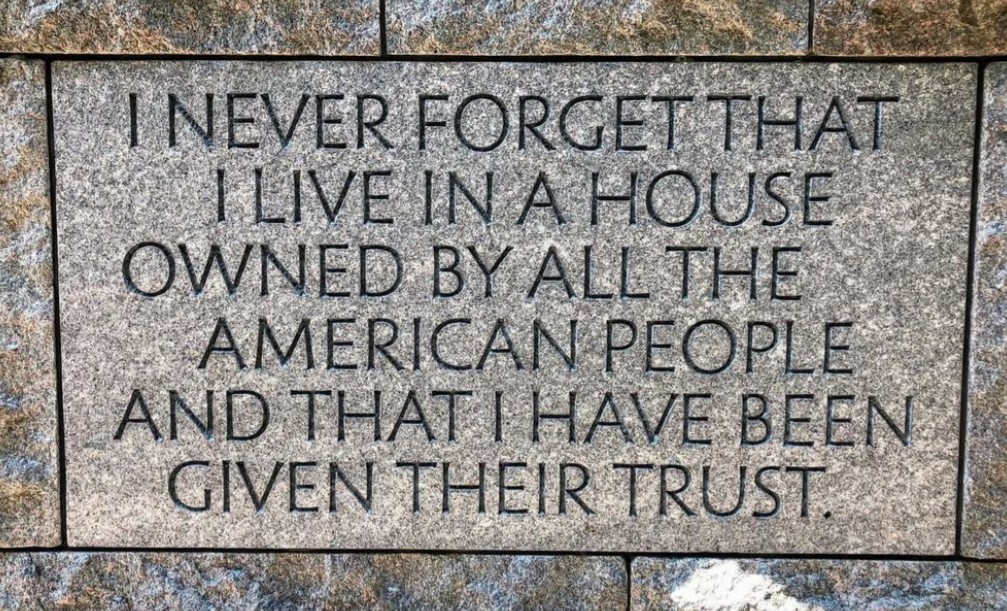
President Franklin Delano Roosevelt: “I never forget that I live in a house owned by all the American people and that I have been given their trust.” April 14, 1938 (From the FDR memorial in Washington)

A few days before that act of desecration, however, more than 7 million Americans and their allies turned out in at least 2700 rallies around the globe to peacefully demonstrate their commitment to American democracy. These were local actions, with people confronting challenges in real time and real places, with impacts in cities, towns, states, and nations. As Ayers suggests, the local very much matters and the local is also a part of patterns bigger than itself.

Boston No Kings Rally (anonymous photographer via HCR)

Many writers wrote insightful essays about these events to provide information, context, and lessons from our past.* Historian and activist Rebecca Solnit points out that each of us, as members of civil society, has power that tyrants always fear: to live out our principles and commitments, to prioritize joy, and to stand up for and with each other. Quaker activist Parker J. Palmer wrote that after attending his local No Kings rally, he continues to believe—perhaps more than ever—that common sense will eventually see us through.

While in Paris this month we chanced upon the building that Thomas Paine, the great American patriot, had called home during his years in the city. Paine’s Common Sense has long been recognized as a key work in changing the hearts and minds of the people of the United Colonies into citizens of what Paine was the first to characterize as the United States. Similarly, his Rights of Man helped shape the French Revolution and—although it would take more than a century—inspire constitutional reform in Great Britain and foreshadow Franklin Roosevelt’s New Deal. 
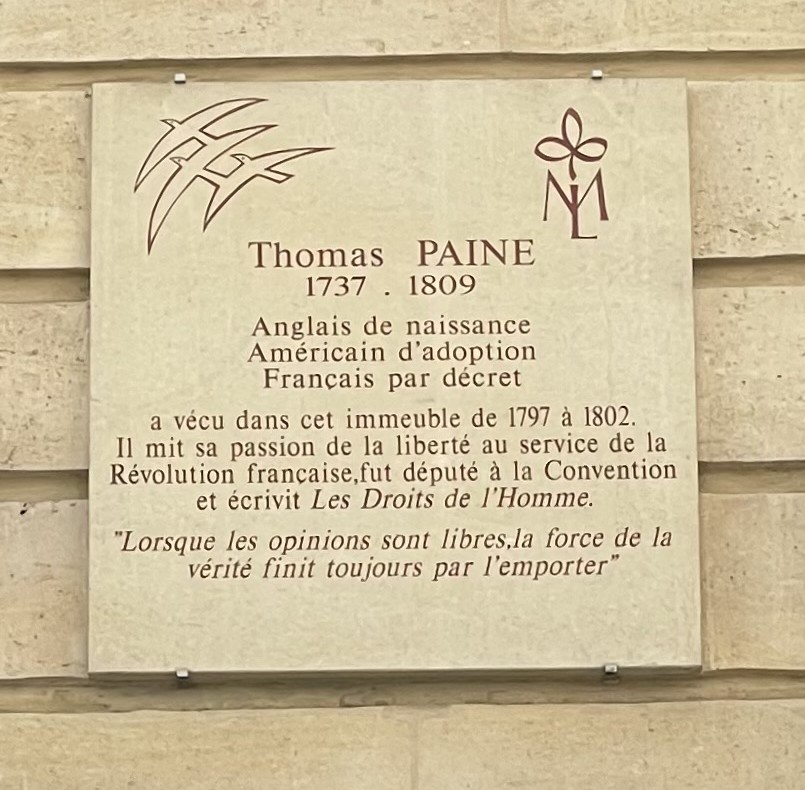
Thomas Paine: English by birth, American by adoption, French by decree

Palmer was also thinking of Thomas Paine and everyday common sense when he attended a No Kings rally in Middleton, Wisconsin—known as “The Good Neighbor City”—and wrote about the experience.

To put it simply, there are a lot of Evelyns [the organizer of the Middleton rally] in this country. I’m talking about people with personal struggles who still care about others; people free of guile and paranoia who can spot con artists a mile away; people who can laugh at themselves and at unclothed Kings; people who love their country with a simplicity that touches my heart. These folks don’t hate anyone. But in the immortal words of Lyndon Baines Johnson, they ‘know the difference between chicken salad and chicken s _ _ t.’”

So with that rather lengthy introduction . . . let’s jump in as we celebrate Hallowe’en and see if I can spot the difference in this month’s MTC posts.


READER FAVORITES

Once again my latest entry in the Author Q&A series topped the list of reader favorites on MTC.

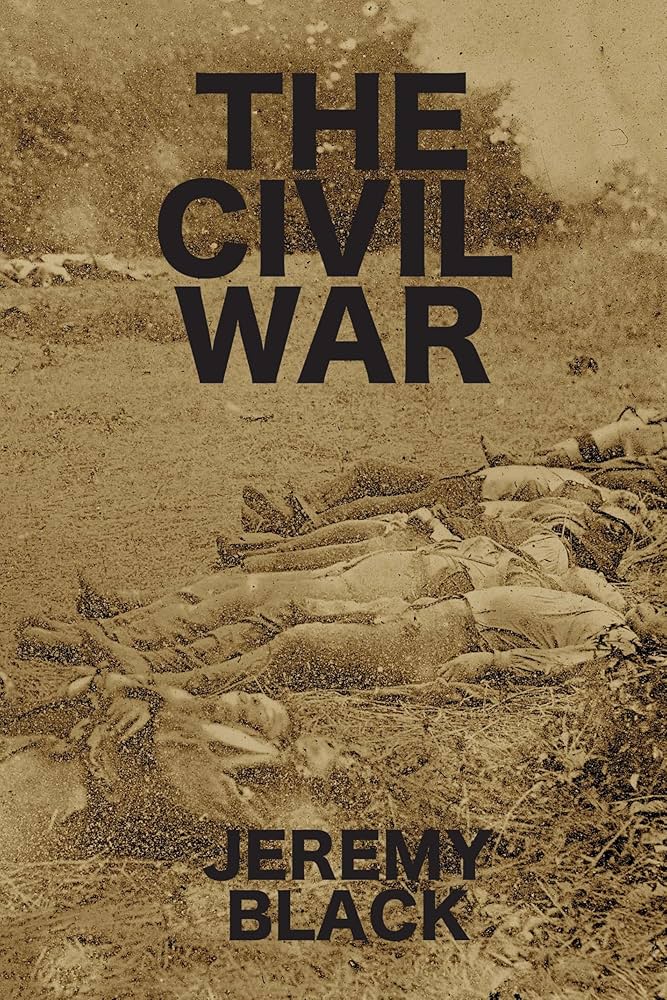
  • Observing history through a wider lens is my conversation with European military historian Jeremy Black, MBE about his new book, The Civil War. Jeremy and I discuss the international context for the war, among other topics.

I have another conversation coming up in November, which will be the 20th in the series that began three years ago. I am so grateful that these writers take the time to chat with me about their works, and that I then get to share those thoughts with each of you.


TRAVEL TO EXPAND THE HEART AND TOUCH THE SOUL
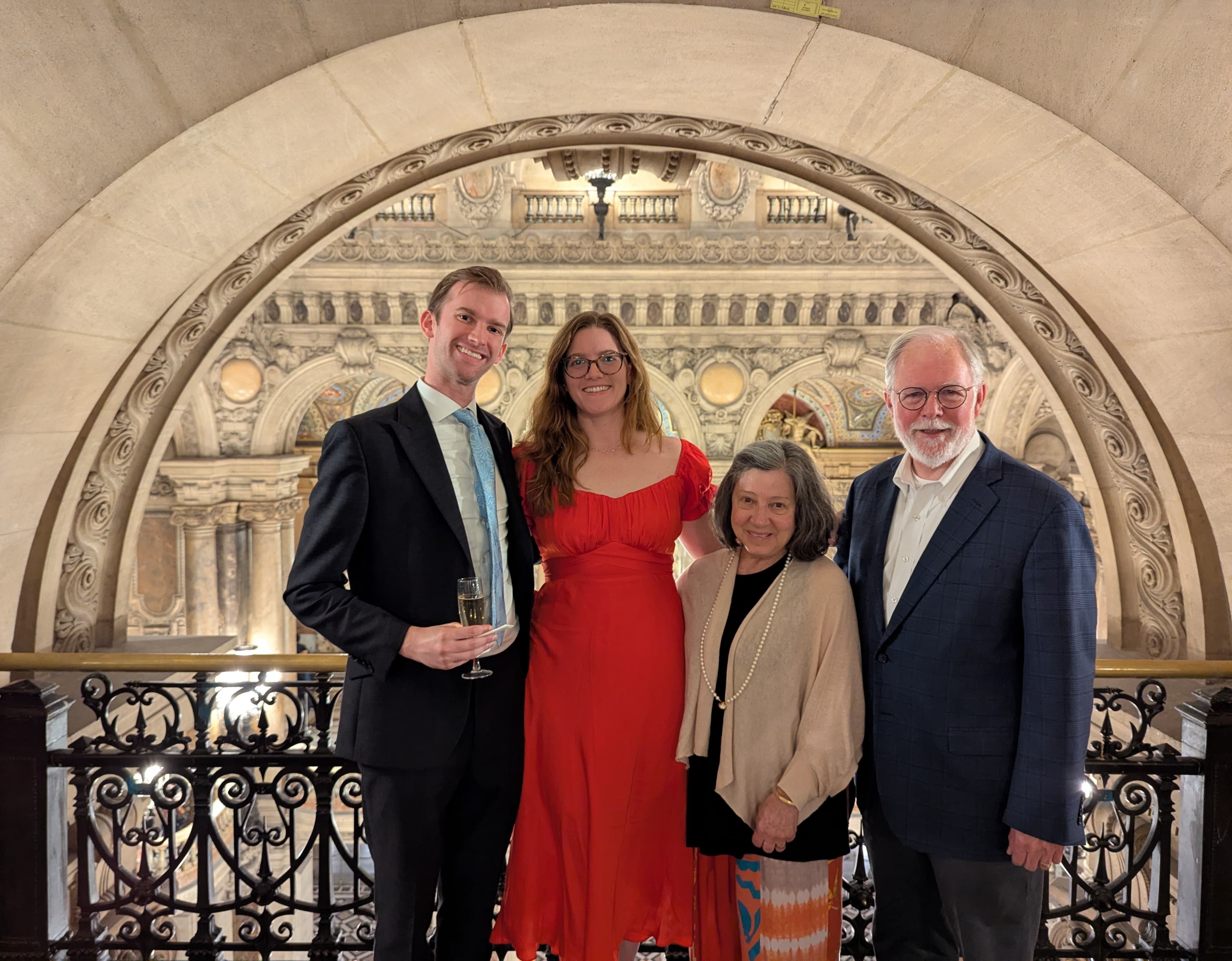
The Browns during an intermission at a night of opera at the historic and beautiful Palais Garnier in Paris.

The first part of October was spent abroad as we wrapped up a wonderful month in Europe. I posted five different essays about what we saw and learned on our tour of Ireland and France, and I hope you enjoy them (posted here in the order that we traveled):


BOOKS AND MORE

My post From accumulation to abundance consists of thoughts triggered by the question: “What if scarcity is just a cultural construct, a fiction that fences us off from a better way of life?” It is a question worth considering.

As is my usual custom, I read and reviewed five books in October. You’ve already been introduced to Jeremy Black’s new work. Here are the others:

  • Daniel Mendelsohn has written a brave and accessible memoir about journeys and relationships, centered around The Odyssey, which I explore in Expect the unexpected.
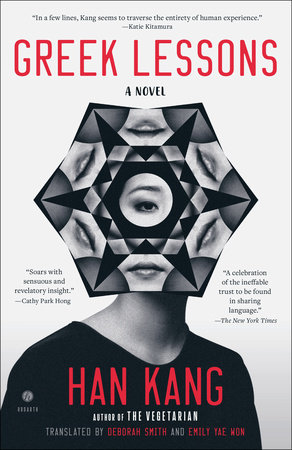
  • Nobel laureate Han Kang’s Greek Lessons is a novel of hope for connection even when we find ourselves in a place of intense loneliness and isolation. A love letter to human intimacy and connection is my look at this short but intense work.
  • Retired Chicago policeman Cal Hooper finds a small Irish village isn’t as bucolic as he imagined in Tana French’s novel The Searcher, which I review in Paradise is not always what it seems.
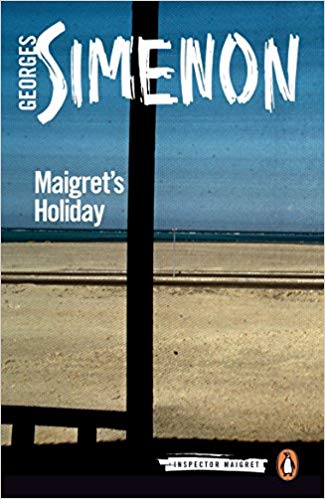
  • I thought a book about how Inspector Maigret cannot escape murder and intrigue even while on holiday was appropriate for our month of travel. You can read my take on Georges Simenon’s Maigret’s Holiday in No holiday for the inspector.

Let’s treasure books, not ban them is my post for the 2025 observance of Banned Books Week. Make books your treasure and bookshelves your gardens of delight. From the bookshelf: September 2025 captures short blurbs on the books I read last month.

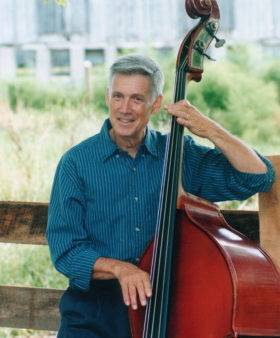
Spending time with a bluegrass legend: DJB and Tom Gray

Earlier this month we were fortunate to join an enthusiastic audience in spending time with a bluegrass legend for an afternoon of conversation, memories, and music. I chronicle that experience in Backstage with Tom Gray.

And I was going to hold off until after the World Series to say anything about the baseball postseason, but a classic (pun intended) Joe Posnanski column led me to write Baseball and the River Styx between games two and three.


ROOTS MUSIC FOR HALLOWEEN

In case you’ve forgotten, today is Halloween! Here are four posts and two videos from prior years where you can celebrate musically to your heart’s delight.

Of course the blues and jazz cats have a great number of songs for the season. Nina Simone does her usual masterful job with the Screamin’ Jay Hawkins hit I Put a Spell on You. That’s followed by Elise LeGrow breaking the Bo Diddley classic Who Do You Love “down to a new set of bare bones.”


COMMENTS I LOVED
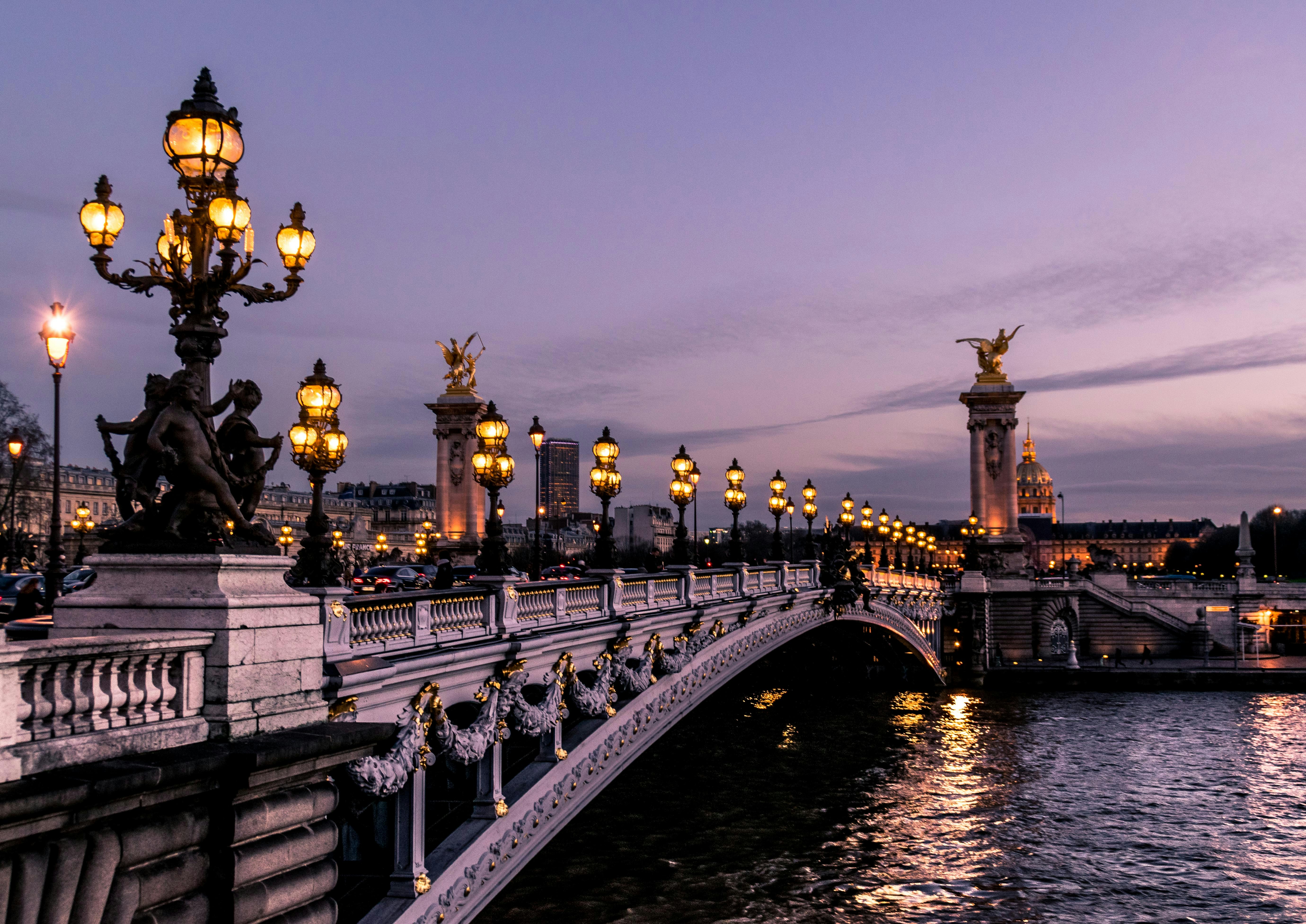
Brilliant reader Judy—my dear friend, former colleague, and confirmed Francophile—was one of the many who gave advice on things to see and do in France. Of course, that apparently comes with a price, as I realized when she wrote the following on my post I love Paris in the fall:

David!  You’re killing me with this piece!

My apologies, Judy.


DON’T POSTPONE JOY

Thanks, as always, for reading. Your friendship, support and feedback mean more than I can ever express.

As you travel life’s highways be open to love; thirst for wonder; undertake some mindful, transformative walking every day. Recognize the incredible privilege that most of us have and think about how to put that privilege to use for good. Women, people of color, LGBTQ+ individuals, immigrants, public servants, and others can feel especially vulnerable . . . because they are. Work hard for justice and democracy as the fight never ends.

But also keep some room in your heart for the unimaginable. Take time to dawdle and dream. Leave enough empty space to feel and experience life. Those gaps are where the magic begins. When times get rough, let your memories wander back to some wonderful place with remembrances of family and friends. But don’t be too hard on yourself if a few of the facts slip. Just get the poetry right.

Remember that “we are here to keep watch, not to keep.” Pay attention. Be astonished. Tell about it. And bash into some joy along the way.

Life is finite . . . love is not.

Try to be nice. Always be kind.

More to come . . .

DJB


*A few of many pieces of astute writing and reporting on the events of October:

East Wing of White House 1902 (via Library of Congress)
Destruction of East Wing 2025
No Kings Rally in Chicago, October 18, 2025

For the September 2025 summary, click here.


You can subscribe to MORE TO COME by going to the small “Follow” box that is on the right-hand column of the site (on the desktop version) or at the bottom right on your mobile device. It is great to hear from readers, and if you like them feel free to share these posts on your own social media platforms.


Image of werewolf from Pixabay. Image of ghost from Stefan Keller on Pixabay.
No holiday for the inspector

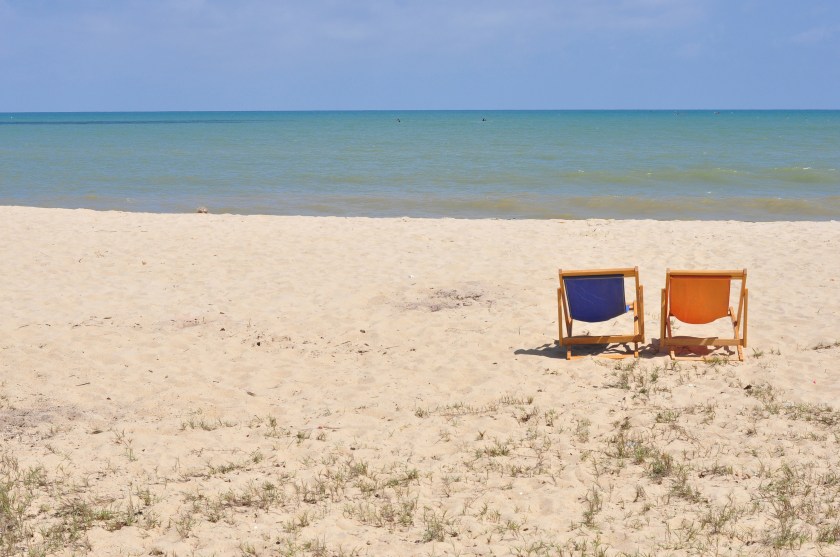
Inspector Maigret cannot escape murder and intrigue even while on holiday.


Everyone has experienced holidays that don’t turn out quite as planned. Gale-force winds in the Atlantic decided to throw a monkey wrench into our planned circumnavigation of Ireland last month. It can happen to the best of us with the best laid plans.

But when you are a famous detective, those detours can take you into unchartered territory even though you have the elements of a standard murder: a dead body, missing persons, a cryptic note, and a somewhat clueless local police force.

Maigret’s Holiday (1948; translated and republished in English in 2016) by Georges Simenon is the 28th book in the writer’s famous Inspector Maigret series. The tale begins in August. Maigret and his wife are on holiday in the seaside town of Les Sables d’Olonne. On their first evening they eat a huge dish of freshly caught mussels and both become ill. Maigret quickly recovers but Madame Maigret complains of vague pains the next day while they are on the beach and she later develops a fever. Admitted to a hospital she was still there nine days later after an emergency operation for acute appendicitis. During that time a young woman in room 15 in another ward dies and Maigret is unable to resist investigating the circumstances of her death. An anonymous note that had been slipped into his pocket had words that both irritated and unsettled him:

“For pity’s sake, ask to see the patient in room 15.”

Simenon sets the scene as only a writer of his talent can. Maigret is walking to the hospital, located in the old quarter of Les Sables d’Olonne where the uneven cobblestones and pavements are so narrow that “you had to step off to let another person pass.” Maigret is there to visit his wife for half an hour, an everyday routine he has established but that clearly leaves him bored. The hospital has an atmosphere that reminds Maigret of his childhood when he was a choirboy—“the purity of silence had a quality that cannot be found anywhere other than a convent.” It was a hospital where the nurses were nuns.

Feeling he cannot sit alone on the beach with all the mothers and their children, Maigret walks the streets of the resort town, visiting stalls and shops, taking time for a glass of wine or Calvados. He falls into the habit of visiting the Brasserie du Remblai, overlooking the beach, where a group of men including the local chief inspector of police, Monsieur Mansuy, met each afternoon to play bridge. It is through conversations with Mansuy—who is clearly both taken and threatened by the presence of the famous detective—that Maigret learns about the local characters and begins to solve the mystery.

The young woman in room 15 had died after being flung from a moving car . . . not your standard death. Her brother has also gone missing. Methodically, as only Maigret can do, he talks to people in the town, sees how some of them react to the local police, deals with the passive aggressiveness of the Mother Superior at the hospital, and sorts through a murder that would have gone unnoticed and unsolved except for his accidental presence in town with time on his hands and an anonymous note in his pocket.

“Three little words particularly irritated him: For pity’s sake.

Why for pity’s sake? If someone wanted to speak to him, it was perfectly straightforward to do so. He wasn’t the pope. Anyone could approach him.

For pity’s sake . . . That was in keeping with the cloying atmosphere into which he stepped every afternoon, with the nuns’ faint smiles as if effaced with an eraser, with Sister Marie des Anges’ little winks.”

In Maigret’s Holiday Simenon writes efficiently and compellingly—with rising tension and increasing complexity—to bring the reader along. Through his investigations the inspector discovers someone else’s life is in danger, but he doesn’t know whether it is a man or a woman and how the deed might be done. In the end Maigret uncovers the truth, even when some of the locals—including some very important men and women—do not want to accept it.

Another enjoyable and recommended work.

More to come . . .

DJB

Photo by I Do Nothing But Love on Unsplash

Baseball and the River Styx

Quick thoughts on baseball and the classics during the 2025 World Series.


Readers who look for baseball posts on MTC (and I know all five of you!) may have wondered why I’ve been silent this postseason. First, it is hard to watch baseball in Europe, where I was through the wildcard and into a bit of the divisional series. Then I had to catch up on other things after a month away. Yada, yada, yada.

I will do a postseason wrap-up once the World Series is complete. Promise. Game 3 is tonight with the series tied 1-1.

In the meantime, I want to STRONGLY encourage you to check out Joe Posnanski’s essays on the series. Today’s—following the first two games—was priceless. Let me quote just a bit:

Joe begins with Posnanskeys to the Game:

  • If the Blue Jays can get into the Dodgers’ gruesome bullpen, they will win.
  • If the Dodgers can avoid using their gruesome bullpen, they will win.

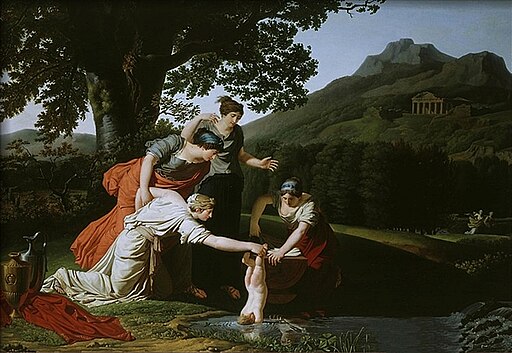
“This is exactly how Games 1 and 2 played out, and while two games is an insignificant sample size, it really feels like this is how the series will go. The Dodgers are Achilles. They were dipped into the River Styx by the Baseball Gods, and thus they are Shohei and Mookie and Freddie and Yoshi and Blake and Teo and Tyler and all the rest, and thus are mostly invulnerable.

But they were held by the heel, and the heel is not invulnerable, and the heel is that ghastly bullpen. The individual pitchers in that bullpen should be able to get some outs. But they can’t. It’s like they believe themselves cursed. In Game 1, the Blue Jays were able to pick and prod and annoy Blake Snell enough to get him out of the game in the sixth inning with the bases loaded. The Dodgers’ bullpen did its worst. And it was a blowout.

Oh, with that reference to Achilles I could just see my good friend and brilliant reader—the classics scholar and baseball fan Elizabeth Bobrick—grinning from ear-to-ear. In addition to subscribing to JoeBlogs you should also sign up for Elizabeth’s Substack newsletter This Won’t End Well: On Loving Greek Tragedy.
Now, back to Joe’s column:

It looked like the Blue Jays might do the same to Yoshinobu Yamamoto in Game 2 — they knocked two hits off him in the first and made him throw 23 pitches. They knocked another hit off him in the second and scored a run off him in the third, had him at 46 pitches through three innings. You know that scene in action movies where the hacker pounds a bunch of keys on his computer, then smiles and turns to the Tom Cruise/George Clooney ringleader and says, “I’M IN!” That was undoubtedly how Blue Jays manager John Schneider felt in that moment. He was into that bullpen.

Only he wasn’t because Yamamoto decided at that point to go thermonuclear.”

It is a brilliant post (as was Yamamoto) and I could just see the Dodgers being dipped into the River Styx, being held by their metaphorical bullpen. (If I was any good at AI I’d put this baby in Dodger blue!)

Joe also talked about the cringe-inducing moment in Game 2 when MLB decided to cut into their most consequential game of the season . . . for a Jonas Brothers song! Seriously!! How stupid can MLB be? Don’t answer . . . that’s a rhetorical question. As my friend the writer Robyn Ryle once wrote:

“Let me put it more plainly—the players want baseball to be good. The owners just want to make money. Period. End of story.”

Anyway, I can’t wait to see what happens next, especially since Mad Max is on the mound for the Blue Jays tonight. Max—when he was a member of the Nationals—was the subject of one of my most frequently viewed posts on the national pastime: Baseball is boring. Then suddenly it isn’t.

Legend of Max
The Legend of Max Scherzer from the 2019 season

Here is Joe’s take on Max’s moment in the 2025 League Championship Series:

“Speaking of pitchers demanding to stay in games — wasn’t it a blast watching Max Scherzer tell John Schneider to get the #@%@ off his mound in Game 6 of the ALCS? Yes, of course, some of it was show … but that doesn’t make it less delightful. Baseball needs more show. Max starts tonight, and I hope he’s awesome, and I hope Schneider tries to take the ball away from him, and I hope Scherzer goes medieval on him. I’m pretty sure Schneider hopes for that, too.”

Go to 4:42 in this video to get to the good stuff.

I won’t tell you which team I’m rooting for, since I don’t want to jinx them. Enjoy the series . . . and I’ll be back with some additional thoughts (including what I think about those stupid Google AI commercials) once we have a world champion.

Play ball!

More to come . . .

DJB

Artwork depicting Thetis as she dips her son Achilles into the River Styx in the hopes of making him immortal by Antoine Borel, Public domain, via Wikimedia Commons

Châteaux, cathedrals, cuisine, and charm

Photographs and historical notes to remember our recent visit to the Loire Valley.


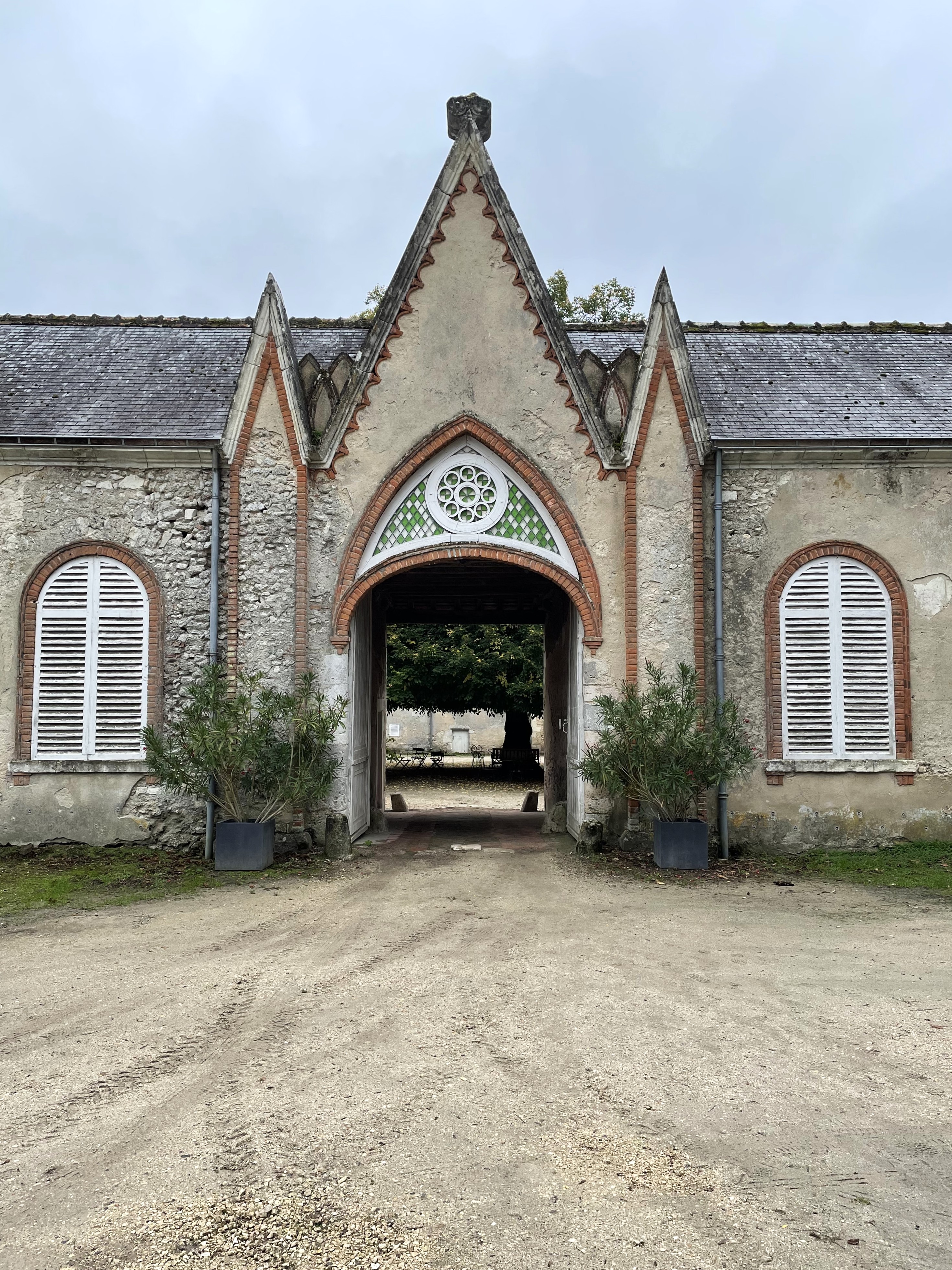
In this last post about our month in Europe, I want to focus on the time between our tour in Ireland and our family gathering in Paris. Having decided to explore the French countryside during our trip, Candice and I contacted our friends who live in France and the Francophiles who travel there often to ask for advice. The suggestions were all over the map (pun intended), but we finally settled on the beautiful Loire Valley, with our base in the small city of Tours.

It turned into a magical week as we explored châteaux, cathedrals, food and wine, old towns, and charming small villages. This photo-heavy post will be a tip-of-the-iceberg account, but suffice it to say that we’d recommend the region to anyone looking to broaden their experience of France.


OUR INTRODUCTION TO TOURS

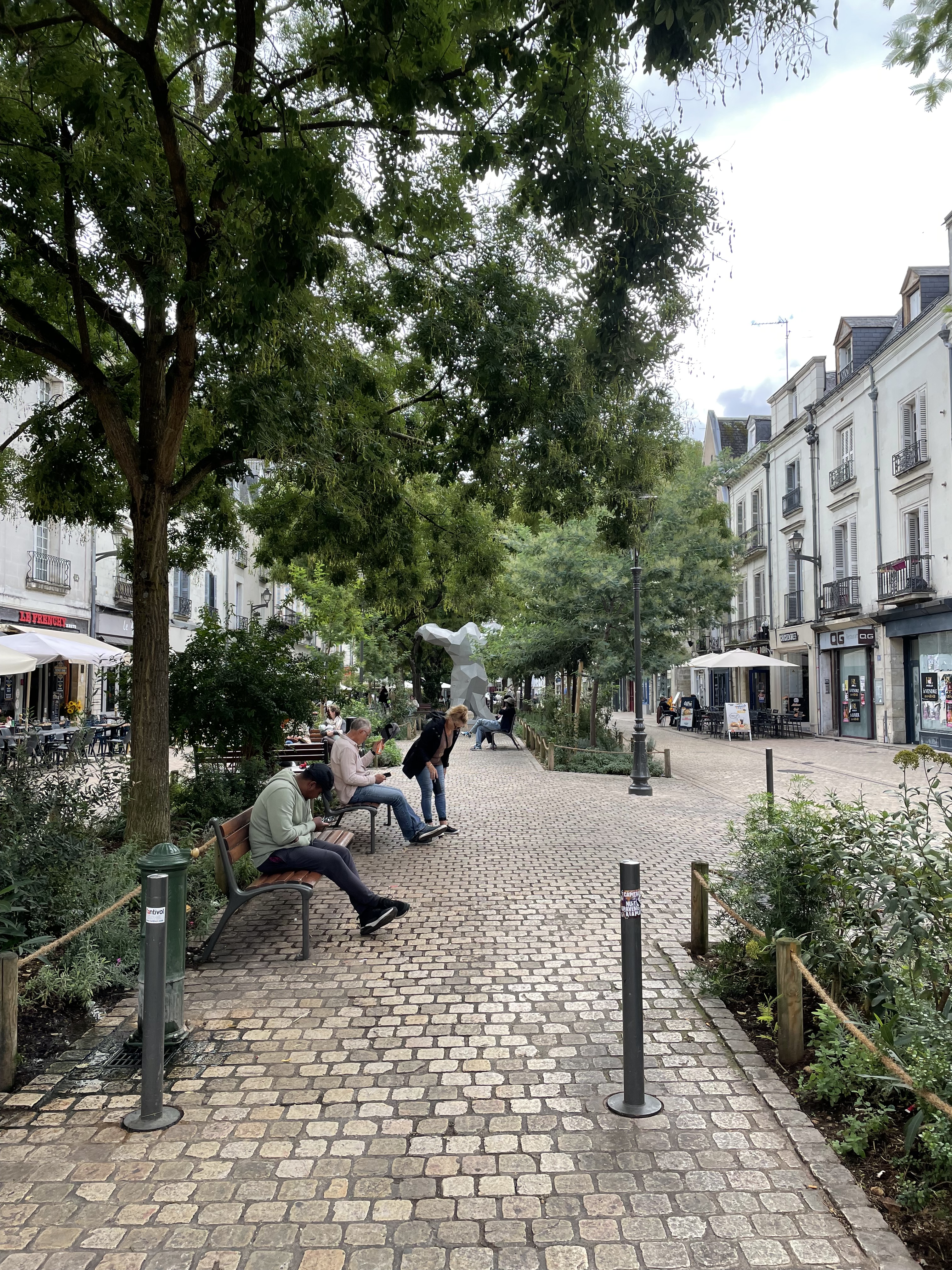
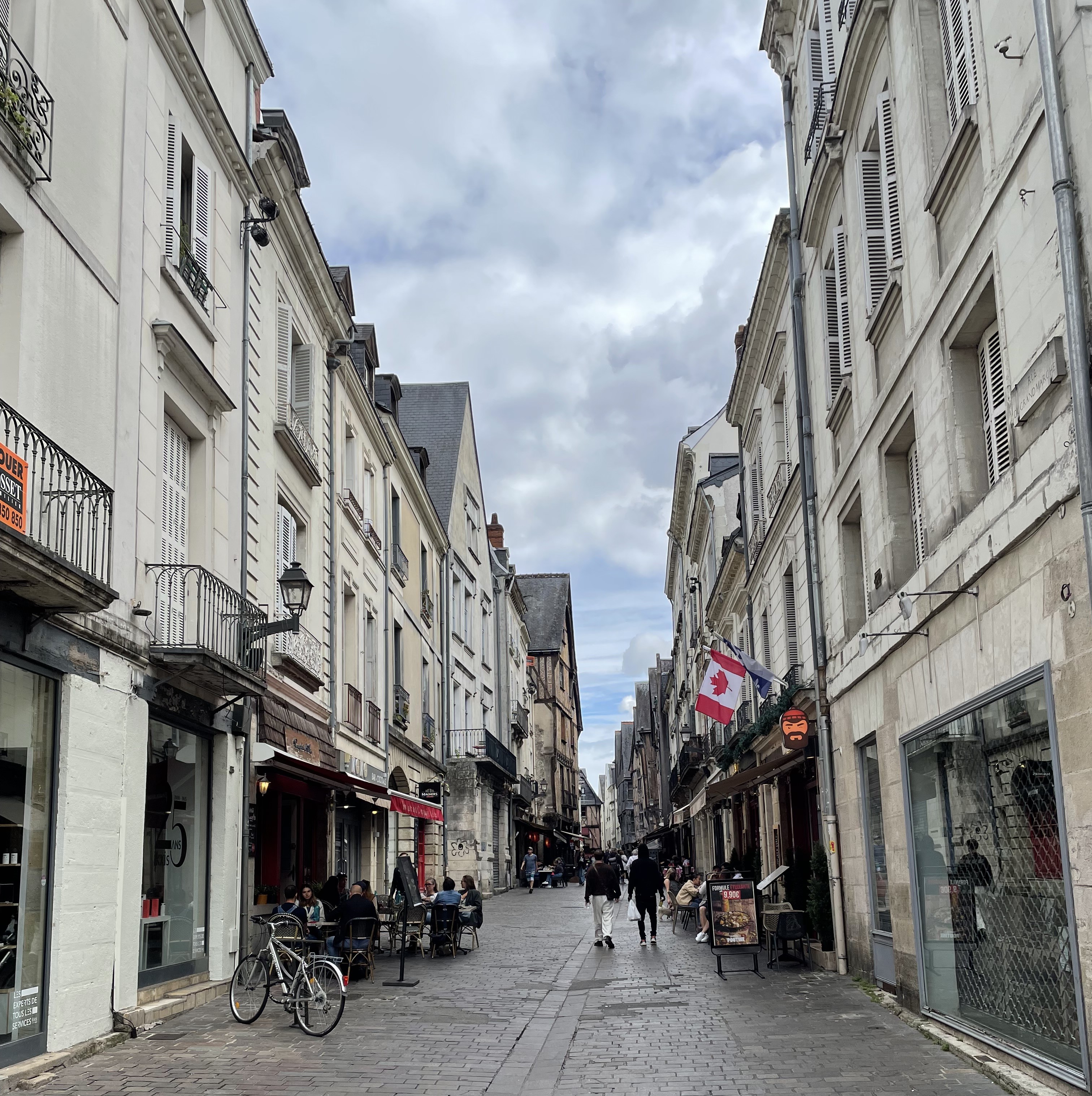
Tours (the “s” is silent) lies between France’s Cher and Loire rivers. Once a Gallic-Roman settlement, today it’s a university town of about 135,000 residents and a traditional gateway for exploring the châteaux of the Loire Valley region. After a very late arrival on Sunday morning (thanks to a security situation at the Dublin airport) we settled into Les Trésorières, our welcoming and comfortable hotel on the edge of the Old Town and in the gastronomical heart of the city. After a restful night of sleep following a long day of travel we woke up refreshed and ready to begin our week-long exploration via foot, train, and van.

It had been very dark when we arrived (did I mention it was early Sunday morning) so we were pleased to open the curtains in our hotel room to this view.

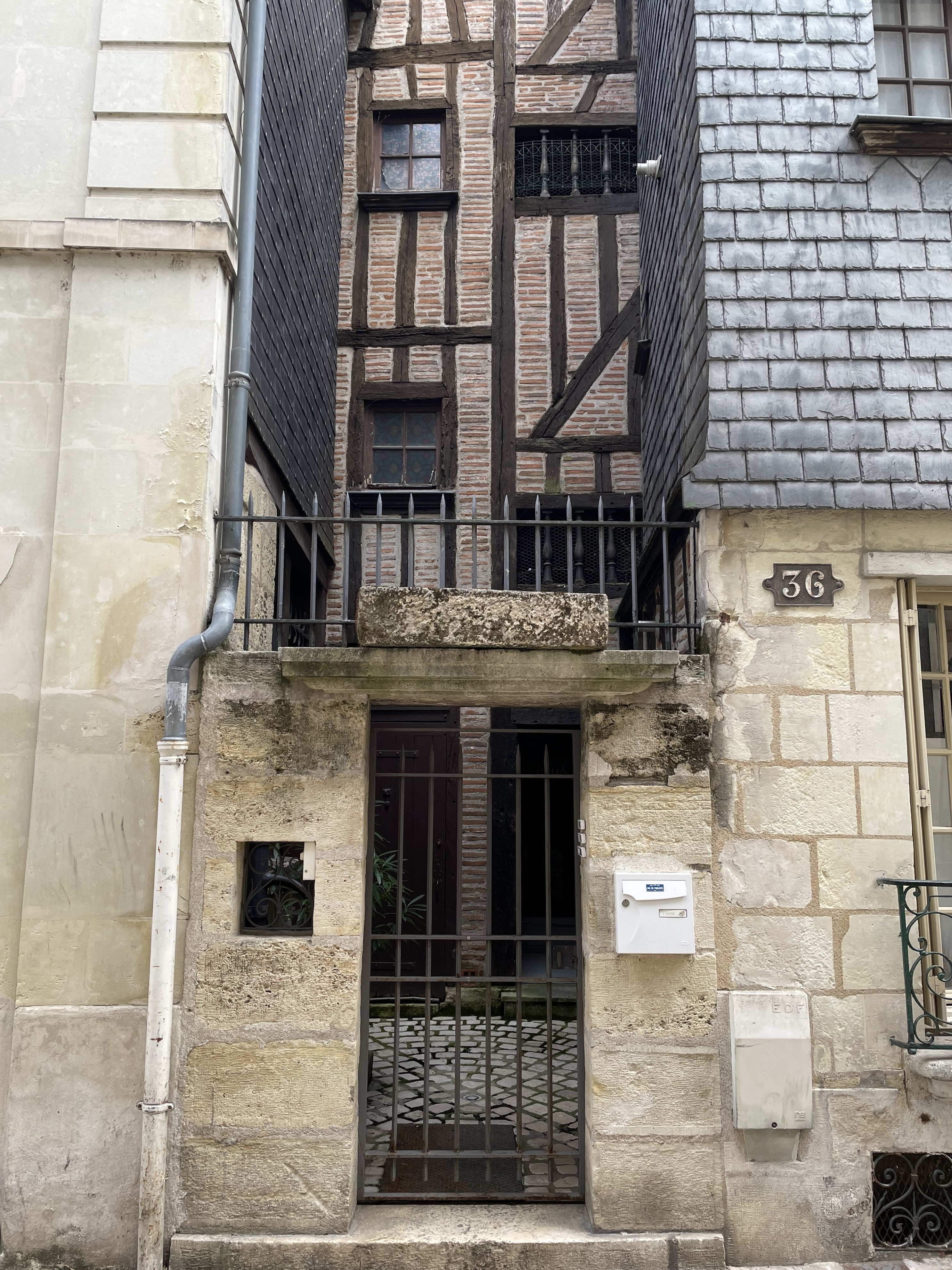
Walks through the city over the next six days unveiled a variety of architectural landmarks, intriguing small shops, enticing bistros, hidden treasures, and much more.

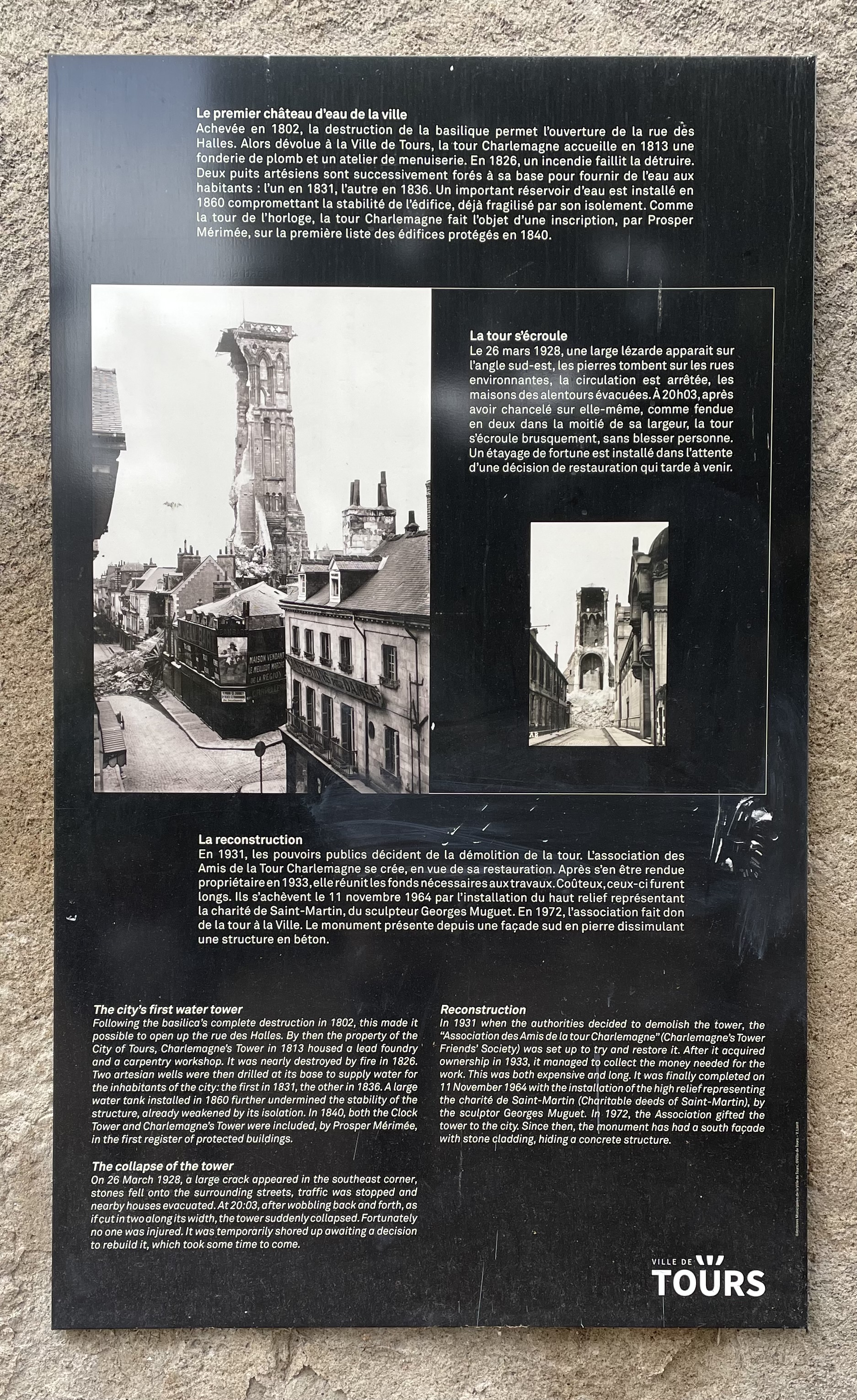
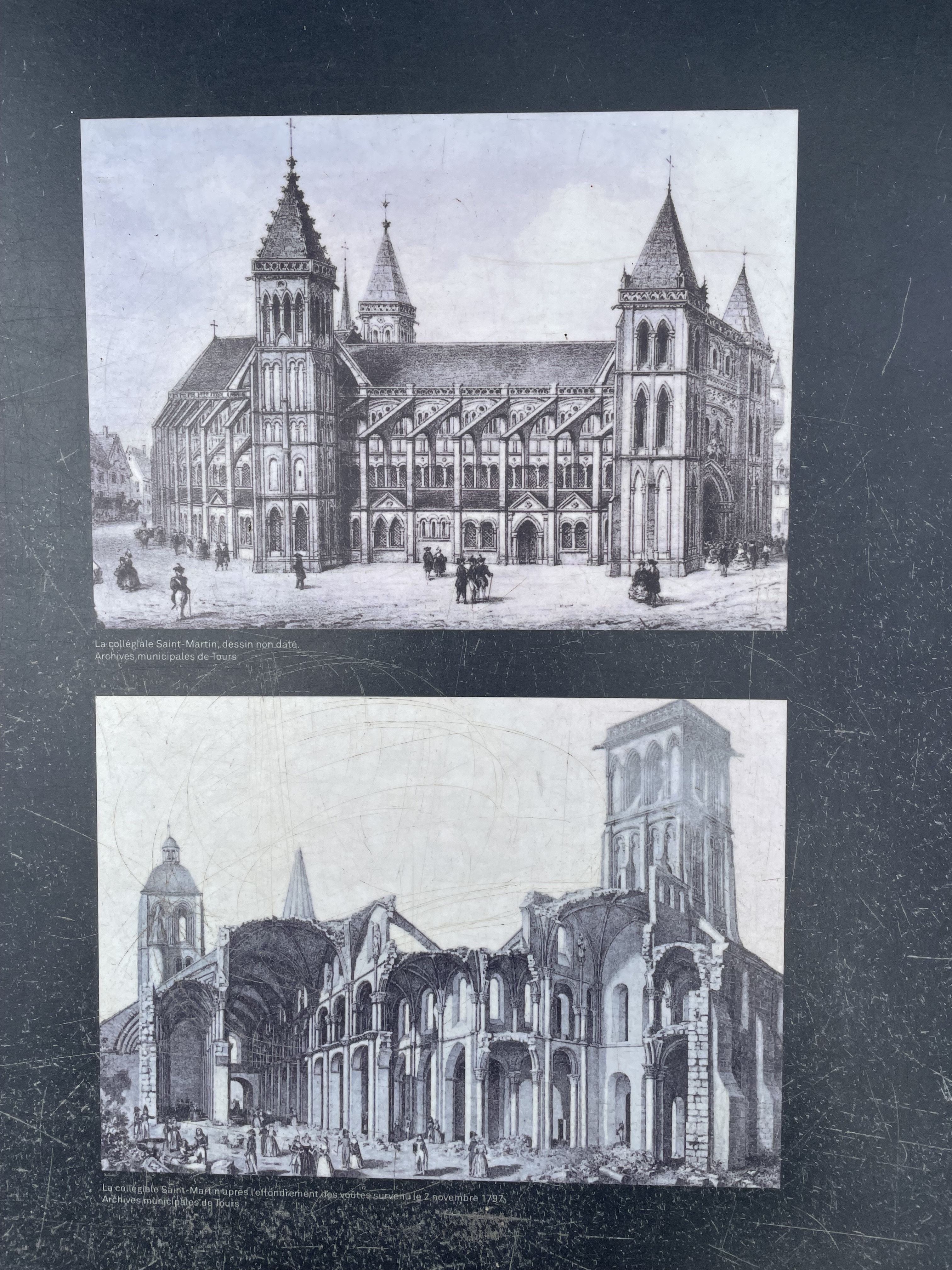
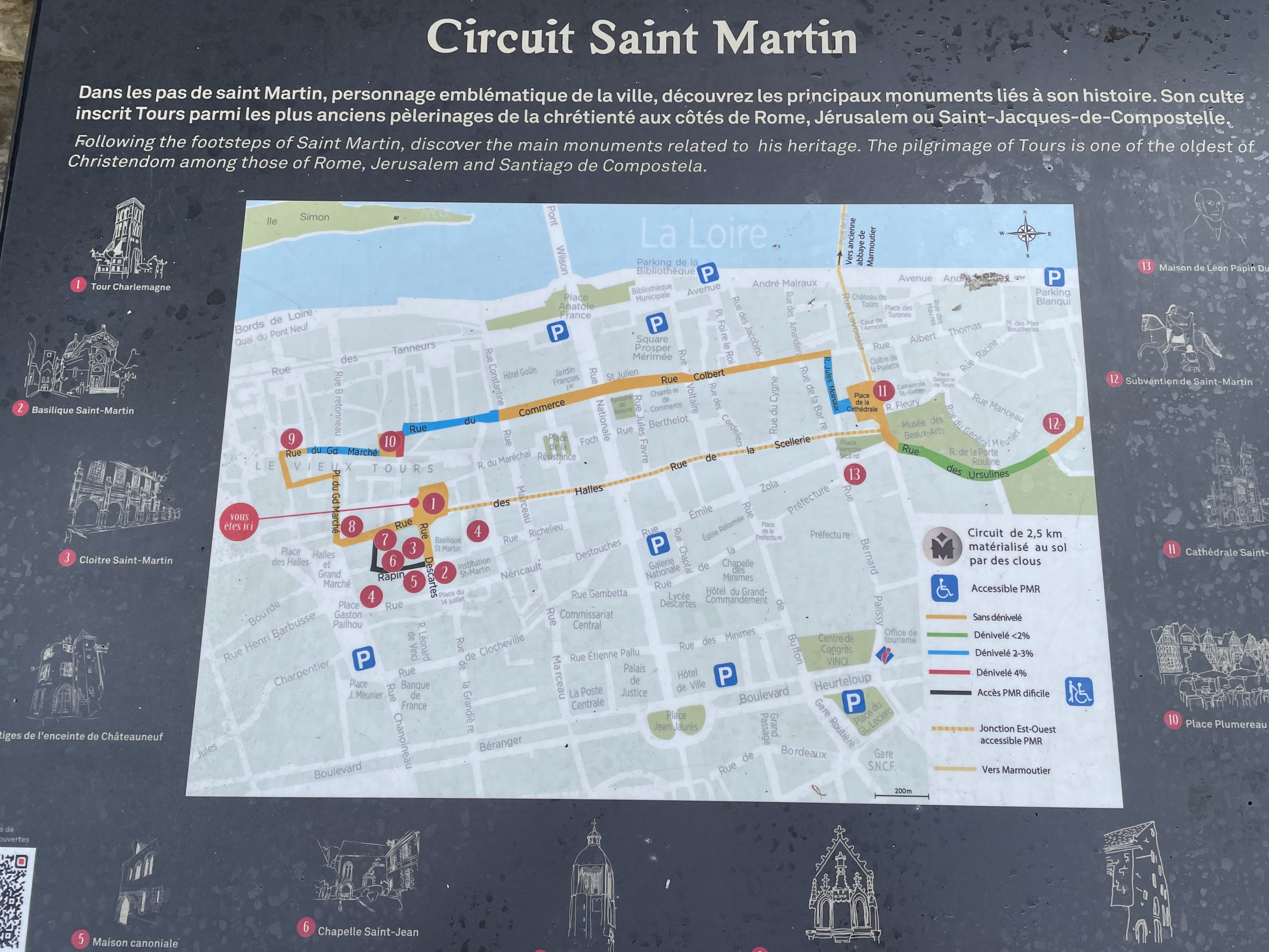
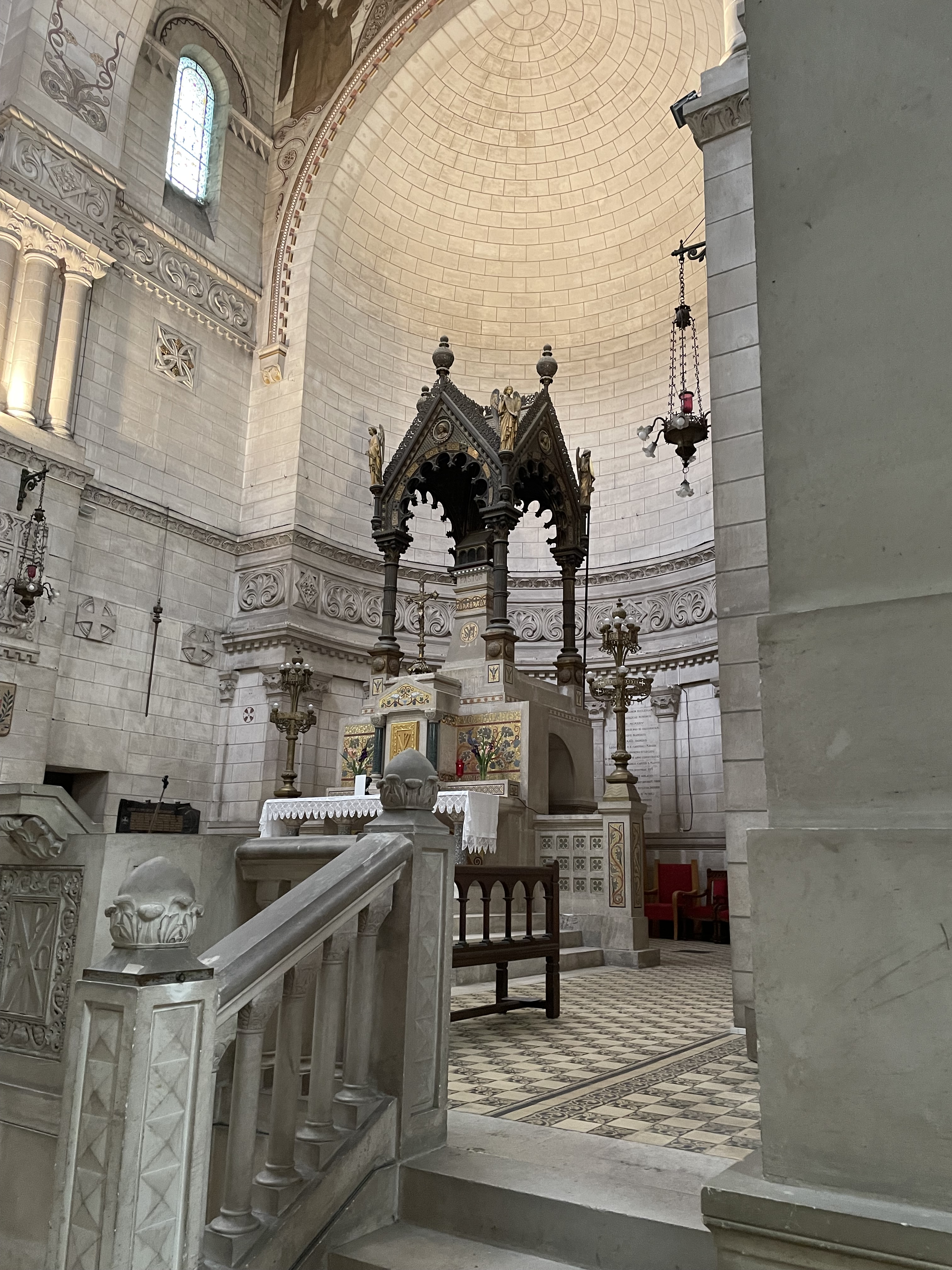
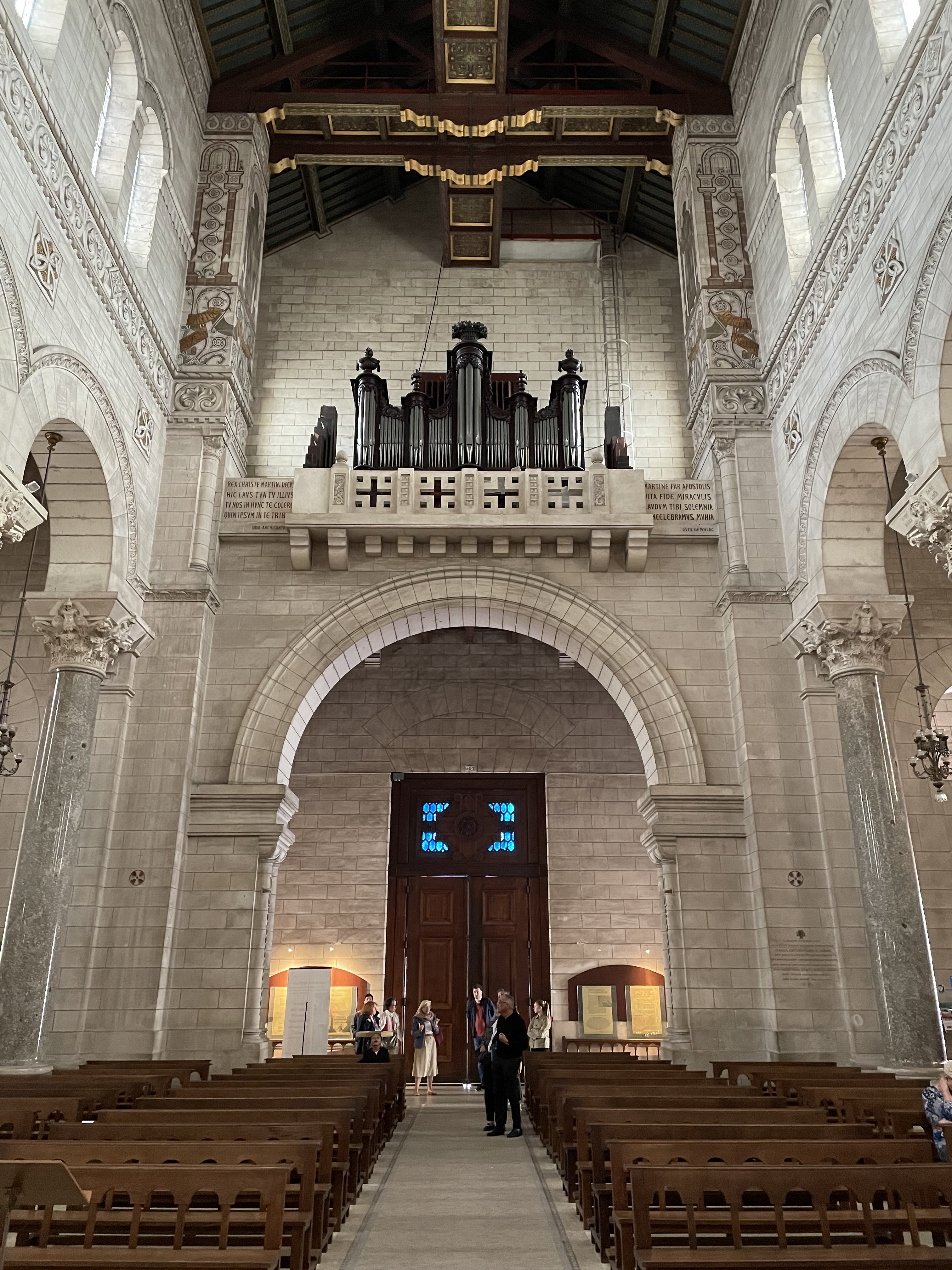
In the heart of the Old Town is the Basilica of Saint Martin which is dedicated to Saint Martin of Tours, over whose tomb it was built.

A medieval basilica was completely demolished during the French Revolution. The present church was built between 1886 and 1924 by French architect Victor Laloux in a Neo-Byzantine style. The city has done an especially good job of highlighting the history of this landmark for the casual visitor.


CUISINE TO FEED THE SOUL

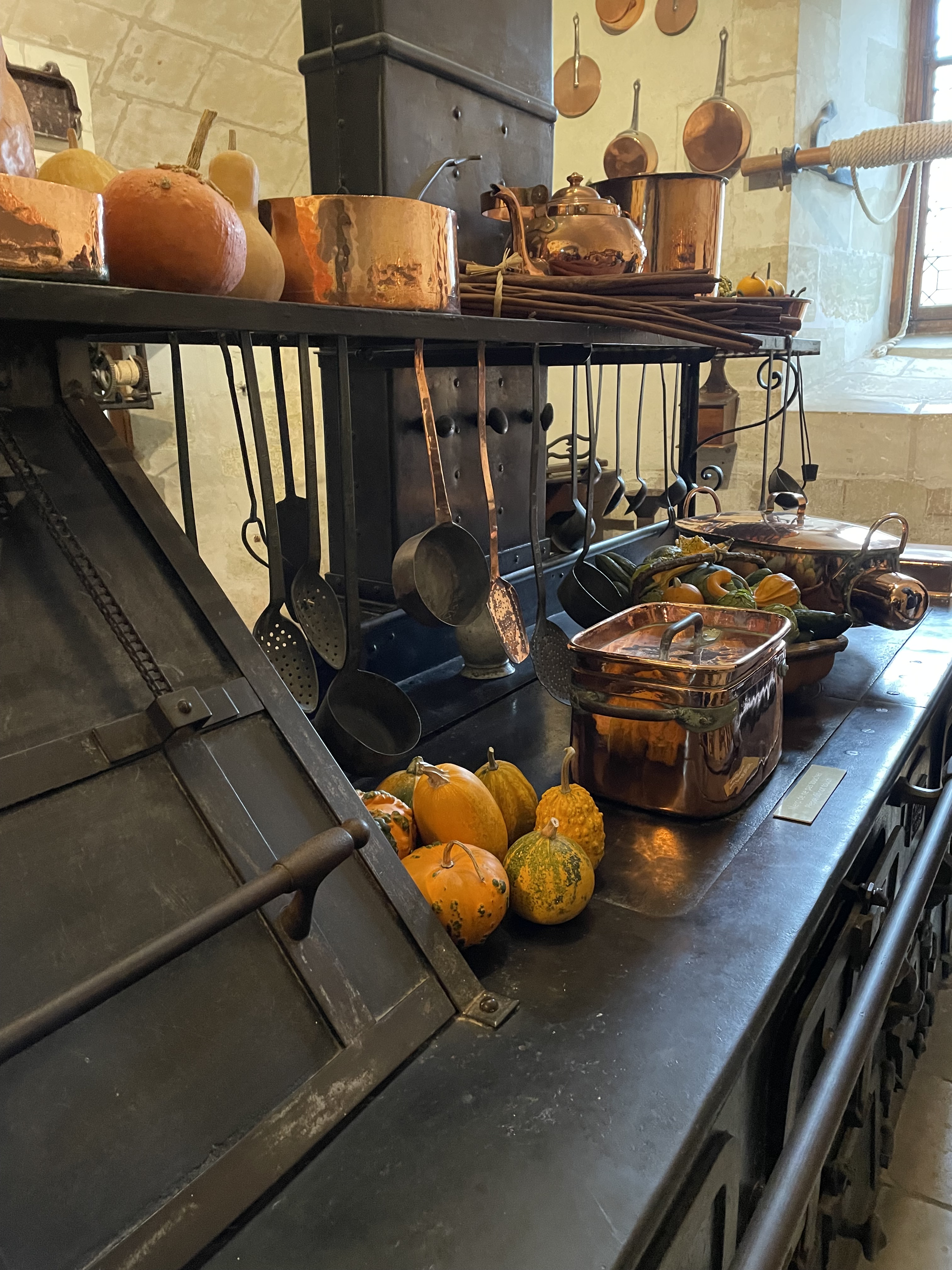
No, Candice did not go to a cooking school during our visit . . . although the thought has been bouncing around our head ever since. The historic kitchenware and beautiful food displays were part of the fascinating museum that is the Château de Chenonceau (more on that in a moment).

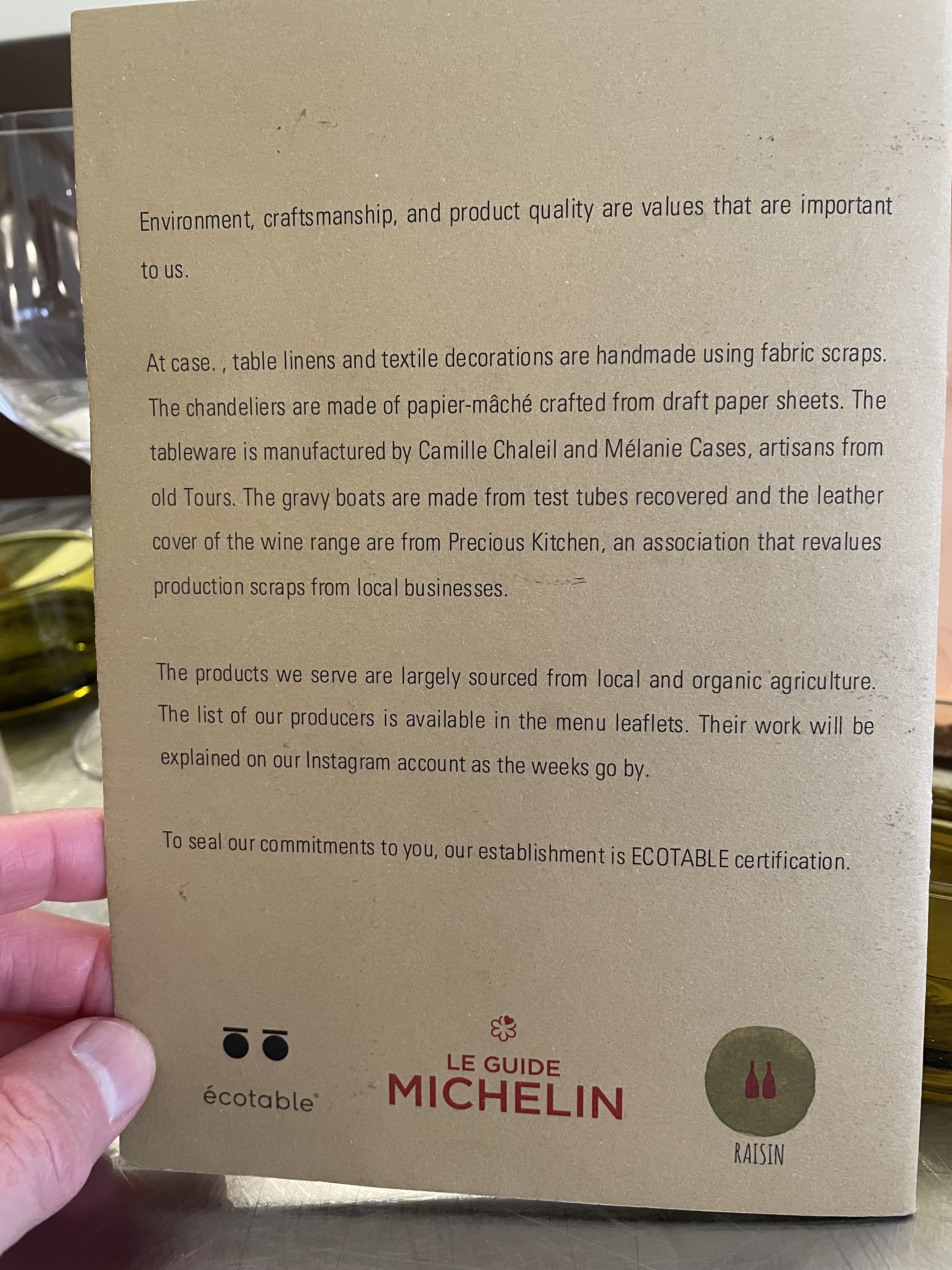
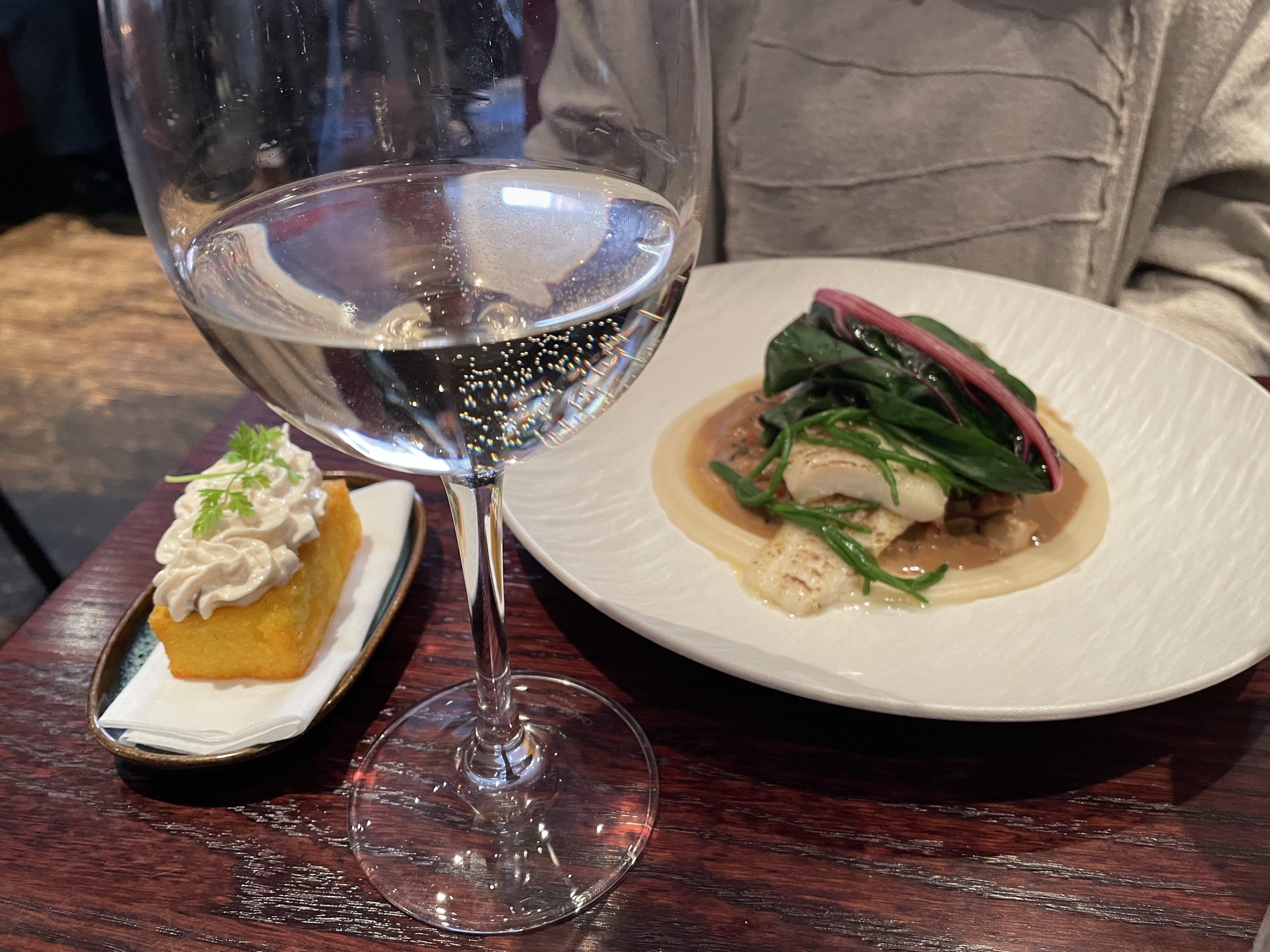
Throughout the week we ate deliciously prepared food and sampled a wide variety of local wines. The best of the restaurants was the bistro case. in Tours, where we enjoyed Sunday brunch. As the Michelin guide notes,

“In the kitchen, Rodolphe Boidron, with a wealth of experience in high-calibre establishments (Le Lucé, Auberge du Bon Laboureur, Les Hautes Roches), skilfully crafts creative, delicious bistro cuisine, using local ingredients as and when they are available, for example veal knuckle, peas, broad beans, sage juice and fregola.”

Staying on the edge of the Old Town . . . and across the street from the amazing food hall, which serves as the gastronomical heart of Tours . . . we didn’t have to travel far to enjoy a variety of delicious French pastries, cheese, local produce, and wine.

A very small portion of the food hall (it extends through two large buildings) in Tours

THE LITTLE JEWEL OF AMBOISE

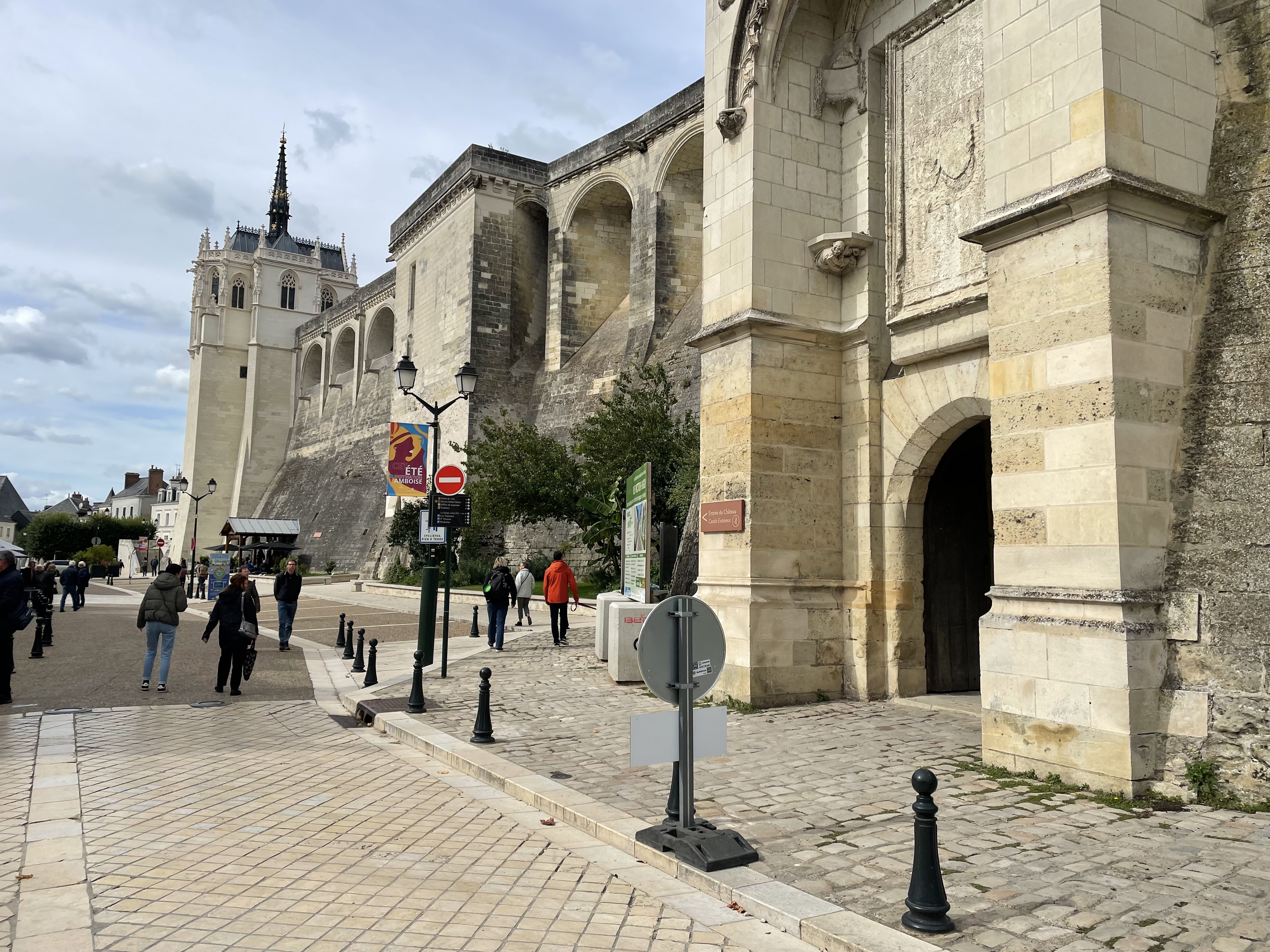
Early in the week we took the short train ride to Amboise, a small market town that once hosted the royal court of King Francis I.

Our first view of Amboise as we were walking from the train station
Château d’Amboise (the royal court) from Wikimedia

We bypassed the royal château and instead spent well over a half day exploring Le Château du Clos Lucé, the final home of Leonardo da Vinci.

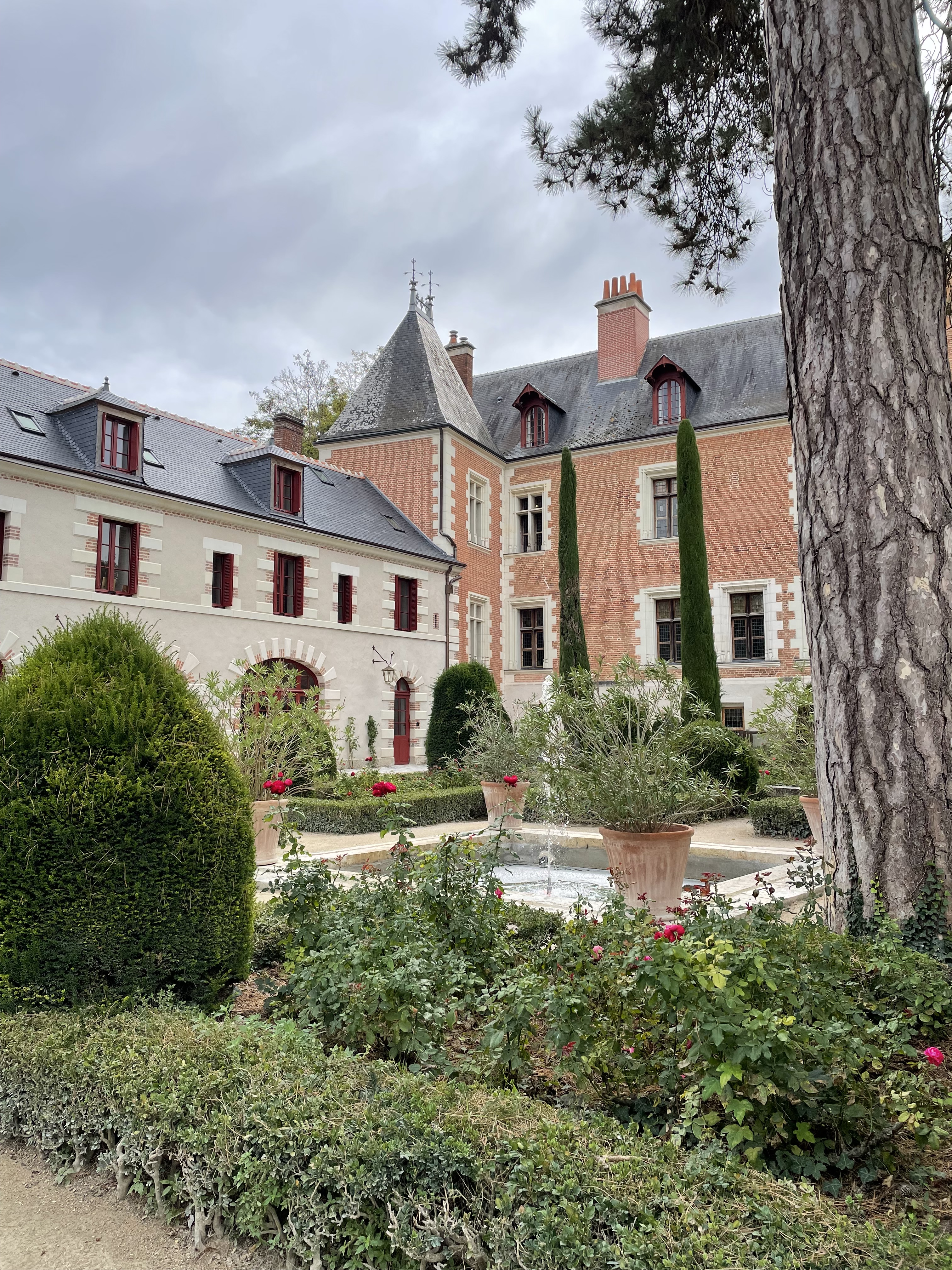
Le Château du Clos Lucé

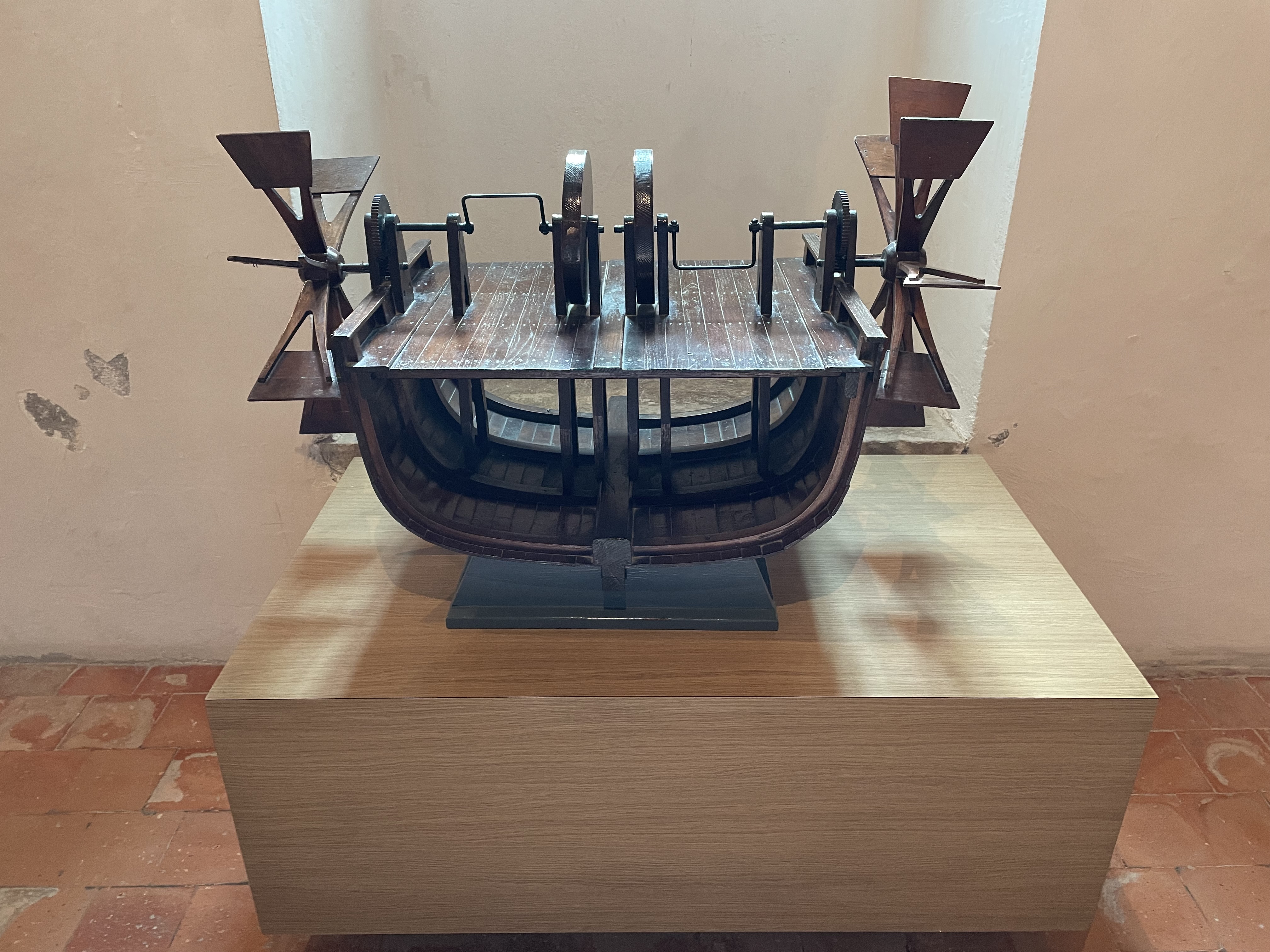
Leonardo was a man who dreamed of making men fly and spent a lifetime imagining the future. A painter, inventor, engineer, scientist, humanist, and philosopher, he spent his last three years in France at the invitation of King Francis I, who named him “Premier Painter and Engineer and Architect of the King.” His final home is now an immersive museum and cultural center.

The château at the time of Leonardo (credit: website of Le Château du Clos Lucé)
Leonardo is best-known for his work while living in Italy. Only the far-right column covers his time in France.

The château also features a beautiful park which includes another newly-opened exhibition building which delves even deeper into the genius that was Leonardo.


A DAY AMONG CHÂTEAUX OF THE LOIRE VALLEY

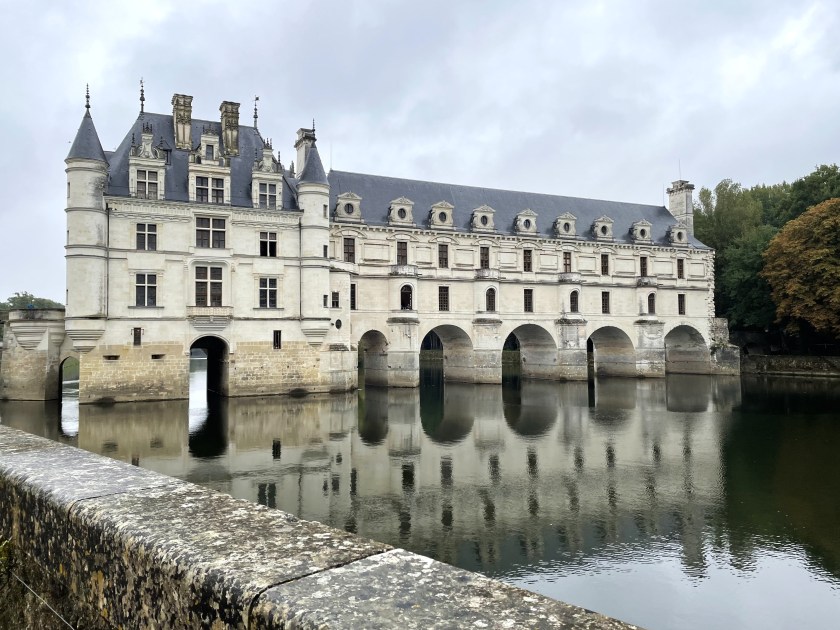
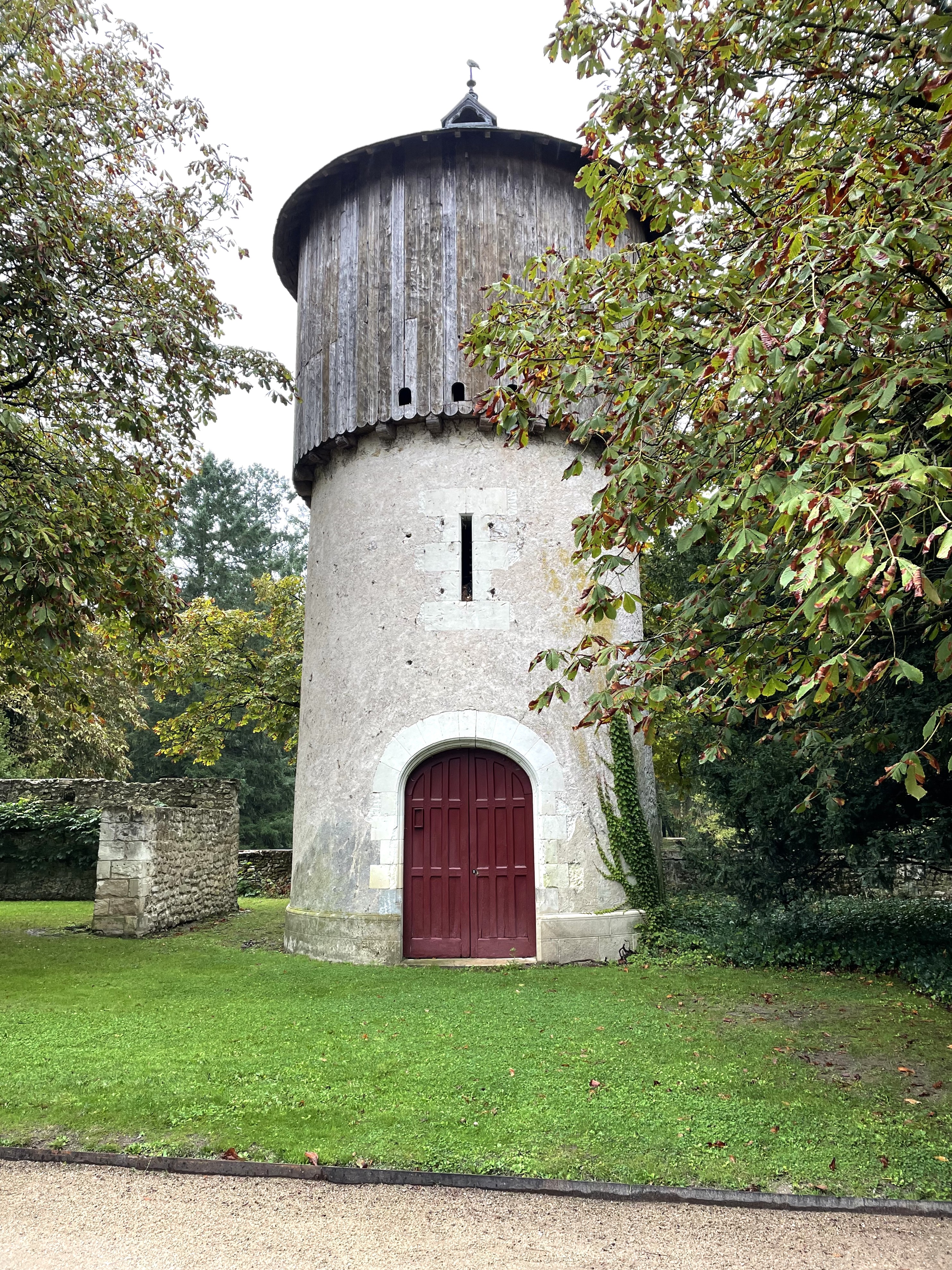
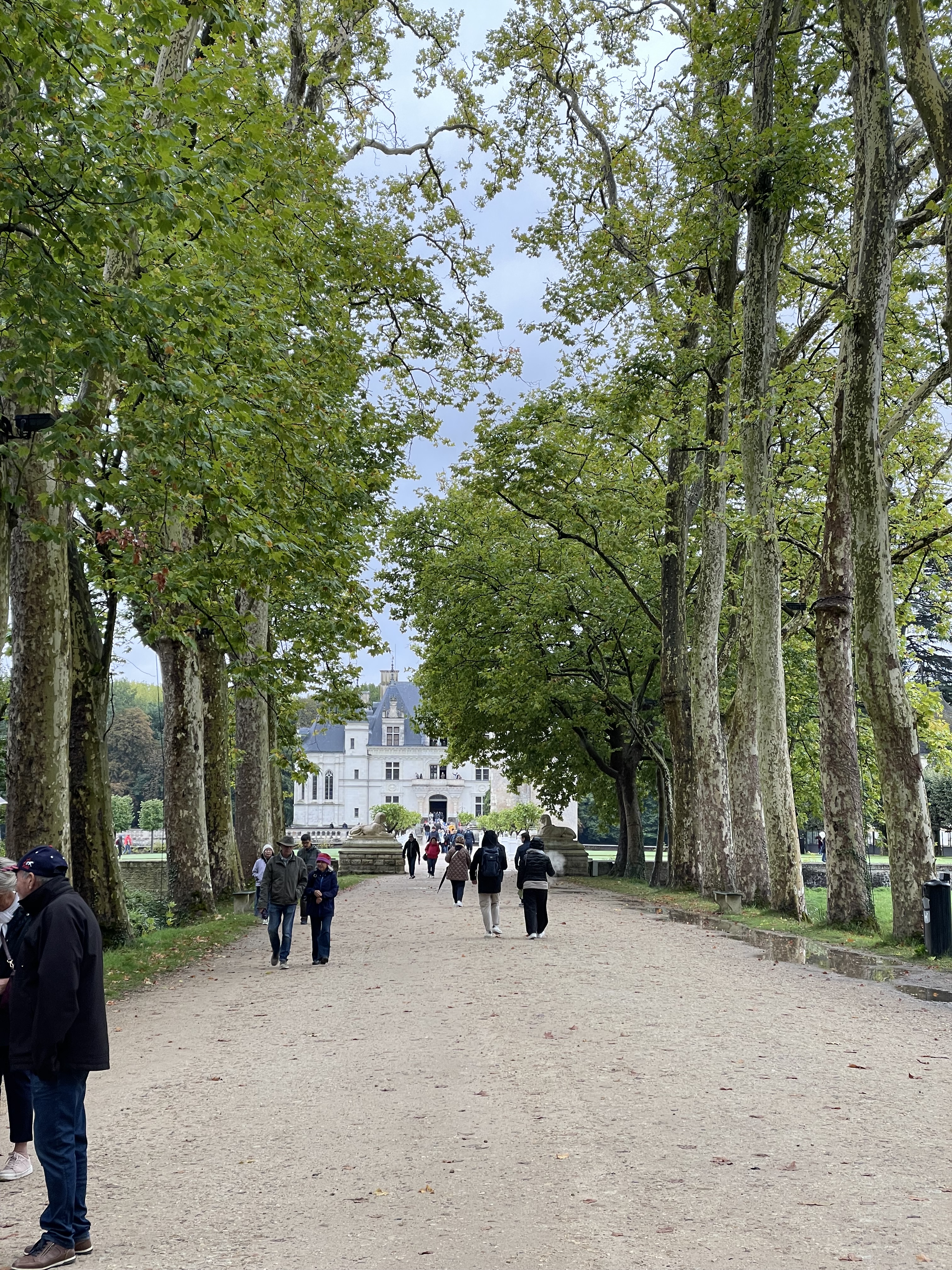
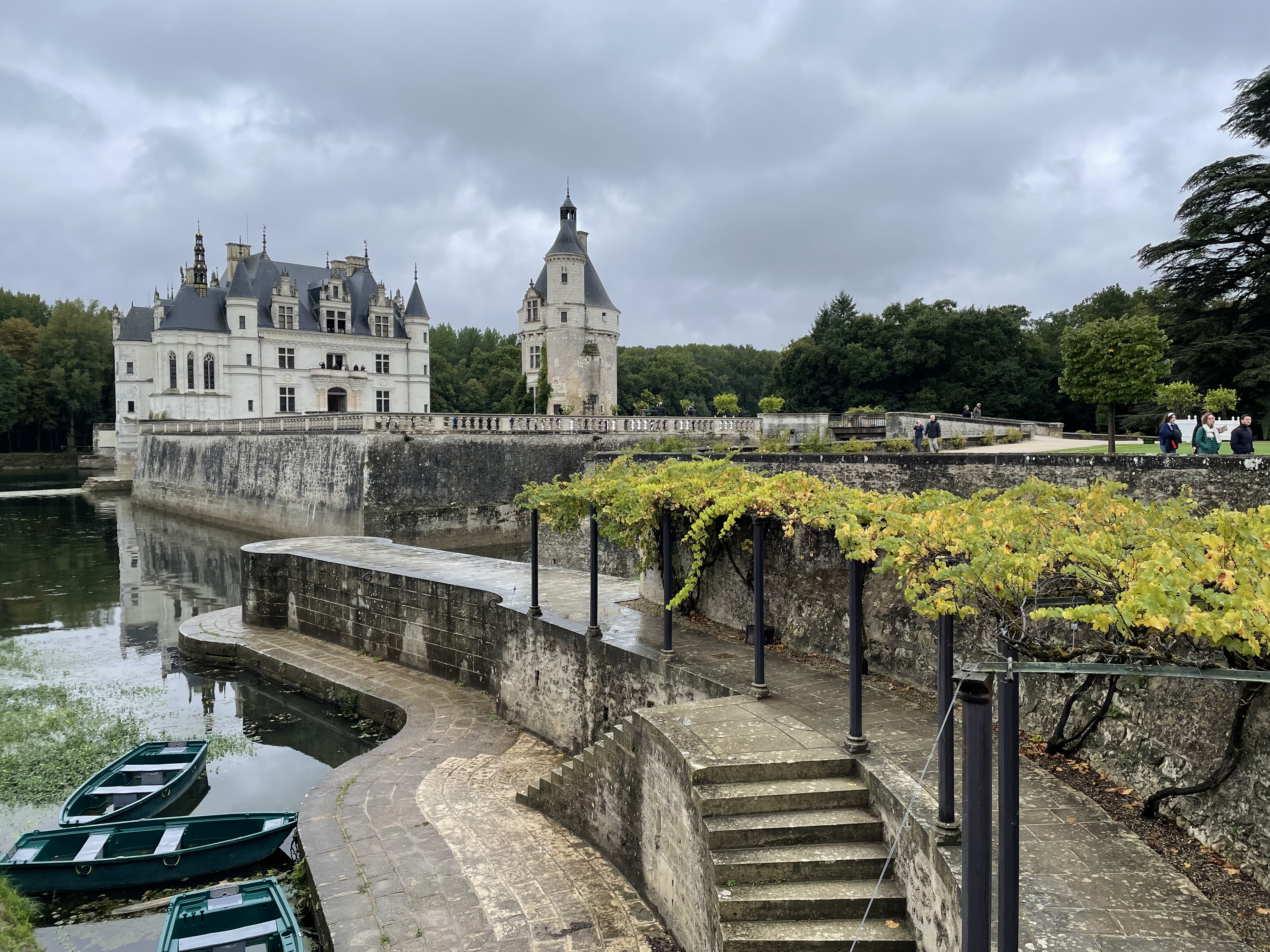
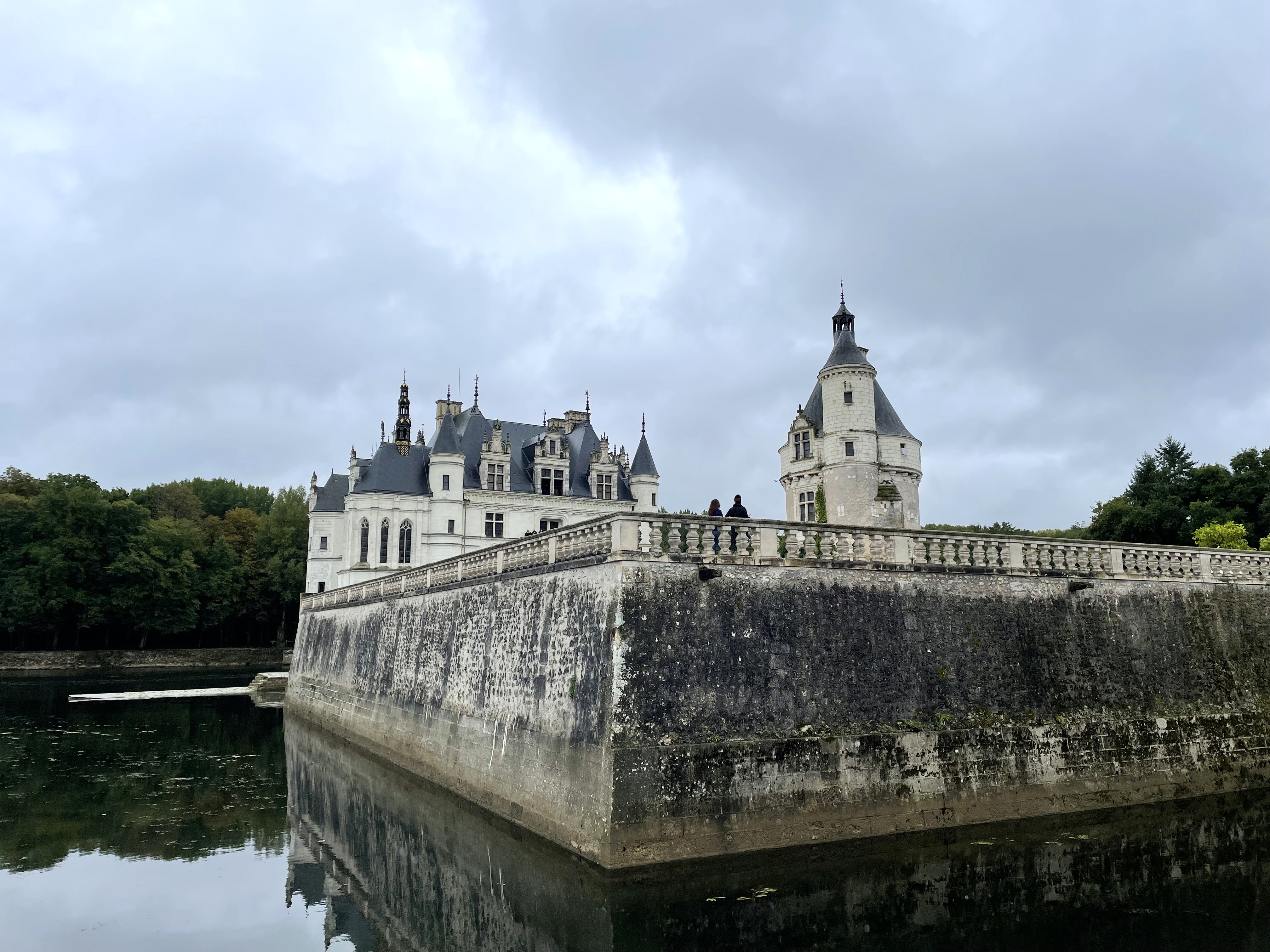
A couple of days later we left early with six other new friends and a guide to visit three châteaux in the region. The first on our tour was the Château de Chenonceau, where we were greeted with a sign that showcased what was ahead at this spectacular UNESCO World Heritage Site. Our talented and knowledgeable guide had us enter the estate via the gardens, outbuildings, and the historic dovecote . . . until we turned a corner and had our first glimpse of this imposing landmark.

First view of the château after entering through the gardens

As we learned from our guide and the online site,

“The history of the Château de Chenonceau is defined by an almost uninterrupted succession of women who built, embellished, protected, restored and saved it. The first château was a medieval château dating from the 12th and 13th centuries, of which only the dungeon remains: the Tour des Marques. The château in its current form was built between 1513 and 1517, by Thomas Bohier and above all his wife, Catherine Briçonnet.”

The château once belonged to the king until it didn’t (which probably saved it from destruction.)

“In 1535, King Francis I incorporated it into the Crown Estate as part of a debt settlement. Later, King Henry II decided to offer it not to the Queen, but to his Favourite, Diane de Poitiers, ‘in full right of ownership, seisin and possession, completely, peacefully and perpetually, to dispose of as her own and true patrimony.’ This artificial exit of Chenonceau from Crown Lands meant that it was saved, two centuries later, from the French Revolution.”

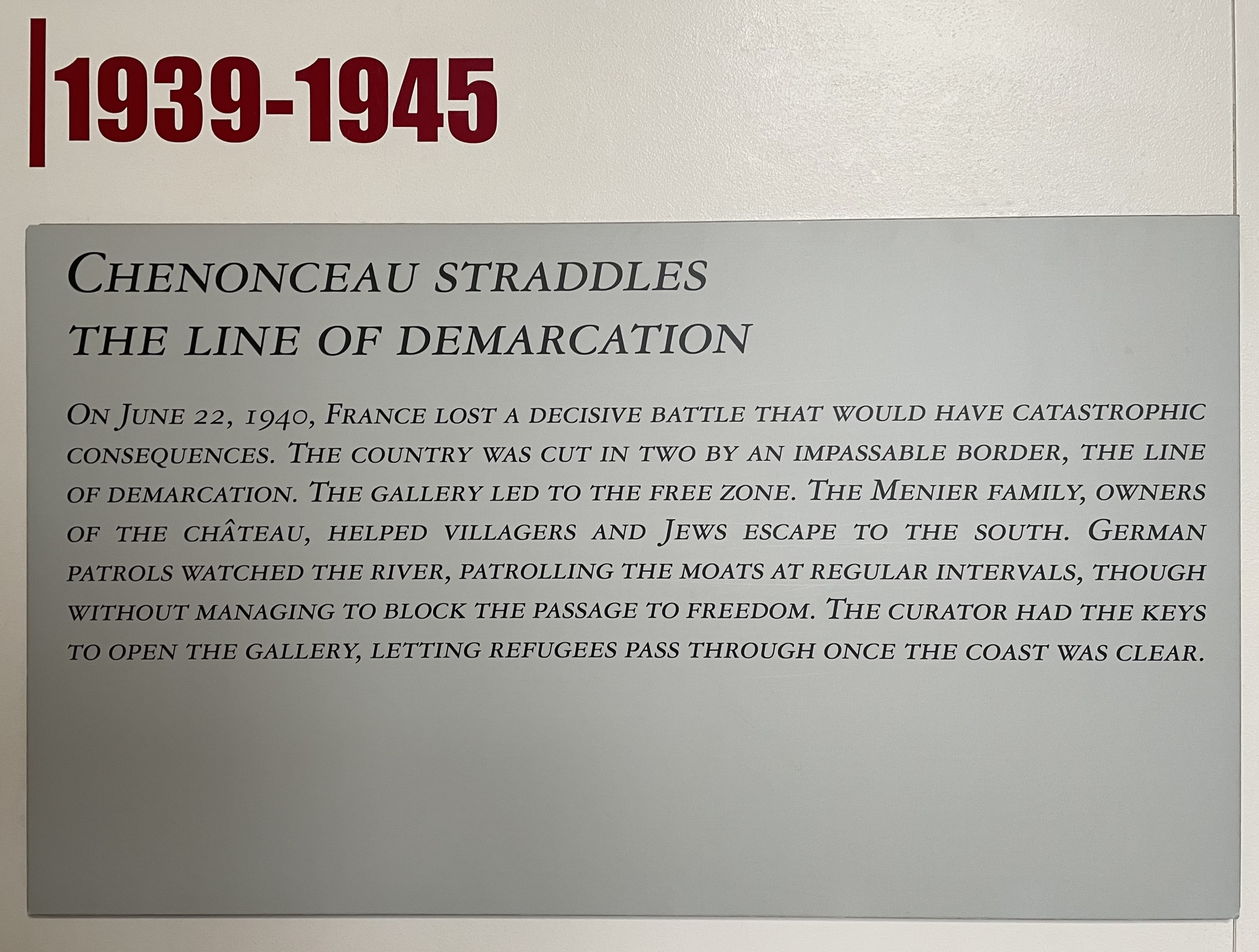
Over the next two hours we visited each level of the château, from the grand entrance into the main hall with windows looking out onto the river and countryside, and then down into the kitchen. “During the Second World War, the Grand Gallery at Chenonceau [which spans the river] became the sole point of access to the free zone, and the Menier family [the owners] helped to smuggle out people fleeing the Nazi tyranny.” US president Harry Truman visited the château on his first trip to France.

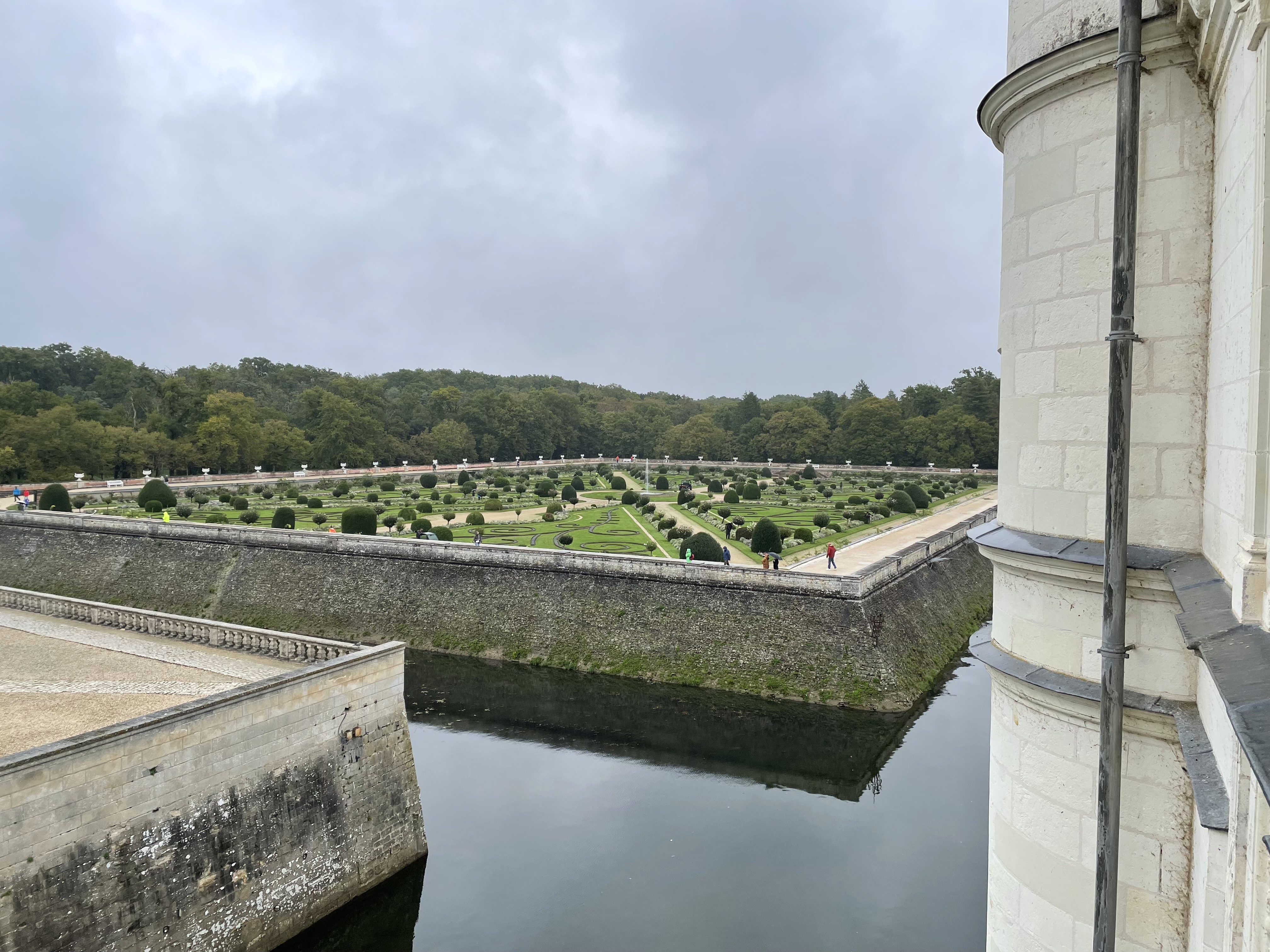
Even on a gray and rainy day, Château de Chenonceau took our breath away.

After a drive through a number of charming villages in the Loire Valley we stopped for a simple yet delicious lunch at the Château de Villesavin, a family owned estate.

Château de Villesavin

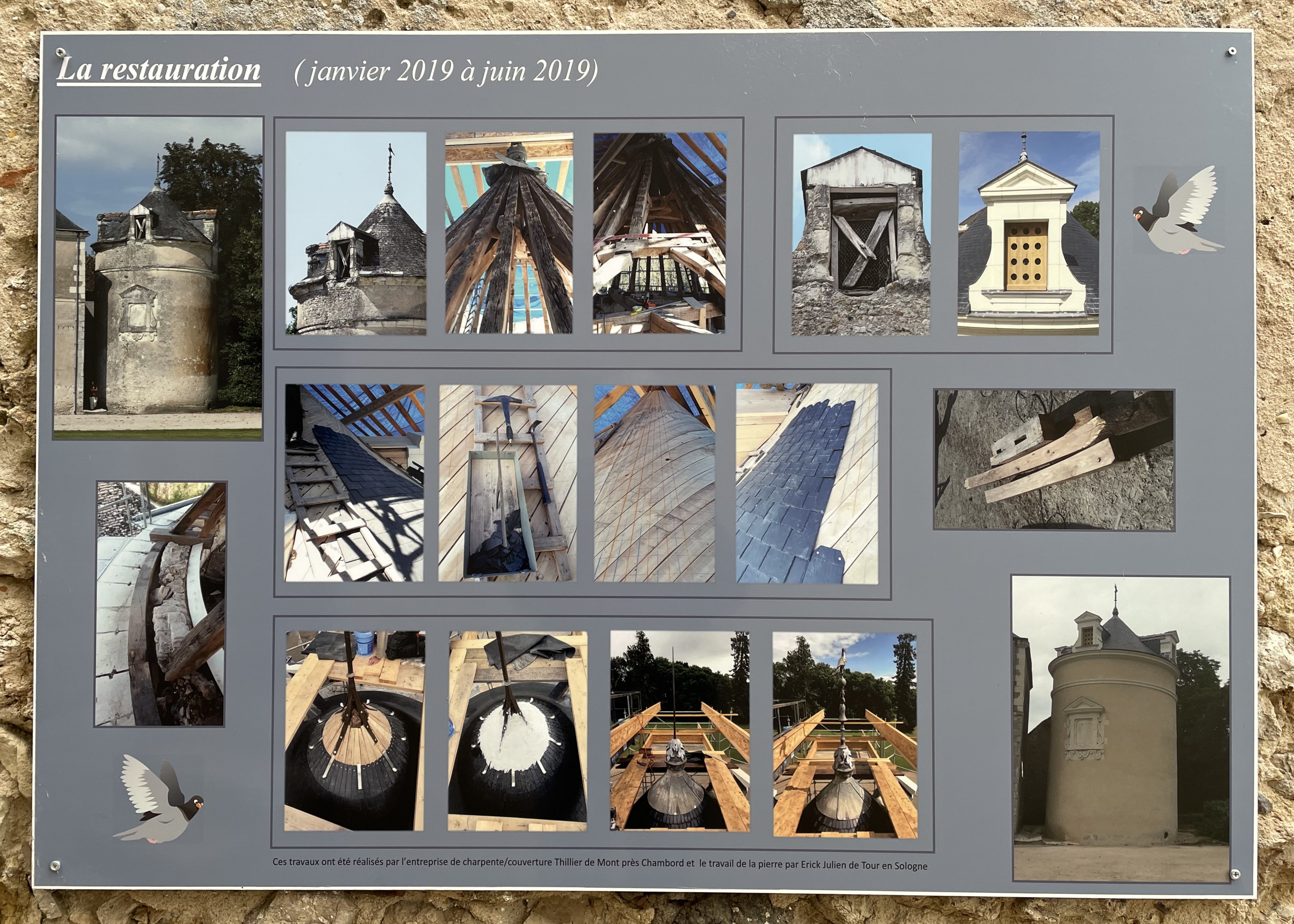
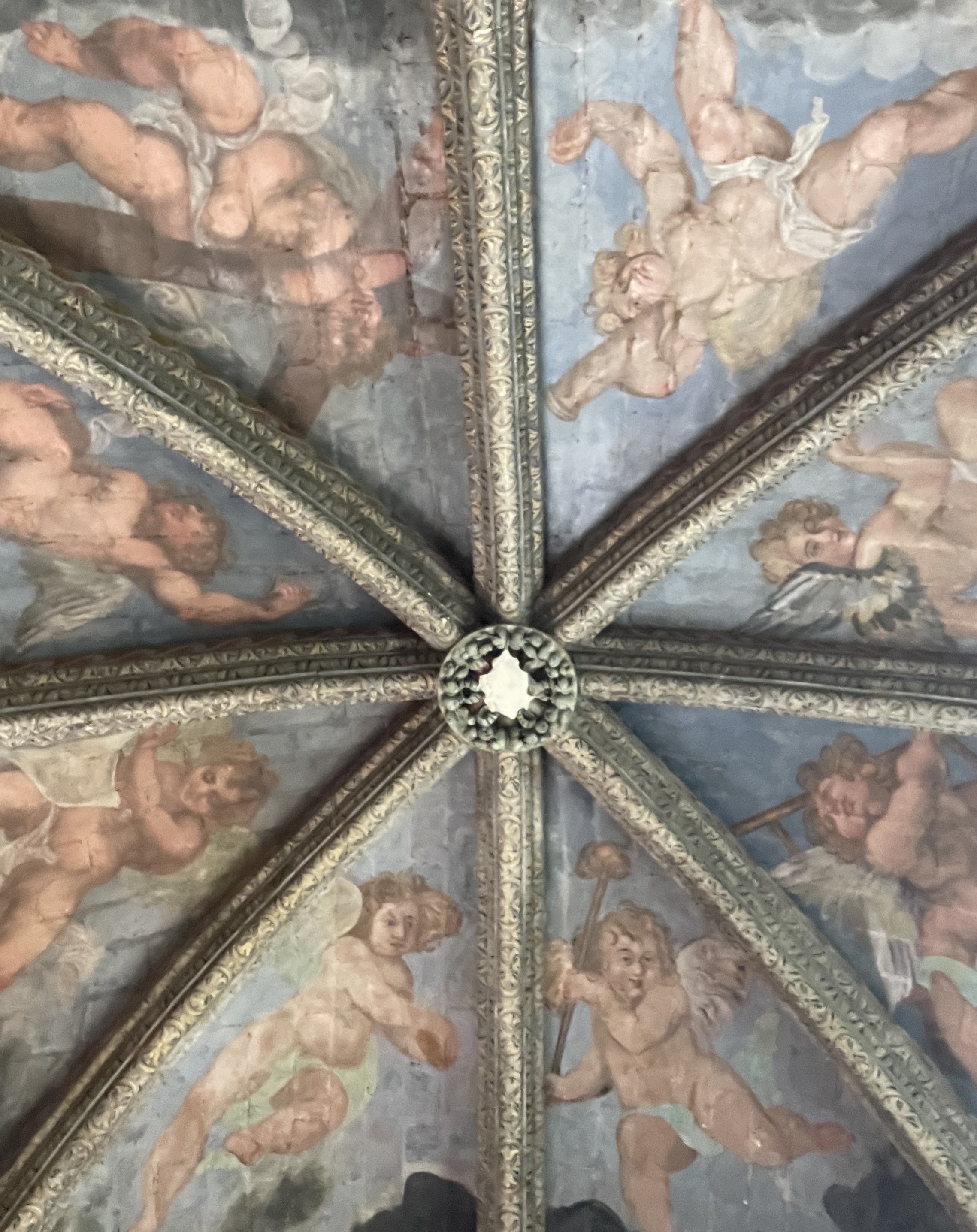
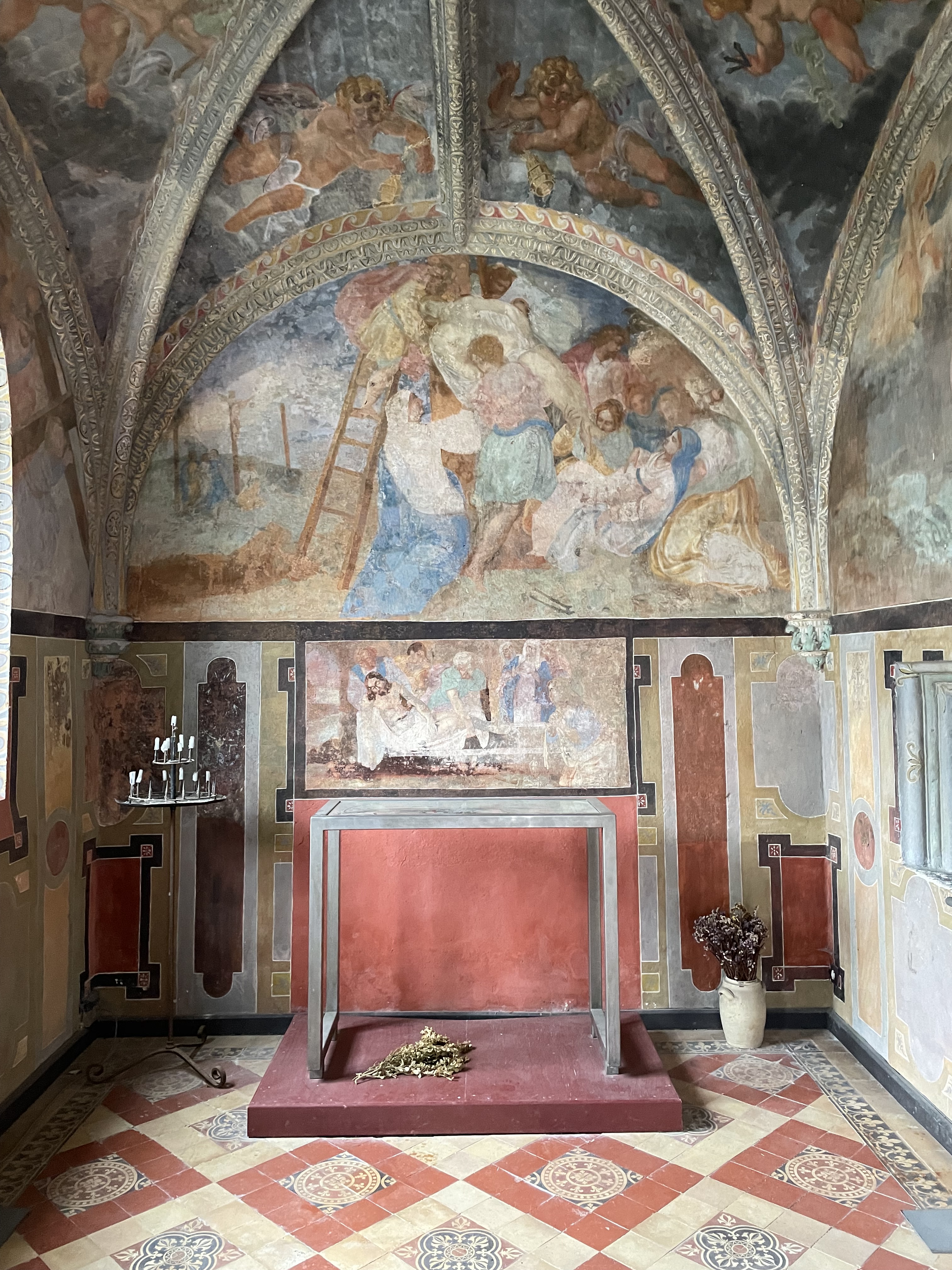
The historic dovecote at Villesavin had been extensively restored in 2019, and included exhibit panels on both the use and the restoration of this charming anachronism. The chapel was also a small treasure.

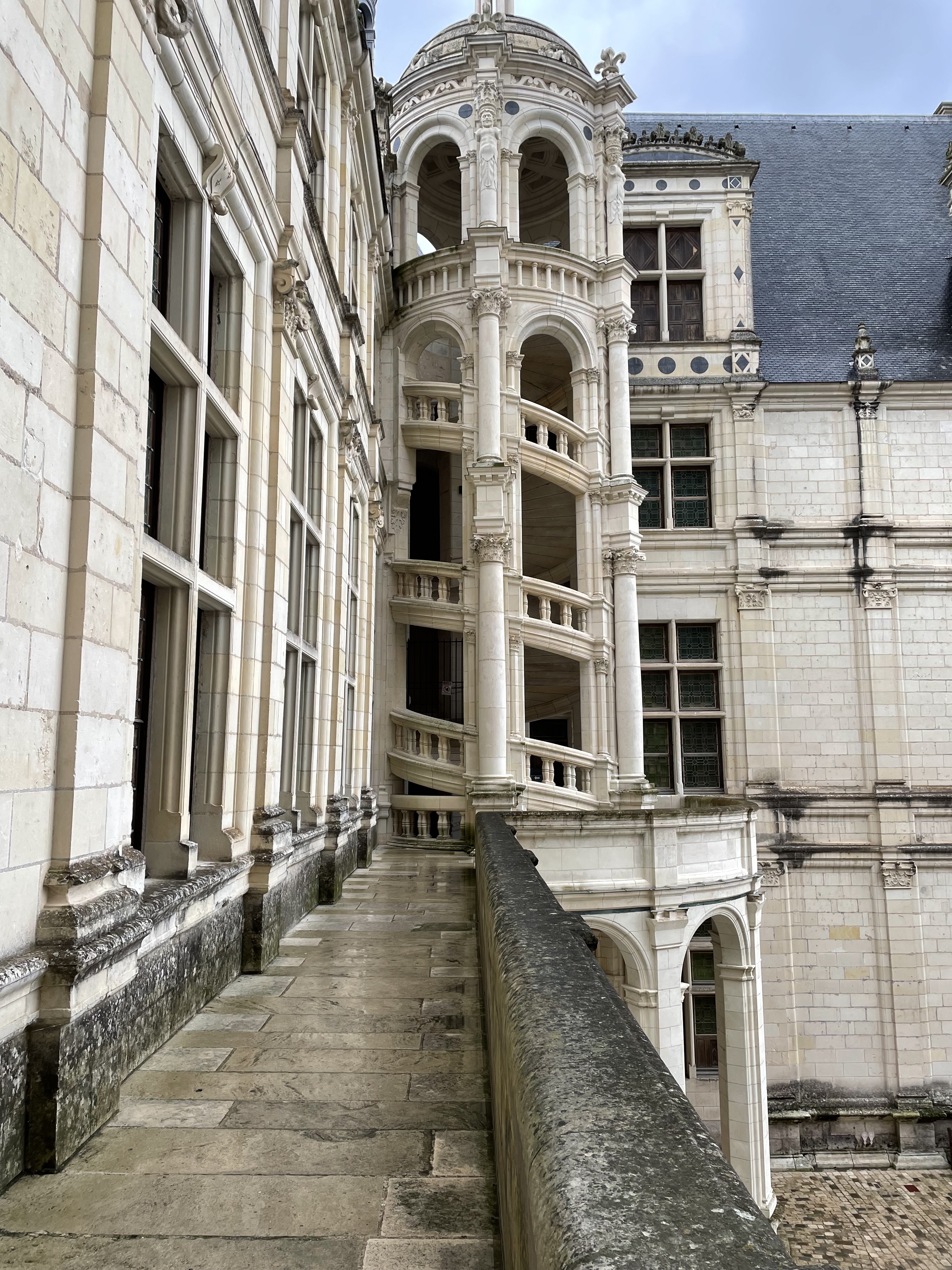
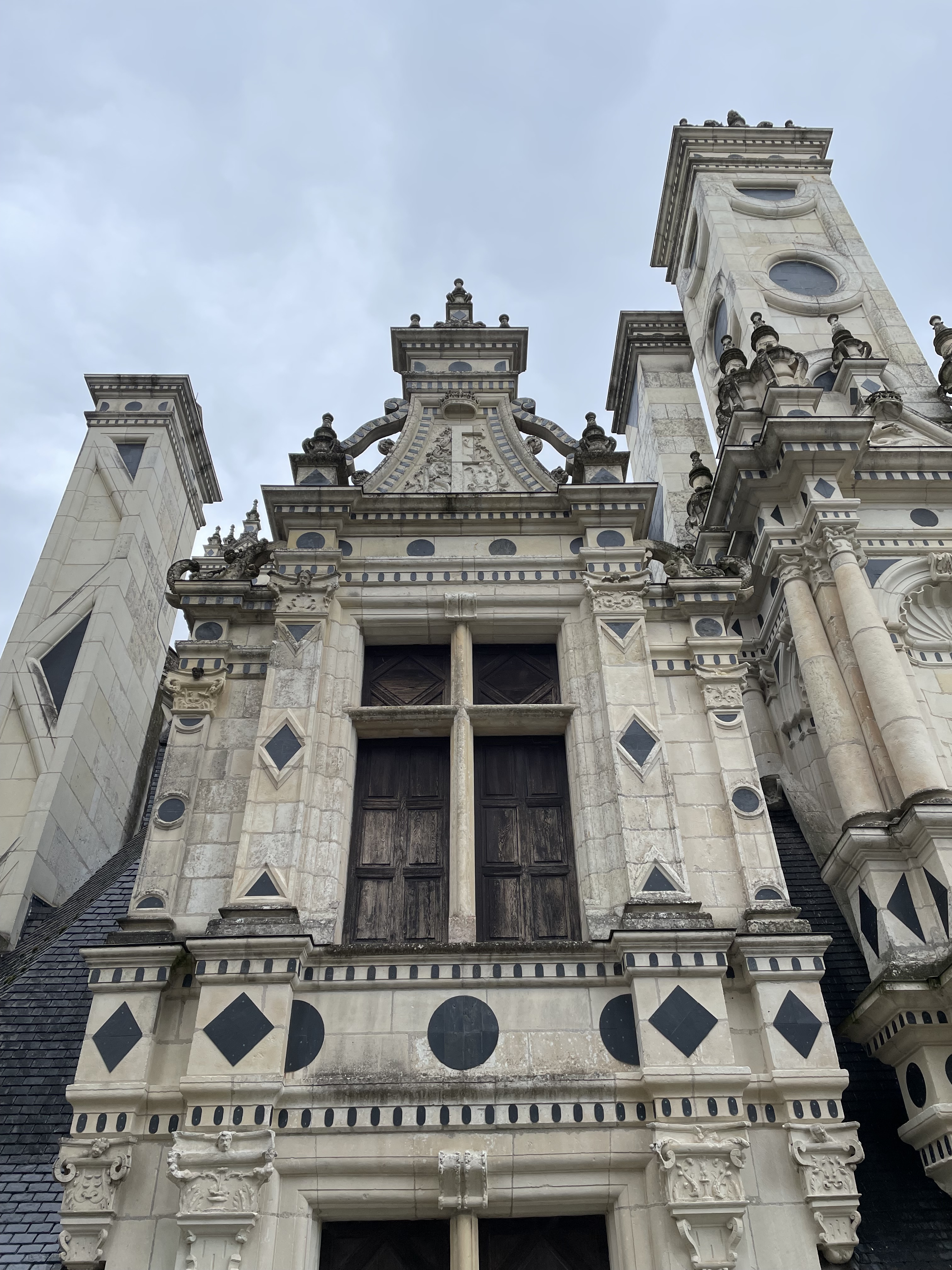
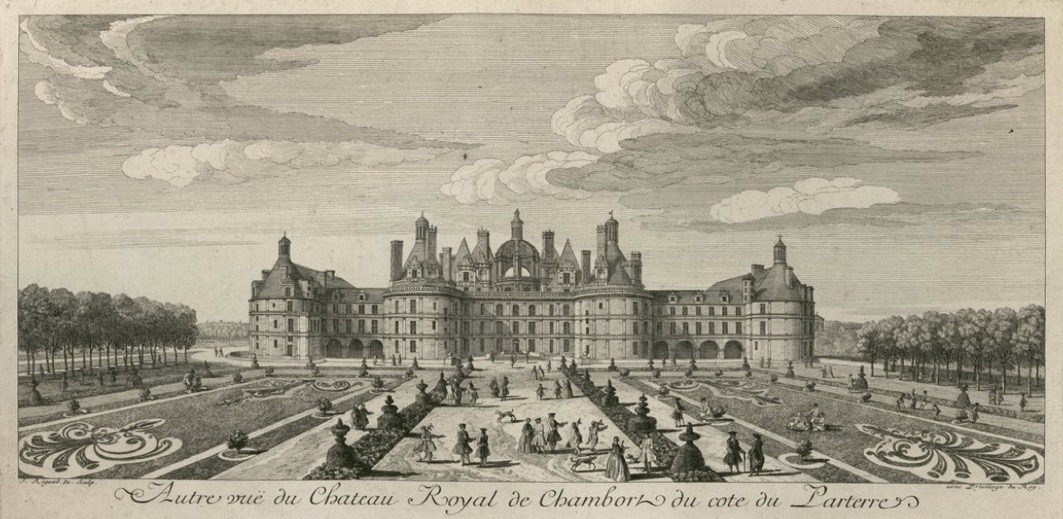
Suitably fortified, our group then drove a short distance to one of the country’s best known estates: Le Château de Chambord.

Our first view of the grandeur of Le Château de Chambord

The château was basically built as a hunting lodge and as a show of power and wealth.

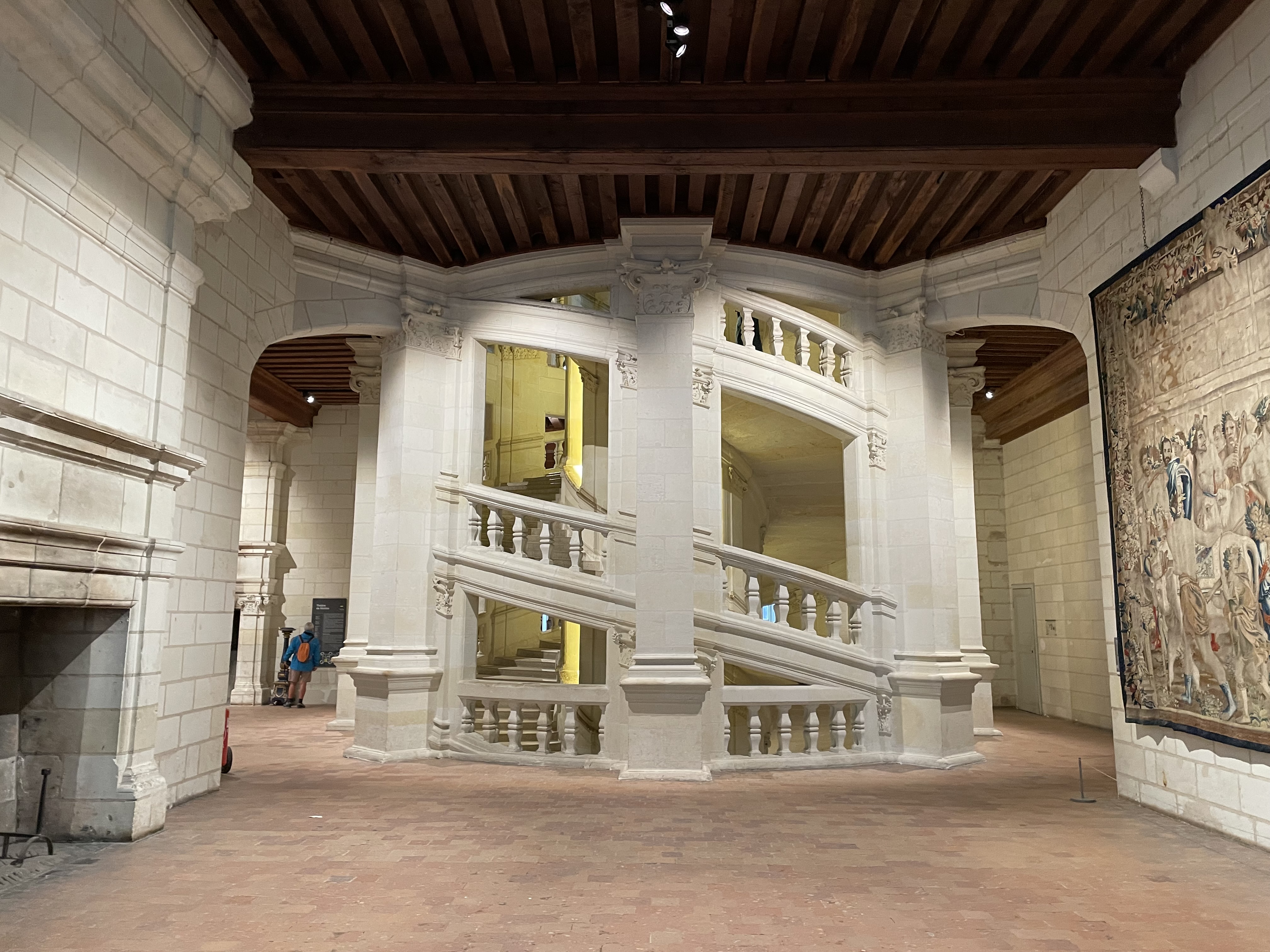
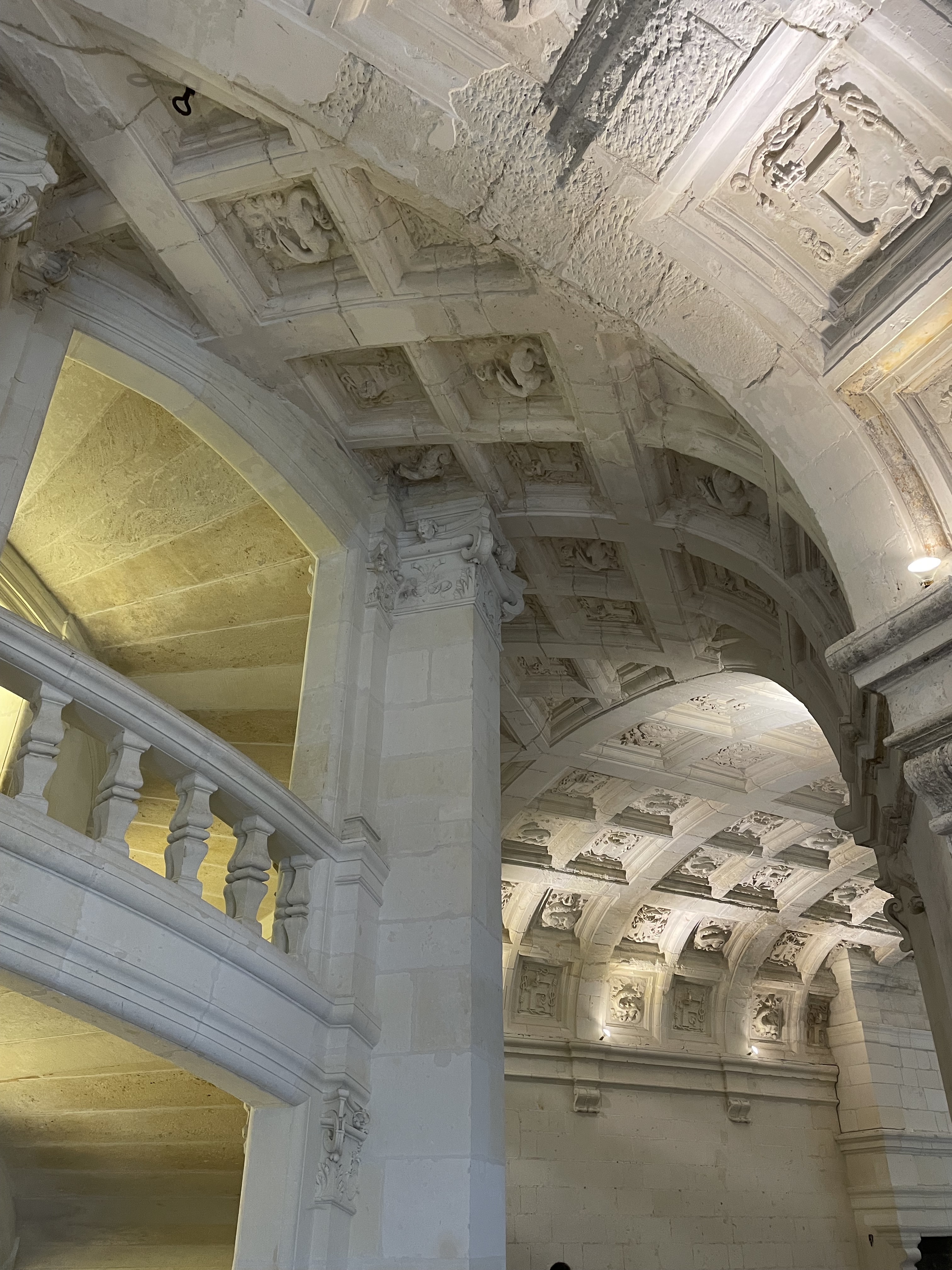
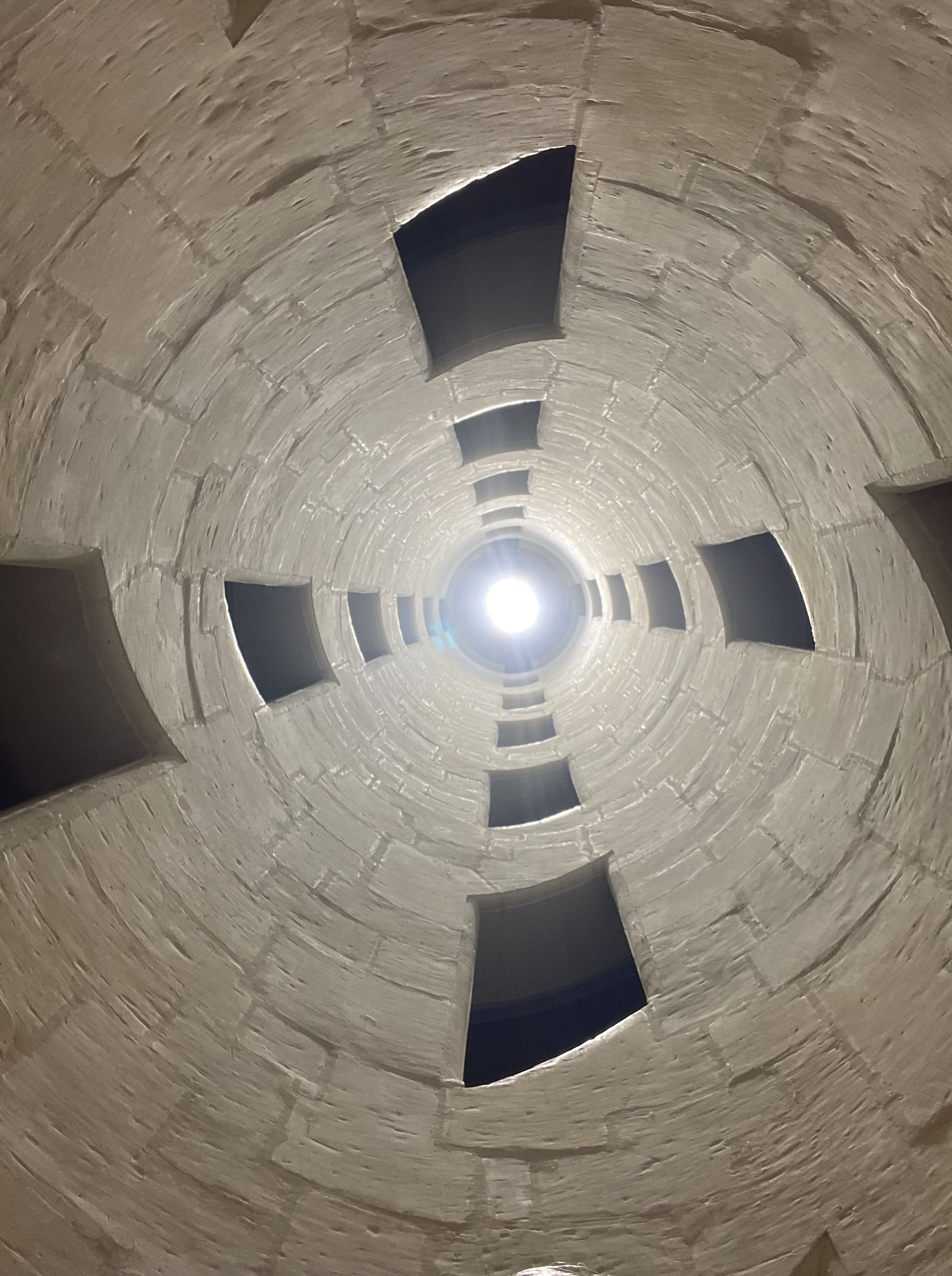
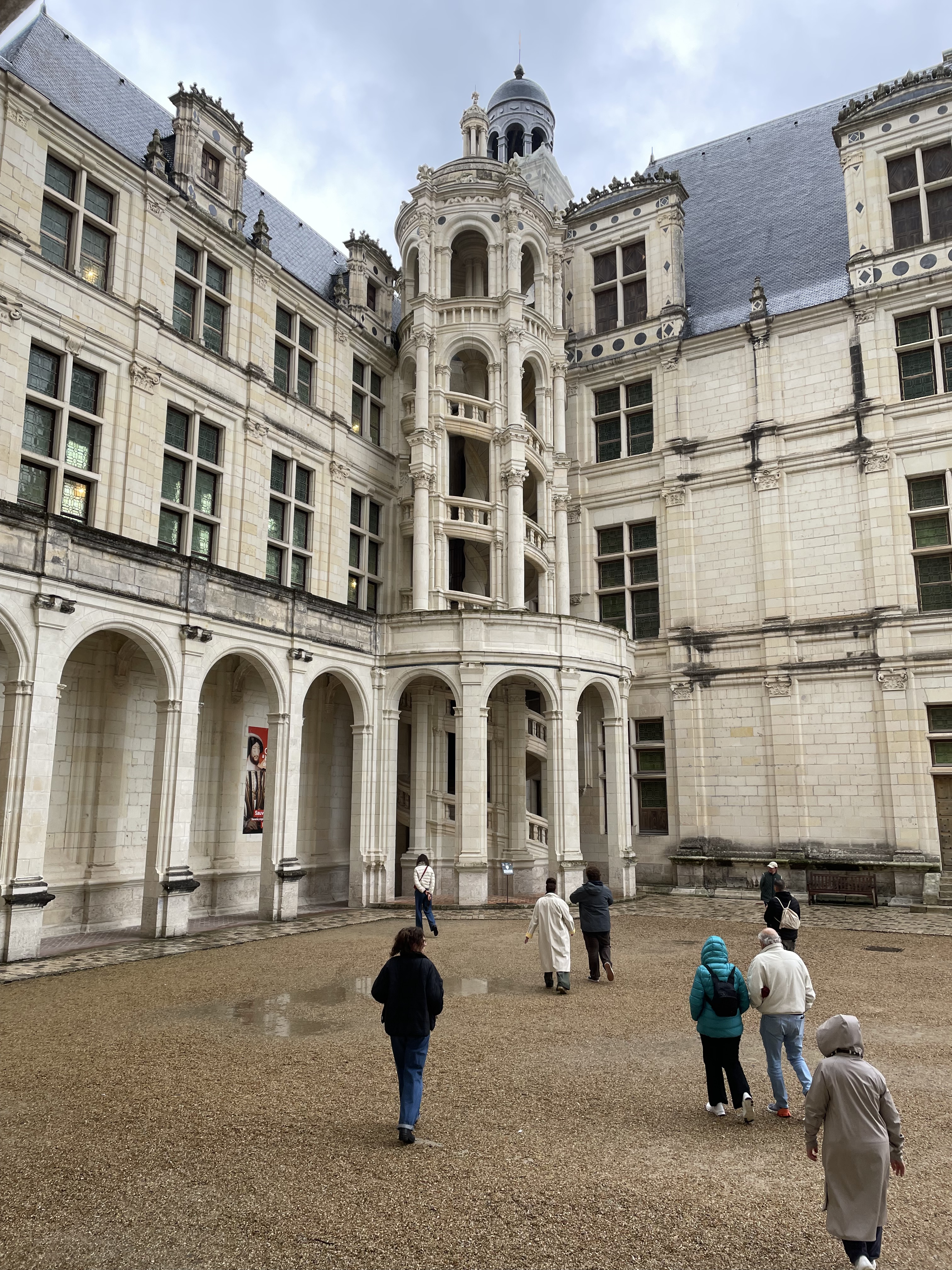
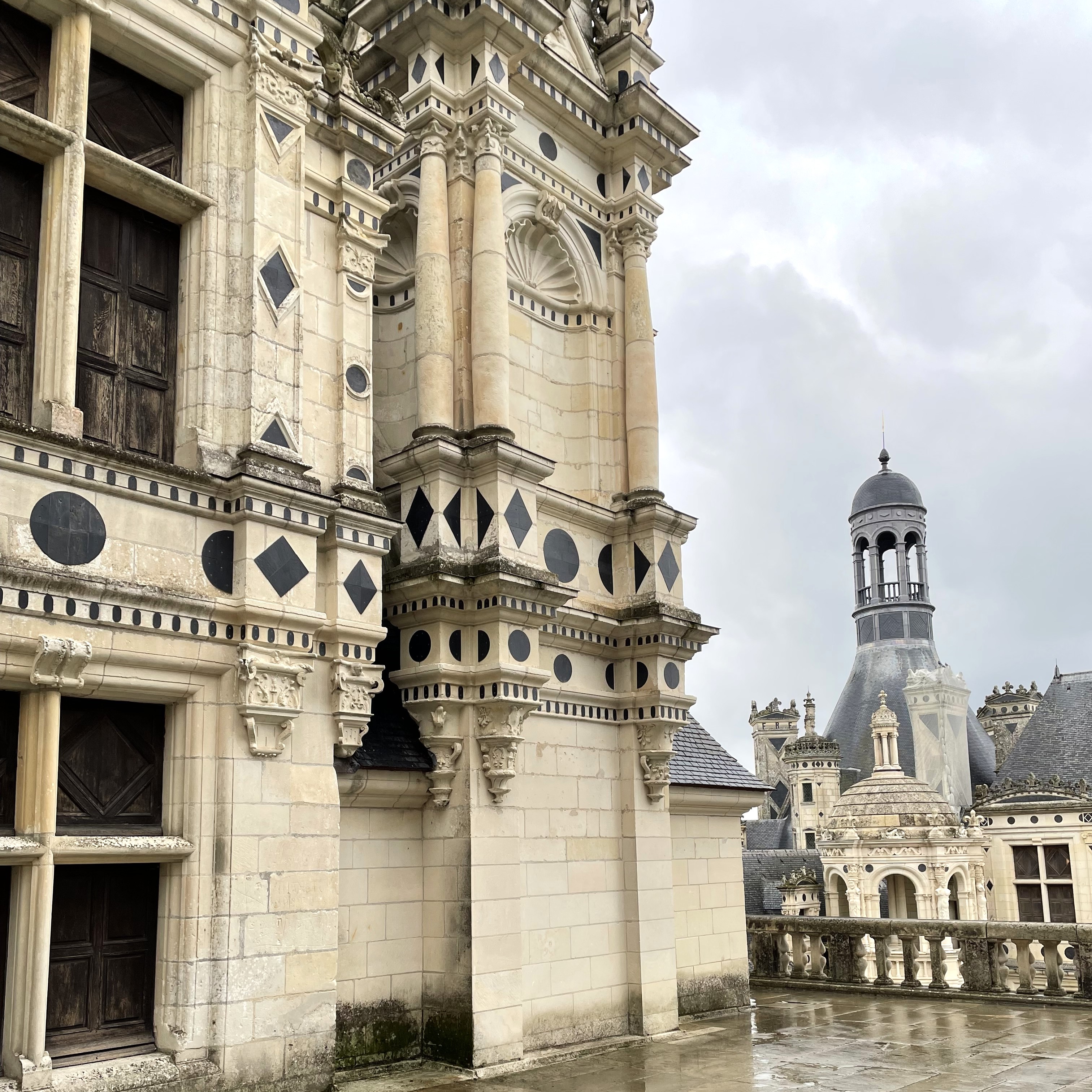
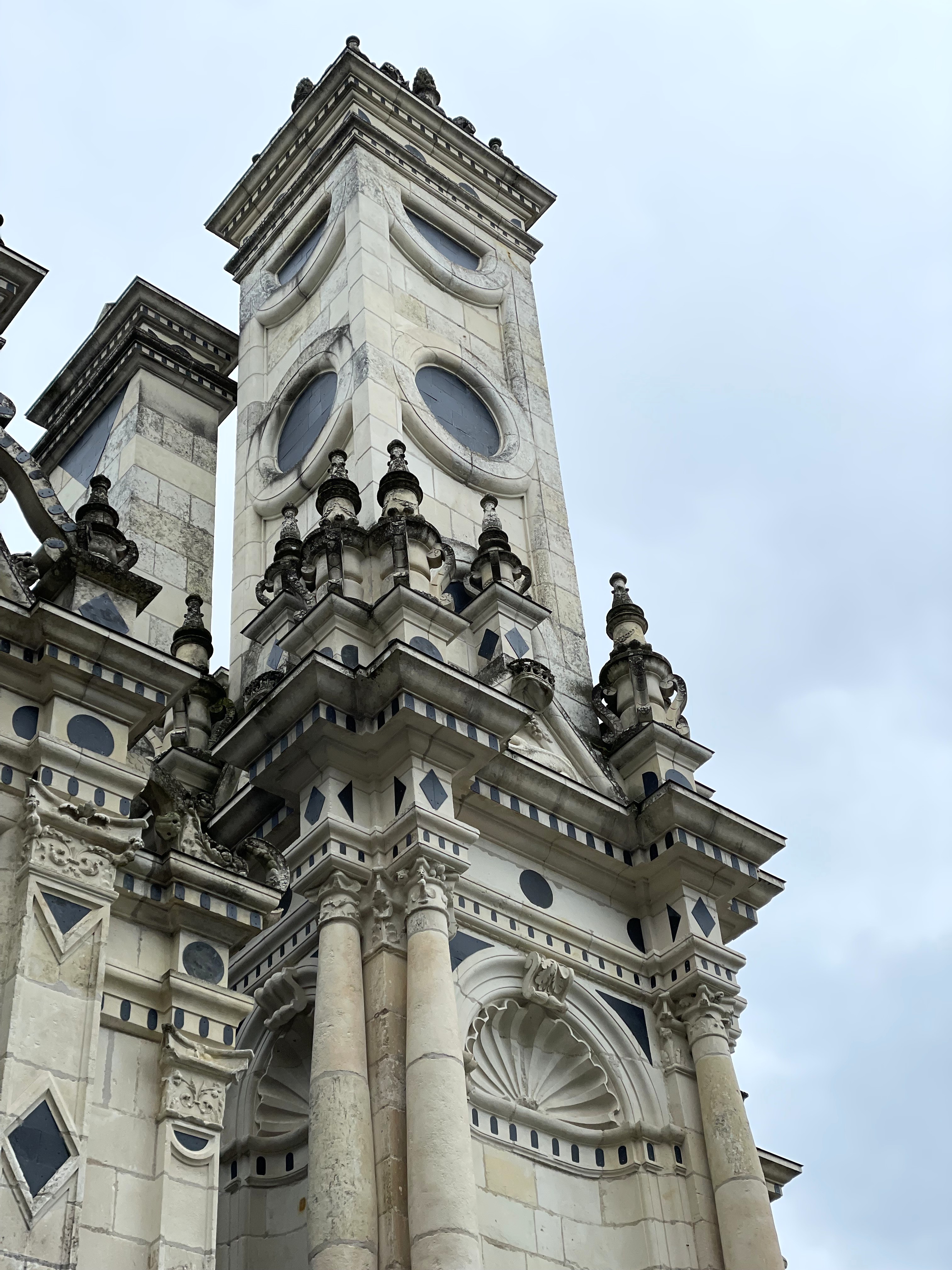
“A palace rises up from the heart of the Sologne marshlands. A dashing young king, François I, has ordered its construction. The château of Chambord is not designed as a permanent residence, and François only stays there for a few weeks. It is a remarkable architectural achievement that the king is proud to show to sovereigns and ambassadors as a symbol of his power engraved in stone. The plan of the castle and its decors stem from a central axis, the renowned double helix staircase, inspired by Leonardo da Vinci, an ascending spiral leading to a profusion of chimneys and sculpted capitals on the terraces.”

Once one enters through the main entrance hall that double helix staircase immediately catches the eye. No matter where one moves throughout the château it remains a touchstone and marvel of architecture and engineering.

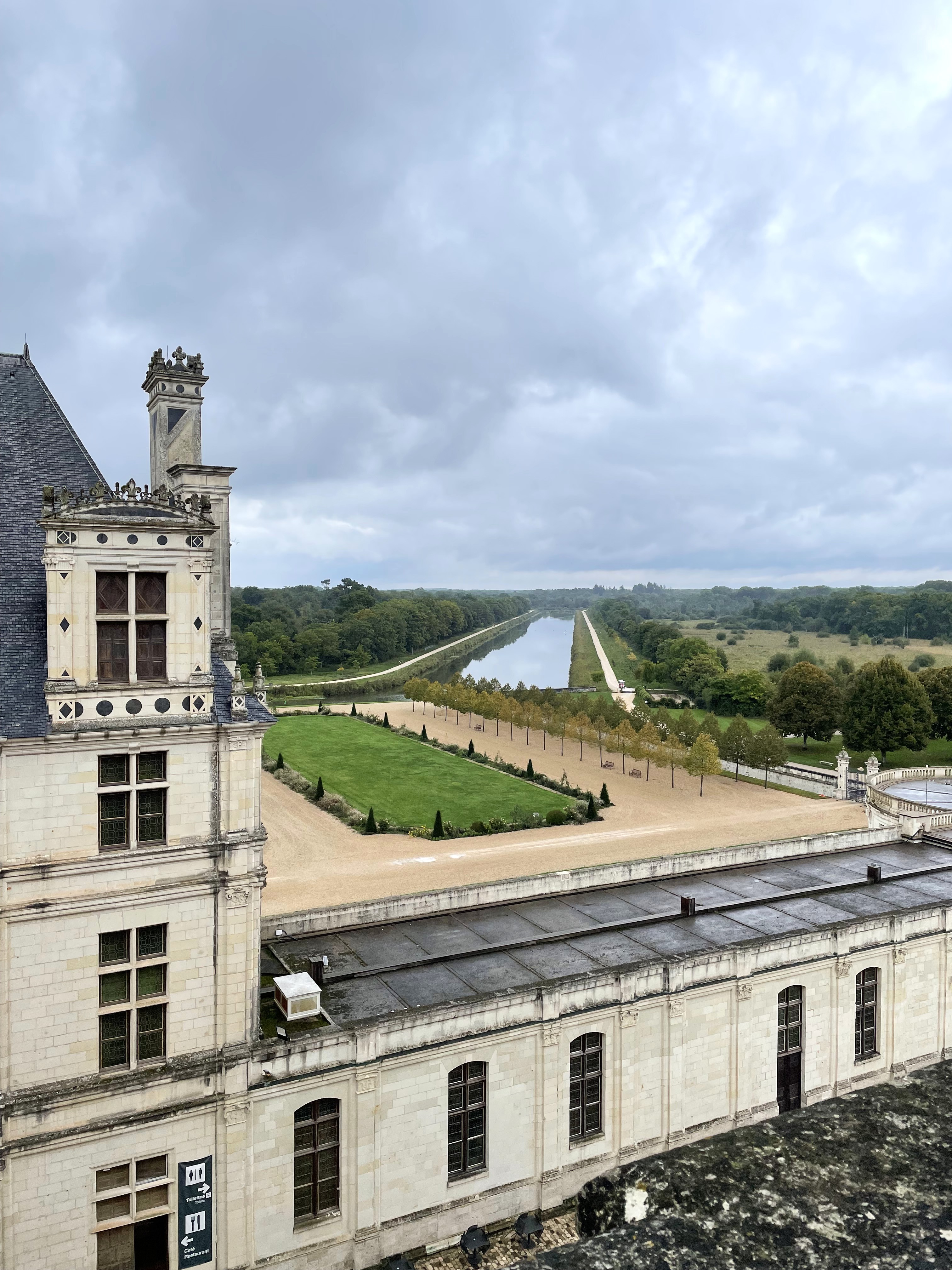
“Only under the reign of Louis XIV is construction finally completed. During the same epoch the areas surrounding the château take on shape and form. Stables are set up outside while the Cosson river, which meanders through the park, is partially canalized to sanitize the site. Several times, the Sun King resides in the monument in the company of his court; the royal sojourns are occasions for grandiose hunting parties and festive entertainment;  it is in Chambord, in 1670, that Moliere presents the premiere of his celebrated comedy, Le Bourgeois Gentilhomme.”

The symmetry of the château is disrupted during Louis XIV’s reign, as apartments to mimic those at Versailles are created. Nonetheless, work continues on the building and over the years the estate passes through various hands—royal and otherwise—until it becomes the property of the state in 1930. In 1840, the Château of Chambord is registered on the first list of French historical monuments, as are the forest park and the wall in 1997. And since 1981 it has been inscribed on UNESCO’s world heritage list. 

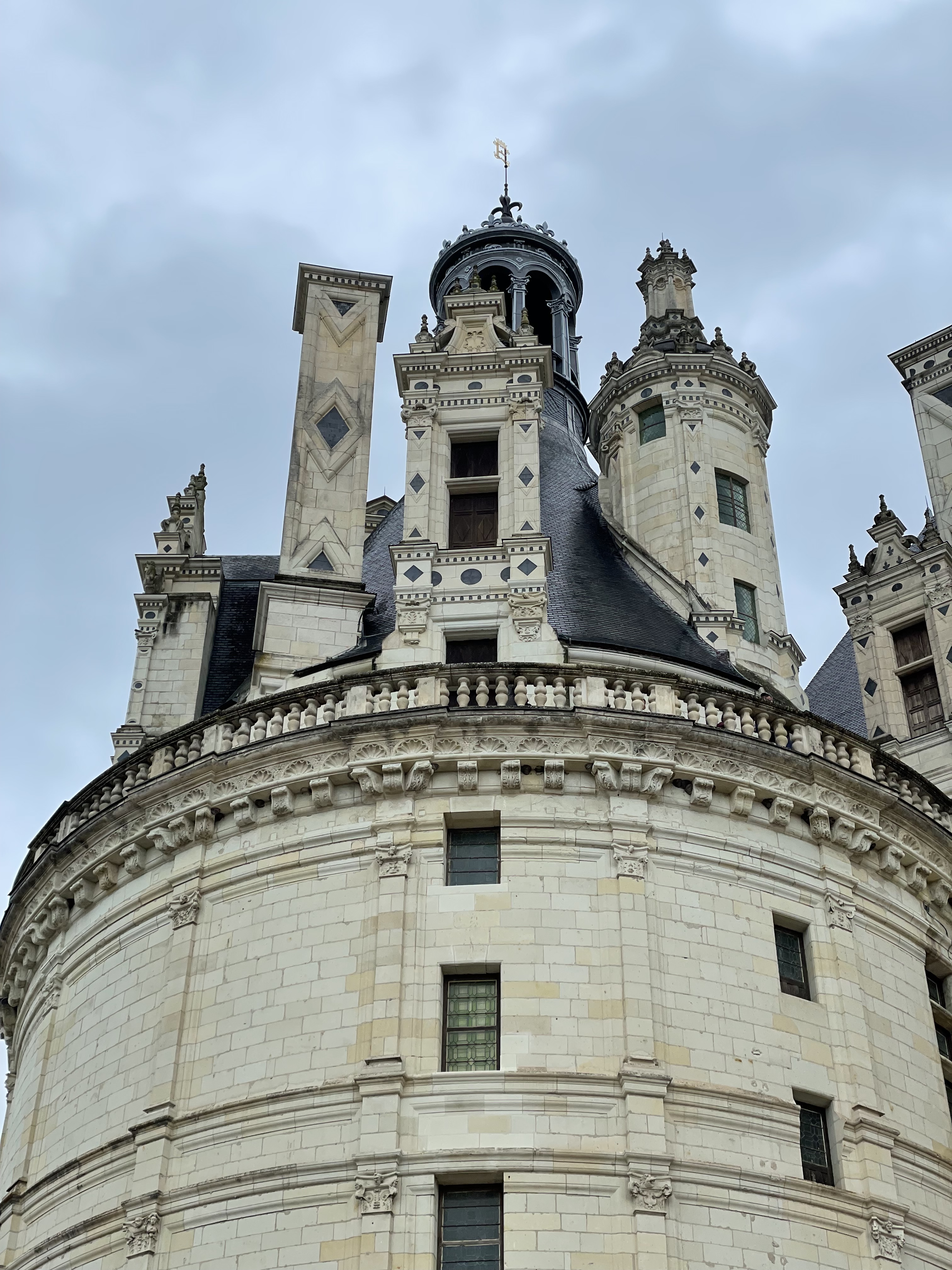
Because the house is not furnished, which respects the historical nature of the estate as a hunting lodge, I found the exterior features and expansive park views much more intriguing. That’s what caught the camera’s eye on our visit.

If you want to go down a rabbit hole, visit Bernard Smith’s website and read Château de Chambord – an exaggeration of an exaggeration. It is extensive and you’ll see historic images and contemporary photos such as these views of the estate and gardens that provide a better sense of both the scale and the complex detailing found throughout one of the most remarkable Renaissance-era buildings in the world.


As this introduction demonstrates, we had a wonderful week exploring the Loire Valley. Thanks for traveling along.

More to come . . .

DJB


For other posts on our fall trip to Ireland and France see:


Photo of Château de Chenonceau at the top of the post by DJB

Backstage with Tom Gray

Spending time with a bluegrass legend.


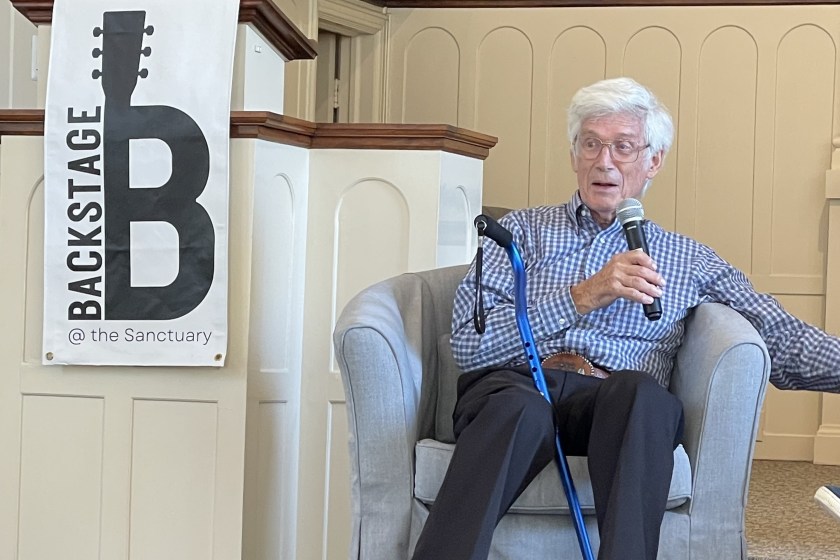
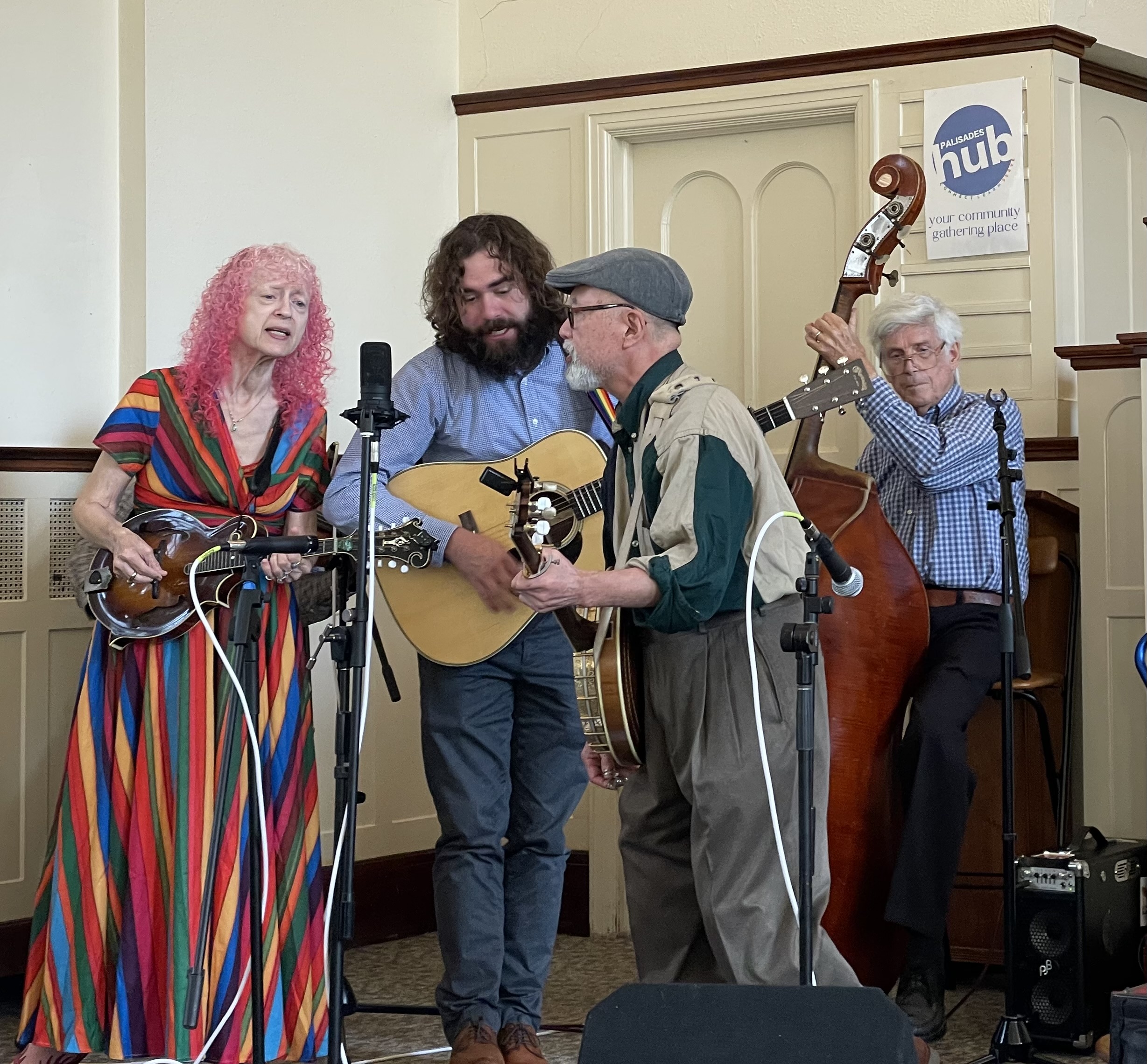
Last Sunday we spent an intimate and delightful afternoon with Tom Gray, founding member of the legendary bluegrass band The Seldom Scene and a two-time Bluegrass Hall of Fame inductee. Held at The Palisades Hub in Northwest Washington, DC, the event wove together music and storytelling as Tom shared highlights from his remarkable career.

Candice and I came to know Tom when he would help his daughter Julie from Evensong Farm at the Silver Spring Farmers Market. The days I’d see Tom at the market we’d strike up conversations about music, musicians he’s known, and upcoming events where he was performing. I was always pleased to see Tom there, as it was a great way to spend a few minutes with a real gentleman (not to mention a terrific bassist) and hear some of his stories from the road.

With Tom Gray at The Palisades Hub

Tom doesn’t come to the market as frequently these days, so I was delighted to learn about the Backstage at the Hub event in Palisades. Tom grew up in that neighborhood when it was known as Potomac Heights and one of the stories he told on Sunday was of how his father was a key driver in bringing the various neighborhoods in the area together under the Palisades banner. Guided in conversation by Mark Segraves of NBC4, Tom shared his history with the community, including wonderful stories of family canoe trips on the Potomac, a tradition that has now lasted more than 70 years.

Of course, Tom also talked about music and musicians. He recounted how he’d first been exposed to bluegrass and country music early in life by his babysitter in Chicago, where he was born. She loved to come to the Gray’s house because their radio could pick up WSM—the home of the Grand Ole Opry—from Nashville. Tom said he got his love for the music be sitting on her lap listening to Bill Monroe and his Blue Grass Boys.

Bill Monroe and His Blue Grass Boys, including Lester Flatt and Earl Scruggs, center, c. 1946. Credit: Country Music Hall of Fame® and Museum

In another story Tom mentioned that his first instrument was the accordion (which would delight my good friend from Staunton, Virginia, Jim Harrington, who plays accordion in bands throughout the Shenandoah Valley.) Tom said that the accordion was a great instrument for learning music theory, although he didn’t call it that at the time. He still thinks of moving up and down on the bass to change chords as he learned pressing the buttons on that first instrument.

The family moved to Washington when his father started a job as a lobbyist, and Tom began playing in bands in high school and then with local acts such as Buzz Busby. We heard about the young Emmylou Harris (“people in Washington knew she was going to be a star”) and how he came to join what was known as the “first classic” Country Gentlemen lineup.

The Original Seldom Scene: Ben Eldridge, John Duffey, John Starling, Mike Auldridge, and Tom Gray, left to right (credit: Bluegrass Music Hall of Fame)

There were lots of John Duffey stories including how he left the music business for a while after he split with the Country Gentlemen. Tom said that he was participating in the jam session at Ben Eldridge‘s home at the time, and they knew that if Duffey had a chance to sing with John Starling, another regular participant, he’d return to the music he loved. Here’s the description of how what became the Seldom Scene was founded from Tom’s Hall of Fame biography.

“When Tom Gray and John Duffey got together with John Starling, Ben Eldridge, and Mike Auldridge in 1969, it was for a basement jam session at Eldridge’s house in Bethesda, Maryland. Their first public performance was at a Georgetown rock club in late 1971. All had day jobs, so the group named itself the Seldom Scene. Their weekly gig at Bethesda’s Red Fox Inn (moving to the Birchmere in Alexandria, Virginia, after five years) continued to be packed, and the demand for concert, festival, and recording appearances was irresistible.”

Both the Country Gentlemen and The Seldom Scene changed bluegrass music forever, the latter by showcasing “an undeniable knack for blending both old and new music and traditions without sacrificing what makes either potent and durable.” Old Train, the title track of the band’s 1980 album, provides a good example of the original band’s sound in its prime.

Rider was a traditional song that the Scene arranged for their Act III album with extended jams (especially when played live). It kicks off with Tom’s bass line that fan’s instantly recognized, and then just before the four minute mark Tom and Ben Eldridge take the lead with some wonderful interplay between bass and banjo (and with a fiddle thrown in on the studio version).

Adding to the afternoon’s delight, Tom was joined by his band Blue Spruce, who performed traditional, modern, and original bluegrass before and after the interview. The band features Andrew Tontala (vocals, guitar), Barb Diederich (vocals, mandolin, bass), Shige Takeshita (vocals, banjo), Dave Goldman (fiddle), and of course Tom (vocals, bass, mandolin).

I want to end with two additional videos of Tom’s music. The first, Lay Down Sally, is from a live Seldom Scene show (possibly around 1985) when Phil Rosenthal was in the band as the lead singer. John Duffey, the larger-than-life big kid, was having a ball . . . and during the bass solo at the 2:53 mark Duffey decides to rip open Tom’s shirt to get him into the spirit of the performance. Everyone in the band takes John’s antics in stride, but the crowd loves it.

The final video is of a later edition of The Seldom Scene reuniting with former members Starling, Eldridge, and Gray (with Emmylou Harris on backing vocals) to create the Smithsonian Folkways album Long Time… Seldom Scene. On this video the group has just finished recording the classic Body and Soul, as re-envisioned on the spot by vocalist John Starling. It is a beautiful arrangement, and a great tribute to the durability of what Tom Gray, John Starling, John Duffey, Ben Eldridge, and Mike Auldridge began decades ago in that Bethesda basement.

Sunday’s event was a rare chance “to go backstage with Tom Gray, celebrate the enduring spirit of bluegrass, and connect with the history of the Palisades neighborhood.” Thanks to Tom and all involved.

More to come . . .

DJB

Paradise is not always what it seems

Retired Chicago policeman Cal Hooper finds a small Irish village isn’t as bucolic as he imagined.


One of my goals for the late-in-life deep dive into murder mysteries is to read offerings from writers from a variety of cultures and countries. Which is how I ended up last month in a bookstore in Dublin looking for a crime mystery by an Irish writer. The booksellers gave options, but one name kept popping up (albeit an “American-Irish” writer) and a standalone novel by that writer was mentioned as a book worth the read.

And even though it took an entire eight-hour flight (and then some) to finish, the “tense, slow-burning thriller” more than met the hype.

The Searcher (2020) by Tana French begins as Cal Hooper, after twenty-five years in the Chicago police force, moves to a small rural Irish village seeking a fresh start. Having survived a broken marriage and drained by the demands of his job, Cal is seeking nothing more than a small fixer-upper, land to walk, time to think, and a good pub. But as he is cooking a hamburger with Steve Earle blasting on the speaker, the back of his neck suddenly flares . . . a habit trained by his time in Chicago. He’s being watched. And into his search for a new start walks a local kid who comes looking for help. Trey’s brother is missing and no one seems to care. Cal doesn’t want to get involved but he also cannot bring himself to walk away.

Slowly (French is a great writer, but she loves atmospheric detail . . . so everything evolves at a snail’s pace) Trey comes to trust Cal and the former cop comes to care about finding answers in a village that likes to hide secrets. Trey Reddy and Brendan, the missing brother, come from a broken family where the father has left and the mother is doing all she can to hold it together. The folks in the village—beginning with Cal’s neighbor Mart—warn him to stay away from the Reddys and the search for Brendan, but that’s not in Cal’s nature.

Cal is used to finding answers, but one thing he quickly discovers is that he’s virtually alone in this quest. There is no Chicago police tech department or crime scene unit to help him locate a missing person. The local police are less than helpful and he knows that if he calls in units from Dublin when the seriousness of the crime is revealed he’ll never find peace among his neighbors. He’s come to Ireland looking for paradise but ends up in a place shrouded in secrecy, economic troubles, and never-forgotten history. That’s simply life in his rural promised land.

The characters in The Searcher are richly drawn, beginning with Cal and Trey but including a local widow Lena, who everyone wants to hook up with Cal, Lena’s sister who runs the local general store, and Mart the neighbor. As we learn more about each of these characters, and as Cal finds out that Brendan’s life was much different from that provided by Trey’s perspective, the story is propelled forward. It is a violent path at times and as is true with many modern crime novels, the ending isn’t clean . . . there are moral dilemmas to be wrestled with. But Trey and Cal get answers not only about Brendan but also about each other and the village they now call home.

French wrote The Searcher after winning initial fame as the author of six Dublin Murder Squad Mysteries. She has now taken Cal’s story . . . and that of Trey and Lena . . . to produce a follow-up novel. In The Hunter we apparently learn that Cal’s built a relationship with Lena and he’s gradually turning Trey Reddy “from a half-feral teenager into a good kid going good places” until Trey’s long-absent father reappears. I now have a copy of that sequel and will begin looking to carve out the time to read another well-written but slow-burning (the perfect description) novel from the Irish countryside.

More to come . . .

DJB

Photo of Irish countryside from Unsplash

From accumulation to abundance

“What if scarcity is just a cultural construct, a fiction that fences us off from a better way of life?”


For the past few days thoughts around civility, taking, sharing, scarcity, abundance, joy . . . and itching ears . . . have been rolling around in my brain. Stay with me as I believe there’s a coherent thread here.

SELF VS COMMUNITY

Civility is in short supply today. In his book The Road to Wisdom, the former head of the National Institutes of Health, Francis S. Collins, cites the breakdown of civility as a key step towards our current crisis of truth and trust. The author and social critic Stephen Carter, writing in Civility: Manners, Morals, and the Etiquette of Democracyblames this on an over-reliance on markets, a forgetfulness of the obligations we owe each other, and a lack of a moral compass in decision-making. Carter notes that . . .

“. . . the language of wanting, winning, or simply taking—the language of self—has supplanted the language of community, sharing, fairness, and riding politely alongside our fellow citizens.”

When the focus is on “getting mine” we construct a worldview that believes there isn’t enough for everyone. Our gain, according to this perspective, has to come at the expense of others. So we reach for what we feel we need to be secure. In doing so cynicism seeps in. The world’s a tough place, we tell ourselves, and we accept that as reality.

But is scarcity, in fact, a reality?


SCARCITY AND ABUNDANCE

A recent Daily Meditation from Richard Rohr’s Center for Action and Contemplation noted that when we have a worldview and a market system which reduces everything to a commodity, it leaves most of us bereft of what we really want: “a sense of belonging and relationship and purpose and beauty, which can never be commoditized.” Focused on the writings of Robin Wall Kimmerer, a Potawatomi botanist and author, the meditation began with this provocative question:

“What if scarcity is just a cultural construct, a fiction that fences us off from a better way of life?

Kimmerer, like Carter, is concerned about the impact of unbridled capitalism. Market capitalism is not going to vanish. The faceless institutions that benefit from it are too entrenched. “But I don’t think it’s pie in the sky,” Kimmerer writes, “to imagine that we can create incentives to nurture a gift economy that runs right alongside the market economy. After all, what we crave is not trickle-down, faceless profits, but reciprocal, face-to-face relationships, which are naturally abundant . . . We have the power to change that, to develop the local, reciprocal economies that serve community rather than undermine it.” 

“I want to be part of a system [she writes] in which wealth means having enough to share, and where the gratification of meeting your family needs is not poisoned by destroying that possibility for someone else. I want to live in a society where the currency of exchange is gratitude and the infinitely renewable resource of kindness, which multiplies every time it is shared rather than depreciating with use [emphasis mine].”

That sounds very civil to me, along the lines of what Krista Tippett calls “adventurous civility”—a way of working together that honors the difficulty of what we face and the complexity of what it means to be human.

But what has led so many to follow the path of personal gain at the expense of building community?


FOLLOWING THE WRONG TEACHERS

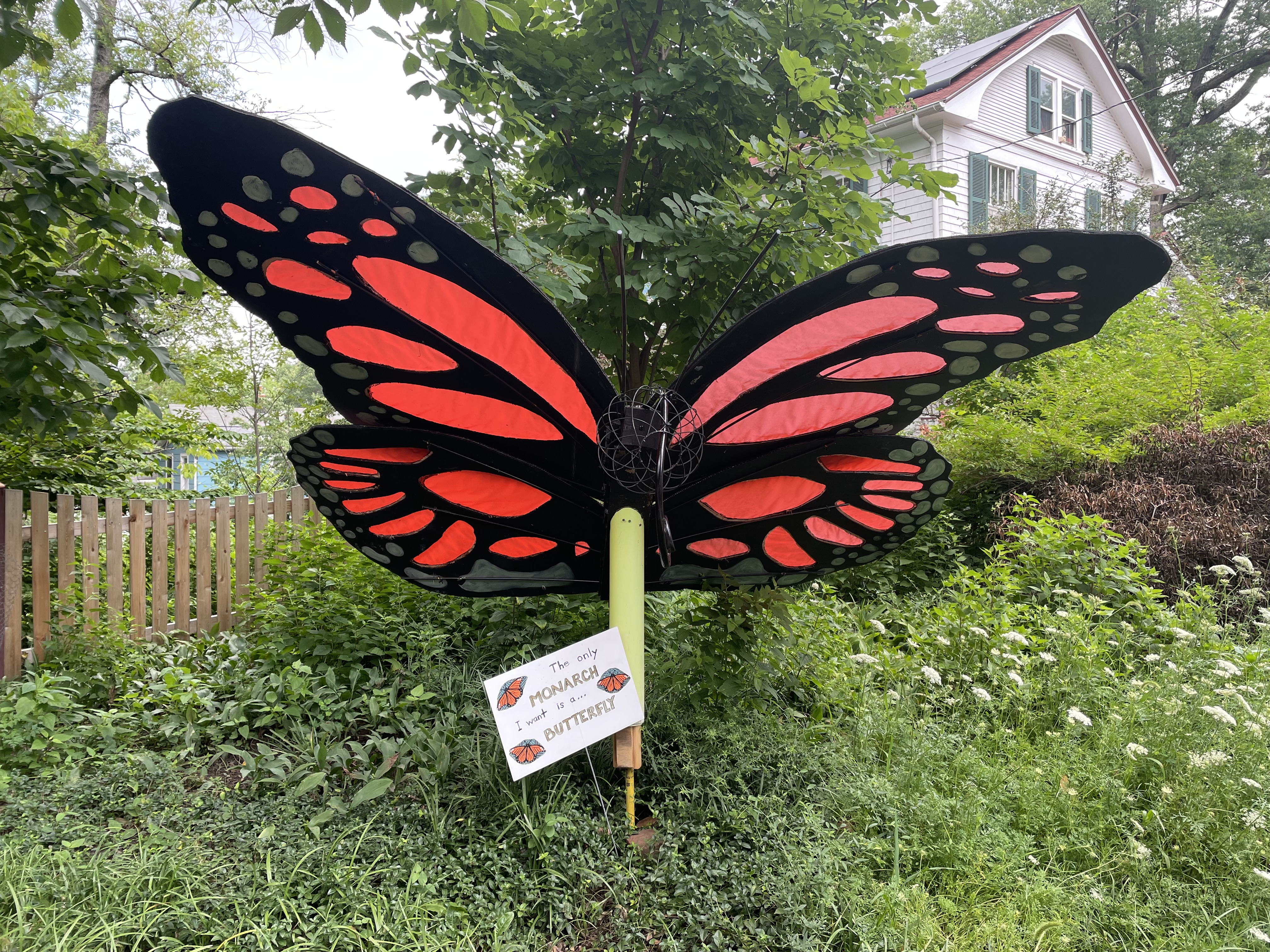
“The only monarch I want is a butterfly” as seen in Takoma Park, MD

The Epistle in the Episcopal lectionary last Sunday from Second Timothy may have an answer.

“For the time is coming when people will not put up with sound doctrine, but having itching ears, they will accumulate for themselves teachers to suit their own desires, and will turn away from listening to the truth and wander away to myths.”

Charlatans and wannabe kings who suggest that by following their teachings (or politics) you can have it all are clearly an age-old problem. Commentators have suggested that the Greek word translated “itching” literally means “to itch, rub, scratch, or tickle.” To want one’s ears “tickled” is to desire massages rather than messages, a figure of speech that refers to people’s desires, felt needs, or wants. It is these desires that impel a person to believe whatever they want to believe rather than the actual truth itself.

And we’ve been conditioned, especially in the west and most especially in America, to believe that accumulating wealth is what will make us happy, secure, even joyful. But as mentors of mine have noted on more than one occasion, what if we have it all wrong?


THE DISLOCATION OF JOY

One astute mentor, writing in a different context, suggested how focusing on money changes what’s really important.

What truly disturbs me about sports betting” [Deborah wrote] “is the dislocation of joy. The joy is supposed to be in watching the game. Monetizing it, as you point out, changes the focus—as if there could be no simple pleasures which are not really about cash.

Another mentor notes that our language would lead a careful observer to believe that what we see as real is always serious, harsh, and cruel. The words “harsh reality” stand as one word, one idea.

Yet, Frank muses, “what if joy, wonder, and peace are what life is really about?” Can the harshness and bitterness that we too often see as reality be a passing phase? Frank calls on a very personal yet universal memory to make the case for the reality of joy and hope. “All babies are born with the firm belief that joy, wonder, and peace are the norms of life….Babies are born with that understanding of life. And slowly, patiently, the elders of the world teach them that their view is wrong.”

The elders of the world work to dislocate our natural joy in living life and focus it instead on the belief that the acquisition of things and money will provide joy and happiness. But you don’t have to have lived very long to know the truth of the old adage that money can’t buy happiness. We all know, deep down, that road never brings satisfaction. Money can’t buy love or true friends. Money can’t buy back your youth when you’re old.


WHAT IF WE BELIEVED IN ABUNDANCE

At a time when so many in our political world are trying to push us apart, it helps to believe that “we are all in this together, and that addressing our own suffering while learning not to inflict it on others is part of the work we’re all here to do. So is love.”

“[W]hen you face a politics that aspires to make you fearful, alienated, and isolated, joy is a fine initial act of insurrection.”

There is a second verse in scripture that’s much more famous than my “itching ears” example. It also points to how we tend to follow what glitters instead of the truth. What happens, this teaching asks, if we truly consider the lilies of the field, those flowers that neither toil nor spin? What if reality is about abundance and not scarcity? How would we live if we believed we have everything we really need?

More to come . . .

DJB

Photo of apples by Aarón Blanco Tejedor on Unsplash. Photo of bread by Skyler Ewing on Unsplash. Photos of day lilies and of mother and son from Pixabay

Observing history through a wider lens

European military historian Jeremy Black, MBE answers my questions about his new work, “The Civil War.”


Bookshelves groan under the weight of the tens of thousands of volumes written about the American Civil War.* Most are by Americans and a large majority focus on military campaigns and their leaders. The history of the conflict and its impact on the country is constantly up for scholarly revision and, too often, hot-tempered public disagreement. William Faulkner’s famous phrase—“The past is never dead. It’s not even past.”—always seems most appropriate when applied to discussions and studies around the American Civil War.

So it is refreshing to discover a concise new volume that asks the reader to look at this watershed moment in world history with— surprise—a broader international perspective.

The Civil War (2025) by European military historian Jeremy Black, MBE reorients readers to see what was extraordinary in the civil war of “the American colonies.” As Black states early in this work, the Civil War “was the most traumatic conflict, indeed event, in American history.” That holds true even when compared with the War of Independence, as the divisions within the country at the time of the revolution were not as long-lasting. The Civil War in America was not just a military struggle; it was also a political struggle. Black steps back to take a larger, and more international view, to show that the conflict “helped define American politics and human geography for a century, and its echo remains strong today—and in some respects very strong.”

Black is not interested in American mythmaking except, in certain instances, to debunk it. In doing so he shows the inconsistencies in positions taken by both sides. As an example, he notes that the south, far from simply championing states rights, “was also the champion of federal authority over both northern states’ rights and, in the territories, of a federal code protecting slavery.” This position that favors the rights of some over others continues to haunt the country today.

This new work also provides much more context around the thinking of England, France, and Spain in the middle of the 19th century. America, Black notes, was not the principal priority for British policymakers in this period, “which helps explain Britain’s accommodating position toward America on a number of occasions, including during the Civil War.”

“The extent to which America, far from being exceptional, was part of a wider international situation, made foreign intervention in the Civil War less likely, as did the likely costs of such intervention.”

In the end, it is Black’s focus on the international context and political outcomes (such as Lincoln’s re-election being crucial to the collapse of the Confederacy) that make this such a welcomed new volume in the canon of Civil War studies. Black’s Civil War, as the publisher notes, is “a new resource that teaches, reaffirms, and reminds readers of the intensity of the American past—in both error and idealistic impulse—that might continue to guide us to the best future and avoid the lose-lose circumstances of a civil war.”

I was delighted when Jeremy agreed to answer a few questions about the book in this most recent edition of my Author Q&A series.


DJB: Jeremy, your book is very important in setting an international context for the conflict and in pointing out that America in the 1860s, far from being exceptional, was part of a wider international situation. Can you describe some of the key aspects of that context and why the elements that did not occur are highly significant although often overlooked?

JB: The literature on the international dimension of the war is good, but far less copious than that on the military dimension. The Civil War served as the closure of one age of American outcomes and the beginning of a very different one, with the outcomes a matter both of the character of America and of its place in the wider world. The wider international context was scarcely defined by the American crisis. As for key international elements that did not occur but that are significant: Mexican revanche was scarcely an element in the American Civil War. Nor was there a united Native American uprising. Both would have changed the dynamics of the war. Another key element that did not occur was that of external intervention principally by Britain and France. Such intervention would have altered the war greatly politically, and militarily, and would have increased the uncertainty of the struggle. 

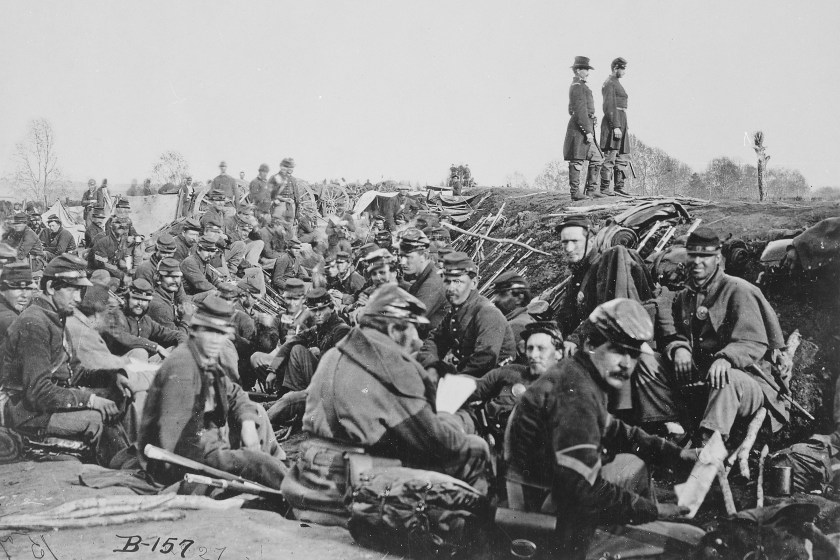
A group of foreign observers with Maj. Gen. George Stoneman at Falmouth, Virginia in 1863 from National Archives

You have described the Civil War that was fought from 1861-1865 as the “second” American Civil War. What was the first and how did it mirror and differ from what we in the U.S. traditionally call the Civil War?

The First Civil War was 1775-83 in which Loyalists and Insurgents, each seeing themselves as Patriots, fought but, unlike in 1861-5, they were part of a struggle involving trans-Atlantic forces.

“A war over the New West” explains much about the Civil War. What issues around expansion into the new territories were central in leading to hostilities?

Concern about the West reflected and focused the inherent uncertainty of America as concept, state, society and aspiration. Until 1848, the control between states was unclear, but settling that issue did not determine the outcome for this uncertainty. Nor was there an external factor to change the context as was to occur in the 1940s with World War II.

You write astutely about how the Supreme Court’s Dred Scott decision in 1857 “affirmed that slavery was national and freedom was sectional, and not the other way around.” How did this decision affect politicians, influencers, and citizens differently in the North and the South?

The trajectory of slavery issues in the 1850s greatly increased tensions not least because it led to a sense of embattlement in both North and South. The decision contributed to the sense that the situation was unstable. This decision alone, however, did not determine the 1860 election or subsequent results.

American readers may be surprised to see the statement that Lincoln’s policy in 1861 echoed that of George III some eighty years earlier, but you make the case that there are similarities. What were those similarities, and how did their enactment impact on the development of the war?

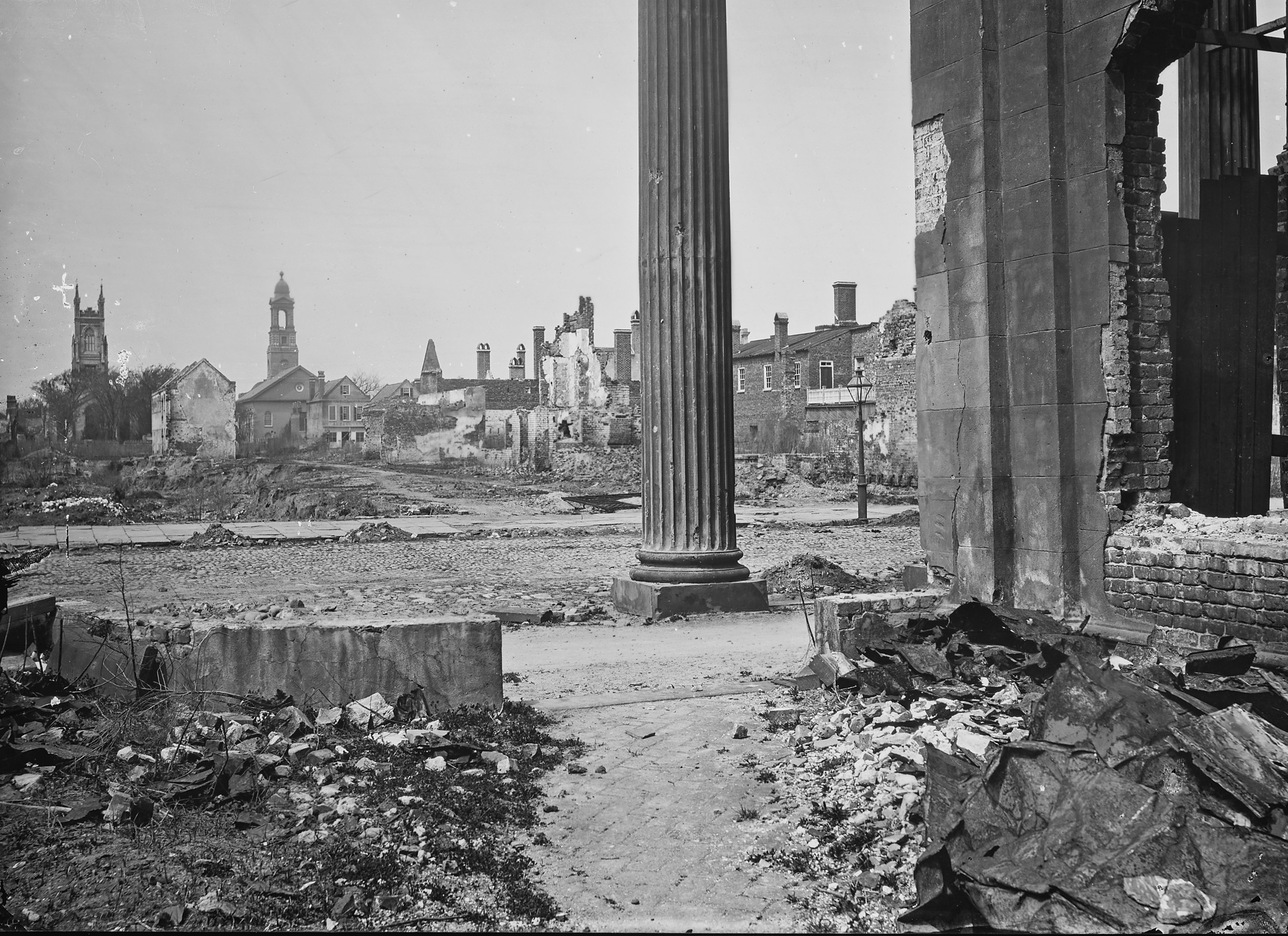
Noting similarities between the British position in 1775 and that of the Union in 1861 scarcely accords with American public history but repeats a point made at the time, one that captured the problematic character of opposing separatist sentiment on the grounds offered. More specifically, British moves in 1775, focused on Massachusetts, and Union ones in 1861, focused on Charleston, both caused rebellion to spread and become more serious.

Ruins as seen from the Circular Church in Charleston, S.C. in 1865 by Matthew Brady from National Archives

Lincoln’s appointment of Ulysses S. Grant as Lieutenant-General and General-in-Chief of the Union army on March 2, 1864, was a major turning point in the Civil War. Can you describe Grant’s skills and attributes that were key in leading to victory?

Grant added strategic purpose and impetus to Union military policy, and helped drive the army of the Potomac, still under Meade’s command until it was disbanded on 28 June 1865, to a level of aggression it had not shown hitherto, as McClellan’s deliberative caution had been characteristic of his successors, albeit to a varying degree. In doing so, Grant matched Lee’s earlier achievement. Grant was also capable of hard and purposed work. He analyzed situations fully but rapidly and issued clear instructions accordingly. He was able to read maps and understand terrain, which was important at every level of war, and an aspect of his ability to gain and use the altitude. Grant was willing to take risks though without disparaging his opponents, but he remained calm and collected while doing so.

Finally, Jeremy, you write that “reconstruction was primarily about reunion rather than reconciliation.” Why was that the case?

Circumstances came to trump ideology in Reconstruction with demobilisation a key context and the extent of Southern opposition leading to an emphasis on the fact of reunion rather than sustaining much that was broader.

Thank you, Jeremy.

A pleasure.

More to come . . .

DJB


*There is no exact count, but estimates place the number of books on the American Civil War at over 60,000 to more than 100,000, with new books being published constantly.


Photograph of soldiers of Brooks’ Division at Fredericksburg, May 2, 1863 taken by Andrew J. Russell from National Archives.

May the wind always be at your back . . . but not too much wind

Our September visit to Ireland with National Trust Tours was to be an exploration of this fascinating land as we circumnavigated the Emerald Isle on a small cruise ship.

Mother Nature, however, had other plans.

Gale force winds in the Atlantic made for very choppy sailing the first evening, kept us in the port at Cobh for three nights, and on the eastern side of the island for the entire trip. However, thanks to the ingenuity of the travel directors and our local guides we ended up visiting two-thirds of the sites we were meant to see (traveling by bus from Cobh and Belfast) and we made the best of it.

The Irish have a saying: “May the wind always be at your back.” On this trip the ship’s captain had a bit too much wind to contend with, but we had a memorable tour nonetheless. Thankfully there was plenty of spirit (and spirits) to be found on both land and sea.

It was a good time to remember to expect the unexpected. In fact, a new friend we made on this trip wrote to say that “expect the unexpected” reminded her of Roald Dahl’s quote:

“And above all, watch with glittering eyes the whole world around you because the greatest secrets are always hidden in the most unlikely places. Those who don’t believe in magic will never find it.

“We had a great time, despite the changes in itinerary,” she wrote.  “Or maybe partly because of the changes!”

So to recall the forces of nature that brought us unexpected pleasures, I want to start as the Irish band Solas plays The Wind That Shakes the Barley from their aptly named 2006 album Sunny Spells and Scattered Showers.

It was my third visit to Ireland (beginning with a memorable December trip to Northern Ireland in 1998, mere months after the signing of the Good Friday peace accords), but as always with travel one sees new things . . . and things you’ve seen before from a new perspective. What follows is just a sampling of our most recent ten days on the Emerald Isle.


EXPLORING DUBLIN

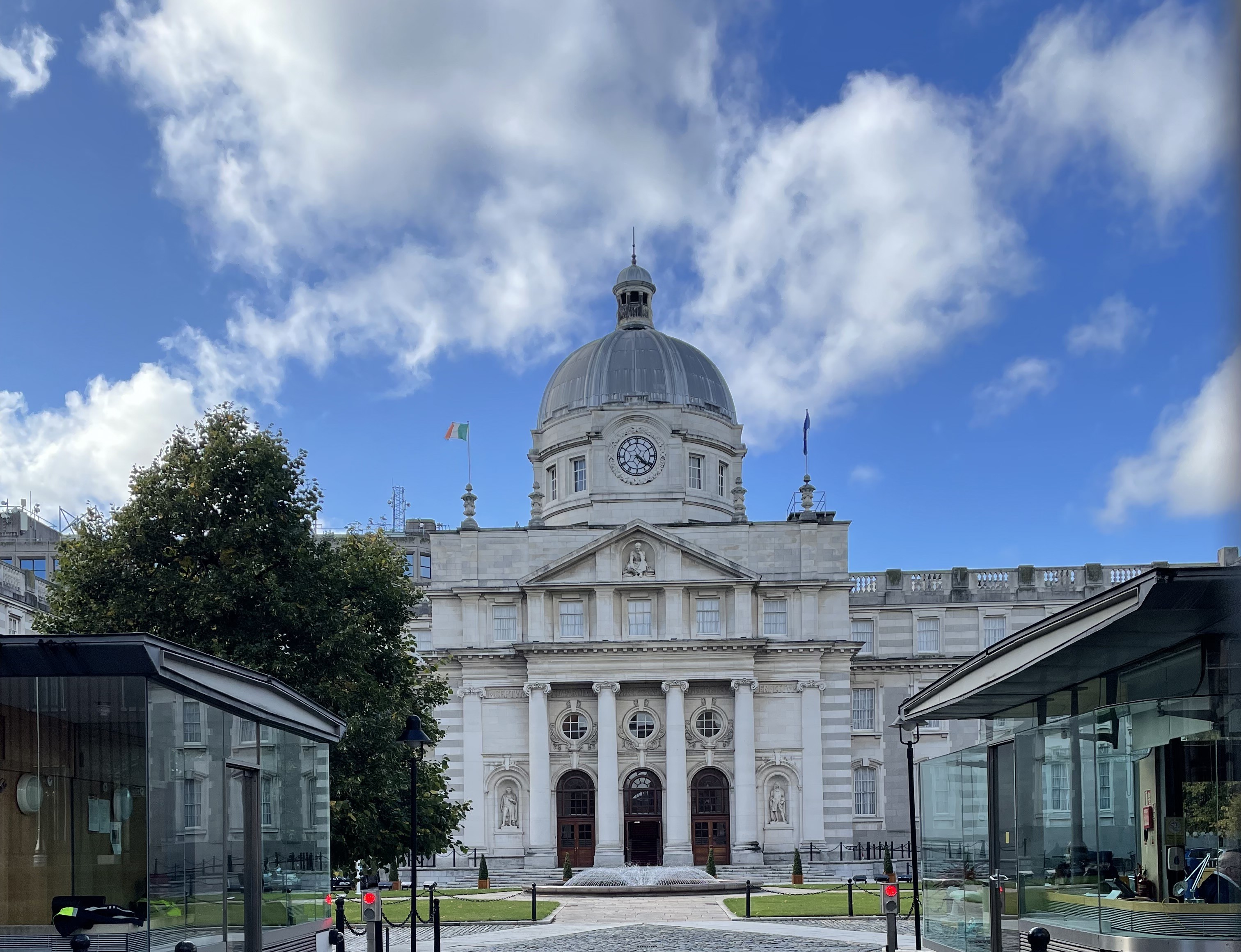
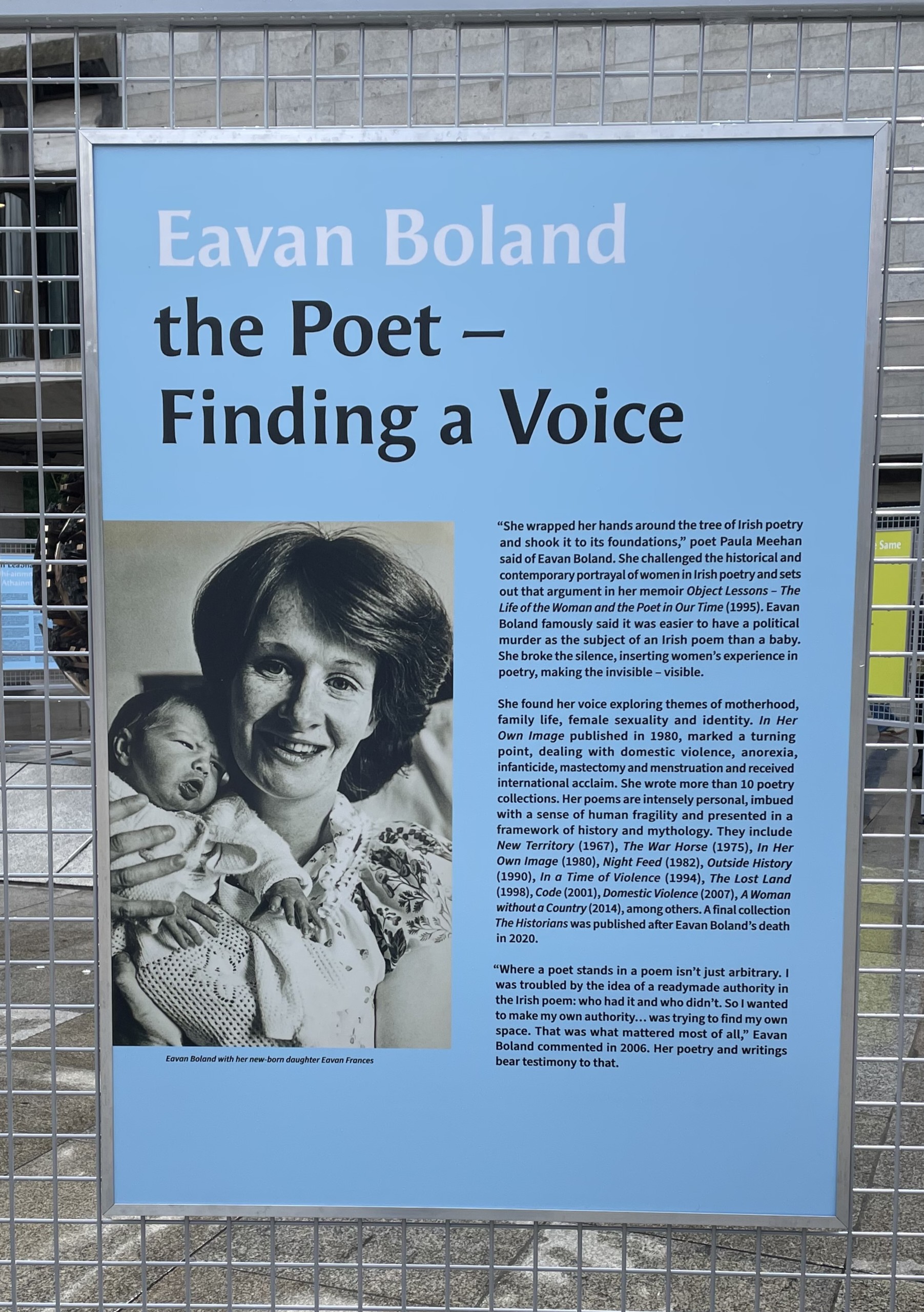
Our habit is to arrive two days before the tour begins in order to adjust to the time change and explore a bit of the country on our own. That brought us to Dublin, where we spent a delightful time walking the city, visiting places famous and anonymous, and discovering new worlds (for me), such as the Irish poet Eavan Boland, one of the foremost female voices in Irish literature. Over a long career,

“Boland honed an appreciation for the ordinary in life. The poet and critic Ruth Padel described Boland’s ‘commitment to lyric grace and feminism’ even as her subjects tend to ‘the fabric of domestic life, myth, love, history, and Irish rural landscape.’” 

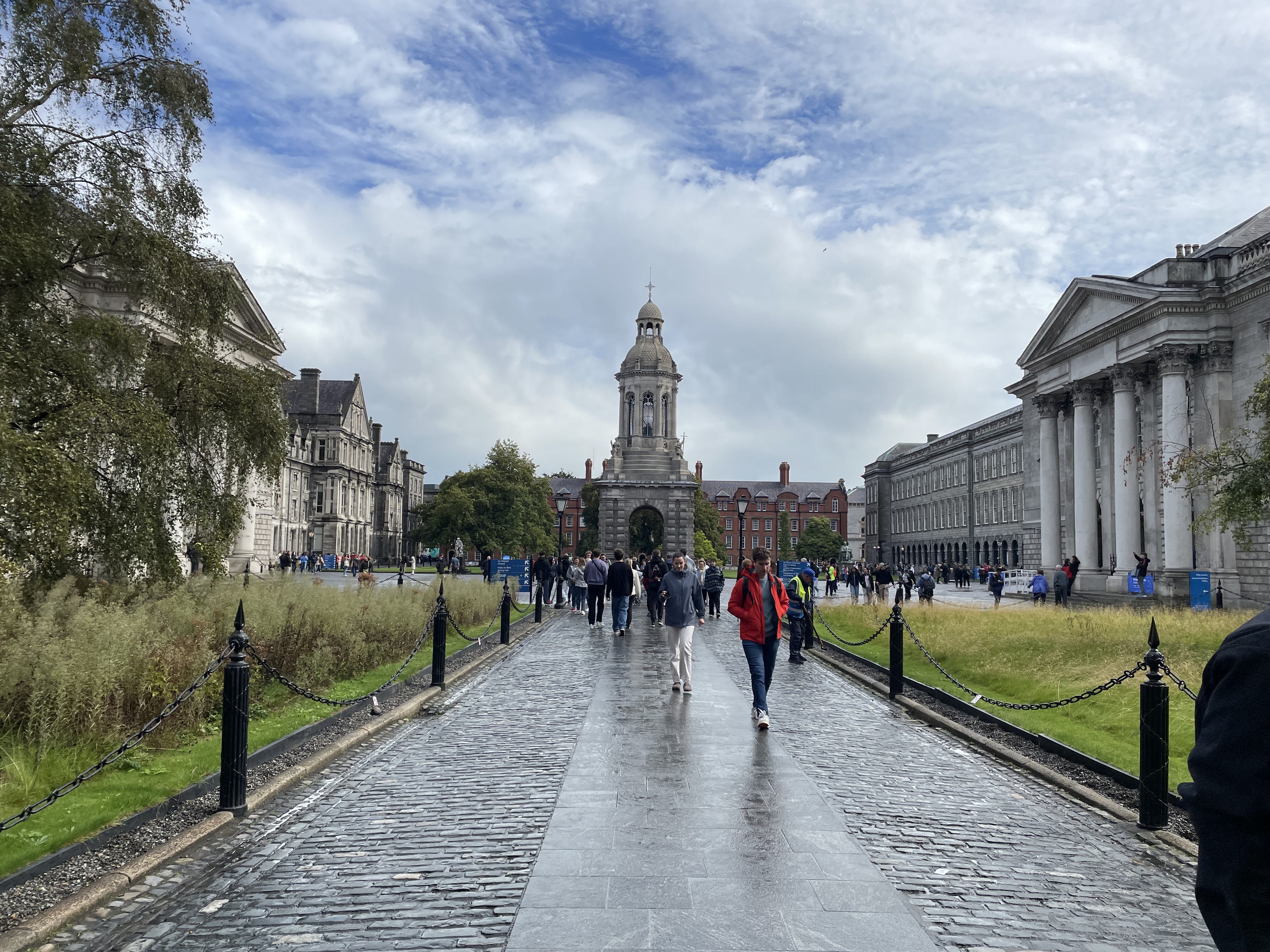
Trinity College had an outdoor exhibit that included her beautiful poem Night Feed.

Trinity College
Santiago Calatrava’s beautiful Samuel Beckett Bridge, with its evocative Irish harp design

To close out our time in Dublin, I’ve chosen The Choral Scholars of University College Dublin singing Mo Ghille Mear (My Gallant Hero).


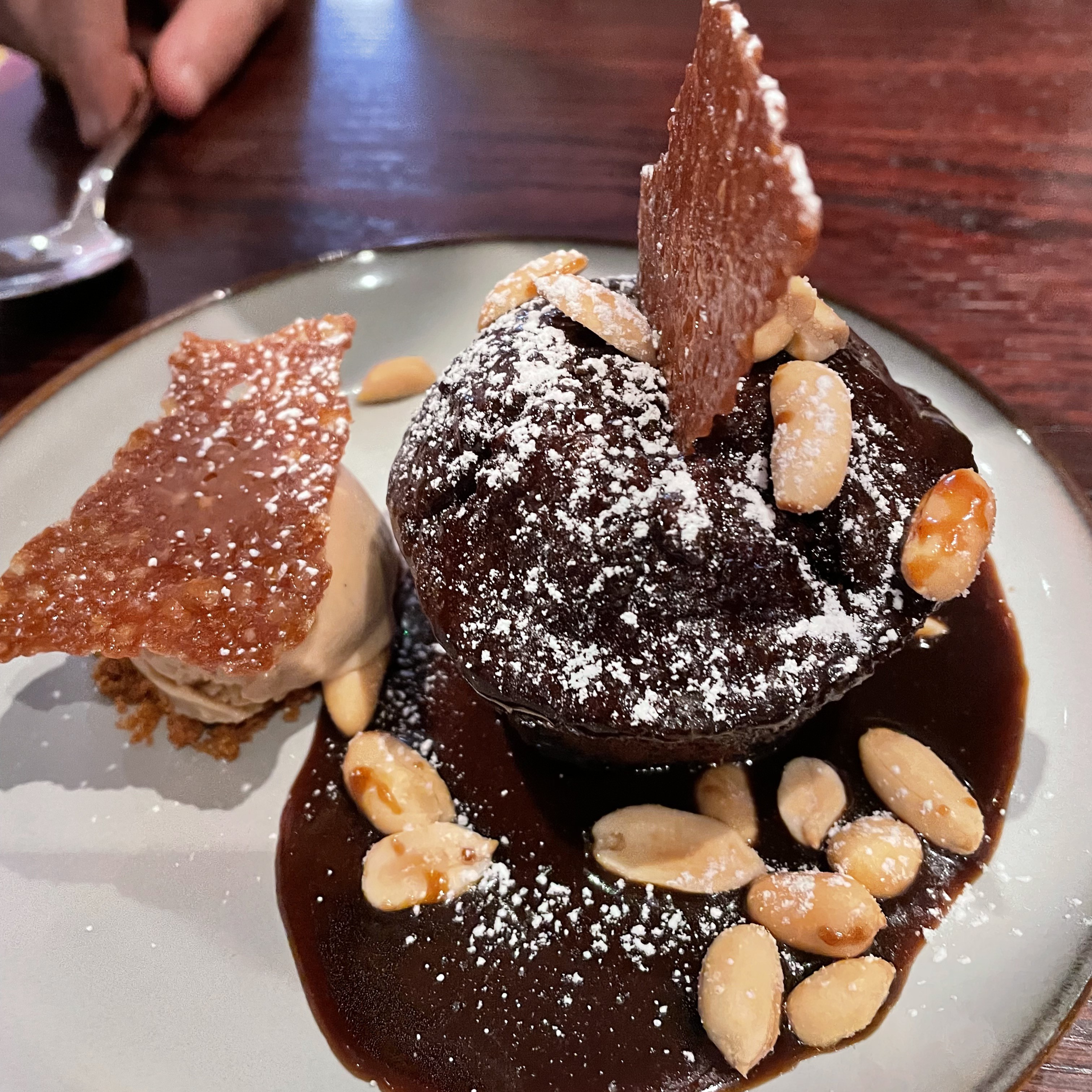
HAVE I MENTIONED THAT FOOD (AS ALWAYS) WAS AT THE HEART OF OUR VISIT?

Dining at Richmond restaurant in Dublin

In Dublin and on the ship the World Atlas we ate very well while in Ireland. Through her research, Candice discovered the excellent Michelin Bib Gourmand restaurant Richmond and we ended up eating there on both our nights in the city.

While we were at sea or in port, The Atlas—with an excellent chef and multiple dining options—ensured that we enjoyed fine dining with our National Trust travelers and other new friends.

A group of NTT travelers dining on the World Atlas

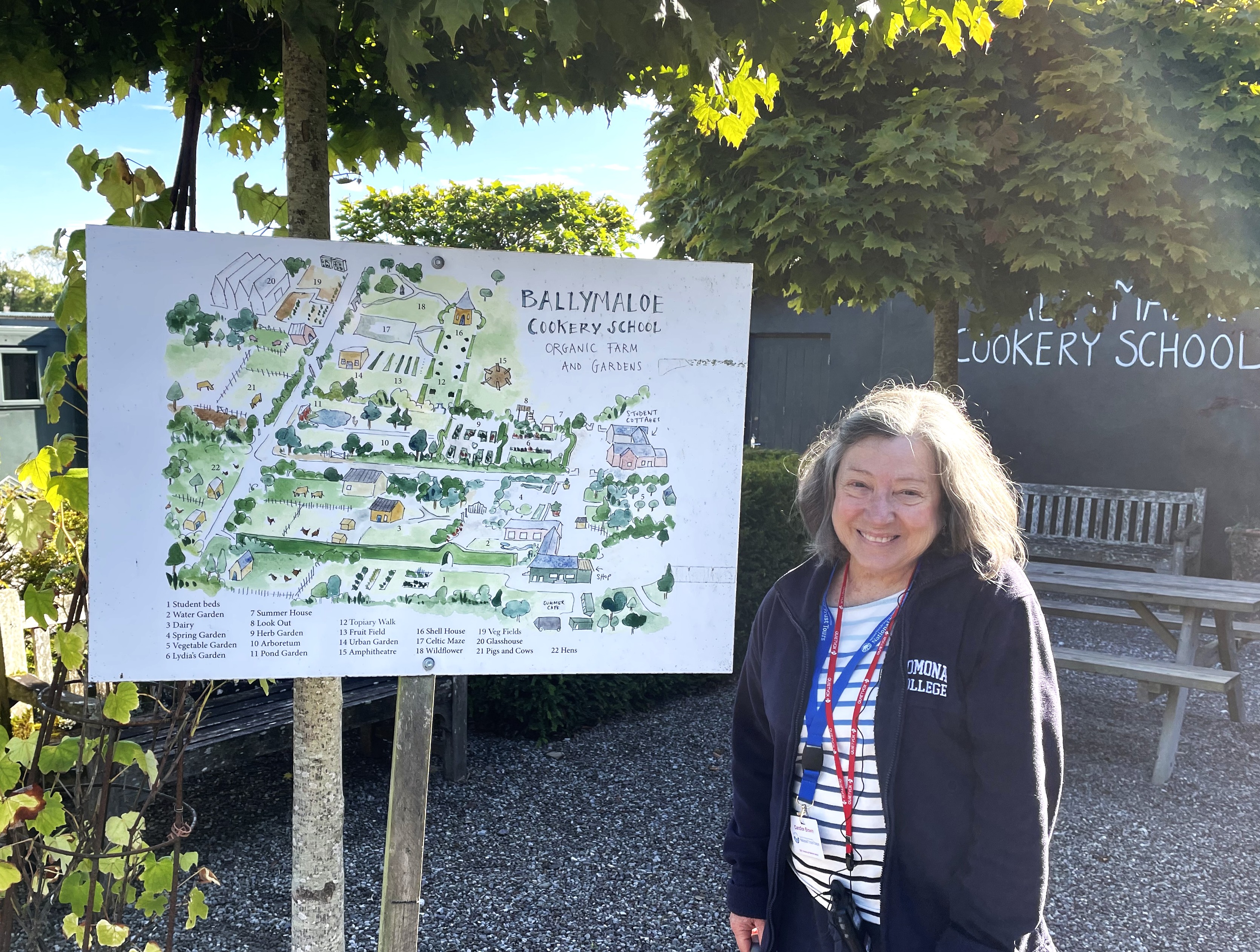
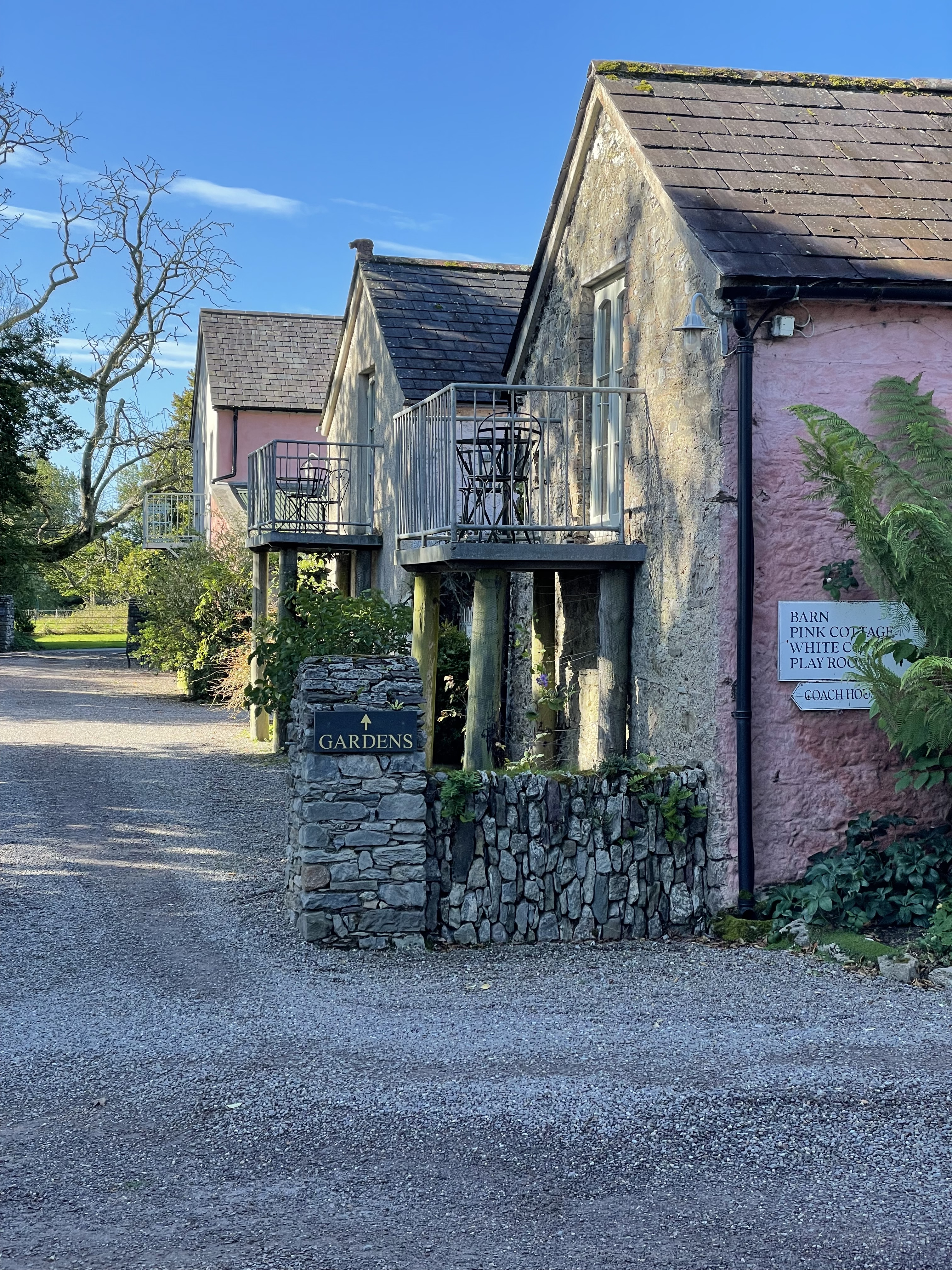
As we entered County Cork we had choices to make. Thankfully Candice knew that she wanted to visit Ballymaloe, a world-class cooking school, farm, and restaurant. As is usually the case, I was glad that I took her advice. The half-day visit to the farm, followed by a bountiful lunch in the main house, was a delight for all the senses.

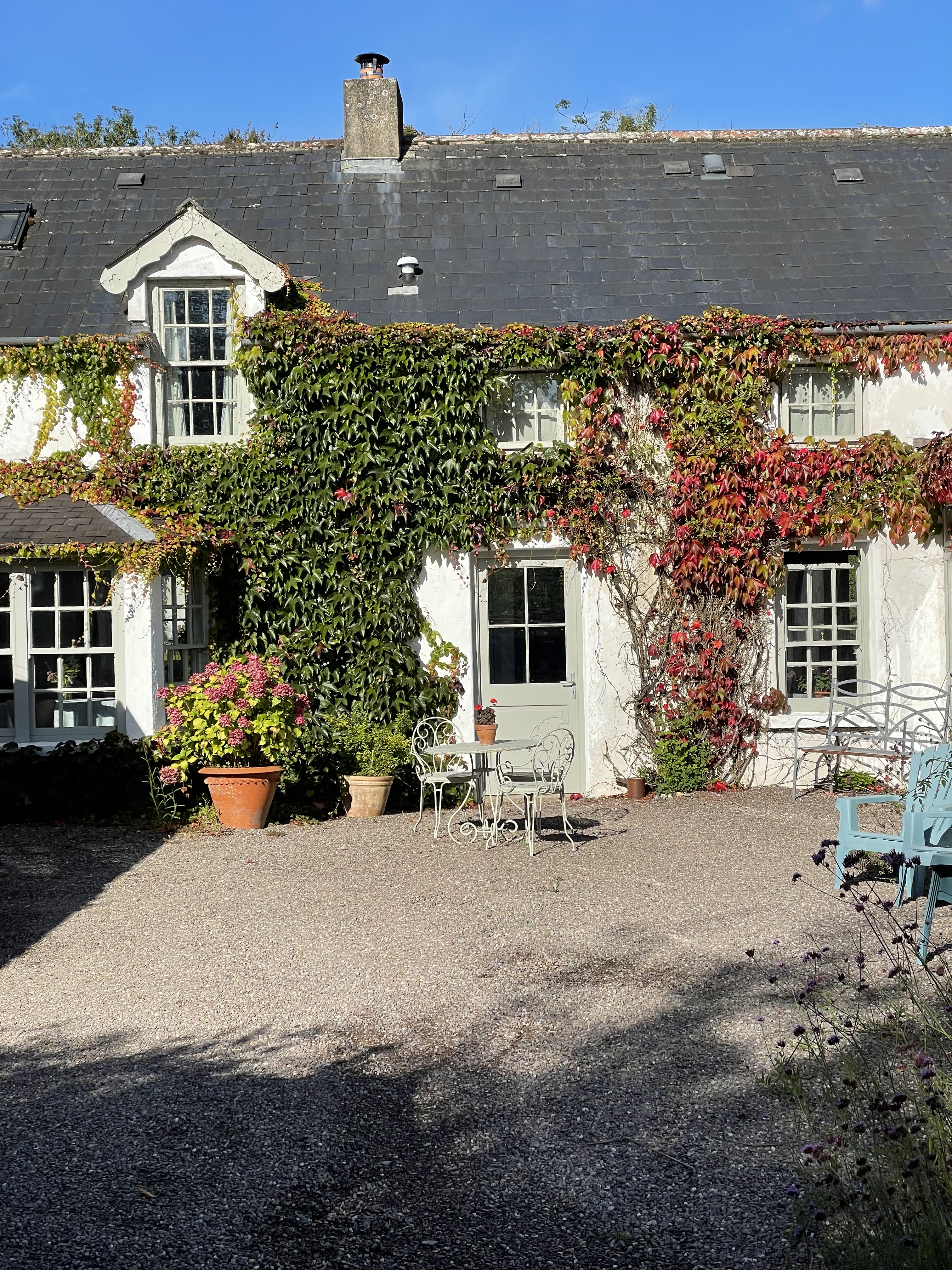
Ballymaloe House

And all the thought of good food and a beautiful Irish countryside puts me in the mood for some more Irish music. This next video is of the great David Bromberg early in his career performing Yankee’s Revenge—a medley of Irish fiddle tunes from the Midnight on the Water album. Here you can see Bromberg as the young guitar slinger at the peak of his talents, flatpicking fiddle tunes and then setting down the guitar to join in on the triple-fiddle ending.

The medley begins with Leather Britches followed by the tune Red Haired Boy. The third in the list is the good ole’ Temperance Reel while the fourth is another variation (this time instrumentally) of The Wind That Shakes the Barley. Bromberg and his amazing band end this tour-de-force with Drowsy Maggie.


A REMARKABLE IRISH ESTATE

Bantry House (credit: Wikimedia)

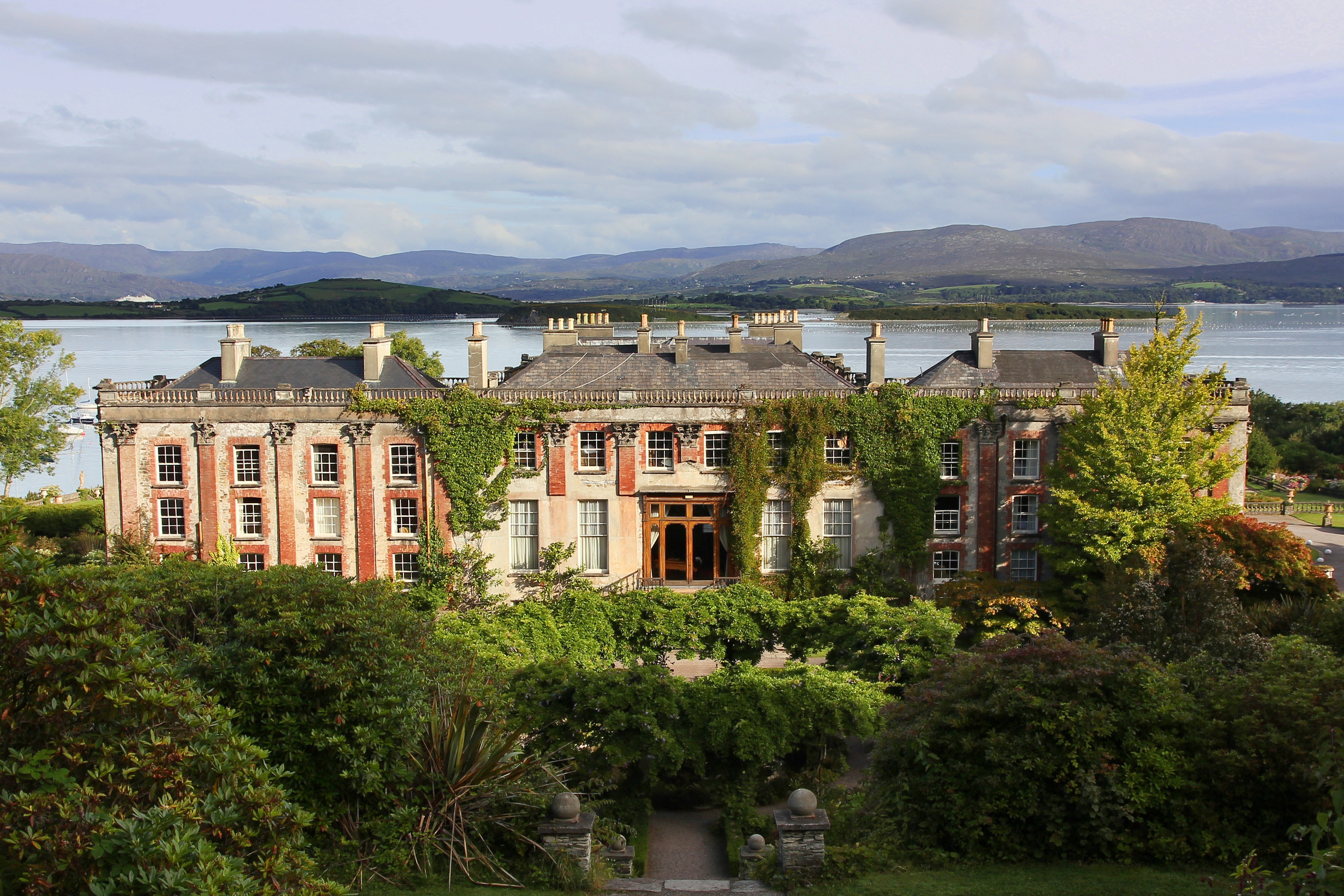
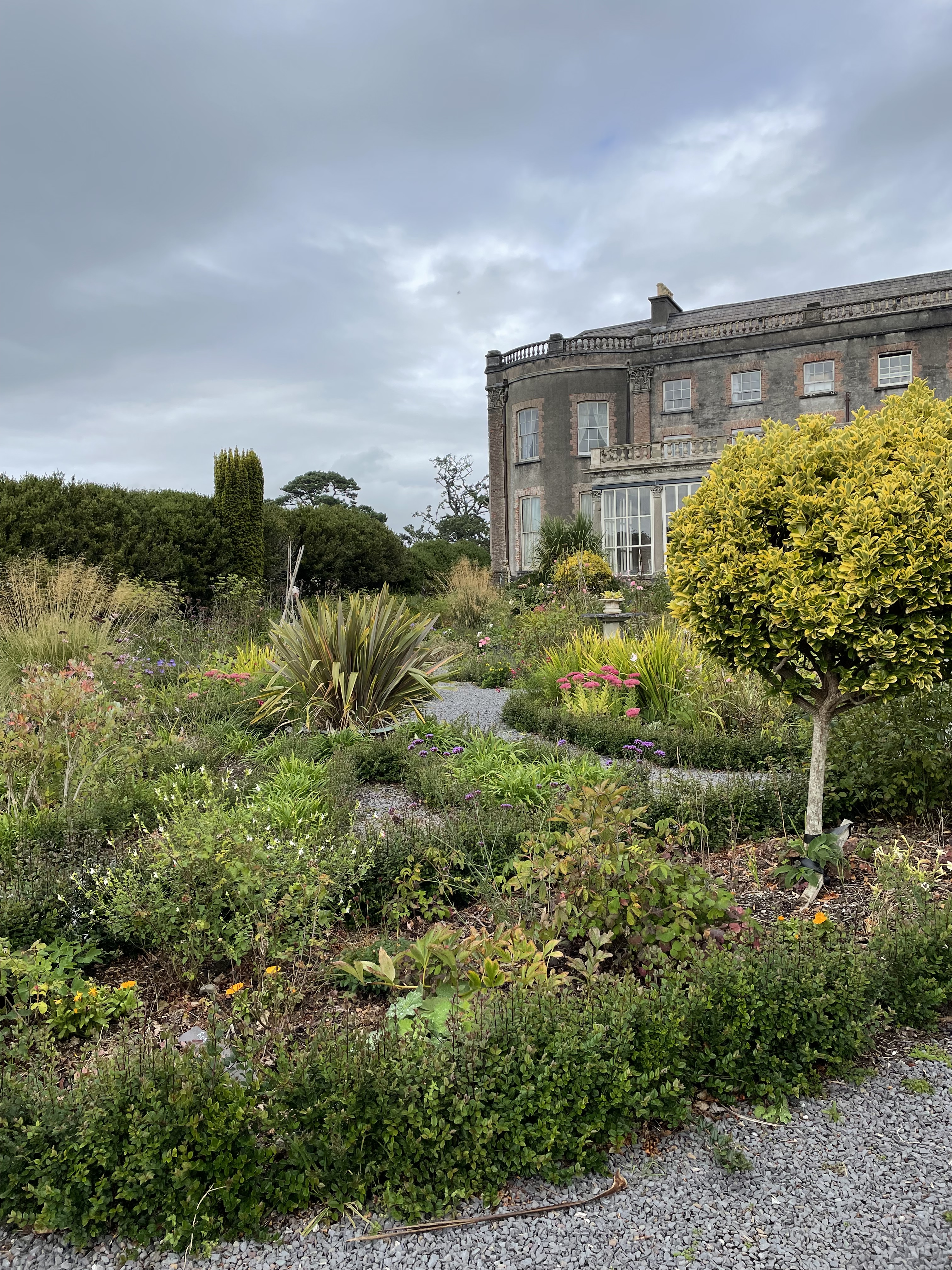
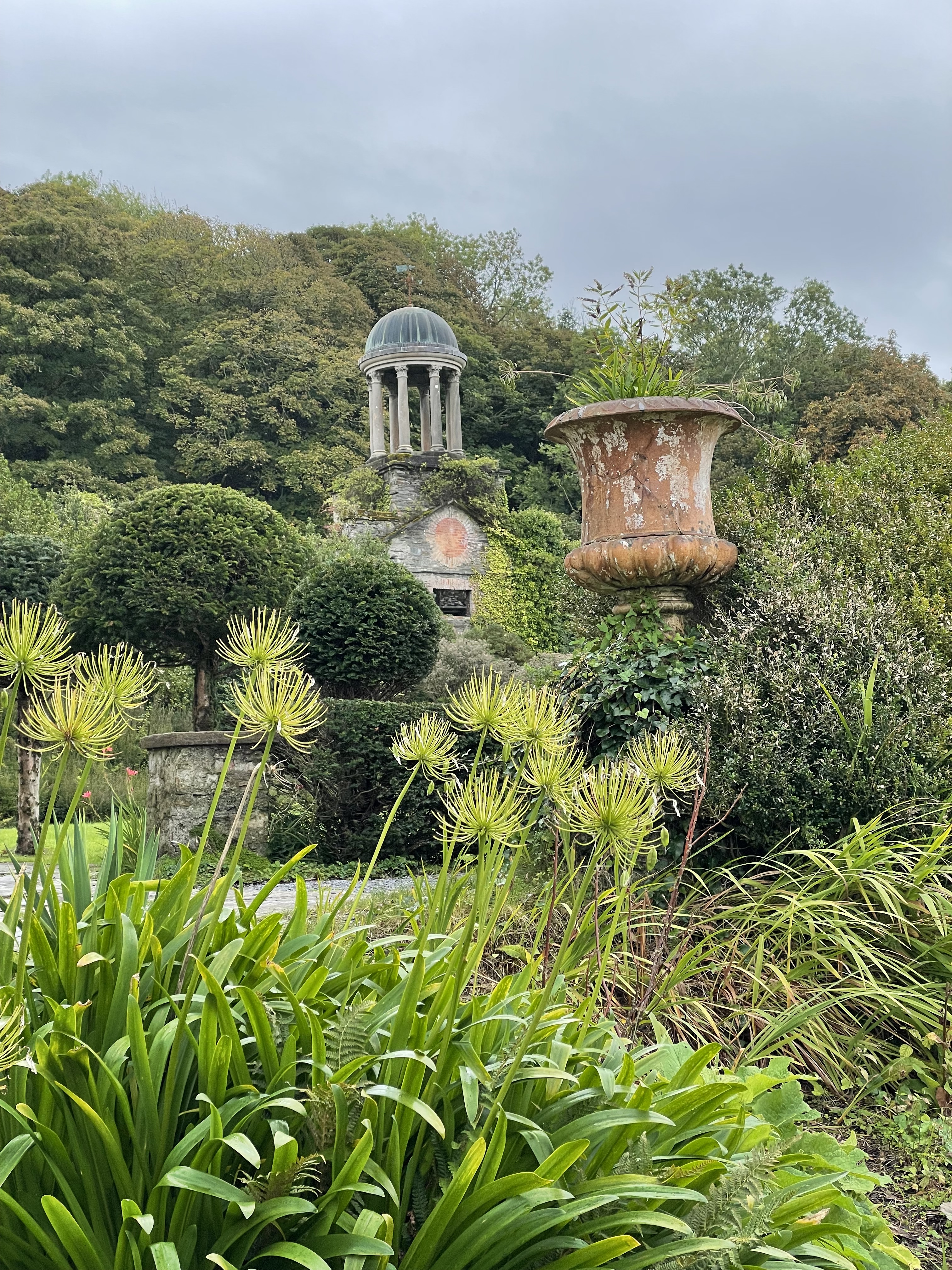
Bantry House and Garden is a stately home overlooking Bantry Bay in County Cork in the south west of Ireland. The house has been in the same family—the Whites—since 1739 and was opened to the public in 1946. Our tour was led by Julie, the business manager and the 10th generation of her family to live at this beautiful estate. The original design of the garden dates back to the second Earl of Bantry’s travels and his intentions to transform the house and garden into a “Palazzo” like those he had seen on the continent can still be seen today.

Two of my favorite Irish musicians are Mick McAuley and John Doyle. Their version of The Silver Spear Set seems appropriate after a tour of Bantry House. John Doyle is bouncing around so much it looks like he may have been on our ship during rough waters!


NO MATTER THE WEATHER, THE IRISH LANDSCAPE NEVER DISAPPOINTS

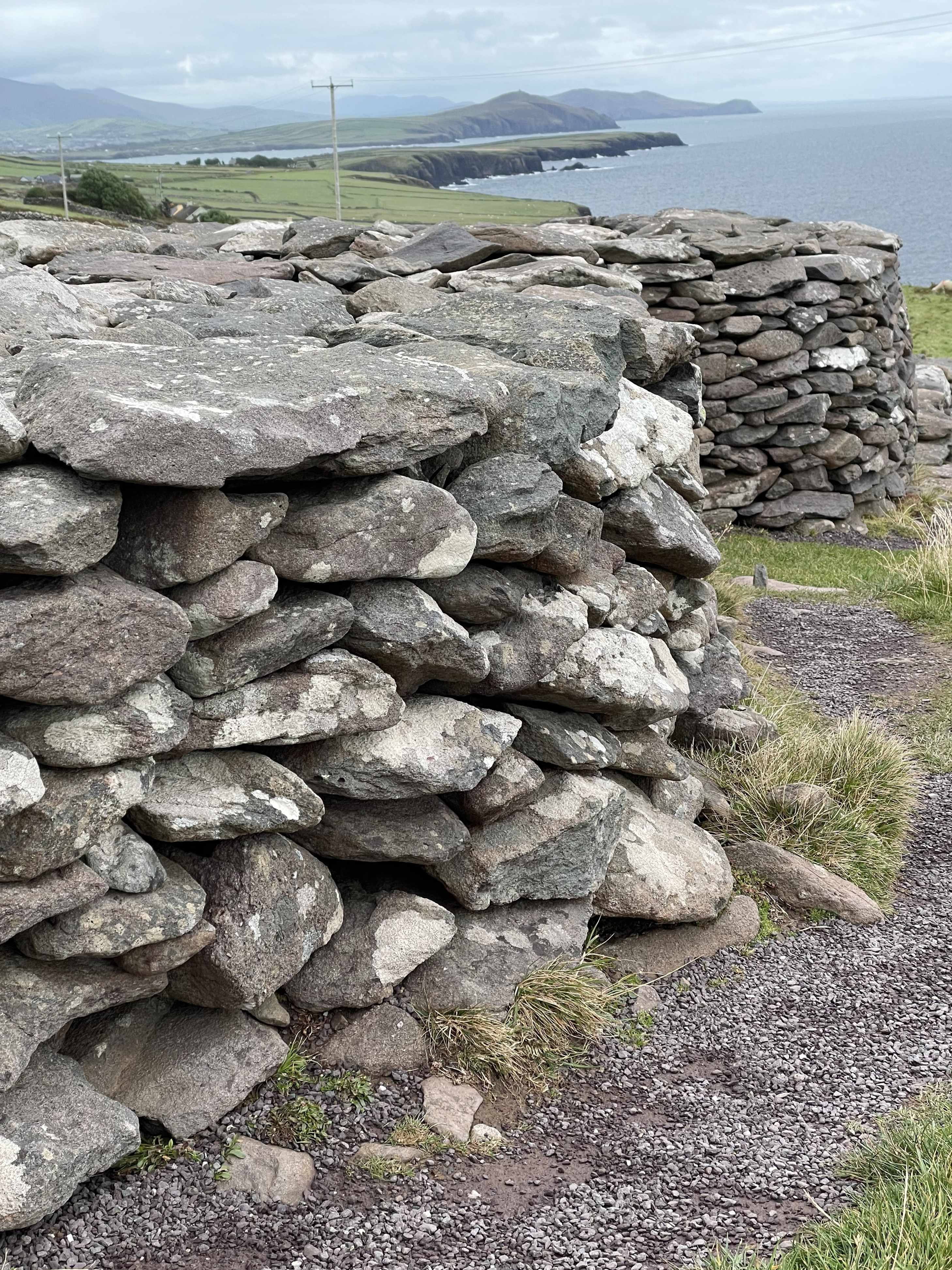
While it took some shifts to get to most of the sites on our tour, it meant that we had the opportunity to see even more of the interior of this beautiful and rugged country. We still had breathtaking seaside views, took in medieval forts and ancient beehive dwellings, experienced the strong agricultural nature of much of the country, and visited the beautiful and peaceful setting of St. Finbarr’s Oratory, named for the patron saint and first bishop of County Cork.

Jigs are a well-known piece of the Irish music landscape. Here’s something a bit different: Double bass player (and MacArthur Genius Grant recipient) Edgar Meyer performing McGlynn’s Jigs by Meyer and Arty McGlynn with pianist Tamara-Anna Cislowska.


THE PASSION BEHIND EVERY DROP

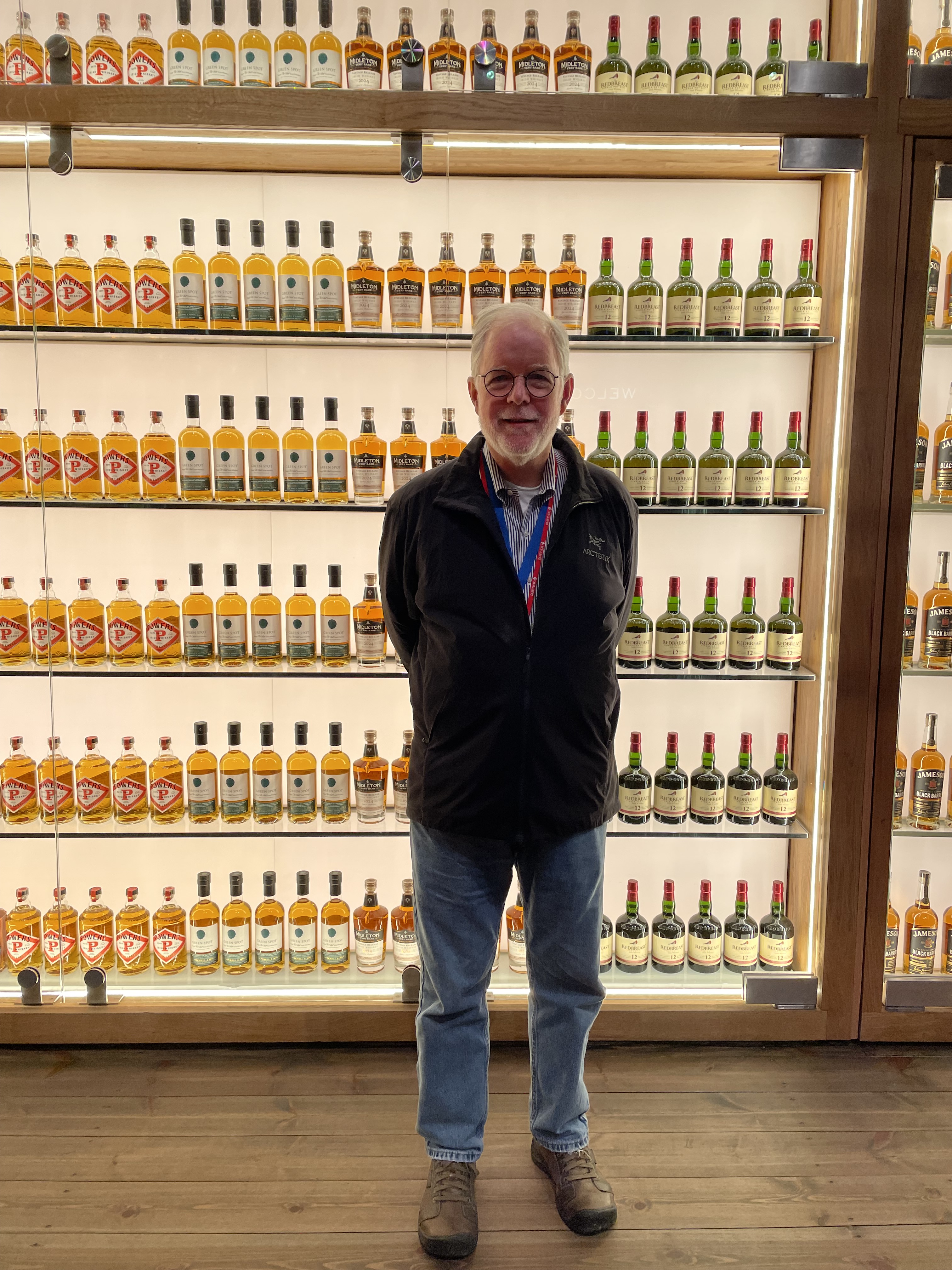
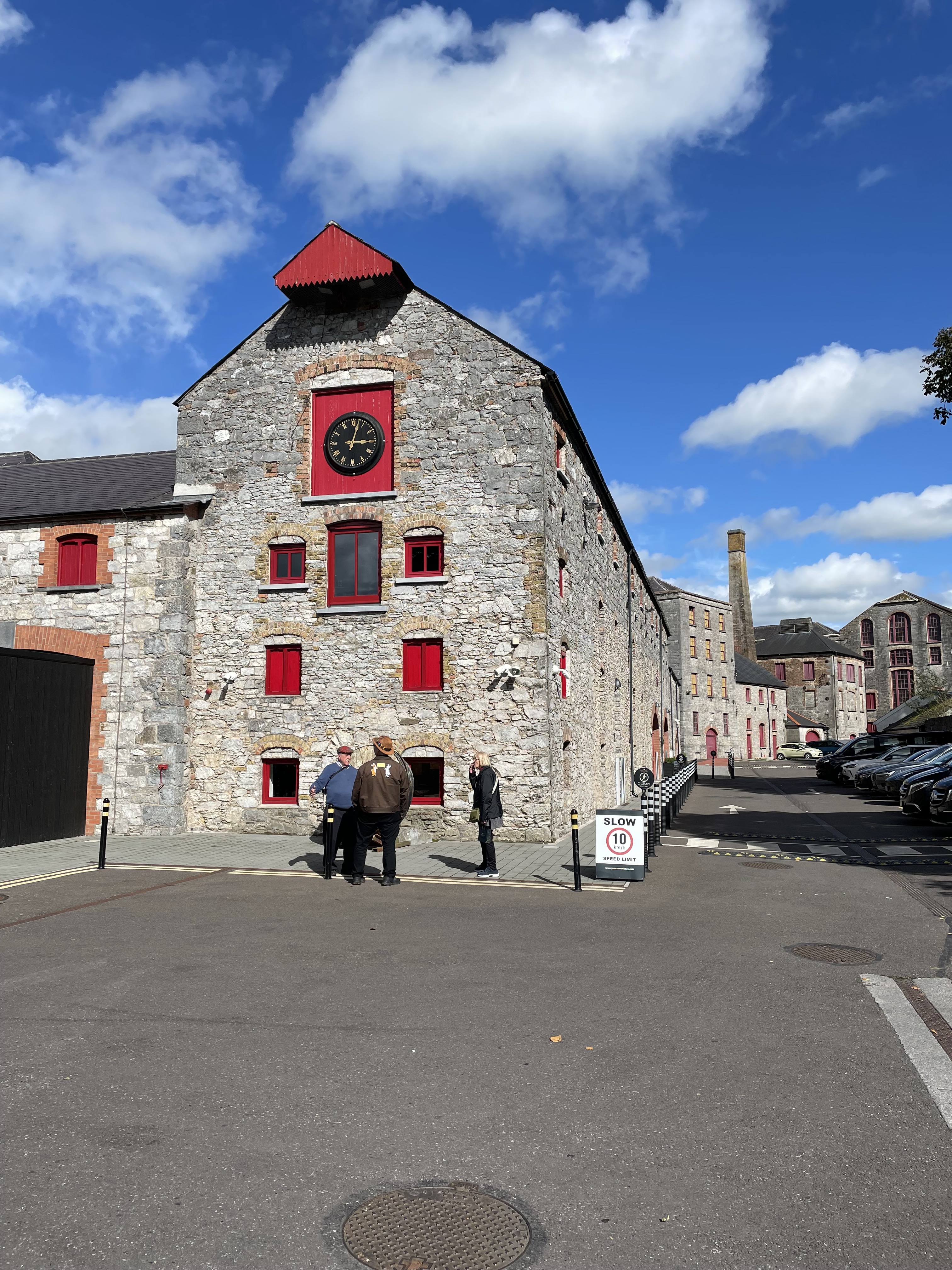
The Jameson Distillery tour in Middleton took us inside the making of one of the island’s treasures: Irish whiskey. John Jameson was born in Scotland in 1740 and came to Dublin in the late 1770s. Four of his sons followed him into the business of distilling whiskey in Ireland, setting up a family dynasty that was to last for generations. Having taken the distillery tour in Dublin on an earlier visit to Ireland, this was a much more satisfying and in-depth experience.

I’ve often told the story of my first encounter with Irish whiskey. It was on that memorable 1998 visit to Northern Ireland, when we entered a cold estate heated only by fireplaces on a blustery December day to have a bite of lunch. We were each poured a whiskey, and my first sip—which immediately warmed the body—brought instant understanding of the allure of Ireland’s favorite bracer.

And for a musical bracer, let’s return to John Doyle as he “flatpicks the daylights out of his Muiderman Steel String dreadnought” on this rendition of Elevenses, a song written in 11/8 time.


A BUILDING REFLECTING A CITY’S CHANGING HERITAGE

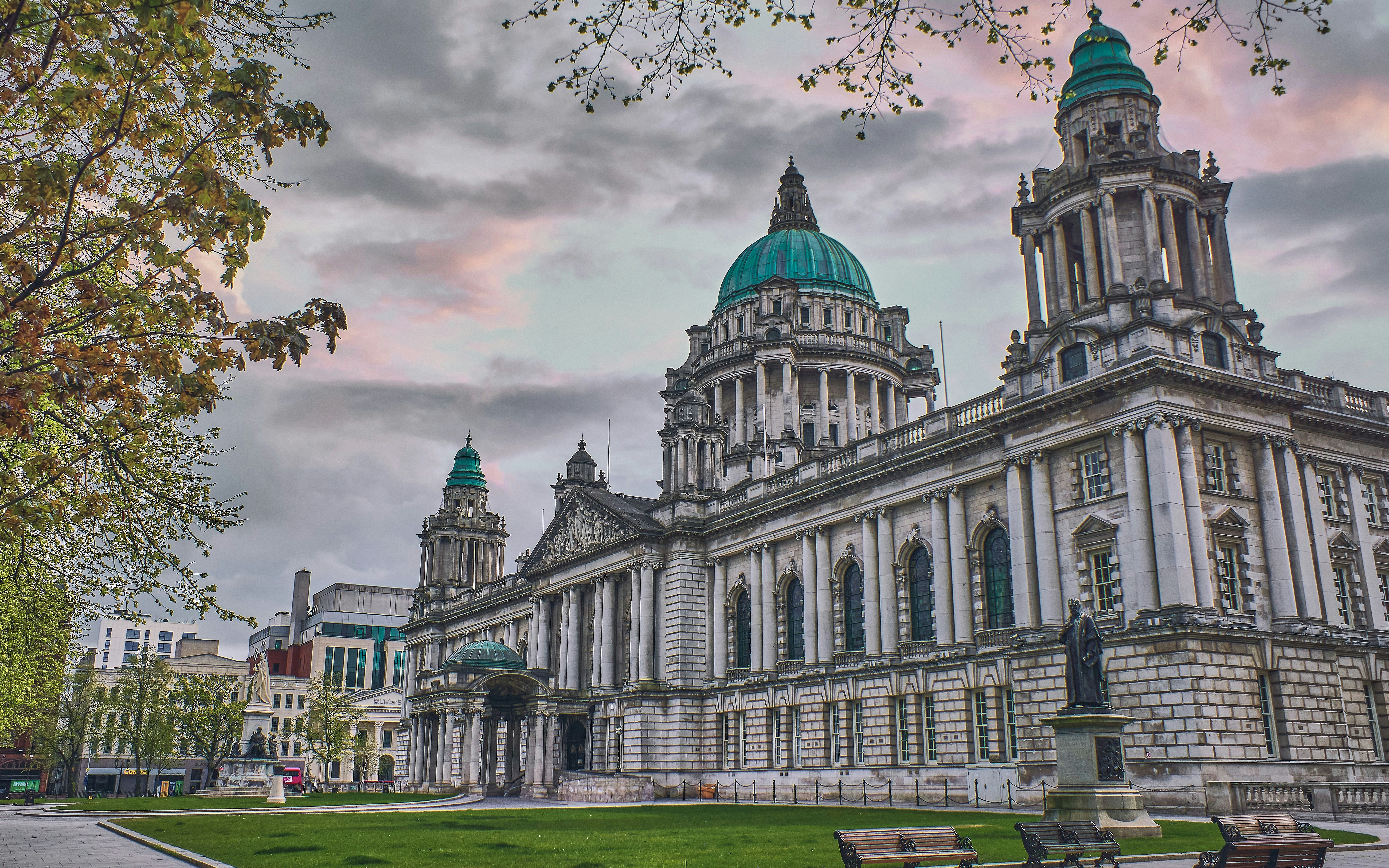
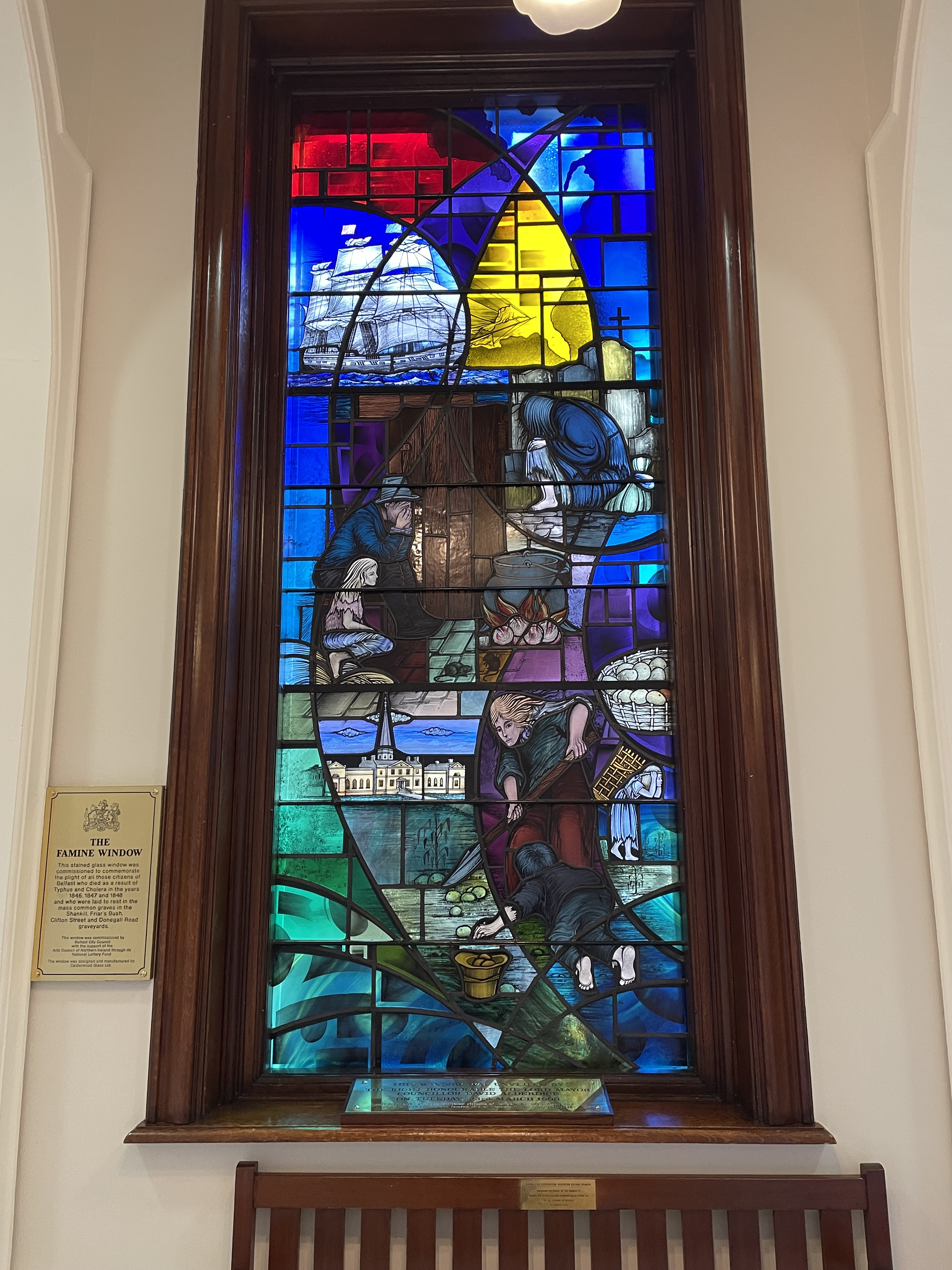
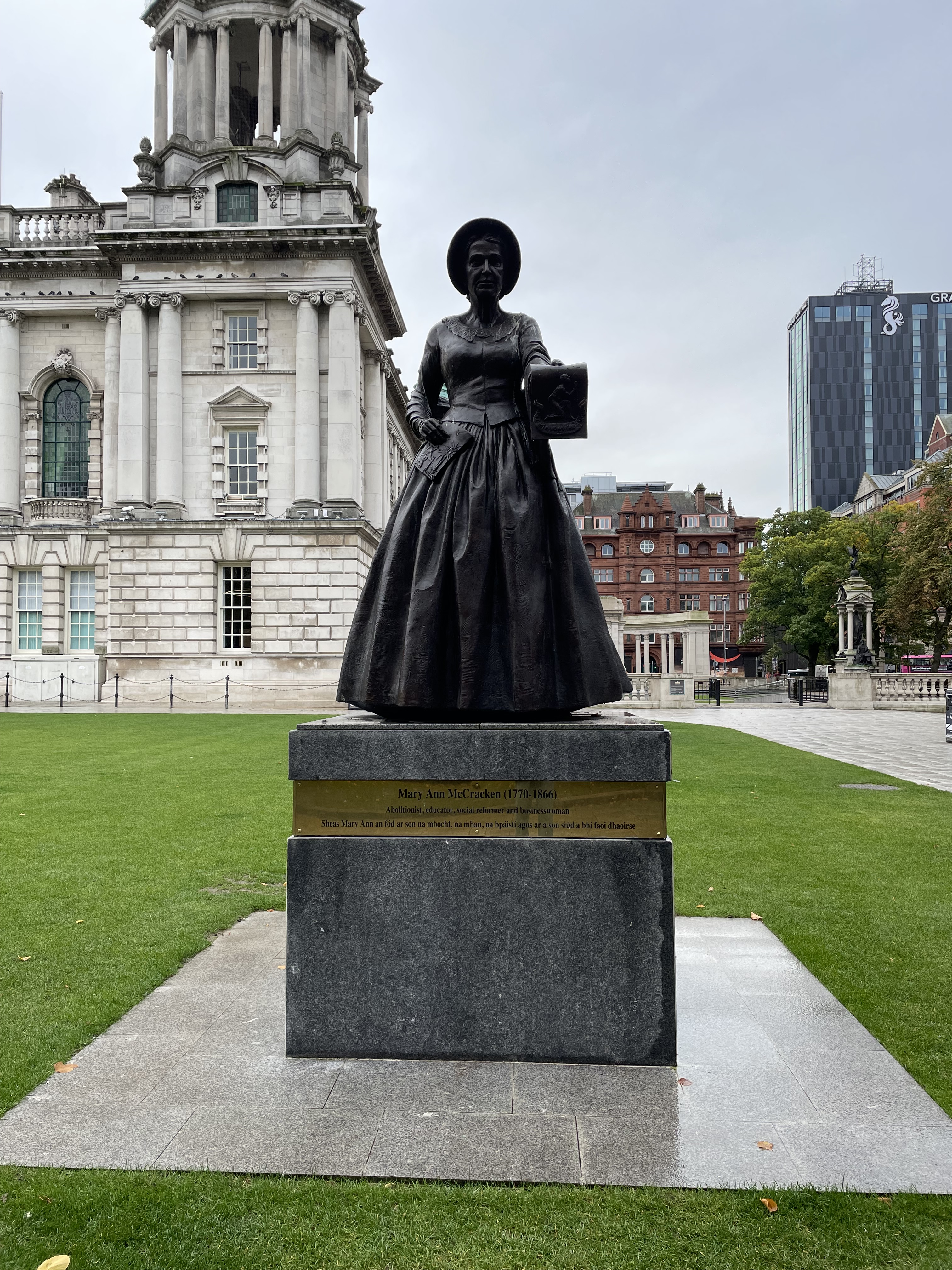
City Hall in Belfast is an imposing structure that, upon examination, displays both the history and the evolution of this often troubled part of the world. Not only are there symbols of the region’s ties to the British crown, but there are memorials and signs that times change.

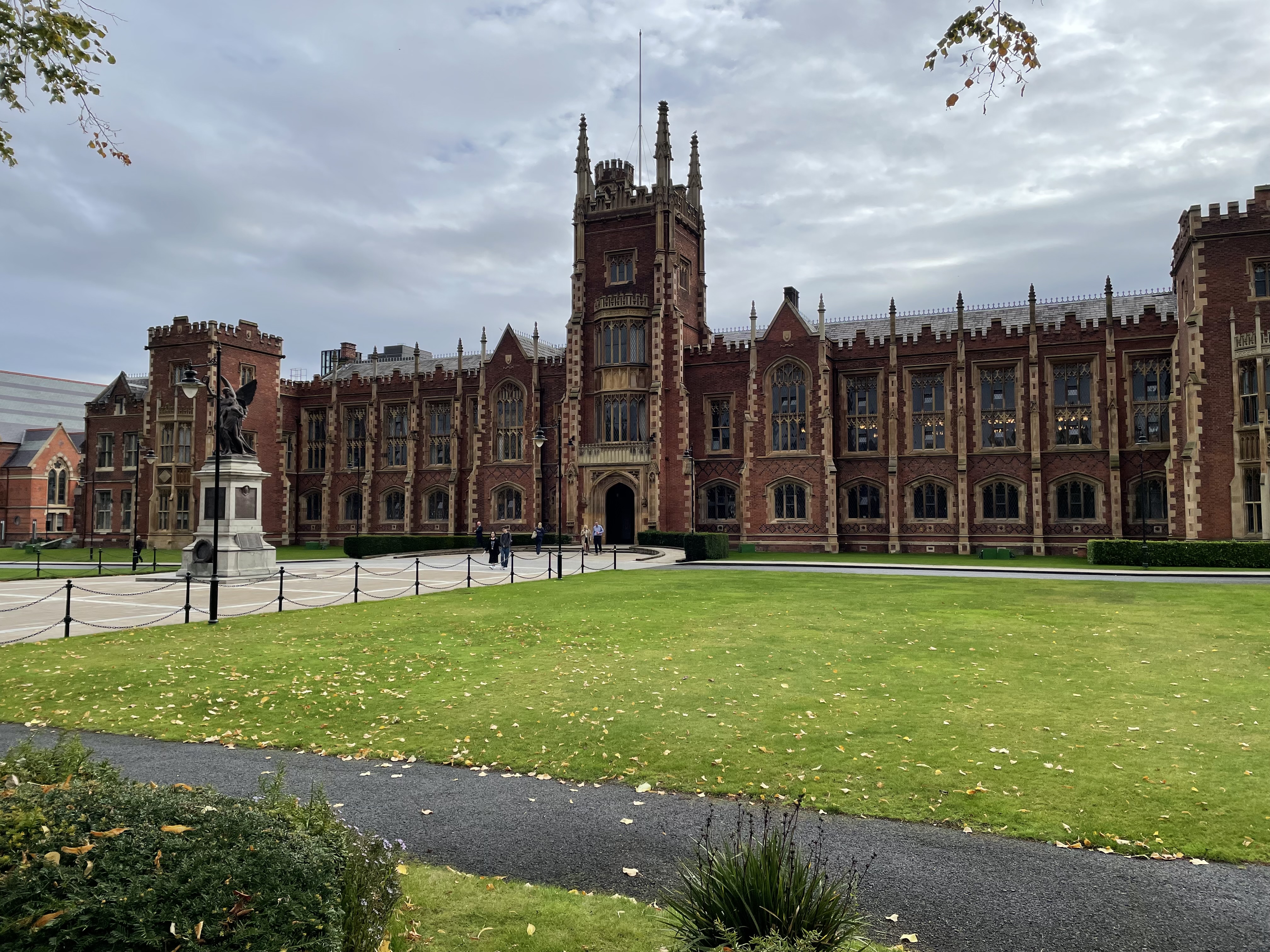
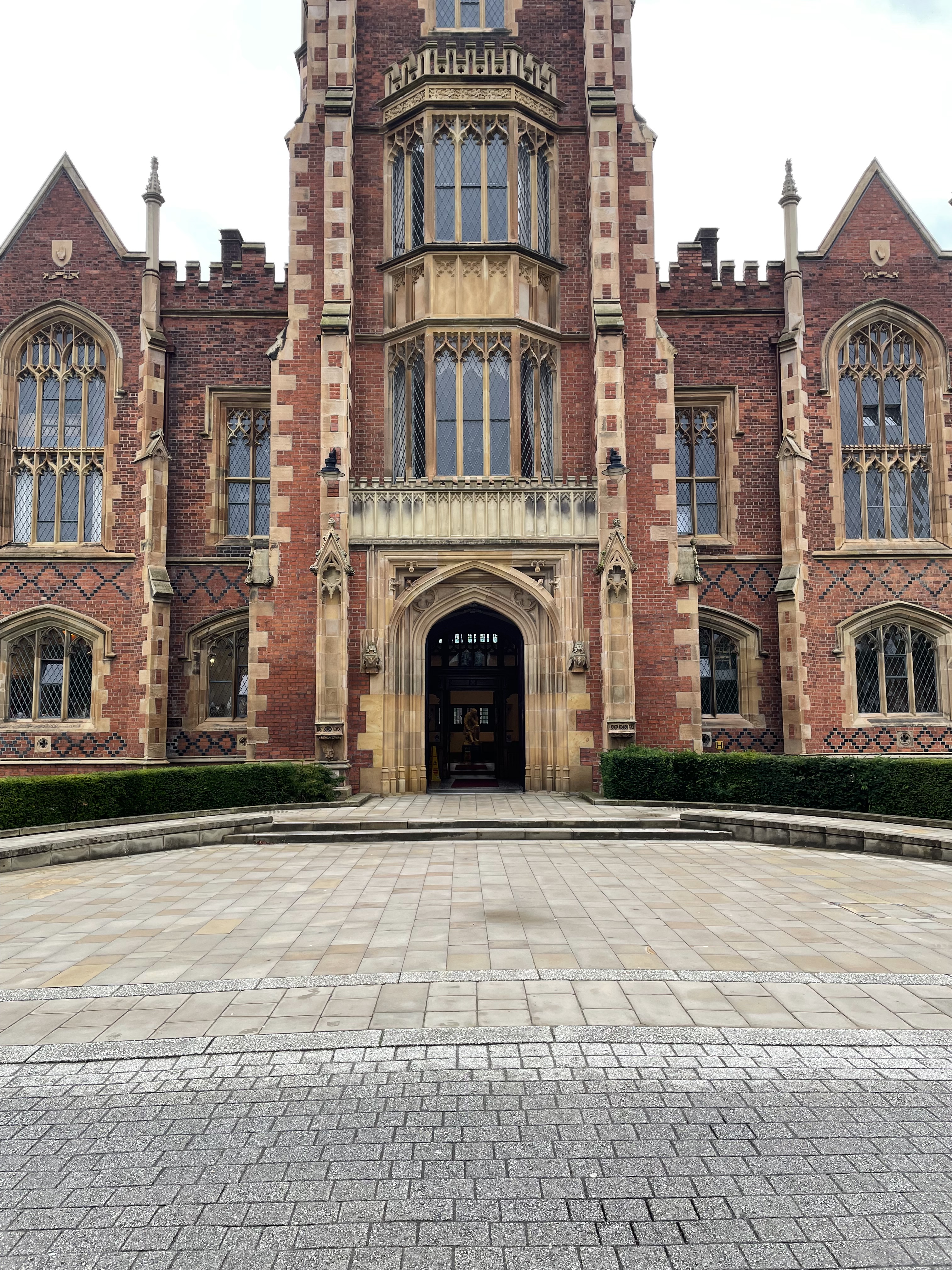
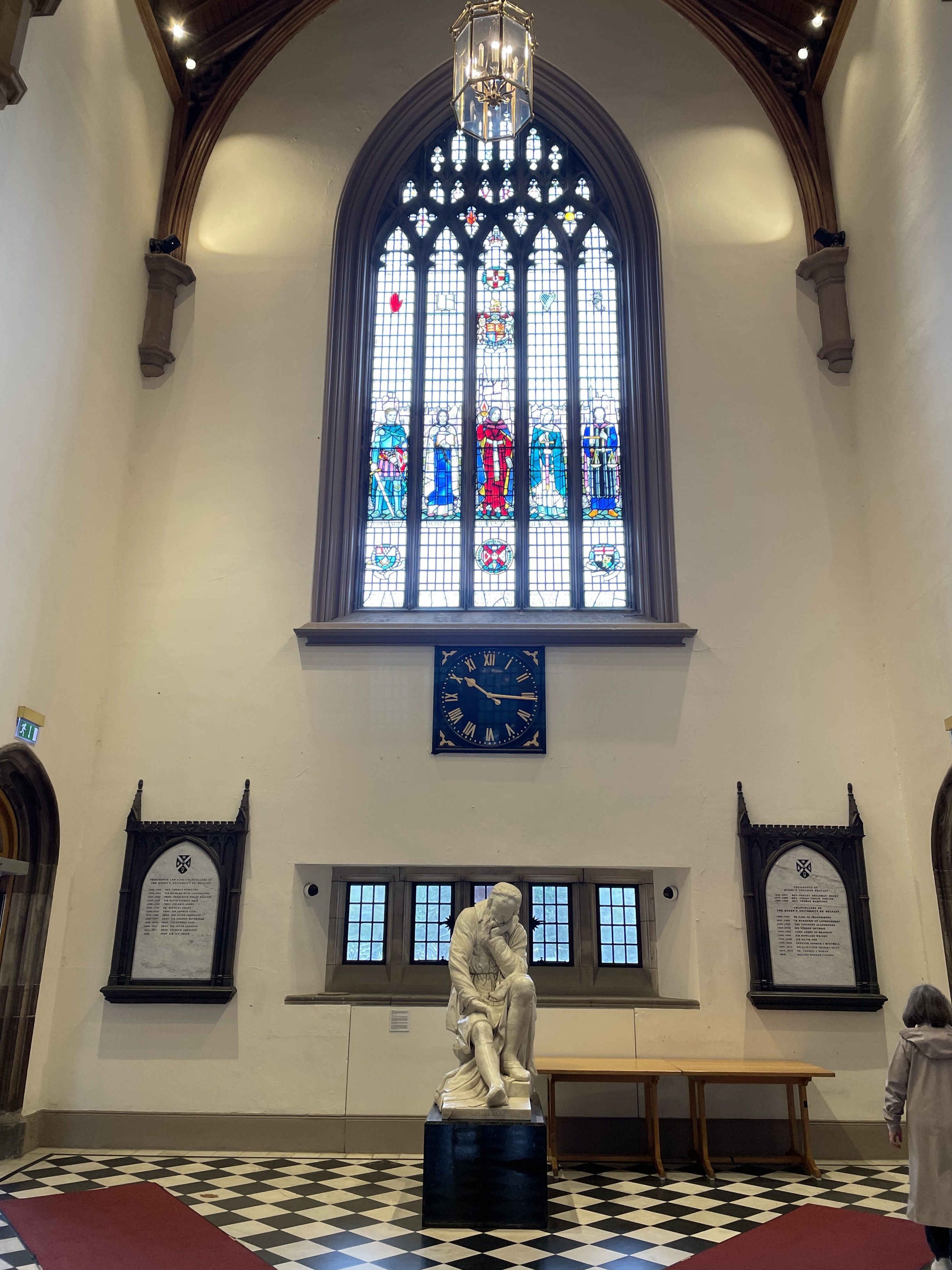
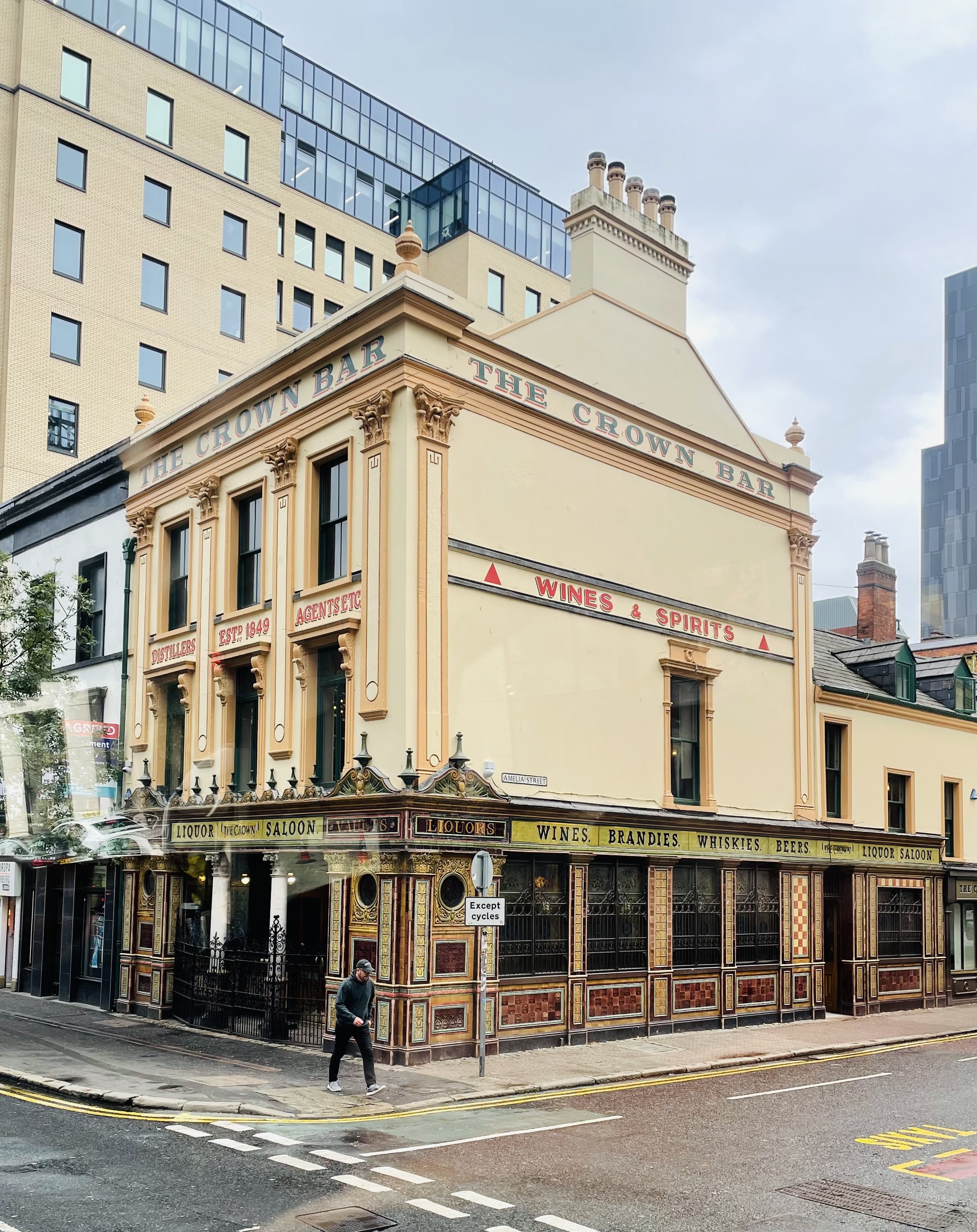
While in Belfast we also stopped by Queens College and walked a bit of the city. And although we didn’t have the opportunity to visit the most famous pub in Belfast . . . now a National Trust (of England, Wales, and Northern Ireland) historic site . . . we did drive by so that I could tell my colleagues at INTO (the International National Trust Organisation), that I’d seen this world-renowned drinking establishment.

Timmy Clifford’s, played by a very young Solas band, seems an appropriate tune to pair with a pub.


I wanted to end this remembrance of a wonderful trip with one of the most famous of Irish songs. Most of us know it as Danny Boy, which is actually an English folk song with lyrics written by English lawyer Frederic Weatherly in 1910. A few years later those lyrics were set to the traditional Irish melody of Londonderry Air and it became immortal. I’ve always preferred the instrumental arrangements of this lovely air, and have long enjoyed the elegant solo piano versions of Bill Evans and Keith Jarrett. I’ve chosen the latter here, so sit back, pour yourself an Irish whiskey, and savor the artistry of this amazing musician.

Thanks for traveling along.

More to come . . .

DJB


For other posts on our fall trip to Ireland and France see:


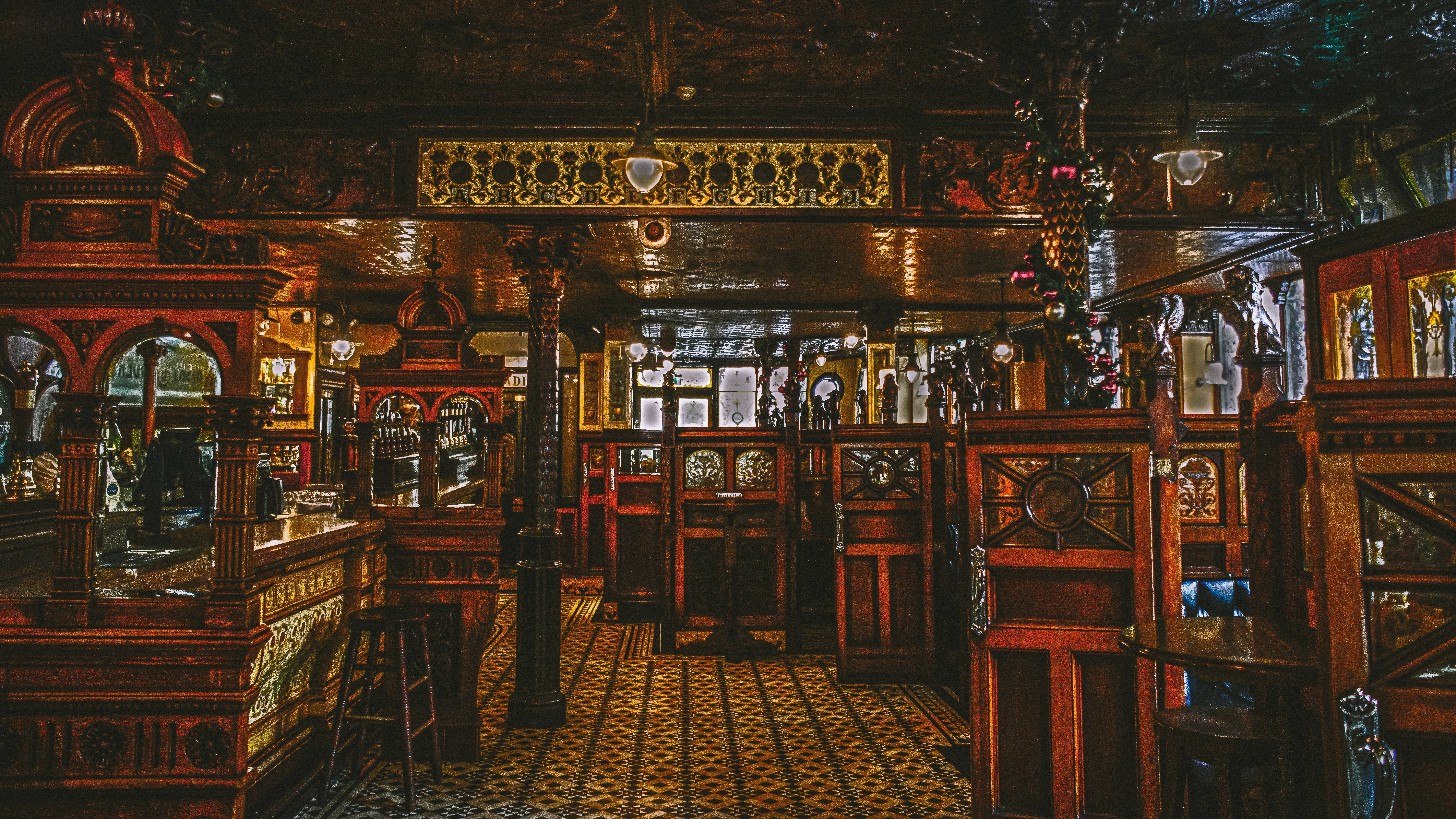
Photos of Samuel Beckett Bridge in Dublin, Bantry House, Belfast City Hall (tinted), Crown Bar Interior, and Irish countryside from Unsplash. Photo of barrels at Jameson distillery by DJB.

Lanterns at Bulguksa Temple

A love letter to human intimacy and connection

What happens to humans when they lose the capacity to see? Or to speak? How do we connect with others when we find ourselves in a place of intense loneliness and isolation?

Greek Lessons: A Novel (2023) by Han Kang (translated by Deborah Smith and Emily Yae Won) is set in Seoul, South Korea, where a young woman watches her Greek language teacher at the blackboard. She tries to speak but has lost her voice. Her teacher is drawn to the silent woman, for he is also moving into isolation as day by day he is losing his sight. Two ordinary people are battling personal anguish in an extraordinary work that speaks to the importance of connection, human intimacy, and language.

As the publisher’s note reveals,

“. . . the two discover a deeper pain binds them together. For her, in the space of just a few months, she has lost both her mother and the custody battle for her nine-year-old son. For him, it’s the pain of growing up between Korea and Germany, being torn between two cultures and languages, and the fear of losing his independence.”

Han Kang, who was awarded the Nobel Prize in Literature in 2024, has written a short but powerful novel that explores the ways we reach beyond isolation through language and touch. The unnamed woman in the story pushes back on her therapist’s insistence that her loss of speech is a direct result of these other losses. That explanation “strikes her as simplistic. She experienced a prolonged inability to speak once before, in childhood, and as with a stutter, she knows the cause can’t be narrowed to any one factor or resolved with a behavioral strategy. It’s neurological. She’s lost ‘the passage that led to speech.’”

As one reviewer notes, the author . . .

“devotes the majority of the book to separate flashbacks of extreme sensory experiences that have stayed with them. Of her childhood speech block, the woman recalls how ‘words would thrust their way into her sleep like skewers, startling her awake.’ Her teacher recalls his father going blind from the same genetic disease and withdrawing from their family.”

These flashbacks can feel, in one sense, scattered and unconnected. But in the author’s skillful hands the reader moves along even as one narrator has difficulty finding a voice and the other finds it increasingly difficult to see. They both are drawn to ancient Greek as a dead language that no one speaks anymore, but that nonetheless has a complicated grammatical structure that feels safe. Almost a harbor. And that attraction helps build the attraction between our two narrators. The ending of the novel reads as poetry, as the two come together despite their isolation.

There is a sadness that pervades this story, but there is also hope. There is shared suffering that brings the man and the woman together. The Times review ends with a beautiful summary when it notes that this novel “is a celebration of the ineffable trust to be found in sharing language, whether between parent and child, teacher and student, or between words spoken aloud and those traced, painstakingly, with a finger on someone else’s waiting palm.”

Greek Lessons is, as more than one reader has noted, a love letter to human intimacy and connection.

More to come . . .

DJB

Photo of lanterns holding prayers of the faithful at Bulguksa Temple in South Korea by DJB