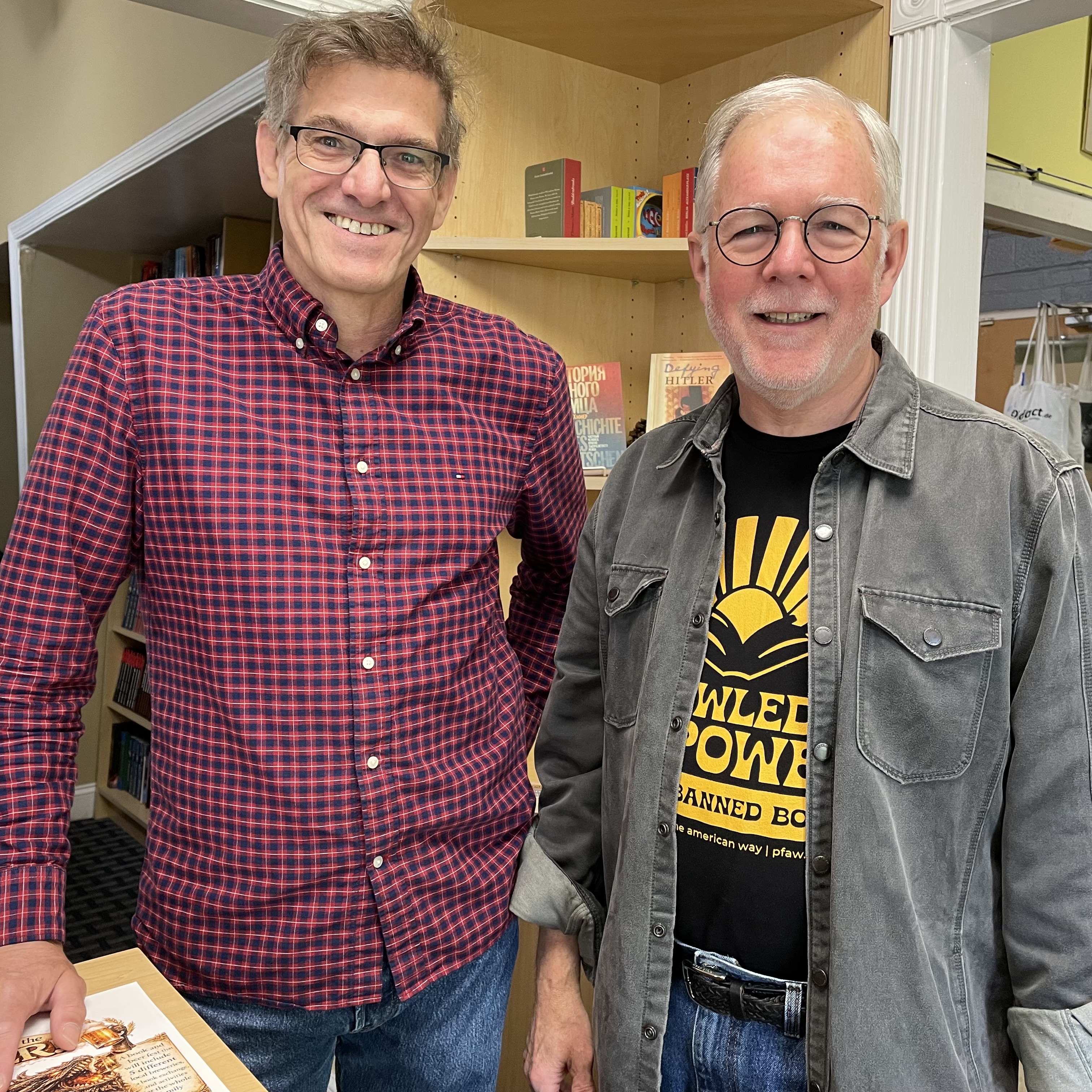
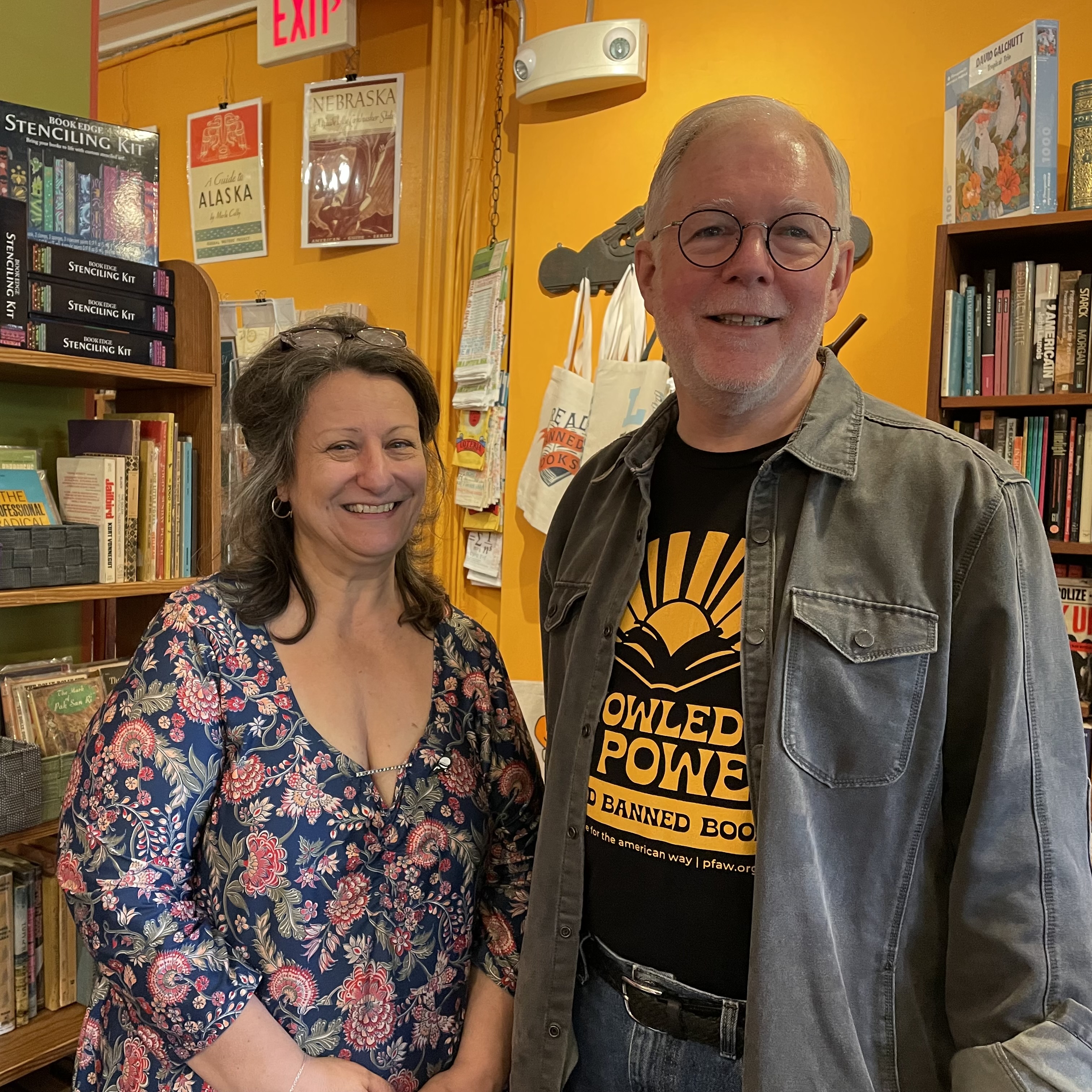
James of Bergstrom BooksElisenda at Kensington Row Bookshop
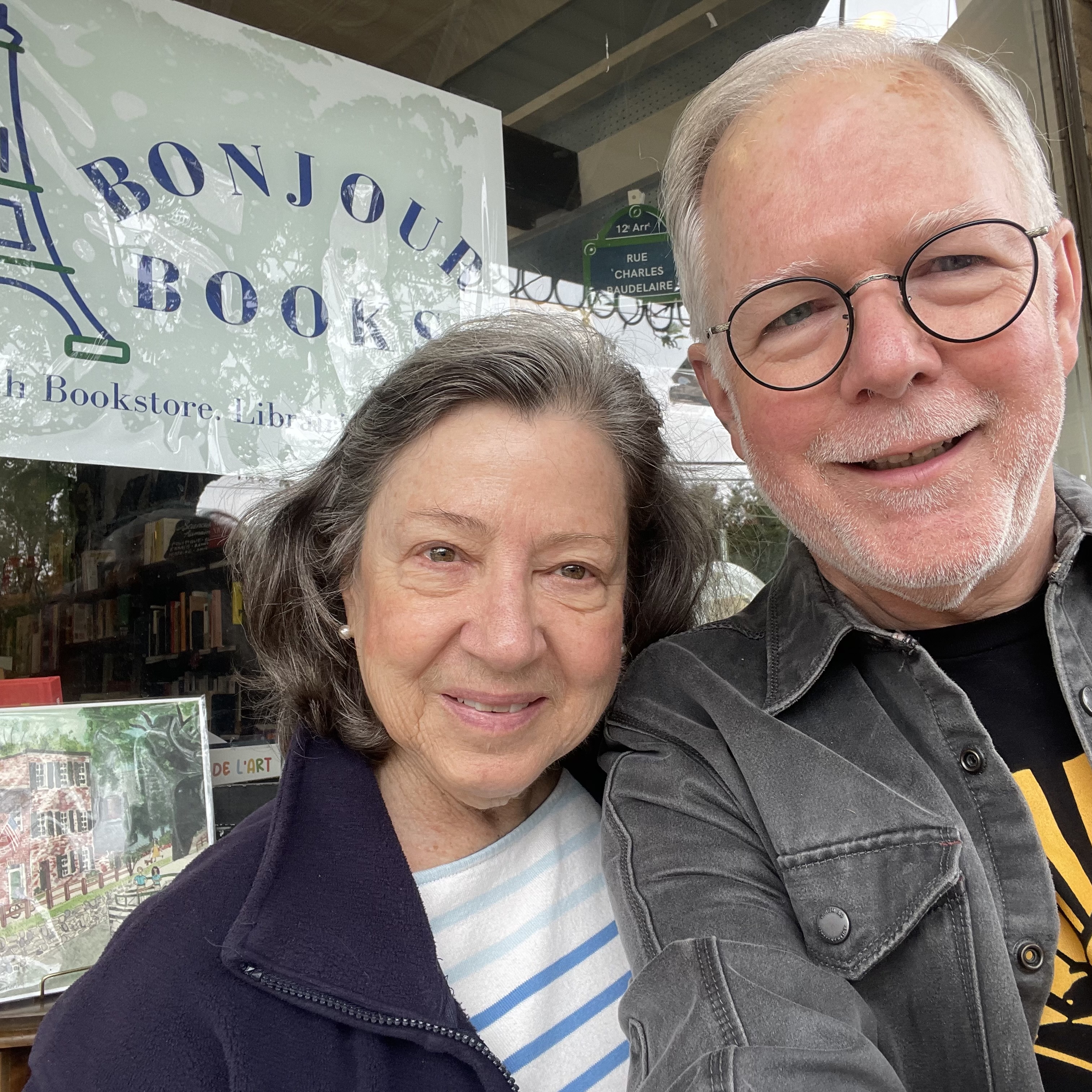
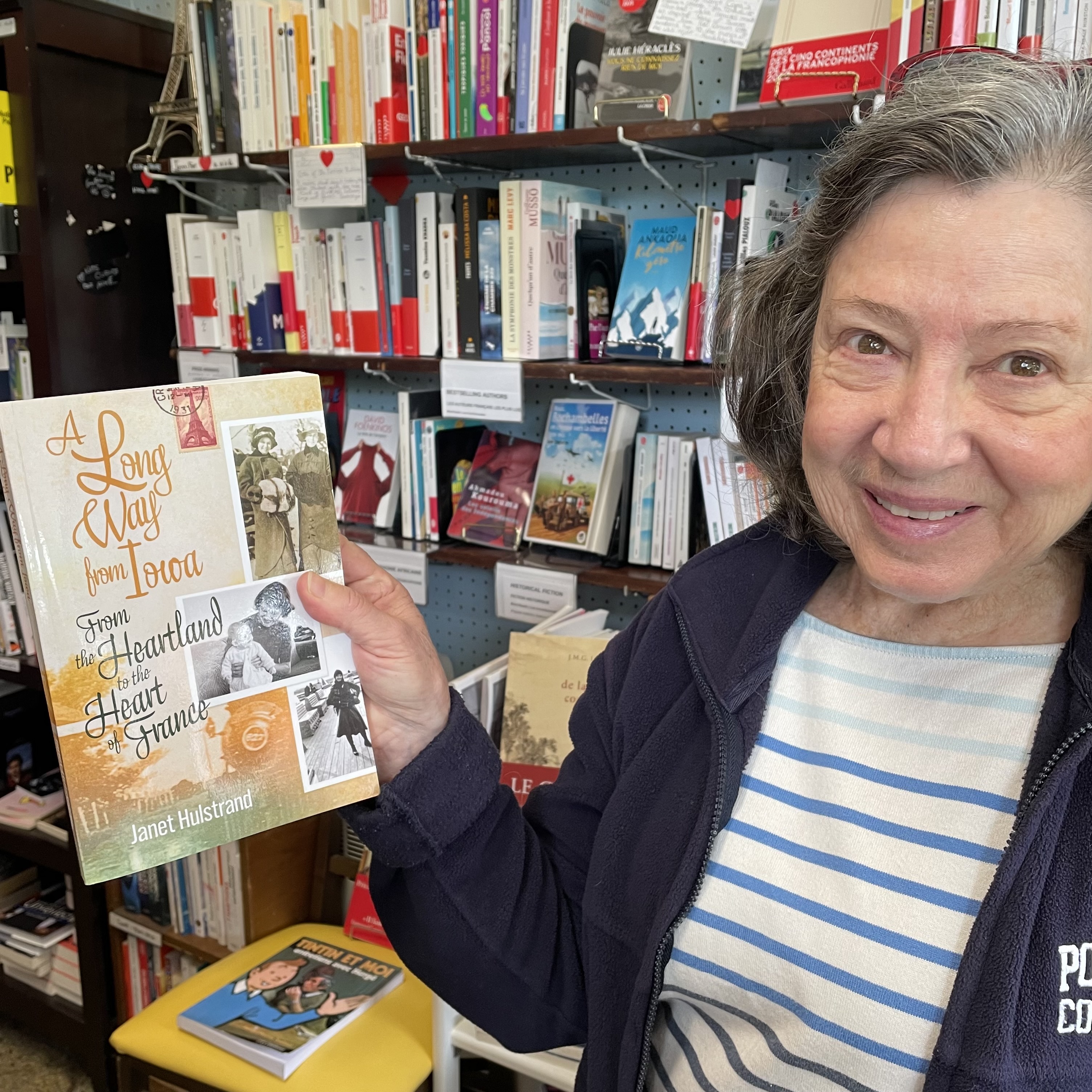
While there we chatted with the owners: James at Bergstrom Press & Books, Elisenda at Kensington Row Bookshop, and Melissa at Bonjour Books DC. It was so appropriate for multiple reasons that Candice found a copy of our friend Janet Hulstrand’s memoir for sale at Bonjour Books. That was the book that kicked off my Author Q&A series back in 2023, and Janet was the one who introduced us to this wonderful treasure in historic Kensington.
We then drove down to the heart of DC as we visited:
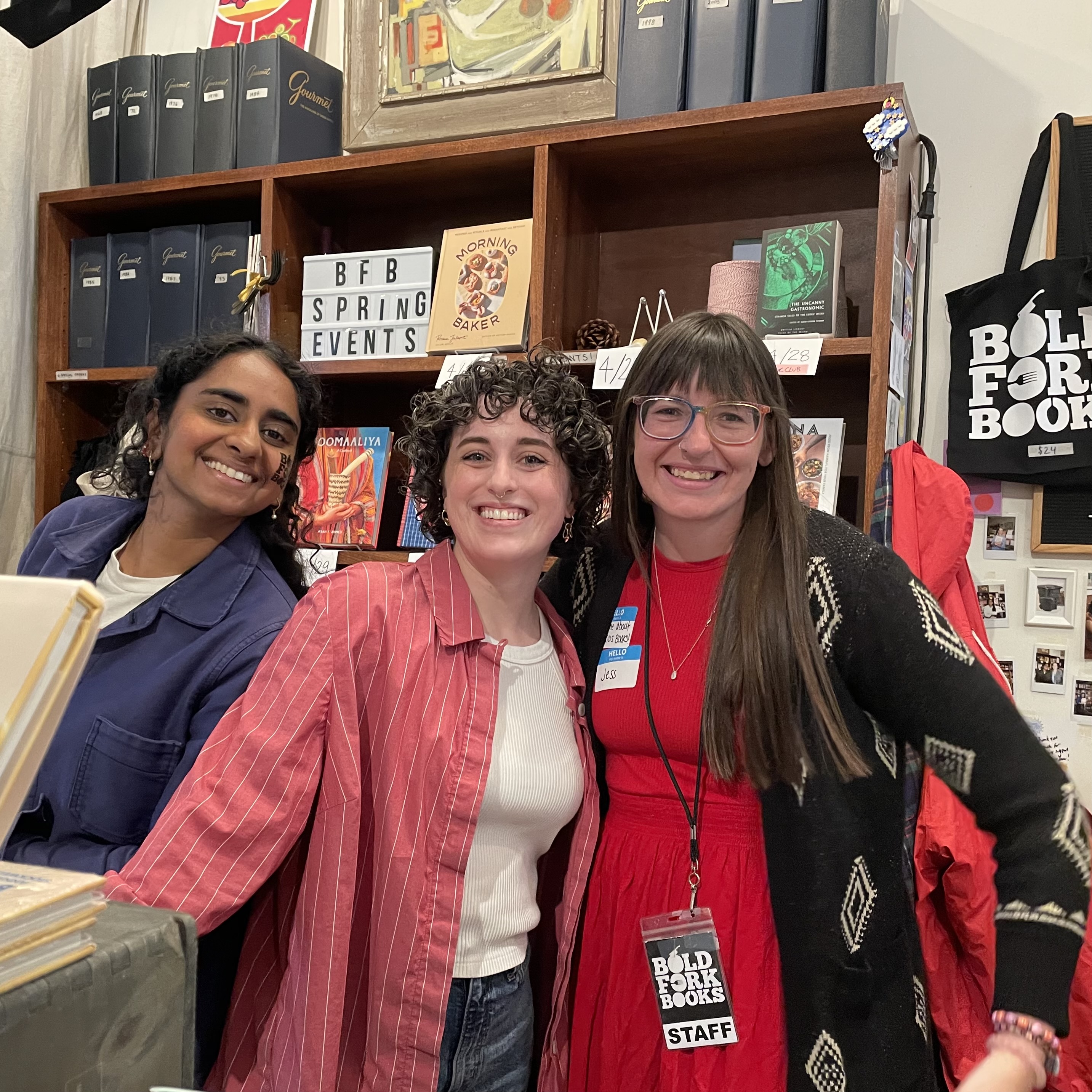
All three were packed with other “crawlers” and shoppers, but we had a chance to explore each and made plans to return later when we could spend more time in the stacks. The friendly staff at Bold Forks took time out to discuss future shopping opportunities and to pose for a photograph.
. . . while we made sure to document each visit with an in-store photo.
DJB at Bold Fork BooksChecking out Lost City Books
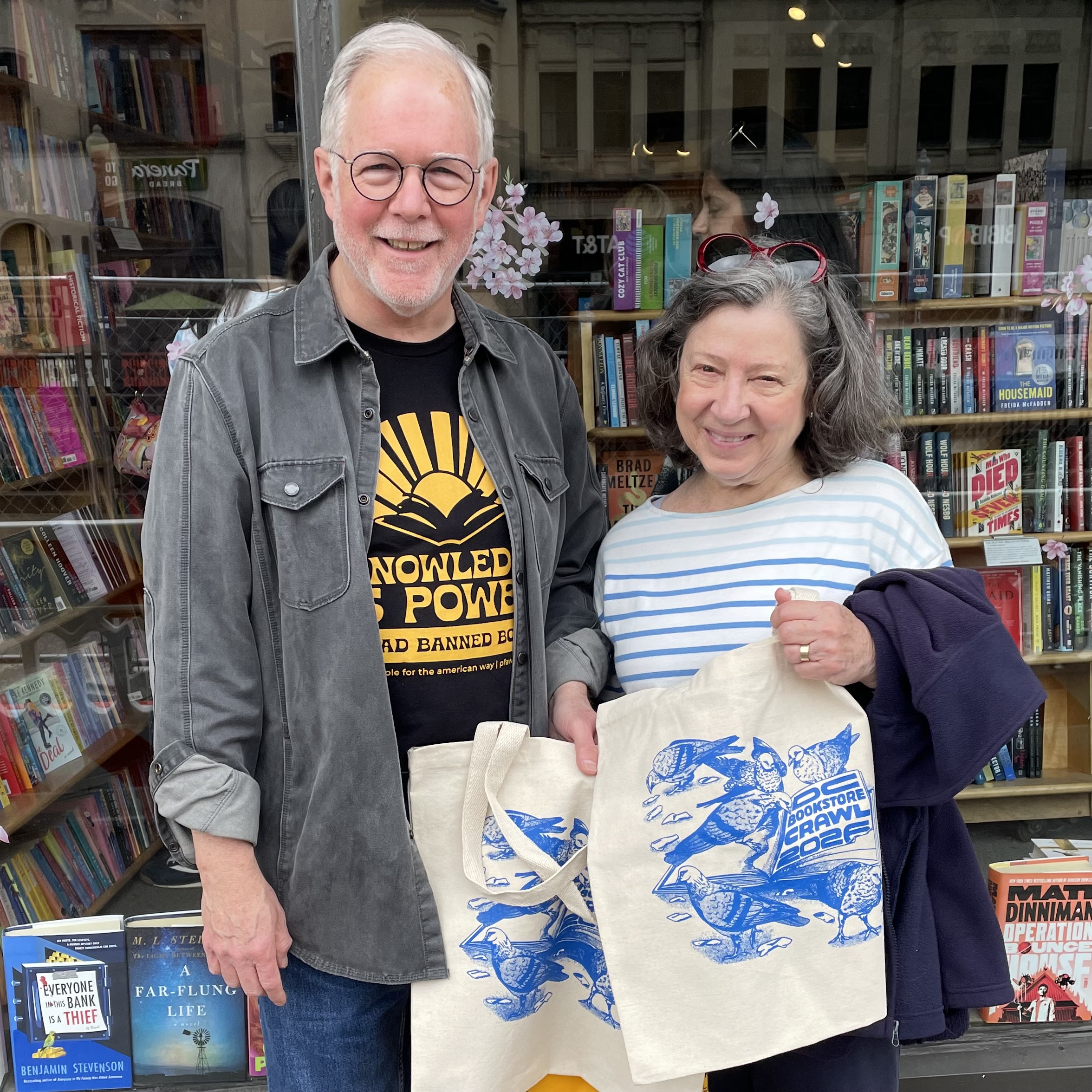
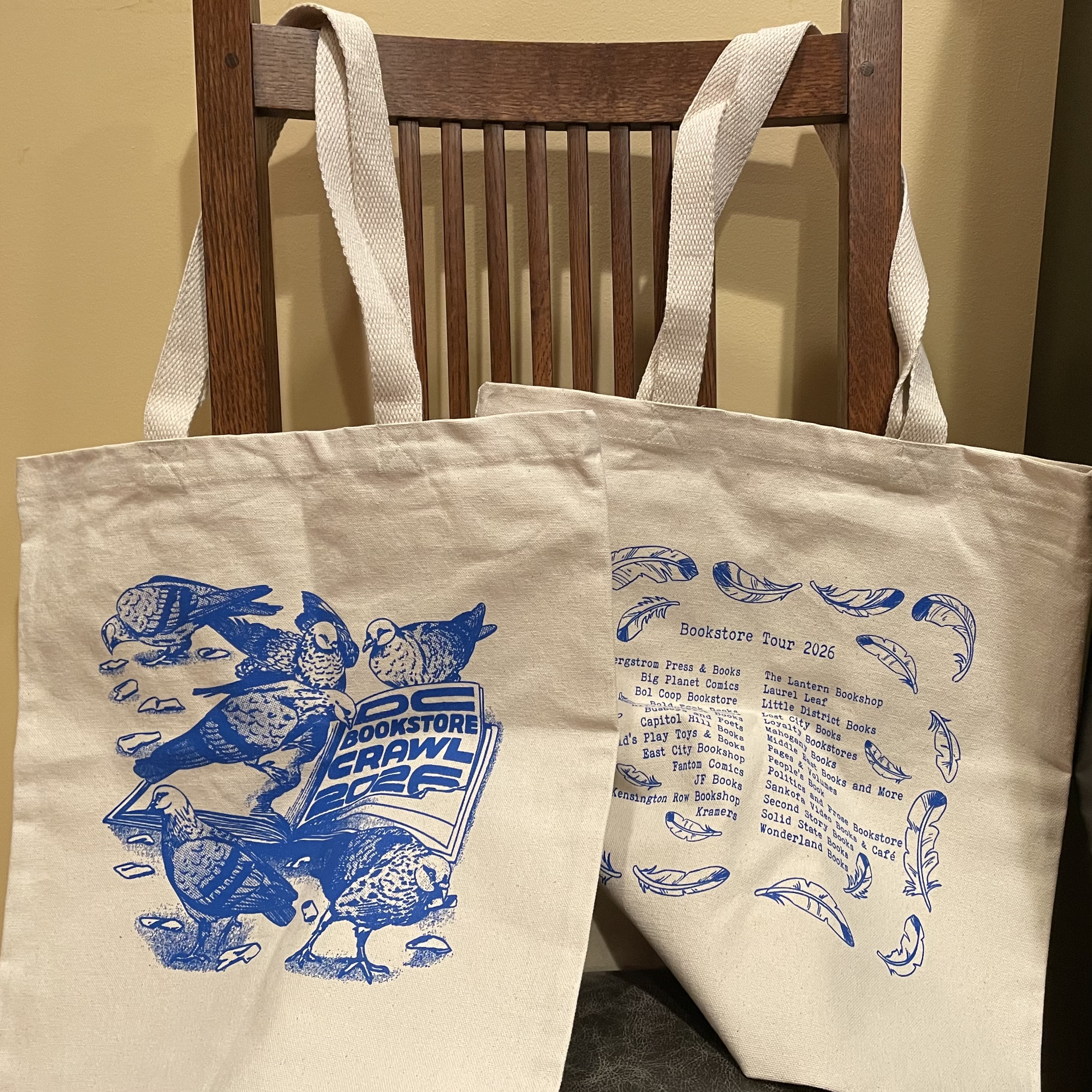
At Kramer’s, our sixth stop, we picked up our prizes—great looking Independent Bookstore Crawl tote bags—and ask a shopper to document the end of our tour.
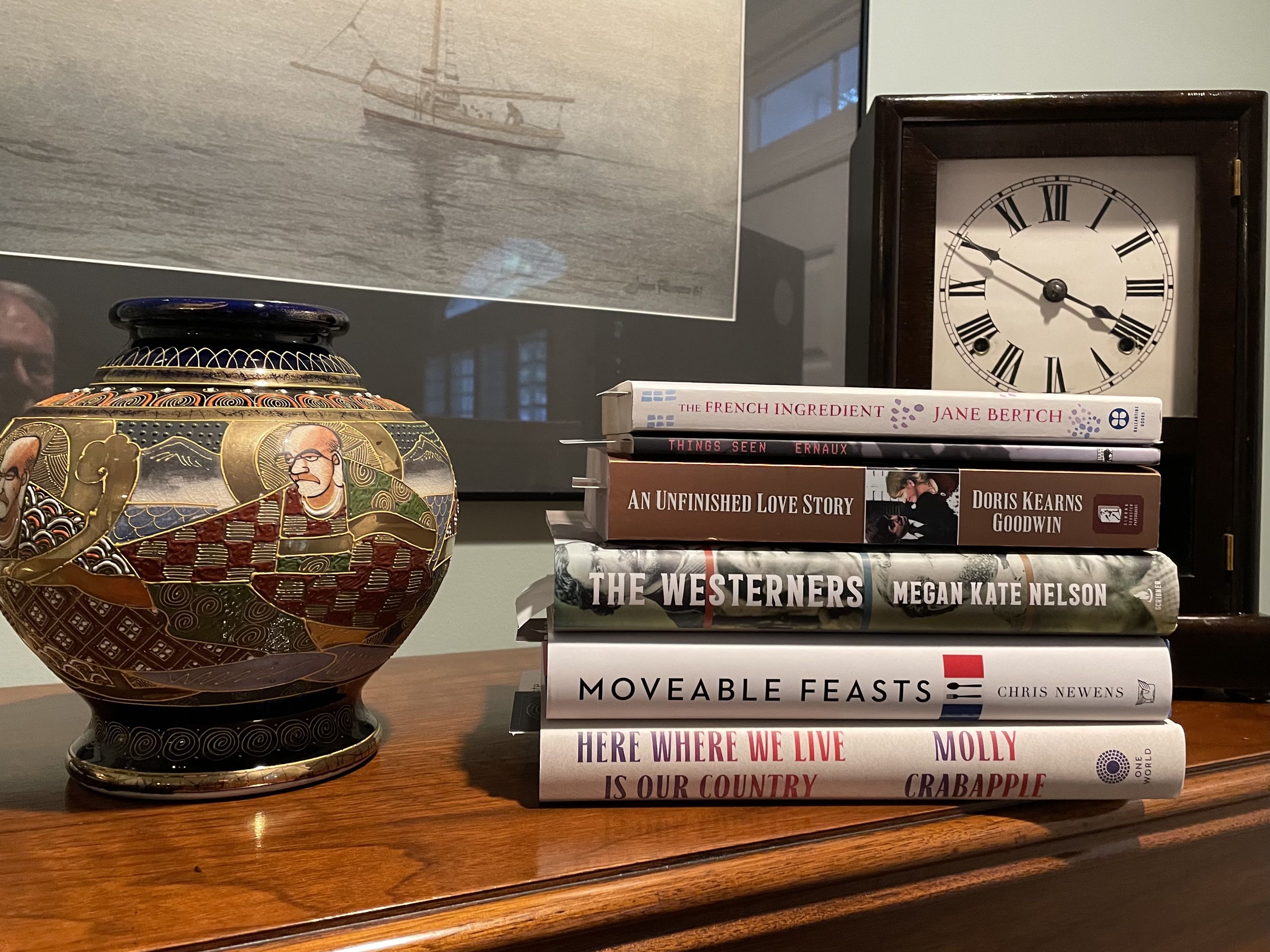
Oh, did I mention that I had prepared a “shopping list” of recommended books, and we found seven of those treasures today (one is on back order). We were able to spread the wealth among all six stores.
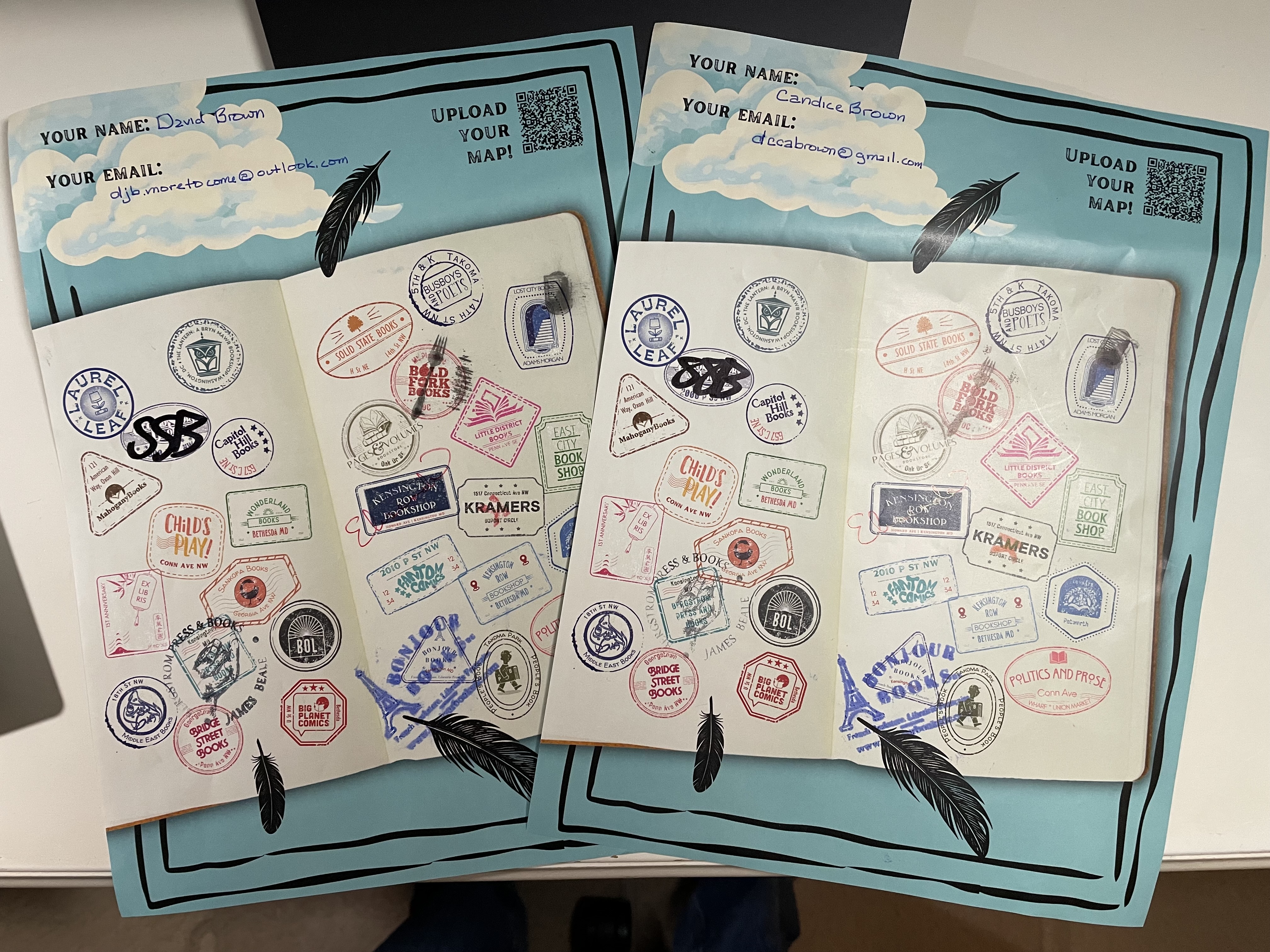
We finished our crawl with a pizza and then stopped across the street at Second Story Books in Dupont Circle which I’ve already visited this year, just to add a seventh stamp to our collection.
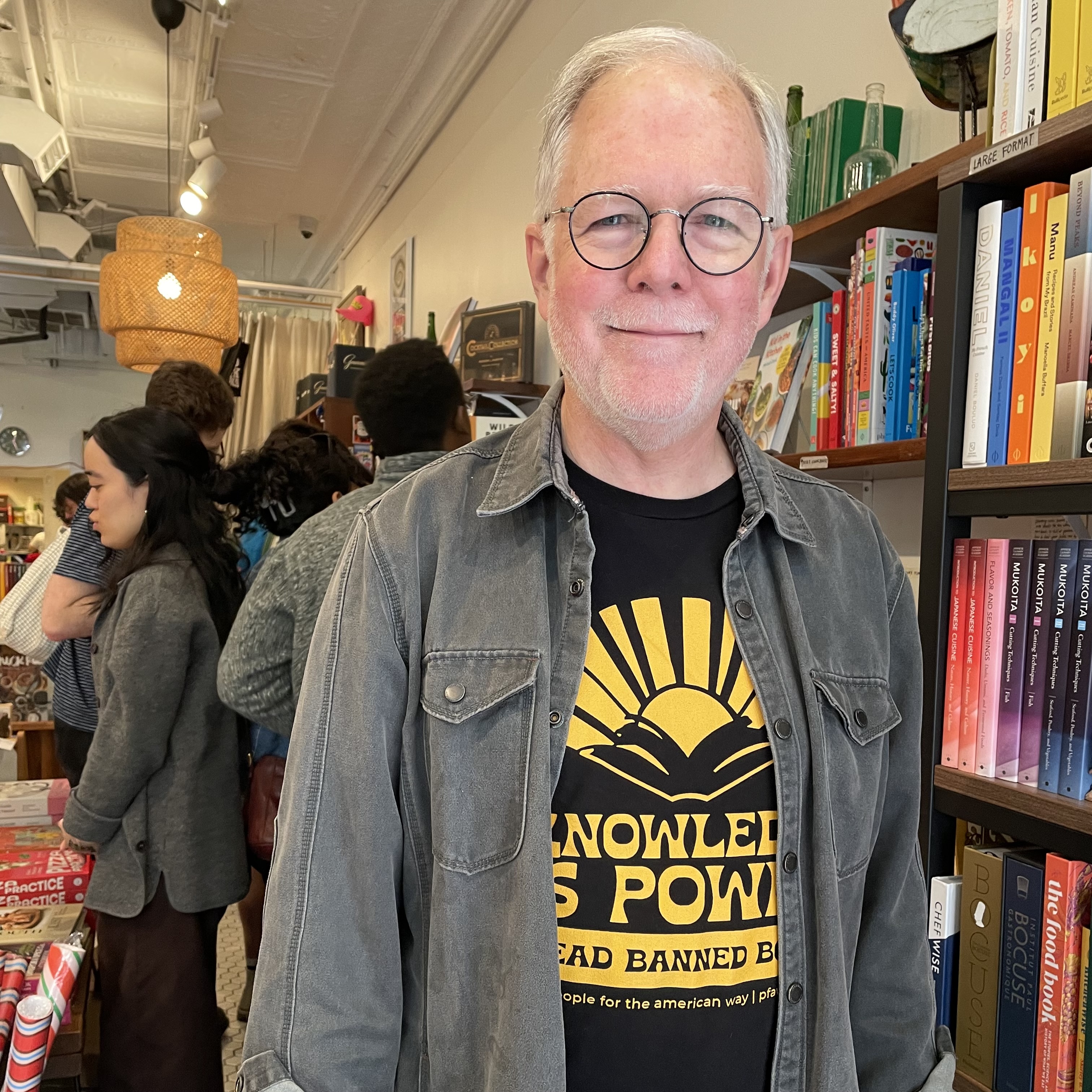
I’ll write more about each of these stores when I review the books I purchased in those shops. For now, I just want to say thanks to all the wonderful booksellers and staff for making this such a grand day of celebration. As the t-shirt I wore today says, Knowledge is Power!
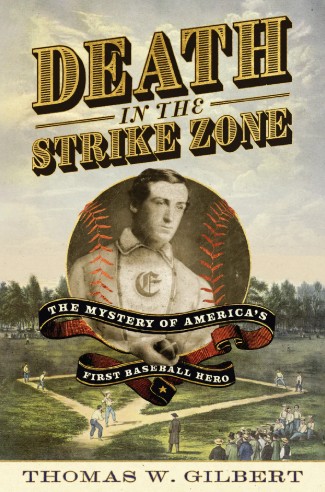
Thomas W. Gilbert’s newest book examines the life and mysterious death of baseball’s first hero, a work I found at a cozy yet bustling independent bookshop in the heart of Bethesda.
Installment #5 in my series on the region’s independent bookshops.
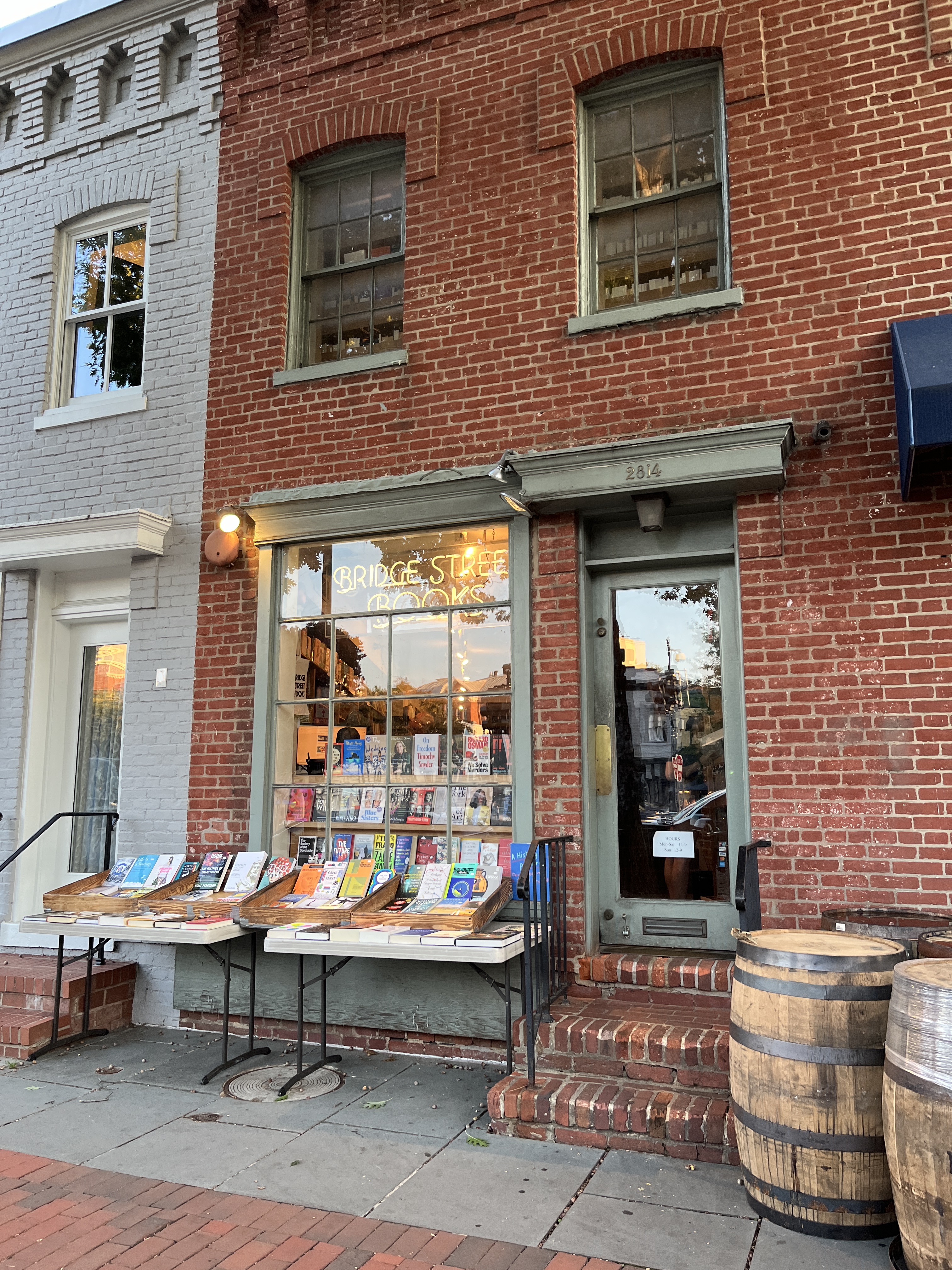
As I was walking to the next stop in my 2026 quest to visit all 29 DC-area independent bookshops, I was pulled up short by a display in the store’s window. Although it was cold and gray in Washington the nation was celebrating Opening Day and the good folks at Wonderland Books had a large and enticing spread of baseball titles and paraphernalia to lure in this lifelong fan. It didn’t take much to draw me into this cozy bookshop in the heart of Bethesda where I found enough baseball books—both well-known and more obscure—alongside many other treasures to more than fill a summertime of reading.
The one I chose opened up baseball’s fascinating and often forgotten Amateur Era.
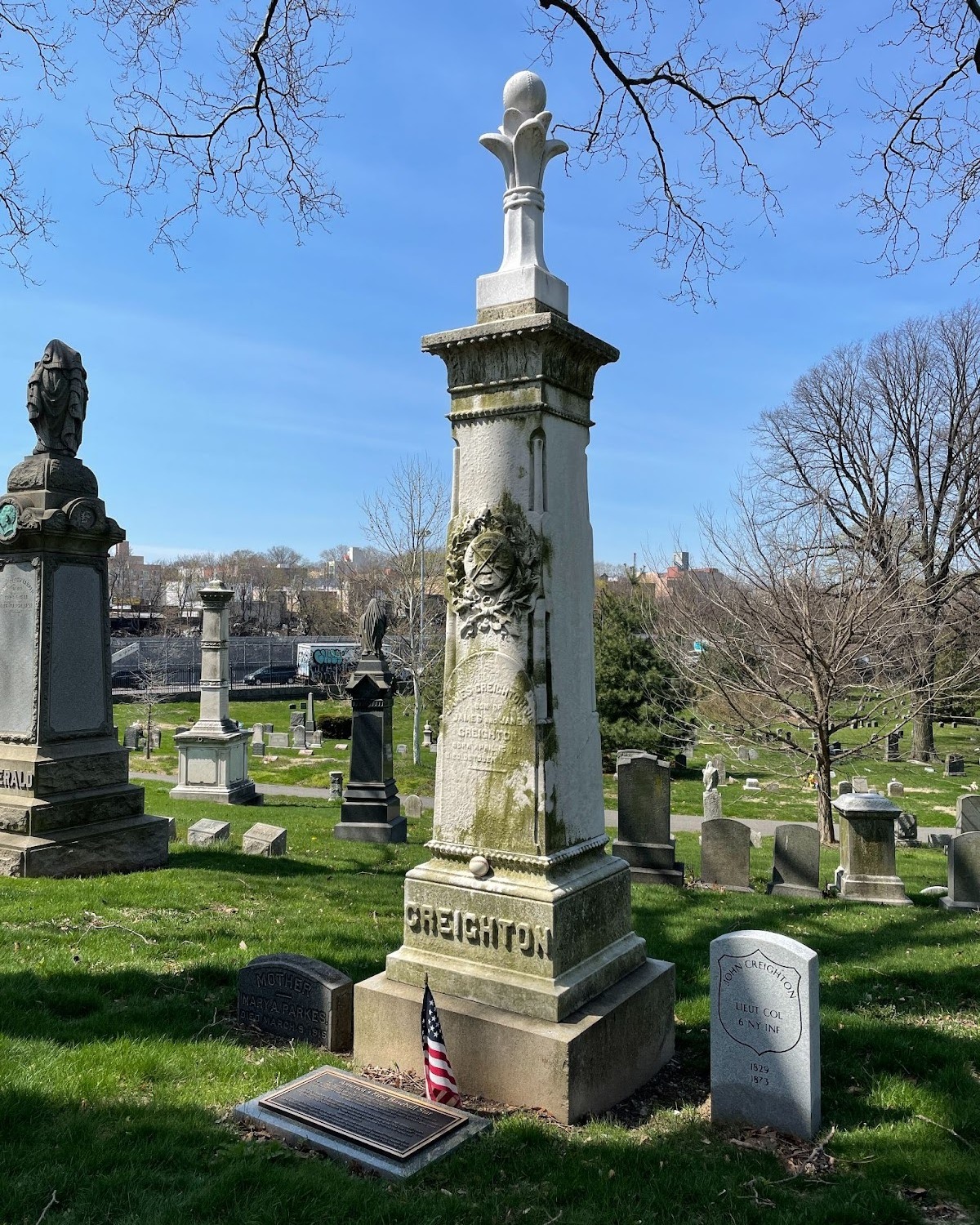
Death in the Strike Zone: The Mystery of America’s First Baseball Hero (2026) by Thomas W. Gilbert has been accurately described as “part biography, part detective story, and part time machine.” A baseball historian who has written extensively on the early years of the game, Gilbert brings to life the story of James Creighton, a young Brooklyn ballplayer who shot to prominence during the Amateur Era, forever changed how the game is played, and then mysteriously died at the young age of 21 after suffering an injury. The young phenom’s death shocked the sport and inspired the first grand baseball-themed monument, which can still be seen in Brooklyn’s Green-Wood Cemetery. Soon afterwards, however, the cause of death became shrouded in mystery and perhaps involved a cover-up by the era’s stewards of the game. As a result, Creighton’s singular role in changing the nation’s pastime was largely left out of baseball’s history.
In ten swiftly moving chapters Gilbert takes the reader through the origins of the game in the fields of New York and Brooklyn, establishment of Amateur Era clubs, the fluidity of rule changes, efforts to market baseball to the entire country, the effects of the Civil War on the game, and the move to the professionalism of the sport. Creighton, who invented something new for the game—modern pitching—played an oversized role in many of these events. He threw the first fastball and the first curve ball. Because of his prowess, baseball had to invent the strike zone. Gilbert argues convincingly that Creighton’s pitching style was entirely legal given the Amateur Era rules that required the “pitcher” of the day to throw the ball underhand to the batter without twisting the wrist. Yet his unorthodox style, which put significant pressure on an inguinal hernia or gap in the abdominal muscle wall, caused him to collapse in the middle of a contest and die just four days later. The story of how those who wanted to grow the game rushed to blame the death on cricket—which Creighton also played—and not baseball opens up an examination of the nativist roots of our national pastime.
Many Americans believe the myth that baseball was invented by Abner Doubleday in the rural fields of Cooperstown, New York. That was a story created by a commission established by American Nativists such as Albert Spalding to “prove” that the game was invented by Americans “and had no foreign origins.”
“Baseball the sport began as a reform movement. It shrewdly marketed itself to the Protestant middle classes, who disapproved of violence and gambling, as a clean alternative to the sleaziness of horseracing and boxing. Both to keep out corruption and to be seen as respectable, organized baseball originally felt it had to be amateur.”
But Creighton’s style of play was electrifying, bringing out large numbers of spectators, and turning the game from a participant sport to entertainment. Professionalism wasn’t far behind. “Less than a decade after the death of James Creighton, amateurs would no longer contend for national championships.”
Death in the Strike Zone is an enlightening read for fans and those who love history. And I can’t mention the book without a hat tip to the publisher, the Boston-based Godine Press. This is a beautiful, physically well-constructed book that shows the firm’s commitment to excellence. The chief buyer at one of Washington’s premier independent bookshops has written that “DRG continues to publish well made, often beautifully illustrated books every bookstore should be proud to carry on their shelves. Godine’s books are meant to last a lifetime.” It certainly was a fitting find in a small, independent bookshop that is also committed to a carefully curated selection of books tailored for the local community.
Wonderland Books was the fifth stop in my 2026 quest to visit all 29 DC-area independent bookstores. Wonderland is the creation of two women: a former award-winning journalist at The Washington Post and a lawyer and corporate communications strategist. Both have been lifelong readers who have written for decades about books and their authors. Those experiences come through in the choices of titles on the shelves and in the inviting setting for browsing and reading in the midst of Bethesda’s busy downtown.
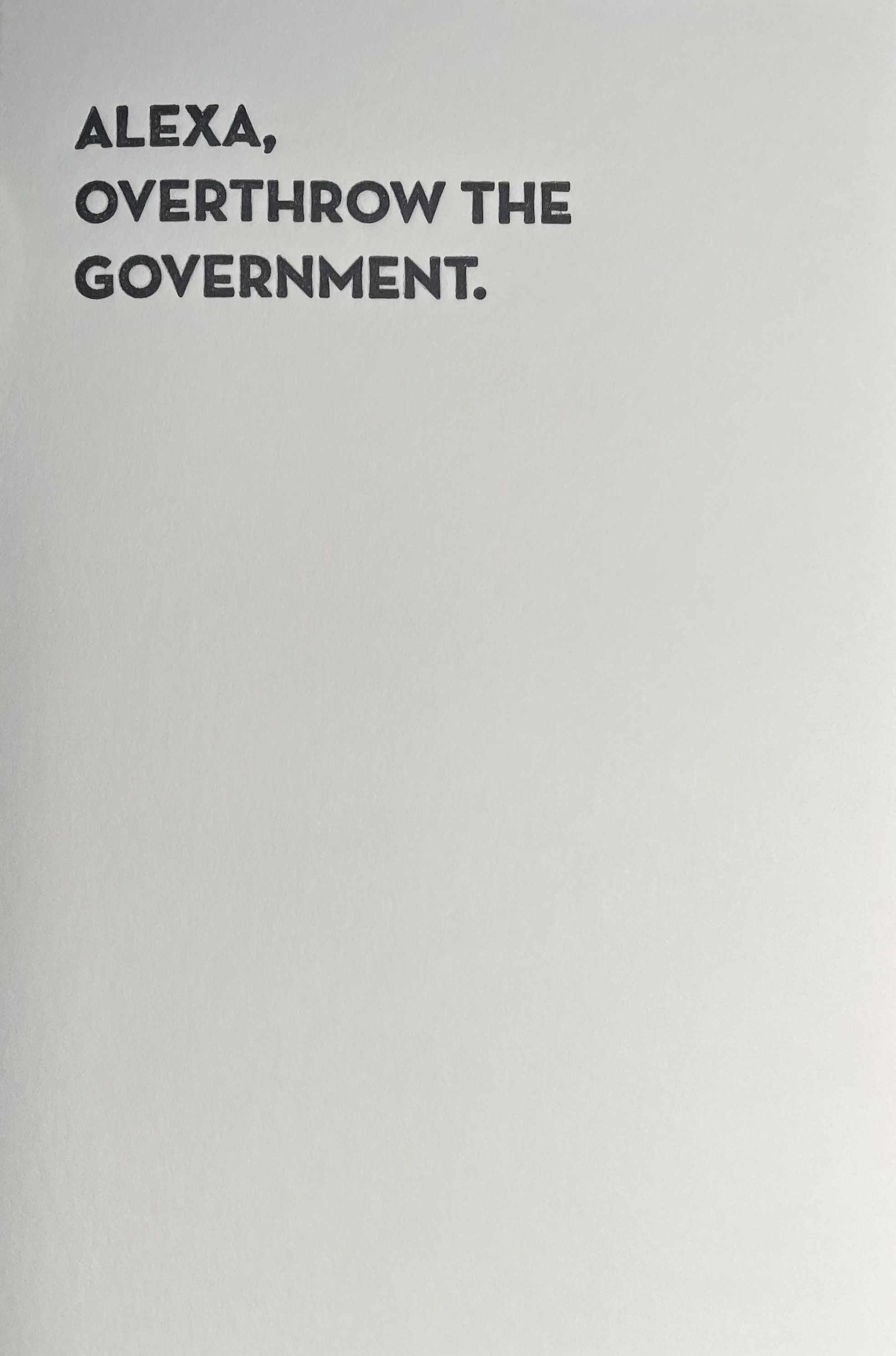
The staff on the day of our visit was knowledgeable, eager to be of help, and attuned to their DC-based customers’ special interests. When I inquired about a new work that was just published, they noted it was on order and offered to hold a copy. They directed me to several areas when I asked about specific genres. And as I picked up this simple card with a request to Alexa, they laughed and said, “its our best seller!”
Of course I had to buy one!
I visited Wonderland with a friend who lives just a few minutes away. Yet like me Bob was discovering it for the first time. A retired television journalist, he also found a variety of selections to fit his taste at the shop. He has since exclaimed how much he enjoyed Kate Quinn’s historical novel The Huntress, which he picked up on our initial visit. I don’t think it will be his last.
More to come . . .
DJB
To read the first four installments describing my DC Independent Bookshop tour, visit:
Photos of James Creighton monument from Green-Wood Cemetery in Brooklyn. Wonderland Books exterior via Yelp.
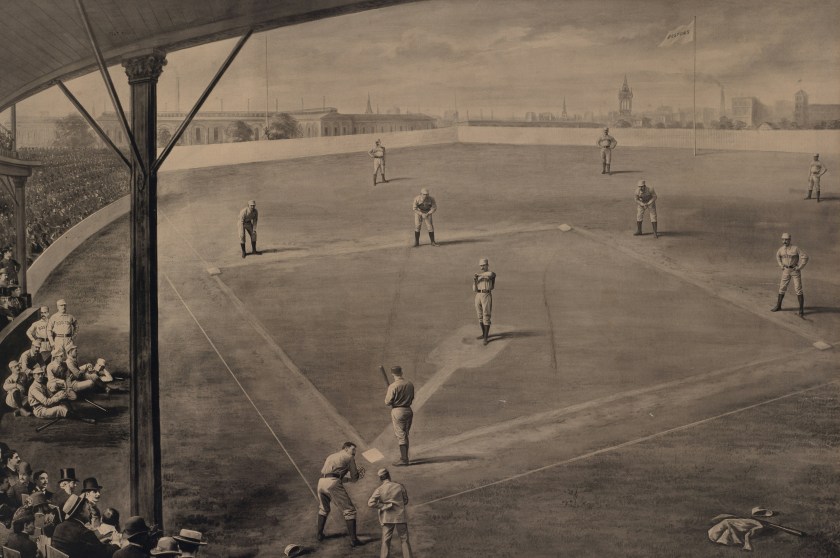
Depiction by George H. Hastings of an 1888 game at the South End Grounds between the Boston Nationals and the New York Giants. The artist used reproductions from original images to depict the players on the field, in foul ground, and some of the spectators. Photo by Boston Public Library on Unsplash.
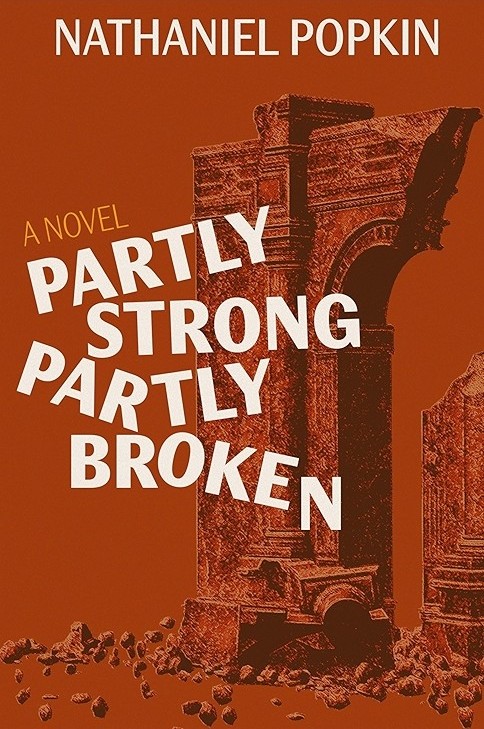
In this latest installment of the Author Q&A series, Nathaniel Popkin talks with me about his new novel and the story of a progressive rabbi trying desperately to hold her interfaith community together. Popkin has created a thoughtful and deeply compassionate examination of the age-old divisionspoisoning America’s social contract in the 21st century.
Today’s news is full of stories of deep political divisions that threaten to rip apart bonds and affinities that have connected us—at the personal, community, national, and global levels—for decades if not centuries. As our attention is once again turned to war in the Middle East, a new novel set for publication on May 5th takes us into the life of a Jewish and multifaith community in New Jersey to examine the deep ties, explosive tensions, and inherent contradictions that exist at the core of this and so many relationships.
Partly Strong, Partly Broken (2026) by Nathaniel Popkin is a work full of compassion and understanding as it explores the difficult questions around politics and racism that vex us today. The novel, told through the eyes of the passionate, inclusivity-minded Rabbi Adinah, focuses on political divisions poisoning an American Jewish community and a multifaith coalition in New Jersey. Set in the fall of 2023, the story unfolds before the attacks on Israel by Hamas and the subsequent devastation of Gaza in retaliation. Rabbi Adinah returns from a trip to Israel to find both her synagogue and her congregation falling apart. A hurricane has ripped a hole in the roof, and her office, which was always her refuge, is flooded. At the same time, a new conservative member of the congregation has become friends with the synagogue’s president and inserts herself into Adinah’s efforts to build a Hebrew Learning Center. This new congregant’s strong views on Israel disrupts the rabbi’s weekly Torah class and sows divisions while threatening the rabbi’s work of inclusivity and her vision for the Center. To further compound the rabbi’s troubles, a young Syrian refugee she mentors is the victim of a brutal hate crime, and as she lies in a coma the alliances Rabbi Adinah cultivated with leaders of other faiths become increasingly challenged.
Partly Strong, Partly Broken probes the stories, beliefs, and intensions of people who are working to navigate troubled and dangerous times. Many of the guardrails that guided our life together have been broken and refuge is difficult to find. Popkin creates a story for today’s world in which all can relate, and he examines these tensions with honesty and sensitivity. I was delighted when Nathaniel agreed to chat with me about his book in this most recent installment of my Author Q&A series.
DJB: Nathaniel, as I was reading the novel I was reminded of George Packer’s 2013 nonfiction book “The Unwinding” on the demise of the American social contract. Do you see your work as being solely focused on divisions within the American Jewish community or are there broader forces at work and, if so, are there deeper lessons forreaders to take away from your book?
NP: I’m glad you’ve raised this because the novel is deeply engaged in asking how the American social contract might break down. How fragile is it? How resilient, even in the face of what sometimes seem like impossible conflicts? We’ve all seen in the past three years especially how oppositional beliefs about Israel and Palestine have divided people, even those otherwise on the same political side, and how these “tensions boiling over,” as the New Yorker put it, could even sway elections. The novel’s beloved protagonist, Rabbi Adinah, co-leads a multifaith coalition of religious leaders who are a mirror on the demographics of their inner-ring New York suburb and who together are in pursuit of justice—the fulfilment, it seems to me, of the American social contract. The rabbi’s co-leader and confidant is Imam Abdul, Palestinian American, educated in Cairo, and together they respond to a hate crime against a young woman, Fami, a Syrian refugee they’re both invested in (by way of the social contract, in fact). What could disturb this alliance? What kinds of threats? These are some of the questions the novel asks readers to consider. As a work of fiction, Partly Strong, Partly Broken is more of an invitation to ask questions than answer them. An invitation to wonder, to stir intellectually, psychically, rather than a giver of lessons. The only thing the novel teaches, in my view, is how complex and multi-layered all these questions are.
The issue of “going or leaving home” is important to Rabbi Adinah, as she begins to grapple with that question early in the book. What aspects of home―especially for American Jews in the context of belonging and Israel―do you want your readers to explore along with Adinah as the story unfolds?
When the novel opens in early September 2023 Rabbi Adinah is returning from a three-week trip to Israel, where she’s participated in the massive pro-democracy protests. And where she’s been staying (in Haifa) with her ex, Sana, a Palestinian Israeli social worker, someone she’s never been able to let go. Sana, I believe, is “home” for Adinah, as much as the former, somewhat sweeter version of Israel (in memory, at least) of two decades previous, the space and place where they fell in love. As Molly Crabapple suggests in her new book, Here Where We Live Is Our Country, the question of home for Jews is fraught. The multi-generational trauma of displacement colors all questions of belonging and attachment. Which is why Israel has been able to loom so large in the Jewish imagination. If there had been more and different choices, then perhaps this particular attachment would feel different. Rabbi Adinah grew up in California in a placeless-feeling suburb and she found her own way to Jewishness, an evolution that offered her various homes, including Girona, Spain, and the multifaith coalition in her New Jersey town. These are all aspects of home for her. In reflecting on Israel, the diaspora, Yiddish and Hebrew, the novel does ask readers to question Jewish notions of home and belonging. There are many versions of answers here!
There are certainly bad actors in the larger story of Israel and Gaza, but within the focus of your novel the main characters hold passionate beliefs that don’t, in and of themselves, make them bad people. What are we to make of that and how might the reader put that in the context of the communities where they live?
For the novelist there really are no “good” or “bad” actors. The writer must be curious—lovingly curious—about all their characters, about all those characters’ motivations, and try to see them for who they are. None of us are what we wish we were, nor what others wish we were, but we are what we are, as painful as that may be sometimes. In this particular novel, I do want to help the reader see complexity, to feel how hard it is to be certain about anything. To hold possibly oppositional truths and not necessarily to accept them but to acknowledge their simultaneous presence. At the same time, I try somewhat subtly to disturb preconceived notions about who believes what in relation to Israel. And what even Israel means to people in an American context. That is not to say this novel doesn’t have an ethical core or a kind of foundational point-of-view. The rabbi herself, who isn’t strident and isn’t a fundamentalist, counts on two things: her experience in the world and her instinct, which is to distribute gifts. She has an ego, too, and the reader will come to see how it might interfere in all this.
Rabbi Adinah has multiple roles: leader of a Jewish faith community, public face of American Jews in her larger community, important player in the local multifaith coalition, mentor for young people, advocate for a new Hebrew Learning Center. How does the fact that these roles don’t always align speak to larger issues in American life today?
A person can experience a lot of internal resistance, dissonance, even detachment if the various aspects of their life don’t feel aligned. To have integrity means somehow to be so self-organized that all the aspects feel integral, of a piece, and possibly integrated. But is this really possible, even for a thoughtful person like the rabbi? In addition to being a joyful scholar and mentor, Rabbi Adinah is strong willed, and willfulness can be blinding. She’s putting a lot of effort into making these various roles feel integrated. In fact, she’s invented the Hebrew Learning Center to do just that: make everything make sense. But as events take on their own force and meaning around her, can this delicate apparatus hold?
This book revolves around a Jewish community but you have said that this is not a Jewish book. What does the book―and the grappling with questions around myth and justice―hold for non-Jewish readers?
The special power of novels is to make the particular feel universal. You can read Dostoyevsky or Cervantes or Krasznahorkai or Flannery O’Connor and feel like the author is speaking to you, reaching some part or aspect of your life or humanness, a sway of the heart or mind. And so, of course, a novel that centers on a Jewish community in 2023 can relate to readers from anywhere, at any time. To that end I will add that the novel is an invitation to look through a particular lens at this era of American life, as political beliefs have fractured families, social organizations, churches, you name it.
By transposing the experience of fracturing communities to a fictional world, the novel enables us to see our situation more clearly through distance. Our reality becomes mythic and fluid, disrupting even the idea of firm and inflexible positions. Though unity may always be illusory, the novel still wants to say that something special is being lost when we are so divided: the “Kingdom” as the rabbi imagines it, lush with powerful virtue—not just within Jewish communities, but across multifaith and multiethnic America.…
But I think there’s more to it. From my standpoint, as the writer, Partly Strong, Partly Broken is about a turning point, a moment of societal change, in this case the ending to the rabbi’s “Kingdom,” liberal Jewish America’s relative unity and relative comfort with and connection to Israel (public opinion polls since Oct 7 play this out).
As I was conceiving Partly Strong, Partly Broken, I kept coming back to one of my favorite works of fiction, Guiseppe di Lampedusa’s 1958 novel The Leopard, perhaps best known for its film adaptation starring Burt Lancaster. There must be a name for such literature, which observes a key tipping point of a societal balance, in this case the gradual and yet sudden breaking apart of the Sicilian aristocracy in the 1860s. Lampedusa famously reproduces the social and cultural milieu of mid-19th-century Sicily as if he had been there watching, as if the unraveling of landed privilege was going on in front of his eyes.
To a certain extent even a century later it still was, of course, but in addressing the decisive moment of the creation of the Kingdom of Italy, he also benefited by the perspective of time. That wasn’t the case for me. Partly Strong, Partly Broken is a novel of now, and it derives its purpose and meaning from the shared anguish of the present day. At its center, trying to hold together a suddenly fracturing American Jewish community (and that community’s multifaith alliances), is not a towering prince like Lampedusa’s Don Fabrizio, but a cleric with unruly hair and high boots, Rabbi Adinah.
It may be our responsibility as writers to speak to the now, but without perspective, how do we even know what we’re talking about? And isn’t social media producing enough immediate commentary? Why even bother to transform the present into fiction? For me, the answer is simple: it’s a coping mechanism. A novel can suggest the capacity to have some control in a moment when it feels like everything is spinning toward dissolution. For the reader, I hope, it brings a kind of perspective, not of time and distance, but of truth and authenticity. Anyway, I hope Rabbi Adinah will share a bit of the timelessness of Don Fabrizio.
Thank you, Nathaniel.
Thank you for your excellent and engaging questions.
Next Saturday is a day for celebrating indie bookstores . . . and to make a big dent in my quest to visit all 29 independent bookshops in the DC region!
This year Independent Bookstore Day—April 25th—comes just in time!
I’m on a bucket list quest to visit all 29 independent bookshops in the DC region this year. * With travel and winter and (insert other excuses), I’m off to a slower-than-hoped-for start. Thanks to the prodding of the good folks at People’s Book in Takoma Park I was reminded that I can visit six (or more) in one day and win a fabulous prize!
So what’s better than visiting your indie bookstore? Visiting more indie bookstores!
The last Saturday in April is Independent Bookstore Day, so Candice and I will be joining the annual bookstore crawl to DC-area indies. Those of us who participate get to choose our own stores and route, invite friends to come along, and support the bookstores we visit with a purchase. Pick up your map at a DC bookstore, or print one out yourself.
Get a stamp at six—or more!—stores, and you’ll win a glorious prize! Enter raffles for a bookish gift card or a year of free audiobooks!
I hope to see you at an independent bookshop on April 25th.
And for the record, I am now a little more than one quarter of the way through, having visited eight bookshops in the DC region. Here’s an update on my 2026 quest:
And because it is Saturday, I have included a few tunes for book lovers (with a longer list from Penguin UK for those who want to go down a rabbit hole). Note that the Oxford Comma tune by Vampire Weekend should probably be listed NSFW. But book nerds will like it!
For those who like wailing in their music, this Kate Bush tune is just for you, with the description courtesy of the Penguin playlist:
“Inspired, obviously, by the tale of (super angsty and high-maintenance) lovers Heathcliff and Cathy from the Emily Brontënovel of the same name, Kate Bush’s ‘Wuthering Heights’ is that song. Told from the point of view of Cathy, the song references the worst qualities she and Heathcliff display in the novel, and that arguably is a major factor in their doomed love story (‘You had a temper like my jealousy’).”
I’m sure that Lewis Carroll never imagined that “his pipe-smoking caterpillars and magic mushrooms were, almost exactly a century later, celebrated in what is commonly understood to be an ode to hallucinogens.” But that didn’t stop Jefferson Airplane from creating a classic.
And we’ll end with The Beatles and the tune Paperback Writer. The Penguin description describes it pretty well:
“This song is about a writer desperately—and a bit pathetically—trying to get his 1,000-word novel published: ‘Dear Sir or Madam, will you read my book?/It took me years to write, will you take a look?’ But it’s also a veiled tribute to Edward Lear, a Victorian poet and painter famed for his nonsense poetry. As McCartney, who wrote the song, sings: ‘It’s based on a novel by a man named Lear/And I need a job/So I wanna be a paperback writer.’ This could, in fact, have been an in-joke, even a dig at Lennon, whose own writing at the time had been compared to Lear’s. True or not, the song, it must be said, was certainly catchier than Lennon’s semi-sensical prose.”
Whatever types of books or music you enjoy, take the opportunity to visit an independent bookstore next Saturday!
More to come . . .
DJB
*I originally had 25, but the Potter’s House has closed and then I added five more while preparing this post. Some stores are focused on other items, such as children’s toys or comic books, and I haven’t included those establishments in my list.
When I saw my first old-fashioned iris of the season last Sunday I thought of my mother. And the great educator and civil rights pioneer Mary McLeod Bethune. And the lessons flowers teach us about how to change the world.
My post from 2024 begins, as so many do, early in the morning.
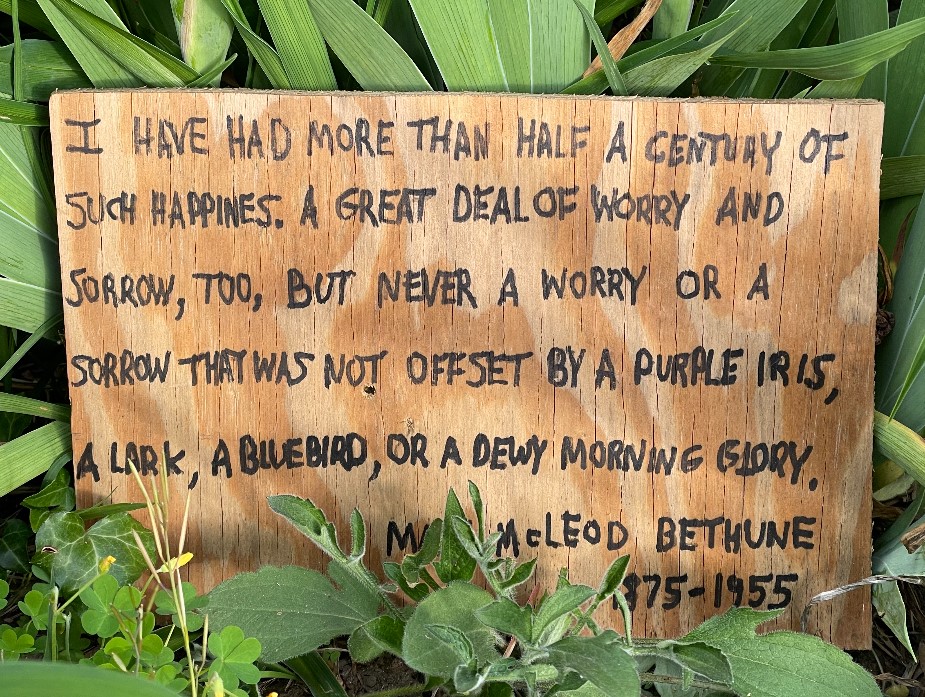
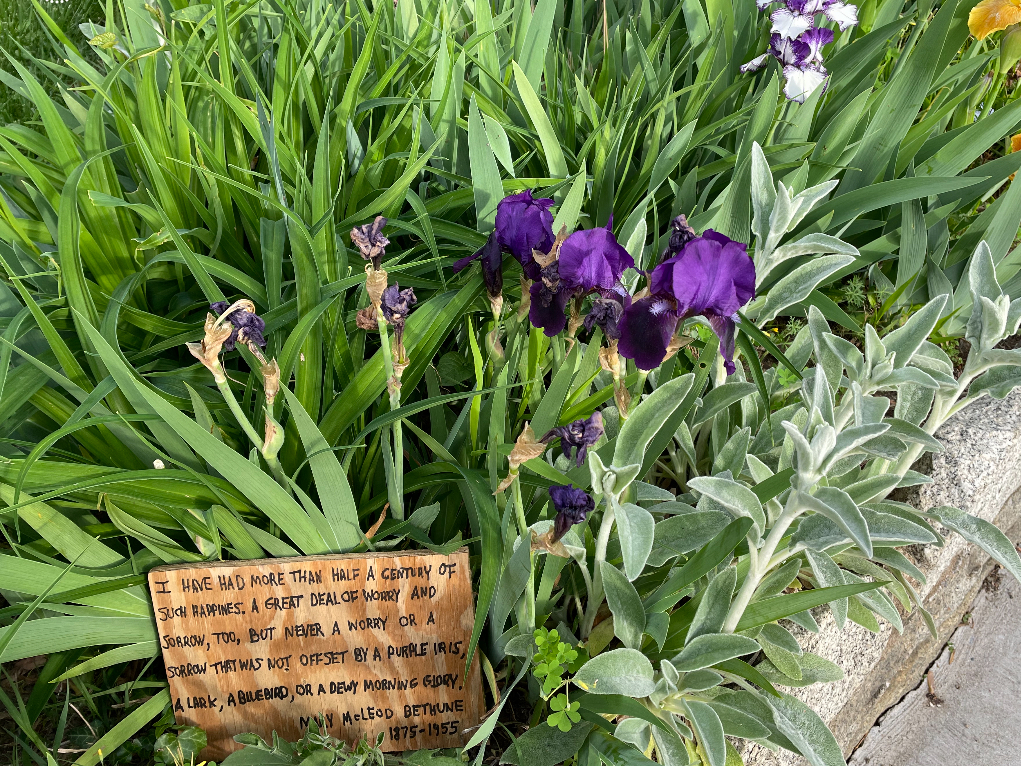
On my daily walk in Silver Spring I came upon a tiny handmade sign among some flowers. Since it is my custom to always read the plaque, I stopped to investigate.
The little plaque reads:
“I have had more than half a century of such happiness. A great deal of worry and sorrow, too, but never a worry or a sorrow that was not offset by a purple iris, a lark, a bluebird, or a dewy morning glory.”
Followed by the name and dates of the author:
Mary McLeod Bethune, 1875-1955
And as I looked up, I noticed that it sat among a stand of beautiful irises in full bloom.
I’ve always had a special place in my heart for the old-fashioned iris. They were my mother’s favorite flower, and we always had some in our backyard on East Main Street. So I’m glad to know that I share at least one thing with the great educator and civil rights pioneer Mary McLeod Bethune.
“The daughter of formerly enslaved parents, Mary Jane McLeod Bethune became one of the most important Black educators, civil and women’s rights leaders and government officials of the twentieth century. The college she founded set educational standards for today’s Black colleges, and her role as an advisor to President Franklin Delano Roosevelt gave African Americans an advocate in government . . .
Mary McLeod Bethune (credit: National Women’s History Museum)
A champion of racial and gender equality, Bethune founded many organizations and led voter registration drives after women gained the vote in 1920, risking racist attacks. In 1924, she was elected president of the National Association of Colored Women’s Clubs, and in 1935, she became the founding president of the National Council of Negro Women. Bethune also played a role in the transition of Black voters from the Republican Party—“the party of Lincoln”—to the Democratic Party during the Great Depression. A friend of Eleanor Roosevelt, in 1936, Bethune became the highest ranking African American woman in government when President Franklin Roosevelt named her director of Negro Affairs of the National Youth Administration, where she remained until 1944. She was also a leader of FDR’s unofficial ‘black cabinet.’ In 1937 Bethune organized a conference on the Problems of the Negro and Negro Youth, and fought to end discrimination and lynching. In 1940, she became vice president of the National Association for the Advancement of Colored Persons (NAACP), a position she held for the rest of her life. As a member of the advisory board that in 1942 created the Women’s Army Corps, Bethune ensured it was racially integrated. Appointed by President Harry S. Truman, Bethune was the only woman of color at the founding conference of the United Nations in 1945. She regularly wrote for the leading African American newspapers, the Pittsburgh Courier and the Chicago Defender.“
In addition to being a civil rights pioneer and educator, Bethune was a businesswoman who has been honored with a memorial statue, a postage stamp, and—in 2022—she became the first African American to be represented with a state statue in the National Statuary Hall Collection at the U.S. Capitol.
It gives me great joy to know that such an amazing and transformational leader took the time to stop and admire the iris. And a dewy morning glory.
Our first iris of 2026, on the church grounds at St. Alban’s parish in DC
The essay from Rebecca Solnit’s Meditations in an Emergency Substack looks at the power of flowers to change behavior. She writes that power, at its most essential, is “the ability to influence an outcome on any or all scales, to protect one’s own at a minimum and to influence, even control others at a maximum.” Violence is constantly misunderstood as power, she adds.
“Botanist David George Haskell‘s new book How Flowers Made Our World: The Story of Nature’s Revolutionaries describes a kind of power often ignored or dismissed, just as flowers themselves are. He writes, ‘When flowers arrived, they upended and transformed the planet. They were late arrivals on the world stage, appearing about two hundred million years ago, long after the evolution of complex animals and other land plants. By one hundred million years ago they were the foundation of most habitats on land . . . We often think of power and revolution as about control, authoritarianism, and violence. Might makes right. But that’s not the only way in which revolution and power and transformation take place. Flowers offer a different narrative. They changed the world in revolutionary ways through cooperation, through collaboration, often mediated by beauty, by sensory experiences. So a flower is quite literally speaking to the sensory system of a bee or of a hoverfly or of a bird to draw that animal in to establish a cooperative relationship, a reciprocal relationship. And we’re just the latest animal to become enchanted by the flowers and to become loyal collaborators with the flowers.’”
After exploring the current administration’s misunderstanding of what makes power, Solnit moves to her closing.
“The lesson flowers offer is that when you treat others well, when you meet their needs, you can enter into relationships that serve you as well as them. When you use violence or otherwise exploit and coerce to get what you want, you create adversaries, not allies, and they too often turn out to have power. In a world of increasing equality over the past few centuries, cooperative power matters more, and violence, [as Jonathan Schell in his landmark book from 2003, Unconquerable World: Power, Nonviolence, and the Will of the People points out], has become an increasingly weak way to get what you want . . .”
Flowers provide happiness. They also change the world.
With the ending of Lent and the beginning of Eastertide I have found myself reading the works of several writers and considering their perspectives on life, death, darkness, light, resurrection, and love.
As winter turns to spring we are very much aware of both darkness and light. There are, of course, many types of darkness: the absence of light, chaos, evil, oppression, despair, perhaps even death. Mark Randall James, however, suggests that darkness “is never more than a beginning.” In the coming of spring, as in the biblical story, there is a direction, “a movement from evening to morning, darkness to light, seed to fruit, promise to fulfillment.”
To participate in a group discussion I recently reread a work on life and death, heaven and hell, light and darkness by perhaps the best-known Christian apologist of the twentieth century. It is one of a number of books by C.S. Lewis I first read forty or fifty years ago. Returning to read it now, with the perspective of time and experience, was a reminder that not every author we follow in our youth travels with us throughout life.
The Great Divorce (1945), by C.S. Lewis is at its base a Christian allegorical tale about a bus ride from hell to heaven. This is the book where Lewis first introduces the revolutionary idea (for some) that the gates of hell are locked from the inside. Amazingly, Lewis tells us, anyone who wants to stay in heaven can. “If we insist on keeping Hell (or even earth) we shall not see Heaven,” Lewis insists. Without getting too deep into questions of judgement, let me just say that I agree with his perspective. Returning to this work written more than 80 years ago, however, I found myself underwhelmed. The tale itself was not particularly compelling. From my perspective the book works somewhat better as a meditation upon good and evil, grace and judgment. But I should note that many online commentators have found the author’s descriptive powers and storytelling ability changed the way they think about good and evil and our ability to navigate this world.
My affinity for Lewis’s writings—with the exception of his Chronicles of Narnia fantasy novels—has lessened considerably over the decades. I have issues with some of these early works where Lewis famously gives up his atheism and writes, at least to my ear, with a certainty that is all too prevalent with recent converts.
Perhaps my lack of enthusiasm is not entirely the fault of Lewis.
Many conservative believers have laid claim to Lewis’s work and pushed them as a way of supporting their rigid theological framework. Their voices are loud and numerous, even though they gloss over significant differences between their religious worldviews with the Oxford professor. Lewis believed in biblical myth and he wrote about inspiration as opposed to inerrancy. Both beliefs, in the view of many conservatives, are wrong.
I believe in the continuation of life after death but have stopped focusing on what comes next in some great beyond. For me The Great Divorce was neither as compelling nor genuinely human as a Lewis book written in 1961 following the death of his wife, the American poet Helen Joy Davidman.
A Grief Observed is brief, poignant, and honest. Lewis works through the darkness that is the loss of love, meaning, and faith, and chronicles the efforts to regain his footing in this world. It is highly personal, so much so that author Madeleine L’Engle writes in a thoughtful foreword that Lewis’s writings on the topic helped her understand that each experience of grief is unique. Still, there is a universality to the book as well, as what Lewis describes feels so much like what so many went through in our recent pandemic period of mass death worldwide. A Grief Observed is focused on one man and woman and—at the same time—all men and women.
The earlier book is, of course, an allegory. But in A Grief Observed Lewis has no time for euphemisms and mushy thinking.
No one can say with certainty what happens after we pass (to use the old Southern phrase I like best) which is why I do not spend a great deal of time focusing on the afterlife as opposed to the one life I have to live right now. As for what comes next, L’Engle notes in her commentary on Lewis’s journal that “[t]he important thing is that we do not know. It is not in the realm of proof. It is in the realm of love.”
Other writers I follow have things to say about death, life, darkness, light, resurrection, and love . . . which seems important in challenging times. They don’t all agree, but they will make you think.
“What the resurrection reveals more than anything else is that love is stronger than death. Jesus walks the way of death with love, and what it becomes is not death but life. Surprise of surprises! It doesn’t fit any logical explanation. Yet this is the mystery: that nothing dies forever, and that all that has died will be reborn in love. ”
The Resurrection by the evangelical Frederick Buechner can be a bit “Presbyterian” for my tastes, but I do appreciate the way he points out the difference in the accounts, for instance, of the birth of Jesus and his resurrection.
“[W]e can say that the language in which the Gospels describe the Resurrection of Jesus is the language of poetry and that, as such, it is not to be taken literally but as pointing to a truth more profound than the literal. Very often, I think, this is the way that the Bible is written, and I would point to some of the stories about the birth of Jesus, for instance, as examples; but in the case of the Resurrection, this simply does not apply because there really is no story about the Resurrection in the New Testament. Except in the most fragmentary way, it is not described at all. There is no poetry about it. Instead, it is simply proclaimed as a fact.”
Easter Begins in the Dark by Episcopal priest Mark Randall James reminds us that God’s grace, since the beginning of time, has been there brooding over the darkness and the deep, preparing the way, planting seeds.
“Easter begins in the dark because it is the dawn of the new creation—and according to Genesis, creation itself begins in darkness. The light is not the first act of creation; the formless void, the chaos of the waters, also comes from God. That is why, there in the darkness, the Spirit of God was ‘hovering over the waters,’ or as some translate it, ‘brooding,’ like a mother hen (Genesis 1:2). There in the darkness of primordial chaos, God was already quietly at work, preparing to bring creation into the light.”
This excerpt is from Mark’s recent Easter Vigil sermon. I was immediately taken with his focus on the importance of darkness as he delivered it from the pulpit at St. Alban’s parish as Saturday night turned to Sunday morning. The entire piece is worth your time.
“By upending the conventional notion that death is the great threat and resurrection the great hope, Julia Esquivel opened my mind and heart to a hard truth: figurative forms of death-in-life can give us a perverse sense of comfort—while resurrection, the promise of new life, can feel threatening.”
Finally, I have returned to read some of the daily meditations of Madeleine L’Engle in her Glimpses of Grace. I am much more in tune these days with her way of looking at the world, with its different concept of time and her focus on wonder and love.
“L’Engle celebrates the Incarnation, the power of music, doubt as a doorway to truth, stargazing as a glimpse of God’s glory, stories as midwives to our wholeness, the interdependence of all living beings, and much more. Best of all, she affirms the virtues of imagination, intuition, and intelligence.”
Imagination, intuition, intelligence. All are gifts of creation to be used as we focus on the one life we have to live.
More to come . . .
DJB
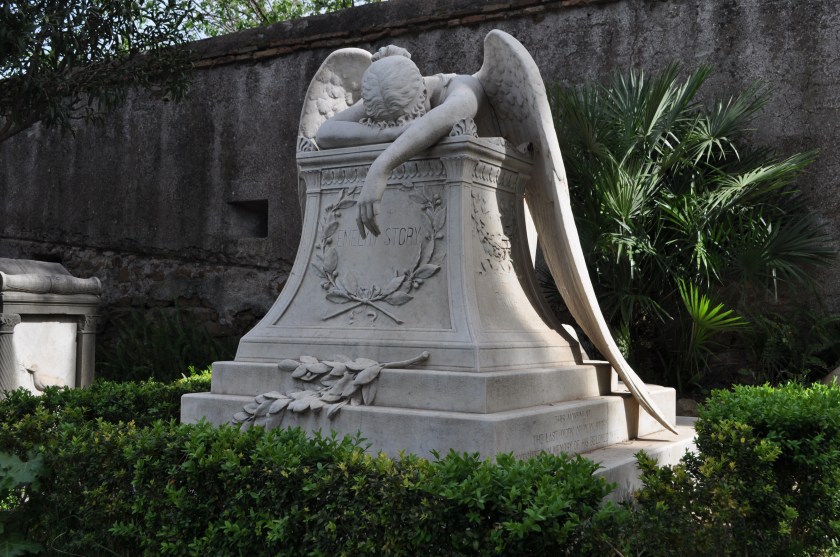
Angel of Grief by W.W. Story (photo from the Protestant Cemetery in Rome by DJB)
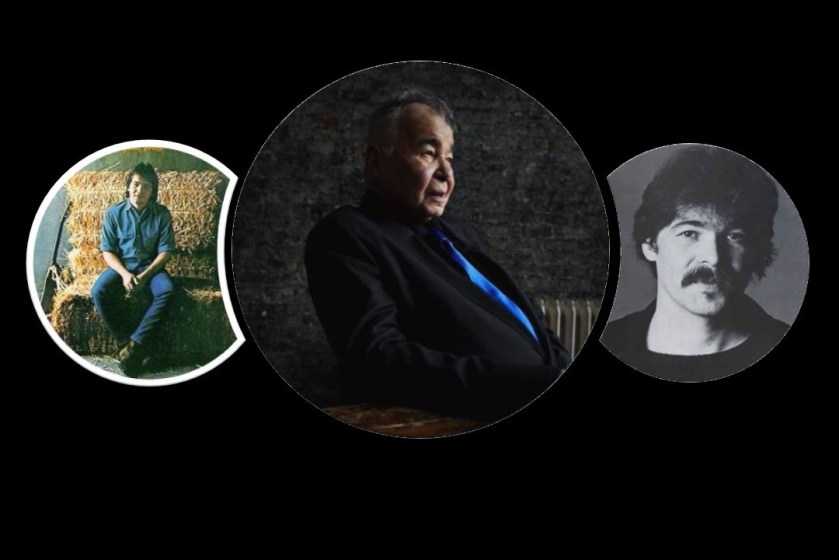
Tom Piazza creates an intimate portrait of one of the most beloved singers and songwriters of our times.
When America lost one of its greatest songwriters to Covid-19 in April of 2020, I wrote that his grieving fans would have to be content with what is, by any definition, an amazing body of work.
Live performances and recordings over a five-decade career will always form the heart of what we remember about John Prine. But as the artist’s widow Fiona writes in the foreword, a new book by a talented author, musician, and storyteller “is now a valuable, and unique, part of the legacy of our beloved John.”
Living in the Present with John Prine (2025) by Tom Piazza was to be Prine’s memoir. But after the songwriter’s untimely death it became an intimate and personal narrative of the artist’s last few years. In a series of road trips, late night jam sessions, meals enjoyed in John’s favorite diners, and interviews, Piazza succeeds in capturing Prine’s unique voice. As fans we have heard this voice most frequently in his unforgettable songs. The joy of this new work is that we now experience John’s take on life in his everyday speech and off-hand remarks.
Piazza notes that Prine’s mind worked allusively, making connections through images and rhythms. John always lived in the present. “The moment was what mattered. He also had a strong sense of the finitude of it all,” which perhaps explains why he valued the present so much. “Part of that sense of the present was the fact that in any relationship, sooner or later, one of you would be saying goodbye.” In the end, Piazza has written a beautiful and personal work about friendship, love, and loss.
The book is not a biography although Prine does talk about his early years growing up in Maywood, Illinois, and visiting his parents’ families in western Kentucky. His origin story could come from a classic Prine song but Piazza only briefly mentions it here. John was a postman who wrote during his breaks. On a dare from friends (and under the influence of a few beers) he stepped up to an open mic and sang Sam Stone, Hello in There, and Paradise, three songs, any one of which most songwriters would have given their left arm to have written. A young Roger Ebert wrote his first music review of Prine performing in 1970 at the Fifth Peg in Chicago. In that review, he noted that “He starts slow. But after a song or two, even the drunks in the room begin to listen to his lyrics. And then he has you.” Kris Kristofferson stopped by to hear him play one night after the bar had closed. Prine pulled out his guitar, played seven songs, and Kristofferson asked him to play all seven again. Then he helped him get his first record deal and wrote the liner notes for his first album, where he memorably noted that Prine was “Twenty-four years old and writes like he’s two-hundred and twenty.”
Piazza joins the story in 2018, when Prine is an established and beloved figure in American life. With an opportunity to write an article for the Oxford American, Piazza and Prine begin to hang out, find mutual loves and connections, sing songs, and become friends. Over the next two years they see each other at various points on the map and add rich textures and compelling stories to their relationship. Prine, who had always said he never wanted to write a memoir, surprises Piazza by asking him to collaborate with him on writing one. They begin that task in February of 2020 with two days of interviews. Another session is planned for two weeks later but has to be postponed. Six weeks after that, on April 7, 2020, John died of complications from Covid-19. It has taken Piazza five years to come to the place where he could write this work.
“I told you I know how to waste a day,” Prine tells Piazza after a road trip to Sarasota in his ’77 Coupe de Ville where they buy shoes, reminisce about John’s first meeting with Bob Dylan, and eat the Granny Smith apple tart with an extra scoop of vanilla ice cream that John orders at lunch. That vibe runs throughout the book. So many of Prine’s songs are about connections—especially missed connections. “There is a yearning and a degree of melancholy inside all the wryness and brilliance of the lyrics.” Prine focuses on living in the present because he doesn’t want to miss those interactions with people he encounters, people he loves.
The book is full of little gems that capture a life well lived.
John tells about his seventeen-year-old Mexican girl friend. He was twelve at the time but somehow he “got the cojones to call her up and ask her for a date and she accepted!” He loved the whole family. “Her mother was five-foot-nuthin’ and had tortilla dust all over her.”
Then there is this story from early in his career.
“I did a big talk show in the seventies in Dublin, which was like the fifties anywhere else. The people wore cardigans—they looked like Mister Rogers. It was my first time playing Dublin. The show was on every night, like The Tonight Show. The other guests on the show were Brendan Behan’s mother, a defrocked bishop, and Freddy the Organ Grinder, with his monkey. Off the streets of Dublin! And I sang ‘Sam Stone.’ Brendan Behan’s mother and the bishop drank a whole bottle of port and got soused in the green room while I sang ‘Jesus Christ died for nothing I suppose,’ to all the Catholics in Ireland . . .”
John convinces the legendary Sam Phillips to come out of retirement to produce his album Pink Cadillac. His record company hated it. Robert Palmer, in the New York Times, wrote the album’s only positive review. “Rolling Stone said it sounded like the drunks were recording on shoeboxes.”
There are countless stories about John and Cowboy Jack Clement, another legend in the Nashville music business. “Cowboy’s business was fun . . . If we’re not having fun, we’re not doing our jobs.”
I could go on and on.
Jason Wilber, John’s lead guitarist for twenty-four years, said,
“He was unflappable; he didn’t get ruffled for no reason. I feel like one of the things I learned from him is you have all these opportunities to just be nice.”
John’s older brother Dave put it best. “If John Prine’s songs don’t get to you, you are dead. Or you have been lobotomized! Or you’re just not paying any attention.”
The music critic Jayson Greene wrote a 2018 profile in Pitchfork that put John’s appeal this way.
“Prine grew up in the Midwest, and his songs are full of very white, Middle-American sounding folks, people with names like Donald and Lydia and Loretta and Davy who drive trucks and serve in the Marines. But he doesn’t fetishize the lives of those he grew up around, or blow them up into gaudy myth like Springsteen. The people in his songs are never allegories for his own thoughts; they are just people, living with their own complications, and Prine takes pains to get them just right. In his songs, life is one long exercise in ambivalence, and the only honest point of view is a squint.”
John Prine was all about the details of life in a world that was cruel at times, but also where love shows through. And those details often focused on the everyday . . . until he spun them around through his quirky sensibility to see the wonder around us.
Tom Piazza has written a heartfelt portrait that is full of those loving, quirky and wonder-filled details of life. Fans of Prine—and we are legion—should be grateful.
More to come . . .
DJB
NOTE #1: If you want to see Prine performing in these later years, I recommend you find the time to watch one of the best: an intimate concert from 2019 on The Strombo Show. Gordon Lightfoot, who is one of John’s songwriting heroes, sits in the front row enjoying it as much as anyone, and you can watch him sing along with the familiar chorus of Far From Me: “Ain’t it funny how an old broken bottle / looks just like a diamond ring.” John also does a bit of mouth music in the song Crazy Bone and then says, “Please don’t mistake that for scat singing, that’s my shaving song in the morning. Somewhere between Popeye and Fred Flintstone.”
Classic.
NOTE #2: As fate would have it, three weeks before John’s death I happened to write about Prine and his music—before the world learned he was suffering from the symptoms of Covid-19—in a piece entitled The timeliness and timelessness of John Prine. It just seemed to be a good time to recall the work of the man who wrote the classic line, “To believe in this living is just a hard way to go.”
I didn’t realize how timely that post would be.
For other MTC posts about Prine’s music and legacy see:
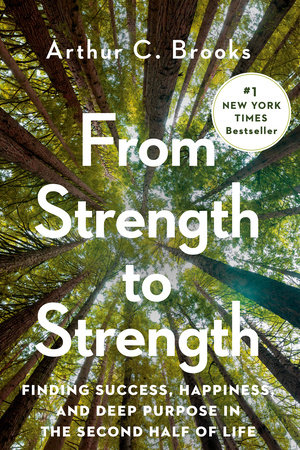
Arthur C. Brooks looks at how to face, and perhaps even thrive, in the midst of the inevitable.
In recent years I’ve taken to reading works in a variety of genres that cover a wide range of topics. But I recently noticed that I have stopped reading in an area that was once a staple of my literary diet: self-help books.
There’s a formulaic feel to these works that began to feel repetitive. Plus, in my experience they tend to take a few good ideas and then generate enough words and anecdotes so that one has to slog through 250 pages for what should have been a good New Yorker article or a Ted Talk.
When one of my book groups chose to read a work that promised to serve as a guide to “transforming the life changes we fear into a source of strength” I was skeptical. But book clubs are about tackling works that perhaps you wouldn’t choose to read on your own, so I jumped in.
From Strength to Strength: Finding Success, Happiness, and Deep Purpose in The Second Half of Life (2022) by Arthur C. Brooks begins with the premise that too many of us believe that the more successful we are the less susceptible we become to the sense of professional and social irrelevance that often accompanies aging. But Brooks asserts that our belief in our ongoing relevance simply isn’t true. Aging, and decline, are inevitable. For many successful adults, facing this fact is painful. A social scientist and “one of the world’s leading authorities on human happiness,” Brooks chronicles his own journey, beginning at age 50 at the height of his career, to see if he could transform his future from disappointment to an opportunity for progress in new and unexpected ways. Depending on your perspective and personal experience, he either succeeded or simply finally found wisdom about the world as it works that many intuitively know or find through family, experience, or faith without having to read a self-help book.
Brooks is a good writer who raises intriguing points. Early on he notes that too many of us don’t recognize how early decline actually begins in our professional and personal lives. Surveys have shown that Americans believe “being old” means that you are “turning eighty-five.” In other words, the average American (who lives to be seventy-nine) dies six years before entering old age. But if we are being honest with ourselves we know that our memory begins to slip in our 50s, our physical plant begins to need repairs at about the same age, and things we once did with some ease—such as multi-tasking—become difficult if not impossible.
Over the course of 200+ pages, Brooks works through ways to move from one strength (the striving self) to another (such as the teaching/mentoring self). He asks his readers to ponder their death. Then he goes into a bit of real self-help mumbo jumbo when he travels to India to meet with a Hindu guru he’s been following for years. I found one of the more useful chapters to be his exhortation to make your weakness your strength. I agree that we really only connect with others through our weaknesses. More importantly, in telling Stephen Colbert’s story of “how he learned to love the thing that I most wish had not happened”—in Colbert’s instance when his father and two brothers died in a plane crash when he was ten—he addresses a fundamental truth of how life is really lived. In an interview Anderson Cooper asked Colbert to clarify that statement and his response is very instructive.
“It’s a gift to exist, and with existence comes suffering. I don’t want it to have happened . . . but if you are grateful for your life . . . then you have to be grateful for all of it. You can’t pick and choose what you’re grateful for.”
Brooks ends by discussing the fact that the transitions he went through and those traveled by other successful, striving individuals are liminal in nature. We look up and the path forward is no longer straightforward. He has suggestions for “good liminality” (a phrase I instinctively hated) that in many ways boil down to learning a new set of life skills. After some theology (he was president of the right-leaning American Enterprise Institute for a while, so the trad-Catholic approach fits), Brooks encourages his readers to put their love not on things but on people and, ultimately, the divine.
Some of our book club members found the perspective in From Strength to Strength persuasive. I told the group that I had learned many of these lessons a long time ago from my father. When it came to career and then retirement, my father taught us not to be defined by our jobs. He was proud of his career as a TVA engineer, yet he retired in his early 60s and easily moved on. Tom Brown enjoyed life. Every day was a new day.
I have been thinking more about liminal spaces in recent years, and I think we can all embrace the liminality in life. Poet and songwriter Carrie Newcomer talks about living in the in-between times.
“Most of the time I’m living in that vibrating and shifting center point between all that was and all that’s to come. I’m trying to pay attention, to drink in what is so right and good and true in this moment in time. Peace of heart and mind, peace on earth, peace within and between us, comes in small moments of beauty, waves of goodness in the here and now that wash in and out like the tides.”
With a poet’s voice (as opposed to a social scientist’s), she writes that the key to navigating foggy or dark places may be to find what is still visible and beautiful close in. A willingness to light one candle and then another and another and another—to take one tentative step in the right direction, watch for things that clarify or point the way, grateful for the goodness seen and unseen, while we walk forward using all available light.
Looking for the goodness and love knowing that the path forward will not always be clear. That strikes me as a more realistic way to live our lives as we move through the liminality that is life.
A new edition of an award-winning history, published for the 250th anniversary of the Declaration of Independence, illuminates the overlooked dimensions of American history and the stories that shape nations.
So much of how we understand and interpret the American Revolution comes from the point of view of the victors. But as the recent Ken Burns documentary made clear, there were at least two sides to the conflict. It is important in understanding overlooked dimensions of American history that we hear these perspectives. Thankfully a sympathetic yet balanced portrayal of one of the Revolution’s defeated voices is being re-released on the 250th anniversary of the signing of the Declaration of Independence.
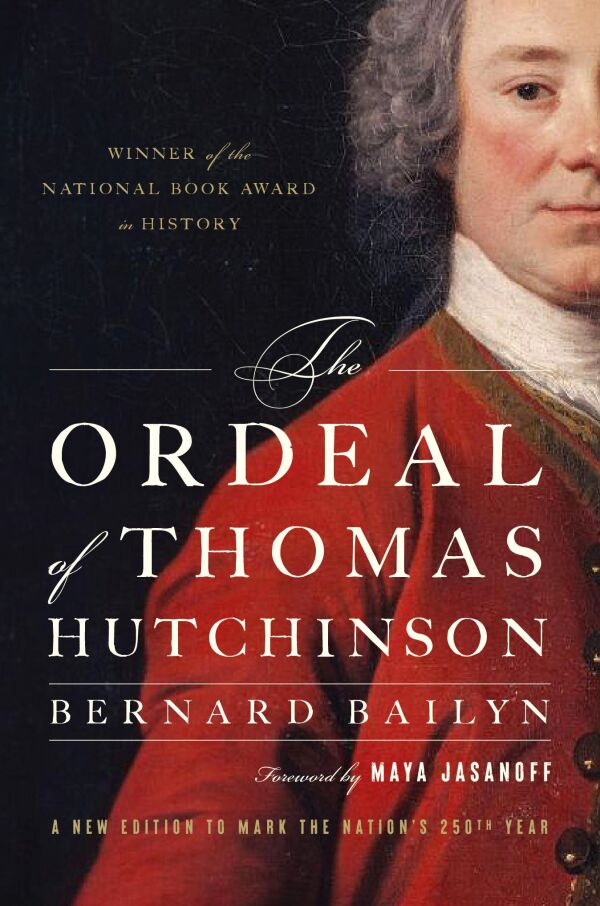
The Ordeal of Thomas Hutchinson (1974; new 250th anniversary edition published in 2026) by Bernard Bailyn is the history of the native-born royal governor of Massachusetts Bay from 1771–1774 and his fellow American loyalists who found themselves on the losing side of the Revolutionary War. In the preface, Bailyn writes that he was taking on this subject at the end of a long period of partisanship. His work was to help us see the “tragedy” of the Revolution. Not the sadness, or the error or wrongness of it. But to better understand “the limits within which men struggled.” All men, Bailyn wrote, “the famous and the obscure, the best and the worst, the winners and the losers.” We have to understand those stories—especially of those “who suffered violence and vilification, who were driven out of the land and forced to resettle elsewhere in middle life, and died grieving for the homes they had lost”—if we are to make sense of the Revolution. Thomas Hutchinson was the best-known embodiment of those Americans who still clung to England and who died in exile longing for their native home, a home that was transformed and unrecognizable to them as a result of revolution.
Bailyn paints a portrait of Hutchinson as rational, circumspect, and cool. Restraint and calculation had been a part of his way of life since childhood.
“Virtuous but not stylish, intelligent but didactic, heavy-spirited and self-absorbed, he judged people, and often found them wanting. He had no great admiration for mankind in general.”
As such, Hutchinson was prone to suspend determination upon the “real state of mind” of others until he knew them a long time and could personally weigh the evidence of their conduct. “Deeply bred—locked tight—in the culture of an intensely Protestant, mercantile province of the British world and heir to its establishment,” Hutchinson “sought no conquests in a larger world but steady gains in the one he knew.”
Through some 400 pages of well-documented and sometimes antiquated but generally compelling prose, Bailyn shows us how Hutchinson’s reputation in Boston and New England grew from that of an “unimpeachable if conservative leader of the Anglo-American establishment to that of a sinister manipulator of secret forces.” Two of his greatest foes throughout this transformation were John Adams and James Otis, Jr., who would ultimately shape public opinion about Hutchinson most powerfully. Adams especially was outraged when this “layman” was elevated to the position of chief judgeship, and for years he saw dangerous and secret forces at work.
As the publisher’s note to the new edition makes clear, Bailyn not only makes the loyalist position comprehensible but he also “rehabilitates a deft statesman who was far from the demagogue imagined in Patriot propaganda.” Hutchinson, as Bailyn documents throughout, shared many Patriot grievances and as royal governor he faithfully represented colonial public opinion to both Crown and Parliament.
In my book group discussion of this work, the question was immediately raised of “which side we would have been on” in the Revolution. We also asked “who plays the roles of John and Samuel Adams in today’s world.” The fact that these questions came to our mind shows the power of Bailyn’s work to broaden our perspective and push the reader to think in new—and perhaps uncomfortable—ways.
Histories written fifty years ago rarely survive current scrutiny. This remarkable portrait of one of the Revolution’s defeated voices is a welcome exception. In part, that success comes because Bailyn—who remains influential to this day—wanted us to respect the “pastness” of history. As his obituary in the New York Times described his focus:
“Within the profession, Professor Bailyn was a frequent critic of overspecialization, abstraction and politicized ‘presentism’—that is, interpreting past events in terms of modern thinking and values. For him, it was essential to respect the strangeness and pastness of the past, and to see it, as much as possible, on its own terms.
‘The establishment, in some significant degree, of a realistic understanding of the past, free of myths, wish fulfillments and partisan delusions, is essential for social sanity,’ he said in a 1995 lecture.”
I love that term “the strangeness and pastness of the past.” This National Book Award–winning masterpiece succeeds in being largely free “of myths, wish fulfillments, and partisan delusion” and also marked “a turning point in historiography, illuminating the overlooked dimensions of American history and the stories that shape nations.”
More to come . . .
DJB
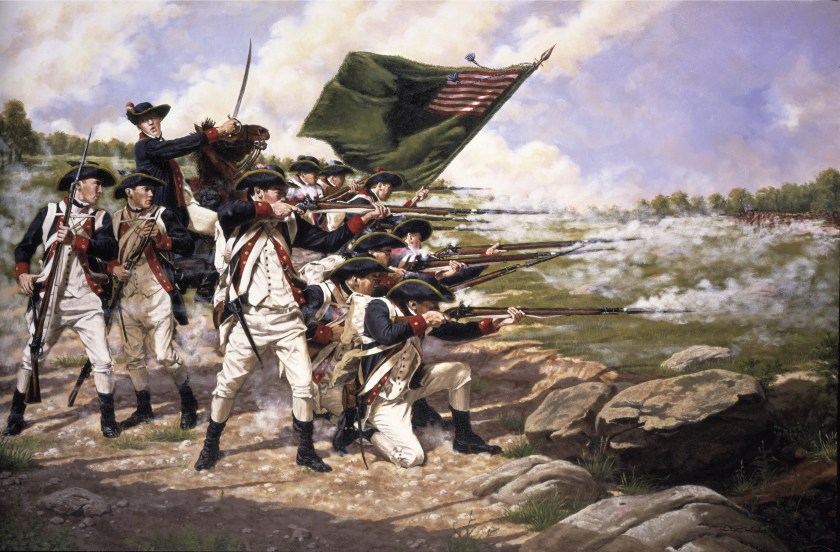
Image of the Battle of Long Island from Wikimedia.
In a year of turmoil and challenge, it is important to remember that no one has it all figured out. As we continue to look to the promise of what America is about and work to make it a land for everyone, here—in a Saturday grab bag—are thoughts from writers and songs from musicians to help us move forward.
GUIDING US THROUGH A WORLD WE CANNOT UNDERSTAND
My friend and mentor Frank Wade likes to remind us that the job of God is already taken. That’s always important to remember, but especially in times like these. Frank, an Episcopal priest, sent around a sermon for Palm Sunday to his many friends and he added this coda:
“With the tragic events of Holy Week and the similarly tragic events in the news, it is important to remember that our faith does not explain the world. It guides us through a world we cannot understand.”
Anne Lamott, writing in her Hallelujah Anyway! Substack, notes that a friend told her once “that when he thinks he is in charge of all of life, he remembers little kids sitting in car seats with steering wheels, thinking they are making the car turn left, or right.” She also is fond of reminding people who are working to keep the faith in democracy and love in these times, to remember Wendell Berry’s line about being joyful although you have considered all the evidence.
Good advice.
CURIOSITY AND A BEGINNER’S MIND
Our daughter, in her wonderfully named Substack The Clairevoyant Report, posted a terrific April Fools Day post on The Wisdom of Naïveté. Claire begins by noting that in our culture, we tend to look down upon naïveté, considering this quality the sign of someone immature, unintelligent, unrealistic, or simply less “evolved.”
“But what do we miss out on when we insist that we must have everything figured out before we even embark? Curiosity and a beginner’s mind allow us to explore new possibilities, consider divergent paths, and perceive what lies ahead with fresh eyes. Embracing the ‘not knowing’ can lead us in directions beyond our prior imagination.”
Claire is using naïveté as a positive force, and I agree with her perspective. Later in the post, she asks her readers to consider “where in my life am I getting in my own way by believing I already know how things will go?”
The writer Rebecca Solnit has one example that responds to Claire’s question.
“Naïve cynics shoot down possibilities, including the possibility of exploring the full complexity of any situation. They take aim at the less cynical, so that cynicism becomes a defensive posture and an avoidance of dissent. They recruit through brutality. If you set purity and perfection as your goals, you have an almost foolproof system according to which everything will necessarily fall short. . . . Cynics are often disappointed idealists and upholders of unrealistic standards. They are uncomfortable with victories, because victories are almost always temporary, incomplete, and compromised.”
Claire is a thoughtful writer. I encourage you to read her post . . . and to subscribe!
ACTIVISM AS THE ANTIDOTE TO FEAR
On “No Kings” Saturday, A. D. Blair reminded us in Why We Fight that “politics doesn’t stop in an authoritarian system and we cannot give up the struggle.” The most direct and reliable consequence of cynicism isn’t wisdom, it’s passivity.
As my Congressman, Jamie Raskin, reminds us, “Activism is the antidote to fear.”
THIS LAND IS OUR LAND
This is as good a day as any to return to celebrate the Woody Guthrie 1940 classic This Land is Your Land. Many of us believe, for a variety of reasons, that it should be the national anthem. No less an authority than Bruce Springsteen has said, it is “one of the most beautiful songs ever written about America.”
Guthrie wrote This Land is Your Land during the Great Depression in response to Irving Berlin’s God Bless America. There’s a wonderful book by John Shaw entitled This Land That I Love: Irving Berlin, Woody Guthrie, and the Story of Two American Anthems. As Shaw describes it, Guthrie was hitchhiking his way to New York City when he became upset over hearing the Kate Smith version of Berlin’s song over and over again during the trip. Guthrie sat down and wrote a song in anger, but his revisions over time turned it into one of the most shared and beloved songs in our nation’s history. I’ll begin with the unvarnished recording from Woody, with the bonus of a picture of him playing his famous “This machine kills fascists” guitar. (Note: The song ends about the 2:40 mark in the video)
I also have a couple of other great takes on the song. Sharon Jones & The Dap-Kings play a wonderfully up-tempo soul version that goes all the way with the inclusion of the verses usually left out. Jones commands the stage and I could listen to this celebration of America over and over again.
As I’ve written before, one of the most moving versions—with an emotion that cuts to the heart of what Woody was saying—is the one by Bruce Springsteen, which he began adding to his live shows in 1980. In this deeply felt and chilling version from a 1985 concert at LA’s Memorial Coliseum, Springsteen notes in his intro that, “What’s so great about (the song) is that it gets right to the heart of the promise of what our country was suppose to be about.” He adds that he sings it with the reminder that “with countries, just like with people, it’s easy to let the best of yourself slip away.”
” . . . a broadening and deepening of who matters, with the end of slavery, the beginning of rights for women, movements for racial justice and disability and LGBTQ rights, the very recent public recognition of the profound wrongness of the genocide and dispossession of the indigenous peoples of the Americas.”
Her newest book looks at all that we’ve achieved in these areas. The current administration supported by the Republican Party “is all about trying to run the process backward to make women and BIPOC people less equal again, to erase the ‘certain inalienable rights’ that undocumented immigrants and refugees share with the rest of us, to make gender back into airtight boxes, to reinstate the inequality behind colonialism.”
To see the implications of this attempt to turn back the clock, read Alan Elrod’s Abuser Politics: Christian Male Supremacists Want Women to Shut Up in Liberal Currents. “The desire for quiet women—really for silent women—in every public forum is neither about adherence to Biblical truth nor the revelation of natural law.”
Solnit and Elrod’s perspectives fit in well with Celeste Davis and her writing in the Substack newsletter Matriarchal Blessing about the one word that is seldom used to explain why so many men are in the Epstein files. We talk endlessly about the factors that make rape easier, but never about the factors that cause rape in the first place. It isn’t wealth, elite networks, institutional failure, or blackmail.
It is patriarchy.
And yes, I know that as a straight, white, male in America today, I have received privileges that gave me a certain confidence as I navigated life. A confidence that was often undeserved and unearned. But beginning with the guidance of two broad-minded and inclusive parents, I have been working hard to ensure that my world view includes, as Davis puts it, an unshakable understanding of women as living human beings who have just as much to contribute to the world as men. I work to ensure that my sense of worth has absolutely nothing to do with domination.
To return to Davis and her post on the Epstein files:
“. . . if we keep only talking about all the things that make rape easier (money, power, elite networks, anonymity) and never talk about the things that actually cause the desire to rape in the first place (entitlement, domination, patriarchy), then we will continue on our insane, unending weed whacking quest without ever pulling up the root.”
WE CAN DO HARD THINGS
The posts about the attempted silencing of women reminded me of an amazing occurrence I witnessed in Madagascar on March 8th during International Women’s Day. As I wrote a few weeks ago, we arrived in the city of Hellville (Andoany) amidst a huge celebration of International Women’s Day, referred to as “Valo Mars” in Madagascar.
Women’s groups came to Hellville from throughout the region to march in the local parade. Focused on honoring women’s strength, heritage, and contribution to society, it is a significant day for recognizing local women’s roles in development, culture, and craftsmanship. The parade of women dressed to represent their local communities or organizations was an amazing sight that stretched for more than a mile throughout the main section of the city.
In 2022, poet and songwriter Carrie Newcomer sang the song You Can Do This Hard Thing live at an annual International Women’s Day Performance, and it includes a wonderful introduction. It seems an appropriate coda to what all these writers and musicians are telling us in these times.
More to come . . .
DJB
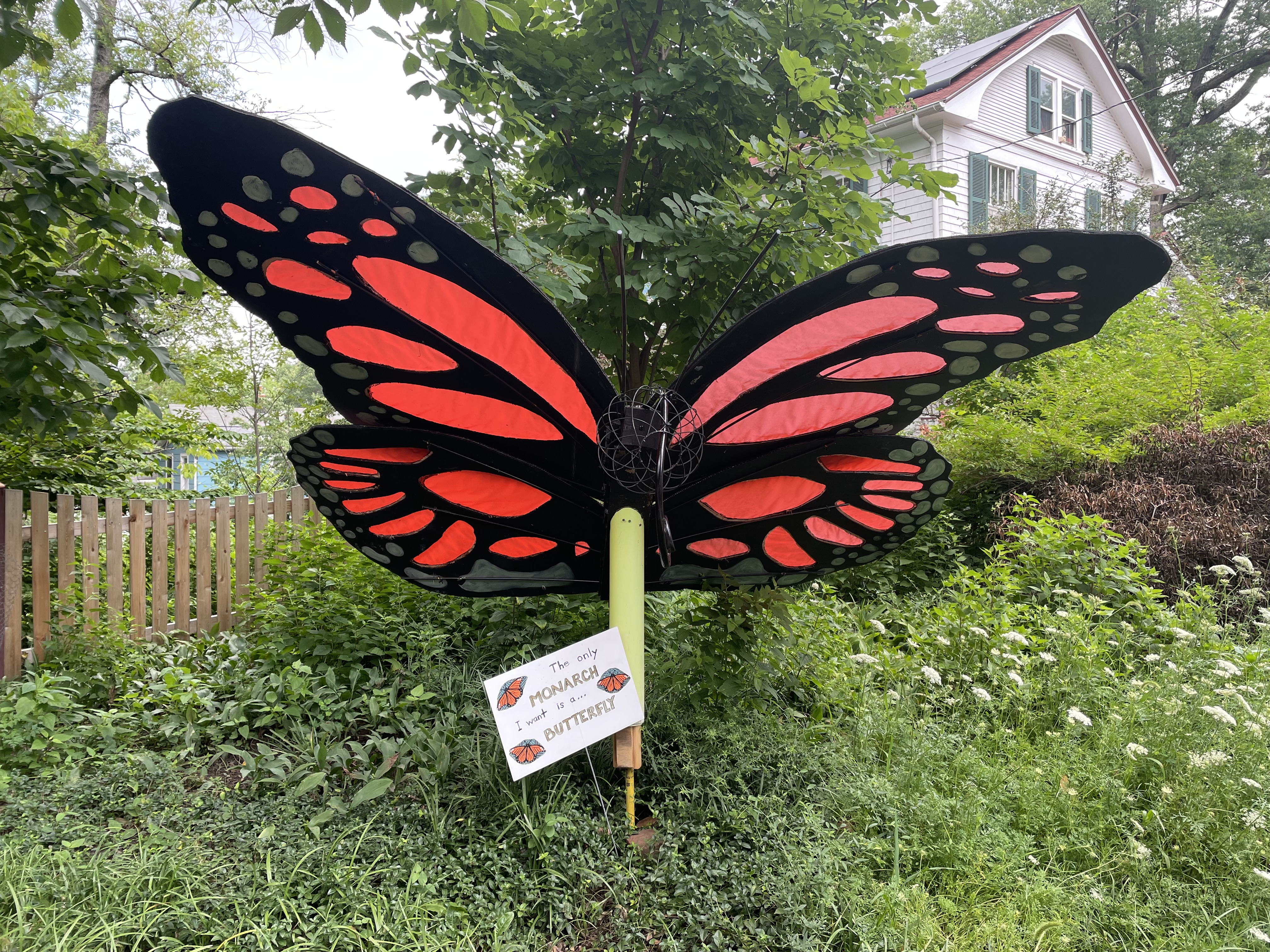
Rainbow by Cindy Lever from Pixabay. Photo of lightening strikes by Marc Renken on Unsplash. Monarch butterfly (the only monarch we want) and images across America by DJB. Grand Canyon by Claire Brown. Madagascar parade by DJB.