All posts filed under: Historic Preservation

A Refuge

Since I was young, I have been drawn to the 19th century utopian communities that seemed to spring up like wildfire across America.  Rugby, Tennessee, was a place that sparked the preservation interest which would lead to my career. The Shaker Village at Pleasant Hill, Kentucky, has been a community I’ve visited numerous times and have always found fascinating. So when the National Trust for Historic Preservation listed the Village of Zoar, Ohio, on its 2012 listing of America’s Most Endangered Historic Places and named it one of our National Treasures, I couldn’t wait to make a site visit. Yesterday I joined colleagues and partners in this small Ohio village founded in 1817 by a group of German religious dissenters.  The Zoar Separatists were persecuted in their native country for refusing to join the state-sanctioned Lutheran Church, and they immigrated to America with the help of English Quakers. Using funds borrowed from the Quakers, they purchased 5,500 acres on the Tuscarawas River (the mayor says you have to visit the town at least 3 times …
The World’s Longest Art Gallery

  Utah’s Nine Mile Canyon is one of the unique cultural  landscapes in the world. Earlier this week I was fortunate to tour portions of the canyon with some of the smart, passionate people who have helped save it through the years. As Jerry and Donna Spangler note in their guide Horned Snakes and Axle Grease, Nine Mile Canyon is…well, not nine miles in length. By its very name, Nine Mile Canyon is an enigma.  From its upper reaches on the west, the canyon twists and turns more than 50 miles to its confluence with the Green River on the east. And how the canyon got its incongruous name remains clouded with the passage of time. Despite the misleading name, Nine Mile Canyon is an amazing landscape filled with rock art – or as some prefer rock writing – from Native Americans about whom we know very little.  The miles of rock art has led many to call Nine Mile Canyon “The World’s Longest Art Gallery.” As the Spanglers note, “There is something undeniably magical …

Introducing Rugby (TN) to the next generation

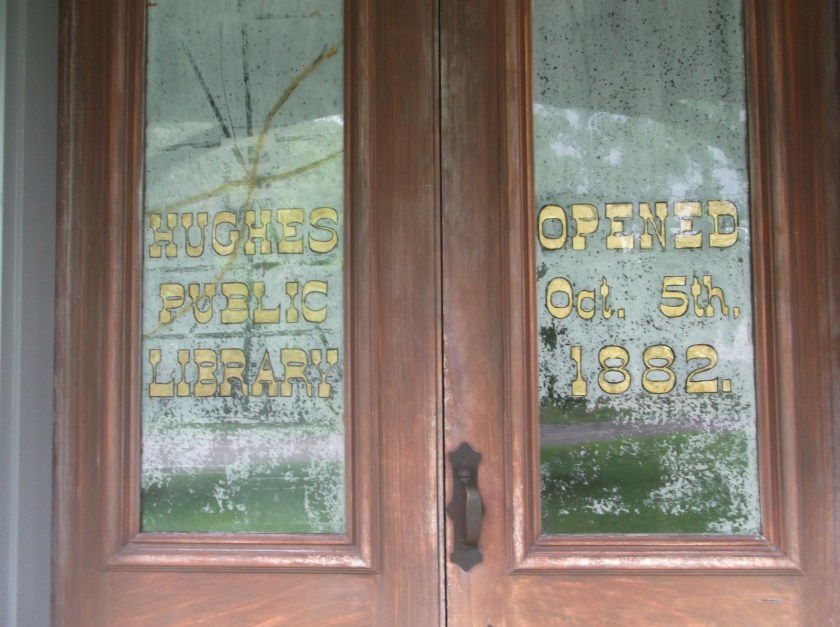
Rugby, Tennessee, is a unique community on the Cumberland Plateau, with an incredible story of perseverance. It is also a place that means a great deal to me, as it was where my preservation career began. Today I took the opportunity to introduce Claire, Andrew, and Candice to Rugby and to show them the places that inspired me. Here’s the official story from my last post: “Rugby was established in the 1880s by the successful Victorian-era author Thomas Hughes as a Utopian community for the second sons of English gentry.  Due to the system of primogeniture, these men would inherit little or no property and had very limited career opportunities.  Hughes established this colony in the beautiful but hard-scrabble Cumberland Plateau area of Tennessee.  After some initial success, the colony fell on hard times, ultimately failed and was largely forgotten.  In the mid-1960s, residents of the area began to restore the remaining historic buildings and over the course of five decades have saved this wonderful place and turned it into a thriving community and a …

Eating Local

With a great deal of travel on my schedule for June – November, I’m trying to focus on what’s wonderful about leaving home. So this will not be a post about the state of the airline industry in the U.S. Instead, I am thinking about food. Local food to be exact. Regular readers will know that I like to avoid chains and hotel restaurants when I travel, seeking instead the local landmark. I’m only two days into this week’s trip to the west coast and I’ve already hit my “go local” stride. Lunch on Tuesday came from a wonderful cheese and sandwich shop named Cheese Plus which features tasty sandwiches with locally themed names such as the Willie Brown Duck (named for former San Francisco Mayor Willie Brown), Crissy Field, and Castro’s Cubano.  I had the Happy Thanksgiving, which – along with the brisk city breeze and temperatures in the 60s – made me wish for the fall. After a drive to Sonoma County to view a site where we’re working, and especially after a …

History says, “This is what happened.” Preservation adds, “Right here.”

  I’m in Dallas, Texas, for a meeting with preservation supporters.  On our tour, the preservation architect stands outside a building and says, “We’ll restore this building to its 1914 AND 1963 levels of significance.” Guess the building. It could only be the Beaux Arts style Old City Hall, where Lee Harvey Oswald was held and interrogated by Dallas police and then – while being transferred to the County jail – was shot and killed by Jack Ruby on a November weekend in 1963. Everyone of a certain age remembers where they were on November 22, 1963 when they heard the news that President John F. Kennedy had been assassinated while riding in a motorcade through the streets of Dallas.  The various members of our tour group heard at their offices (one was actually working in Dallas at that time), from their children who had been watching cartoons, and from their parents.  As for me, I remember the principal at Cookeville’s Capshaw Elementary School coming over the intercom to tell us first that the president …

Celebrating 40 years of preservation

(Editor’s Note:  The following are excerpts from my keynote address at the 40th anniversary of Historic Staunton Foundation, delivered on Sunday, January 22, 2012.  To read the full address, go here.) Anniversaries are great times to reflect, celebrate, and resolve. I’d like to do all three with you this afternoon. Let’s begin with some reflection.  I’ve always enjoyed the movie It’s a Wonderful Life – for the dramatic (some might say cheesy) way it showed the impact people have on others and on their community.   And while I’m no Clarence Odbody, the guardian angel who showed Jimmy Stewart’s George Bailey the transformation of Bedford Falls to Pottersville as if George had never lived, I would like for all of us to reflect on how Staunton might have developed if HSF were not formed 40 years ago. Let’s begin down at the Wharf – where generations of visitors initially saw Staunton as they stepped off a train. The first thing you would notice is that there isn’t any Wharf…for the buildings that make up that unique historic …

Moving heaven and earth

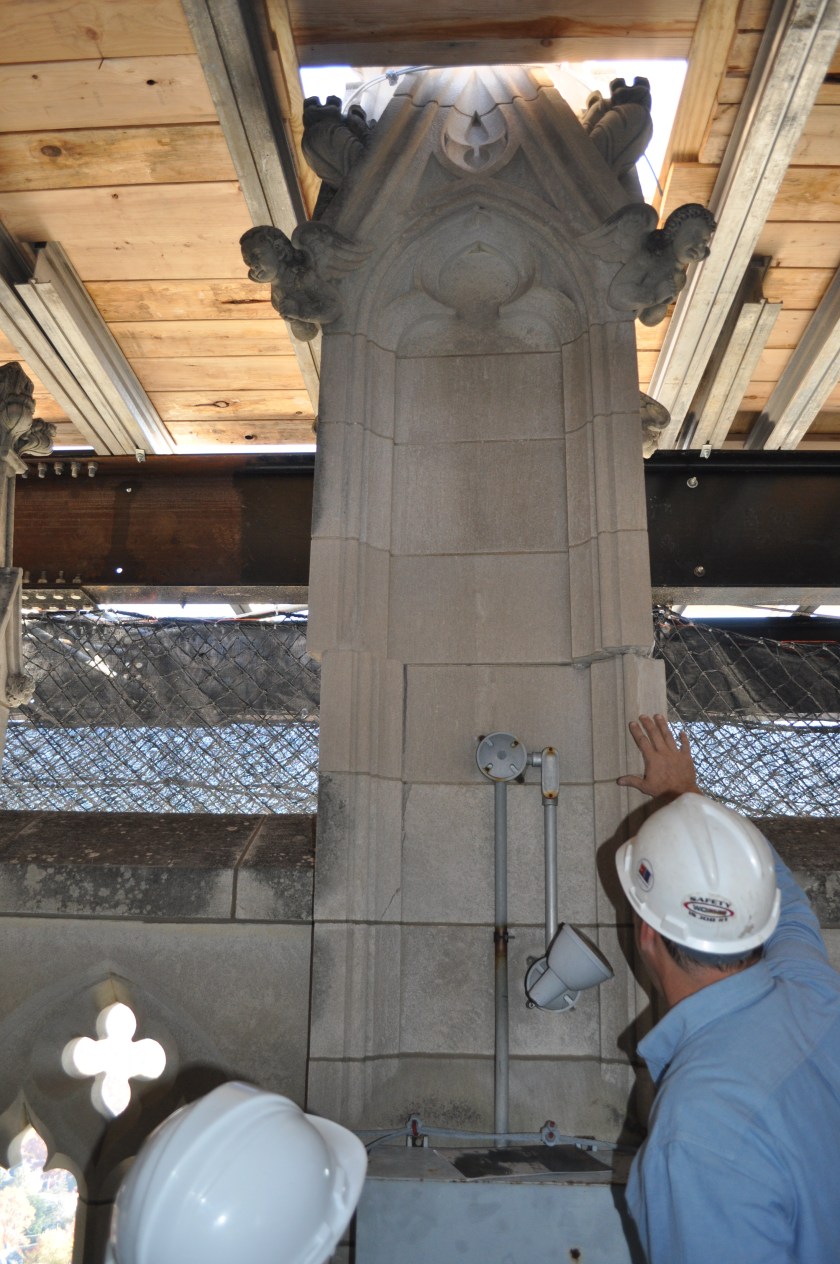
When she was in the fourth grade, my daughter Claire — in response to the question “What Does Your Father Do?” — told her class that I “signed papers and went to meetings.” Today was not that kind of day. With two colleagues from the National Trust for Historic Preservation, I joined officials from the Washington National Cathedral on a glorious fall morning to see first hand the extent of the damage from the August 23, 2011 earthquake that hit the east coast.  We were visiting the cathedral as part of ongoing conversations about the restoration and preservation needs of this national landmark. The cathedral’s website has a gallery of amazing photographs that document the damage — from just after the quake until the present.  I encourage you to view it and more importantly make a donation to help rebuild this unique place. On our tour, we viewed the damage from outside the building (including the cracks in the flying buttresses at the historic end of the cathedral), and then traveled up to the very …

Say Something Nice

Greater Greater Washington is one of the best blogs in – and about – the DC region.  Andrew turned me on to them as he became interested in urban studies, and I check them out every day because I know they’ll have something smart to say.  Topics can range from why Amtrak tickets cost more than the Bolt and Mega bus services, to issues around design, planning, and historic preservation. Yesterday, GGW founder David Alpert posted a video and short piece entitled Ask, and people will say something nice.  As Alpert notes, little touches can make a difference in how people feel about urban spaces.  This little touch is from New York City, and it reminded me of our experience last March (see photo below) as we chanced upon a piano player in Greenwich Village.  The video is a fun way to spend three minutes of your time and  I’ve reposted it below.  Enjoy. More to come… DJB

San Xavier Del Bac – A World Treasure

My trip this week to Tucson was filled with meetings, tours of work-related projects, and presentations.  But one part of the tour allowed me to slip into full-tourist mode:  the visit to San Xavier Del Bac. A National Historic Landmark, San Xavier Mission was founded as a Catholic mission by Father Eusebio Kino in 1692.  Construction of the current church began in 1783 and was completed in 1797, when Southern Arizona was part of New Spain. This is – simply stated – a spectacular building of international importance, with masonry vaults and beautiful  interior artwork, the latter restored after $2 million was raised by the local community.  Little is known about the artists – most likely from Queretero in current-day Mexico – but their work mixes New Spain and Native American motifs.  The architect, Ignacio Gaona, designed what many consider to be the finest example of Spanish mission architecture in the United States. We had a great tour from Bob, one of the leaders of the Patronanto San Xavier, who recommended A Gift of Angels …

What’s wrong with sports

Sports Illustrated had an online article this Friday that in one sentence encapsulates what’s wrong with the modern sports-entertainment complex. In writing that “It’s time to get rid of Wrigley,” Richard Rothschild quotes a Chicago Sun-Times columnist who says the following: “There’s still rust, the concourses still resemble dark alleys and people still have to elbow their way to their seats. … It’s a great park when you look at the field from your seat. It’s not so great on the way to and from your seat.” Isn’t the purpose of the ballpark to look at the field from your seat!?  Can I tell you how many BAD ballparks I’ve sat in where the view of the field was lousy; but hey, we have an arcade to distract the kids (they shouldn’t have to suffer and watch an entire game!), we offer a wide variety of sushi, and we have television screens in the bathrooms and team stores so you don’t really have to go sit in your seat. Jeez! Wrigley Field doesn’t need to …