History is a teacher
Joanne B. Freeman writes that slavery, and its future in America, was the key issue that led to bullying, fighting, and total breakdown of civil discourse in Congress prior to the Civil War.
Thoughts to start off the work week
Joanne B. Freeman writes that slavery, and its future in America, was the key issue that led to bullying, fighting, and total breakdown of civil discourse in Congress prior to the Civil War.

Great lives result from having meaningful work. Real leaders can help us get there.
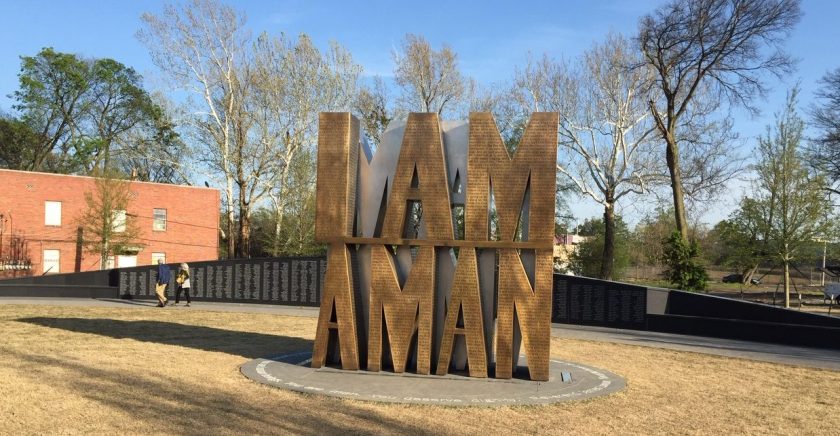
Michael Eric Dyson argues that America has “washed the grit” from Dr. King’s rhetoric in order to get to a place where he can be admired by the country at large.

I am very grateful for the many kindnesses shown to me over the years. Looking forward, I encourage you to be kind to one another.

Cynics. We’ve all encountered them. They make pronouncements with great certainty and take pride in not appearing foolish. Those who disagree with them are instantly branded, in the eyes of the cynic, as naïve. Thankfully, there are ways to combat cynicism. Over the holidays I finished reading author Rebecca Solnit’s most recent book, Call Them by Their True Names: American Crises (and Essays). Solnit includes an essay—Naive Cynicism—that flips the idea of cynicism and naivete on its head. “Naïve cynics shoot down possibilities, including the possibility of exploring the full complexity of any situation. They take aim at the less cynical, so that cynicism becomes a defensive posture and an avoidance of dissent. They recruit through brutality. If you set purity and perfection as your goals, you have an almost foolproof system according to which everything will necessarily fall short. . . . Cynics are often disappointed idealists and upholders of unrealistic standards. They are uncomfortable with victories, because victories are almost always temporary, incomplete, and compromised.” Change and progress require hard work, and cynics …

Say yes to things that matter. As that great American philosopher Mae West said, “You only live once, but if you do it right, once is enough.”

As 2018 draws to a close, I’m sharing this list of the books I read over the past twelve months. Since returning from sabbatical early in 2016, I committed to reading more, and to seek out a wider range of works beyond my normal histories and biographies. Here are the treasures I found on my reading shelf this past year. Lincoln in the Bardo by George Saunders. I began the year with a work of fiction. In this at times perplexing yet ultimately satisfying novel, Saunders builds off the fact that in February 1862, just a year into the Civil War, President Abraham Lincoln’s 11-year-old son Willie dies of typhoid fever. It is known from contemporary accounts that the President went several evenings to stay in the crypt with his son’s body in Georgetown’s Oak Hill Cemetery. Saunders takes that bit of knowledge and turns it into a rich story populated with dozens of spirits who reside in the Bardo, which is the Tibetan Buddhist name for a transition period between death and rebirth. Tears …

When I was a freshman in college, I waited tables at a local restaurant and bar in Nashville. Waiting tables is hard and humbling work, which I highly recommend. Once you’ve experienced it you’ll forever be mindful of 1) how you treat wait staff, and 2) how to tip properly. When I was leaving at the end of the school year, the manager, Bill, and his sister Ruth invited me over for a drink. At the end of the night, Ruth gave me a hug and said, “Have a good life!” This was the pre-Facebook/email/Instagram days, and she meant it as a heartfelt farewell to someone she’d probably never see again. I stuck that sentiment in the back of my mind. But to paraphrase folksinger Arlo Guthrie halfway through the 17-minute-long Alice’s Restaurant, this isn’t a post about waiting tables. This is a blog post about the emotional and intellectual value of personal connections. One of our staff members had her final day at the National Trust coincide with the last day of our 2018 …

Micromanaging dents your team’s morale by establishing a tone of mistrust—and it limits your team’s capacity to grow. It also hampers your ability to focus on what’s really important.
Last month the Harvard Business Review had a fascinating article about how we can become more open-minded.* In this time of major disruption we need more leaders and citizens who are willing to consider other viewpoints and be intellectually flexible. The article’s author, Shane Snow, noted that Benjamin Franklin had a way of both preparing himself and his listener to being open-minded. Whenever Franklin was about to make an argument, he would open with something along the lines of, “I could be wrong, but…” Snow notes that “saying this put people at ease and helped them to take disagreements less personally. But it also helped (Franklin) to psychologically prime himself to be open to new ideas.” In today’s hyper-partisan environment, I find the need to push myself to consider other options, to consider that “I could be wrong, but…” as I make statements of (what seem to me to be) fact. Snow notes that in 2016, researchers—building off the concept of “intellectual humility” from religion—outlined four ways to assess open-mindedness: Having respect for other viewpoints …
 MORE TO COME...