All posts filed under: Recommended Readings

The Power of Habit

Habits are not destiny

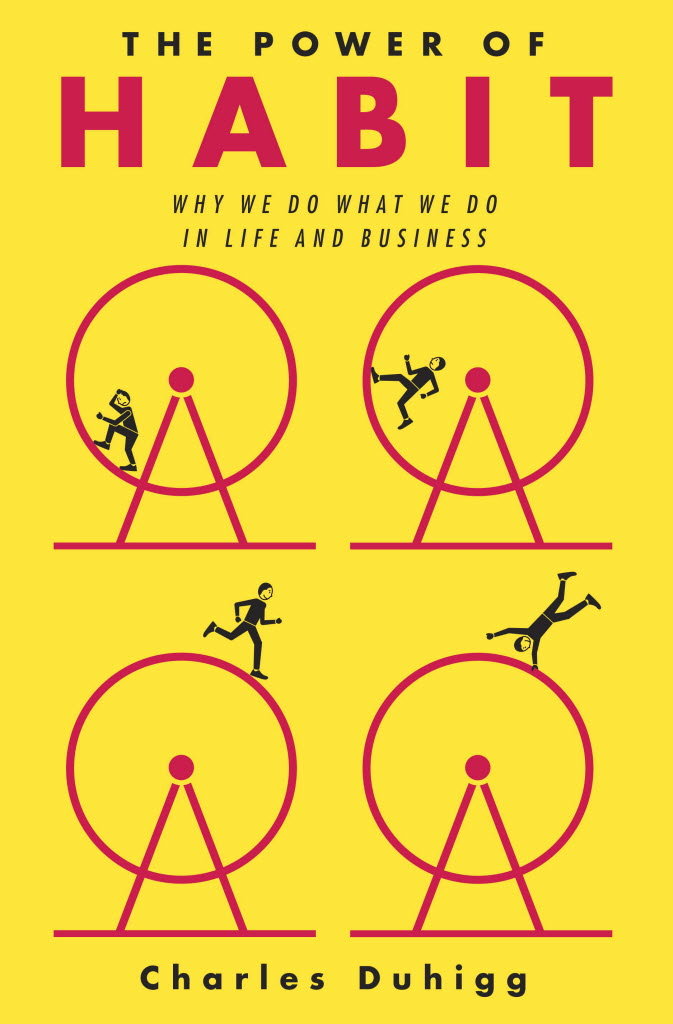
“Most of the choices we make each day may feel like the products of well-considered decision making, but they’re not.  They’re habits.”  That’s according to Charles Duhigg, author of The Power of Habit:  Why we Do What We Do in Life and Business. I got to thinking about the habits that we undertake while reflecting on the discussions from a recent management team retreat.  We were probing how and why we do certain things to see if there were routines – or habits – we wanted to break or establish. Scientists tell us that habits emerge because our brains are looking for ways to save effort.  We all can identify habits – both personal and professional – that impact our lives.  Just as we have good and bad personal habits, organizations have good and bad routines.  We want to avoid habits that turn important decision-making over to a process that occurs “without actually thinking,” but at the same time we want to build routines that support our goals and aspirations. Thankfully, habits and routines can …

The priorities in life

I have read two books recently where I could simply and honestly say, “You should read this.”  The second of the two, which I finished reading Saturday morning, seemed to be the appropriate one where I should sit down and capture my thoughts immediately. When Breath Becomes Air by Dr. Paul Kalanithi has been on the New York Times Bestseller list and was a top book of 2016 on many lists.  There’s a reason.  This is a book where, as the Times reviewer noted, “Finishing this book and then forgetting about it is simply not an option.” Paul Kalanithi was a neurosurgeon and writer who – at age 36 and near the end of residency training at Stanford – was diagnosed with stage IV lung cancer.  This memoir is his look at confronting death with all the knowledge of a top-trained doctor and all the uncertainty of a human being who imagined a whole life of promise in front of him. Kalanithi studied English literature, human biology and philosophy before turning to a decade of …

The Healing Powers of Connection

Several years ago Candice was recovering from a severe concussion and was home bound for several months. During that time a friend gave her a small book, thinking she might relate to Elisabeth Tova Bailey’s story of isolated recovery from a mysterious illness. We had not thought about that gift for a long time until I went looking for a short read to pack on a recent trip.  I happened upon Bailey’s The Sound of a Wild Snail Eating and was immediately captivated by this strange yet reassuring tale. To summarize the book might lead friends to question your reading choices. Bailey – an active and curious woman of 34 – contracts a mysterious disease while vacationing in Europe and finds herself bedridden and unsure that she will live.  A wild snail arrives in the bedroom where she is convalescing, brought in by a friend and placed in a pot of field violets. Over twelve months – and 178 pages – Bailey watches the snail explore its terrain, eat, sleep, eventually hatch 118 offspring, and …

Nothing Can be Changed Until it is Faced

Last week, President Obama named the A.G. Gaston Motel (a National Trust National Treasure), the 16th Street Baptist Church (site of a bomb attack in 1963 that killed four young girls), and other places near them as part of the new Birmingham Civil Rights National Monument.  Made on the eve of celebrating the Martin Luther King, Jr. holiday, the president’s designation was a good reminder of the importance of why we protect places that tell difficult stories from our past. A few weeks ago I finished reading a powerful book that harkened back to the work and writings of The Rev. Dr. Martin Luther King, Jr.  Michelle Alexander’s The New Jim Crow:  Mass Incarceration in the Age of Colorblindness is a work that demands a response from the reader and is not easily dismissed. In the book’s foreword, Cornel West alludes to the link between Alexander’s work and Dr. King’s core beliefs.  King called for us to be “lovestruck with each other, not colorblind toward each other. To be lovestruck is to care, to have …

Wandering (Think Jar Collective)

I was trying to daydream but my mind kept wandering*

New Years is the time when many of us make resolutions.  We promise ourselves to focus on losing weight, reading more books and watching less television, being mindful in the present.  One of my personal perennial chestnuts in recent years is to avoid becoming a grumpy old man. So with all this attention on focus, why was I so excited to find a book on the wandering mind to read over the winter holidays?  Because “It seems we are programmed to alternate between mind-wandering and paying attention, and our minds are designed to wander whether we like it or not.”  That sure rings true in my life experiences. Are you still with me? In The Wandering Mind:  What the Brain Does When You’re Not Looking, author Michael C. Corballis argues that “Mind wandering has many constructive and adaptive features – indeed, we probably couldn’t do without it.  It includes mental time travel – the wandering back and forth through time, not only to plan our futures based on past experience, but also to generate a …

The More Things Change…1998 to 2017

My father loved to read Molly Ivins.  Her brand of populist liberalism, her concern for the powerless, her razor-sharp wit were all right up his alley.  As a New Deal Democrat, Daddy didn’t have much sympathy for corporate-backed, hypocritical, poll-watching politicians. So when I went to my father’s house earlier this year to help clear out his library, I brought home the four Ivins books he had at the time plus a biography of the Texas firebrand.  Daddy had almost all of Ivins’ works, but some he had given away.  (He once gave me a copy of one of her books that he said he had purchased at the remainder table at the local bookstore, only to come home and find out he already had two copies of the same book.) I was looking for a quick and lively read a few days ago after working through a couple of more difficult offerings, and pulled You Got to Dance with Them What Brung You off the bookshelf.  This is Ivins’ 1998 take on the Clinton …

The New Jim Crow

Nothing can be changed until it is faced: The new Jim Crow

Several weeks ago I finished reading a book which won’t leave my mind.  The New Jim Crow:  Mass Incarceration in the Age of Colorblindness by Michelle Alexander is an important and disturbing book which ultimately leads to much soul-searching on the part of the reader. It first came out in 2010 and has been on my bookshelf for a while, but I only picked it up at the tail end of the presidential election campaign.  That was timely. Alexander – a civil rights lawyer, advocate, and legal scholar – has written a well-researched and devastating work.  In The New Jim Crow, Alexander shows we have not moved into a colorblind society, but have – in fact – simply replaced one racial caste system (Jim Crow) for another (mass incarceration).  The book is thorough in its analysis and gut-wrenching in its conclusions. Alexander writes in the introduction, “What has changed since the collapse of Jim Crow has less to do with the basic structure of our society than with the language we use to justify it.  In the …

No WiFi

Be civil, be urban

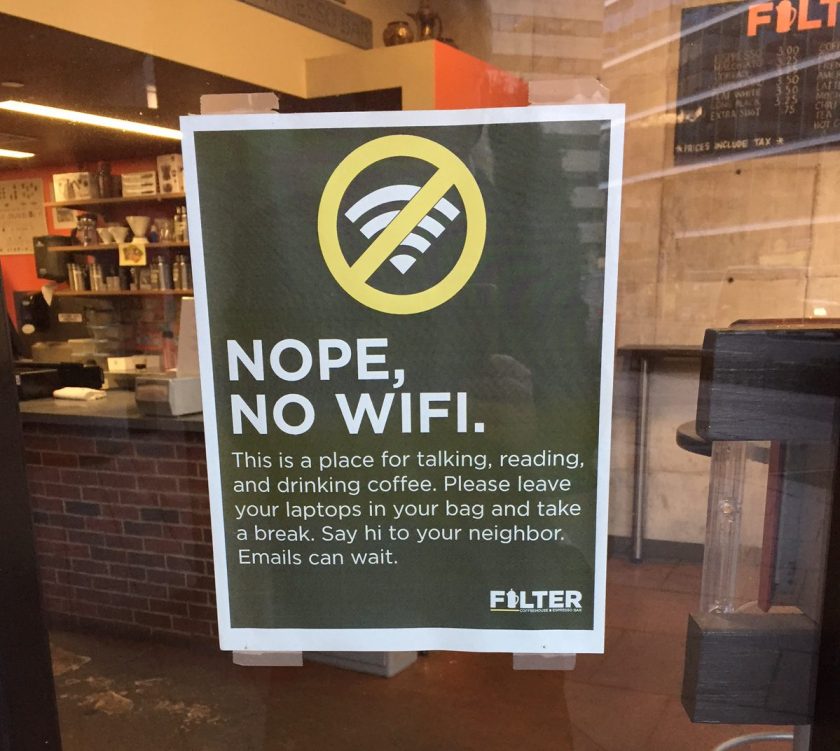
Each morning on my walk to our offices at the Watergate, I stop off at Filter coffeehouse for a coffee to begin the work day.  What first drew me to this particular coffee shop on I Street, NW between 19th and 20th (as opposed to the 15 others I pass in my 25 minute walk) is the sign on the door.  It reads, simply, “Be Civil, Be Urban.” I was intrigued.  My interest was really piqued when I stepped inside and found urban planning books and architectural models on the bookshelf, a prominent “Nope, No WiFi” sign, and a quote on the wall from architectural historian Spiro Kostof that reads, “Civilization, in this strict sense, is the art of living in towns.” Living and working in groups – in towns, cities, and organizations – led us to move toward a civilized society.  But civilization is not guaranteed. How we live and work together is a key to productivity, learning, growth, and happiness.  Civility is — unfortunately — in short supply in much of our national …

Relevance

Nina Simon, the Executive Director of the Santa Cruz Museum of Art and History, gave a powerful TrustLive talk at the recent Houston PastForward conference on place and relevance.  She defines relevance as a key that unlocks meaning, opening doors to experiences that matter to us, surprise us, and bring value into our lives. In her book The Art of Relevance, Nina applies two criteria to all the stories she tells about relevance.  First, how likely new information is to stimulate a positive cognitive effect – to yield new conclusions that matter to you.  Second, how much effort is required to obtain and absorb that new information.  The lower the effort, the higher the relevance.  As those of us who heard her speak know, she frames this work in terms of doors and keys that help different groups access rooms of information.  To understand individuals different from us, we have to go outside our rooms and look – with empathy – at the views of the community outside the door.  We have to learn from …

View of Florence

The Well-Tempered City

Jonathan F.P. Rose is a man of many interests and talents.  A developer, Rose builds affordable housing and mixed-income community centers.  He is a jazz aficionado and — as suggested by the title of his newest book — a classical music devotee.  Rose is also an interdisciplinary scholar and writer.  In The Well-Tempered City:  What Modern Science, Ancient Civilizations, and Human Nature Teach Us About the Future of Urban Life, Rose brings those talents and interests together in a wide-ranging and thoughtful look at the past – and future – of the places where 80% of the world’s population will live by 2080. (Full disclosure:  My employer — the National Trust for Historic Preservation — has recognized Jonathan’s work with a Preservation Honor Award, and I have worked with him through his role as an advisor to a couple of our projects.) The Well-Tempered City is a book that reflects a lifetime of work and thought about how cities best serve people.  Early in the book, Rose notes that, “Since the founding of the very …