
The importance of roots
George David Haskell’s book is a meditation of a year’s worth of observation on a small patch of old growth forest. Sublime.
George David Haskell’s book is a meditation of a year’s worth of observation on a small patch of old growth forest. Sublime.
I love seeing lists of books recommended by people from all walks of life. As the son of a children’s librarian and the husband of a children’s reading specialist, books have always been a part of my life. This enthusiasm was brought home to me again when I recently saw a list of recommended readings from President Obama (or, as Inc.com called him, the “Bookworm-in-Chief.”) It seemed appropriate – the day before the election – to recall all the good things President Obama has brought our way, including an intellectual curiosity about the world. Writer Rebecca Solnit has said, “I disappeared into books when I was very young, disappeared into them like someone running into the woods.” I know that feeling. A couple of years ago, in thinking about a lifetime (so far) of reading, I put together my own list of twelve books (plus some bonus reads) that had influenced me. If you click through, you’ll see that the initial one on my list is the first I remember from my childhood. I suspect …
We are made by what would break us. In every life, inexplicable things happen. It is difficult to respond to these challenges, but I’ve noted before that we learn to walk by falling down. The beginning of wisdom often results from “the dramatic and more ordinary moments where what has gone wrong becomes an opening to more of yourself and part of your gift to the world.” Those words were written by Krista Tippett, the Peabody Award-winning broadcaster of On Being and a 2014 recipient of the National Humanities Medal from President Obama. She has published a new work based in part on her years of conversation with poets, scientists, philosophers, theologians, and activists. Becoming Wise: An Inquiry into the Mystery and Art of Living, is a thoughtful book, full of insight. Tippett indicates she wrote about wisdom because “one of its qualities…is about joining inner life with our outer presence in the world. The litmus test of wisdom is the imprint it makes on the world around it…” In this new work, Tippett writes …
A 2011 terrorist bombing in the national government quarter of Oslo damaged two central modernist buildings and set the Norwegian government on a path of demolition and replacement that raised questions of national remembrance, security, preservation, and democratic consensus. That incident provides the context for a new and expansive work about preservation, urbanism, and architecture edited by architectural designer and scholar Bryony Roberts, the 2016 Rome Prize winner in Historic Preservation. Tabula Plena: Forms of Urban Preservation takes its title from a contrast to the familiar architectural and planning term, tabula rasa, the clean slate—a site that is cleared and thus provides the freedom for design without constraints. Preservationists in the United States know this situation all too well, from the urban renewal battles of the 1950s and 60s to today’s call for clearing urban blocks to allow new high-rise buildings that will provide more “density” in our rapidly growing cities. Roberts and students from the Oslo School of Architecture and Design (AHO), working in collaboration with a team of students from the Columbia University …

John Barry and Kevin Kruse both deliver important messages in the battle for religious freedom.
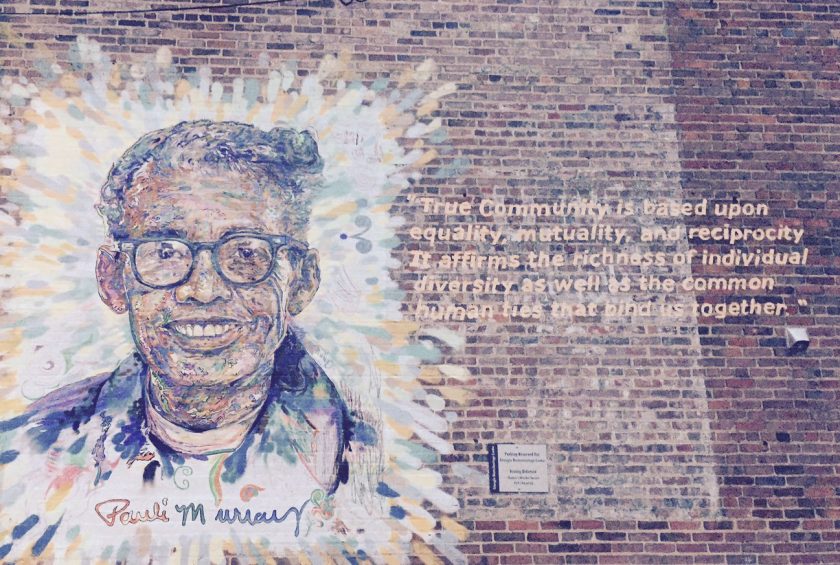
Patricia Bell-Scott’s wonderful 2016 book raises the level of attention to the work and legacy of Pauli Murray.

E.B. White once wrote, “The curse of flight is speed. Or, rather, the curse of flight is that no opportunity exists for dawdling.” I’ve been reading White as we’ve dawdled the past few days near his long-time Brooklin home in Maine, our feet very much on the ground (and water). The first dictionary definition of dawdle is “to waste time,” but then options such as “moving slowly and idly” are put forth, as is “languid” and “saunter.” I prefer the latter choices, as we’ve been dawdling, but definitely not wasting time. Monday we sat outside the Pilgrim’s Inn, at water’s edge, and read for a couple of hours in the morning, enjoying a picture perfect Maine summer day. Then we sauntered (if you can do so by car) over for a late lunch at the Brooklin Inn. Our friends Tim Boggs and James Schwartz had invited us to their area home for an afternoon sail and dinner. As we were walking out of the Inn, James and Tim drove by, stopped, and encouraged us to …
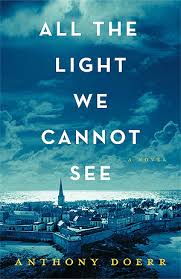
Now I understand. For the past two years — and especially since my time last March and April at the American Academy in Rome — friends have enthused over Anthony Doerr‘s writing. My only experience was through his short memoir Four Seasons in Rome, which while an interesting read struck me as something he did because he had journals from his time at AAR and decided to make something of them. Not a terrible thing to do, but also not up to the level of the reviews of Doerr’s work I was hearing from friends. Then over the first two weeks of August, I read All the Light We Cannot See. I’ll repeat myself. Now I understand. What a lovely, rich, engrossing, and uplifting book. First of all, Doerr is a poet with words, but he has a scientist’s mind. This is as finely crafted a story as I’ve ever read, with the shifts in time and character all put together in an amazing sequence that pulls the reader forward with anticipation. I can easily …
(In a recent post on the National Trust’s Preservation Forum blog, I highlighted the recent publication of 50 essays with ideas for the next 50 years of preservation. I’ve excerpted portions of that post for More to Come…. You can read the entire post here. Full disclosure: I was one of the contributors.) The 50th anniversary of the National Historic Preservation Act (NHPA)—the cornerstone of preservation practice in the United States—has spurred conferences, articles, and celebrations throughout 2016. One of the most lasting and influential looks to the future to emerge from this year could well be a new work from the University of Massachusetts Press, Bending the Future: 50 Ideas for the Next 50 Years of Historic Preservation in the United States. Edited by Max Page and Marla R. Miller, professors at the University of Massachusetts Amherst, Bending the Future features visions of the next five decades from some of the nation’s leading preservation professionals, historians, scholars, activists, and journalists. The editors invited “provocations,” and they certainly received a few. But what is almost universal …
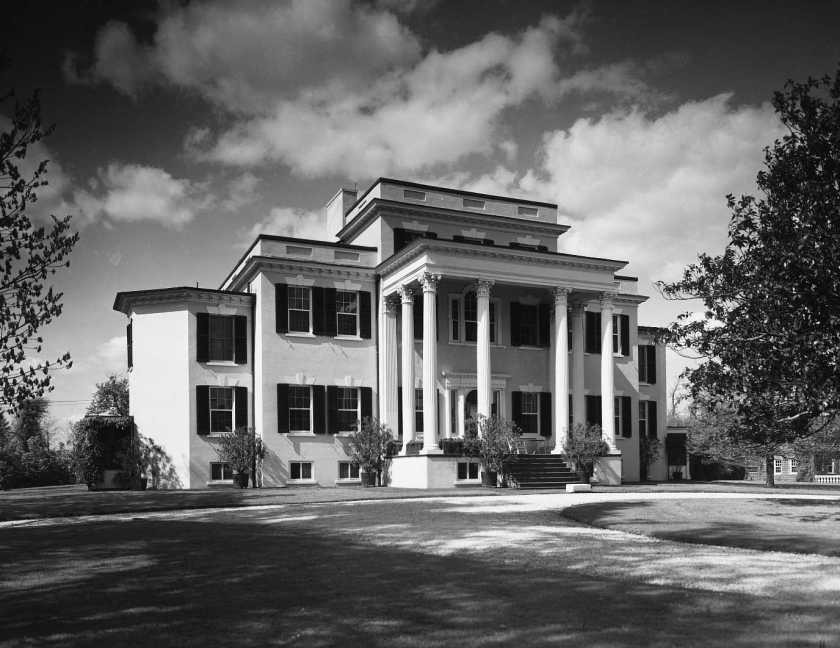
The story of Virginian Robert Carter III and the emancipation of 450 enslaved individuals shortly after the founding of the United States is one of the forgotten stories of American history. However, in our current period of political unrest — much of it centered on racism and questions around who owns the American story — this is an appropriate time to look at how this act of emancipation, and similar acts that took place throughout the South before the Civil War, were buried and forgotten. Thankfully, Andrew Levy’s complex and largely satisfying book The First Emancipator: Slavery, Religion, and the Quiet Revolution of Robert Carter brought this story the attention it deserves. Levy claims — powerfully and in a way that challenges our core national narrative — that Carter “did something that transcends our ability to listen to our own past.” A recent tour of the National Trust Historic Site Oatlands outside Leesburg, Virginia, with several senior staff led to a discussion of the story of slavery at the plantation. Robert Carter III was the …
 MORE TO COME...