All posts filed under: The Times We Live In

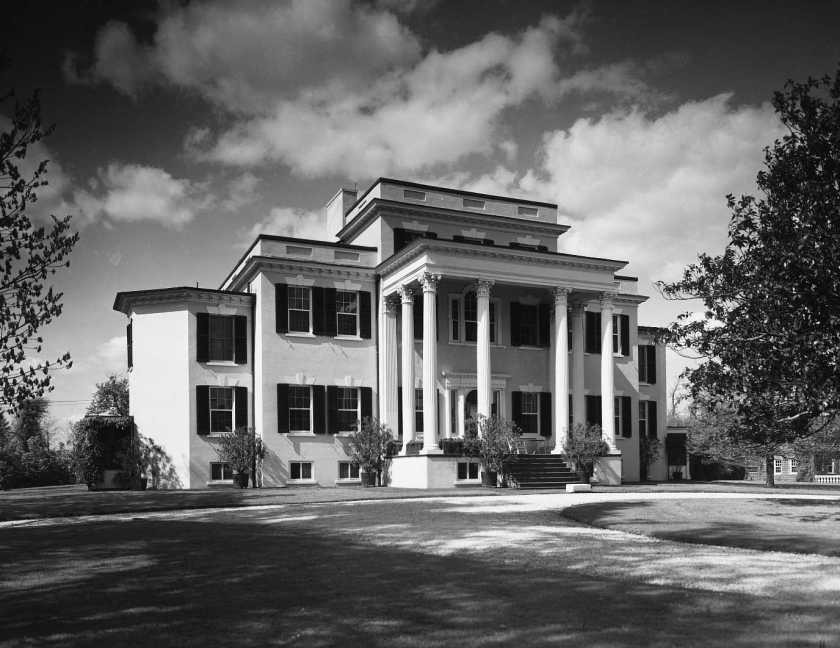
Oatlands (credit DHR)

National memory and the forgotten First Emancipator

The story of Virginian Robert Carter III and the emancipation of 450 enslaved individuals shortly after the founding of the United States is one of the forgotten stories of American history.  However, in our current period of political unrest — much of it centered on racism and questions around who owns the American story — this is an appropriate time to look at how this act of emancipation, and similar acts that took place throughout the South before the Civil War, were buried and forgotten. Thankfully, Andrew Levy’s complex and largely satisfying book The First Emancipator:  Slavery, Religion, and the Quiet Revolution of Robert Carter brought this story the attention it deserves. Levy claims — powerfully and in a way that challenges our core national narrative — that Carter “did something that transcends our ability to listen to our own past.” A recent tour of the National Trust Historic Site Oatlands outside Leesburg, Virginia, with several senior staff led to a discussion of the story of slavery at the plantation.  Robert Carter III was the …

A Republic, If You Can Keep It

When asked, following the Constitutional Convention, what kind of government had been created, Benjamin Franklin made a now famous reply.  “A republic, if you can keep it.” Those words have been on my mind a great deal in recent weeks.  I wonder why? Could it be the calls from those who want us to seal the borders, shut off all immigration into the U.S., and deport 11 million individuals?  Could it be presidential candidates saying – when a decision is made that recognizes that we are a secular nation and not based on religious law – that we have “criminalized Christianity?” Could it be the calls to register Muslims and to reopen the internment camps of WWII?  When I hear these speeches, I’m reminded of the late great Molly Ivins’ quip about Patrick Buchanan’s famously combative “culture wars” speech at the 1992 Republican National Convention:  It probably sounded better in the original German. But that’s not why I sat down to write. I’ve read three books over the past couple of months that all bring …

Forgiveness is the Result of a Long Journey

St. Alban’s Parish was blessed this morning with the presence and witness of Ruby Sales, a civil rights activist whose life was saved 50 years ago by the actions of Jonathan Daniels.  Michael Ruane, writing in the Washington Post, explains: By all rights, Ruby Sales should have been killed on Friday, Aug. 20, 1965. She should have been hit by the shotgun blast fired by the enraged white man on the porch of the general store in rural Alabama. Her life should have ended at 17, an African American college student and civil rights worker, gunned down under a Coca-Cola sign in the fight for freedom and justice. But there she was Sunday morning, age 67, in St. Alban’s Episcopal Church in Northwest Washington, given a half-century of life by a white seminarian named Jonathan Myrick Daniels who pushed her aside and died in her place. She sat in an ornate wooden chair in the chancel of the church, the decades having taken a toll on her eyesight and her knees, and called herself “a remnant” …

Mother Emanuel

God works in mysterious ways

We’ve all heard the saying, “God Works in Mysterious Ways.”  A tired trope, right?  Not in the hands of President Obama, who gave it fresh and meaningful power in his moving eulogy for the Rev. Clementa Pinckney of Emanuel A.M.E. Church in Charleston.  And not in light of the events of the last seven days. “God Works in Mysterious Ways” was just one of literally dozens of memorable phrases and comments that arose during this most remarkable of weeks. Our part of the world cracked open a door to examine some of its deepest wounds and also saw change for millions who have been denied life’s basic liberties and access to a safe and civil society. While that change is far from complete, let’s take the time to observe (in this next installment of Observations from Home) just what took place over the last seven days since I wrote about the horrific murders at Mother Emanuel. A Powerful Reflection on Grace For almost forty minutes in Charleston, Barack Obama reflected on race and the meaning …

Mother Emanuel Church

Observations from home: The Mother Emanuel edition

The horrific murders during the Wednesday evening Bible study of nine members of the Emanuel AME Church in Charleston, South Carolina, have rarely left my mind over the past few days. I have talked about it with colleagues who live in the city, prayed for the victims and their families during a conference on the legacy of African-American Rosenwald Schools, read dozens of articles and commentaries, and had long conversations over the family dinner table — all to try to make sense out of the senseless. To take another step in that process, I’m adding to my “Observations from home” series with this collection of unrelated observations and thoughts which all revolve around the many issues raised by this racist rampage. Bible Study — Those of us who grew up in the 20th century South in the evangelical tradition understand the nature of a weekday gathering to study scripture. The regulars are the spiritual seekers and mentors who take their faith very seriously. When I heard that the shootings had taken place at the weekday …

Oklahoma City National Memorial: The power of remembrance

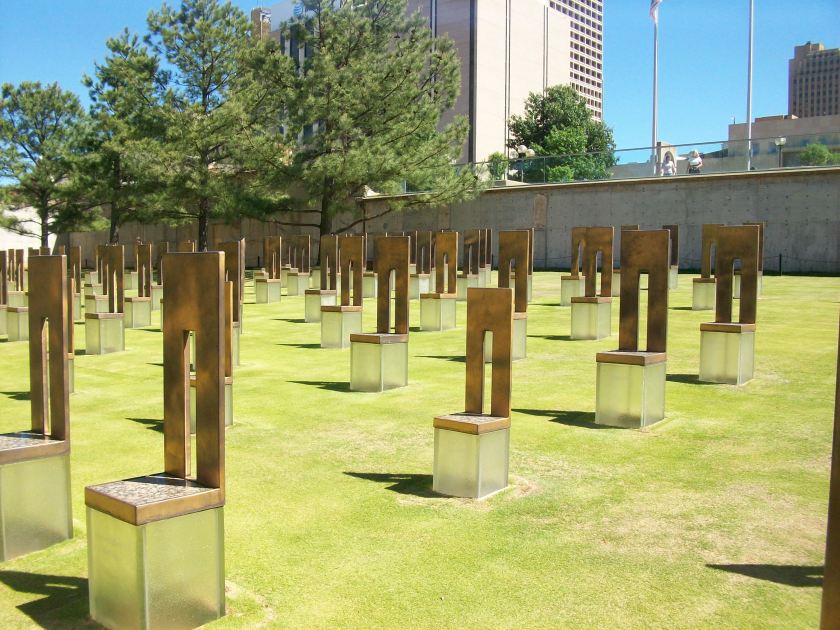
When in Oklahoma City last week, I made the time to visit the national memorial dedicated to the memory of those killed, wounded, or changed forever by the bombing of the Murrah Federal Building on April 19, 1995. It was a powerful experience that would  be moving at any time.  In these days of bombing attempts in Times Square and daily cable television rants against government, the power of remembrance seemed all the more important.  This place – forever altered in horrific ways 15 years ago by the act of an individual angry at the federal government’s actions at Waco and Ruby Ridge – is a somber counterpoint to the hysteria that counts as civic discourse in parts of America today. One enters the outdoor symbolic memorial through a gate marked 9:01 – the minute before the bombing – to represent the innocence of the city.  At the other end of a reflecting pool, the west gate is marked 9:03, after everything changed.  The best known feature of the memorial is the field of empty …