All posts filed under: The Times We Live In

Addressing the challenges of our polarized times

Tenement Museum

A war on whose Christmas?

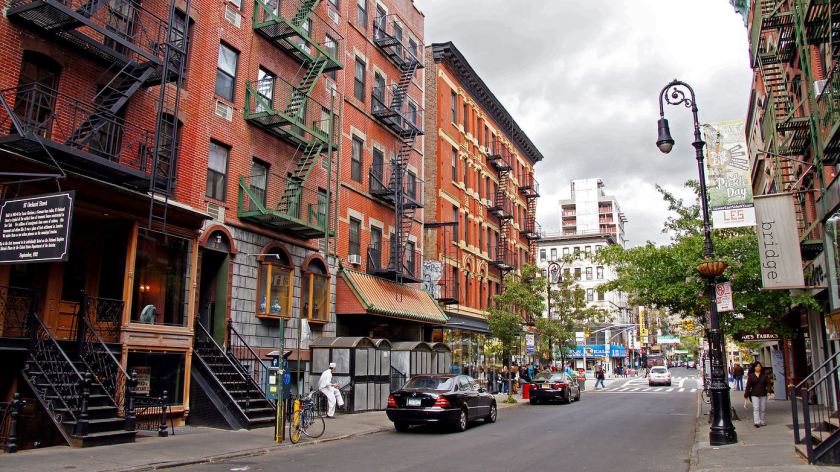
On Tuesday I spent a good part of the day at the Tenement Museum, on New York’s Lower East Side.  I was there to meet with the museum’s new president, Kevin Jennings, and to tour their new Under One Roof exhibit with Annie Polland, the EVP for Programs and Interpretation.  An affiliate historic site of the National Trust, the Tenement Museum tells the full American story about how many have come together to make our nation today. Which brings me to the so-called War on Christmas. The day I arrived, Kevin had just published an op-ed in Newsweek entitled “A War on Christmas?  What Christmas Are You Talking About?”  Early in the piece he asks the key question: “In recent years, a new holiday tradition seems to have emerged in America. From pundits to Presidents, the airwaves fill each December with people decrying the so-called “War on Christmas.” As a historian and museum President, I find myself wanting to ask “War on whose Christmas?” Those bemoaning the “War on Christmas” harken back to a mythical …

Complicity in a Shared Work of the Imagination

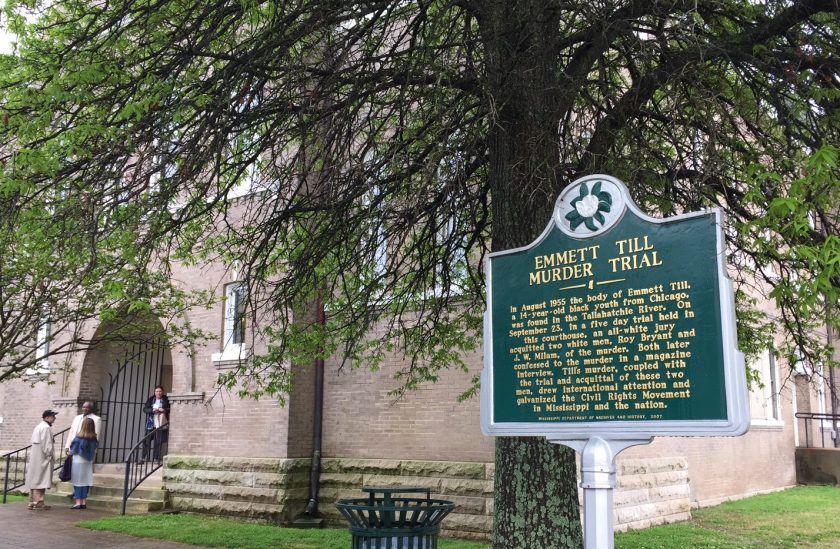
Last week I had the privilege of launching the National Trust’s National Treasure campaign for Clayborn Temple, a landmark in the history of the Civil Rights movement.  It was here where Memphis sanitation workers gathered in 1968 and decided to go on strike, marching with their “I Am a Man” signs that became a potent symbol for all that is at stake in the fight for equal justice.  Clayborn Temple was where the leadership of The Rev. Dr. Martin Luther King, Jr. transformed the strike from a local labor dispute into a national issue, effectively tying the sanitation workers’ cause with the national issues of economic justice and racism. It was to Memphis and Clayborn Temple that Dr. King was returning when he was struck down by an assassin’s bullet. To be in that sacred space with more than 150 Memphis residents, young African American poets and musicians, revered spiritual leaders who walked with the sanitation workers, preservationists of all ages, and current members of the workers’ union was an honor and a reminder of …

I Am Not Invisible

Last evening I spoke in Athens, Georgia, on the occasion of the 50th anniversary of the Athens-Clarke Heritage Foundation.  The topic was the future of preservation, and I took segments from remarks given by my colleague Tom Mayes at the recent EDRA conference on Why Old Places Matter and combined it with the basic elements of our recently released Preservation for People:  A Vision for the Future. The first key concept from the vision is that a people-centered preservation movement hears, understands, and honors the full diversity of the ever-evolving American story. I built on this concept by noting that, “The recognition of our stories and the capacity to see yourself and others in the American narrative has a profound effect on our sense of identity.   A few years when the National Trust conference was held in Nashville, Congressman John Lewis challenged us to believe in the idea that ‘my house is your house.  My story is your story.  The history of my people is the history of all Americans not just African Americans.’” I …

No Better Place to Become a Citizen

Sometimes you find yourself in the right place at the right time. Last Wednesday I was in Arizona for work at the Petrified Forest National Park.  But first, a colleague and I attended a naturalization ceremony that the park hosted at the National Historic Landmark Painted Desert Inn for nine new citizens and their families and friends. It was Americana at its best.  No, it was more than that.  It was deeply moving as nine people made a life-changing decision to establish a new home in a new land. A local girl scout troop – with a diversity that “looked like America” – acted as the color guard.  The Honorable Deborah M. Fine, other federal officials, and Park Superintendent Brad Traver, made remarks that got to the heart of the privilege and responsibilities of citizenship.  Several speakers noted that there was no better place to become a U.S. citizen than a national park – America’s “best idea.”  A recording of America the Beautiful took your eyes to the desert and the spacious skies, bringing chills …

The spirit of our institutions

When I was young, we did not celebrate the generic “Presidents Day.”  Instead, we attached the names of real men — flawed but great, each in his own ways — in celebrating first Lincoln’s Birthday on February 12th, followed shortly by Washington’s Birthday on February 22nd.  I am pretty sure — growing up in the South — that we were not given a day-off from school on the 12th, but we did generally receive the 22nd off…even if it was smack in the middle of the week. There is an interesting history to this holiday, beginning with its name and including the story of how it was moved to the third Monday in February.  According to the federal government, what we celebrate today is officially Washington’s Birthday.  But states actually decide which federal holidays to celebrate, and they can also rename them.  So in Maryland, where I live, we celebrate Presidents Day. I’m a bit old-fashioned and like my holidays well defined and not simply an occasion to get an extra-long weekend and a great …

The More Things Change…1998 to 2017

My father loved to read Molly Ivins.  Her brand of populist liberalism, her concern for the powerless, her razor-sharp wit were all right up his alley.  As a New Deal Democrat, Daddy didn’t have much sympathy for corporate-backed, hypocritical, poll-watching politicians. So when I went to my father’s house earlier this year to help clear out his library, I brought home the four Ivins books he had at the time plus a biography of the Texas firebrand.  Daddy had almost all of Ivins’ works, but some he had given away.  (He once gave me a copy of one of her books that he said he had purchased at the remainder table at the local bookstore, only to come home and find out he already had two copies of the same book.) I was looking for a quick and lively read a few days ago after working through a couple of more difficult offerings, and pulled You Got to Dance with Them What Brung You off the bookshelf.  This is Ivins’ 1998 take on the Clinton …

Oatlands (credit DHR)

National memory and the forgotten First Emancipator

The story of Virginian Robert Carter III and the emancipation of 450 enslaved individuals shortly after the founding of the United States is one of the forgotten stories of American history.  However, in our current period of political unrest — much of it centered on racism and questions around who owns the American story — this is an appropriate time to look at how this act of emancipation, and similar acts that took place throughout the South before the Civil War, were buried and forgotten. Thankfully, Andrew Levy’s complex and largely satisfying book The First Emancipator:  Slavery, Religion, and the Quiet Revolution of Robert Carter brought this story the attention it deserves. Levy claims — powerfully and in a way that challenges our core national narrative — that Carter “did something that transcends our ability to listen to our own past.” A recent tour of the National Trust Historic Site Oatlands outside Leesburg, Virginia, with several senior staff led to a discussion of the story of slavery at the plantation.  Robert Carter III was the …

A Republic, If You Can Keep It

When asked, following the Constitutional Convention, what kind of government had been created, Benjamin Franklin made a now famous reply.  “A republic, if you can keep it.” Those words have been on my mind a great deal in recent weeks.  I wonder why? Could it be the calls from those who want us to seal the borders, shut off all immigration into the U.S., and deport 11 million individuals?  Could it be presidential candidates saying – when a decision is made that recognizes that we are a secular nation and not based on religious law – that we have “criminalized Christianity?” Could it be the calls to register Muslims and to reopen the internment camps of WWII?  When I hear these speeches, I’m reminded of the late great Molly Ivins’ quip about Patrick Buchanan’s famously combative “culture wars” speech at the 1992 Republican National Convention:  It probably sounded better in the original German. But that’s not why I sat down to write. I’ve read three books over the past couple of months that all bring …