Five books at a minimum. Every month. A variety of topics from different genres. Here is the list from September 2026.
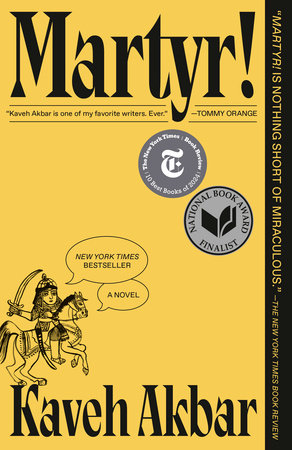
Martyr! (2024) by Kaveh Akbar is an astonishing debut novel by a talented and daring Iranian-American poet, author, and teacher. The story follows recovering alcoholic Cyrus Shams as he “wrestles with difficult questions of how to be an artist, an Iranian man, and how to give your life (and death) meaning.” Cyrus came from Tehran to live in Indiana with his father after his mother, Roya, dies. He uses his wild dreams, art, addiction, and sex to try and forget about the ache in his heart and the feeling of death that both surrounds and calls to him. Friend and sometime lover Zee points Cyrus towards an Iranian artist named Orkideh who is dying of cancer and—in a final piece of performance art—is talking about death with anyone who will visit her at the Brooklyn Museum. Their conversations, along with her story and her secrets, bring Cyrus to fully face his art, life, and death. Akbar’s compelling language, the multiple voices, the weaving of contemporary and historical text, the very subject matter about the meaning of life and death all come together in a way that is fresh and funny and savvy and sad all at the same time.
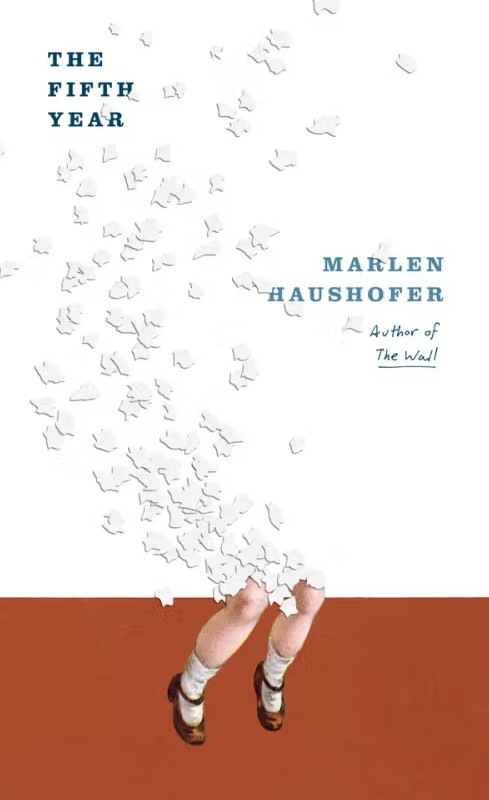
The Fifth Year (1951; translation from the German in 2026) by Marlen Haushofer is a novella that follows a single year in the life of a five-year-old girl, Marili, living in the Austrian countryside with her grandparents. We encounter Marili, her melancholy grandmother, and her calm and warm-hearted grandfather in the heart of winter. She wakes to a snow-covered meadow, a thick cap of snow on the windowsill, and the sight of continued snowfall. “The child felt as if nothing had ever existed but snow and winter,” Haushofer writes, providing the reader with the first hint that the author truly understands the way life unfolds to a five-year-old. Marili’s parents were killed in the war and she must face the world guided only by her grandparents and her own curiosity. In scenes from each season of the year Haushofer shows us, in simple yet evocative prose, how young Marili faces both the day-to-day and eternity. One critic has described The Fifth Year as “a window into the singularity of consciousness,” an apt description of a work that is deceptively simple yet full of wisdom, wonder, sadness, danger, and joy. Just like life.
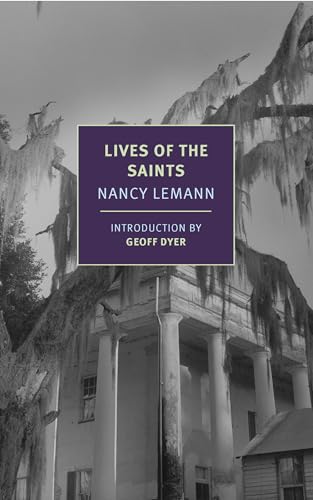
Lives of the Saints (1985; republished in 2026 by the New York Review of Books) by Nancy Lemann is unique in its voice; in its digressions; in its look at life in New Orleans, the deep South, and America. Louise Brown—the narrator who stands in for the author and an “exquisitely rendered basket case”—has just returned from four years in a New England college and finds herself immersed once again in “New Orleans society’s ‘wastrel-youth contingent.’” Her focus is on Claude Collier, a son of one of the city’s old families who is deep into his personal period of wasted youth. Claude and Louise are at the heart of this “tale of Violent Love, Breakdowns, Moods, and Felonious Drunkenness that floats from one lush, green, sweltering New Orleans evening to another.” These two people are—as Mrs. Collier describes them—“always yearning after vague things. You cherish illusions.” Louise asserts that “Nuts made life worth living.” This lovely, nutty book (Walker Percy) is proof of that maxim.
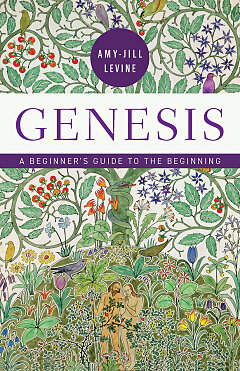
Genesis: A Beginner’s Guide to the Beginning (2026) by Amy-Jill Levine is the tenth in her series of “Beginner’s Guides” that examine Biblical stories, liturgical seasons, miracles, and specific books of the Bible. With her typical deep theological insight, broad cultural knowledge, curiosity about the multiple meanings texts invite, and accessible writing, Levine (known as AJ to friends) leads readers on an exploration of stories we all think we know. She finds herself in conversation with God “from the affirmative ‘love the creation, with everything very good’ to the questions: Why put temptation in the garden? Why not accept Cain’s offering? Why flood the world?” Her conversations lead to more questions, both hers and ours. This short work is easy to digest but its good taste and satisfying feeling linger long after the meal is complete.
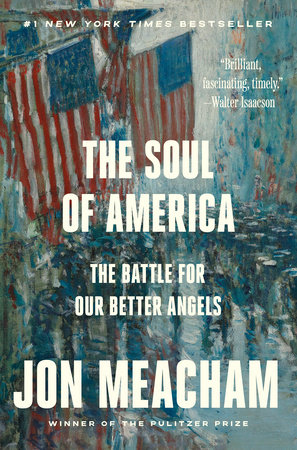
The Soul of America: The Battle for our Better Angels (2018) by Jon Meacham was written to help us navigate the current divisiveness that speaks to our fears by looking back into American history at other times of conflict and political warfare. The book was conceived and created following the alt-right march in Charlottesville in August of 2017, an event that shook the nation and exposed the ugly stain of racism that has always hovered, in the best of times, just below the surface in America. A believer in the great truth found in William Faulkner’s observation in Requiem for a Nun that “The past is never dead; it’s not even past,” Meacham asks his readers to look at the ongoing American battles over power and race and history to put today’s events in context. This history, Meacham argues, provides guidance on ways to respond to the reactionary forces that would turn back the clock on the promise of the Declaration of Independence.
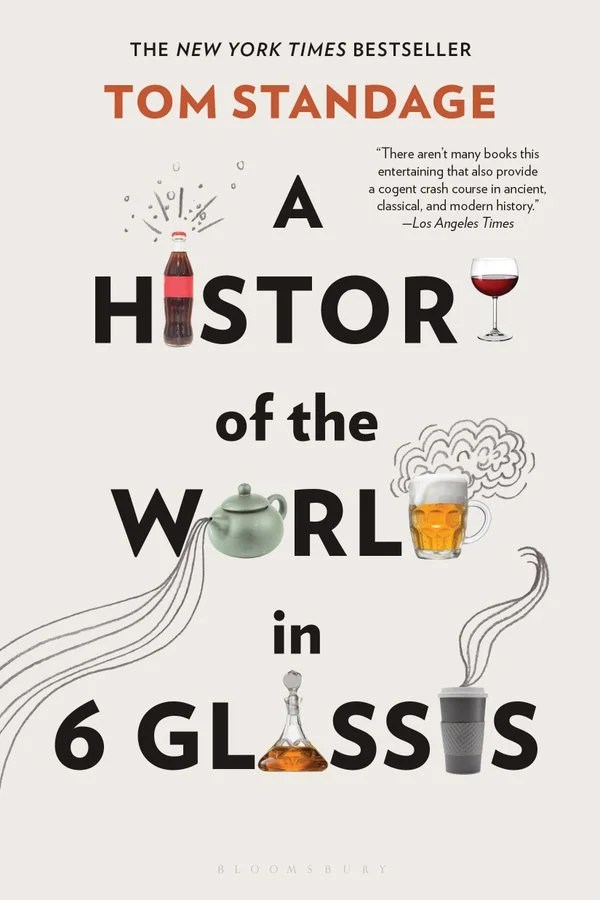
A History of the World in 6 Glasses (2005) by Tom Standage is a delightful and thoughtful way of seeing history through a different lens. In this case the author divides world history into beer, wine, spirits, coffee, tea and Coca-Cola ages. While it may sound frivolous, Standage has important points to make about how our tastes for beverage evolved and why that drove major changes throughout the world. As humans moved from hunter-gatherers to agriculture our ancestors began to cultivate grain. That led to storage, which led to fermentation and beer. Add the creation of crockery and humans finally had an alternative to water, which six millennia ago was the only beverage available. Around 4000 BCE, human beings learned to stick straws into big, communally shared beer vessels. And as we discover throughout this work, once a new drink is created, our world changes. “When you next raise some beer, wine, spirits, coffee, tea, or Coca-Cola to your lips,” Standage writes, “think about how it contains more than mere alcohol or caffeine. There is history, too, amid its swirling depths.”
WHAT’S ON THE NIGHTSTAND FOR OCTOBER (Subject to change at the whims of the reader)
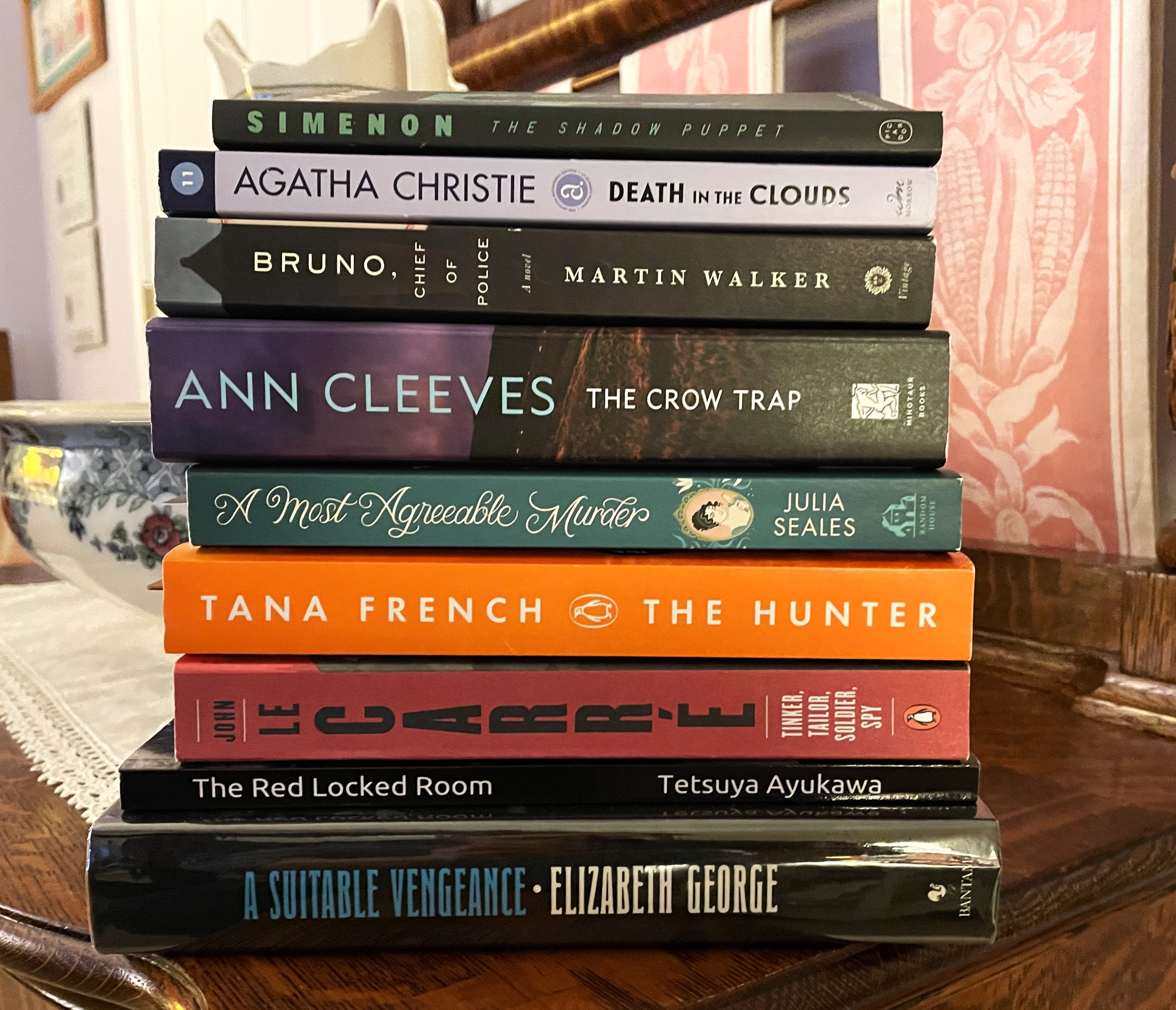
I will not read all of these books in October. And I do have at least three books (not shown here) from my independent bookstore crawl that I will need to read and review this month to stay on track for a year-end completion of that quest.
However . . . October is the month for spooks and goblins, so I hope to read at least five murder mysteries before the 31st to celebrate Halloween. I’ll chose from this list. Please let me know if you have favorites among these options:
- The Red Locked Room by Tetsuya Ayukawa
- Death in the Clouds by Agatha Christie
- The Crow Trap by Ann Cleeves
- The Hunter by Tana French
- A Suitable Vengeance by Elizabeth George
- Tinker, Tailor, Soldier, Spy by John le Carré
- A Most Agreeable Murder by Julia Seales
- The Shadow Puppet by Georges Simenon
- Bruno: Chief of Police by Martin Walker
Keep reading!
More to come . . .
DJB
NOTE: Click to see the books I read in August of 2026 and to see the books I read in 2025.
Fall Reading by anotherxlife on Unsplash

