All posts tagged: Acoustic Music

Few things are better than the sound of acoustic instruments

The people and places on Main Street

There are few things I like better than walking along a great Main Street. For the past two days, I’ve been lucky enough to walk around four terrific Main Streets:  Middletown, Connecticut; Amherst and Northampton, Massachusetts; and tiny Red Hook, NY. You can pick up life lessons on Main Street – like the bumper sticker I saw on a car parked along Northampton’s Main Street this morning:  Just say NO to Negativity. You can also meet very interesting people.  While taking photos around Northampton, I was approached by a resident of the streets of the city.  He must have seen my inner preservationist (sometimes people who look at the world a little differently have great powers of observation), because he told me he liked to work for the “hysterical society.”  He then proceeded to point out the historical courthouse (where Calvin Coolidge first practiced law) – a very nice 1885 building seen in the photo above. My new friend then pointed in the opposite direction and identified the Northampton City Hall.  “See those turrets?” he …
A Crooked Road

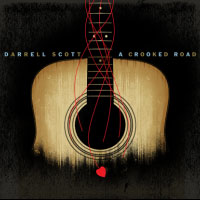
One of Nashville’s best songwriters begins his newest album with the following words: “I walk a crooked road to get to where I’m going, to get to where I’m going I walk a crooked road and only when I’m looking back I see the straight & narrow I see the straight & narrow when I walk a crooked road.“ Darrell Scott has written great tunes for the Dixie Chicks (Long Time Gone), Patty Loveless (You’ll Never Leave Harlan Alive) and dozens more.  His last album, a gem entitled Modern Hymns, showcased “Songs and artists/songwriters whose music shook me as a kid (with ears nearly as big as my heart). They guided the way to my own path as a singer-songwriter . . . These songs speak to the human condition . . . in all of our aching and beautiful glory . . . These songs are the truth . . .“ Scott has a wonderful gravelly voice and is a masterful musician.  I love his work. So I eagerly snapped up the album when …

Economic meltdown, transitions, and roots music: Recent books on the nightstand

My last post said More to Come… was going on sabbatical, but in cleaning up the  nightstand today I realized I’d been holding four recent books that I planned to review on the blog.  These represent my eclectic interests (which is what More to Come… is all about) as well as priorities in my life at the moment.  So in the hope that I can now hold to my promise to take the blog on sabbatical,  I’ll pass along thumbnail reviews of the four and put them in my mental “checked off” category. The first is Michael Lewis’ terrific (as in well-written) and sobering (as in scary) The Big Short:  Inside the Doomsday Machine. This is, by far, the best known of the four and much has been written about the story of three small hedge fund managers and a bond salesman who knew what was coming before the economic meltdown of 2008. I don’t need to elaborate because Steven Pearlstein said it all in a Washington Post review I highly recommend.  As Pearlstein  writes, …

Lena Horne, RIP

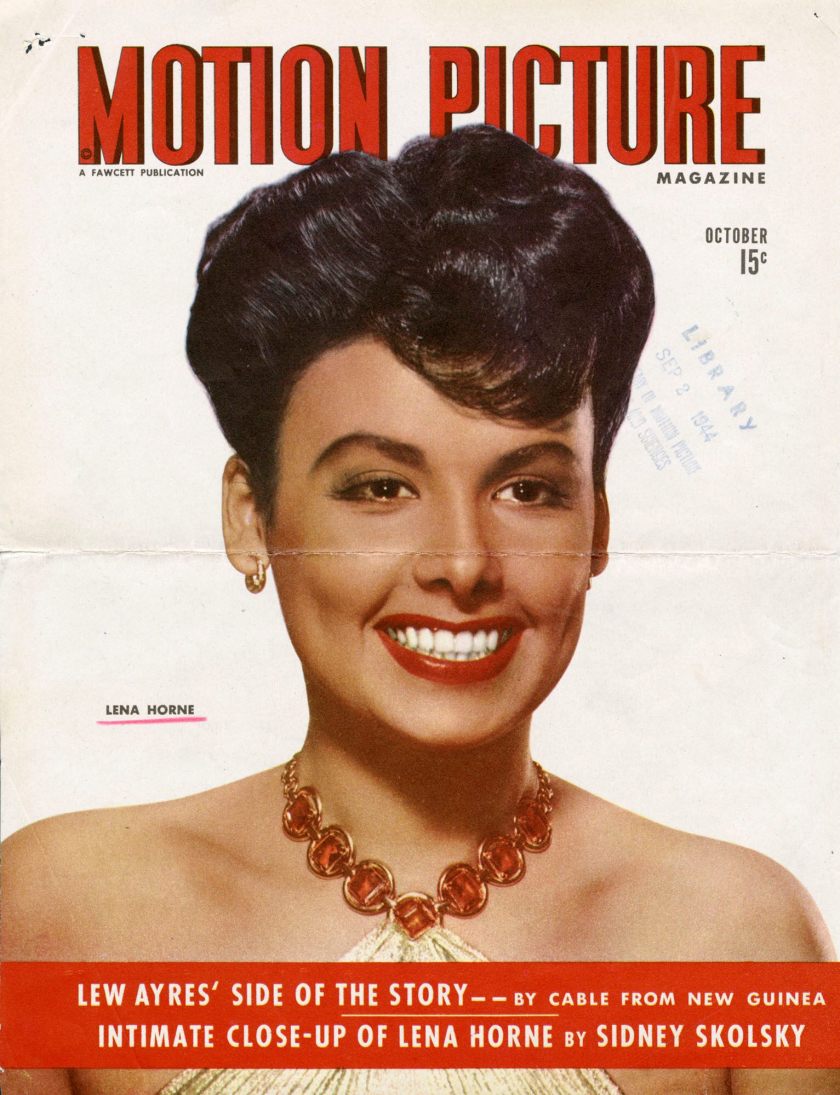
One of my father’s favorite singers, Lena Horne, passed away yesterday at age 92.  My father can’t carry a tune in a bucket and he can play only two songs on the piano – St. Louis Blues and Teddy Wilson’s Body and Soul – but my father had a great collection of 78s from the pre-war era and he knows his jazz singers.  TB was so right about Lena Horne. As the web site The Music’s Over but the Songs Live On noted, Lena Horne was a popular and influential jazz vocalist and actress who broke many color barriers over a career that spanned nearly seven decades, and her 1943 recording of “Stormy Weather” is arguably the most recognized song of its era.  Horne was not only a multi-Grammy award-winning singer, she was also an award-winning star of stage, screen and television. She was also an activist during the Civil Rights era, which is where I encountered her after the introduction by my father.  The New York Times obituary recalled the difficulties she faced as …

Harp Guitar

More harp guitar

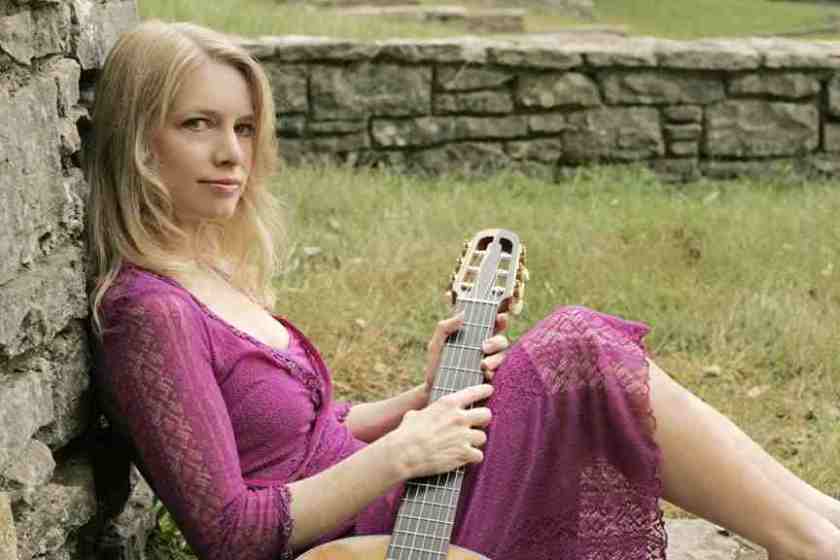
After writing the post last evening on the harp guitar article in the Spring 2010 issue of  The Fretboard Journal, I kept looking around on YouTube for other players mentioned in the article…and I came across this wonderful video of Muriel Anderson that I had to share. Anderson’s harp guitar is a classical-style model which has a beautiful sound.  I hope you’re able to listen to these videos on a computer that has a good bass speaker, because the sound of those ringing bass strings turns a beautiful tune into a magical tune. (As an aside, check out all those beautiful harp guitars on the stage behind Muriel at the opening of the video.  Guitar eye candy indeed!) Here’s “Lady Pamela” by Muriel Anderson.  Enjoy. More to come… DJB

More strings make beautiful music

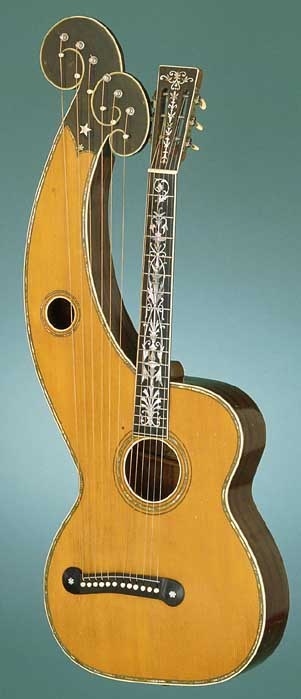
Several weeks ago the Spring 2010 issue of The Fretboard Journal showed up in my mailbox.  I was traveling a great deal at the time, so I popped in it my briefcase and caught up on all the news from the world of beautiful instruments in airplanes and hotel rooms. Ricky Skaggs, the young acoustic band Bearfoot (which I caught at last year’s Merlefest), and Bedford County, Virginia luthier James Jones are all featured in this issue.  But my eye was immediately taken to an article on harp guitars. I had never seen a harp guitar until I attended the Shenandoah Valley’s Oak Grove Music Festival one year and Stephen Bennett pulled out the strangest instrument imaginable.  But then he began playing the most beautiful music, and I was transfixed.  I’ve since met Stephen through my friends the Pearsons and Harringtons, and I’m always amazed at how someone can play such lovely music on such an awkward looking guitar. Stephen Bennett and Gregg Miner (whose guitar photo from harpguitars.net leads off this post) are featured …

Good Friday 2010

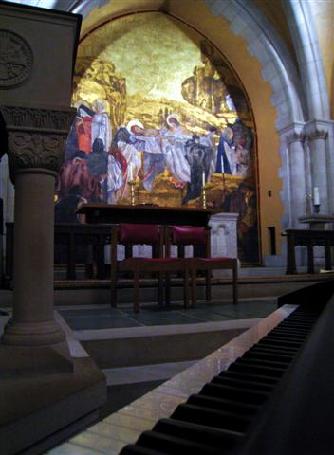
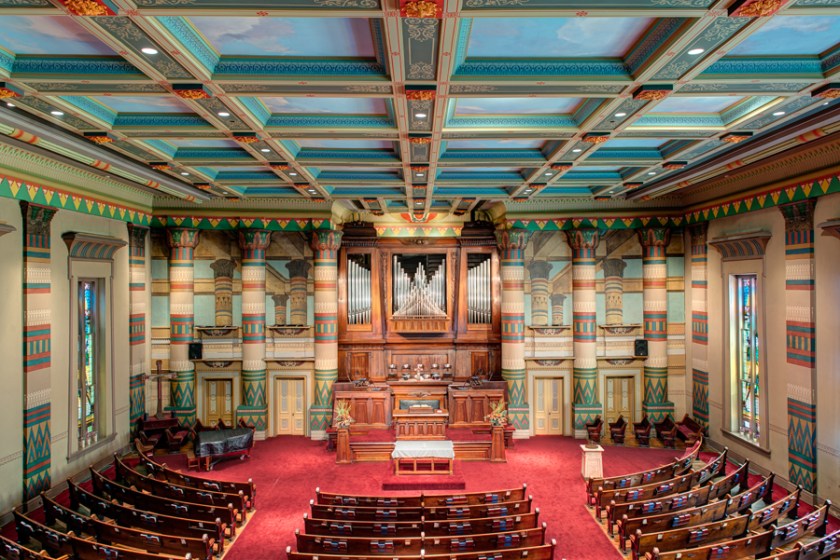
One of the treasures of Washington is the National Cathedral.  Earlier this evening Candice, Andrew, Claire and I gathered together in the Cathedral’s St. Joseph of Arimathea Chapel for the moving and beautiful Good Friday meditation. There is no more appropriate place to spend Good Friday than the vault-like chapel deep in the heart of the Cathedral named for Joseph of Arimathea, the rich man who went to Pilate and asked for the body of Jesus in order to provide a proper burial in his own new tomb.  The stone and wood space is made for the chants, solo cello, and Taize music of this service.  The sounds have a special resonance that envelops the soul. Cathedral Musical Director Michael McCarthy has structured a beautifully meditative service for this evening, beginning with Gita Ladd playing the groaning Sonata for Cello solo, Op. 28 by Eugene Ysaye.   The plainsong chant of Psalm 40 by the gentlemen of the Cathedral Singers begins in the traditional fashion, yet two-thirds of the way through McCarthy underpins the plainsong with …

Patty Griffin and Downtown Presbyterian: A match made in heaven

I’m glad I was standing in my local Barnes & Nobel a few years ago when Patty Griffin’s 1000 Kisses came on over the store’s speakers.  Mesmerized by the voice, I wandered through the music section until I had listened to a majority of the album.  Needless to say, I took it home and have been a fan ever since. Griffin has a new album out entitled Downtown Church, and it is a winner in so many ways.  Beginning with the wonderful old tune House of Gold all the way through to the beautiful hymn All Creatures of Our God and King, there isn’t a false note here.  Wade in the Water with Regina McCrary – the daughter of the founder of the Fairfield Four and “gospel royalty” to quote Griffin – really rocks.  Never Grow Old with Buddy Miller is beautiful, simple and meditative.  Griffin sang both songs and more on a terrific live stream tonight on her Facebook home page and you can catch the latter in a video below.  Every song on …

Old Time Zen

A friend from Philadelphia recently sent the following quote to me via email: “A year or so ago on the bluegrass mailing list, one of the bluegrassers was comparing their custom of playing a tune until all the verses had been sung with the old-time custom of playing the same tune ad infinitum. He remarked that the object of old-time music was to bore people. I explained that the object of an old-time jam session is enlightenment (satori, if you will)—boredom is only a means to that end.”  Charlie Bowen This led to a search online (shouldn’t all posts about zen include some reference to a search?) and took me to the original source: an information sheet about a Hillbilly Zen workshop at the 2006 Solfest.  Other bits of wisdom from the workshop: The violin music is important because we play it. Repetition of the tune in the groove leads people to an absorption, a place of clarity which most old-time musicians like. And my favorite: Respect for tradition is a kind of filter. People …