Follow your passions
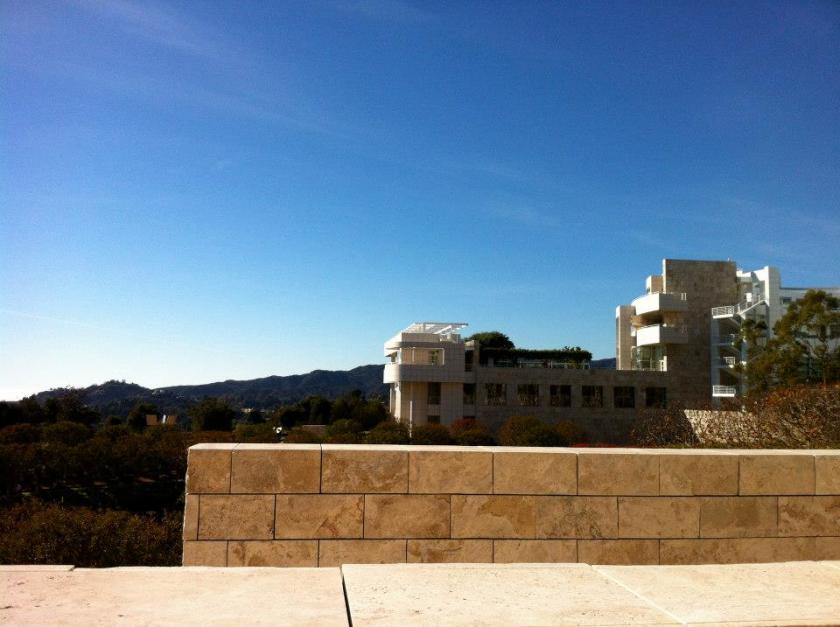
The Getty Center and McCabe’s Guitar Shop allowed us to follow our passions in Southern California.
The Getty Center and McCabe’s Guitar Shop allowed us to follow our passions in Southern California.
Too often college campuses can be poorly designed landscapes for a hodgepodge of mediocre buildings. So when you come across good – or great – buildings in the academic setting it is a real treat. On this year’s vacation/college tour, we’ve seen some of both, but I’m pleased to say we’ve been fortunate in visiting colleges that through the years have been thoughtful about their buildings and their settings. We’ve now become old pros at the campus tour. Andrew and Claire head off with one tour guide so they aren’t intimidated (if they ever are) by having the folks in the same group. Candice and I then follow a second guide. Candice pays attention to what the guide is saying, while keeping her eye trained on the design and maintenance of the buildings. I take pictures of the architecture and any landscape feature that strikes my fancy. We all come together at the end and share what we’ve seen and heard. Hey, it works for us! At the end of week one, we’ve seen some …
The next time you hear someone say, “I understand preserving truly historic buildings, but I don’t think we should try and save this structure from the 1950s (or 60s, or 70s)” remind them that the Art Deco architecture of the 1920s and 30s use to be similarly dismissed. Reporting from the South Beach Art Deco Historic District in Miami Beach… More to come… DJB
Santiago Calatrava’s beautiful Samuel Beckett Bridge in Dublin opened for traffic this morning following an official ceremony marking the event yesterday. This is a work of art that I was privileged to see in September while it was still under construction. To view Calatrava’s work in the context of the other historic and contemporary Dublin bridges along the River Liffey, check out my September post entitled Santiago Calatrava’s Dublin Bridges (And More) By Dawn’s Early Light. More to come… DJB
My late mother – the librarian – would have loved this post I found on the RADDblog. What an innovative use of a structure that has lost its original purpose. (These days you have to explain to kids what a pay phone was.) Check out the post – there’s another great photograph along with a listing of ways others are using these historic British phone booths. More to come… DJB

I’m reading Paul Goldberger’s new book Why Architecture Matters. As you would expect from Paul, it is a smart, well-written work that is designed to help the reader interested in buildings “come to grips with how things feel to us when we stand before them, with how architecture affects us emotionally as well as intellectually.” I’ve already come across numerous passages and examples that resonate, but last evening I was reading his take on I.M. Pei and Henry Cobb’s John Hancock Tower on Copley Square in Boston and was reminded of my last impression of that building when Andrew, Claire and I were visiting the city in March 2008. Paul, a Pulitzer-Prize winning writer and a trustee of the National Trust for Historic Preservation, is describing the Hancock Tower in comparison to New York’s Seagram Building and G.M. Building. All three are postwar American landmarks. It was great fun to introduce Claire and Andrew to Copley Square when we visited Boston in 2008. We toured the great H.H. Richardson-designed Trinity Church, of course, and took …

Oh my…what a building, what a sculpture, what a space, what an experience! The power of place indeed. Just two weeks after seeing his bridges in Dublin, I had the opportunity to visit the Santiago Calatrava-designed Milwaukee Museum of Art today. I had seen the building on a drive-by a few years ago, but this was my first time to see it both inside and out. The internet is awash with both images and verbiage about this wonderful space. I’ll only quote the dean of the school of architecture at the University of Wisconsin-Milwaukee (and a member, along with our host, of the selection committee for the building) who told our tour group today, “We got Calatrava when he was unknown and yet at the peak of his creative powers – sort of like the early Beatles, before they became superstars and started adding too many orchestrations.“ What you’ll see below is a series of photos showing the “flapping” of the beautiful white wings (really a sunscreen) from open to close. Extraordinary as that sounds, …
I am blessed with two talented children who teach me so much every day. Claire has an imaginative and artistic eye that she uses to great effect in her photography of buildings and landscapes. Andrew has been fascinated by architecture since he was a toddler and stood in our hall to carefully run his hand over the curved beaded siding on our wall. As a preservationist and father, I love talking with them about their passions. So when Andrew texted me on Friday morning to say, “Dad, there are two Santiago Calatrava-designed bridges in Dublin,” I knew they must be special. I wanted to see them not only based on Andrew’s message, but because I had seen the Spanish-born Calatrava’s Milwaukee Art Museum (a building I’ll be in again in a few weeks) and was intrigued as to how he handled his designs in this city of bridges. To make a long story short, I left in dawn’s early light this morning and went on a 1 1/2 hour walk, beginning at Calatrava’s James Joyce …
The National Trust for Historic Preservation is working with the Foundation for Historical Louisiana and other partners to try and stop the demolition of significant portions of the historic Mid-City neighborhood in New Orleans. The U.S. Department of Veterans Affairs and Louisiana State University recently announced the selection of the Mid-City neighborhood for the site of their new hospitals. As the National Trust website PreservationNation.org states: The new hospitals would needlessly destroy the historic neighborhood around Charity Hospital where residents have been rebuilding and restoring their community since Hurricane Katrina. We believe this decision was a serious error and urge LSU and the VA to explore the alternative sites that would restore needed health care facilities faster and at less cost, while preserving much more of the historic Mid-City neighborhood. The video below is just one of several prepared by the Foundation for Historical Louisiana where the affected residents talk about the decision to demolish their neighborhood. Click on the link above to see more videos and learn what you can do to try and reverse this …
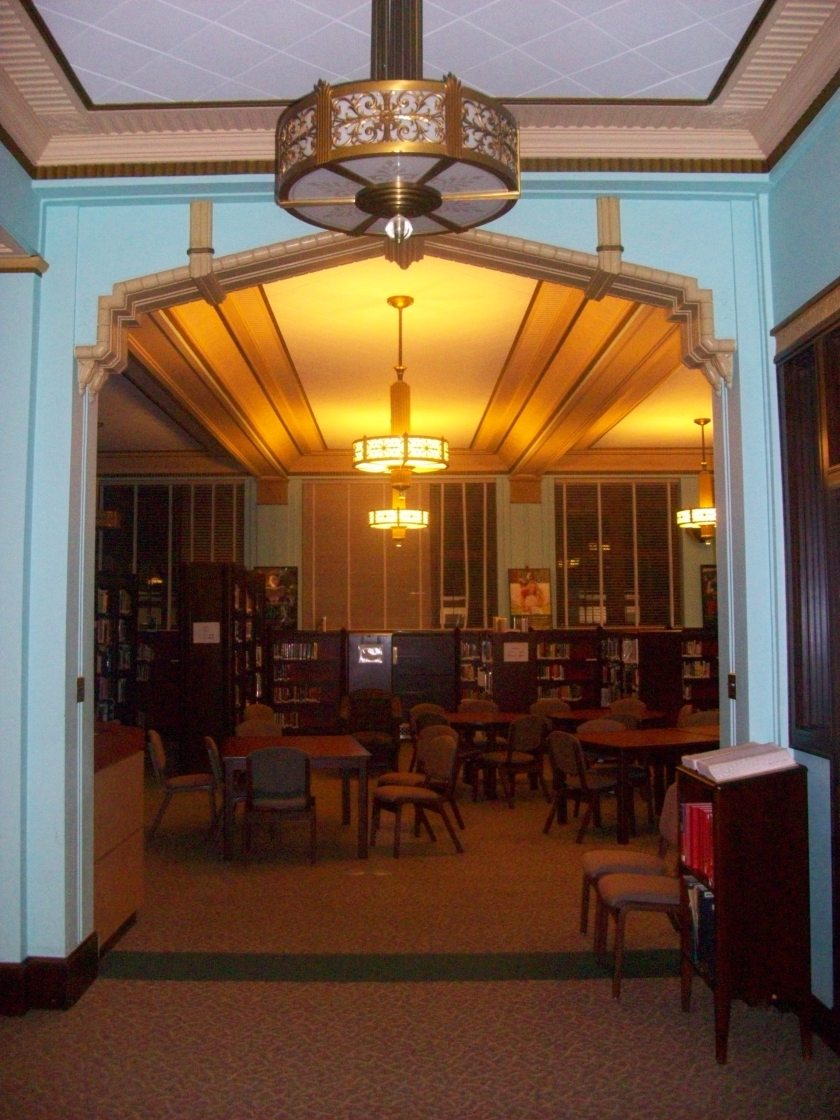
As regular readers know, I’m in Tulsa, Oklahoma, this week for the 2008 National Preservation Conference. Tonight’s event was in this great building, Will Rogers High School, which reminds us all that public schools weren’t always bland, boring spaces. As we drove through a non-descript neighborhood, my colleagues were doubting that anything of great value could be found in this landscape. And yet, the moment the school, with its towers rising above the treetops, came into view, it was clear we were in for a treat. The school was built in 1938 as part of the Public Works Administration (PWA). The auditorium was an Art Deco wonder, the library a pleasant surprise, and the entire building a delight for the eyes which has to be a treat for the discerning and observant student. I’ve posted a couple of pictures to give you a hint of what we enjoyed. More to come… DJB
 MORE TO COME...