All posts tagged: Historic Preservation

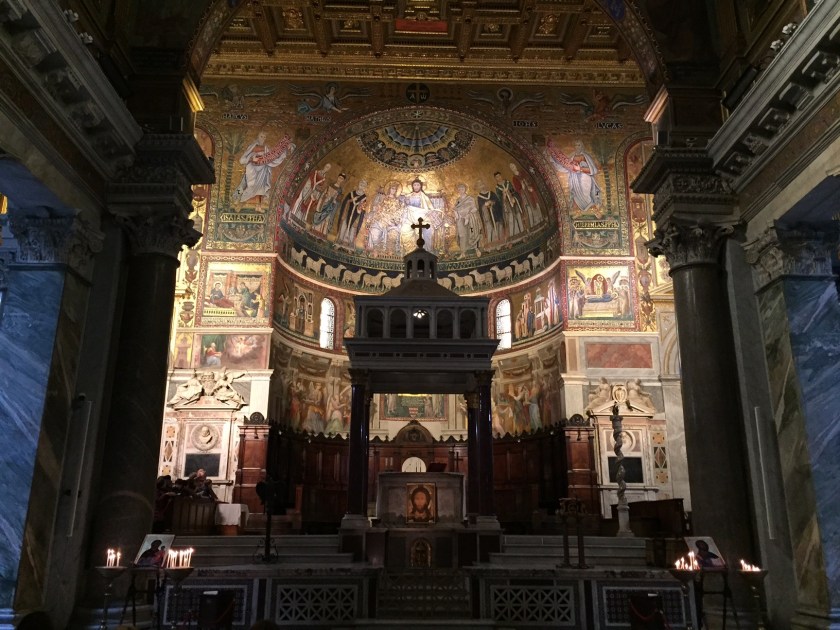
Basilica di Santa Maria

Observations from the road: Scenes from Holy Week in Rome

Sorry.  No pope sightings (or even attempts at pope sightings). We have had a relatively low-key Holy Week while in Rome, but that doesn’t mean it hasn’t had its memorable moments. Olive Trees and Palm Sunday:  Our week began last Sunday with a Palm Sunday processional at the neighborhood Basilica di San Pancrazio in Monteverde.  A 6th century basilica that was extensively renovated following Garibaldi’s 1849 attack on Rome, San Pancrazio was a lively place last Sunday. We met about a block away from the basilica and followed priests and musicians through the streets, waving olive branches in place of the palms we see in the United States.  During the service, conducted (of course) entirely in Italian, we only understood the occasional word. But we knew the shape of the liturgy and could follow along without getting lost.  The nave was filled with worshipers, while the aisles were used by parents and nuns to walk or stroll young children throughout the service.  The music was similar to Catholic folk masses in the U.S. these days …

Cars in the Coppede Quarter

Cars, shared streets, and lovable cities

I know I’m in Rome to think (and learn) about architecture and preservation (past and future), but recently my thoughts turned to cars. There’s a connection here.  Trust me. If you need a car in Rome, you can find one.  We’ve taken taxis on several occasions, and from those rides I can attest that there are no shortages of cars on the street.  But the interesting thing — from my perspective — is how the cars and their drivers interact with others who share the street: pedestrians (of which there are many), cyclists, motorcycle riders, street vendors, buskers, and patrons at outdoor cafe tables. Rome’s transportation patterns are somewhere between the very rational (and orderly) Copenhagen model, and the free-for-all that is New Delhi. Probably a little closer to Delhi, truth be told. Traveling in Rome is a dance, and cars are not privileged in the way they are in the United States.  (We have changed our cities and planned our suburbs in a way that deifies cars, instead of supports people.) While there are …

Umbrian landscape

Orvieto: A jewel in Umbria

Candice and I decided early in our stay to take a day trip outside of Rome once each week during my sabbatical. A colleague had sent along a blog post on the 10 best day trips from Rome, which whetted our appetite, and with the prospect of seeing one of Italy’s best cathedrals, we jumped on a train last Tuesday to visit the Umbrian hill town of Orvieto. What a marvelous decision! 75 minutes after leaving Rome, we pulled into the Orvieto train station on a beautiful, sunny spring day.  My first thought was about how we would navigate getting up the 984′ rock plateau that serves as the base for the town.  But immediately across from the station was a funicular station, and my spirits soared. Let me pause for a second to say how much I love funiculars (or incline railways).  When we were young, my father (the TVA engineer) use to take us to see old and new engineering projects, and one of my earliest recollections was taking a small funicular to …

To Be An Artist

Yesterday the Fellows Walk took us to the opposite side of Rome, where the city grew outside the walls in the 19th century.  It was a different take, focused on unification, industrialization, and city planning. The tour ended in the Quartiere Coppedè (the Coppedè Quarter) designed by architect Gino Coppedè. A small enclave of apartments and houses from the early 20th century, the buildings exhibit a riot of every Italian architectural influence imaginable.  Wild historical eclecticism – one short-lived response to modernism of the early 20th century. Following the end of the tour, Candice and I roamed the neighborhood with Jeff Cody from the Getty, taking photographs and finding new elements to view on every wall.  Over a coffee, Jeff pulled out a small sketch book to show us some drawings he had made from earlier visits to Italy, and it was then that I regretted not having taken any sketching classes in my life. Just look at these possibilities in the Quartiere Coppedè:         It was the second time in two …

Observations from the Road: (“The Pedometer is Getting a Workout” Edition)

Rome has steps. Everywhere.  A lot of steps.  (Yes, I can confirm for Mrs. Reeves, my sophomore English teacher, that I know a “lot” is a field and not “many” but I like the way “a lot of steps” sounds.) So begins this edition of “Observations from the Road” (or “The Pedometer is Getting a Workout” edition). For those who may be new to More to Come…, the “Observations from…” series are short – often meaningless – comments that don’t deserve a full blog post (or perhaps even the light of day) but that hasn’t stopped me from posting them in the past.  So here goes with the current edition. I’m going to break the pedometer – Everyone who has been to Rome told us that we’d walk a great deal…but I guess I didn’t really believe it until we arrived and started walking.  And believe me, I love to walk. Rome is a wonderful city to see from the sidewalk (or the middle of the street, where a great deal of walking appears to …

Talking Preservation’s Future on “Back to the Future Day”

I am in Missouri as part of a cross-country trip that began on Friday in Los Angeles and will end on Thursday in New York City. The annual Missouri Preservation Conference – where I was the keynote speaker – brought me to Cape Girardeau, winner of a 2015 Great American Main Street Award. The conference theme?  The Past and Future of Preservation.  As luck would have it, my talk was on Back to the Future Day!  What better occasion to talk about the future of preservation! Here’s the description of Back to the Future Day from the New York Times: On Wednesday, Oct. 21, 2015, at 4:29 p.m., our today will finally catch up to the tomorrow depicted in “Back to the Future, Part II.” In that 1989 film, Marty McFly (Michael J. Fox) and Dr. Emmett Brown (Christopher Lloyd) appear with a flash in their DeLorean time machine from 30 years in the past. Suddenly, they find themselves in the same town, Hill Valley, but surrounded by impossible technology and outlandish social mores. It’s …

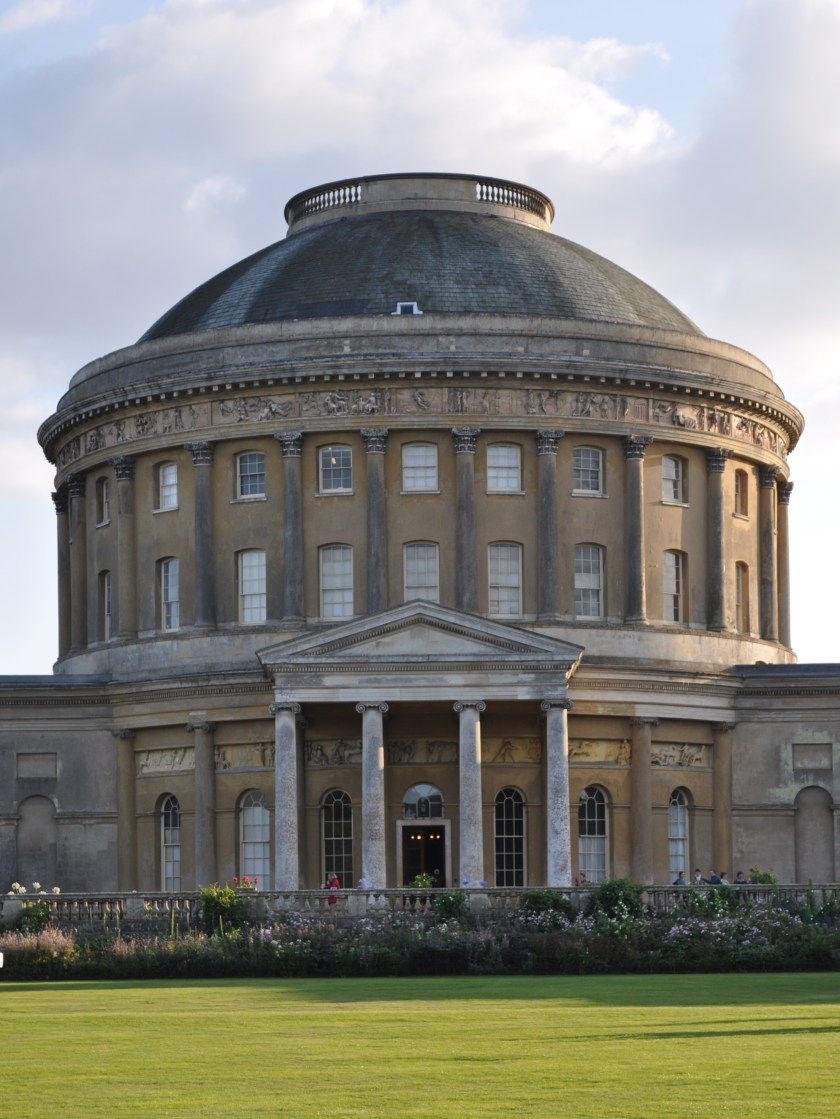
Ickworth

A brilliant week of English charms and global lessons

In Cambridge – a lovely town with an international reputation for education – it was appropriate that the delegates to the 16th International Conference of National Trusts (ICNT) took in the charms of the East of England while also gathering so many valuable lessons from instructors both local and global. All in all – to use the British equivalent of great – it has been a brilliant week! The opening day’s remarks set the stage for discussions throughout the week.  Dame Helen Ghosh – Director General of the National Trust for England, Wales & Northern Ireland – began by reminding the delegates of the need to be open to change as we seek to conserve our heritage.  Jonathon Porritt challenged many of the assumptions the delegates brought to Cambridge, in a speech on our environmental challenges that was referenced throughout the week. Tuesday took Candice and me along with half of the delegates to Wimpole Estate, for conversations around cultural identities.  This emphasis arose from the 15th ICNT in Entebee, Uganda, in 2013, which raised …

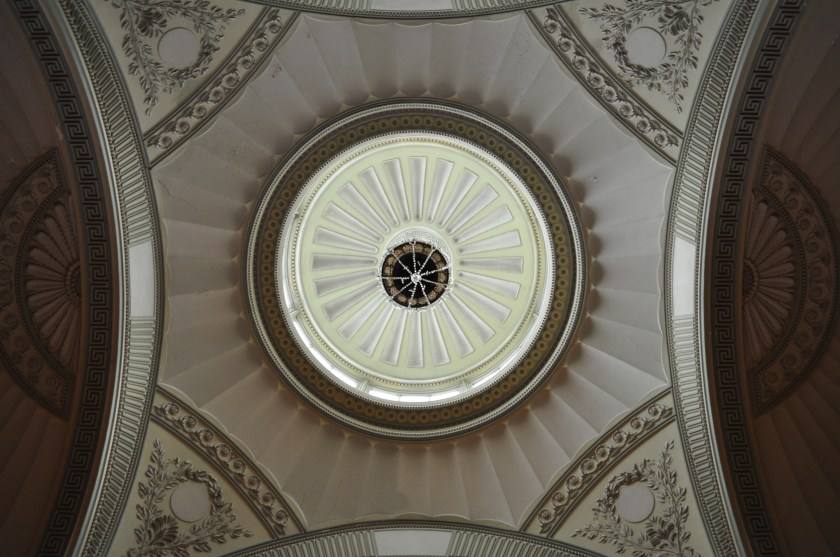
Wimpole Hall Interior

Sheep and chandeliers

“Sheep and chandeliers” is the title the National Trust of England, Wales & Northern Ireland has given to its brochure for Wimpole Hall and Wimpole Farm, where we joined a group of participants in the 16th International Conference of National Trusts for a day of in-depth discussions and tours on Tuesday. Over the course of the day, we gathered in small groups throughout the estate with National Trust staff and volunteers to discuss topics such as the spirit of place, ways to use the past to engage with contemporary issues, and cultural identities in a homogenizing world. All were fascinating, made even more so by the extraordinary setting of this estate and working farm. We learned of the site’s role in World War II, where it hosted American and British bombers on the large expanse of lawn in the front of Wimpole Hall, as well as some of the challenges of interpretation for a site with layered histories and traditional expectations of how an estate would be presented to the public. The discussion sessions were …

King's College Courtyard

Opening views from the 16th International Conference of National Trusts

Cambridge, England, has proven to be a delightful host for the 16th International Conference of National Trusts, co-sponsored by the National Trust of England, Wales and Northern Ireland and the International National Trusts Organisation (INTO).  More than 250 delegates and guests have arrived for the preliminary INTO meetings and the five days of conference sessions, tours, and discussions. Candice and I arrived mid-day on Saturday for the INTO meetings, which began the next morning at Anglesey Abbey, a wonderful National Trust property near Cambridge. While most of the day was spent in meetings, we were given a delightful tour of the house, gardens, and mill by National Trust staffer Justin Scully and his team.  It was enough to whet our appetite for a return visit with the full conference later in the week. Each day we’ve taken our meals in the Great Hall at King’s College – a splendid space in which to enjoy good conversation with fellow delegates from around the world. And on Monday evening, it was also the setting for our opening …