All posts tagged: National Trust for Historic Preservation

Macon musical history

Not my average radio interview

Folks in Macon, Georgia, take their musical roots seriously.  (Think Otis Redding, the Allman Brothers, Little Richard.)  So on Friday morning when I was booked for an interview on WNEX, The Creek — a new Macon radio station featuring Southern roots music and local issues — I assumed it would be different from the local NPR stations where I normally find myself talking about preservation. I was right.  And (with the possible exception of my time on the Honolulu public radio station), it turned out to be much more fun than my average NPR radio interview! We were in town to launch our National Treasures campaign for the Ocmulgee National Monument.  Lands affiliated with the Ocmulgee National Monument have been home to Native Americans for more than 17,000 years.  However, over recent decades the places with ties to the site have been threatened by urban sprawl, the subdivision of forested tracts, and ownership fragmentation. The National Trust and our partners are seeking to re-designate the monument as a historical park, expand the current boundaries, and …
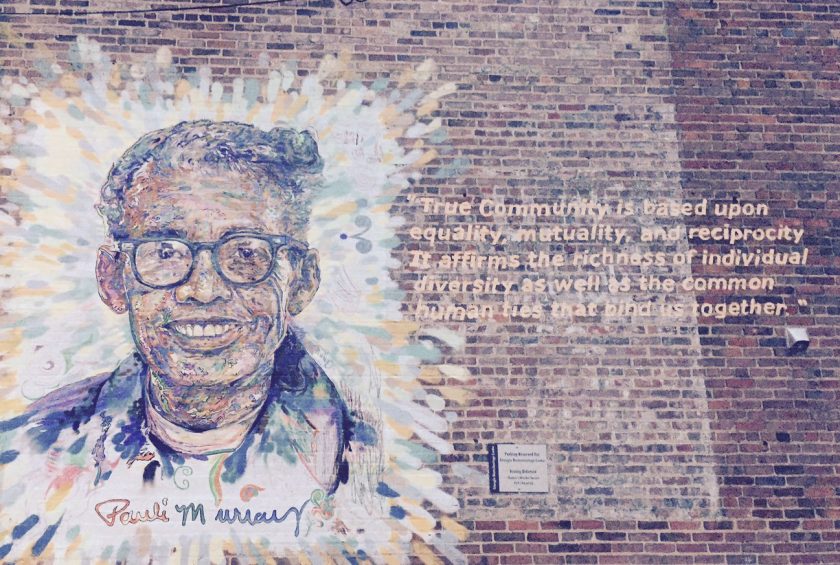
Preservation with an International Focus

I have returned to Italy for the second time this year for a short meeting of the executive committee of the International National Trusts Organisation (INTO).  Our host for this year’s meeting is Fondo Ambiente Italiano (FAI) or the Italian National Trust, a remarkable INTO member which has saved 54 properties and protected 6 million square meters of historic landscape in Italy since 1975.  Over the past two days we have been meeting with the FAI staff at their headquarters in Milan and have toured three wonderful – and unique – FAI properties.  Along the way the 15 members of the INTO executive committee have learned more about the Italian model of preservation while we share our own experiences and shape strategy for the group for the year ahead. FAI’s headquarters in Milan is in a historic equestrian exercise rink that has been marvelously repurposed for 21st century office use.  The space, desks, and equipment are all modern and set up for strong collaboration, yet the entire new three-floor interior addition could be removed without …

Hope is grounded in memory

Last Saturday marked my 20th anniversary at the National Trust for Historic Preservation. For the past few days, I’ve been thinking about hope in the context of life’s milestones.  Not a greeting card kind of hope or optimism, but “hope that’s kind of gritty…the kind,” as described by songwriter and author Carrie Newcomer, “that gets up every morning and chooses to try to make the world just a little kinder (or better) in your own way.” The thought that “hope is grounded in memory” has influenced the work of  another writer I admire, Rebecca Solnit. In a recent interview, she notes that “We think of hope as looking forward, but…(if) you study history deeply, you realize that, to quote Patti Smith, ‘people have the power’….(P)eople have often taken on things that seemed hopeless — freeing the slaves, getting women the vote — and achieved those things.”  Knowing history gives me hope. To be fair, hope is hard.  Cynicism – where I have gone on occasion – is easy. But in thinking about 20 years of …

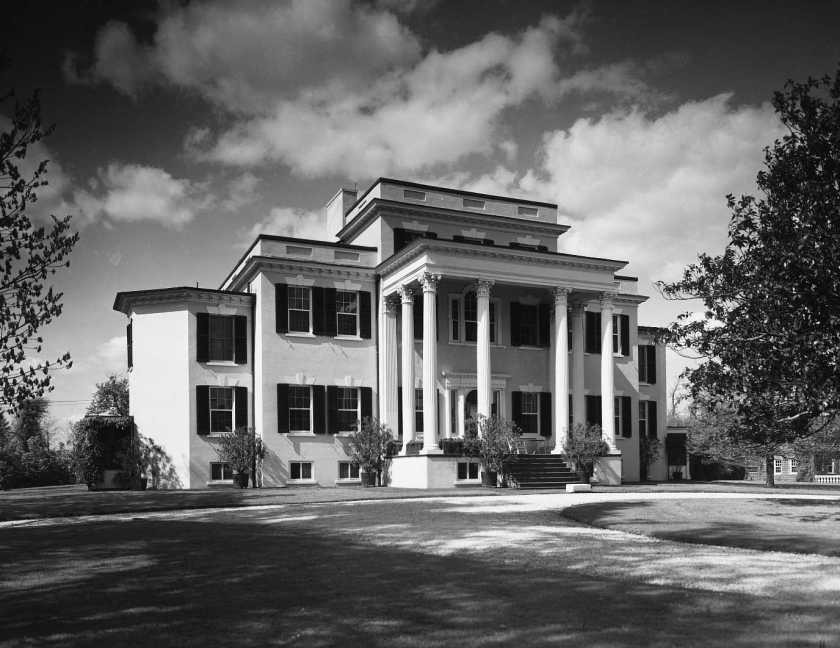
Oatlands (credit DHR)

National memory and the forgotten First Emancipator

The story of Virginian Robert Carter III and the emancipation of 450 enslaved individuals shortly after the founding of the United States is one of the forgotten stories of American history.  However, in our current period of political unrest — much of it centered on racism and questions around who owns the American story — this is an appropriate time to look at how this act of emancipation, and similar acts that took place throughout the South before the Civil War, were buried and forgotten. Thankfully, Andrew Levy’s complex and largely satisfying book The First Emancipator:  Slavery, Religion, and the Quiet Revolution of Robert Carter brought this story the attention it deserves. Levy claims — powerfully and in a way that challenges our core national narrative — that Carter “did something that transcends our ability to listen to our own past.” A recent tour of the National Trust Historic Site Oatlands outside Leesburg, Virginia, with several senior staff led to a discussion of the story of slavery at the plantation.  Robert Carter III was the …

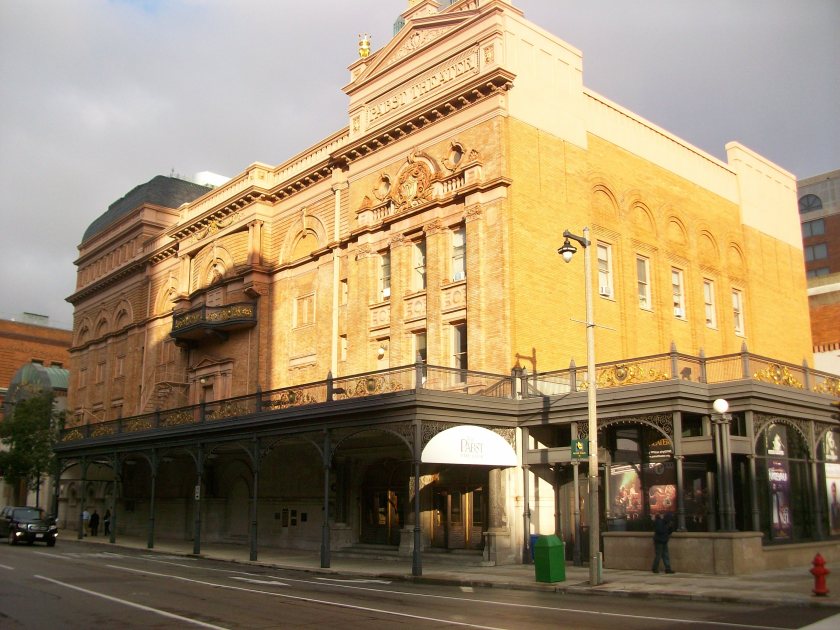
Pabst Theatre

Historic theatres and the 21st Century community

(NOTE:  Two weeks ago, I presented the keynote address to the 40th annual meeting of the League of Historic American Theatres.  The following is an excerpt from my remarks — given from a personal perspective — about why these places mean so much to me and other Americans.) It is an honor to be here with so many individuals who work day-in and day-out to ensure that America’s historic theatres have a bright future. I think of your work — in part — as a form of storytelling, and I am so grateful for the work you do to tell the story of your special places.  Our efforts to identify and mark who we are is not only important to our history and our understanding of that history, but also to our understanding of the issues we face on a daily basis. The places we choose to preserve around the country tell us a great deal about who we are as a people.  Historic theatres are often beloved landmarks in our communities — places that …

Just a Normal Day at the Office

Even though I already have one of the best jobs in the world, some days at the office are simply better than others. Tuesday was one of those as musician Ben Folds made a stop by the headquarters of the National Trust for Historic Preservation before his concert next door at the Kennedy Center. The Trust has worked with Ben Folds and others to help save historic Studio A and Music Row in Nashville.  I had a chance to meet him first in January of 2015, when we announced Music Row as one of our National Treasures.  Ben has been one of the heroes of the fight to save Studio A – telling the story of this place as persuasively as he tells stories in his music. I had the chance to introduce him to our staff yesterday at our headquarters at the Watergate.  I told them that Ben was the early and consistent voice for Studio A, shining a light on this special place when its future was darkest. He was the one who …

Talking Preservation’s Future on “Back to the Future Day”

I am in Missouri as part of a cross-country trip that began on Friday in Los Angeles and will end on Thursday in New York City. The annual Missouri Preservation Conference – where I was the keynote speaker – brought me to Cape Girardeau, winner of a 2015 Great American Main Street Award. The conference theme?  The Past and Future of Preservation.  As luck would have it, my talk was on Back to the Future Day!  What better occasion to talk about the future of preservation! Here’s the description of Back to the Future Day from the New York Times: On Wednesday, Oct. 21, 2015, at 4:29 p.m., our today will finally catch up to the tomorrow depicted in “Back to the Future, Part II.” In that 1989 film, Marty McFly (Michael J. Fox) and Dr. Emmett Brown (Christopher Lloyd) appear with a flash in their DeLorean time machine from 30 years in the past. Suddenly, they find themselves in the same town, Hill Valley, but surrounded by impossible technology and outlandish social mores. It’s …