
November 11th is celebrated as Veterans Day in the U.S., but it used to be called Armistice Day. On this day in 1918, the major fighting of World War I ended. It was when, Kurt Vonnegut has written, “millions upon millions of human beings stopped butchering one another.”
On Veterans Day we honor those who have served and continue to serve in our armed forces. In my immediate family that includes my father, a World War II Navy veteran; my brother Joe, who served in the Navy on a helicopter carrier during the 1980s; as well as a number of aunts and uncles who also served in World War II. I am proud of each of them for their service.
While we did not lose a family member in military service, many families have lost loved ones fighting for our nation. No words can fill the void that’s been left. As President Obama said to family members in a Veterans Day tribute in 2009, “We knew these men and women as soldiers and caregivers. You knew them as mothers and fathers; sons and daughters; sisters and brothers.”
But here is what you must also know: Your loved ones endure through the life of our nation. Their memory will be honored in the places they lived and by the people they touched. Their life’s work is our security, and the freedom that we all too often take for granted. Every evening that the sun sets on a tranquil town; every dawn that a flag is unfurled; every moment that an American enjoys life, liberty and the pursuit of happiness — that is their legacy.
Veterans Day is not a time to glorify war or military might, especially as the world is involved in so much conflict. It is a good time to recall the pointless slaughter of so much war. And it is a good day to reclaim the remembrance that the reason for war is peace. Holy peace. In 1938, Congress made November 11 a legal holiday to be dedicated to world peace. Armistice Day was sacred, and that should not be forgotten.
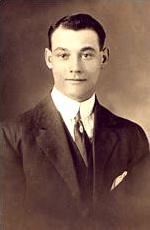
On this day in 2021, Heather Cox Richardson remembered George Lawrence Price, a private serving with Company A of the 28th Battalion of the Canadian Expeditionary Force in Belgium during World War I.
As the moment of the armistice approached, a few soldiers continued to skirmish, and Price’s company set out to take control of the small town of Havre. As they crossed a canal to their target, a German gunner hidden in a row of houses tried to stop them. Once safely across, just ten minutes before the armistice, the Canadian patrol began to look for the German soldier who had harassed them. They found no one but civilians in the first two homes they searched. And then, as they stepped back into the street, a single shot hit Price in the chest. He fell into the arms of his comrade, who pulled him back into the house they had just left. As Price died, German soldiers cleared their guns in a last burst of machine-gun fire that greeted the armistice.
Price’s life ended just two minutes before the Great War was over.
Even at the time, Price’s death seemed to symbolize the pointless slaughter of WWI. When an irony of history put Price in the same cemetery as the first Allied soldier to die in the conflict, disgusted observers commented that the war had apparently been fought over a half-mile of land. In the years after the war ended, much was made of George Price, the last soldier to die in the Great War.
But Richardson also wanted us to remember the man who pulled the trigger, who decided — knowing that peace was only two minutes away — to take another life and deny him a future. It was legal. It was also surely, she writes, immoral.
He went back to civilian life and blended into postwar society, although the publicity given to Price’s death meant that he must have known he was the one who had taken that last, famous life in the international conflagration. The shooter never acknowledged what he had done, or why.
Price became for the world a heartbreaking symbol of hatred’s sheer waste. But the shooter? He simply faded into anonymity, becoming the evil that men do.
Political theorist Hannah Arendt coined the phrase “the banality of evil” after watching the 1961 trial of Nazi SS officer Adolf Eichmann. “Good can be radical; evil can never be radical, it can only be extreme, for it possesses neither depth nor any demonic dimension yet — and this is its horror — it can spread like a fungus over the surface of the earth and lay waste the entire world. Evil comes from a failure to think.”
Kurt Vonnegut famously wrote of Armistice Day in the preface to Breakfast of Champions.
I will come to a time in my backwards trip when November eleventh, accidentally my birthday, was a sacred day called Armistice Day. When I was a boy, and when Dwayne Hoover was a boy, all the people of all the nations which had fought in the First World War were silent during the eleventh minute of the eleventh hour of Armistice Day, which was the eleventh day of the eleventh month.
It was during that minute in nineteen hundred and eighteen, that millions upon millions of human beings stopped butchering one another. I have talked to old men who were on battlefields during that minute. They have told me in one way or another that the sudden silence was the Voice of God. So we still have among us some men who can remember when God spoke clearly to mankind.
Rest in peace, George Lawrence Price, and all the men and women who have sacrificed their lives for good over evil. And let’s do all we can to remember the message God gave to mankind, a message that was never clearer than on this day.
More to come . . .
DJB
Image: Remembrances for D-Day 2019 in the British village of Chipping Campden (photo by DJB)


Pingback: Observations from . . . November 2023 | MORE TO COME...