The years surrounding World War II were ones of intense ideological battles over competing approaches to modern architecture and planning. As the old world order was crumbling around the globe, there were many calls to sweep away the physical remains of those times as well as the scars left from a devastating war, beginning anew with a fresh vision for the places where humans live, work, and play. Urban renewal of the 1950s and 60s in the United States, which led to the destruction of the historical fabric of America’s cities and towns, was one manifestation of this vision.
But there were authors, architects, artists, and activists of the period who were interested in beautiful and meaningful buildings and sites of all ages. One individual in particular—G.E. Kidder Smith—brought all of these skills together in his life’s work. It is a legacy that has now been recognized in a handsome, thoughtful, and comprehensive overview that captures his genius in “understanding the needs of his time and of the role that a photographer and critic might play in presenting the grandeur of new and old architecture in a compelling way.”
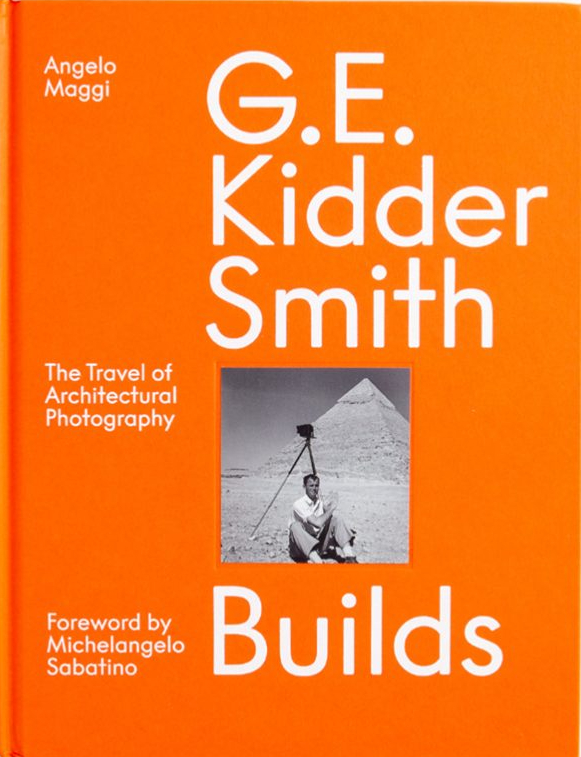
G.E. Kidder Smith Builds: The Travel of Architectural Photography (2022) by Angelo Maggi (Foreword by Michelangelo Sabatino) is a beautifully illustrated and long overdue assessment of the work of George Everard Kidder Smith (1913–1997), a “multidimensional figure within the wide-ranging field of North American architectural professionals in the second half of the twentieth century.” Trained as an architect, Kidder Smith chose not to practice within the “conventional strictures of an architecture office.” Instead, he designed, researched, wrote, and photographed a remarkably diverse collection of books focused on architecture and the built environment. This abundantly illustrated overview of Kidder Smith’s work—which won the 2024 Society of Architectural Historians Catalog Award—is written by Italian-British educator and architectural photography historian Angelo Maggi, currently based in Venice, where the Smith family generously donated a significant portion of Kidder Smith’s extensive archives.
“[Kidder Smith’s] work and life were deeply interwoven and punctuated by travel related to the research, writing, and promotion of books that sought to reveal the genius loci of the countries whose built environments he admired and wished to share with a broader audience. From the early 1940s to the late 1950s his interest in architecture led him to describe visually the architectural and historical identity of many European countries. After his far-flung travels over the decades, with his wife Dorothea, Kidder Smith focused on his own country . . . Kidder Smith’s vision and narrative betray the gaze of the traveler, the scholar, and the architect.”

This overview begins with a perceptive foreword by Michelangelo Sabatino focused on the reputational shadow of this talented “builder” of books. (In addition to the foreword, Sabatino with Maggi conceptualized the “books as buildings” approach of G.E. Kidder Smith Builds.) Kidder Smith—or GEKS (pronounced “Jeex”) as he became known during his student days at Princeton—had a broader public in mind for his diverse collection of books about architecture and the built environment. His photographs almost always included human figures, his publishers were commercial rather than university presses, and he would curate accompanying exhibitions to widen the reach of his work.

Kidder Smith used a variety of formats to appeal to different audiences: hardcover for the “Builds” series, paperback pocket-size Penguin books for the traveler, and large-format slip-covered books that were at home on the coffee table. With his focus on revealing intimate relationships between buildings, landscapes, and people, GEKS anticipated the perspective of New York Times architectural critic Herbert Muschamp when he wrote that “the essential feature of a landmark is not its design, but the place it holds in a city’s memory.”
Maggi begins this work with a short overview of Kidder Smith’s life and career, one that took a different course than his study of architecture would have suggested. During the summers of 1937 and 1938, an early professor hired GEKS to photograph the built environment of the English Cotswolds, an area that remains an unspoiled and protected countryside to this day. It was here in rural England “that the young student encountered ordinary, vernacular architecture that grew out of and responded directly to the materials and needs of the people.” He would never forget this time of exploration and the connectivity between all eras of architecture and people. As a result, photographs of vernacular structures were a feature of all his later works.

The overview is structured around the books that G.E. Kidder Smith carefully planned and executed over his career. As such, it is not a biography—but it is much more than an expanded bibliography. Maggi delves into the look and feel of each work, crediting the designers who helped craft the striking covers and focusing on Kidder Smith’s design choices in subject, photography, and layout.

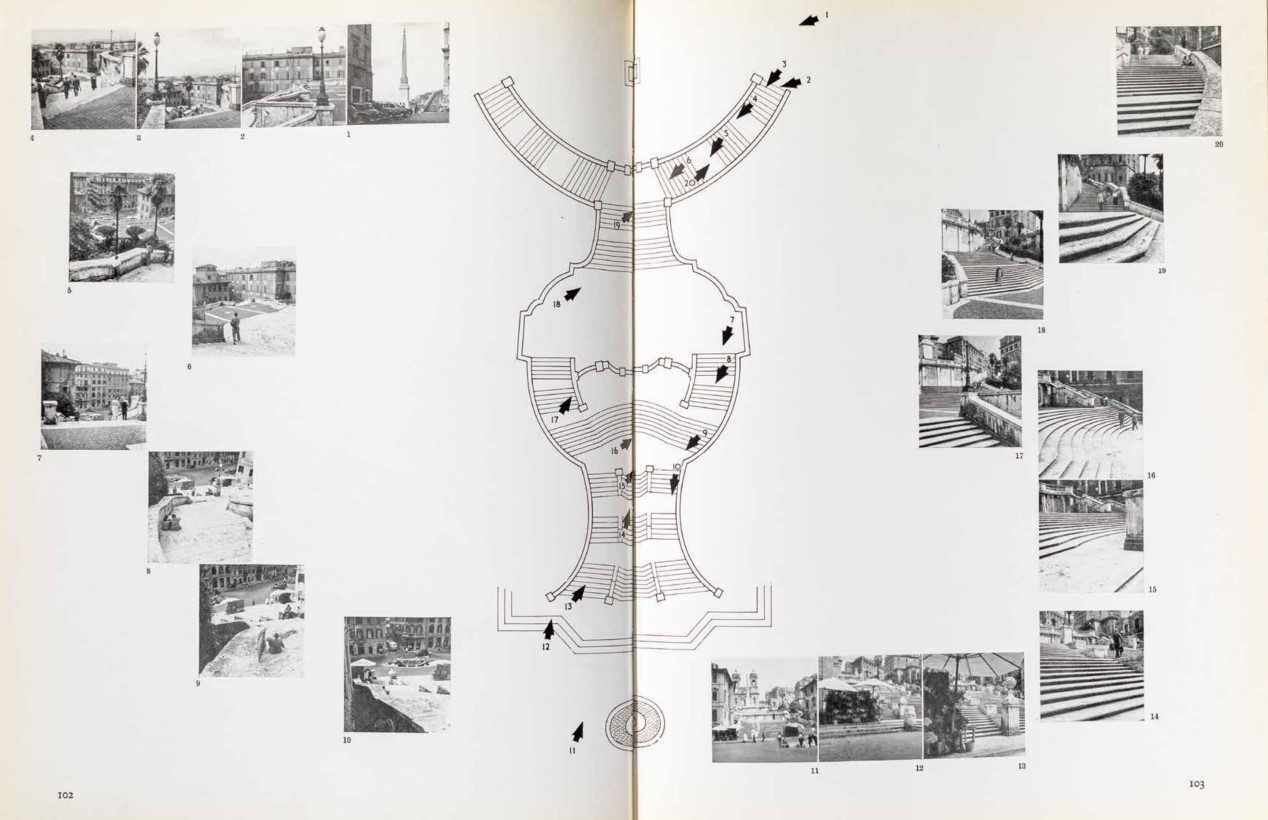
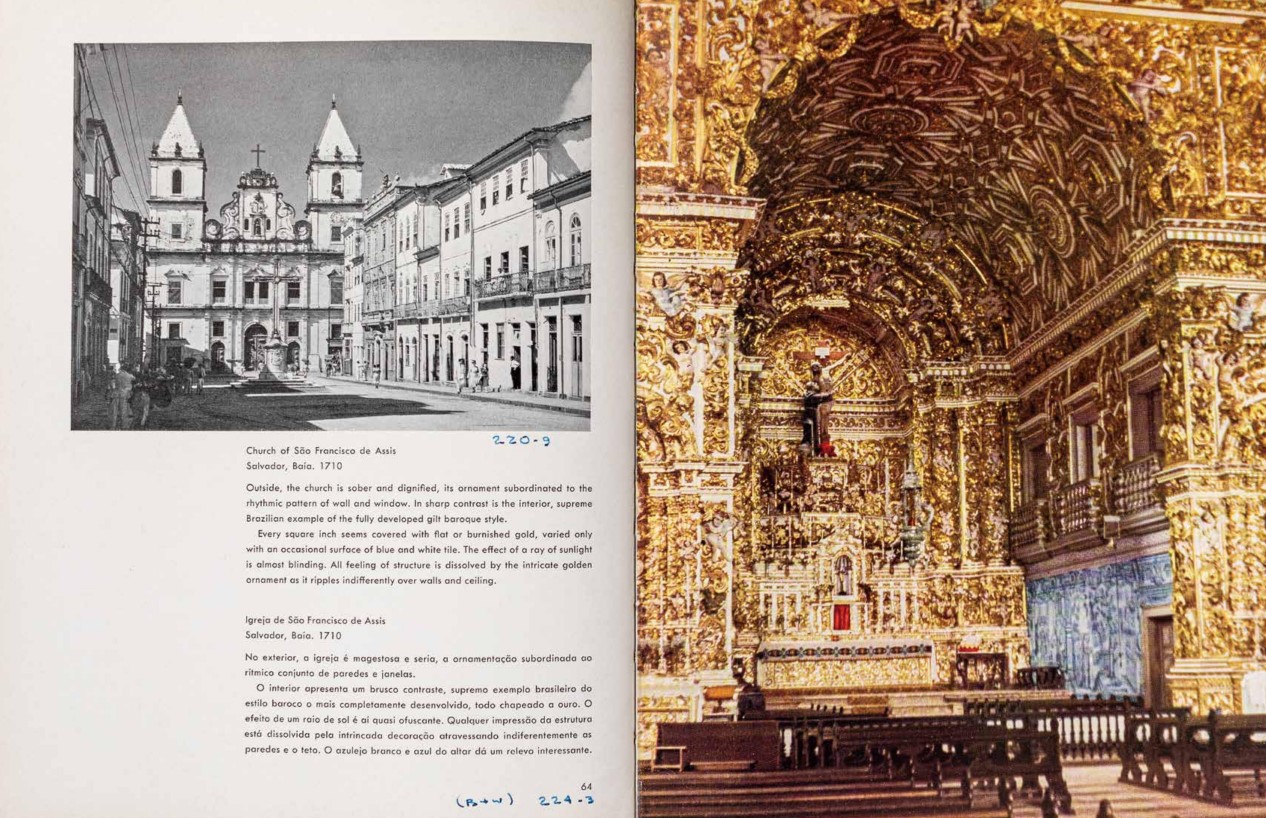
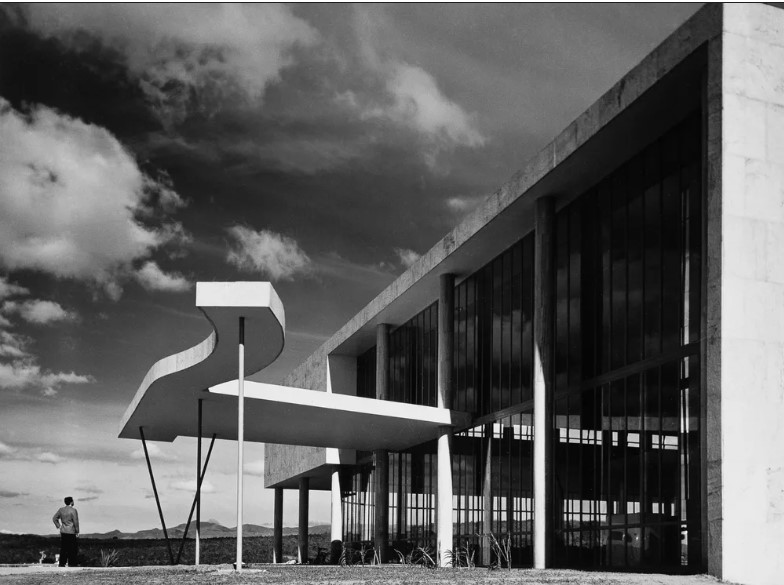
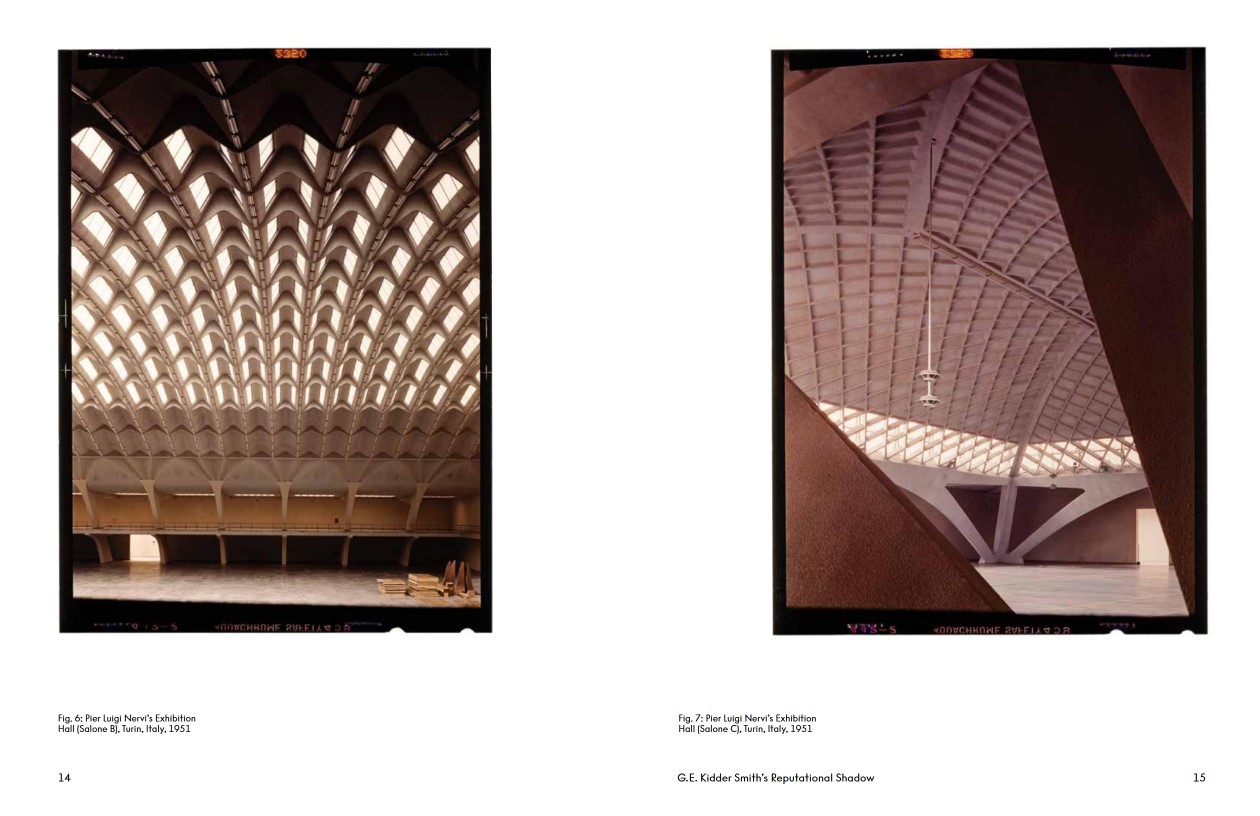
Taken chronologically, Maggi begins with Kidder Smith’s prewar work in Brazil, a country “building while America slept.” He then moves through the amazing collection of postwar books that looks at Europe emerging and rebuilding from the horrors of war, in part because of U.S. support through the Marshall Plan. This section covering Switzerland, Sweden, Italy, the new architecture of Europe, and the new churches of Europe from 1950-1964 radiates with the excitement that GEKS and his wife Dot must have felt moving through these countries at the dawn of a new age.
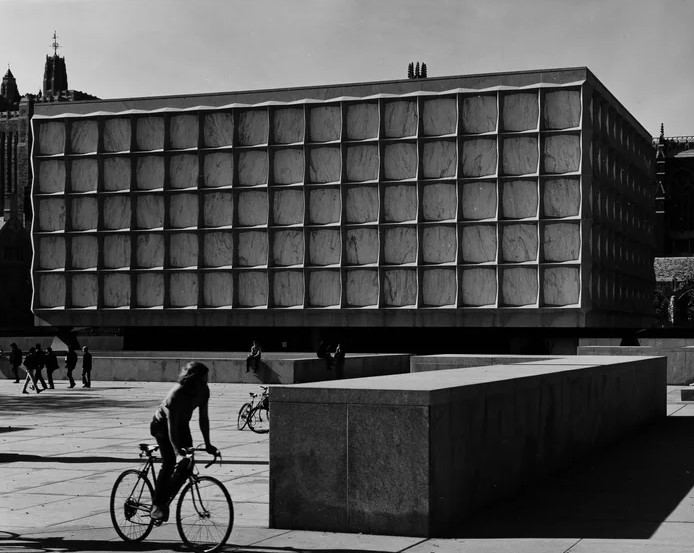
Kidder Smith’s two-volume deluxe edition of the pictorial history of architecture in America was produced by American Heritage Publishing Co. as part of the bicentennial celebration. In this work, later compressed into a one-volume edition that was a long-time companion in our home, Kidder Smith wanted to showcase the important historic structures as well as the great variety of architecture available in his home country. It took GEKS and Dot eight years to visit all 50 states and photograph the works in this collection.
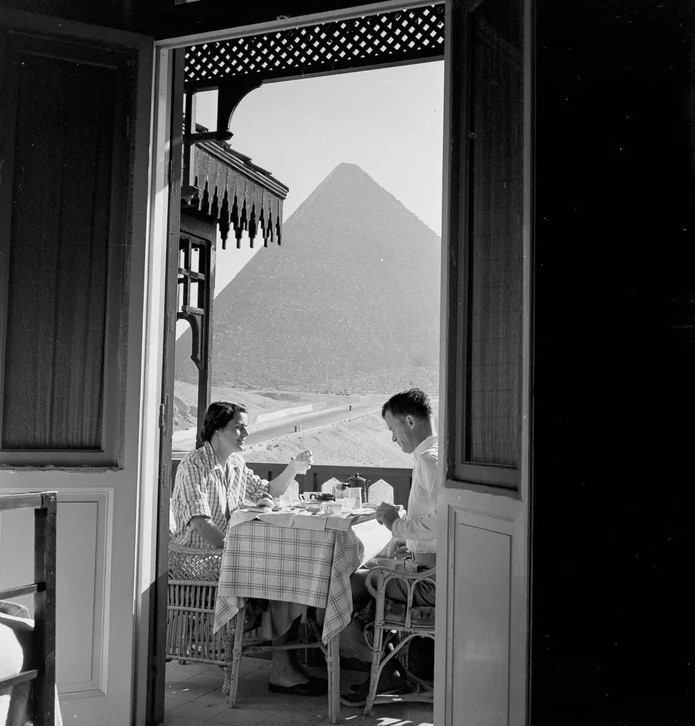
Throughout this delightful overview, Maggi brings the reader into the world that GEKS and Dot inhabited. Dot’s many contributions to the success of these projects is recognized multiple times in ways that demonstrate their vital partnership not only at the family level but professionally.
As the book and exhibitions were released in 2022, MAS Context included an enlightening interview with the authors and designers that touches on their intent and excitement for this work. It provides other important perspectives on Kidder Smith and this new assessment.
This is a book of wonder, joy, and some sadness. As Sabatino notes, Kidder Smith’s photos and books “will continue to serve as an important documentary record of cities and landscapes that have subsequently undergone significant transformation due to mass tourism, pressures associated with ‘development,’ and neglect.” His life’s work captures an evolutionary era in world history and—as a result—G.E. Kidder Smith Builds is, simply, a book to savor.
More to come . . .
DJB
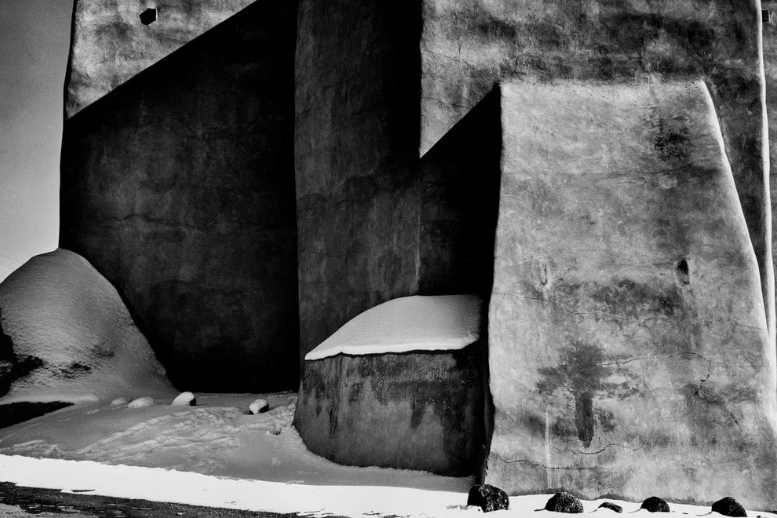
Photo of San Francisco de Asis, Ranchos de Taos, New Mexico, 1970 by G.E. Kidder Smith.


Pingback: From the bookshelf: August 2024 | MORE TO COME...
Pingback: Observations from . . . September 2024 | MORE TO COME...
Pingback: The 2024 year-end reading list | MORE TO COME...