
Having returned from a recent trip to Europe, I am still thinking of some of the comments made by our local guides and fellow travelers. Some were little snippets of conversation that caught my attention. At other times they were deeply held beliefs that our guides wanted to share.
Pico Iyer once wrote that you don’t travel . . .
“. . . in order to move around—you’re traveling in order to be moved. And really what you’re seeing is not just the Grand Canyon or the Great Wall but some moods or intimations or places inside yourself that you never ordinarily see . . .”
Travel can change us. I want to share three instances of times where I was moved during our visit along the Dutch waterways.
Getting along
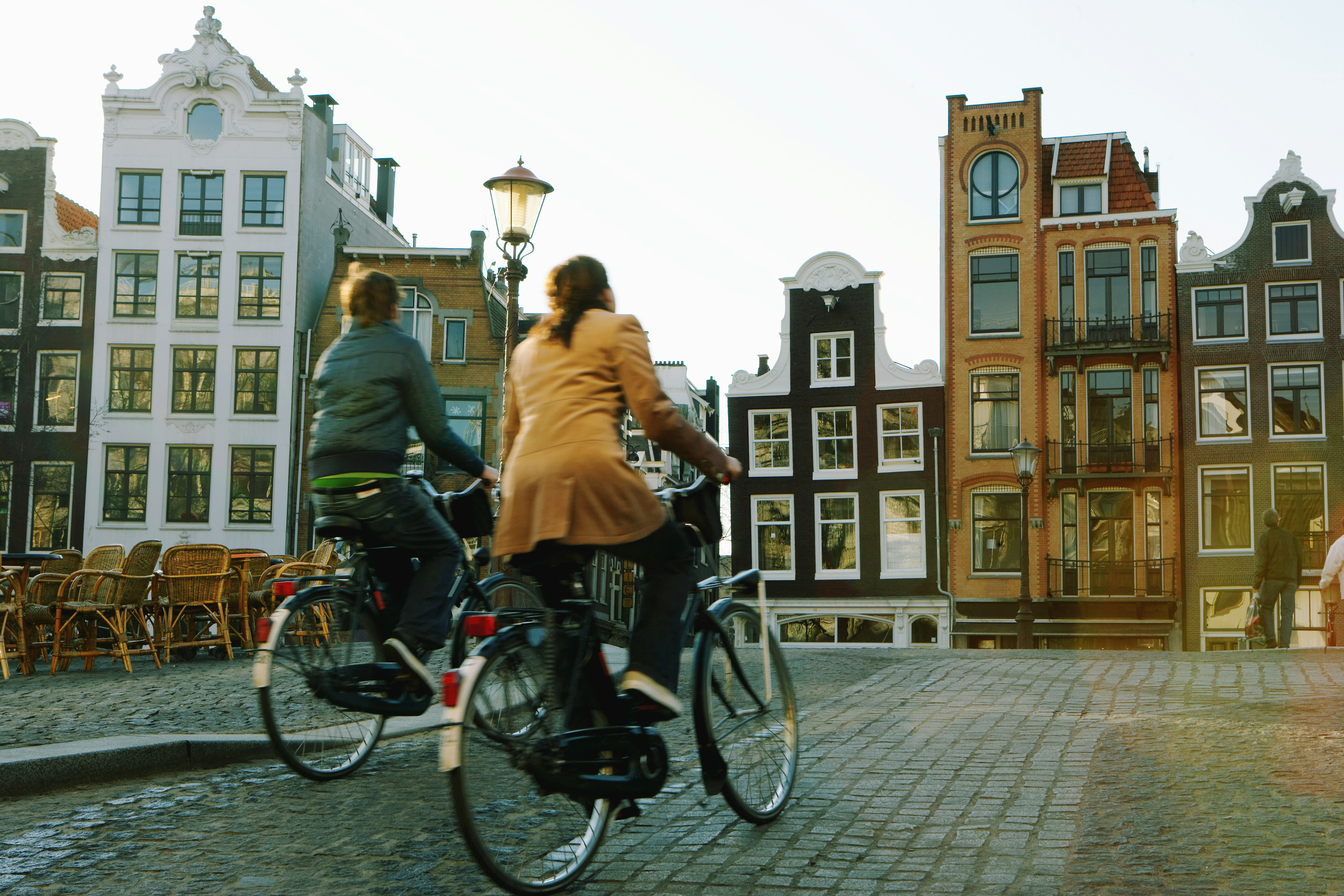
Everywhere we traveled the ability of bicyclists, pedestrians, and automobile drivers to navigate small and often winding streets was impressive. Even when crowds of tourists blocked the route, everyone stayed in their lane, followed the traffic signals, signaled their intentions, and performed a wonderful dance to reach their destination. We saw this time and again in large cities such as Amsterdam and in small towns such as Hoorn. It was a delight to behold.
I was reminded of how far a little respect for others can carry us along as I returned to navigate the often chaotic streets of Washington and Silver Spring. Bike lanes come and go, turn signals seem to be a thing of the past, and large cars with impatient drivers dominate our traffic system. The communities we saw on our trip show that it doesn’t have to be this way.
It was in the city of Nijmegen where our local guide made an off-hand remark that stuck with me. Our bus driver was skillfully negotiating one of the many circles found at intersections throughout this part of Europe when our guide casually commented that “roundabouts force us to learn to get along with others.”
Living in community. What a concept.
Do we have the monuments we deserve?
As I wrote in an earlier post, monuments and memorials from a variety of eras and historical contexts exist throughout the world. Memorials inevitably bring us face to face with philosophical questions of justice, collective memory, free will, moral culpability, and individual vs. national responsibility. Controversies over monuments and the memories they celebrate are not unique to the United States. We saw many examples on this trip.
When I was discussing monument controversies with some of our travelers, one mentioned that they had participated in a community discussion about this very issue in their hometown. The leading question of those organizing the conversation was, “Do we have the monuments we deserve?” We discussed how one could go about addressing that question, which is a topic for another post.
However, my mind returned to several monuments I saw on this trip that deviated from the traditional “conquering general on a horse” statue. In Nijmegen, there is a memorial commemorating the over 400 Jewish residents of the city who were murdered in the Holocaust.

The square is named after Kitty de Wijze who was murdered in Auschwitz on December 15, 1942. Monuments such as these help us recall that we should “never forget.”
Nearby is another statue, this one featuring Mariken van Nieumeghen. “Mary of Nijmegen” is a miracle play recorded in a Middle Dutch text from the early 16th century.

The protagonist of the story spends seven years with the devil, after which she is miraculously released. The oldest edition dates from 1515 and her tale is remembered to this day in the city’s large plaza. I loved the fact that the city was recalling its literary history with a statue.
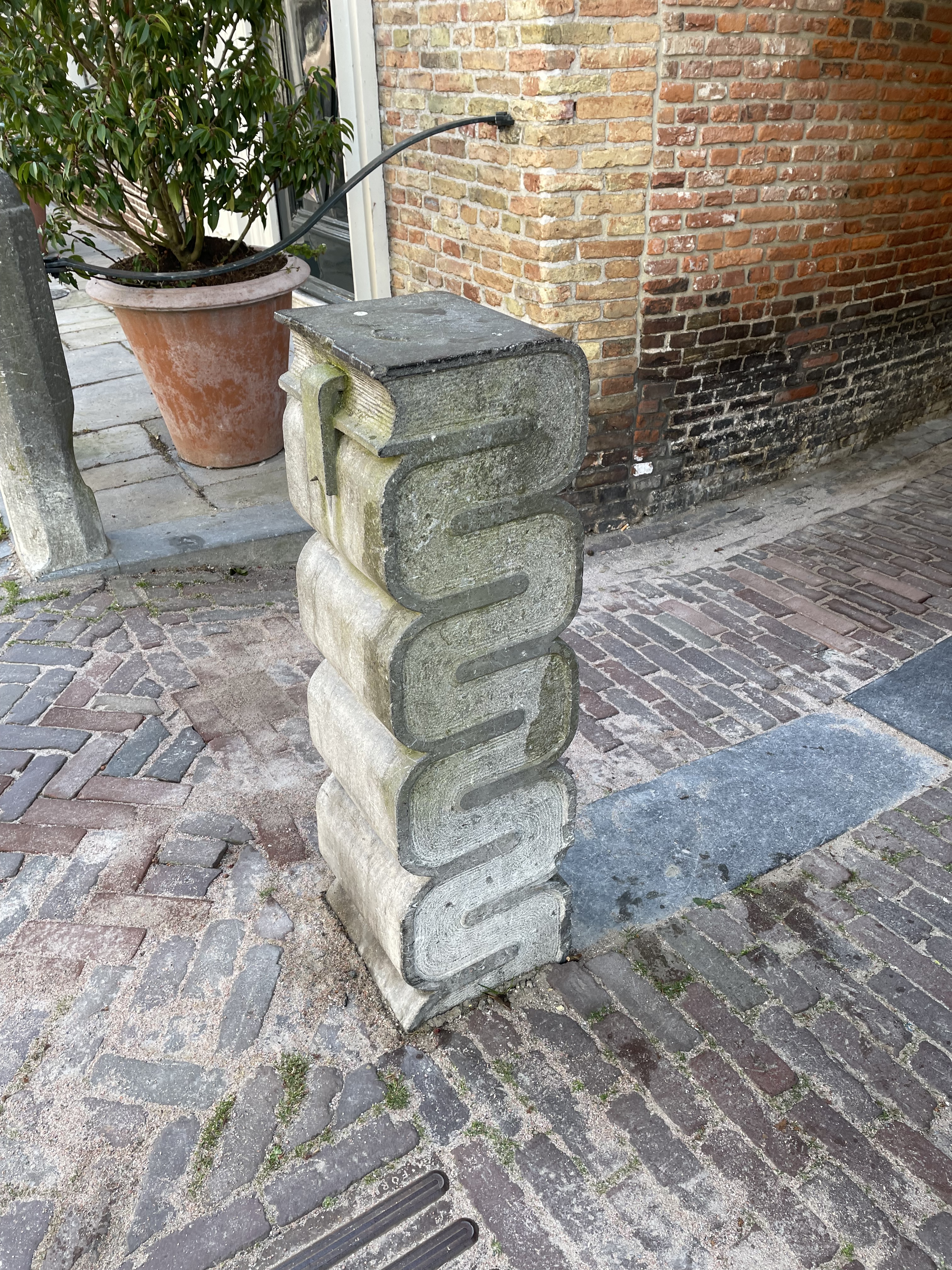
And I’ve also previously featured a small but personally meaningful monument to books found near the library in Hoorn. All three of these monuments, and others we saw throughout our trip, turn our attention to those who are lesser known, perhaps persecuted, yet very much a part of our human story.
A march to remember those who fought for our freedom
Finally, we heard about a different type of memorial on this trip that reminded us of a time when allies came together to stand up for what is right. Our guide in Nijmegen was 80 years old, born a month before WWII ended. That conflict was still very much on his mind, and the support of the Americans and other allies in liberating his hometown is very much a part of his story.
As we were driving into the town he pointed to a bridge and then told the story of the allied liberation of Nijmegen, and the Sunset March held each day to honor 48 allied war dead—mostly Americans—from WWII.

“Sunset March is a daily tribute to the Allied soldiers who fought for the liberation of The Netherlands, especially to those soldiers who lost their lives. In 2013 the city of Nijmegen completed the construction of a new city bridge called Oversteek [The Crossing]. It was constructed close to the area where members of the US 82nd Airborne Division crossed the river Waal on 20 September 1944 as part of Operation Market Garden. 48 Allied soldiers lost their lives during this ‘Waal Crossing’. The recently completed bridge has been installed with 48 pairs of exceptional street lights. At sunset these sets of street lights are lit up pair by pair at a slow marching pace. The total duration of illumination of all these street lights is almost 12 minutes.”
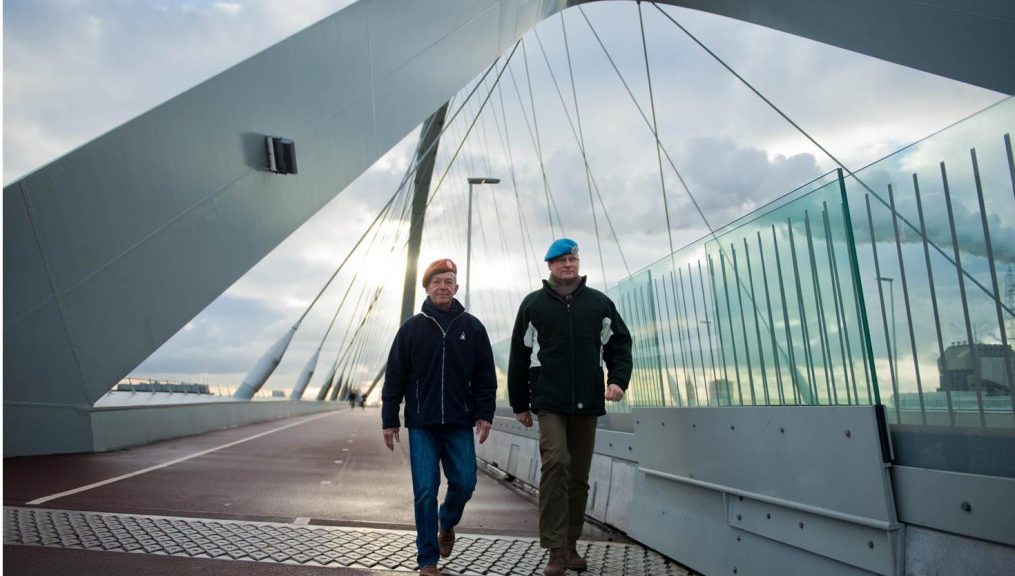
Each and every night, our guide explained, a military veteran walks the Sunset March as the sun sinks below the horizon. Others can, and do, follow along. As the lights are turned on, the veteran walks along in pace with the lights being lit. It is a daily and poignant reminder that we are all part of a greater humanity, if we choose to live that way.
Work to make the change we can
These lessons learned while traveling reminded me that there is always trouble and struggle, as we see all around us today. But remembering that we can work to make the change we can, knowing that we are all part of a gathering of spirits, brought to mind two wonderful Carrie Newcomer songs.
“I see sorrow and trouble in this land | I see sorrow and trouble in this land | Although there will be struggle, we’ll make the change we can | If not now, if not now, tell me when”
“If not now, tell me when | If not now, tell me when | We may never see this moment or place in time again | If not now, if not now, tell me when.”
“Let it go my love, my truest, let it sail on silver wings | Life’s a twinkling and that’s for certain, but it’s such a fine thing | There’s a gathering of spirits, there’s a festival of friends | And we’ll take up where we left off, when we all meet again.”
As Newcomer wrote recently on her A Gathering of Spirits Substack, “. . . may we all pay attention to how the spirit of love is moving within us, what new paths through the woods we are being called to create, and find fresh springs of graciousness and laughter that lightens the load we carry.”
“If the path before you is clear, you’re probably on someone else’s.”
Carl Jung
More to come . . .
DJB
Sunset March Bridge Photo by Leo Vullings on Unsplash
 MORE TO COME...
Pingback: Observations from . . . May 2025 | MORE TO COME...
Where are next trips.
Jane, we just got back from a trip to Santa Fe to hear Andrew sing (I’ll have a bit about that in Saturday’s post). We have two more trips this fall . . . very excited about both. Take care and best to you and Bob, DJB
Pingback: Oh, the places we’ve seen! | MORE TO COME...